10 Key Factors to Evaluate for Assisted Home Care Options

For families in our service areas
For families in our service areas, this guide explains home care and how non-medical in-home caregiving can support care planning in East Idaho, Treasure Valley & Magic Valley, Northern Wasatch, North Central West Virginia & Southwestern Pennsylvania, and Northeast Ohio.
Why Factors to Evaluate for Assisted Home Matters
Navigating the landscape of assisted home care can be overwhelming for families. As the needs of aging loved ones become more complex, understanding the key factors that influence care decisions is essential. Families often face the challenge of balancing safety, emotional well-being, and financial considerations when selecting the right care option.
This article delves into ten critical elements to evaluate, providing families with the tools necessary to make informed choices. By addressing these factors, caregivers can enhance the quality of life for seniors. What challenges arise when attempting to navigate this complex landscape? Let's explore the implications and actionable solutions that can help families find the right support.
Happy to Help Caregiving: Personalized In-Home Support for Seniors
Many seniors face the challenge of needing support as they age, which can lead to feelings of isolation and decreased quality of life. This situation often leaves families feeling overwhelmed and unsure of how to provide the necessary care.
Happy to Help Caregiving addresses these concerns by providing compassionate assisted home support tailored to the unique needs of seniors. Their services range from companionship to post-hospital recovery assistance, focusing on enhancing the overall quality of life for clients.
The caregivers at Happy to Help are trained to foster independence and well-being, ensuring that seniors receive the support they need in an assisted home setting. This tailored approach not only meets physical requirements but also significantly enhances emotional well-being, making it an essential factor for families considering options for assisted home support.
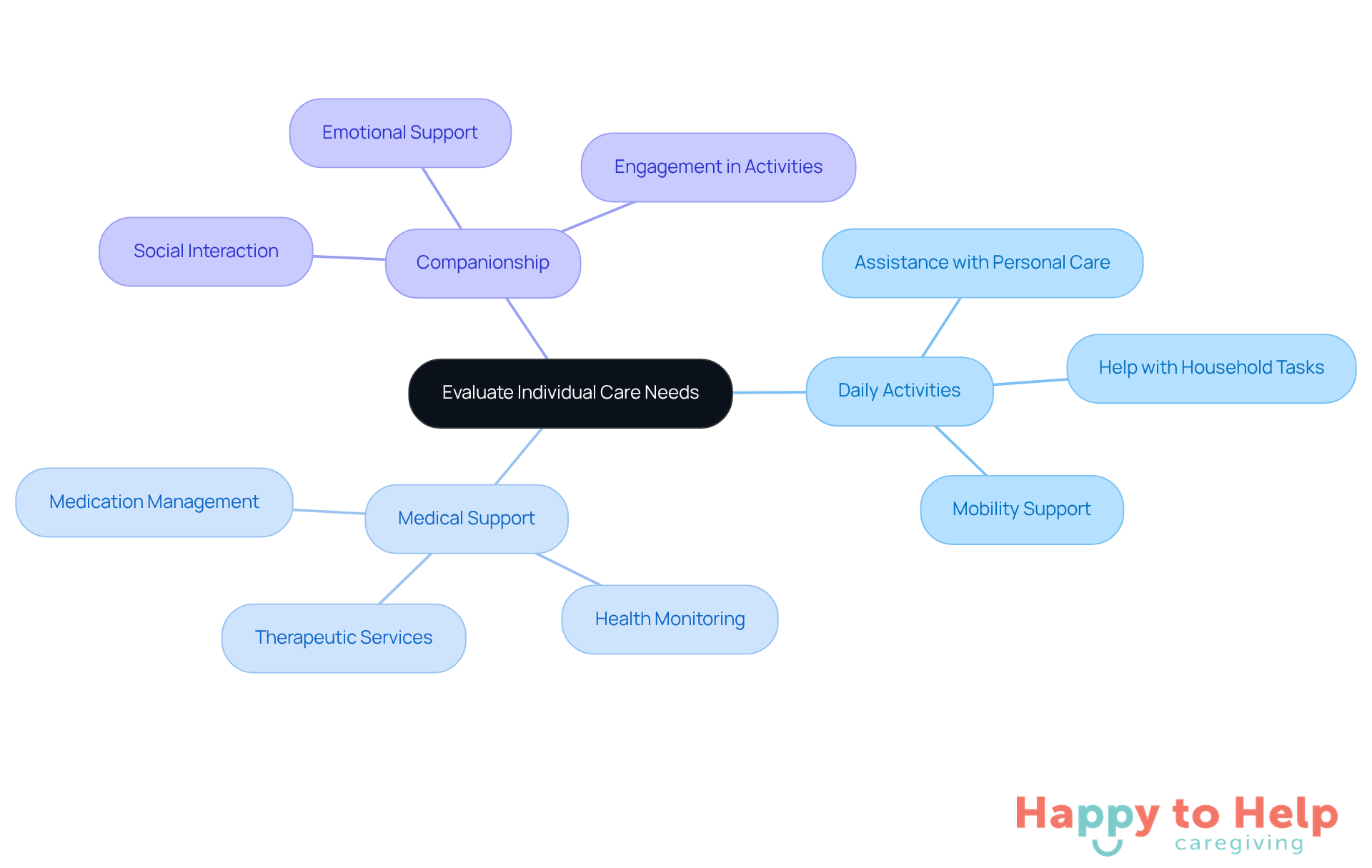
Evaluate Individual Care Needs: Tailor Choices to Specific Requirements
When exploring options for assisted home support, caregivers face a significant challenge: understanding the specific needs of the individual requiring assistance. This problem can lead to inadequate support, affecting the person's physical health, cognitive abilities, and emotional well-being.
To address this issue, families must engage in open discussions with healthcare professionals. These conversations are crucial for identifying the level of assistance required, whether it involves:
- Help with daily activities
- Medical support
- Companionship
By customizing options to meet these particular needs, caregivers can ensure that the chosen assisted home services effectively address the individual's unique circumstances.
Ultimately, this tailored approach enhances the person's quality of life, making it essential for caregivers to prioritize these assessments.
Conduct Facility Visits: Experience the Environment and Services
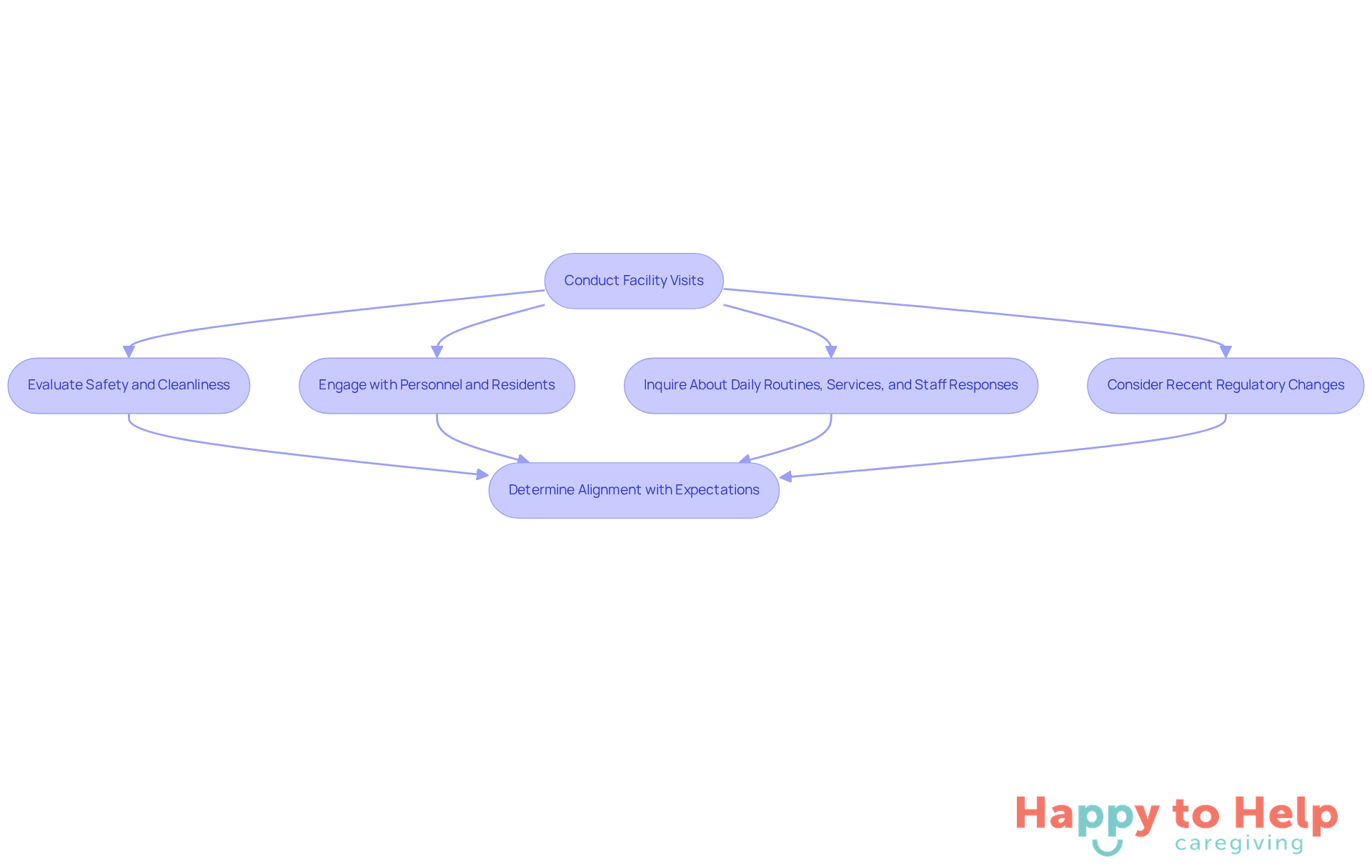
Evaluating potential caregiving facilities can be a daunting task for families. The problem lies in ensuring that these environments are safe and clean, as these factors significantly influence the quality of care provided. According to the National Center for Assisted Living, a staggering 99 percent of residents in assisted home settings report feeling safe in their communities. This statistic highlights the critical importance of safety during facility visits.
To address this concern, families should actively engage with both personnel and current residents. This interaction can provide valuable insights into the quality of support and community involvement available. Observing how staff members interact with residents can reveal the facility's commitment to fostering a supportive atmosphere.
Moreover, it's essential to inquire about:
- Daily routines
- Available services
- How staff members respond to residents' needs
Recent changes in state regulations affecting living standards may also play a significant role in the quality of care. By gathering this firsthand information, families can better determine whether a facility aligns with their expectations and meets the individual's support needs.
Assess Staff Qualifications: Ensure Trained and Compassionate Caregivers
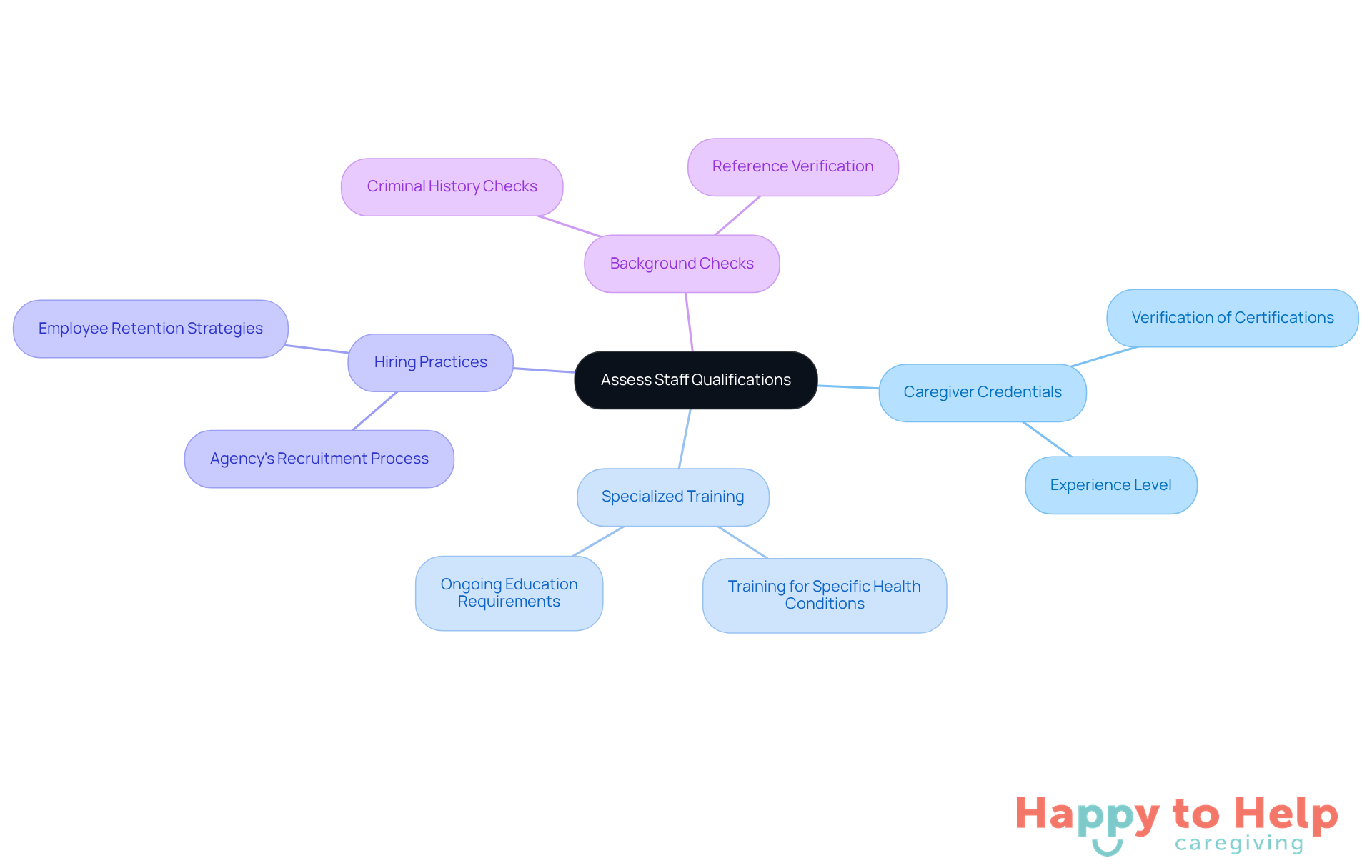
When selecting an assisted home option for support, families face a significant challenge: ensuring the quality of caregivers. Without proper evaluation of caregiver credentials, families may unknowingly compromise the safety and well-being of their loved ones.
To address this issue, it’s crucial for families to inquire about the training and certifications that caregivers possess. This includes any specialized training for specific health conditions, which can greatly impact the quality of care provided. Understanding the agency's hiring practices and background check procedures is also essential, as it reassures families about the reliability of the caregivers.
Ultimately, compassionate and well-trained personnel are vital for delivering quality assistance in an assisted home environment. By taking the time to evaluate these factors, families can foster a supportive atmosphere that ensures their loved ones receive the care they deserve.
Check Safety Protocols: Prioritize Resident Well-Being
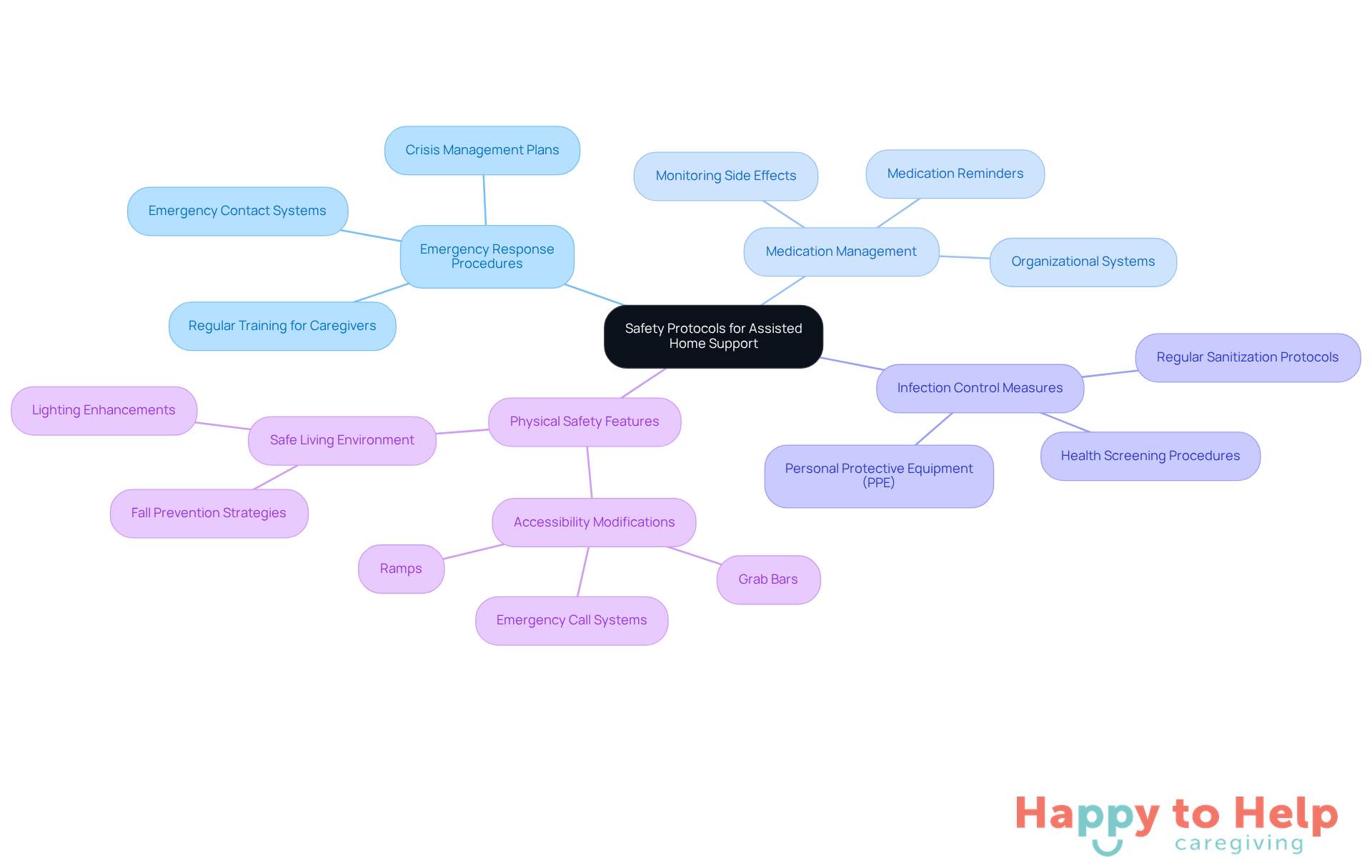
Safety is a critical concern when evaluating options for assisted home support. Families face the challenge of ensuring that the assisted home agency they choose has robust safety protocols in place. This includes:
- Emergency response procedures
- Medication management
- Infection control measures
Understanding how these protocols are implemented can greatly enhance peace of mind for those in assisted home settings.
Recent advancements in home safety have underscored the importance of effective emergency response systems. These systems are essential for addressing urgent situations swiftly. Agencies are increasingly adopting comprehensive emergency response procedures, which involve regular training for caregivers on handling various crises, from medical emergencies to natural disasters. Data indicates that agencies with strong emergency protocols, particularly those involving assisted home services, report higher satisfaction rates among families, as these measures directly contribute to the well-being of residents. In fact, surveys reveal that 99 percent of supported living residents feel secure in their neighborhoods, with 91 percent feeling more secure than when living independently.
Moreover, assessing the physical safety features of an assisted home or facility is vital. Families should look for accessibility modifications, such as:
- Grab bars
- Ramps
- Emergency call systems that enable residents to summon help quickly
These features not only enhance comfort but also ensure that residents can live securely and independently, reducing the risk of accidents and promoting overall well-being. As safety expert [insert expert's name] states, "[insert relevant quote about prioritizing resident well-being in caregiving].
Understand Cost Structures: Plan for Long-Term Financial Commitment
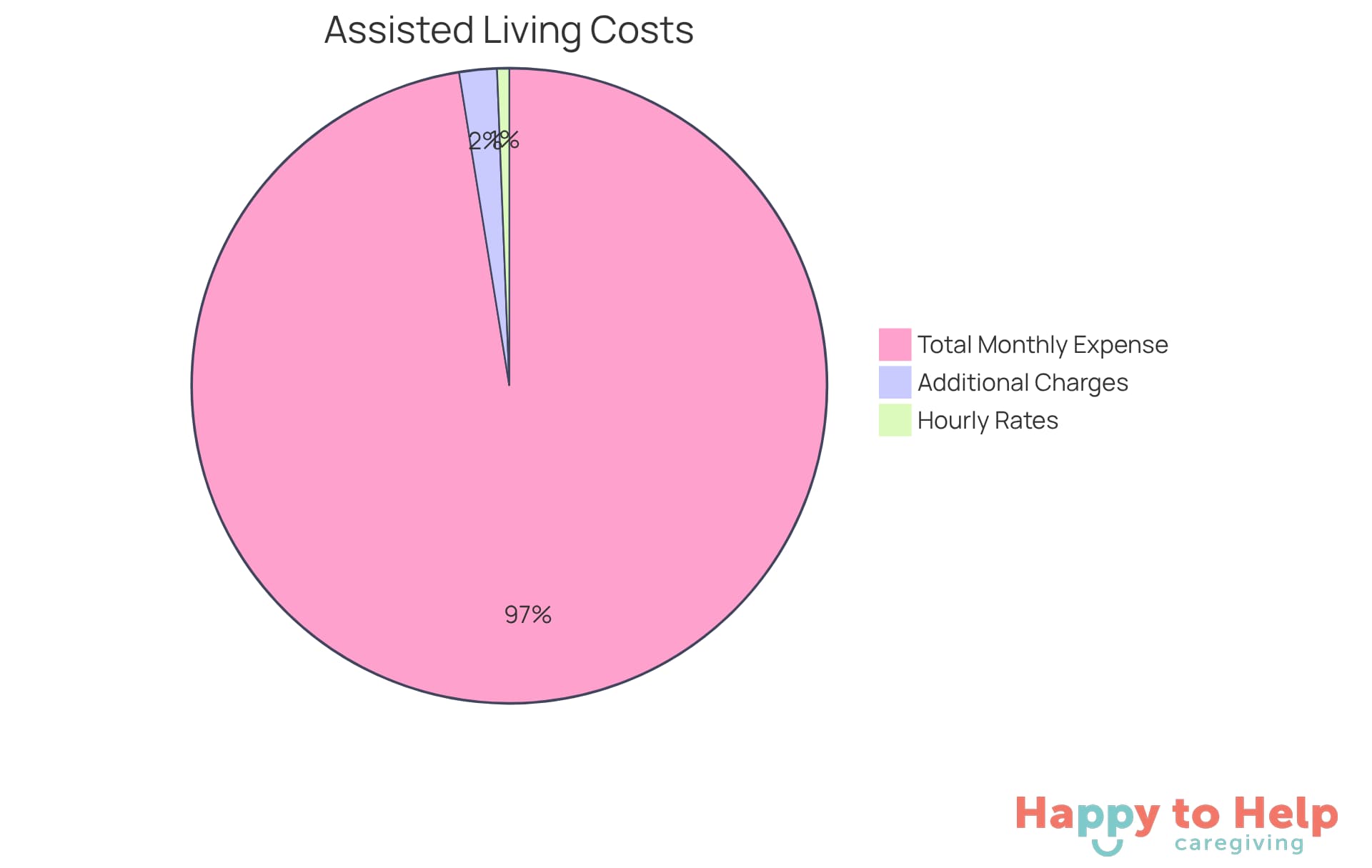
Understanding the expense frameworks of assisted home support options is essential for households before making a commitment. The costs include not only the average hourly rates for caregivers-around $34 per hour for home health assistants-but also additional charges for services like transportation, specialized support, or equipment rentals. For instance, typical fees in supportive living facilities can include $12 for blood pressure checks and $93 for medication orders, which can significantly impact total costs.
In addition to direct support expenses, households must explore payment alternatives, insurance benefits, and potential financial aid programs. Veterans, for example, may qualify for the VA's Aid and Attendance benefit, which can help alleviate some of these costs. With the national median expense for supportive living services reaching approximately $5,350 monthly and an annual cost of $64,200, grasping these financial obligations is crucial for families to ensure they can maintain necessary care over the long term without undue financial strain.
Recent trends reveal that supportive living expenses have surged by 31% since 2004, outpacing overall inflation rates. This highlights the need for proactive financial planning. Families are encouraged to:
- Meticulously track expenses
- Maintain an emergency fund
- Research facility options
By utilizing available resources and staying informed about current pricing trends, households can make educated choices that align with their loved ones' needs and financial capabilities, especially in an assisted home.
Evaluate Social Activities: Enhance Quality of Life for Residents
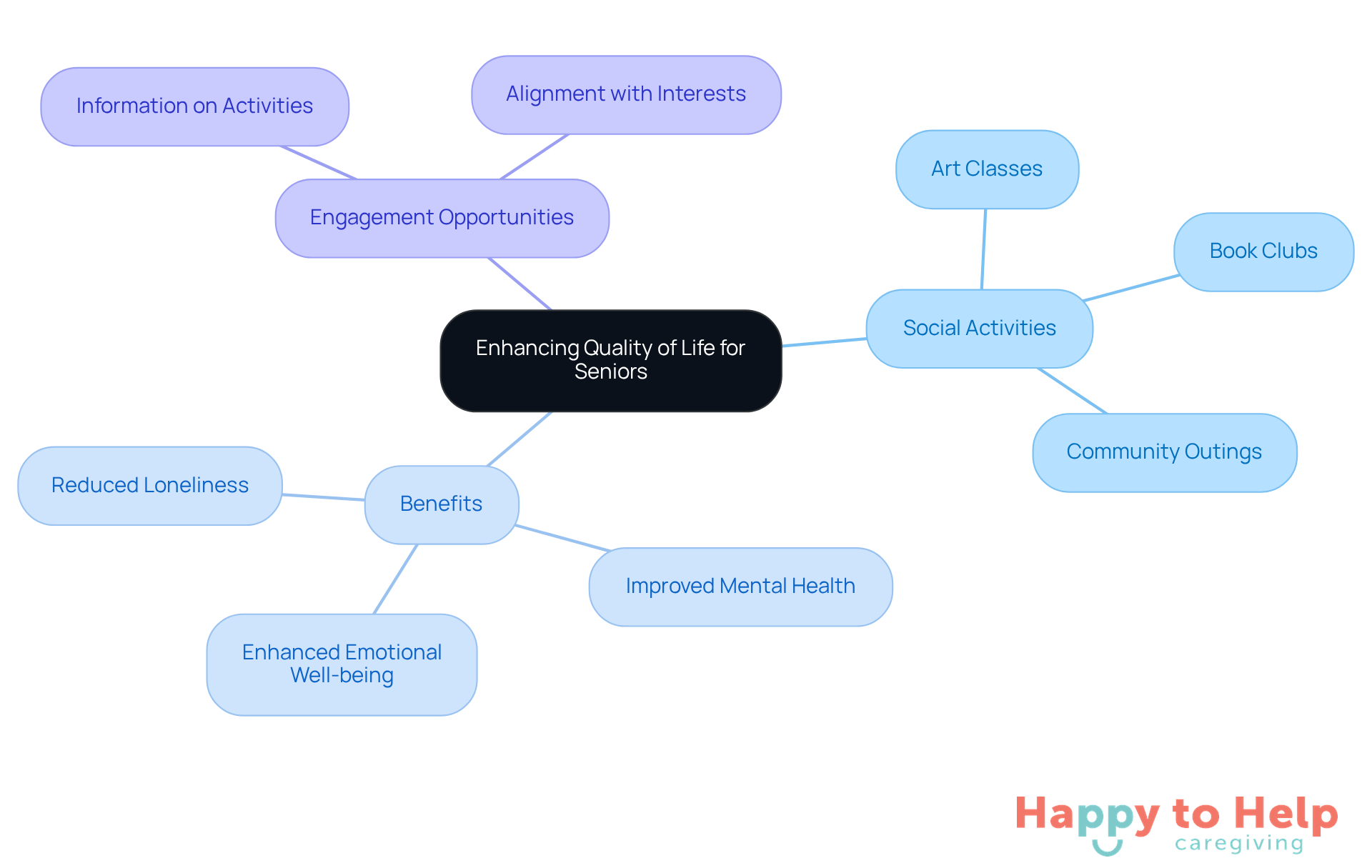
When evaluating supported home services, households face a significant problem: the accessibility of social activities and engagement opportunities. Research shows that participation in group activities, hobbies, and social events can greatly enhance the quality of life for seniors, effectively reducing feelings of isolation and loneliness. This is crucial, as studies indicate that the risk of dementia doubles or triples for individuals who experience loneliness or depression.
To address this issue, families should actively seek information about the range of activities available, their frequency, and how well they align with the interests of the person receiving assistance. Opportunities such as:
- Art classes
- Book clubs
- Community outings
can foster connections and enhance emotional well-being. A vibrant social environment not only contributes to overall happiness but also plays a vital role in maintaining mental health. Social interaction has been shown to mitigate the risk of depression and dementia among older adults.
By ensuring that support options include strong social engagement, families can create a nurturing environment that fosters independence and enhances the lives of their loved ones. This proactive approach not only combats loneliness but also promotes a healthier, more fulfilling life for seniors.
Ensure Flexible Care Plans: Adapt to Changing Needs
Families face a significant challenge when it comes to securing adequate support for their aging loved ones. Many older adults, a staggering 82%, believe that the U.S. health system is unprepared for the needs of the aging population. This highlights a pressing problem: the lack of flexible assisted home support services that can adapt to changing health conditions.
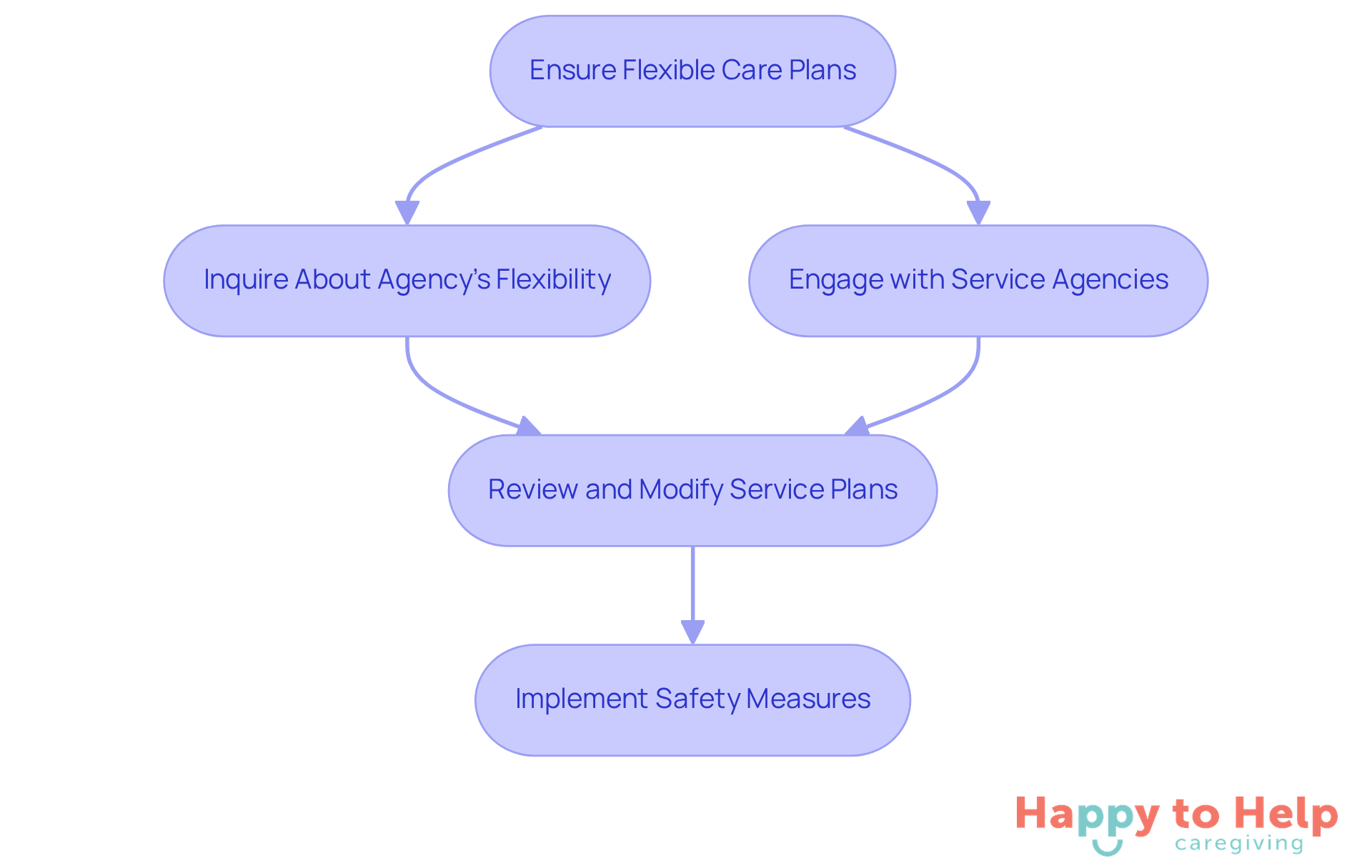
As health needs evolve, it’s crucial that the support provided can be adjusted accordingly. Families should actively engage with their service agencies to understand how often service plans are reviewed and modified. This proactive approach ensures that caregivers can adapt to any changes in health status or service requirements, maintaining high-quality care throughout the client’s health journey.
To address these challenges, families can take several practical steps. First, they should inquire about the agency's ability to adjust services or caregiver allocations for the assisted home as needed. Professional caregivers are skilled at making real-time adjustments to support plans, medications, and treatment strategies, demonstrating a commitment to proactive health management.
For example, caregivers can implement safety measures in the home, such as removing tripping hazards or installing grab bars, to enhance the living environment for their clients. By fostering a responsive and personalized approach, families can ensure that their loved ones receive the compassionate care they deserve.
Read Reviews: Gain Insights from Current Residents and Families
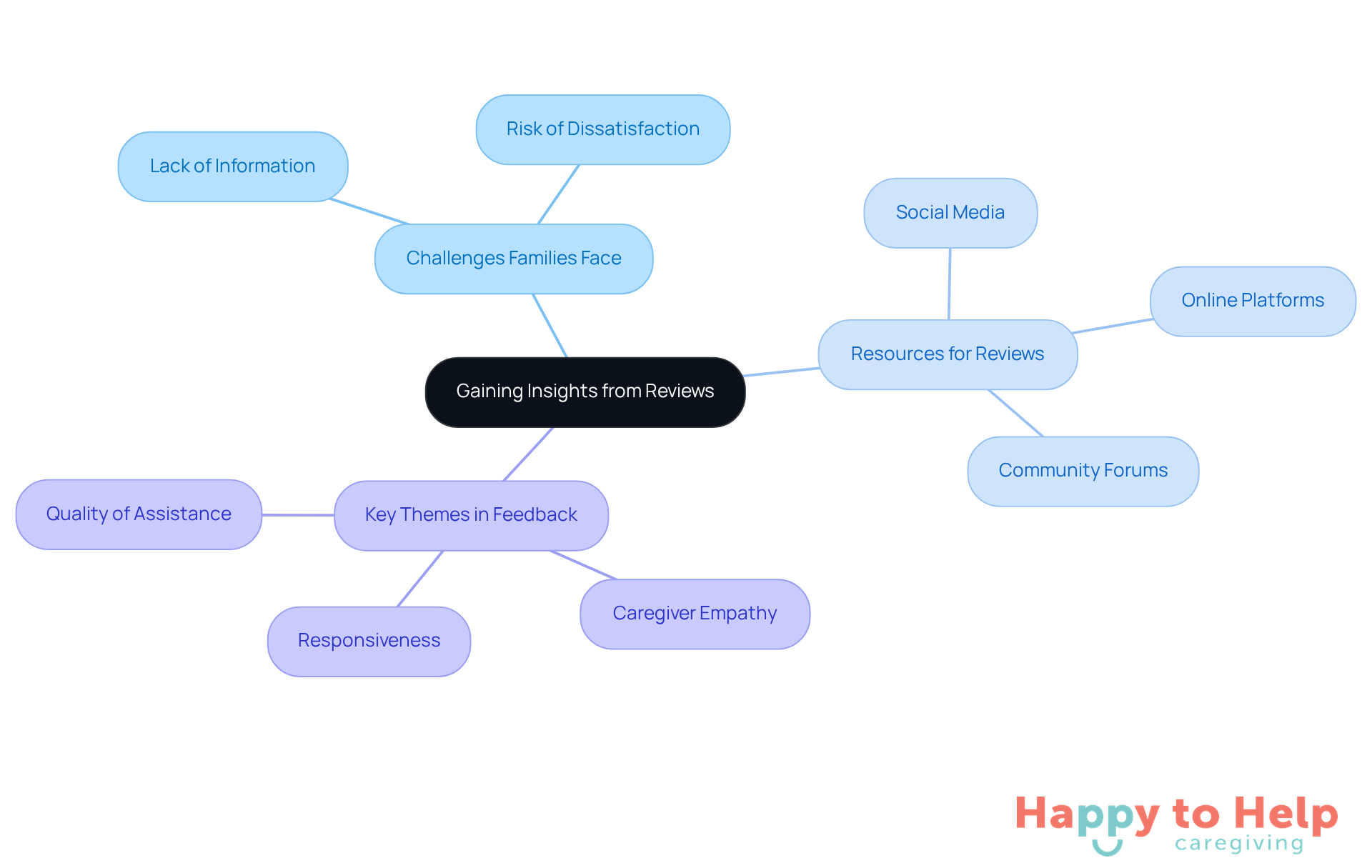
Families face a significant challenge when choosing caregiving services for their loved ones. Without proper information, they risk making decisions that may not align with their needs or expectations. This uncertainty can lead to dissatisfaction and stress for both the family and the individual receiving care.
To navigate this complex landscape, families should actively seek out reviews and testimonials from current residents and their families. Online platforms, social media, and community forums are invaluable resources that provide insights into the experiences of others with various caregiving services. By examining this feedback, families can identify consistent themes, such as caregiver empathy, responsiveness, and the overall quality of assistance.
Ultimately, this information can guide families toward making the best choice for their loved ones. Taking the time to research and reflect on these insights is crucial in ensuring that the caregiving service selected meets the unique needs of their family member.
Trust Your Instincts: Follow Your Gut Feeling in Decision-Making
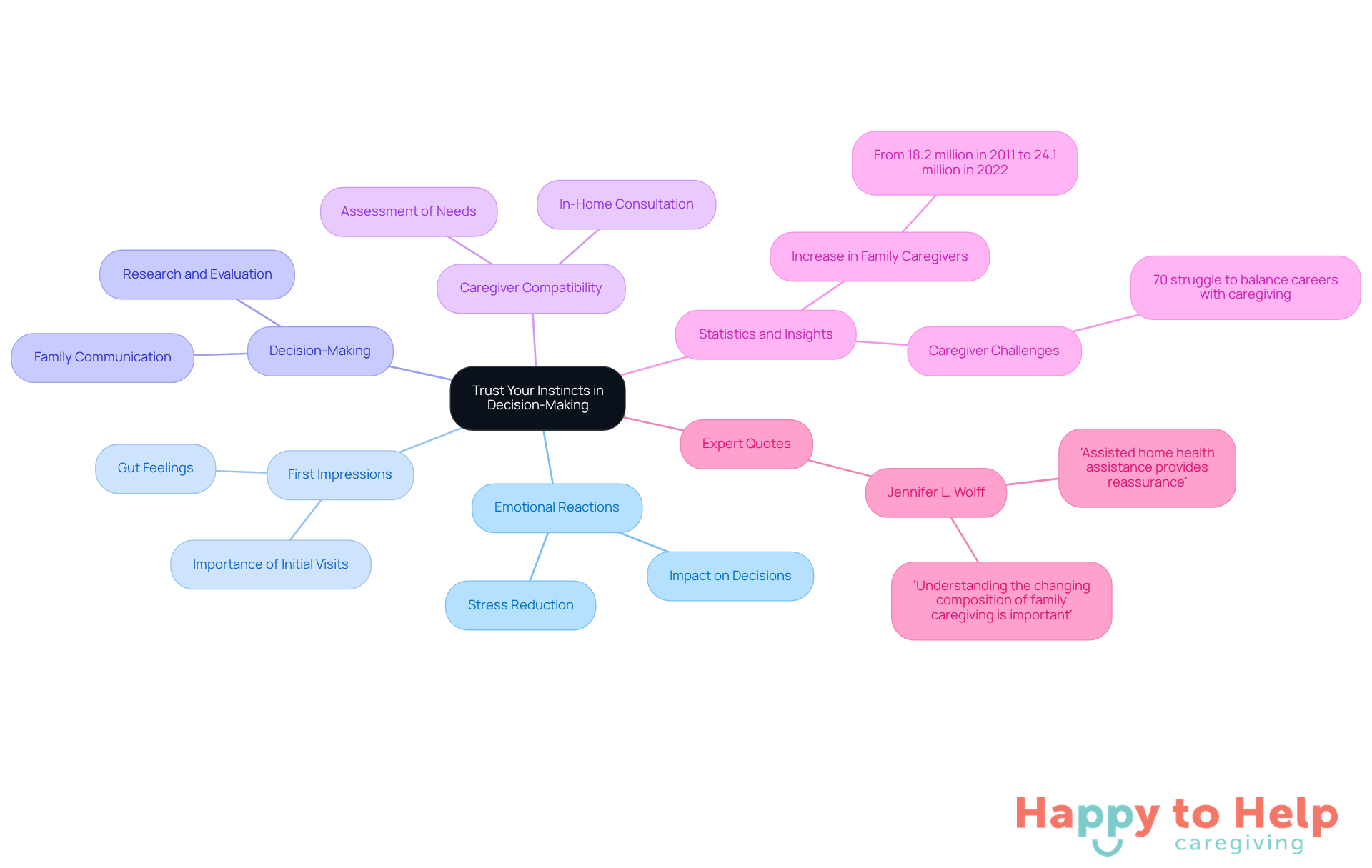
Choosing assisted home options can be a daunting task for families, often filled with uncertainty and emotional weight. When visiting facilities or discussing care with providers, it’s essential to recognize the significant impact of your instincts. If something feels off, it’s crucial to pay attention to those feelings. Ignoring these instincts can lead to poor decision-making, potentially resulting in a mismatch between the chosen option and the family's values and expectations.
Many families report that their first impressions and emotional reactions played a vital role in their decisions. These feelings often guide them toward options that provide assisted home support while also fostering a sense of safety and belonging. For instance, the number of household caregivers in the U.S. surged from 18.2 million in 2011 to 24.1 million in 2022, highlighting the growing demand for assisted home care and the emotional burden that accompanies these choices.
As Jennifer L. Wolff notes, 'For households, assisted home health assistance provides reassurance by delivering expert support in familiar environments.' This instinctual approach can be particularly beneficial in navigating the complexities of caregiving, as it encourages a deeper understanding of what truly matters in the care experience.
To support families in this process, consider scheduling a free in-home consultation. This allows for an assessment of the caregiver's compatibility with loved ones, ensuring that the chosen service aligns with both instincts and needs.
Making the Right Choice
Choosing the right assisted home care option is a significant challenge that can greatly affect the quality of life for seniors and their families. Families often struggle with understanding the various factors involved in making this decision, which can lead to confusion and stress.
To navigate this complex landscape, it’s essential to evaluate individual care needs thoroughly. Conducting facility visits allows families to assess the environment and ensure it aligns with their loved ones' preferences. Additionally, assessing staff qualifications and prioritizing safety protocols are crucial steps in this process. Understanding cost structures also plays a vital role in making informed decisions.
Moreover, emphasizing social activities and maintaining flexible care plans can enhance the overall well-being of residents. These elements not only address physical needs but also contribute to emotional health and happiness.
Families are encouraged to engage in open discussions about their concerns and seek out reviews from other caregivers. Trusting their instincts is key when making these important decisions. By taking these proactive steps, families can create a nurturing environment that meets both the physical and emotional needs of their loved ones.
While the journey to finding the right care option may be challenging, the rewards of ensuring a fulfilling and secure life for seniors are immeasurable. By focusing on these actionable solutions, families can alleviate the stress associated with this decision and foster a supportive atmosphere for their loved ones.
https://iframe.tely.ai/cta/eyJhcnRpY2xlX2lkIjogIjY5MjI2NTAyZTUyMTQ2MjY5ZDM1OGNmNCIsICJjb21wYW55X2lkIjogIjY4ZWU1ZGNhNzMxNzYyNTU3ZjNjOTVjMSIsICJpbmRleCI6IG51bGwsICJ0eXBlIjogImFydGljbGUifQ==Frequently Asked Questions
What services does Happy to Help Caregiving provide for seniors?
Happy to Help Caregiving offers personalized in-home support services for seniors, including companionship, post-hospital recovery assistance, and support tailored to enhance the overall quality of life.
How does Happy to Help Caregiving ensure the well-being of seniors?
The caregivers at Happy to Help are trained to foster independence and well-being, ensuring that seniors receive the necessary support in an assisted home setting, which significantly enhances their emotional well-being.
Why is it important to evaluate individual care needs when considering assisted home support?
Evaluating individual care needs is crucial to ensure that the support provided effectively addresses the person's unique circumstances, which can significantly impact their physical health, cognitive abilities, and emotional well-being.
What should families discuss with healthcare professionals when assessing care needs?
Families should engage in open discussions with healthcare professionals to identify the level of assistance required, which may include help with daily activities, medical support, and companionship.
What factors should families consider when visiting potential caregiving facilities?
Families should consider the safety and cleanliness of the facility, engage with personnel and current residents, and inquire about daily routines, available services, and staff responsiveness to residents' needs.
How can families gather information about the quality of care in a facility?
Families can gather information by observing staff interactions with residents and asking questions about the facility's services and recent changes in state regulations affecting living standards.
List of Sources
- Happy to Help Caregiving: Personalized In-Home Support for Seniors
- Executive Home Care Honors Family Caregivers During National Family Caregivers Month (https://mytwintiers.com/business/press-releases/cision/20251117LA25356/executive-home-care-honors-family-caregivers-during-national-family-caregivers-month)
- Home Care Industry Trends to Watch in 2025 (https://firstlighthomecare.com/blog/home-care-industry-trends)
- Blog - Happy To Help (https://happytohelpcaregiving.com/blog)
- Growing Trend of Private Pay Home Care for Elderly (https://regencyhcs.com/blog/growing-trend-of-private-pay-home-care-for-elderly)
- The Future of Aging: Is In-Home Care the New Standard? - WorldHealth.net (https://worldhealth.net/news/future-of-aging-is-in-home-care-new-standard)
- Evaluate Individual Care Needs: Tailor Choices to Specific Requirements
- Customized Care at Home: The Benefits of Personalized Care Plans - VNA Health Group (https://vnahg.org/customized-care-at-home-the-benefits-of-personalized-care-plans)
- Bridging the Gap in Elderly Care: The Case for Comprehensive In-Home Assessment (https://reachmd.com/news/bridging-the-gap-in-elderly-care-the-case-for-comprehensive-in-home-assessment/2474101)
- 'More pressure on families.' Nearly half of US states are on the brink of a caregiving emergency (https://usatoday.com/story/news/health/2025/05/21/columbia-university-state-caregiving-study/83651201007)
- Older adults prioritize social activities, inclusiveness in massive survey assessing what matters most to them (https://mcknights.com/news/older-adults-prioritize-social-activities-inclusiveness-in-massive-survey-assessing-what-matters-most-to-them)
- Warning From Older Adults: Care for Aging in America Needs Urgent Rethinking (https://johnahartford.org/newsroom/view/warning-from-older-adults-care-for-aging-in-america-needs-urgent-rethinking)
- Conduct Facility Visits: Experience the Environment and Services
- Opinion | The unexpected benefits of moving to a long-term care facility (https://washingtonpost.com/opinions/2025/10/30/nursing-home-assisted-living-social-benefits-research)
- Topic: Home care in the U.S. (https://statista.com/topics/4049/home-care-in-the-us?srsltid=AfmBOoqQphoi37F47Wdwi3alCi0i4mmqoW5Qb9fFNKxZTIneHOZ4pXPx)
- Just The Facts: Assisted Living Is A Safe, High-Quality Long Term Care Option For America’s Seniors (https://ahcancal.org/News-and-Communications/Press-Releases/Pages/Just-The-Facts-Assisted-Living-Is-A-Safe,-High-Quality-Long-Term-Care-Option-For-America’s-Seniors.aspx)
- Peconic Landing nursing facilities rank among nation's best - The Suffolk Times (https://suffolktimes.timesreview.com/2025/11/peconic-landing-nursing-facilities-rank-among-nations-best)
- Caregiver Statistics: Demographics (https://caregiver.org/resource/caregiver-statistics-demographics)
- Assess Staff Qualifications: Ensure Trained and Compassionate Caregivers
- Caregiving Statistics US 2025: Insights for Family Caregivers (https://zencaregiving.org/caregiving-statistics-us-2025)
- The senior population is booming. Caregiving is struggling to keep up (https://cnbc.com/2025/11/21/senior-caregiving-labor.html)
- Caregiver Statistics: Work and Caregiving (https://caregiver.org/resource/caregiver-statistics-work-and-caregiving)
- A New Labor Rule Could Push Caregivers to the Breaking Point | ACLU (https://aclu.org/news/womens-rights/a-new-labor-rule-could-push-caregivers-to-the-breaking-point)
- House Passes Home Care Bill Establishing a Licensure Process for Home Care Agencies (https://reverejournal.com/2025/11/19/house-passes-home-care-bill-establishing-a-licensure-process-for-home-care-agencies)
- Check Safety Protocols: Prioritize Resident Well-Being
- National Healthcare Safety Network COVID-19 Data Dashboard (https://cdc.gov/nhsn/ltc/ltc-report-overview.html)
- Heartwarming Quotes on Taking Care of Elderly Parents (https://humancareny.com/blog/taking-care-of-elderly-parents-quotes)
- Just The Facts: Assisted Living Is A Safe, High-Quality Long Term Care Option For America’s Seniors (https://ahcancal.org/News-and-Communications/Press-Releases/Pages/Just-The-Facts-Assisted-Living-Is-A-Safe,-High-Quality-Long-Term-Care-Option-For-America’s-Seniors.aspx)
- Taking Care of Elderly Parents Quotes (https://ultimatecareny.com/resources/taking-care-of-elderly-parents-quotes)
- Quotes on Taking Care of Elderly Parents (https://h2hhc.com/blog/taking-care-of-elderly-quotes)
- Understand Cost Structures: Plan for Long-Term Financial Commitment
- Cost of Long Term Care by State | Cost of Care Report | Carescout (https://carescout.com/cost-of-care)
- Home Care Costs in 2025: A State-by-State Guide (https://aplaceformom.com/caregiver-resources/articles/in-home-care-costs)
- Understanding the Costs of Assisted Living: Transparency at The High Point (https://thehighpointresidence.com/blog/understanding-the-costs-of-assisted-living-transparency-at-the-high-point)
- Facts & Figures (https://ahcancal.org/Assisted-Living/Facts-and-Figures/Pages/default.aspx)
- Inflation Hits Home Care, Increasing Pressure on Older Adults and Family Caregivers (https://blog.aarp.org/thinking-policy/inflation-hits-home-care-increasing-pressure-older-adults-family-caregivers)
- Evaluate Social Activities: Enhance Quality of Life for Residents
- Social engagement cuts death risk by 42 percent in older adults, study finds (https://mcknights.com/news/social-engagement-cuts-death-risk-by-42-percent-in-older-adults-study-finds)
- Long-term care communities can boost social engagement in older adults (https://news-medical.net/news/20250804/Long-term-care-communities-can-boost-social-engagement-in-older-adults.aspx)
- Social engagement helps older adults feel younger, live longer: study (https://mcknightsseniorliving.com/news/social-engagement-helps-older-adults-feel-younger-live-longer-study)
- Older adults prioritize social activities, inclusiveness in massive survey assessing what matters most to them (https://mcknights.com/news/older-adults-prioritize-social-activities-inclusiveness-in-massive-survey-assessing-what-matters-most-to-them)
- Ensure Flexible Care Plans: Adapt to Changing Needs
- Customized Care at Home: The Benefits of Personalized Care Plans - VNA Health Group (https://vnahg.org/customized-care-at-home-the-benefits-of-personalized-care-plans)
- (https://privatenursingcareinc.com/blog/the-role-of-flexibility-in-home-health-care)
- Warning From Older Adults: Care for Aging in America Needs Urgent Rethinking (https://johnahartford.org/newsroom/view/warning-from-older-adults-care-for-aging-in-america-needs-urgent-rethinking)
- CaringBridge (https://caringbridge.org/resources/inspirational-quotes-on-caregiving)
- The Benefits of Flexible Scheduling in Home Care Plans (https://regencyhcs.com/blog/the-benefits-of-flexible-scheduling-in-home-care-plans)
- Read Reviews: Gain Insights from Current Residents and Families
- CMS Begins Updating Nursing Home Care Compare Ratings (https://skillednursingnews.com/2025/11/cms-begins-updating-nursing-home-care-compare-ratings)
- U.S. News to Debut Best Home Health Ratings in 2026 (https://usnews.com/info/blogs/press-room/articles/2025-11-03/u-s-news-to-debut-best-home-health-ratings-in-2026)
- Online reviews are becoming more important to patients in choosing their care: How to manage your online reputation in health care | Medical Economics (https://medicaleconomics.com/view/online-reviews-are-becoming-more-important-to-patients-in-choosing-their-care-how-to-manage-your-online-reputation-in-health-care)
- 45 Statistics on Patient Reviews for Healthcare Professionals (https://repugen.com/blog/statistics-on-patient-reviews-for-healthcare-professionals)
- The Power of Client Testimonials and Case Studies for Home Care Agencies (https://seniorcaremarketingmax.com/blogs/the-power-of-client-testimonials-and-case-studies-for-home-care-agencies)
- Trust Your Instincts: Follow Your Gut Feeling in Decision-Making
- How much should doctors trust parental intuition? (https://theweek.com/health/how-much-should-doctors-trust-parental-intuition)
- Fact Sheet: Trends in Family Care for Older Americans (https://prb.org/resources/fact-sheet-trends-in-family-care-for-older-americans)
- 15 Million Americans Choose In-Home Care: Why It's a Lifeline for Seniors and Families (https://caringheartshomecare.com/15-million-americans-choose-in-home-care-why-it-s-a-lifeline-for-seniors-and-families)
- 2025 Home Care Statistics: Trends & Insights To Know (https://premierhcinc.com/blog/home-care-statistics)
- 52 Eye-Opening Home Health Statistics: Insights for 2025 (https://boosthomehealth.com/home-health-statistics)