Understanding The Benefits of Aging in Place
Aging in place presents a significant challenge for many seniors and their caregivers. While it allows seniors to maintain independence and stay connected to familiar surroundings, it also raises concerns about how caregivers can effectively support their loved ones.
The implications of this challenge are profound. Caregivers often face emotional strain, financial pressures, and the complexities of ensuring safety and well-being at home. Understanding these nuances is crucial for caregivers who want to help seniors thrive in their golden years.
So, what can caregivers do? Here are some practical solutions:
- Educate Yourself: Learn about the specific needs of seniors aging in place. This knowledge can empower you to make informed decisions.
- Create a Support Network: Engage family members and friends to share responsibilities and provide emotional support.
- Utilize Resources: Explore local services and programs designed to assist seniors at home, such as meal delivery or home health aides.
By addressing these challenges head-on, caregivers can unlock the full potential of aging in place, ensuring that seniors enjoy their independence while receiving the support they need.
Define Aging in Place
Aging in situ presents a significant challenge for older individuals who wish to maintain their independence. Many face the dilemma of whether to stay in their own homes or move to assisted living facilities. This situation not only affects their physical health but also impacts their emotional well-being, as staying connected to familiar environments and loved ones is crucial for seniors.
According to the Centers for Disease Control and Prevention (CDC), the benefits of aging in place are:
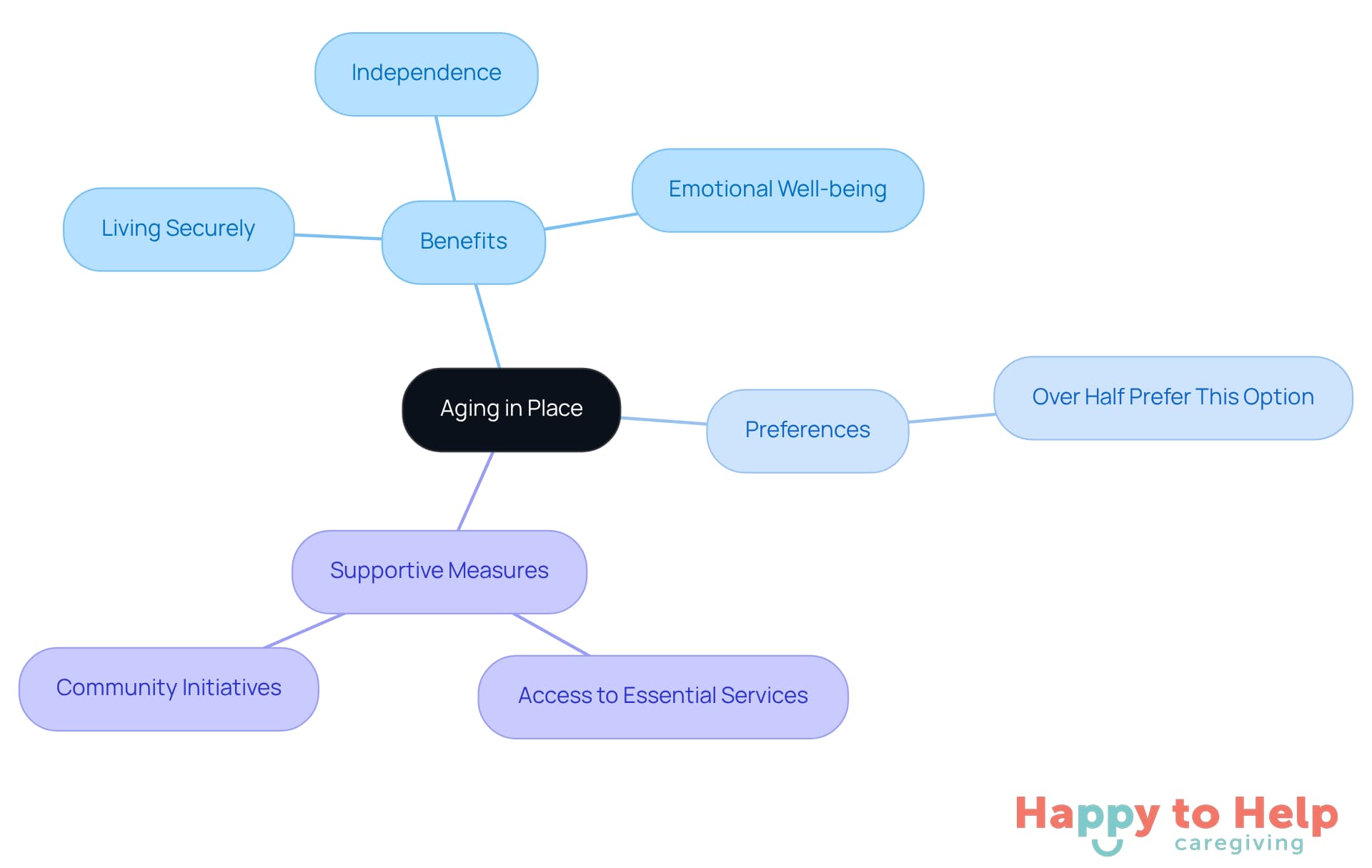
- Living securely and comfortably in one's own residence and community, regardless of age, income, or ability.
- Over half of older adults prefer this option due to the benefits of aging in place, highlighting their desire for autonomy and the comfort of known surroundings.
To address these challenges, caregivers can implement proactive planning and seek supportive environments. Gerontologists emphasize the importance of:
- Access to essential services
- Community-focused initiatives
For instance, programs that provide resources for housing modifications can significantly enhance the ability of older adults to live independently.
By fostering connections within the community and ensuring access to necessary support, we can help seniors realize the benefits of aging in place in their own residences. This approach not only preserves their lifestyle but also promotes a sense of belonging and emotional stability.
Contextualize the Importance of Aging in Place
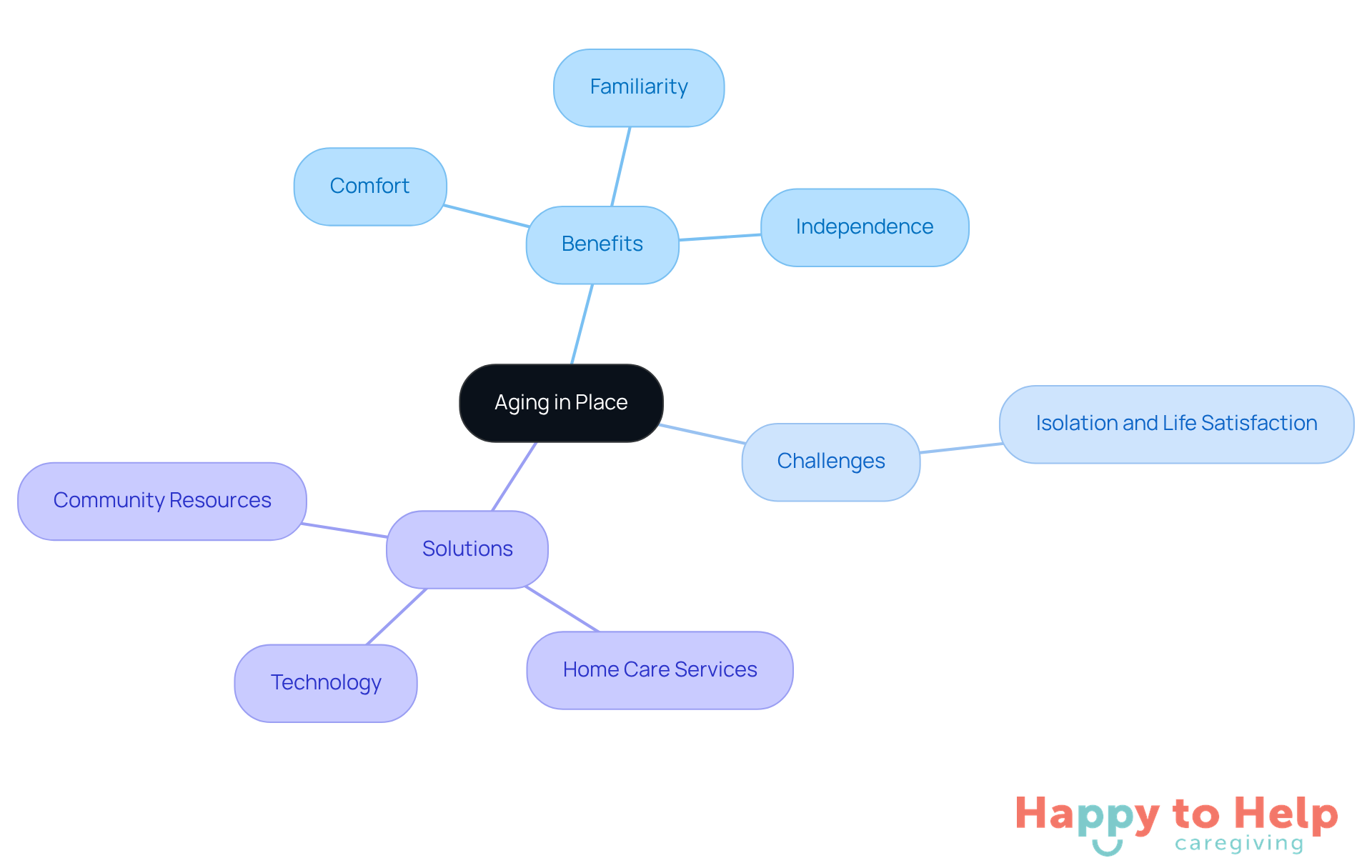
The benefits of aging in place are increasingly significant as more senior citizens opt to remain in their homes. Studies show that a large majority of older adults prefer to age in their own residences due to the benefits of aging in place, which include:
- Comfort
- Familiarity
- Independence
This desire highlights the challenges caregivers face in ensuring safe and effective living environments for their loved ones.
The implications of this preference are profound. The benefits of aging in place include aligning with the values of autonomy and dignity, which allow seniors to maintain control over their daily lives and decisions. However, without proper support, this can lead to feelings of isolation and decreased life satisfaction.
Fortunately, there are actionable solutions available. Improvements in home care services, technology, and community resources provide essential support for seniors wishing to age at home. These advancements not only enhance safety but also promote emotional well-being, reducing feelings of loneliness and increasing overall life satisfaction.
In summary, the benefits of aging in place for seniors cannot be overstated. By leveraging available resources and support systems, caregivers can help their loved ones enjoy the benefits of aging in place.
Outline Key Benefits of Aging in Place
Aging in place presents a significant challenge for many seniors and their caregivers. As individuals grow older, they often face the dilemma of maintaining independence while ensuring their safety and well-being. This situation can lead to feelings of isolation and increased stress for both seniors and their families.
However, the numerous benefits of aging in place can alleviate these concerns.
-
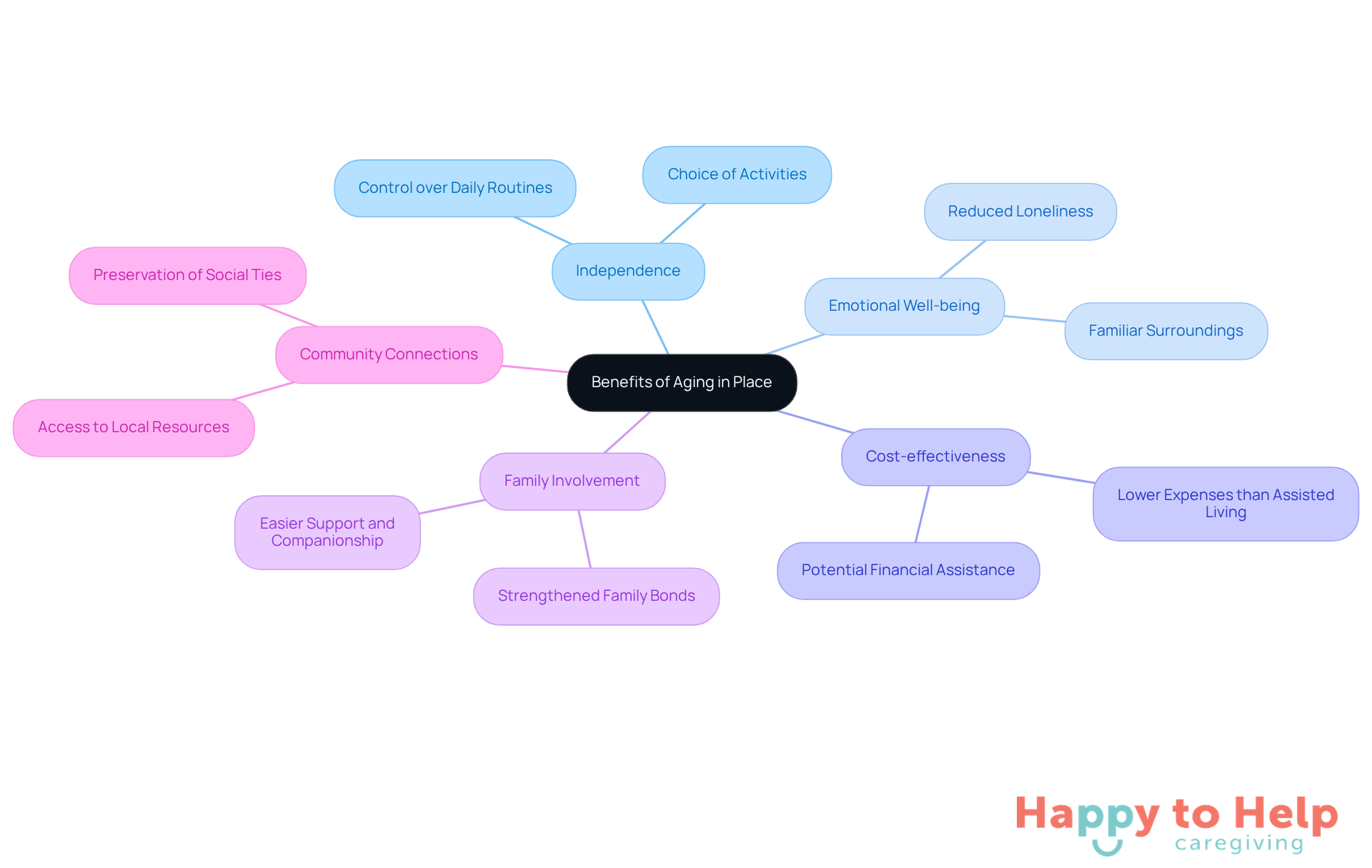
One of the benefits of aging in place is independence, which allows seniors to maintain control over their daily routines. They can make choices about their activities, meals, and social interactions, which fosters a sense of autonomy.
-
Moreover, the emotional well-being of seniors is greatly enhanced by the benefits of aging in place, as they remain in familiar surroundings. This stability can reduce feelings of loneliness and depression, promoting a stronger sense of belonging and security.
-
From a financial perspective, the benefits of aging in place can be cost-effective. It often incurs fewer expenses compared to relocating to assisted living facilities, making it a more affordable option for many families.
-
Additionally, the benefits of aging in place encourage family involvement. Loved ones can provide support and companionship more easily, strengthening family bonds and enhancing the caregiving experience.
-
Finally, staying in the same neighborhood allows seniors to enjoy the benefits of aging in place while maintaining community connections. This continuity allows them to preserve social ties and access local resources, ultimately enhancing their overall quality of life.
Explore Components of Successful Aging in Place
While there are several challenges to successful aging in place, the benefits of aging in place can significantly enhance the quality of life for seniors. As they age, many face safety concerns and accessibility issues within their homes. AARP data reveals that 43% of adults aged 50 and older believe their residences need modifications to ensure safety. Moreover, 71% anticipate needing larger projects, such as stair lifts or wider doorways for wheelchair access, to maintain their independence.
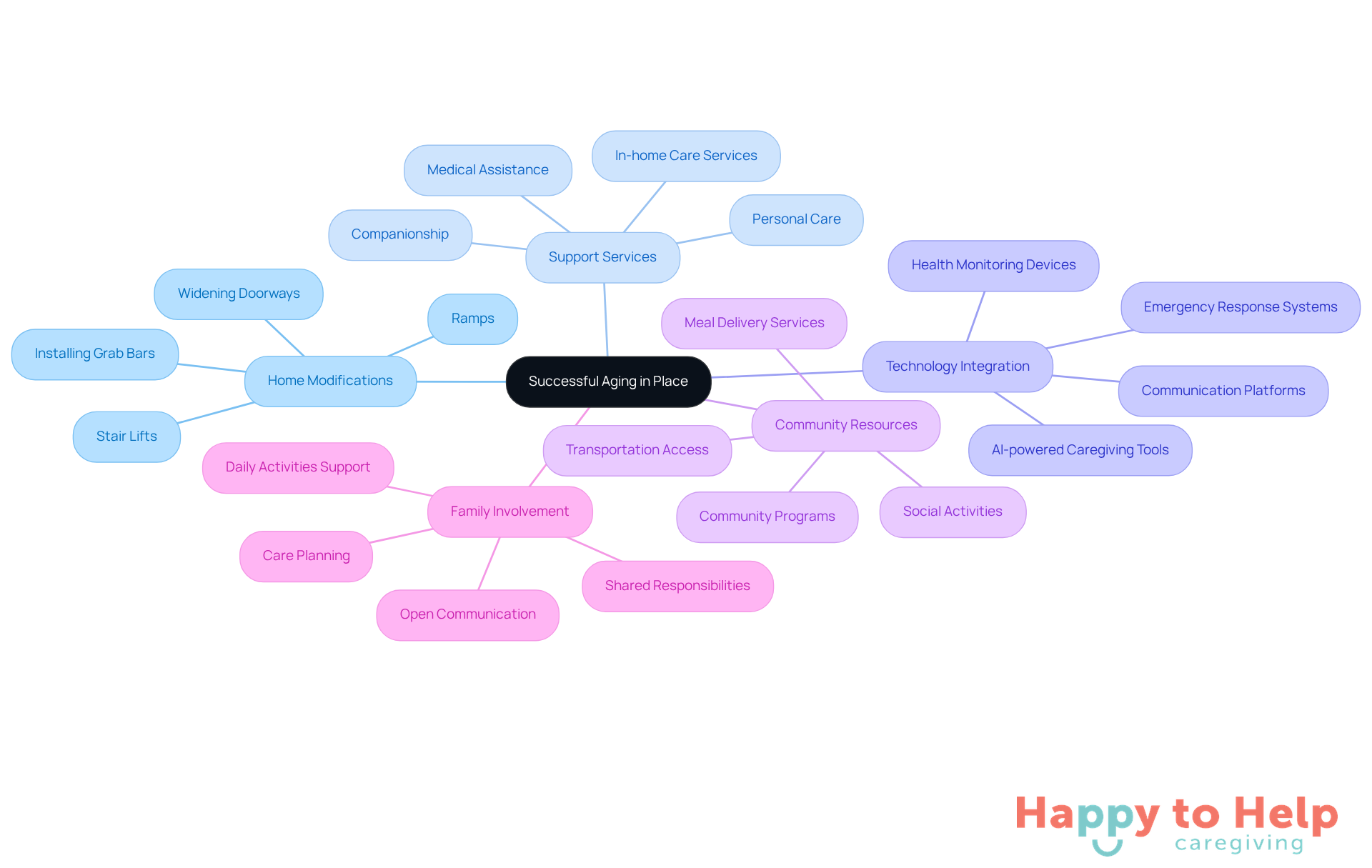
To address these issues, home modifications are essential. Adapting living spaces can enhance safety and accessibility. Common modifications include:
- Installing grab bars
- Ramps
- Widening doorways to accommodate mobility aids
These changes not only improve safety but also empower seniors to navigate their homes with confidence.
Another critical aspect is access to support services. In-home care services, including companionship, personal care, and medical assistance, are tailored to meet individual needs. The presence of trained caregivers can alleviate feelings of loneliness and isolation, fostering a sense of security in familiar surroundings. A recent AARP survey found that 75% of adults aged 50 and older prefer to stay in their homes as they age, highlighting the importance of these services.
Technology integration also plays a pivotal role in successful aging in place. Tools such as health monitoring devices, communication platforms, and emergency response systems enhance safety and connectivity. Innovations in AgeTech, including remote patient monitoring and AI-powered caregiving tools, are increasingly vital for older adults wishing to maintain their independence.
Engaging with community resources is equally important. Access to transportation, meal delivery, and social activities promotes community involvement and reduces isolation. Community programs designed to support the elderly can greatly enhance their quality of life. The decline in nursing home beds-almost 63,000 less available since 2020-emphasizes the need for effective aging-at-home solutions.
Finally, family support is crucial in this journey. Involving family members in care planning and daily activities fosters open communication and shared responsibilities. This support not only strengthens emotional connections but also provides practical assistance, ensuring that seniors feel valued and cared for.
By addressing these components-home modifications, support services, technology integration, community resources, and family involvement-families can create an environment that promotes independence and well-being for their loved ones, which ultimately enhances their quality of life and showcases the benefits of aging in place.
Your Path Forward
Aging in place poses a significant challenge for seniors who wish to maintain their independence and emotional well-being at home. This situation can lead to feelings of isolation and a loss of autonomy, which are crucial for overall happiness and quality of life.
However, there are several key benefits to aging in place that can help mitigate these challenges:
- Enhanced independence
- Emotional stability
- Financial savings
- Preservation of community ties
By implementing home modifications, leveraging supportive services, and utilizing technology, seniors can navigate their living spaces safely and confidently. Family involvement is also critical, ensuring that older adults feel supported and valued throughout this journey.
To address these needs, it’s essential to advocate for resources and community initiatives that empower older adults to thrive in their own homes. Embracing the benefits of aging in place can lead to a more fulfilling and connected life for seniors. By taking proactive measures, we can support this vital lifestyle choice, allowing seniors to live with dignity and control over their lives.
https://iframe.tely.ai/cta/eyJhcnRpY2xlX2lkIjogIjY5NDFmMzY0MjI1ZjA3N2M1ZmMwYzA1MiIsICJjb21wYW55X2lkIjogIjY4ZWU1ZGNhNzMxNzYyNTU3ZjNjOTVjMSIsICJpbmRleCI6IG51bGwsICJ0eXBlIjogImFydGljbGUifQ==Frequently Asked Questions
What does aging in place mean?
Aging in place refers to the ability of older individuals to live securely and comfortably in their own homes and communities as they age, maintaining their independence.
Why do many older adults prefer to age in place?
Over half of older adults prefer to age in place because it allows them to maintain autonomy and stay in familiar surroundings, which is important for their emotional well-being.
What challenges do older individuals face when considering aging in place?
Older individuals often face the dilemma of whether to stay in their homes or move to assisted living facilities, which can affect their physical health and emotional well-being.
What role do caregivers play in supporting aging in place?
Caregivers can implement proactive planning and seek supportive environments to help older adults age in place, ensuring they have access to essential services and community initiatives.
How can community initiatives aid in aging in place?
Community-focused initiatives, such as programs that provide resources for housing modifications, can significantly enhance older adults' ability to live independently and securely in their homes.
What are the emotional benefits of aging in place for seniors?
Aging in place promotes a sense of belonging and emotional stability for seniors, as it allows them to stay connected to familiar environments and loved ones.
List of Sources
- Define Aging in Place
- Why "Aging in Place" is Gaining Popularity Among Adults & Families (https://careaparent.com/why-aging-in-place-is-gaining-popularity-among-adults-families)
- Advice for aging in place: how to safely stay in your home as long as possible (https://uchealth.org/today/advice-for-aging-in-place-safely-stay-in-your-home-as-long-as-possible)
- Aging in Place: Growing Older at Home (https://nia.nih.gov/health/aging-place/aging-place-growing-older-home)
- Families caring for older adults at home say aging in place should not be taken lightly, but may be worth it (https://cbsnews.com/newyork/news/aging-in-place-home-remodeling-cost-of-caregiving)
- New AARP Report: Majority of Adults 50-plus Want to Age in Place, But Policies and Communities Must Catch Up (https://press.aarp.org/2024-12-10-New-AARP-Report-Majority-Adults-50-plus-Age-Place-Policies-Communities-Catch-Up)
- Contextualize the Importance of Aging in Place
- Home sweet home: A majority of Americans want to age in place (https://empower.com/the-currency/life/home-sweet-home-americans-age-place-news)
- Families caring for older adults at home say aging in place should not be taken lightly, but may be worth it (https://cbsnews.com/newyork/news/aging-in-place-home-remodeling-cost-of-caregiving)
- Survey: 84% of older Americans prioritize aging in place | The Journal Record (https://journalrecord.com/2025/03/13/survey-84-of-older-americans-prioritize-aging-in-place)
- New AARP Report: Majority of Adults 50-plus Want to Age in Place, But Policies and Communities Must Catch Up (https://press.aarp.org/2024-12-10-New-AARP-Report-Majority-Adults-50-plus-Age-Place-Policies-Communities-Catch-Up)
- Outline Key Benefits of Aging in Place
- Home sweet home: A majority of Americans want to age in place (https://empower.com/the-currency/life/home-sweet-home-americans-age-place-news)
- Aging in place: How seniors can maintain independence and promote physical and mental wellbeing while aging at home (https://wbjournal.com/article/aging-in-place-how-seniors-can-maintain-independence-and-promote-physical-and-mental)
- Families caring for older adults at home say aging in place should not be taken lightly, but may be worth it (https://cbsnews.com/newyork/news/aging-in-place-home-remodeling-cost-of-caregiving)
- The Benefits of Aging in Place (https://bucknerparkwayplace.org/news-blog/the-benefits-of-aging-in-place)
- Explore Components of Successful Aging in Place
- Home sweet home: A majority of Americans want to age in place (https://empower.com/the-currency/life/home-sweet-home-americans-age-place-news)
- Top healthcare trends of 2026: Aging in place is driving innovation in home-based care and technology (https://definitivehc.com/blog/aging-in-place-driving-innovation)
- DiMe, 20+ Partners Launch New Effort to Help Older Adults Age in Place - MedCity News (https://medcitynews.com/2025/11/agetech-senior-healthcare-technology)
- Aging in Place Shifts from Reactive to Proactive (https://vgm.com/communities/live-at-home/aging-in-place-shifts-from-reactive-to-proactive)
- Gallup: US seniors perceive major need for aging-in-place resources (https://mcknightshomecare.com/news/gallup-us-seniors-perceive-major-need-for-aging-in-place-resources)