Why Live In Care Matters
Caring for elderly loved ones presents significant challenges for families, often leading to stress and difficulty in balancing personal lives. Many caregivers find themselves overwhelmed, trying to ensure their relatives receive the necessary support while managing their own responsibilities. This situation can lead to feelings of frustration and helplessness.
Live-in care offers a practical solution to these challenges. It provides personalized assistance tailored to the unique needs of seniors, enhancing their overall well-being. By having a dedicated caregiver in the home, families can alleviate some of the burdens they face, ensuring their loved ones receive the attention and care they deserve.
As families consider live-in care, it's essential to understand how it can improve the quality of life for older adults. This approach not only addresses immediate care needs but also fosters a supportive environment that promotes independence and dignity. In the following sections, we will explore the specific benefits of live-in care and how it can effectively meet the needs of seniors.
Happy to Help Caregiving: Personalized In-Home Support for Seniors
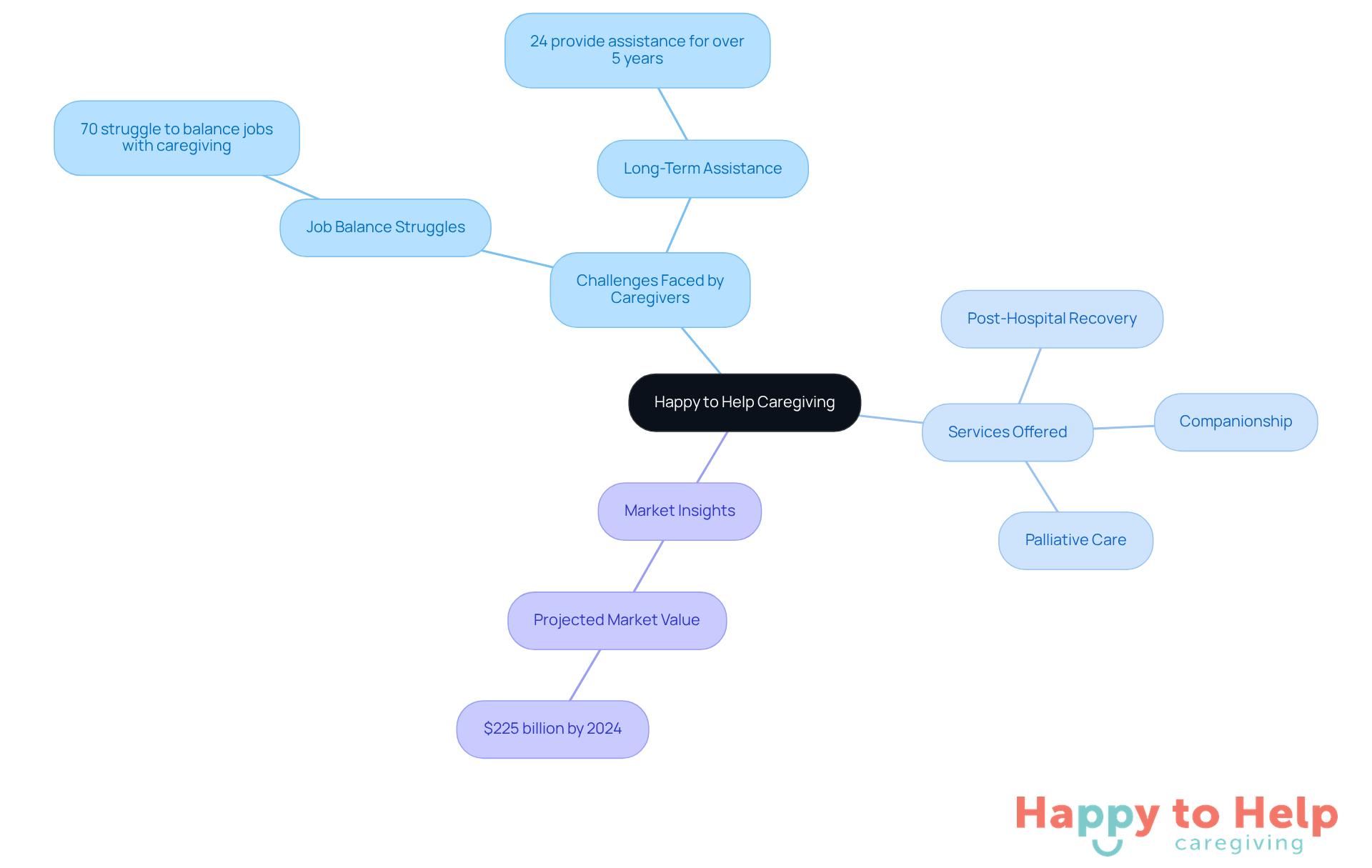
Caregiving can be a daunting challenge for many families. Almost 70% of family caregivers struggle to balance their jobs with caregiving responsibilities, and 24% provide assistance for over five years. This situation can lead to stress and burnout, highlighting the need for professional support.
Happy to Help Caregiving addresses these challenges by providing tailored in-home assistance for older adults who live in care. Their services include:
- Companionship
- Post-hospital recovery assistance
- Palliative care
All customized to meet the unique needs and preferences of each client. This individualized approach not only fosters a sense of security and comfort but also empowers seniors to thrive in their familiar surroundings.
Moreover, studies show that efficient in-home support models can significantly enhance emotional and physical well-being. The home support market is projected to reach $225 billion by 2024, making it essential for families to explore customized support solutions. As caregiving expert Amy Goyer states, "Small changes - and big ones, too - can be put in place to accommodate loved ones."
As the demand for quality live-in care continues to rise, Happy to Help Caregiving remains committed to providing compassionate, expert assistance that prioritizes the dignity and independence of older adults.
Companionship: Alleviating Loneliness and Enhancing Emotional Well-Being
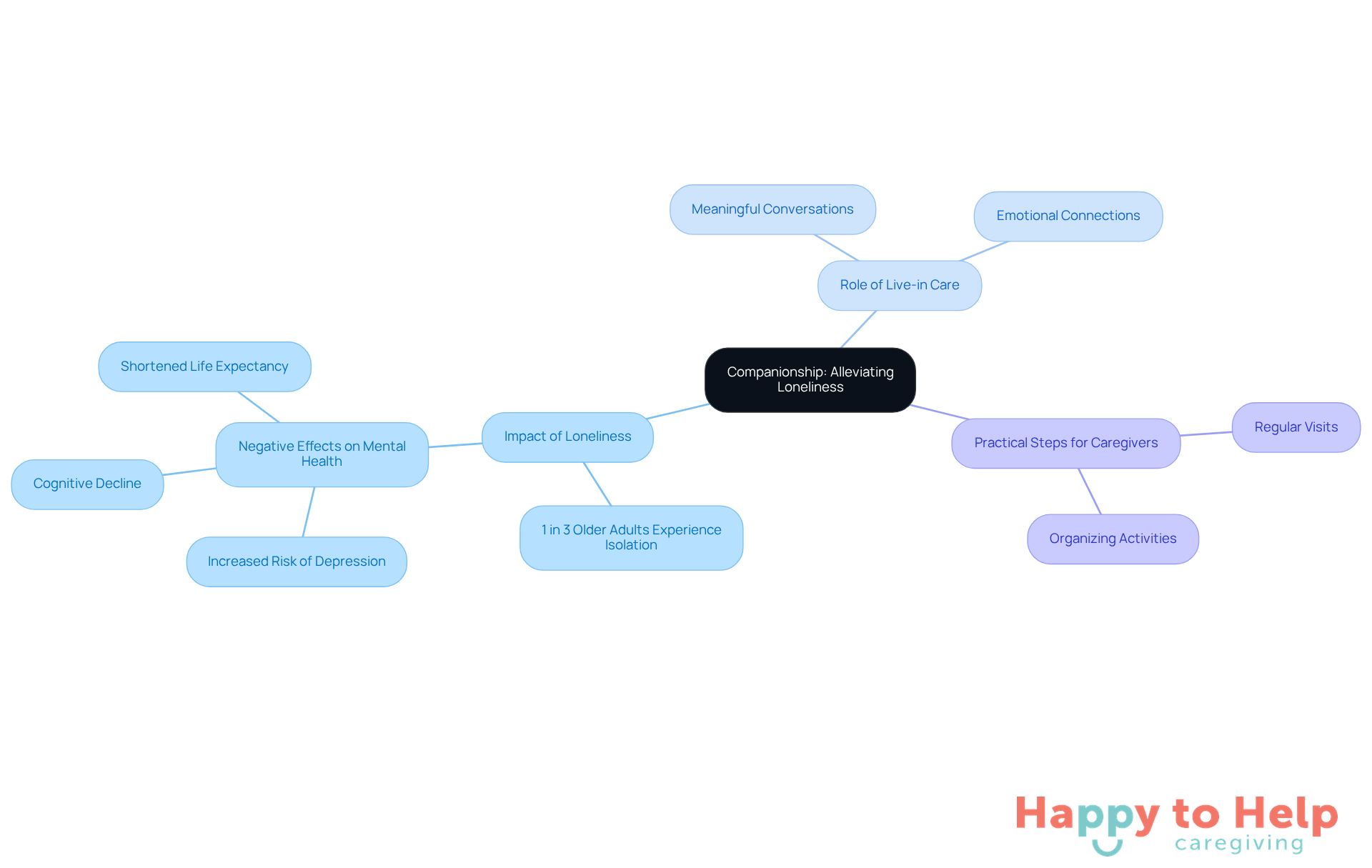
Loneliness among the elderly is a significant issue that caregivers must address. One in three older adults experiences feelings of isolation, according to a report from the University of Michigan’s National Poll on Healthy Aging. This isolation can lead to depression and negatively impact overall well-being, highlighting the urgent need for regular social interaction.
To combat this problem, live in care can provide essential companionship through meaningful conversations and activities. Engaging with older adults not only alleviates loneliness but also fosters emotional connections that are crucial for emotional stability. Experts like Holt-Lunstad emphasize that these connections can lead to enhanced mental health outcomes, highlighting that companionship is a cornerstone of effective live in care.
Caregivers can take practical steps to nurture companionship:
- Arranging regular visits
- Organizing activities that promote social interaction
By ensuring that their loved ones feel connected and supported, caregivers can significantly enrich their quality of life.
Daily Living Assistance: Supporting Independence in Everyday Activities
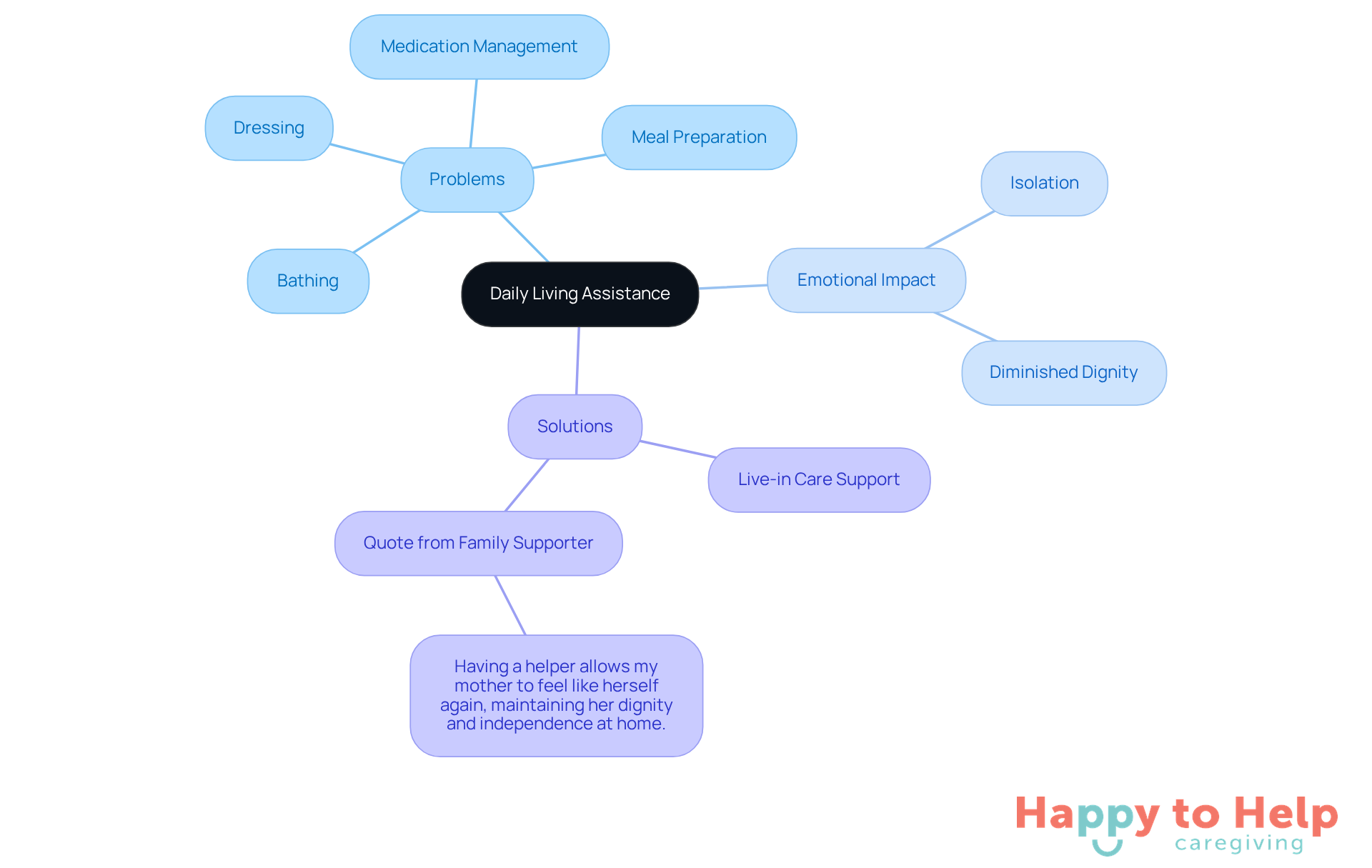
Problem: Many elderly individuals struggle with daily living tasks such as bathing, dressing, meal preparation, and medication management. This challenge affects their independence and quality of life. In fact, over 20% of individuals aged 85 and above require assistance with these activities, underscoring the urgent need for support.
Agitate: The lack of help can lead to feelings of isolation and a diminished sense of dignity for older adults. They may find it difficult to engage in activities they once enjoyed, which can negatively impact their mental and emotional well-being. Families often feel overwhelmed as they seek to provide care while balancing their own responsibilities.
Solution: Live in care support providers play a crucial role in addressing these challenges. By assisting with essential daily tasks, they empower elderly individuals who live in care to maintain their independence and continue participating in cherished activities. This support not only enhances the quality of life for older adults but also fosters a sense of autonomy and dignity. As one family supporter noted, "Having a helper allows my mother to feel like herself again, maintaining her dignity and independence at home."
In conclusion, as families strive to improve the lives of their loved ones, the importance of compassionate, personalized support becomes increasingly clear.
Safety and Security: Ensuring a Safe Living Environment for Seniors
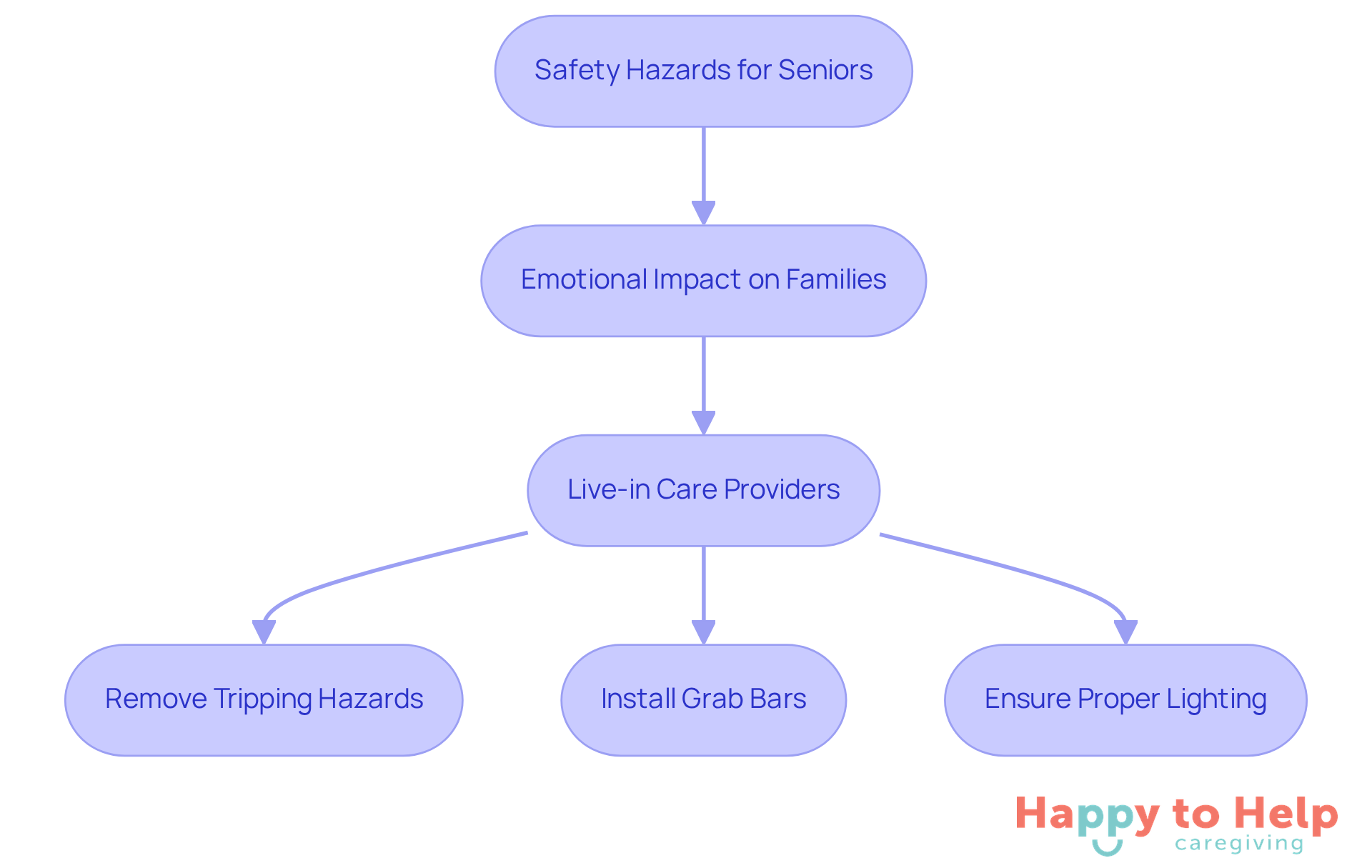
Problem: Seniors often face safety hazards in their living environments, which can lead to accidents and injuries.
Agitate: These hazards, such as tripping risks and inadequate lighting, can create significant concerns for families, leaving them anxious about their loved ones' well-being at home.
Solution: Live in care providers play a vital role in ensuring a safe living environment for seniors. They are trained to identify potential hazards and implement safety measures, such as:
- Removing tripping hazards
- Installing grab bars
- Ensuring proper lighting
This proactive approach not only prevents accidents but also provides families with peace of mind, knowing their loved ones are safe at home.
Continuity of Care: Managing Health Needs with Consistent Support
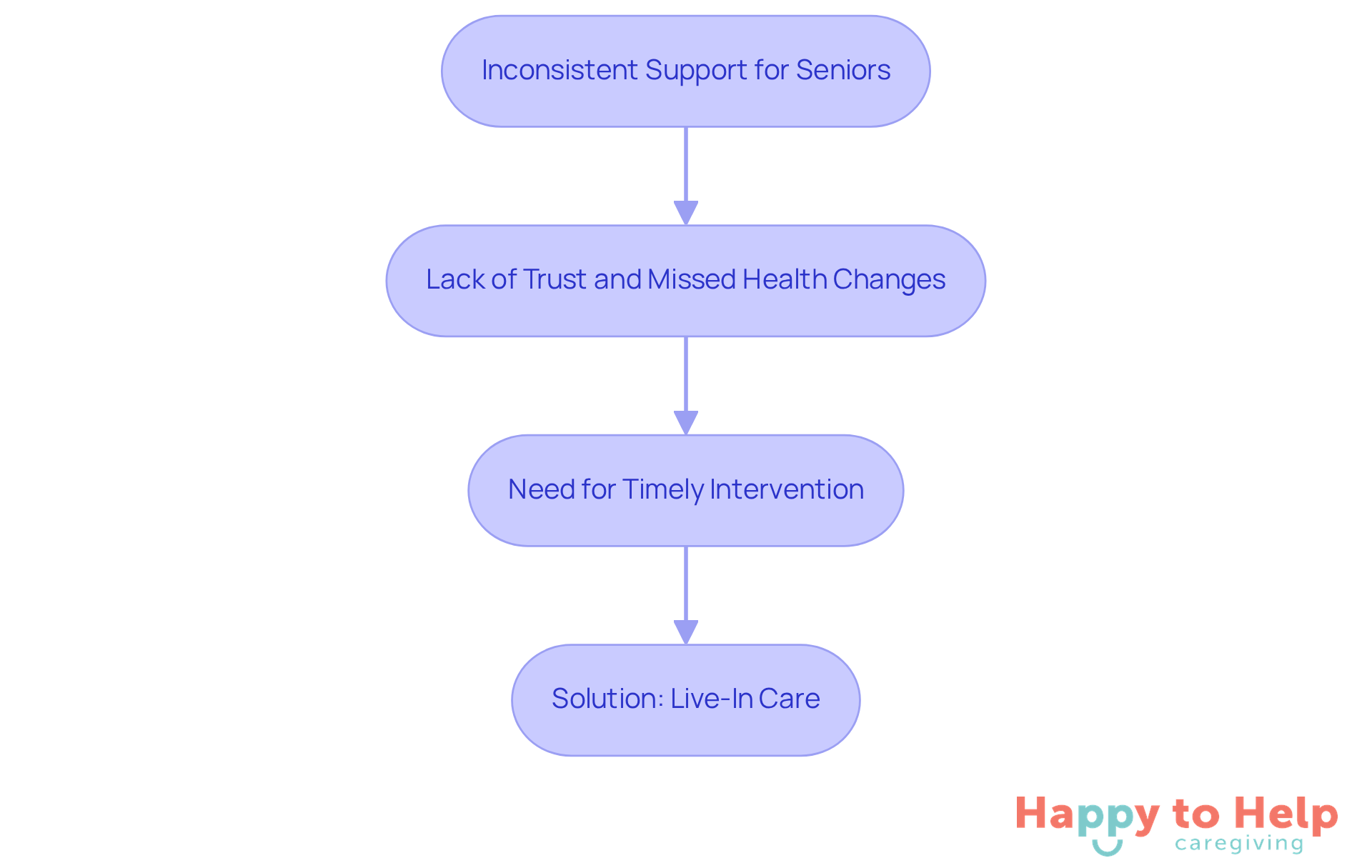
One significant challenge caregivers face is the inconsistency of support for seniors. This inconsistency can lead to a lack of trust and hinder effective health management. For older adults with chronic conditions, this can be particularly problematic, as caregivers may miss critical changes in health that require timely intervention.
The solution lies in live in care, which provides the continuity that is crucial for fostering trusting relationships. When seniors receive consistent assistance from the same caregiver, it allows for better observation of health changes and the ability to modify support plans as needed. This proactive approach ensures that interventions are prompt and tailored to the individual’s evolving health needs.
Flexible Care Plans: Tailoring Support to Individual Needs
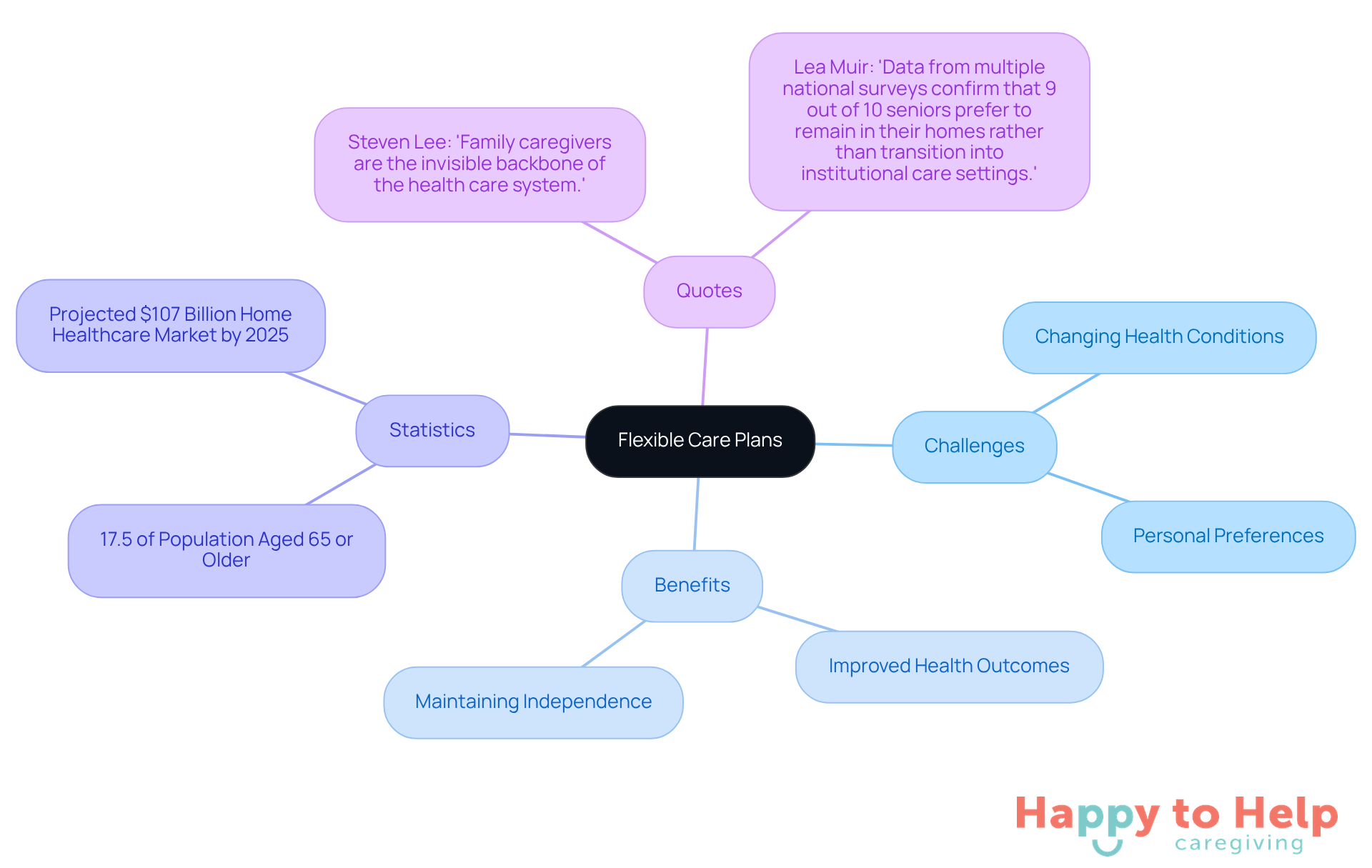
The challenge of providing adequate support for elderly individuals is significant. Many seniors face changing health conditions and personal preferences that require flexible care solutions. Without tailored support, their quality of life can diminish, leading to feelings of insecurity and discomfort in their own homes.
Research indicates that personalized support plans can greatly enhance health outcomes for seniors. These plans not only help maintain independence but also foster a sense of security. As the U.S. population ages - 17.5% are now 65 or older - the demand for such tailored caregiving solutions is on the rise. Projections suggest that the home healthcare market will reach $107 billion by 2025.
Live in care provides a practical solution. Caregivers work closely with families to create adaptable plans that evolve with the individual’s needs. This ensures that older adults receive the right level of support at all times, significantly improving their overall well-being. By prioritizing individualized care, families can help their loved ones thrive in familiar surroundings.
As Steven Lee, founder of ianacare, aptly puts it, "Family helpers are the unseen backbone of the health system." This highlights the essential role of tailored assistance in caregiving, emphasizing that with the right support, seniors can enjoy a better quality of life.
Cost-Effectiveness: Live-In Care as an Affordable Alternative
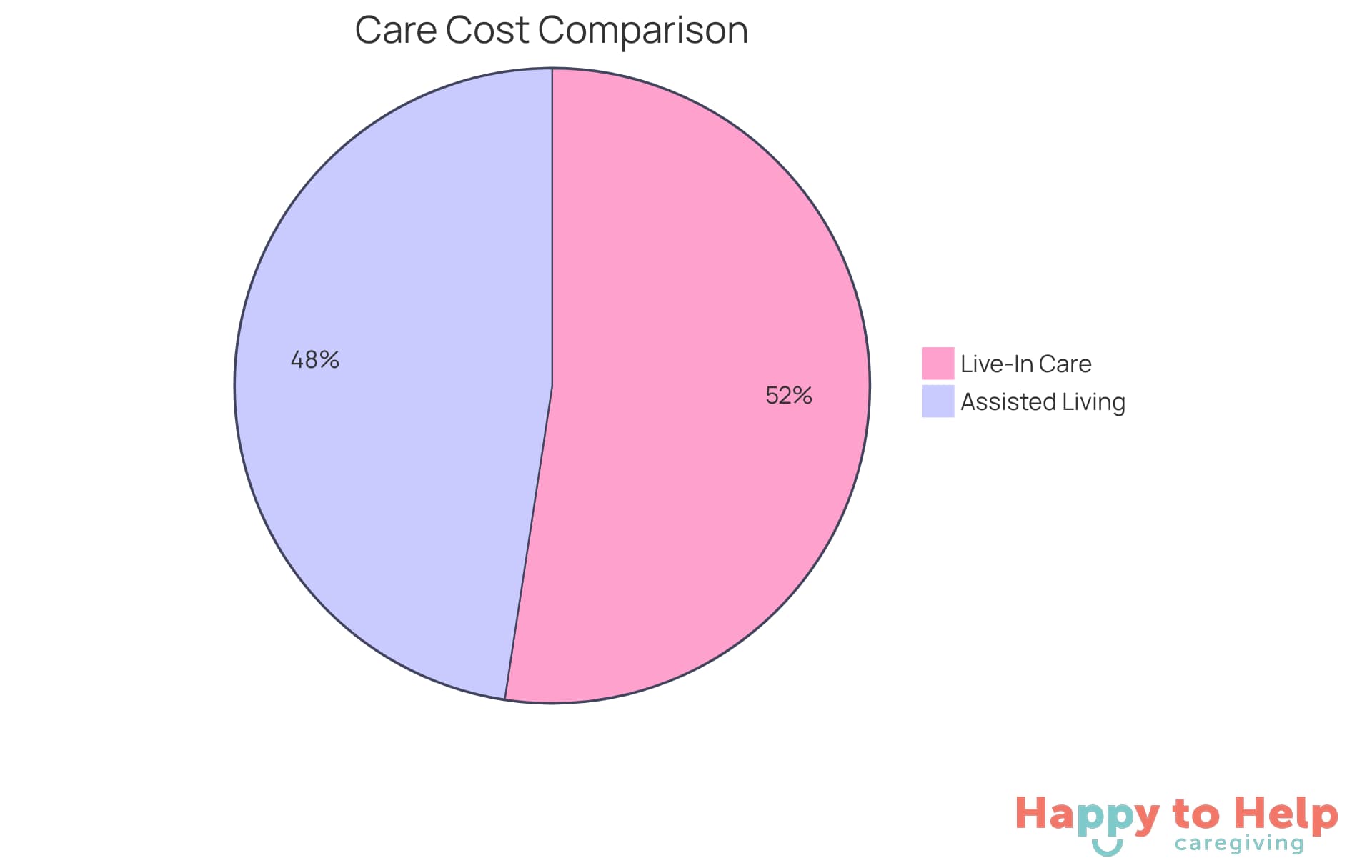
The high costs of assisted living facilities and nursing homes present a significant challenge for families seeking care for their loved ones. In 2024, the average monthly expense for assisted living is around $5,900, which can strain family budgets. This financial burden often leads families to seek alternatives that provide both quality care and affordability.
Live in care emerges as a viable solution. Families frequently find that the overall expenses related to live in care are more manageable than those associated with institutional environments. In fact, the average costs for live-in support services are:
- $6,292 for homemaker services
- $6,483 for home health aides
This option not only alleviates financial pressure but also ensures that loved ones receive personalized support in the comfort of their own homes, promoting well-being and independence.
As financial expert Suze Orman states, "Saving money can help you deal with the stress of unexpected expenses." To prepare for these costs, families can develop a budget that includes potential in-home support expenses. By planning ahead, they can navigate the financial aspects of providing assistance more effectively.
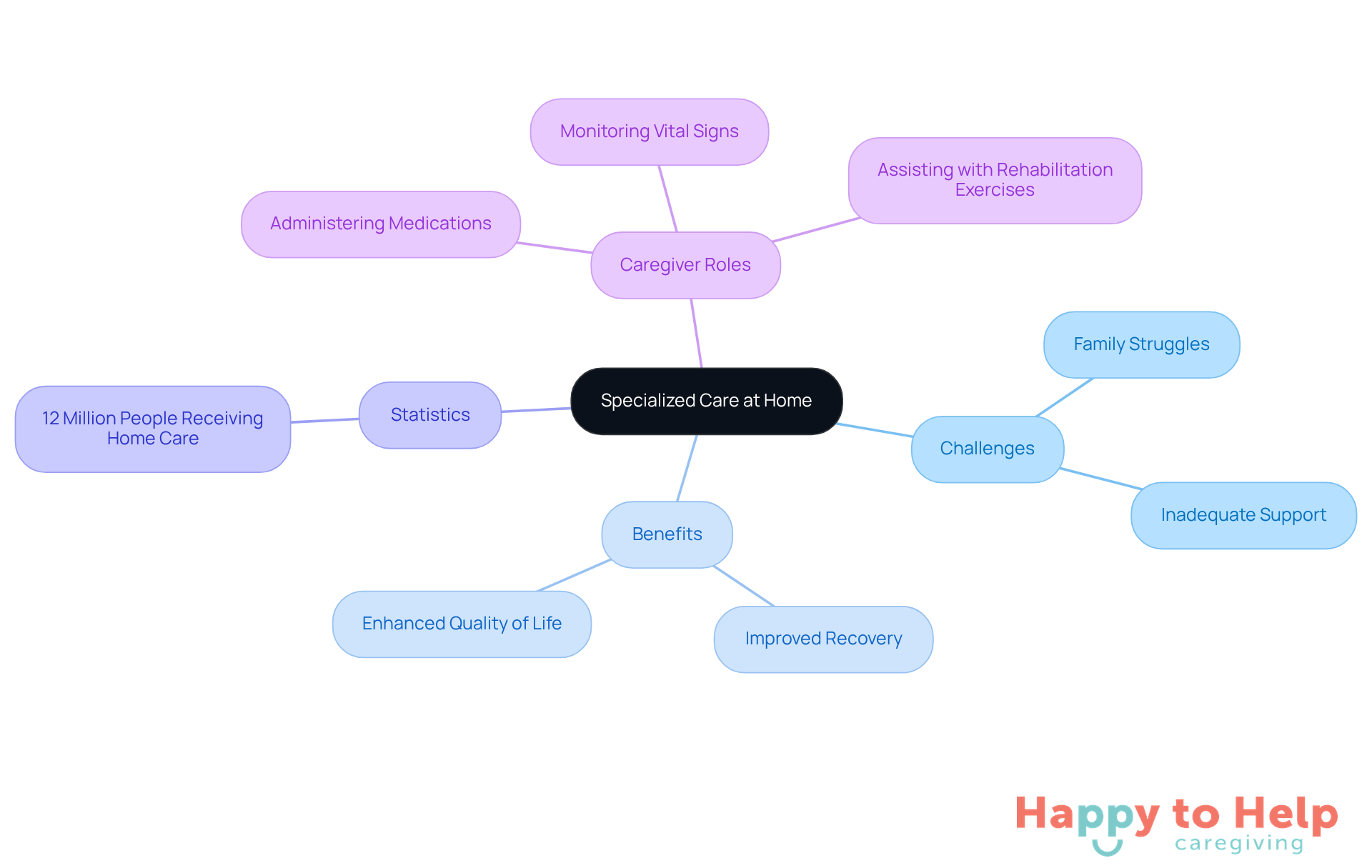
Specialized Care: Addressing Complex Medical Needs at Home
Elderly individuals often face significant challenges when it comes to managing complex medical needs at home. Many require specialized support, especially those recovering from surgery or dealing with chronic illnesses. This situation can be overwhelming for families, as they may struggle to provide the necessary care without professional assistance.
The implications of inadequate support can be serious. Without proper care, elderly individuals may experience slower recovery times and diminished health outcomes. In fact, studies indicate that those receiving in-home specialized assistance tend to recover more effectively than those in institutional settings. Currently, around 12 million people in the U.S. benefit from home support, underscoring its importance in today’s healthcare landscape.
So, what can caregivers do to ensure their loved ones receive the best possible care? Live in care caregivers are a vital resource, as they are equipped to administer medications, monitor vital signs, and assist with rehabilitation exercises. This specialized support not only enhances health outcomes but also fosters a more comfortable recovery environment at home.
Healthcare experts emphasize the value of in-home medical assistance, noting that it significantly improves the quality of life for elderly individuals. As one specialist remarked, "In-home assistance enables elderly individuals to preserve their independence while obtaining the support they require, which is vital for their overall well-being."
In summary, the increasing trend of providing intricate support at home highlights the essential role of live in care. They not only alleviate the burden on families but also ensure that elderly individuals receive the comprehensive care they need to thrive.
Family Involvement: Enhancing Communication and Support Networks
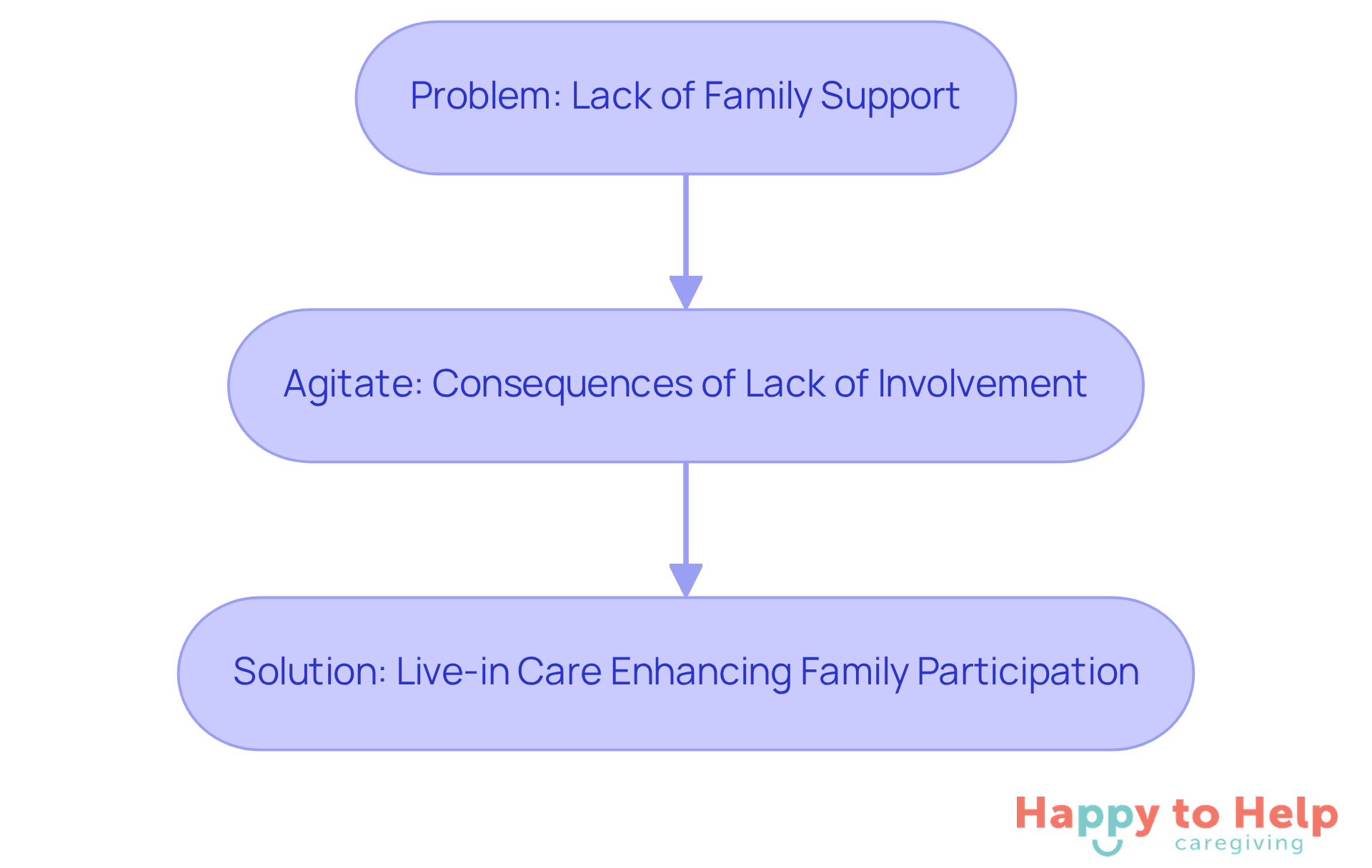
Problem: Many elderly individuals face challenges in receiving adequate support from their families, which can lead to feelings of isolation and neglect.
Agitate: Without strong family participation, caregivers may struggle to provide the best possible care, resulting in decreased satisfaction for both the elderly and their families. This lack of involvement can hinder effective planning and coordination of care, ultimately affecting the well-being of loved ones.
Solution: Live in care can bridge this gap by encouraging family participation. Caregivers maintain regular communication with family members, offering updates on health and well-being. This open line of communication not only encourages collaboration in planning support but also ensures that families are actively involved in their loved one's care. By enhancing family engagement, overall satisfaction and care outcomes improve significantly.
Improved Quality of Life: Holistic Benefits of Live-In Care for Seniors
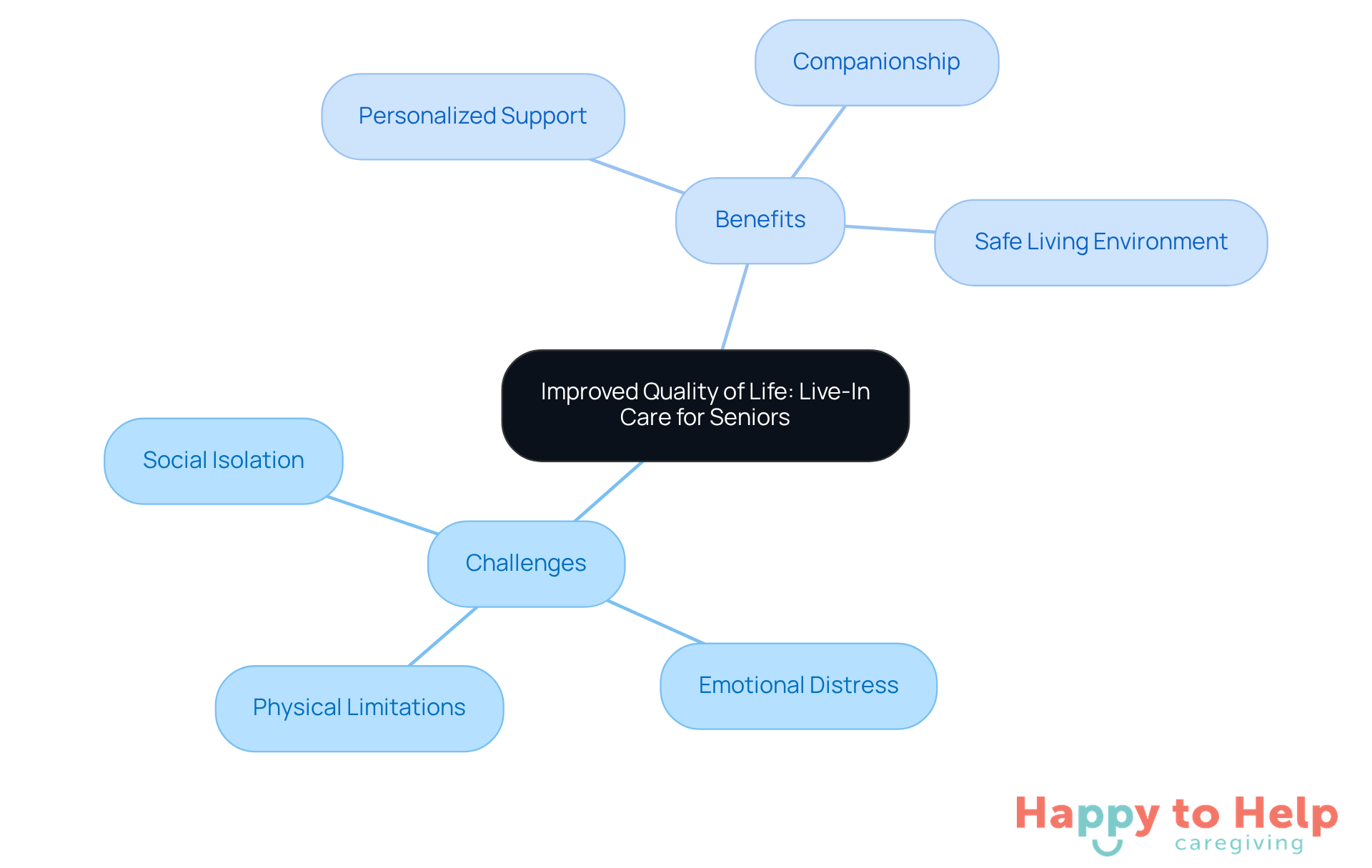
Elderly individuals often face significant challenges in their daily lives, particularly when it comes to maintaining their independence and dignity. Without adequate support, they may struggle with:
- Physical limitations
- Emotional distress
- Social isolation
These issues can lead to a diminished quality of life, making it crucial for caregivers to find effective solutions.
Live in care provides a practical solution to these challenges. By providing personalized support, companionship, and a safe living environment, seniors can enjoy a fulfilling life at home. This holistic approach not only addresses their physical needs but also nurtures their emotional and social well-being.
The benefits of live in care are substantial. Families seeking the best for their loved ones can find peace of mind knowing that their elderly relatives are receiving the care they need to thrive. With live in care, seniors can maintain their independence while enjoying a higher quality of life.
Taking the Next Steps
Live-in care addresses a significant challenge faced by many families: the need for personalized support for seniors. As our loved ones age, they often require assistance that respects their dignity and independence. Without adequate support, seniors may experience loneliness, decreased safety, and a decline in overall well-being.
The implications of inadequate care can be profound. Seniors may feel isolated, leading to mental health issues, and they may struggle with daily tasks, increasing the risk of accidents at home. This situation not only affects the elderly but also places a burden on families who worry about their loved ones' safety and happiness.
Fortunately, live-in care offers a practical solution. Here are some key benefits:
- Companionship: Alleviates loneliness and fosters social interaction.
- Daily Living Assistance: Supports independence by helping with everyday tasks.
- Safety Measures: Ensures a secure living environment.
- Continuity of Care: Consistent caregivers enhance health management.
- Flexible Care Plans: Adapt to the evolving needs of seniors.
- Cost-Effectiveness: Provides a viable alternative to traditional assisted living facilities.
In conclusion, live-in care is more than just a service; it’s a vital resource that significantly enhances the quality of life for seniors. Families are encouraged to explore these personalized in-home support options. Investing in compassionate care not only benefits loved ones but also fosters peace and security for everyone involved. By prioritizing the well-being of elderly individuals through tailored assistance, families can help ensure a more fulfilling and enriched life at home.
https://iframe.tely.ai/cta/eyJhcnRpY2xlX2lkIjogIjY5MjEwYTliN2ZjNmVmMjJiNThhZjZiNSIsICJjb21wYW55X2lkIjogIjY4ZWU1ZGNhNzMxNzYyNTU3ZjNjOTVjMSIsICJpbmRleCI6IG51bGwsICJ0eXBlIjogImFydGljbGUifQ==Frequently Asked Questions
What challenges do family caregivers face?
Family caregivers often struggle to balance their jobs with caregiving responsibilities, with nearly 70% reporting difficulties. Additionally, 24% provide assistance for over five years, which can lead to stress and burnout.
What services does Happy to Help Caregiving offer?
Happy to Help Caregiving provides tailored in-home assistance for seniors, including companionship, post-hospital recovery assistance, and palliative care, all customized to meet the unique needs and preferences of each client.
How does Happy to Help Caregiving support the well-being of seniors?
The individualized approach of Happy to Help Caregiving fosters a sense of security and comfort, empowering seniors to thrive in their familiar surroundings. Studies indicate that efficient in-home support can significantly enhance emotional and physical well-being.
What is the projected market size for home support services?
The home support market is projected to reach $225 billion by 2024, highlighting the growing demand for customized support solutions for families.
Why is companionship important for older adults?
Companionship is vital as one in three older adults experiences feelings of isolation, which can lead to depression and negatively affect overall well-being. Regular social interaction through live-in care can alleviate loneliness and foster emotional connections.
What practical steps can caregivers take to nurture companionship?
Caregivers can arrange regular visits and organize activities that promote social interaction to ensure their loved ones feel connected and supported.
What daily living tasks do elderly individuals commonly struggle with?
Many elderly individuals struggle with daily living tasks such as bathing, dressing, meal preparation, and medication management, with over 20% of individuals aged 85 and above requiring assistance with these activities.
How does live-in care support assist with daily living tasks?
Live-in care support providers help elderly individuals maintain their independence by assisting with essential daily tasks, which enhances their quality of life and fosters a sense of autonomy and dignity.
List of Sources
- Happy to Help Caregiving: Personalized In-Home Support for Seniors
- In-Home Care for Seniors - Caregiving News and Tips (https://aarp.org/caregiving/home-care)
- 28 Senior Care Statistics: In-Home & Assisted Living | Shortlister (https://myshortlister.com/insights/senior-care-statistics)
- 2025 Home Care Statistics: Trends & Insights To Know (https://premierhcinc.com/blog/home-care-statistics)
- Caregiver Statistics: Demographics (https://caregiver.org/resource/caregiver-statistics-demographics)
- News - Happy To Help (https://happytohelpcaregiving.com/news)
- Companionship: Alleviating Loneliness and Enhancing Emotional Well-Being
- 1 in 3 older adults still experience loneliness and isolation (https://michiganmedicine.org/health-lab/1-3-older-adults-still-experience-loneliness-and-isolation)
- Trends in Loneliness Among Older Adults from 2018-2023 (https://ihpi.umich.edu/national-poll-healthy-aging/reports-and-resources/trends-loneliness-among-older-adults-2018-2023)
- Why Home Care Providers Are Increasingly Offering Companion Care Services for Seniors | Aaniie, formerly Smartcare Software (https://aaniie.com/news/why-home-care-providers-are-increasingly-offering-companion-care-services-for-seniors)
- Summary - Social Isolation and Loneliness in Older Adults - NCBI Bookshelf (https://ncbi.nlm.nih.gov/books/NBK557972)
- New initiative aims to reduce loneliness among older adults in Louisville (https://news.louisville.edu/news/new-initiative-aims-reduce-loneliness-among-older-adults-louisville)
- Daily Living Assistance: Supporting Independence in Everyday Activities
- 28 Senior Care Statistics: In-Home & Assisted Living | Shortlister (https://myshortlister.com/insights/senior-care-statistics)
- Elderly Care Statistics (https://rosewood-nursing.com/post/elderly-care-statistics)
- CDC: More than 20% of 85+ adults need ADL assistance (https://mcknightsseniorliving.com/news/cdc-more-than-20-of-85-adults-need-adl-assistance)
- Press Releases (https://mn.gov/governor/newsroom/press-releases/index.jsp?id=1055-653199)
- U.S. Caregiving System Leaves Significant Unmet Needs Among Aging Adults - The New School SCEPA (https://economicpolicyresearch.org/resource-library/u-s-caregiving-system-leaves-significant-unmet-needs-among-aging-adults)
- Safety and Security: Ensuring a Safe Living Environment for Seniors
- Home Safety for Seniors: Statistics & Proven Safety Solutions (https://agesafeamerica.com/home-safety-hub/articles/home-safety-seniors-statistics-solutions)
- In-Home Care for Seniors - Caregiving News and Tips (https://aarp.org/caregiving/home-care)
- Home Safety Month, Garbage Cans, and Aging in Place (https://lifework.arizona.edu/news/2025/home-safety-month-garbage-cans-and-aging-place)
- Hidden Hazards in the Home: Help Protect Yourself and Your Loved Ones (https://ncoa.org/article/hidden-home-hazards-older-adults-more-likely-to-die-from-falls-and-fires)
- As falling deaths rise for older adults, how home safety can make a difference (https://denver7.com/news/local-news/as-falling-deaths-rise-for-older-adults-how-home-safety-can-make-a-difference)
- Continuity of Care: Managing Health Needs with Consistent Support
- The Importance of Caregiver-Client Relationships in Senior Well-Being (https://homeinstead.com/home-care/usa/in/goshen/588/news-and-media/the-importance-of-caregiver-client-relationships-in-senior-well-being)
- AI must optimize home care, continuity, and early detection for older adults (https://news-medical.net/news/20251007/AI-must-optimize-home-care-continuity-and-early-detection-for-older-adults.aspx)
- 27 Inspirational Quotes for Caregivers (https://ultimatecareny.com/resources/27-quotes-for-caregivers)
- Continuity of Care and Preventable Hospitalization (https://jamanetwork.com/journals/jamainternalmedicine/fullarticle/1738715)
- Continuity of Care and Healthcare Utilization in Older Adults with Dementia in Fee-for-Service Medicare - PMC (https://pmc.ncbi.nlm.nih.gov/articles/PMC5061498)
- Flexible Care Plans: Tailoring Support to Individual Needs
- Home Care Providers Turn to Tech for More Flexible, Cost-Effective Models (https://homehealthcarenews.com/2025/02/home-care-providers-turn-to-tech-for-more-flexible-cost-effective-models)
- Caregiver Statistics: Work and Caregiving (https://caregiver.org/resource/caregiver-statistics-work-and-caregiving)
- 10 Must-Know U.S. Home Care Industry Stats for 2025 - North American Community Hub (https://nchstats.com/us-home-care-industry-stats)
- Building a lifeline for family caregivers across the US (https://news.mit.edu/2025/ianacare-builds-lifeline-for-family-caregivers-across-us-0811)
- Cost-Effectiveness: Live-In Care as an Affordable Alternative
- 77 Financial Advisor Quotes to Send to Clients (https://billgoodmarketing.com/resources/financial-advisor-quotes)
- 28 Senior Care Statistics: In-Home & Assisted Living | Shortlister (https://myshortlister.com/insights/senior-care-statistics)
- Cost of Long Term Care by State | Cost of Care Report | Carescout (https://carescout.com/cost-of-care)
- 14 Quotes From Our Favorite Money Saving Experts (https://chime.com/blog/quotes-from-money-saving-experts)
- Top 150 Financial Planning Quotes [2025] (https://digitaldefynd.com/IQ/financial-planning-quotes)
- Specialized Care: Addressing Complex Medical Needs at Home
- 28 Senior Care Statistics: In-Home & Assisted Living | Shortlister (https://myshortlister.com/insights/senior-care-statistics)
- The Rise of Hospital Level In-Home Healthcare: Trends, Benefits and the Future (https://achc.org/the-rise-of-hospital-level-in-home-healthcare-trends-benefits-and-the-future)
- 2025 Home Care Statistics: Trends & Insights To Know (https://premierhcinc.com/blog/home-care-statistics)
- Overcoming Challenges In Home-Based Care For Medically Intensive Patients (https://homehealthcarenews.com/2025/09/overcoming-challenges-in-home-based-care-for-medically-intensive-patients)
- Home (https://homehealthcarenews.com)
- Family Involvement: Enhancing Communication and Support Networks
- As Family Caregiving Grows, So Does the Need for Reform - Medicare Rights Center (https://medicarerights.org/medicare-watch/2025/08/14/as-family-caregiving-grows-so-does-the-need-for-reform)
- Caregiving Crisis: 45% Increase in Americans Providing Care (https://aarp.org/caregiving/basics/caregiving-in-us-survey-2025)
- The number of family caregivers is surging (https://19thnews.org/2025/07/family-caregivers-surging-aarp)
- Fact Sheet: Trends in Family Care for Older Americans (https://prb.org/resources/fact-sheet-trends-in-family-care-for-older-americans)
- Improved Quality of Life: Holistic Benefits of Live-In Care for Seniors
- Just The Facts: Assisted Living Is A Safe, High-Quality Long Term Care Option For America’s Seniors (https://ahcancal.org/News-and-Communications/Press-Releases/Pages/Just-The-Facts-Assisted-Living-Is-A-Safe,-High-Quality-Long-Term-Care-Option-For-America’s-Seniors.aspx)
- How Live-In Care Improves Quality of Life for Seniors (https://careindeed.com/blogs/how-live-in-care-improves-quality-of-life-for-seniors)
- (https://belleviecare.co.uk/support-advice/60-elderly-care-quotes-to-lift-your-spirits)
- Home Care Impact on Recovery of Patient (A Statistics Report) (https://lovinghomecareinc.com/home-care-recovery-statistics)
- 10 Inspiring Quotes about Aging | Senior Health | Masonicare (https://masonicare.org/resources/blog/10-inspiring-quotes-about-aging)