
The Importance of Senior Services in San Diego
The landscape of senior care in San Diego is evolving, reflecting the growing need for personalized and comprehensive support systems. Family caregivers face a significant challenge: nearly 75% of older adults prefer to age in place, which complicates the navigation of a complex array of services aimed at enhancing their loved ones' well-being. This situation can lead to feelings of isolation and overwhelm for both seniors and caregivers alike.
To address these challenges, it’s essential to explore ten vital senior services that not only tackle the unique issues of aging but also equip caregivers with the necessary tools and resources. These services can foster independence and strengthen emotional connections, ultimately improving the quality of life for seniors.
How can families effectively harness these services to combat isolation and enhance their loved ones' lives?
Happy to Help Caregiving: Personalized In-Home Care Services
Caring for seniors and individuals with special needs highlights the unique challenges faced in senior services San Diego, particularly the emotional toll of loneliness and isolation. Many elderly individuals experience feelings of disconnection, which can significantly impact their overall well-being. In fact, studies show that nearly 75% of older adults prefer to age in place, underscoring the need for personalized support that fosters independence and emotional connection.
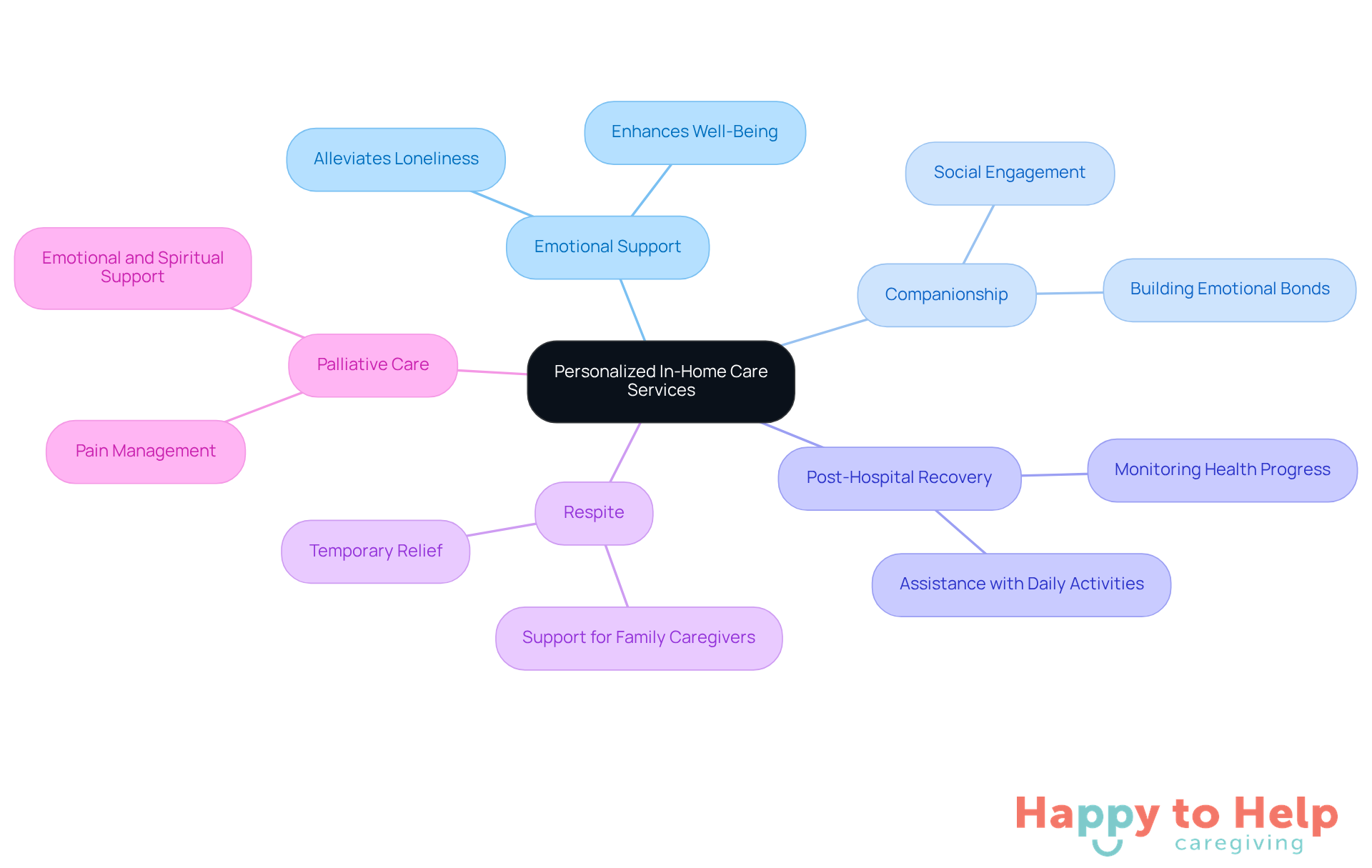
Happy to Help Caregiving addresses these challenges by offering customized in-home assistance services tailored to the specific needs of clients. Their extensive range of services includes:
- Companionship
- Post-hospital recovery assistance
- Respite
- Palliative care
Each service is designed to enhance the quality of life for clients, providing compassionate support within the comfort of their own homes.
Companionship plays a crucial role in alleviating feelings of loneliness. Providers emphasize that emotional bonds formed through companionship can significantly reduce isolation among seniors. As the demand for in-home assistance services continues to rise, senior services San Diego that focus on tailored caregiving models will be vital in enhancing the quality of life for elderly individuals in 2025 and beyond.
Happy to Help Caregiving stands out as a reliable ally for families navigating the complexities of caregiving. They ensure that loved ones receive the necessary assistance to thrive, promoting both independence and well-being. By prioritizing personalized support, caregivers can make a meaningful difference in the lives of those they care for.
211 San Diego: Comprehensive Resource Directory for Older Adults
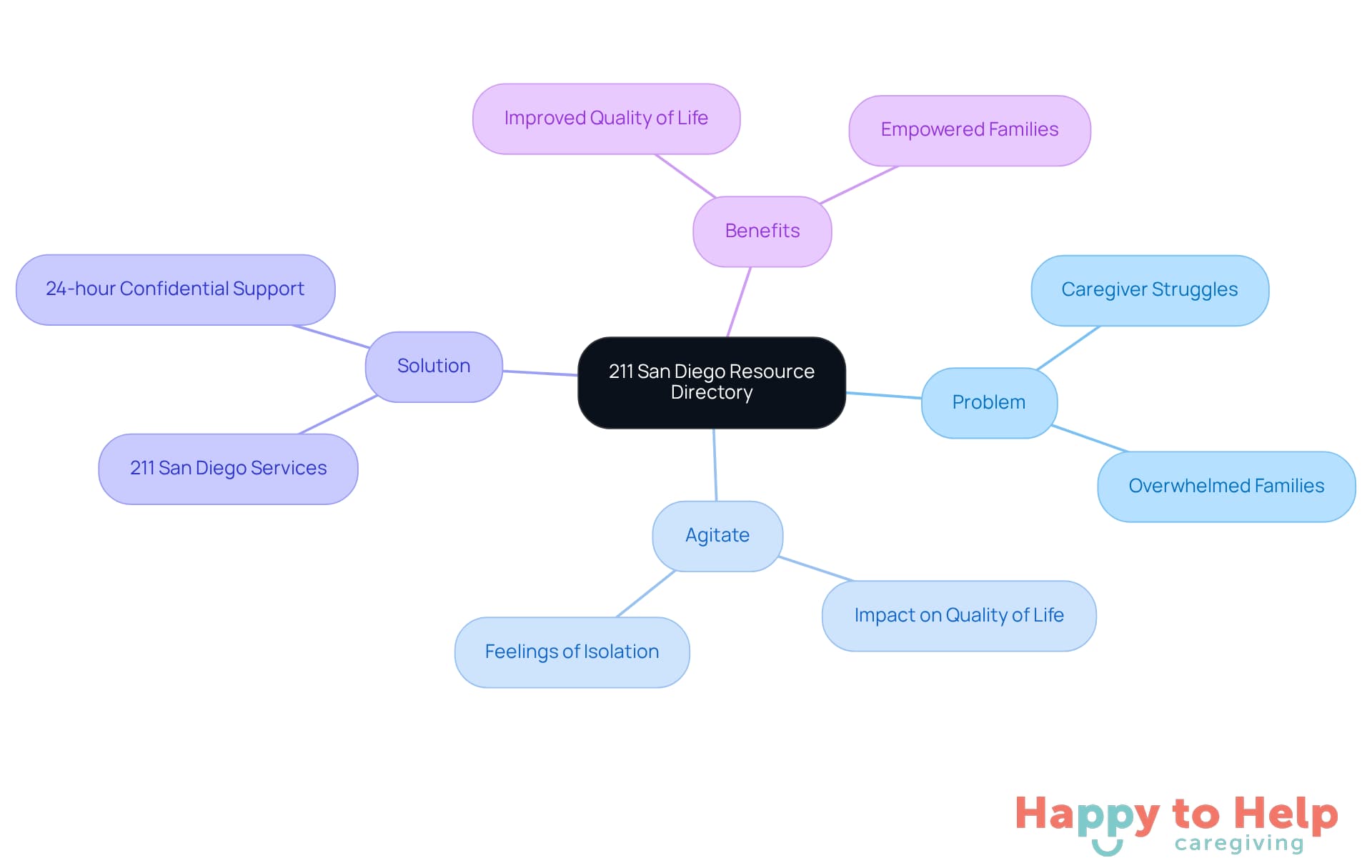
Problem: Caregivers often struggle to find essential services for older adults, leading to feelings of frustration and helplessness. The complexity of navigating available resources can leave families overwhelmed, unsure of where to turn for support.
Agitate: This challenge can significantly impact the quality of life for older adults, as caregivers may miss out on critical services that promote health and well-being. Without proper guidance, families may feel isolated, unable to provide the necessary care and assistance their loved ones need.
The solution is that 211 San Diego emerges as a vital resource directory, linking older adults and their families to senior services San Diego. This free, 24-hour confidential service offers comprehensive information on housing, healthcare, transportation, and social support. Caregivers can utilize this resource to find local initiatives specifically tailored to address the needs of older adults, ensuring they obtain the required support and assistance.
In 2025, 211 San Diego has proven essential in improving the quality of life for older adults, with many families reporting successful outcomes from utilizing these services. Social workers highlight that 211's role is crucial in navigating the intricacies of elder assistance, equipping caregivers with the resources and information necessary to support their loved ones effectively.
The influence of senior services San Diego on elderly support is significant, nurturing a community where families feel empowered and linked to the resources that encourage independence and well-being for their older relatives.
JFSSD: Tailored Aging Care Services for Individuals and Families
Aging individuals often face significant challenges, including hunger and isolation, which can severely impact their quality of life. These issues not only affect their physical health but also their emotional well-being, making it crucial for families to seek effective caregiving solutions.
Happy to Help Caregiving addresses these pressing concerns by providing a range of tailored in-home caregiving services. Their offerings include:
- Companionship
- Post-hospital recovery assistance
- Respite
- Palliative care
All designed to meet the unique needs of seniors and individuals with special needs. By focusing on individualized care, they ensure that families receive the appropriate support for their loved ones, fostering a sense of safety and well-being.
Families have shared transformative experiences, highlighting the compassionate approach of caregivers who treat clients like family. This dedication not only meets immediate needs but also promotes long-term independence, making Happy to Help Caregiving an essential resource for senior services in San Diego.
Moreover, the organization tackles critical challenges such as hunger and isolation, which many elderly individuals encounter. By incorporating these essential attributes, Happy to Help Caregiving distinguishes itself as a leader in providing caring assistance for older adults and their families.
Companionship Care: Emotional Support for Seniors
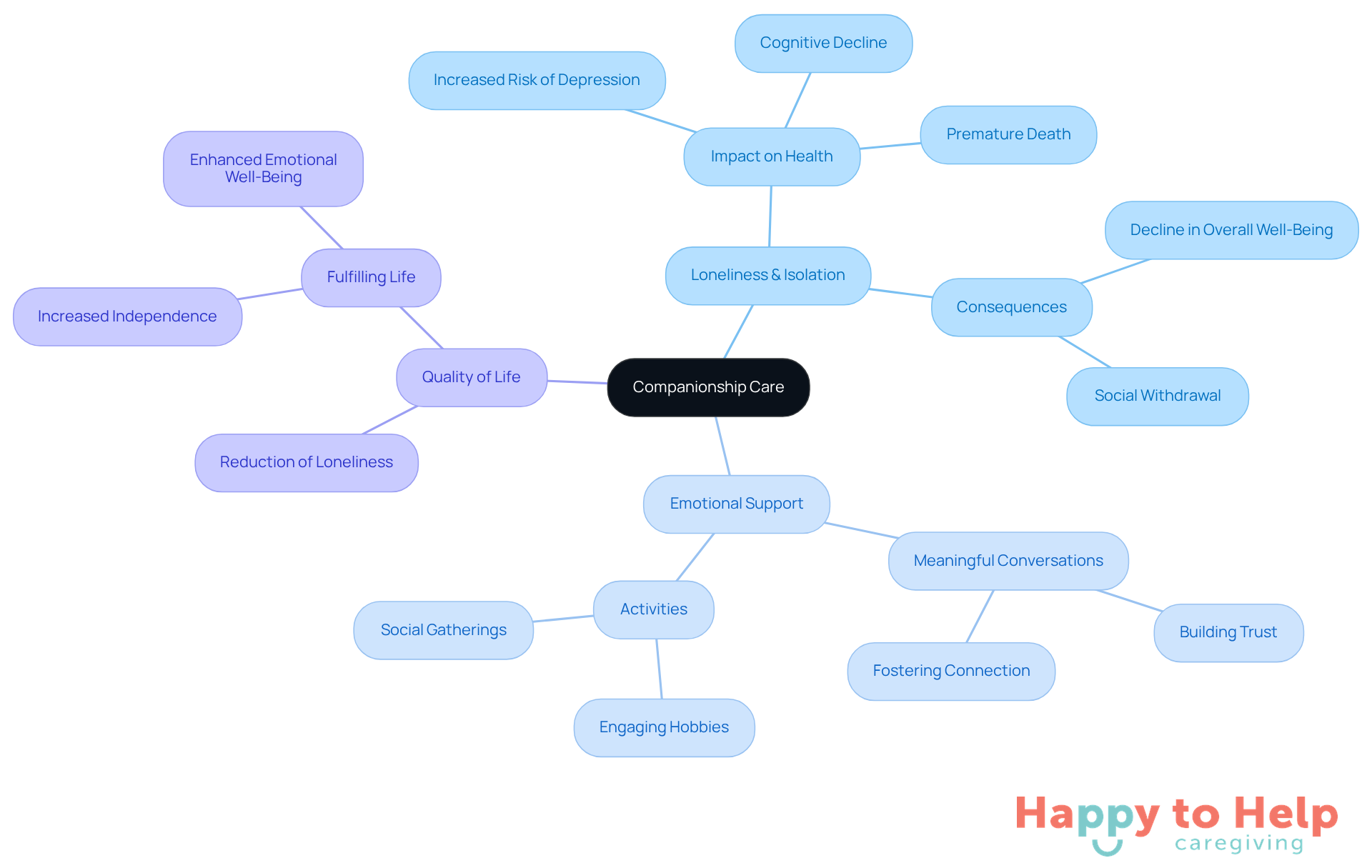
Loneliness and isolation are significant challenges faced by older adults, impacting their emotional and physical health. These feelings can lead to serious consequences, including depression and a decline in overall well-being.
Companionship assistance addresses this problem by offering vital emotional support. Caregivers engage clients in meaningful conversations and activities, fostering a sense of connection and belonging. This form of assistance not only enhances the emotional well-being of older adults but also contributes to their overall health.
For families seeking to improve their loved ones' quality of life, companionship assistance is a crucial solution. By providing consistent companionship, caregivers can help reduce feelings of loneliness, ultimately leading to a more fulfilling life for older adults.
Post-Hospital Recovery Assistance: Support for Smooth Transitions
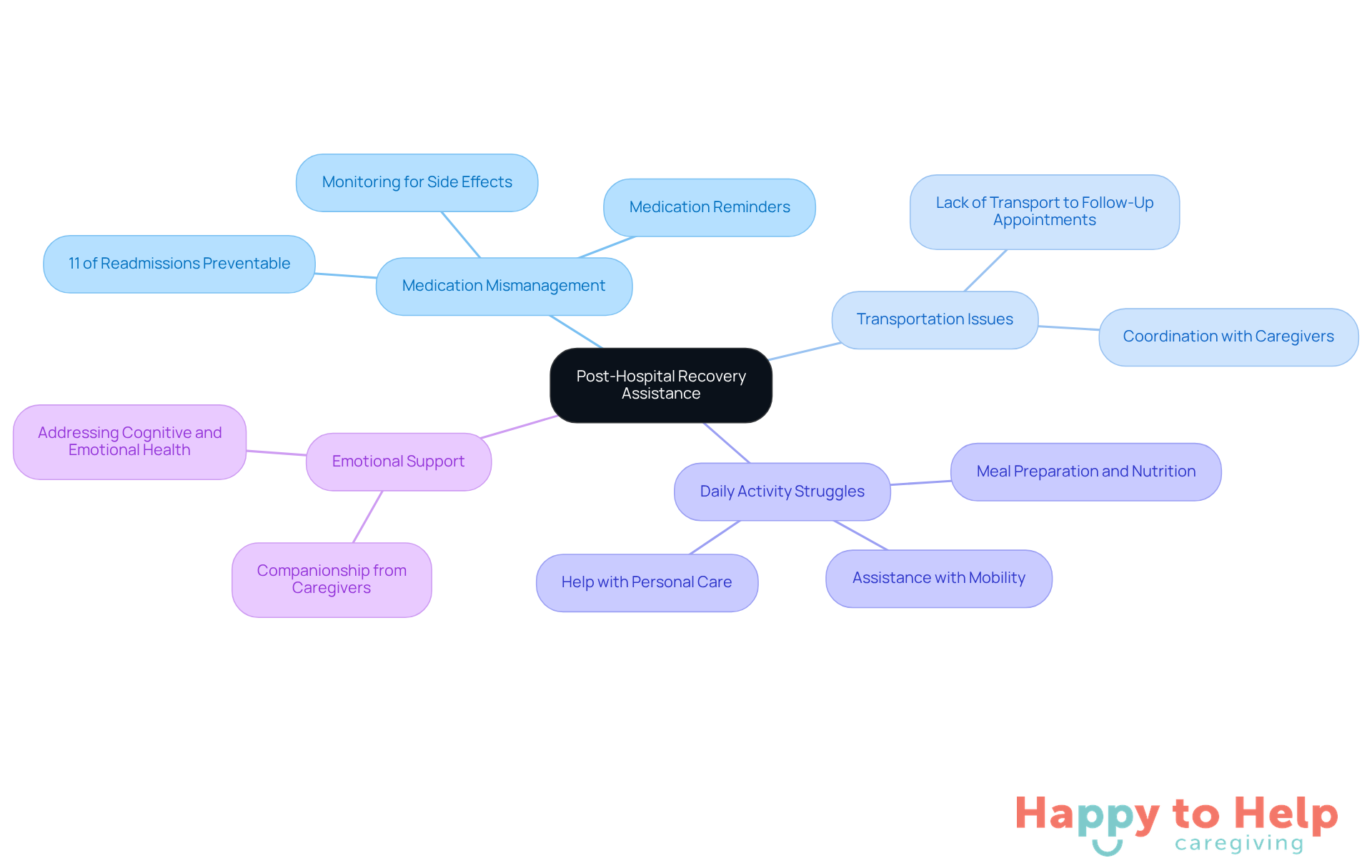
Post-hospital recovery support is a significant challenge for seniors transitioning from hospital treatment back to their homes. Many face difficulties such as medication mismanagement, lack of transportation to follow-up appointments, and struggles with daily activities. These issues can lead to preventable hospital readmissions, which are a major concern for caregivers and healthcare professionals alike.
Research indicates that medication mistakes are a primary factor in these readmissions. The National Quality Forum reports that around 11% of all readmissions could be avoided with proper coordination and home-based support. By ensuring seniors adhere to their prescribed regimens, caregivers can significantly reduce the risk of complications and improve recovery outcomes.
Statistics reveal that nearly 1 in 5 readmissions after surgery are preventable, highlighting the critical need for effective transitional care. A study published in JAMA Network Open emphasizes the role of caregivers in bridging the gap between hospital discharge and home recovery. Organized assistance during this phase not only fosters a smoother transition but also empowers seniors to regain their independence in familiar surroundings.
Healthcare professionals stress that effective transitional support can lead to lower hospital readmission rates and increased patient satisfaction. As noted by Genuine Global Assistance, "Home support is more than a service - it’s peace of mind for families and a vital step in long-term recovery." Caregivers can help with daily activities and facilitate communication with healthcare professionals, ensuring seniors receive the comprehensive support they need to thrive at home.
Moreover, caregivers provide essential emotional support and companionship, which are crucial for recovery. By addressing these needs, post-hospital recovery assistance becomes a key component in promoting long-term health and well-being for elderly patients.
Respite Care: Temporary Relief for Family Caregivers
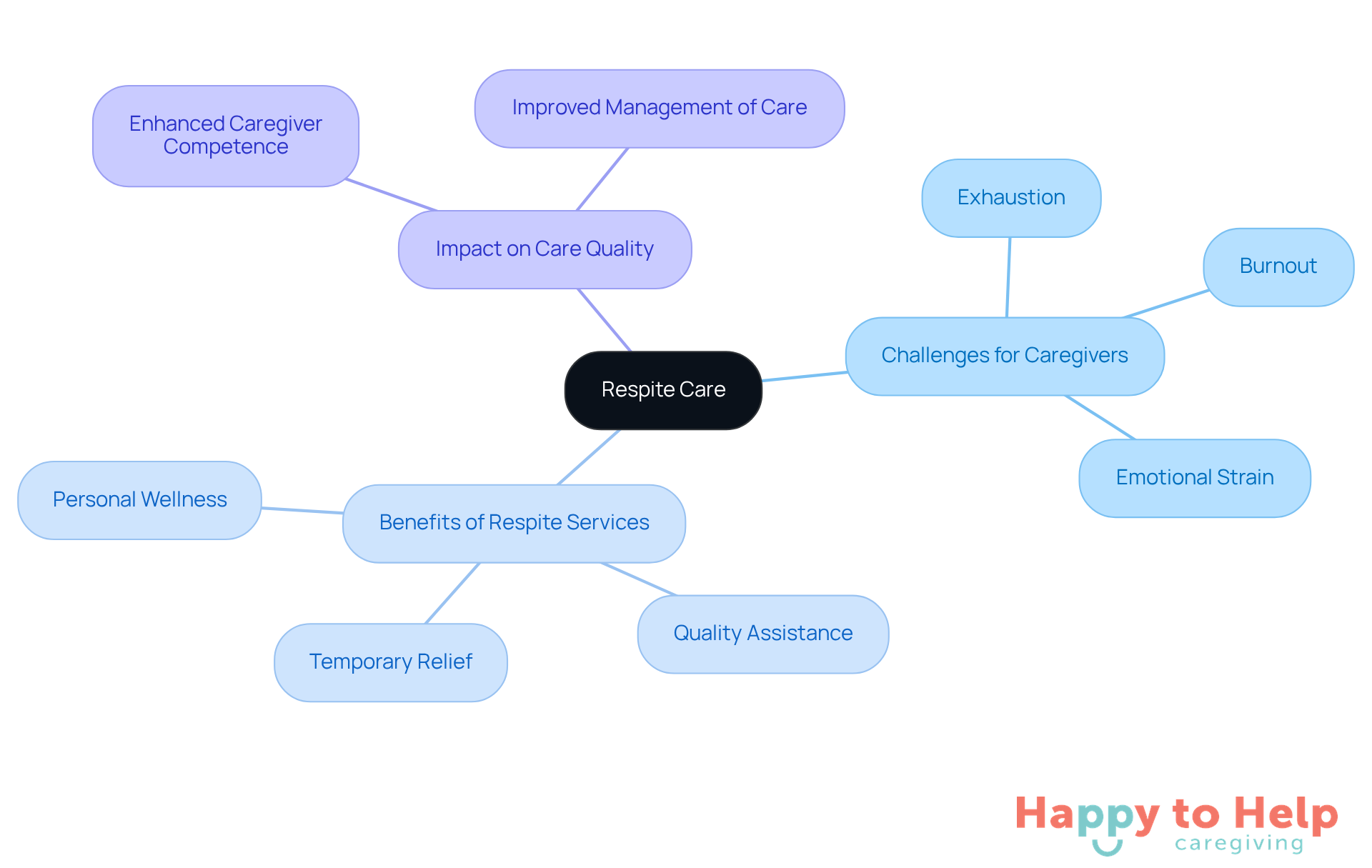
Caregivers often face significant challenges, including exhaustion and burnout, as they dedicate themselves to supporting their loved ones. This relentless commitment can lead to physical and emotional strain, making it difficult for caregivers to maintain their own well-being.
Respite services are an essential part of senior services in San Diego, providing vital temporary relief for family supporters. These services allow caregivers to take a much-needed break while ensuring their loved ones continue to receive quality assistance. Respite can be organized for just a few hours or extended over several days, depending on the needs of the provider.
By utilizing senior services San Diego, caregivers can prevent exhaustion and foster a healthier balance between caregiving responsibilities and personal wellness. This support not only benefits the caregiver but also enhances the quality of care provided to their loved ones.
Palliative Support Care: Enhancing Quality of Life for Seniors
Palliative assistance addresses a critical problem: older adults facing serious illnesses often struggle with managing their symptoms and maintaining their quality of life. Without adequate support, these individuals may experience increased pain and emotional distress, which can significantly impact their well-being.
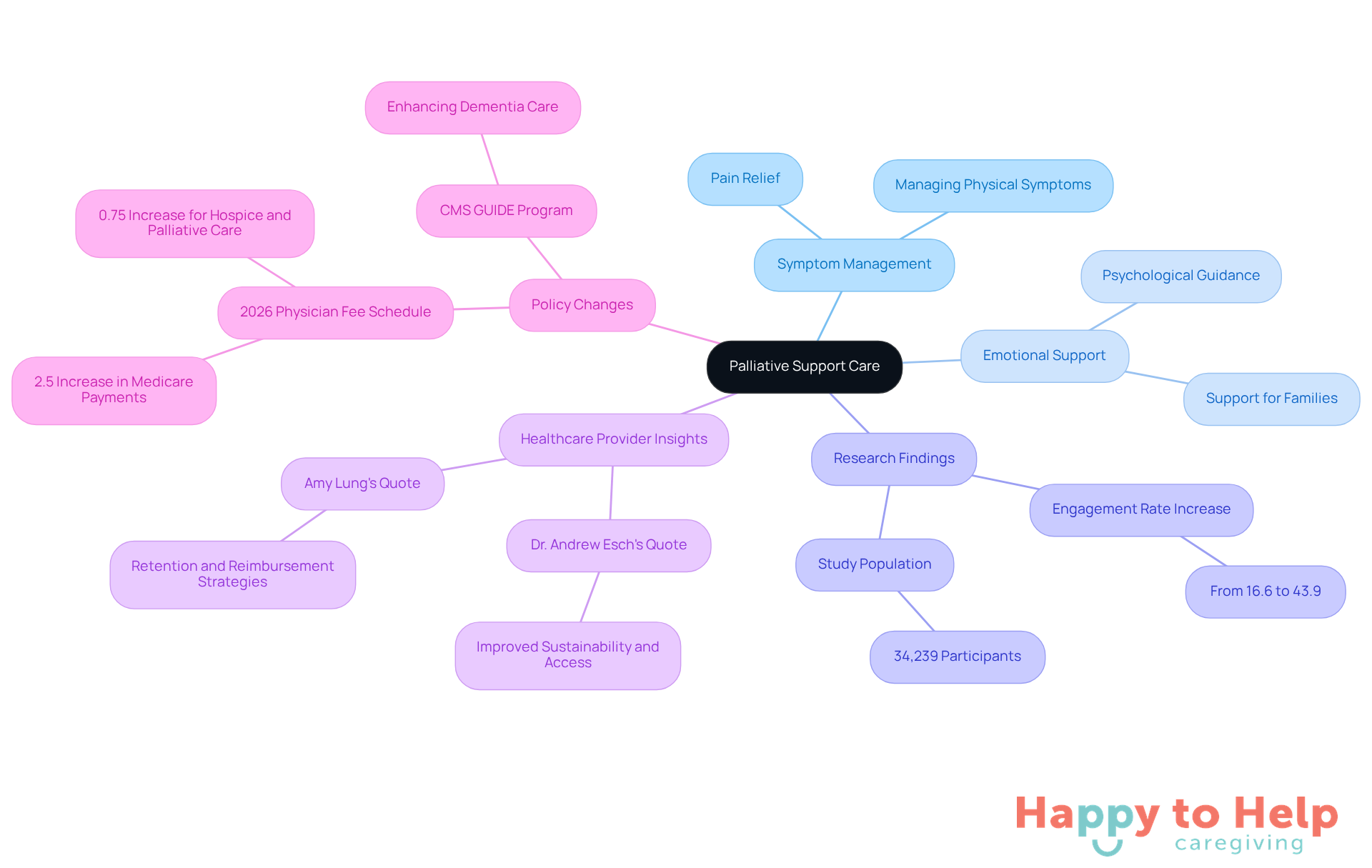
This specialized assistance focuses on relieving symptoms, managing pain, and providing emotional guidance. By addressing the holistic needs of individuals, palliative support fosters an environment where elderly individuals can maintain their independence and well-being, even amidst complex health issues. Research involving 34,239 participants shows that standard palliative consultations boosted engagement rates from 16.6% to 43.9%, facilitating access to essential support.
Healthcare providers emphasize that effective palliative support not only alleviates physical discomfort but also addresses emotional and psychological needs. Dr. Andrew Esch notes that recent developments in palliative support delivery have improved sustainability and access, making this comprehensive approach vital for families aiming to provide the best possible assistance for their loved ones during difficult times.
Furthermore, the 2026 Physician Fee Schedule's increase in rates for hospice and palliative support services highlights the growing recognition of the importance of these services within the healthcare system. By prioritizing palliative care, caregivers can ensure that older adults navigate their health challenges with dignity and comfort.
Needs Assessment and Planning: Tailoring Care to Individual Needs
Evaluating needs and planning are crucial for tailoring senior services in San Diego to address the distinctive requirements of the elderly. Without a thorough assessment of an individual's physical, emotional, and social needs, creating a comprehensive support plan becomes challenging. Research shows that individualized support plans provided through senior services San Diego significantly improve the quality of life for older adults, with 90% of seniors preferring to age in place at home. By understanding the unique challenges and preferences of each client, senior services San Diego providers can offer focused assistance that encourages independence and nurtures emotional well-being.
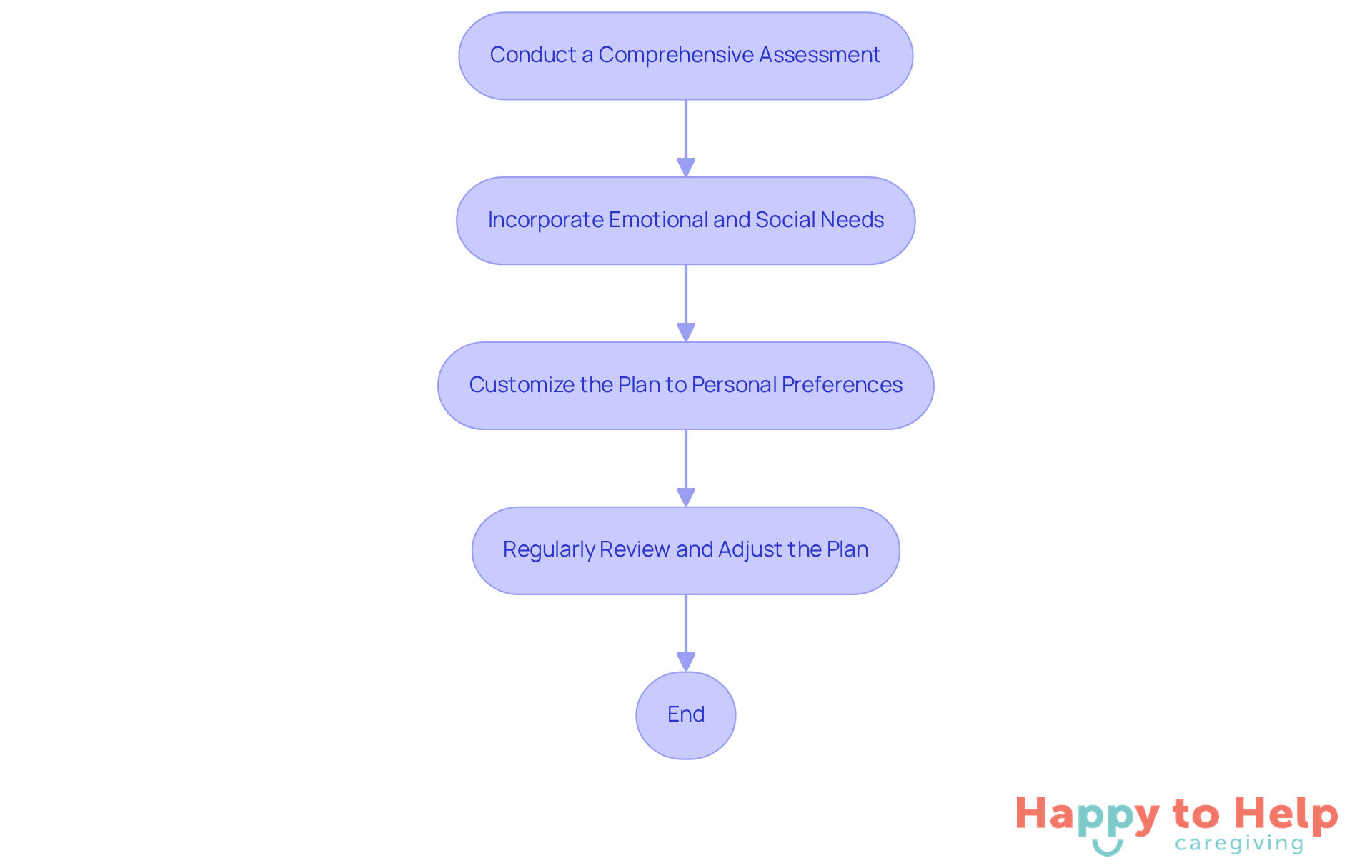
To tackle these challenges effectively, caregivers should consider the following steps:
- Conduct a Comprehensive Assessment: Evaluate medical history, current medications, mobility levels, and chronic conditions to identify necessary support.
- Incorporate Emotional and Social Needs: Assess emotional health and social engagement, recognizing that social interaction is vital for maintaining quality of life.
- Customize the Plan to Personal Preferences: Involve seniors in conversations regarding their preferences and routines, ensuring that assistance aligns with their lifestyle.
- Regularly Review and Adjust the Plan: Needs can evolve, so it’s important to conduct periodic assessments to adapt support plans accordingly.
Successful instances of customized planning in senior services San Diego highlight the importance of specific strategies based on individual evaluations. For example, an older adult with mobility challenges may benefit from home modifications and regular physical therapy, while another may require companionship and social activities to combat feelings of isolation.
As Irina Mircica notes, "One of the main benefits of an elderly support evaluation is the creation of a personalized assistance strategy." This proactive approach not only enhances the quality of assistance but also enables seniors to uphold their independence and dignity.
Consultation and Coaching: Empowering Families in Caregiving
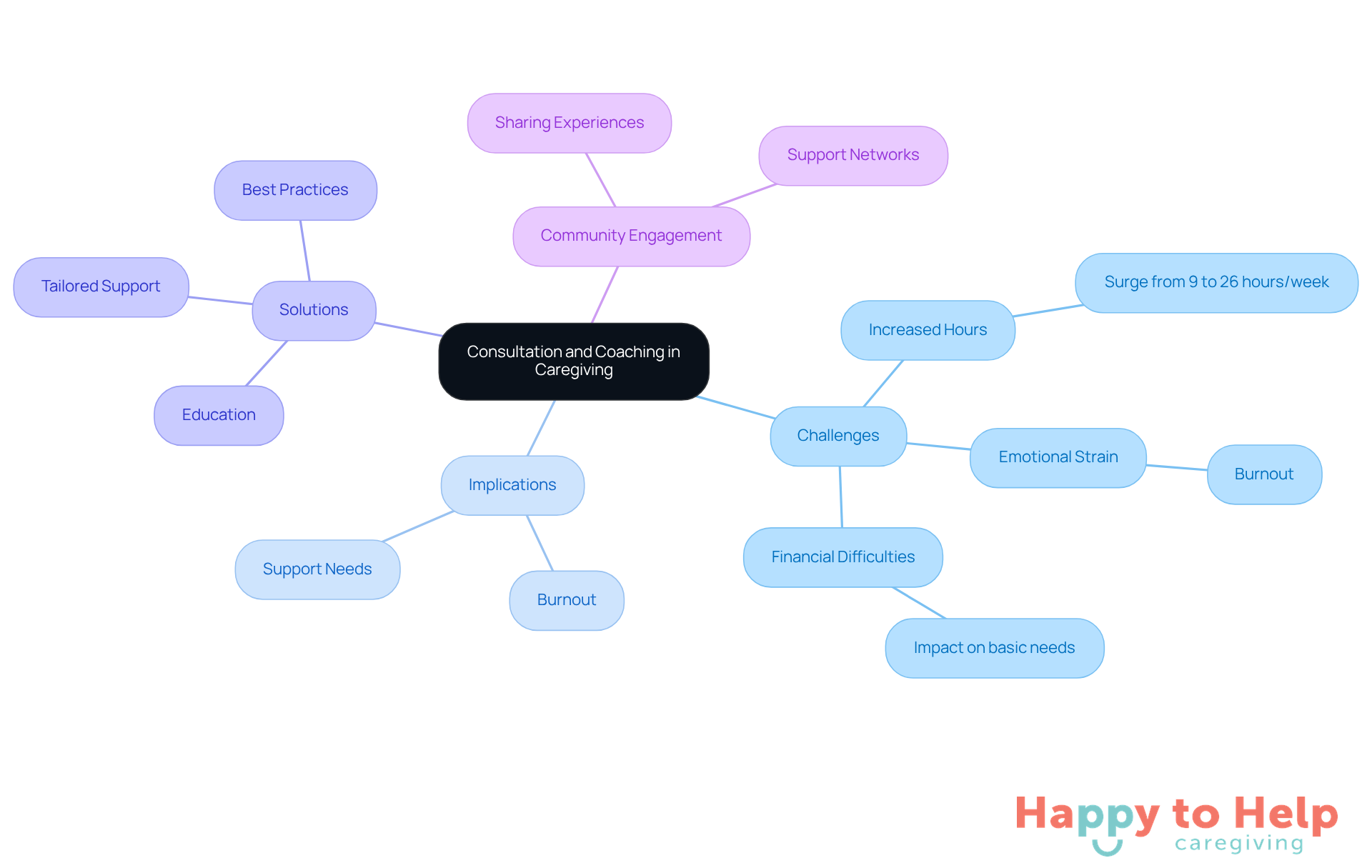
Consultation and coaching services are vital in addressing the challenges faced by families in their caregiving roles. The problem is clear: the average time dedicated to caregiving has surged from about 9 hours per week in 2020 to approximately 26 hours per week in 2025. This increase places significant demands on family supporters, leading to heightened stress and financial difficulties, especially for those also nurturing children.
The implications of these challenges are profound. Almost one in four caregivers provides over 40 hours of assistance each week, which can lead to emotional strain and burnout. Experts emphasize that well-organized coaching services not only enhance caregiver confidence but also foster a supportive community where families can share experiences and solutions. This cooperative approach is essential for improving the overall caregiving experience.
So, what can be done? Empowering families through education and resources is crucial for creating a sustainable caregiving environment that prioritizes the well-being of both caregivers and care recipients. By offering tailored support and thorough education on best practices, these programs equip caregivers with the necessary tools to manage care effectively and navigate emotional challenges.
As we celebrate National Family Caregivers Month 2025, the theme 'Plug In To Care' underscores the importance of community assistance and resources for caregivers. Engaging with these services can significantly improve outcomes for both caregivers and their loved ones.
Flexible Scheduling Options: Adapting Care to Individual Lifestyles
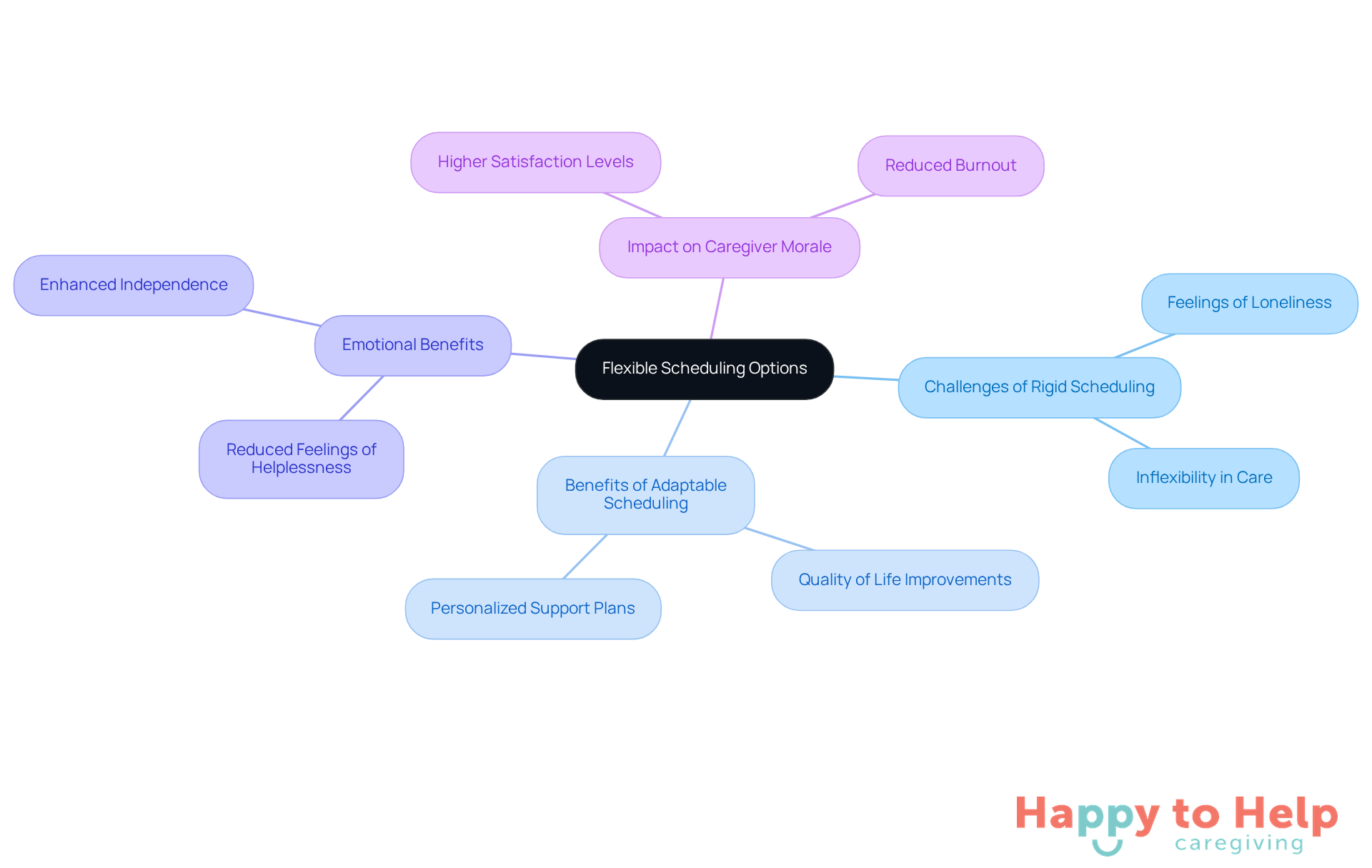
Caregivers often face the challenge of rigid scheduling, which can hinder their ability to meet the unique needs of older adults and their families. This inflexibility can lead to feelings of loneliness and isolation among seniors, as they may not receive timely assistance tailored to their lifestyles.
Adaptable scheduling choices offer a solution. By allowing providers to customize their services, caregivers can create a variety of setups, from different hours of assistance to brief visits or prolonged support. This flexibility ensures that seniors receive the help they need when they need it, significantly enhancing their quality of life.
Families have noticed that these personalized support plans not only promote a sense of control and comfort for their loved ones but also reduce feelings of loneliness. One family shared, "Overall, these flexible arrangements not only extend independence but also significantly improve quality of life," underscoring the emotional benefits of such care.
Moreover, research indicates that adaptable scheduling boosts employee morale and engagement in healthcare settings, leading to higher satisfaction levels among older adults. Successful examples of customizable caregiving schedules demonstrate that when caregivers adjust their availability based on client preferences, it results in improved outcomes and a more fulfilling experience for seniors.
Moving Forward with Senior Services in San Diego
The landscape of senior services in San Diego presents a significant challenge for families: the need for personalized care that truly addresses the unique needs of older adults. Caregivers often face overwhelming pressures, balancing their responsibilities while ensuring their loved ones receive the best support possible.
This situation can lead to feelings of isolation for seniors and stress for caregivers. Without tailored in-home care and comprehensive resource directories, families may struggle to enhance the quality of life for their elderly relatives. Key services such as:
- Companionship
- Post-hospital recovery assistance
- Respite care
- Palliative support
are essential in fostering independence and emotional well-being among elderly individuals.
Fortunately, there are solutions available. Engaging with resources like 211 San Diego can provide invaluable guidance for families navigating the complexities of caregiving. These services not only combat feelings of isolation but also ensure that seniors receive the necessary support to thrive in their own homes.
Ultimately, prioritizing personalized support and flexible care options is crucial. By creating a nurturing environment, families empower their loved ones to maintain dignity and quality of life. Engaging with these resources is not just a choice; it is a vital step toward fostering a community where seniors can age gracefully and caregivers can find the support they need.
https://iframe.tely.ai/cta/eyJhcnRpY2xlX2lkIjogIjY5MjNiNTdkODU4ZTE0MmJhNzFkNjljMSIsICJjb21wYW55X2lkIjogIjY4ZWU1ZGNhNzMxNzYyNTU3ZjNjOTVjMSIsICJpbmRleCI6IG51bGwsICJ0eXBlIjogImFydGljbGUifQ==Frequently Asked Questions
What challenges do seniors face in terms of emotional well-being?
Seniors often experience feelings of loneliness and isolation, which can significantly impact their overall well-being. Studies show that nearly 75% of older adults prefer to age in place, highlighting the need for personalized support to foster independence and emotional connection.
What services does Happy to Help Caregiving offer?
Happy to Help Caregiving provides a range of customized in-home assistance services, including companionship, post-hospital recovery assistance, respite care, and palliative care, all designed to enhance the quality of life for clients.
How does companionship help seniors?
Companionship plays a crucial role in alleviating feelings of loneliness among seniors. Emotional bonds formed through companionship can significantly reduce isolation and improve overall well-being.
What is 211 San Diego, and how does it assist caregivers?
211 San Diego is a free, 24-hour confidential resource directory that links older adults and their families to essential senior services. It provides comprehensive information on housing, healthcare, transportation, and social support, helping caregivers find the necessary resources for their loved ones.
Why is 211 San Diego considered essential for families?
211 San Diego helps families navigate the complexities of finding elder assistance services, improving the quality of life for older adults by ensuring they receive critical support and assistance.
What are some of the significant issues faced by aging individuals?
Aging individuals often face challenges such as hunger and isolation, which can severely affect their physical health and emotional well-being, making effective caregiving solutions crucial.
How does Happy to Help Caregiving address issues like hunger and isolation?
Happy to Help Caregiving provides tailored in-home caregiving services that focus on individualized care, addressing critical challenges such as hunger and isolation to foster safety and well-being for seniors.
What feedback have families shared about Happy to Help Caregiving?
Families have reported transformative experiences, praising the compassionate approach of caregivers who treat clients like family, which not only meets immediate needs but also promotes long-term independence.
List of Sources
- Happy to Help Caregiving: Personalized In-Home Care Services
- Home Care Industry Trends to Watch in 2025 (https://firstlighthomecare.com/blog/home-care-industry-trends)
- The Future of Home Health Care: Trends to Watch in 2025 (https://synchronyfl.com/the-future-of-home-health-care-trends-to-watch-in-2025)
- The Evolution of Home Care Services: Trends in the USA - Cottage Home Care (https://cottagehomecare.com/blog/trends-in-home-care-new-york)
- A Look Into the Future of Home Care (https://seniorhelpers.com/ca/montclair/resources/blogs/2025-11-15)
- Trends and Innovations in Senior Care | Amada Blog (https://amadaseniorcare.com/2025/01/trends-and-innovations-in-senior-care)
- 211 San Diego: Comprehensive Resource Directory for Older Adults
- New Data Shows 23% of Adults in California Are Caregivers (https://sdvoice.info/new-data-shows-23-of-adults-in-california-are-caregivers)
- County Programs and Partnerships Building a Stronger Environment for Older Adults (https://countynewscenter.com/county-programs-and-partnerships-building-a-stronger-environment-for-older-adults)
- Resources announced for county residents about to lose CalFresh benefits (https://kpbs.org/news/quality-of-life/2025/10/30/resources-announced-for-county-residents-about-to-lose-calfresh-benefits)
- News - CIE San Diego (https://ciesandiego.org/news)
- JFSSD: Tailored Aging Care Services for Individuals and Families
- Jewish Family Service of San Diego | Building a Stronger Community (https://gbsan.com/jewish-family-service)
- Alpert Jewish Family Service to Expand Critical Services to Seniors in Palm Beach County (https://fox5sandiego.com/business/press-releases/ein-presswire/863996580/alpert-jewish-family-service-to-expand-critical-services-to-seniors-in-palm-beach-county)
- Findings From New Study Reinforce That Home-Delivered Meals Provide Critical Health and Social Benefits to Older Adults and Caregivers (https://mealsonwheelsamerica.org/news/findings-from-new-study-reinforce-that-home-delivered-meals-provide-critical-health-and-social-benefits-to-older-adults-and-caregivers)
- Ongoing Care Management - Jewish Family Service of San Diego | findhelp.org (https://findhelp.org/jewish-family-service-of-san-diego--san-diego-ca-ongoing-care-management/5032790386540544)
- A Trend Analysis of Home-Delivered Meal Programs in the US - PMC (https://pmc.ncbi.nlm.nih.gov/articles/PMC12464412)
- Companionship Care: Emotional Support for Seniors
- Combat Loneliness: The Benefits of Companion Care for Seniors (https://allheartcare.com/more-than-just-company-the-vital-role-of-companion-care-for-seniors)
- How Companion Drivers Help Fight Senior Loneliness and Isolation | NorthPennNow (https://northpennnow.com/news/2025/nov/14/how-companion-drivers-help-fight-senior-loneliness-and-isolation)
- More Than Company: How Companion Care at Home Eases Senior Loneliness (https://queencityeldercare.com/more-than-company-how-companion-care-at-home-eases-senior-loneliness)
- Loneliness and isolation: Back to pre-pandemic levels, but still high, for older adults (https://ihpi.umich.edu/news-events/news/loneliness-and-isolation-back-pre-pandemic-levels-still-high-older-adults)
- Understanding the Benefits of Companion Care for Seniors - Freedom Home Care (https://freedomhomecare.net/2025/08/26/understanding-the-benefits-of-companion-care-for-seniors)
- Post-Hospital Recovery Assistance: Support for Smooth Transitions
- Home Care and the New Healthcare Ecosystem: Reducing Readmissions and Supporting Aging in Place - Family & Nursing Care (https://familynursingcare.com/home-care-and-the-new-healthcare-ecosystem-reducing-readmissions-and-supporting-aging-in-place)
- Post-Hospital Care for Seniors Supports Healing (https://picseniorcare.com/how-post-hospital-care-for-seniors-makes-recovery-easier)
- Post Hospital Care at Home Prevents Readmissions (https://genuineglobalcare.com/post-hospital-care-at-home-prevents-readmissions)
- Post-Hospital Discharge: Why In-Home Care Improves Recovery for Florida Seniors (https://visitingangels.com/pasco/news-info/post-hospital-discharge-why-in-home-care-improves-recovery/26199)
- How Skilled Home Care Helps After Hospital Discharge - Bryan Skilled Home Care (https://bryanskilledhomecare.com/2025/10/30/how-skilled-home-care-helps-after-hospital-discharge)
- Respite Care: Temporary Relief for Family Caregivers
- Improving Support for Family Caregivers (https://nationalacademies.org/news/2025/07/improving-support-for-family-caregivers)
- Alzheimer’s Association Center for Dementia Respite Innovation Awards More Than $4 Million in New Round of Grants to Improve Respite Care for People Living With Dementia and Their Caregivers (https://alz.org/news/2025/alzheimers-association-center-for-dementia-respite-innovation-grants-4-million-in-second-year)
- It’s Time to Care for Caregivers: Senator Markey Announces Comprehensive Family Caregiving Legislative Agenda | U.S. Senator Ed Markey of Massachusetts (https://markey.senate.gov/news/press-releases/11/20/2025/its-time-to-care-for-caregivers-senator-markey-announces-comprehensive-family-caregiving-legislative-agenda)
- News & Success Stories | Live Well San Diego (https://livewellsd.org/Home/Components/News/News/513/153)
- Respite Services: A Critical Support for Family Caregivers (https://ltsschoices.aarp.org/resources-and-practices/respite-services-critical-support-for-family-caregivers)
- Palliative Support Care: Enhancing Quality of Life for Seniors
- Palliative Care News | Living with Serious Illness | Get Palliative Care (https://getpalliativecare.org/news)
- Palliative Care News Archives (https://hospicenews.com/category/palliative-care-news)
- Can palliative care consults in hospitals improve end-of-life care? (https://nia.nih.gov/news/can-palliative-care-consults-hospitals-improve-end-life-care)
- palliative care (https://pbs.org/newshour/tag/palliative-care)
- Needs Assessment and Planning: Tailoring Care to Individual Needs
- Aurora releases study to address needs of older adults and caregivers (https://denver7.com/news/front-range/aurora/aurora-releases-study-to-address-needs-of-older-adults-and-caregivers)
- Enhancing care service utilization and reducing burden: the role of needs assessments for dementia caregivers in long-term care - PMC (https://pmc.ncbi.nlm.nih.gov/articles/PMC12317630)
- The Incredible Benefits of Home Care, in 7 Amazing Stats - Companions For Seniors (https://companionsforseniors.com/2019/08/benefits-home-care-amazing-stats-trends-reports)
- Discovering The Importance Of Senior Care Assessments (https://moradaseniorliving.com/senior-living-blog/discovering-the-importance-of-senior-care-assessments)
- Orange County Older Adults Needs Assessment Report Now Available | Orange County (https://ocgov.com/press/orange-county-older-adults-needs-assessment-report-now-available)
- Consultation and Coaching: Empowering Families in Caregiving
- Family Caregiver Support, Education Needs Growing (https://hospicenews.com/2025/11/11/family-caregiver-support-education-needs-growing)
- Unsung Heroes: Celebrating and Supporting Family Caregivers (https://firstquality.com/news/honoring-family-caregivers)
- New Report Reveals Crisis Point for America’s 63 million Family Caregivers (https://press.aarp.org/2025-07-24-New-Report-Reveals-Crisis-Point-for-Americas-63-million-Family-Caregivers)
- Building a lifeline for family caregivers across the US (https://news.mit.edu/2025/ianacare-builds-lifeline-for-family-caregivers-across-us-0811)
- Flexible Scheduling Options: Adapting Care to Individual Lifestyles
- The Importance of Flexible Care Options in Retirement Living (https://thehighpointresidence.com/blog/the-importance-of-flexible-care-options-in-retirement-living)
- The Benefits of Flexible Scheduling in Home Care Plans (https://regencyhcs.com/blog/the-benefits-of-flexible-scheduling-in-home-care-plans)
- Catering to the Flexible Workforce in Senior Living (https://seniorhousingnews.com/2023/07/14/catering-to-the-flexible-workforce-in-senior-living)
- Flexible scheduling, enhanced communication, technology can help address workforce challenges (https://mcknightsseniorliving.com/news/flexible-scheduling-enhanced-communication-technology-can-help-address-workforce-challenges)