
The Importance of VA Elder Care Benefits Every Family
Navigating the complex landscape of VA elder care benefits presents a significant challenge for families caring for former military personnel. With numerous options available, understanding the essential resources designed to support veterans is crucial for their well-being. As the demand for these benefits continues to rise, families face pressing questions about eligibility, application processes, and the relationship between VA services and Medicare.
The implications of this complexity can be overwhelming. Families may struggle to find the right information, leading to frustration and potential delays in accessing necessary care. It's vital for caregivers to be aware of the key benefits available to them and how to effectively access these resources.
To tackle these challenges, families should start by familiarizing themselves with the primary VA benefits, such as:
- Health care
- Disability compensation
- Pension programs
Understanding these options can empower caregivers to make informed decisions. Additionally, seeking assistance from veteran service organizations can provide valuable guidance throughout the application process. By taking these steps, families can navigate the VA elder care benefits landscape more effectively, ensuring that their loved ones receive the support they deserve.
Happy to Help Caregiving: Personalized In-Home Support for Veterans
Many former service members face significant challenges in accessing the care they need, often feeling isolated and unsupported. This lack of adequate assistance can lead to feelings of anxiety and a diminished quality of life.
Happy to Help Caregiving addresses these issues by providing individualized in-home assistance, ensuring that veterans receive compassionate care along with VA elder care benefits in the comfort of their own homes. Our services include:
- Companionship support
- Post-hospital recovery assistance
- Respite services
- Palliative support
Each service is tailored to meet the unique needs of former military personnel, enhancing their autonomy and well-being. By focusing on their specific requirements, we cultivate a sense of safety and comfort, allowing them to thrive in their daily lives.
VA Nursing Home Care Benefits: What Veterans Need to Know
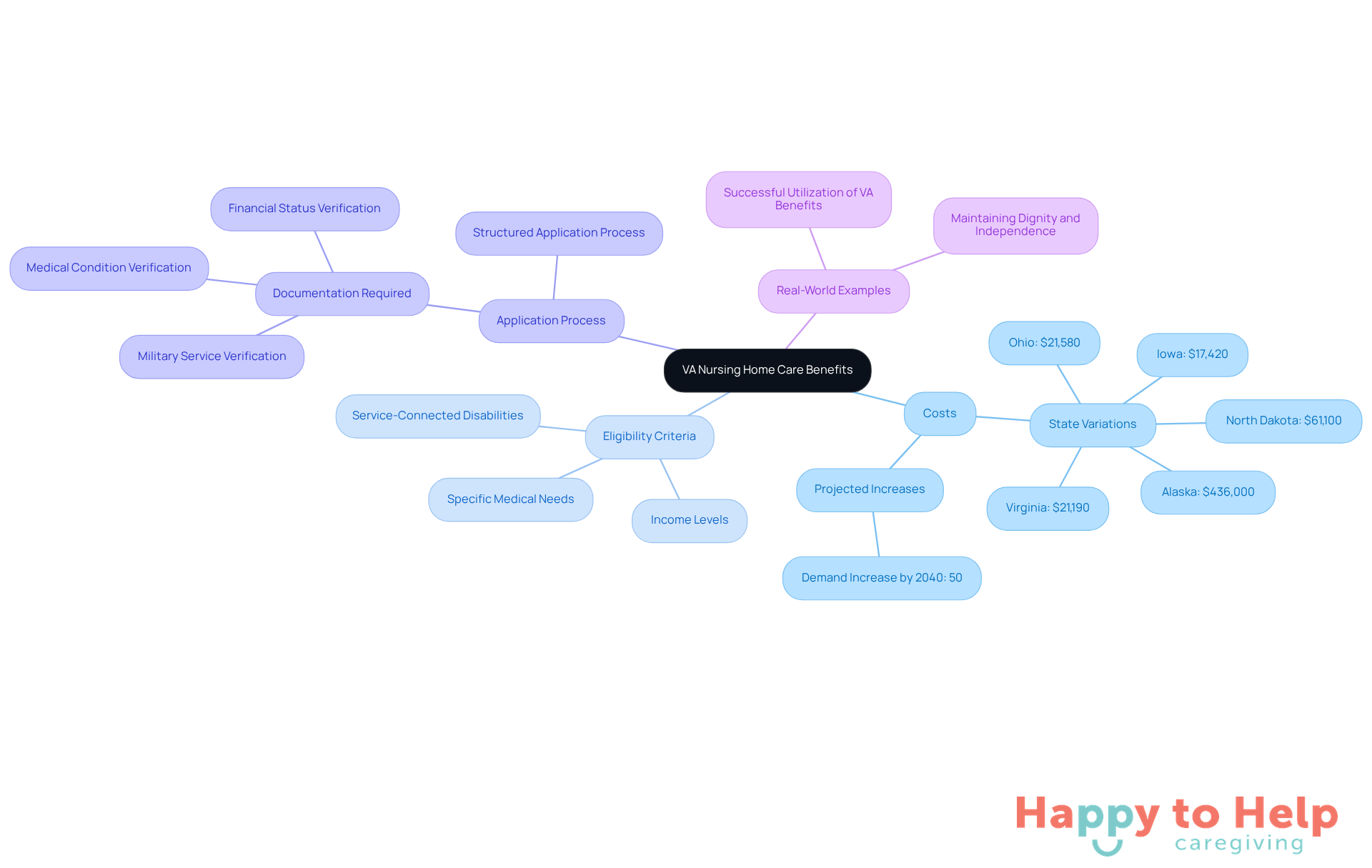
Veterans face a significant challenge when it comes to nursing home costs, which can place a heavy financial burden on families. In 2025, the annual median nursing home costs vary dramatically across states, with Alaska averaging over $436,000 for a private room, while Ohio averages around $21,580. This disparity highlights the need for financial support, particularly through the VA, which can alleviate some of these costs for eligible veterans.
Eligibility for VA nursing home support hinges on several factors, including:
- Service-connected disabilities
- Income levels
- Specific medical needs
Understanding these criteria is crucial; for instance, veterans with a service-related disability rating of 70% or greater often receive priority for assistance. Families must navigate a structured application process, which involves submitting documentation that verifies military service, medical conditions, and financial status.
Real-world examples underscore the importance of these benefits. Many former service members have successfully utilized VA elder care benefits, which allow them to receive essential care while maintaining their dignity and independence. As the veteran population ages, the demand for these services is projected to increase by more than 50% by 2040. This makes it essential for families to proactively understand and access available resources.
To ensure that loved ones receive the support they deserve, families should familiarize themselves with the application process and eligibility requirements. By doing so, they can navigate the complexities of VA assistance and secure the necessary care for veterans.
Eligibility for VA Assisted Living Benefits: Who Qualifies?
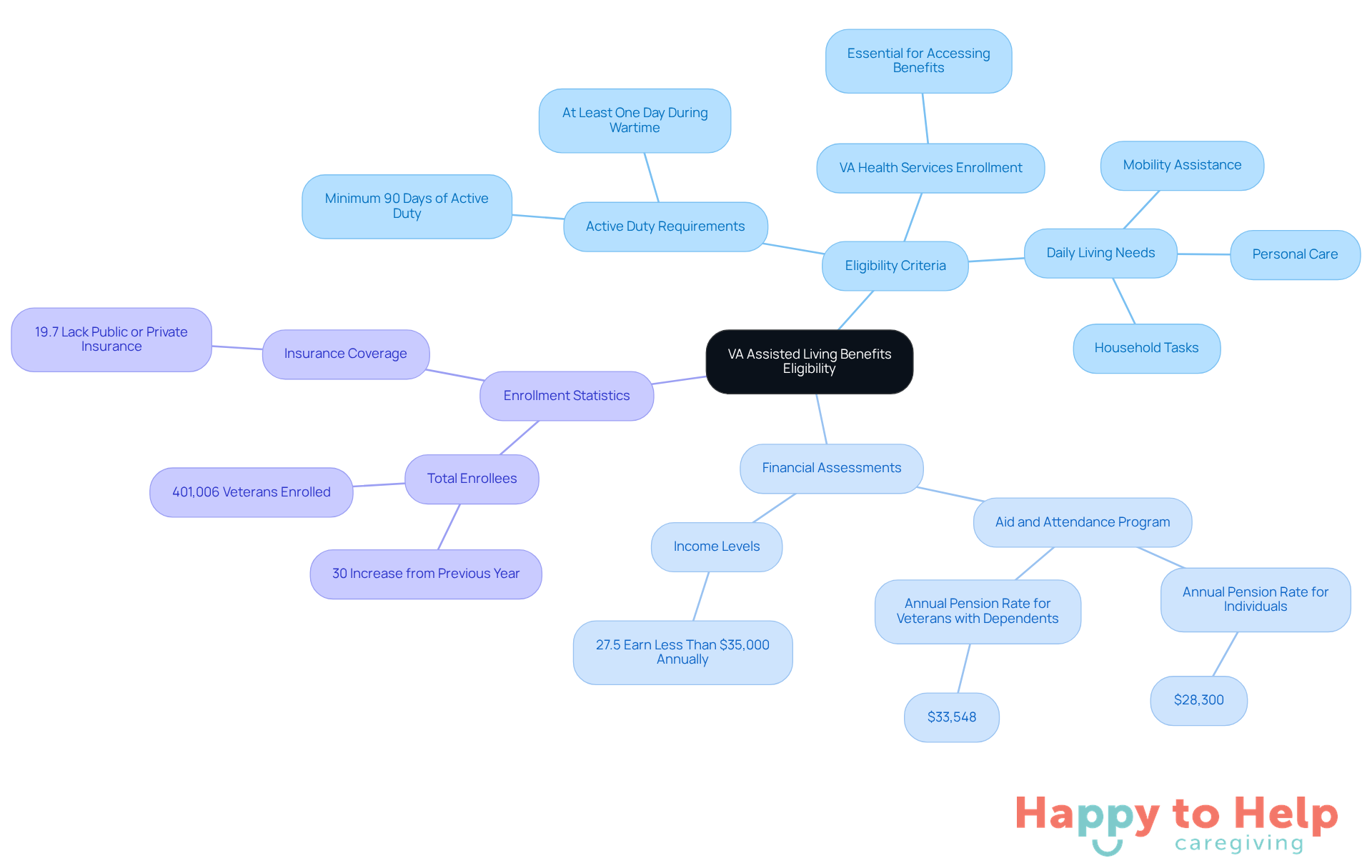
Veterans seeking assisted living assistance face significant challenges. To qualify, they must meet specific eligibility criteria, including a minimum of 90 days of active duty, with at least one day during wartime. Enrollment in VA health services is essential, as it opens the door to various benefits. Furthermore, veterans need to demonstrate a need for help with daily living activities, such as personal care, mobility, and household tasks. Alarmingly, 34% of enrollees report some level of disability that impacts their ability to live independently, underscoring the importance of these benefits.
Financial assessments are another critical aspect of the eligibility process. Programs like Aid and Attendance enhance the basic VA pension, providing vital financial support for those needing assistance with daily activities or who are housebound due to disabilities. For 2025, the Aid and Attendance pension rates are set at $28,300 yearly for an individual service member, which translates to about $2,358 per month. This financial support is crucial for many former service members, particularly those with limited income, as 27.5% of participants without insurance earn less than $35,000 annually.
As of last year, over 401,000 former service members have enrolled in VA health services, reflecting a notable 30% increase in access to these essential offerings. This rise in enrollment highlights the importance of understanding the benefits available to service members and their families as they navigate the complexities of assisted living options. Additionally, it's important to note that 19.7% of VA enrollees lack public or private insurance coverage, complicating their access to necessary services.
VA Financial Assistance: How Much Does the VA Pay for Senior Living?
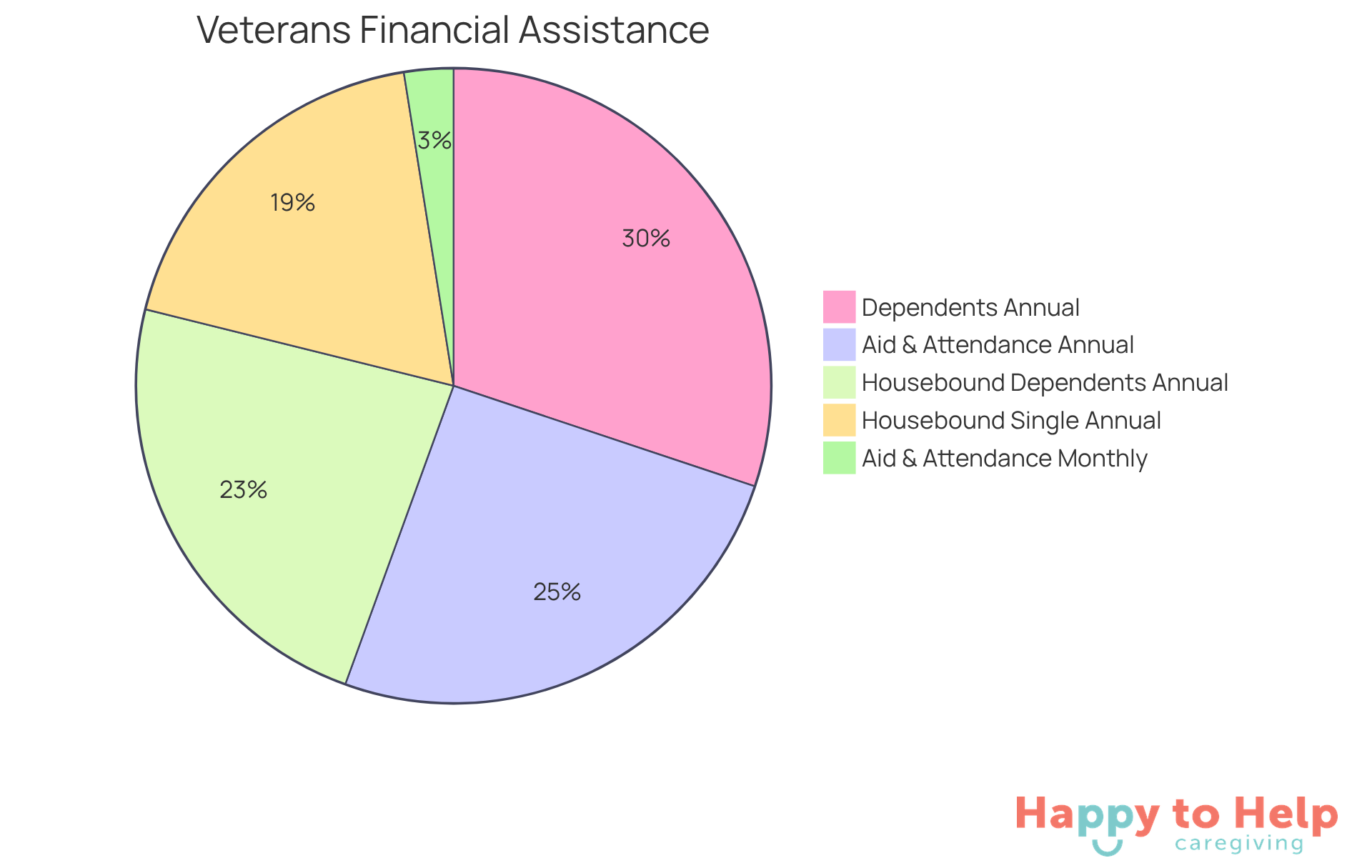
Navigating the complexities of senior living care can be daunting, especially for caregivers facing financial strain. Many individuals in need of assistance often find themselves overwhelmed by the costs associated with daily living support. The VA elder care benefits provide essential financial aid programs designed to alleviate this burden, notably the Aid and Attendance benefit. This program can offer qualified individuals up to $2,795 monthly, significantly easing the financial pressure linked to care.
In 2025, the Aid and Attendance Pension Rates reflect a commitment to supporting former service members. Single individuals can qualify for $28,300 annually, while those with dependents may receive up to $33,548. Additionally, the Housebound Pension Rates are set at $20,732 for single individuals and $25,982 for those with dependents. These figures underscore the importance of financial support for veterans and their families.
To qualify for Aid and Attendance, service members must demonstrate a need for assistance with daily living tasks, such as bathing, dressing, or eating. As of 2025, the net worth threshold for veterans seeking these benefits is $155,356, allowing more individuals to qualify while ensuring financial stability. However, the application process can be lengthy, averaging around four months. This highlights the need for prompt and accurate submissions to avoid delays.
Veterans often express gratitude for the Aid and Attendance support, noting how these funds have transformed their ability to access essential services and maintain their quality of life. Many former service members have shared that this financial assistance has enabled them to remain in their homes longer, receiving the personalized help they need without depleting their savings.
Understanding the nuances of VA elder care benefits, especially the Aid and Attendance program, is crucial for families navigating elder care. The enrollment process can be complex and may take months without proper guidance. With the right support, former military personnel can efficiently access these vital resources, ensuring they receive the aid they deserve.
Additional Senior Care Benefits for Veterans: Beyond the Basics
Caregivers of former military personnel face significant challenges, particularly when it comes to managing the physical and emotional demands of their roles. Many caregivers report feeling overwhelmed, especially when caring for individuals with unique health issues like PTSD and physical disabilities. This situation can lead to increased stress and burnout, making it essential to find effective support solutions.
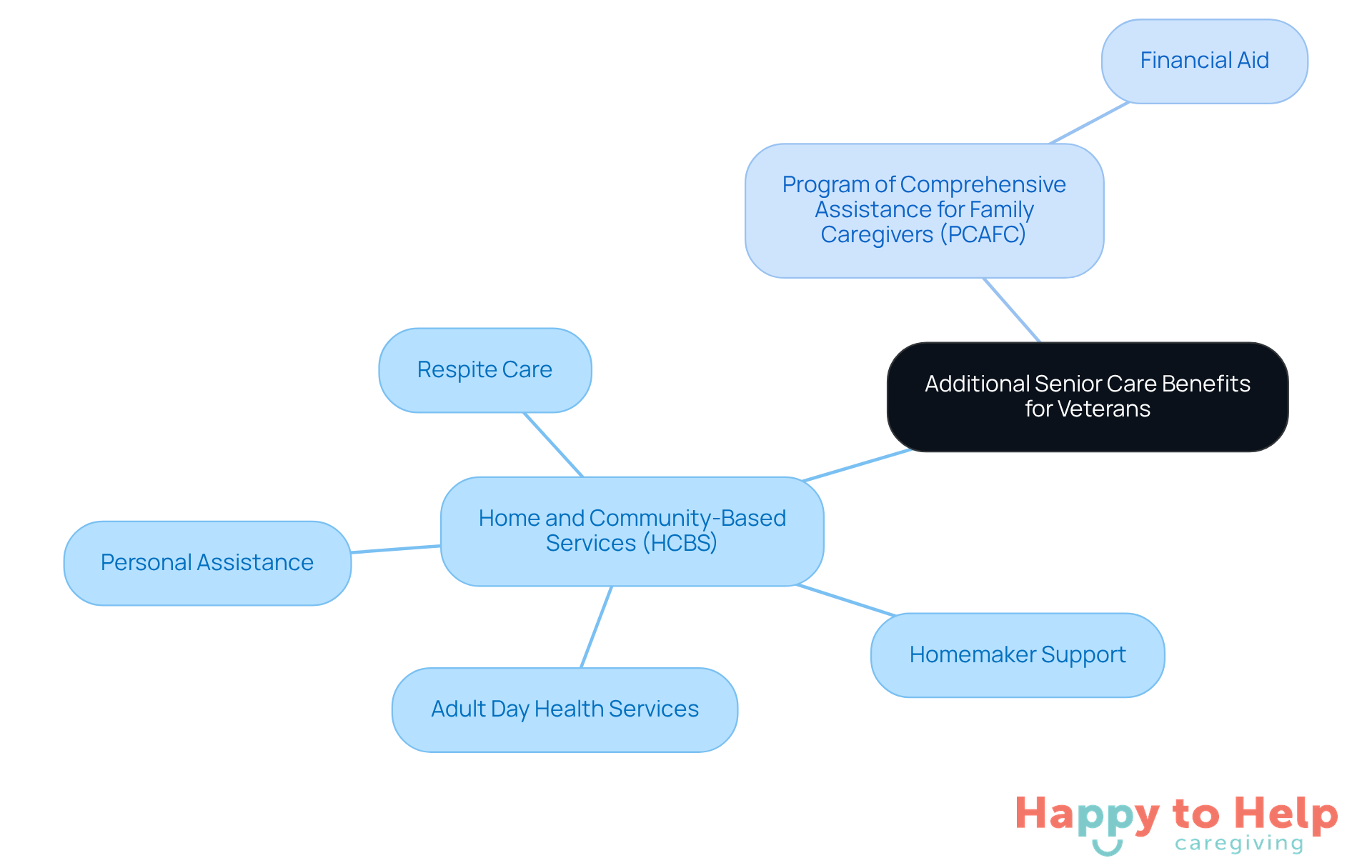
Home and Community-Based Services (HCBS) and the Program of Comprehensive Assistance for Family Caregivers (PCAFC) offer vital resources, including VA elder care benefits, to alleviate these burdens. HCBS provides in-home assistance tailored to the needs of former military personnel, including:
- Personal assistance
- Homemaker support
- Adult day health services
- Respite care
These services not only help caregivers manage daily tasks but also enhance their mental well-being. One caregiver noted that HCBS allows them to focus on their loved ones' emotional needs rather than just the logistics of care.
The PCAFC further supports family caregivers by providing essential financial aid as part of VA elder care benefits, recognizing their crucial role in the caregiving ecosystem. As of May 2025, over 707 former service members are registered in the Medical Foster Home Program, highlighting the growing demand for home-based support solutions.
Legislation like the bipartisan Elizabeth Dole Act, enacted on January 2, 2025, broadens access to HCBS, ensuring that service members can maintain their independence while aging in place. This significant advancement fosters a more supportive environment for veterans, their families, and caregivers alike. However, challenges remain, such as financial barriers to accessing the Medical Foster Home Program, which highlights the need for continued advocacy and support for VA elder care benefits.
VA Benefits and Medicare: Understanding the Relationship
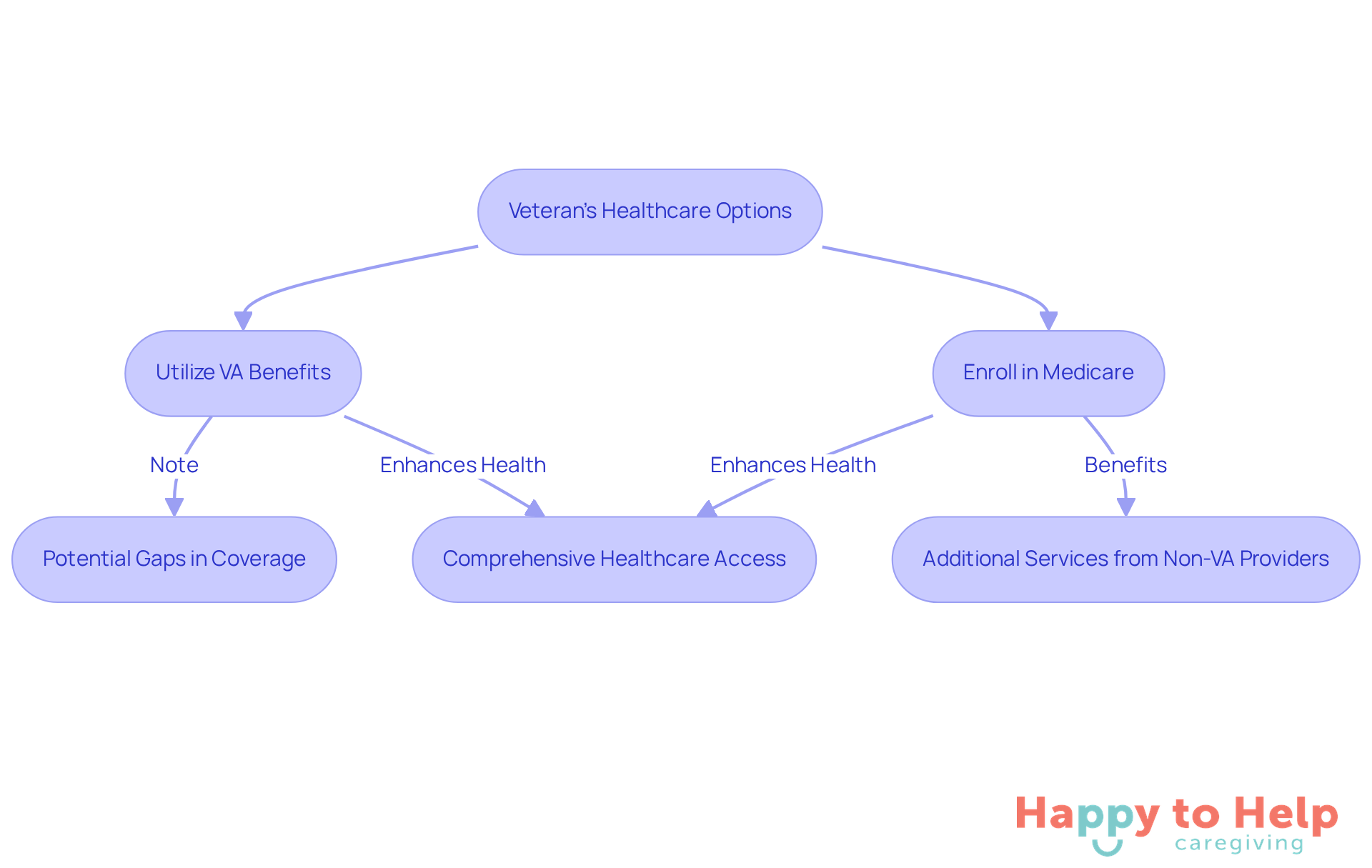
Veterans face a significant challenge when it comes to navigating their healthcare options. While they can utilize both VA services and Medicare, understanding how these two systems interact is crucial. While VA elder care benefits cover many healthcare services, they may not encompass everything veterans need.
This gap can lead to confusion and potential gaps in care. For instance, Medicare can provide additional coverage for services from non-VA providers, which is essential for comprehensive healthcare access. Without enrolling in Medicare, veterans might miss out on critical services that could enhance their overall health.
To address this issue, veterans are strongly encouraged to enroll in Medicare. Doing so ensures they have access to a broader range of healthcare services, especially those not covered by the VA elder care benefits. By understanding and utilizing both VA elder care benefits and Medicare, veterans can secure the comprehensive healthcare they deserve.
Accessing VA Benefits: A Step-by-Step Guide for Veterans
For veterans, accessing VA elder care benefits can be a daunting task, often leading to confusion and frustration. Without clear guidance, many may struggle to navigate the process effectively.
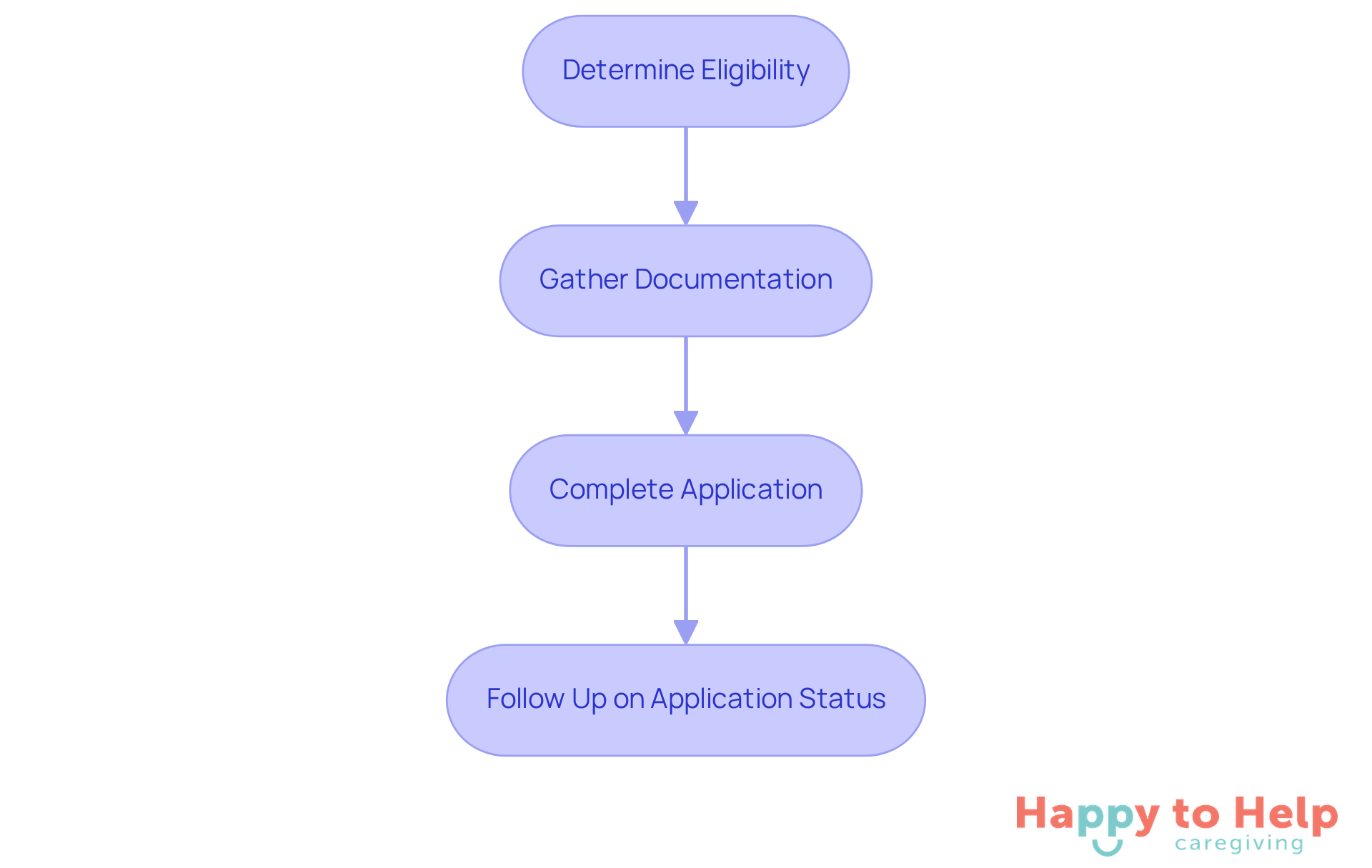
To simplify this journey, veterans should follow these steps:
- Determine eligibility by reviewing service records and assessing health needs.
- Gather necessary documentation, including discharge papers and financial information.
- Complete the application process online through VA.gov or in person at a local VA office.
- Follow up on the application status and respond promptly to any requests for additional information.
By taking these actionable steps, veterans can ensure they access the VA elder care benefits that they deserve.
Finding Community Support: Resources for Veterans in Need
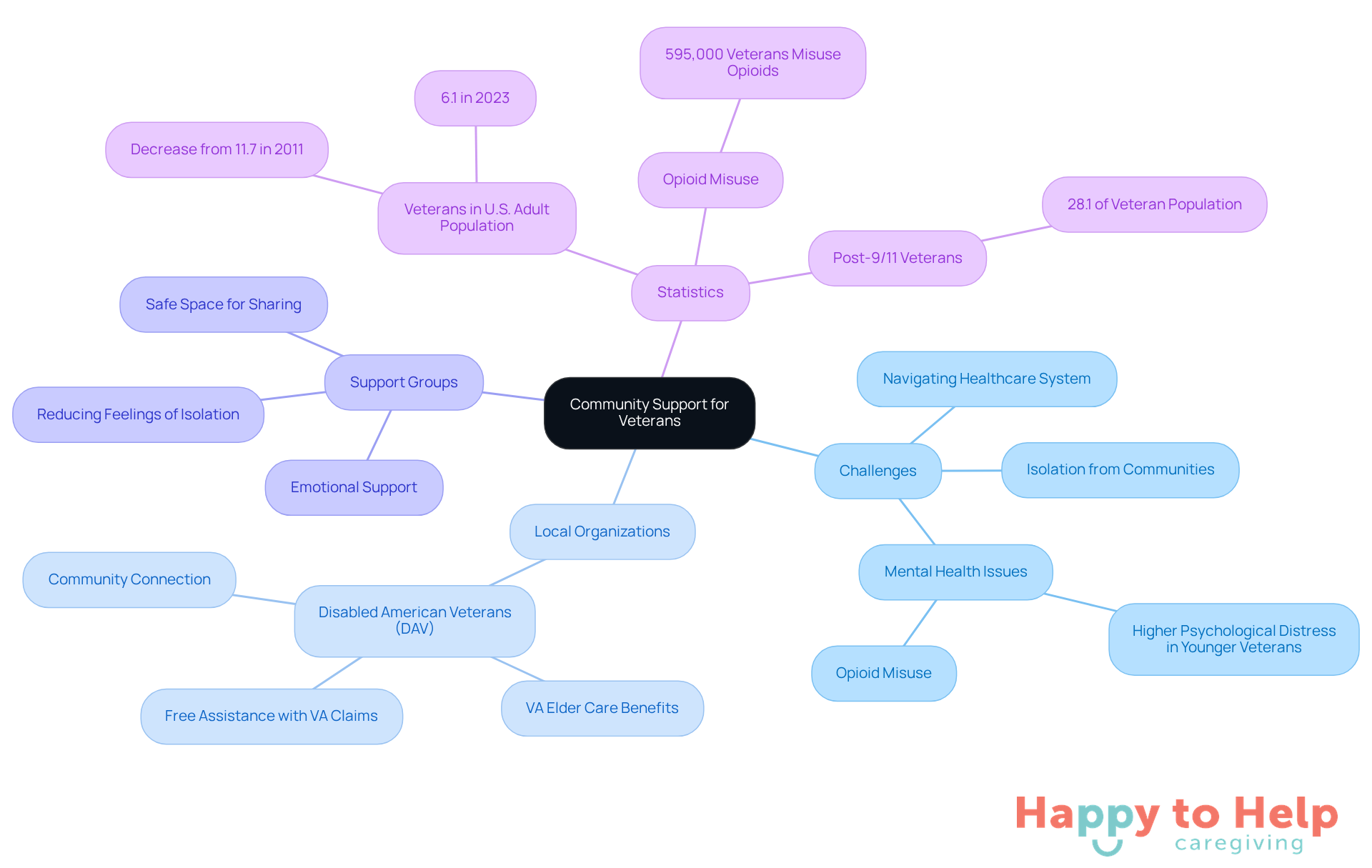
Former military personnel face significant challenges in accessing community resources, which can hinder their transition to civilian life. Many struggle to navigate the complexities of the healthcare system and often feel isolated from their communities. This situation is particularly concerning given that as of 2023, former military members make up 6.1 percent of the U.S. adult population, a decrease from 11.7 percent in 2011. The need for focused assistance is clear as this demographic evolves.
Local service organizations, such as the Disabled American Veterans (DAV), play a crucial role in providing VA elder care benefits to address these challenges. With over 1,200 chapters nationwide, DAV provides free assistance with VA claims and connects former service members to essential resources, such as VA elder care benefits, tailored to their specific needs. These organizations not only help navigate healthcare complexities but also foster a sense of belonging and support.
Support groups specifically designed for former military members and their families offer a safe space to share experiences and challenges. These groups can significantly reduce feelings of isolation and provide emotional support, which is vital given the mental health difficulties faced by younger service members, who report higher levels of psychological distress than their older peers.
Quotes from former service members often reflect gratitude for the support received from local organizations. As DAV states, "DAV comprehends the requirements of former service members because we are former service members-1 million strong." This connection underscores the importance of community in their recovery and adjustment processes.
As these organizations continue to adapt to the evolving needs of former service members, they remain essential resources for improving access to VA elder care benefits and enhancing the overall quality of life for those who have served. Furthermore, the issue of opioid misuse among former military personnel highlights the critical role of community support in addressing these pressing health concerns.
Frequently Asked Questions About VA Benefits for Elder Care
Common questions about VA benefits for elder care include:
-
What kinds of advantages are offered for former service members?
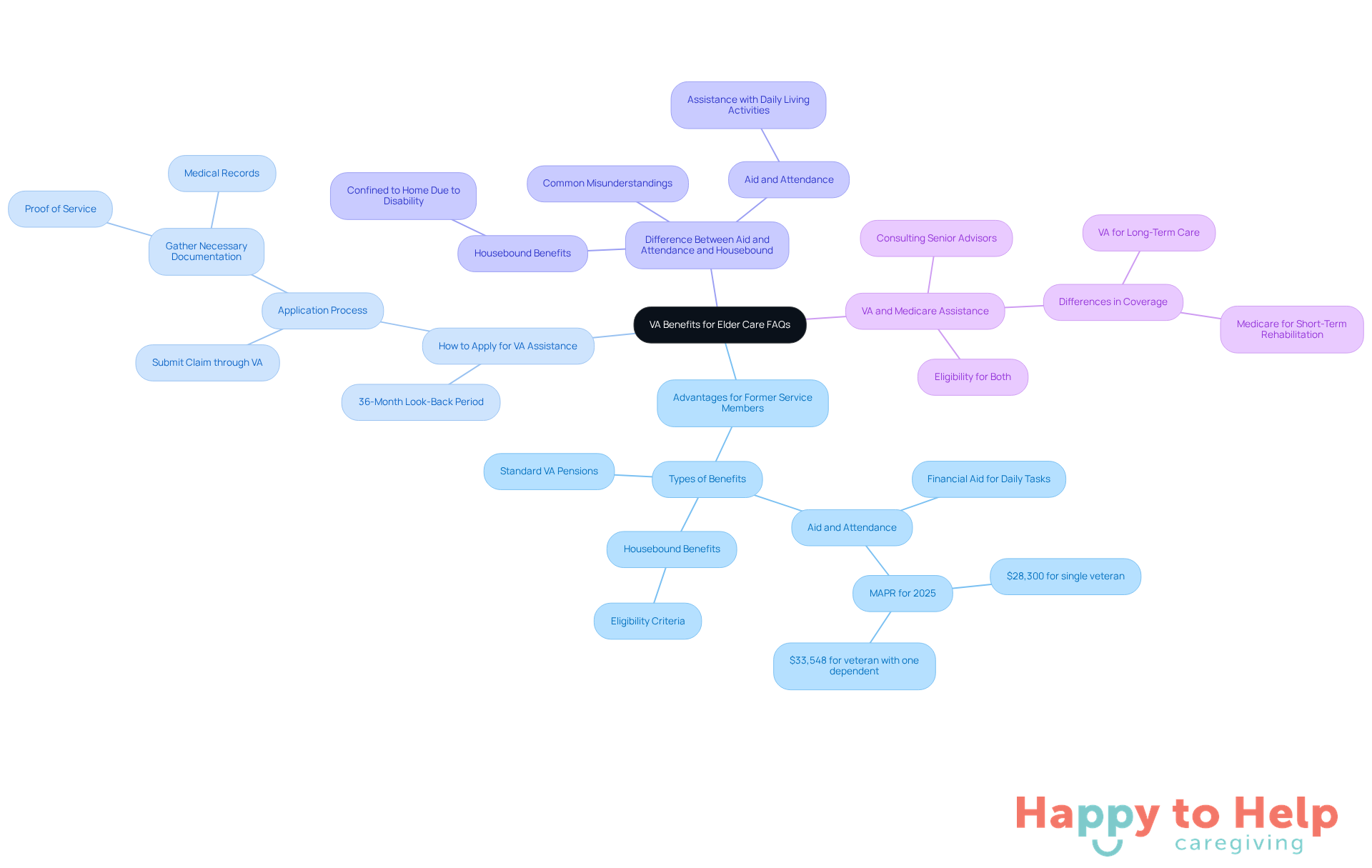
Veterans can access a variety of benefits, including Aid and Attendance, Housebound benefits, and standard VA pensions. Aid and Attendance offers extra financial aid for former service members who need help with daily tasks, while Housebound benefits are accessible for individuals who are greatly limited in their capacity to leave home. In 2025, the Maximum Annual Pension Rate (MAPR) for a veteran needing Aid and Attendance is set at $28,300, and for a veteran with one dependent, it is $33,548 annually or $2,795 monthly. This financial assistance can significantly alleviate the costs associated with long-term care. -
How do I apply for VA assistance?
Applying for VA benefits involves submitting a claim through the U.S. Department of Veterans Affairs. Veterans can utilize the VA's online portal for real-time claim tracking and document uploads, streamlining the process. It is essential to gather all necessary documentation, including proof of service and medical records, to ensure a smooth application experience. Additionally, families should be aware of the 36-month look-back period enforced by the VA, which can affect eligibility and financial planning. -
What is the difference between Aid and Attendance and Housebound assistance?
Aid and Attendance is designed for veterans who need help with at least two activities of daily living, such as bathing or dressing, while Housebound benefits apply to those who are primarily confined to their homes due to a permanent disability. Numerous former service members incorrectly think these advantages are identical, resulting in uncertainty regarding their eligibility and the assistance accessible to them. As one experienced individual noted, "I thought I was ineligible for Aid and Attendance because I didn't need a caregiver, but I learned that I could receive support for my daily needs without hiring someone." -
Can I obtain both VA and Medicare assistance?
Yes, veterans can receive both VA and Medicare benefits. However, it is essential to comprehend how these advantages interact, as they may address different elements of support. For example, while VA assistance can aid with long-term expenses, Medicare usually covers short-term rehabilitation and hospital admissions. Families should consult with a Senior Consulting Advisor to navigate these options effectively.
Real-life examples demonstrate the challenges families encounter when navigating VA assistance. Numerous former service members and their families do not know the complete array of advantages accessible, with only around five percent of qualified former military personnel taking advantage of VA elder care benefits for their support. Raising awareness about the VA elder care benefits is crucial to motivate more former service members to utilize the assistance offered. Comprehending these advantages is essential for families aiming to offer the best care for their loved ones. By clarifying misunderstandings and offering practical advice, families can more effectively access the resources they require to assist their service members in attaining a higher quality of life.
Navigating VA Benefits: Tips for Veterans and Their Families
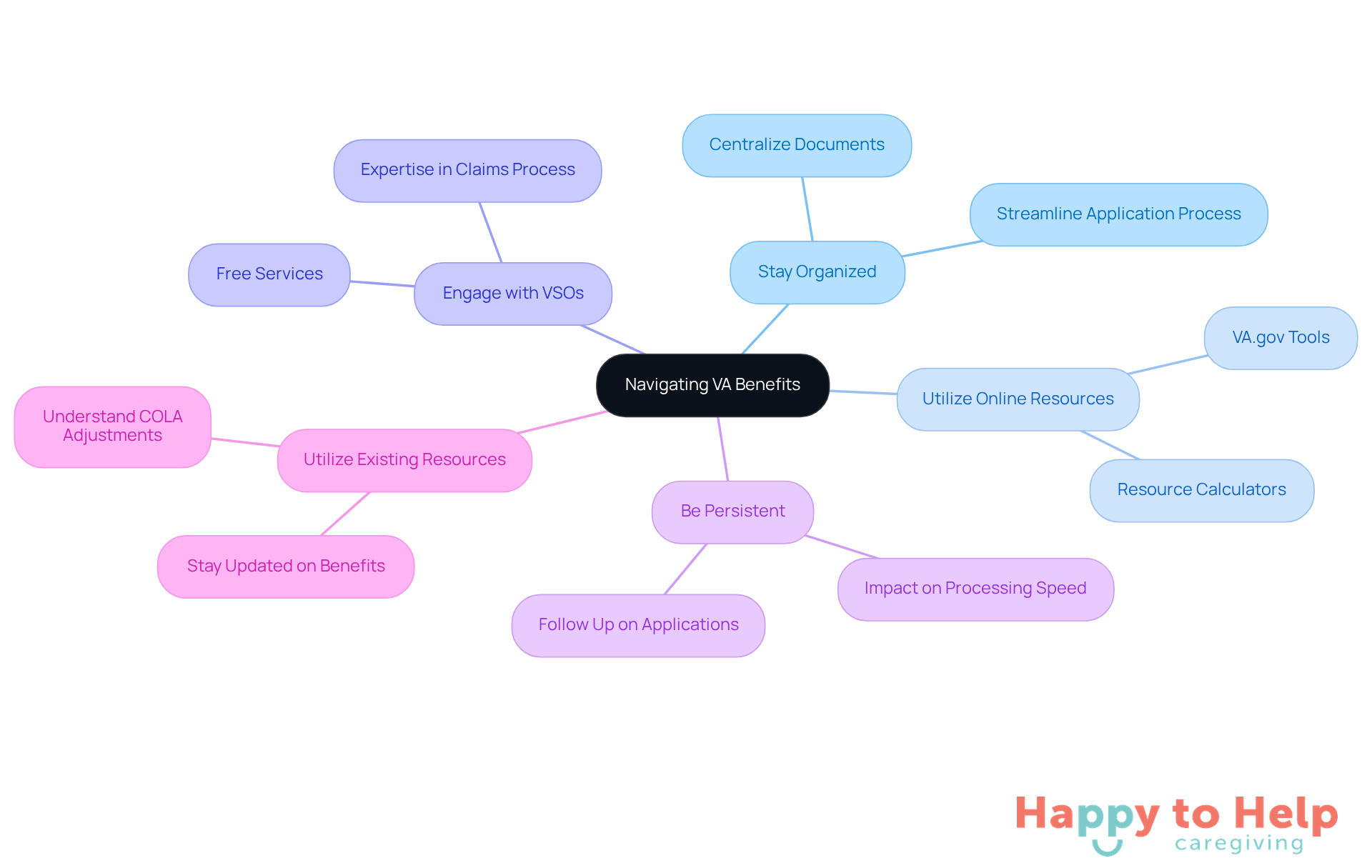
Navigating VA elder care benefits can be a complex process, posing significant challenges for families seeking assistance. The intricacies of the system often lead to confusion and delays, making it essential for caregivers to adopt effective strategies to simplify the journey.
-
Stay Organized: Keeping all relevant documents, such as DD214 forms, service treatment records, and medical records, in one centralized location is crucial. This organization not only streamlines the application process but also ensures that families can quickly access necessary information when needed.
-
Utilize Online Resources: The VA's official website, VA.gov, offers a wealth of tools and resources designed to assist veterans and their families. From resource calculators to application guides, these materials can help families understand their choices and navigate the system more effectively.
-
Engage with Veteran Service Organizations (VSOs): Reaching out to VSOs can provide invaluable assistance. These organizations offer expertise in the claims process and can help families prepare their applications, ensuring that all necessary documentation is included. Many VSOs provide their services at no cost, making them an accessible resource.
-
Be Persistent: Following up on applications and inquiries is essential for ensuring timely responses from the VA. Persistence can significantly impact the speed at which claims are processed, especially given that initial disability claims now average 152 days for completion.
-
Utilize Existing Resources: Families should stay updated on the latest information regarding VA assistance, such as the recent 2.5% cost-of-living adjustment (COLA) for 2025, which affects various forms of support including disability compensation. Understanding these changes can help families optimize their financial assistance.
Veteran advocates emphasize the importance of organization in the VA application process. As one supporter remarked, "Staying organized is not only about efficiency; it’s about making sure that veterans obtain the assistance they deserve without unnecessary delays." By adopting these strategies, families can navigate the landscape of VA elder care benefits more effectively, ensuring their loved ones receive the support they need.
Key Takeaways for Caregivers
Understanding VA elder care benefits poses a significant challenge for families caring for veterans. The complexities of these benefits can leave caregivers feeling overwhelmed, unsure of how to secure the necessary support for their loved ones. This lack of clarity can lead to veterans not receiving the assistance they need to maintain their quality of life.
To address this issue, families must familiarize themselves with the various programs available. Key insights reveal the importance of:
- Personalized in-home support
- Financial assistance
- Understanding eligibility criteria for VA benefits
By knowing what services are accessible - from nursing home care to assisted living options - families can better advocate for their veterans and ensure they receive the care tailored to their unique needs.
Moreover, the collaboration between VA benefits and Medicare can create a comprehensive safety net, allowing veterans to access a broader spectrum of healthcare services. Raising awareness about these benefits is vital for ensuring that veterans receive the support they deserve.
Families are encouraged to take proactive steps in understanding VA elder care benefits. Seeking assistance from veteran service organizations and utilizing available resources can significantly ease the navigation of the VA system. By doing so, caregivers can effectively secure the necessary resources, ensuring their loved ones thrive in their later years.
https://iframe.tely.ai/cta/eyJhcnRpY2xlX2lkIjogIjY5MjBmZDc3NzJkZTk4NjA5OWQwYjBlYSIsICJjb21wYW55X2lkIjogIjY4ZWU1ZGNhNzMxNzYyNTU3ZjNjOTVjMSIsICJpbmRleCI6IG51bGwsICJ0eXBlIjogImFydGljbGUifQ==Frequently Asked Questions
What services does Happy to Help Caregiving provide for veterans?
Happy to Help Caregiving offers personalized in-home support for veterans, including companionship support, post-hospital recovery assistance, respite services, and palliative support.
How does Happy to Help Caregiving enhance the well-being of veterans?
The services are tailored to meet the unique needs of former military personnel, enhancing their autonomy and well-being, and fostering a sense of safety and comfort in their daily lives.
What are the financial challenges veterans face regarding nursing home care?
Nursing home costs can be burdensome, with significant variations across states. For example, in 2025, Alaska averages over $436,000 for a private room, while Ohio averages around $21,580.
What factors determine eligibility for VA nursing home support?
Eligibility for VA nursing home support depends on service-connected disabilities, income levels, and specific medical needs. Veterans with a service-related disability rating of 70% or greater often receive priority.
What is the application process for VA nursing home benefits?
Families must navigate a structured application process, which involves submitting documentation that verifies military service, medical conditions, and financial status.
What are the eligibility criteria for VA assisted living benefits?
To qualify for VA assisted living benefits, veterans must have a minimum of 90 days of active duty, with at least one day during wartime, and demonstrate a need for help with daily living activities.
What is the Aid and Attendance program?
The Aid and Attendance program enhances the basic VA pension, providing financial support for veterans needing assistance with daily activities or who are housebound due to disabilities.
What are the Aid and Attendance pension rates for 2025?
For 2025, the Aid and Attendance pension rates are set at $28,300 yearly for an individual service member, which is approximately $2,358 per month.
How many veterans have enrolled in VA health services recently?
As of last year, over 401,000 former service members have enrolled in VA health services, reflecting a notable 30% increase in access to these essential offerings.
What percentage of VA enrollees lack insurance coverage?
Approximately 19.7% of VA enrollees lack public or private insurance coverage, which complicates their access to necessary services.
List of Sources
- Happy to Help Caregiving: Personalized In-Home Support for Veterans
- VA Tries to Keep Up With Drastic Veteran In-Home Care Increase (https://military.com/feature/2025/10/08/va-tries-keep-drastic-veteran-home-care-increase.html)
- 42 inspirational quotes for caregivers (https://care.com/c/40-inspirational-caregiver-quotes)
- 25+ Inspirational Quotes for Caregivers (https://caringseniorservice.com/blog/quotes-for-caregiver-inspiration)
- Caregivers and Family Support (https://hsrd.research.va.gov/research\_topics/caregiving.cfm)
- Vets’ caregivers need more support from VA, local orgs, study finds (https://militarytimes.com/veterans/2024/09/24/vets-caregivers-need-more-support-from-va-local-orgs-study-finds)
- VA Nursing Home Care Benefits: What Veterans Need to Know
- VA Tries to Keep Up With Drastic Veteran In-Home Care Increase (https://military.com/feature/2025/10/08/va-tries-keep-drastic-veteran-home-care-increase.html)
- Evaluation of the ‘Ladder to the Moon, Culture Change Studio Engagement Programme’ staff training: Two quasi-experimental case studies | Request PDF (https://researchgate.net/publication/313538369\_Evaluation\_of\_the\_'Ladder\_to\_the\_Moon\_Culture\_Change\_Studio\_Engagement\_Programme'\_staff\_training\_Two\_quasi-experimental\_case\_studies)
- Nursing Home Costs by State 2025 (https://worldpopulationreview.com/state-rankings/nursing-home-costs-by-state)
- Eligibility for VA Assisted Living Benefits: Who Qualifies?
- 20 Veteran Quotes to Uplift Veterans – Heroes' Mile Rehab (https://heroesmile.com/20-veteran-quotes-to-uplift-veterans)
- 6 Must-Read Veteran Healthcare Statistics | Valor Healthcare (https://valorhealthcare.com/6-veteran-healthcare-statistics-that-are-important-to-understand)
- New 2025 Updates to Veterans Benefits for Assisted Living (https://floridaseniorconsulting.com/updated-veterans-aid-and-attendance-benefits-for-assisted-living)
- More than 400K Veterans enrolled in VA health care over (https://news.va.gov/press-room/va-enrolled-401006-veterans-healthcare-365)
- VA Financial Assistance: How Much Does the VA Pay for Senior Living?
- Veterans Financial Assistance 101 – Tapestry Senior (https://tapestrysenior.com/2019/12/18/veterans-financial-assistance-101)
- New 2025 Updates to Veterans Benefits for Assisted Living (https://floridaseniorconsulting.com/updated-veterans-aid-and-attendance-benefits-for-assisted-living)
- Case Studies – Federal Performance Contracting Coalition (https://federalperformancecontracting.com/case\_studies)
- Senior Living Financial Benefits for Veterans | Benchmark Senior Living (https://benchmarkseniorliving.com/senior-living-financial-benefits-for-veterans)
- Veterans Aid & Attendance Benefit | Senior Living Residences (https://seniorlivingresidences.com/family-guide/financial-options/veterans-aid-and-attendance-benefit)
- Additional Senior Care Benefits for Veterans: Beyond the Basics
- Offering Home Health Care Services: A Case Study (https://syscreations.com/case\_studies/home-health-care-services)
- VA Tries to Keep Up With Drastic Veteran In-Home Care Increase (https://military.com/feature/2025/10/08/va-tries-keep-drastic-veteran-home-care-increase.html)
- New Law Supports Home Care, Caregivers for Military Veterans (https://elderlawrillc.com/new-law-supports-home-care-caregivers-for-military-veterans)
- 42 inspirational quotes for caregivers (https://care.com/c/40-inspirational-caregiver-quotes)
- Home- and Community-Based Service Use Among Veterans: The National Landscape - PubMed (https://pubmed.ncbi.nlm.nih.gov/40344577)
- Finding Community Support: Resources for Veterans in Need
- Veteran Services & Support | California Association of Veteran Service (https://californiaveterans.org)
- VA improves access for veterans using community care (https://dav.org/learn-more/news/2025/va-improves-access-for-veterans-using-community-care)
- 20 Veteran Quotes to Uplift Veterans – Heroes' Mile Rehab (https://heroesmile.com/20-veteran-quotes-to-uplift-veterans)
- Data to Help Support America's Veterans (https://rand.org/pubs/research\_reports/RRA1363-5-v2.html)
- Frequently Asked Questions About VA Benefits for Elder Care
- New 2025 Updates to Veterans Benefits for Assisted Living (https://floridaseniorconsulting.com/updated-veterans-aid-and-attendance-benefits-for-assisted-living)
- VA Aid & Attendance Benefits [2025 Rates] | Mesothelioma Guide (https://mesotheliomaguide.com/veterans/va-benefits/va-aid-attendance-benefits)
- VA Benefits 2025: What Every Veteran Family Should Know | Operation Family Fund (https://operationfamilyfund.org/va-benefits-2025-update-what-every-veteran-family-should-know)
- Senior Care For Veterans | Where You Live Matters (https://whereyoulivematters.org/resources/senior-care-for-veterans-how-to-pay-for-long-term-care-with-va-benefits)
- Navigating VA Benefits: Tips for Veterans and Their Families
- Veterans benefits increase 2.5% in 2025 (https://dav.org/learn-more/news/2025/veterans-benefits-increase-2-5-in-2025)
- VA Benefits 2025: What Every Veteran Family Should Know | Operation Family Fund (https://operationfamilyfund.org/va-benefits-2025-update-what-every-veteran-family-should-know)
- Navigating VA Disability Benefits: Understanding Claim Types, Evidence Requirements, And Free VSO Assistance | Hire Heroes USA (https://hireheroesusa.org/navigating-va-disability-benefits-understanding-claim-types-evidence-requirements-and-free-vso-assistance)