

For families in our service areas
For families in our service areas, this guide explains caregiving and how non-medical in-home caregiving can support care planning in East Idaho, Treasure Valley & Magic Valley, Northern Wasatch, North Central West Virginia, and Northeast Ohio.
What You Need to Know About 10 Arthritis Exercises
Arthritis poses a significant challenge for millions of seniors, often resulting in reduced mobility and a lower quality of life. This condition can lead to feelings of frustration and isolation, making it difficult for older adults to engage in daily activities. Many struggle to find safe and effective ways to stay active, which can further exacerbate their situation.
Caregivers play a crucial role in helping seniors overcome these barriers. By encouraging regular, low-impact exercises, caregivers can significantly enhance joint health and emotional well-being. This article explores ten essential arthritis exercises specifically designed for seniors, providing actionable insights that can transform their daily lives. With the right support, caregivers can empower seniors to embrace a more active lifestyle, fostering independence and comfort.
Happy to Help Caregiving: Personalized Support for Arthritis Exercises
Problem: Seniors with arthritis often struggle with mobility and independence, which can lead to feelings of isolation and emotional distress. Research from the National Institute on Aging indicates that regular, low-impact physical activity is crucial for joint health, yet approximately 44% of adults with joint issues report limitations due to their condition.
Agitate: Caregivers face significant challenges, particularly those who themselves have arthritis. The CDC reports that these caregivers are more likely to provide care for 40 or more hours per week, which can exacerbate their own health issues and stress levels. This situation not only affects the caregivers but also impacts the quality of care they can provide to their clients.
Solution: Happy to Help Caregiving offers specialized in-home assistance tailored for seniors with arthritis. Caregivers are trained to implement customized activity plans that promote safe, arthritis exercises for seniors, enhancing mobility and comfort while fostering independence in a familiar environment. This personalized approach not only boosts physical well-being but also provides essential emotional support, helping clients feel secure and engaged in their care. Effective in-home caregiving programs, like those highlighted in the 'Managing Mobility Issues' case study, demonstrate how personalized support can help older adults maintain their independence and combat feelings of isolation.
By focusing on companionship and tailored care, caregivers can significantly improve the quality of life for seniors with arthritis by incorporating arthritis exercises for seniors.

Walk With Ease Program: A Low-Impact Solution for Seniors
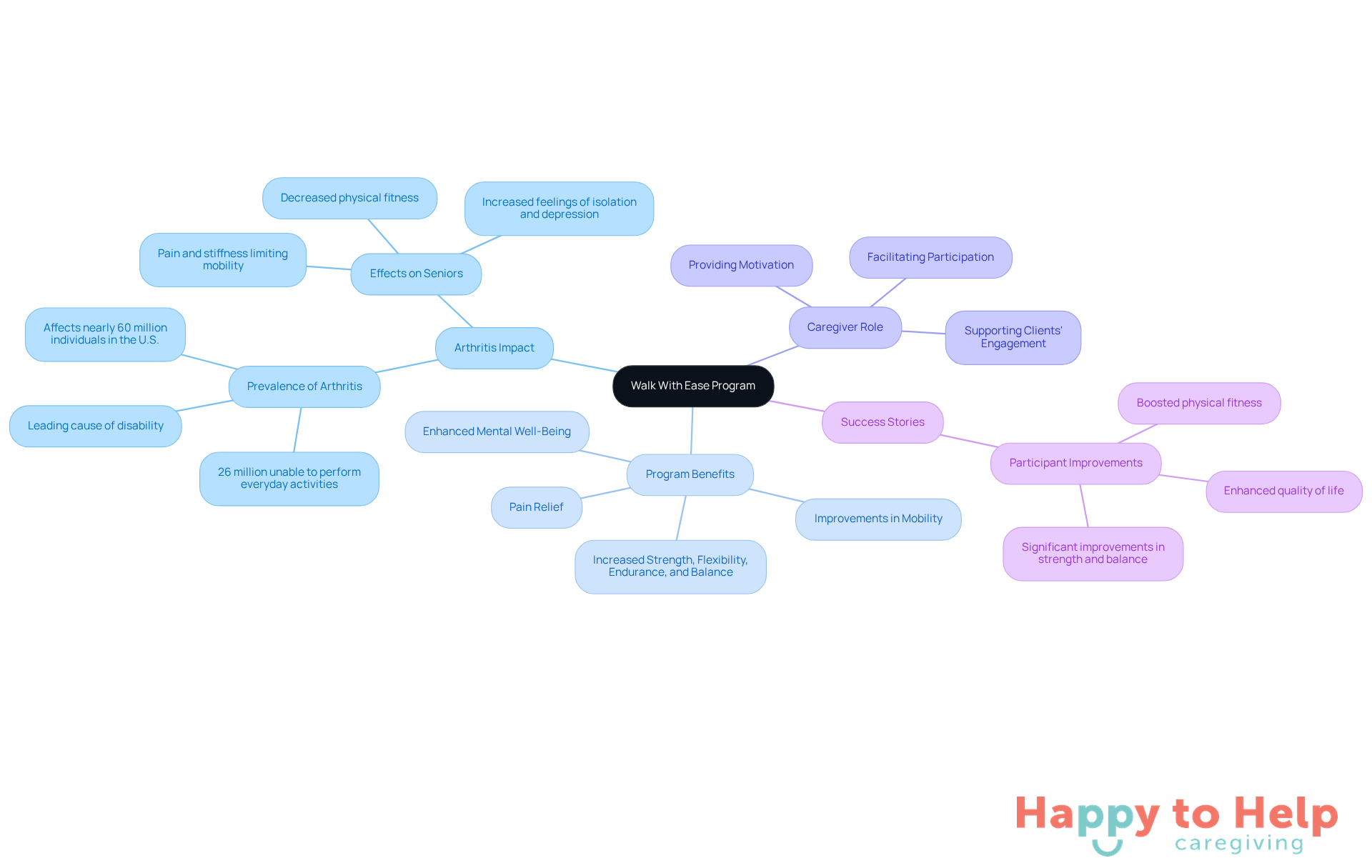
Arthritis affects nearly 60 million individuals in the U.S., making it the leading cause of disability in the country. This widespread issue presents a significant challenge for seniors, who often struggle with pain and stiffness that limit their mobility, highlighting the importance of arthritis exercises for seniors. Without effective management strategies, many face a decline in their quality of life.
The implications of untreated arthritis can be severe, leading to decreased physical fitness and mental well-being. Seniors may find it difficult to engage in daily activities, which can further exacerbate feelings of isolation and depression. This is where the Walk With Ease program, developed by the Arthritis Foundation, steps in as a vital resource for arthritis exercises for seniors.
The Walk With Ease program is an evidence-based initiative designed to encourage seniors to engage in regular walking. This low-impact exercise is proven to alleviate pain and stiffness while enhancing overall mobility. Participants learn to seamlessly incorporate walking into their daily routines, boosting physical fitness and promoting mental well-being.
Caregivers from Happy to Help Caregiving play a crucial role in facilitating participation in this program. They provide the motivation and support necessary for clients to remain active and engaged. Success stories from older participants highlight significant improvements in strength, flexibility, endurance, and balance, showcasing the transformative impact of consistent walking on their quality of life.
As participation rates continue to rise, the Walk With Ease program stands out as a valuable solution for older adults seeking arthritis exercises for seniors to enhance their mobility and comfort. By encouraging regular walking as part of arthritis exercises for seniors, caregivers can help their clients manage arthritis effectively and improve their overall well-being.
Range-of-Motion Exercises: Essential Movements for Joint Health
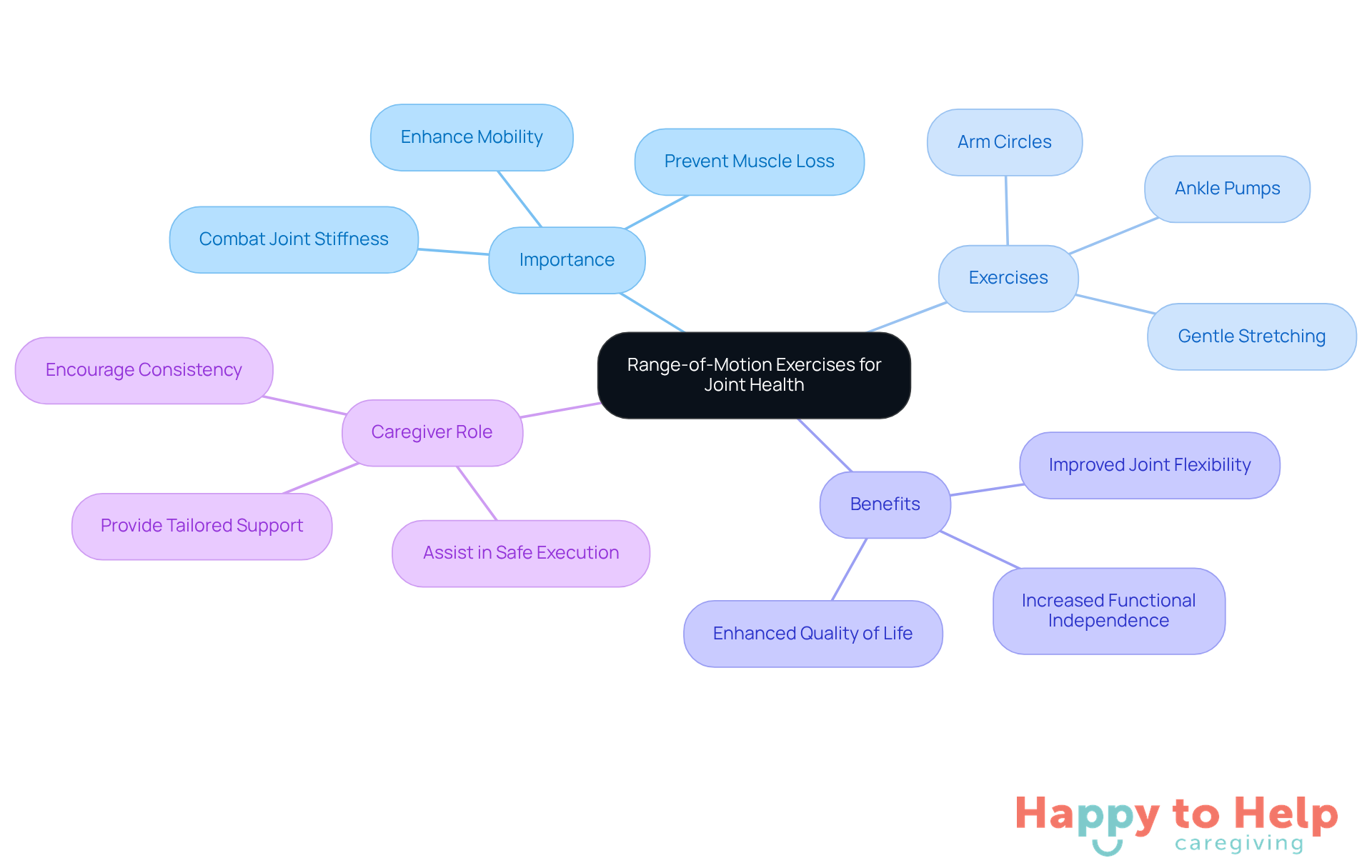
Range-of-motion activities, which are considered arthritis exercises for seniors, are vital for addressing the significant problem of joint stiffness. This stiffness can lead to a decline in muscle strength and joint function, diminishing by as much as 30% by age 80. Without intervention, these issues can severely impact mobility and independence.
To combat this, participating in arthritis exercises for seniors, including simple movements like:
- Arm circles
- Ankle pumps
- Gentle stretching daily
can greatly enhance joint flexibility. Research shows that consistent participation in arthritis exercises for seniors not only improves joint mobility but also helps maintain overall functional independence. Starting a ROM activity program early is crucial to maximize benefits and prevent deformities from developing.
Caregivers play a key role in this process. They are encouraged to assist clients in performing these activities safely and effectively, ensuring that movements remain gentle and within a comfortable range. Occupational therapy can further support this effort by assessing strength and range of motion, providing tailored assistance for older adults.
By integrating arthritis exercises for seniors into their daily routines, older adults can experience a significant boost in their quality of life, leading to increased mobility and comfort in everyday tasks. Remember, the earlier you start, the better the outcomes for maintaining joint health.
Strength Training: Building Muscle to Support Mobility
Strength training poses a significant challenge in arthritis management for seniors. Without adequate muscle strength, individuals may struggle with mobility and face an increased risk of falls. This situation can be particularly concerning for caregivers who want to ensure the safety and well-being of those they support.
To address this issue, incorporating light resistance activities, such as using resistance bands or light weights, can be highly beneficial. These exercises help enhance muscle strength around affected joints, providing crucial support for mobility. Caregivers play a vital role in guiding individuals through safe strength training routines, ensuring that these activities are tailored to each person's capabilities and health conditions.
By implementing these strategies, caregivers can significantly improve the quality of life for seniors through arthritis exercises for seniors. Not only does this approach foster independence, but it also promotes overall health and reduces the risk of falls.

Low-Impact Aerobic Exercises: Boosting Endurance and Mobility
Joint inflammation poses a significant challenge for older adults, often limiting their ability to participate in arthritis exercises for seniors. This can lead to decreased cardiovascular health and a decline in overall well-being.
Low-impact aerobic activities, such as swimming, cycling, and walking, offer a solution. These arthritis exercises for seniors not only improve cardiovascular health but also reduce stress on the joints, making them ideal for individuals with inflammation. Regular participation in arthritis exercises for seniors can enhance endurance, enabling older adults to perform daily activities with greater ease and enjoyment.
Caregivers play a crucial role in encouraging clients to engage in these activities. By motivating them to stay active, caregivers can help uphold a healthy lifestyle, ultimately improving their clients' quality of life. Simple strategies, like setting achievable goals or joining them in these activities, can make a significant difference.

Hand Stretches: Relieving Pain and Enhancing Dexterity
Arthritis pain in seniors' hands presents a significant challenge, impacting their ability to perform daily activities. This discomfort can hinder their independence and quality of life. Caregivers play a crucial role in addressing this issue by helping clients manage their symptoms effectively.
To alleviate discomfort and enhance dexterity, caregivers can introduce simple hand stretches. Activities such as:
- Finger bends
- Wrist rotations
- Squeezing a stress ball
are not only effective but also easy to incorporate into daily routines. Regular practice of these stretches can help maintain hand function and reduce pain, which is vital for seniors' overall independence.
By assisting clients in performing these stretches consistently, caregivers can make a meaningful difference in their quality of life. It's essential to prioritize these exercises, ensuring that seniors can continue to engage in basic activities with greater ease.

Balance and Flexibility Exercises: Key to Preventing Falls
Falls among older adults with joint inflammation pose a significant risk, leading to severe injuries and loss of independence. In fact, one out of four older adults will experience a fall each year, highlighting the urgent need for effective fall prevention strategies. Balance and flexibility activities are crucial in addressing this problem, as they help prevent falls and foster independence.
Engaging in activities like tai chi and yoga can significantly enhance stability and overall well-being. Tai chi, known for its gentle movements, has been shown to improve balance and coordination, thereby reducing fall risk. Similarly, yoga offers arthritis exercises for seniors that can alleviate stiffness and enhance mobility, making it an excellent choice for older adults dealing with arthritis.
Geriatric specialists emphasize the importance of stability for elderly individuals. Preserving balance is essential for avoiding falls, which can lead to serious injuries. Effective fall prevention programs often adopt a holistic approach by incorporating arthritis exercises for seniors, which include balance training and flexibility activities tailored to the needs of older adults. Simple standing stability exercises, such as the one-legged stance or tandem position, can be easily integrated into daily routines, allowing older adults to practice in a safe environment.
Caregivers play a vital role in guiding clients through these activities, ensuring they are performed safely and effectively. It is crucial for older adults to consult healthcare professionals before starting any fitness routine to ensure safety and appropriateness. By fostering an environment that encourages regular practice of balance and flexibility activities, caregivers can help older adults improve their mobility and comfort, leading to a more active and fulfilling life.
Moreover, these activities can boost self-confidence and reduce the fear of falling, contributing positively to the overall mental and emotional health of elderly individuals.

Exercise Videos: Visual Guidance for Safe Movement
Exercise videos are a vital resource for older adults looking to engage in arthritis-friendly workouts. The challenge many face is finding safe and effective ways to stay active without risking injury. This is where visual demonstrations come in, allowing seniors to participate in activities with confidence.
Caregivers play a crucial role in this process. By curating a selection of recommended videos, they can foster motivation and engagement in their clients' fitness routines from the comfort of home. Activities such as:
- Chair stands
- Wall push-ups
- Seated leg extensions
are excellent examples of arthritis-friendly workouts available in these videos.
Success stories abound, with numerous older adults reporting improved mobility and comfort after incorporating these visual resources into their daily routines. Fitness professionals emphasize that visual support significantly enhances workout commitment, as older adults can clearly observe movements and understand the correct techniques. This approach not only encourages physical activity but also builds confidence, motivating seniors to maintain a regular fitness routine.
However, it's essential for older adults to consult a healthcare expert before starting any fitness regimen to ensure safety. Online platforms provide a wide array of arthritis-friendly workout videos, ranging from gentle stretching to strength-enhancing activities, with durations from 10 to 45 minutes. This variety ensures that older adults have access to options tailored to their needs.
By utilizing these resources, older adults can effectively manage their joint pain symptoms while reaping the benefits of regular physical activity.

Safe Stretching Techniques: Preparing for and Recovering from Exercise
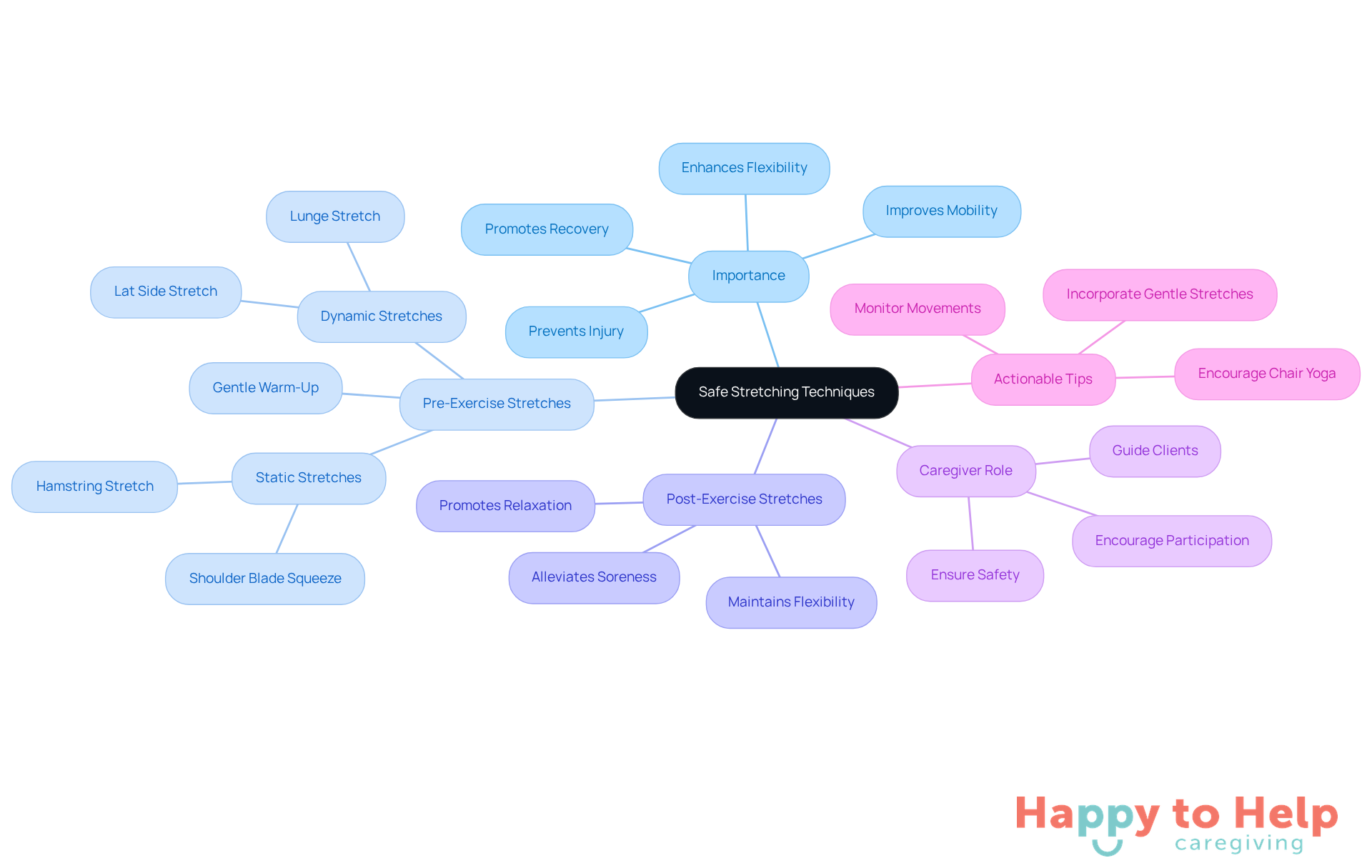
Safe stretching methods are crucial for older adults dealing with joint pain. Without proper stretching, they risk increased discomfort and injury, which can hinder their ability to engage in physical activity. Gentle stretches before workouts warm up muscles and joints, enhancing flexibility and reducing the risk of injury. Post-exercise stretching alleviates soreness and promotes recovery, making it an essential part of any fitness routine.
Physical therapists recommend performing stretches after a brief warm-up to ensure muscles are pliable. This practice significantly lowers the risk of strains and sprains. Incorporating arthritis exercises for seniors as part of a well-rounded stretching routine can lead to improved mobility and comfort. Successful programs often include static stretches targeting major muscle groups such as the neck, shoulders, back, hips, and legs. For instance, the hamstring stretch and shoulder blade squeeze are effective in preserving flexibility and relieving discomfort related to joint inflammation.
Caregivers play a vital role in guiding clients through these techniques. They should ensure that movements are slow and controlled to prevent strain. Additionally, evidence suggests that regular stretching can enhance overall well-being and independence in older adults. Arthritis exercises for seniors, such as chair yoga and guided physical therapy sessions, have shown promising results in managing joint pain and enabling older adults to participate in physical activity safely.
By encouraging a regular stretching practice, caregivers can assist older adults not only in managing their joint pain but also in enhancing their quality of life. Here are some actionable tips for caregivers:
- Incorporate gentle stretches into daily routines.
- Encourage participation in chair yoga or guided sessions.
- Monitor movements to ensure safety and effectiveness.
By implementing these strategies, caregivers can make a significant difference in the lives of older adults.
Physical Activity Webinars: Learning About Arthritis Management
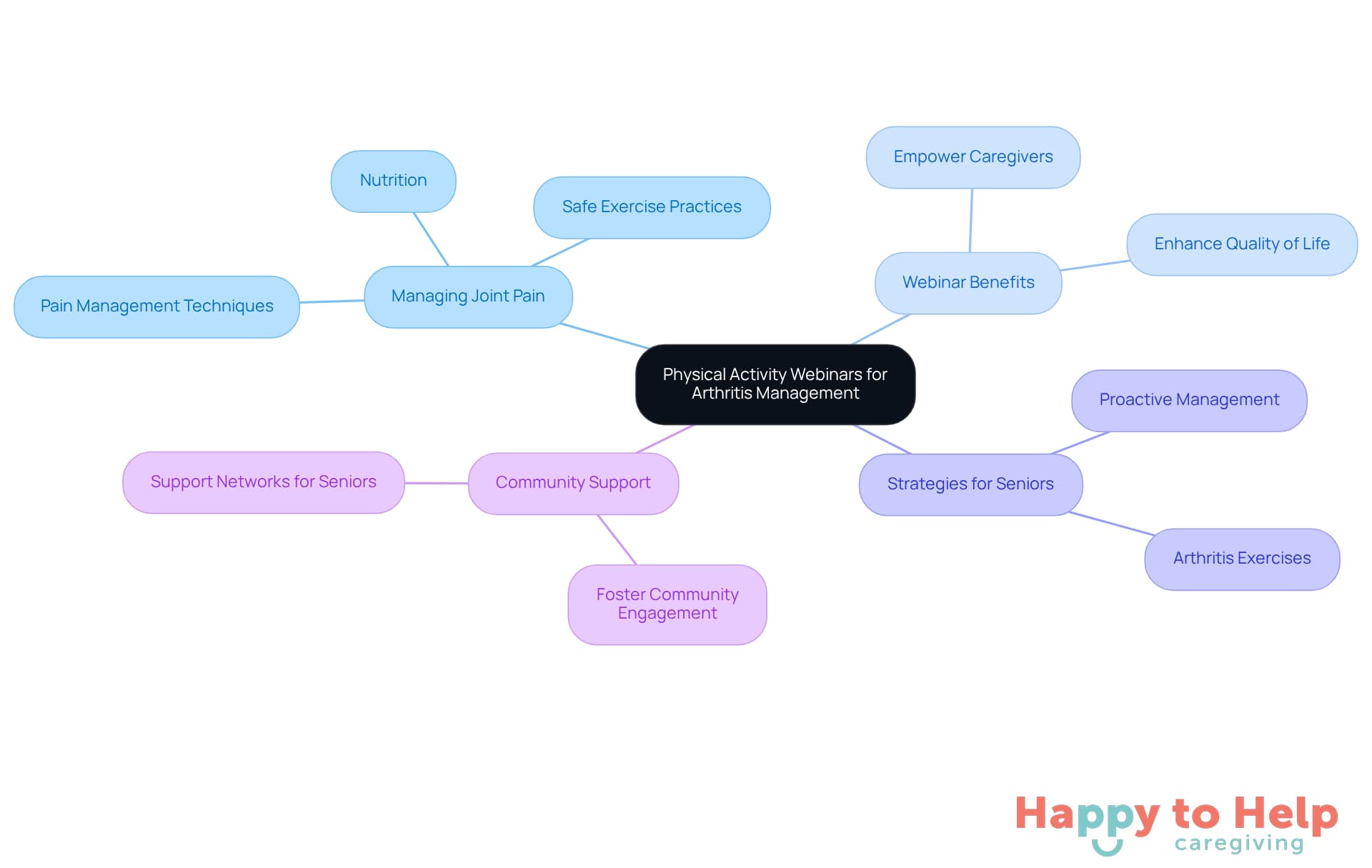
Managing joint pain can be a significant challenge for seniors and their caregivers. Many struggle with finding effective strategies to alleviate discomfort while maintaining an active lifestyle. This issue not only affects physical health but can also impact emotional well-being and overall quality of life.
To address these challenges, physical activity webinars offer a valuable resource. These sessions provide insights into safe exercise practices, nutrition, and pain management techniques tailored specifically for seniors. By participating in these webinars, caregivers can empower their clients to take a proactive approach to managing arthritis with arthritis exercises for seniors.
Encouraging participation in these webinars can foster a sense of community and support among seniors and their families. Caregivers can help clients learn effective strategies, such as arthritis exercises for seniors, that enhance their quality of life and make joint pain management more manageable and less daunting.
Your Path Forward
Seniors with arthritis often face significant challenges in mobility and overall quality of life. This issue not only affects their physical capabilities but also their emotional well-being. Caregivers play a crucial role in this context, providing the personalized support that older adults need to navigate their fitness journeys effectively.
To address these challenges, a multifaceted approach is essential. Various types of exercises - ranging from low-impact aerobics to strength training and flexibility activities - can help manage arthritis effectively. Each exercise type targets specific challenges associated with arthritis, fostering both independence and emotional well-being. Programs like Walk With Ease are vital, as they offer the encouragement and structure that seniors often require.
The journey toward improved mobility and comfort is a collaborative effort. Caregivers and clients must commit to prioritizing regular physical activity. Utilizing available resources, such as webinars and exercise videos, can empower seniors to combat the limitations imposed by arthritis. Encouraging participation in these initiatives can lead to a more active, fulfilling life, reinforcing the idea that with the right support and strategies, managing arthritis and maintaining independence is indeed achievable.
https://iframe.tely.ai/cta/eyJhcnRpY2xlX2lkIjogIjY5MjdhNWQ1MjI0NDc2YzA3YjhmODllNCIsICJjb21wYW55X2lkIjogIjY4ZWU1ZGNhNzMxNzYyNTU3ZjNjOTVjMSIsICJpbmRleCI6IG51bGwsICJ0eXBlIjogImFydGljbGUifQ==Frequently Asked Questions
What challenges do seniors with arthritis face?
Seniors with arthritis often struggle with mobility and independence, leading to feelings of isolation and emotional distress. Approximately 44% of adults with joint issues report limitations due to their condition.
How do caregivers of seniors with arthritis experience challenges?
Caregivers, especially those with arthritis themselves, often provide care for 40 or more hours per week, which can exacerbate their own health issues and stress levels, impacting both their well-being and the quality of care they provide.
What services does Happy to Help Caregiving offer for seniors with arthritis?
Happy to Help Caregiving provides specialized in-home assistance tailored for seniors with arthritis, including customized activity plans that promote safe arthritis exercises, enhancing mobility and comfort while fostering independence.
What is the Walk With Ease program?
The Walk With Ease program, developed by the Arthritis Foundation, is an evidence-based initiative designed to encourage seniors to engage in regular walking, which helps alleviate pain and stiffness while enhancing overall mobility.
How do caregivers assist with the Walk With Ease program?
Caregivers from Happy to Help Caregiving provide motivation and support to help clients participate in the Walk With Ease program, promoting their physical activity and engagement.
What are some examples of range-of-motion exercises for seniors?
Examples of range-of-motion exercises for seniors include arm circles, ankle pumps, and gentle stretching, which are essential for enhancing joint flexibility and combating joint stiffness.
Why are range-of-motion exercises important for seniors?
Range-of-motion exercises are vital for addressing joint stiffness, which can lead to reduced muscle strength and joint function, thereby maintaining mobility and independence.
How can caregivers support seniors in performing exercises?
Caregivers can assist clients in performing exercises safely and effectively, ensuring movements are gentle and within a comfortable range, and can also support occupational therapy efforts to assess strength and range of motion.
What impact do arthritis exercises have on seniors' quality of life?
Regular participation in arthritis exercises can significantly improve joint mobility, enhance overall functional independence, and lead to increased mobility and comfort in daily tasks for older adults.
List of Sources
- Happy to Help Caregiving: Personalized Support for Arthritis Exercises
- How Can In-home Care Help Seniors with Arthritis Age in Place? (https://touchinghearts.com/nyc/blog/how-can-in-home-care-help-seniors-with-arthritis-age-in-place)
- Arthritis Among Caregivers: A Hidden Challenge in Senior Care - Geriatric House Call Dentistry (https://geriatrichousecalldentistry.com/arthritis-among-caregivers-a-hidden-challenge-in-senior-care)
- Arthritis and Aging: How Home Care Services Can Ease Daily Discomfort - Essential Care (https://myessential.care/arthritis-and-aging-how-home-care-services-can-ease-daily-discomfort)
- Caregivers Face Increased Arthritis Burden (https://medpagetoday.com/rheumatology/arthritis/101562)
- Prevalence and Characteristics of Arthritis Among .. (https://cdc.gov/mmwr/volumes/71/wr/mm7144a1.htm)
- Walk With Ease Program: A Low-Impact Solution for Seniors
- Walk With Ease expands awareness through partnerships, marketing (https://extension.oregonstate.edu/impact/walk-ease-expands-awareness-through-partnerships-marketing)
- BMH New Community Wellness Program, Walk With Ease, Begins Jan. 21 (https://bmh.org/bmh-introduces-new-community-wellness-program-walk-with-ease)
- Walk with Ease Program Can Help People Manage Arthritis (https://extension.iastate.edu/news/walk-ease-program-can-help-people-manage-arthritis)
- An observational pilot evaluation of the Walk with Ease program for reducing fall risk among older adults - Archives of Public Health (https://archpublichealth.biomedcentral.com/articles/10.1186/s13690-023-01219-8)
- Range-of-Motion Exercises: Essential Movements for Joint Health
- Caregiver Assistance News - May 2024 | Range of Motion (https://buckeyehills.org/news/caregiver-assistance-news-may-2024)
- Joint Effort: Best Exercises for Seniors with Arthritis - Miami Jewish Health (https://miamijewishhealth.org/blog/senior-health-wellness/best-exercises-for-seniors-with-arthritis)
- Stay mobile as you age (https://uclahealth.org/news/article/stay-mobile-you-age)
- News - Aging and Mobility: Tips to Stay Healthy and Active - Arnot Health (https://arnothealth.org/news/aging-and-mobility-tips-to-stay-healthy-and-active)
- Range of motion on increasing muscle strength in the elderly | Nursing and Health Sciences Journal (NHSJ) (https://nhs-journal.com/index.php/nhs/article/view/500)
- Strength Training: Building Muscle to Support Mobility
- You Can Still Lift Weights if You Have Arthritis (https://lindensurgicalnj.com/news/you-can-still-lift-weights-if-you-have-arthritis)
- Elastic resistance training to increase muscle strength in elderly: A systematic review with meta-analysis (https://sciencedirect.com/science/article/abs/pii/S0167494313000356)
- Stronger with Age: The Orthopaedic Benefits of Strength Training for Older Adults (https://cfaortho.com/media/news/2025/09/stronger-with-age-the-orthopaedic-benefits-of)
- Strength training in older adults: The benefits for osteoarthritis - PMC (https://pmc.ncbi.nlm.nih.gov/articles/PMC3606891)
- The Effects of Resistance Training on Pain, Strength, and Function in Osteoarthritis: Systematic Review and Meta-Analysis - PMC (https://pmc.ncbi.nlm.nih.gov/articles/PMC11676110)
- Low-Impact Aerobic Exercises: Boosting Endurance and Mobility
- Report: Adults 50 and Older Need More Physical Activity (https://cdc.gov/physical-activity/php/reports/adults-50-and-older.html)
- Scientists reveal the best exercise to ease knee arthritis pain (https://sciencedaily.com/releases/2025/10/251019120521.htm)
- Prevalence and trends in physical activity among older adults in the United States: A comparison across three national surveys - PMC (https://pmc.ncbi.nlm.nih.gov/articles/PMC4969157)
- Walking, cycling and swimming likely best exercise for knee osteoarthritis (https://eurekalert.org/news-releases/1101775)
- How Walking, Swimming, and Cycling Are Revolutionizing Healthy Aging (https://americanarthritisfoundation.org/c/pain-management/b/How-Walking-Swimming-and-Cycling-Are-Revolutionizing-Healthy-Aging)
- Balance and Flexibility Exercises: Key to Preventing Falls
- Stretching Exercises for Arthritis (https://urmc.rochester.edu/news/publications/health-matters/stretching-exercises-for-arthritis)
- The Best Exercises for Seniors with Arthritis | Phoenix (https://phoenixhomehc.com/news/how-to-identify-the-best-exercises-for-seniors-with-arthritis)
- Stretching Exercises for Seniors | EmergeOrtho—Triangle Region (https://emergeortho.com/news/stretching-exercises-for-seniors)
- Balance Exercises for Seniors: 8 Simple Routines to Prevent Falls (https://thekey.com/learning-center/balance-exercises-seniors)
- Balance exercises: Step-by-step guide (https://mayoclinic.org/healthy-lifestyle/fitness/in-depth/balance-exercises/art-20546836)
- Exercise Videos: Visual Guidance for Safe Movement
- Arthritis pilates video workout (https://nhs.uk/live-well/exercise/pilates-and-yoga/arthritis-pilates-exercise-video)
- Joint Effort: Best Exercises for Seniors with Arthritis - Miami Jewish Health (https://miamijewishhealth.org/blog/senior-health-wellness/best-exercises-for-seniors-with-arthritis)
- Your Exercise Solution (YES) (https://arthritis.org/health-wellness/healthy-living/physical-activity/getting-started/your-exercise-solution)
- Safe Stretching Techniques: Preparing for and Recovering from Exercise
- Stretching Exercises for Arthritis (https://urmc.rochester.edu/news/publications/health-matters/stretching-exercises-for-arthritis)
- The Best Exercises for Seniors with Arthritis | Phoenix (https://phoenixhomehc.com/news/how-to-identify-the-best-exercises-for-seniors-with-arthritis)
- Stretching for Seniors (and Why It’s Important) | Orlin Cohen (https://orlincohen.com/news/stretching-for-seniors-and-why-its-important)
- Five Tips for Safe Stretching to Manage Joint Pain (https://bwscenter.com/news/five-tips-for-safe-stretching-to-manage-joint-pain)
- Get in the Habit of Stretching (https://arthritis.org/health-wellness/healthy-living/physical-activity/getting-started/get-in-the-habit-of-stretching)
- Physical Activity Webinars: Learning About Arthritis Management
- Impact of physical activity programs and services for older adults: a rapid review - International Journal of Behavioral Nutrition and Physical Activity (https://ijbnpa.biomedcentral.com/articles/10.1186/s12966-022-01318-9)
- Webinars (https://arthritis.org/events/webinars)
- Prevalence and trends in physical activity among older adults in the United States: A comparison across three national surveys - PMC (https://pmc.ncbi.nlm.nih.gov/articles/PMC4969157)
- Prescribing Physical Activity to Improve Arthritis Management | University at Albany (https://albany.edu/cphce/prescribing-physical-activity-improve-arthritis-management)
- National, regional, and global trends in insufficient physical activity among adults from 2000 to 2022: a pooled analysis of 507 population-based surveys with 5·7 million participants (https://thelancet.com/journals/langlo/article/PIIS2214-109X(24)00150-5/fulltext)