
For families in our service areas
For families in our service areas, this guide explains home care and how non-medical in-home caregiving can support care planning in East Idaho, Treasure Valley & Magic Valley, Northern Wasatch, North Central West Virginia, and Northeast Ohio.
Understanding 24 Home Care
Caring for elderly loved ones presents a significant challenge for families, often feeling both rewarding and overwhelming. The unique difficulties that seniors face can create stress for caregivers, leading to feelings of isolation and burnout. As families navigate these complexities, the need for effective support becomes increasingly clear.
The implications of inadequate care can be severe, affecting not only the well-being of seniors but also the mental and physical health of their caregivers. This is where the benefits of 24-hour home care come into play, acting as a vital lifeline. Personalized in-home assistance not only enhances the quality of life for seniors but also alleviates the burdens on family caregivers.
To ensure that both caregivers and their elderly family members thrive, several strategies can be employed:
- Implementing a structured care plan
- Utilizing respite care services
- Seeking community support
These are just a few actionable solutions that can help maintain this delicate balance of care.
Happy to Help Caregiving: Personalized In-Home Support for Seniors
Caring for elderly individuals poses a significant challenge, as many require 24 home care to meet their unique needs. This situation can lead to feelings of isolation and a decline in overall well-being if not addressed properly.
Happy to Help Caregiving recognizes this problem and offers a solution. By prioritizing personal preferences and lifestyles, the agency provides compassionate support that fosters independence and enhances quality of life. This customized approach allows older adults to engage in activities they enjoy while receiving essential assistance.
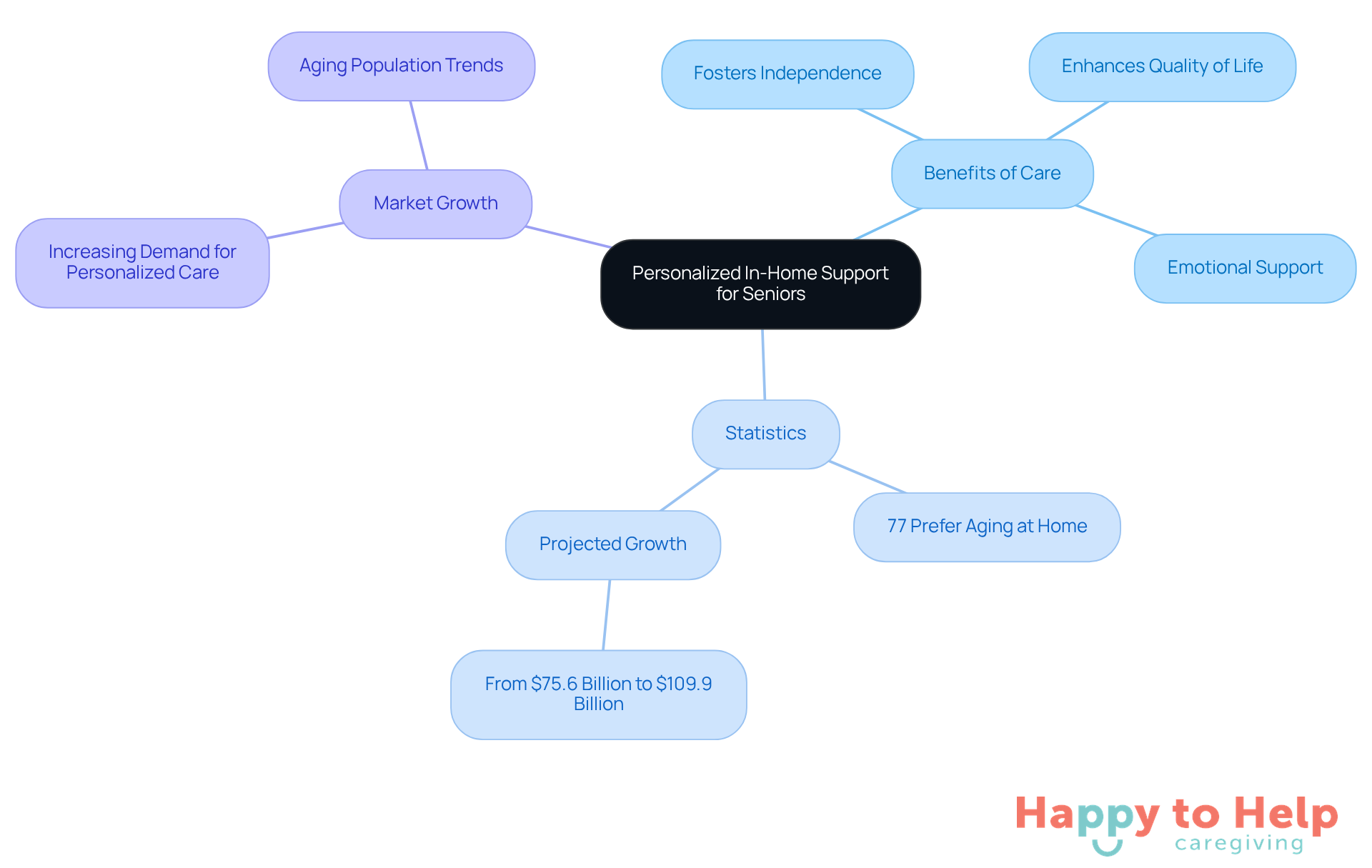
Families can find comfort knowing their loved ones are cared for by trained professionals who treat them with respect and empathy, ensuring a safe and nurturing environment. With 77% of adults over 50 preferring to age in their own homes, the relevance of Happy to Help Caregiving's services is clear. The market for such services is projected to grow from $75.6 billion in 2021 to $109.9 billion by 2026, highlighting the increasing demand for individualized support.
This emphasis on personalized care not only meets physical needs but also supports the emotional and psychological wellness of elderly individuals. By choosing services like those offered by Happy to Help Caregiving, families can ensure their loved ones receive the quality home assistance they deserve.
Companionship Care: Alleviating Loneliness and Enhancing Well-Being
Loneliness among older adults is a pressing issue that significantly impacts their mental and emotional health. Research indicates that chronic loneliness can reduce life expectancy more than being overweight or inactive, and it poses risks comparable to smoking. This alarming reality highlights the urgent need for effective companionship care.
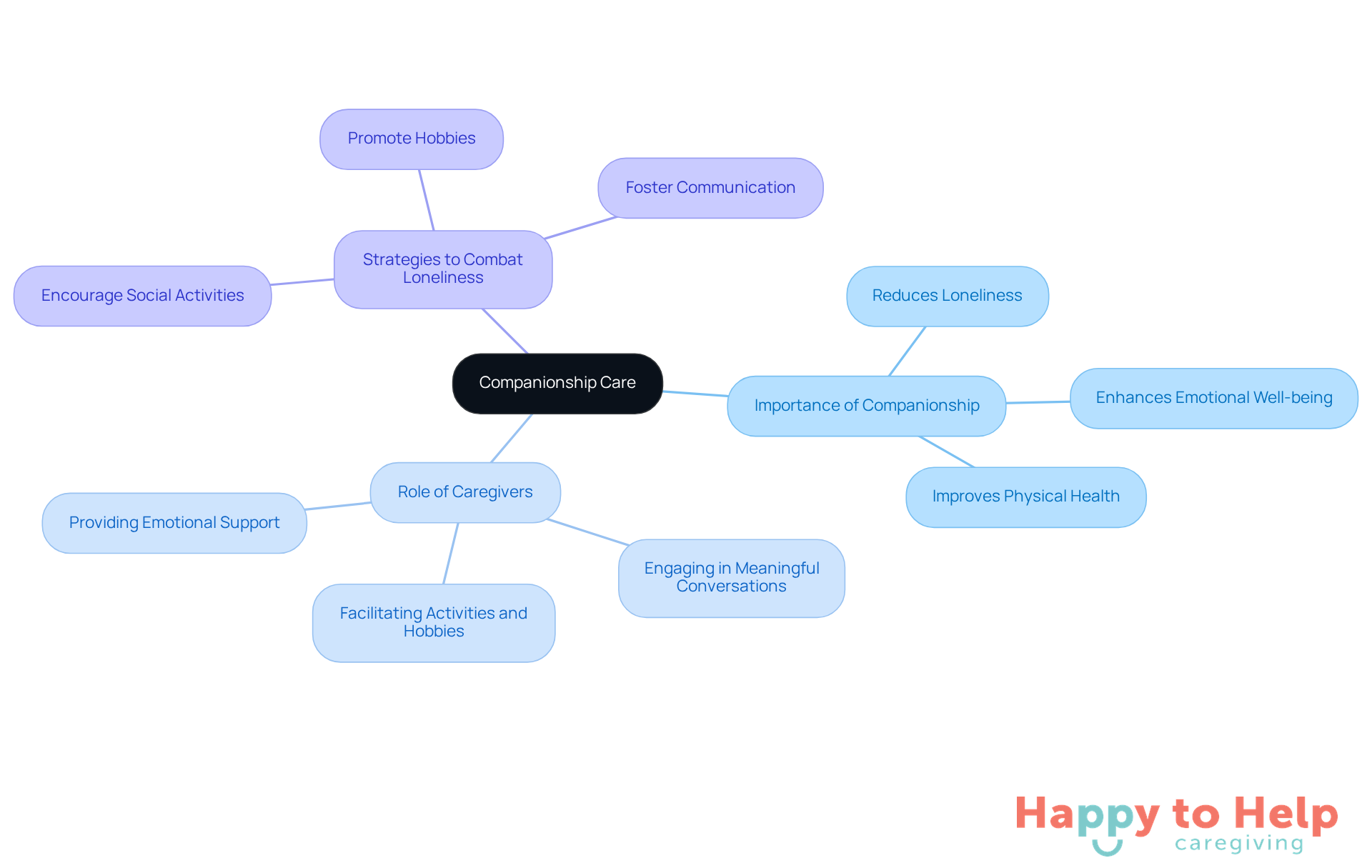
Caregivers play a crucial role in alleviating this loneliness. By engaging clients in meaningful conversations, activities, and hobbies, they foster essential social interactions that enhance emotional well-being. Regular companionship can diminish feelings of isolation, which are linked to various health risks, including depression and cognitive decline.
To combat loneliness, caregivers can implement several actionable strategies:
- Encourage social activities: Facilitate participation in community events or group activities.
- Promote hobbies: Help clients engage in interests that spark joy and connection.
- Foster communication: Initiate regular conversations to build rapport and trust.
By providing steady assistance, caregivers help elderly individuals feel valued and connected, ultimately enhancing their overall quality of life. This approach not only addresses loneliness but also encourages older adults to maintain an active lifestyle, further promoting their physical health and independence with the support of 24 home care.
Experts emphasize that fostering these social connections is vital for improving mental health outcomes. The heightened demand for 24 home care services in 2023 underscores the importance of companionship care in today’s environment, making it an essential element of in-home services.
Post-Hospital Recovery Assistance: Ensuring Safe Transitions Home
Transitioning from hospital to home can be a daunting challenge for elderly individuals. Without proper support, this period can lead to complications and even readmissions. Caregivers play a crucial role in 24 home care, providing essential assistance that ensures a smoother recovery.
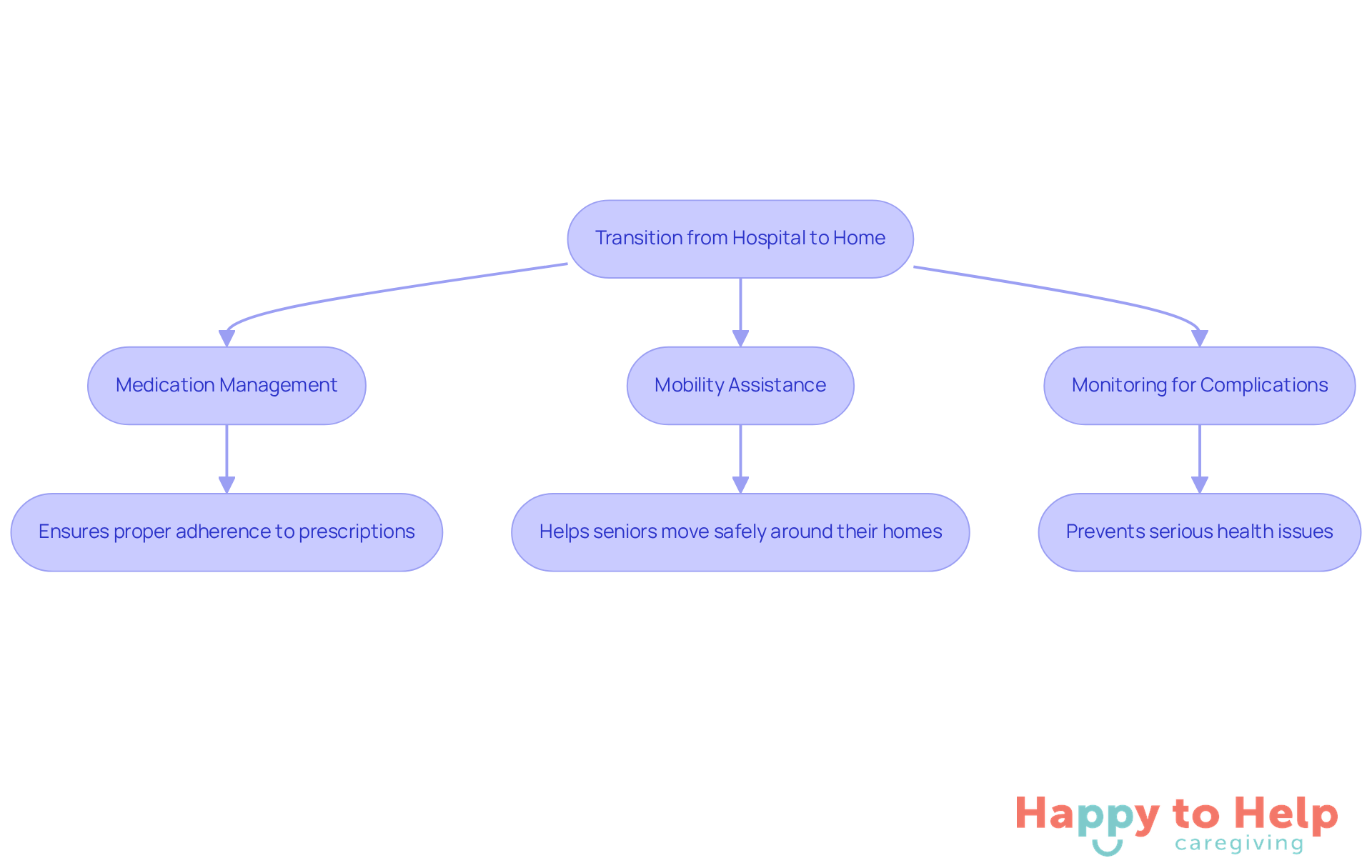
Caregivers offer vital support, including:
- Medication management to ensure proper adherence to prescriptions.
- Mobility assistance to help seniors move safely around their homes.
- Monitoring for signs of complications, which can prevent serious health issues.
By adopting a proactive approach, caregivers in 24 home care can significantly reduce the risk of readmissions and help seniors regain their independence more quickly. This not only benefits the elderly but also alleviates stress for families, creating a more positive recovery experience.
Respite Care: Supporting Family Caregivers and Preventing Burnout
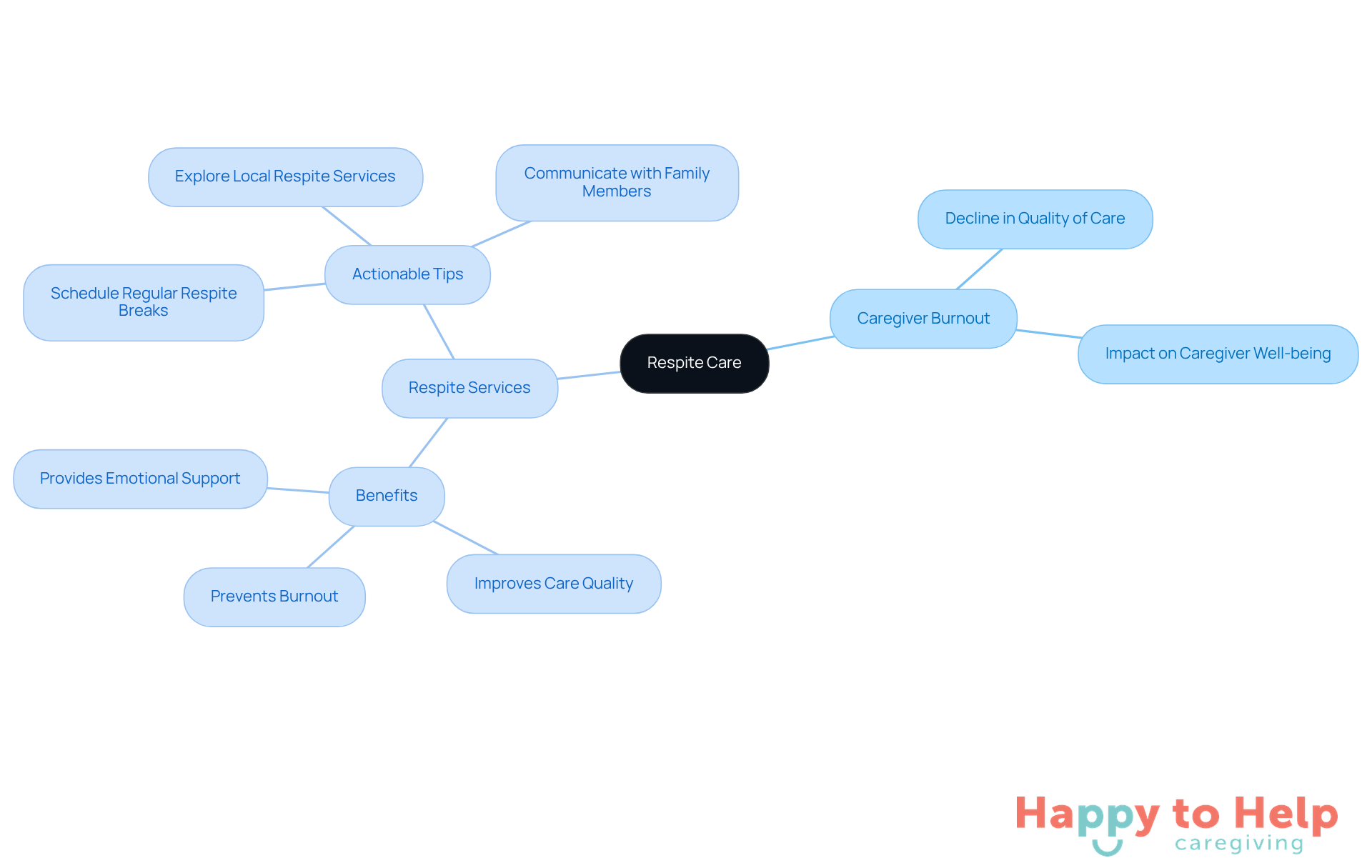
Caregiver burnout is a significant issue that can lead to a decline in the quality of assistance provided to loved ones. When family supporters become overwhelmed, their ability to offer effective care diminishes, which can have serious implications for both the caregiver and the individual receiving care.
Respite services offer a vital solution by providing temporary relief for family supporters. These services enable caregivers to take essential breaks, ensuring that their loved ones continue to receive quality assistance. By utilizing respite services, caregivers can recharge and return to their responsibilities with renewed energy and focus.
Incorporating respite into caregiving routines is crucial for maintaining both the caregiver's well-being and the quality of care provided. Here are some actionable tips for caregivers:
- Schedule regular respite breaks to prevent burnout.
- Explore local respite services that fit your needs.
- Communicate with family members about the importance of taking breaks.
By prioritizing self-care through respite services, caregivers can sustain their ability to provide compassionate and effective support.
Palliative Support Care: Enhancing Comfort for Seniors with Chronic Illnesses
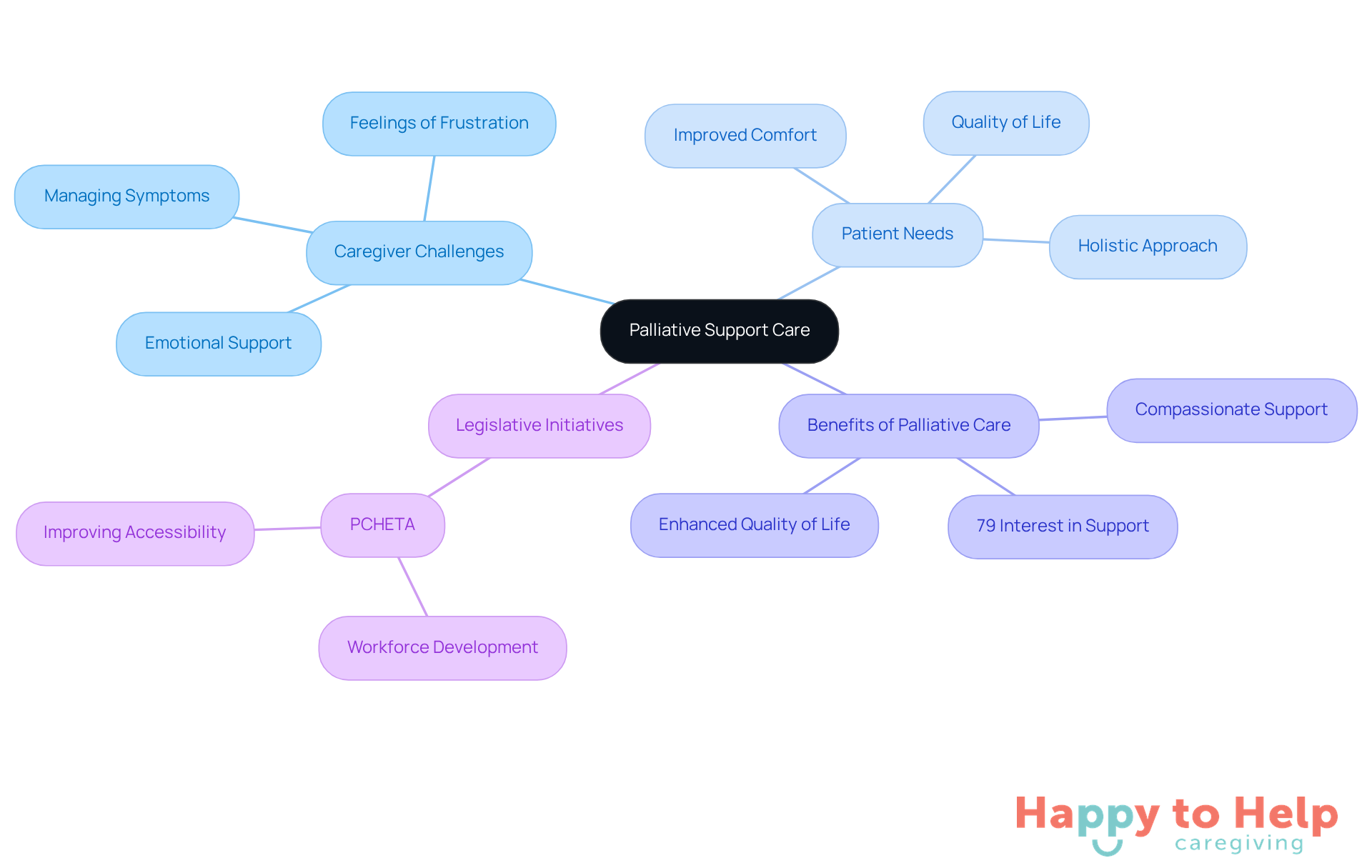
Palliative assistance addresses a significant problem: the need for improved comfort and quality of life for elderly individuals living with chronic illnesses. Caregivers often face challenges in managing symptoms and providing emotional support, which can lead to feelings of frustration and helplessness. This situation not only affects the patients but also places a heavy burden on caregivers, who strive to ensure their loved ones receive the best possible care.
Research shows that 79% of individuals expressed interest in palliative support after learning about it, underscoring its importance. As Dr. Bruce Smith noted, utilizing palliative support can greatly enhance the quality of life for those diagnosed with serious illnesses. By focusing on a holistic approach, caregivers can effectively manage symptoms, facilitate communication between patients and healthcare providers, and provide the compassionate support that seniors need.
To tackle these challenges, the Palliative Support and Hospice Education and Training Act (PCHETA), reintroduced in July 2025, aims to address the workforce shortage in palliative services and improve accessibility. This initiative reflects the growing demand for comprehensive support models that not only address physical symptoms but also the emotional and psychological difficulties that accompany chronic illnesses.
By implementing palliative assistance, caregivers can promote a sense of security and dignity for older adults, ensuring that their specific needs are met. This approach enhances overall well-being and fosters a supportive environment for both patients and caregivers.
24/7 Availability: Continuous Support for Peace of Mind
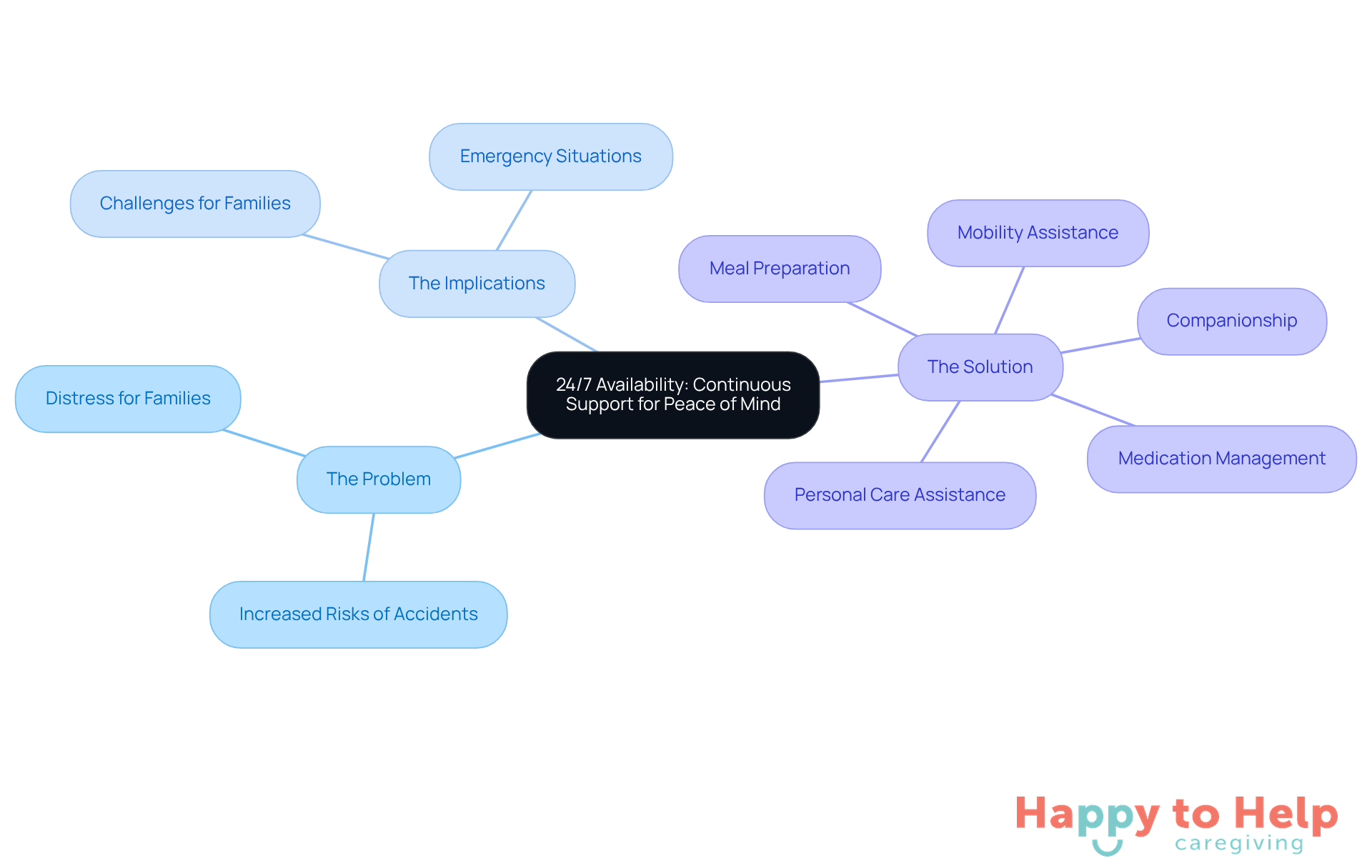
The Problem: Elderly individuals often require ongoing support to ensure their safety and well-being. Without this assistance, they face increased risks of accidents and emergencies, which can be distressing for both them and their families.
The Implications: Families can find it challenging to cope with the worry of their loved ones being alone. Research indicates that older adults who lack continuous support are more likely to encounter emergency situations. This is where the presence of trained caregivers becomes essential.
The Solution: Caregivers available for 24-hour home care provide crucial ongoing support, ensuring elderly individuals receive assistance whenever required. This continuous support not only offers peace of mind for families but also significantly lowers the risk of accidents.
24-hour home care typically includes:
- Personal care assistance
- Medication management
- Meal preparation
- Mobility assistance
- Companionship
These services are vital for emotional health. The constant presence of trained caregivers enhances safety by preventing falls, managing medication, and helping maintain routines. This organized assistance promotes a safe atmosphere, enabling older adults to preserve their independence while guaranteeing that help is always just a call away.
As one expert notes, "24/7 caregiving provides non-stop assistance and peace of mind at home," highlighting the holistic benefits of continuous support for both the elderly and their families.
Flexible Scheduling: Tailoring Care to Fit Individual Needs
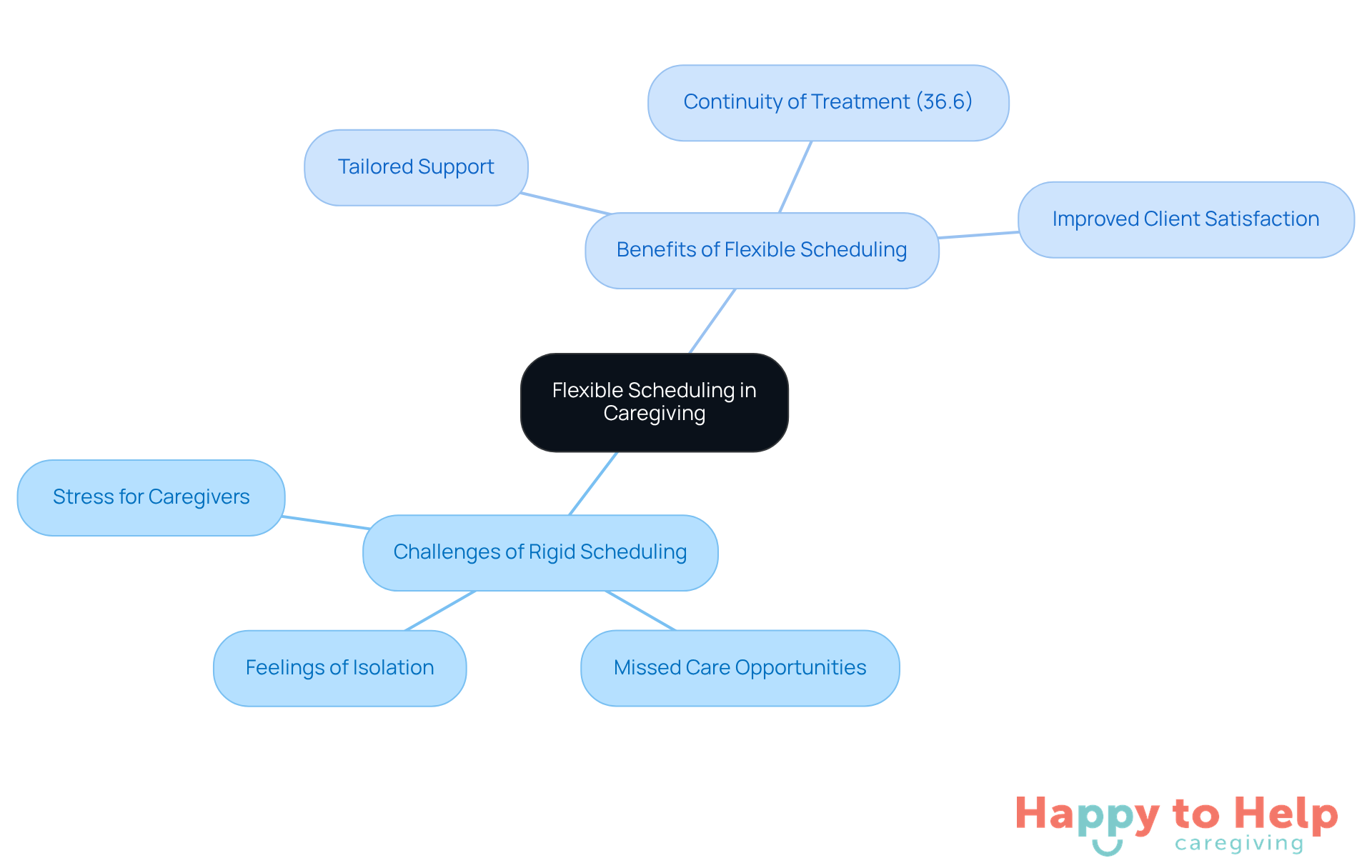
Problem: Rigid scheduling can create significant challenges for caregivers, often leading to stress and inadequate support for older adults. Many caregivers struggle to meet the unique needs of elderly individuals due to inflexible service hours.
Agitate: This lack of adaptability can result in missed opportunities for essential care, particularly during critical times such as post-surgical recovery. When support is not available at convenient times, it can lead to feelings of isolation and anxiety for both older adults and their families.
Flexible scheduling offers a practical solution for 24 home care by allowing providers to tailor their services to the specific needs of older adults and their families. This adaptability ensures that support is available when it’s most needed-whether during the day, evenings, or weekends. By accommodating personal schedules, caregivers can significantly enhance the 24 home care experience, ensuring that elderly individuals receive essential support precisely when they require it.
Research shows that 36.6% of participants in a study noted that home visits ensured continuity of treatment, especially in post-surgical scenarios. Support providers frequently emphasize the importance of this flexibility, as it allows them to adjust plans according to personal preferences and health needs, ultimately fostering a sense of safety and comfort for elderly individuals.
Moreover, adaptable scheduling can alleviate emotional strain for both older adults and their families by relieving the burden of strict timelines. This customized approach not only improves the quality of service but also leads to higher satisfaction levels among clients, as they feel more supported and connected in their daily lives.
Promoting Independence: Empowering Seniors in Their Own Homes
Promoting independence is a significant challenge in in-home caregiving. Many elderly individuals struggle with a lack of autonomy, which can negatively impact their emotional well-being and overall quality of life. When older adults feel they have little control over their daily activities and care decisions, it can lead to feelings of helplessness and frustration.
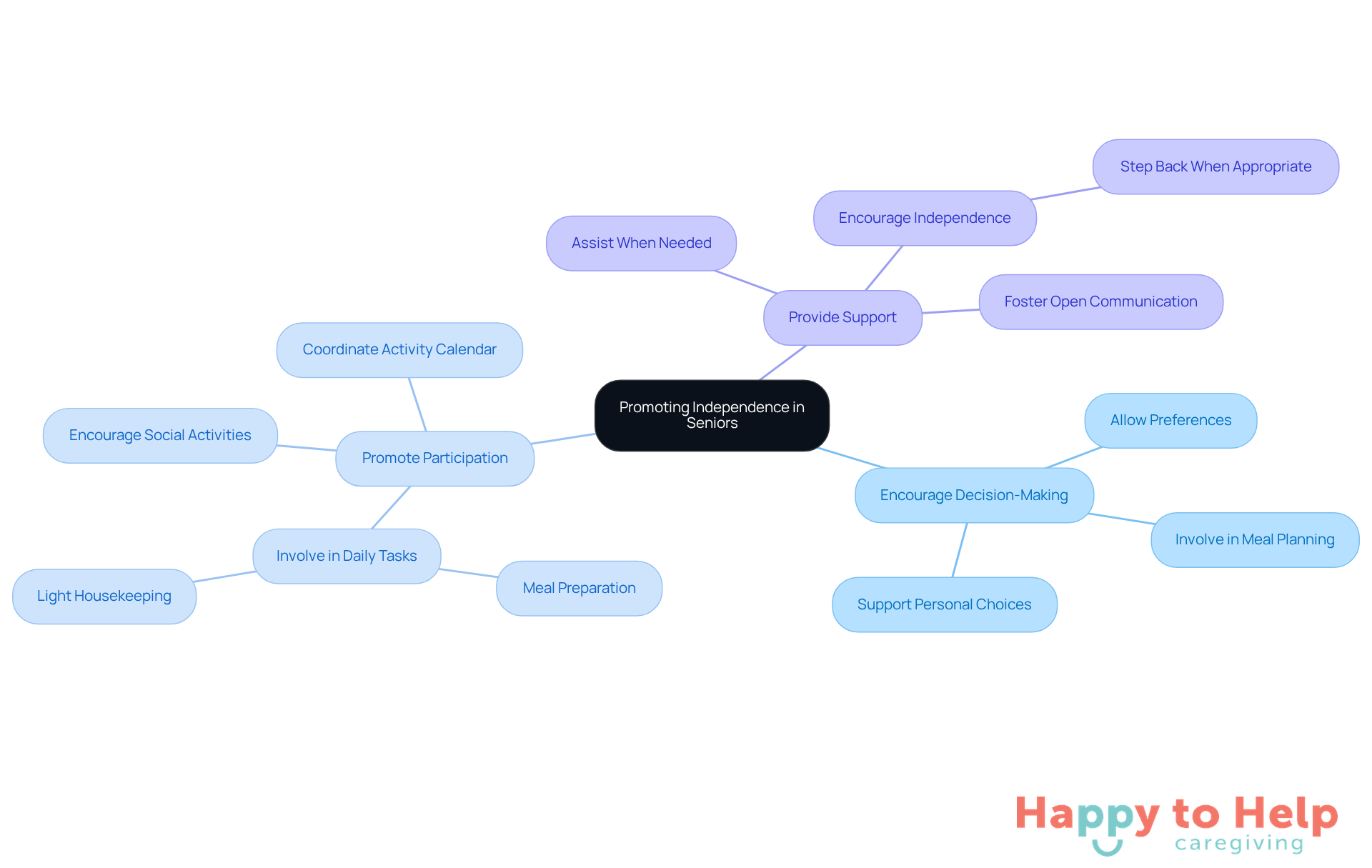
To address this issue, caregivers can take proactive steps to empower their clients. Encouraging participation in daily activities not only fosters a sense of autonomy but also enhances emotional health. Caregivers should motivate elderly individuals to make choices regarding their care, whether it’s selecting meals, deciding on daily routines, or engaging in social activities. This approach not only improves their quality of life but also helps them feel more in control of their lives.
Here are some actionable tips for caregivers:
- Encourage decision-making: Allow elderly individuals to express their preferences and make choices about their care.
- Promote participation: Involve them in daily tasks, such as meal preparation or light housekeeping, to enhance their sense of accomplishment.
- Provide support: Offer assistance when needed, but encourage independence by stepping back and allowing them to try things on their own.
By implementing these strategies, caregivers can significantly improve the emotional well-being of elderly individuals, fostering a greater sense of independence and control.
Emotional Support: Enhancing Mental Health Through Caregiver Engagement
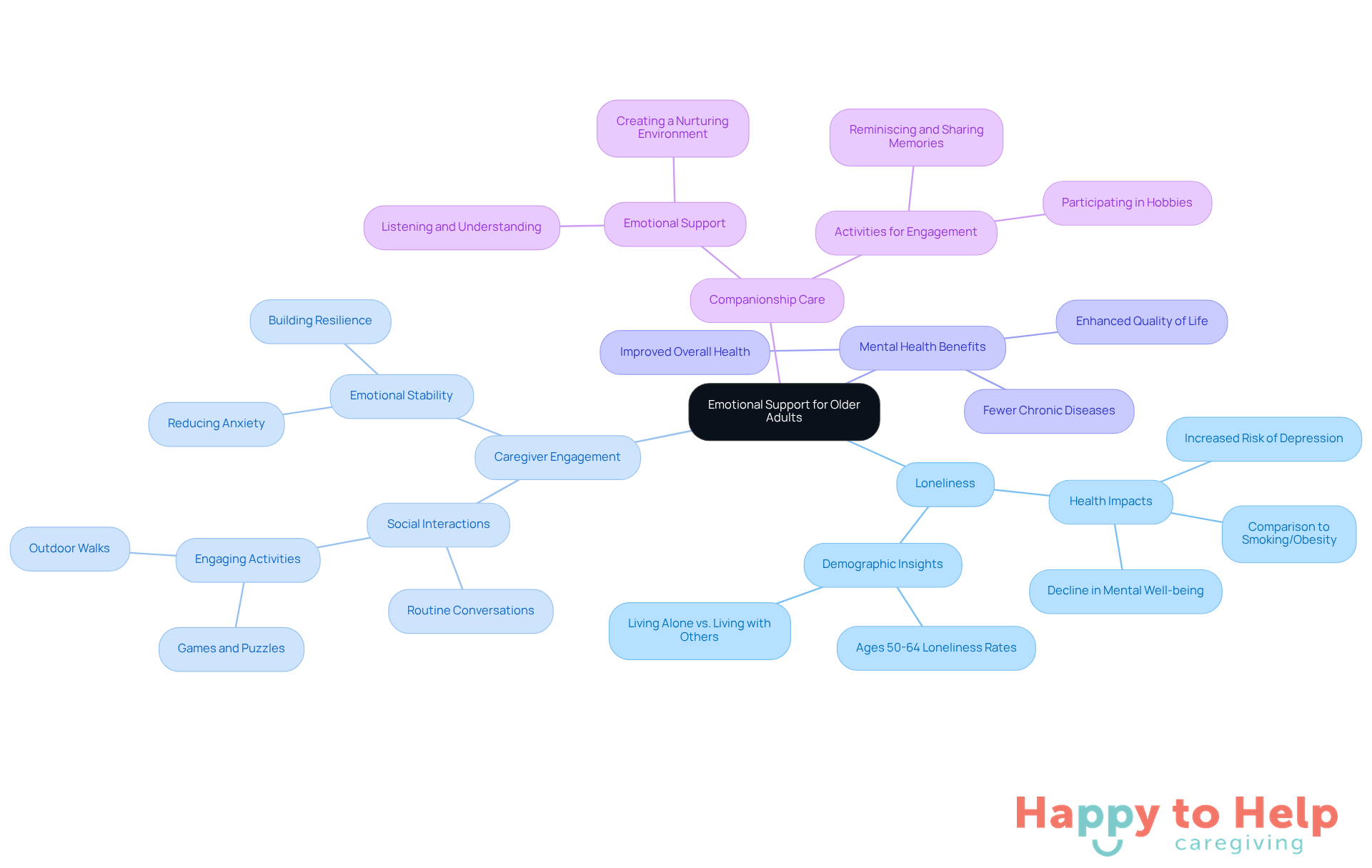
Emotional assistance from providers is essential in addressing the significant problem of loneliness among older adults. Many seniors experience feelings of isolation, which can lead to depression and a decline in mental well-being. Research shows that regular social interactions with caregivers can enhance emotional stability and resilience, promoting a more positive outlook on life.
The implications of this issue are profound. Extended social isolation can be as harmful to health as smoking or obesity. In 2024, loneliness rates for adults aged 50 to 64 had not returned to pre-pandemic levels, underscoring the ongoing challenges faced by this demographic. This highlights the urgent need for effective solutions to combat loneliness.
Companionship care is effectively provided through 24 home care. The 24 home care service not only provides emotional support but also encourages mental engagement through enjoyable activities like playing games or taking walks. Such interactions have been shown to enhance mood and lower stress, emphasizing the importance of a steady support person's presence. As Eric Thomas, a writer on mental health, states, "Seniors deserve to enjoy a fulfilling, emotionally rich life in their golden years." This quote reinforces the vital role that caregivers play in ensuring that elderly individuals maintain their emotional health.
In summary, the emotional assistance provided by caregivers is crucial for older adults. It addresses immediate feelings of isolation and contributes to long-term mental health benefits, ultimately enhancing their quality of life. By fostering meaningful conversations and actively listening to their concerns, caregivers can create a nurturing environment where seniors feel valued and understood.
Personalized Care Plans: Addressing Unique Needs for Optimal Care
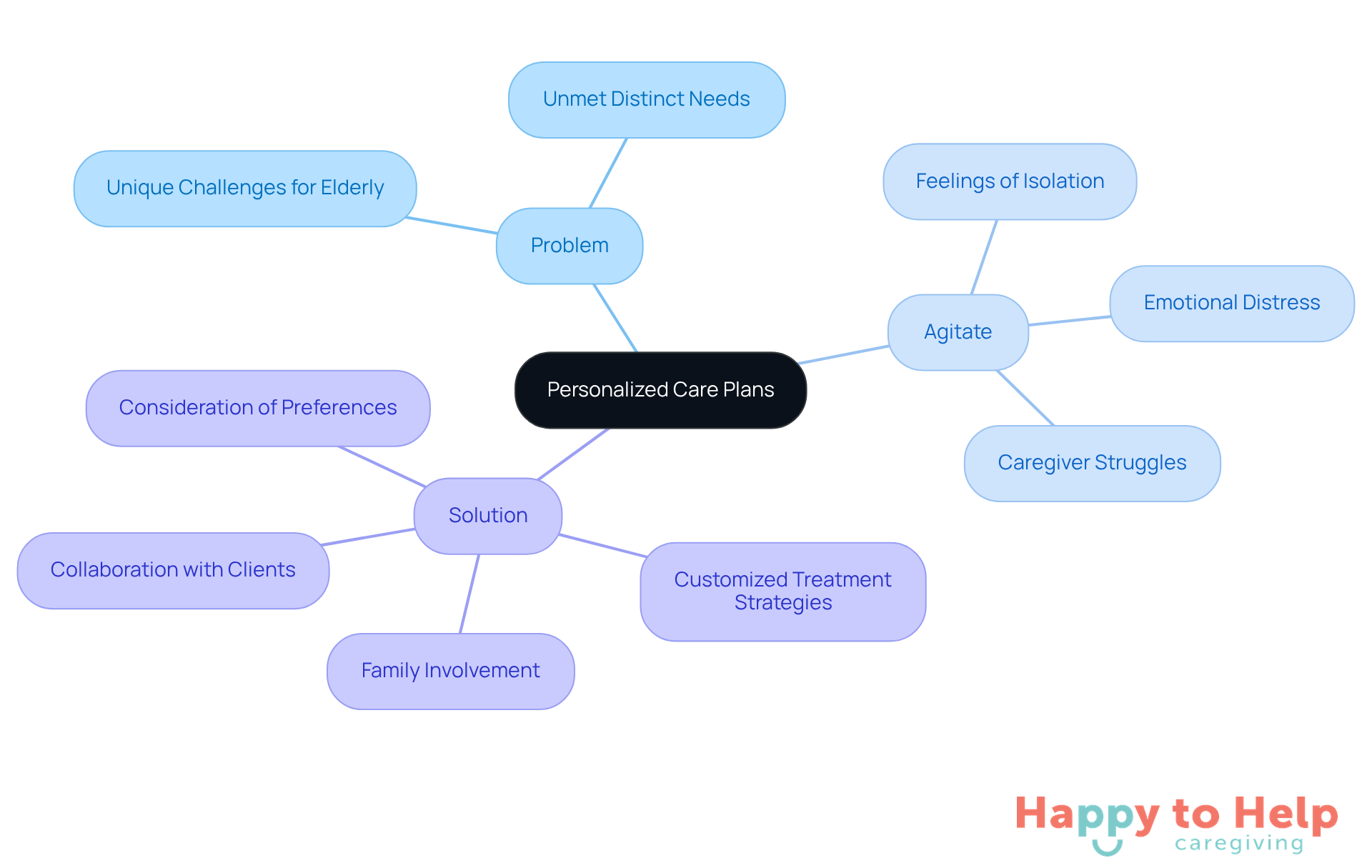
Problem: Elderly individuals often face unique challenges that require tailored support strategies. Without customized treatment plans, their distinct needs may go unmet, leading to a decline in their quality of life.
Agitate: This lack of personalized care can result in feelings of isolation and emotional distress. Research shows that when elderly clients do not receive individualized support, their emotional well-being suffers, and they may experience increased loneliness. Furthermore, caregivers may struggle to provide effective assistance without understanding the specific preferences and lifestyles of their clients.
Solution: To address these challenges, caregivers should develop customized treatment strategies in collaboration with clients and their families. These plans should take into account medical history, personal preferences, and lifestyle choices. By tailoring assistance to individual needs, 24 home care services can significantly enhance the quality of life for elderly individuals.
Family involvement in creating support plans fosters a sense of safety and connection, ensuring that the care provided aligns with the elder's values. Geriatric specialists emphasize that personalized approaches, such as 24 home care, not only improve health outcomes but also help seniors maintain their independence and dignity. Ultimately, the impact of tailored care plans is profound, leading to increased happiness and better overall health for elderly clients.
Making the Right Choice
The significance of 24-hour home care for family caregivers is profound. Caregivers often face emotional and physical burdens while trying to support elderly loved ones. This approach not only provides essential support for seniors but also alleviates the stress on their families, allowing them to focus on what truly matters.
One major challenge is the loneliness that many elderly individuals experience. Companionship through 24-hour home care can significantly reduce feelings of isolation. Additionally, safe transitions from hospital to home are crucial, as they help prevent complications and ensure a smoother recovery. Caregiver burnout is another pressing issue; respite services can offer much-needed relief, allowing caregivers to recharge.
Moreover, personalized care plans are vital. Tailored approaches enhance the well-being of elderly individuals, ensuring they receive the specific support they need. The growing demand for these services reflects a broader recognition of the need for compassionate, individualized care.
Investing in 24-hour home care goes beyond meeting physical needs; it fosters emotional health and dignity for seniors. Families are encouraged to explore these services, recognizing that the right support can transform the caregiving experience. By embracing this model of care, families can promote independence and enhance the overall quality of life for both seniors and their caregivers. This proactive step leads to a more compassionate and supportive environment for aging loved ones.
https://iframe.tely.ai/cta/eyJhcnRpY2xlX2lkIjogIjY5MmZiYWE4YzE1YTA5ZjJiOTlmMjI0ZCIsICJjb21wYW55X2lkIjogIjY4ZWU1ZGNhNzMxNzYyNTU3ZjNjOTVjMSIsICJpbmRleCI6IG51bGwsICJ0eXBlIjogImFydGljbGUifQ==Frequently Asked Questions
What services does Happy to Help Caregiving provide for seniors?
Happy to Help Caregiving offers personalized in-home support that prioritizes the personal preferences and lifestyles of elderly individuals, providing compassionate assistance that fosters independence and enhances quality of life.
Why is companionship care important for older adults?
Companionship care is crucial as it alleviates loneliness, which significantly impacts mental and emotional health. Regular social interactions fostered by caregivers can reduce feelings of isolation and help prevent health risks associated with loneliness, such as depression and cognitive decline.
How do caregivers help combat loneliness among seniors?
Caregivers can combat loneliness by encouraging social activities, promoting hobbies, and fostering communication through regular conversations, which helps build rapport and trust.
What role do caregivers play in post-hospital recovery for elderly individuals?
Caregivers provide essential support during post-hospital recovery by assisting with medication management, mobility, and monitoring for signs of complications to ensure a smoother transition home and reduce the risk of readmissions.
What are the projected market trends for in-home care services?
The market for in-home care services is projected to grow from $75.6 billion in 2021 to $109.9 billion by 2026, indicating an increasing demand for individualized support for seniors.
How does Happy to Help Caregiving ensure the quality of care for seniors?
Happy to Help Caregiving ensures quality care by employing trained professionals who treat elderly clients with respect and empathy, creating a safe and nurturing environment for their well-being.
What percentage of adults over 50 prefer to age in their own homes?
77% of adults over 50 prefer to age in their own homes, highlighting the relevance of services like those offered by Happy to Help Caregiving.
List of Sources
- Happy to Help Caregiving: Personalized In-Home Support for Seniors
- The Future of Private Home Care: What to Expect in 2025 (https://anodyne-services.com/2024/08/14/the-future-of-private-home-care-what-to-expect-in-2025)
- Family caregivers prefer in-home care over senior living, new industry report finds (https://mcknightshomecare.com/news/family-caregivers-prefer-in-home-care-over-senior-living-new-industry-report-finds)
- Why Senior Home Care is More Important Than Ever (https://homeinstead.com/home-care/usa/la/carencro/347/news-and-media/senior-home-care-is-more-important-than-ever)
- Growing Trend of Private Pay Home Care for Elderly (https://regencyhcs.com/blog/growing-trend-of-private-pay-home-care-for-elderly)
- Trends and Innovations in Senior Care | Amada Blog (https://amadaseniorcare.com/2025/01/trends-and-innovations-in-senior-care)
- Companionship Care: Alleviating Loneliness and Enhancing Well-Being
- Why Home Care Providers Are Increasingly Offering Companion Care Services for Seniors | Aaniie, formerly Smartcare Software (https://aaniie.com/news/why-home-care-providers-are-increasingly-offering-companion-care-services-for-seniors)
- The Importance of Companionship for Seniors and How It Improves Well-being | Luxe Homecare (https://luxehomecare.com/the-importance-of-companionship-for-seniors-and-how-it-improves-well-being)
- Social isolation, loneliness in older people pose health risks | Alzheimers.gov (https://alzheimers.gov/news/social-isolation-loneliness-older-people-pose-health-risks)
- 1 in 3 older adults still experience loneliness and isolation (https://michiganmedicine.org/health-lab/1-3-older-adults-still-experience-loneliness-and-isolation)
- Social connection linked to improved health and reduced risk of early death (https://who.int/news/item/30-06-2025-social-connection-linked-to-improved-heath-and-reduced-risk-of-early-death)
- Post-Hospital Recovery Assistance: Ensuring Safe Transitions Home
- Senior Hospital-to-Home Transition: Needs & Support Strategies | C&S Healthcare (https://cshealthcareservices.com/understanding-the-needs-of-a-senior-when-transitioning-from-hospital-to-home)
- Tips for Supporting Seniors After Hospital Discharge (https://ngcare.com/archives/supporting-seniors-after-hospital-discharge-a-guide-to-recovery-at-home)
- How to Help Seniors Transition Back Home After a Hospital Stay (https://assistinghands.com/98/ohio/westlake/blog/help-seniors-transition-home-hospital)
- Post-Hospital Home Care: The Key to a Smoother, Safer Recovery (https://heavenathomecare.com/how-post-hospital-home-care-helps-seniors-recover)
- Post-Hospital Care for Seniors Supports Healing (https://picseniorcare.com/how-post-hospital-care-for-seniors-makes-recovery-easier)
- Respite Care: Supporting Family Caregivers and Preventing Burnout
- Improving Support for Family Caregivers (https://nationalacademies.org/news/2025/07/improving-support-for-family-caregivers)
- New Report Reveals Crisis Point for America’s 63 million Family Caregivers (https://press.aarp.org/2025-07-24-New-Report-Reveals-Crisis-Point-for-Americas-63-million-Family-Caregivers)
- Caregivers and the Importance of Respite Care (https://benedictineliving.org/resources/news/caregivers-and-the-importance-of-respite-care)
- Why Respite Care Matters: Taking a Break Without Guilt - HomeChoice Home Care Solutions (https://homechoicehomecare.com/home-care/why-respite-care-matters-taking-a-break-without-guilt)
- Palliative Support Care: Enhancing Comfort for Seniors with Chronic Illnesses
- New standards could transform palliative care for dementia patients (https://mcknights.com/news/new-standards-could-transform-palliative-care-for-dementia-patients)
- Palliative Care News Archives (https://hospicenews.com/category/palliative-care-news)
- Palliative care and hospice poll reveal major gaps (https://michiganmedicine.org/health-lab/palliative-care-and-hospice-poll-reveal-major-gaps)
- ‘A good death’: How compassionate care helps people navigate the end of life (https://news.yale.edu/2025/10/13/good-death-how-compassionate-care-helps-people-navigate-end-life)
- Regence BlueShield Releases Findings on the Importance of a Holistic Approach to Palliative Care (https://news.regence.com/releases/regence-blueshield-releases-findings-on-the-importance-of-a-holistic-approach-to-palliative-care)
- 24/7 Availability: Continuous Support for Peace of Mind
- Discover the Life-Changing Benefits of 24/7 Live-In Assistance (https://visitingangels.com/lutz/news-info/discover-the-life-changing-benefits-of-247-live-in-assistance/25824)
- 24-Hour Home Care | BrightStar Care | BrightStar Care (https://brightstarcare.com/about-brightstar-care/resources/benefits-of-24-hour-home-care)
- Why 24/7 Senior Care Works: Safety, Comfort, and Constant Support - With A Little Help (https://withalittlehelp.com/24-7-senior-care-works)
- The 10-Benefits of 24-Hour Home Care » LifeWorx Home Care (https://lifeworx.com/resources/articles/the-10-benefits-of-24-hour-home-care)
- Around-the-Clock Support: The Benefits of 24-Hour Home Care for Seniors (https://afcsnc.com/around-the-clock-support-the-benefits-of-24-hour-home-care-for-seniors)
- Flexible Scheduling: Tailoring Care to Fit Individual Needs
- Flexible scheduling, enhanced communication, technology can help address workforce challenges (https://mcknightsseniorliving.com/news/flexible-scheduling-enhanced-communication-technology-can-help-address-workforce-challenges)
- ALM Intelligence Updates VerdictSearch - ALM (https://alm.com/press\_release/alm-intelligence-updates-verdictsearch?s-news-14379753-2025-11-29-home-care-organization-celebrated-for-excellent-flexibility-and-service-quality)
- How Flexible Scheduling Improves The Home Care Experience For Families – CCN – Columbus County News (https://columbuscountynews.com/2025/12/how-flexible-scheduling-improves-the-home-care-experience-for-families)
- Flexible work: What workers, especially low-wage workers, really want and how best to provide it (https://epi.org/publication/flexible-work)
- The Importance of Flexible Care Options in Retirement Living (https://thehighpointresidence.com/blog/the-importance-of-flexible-care-options-in-retirement-living)
- Promoting Independence: Empowering Seniors in Their Own Homes
- How Senior In-Home Care Promotes Independence in San Antonio, TX (https://news10.com/business/press-releases/ein-presswire/866935491/how-senior-in-home-care-promotes-independence-in-san-antonio-tx)
- How Caregivers Promote Senior Independence - UDS Foundation (https://udservices.org/how-caregivers-promote-senior-independence)
- Promoting Independence through In-Home Care (https://visitingangels.com/npr/news-info/promoting-independence-through-in-home-care/24383)
- Independence and older adults: Importance and promoting it (https://medicalnewstoday.com/articles/independence-and-the-elderly)
- The Impact of In-Home Caregivers on Senior Independence - 24|7 Nursing Care (https://24-7nursingcare.com/the-impact-of-in-home-caregivers-on-senior-independence-2)
- Emotional Support: Enhancing Mental Health Through Caregiver Engagement
- 1 in 3 older adults still experience loneliness and isolation (https://michiganmedicine.org/health-lab/1-3-older-adults-still-experience-loneliness-and-isolation)
- Psychological Support for Seniors: Why Mental Wellness Matters in Later Life | Home Care agency in New York (https://angelcareny.com/psychological-support-for-seniors-why-mental-wellness-matters-in-later-life)
- The Exceptional Social Benefits of Home Care (https://jfcares.org/blog/emotional-and-social-benefits-of-home-care)
- Mental Health Support for Seniors: The Role of In-Home Caregivers (https://homeinstead.com/home-care/usa/in/kendallville/871/news-and-media/mental-health-support-for-seniors-the-role-of-in-home-caregivers)
- Personalized Care Plans: Addressing Unique Needs for Optimal Care
- Novel Care Model May Improve Outcomes for Older Adults With Multiple Chronic Conditions (https://consultqd.clevelandclinic.org/novel-care-model-may-improve-outcomes-for-older-adults-with-multiple-chronic-conditions)
- Importance of Personalized Senior Home Care in Burlington NC (https://wisdomseniorcare.com/the-importance-of-personalized-care-plans-for-seniors)
- Benefits of Personalized Care Plans in Nursing Homes (https://havenhealthaz.com/blog/benefits-of-personalized-care-plans-in-nursing-homes)
- Customized Care at Home: The Benefits of Personalized Care Plans - VNA Health Group (https://vnahg.org/customized-care-at-home-the-benefits-of-personalized-care-plans)
- The Benefits of a Personalized Care Plan in a Nursing Home - Conroe Health Care Center (https://conroehealthcarecenter.com/the-benefits-of-a-personalized-care-plan-in-a-nursing-home)