10 Benefits of 24 Hour Assisted Living for Family Caregivers

For families in our service areas
For families in our service areas, this guide explains caregiver support and how non-medical in-home caregiving can support care planning in East Idaho, Treasure Valley & Magic Valley, Northern Wasatch, North Central West Virginia, and Northeast Ohio.
What You Need to Know About 24 Hour Assisted Living
As the population ages, family caregivers face increasingly complex challenges, often leading to feelings of overwhelm and stress. This situation not only affects their well-being but also impacts the quality of care they can provide to their loved ones.
The transition to 24-hour assisted living emerges as a vital solution. It not only offers essential support for seniors but also provides invaluable relief for caregivers. This shift enhances caregivers' ability to manage their personal lives while ensuring their loved ones receive the care they deserve.
However, navigating the myriad benefits of this care model can be daunting. Families must understand how to leverage these advantages to truly enhance the quality of life for both seniors and caregivers alike.
Happy to Help Caregiving: Personalized 24/7 Support for Seniors
Problem: Many elderly individuals face challenges in receiving the care they need while trying to maintain their independence. This can lead to feelings of isolation and insecurity, impacting their overall well-being.
Agitate: Without proper support, seniors may struggle with daily activities, which can exacerbate health issues and diminish their quality of life. The emotional toll on both the elderly and their families can be significant, as caregivers often feel overwhelmed and unsure of how to provide the necessary assistance.
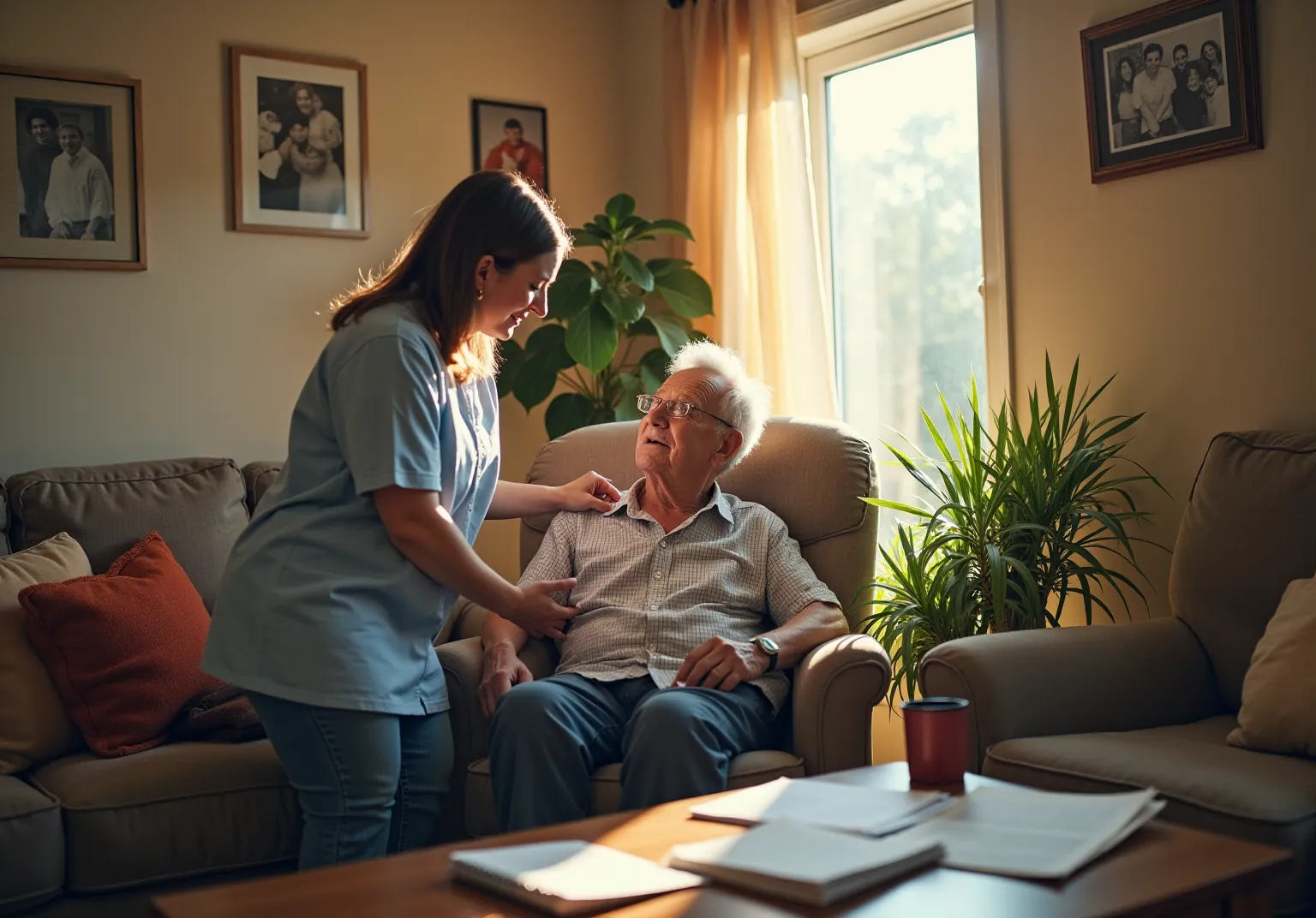
Solution: Happy to Help Caregiving provides tailored 24 hour assisted living, ensuring that elderly individuals receive the care they require in the comfort of their own homes. This service is designed to cater to individual preferences and needs, allowing seniors to maintain their independence while receiving help with daily activities. Caregivers are trained to provide emotional support and engage clients in activities they enjoy, fostering a sense of security and companionship.
By implementing such personalized care solutions, caregivers can significantly enhance the quality of life for seniors, ensuring they feel valued and supported.
Enhanced Safety and Security: A Pillar of 24-Hour Assisted Living
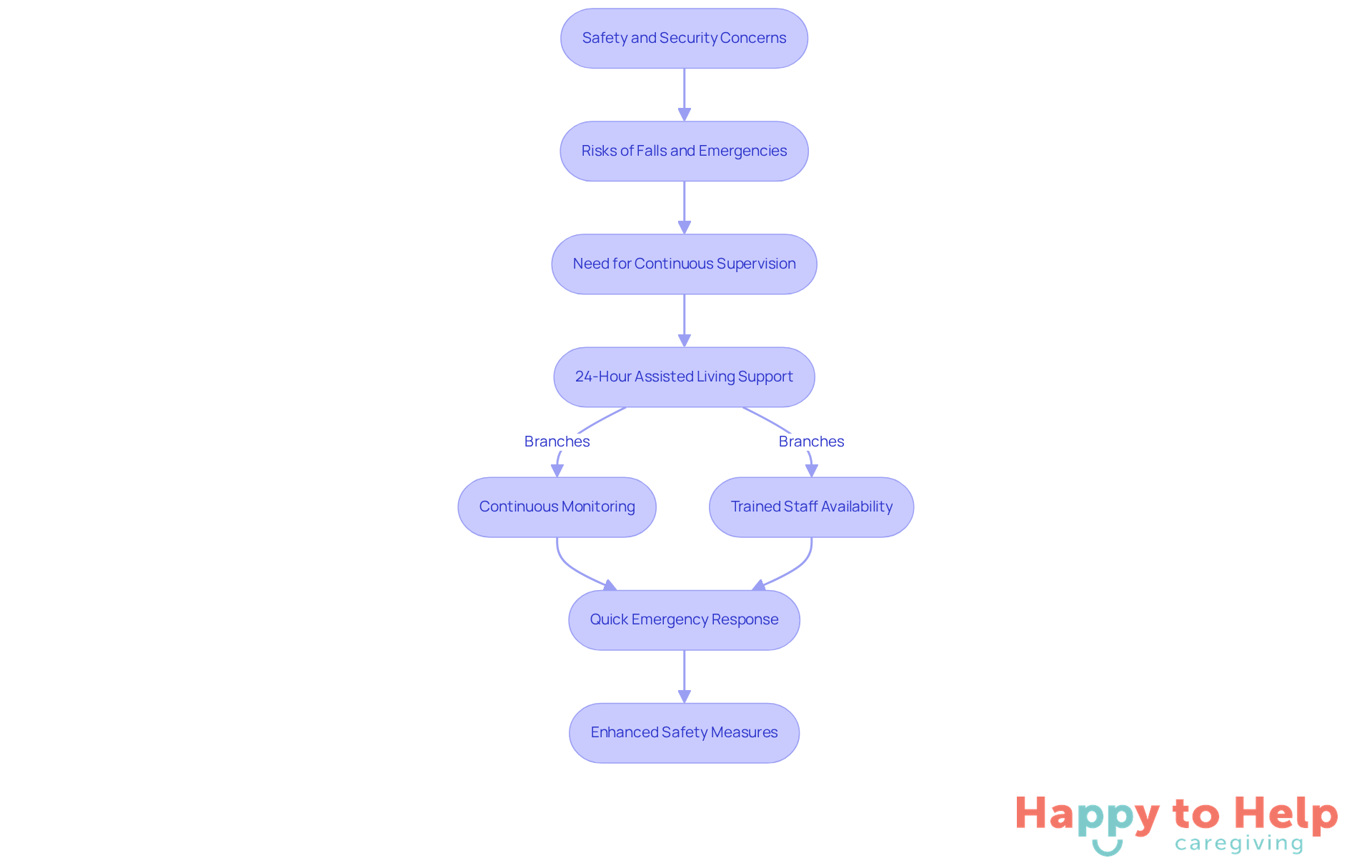
Problem: Safety and security are paramount concerns in elder care, particularly regarding the risk of falls and emergencies. Fall-related injuries account for one in ten emergency room visits among seniors, highlighting the urgent need for effective monitoring and support.
Agitate: Without continuous supervision, residents may face increased risks, leading to severe injuries that could have been prevented. Healthcare professionals emphasize that prompt intervention is crucial in mitigating injury severity, underscoring the importance of having trained staff available at all times.
A key advantage of 24 hour assisted living is the significant enhancement of safety it provides. With 24 hour assisted living support staff available around the clock, residents benefit from continuous monitoring, ensuring prompt assistance during emergencies. Facilities equipped with advanced monitoring systems, such as cameras and alarms, can alert staff immediately if a resident is in distress, allowing for rapid action.
Moreover, data shows that emergency response times in assisted care facilities are remarkably quick, often within minutes, which can be life-saving in urgent situations. In home caregiving, caregivers are also trained to respond promptly to emergencies, ensuring that clients receive necessary care without delay.
Recent news emphasizes the significance of emergency readiness in elder care settings. Facilities have adopted strict protocols, including personal protective gear and sanitation measures, to handle crises efficiently. These measures not only enhance resident safety but also provide families with peace of mind, knowing their loved ones are protected by a dedicated team committed to their well-being.
Immediate Medical Assistance: Ensuring Health and Well-Being
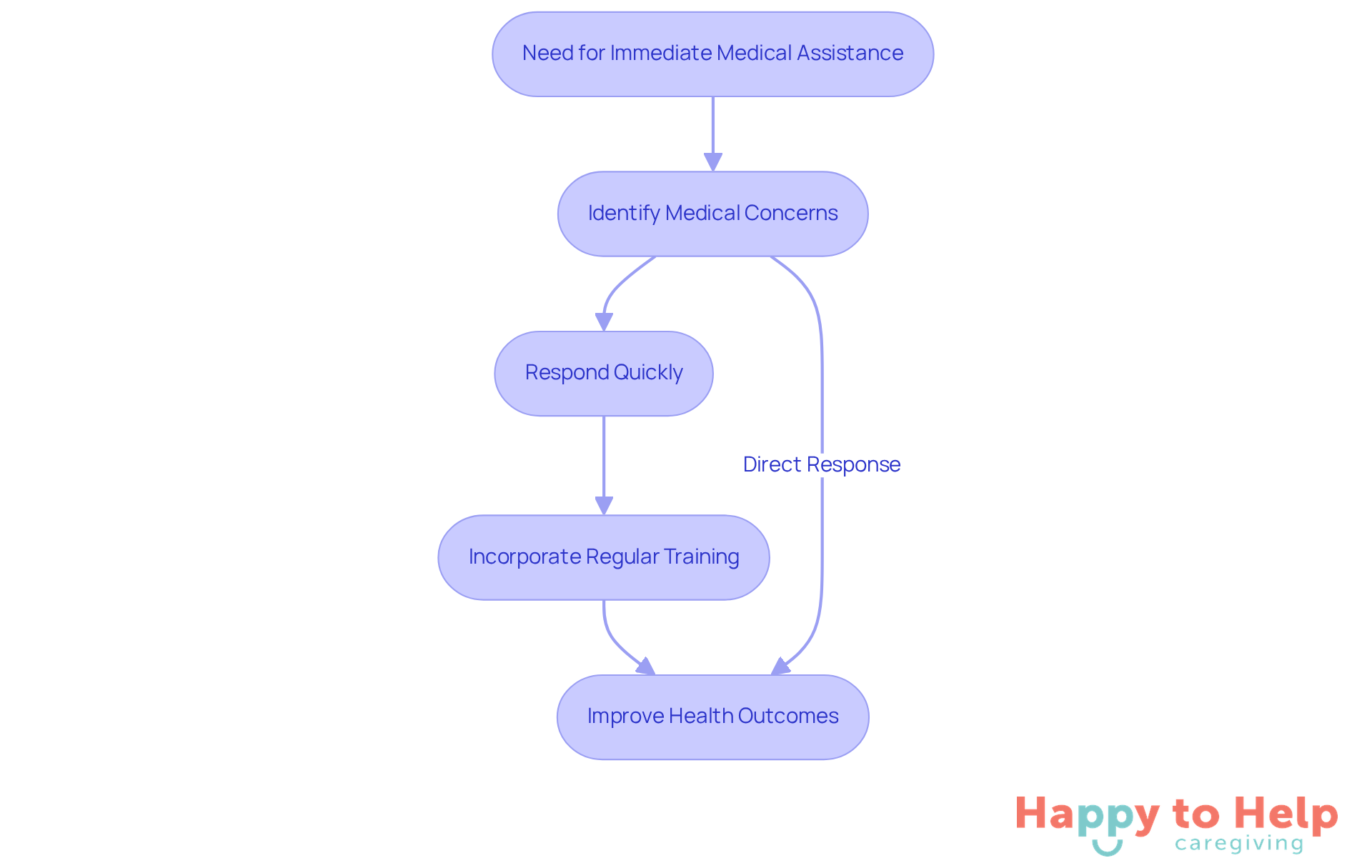
Seniors often face the challenge of needing immediate medical assistance, which can be critical in emergencies. Delays in care can lead to serious health complications, making it essential for caregivers to respond swiftly.
Caregivers in 24-hour assisted living are trained to identify medical concerns and act quickly. This proactive approach not only ensures that residents receive prompt care but also helps maintain their overall well-being. By addressing health issues as they arise, caregivers can significantly improve health outcomes for seniors.
Incorporating regular training and updates for caregivers can further enhance their ability to manage emergencies effectively. This commitment to continuous improvement in caregiving practices is vital for providing the best possible support to seniors.
Engaging Activities: Promoting Mental and Emotional Well-Being
Loneliness and isolation pose significant challenges for older adults living in 24 hour assisted living environments. These feelings can severely impact mental and emotional well-being, making it crucial for caregivers to actively encourage participation in engaging activities. Research shows that strong social ties are vital for healthier, more fulfilling lives, with seniors maintaining meaningful connections experiencing a 70% reduction in cognitive deterioration over time.
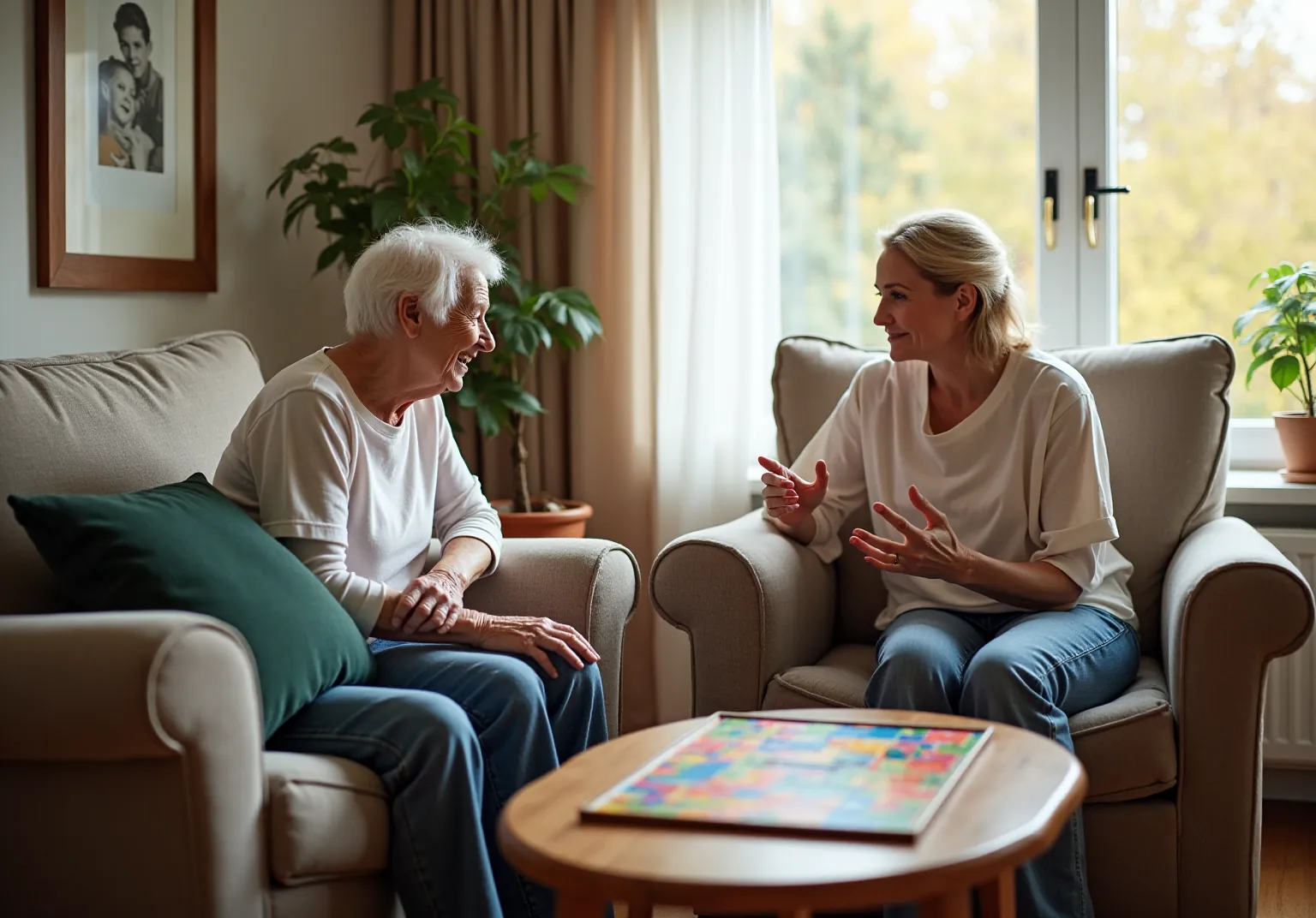
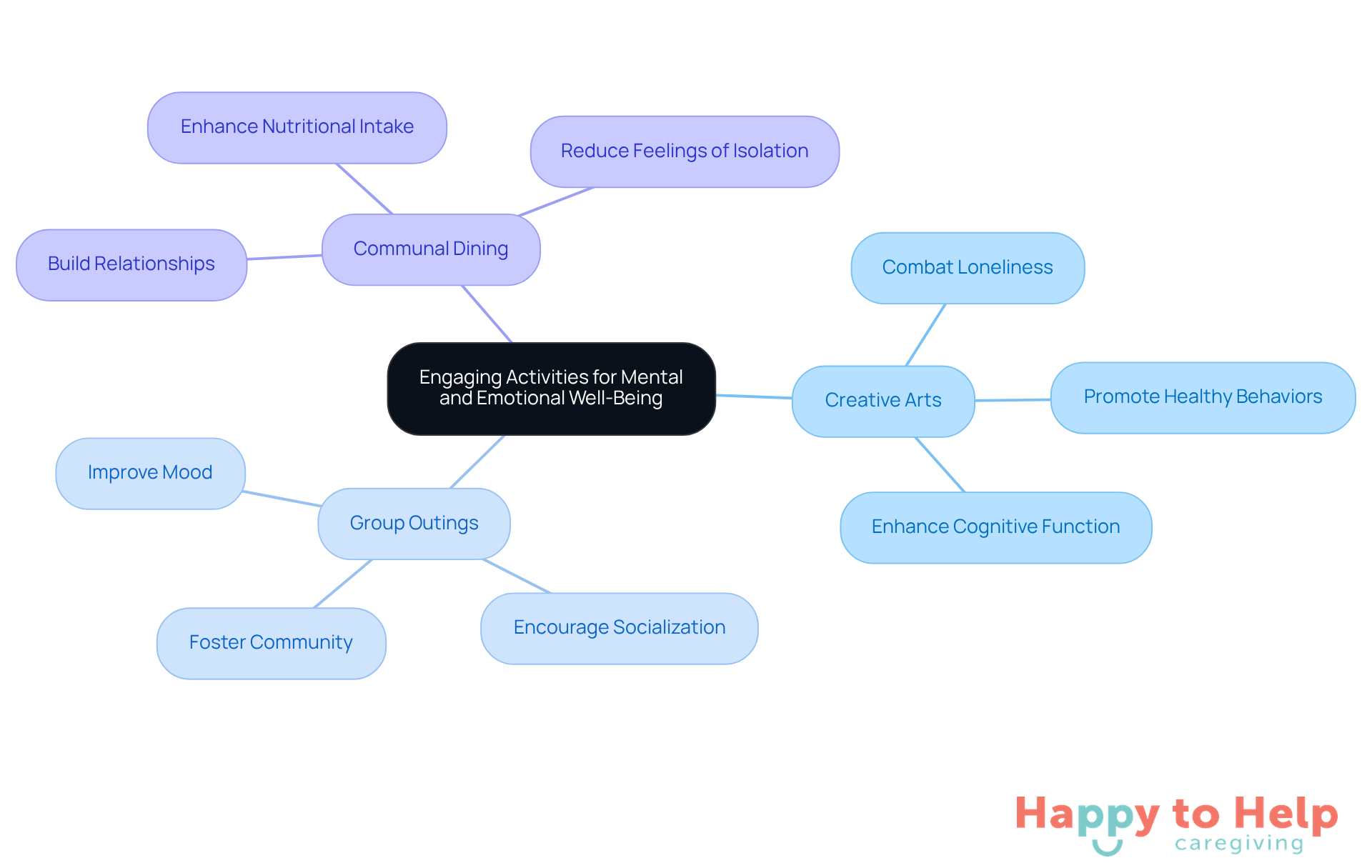
To combat these issues, caregivers can implement various engaging activities that stimulate the mind and foster a sense of community among residents. Programs incorporating creative arts, group outings, and communal dining create opportunities for residents to connect, share experiences, and develop friendships. Such interactions are essential for enhancing mood and emotional well-being, reinforcing the idea that a vibrant social life is key to aging well.
Moreover, engaging in social activities promotes healthy behaviors, such as regular physical exercise and nutritious eating, which further support mental health. By prioritizing these interactions, 24 hour assisted living communities can effectively combat loneliness and promote a fulfilling lifestyle for their residents.
In summary, caregivers play a pivotal role in creating an environment where older adults can thrive socially and emotionally. By fostering connections and encouraging participation in community activities, they can significantly enhance the quality of life for their residents.
Social Interaction: Building Companionship and Community
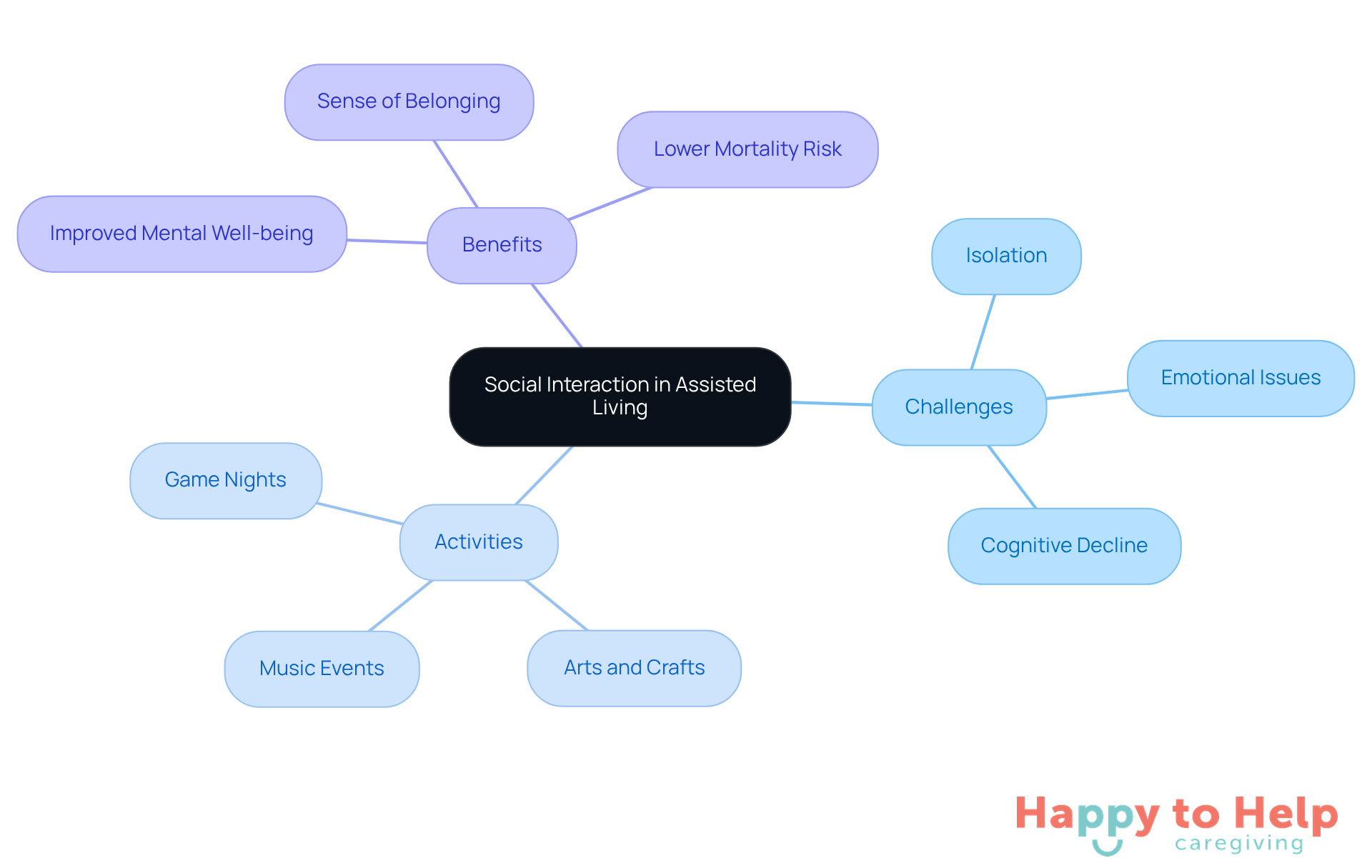
Social interaction presents a significant challenge in environments that provide 24 hour assisted living. Caregivers often face the problem of residents feeling isolated, which can lead to serious emotional and cognitive issues. Research shows that older adults lacking strong social connections are at a higher risk for anxiety, depression, and cognitive decline.
To address this issue, caregivers can actively promote companionship among residents. Engaging in regular social activities and group outings not only fosters friendships but also significantly enhances emotional health. For instance, studies indicate that older adults participating in group activities report improved mental well-being and a greater sense of belonging.
Activities such as:
- Game nights
- Arts and crafts
- Music events
create valuable opportunities for residents to connect, share experiences, and build lasting friendships. Gerontologists emphasize that these social bonds are crucial for emotional stability. One study even revealed that seniors with robust social networks have a markedly lower risk of mortality.
In essence, the camaraderie developed in supportive housing settings not only enhances the lives of residents but also aids in their overall well-being and longevity. By implementing these social engagement strategies, caregivers in 24 hour assisted living can significantly improve the quality of life for their residents.
Tailored Care Plans: Addressing Individual Needs and Preferences
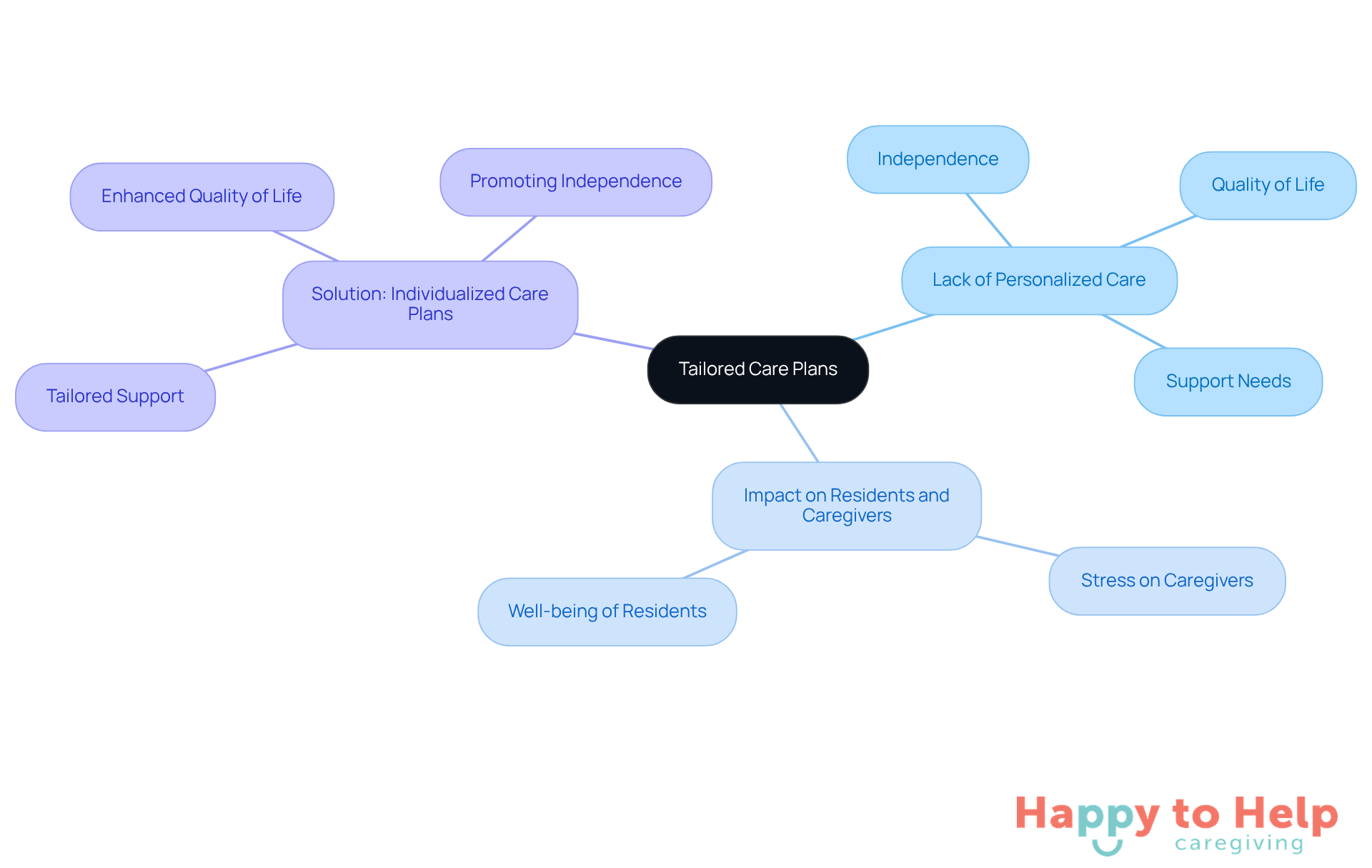
In assisted living, one significant challenge is the lack of personalized care for residents. Without tailored care plans, seniors may not receive the support they need, which can hinder their independence and overall quality of life.
This issue is particularly concerning as it affects not only the well-being of the residents but also places additional stress on caregivers who strive to provide the best possible care.
The solution lies in developing individualized care plans that cater to each resident's specific needs, preferences, and health conditions. By implementing this personalized approach, caregivers can ensure that seniors receive the right level of support, ultimately promoting their independence and enhancing their quality of life.
Relief for Family Caregivers: Balancing Care and Personal Life
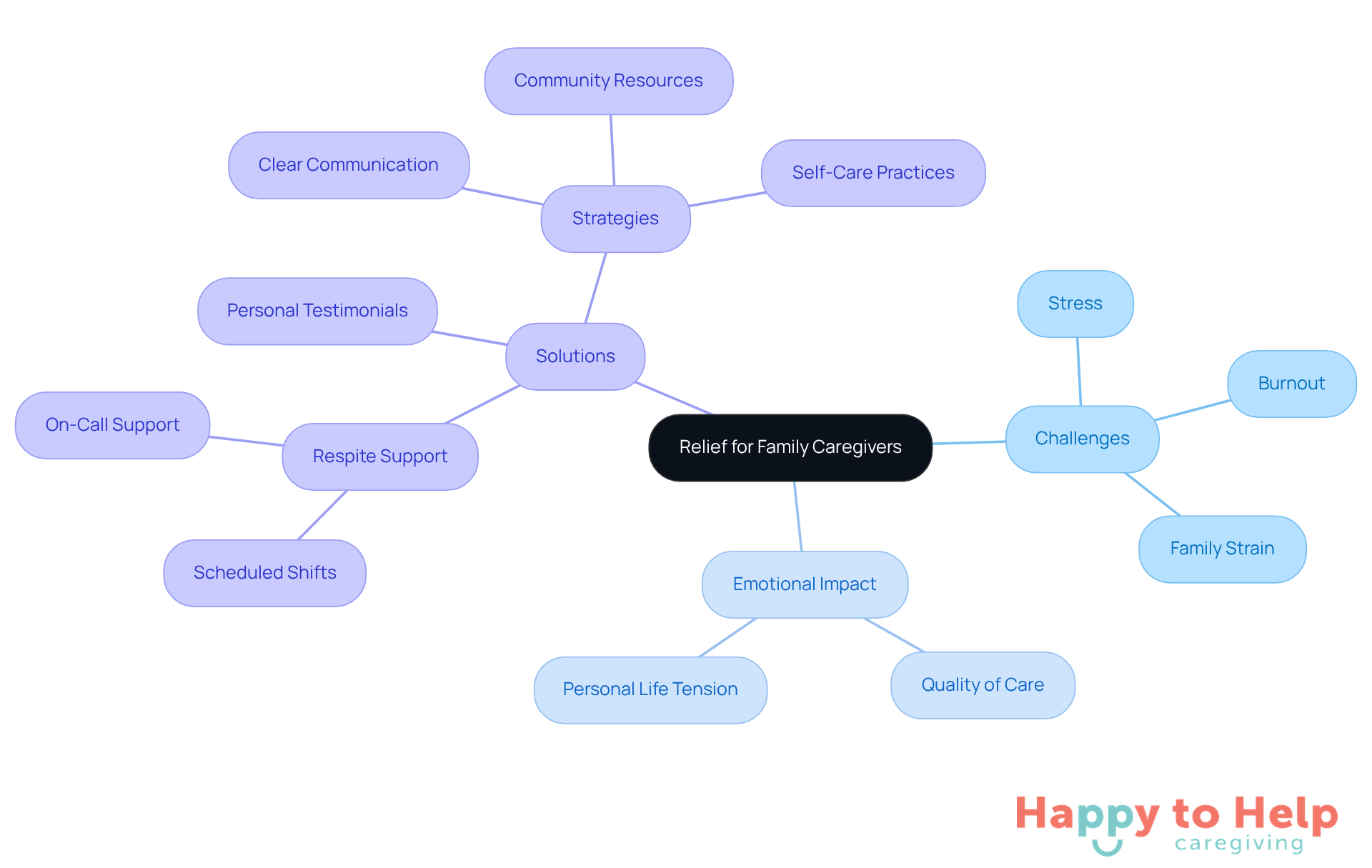
Problem: Caregivers face significant challenges, including stress and burnout. In New Hampshire, approximately 168,000 individuals providing care experience these issues, which can strain family relationships and lead to exhaustion.
Agitate: The emotional toll on caregivers is profound. When family members are overwhelmed, it affects not only their well-being but also the quality of care they provide. This cycle of stress can hinder personal lives and create tension within families.
Solution: Research shows that consistent respite support can greatly enhance caregivers' well-being. For instance, those who take regular breaks report improved mental health and stronger family bonds. Scheduled shifts and on-call support provide caregivers with peace of mind, allowing them to manage appointments and social activities effectively. This enables them to recharge and return to their loved ones with renewed energy.
Personal testimonials highlight the positive impact of respite services. One caregiver noted, "The respite care services have been a great blessing for our family. It has allowed me time to disconnect and relax, knowing that my loved one is safe and in good hands." Such experiences underscore the importance of support networks that help caregivers maintain their joy and well-being.
To prevent caregiver burnout, consider these strategies:
- Establish clear communication with care teams.
- Utilize community resources.
- Engage in self-care practices, such as maintaining a healthy diet rich in fruits and vegetables and incorporating regular exercise.
By fostering a supportive environment, families can navigate caregiving challenges while preserving their own well-being, leading to more meaningful interactions and a healthier home life.
Access to Specialized Services: Meeting Complex Health Needs
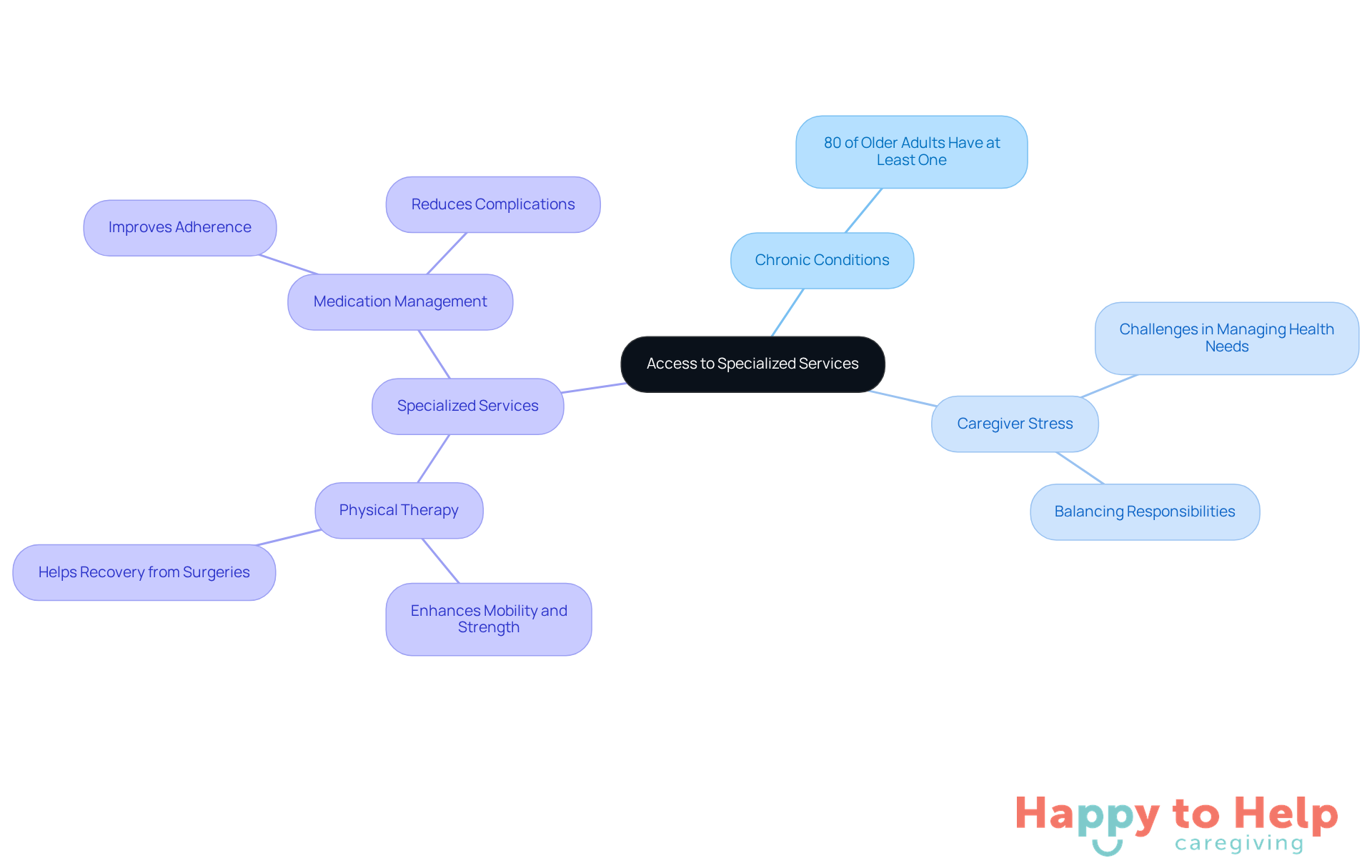
Access to specialized services is a crucial advantage of 24 hour assisted living, as it addresses the complex medical needs of residents. Caregivers often face the challenge of managing these needs, especially since nearly 80% of older adults have at least one chronic condition. This situation can lead to significant stress for families trying to provide the best support for their loved ones.
The implications of inadequate care can be severe. Many older adults encounter multiple medical challenges, which can hinder their independence and overall well-being. Without proper support, caregivers may feel overwhelmed, struggling to balance their responsibilities with the demands of their loved ones' health.
Fortunately, assisted living facilities offer essential services like physical therapy and medication management, which are vital for older adults managing chronic conditions.
- Physical therapy enhances mobility and strength, helping residents recover from surgeries or manage conditions like arthritis.
- Effective medication management is equally important; studies show that improper adherence can lead to serious complications.
By providing these specialized services, assisted care facilities create an environment where elderly individuals can thrive.
Healthcare providers emphasize that comprehensive care significantly improves wellness outcomes for older adults. A well-coordinated approach to managing chronic conditions can reduce hospital readmissions and enhance quality of life. This focus on health not only meets the physical needs of residents but also supports their emotional well-being, making 24 hour assisted living a valuable option for families navigating the complexities of elder support.
Flexibility to Age in Place: Comfort and Independence
Aging in place can present significant challenges for older adults and their caregivers. Many seniors wish to remain in familiar surroundings, but without adequate support, this desire can lead to feelings of isolation and anxiety. Caregivers often struggle to balance their responsibilities while ensuring their loved ones receive the necessary care.
A practical solution to this problem is provided by 24-hour assisted living. It allows older adults to maintain their independence while having access to support when needed. This arrangement not only promotes a sense of security but also enables seniors to live their lives on their terms, surrounded by the comforts of home.
Choosing 24-hour assisted living allows caregivers to alleviate some of the stress associated with caregiving. This option provides peace of mind, knowing that their loved ones are receiving the care they need, while also fostering a sense of autonomy for the seniors.
Peace of Mind for Families: Trusting in 24-Hour Care
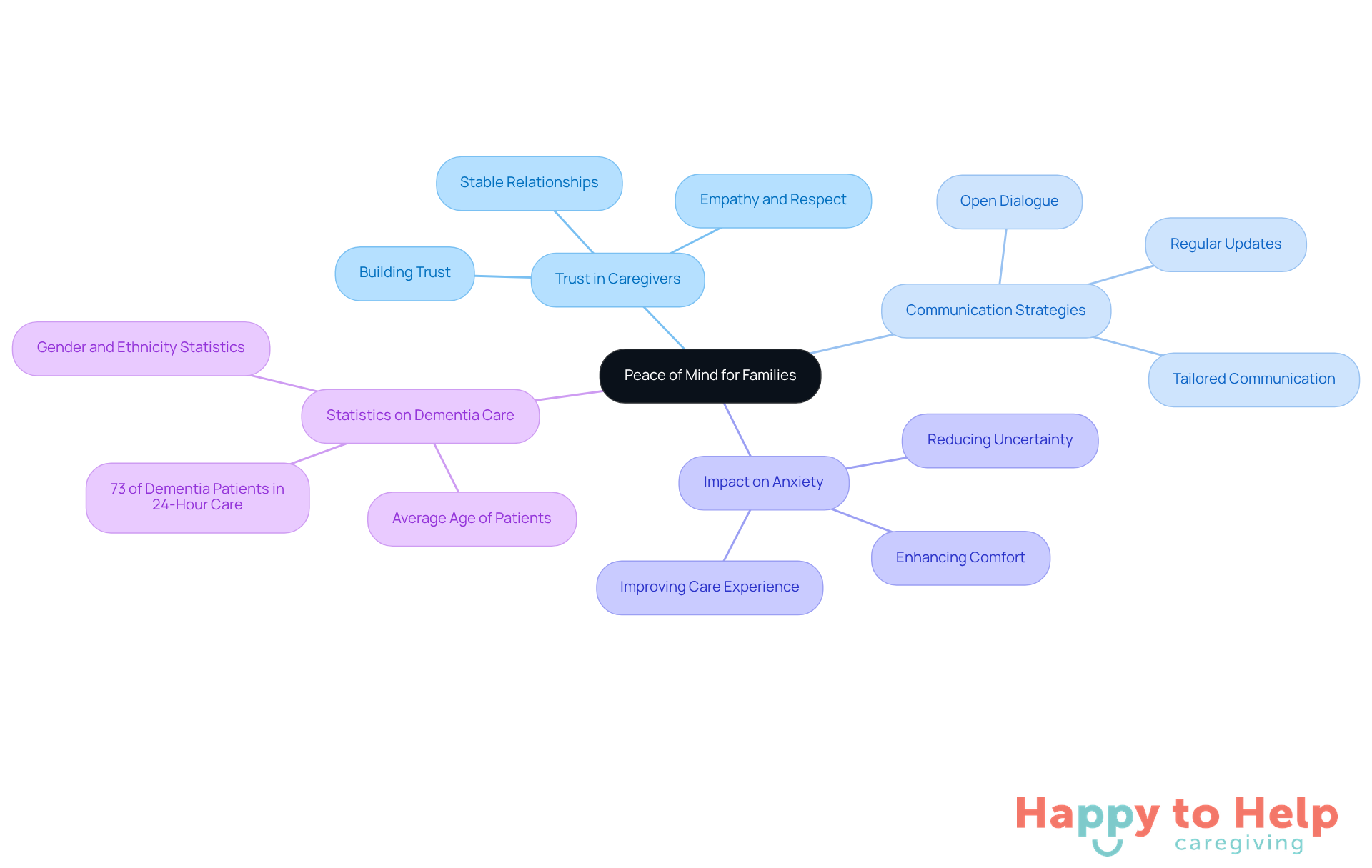
Caregivers often face the challenge of anxiety stemming from insufficient communication about their loved ones' well-being. This lack of information can lead to feelings of uncertainty and stress, making it crucial for families to establish trust with caregivers.
To address this issue, 24 hour assisted living can offer families priceless peace of mind. Knowing that trained professionals are available to assist their loved ones fosters a sense of security. Effective communication strategies, such as regular updates and open dialogue, are essential in maintaining this trust. Families appreciate being informed about daily activities and any changes in their loved ones' conditions, which helps build a collaborative relationship with caregivers.
As noted by Elison Independent & Assisted Living of Maplewood, "Our staff keeps in regular touch with families, not telling them only when something’s wrong, but as part of an ongoing, open relationship." This ongoing communication not only alleviates anxiety but also enhances the overall caregiving experience. It allows families to feel confident that their loved ones are receiving the best possible care in a familiar environment.
Furthermore, with 73% of people with advanced dementia receiving 24 hour assisted living, the necessity of such arrangements underscores the importance of trust and communication in caregiving. By prioritizing these elements, caregivers can significantly improve the experience for both families and their loved ones.
Moving Forward with 24 Hour Assisted Living
The challenges faced by family caregivers can be overwhelming. They often struggle with the demands of providing care while trying to maintain their own lives. This burden can lead to stress, burnout, and a decline in their own well-being.
24-hour assisted living services offer a practical solution to these challenges. By providing personalized, around-the-clock support, these services not only enhance the quality of life for seniors but also alleviate the pressures on family caregivers. This creates a nurturing environment where older adults can thrive while maintaining their independence.
Key benefits of 24-hour assisted living include:
- Improved Safety: Continuous monitoring ensures seniors are safe and secure.
- Immediate Medical Assistance: Quick access to healthcare professionals when needed.
- Engaging Activities: Opportunities for social interaction and mental stimulation.
- Tailored Care Plans: Customized support that meets individual needs.
These elements address the unique challenges seniors face, ensuring they receive the necessary support for their physical and emotional well-being. Additionally, structured respite for family caregivers strengthens familial bonds and enhances overall family dynamics.
Ultimately, embracing 24-hour assisted living is a commitment to fostering dignity, independence, and peace of mind for both seniors and their families. As the demand for quality elder care continues to rise, exploring these personalized support options becomes essential for navigating the complexities of aging. By prioritizing these services, families can ensure that their loved ones receive the compassionate care they deserve while also preserving their own well-being.
https://iframe.tely.ai/cta/eyJhcnRpY2xlX2lkIjogIjY5MjY2NjEyZjRlMzY1MzFmZjFhZDVkYyIsICJjb21wYW55X2lkIjogIjY4ZWU1ZGNhNzMxNzYyNTU3ZjNjOTVjMSIsICJpbmRleCI6IG51bGwsICJ0eXBlIjogImFydGljbGUifQ==Frequently Asked Questions
What challenges do elderly individuals face regarding care?
Many elderly individuals struggle to receive the care they need while maintaining their independence, leading to feelings of isolation and insecurity that can impact their overall well-being.
How does Happy to Help Caregiving address these challenges?
Happy to Help Caregiving offers personalized 24-hour assisted living, allowing seniors to receive the care they require in their own homes while maintaining their independence. Caregivers provide tailored assistance with daily activities and emotional support.
What is the importance of safety and security in elder care?
Safety and security are crucial in elder care due to the risk of falls and emergencies. Continuous supervision is essential to prevent severe injuries and ensure prompt intervention during emergencies.
How does 24-hour assisted living enhance safety for seniors?
24-hour assisted living provides continuous monitoring by trained staff, ensuring quick assistance during emergencies. Facilities often use advanced monitoring systems to alert staff if a resident is in distress, allowing for rapid response.
What measures are taken to ensure emergency readiness in elder care settings?
Facilities have implemented strict protocols, including the use of personal protective gear and sanitation measures, to efficiently handle crises, enhancing resident safety and providing families with peace of mind.
Why is immediate medical assistance important for seniors?
Seniors often require immediate medical assistance in emergencies, as delays can lead to serious health complications. Quick responses from caregivers can significantly improve health outcomes for seniors.
How are caregivers trained to manage emergencies?
Caregivers in 24-hour assisted living are trained to identify medical concerns and respond swiftly. Regular training and updates help enhance their ability to manage emergencies effectively.
List of Sources
- Happy to Help Caregiving: Personalized 24/7 Support for Seniors
- National Alliance for Caregiving: Caregiving in the US 2025 Report (https://johnahartford.org/resources/view/national-alliance-for-caregiving-caregiving-in-the-us-2025-report)
- Executive Home Care Helps Seniors Stay Independent With Personalized In-Home Support (https://prnewswire.com/news-releases/executive-home-care-helps-seniors-stay-independent-with-personalized-in-home-support-302463752.html)
- The Benefits of 24-Hour Support: Ensuring Constant Care and Peace of Mind (https://rightathome.co.uk/cheshireeast/news-item/the-benefits-of-24-hour-support-ensuring-constant-care-and-peace-of-mind)
- What Does 24/7 Home Care Look Like? (https://careindeed.com/blogs/what-does-24-7-home-care-look-like)
- Caregiver Statistics: Demographics (https://caregiver.org/resource/caregiver-statistics-demographics)
- Enhanced Safety and Security: A Pillar of 24-Hour Assisted Living
- Emergency preparedness efforts prevented deaths, serious injuries in massive fire, senior living operator says (https://mcknightsseniorliving.com/news/emergency-preparedness-efforts-prevented-deaths-serious-injuries-in-massive-fire-senior-living-operator-says)
- Long-Term Care Communities Providing Safety During The Pandemic’s (https://caringplaces.com/long-term-care-communities-providing-safety-during-the-pandemics)
- Safety Measures at Assisted Living Communities (https://usnews.com/senior-living/articles/assisted-living-facility-safety-checklist)
- U.S. News Recognizes Eight Clearwater Living Communities in 2025 Senior Living Ratings (https://clearwaterliving.com/news-blog/u-s-news-recognizes-eight-clearwater-living-communities-in-2025-senior-living-ratings?article=peace-of-mind-the-safety-and-security-benefits-in-today-s-senior-living-communities)
- Immediate Medical Assistance: Ensuring Health and Well-Being
- Importance of Immediate Response in Aged Care Emergencies (https://inslifeguard.com.au/the-importance-of-immediate-response-in-aged-care-emergency-situations)
- Emergency preparedness initiative aims to ‘disrupt’ senior living industry’s ‘outdated and reactive’ response to crises (https://mcknightsseniorliving.com/news/emergency-preparedness-initiative-aims-to-disrupt-senior-living-industrys-outdated-and-reactive-response-to-crises)
- Care managers say ED program improves communication for assisted living residents with dementia (https://mcknights.com/news/care-managers-say-ed-program-improves-communication-for-assisted-living-residents-with-dementia)
- Senior Living Helps Prevent Florence Hospital and ER Visits (https://pegasusseniorliving.com/the-renaissance-of-florence/blog/2025/11/17/reduce-emergency-florence-hospital-visits)
- How Personal Care Homes Handle Health Monitoring | Juniper (https://junipercommunities.com/how-personal-care-homes-handle-medical-emergencies-health-monitoring)
- Engaging Activities: Promoting Mental and Emotional Well-Being
- The Importance of Social Wellness for Seniors (https://mbkseniorliving.com/mbk-blog/the-importance-of-social-wellness-for-seniors)
- Avoiding Isolation By Volunteering Offers Mental Health Benefits to Seniors (https://usnews.com/news/health-news/articles/2025-01-10/avoiding-isolation-by-volunteering-offers-mental-health-benefits-to-seniors)
- Top 7 Trends & Innovations in Assisted Living for the New Year | Assisted Living Education (https://assistedlivingeducation.com/top-7-trends-innovations-in-assisted-living-for-the-new-year?srsltid=AfmBOoo8IXE60fHwaFjUaWzS7n0NuTVjCJSRx4kzQY\_2jXe6yKajaXeS)
- The Role of Social Activities in Enhancing Well-Being | Juniper Senior Living (https://junipercommunities.com/the-role-of-social-activities-in-enhancing-well-being)
- Social Connection as a Mental Health Priority in Senior Living - Supportive Care (https://thesupportivecare.com/blog/social-connection-as-a-mental-health-priority-in-senior-living)
- Social Interaction: Building Companionship and Community
- The Importance of Socialization in Assisted Living Communities | Juniper Senior Living (https://junipercommunities.com/the-importance-of-socialization-in-assisted-living-communities)
- Socialization Boosts Quality of Life for Older Adults in Long-Term Care Facilities (https://ltcnews.com/articles/socialization-boosts-quality-life-older-adults-long-term-care-facilities)
- Benefits Of Social Connection For Seniors | Providence Place (https://providence-place.com/resources/news/benefits-social-connection-for-seniors)
- How Important is Social Engagement for Seniors in Assisted Living Communities? - Adams Farm Living (https://adamsfarmliving.com/how-important-is-social-engagement-for-seniors-in-assisted-living-communities)
- Social Connection as a Mental Health Priority in Senior Living - Supportive Care (https://thesupportivecare.com/blog/social-connection-as-a-mental-health-priority-in-senior-living)
- Tailored Care Plans: Addressing Individual Needs and Preferences
- Warning From Older Adults: Care for Aging in America Needs Urgent Rethinking (https://johnahartford.org/newsroom/view/warning-from-older-adults-care-for-aging-in-america-needs-urgent-rethinking)
- Empowering aging: How AI and value-based care are making senior living more personalized and affordable (https://mcknights.com/marketplace/marketplace-experts/empowering-aging-how-ai-and-value-based-care-are-making-senior-living-more-personalized-and-affordable)
- New Survey Reveals Americans Want More Personalized Care Insights from their Health Tech (https://prnewswire.com/news-releases/new-survey-reveals-americans-want-more-personalized-care-insights-from-their-health-tech-302578448.html)
- What has 2025 got in store for Senior Care? - Compass Associates (https://compass-associates.com/us/what-has-2025-got-in-store-for-senior-care)
- ‘We’re Back, Baby’: 6 Senior Living Leaders Predict Memory Care’s Future (https://seniorhousingnews.com/2025/10/17/were-back-baby-6-senior-living-leaders-predict-memory-cares-future)
- Relief for Family Caregivers: Balancing Care and Personal Life
- Relief for caregiver burnout - Harvard Health (https://health.harvard.edu/staying-healthy/relief-for-caregiver-burnout)
- How 24-Hour Home Care Helps Caregiver Burnout (https://hcprosonline.com/how-24-hour-home-care-helps-caregiver-burnout)
- New Futures | 2025 Caregiver Respite and Senior Volunteer Programs (https://new-futures.org/2025-Caregivers-and-Volunteers)
- News & Success Stories | Live Well San Diego (https://livewellsd.org/Home/Components/News/News/513/153)
- Access to Specialized Services: Meeting Complex Health Needs
- AI technology at AZ assisted living facilities help protect residents (https://fox10phoenix.com/news/ai-technology-az-assisted-living-facilities-help-protect-residents)
- Arizona finally has a law around memory care, but does it go far enough? (https://abc15.com/news/local-news/investigations/arizona-finally-has-a-law-around-memory-care-but-does-it-go-far-enough)
- Facts & Figures (https://ahcancal.org/Assisted-Living/Facts-and-Figures/Pages/default.aspx)
- As big reforms for dementia care in Arizona near finish, assisted living industry takes aim (https://azcentral.com/story/news/local/arizona-investigations/2025/05/29/assisted-living-industry-attacks-arizona-dementia-care-rules/83904157007)
- Flexibility to Age in Place: Comfort and Independence
- Families Prefer In-Home Care To Senior Living – Yet Struggle To Identify Needed Support (https://homehealthcarenews.com/2025/11/families-prefer-in-home-care-to-senior-living-yet-struggle-to-identify-needed-support)
- Home sweet home: A majority of Americans want to age in place (https://empower.com/the-currency/life/home-sweet-home-americans-age-place-news)
- Senior living helps older adults live well longer, NORC/NIC study finds (https://mcknightsseniorliving.com/news/senior-living-helps-older-adults-live-well-longer-norc-nic-study-finds)
- New AARP Report: Majority of Adults 50-plus Want to Age in Place, But Policies and Communities Must Catch Up (https://press.aarp.org/2024-12-10-New-AARP-Report-Majority-Adults-50-plus-Age-Place-Policies-Communities-Catch-Up)
- New Study Explores the Need for Expanded Long-Term Care Services to Support Aging-in-Place | Johns Hopkins Bloomberg School of Public Health (https://publichealth.jhu.edu/2025/new-study-explores-the-need-for-expanded-long-term-care-services-to-support-aging-in-place)
- Peace of Mind for Families: Trusting in 24-Hour Care
- The Benefits of 24-Hour Support: Ensuring Constant Care and Peace of Mind (https://rightathome.co.uk/cheshireeast/news-item/the-benefits-of-24-hour-support-ensuring-constant-care-and-peace-of-mind)
- 7 Benefits of hiring a Caregiver for 24-Hour In Home Care - Palos Heights (https://assistinghands.com/85/illinois/palos/blog/7-benefits-of-hiring-a-caregiver-for-24-hour-in-home-care)
- Why Communication Between Assisted Care Staff & Families Is Essential for Seniors' Wellbeing (https://elisonmaplewood.com/blog/why-clear-communication-between-assisted-living-staff-and-families-is-essential-for-resident-wellbeing)
- Building Trust and Rapport with Clients and their Families as a Caregiver (https://easylivingfl.com/career-in-caring/building-trust-and-rapport-as-a-caregiver)
- The Need for Stability in Paid Dementia Care: Family Caregiver Perspectives - PMC (https://pmc.ncbi.nlm.nih.gov/articles/PMC9636070)