10 Benefits of 24-Hour Care for Your Loved Ones' Well-Being
For families in our service areas
For families in our service areas, this guide explains caregiving and how non-medical in-home caregiving can support care planning in East Idaho, Treasure Valley & Magic Valley, Northern Wasatch, North Central West Virginia, and Northeast Ohio.
What You Need to Know About 24-Hour Care
The challenges faced by older adults in maintaining their independence and quality of life can be daunting. These difficulties often lead to feelings of isolation and insecurity. Families grappling with the complexities of caregiving may find themselves overwhelmed by these issues.
What can be done? The introduction of 24-hour care emerges as a vital solution. This model promises not only enhanced safety and emotional support but also a renewed sense of autonomy for seniors. Continuous care can transform the lives of elderly individuals, providing peace of mind for their families.
Delving into the numerous benefits of round-the-clock assistance reveals a pathway to improved well-being and enriched connections in the golden years. By implementing this care model, families can ensure their loved ones receive the support they need while fostering a sense of independence.
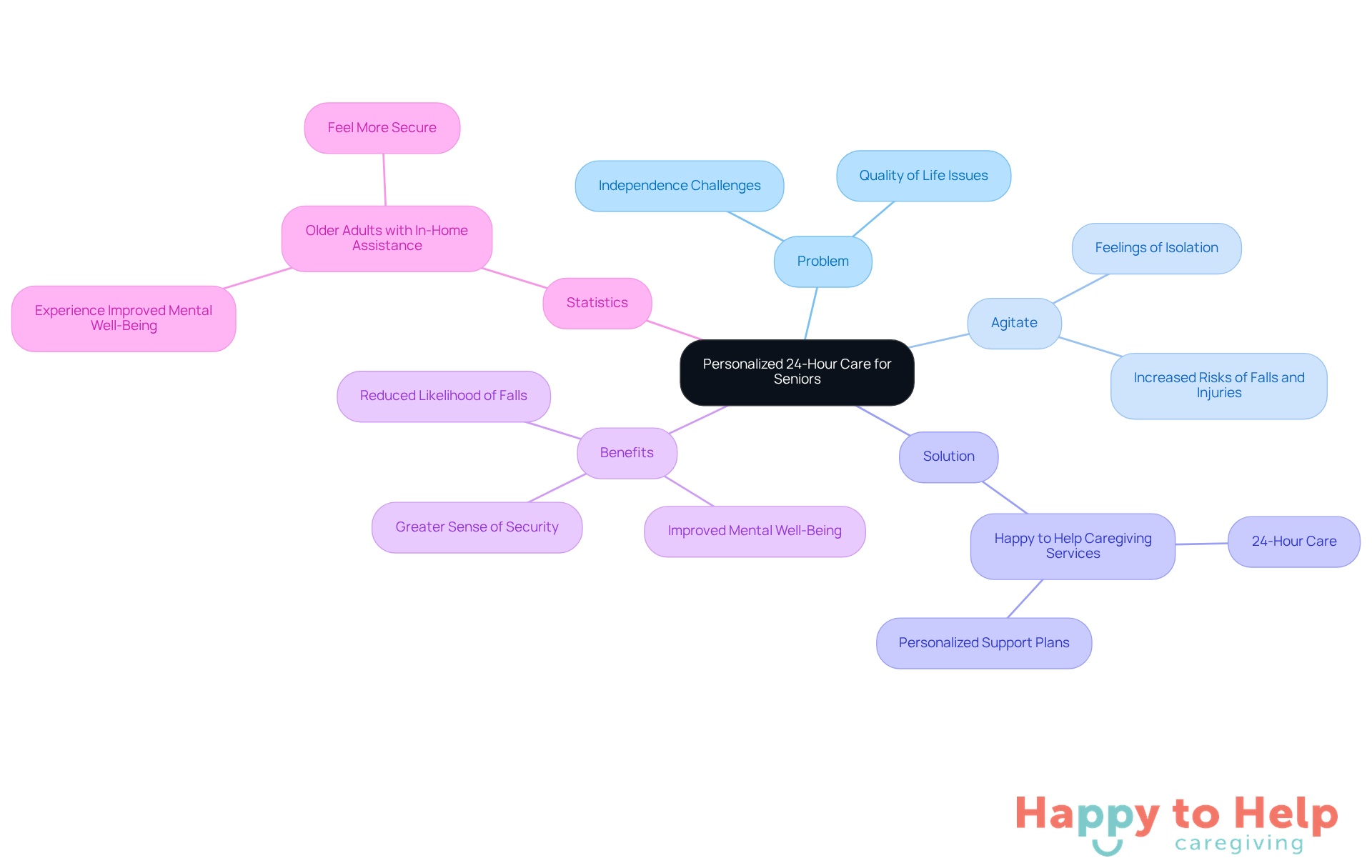
Happy to Help Caregiving: Personalized 24-Hour Care for Seniors
Problem: Many older adults struggle with maintaining their independence and quality of life due to a lack of tailored support at home.
Agitate: This can lead to feelings of isolation and insecurity, as well as increased risks of falls and injuries. Without proper assistance, older adults may find it challenging to engage in their daily routines and familiar activities, which are crucial for their mental well-being.
Happy to Help Caregiving offers specialized care that includes 24-hour care, specifically designed for older adults to ensure they receive ongoing support in the comfort of their own homes. This approach not only promotes independence but also significantly enhances their overall quality of life.
Support providers are thoroughly trained to develop personalized strategies that address both medical and emotional needs, creating an environment where each client feels valued and understood.
Statistics indicate that older adults receiving in-home assistance experience improved mental well-being and a greater sense of security. The presence of 24-hour care has been shown to reduce the likelihood of falls and injuries, as caregivers assist with mobility and daily living activities, thereby fostering a safer living environment.
The emphasis on personalized support plans is crucial; they allow caregivers to tailor their assistance to the unique preferences and needs of each elderly individual. This customized approach not only alleviates feelings of isolation but also ensures that clients receive the compassionate support they deserve, making in-home assistance an invaluable resource for families navigating the complexities of elderly care.
Emotional Support: Alleviating Loneliness Through Continuous Care
Loneliness and isolation are significant challenges faced by seniors, impacting their emotional well-being. Continuous 24-hour care in the home can play a vital role in addressing these issues by providing essential emotional support. Caregivers engage clients in meaningful conversations and enjoyable activities, fostering connections that are crucial for enhancing mental health.
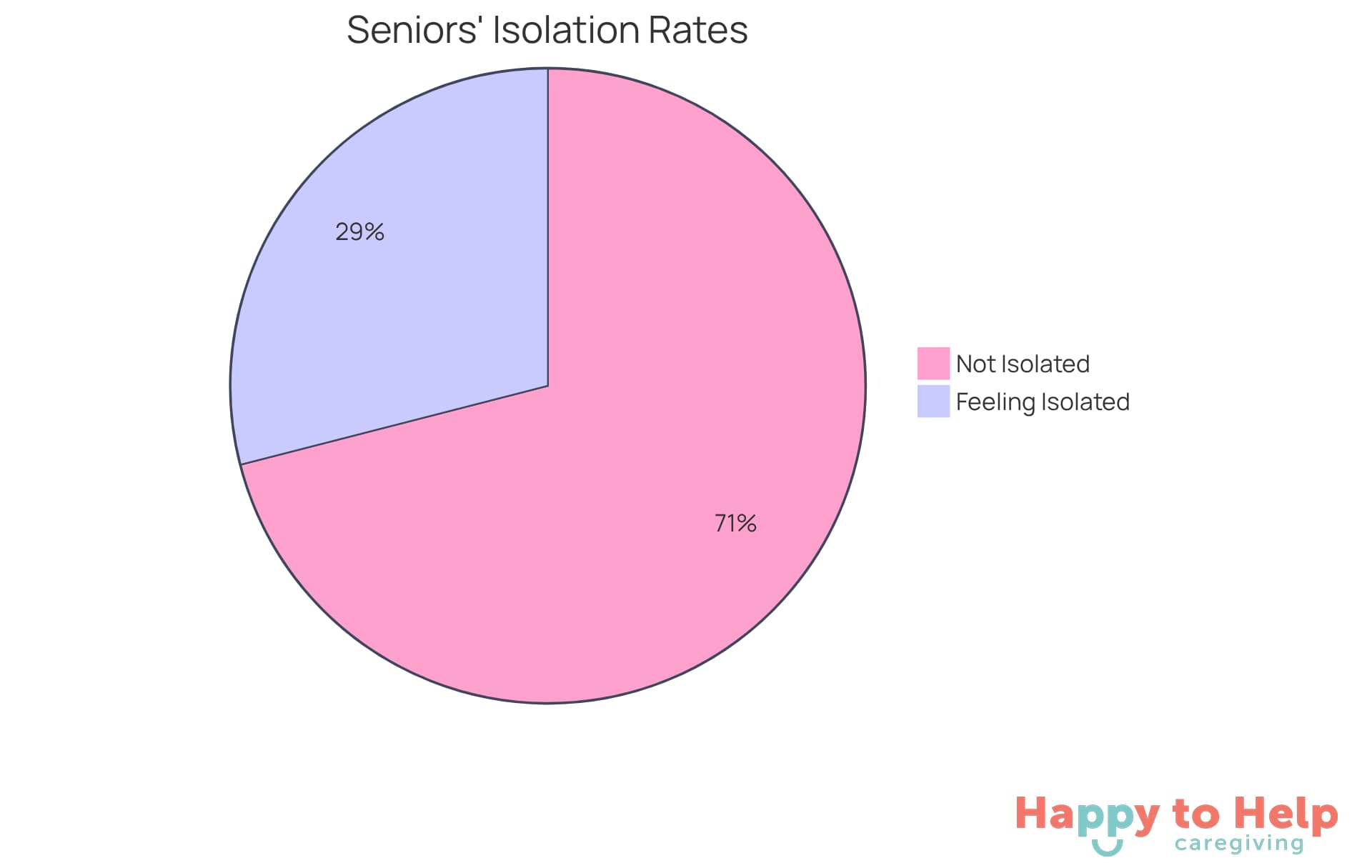
Research indicates that social interaction is linked to better well-being for older adults. In 2024, studies revealed that 29% of older adults reported feeling isolated some of the time or frequently. This loneliness can lead to serious medical problems, including cardiovascular disease, cognitive decline, and depression. The World Health Organization emphasizes that "social connection can safeguard well-being throughout life," highlighting the importance of emotional support in caregiving methods.
To combat loneliness, caregivers can implement practical strategies. Here are a few actionable tips:
- Schedule regular social activities for clients.
- Encourage participation in community events.
By prioritizing social engagement, caregivers providing 24-hour care not only enhance the quality of life for their clients but also contribute to their overall health and longevity.
Enhanced Safety: Continuous Monitoring to Prevent Emergencies
One of the most pressing challenges in caregiving is ensuring the safety of older adults, particularly due to the high incidence of falls. Falls are the leading cause of both fatal and non-fatal injuries among seniors, with around 14 million experiencing falls each year. The healthcare costs associated with non-fatal falls reached a staggering $80 billion in 2020, a figure projected to exceed $101 billion by 2030. This alarming trend highlights the urgent need for effective safety measures.
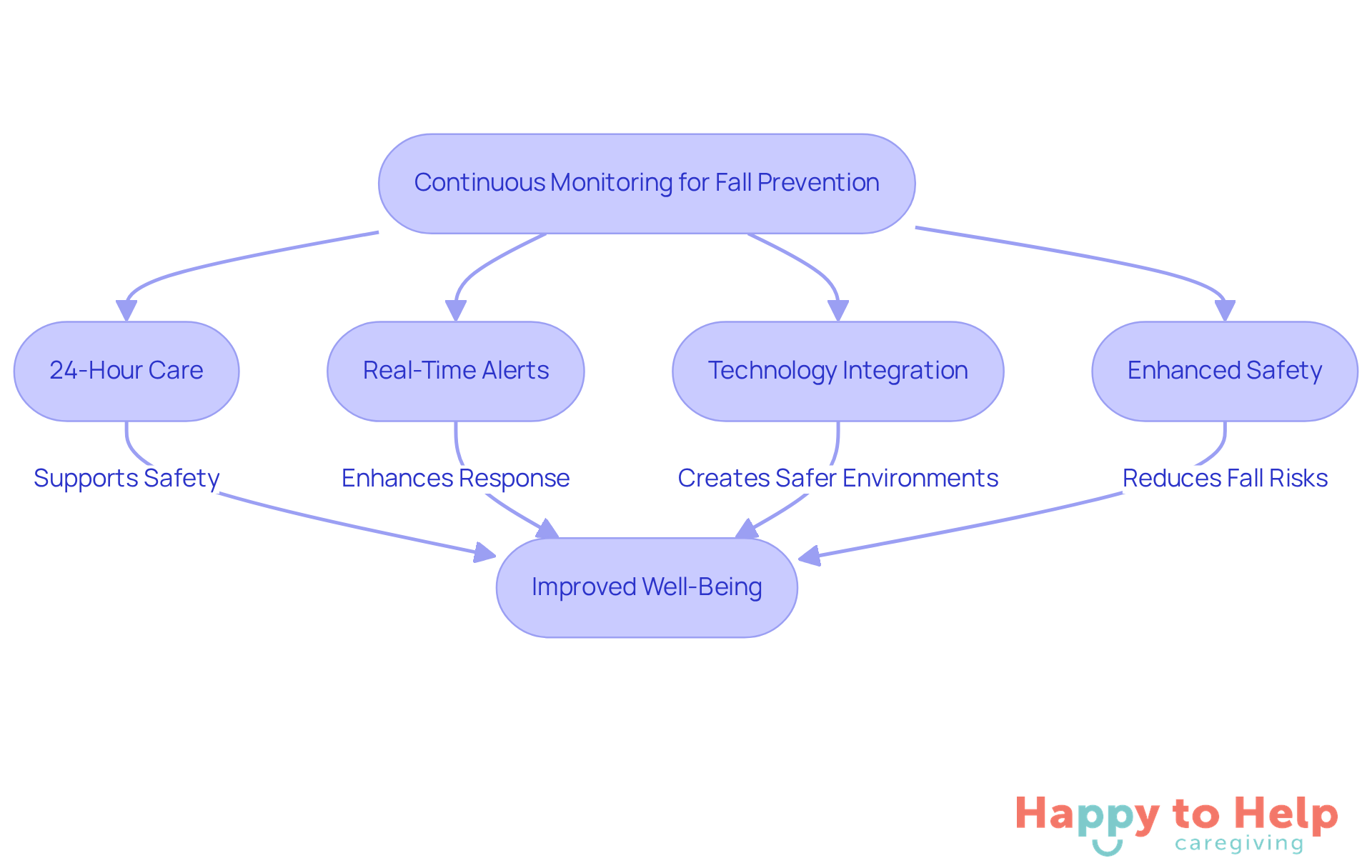
To address this issue, the advantage of 24-hour care lies in its continuous monitoring. Caregivers are always available to assist with mobility, manage medications, and respond swiftly to emergencies. This constant supervision is crucial in preventing falls and ensuring prompt assistance during emergencies, which can significantly reduce the risk of severe injuries. For instance, 24-hour care monitoring systems have been shown to alleviate caregiver fatigue by providing real-time alerts and updates, enabling caregivers to focus on their responsibilities more effectively.
Moreover, the integration of advanced technologies, such as camera AI systems, enhances fall prevention strategies, creating safer environments for older adults. According to the case study "Why Camera AI Is the Future of Fall Prevention," these systems have been proven to significantly reduce fall incidents. By implementing these proactive measures, families can enjoy peace of mind, knowing their loved ones are continuously monitored. This not only reduces anxiety and stress for everyone involved but also fosters a nurturing environment where elderly individuals can thrive in their own homes.
As healthcare experts emphasize, "Continuous monitoring not only safeguards elderly individuals but also enables families to feel secure about their loved ones' safety." By adopting these solutions, caregivers can effectively mitigate the risks associated with falls and enhance the overall well-being of older adults.
Flexible Scheduling: Tailoring Care to Individual Needs
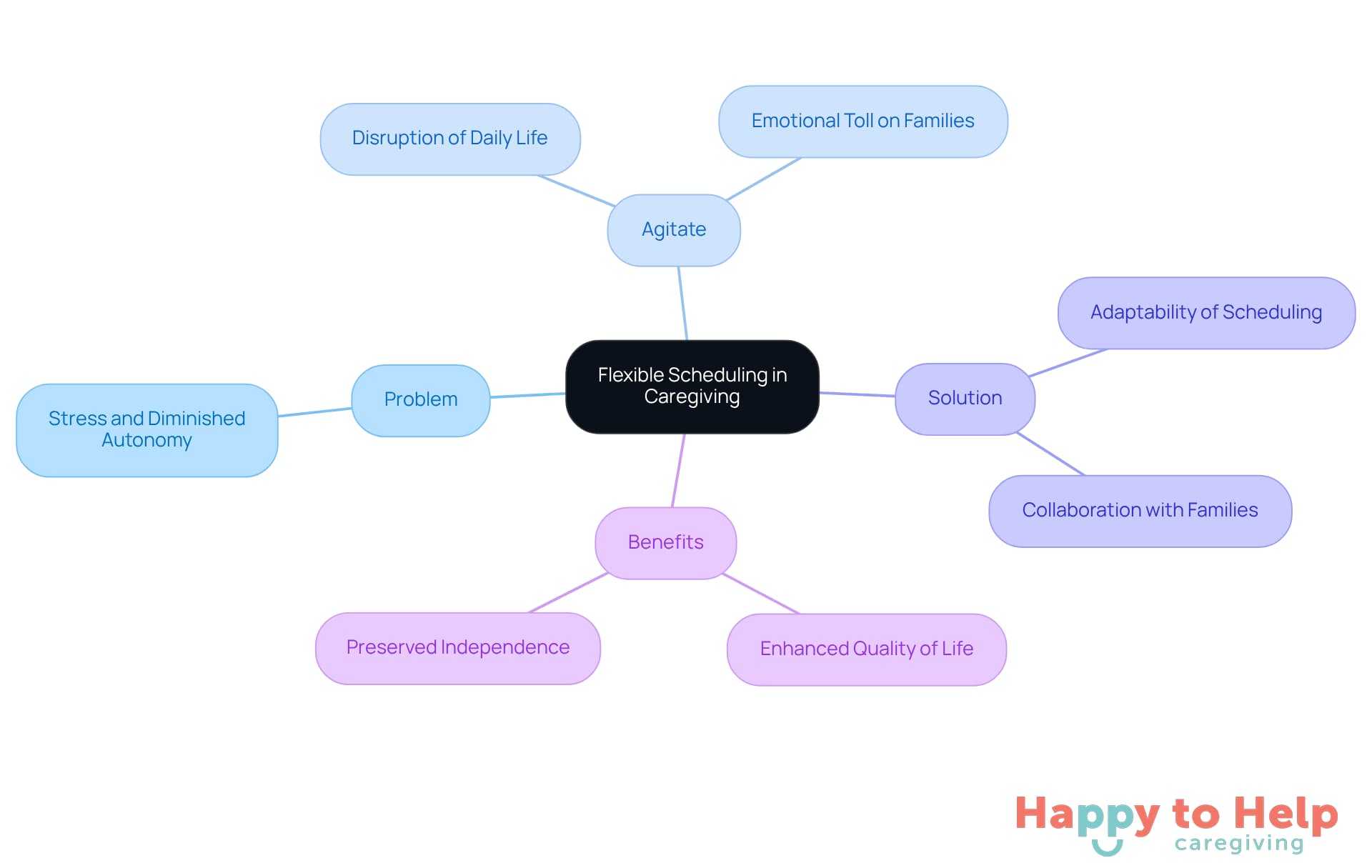
Problem: Rigid scheduling in caregiving can create significant challenges for older adults and their families. When support does not align with personal routines, it can lead to stress and a diminished sense of autonomy.
Agitate: This lack of flexibility often disrupts daily life, making it difficult for older adults to maintain their independence. Families may feel overwhelmed, as they struggle to coordinate care around medical appointments and personal preferences. The emotional toll can be substantial, as families seek to provide the best support while managing their own responsibilities.
The solution of flexible scheduling in 24-hour care addresses these issues by allowing providers to tailor assistance times to meet individual needs. This adaptability promotes autonomy and ease among older adults, ensuring that support fits seamlessly into their daily routines. For instance, providers collaborate with families to create customized support plans that reflect personal preferences, significantly enhancing the quality of life.
Families often express gratitude for this tailored approach, noting how it alleviates stress and fosters a sense of normalcy. By integrating assistance into familiar routines, older adults can preserve their independence while receiving the necessary support, making the transition to in-home assistance smoother and more effective.
Moreover, technology plays a crucial role in enabling flexible scheduling. It allows for real-time modifications and communication between providers and families, further enriching the caregiving experience.
Companionship: Engaging Seniors in Meaningful Activities
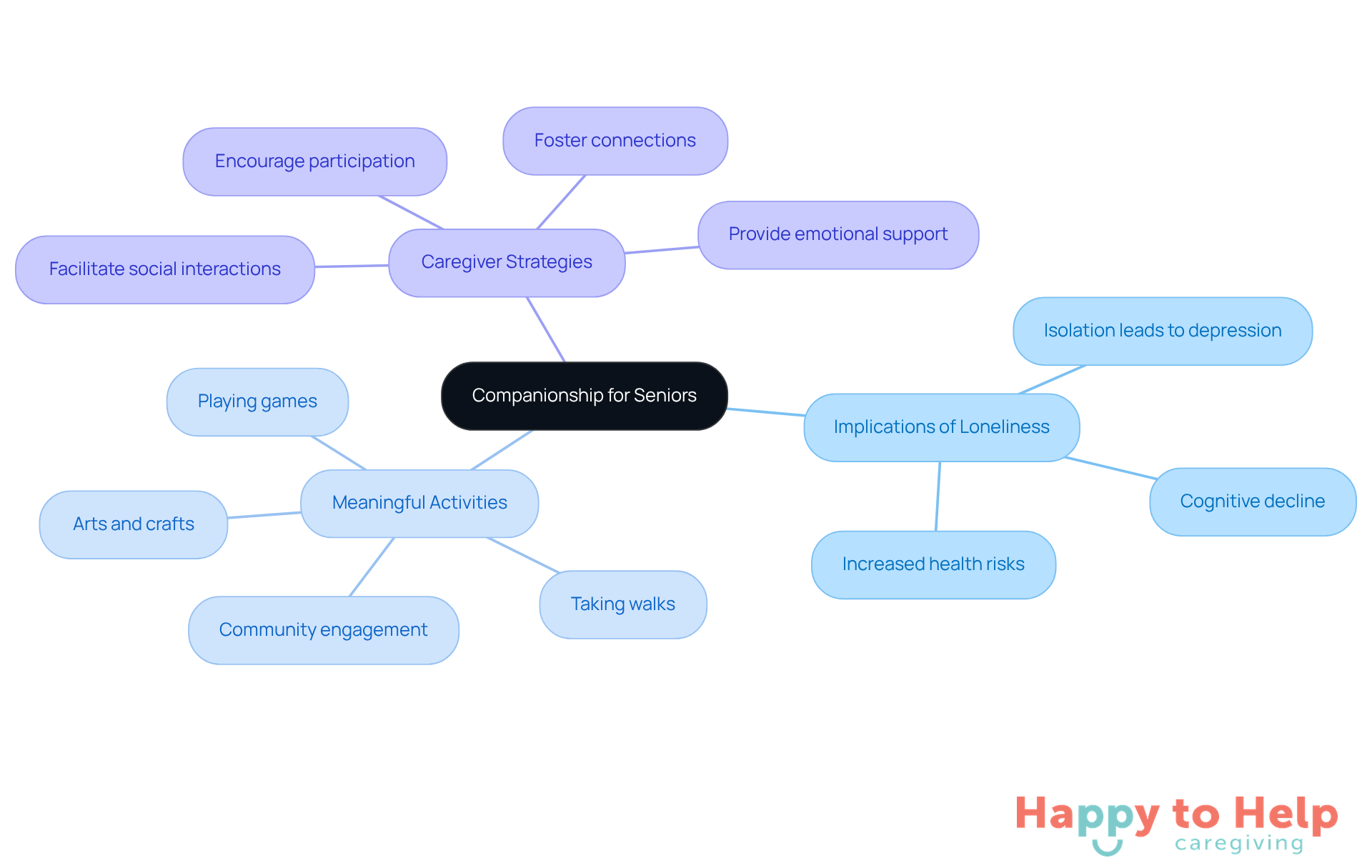
Companionship is a vital aspect of providing continuous support for elderly individuals. Many older adults face the problem of loneliness, with one in three feeling isolated. This isolation can lead to serious implications, including depression and cognitive decline.
Engaging in meaningful activities, such as playing games, taking walks, or participating in arts and crafts, can significantly alleviate these feelings. Not only do these activities promote social interaction, but they also encourage cognitive engagement, which is essential for maintaining mental well-being.
Research shows that regular interaction with caregivers can reduce the risk of depression and enhance overall quality of life. For instance, older adults who receive in-home assistance report 25% fewer doctor's visits annually compared to those who do not utilize such services.
To combat loneliness and improve mental health, caregivers can implement the following strategies:
- Encourage participation in stimulating activities that enhance mood and emotional resilience.
- Foster connections by facilitating opportunities for older adults to share experiences with others.
- Provide emotional support to create a sense of community.
By adopting this comprehensive approach, caregivers can not only enhance the lives of older adults but also help them maintain their autonomy and dignity as they age.
Medical Support: Access to Healthcare Professionals Around the Clock
Elderly individuals often face significant challenges in accessing timely medical care, which can lead to serious health complications. With 24-hour care, they gain constant access to medical professionals, ensuring their wellness needs are met at all times. This situation is critical, as research indicates that around 2 in 3 older adults will require longer-term support and care.
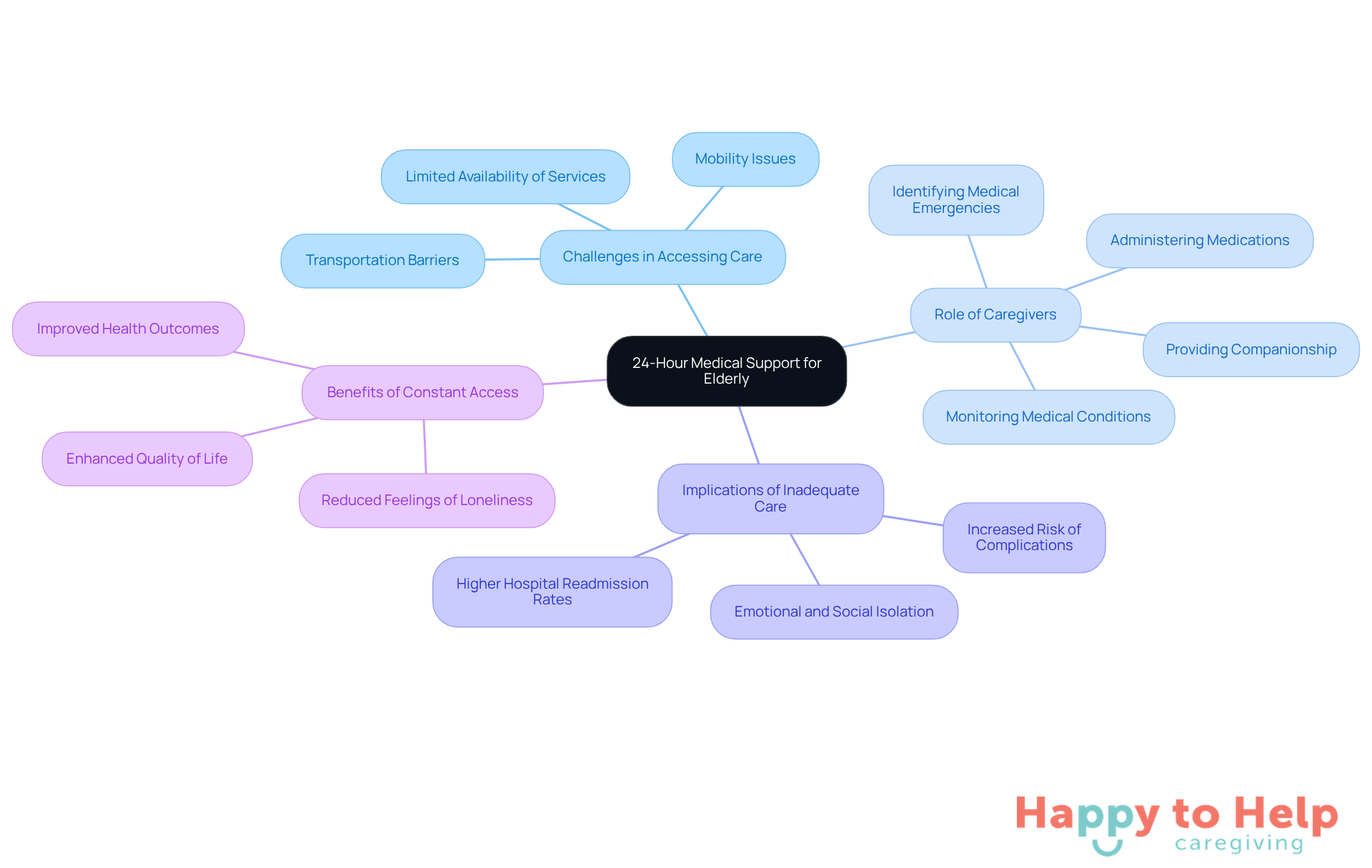
The implications of inadequate care can be severe. Caregivers play a vital role in:
- Monitoring various medical conditions
- Administering medications accurately
- Identifying signs of medical emergencies
Without this proactive approach, the risk of complications and hospital readmissions increases significantly. Effective medication management is essential for enhancing health outcomes among older adults, as it helps prevent adverse drug interactions and ensures compliance with prescribed regimens.
A solution to these challenges is the provision of support personnel for 24-hour care. This not only improves healthcare access but also enables elderly individuals to receive prompt help and assistance, which is crucial for maintaining their overall well-being. Moreover, daily companionship from caregivers can reduce feelings of loneliness and combat depression, enhancing emotional and social health.
As healthcare experts emphasize, "With a skilled attendant always available, these situations can be prevented or addressed promptly." This highlights the critical role of caregivers in ensuring the safety and well-being of seniors. By implementing effective caregiving strategies, we can significantly improve the quality of life for older adults.
Peace of Mind: Family Assurance with 24-Hour Care
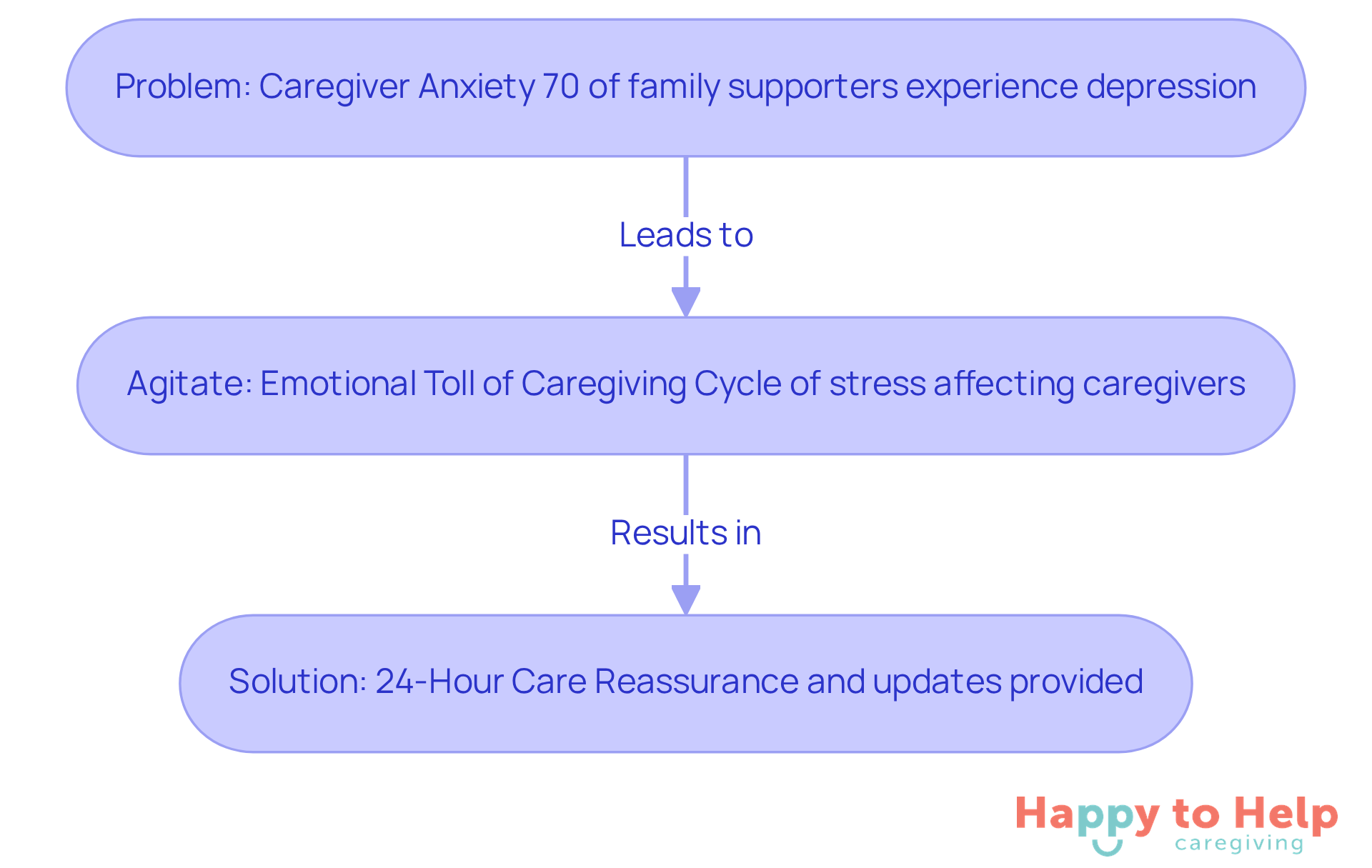
Problem: Caregivers often face significant anxiety regarding the well-being of their loved ones. This worry can be overwhelming, impacting their daily lives and mental health. In fact, studies show that 70% of family supporters experience feelings of depression, underscoring the need for effective support systems.
Agitate: The emotional toll of caregiving can be profound. Families frequently find themselves consumed by concerns about their loved one's safety and health. Without proper support, this anxiety can escalate, leading to a cycle of stress that affects both caregivers and those they care for.
The solution of 24-hour care provides families invaluable reassurance, ensuring that their loved ones are secure and well looked after at all times. This assurance allows family members to focus on their own lives without the constant worry about their loved one's well-being. Frequent updates from caregivers play a crucial role in maintaining trust; they keep families informed about daily activities and health status, which is essential for fostering open communication.
Families employing in-home assistance report significantly lower levels of anxiety. Many express that knowing a professional is present alleviates their concerns. Testimonials from family members frequently emphasize how these updates not only boost their confidence in the assistance being provided but also reinforce their connection with support providers, fostering a collaborative atmosphere that benefits all participants. By ensuring consistent communication and updates, support providers help families feel connected and involved, ultimately enhancing the overall support experience.
Technology Integration: Keeping Families Connected and Informed
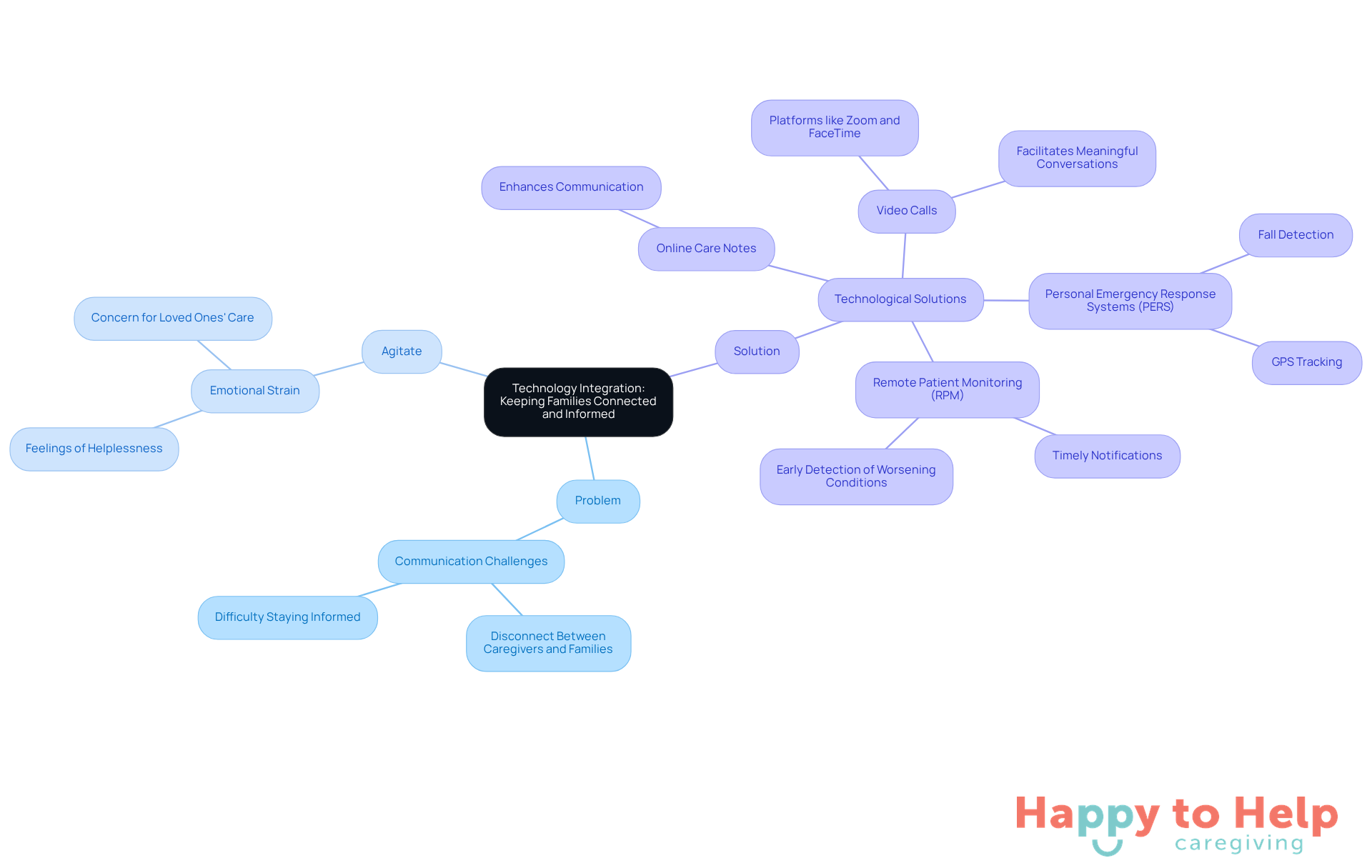
Problem: Communication between caregivers and families can often be challenging, leading to feelings of disconnect and concern.
Agitate: This lack of communication can create emotional strain, leaving families feeling helpless and unsure about their loved one's care. The distance can make it difficult for families to stay informed and involved, which is crucial for both emotional support and effective caregiving.
Solution: Fortunately, technology offers practical solutions to bridge this gap. Tools like online care notes, video calls, and monitoring applications significantly enhance communication. For example, platforms such as Zoom and FaceTime allow families to engage in meaningful conversations, providing a sense of presence that traditional phone calls cannot match. This transparency not only strengthens relationships but also empowers families to actively participate in the caregiving process.
Additionally, Personal Emergency Response Systems (PERS) and Remote Patient Monitoring (RPM) technologies ensure families receive timely notifications about their loved ones' well-being. PERS devices, equipped with features like fall detection and GPS tracking, offer instant access to emergency assistance, enhancing safety and peace of mind for both older adults and their families.
Statistics indicate that consistent social connection for older adults is linked to improved cognitive health and emotional well-being, while isolation poses significant health risks. By leveraging these technologies, families can nurture stronger relationships and ensure their loved ones receive high-quality assistance. This proactive approach not only empowers families but also enhances the overall quality of life for older adults, making technology an invaluable ally in modern caregiving.
Personalized Care Plans: Tailoring Support to Individual Health Needs
Problem: Seniors often face challenges in receiving adequate support tailored to their unique wellness needs. This lack of personalized assistance can lead to feelings of isolation and hinder their overall well-being.
Agitate: Without customized support plans, seniors may struggle to maintain their independence and health. Caregivers and families might find it difficult to navigate the complexities of medical histories and personal preferences, leading to ineffective care. As Dr. Ardeshir Hashmi notes, personalized treatment plans empower older adults to prioritize their needs, fostering a sense of respect and autonomy. Frequent evaluations are essential to adapt to changing medical conditions, yet many caregivers overlook this critical aspect.
Implementing individualized support plans is key to delivering effective 24-hour care. These plans should be developed collaboratively with families and healthcare professionals, incorporating the senior's medical history, preferences, and lifestyle. Regular health assessments are vital to track progress and adjust care as needed.
-
Engagement: Case studies illustrate the benefits of tailored support. For instance, when seniors participate in selecting their daily activities, they often experience increased confidence and emotional well-being. This approach not only addresses medical needs but also encourages social engagement, combating loneliness.
-
Chronic Condition Management: Individualized support is particularly important for managing chronic conditions. Tailored treatment plans can effectively monitor complications, leading to better management of diseases like diabetes and heart conditions. This comprehensive approach not only enhances physical health but also improves emotional well-being, as consistent support helps reduce anxiety.
-
Family Involvement: Engaging families in the planning process ensures that support aligns with the elder's needs and family goals. Families should share their loved ones' preferences and routines with caregivers, fostering a collaborative environment.
In summary, personalized support plans are essential for seniors to receive the compassionate care they need to thrive at home. By focusing on individual needs and involving families in the process, caregivers can create a supportive atmosphere that promotes both physical and emotional health.
Trained Caregivers: Ensuring Quality and Compassionate Support
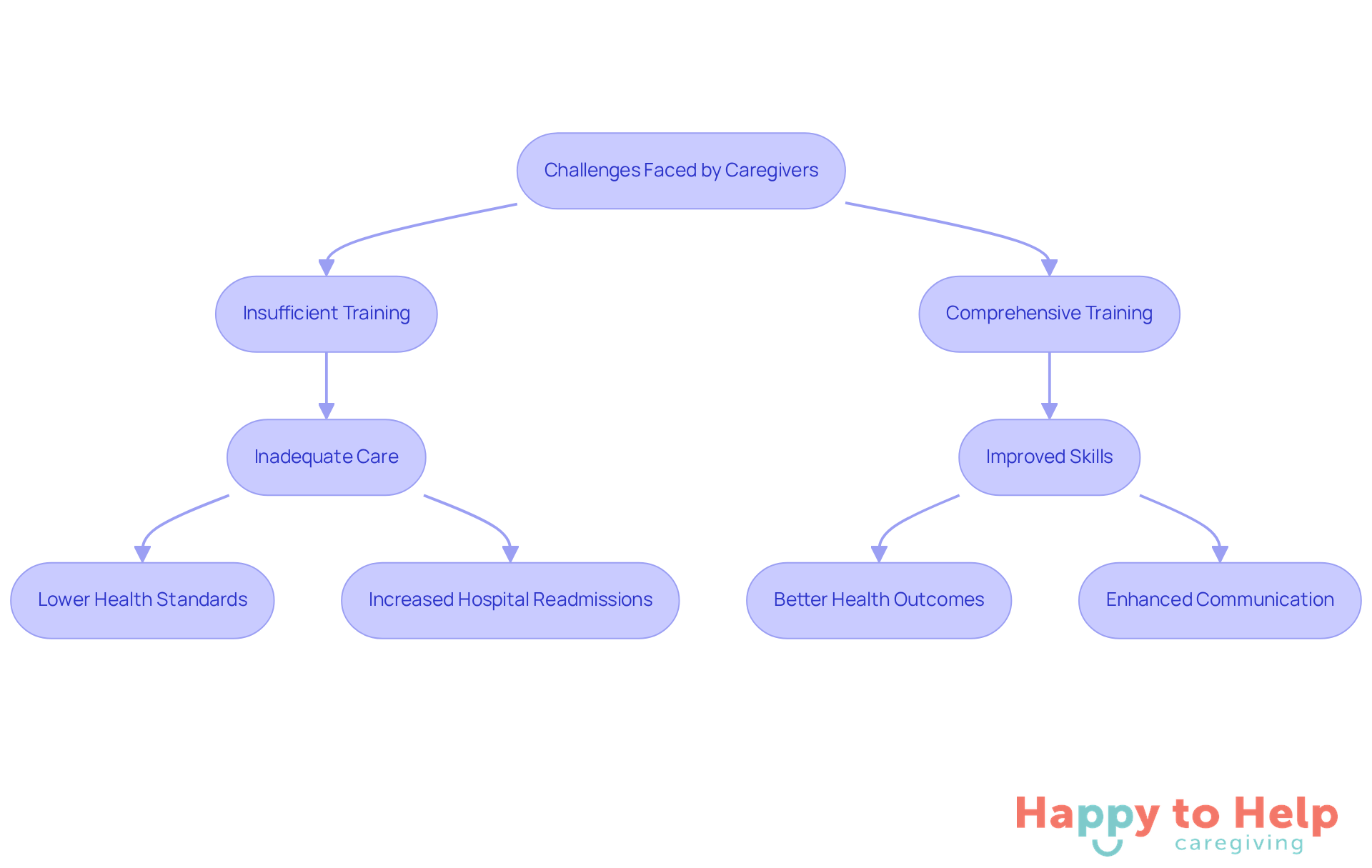
Skilled caregivers face significant challenges in providing quality assistance in environments that demand 24-hour care. Without rigorous training, they may struggle to address both the physical and emotional needs of elderly individuals. This lack of preparation can lead to inadequate care, leaving clients feeling unsupported and vulnerable.
The implications of insufficient training are profound. Studies indicate that poorly trained caregivers not only lower the standard of assistance but also negatively impact the overall welfare of seniors. For instance, they may miss critical health indicators or mishandle medications, resulting in poorer health outcomes and increased hospital readmissions.
To combat these issues, it is essential for caregivers to undergo comprehensive training that covers both health conditions and emotional support. Skilled professionals are better equipped to observe health indicators and manage medications effectively. This training leads to enhanced health outcomes and fewer hospital visits.
Moreover, effective communication skills developed through training foster trust and understanding. This creates a nurturing environment that meets the unique needs of each individual. As caregiving trainers emphasize, the emotional support provided by caregivers is crucial; it alleviates feelings of loneliness and isolation, enriching the lives of those they care for.
Incorporating compassionate support in caregiving is not just beneficial - it's essential for promoting a sense of security and comfort in the home. By prioritizing training and emotional support, caregivers can significantly improve the quality of life for seniors.
Moving Forward with 24-Hour Care
The challenges of providing adequate care for seniors can be daunting. Many families struggle with ensuring their loved ones receive the support they need, which can lead to feelings of helplessness and concern. This is where 24-hour care comes into play, offering a comprehensive solution that addresses these critical issues.
24-hour care not only promotes independence but also meets essential emotional, medical, and safety needs. By implementing personalized care plans tailored to individual health requirements, families can alleviate feelings of loneliness and ensure their loved ones thrive in a familiar environment. Moreover, trained caregivers play a vital role in this process, delivering compassionate support that fosters a nurturing atmosphere.
Families must recognize the profound impact that continuous care can have on their elderly relatives. Embracing 24-hour caregiving not only enhances the lives of seniors but also eases the emotional burden on families, allowing them to focus on their own well-being. By prioritizing personalized and compassionate care, families can ensure their loved ones receive the support they deserve, fostering a sense of security and connection that enriches their lives.
https://iframe.tely.ai/cta/eyJhcnRpY2xlX2lkIjogIjY5MjEwYWE3YTE0NTEzNzg0OGJmYTRjYSIsICJjb21wYW55X2lkIjogIjY4ZWU1ZGNhNzMxNzYyNTU3ZjNjOTVjMSIsICJpbmRleCI6IG51bGwsICJ0eXBlIjogImFydGljbGUifQ==Frequently Asked Questions
What is the main problem that older adults face regarding their independence at home?
Many older adults struggle with maintaining their independence and quality of life due to a lack of tailored support at home, which can lead to feelings of isolation and increased risks of falls and injuries.
How does Happy to Help Caregiving address the needs of older adults?
Happy to Help Caregiving offers specialized 24-hour care designed for older adults, ensuring they receive ongoing support in the comfort of their own homes, promoting independence and enhancing their overall quality of life.
What kind of training do support providers receive at Happy to Help Caregiving?
Support providers are thoroughly trained to develop personalized strategies that address both the medical and emotional needs of elderly individuals, creating an environment where each client feels valued and understood.
What are the benefits of in-home assistance for older adults?
Statistics indicate that older adults receiving in-home assistance experience improved mental well-being, a greater sense of security, and a reduced likelihood of falls and injuries due to caregiver support with mobility and daily living activities.
How does continuous 24-hour care help alleviate loneliness in seniors?
Continuous 24-hour care provides essential emotional support by engaging clients in meaningful conversations and enjoyable activities, fostering connections that enhance mental health and combat feelings of isolation.
What impact does social interaction have on the well-being of older adults?
Research shows that social interaction is linked to better well-being for older adults, with studies indicating that a significant percentage report feeling isolated, which can lead to serious medical problems.
What strategies can caregivers implement to combat loneliness in seniors?
Caregivers can schedule regular social activities for clients and encourage participation in community events to enhance social engagement and improve the quality of life for older adults.
What are the safety challenges faced by older adults, particularly regarding falls?
Falls are the leading cause of both fatal and non-fatal injuries among seniors, with millions experiencing falls each year, leading to significant healthcare costs and highlighting the need for effective safety measures.
How does 24-hour care contribute to the safety of older adults?
24-hour care provides continuous monitoring, allowing caregivers to assist with mobility, manage medications, and respond swiftly to emergencies, significantly reducing the risk of falls and severe injuries.
What role does technology play in enhancing fall prevention strategies for seniors?
Advanced technologies, such as camera AI systems, enhance fall prevention strategies by providing real-time monitoring and alerts, significantly reducing fall incidents and creating safer environments for older adults.
List of Sources
- Happy to Help Caregiving: Personalized 24-Hour Care for Seniors
- Caring Senior Service announces revolutionary new AI caregiving assistant (https://prnewswire.com/news-releases/caring-senior-service-announces-revolutionary-new-ai-caregiving-assistant-302365774.html)
- Why Senior Home Care is More Important Than Ever (https://homeinstead.com/home-care/usa/la/carencro/347/news-and-media/senior-home-care-is-more-important-than-ever)
- News Releases (https://hcaoa.org/news-releases.html)
- Caring Senior Service Banks Growth Goals On New House-Made Technology (https://homehealthcarenews.com/2025/10/caring-senior-service-banks-growth-goals-on-new-house-made-technology)
- Emotional Support: Alleviating Loneliness Through Continuous Care
- Social connection linked to improved health and reduced risk of early death (https://who.int/news/item/30-06-2025-social-connection-linked-to-improved-heath-and-reduced-risk-of-early-death)
- 1 in 3 older adults still experience loneliness and isolation (https://michiganmedicine.org/health-lab/1-3-older-adults-still-experience-loneliness-and-isolation)
- Uncovering the impact of loneliness in ageing populations: a comprehensive scoping review - PMC (https://pmc.ncbi.nlm.nih.gov/articles/PMC11984289)
- Social Isolation and Loneliness in Older Adults (https://jamanetwork.com/journals/jama/fullarticle/2819153)
- Loneliness and isolation: Back to pre-pandemic levels, but still high, for older adults (https://ihpi.umich.edu/news-events/news/loneliness-and-isolation-back-pre-pandemic-levels-still-high-older-adults)
- Enhanced Safety: Continuous Monitoring to Prevent Emergencies
- Get the Facts on Falls Prevention (https://ncoa.org/article/get-the-facts-on-falls-prevention)
- Top 8 Benefits of 24/7 Monitoring Systems for Senior Care - EyeWatch LIVE® (https://eyewatchlive.com/news/top-8-benefits-of-24-7-monitoring-systems-for-senior-care)
- InnovAge PACE provides 24/7 nursing support to keep Pueblo seniors safe at home (https://fox21news.com/living-local/innovage-pace-provides-24-7-nursing-support-to-keep-pueblo-seniors-safe-at-home)
- 24-Hour Home Care Town of Tioga FL - How 24-Hour Home Care Enhances Safety for Seniors Living Alone (https://touchinghearts.com/gainesville/blog/how-24-hour-home-care-enhances-safety-for-seniors-living-alone)
- As falling deaths rise for older adults, how home safety can make a difference (https://denver7.com/news/local-news/as-falling-deaths-rise-for-older-adults-how-home-safety-can-make-a-difference)
- Flexible Scheduling: Tailoring Care to Individual Needs
- Exploring the Rising Demand for Flexible Work in Healthcare (https://healthecareers.com/career-resources/nurse-career/rising-demand-for-flexible-work-in-healthcare)
- Senior Living Operators Embrace More Flexible Scheduling Practices to Improve Staffing (https://seniorhousingnews.com/2024/08/06/senior-living-operators-embrace-more-flexible-scheduling-practices-to-improve-staffing)
- The need for caregiving benefits may have reached a fever pitch (https://hrdive.com/news/sandwich-generation-needs-caregiving-benefits/802864)
- The Critical Role of Flexibility in Home Care Scheduling for Family Peace of Mind (https://relevar.com/the-critical-role-of-flexibility-in-home-care-scheduling-for-family-peace-of-mind)
- Embracing Flexible Scheduling Models in Aging Services: A Path Toward Workforce Stability (https://leadingage.org/embracing-flexible-scheduling-models-in-aging-services-a-path-toward-workforce-stability)
- Companionship: Engaging Seniors in Meaningful Activities
- How Companionship in Home Care Boosts Seniors' Mental Health - Care With Love (https://carewithlove.com/how-companionship-in-home-care-boosts-seniors-mental-health)
- The Amazing Benefits of Companion Care for Seniors (https://homeinstead.com/home-care/usa/az/phoenix/808/news-and-media/the-amazing-benefits-of-companion-care-for-seniors)
- The Incredible Benefits of Home Care, in 7 Amazing Stats - Companions For Seniors (https://companionsforseniors.com/2019/08/benefits-home-care-amazing-stats-trends-reports)
- Why Home Care Providers Are Increasingly Offering Companion Care Services for Seniors | Aaniie, formerly Smartcare Software (https://aaniie.com/news/why-home-care-providers-are-increasingly-offering-companion-care-services-for-seniors)
- The Power of Companionship for Seniors: A Key Ingredient to Quality Aging (https://homecarepgh.com/blog-posts/companionship-in-old-age)
- Medical Support: Access to Healthcare Professionals Around the Clock
- Warning From Older Adults: Care for Aging in America Needs Urgent Rethinking (https://johnahartford.org/newsroom/view/warning-from-older-adults-care-for-aging-in-america-needs-urgent-rethinking)
- Senior living: Navigating wellness for seniors with 24/7 virtual urgent care, exam kit (https://dailybreeze.com/2025/02/03/senior-living-navigating-wellness-for-seniors-with-24-7-virtual-urgent-care-exam-kit)
- How 24-Hour Home Care Supports Aging in Place with Confidence (https://ahelpinghandga.com/how-24-hour-home-care-supports-aging-in-place-with-confidence)
- 24-Hour Home Care La Jolla CA - 24-Hour Home Care Can Help With Senior Medical Emergencies (https://canaanhomecare.com/24-hour-home-care-can-help-with-senior-medical-emergencies)
- WHO calls for urgent transformation of care and support systems for older people (https://who.int/news/item/01-10-2024-who-calls-for-urgent-transformation-of-care-and-support-systems-for-older-people)
- Peace of Mind: Family Assurance with 24-Hour Care
- 10 Must-Know U.S. Home Care Industry Stats for 2025 - North American Community Hub (https://nchstats.com/us-home-care-industry-stats)
- Young entrepreneur provides peace of mind in home care (https://nuggetnews.com/story/2025/11/19/business/young-entrepreneur-provides-peace-of-mind-in-home-care/38427.html)
- The Incredible Benefits of Home Care, in 7 Amazing Stats - Companions For Seniors (https://companionsforseniors.com/2019/08/benefits-home-care-amazing-stats-trends-reports)
- 52 Eye-Opening Home Health Statistics: Insights for 2025 (https://boosthomehealth.com/home-health-statistics)
- Local Families Turn to New Senior Care Resources for Support and Peace of Mind (https://newsitem.com/local-families-turn-to-new-senior-care-resources-for-support-and-peace-of-mind/article\_9edff34c-8678-4863-b206-354bcf2d8d60.html)
- Technology Integration: Keeping Families Connected and Informed
- How enabling technology is transforming home-based care | UnitedHealthcare Community & State (https://uhccommunityandstate.com/content/blog-post/blogs/how-enabling-technology-is-transforming-home-based-care)
- How Technology Can Ease the Caregiver Burden (https://connectamerica.com/insights/how-technology-can-ease-the-caregiver-burden)
- Embracing Technology for Better Senior Communication (https://monarchseniorliving.com/blog/technology-for-senior-communication)
- Tech Tools for Seniors to Stay Connected | Home Matters (https://homematters.com/blog/tech-tools-for-seniors-to-stay-connected)
- Virtual Hybrid Home Care Model Poised to Open 50% More Market Share for Private Duty Home Care Agencies - Electronic Caregiver (https://electroniccaregiver.com/virtual-hybrid-home-care-model)
- Personalized Care Plans: Tailoring Support to Individual Health Needs
- Novel Care Model May Improve Outcomes for Older Adults With Multiple Chronic Conditions (https://consultqd.clevelandclinic.org/novel-care-model-may-improve-outcomes-for-older-adults-with-multiple-chronic-conditions)
- Boosting Confidence Through Personal Care Plans for Seniors (https://seniorlifestyle.com/resources/blog/personalized-care-plans-for-seniors)
- Personalized Care Plans: Advantages for Seniors (https://seniorhelpers.com/nc/triangle-area/resources/blogs/2024-10-03)
- Customized Care at Home: The Benefits of Personalized Care Plans - VNA Health Group (https://vnahg.org/customized-care-at-home-the-benefits-of-personalized-care-plans)
- Importance of Personalized Senior Home Care in Burlington NC (https://wisdomseniorcare.com/the-importance-of-personalized-care-plans-for-seniors)
- Trained Caregivers: Ensuring Quality and Compassionate Support
- HHS Invests in Training Clinicians, Caregivers to Support Older Adults (https://jamanetwork.com/journals/jama/fullarticle/2821716)
- Medicare 2025 Initiatives Driving Change in Caregiver Training (https://learn2care.us/blog/how-medicare-2025-initiatives-will-shape-caregiver-training)
- Sophisticated Caregiver Training Remains An Underutilized Retention, ROI Tool (https://homehealthcarenews.com/2024/08/sophisticated-caregiver-training-remains-an-underutilized-retention-roi-tool)
- US News & World Report Highlights CCA's Caregiver Training (https://advancecaregivers.org/report-us-news-world-report-highlights-ccas-caregiver-training)
- The Importance of Caregiver Training: Enhancing Quality of Care | Caretap | (https://caretap.net/blog/importance-caregiver-training-enhancing-quality-care)