

For families in our service areas
For families in our service areas, this guide explains home care and how non-medical in-home caregiving can support care planning in East Idaho, Treasure Valley & Magic Valley, Northern Wasatch, North Central West Virginia, and Northeast Ohio.
The Importance of 24 Hour Home Care
The landscape of caregiving is evolving, and with it comes the growing recognition of the challenges faced by family caregivers. Many struggle with feelings of isolation and stress, which can take a toll on their emotional well-being. This is where the critical role of 24-hour home care comes into play.
This comprehensive approach not only addresses the physical needs of those receiving care but also significantly enhances emotional well-being. Families often grapple with the question: how can they ensure their loved ones receive the best possible support while also taking care of their own health and happiness?
This article explores ten key benefits of 24-hour home care, revealing how round-the-clock assistance can transform the caregiving experience for families. By providing practical solutions, we aim to empower caregivers to navigate these complexities with confidence.
Companionship Care from Happy to Help Caregiving
Companionship support is a critical issue for seniors and individuals with special needs. Loneliness can significantly diminish their quality of life, leading to feelings of isolation and depression.
Caregivers play a vital role in addressing this problem. By involving individuals in meaningful discussions, activities, and hobbies, caregivers nurture a sense of belonging and provide emotional encouragement. This type of care not only combats loneliness but also inspires individuals to participate in social activities, which can enhance their mental health and overall well-being.
To effectively support those in their care, caregivers can implement the following strategies:
- Engage in regular conversations to foster connection.
- Encourage participation in group activities to promote social interaction.
- Introduce hobbies that align with individual interests to enhance engagement.
By focusing on these actionable solutions, caregivers can make a significant difference in the lives of seniors and individuals with special needs.
Post-Hospital Recovery Support
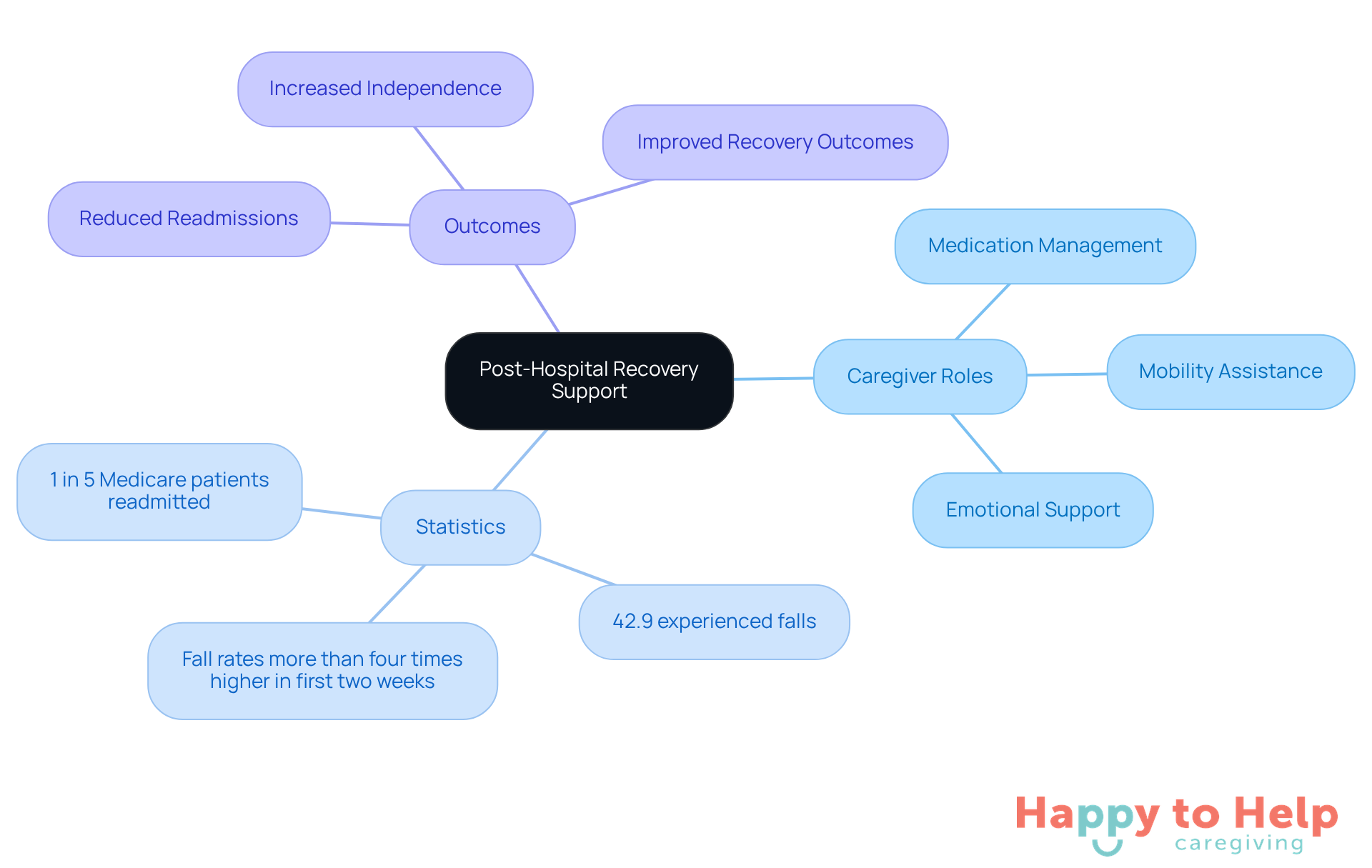
Post-hospital recovery assistance presents significant challenges for individuals recently discharged from medical facilities. Caregivers play a crucial role in medication management, ensuring adherence to prescribed regimens. This is vital, as medication errors are a leading cause of preventable readmissions. In fact, one in five Medicare patients is readmitted to the hospital within 30 days, often due to avoidable issues.
Moreover, caregivers assist with mobility and daily living tasks, helping individuals navigate the complexities of recovery. This comprehensive support not only reduces the risk of complications - fall rates are more than four times higher in the first two weeks after discharge compared to three months later - but also fosters a sense of independence. Clients can regain their confidence and autonomy more swiftly.
Research shows that effective home health services significantly lower hospital readmissions and improve recovery outcomes. For instance, 42.9% of patients experienced at least one fall within six months after discharge. By providing emotional support and practical aid, caregivers establish a structured environment that promotes healing and well-being during this critical transition.
With a solid plan, a supportive home environment, and guidance from knowledgeable professionals, seniors can recover safely and regain confidence in their daily lives.
Respite Care for Family Caregivers
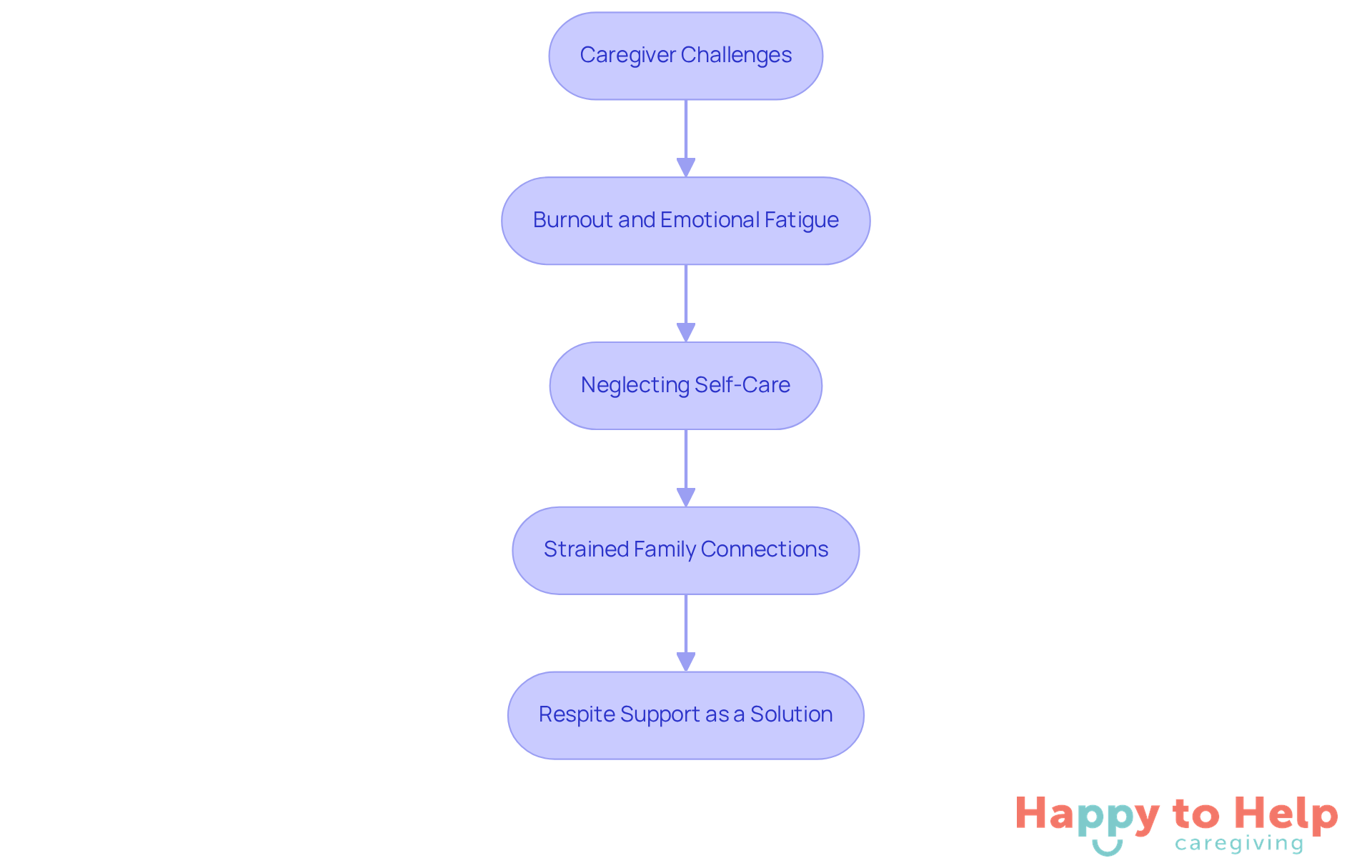
Problem: Caregivers often face significant challenges, including burnout and emotional fatigue. The emotional burden of providing care can lead to feelings of exhaustion and despair, making it crucial for caregivers to recognize the importance of self-care.
Agitate: When caregivers neglect their own health and well-being, it can result in detrimental effects not only on themselves but also on their loved ones. This stress can strain family connections, leaving caregivers feeling overwhelmed and less effective in their roles.
Solution: Respite support offers vital relief by organizing temporary assistance for caregivers. Research shows that those who utilize respite services experience substantial improvements in their physical and mental well-being. This rejuvenation allows them to return to their caregiving roles revitalized and better equipped to provide support.
Incorporating respite support into a caregiving routine is essential for long-term sustainability. It not only reduces stress but also fosters stronger family bonds, as caregivers return feeling more engaged and energized. Studies indicate that individuals who take breaks through respite services report an enhanced quality of life for both themselves and their loved ones.
Ultimately, respite services empower caregivers to maintain their capacity for empathetic and effective assistance, ensuring that both they and their cherished ones thrive in their respective roles.
Palliative Support Care for Comfort
Palliative assistance addresses a significant problem: individuals with serious illnesses often experience discomfort and emotional distress. Caregivers face the challenge of managing these symptoms while providing emotional support, which can be overwhelming. This situation not only affects the quality of life for patients but also places a heavy burden on their families.
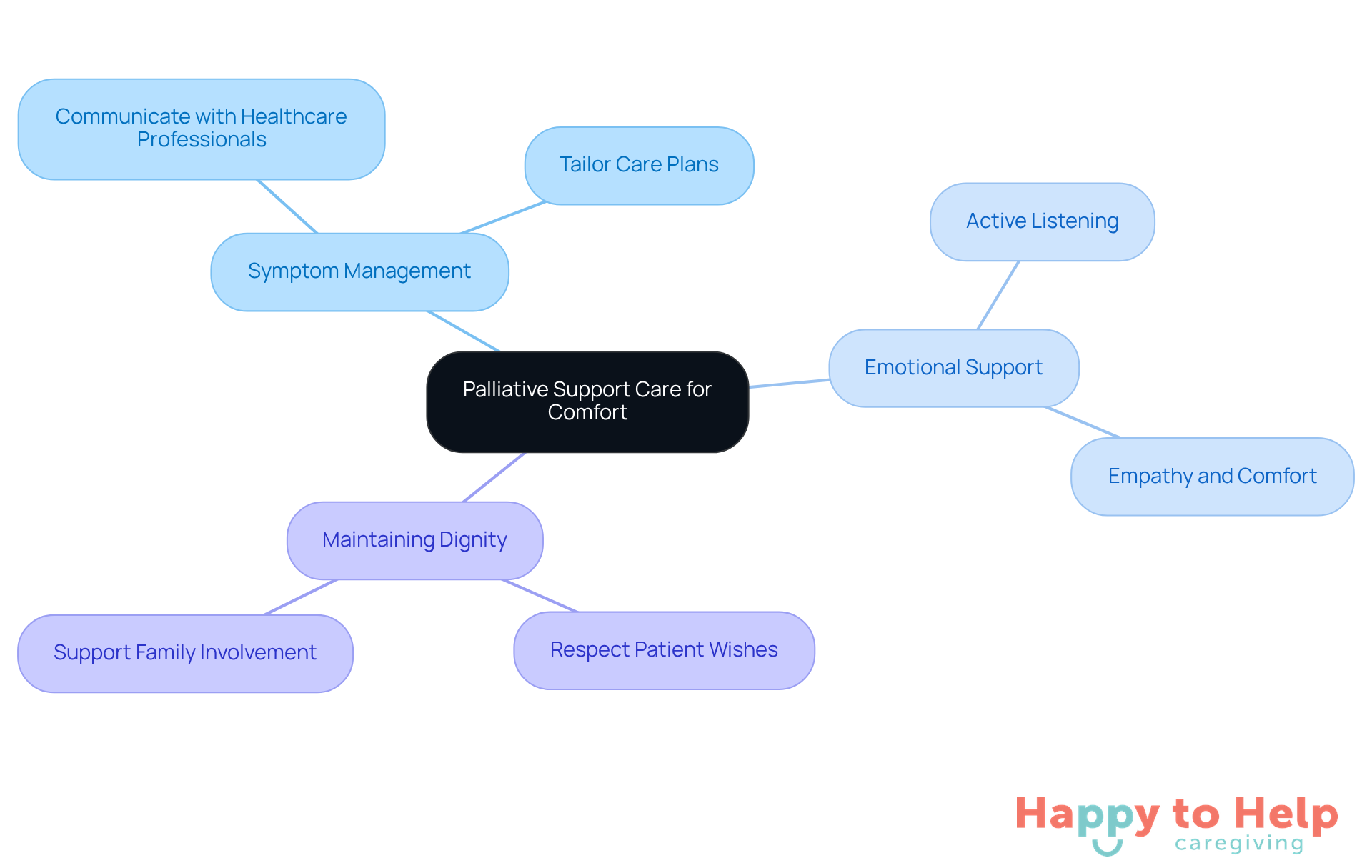
To alleviate these challenges, caregivers can adopt a holistic approach. This involves focusing on:
- Symptom management
- Offering emotional support
- Ensuring that individuals maintain their dignity throughout their care journey
By prioritizing these aspects, caregivers can enhance the quality of life for patients and provide peace of mind to their families.
Incorporating practical strategies can make a significant difference. For instance, caregivers should:
- Regularly communicate with healthcare professionals to tailor care plans that address specific needs
- Provide emotional support through active listening and empathy to foster a sense of comfort for both patients and their families
By implementing these solutions, caregivers can navigate the complexities of palliative care more effectively.
24/7 Availability of Care Services
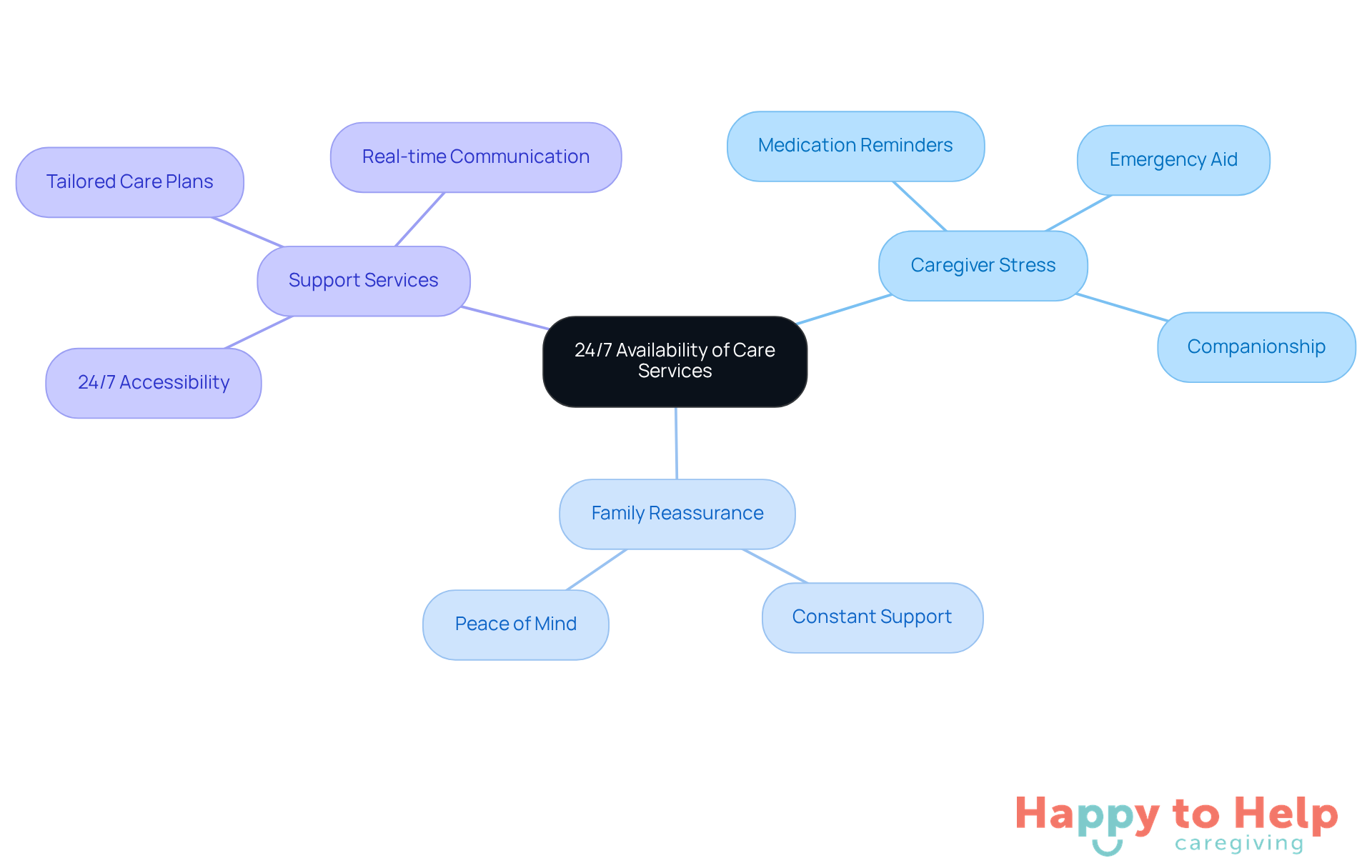
Caregivers often face the challenge of ensuring their loved ones receive constant support, which can lead to significant stress and anxiety. Families worry about their loved ones being alone, especially when it comes to medication reminders, emergency aid, or simply companionship. This concern can weigh heavily on caregivers, impacting their well-being and peace of mind.
The solution lies in the 24/7 accessibility of support services. This guarantees that help is always available in a 24 hour home, giving families the reassurance that their loved ones are never alone. Whether it’s a quick call for assistance or a friendly voice to talk to, knowing that support is just a call away can significantly alleviate caregiver stress. By utilizing these services, families can ensure their loved ones receive the care and companionship they need, allowing caregivers to focus on their own well-being.
Flexible Scheduling Options
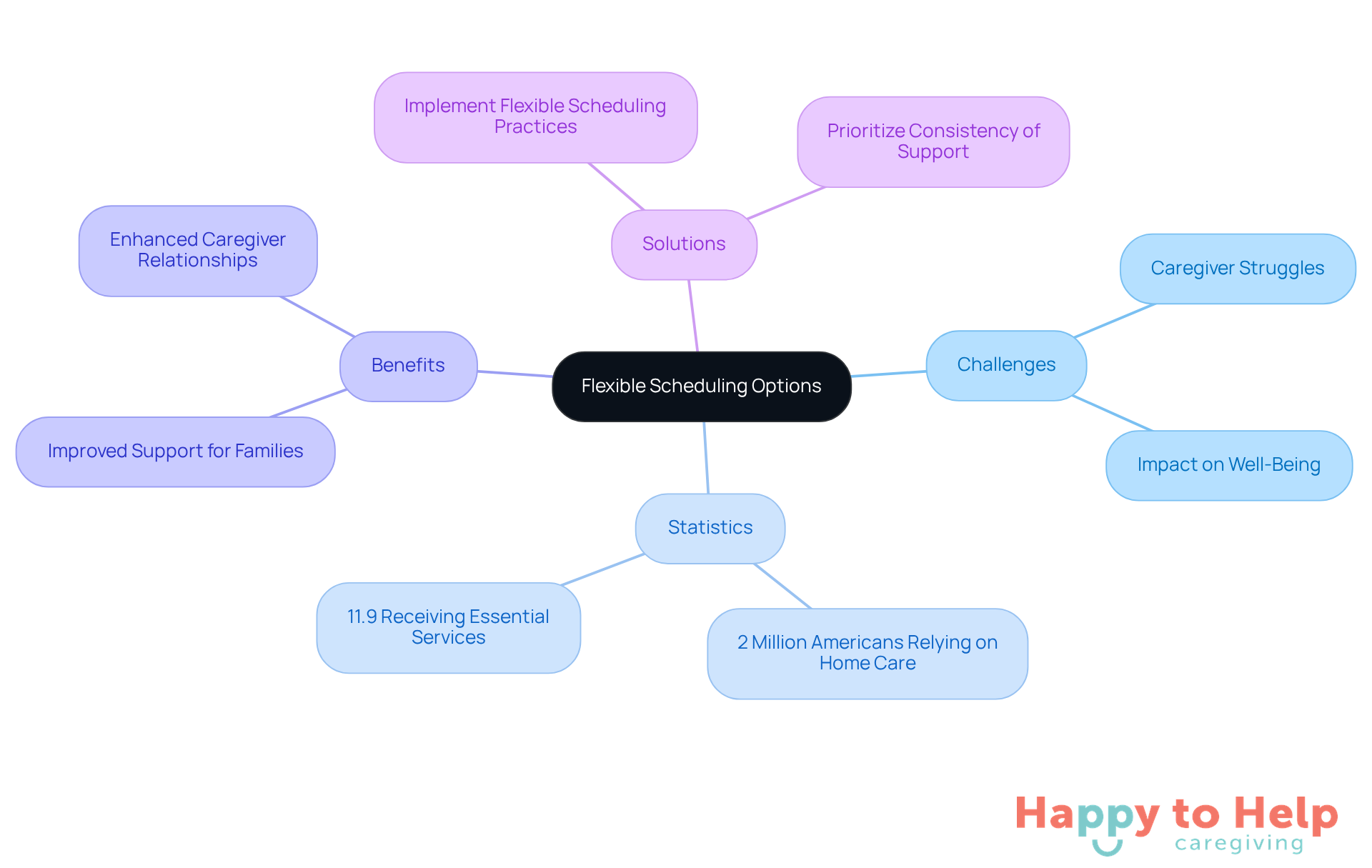
Flexible scheduling options present a significant challenge in providing personalized care that meets the unique lifestyles of individuals. Many caregivers struggle to adjust their hours to accommodate appointments, family visits, or personal preferences. This lack of adaptability can hinder the support individuals receive, impacting their well-being and sense of autonomy.
Research indicates that over 2 million Americans aged 65 and older rely on home-based primary care, yet only 11.9% of older adults receiving home-based primary care (HBPC) are obtaining essential services at home. This statistic underscores the critical need for adaptable support options to address the evolving requirements of clients. Families caring for loved ones with conditions like dementia particularly benefit from reliable and consistent support, which flexible scheduling can provide.
To tackle these challenges, agencies can implement flexible scheduling practices that allow caregivers to modify their availability. This approach not only ensures consistency of support but also reduces interruptions, fostering trust between families and caregivers. By prioritizing flexible scheduling, agencies can enhance customer satisfaction and strengthen caregiver-patient relationships, ultimately leading to better outcomes and a more fulfilling caregiving experience.
Promoting Independence for Clients
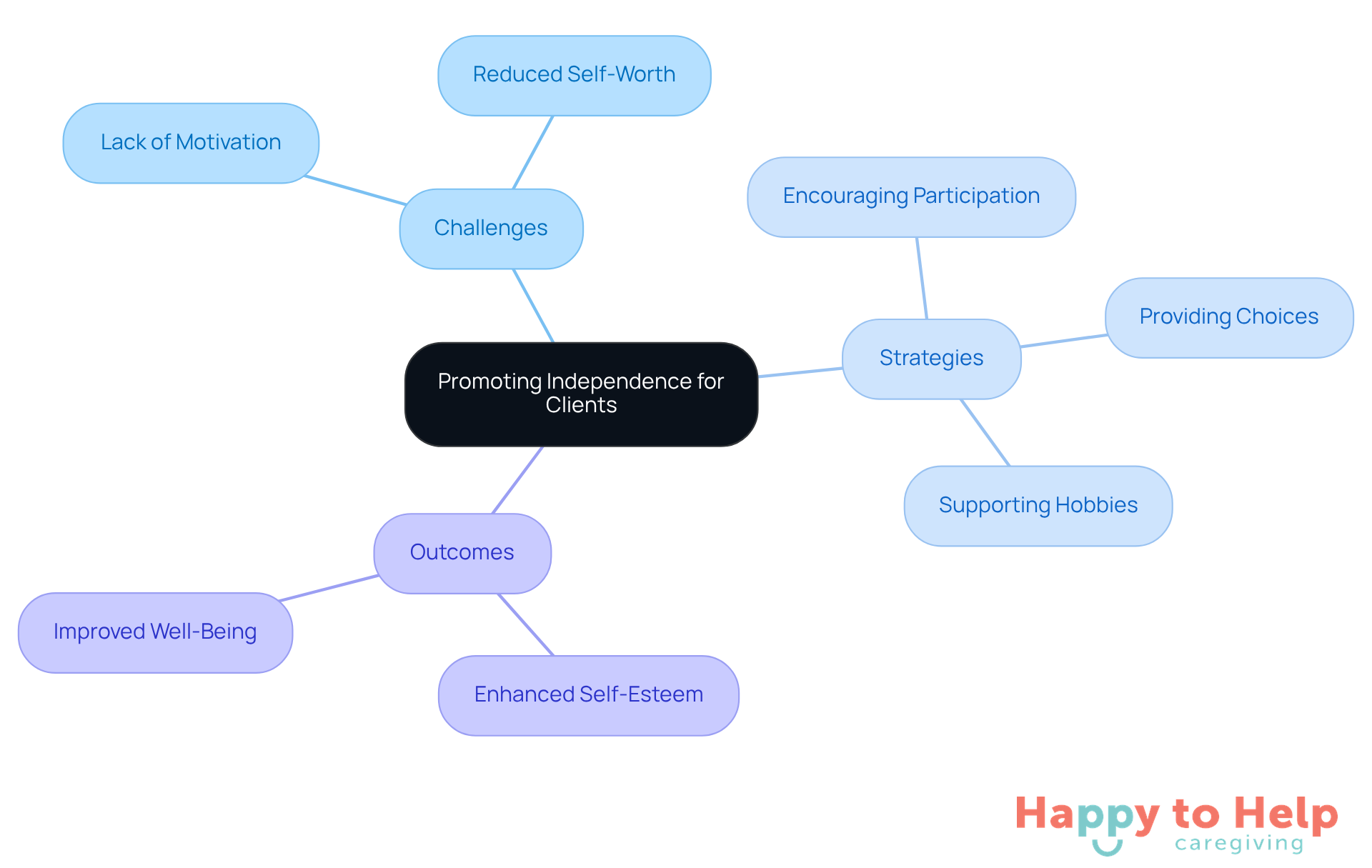
Promoting independence in in-home caregiving presents a significant challenge. Caregivers often struggle to motivate individuals to engage in daily activities, make choices about their care, and participate in hobbies they enjoy. This lack of engagement can diminish their quality of life, leading to feelings of helplessness and reduced self-worth.
To address this issue, caregivers can implement practical strategies that empower individuals. Encouraging participation in daily tasks not only enhances their sense of purpose but also fosters self-esteem. Caregivers can facilitate this by providing choices in care routines and supporting hobbies that bring joy.
By focusing on these empowering practices, caregivers can significantly improve the overall well-being of those they assist. This approach not only enriches the lives of individuals but also reinforces the caregiver's role as a vital support system.
Emotional Support and Engagement
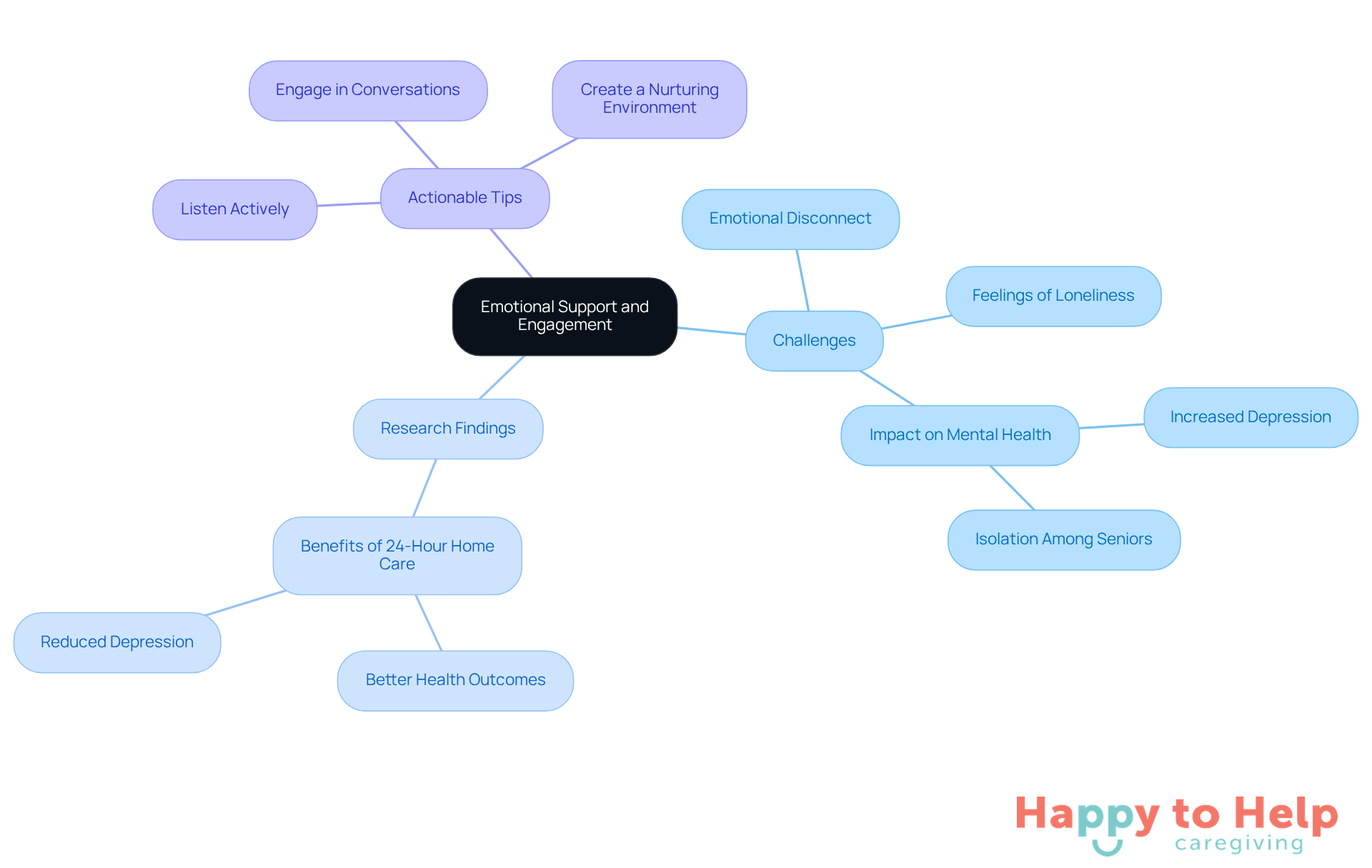
Emotional support and engagement present significant challenges in effective caregiving. Caregivers often struggle to provide not just companionship but also the active listening that individuals need. This emotional disconnect can lead to feelings of loneliness and isolation, which are detrimental to mental health, particularly among seniors.
Research shows that older adults receiving both family and professional 24 hour home care experience better health outcomes and reduced depression compared to those who are cared for solely by family members. This highlights the importance of emotional connection in caregiving. When caregivers engage in meaningful conversations, they foster a sense of value and understanding, crucial for enhancing mental health and overall well-being.
To address these challenges, caregivers can prioritize emotional engagement. Here are some actionable tips:
- Listen Actively: Make time to hear individuals' concerns without distractions.
- Engage in Conversations: Encourage discussions about their interests and feelings.
- Create a Nurturing Environment: Foster emotional stability and resilience through supportive interactions.
By implementing these strategies, caregivers can significantly alleviate feelings of loneliness and isolation, leading to improved mental health for elderly clients. Ultimately, prioritizing emotional support not only enhances the quality of life for those they serve but also contributes to a more fulfilling caregiving experience.
Technology Integration for Enhanced Communication
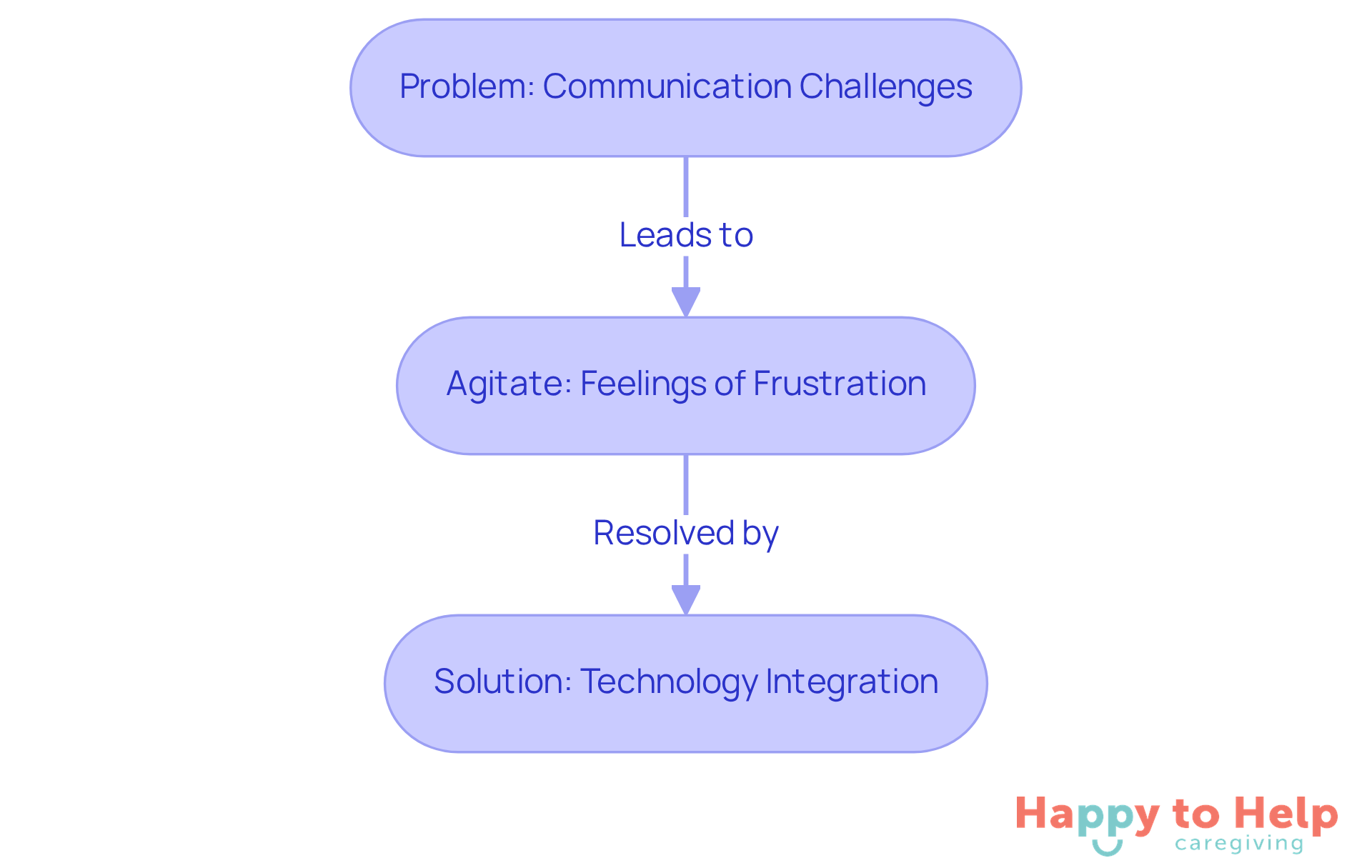
Problem: Caregivers often face significant communication challenges when providing assistance to patients. This can lead to misunderstandings and a lack of engagement from families, which is crucial for effective caregiving.
Agitate: When families are not kept in the loop, it can create feelings of frustration and helplessness. They may feel disconnected from their loved ones' care, which can impact the overall support system that is vital for patient well-being.
Solution: Technology integration in caregiving offers a practical solution to these challenges. Tools like mobile applications and digital communication platforms enable caregivers to share updates with families, monitor patient progress, and coordinate assistance more efficiently. This improved communication promotes transparency and ensures that families are actively engaged in their loved ones' support.
Personalized Care Plans for Unique Needs
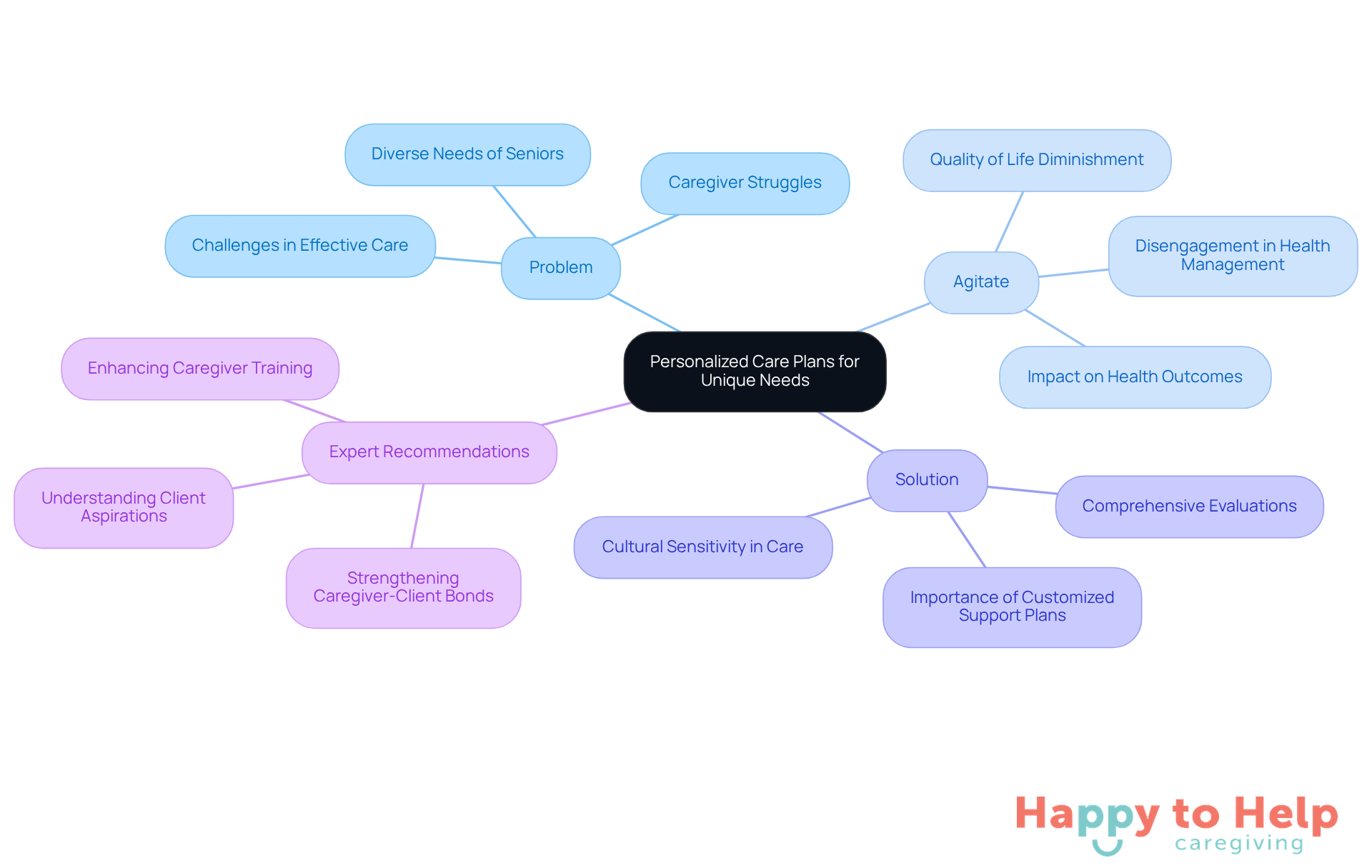
Problem: Providing effective in-home assistance for seniors can be challenging when support plans are not customized to meet individual needs. Many caregivers struggle to address the diverse physical, emotional, and social requirements of their clients, leading to less effective care.
Agitate: This lack of tailored support can significantly impact seniors' health outcomes and overall satisfaction. Research indicates that older individuals receiving conventional assistance often feel disengaged in their health management. In fact, those receiving customized support are nearly 2.5 times more likely to feel involved in decisions about their medications. Without personalized care, seniors may miss out on opportunities to actively participate in their wellness journey, which can diminish their quality of life.
Customized support plans are essential for enhancing assistance in a 24 hour home. By conducting comprehensive evaluations of each individual's needs, caregivers in a 24 hour home can tailor their approach to align with personal preferences and situations. This not only improves health outcomes but also fosters a sense of agency and empowerment among seniors. Experts stress the importance of understanding cultural values and personal aspirations when developing these individualized care plans. This understanding strengthens the bond between caregivers and clients, resulting in a more compassionate and effective caregiving experience.
In summary, implementing customized support plans can transform the caregiving experience, leading to better health management and increased client satisfaction.
Your Path Forward
The challenges faced by family caregivers can be overwhelming, often leading to stress and burnout. Many caregivers struggle with the demands of providing care while trying to maintain their own well-being. This situation can result in a decline in both physical and emotional health, making it crucial to find effective solutions.
One effective solution is 24-hour home care, which offers constant support and tailored assistance. This service alleviates the burdens caregivers face, allowing them to focus on their own needs while ensuring their loved ones receive the care they deserve. Key benefits include:
- Companionship care
- Post-hospital recovery support
- Respite services
All of these empower caregivers through flexible scheduling and personalized care plans.
Moreover, the integration of technology enhances communication, keeping families informed and connected. This connection is vital for creating a robust support system. By embracing 24-hour home care services, families can significantly improve the quality of life for both caregivers and those receiving care.
In conclusion, advocating for the implementation of such support systems is essential for fostering a compassionate and effective caregiving environment. By prioritizing these services, families can navigate the complexities of caregiving with greater ease, ensuring that both caregivers and their loved ones thrive together.
https://iframe.tely.ai/cta/eyJhcnRpY2xlX2lkIjogIjY5M2Y3ZTJkMTY0ZGY5ZmVkZWJjMzFkMyIsICJjb21wYW55X2lkIjogIjY4ZWU1ZGNhNzMxNzYyNTU3ZjNjOTVjMSIsICJpbmRleCI6IG51bGwsICJ0eXBlIjogImFydGljbGUifQ==Frequently Asked Questions
What is companionship care and why is it important?
Companionship care is essential for seniors and individuals with special needs as it addresses loneliness, which can lead to isolation and depression. Caregivers provide emotional support and encourage social interaction, enhancing the overall quality of life.
How can caregivers foster companionship for those they care for?
Caregivers can foster companionship by engaging in regular conversations, encouraging participation in group activities, and introducing hobbies that align with individual interests.
What challenges do individuals face during post-hospital recovery?
Individuals recently discharged from medical facilities face challenges such as medication management, mobility issues, and daily living tasks, which can complicate their recovery process.
How do caregivers help during post-hospital recovery?
Caregivers assist with medication management to prevent errors, help with mobility and daily tasks, and provide emotional support, which fosters independence and confidence in recovering individuals.
What are the statistics related to hospital readmissions?
One in five Medicare patients is readmitted to the hospital within 30 days, often due to avoidable issues. Additionally, fall rates are more than four times higher in the first two weeks after discharge compared to three months later.
Why is respite care important for family caregivers?
Respite care is crucial for family caregivers as it provides temporary relief, helping to prevent burnout and emotional fatigue. It allows caregivers to recharge, which improves their well-being and effectiveness in their roles.
What benefits do caregivers experience from utilizing respite services?
Caregivers who use respite services report significant improvements in their physical and mental well-being, allowing them to return to their caregiving roles revitalized and better equipped to provide support.
How does respite care impact family dynamics?
Respite care fosters stronger family bonds as caregivers return feeling more engaged and energized, ultimately enhancing the quality of life for both caregivers and their loved ones.
List of Sources
- Companionship Care from Happy to Help Caregiving
- 15 Benefits of Senior Companion Care Services (https://heartsfordementia.com/news/15-benefits-of-senior-companion-care-services)
- Benefits of Companion Care for Seniors in California - 2025 (https://findinghomecare.net/benefits-of-companion-care-for-seniors)
- Why Home Care Providers Are Increasingly Offering Companion Care Services for Seniors | Aaniie, formerly Smartcare Software (https://aaniie.com/news/why-home-care-providers-are-increasingly-offering-companion-care-services-for-seniors)
- How Companion Care Enhances Quality of Life for Seniors (https://assistinghands.com/70/illinois/lombard/blog/how-companion-care-enhances-quality-of-life-for-seniors)
- 10 Benefits of Elderly Companion Care for Your Loved Ones - Happy To Help (https://happytohelpcaregiving.com/10-benefits-of-elderly-companion-care-for-your-loved-ones)
- Post-Hospital Recovery Support
- A Senior's Guide to Safe Recovery at Home Post-Hospital Stay (https://amadaseniorcare.com/2025/12/a-seniors-guide-to-safe-recovery-at-home-post-hospital-stay)
- Post Hospital Care at Home Prevents Readmissions (https://genuineglobalcare.com/post-hospital-care-at-home-prevents-readmissions)
- Post Hospital Care: Why it is Critical for Recovery ? 2025 (https://safehandshhc.com/2025/01/10/post-hospital-care)
- After the Hospital: How Home Health Care Supports Recovery at Home - Advanced Nursing & Home Care (https://advancednursing.care/blog/after-the-hospital-how-home-health-care-supports-recovery-at-home)
- Post-Hospital Care for Seniors Supports Healing (https://picseniorcare.com/how-post-hospital-care-for-seniors-makes-recovery-easier)
- Respite Care for Family Caregivers
- Caregivers and the Importance of Respite Care (https://benedictineliving.org/resources/news/caregivers-and-the-importance-of-respite-care)
- Respite Care for Caregivers: Support and Relief for Families (https://seniorhelpers.com/ca/riverside/resources/blogs/2025-12-12)
- Improving Support for Family Caregivers (https://nationalacademies.org/news/improving-support-for-family-caregivers)
- Respite Care Is Not a Luxury. It’s a Lifeline for Family Caregivers - Fifty Plus Advocate (https://fiftyplusadvocate.com/2025/11/04/respite-care-is-not-a-luxury-its-a-lifeline-for-family-caregivers)
- Caring For the Caregiver: Preventing Burnout - AMHC (https://amhc.org/news/caregiver)
- Palliative Support Care for Comfort
- ‘A good death’: How compassionate care helps people navigate the end of life (https://news.yale.edu/2025/10/13/good-death-how-compassionate-care-helps-people-navigate-end-life)
- World Hospice & Palliative Care Day 2025: A Family Guide to Early Support and Real Access | Empowered Endings - Palliative & End of Life Care (https://empoweredendings.com/world-hospice-palliative-care-day-2025)
- Home-Based Care Providers Reap Benefits Of Palliative Care – But Broader Adoption Hinges On Reform (https://homehealthcarenews.com/2025/11/home-based-care-providers-reap-benefits-of-palliative-care-but-broader-adoption-hinges-on-reform)
- 5 Benefits of Palliative Care | UNC Health Talk (https://healthtalk.unchealthcare.org/5-benefits-of-palliative-care)
- Hospice, Palliative Care Services Yield High Quality, Cost Savings (https://hospicenews.com/2025/09/22/hospice-palliative-care-services-yield-high-quality-cost-savings)
- 24/7 Availability of Care Services
- What Does 24/7 Home Care Look Like? (https://careindeed.com/blogs/what-does-24-7-home-care-look-like)
- Caregiving Crisis: 45% Increase in Americans Providing Care (https://aarp.org/caregiving/basics/caregiving-in-us-survey-2025)
- 24/7 In-Home Care Costs in 2025 - Assisted Living Magazine (https://assistedlivingmagazine.com/24-7-in-home-care-costs-in-2025)
- Pros and Cons of Offering 24/7 Home Health Care Services (https://erspsolutions.com/resource/24-7-home-health-care)
- Flexible Scheduling Options
- Exploring the Rising Demand for Flexible Work in Healthcare (https://healthecareers.com/career-resources/nurse-career/rising-demand-for-flexible-work-in-healthcare)
- Flexible Scheduling In Healthcare: Benefits For Staff, Patients, And Providers (https://wheniwork.com/blog/flexible-scheduling-in-healthcare)
- A Better Solution Home Care (https://abs.care/Flexible-Healthcare-Staffing-Solutions-for-Personalized-Home-Care)
- How Flexible Scheduling Improves The Home Care Experience For Families – CCN – Columbus County News (https://columbuscountynews.com/2025/12/how-flexible-scheduling-improves-the-home-care-experience-for-families)
- Flexible Work in Healthcare: A Strategy for Retention and Resilience — Workforce Services (https://frederickworks.com/everything-workforce/flexible-work-in-healthcare-a-strategy-for-retention-and-resilience)
- Promoting Independence for Clients
- How In-Home Care Is Redefining Independence for Aging Adults in 2025 - Corporate Carebuilders (https://carebuildersathome.com/blog/how-in-home-care-is-redefining-independence-for-aging-adults-in-2025)
- How In-Home Care Supports Senior Independence (https://homecarealternatives.net/how-in-home-care-supports-senior-independence)
- Independence and older adults: Importance and promoting it (https://medicalnewstoday.com/articles/independence-and-the-elderly)
- How Caregivers Promote Senior Independence - UDS Foundation (https://udservices.org/how-caregivers-promote-senior-independence)
- Understanding How Home Care Promotes Independent Living (https://jfcares.org/blog/home-care-promotes-independent-living)
- Emotional Support and Engagement
- As Family Caregiving Grows, So Does the Need for Reform - Medicare Rights Center (https://medicarerights.org/medicare-watch/2025/08/14/as-family-caregiving-grows-so-does-the-need-for-reform)
- Reimagining Support for Family Caregivers and Their Loved Ones (https://medschool.duke.edu/news/reimagining-support-family-caregivers-and-their-loved-ones)
- Caregiving can test you, body and soul. It can also unlock a new sense of self (https://npr.org/2025/04/01/nx-s1-5336314/caregiver-caregiving-identity-family-support-burnout)
- Caregiving’s Mental Health Crisis (https://forbes.com/sites/otsuka/2025/10/02/caregivings-mental-health-crisis)
- Technology Integration for Enhanced Communication
- How Technology Is Reshaping Senior Living (https://providermagazine.com/Issues/2025/Winter/Pages/How-Technology-Is-Reshaping-Senior-Living.aspx)
- How Technology Improves Communication Between Families And Care Staff (https://thehighpointresidence.com/blog/how-technology-improves-communication-between-families-and-care-staff)
- Technology in Homecare Services | Cardinal Comfort Care (https://cardinalcomfortcare.com/2025/02/08/technology-in-homecare-services)
- How New Technology Is Elevating Home Care | Baptist Health (https://baptisthealth.com/blog/home-care/how-new-technology-is-elevating-home-care)
- Personalized Care Plans for Unique Needs
- The Importance of Personalized Care Plans in Home Care (https://anodyne-services.com/2025/01/14/the-importance-of-personalized-care-plans-in-home-care)
- State of home care in 2025 (https://mcknightshomecare.com/state-of-home-care-in-2025)
- Novel Care Model May Improve Outcomes for Older Adults With Multiple Chronic Conditions (https://consultqd.clevelandclinic.org/novel-care-model-may-improve-outcomes-for-older-adults-with-multiple-chronic-conditions)
- 2025: AI enhances personalized care; caregiver experience in the spotlight (https://healthcareitnews.com/news/2025-ai-enhances-personalized-care-caregiver-experience-spotlight)
- How Personalized Health Care Is Changing The Role Of Home Care Providers (https://homehealthcarenews.com/2024/03/how-personalized-health-care-is-changing-the-role-of-home-care-providers)