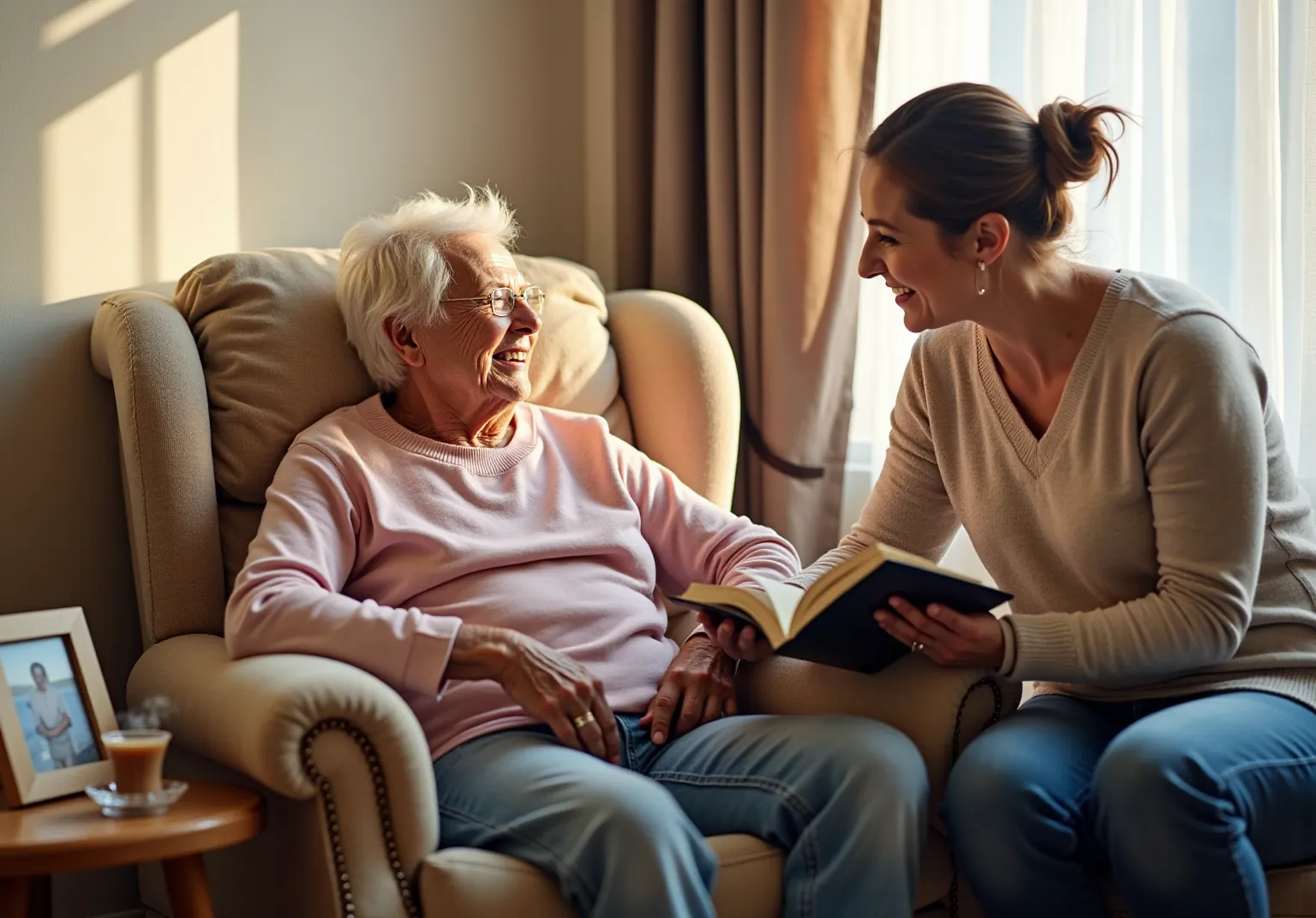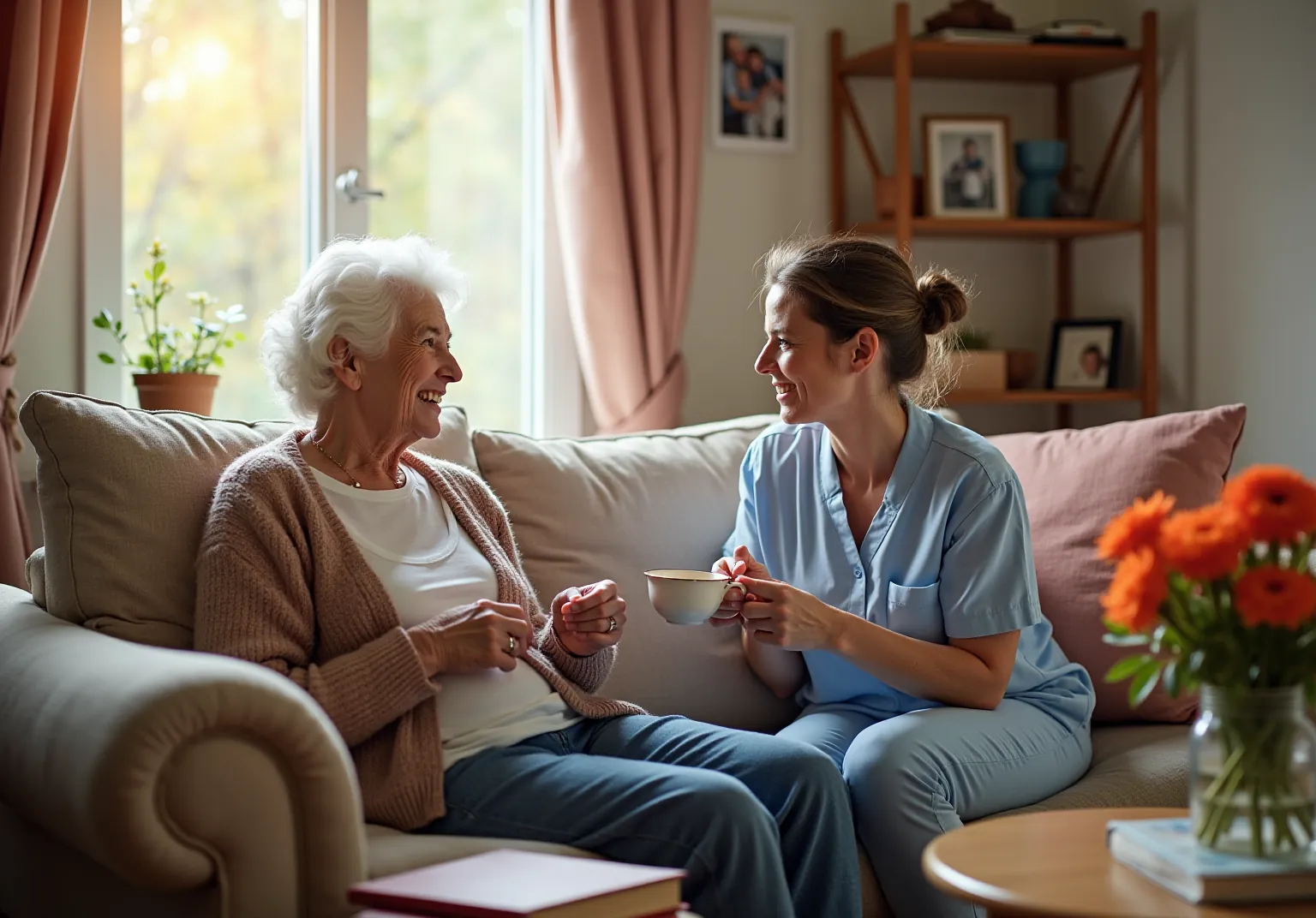
Why Elder Care Companion Services Matters
Loneliness and isolation are significant challenges that can profoundly affect the health and happiness of older adults. Many seniors face these feelings daily, which underscores the urgent need for effective companionship. The implications of this issue are far-reaching, impacting not only the emotional well-being of seniors but also placing a heavy burden on family caregivers.
To address these challenges, elder care companion services offer a valuable solution. These personalized interactions not only enhance the emotional health of seniors but also provide essential support for caregivers. By fostering meaningful connections, caregivers can significantly improve the quality of life for their elderly loved ones.
What strategies can caregivers implement to create these connections? Here are some actionable tips to consider:
- Schedule regular visits or calls to check in on seniors.
- Encourage participation in community activities or groups.
- Facilitate technology use to connect with family and friends.
- Promote hobbies and interests that can be shared with others.
- Provide transportation to social events or appointments.
Happy to Help Caregiving: Personalized Companionship for Seniors
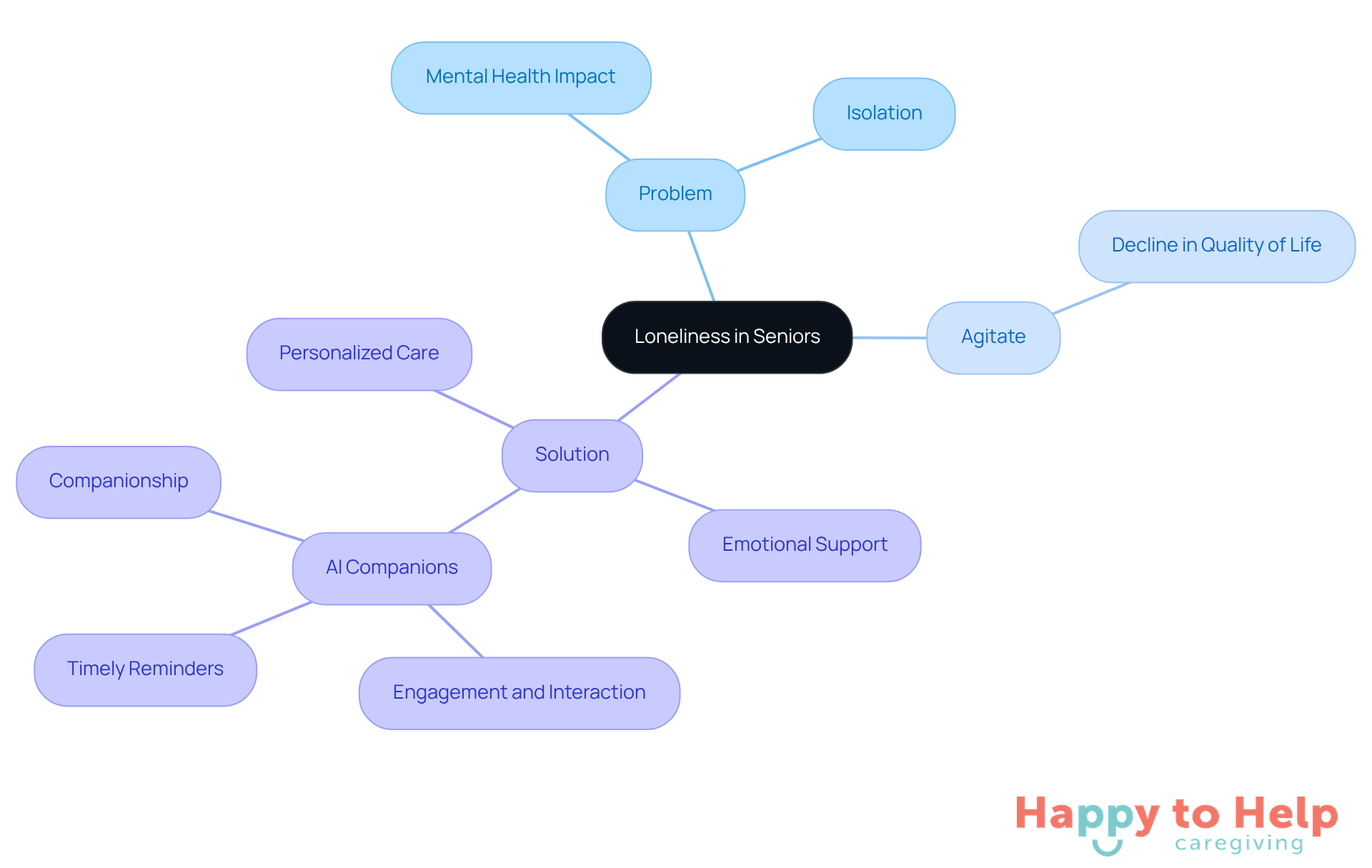
Problem: Loneliness is a significant issue for older adults, impacting their mental health and overall well-being. Many seniors struggle with feelings of isolation, which can lead to serious health concerns.
Agitate: This loneliness not only affects their emotional state but can also exacerbate existing health problems. Without proper companionship, older adults may find it challenging to engage in daily activities, leading to a decline in their quality of life.
Solution: Happy to Help Caregiving excels in providing elder care companion services that are personalized and tailored to the unique needs and preferences of each client. This individualized approach fosters a profound sense of belonging and security, enabling seniors to thrive in the comfort of their own homes. Caregivers engage in meaningful conversations, assist with daily activities, and provide essential emotional support, cultivating a nurturing environment that significantly enhances overall well-being.
Research indicates that elder care companion services provide personalized care that alleviates feelings of loneliness and contributes to improved mental health outcomes, reinforcing the critical role of companionship in the lives of older adults. Geriatric care specialists emphasize that customized care plans are essential for addressing the varied needs of older adults, ultimately leading to a higher quality of life and greater satisfaction in their daily routines.
With around 12 million people in the U.S. currently receiving home care, the importance of personalized companionship cannot be overstated. Additionally, AI companions can play a supportive role in alleviating loneliness, providing timely reminders and engaging interactions that complement traditional caregiving.
Enhanced Emotional Well-Being: Combatting Loneliness and Isolation
Elder care companion services effectively address a significant problem: loneliness and isolation among seniors. These issues can lead to serious health risks, including cognitive decline and increased heart disease. Regular interactions with caregivers not only help elderly individuals feel valued but also significantly reduce the risk of depression and anxiety.
Research indicates that participating in social events and engaging in meaningful discussions fosters a sense of community, which is crucial for maintaining mental well-being and emotional stability. Therefore, the emotional support provided through companionship is vital. It encourages older adults to engage in social activities, ultimately enhancing their lives and promoting a healthier, happier existence.
To combat loneliness, caregivers can implement several actionable solutions:
- Facilitate regular social interactions.
- Encourage participation in community events.
- Foster meaningful conversations that promote connection.
By prioritizing elder care companion services, caregivers can significantly improve the emotional well-being of seniors, helping them lead more fulfilling lives.
Promoting Independence: Supporting Seniors in Their Daily Lives
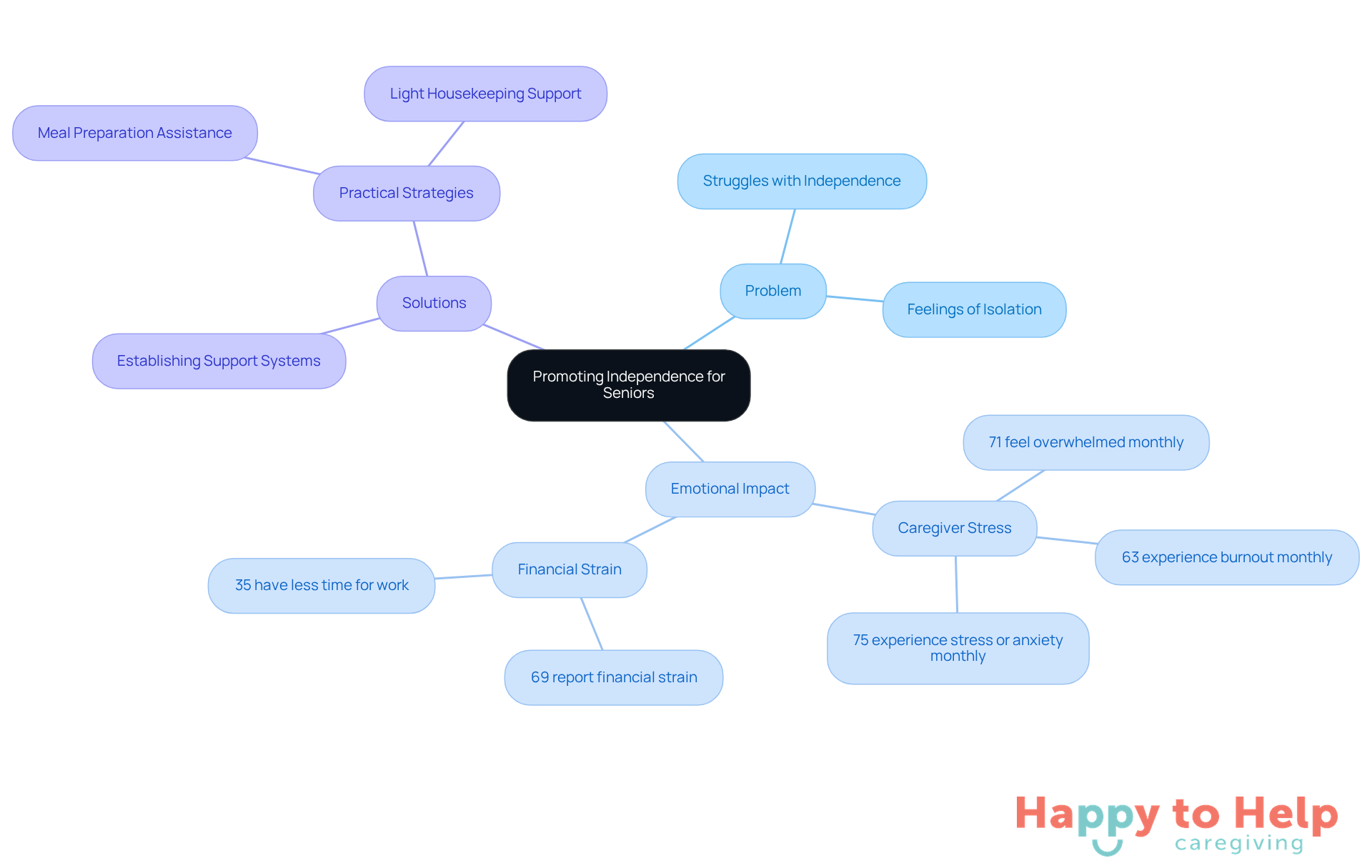
Problem: Many elderly individuals struggle with maintaining their independence, which can lead to feelings of isolation and anxiety. Caregivers face significant challenges in balancing support with encouraging self-sufficiency among their clients.
Agitate: This situation is concerning, as studies show that 94% of older adults prioritize quality of life over mere longevity. Additionally, 74% of family caregivers feel unprepared for the demands of caregiving, which can exacerbate stress and anxiety. The emotional toll is evident, with 75% of family supporters experiencing stress or anxiety at least monthly.
Solution: To address these challenges, caregivers can implement practical strategies that promote independence. For instance, assisting elderly clients with meal preparation or light housekeeping allows them to engage in their own care while ensuring safety and comfort. By finding a balance between essential support and encouraging self-sufficiency, caregivers can help elderly individuals lead fulfilling lives. Establishing support systems is also crucial, as they can enhance caregivers' capacity to provide effective assistance. Ultimately, the role of caregivers in elder care companion services is vital in improving the overall well-being of elderly individuals, enabling them to thrive in their familiar environments.
Social Engagement: Encouraging Interaction and Activities
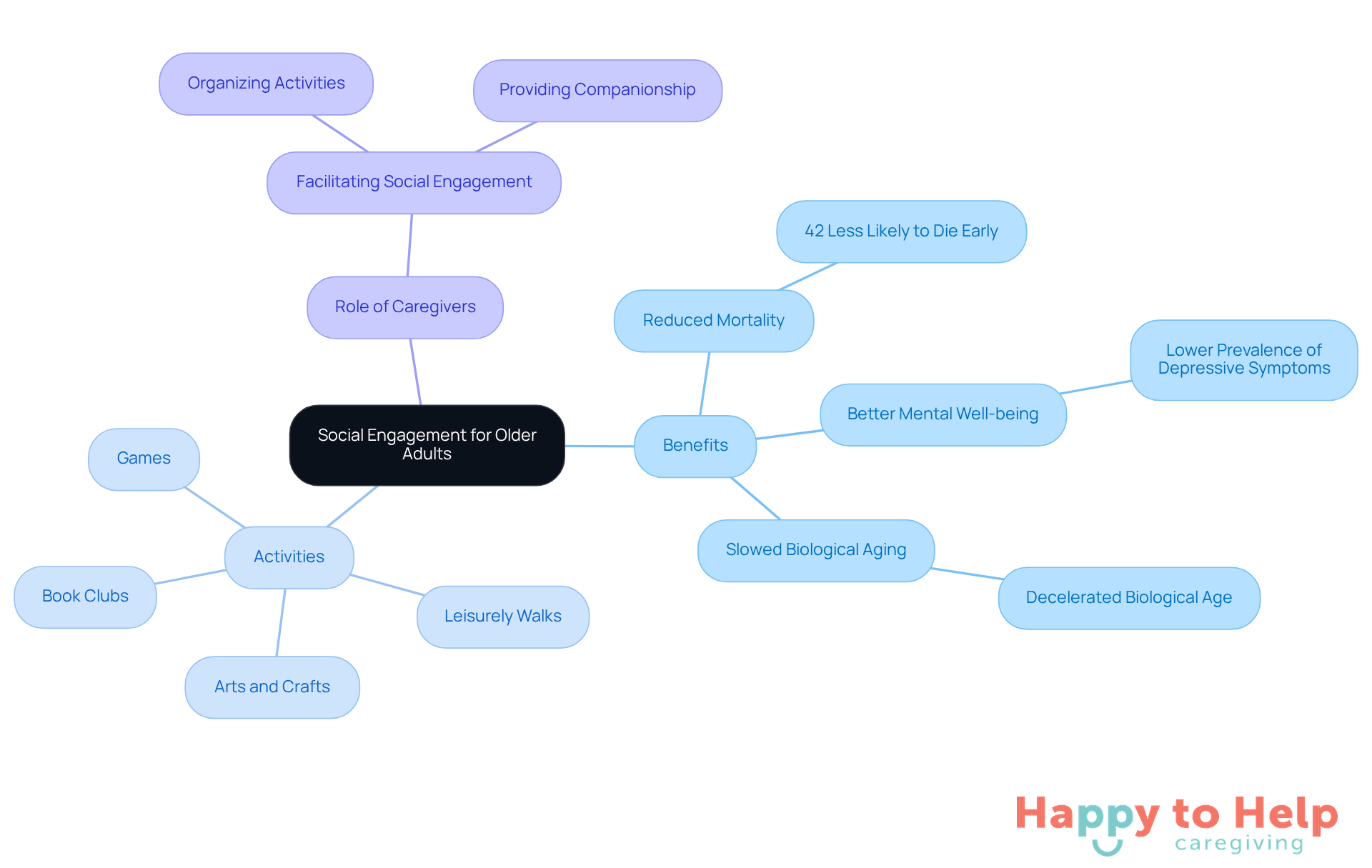
At Happy to Help Caregiving, caregivers face a significant challenge of loneliness among older adults, which can be alleviated through elder care companion services. This issue not only affects emotional health but can also lead to serious consequences, including early mortality. Studies indicate that older adults with high social engagement are 42% less likely to experience early mortality compared to their less socially active peers. Furthermore, social engagement is linked to better mental well-being outcomes, making it crucial for caregivers to address this problem.
To combat loneliness, caregivers can utilize elder care companion services to implement various activities that promote social engagement. Organizing games, leisurely walks, and hobbies tailored to the interests of older adults can stimulate cognitive function and foster meaningful connections among clients. For instance, physical activity accounts for 16% of the connection between social engagement and mortality, highlighting the importance of group fitness classes and leisurely walks.
Programs that encourage interaction, such as arts and crafts and book clubs, have proven effective in enhancing the quality of life for seniors. These activities not only boost mental well-being but also support physical fitness, as regular social engagement is associated with a slowdown in biological aging. Elder care companion services play a crucial role in facilitating these interactions, ensuring that clients remain active and connected, which is vital for their overall happiness and health.
With forecasts suggesting that almost a fifth of the U.S. population will be over 65 by 2030, encouraging social involvement among older adults is more critical than ever. By prioritizing social engagement, caregivers can significantly improve the lives of their clients.
Peace of Mind for Families: Trusting Professional Companionship
Families often face the challenge of ensuring their elderly loved ones receive the necessary elder care companion services they need. Loneliness and anxiety can significantly impact the emotional and physical health of older adults, making it crucial to establish strong caregiver-client relationships. Without this trust, many elderly individuals may feel insecure and undervalued, leading to detrimental health outcomes.
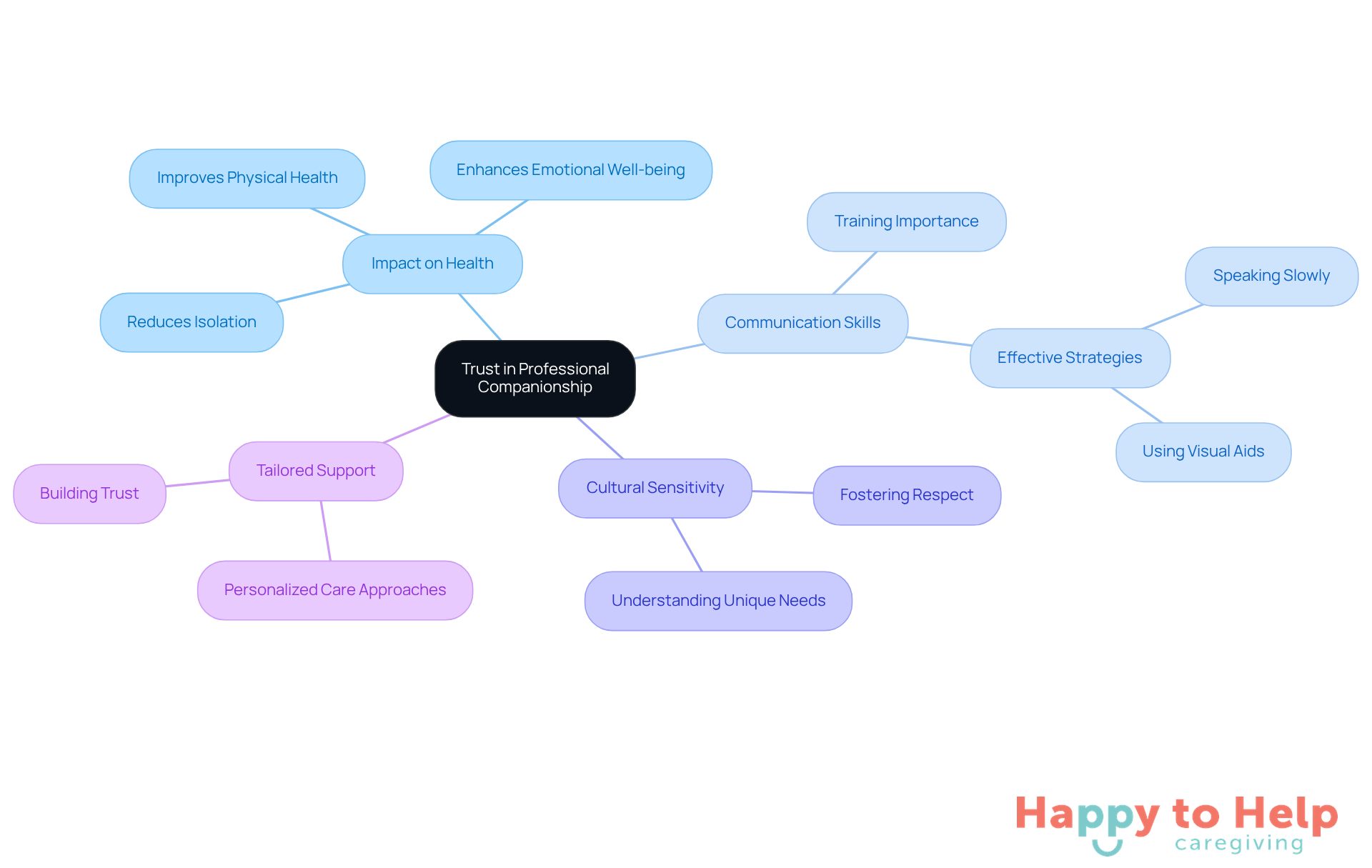
Research shows that when caregivers build trusting connections with their clients, it greatly reduces feelings of isolation. This relational approach not only enhances the well-being of the elderly but also provides families with peace of mind through elder care companion services. Knowing that their loved ones are in capable hands can alleviate the stress families often experience.
To address these challenges, caregivers should focus on developing their communication skills and cultural sensitivity. By understanding the unique needs of each elder, caregivers can provide tailored support that fosters a comfortable environment. Training in these areas can significantly enhance the quality of care provided, ensuring that older adults feel secure and valued.
In summary, prioritizing the emotional and physical well-being of elderly clients through elder care companion services is essential. Families can feel confident knowing that Happy to Help Caregiving employs dedicated support workers who are committed to enhancing the lives of their clients.
Customized Care Plans: Tailoring Support to Individual Needs
Caring for the elderly often involves unique challenges that can be addressed by elder care companion services. Many struggle to meet the diverse needs of each individual, which can lead to inadequate support and a loss of independence for those they care for. This situation not only affects the elderly but also places a significant emotional and physical burden on caregivers.
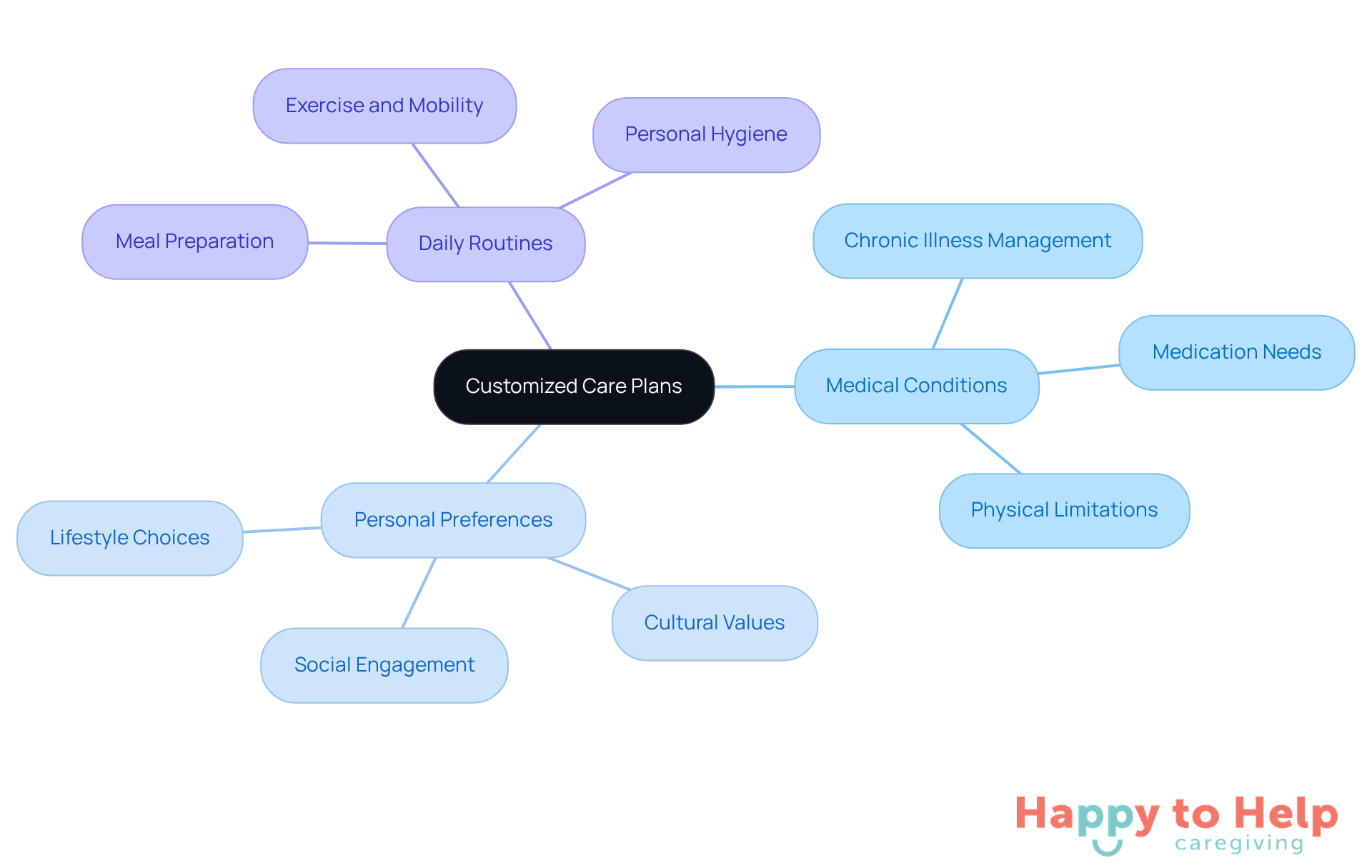
To address these challenges, Happy to Help Caregiving develops tailored elder care companion services that cater to the specific requirements of each elderly individual. These plans consider various factors, such as:
- Medical conditions
- Personal preferences
- Daily routines
By customizing aid, caregivers can offer the most efficient help through elder care companion services, ensuring that elderly individuals receive the care they require while preserving their independence and dignity.
Implementing these personalized care plans can significantly enhance the quality of life for elderly individuals. Caregivers can take actionable steps by assessing each person's unique needs and preferences, leading to more effective and compassionate care.
Health Benefits: Preventing Issues Through Companionship
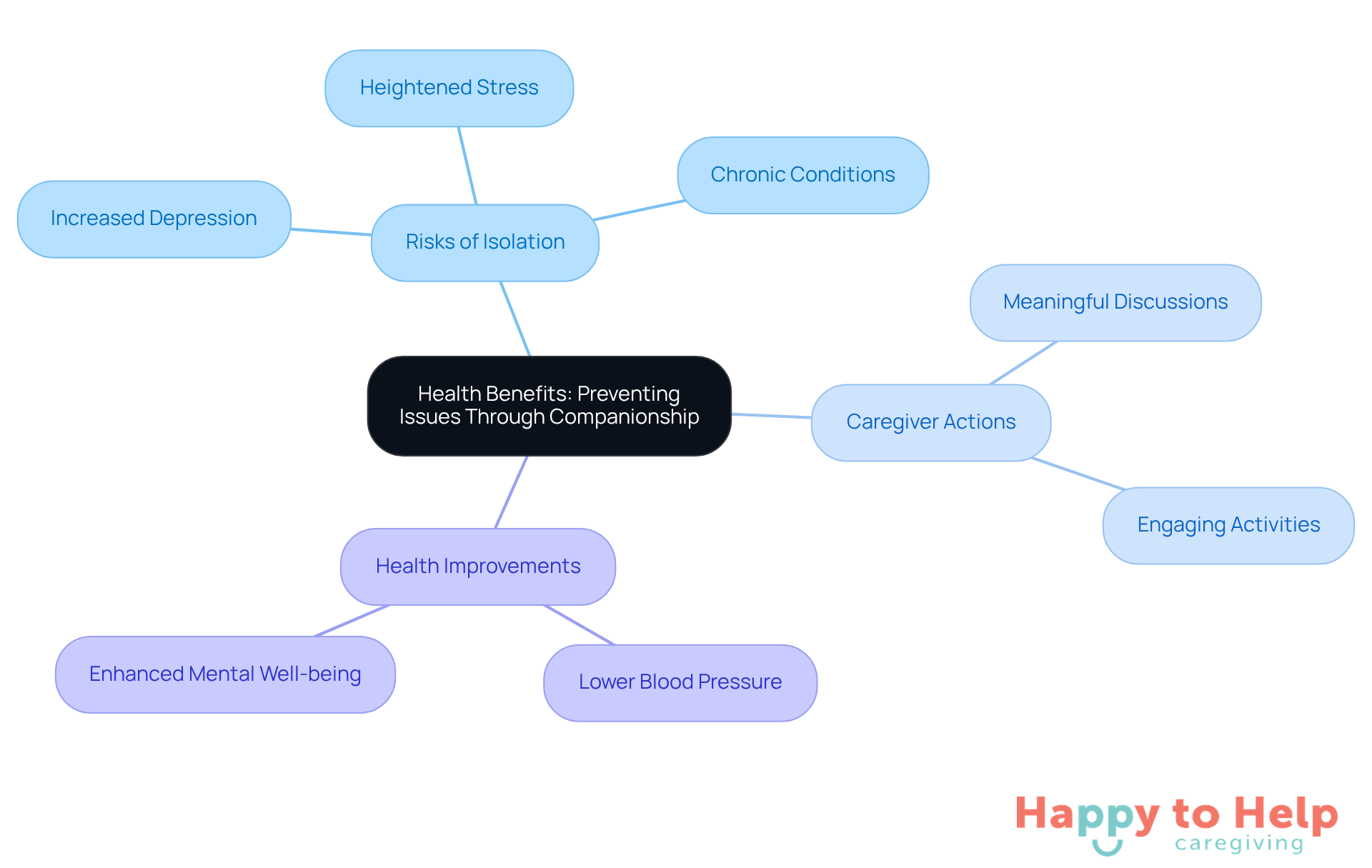
Elder care companion services address a critical problem faced by seniors: isolation. This issue can lead to significant wellness risks, including increased levels of depression and anxiety. Without regular social interaction and emotional support, seniors may experience heightened stress levels and deteriorating mental health.
The implications of isolation are profound. Studies indicate that seniors who lack companionship are at a greater risk for various medical issues, including chronic conditions. This highlights the urgent need for caregivers to foster a supportive environment that encourages social engagement.
So, what can caregivers do? By involving elderly individuals in meaningful discussions and activities, caregivers can help preserve better physical health and significantly reduce the likelihood of chronic conditions. Regular social interaction not only lowers blood pressure but also enhances overall mental well-being.
Incorporating elder care companion services into daily routines is a holistic approach that acknowledges the interconnectedness of emotional and physical health. This strategy promotes a healthier, more fulfilling life for seniors, ultimately benefiting both the individuals and their caregivers.
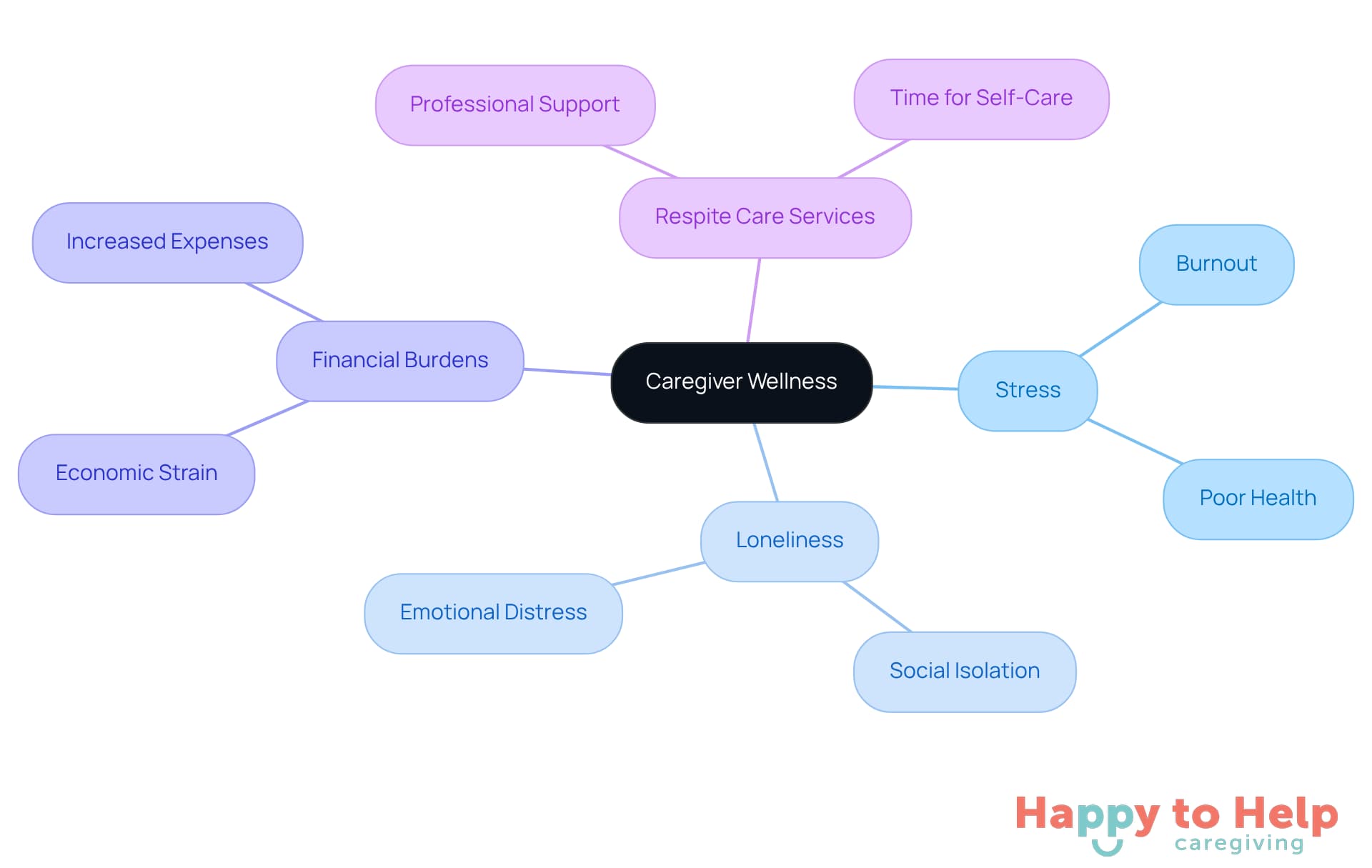
Respite for Caregivers: Easing the Burden of Family Care
Caregivers often face significant challenges, including stress, loneliness, and financial burdens. These issues can lead to burnout, affecting not only their well-being but also the quality of care they provide to their loved ones. In fact, research indicates that caregivers who do not take regular breaks experience higher levels of distress and poorer overall health.
To address these challenges, elder care companion services provide crucial relief. By utilizing elder care companion services, family members can take necessary breaks, knowing their loved ones are in capable hands. This support is essential for preserving the wellness of caregivers, allowing them to rejuvenate and return to their roles with renewed energy.
The economic impact of caregiving is substantial, with family providers delivering assistance valued at around $600 billion in 2021. This highlights the need for effective support systems. The AARP report, "Respite Services: A Critical Support for Family Supporters," emphasizes that regular breaks are vital for preventing burnout and ensuring caregivers can continue their invaluable work.
To manage the challenges they face, caregivers are encouraged to prioritize their own wellness by seeking respite care services. By doing so, they not only enhance their own health but also improve the quality of care they provide over time.
Improved Quality of Life: Enriching Seniors' Daily Experiences
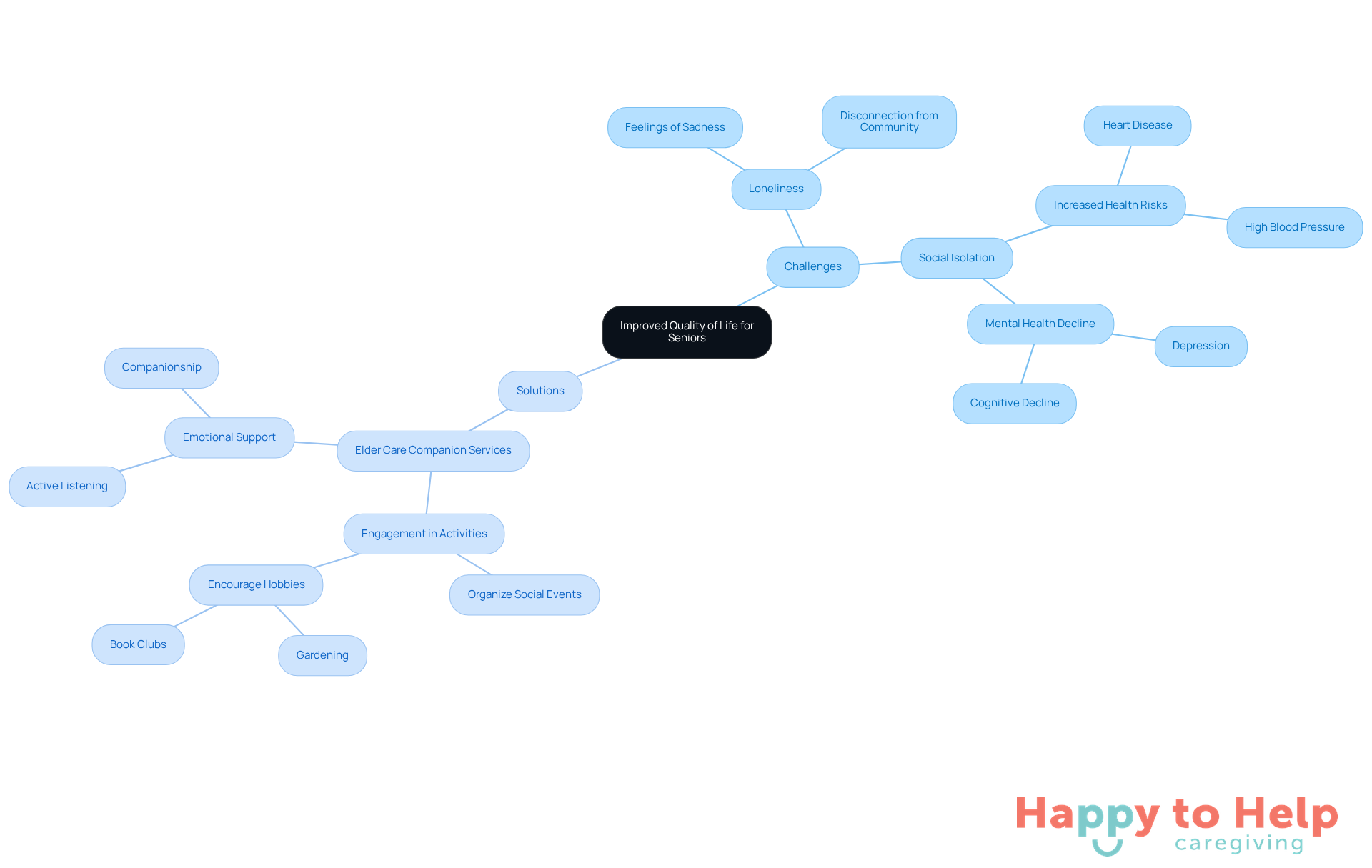
Loneliness and social isolation are significant challenges faced by older adults, impacting their overall well-being. Without regular companionship, many seniors may experience feelings of sadness and disconnection from their communities. This situation not only affects their mental health but can also lead to a decline in physical health.
Elder care companion services provide a practical solution to these issues. Caregivers providing elder care companion services can enhance the quality of life for older adults by engaging them in enjoyable activities, providing emotional support, and fostering social interactions. These elements contribute to a more satisfying life, helping seniors feel happier and more connected.
To implement these solutions effectively, caregivers can:
- Organize regular social events or group activities.
- Encourage hobbies that promote interaction, such as gardening or book clubs.
- Provide emotional assistance through active listening and companionship.
By focusing on these strategies, caregivers can significantly improve the daily experiences of older adults, ensuring they lead fulfilling and connected lives.
Flexible Support: Adapting to Seniors' Evolving Needs
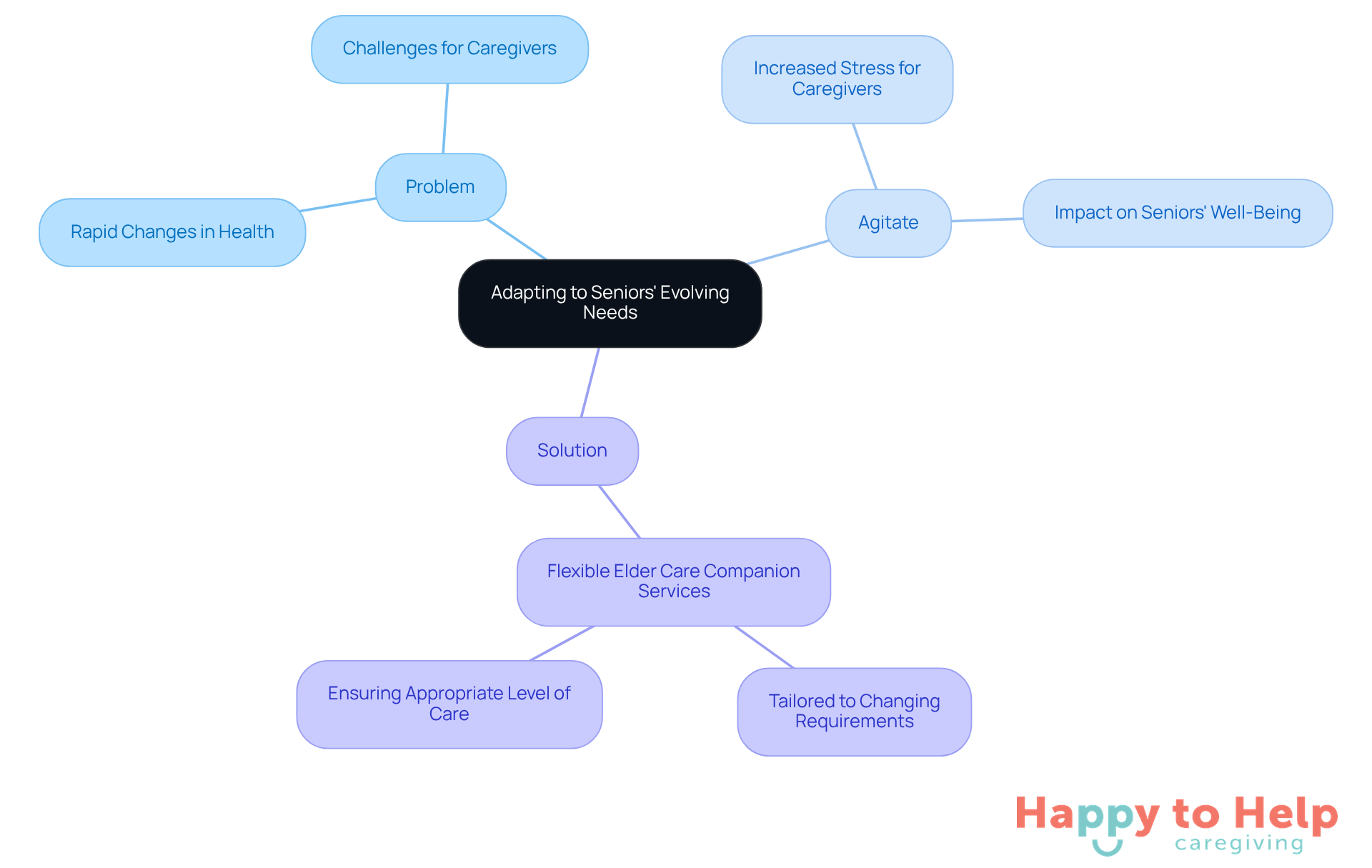
Problem: As older adults age, their health and situations can change rapidly, creating a significant challenge for caregivers. Without the ability to adapt, caregivers may struggle to meet the evolving needs of their clients, potentially compromising the quality of care.
Agitate: This lack of flexibility can lead to increased stress for both caregivers and elderly individuals. When care does not align with the current needs of seniors, it can affect their well-being and independence, making it crucial for caregivers to stay responsive to these changes.
Happy to Help Caregiving provides flexible elder care companion services tailored to the changing requirements of older adults. Caregivers can adjust their elder care companion services as clients' health and situations evolve, ensuring that elderly individuals receive the appropriate level of care. This adaptability is essential for maintaining the well-being and independence of seniors throughout their aging journey.
Taking the Next Steps
Elder care companion services address a significant problem: the loneliness and isolation that many seniors face. This pervasive issue not only affects their emotional well-being but also diminishes their overall quality of life. By providing essential companionship, these services foster a sense of security and value, allowing older adults to thrive in their own homes.
The implications of loneliness are profound. Seniors who lack social engagement may experience increased feelings of depression and anxiety, which can lead to a decline in physical health. Elder care companion services offer a solution by encouraging social interaction and providing tailored support that meets the unique needs of each individual. Additionally, these services relieve family caregivers, reducing their stress and enabling them to focus on providing the best care possible.
As the elderly population continues to grow, the importance of these services becomes even more critical. Families should consider seeking elder care companion services not only for their loved ones' well-being but also for their own peace of mind. Investing in companionship and personalized care can lead to a healthier, more fulfilling life for seniors, benefiting both them and their families. Embracing the power of companionship can transform the aging experience, ensuring that older adults remain connected, engaged, and supported throughout their journey.
https://iframe.tely.ai/cta/eyJhcnRpY2xlX2lkIjogIjY5MmY5MTk3NWE2YzBkMzU2MDcwMDMwMCIsICJjb21wYW55X2lkIjogIjY4ZWU1ZGNhNzMxNzYyNTU3ZjNjOTVjMSIsICJpbmRleCI6IG51bGwsICJ0eXBlIjogImFydGljbGUifQ==Frequently Asked Questions
What is the main issue that Happy to Help Caregiving addresses for seniors?
Happy to Help Caregiving addresses the significant issue of loneliness among older adults, which impacts their mental health and overall well-being.
How does loneliness affect older adults?
Loneliness can exacerbate existing health problems, lead to cognitive decline, and increase the risk of serious health issues such as heart disease, depression, and anxiety.
What services does Happy to Help Caregiving provide?
Happy to Help Caregiving provides personalized elder care companion services that include meaningful conversations, assistance with daily activities, and essential emotional support tailored to each client's unique needs.
Why is personalized companionship important for seniors?
Personalized companionship fosters a sense of belonging and security, enabling seniors to thrive in their homes and significantly enhancing their overall well-being.
What role do caregivers play in improving the emotional well-being of seniors?
Caregivers facilitate regular social interactions, encourage participation in community events, and foster meaningful conversations, which help reduce feelings of loneliness and promote emotional stability.
What challenges do elderly individuals face regarding independence?
Many elderly individuals struggle to maintain their independence, leading to feelings of isolation and anxiety, especially when caregivers may feel unprepared for the demands of caregiving.
How can caregivers promote independence among seniors?
Caregivers can promote independence by assisting with meal preparation and light housekeeping, allowing seniors to engage in their own care while ensuring safety and comfort.
What is the significance of establishing support systems for caregivers?
Establishing support systems enhances caregivers' capacity to provide effective assistance, ultimately improving the overall well-being of elderly individuals and enabling them to thrive in familiar environments.
List of Sources
- Happy to Help Caregiving: Personalized Companionship for Seniors
- 2025 Home Care Statistics: Trends & Insights To Know (https://premierhcinc.com/blog/home-care-statistics)
- AI Care Companions for Seniors (https://health.usnews.com/senior-care/articles/ai-care-companions-for-seniors)
- AI personal companions offers low-tech way to combat loneliness in senior living residents (https://mcknightsseniorliving.com/news/ai-personal-companions-offers-low-tech-way-to-combat-loneliness-in-senior-living-residents)
- Caring Senior Service Banks Growth Goals On New House-Made Technology (https://homehealthcarenews.com/2025/10/caring-senior-service-banks-growth-goals-on-new-house-made-technology)
- Meela Launches Personalized AI Companion to Combat Loneliness Epidemic Among Seniors (https://morningstar.com/news/business-wire/20250911525548/meela-launches-personalized-ai-companion-to-combat-loneliness-epidemic-among-seniors)
- Enhanced Emotional Well-Being: Combatting Loneliness and Isolation
- The Emotional Benefits of Companion Care for Seniors (https://comfortkeepers.com/offices/texas/round-rock/resources/news/the-emotional-benefits-of-companion-care-for-seniors)
- 1 in 3 older adults still experience loneliness and isolation (https://michiganmedicine.org/health-lab/1-3-older-adults-still-experience-loneliness-and-isolation)
- Summary - Social Isolation and Loneliness in Older Adults - NCBI Bookshelf (https://ncbi.nlm.nih.gov/books/NBK557972)
- Promoting Independence: Supporting Seniors in Their Daily Lives
- Family caregivers prefer in-home care over senior living, new industry report finds (https://mcknightshomecare.com/news/family-caregivers-prefer-in-home-care-over-senior-living-new-industry-report-finds)
- Fact Sheet: Trends in Family Care for Older Americans (https://prb.org/resources/fact-sheet-trends-in-family-care-for-older-americans)
- Warning From Older Adults: Care for Aging in America Needs Urgent Rethinking (https://johnahartford.org/newsroom/view/warning-from-older-adults-care-for-aging-in-america-needs-urgent-rethinking)
- Number of Family Caregivers Supporting Older Adults Increased Nearly One-Third Between 2011 and 2022 | Johns Hopkins Bloomberg School of Public Health (https://publichealth.jhu.edu/2025/number-of-family-caregivers-supporting-older-adults-increased-nearly-one-third-between-2011-and-2022)
- Assisted Living's Rise: Navigating Independence, Care, and Costs (https://hign.org/news/hign-news/assisted-living-s-rise-navigating-independence-care-and-costs)
- Social Engagement: Encouraging Interaction and Activities
- Social activities for seniors: Benefits and examples (https://medicalnewstoday.com/articles/social-activities-for-seniors)
- Social connection linked to improved health and reduced risk of early death (https://who.int/news/item/30-06-2025-social-connection-linked-to-improved-heath-and-reduced-risk-of-early-death)
- The Secret to A Long Life? Make It a Social One. (https://psychiatrist.com/news/the-secret-to-a-long-life-make-it-a-social-one)
- Honoring Family Caregivers by Providing Opportunities for Social Engagement — engAGED (https://engagingolderadults.org/blog/2024/11/14/honoring-family-caregivers-by-providing-opportunities-for-social-engagement)
- Peace of Mind for Families: Trusting Professional Companionship
- As Family Caregiving Grows, So Does the Need for Reform - Medicare Rights Center (https://medicarerights.org/medicare-watch/2025/08/14/as-family-caregiving-grows-so-does-the-need-for-reform)
- Only 32% of America’s 63 Million Family Caregivers Use Paid Help (https://homehealthcarenews.com/2025/07/only-32-of-americas-63-million-caregivers-use-paid-help)
- Opinion | America’s Caregivers Are in Crisis (https://nytimes.com/2025/11/24/opinion/caregiving-crisis.html)
- The Importance of Caregiver-Client Relationships in Senior Well-Being (https://homeinstead.com/home-care/usa/in/goshen/588/news-and-media/the-importance-of-caregiver-client-relationships-in-senior-well-being)
- The struggle is real: Covering family caregiving (https://healthjournalism.org/blog/2024/07/the-struggle-is-real-covering-family-caregiving)
- Customized Care Plans: Tailoring Support to Individual Needs
- Novel Care Model May Improve Outcomes for Older Adults With Multiple Chronic Conditions (https://consultqd.clevelandclinic.org/novel-care-model-may-improve-outcomes-for-older-adults-with-multiple-chronic-conditions)
- Growing Need for Caregiver Support (https://edwardjones.com/us-en/why-edward-jones/news-media/press-releases/caregiver-support)
- Home Care Impact on Recovery of Patient (A Statistics Report) (https://lovinghomecareinc.com/home-care-recovery-statistics)
- Caresify Home Care Expands Home Health Division to Deliver Skilled In-Home Clinical Care (https://yourerie.com/business/press-releases/ein-presswire/871909702/caresify-home-care-expands-home-health-division-to-deliver-skilled-in-home-clinical-care)
- The declining population will make it even harder to care for elders (https://npr.org/2025/11/02/nx-s1-5535648/population-elderly-caregivers)
- Health Benefits: Preventing Issues Through Companionship
- Older adults find support through health care companions (https://news-medical.net/news/20250924/Older-adults-find-support-through-health-care-companions.aspx)
- The Hidden Benefits of Companionship Care for Seniors (https://safehomecare.com/post/the-hidden-benefits-of-companionship-care-for-seniors)
- Social connection linked to improved health and reduced risk of early death (https://who.int/news/item/30-06-2025-social-connection-linked-to-improved-heath-and-reduced-risk-of-early-death)
- The Power of Companionship for Seniors: A Key Ingredient to Quality Aging - PACE (https://pace-ri.org/the-power-of-companionship-for-seniors-a-key-ingredient-to-quality-aging)
- The Five Benefits of Companion Living for Seniors (https://meridiansenior.com/blog/the-five-benefits-of-companion-living-for-seniors)
- Respite for Caregivers: Easing the Burden of Family Care
- Respite Services: A Critical Support for Family Caregivers (https://ltsschoices.aarp.org/resources-and-practices/respite-services-critical-support-for-family-caregivers)
- Caregivers and the Importance of Respite Care (https://benedictineliving.org/resources/news/caregivers-and-the-importance-of-respite-care)
- Improved Quality of Life: Enriching Seniors' Daily Experiences
- How Companion Care Enhances Quality of Life for Seniors (https://seniorsbluebook.com/articles/how-companion-care-enhances-quality-of-life-for-seniors)
- The Importance of Companionship for Seniors and How It Improves Well-being | Luxe Homecare (https://luxehomecare.com/the-importance-of-companionship-for-seniors-and-how-it-improves-well-being)
- How Companion Care is Enhancing the Lives of Seniors (https://visitingangels.com/santaclarita/articles/how-companion-care-is-enhancing-the-lives-of-seniors/17069)
- Elderly Care Statistics (https://rosewood-nursing.com/post/elderly-care-statistics)
- The Incredible Benefits of Home Care, in 7 Amazing Stats - Companions For Seniors (https://companionsforseniors.com/2019/08/benefits-home-care-amazing-stats-trends-reports)
- Flexible Support: Adapting to Seniors' Evolving Needs
- Flexible Care Models Give Home Care Clients ‘What They Want When They Want It’ (https://homehealthcarenews.com/2025/10/flexible-care-models-give-home-care-clients-what-they-want-when-they-want-it)
- 2023 Study — Caregiving in America, Statistics on Family Caregivers and Beyond | Guardian (https://guardianlife.com/reports/caregiving-in-america)
- How to adapt to the changing needs of those 65+ (https://cvshealth.com/news/primary-care/how-to-adapt-to-the-changing-needs-of-those-65.html)
- Caregiver Statistics: Work and Caregiving (https://caregiver.org/resource/caregiver-statistics-work-and-caregiving)