10 Benefits of Hiring a Live In Carer for Your Loved Ones

For families in our service areas
For families in our service areas, this guide explains caregiving and how non-medical in-home caregiving can support care planning in East Idaho, Treasure Valley & Magic Valley, Northern Wasatch, North Central West Virginia & Southwestern Pennsylvania, and Northeast Ohio.
Quick Guide to Hiring a Live In Carer
Hiring a live-in carer brings a world of benefits for your loved ones. It’s not just about assistance; it’s about providing enhanced emotional support and daily living help that truly matters. Imagine the comfort of knowing that personalized care plans are in place, promoting independence and well-being in a familiar environment.
This comprehensive approach does more than just alleviate feelings of loneliness. It ensures safety and significantly improves the overall quality of life for seniors. They receive tailored support right in the comfort of their own homes, where they feel most at ease.
Consider the peace of mind that comes with having someone dedicated to their care. It’s a nurturing solution that addresses both emotional and practical needs, allowing families to breathe a little easier. With a live-in carer, you’re not just hiring help; you’re embracing a compassionate partnership that enriches lives.
Why Hiring a Live In Carer Matters
The rising need for personalized in-home care highlights a profound change in how families view the well-being of their elderly loved ones. Hiring a live-in carer not only offers vital daily support but also nurtures emotional bonds that significantly enhance quality of life. As families face the challenges of caregiving, a pressing question emerges: how can the unique benefits of live-in care truly transform the lives of seniors while easing the burdens on family members?
Delving into the many advantages of this approach reveals a path toward greater independence, emotional strength, and overall happiness for those in need of care. Imagine the peace of mind that comes from knowing your loved one is not just cared for, but also cherished and understood. This compassionate support can make all the difference, allowing families to focus on what truly matters—creating meaningful moments together.
Happy to Help Caregiving: Personalized In-Home Care for Enhanced Quality of Life
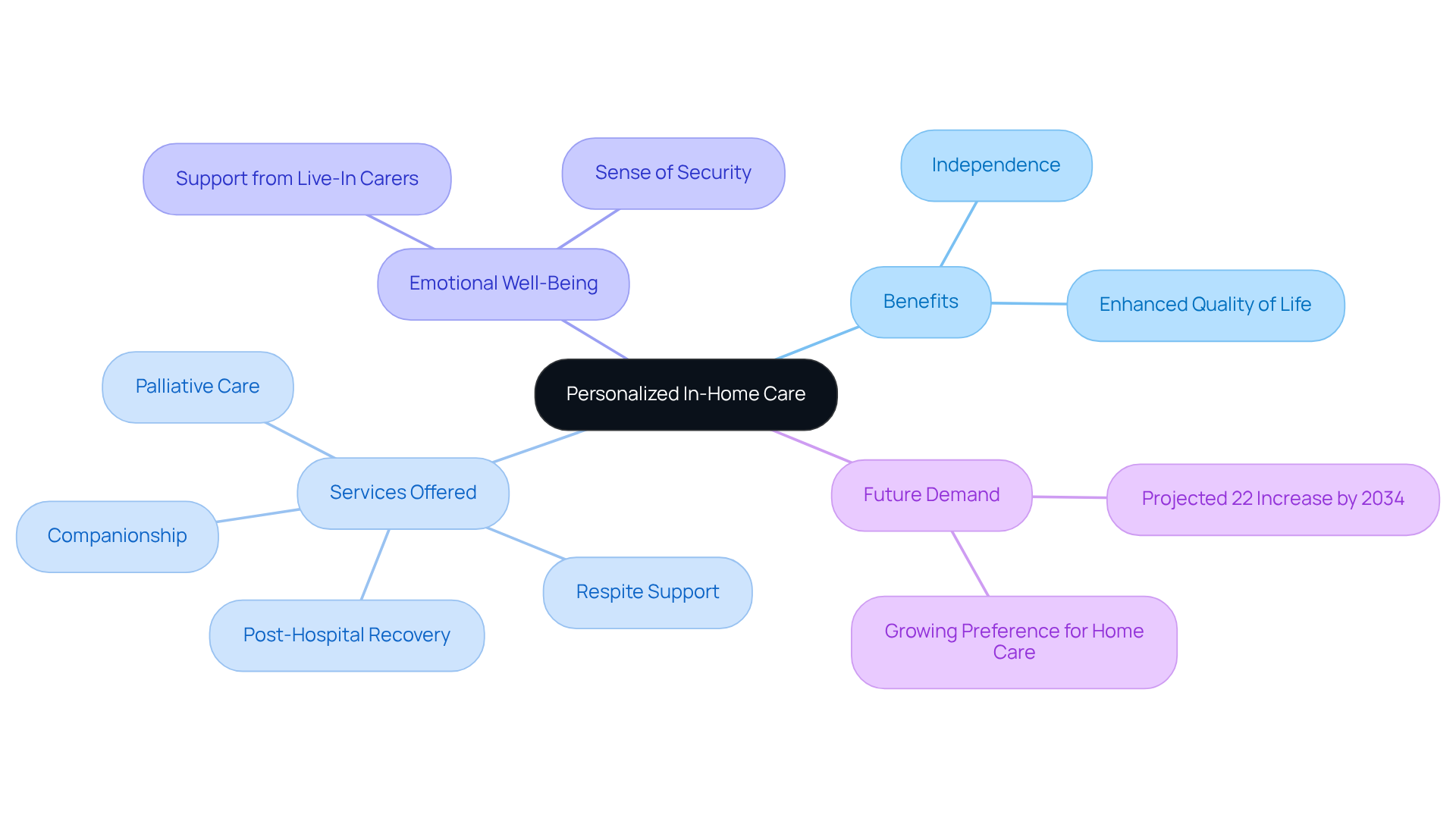
At Happy to Help Caregiving, we understand the emotional challenges that caregivers face. The stress and burnout can be overwhelming, but we’re here to provide a solution. Our tailored in-home assistance from a live in carer significantly enhances the quality of life for seniors and individuals with special needs. By prioritizing customized support from a live in carer, we ensure that our clients receive the attention they deserve, aligning with their unique lifestyles and preferences. Having a live in carer fosters a sense of security and comfort in their own homes.
Our individualized approach not only promotes emotional well-being but also encourages independence, allowing clients with a live in carer to truly thrive. We offer a comprehensive range of services, including:
- Companionship
- Post-hospital recovery assistance
- Respite support
- Palliative care
Each service exemplifies the profound benefits of personalized support from a live in carer in a familiar environment.
As the demand for home assistance services is expected to rise by 22% by 2034, families can rest assured that their loved ones are receiving compassionate, dedicated care from a live in carer that truly meets their needs. One of our support workers shared, "Witnessing our clients flourish in their own residences is the most fulfilling aspect of our role." This highlights the transformative impact of individualized care from a live in carer on quality of life.
Moreover, the integration of technology in caregiving enhances the experience, ensuring that clients remain connected and supported. We’re committed to making a difference, one heart at a time.
Emotional Support: Alleviating Loneliness and Enhancing Well-Being
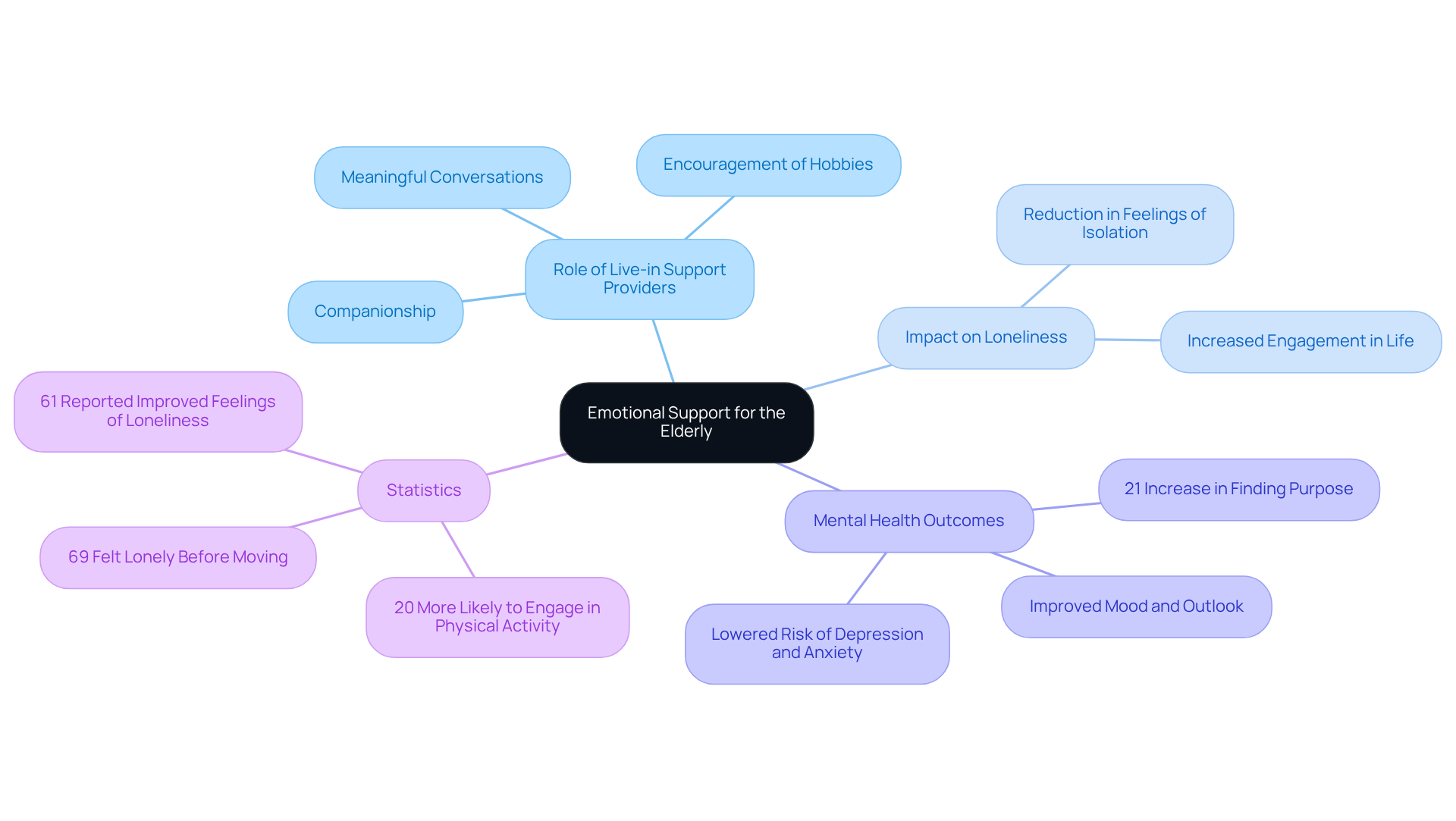
Live-in support providers truly make a difference in the lives of elderly individuals, offering emotional assistance that helps alleviate feelings of loneliness and isolation. By engaging clients in meaningful conversations and activities, these compassionate caregivers foster a sense of companionship that significantly enhances overall well-being.
Research shows that regular social interaction can lower the chances of depression and anxiety. Support providers often become trusted confidants, encouraging older adults to pursue hobbies and interests that bring them joy. This emotional connection not only lifts spirits but also contributes to better mental health outcomes, emphasizing the essential role of live-in carers in supporting the elderly.
For instance, many older adults who frequently interact with their support providers report feeling less alone and more engaged in life. This illustrates the powerful impact of companionship. Moreover, studies reveal that seniors in nurturing environments are 21% more likely to discover meaning and purpose in their daily routines, emphasizing how vital emotional support is for enhancing their quality of life.
In essence, having a compassionate supporter by their side nurtures emotional resilience and boosts the overall mental wellness of older adults. This support allows them to age with dignity and joy, reminding us all of the profound difference that care and companionship can make.
Daily Living Assistance: Ensuring Comfort and Independence at Home
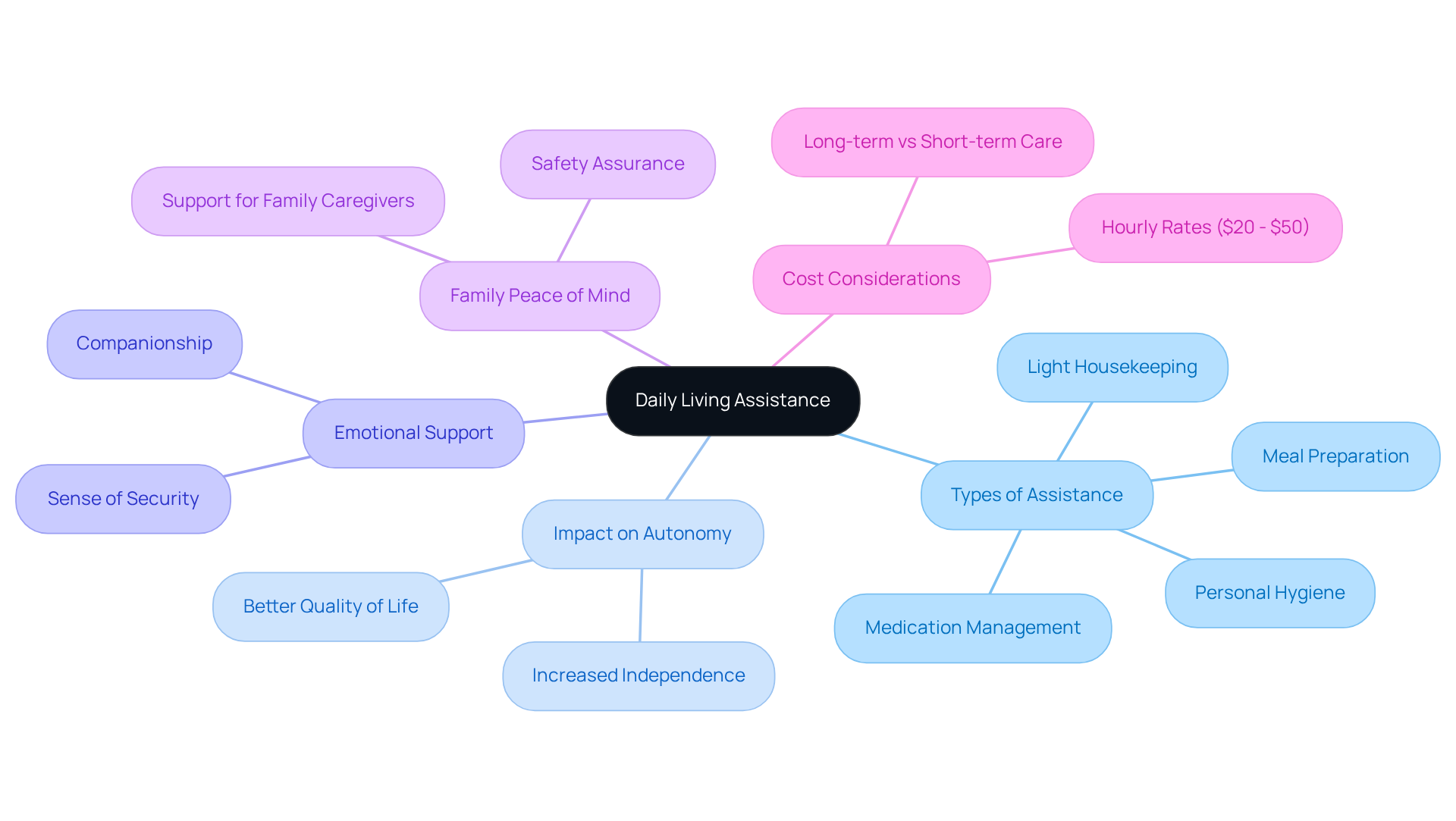
Live-in carers are essential in assisting elderly individuals with daily living tasks, including meal preparation, personal hygiene, and medication management. This support not only brings comfort and safety but also empowers seniors to maintain their independence in the familiar surroundings of their homes.
Research shows that older adults receiving daily living support are 70% more likely to report increased autonomy and a better quality of life. By helping with tasks that can become increasingly challenging due to age or health issues, these compassionate supporters enable clients to have a live in carer and lead meaningful lives at home.
The presence of a live in carer fosters a sense of security, allowing seniors to engage in their routines and activities without the fear of isolation or neglect. As one provider wisely noted, "Not everyone needs medical help." For some, a live in carer could be the perfect match, highlighting the emotional assistance that these caregivers offer.
Moreover, families can find peace of mind knowing their loved ones are safe and well looked after. Typical at-home support rates range from $20 to $50 per hour, reinforcing the significance of independence for seniors at home. This nurturing approach not only addresses practical needs but also uplifts the spirits of both the elderly and their families.
Tailored Care Plans: Customizing Support to Individual Needs
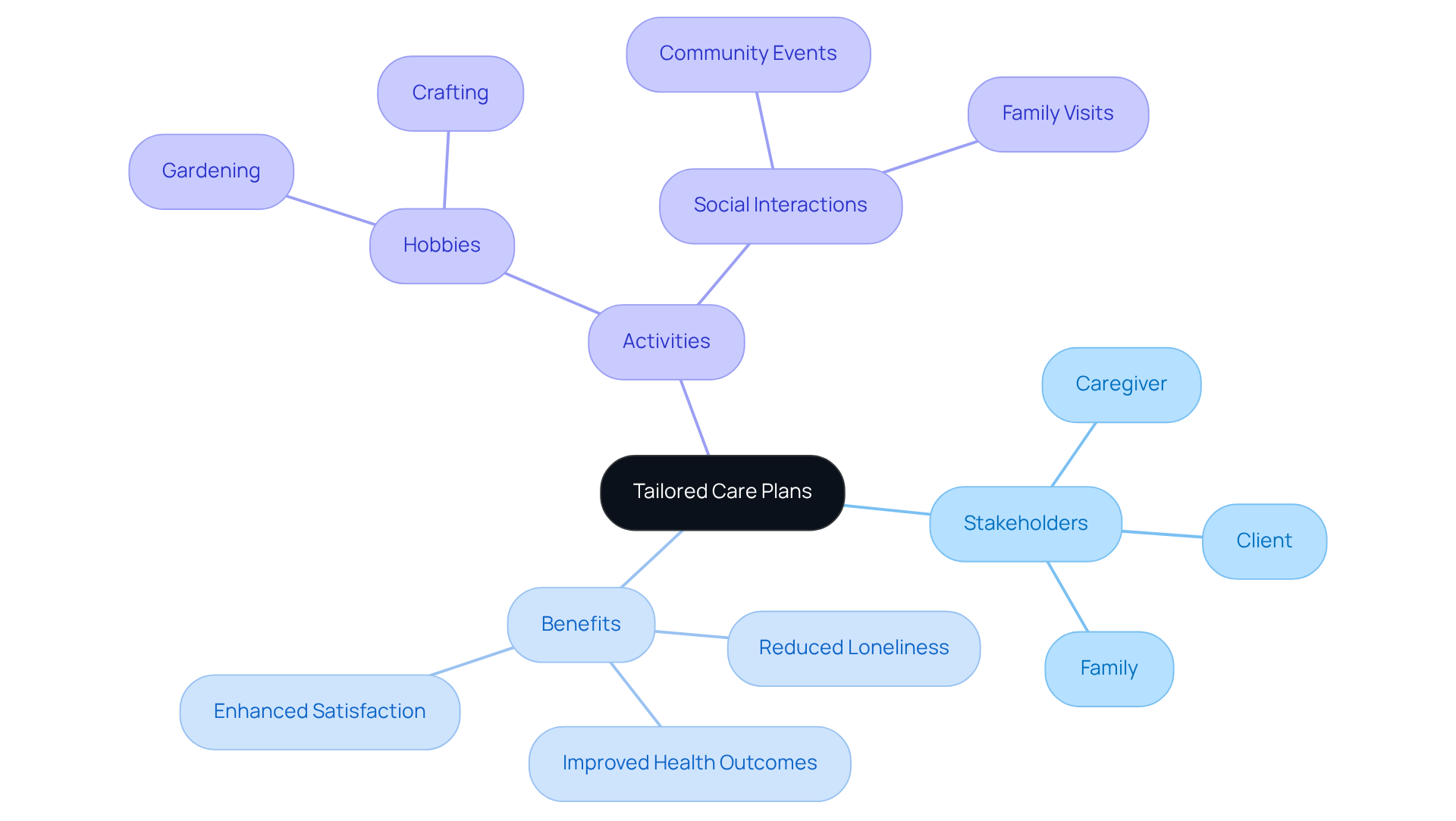
The wonderful advantage of hiring a live-in carer is the creation of personalized care plans that truly cater to the unique needs of each individual. This process is a collaborative effort, involving the caregiver, the client, and their family. Together, they ensure that every aspect of the client's well-being, preferences, and lifestyle is thoughtfully considered. This tailored approach not only boosts the effectiveness of the support provided by a live-in carer but also significantly enhances health outcomes and overall satisfaction for both clients and their families.
Research shows that these personalized support plans can help reduce feelings of loneliness, anxiety, and depression. By incorporating enjoyable activities and encouraging social interactions, caregivers can make a real difference. For instance, they might assist older adults in engaging with hobbies they love, like gardening or crafting, which nurtures emotional well-being and fosters a sense of purpose. Plus, regular evaluations of these support plans allow for adjustments as the client's needs evolve, ensuring that the assistance remains relevant and effective over time.
Experts emphasize the importance of including older adults and their live-in carers in the care planning process. This involvement promotes a sense of autonomy and dignity, creating a nurturing atmosphere that addresses not just physical health but also emotional and social connections. This holistic approach is vital for enhancing the quality of life for older adults, empowering them to maintain their independence and thrive in their own homes.
Continuity of Care: Building Trust and Familiarity with Caregivers
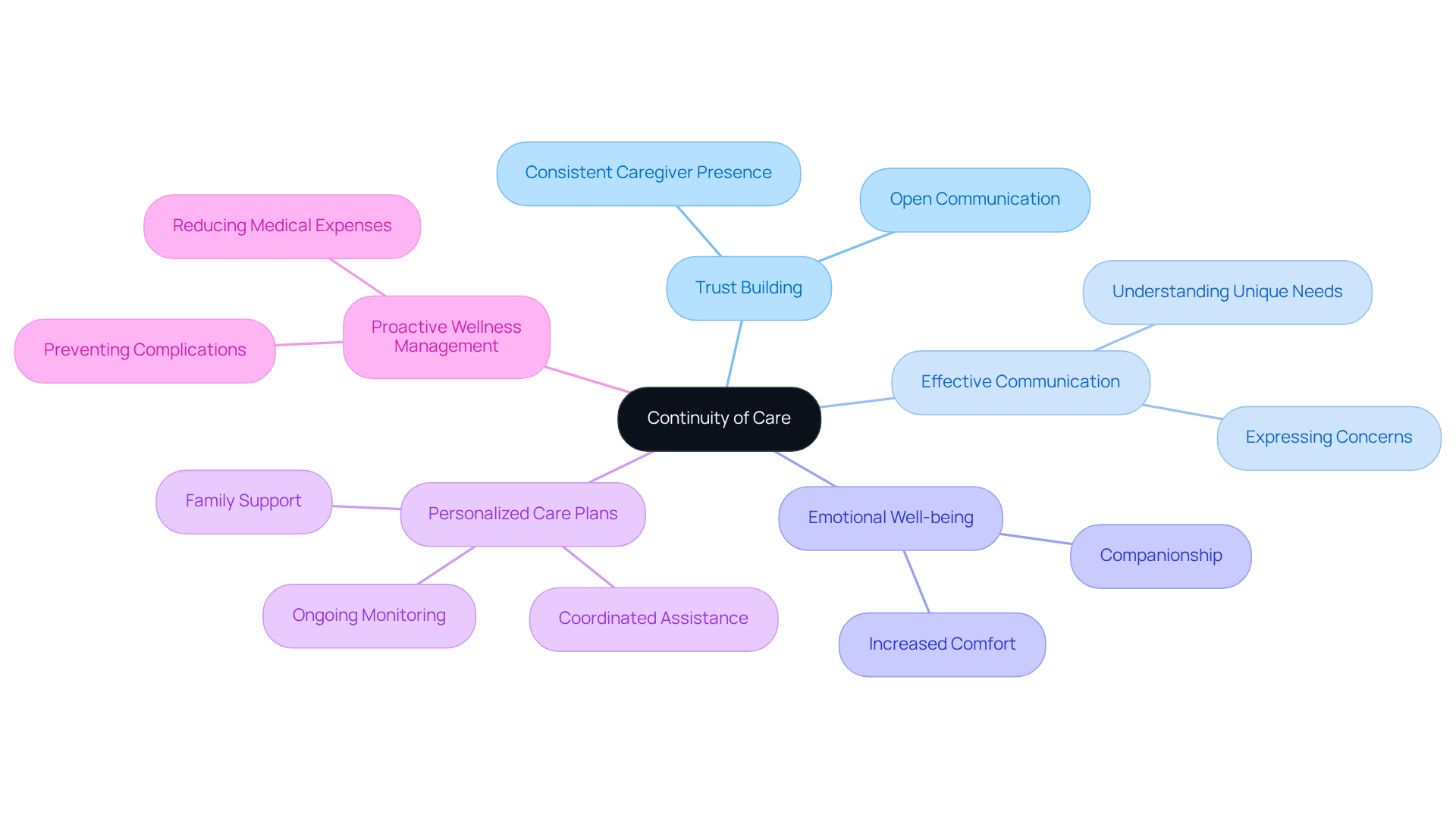
Continuity of support is vital for building trust and familiarity between older adults and their live in carer. When clients consistently receive care from a live in carer, they develop a deeper bond that enhances communication and understanding of their unique needs. This ongoing relationship enriches the caregiving experience and significantly boosts the emotional well-being of clients.
Feeling secure and comfortable in their surroundings allows older adults to thrive. They’re more likely to express their concerns and preferences openly. Moreover, familiarity with a live in carer creates a supportive environment in which elderly individuals can maintain their independence while receiving personalized attention.
As Kevin Sharples, Owner of Happy to Help Caregiving, shares, "Through the creation of personalized care plans, ongoing monitoring, coordinated assistance, and family support, home support helps ensure that seniors receive the consistent care they require." This continuity not only enhances emotional support but also plays a crucial role in proactive wellness management, helping to prevent complications and reduce medical expenses.
Peace of Mind: Ensuring Safety and Security for Families
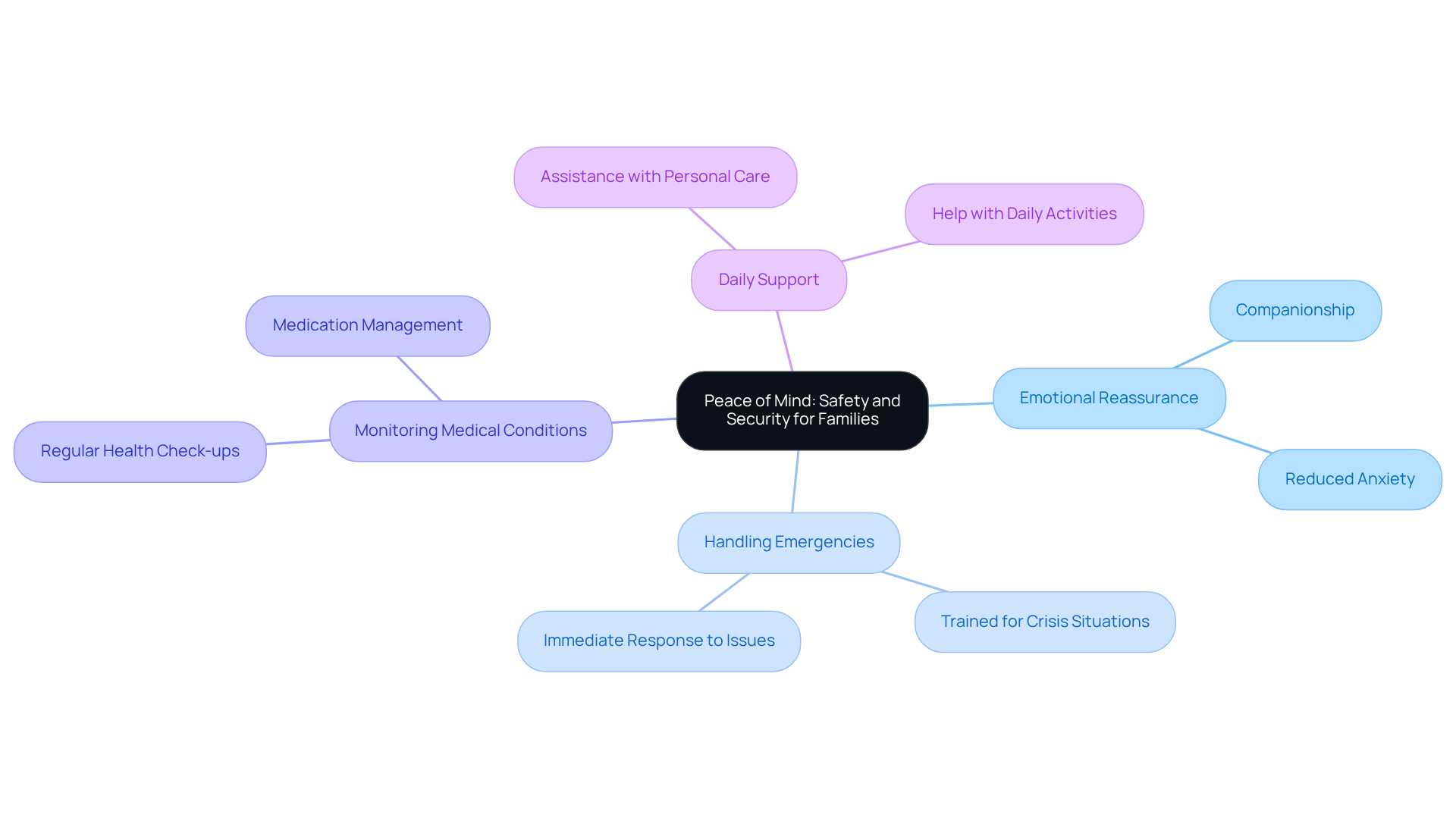
Hiring a live in carer can truly bring peace of mind to families. It’s comforting to know that your loved ones are safe and secure at home. Caregivers are specially trained to handle emergencies and monitor medical conditions, ensuring that any potential issues are addressed right away.
This level of supervision from a live in carer allows families to feel reassured that their loved ones are receiving the highest quality support. It alleviates the anxiety and stress that often come with caregiving.
Imagine the relief of knowing someone compassionate is there, ready to help at a moment’s notice. With a caregiver by their side, your loved ones can enjoy their daily routines with confidence, while you can focus on your own well-being, knowing they’re in good hands.
Health Monitoring: Proactive Management of Medical Needs
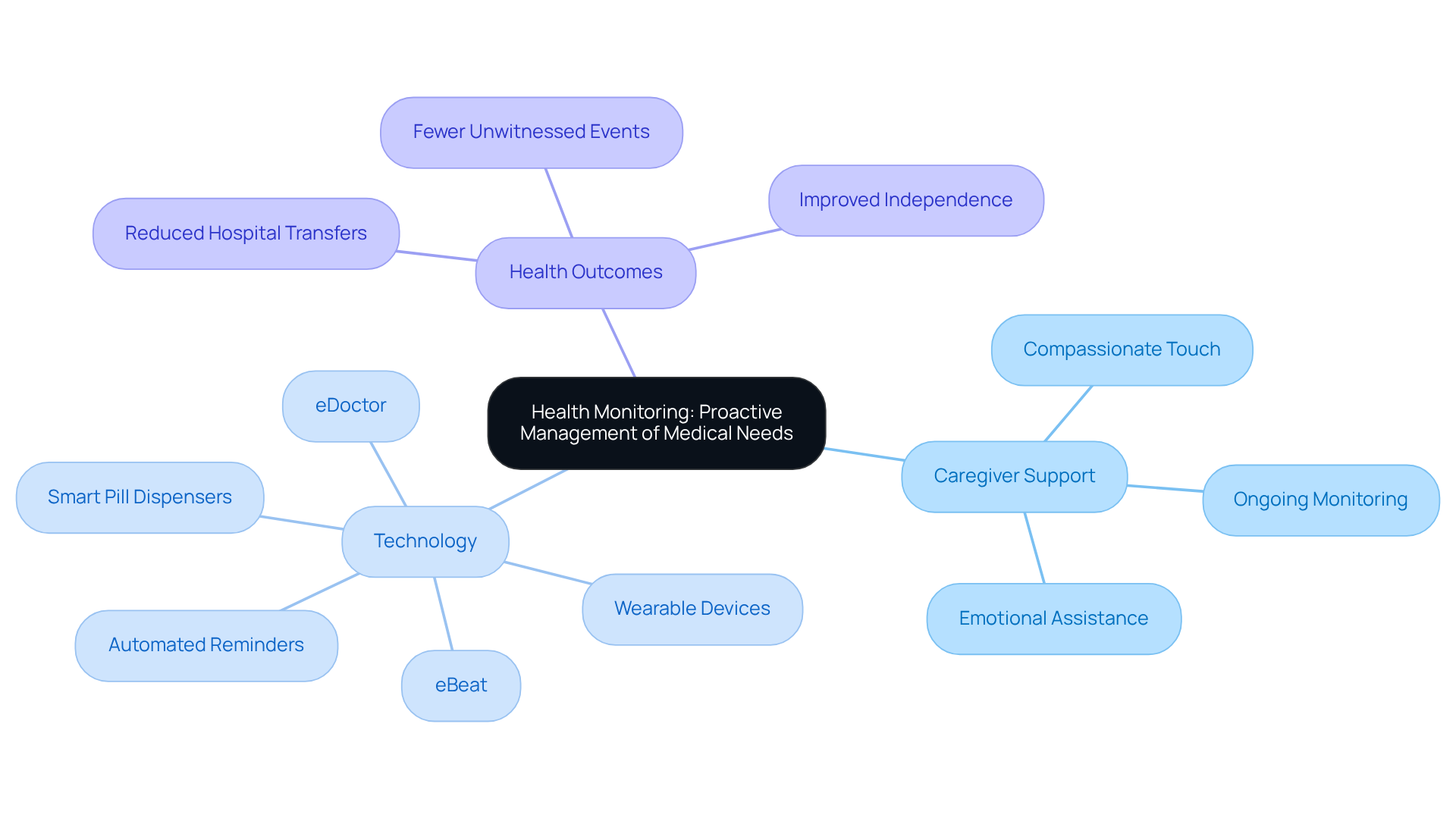
The role of a live in carer is crucial in supporting the wellness of seniors, providing a compassionate touch that truly makes a difference. They provide ongoing monitoring that not only enhances the quality of care but also brings peace of mind to families. With tools like eBeat and eDoctor, caregivers keep a close eye on vital signs, manage medications, and notice any changes in well-being. This attentive oversight helps catch potential issues early, allowing for timely interventions that can prevent complications and improve health outcomes.
For example, continuous monitoring has been shown to reduce hospital transfers and readmissions. Studies reveal that it leads to fewer unwitnessed events and quicker assistance when needed. Caregivers also use wearable devices to give real-time feedback on vital signs, empowering seniors to take charge of their health. Automated medication reminders and smart pill dispensers are vital in ensuring adherence to prescribed regimens, significantly lowering the risk of missed doses or accidental overdoses, as noted by Brian Kane.
By embracing these proactive strategies, caregivers not only enhance their clients' quality of life but also foster a sense of independence and security. They become essential allies in elderly support, acting as live in carers by providing the emotional and practical assistance that families need. Family supporters can explore specific wearable devices and health applications to further enhance their loved ones' health management, knowing they are not alone in this journey.
Respite for Family Caregivers: Taking Breaks Without Worry
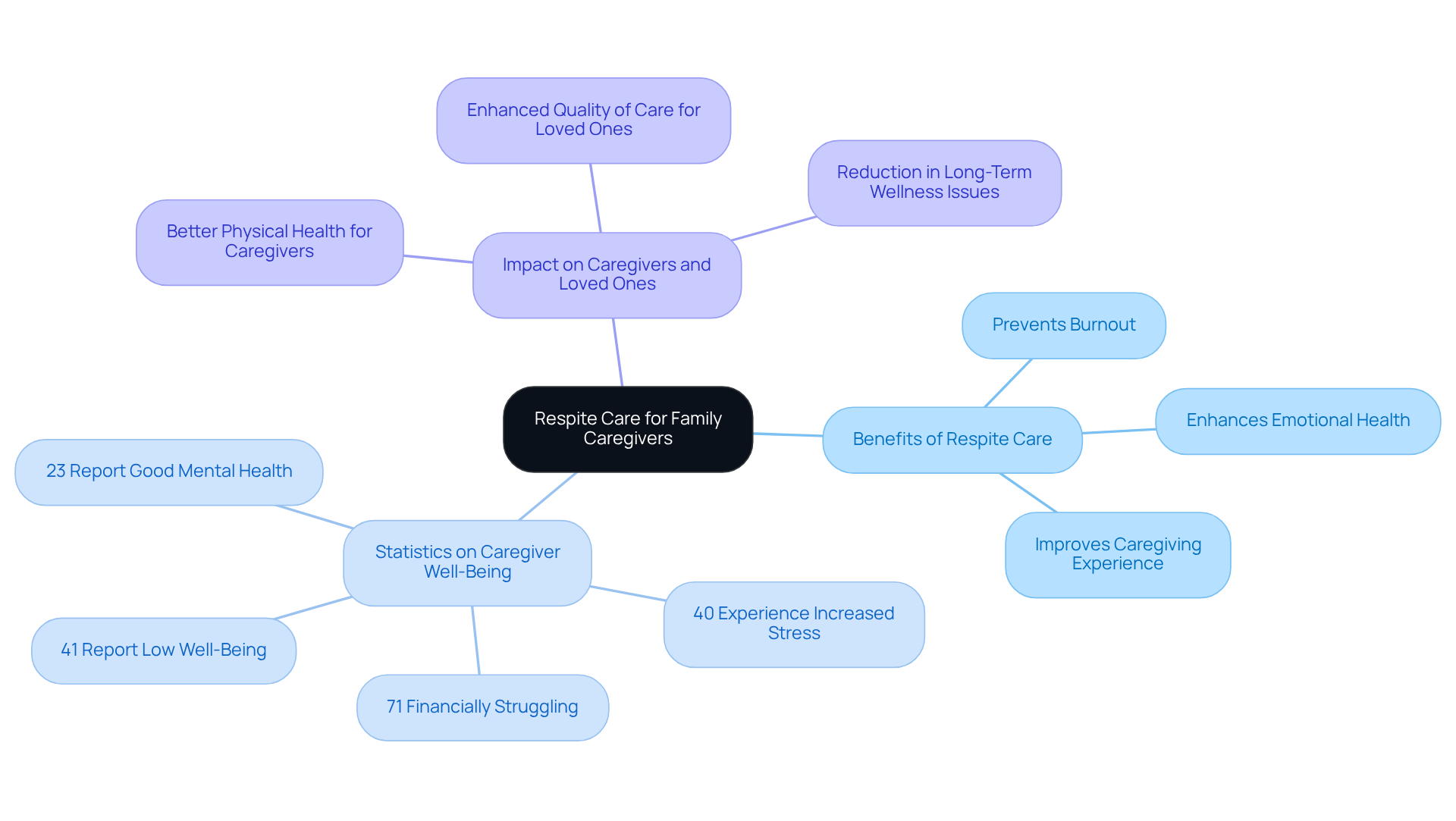
Live-in carers provide essential relief for family supporters, enabling them to take much-needed breaks without worrying about their loved ones' safety. This time off is crucial for preventing caregiver burnout, a challenge that many face—41% report low overall well-being, and countless others feel heightened stress levels. By placing care in the hands of professionals, family members can recharge, attend to personal matters, or simply enjoy a well-deserved break.
This not only boosts their physical and emotional health but also enhances the overall caregiving experience. For instance, caregivers who take regular breaks often find themselves better equipped to manage their responsibilities, reducing the risk of long-term wellness issues that can arise from neglecting their own needs.
The importance of respite care cannot be overstated; it plays a vital role in maintaining the well-being and happiness of both caregivers and their loved ones. Remember, taking care of yourself is not just beneficial for you; it also allows you to provide better care for those you love.
Companionship: Fostering Social Interaction and Engagement
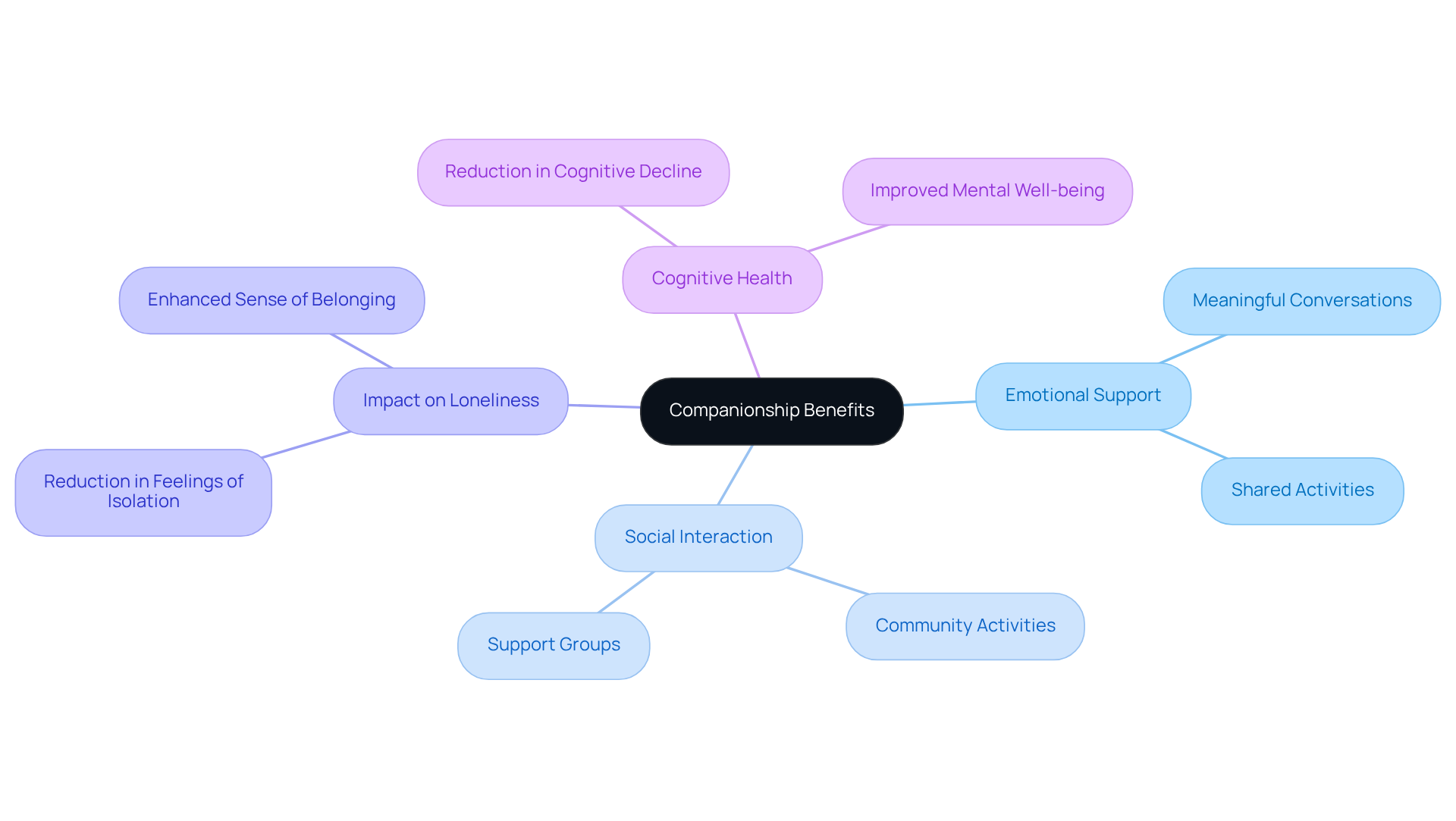
A vital benefit of hiring a live-in carer is the companionship it provides. Caregivers provide not only physical assistance but also essential emotional support and social interaction. Engaging in meaningful conversations, enjoying activities together, and sharing life experiences can significantly alleviate feelings of loneliness and isolation, which many older adults face.
Did you know that 1 in 3 adults across the nation report feeling lonely? This statistic underscores the importance of addressing loneliness through companionship. Older adults who maintain vibrant social lives can experience up to a 70% reduction in cognitive decline over time. This highlights just how crucial social involvement is for mental well-being.
The interaction fostered by live-in carers is key to maintaining mental health and enhancing the overall quality of life for clients. These caregivers nurture connections that help preserve cognitive function and prevent mental health issues in older adults. It's also important to recognize that loneliness contributes to over 871,000 fatalities each year, emphasizing the need to promote social ties for older adults.
Caregivers are encouraged to facilitate participation in community activities or social groups. These practical steps can greatly enhance social engagement and emotional support, creating a more fulfilling life for those they care for. Together, we can combat loneliness and foster a sense of belonging.
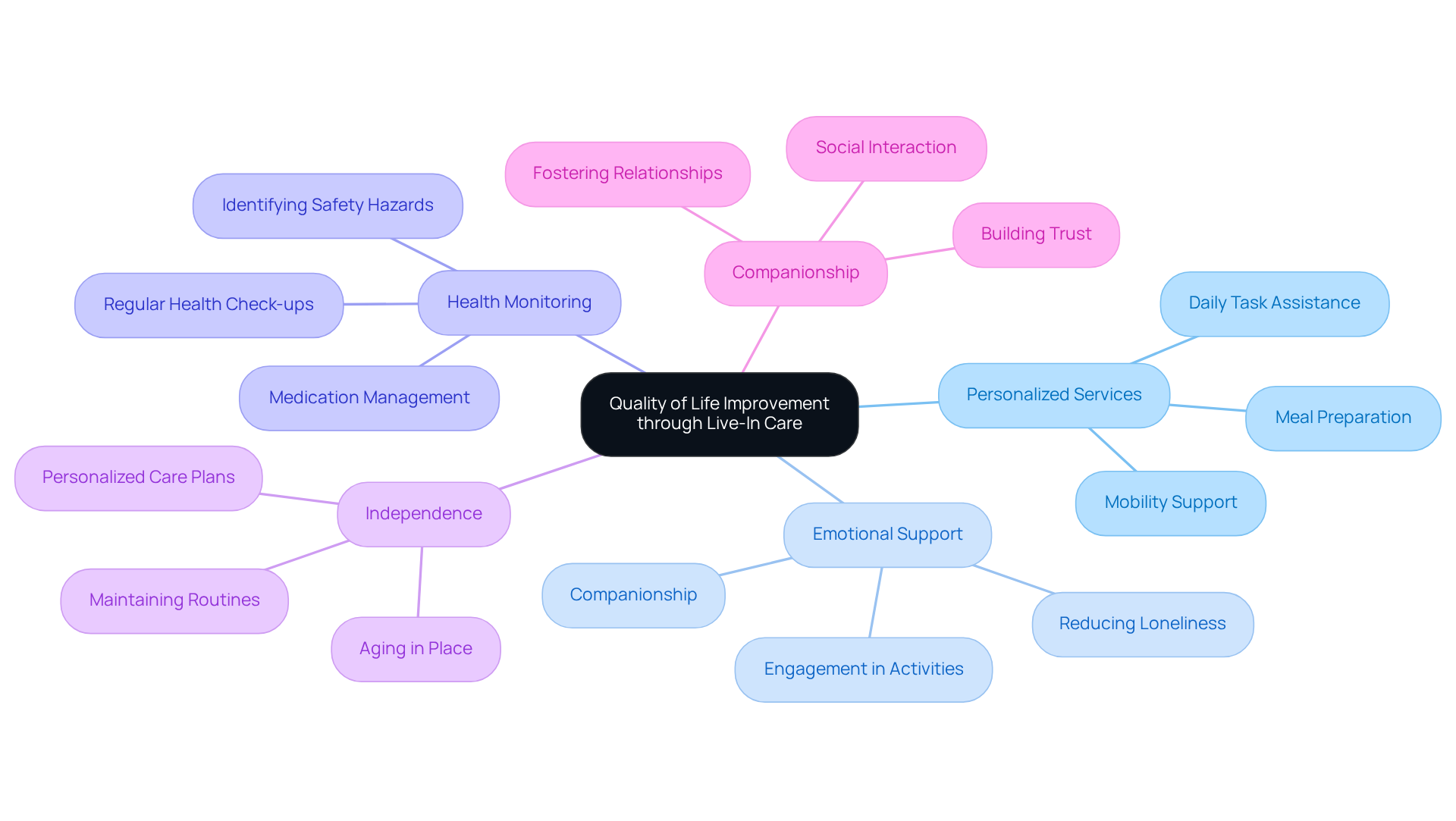
Overall Quality of Life Improvement: The Comprehensive Benefits of Live-In Care
Having a live in carer can truly enhance the quality of life for older adults, offering a range of personalized services that cater to their unique needs. These compassionate helpers provide not just assistance with daily tasks but also essential emotional support and ongoing health monitoring. By creating a nurturing environment, live-in caregivers help foster independence and safety, allowing seniors to flourish in the comfort of their own homes.
This holistic approach to care addresses both physical and emotional needs, ensuring that elderly individuals enjoy companionship and engage in meaningful activities. The advantages of live-in caregiving go beyond simple assistance; they form a comprehensive support system that boosts overall well-being, alleviates feelings of loneliness, and contributes to a fulfilling lifestyle.
As we look at the aging population, which is projected to grow by 38.8% between 2010 and 2020, the need for such personalized care becomes increasingly urgent. Families seeking to enhance their loved ones' quality of life find that live in carer services are a compelling option. It’s not just about care; it’s about creating a warm, supportive atmosphere where seniors can thrive.
Your Path Forward
Hiring a live-in carer offers a wonderful opportunity to enhance the quality of life for seniors and individuals with special needs. With personalized, compassionate support right in the comfort of their own homes, live-in caregivers do more than just help with daily tasks. They nurture emotional well-being, independence, and a sense of security. This holistic approach ensures that clients receive the attention and care they truly deserve, tailored to their unique lifestyles and preferences.
The benefits of live-in care are significant:
- Emotional support helps alleviate loneliness.
- Daily living assistance promotes independence.
- Personalized care plans cater to individual needs, creating a sense of belonging.
- The continuity of care fosters trust and familiarity.
- Health monitoring, along with respite for family caregivers, brings peace of mind.
Together, these elements create a nurturing environment where seniors can thrive, maintaining their dignity and joy as they age.
As the demand for personalized in-home care continues to grow, families are encouraged to reflect on the profound impact that live-in carers can have on their loved ones' lives. Embracing this option not only enhances the well-being of seniors but also supports families in their caregiving journey. Investing in a live-in carer is not just about assistance; it’s about fostering a fulfilling, connected life for those who matter most.
https://iframe.tely.ai/cta/eyJhcnRpY2xlX2lkIjogIjY5MGJmNjBiMDBkNjI0ZGVmNjdjMzUwNSIsICJjb21wYW55X2lkIjogIjY4ZWU1ZGNhNzMxNzYyNTU3ZjNjOTVjMSIsICJpbmRleCI6IG51bGwsICJ0eXBlIjogImFydGljbGUifQ==Frequently Asked Questions
What services does Happy to Help Caregiving provide?
Happy to Help Caregiving offers a range of personalized in-home services including companionship, post-hospital recovery assistance, respite support, and palliative care.
How does having a live-in carer enhance the quality of life for clients?
A live-in carer provides tailored support that aligns with clients' unique lifestyles and preferences, fostering a sense of security and comfort in their own homes, which promotes emotional well-being and independence.
What are the emotional benefits of having a live-in carer for elderly individuals?
Live-in carers provide emotional support that alleviates feelings of loneliness and isolation, encouraging meaningful interactions and activities that enhance overall well-being and mental health.
How does regular social interaction with a live-in carer affect older adults?
Regular social interaction can lower the chances of depression and anxiety, with many older adults reporting feeling less alone and more engaged in life due to their relationship with their support providers.
What impact does daily living assistance from a live-in carer have on seniors?
Daily living assistance helps seniors with tasks like meal preparation, personal hygiene, and medication management, empowering them to maintain their independence and improve their quality of life.
What are the typical hourly rates for at-home support services?
Typical at-home support rates range from $20 to $50 per hour.
How does technology play a role in caregiving at Happy to Help Caregiving?
The integration of technology in caregiving enhances the experience by ensuring that clients remain connected and supported, further improving their quality of life.
What is the expected growth of home assistance services by 2034?
The demand for home assistance services is expected to rise by 22% by 2034.