
For families in our service areas
For families in our service areas, this guide explains companion care and how non-medical in-home caregiving can support care planning in East Idaho, Treasure Valley & Magic Valley, Northern Wasatch, North Central West Virginia, and Northeast Ohio.
The Importance of Hiring a Private Companion for Elderly
Loneliness and isolation are increasingly recognized as critical issues affecting the well-being of elderly individuals. Studies indicate that a significant portion of older adults experience these feelings, which can lead to serious mental health challenges. This situation not only impacts their emotional state but also their overall quality of life.
Hiring a private companion for elderly care offers transformative benefits. Personalized companionship can enhance mental health, promote independence, and provide essential daily support. However, families often face the challenge of navigating overwhelming options to find the right companion care that truly meets their loved ones' unique needs.
To address this, families should consider a few key factors when selecting a companion:
- Look for caregivers who are not only qualified but also share common interests with the elderly individual.
- This connection can foster a more meaningful relationship, ultimately improving the quality of care.
Happy to Help Caregiving: Personalized Companionship for Seniors
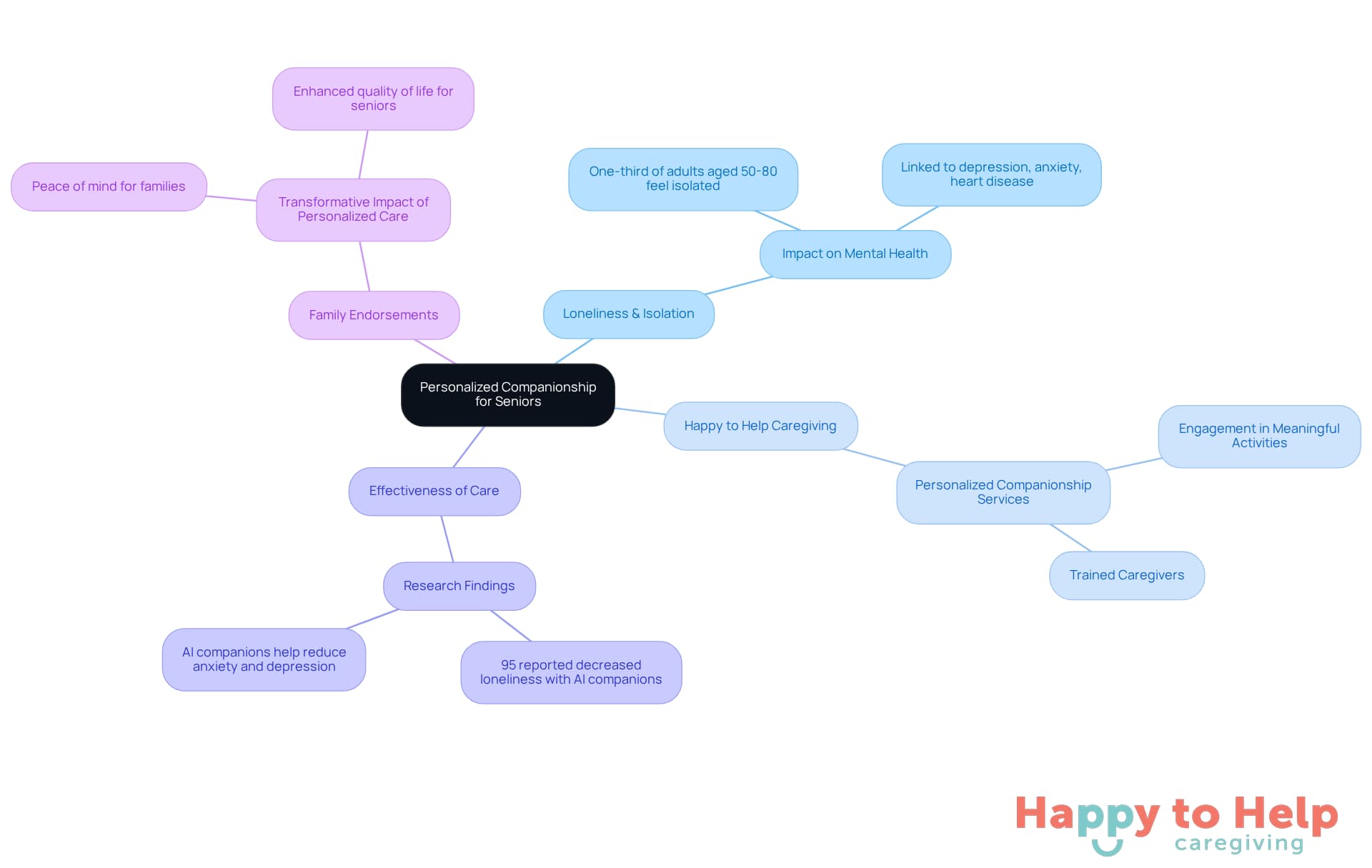
Loneliness and isolation are significant challenges faced by elderly individuals, impacting their mental health and overall well-being. Studies reveal that one-third of U.S. adults aged 50 to 80 report feeling isolated, which can lead to serious psychological issues. This highlights the urgent need for effective private companion for elderly services.
Happy to Help Caregiving addresses this problem by providing a private companion for elderly clients, offering personalized companionship tailored to their unique needs and preferences. This approach not only fosters a sense of safety but also enhances the psychological and social well-being of older adults, making a private companion for elderly essential for helping them thrive in their own homes. Caregivers are trained to engage clients in meaningful activities, creating a supportive environment that promotes independence and dignity.
Research supports the effectiveness of customized care. For example, a study found that 95% of participants using AI companions reported decreased feelings of loneliness after one year. This underscores the critical role of tailored companionship in combating social isolation among older adults.
Endorsements from families further illustrate the transformative impact of personalized care plans. By prioritizing companionship and engagement, Happy to Help Caregiving not only enhances the quality of life for older adults but also offers families peace of mind, knowing their loved ones have a private companion for elderly care who provides compassionate and attentive support.
Emotional Support: Alleviating Loneliness and Isolation
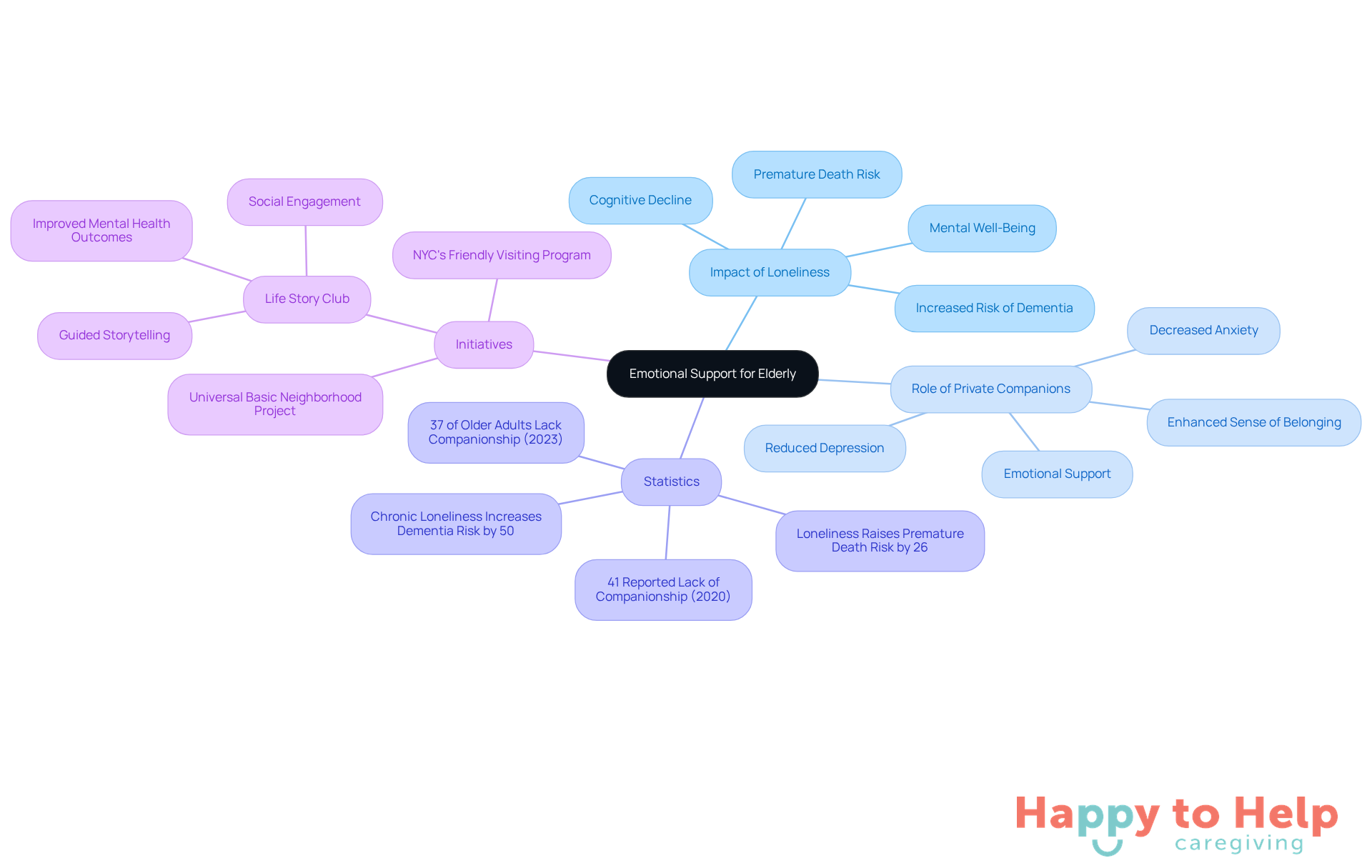
Loneliness among elderly individuals is a pressing issue that significantly impacts their mental well-being. Private companions for elderly play an essential role in offering emotional support, which greatly reduces feelings of isolation. Frequent interactions with these support providers nurture a sense of belonging and companionship, vital for sustaining mental health.
Studies reveal alarming statistics: chronic loneliness increases the risk of dementia by 50% and raises the chance of premature death by 26%. Older adults who engage in social activities with friends experience reduced levels of depression and anxiety, leading to improved overall well-being. For instance, in 2023, 37% of older adults reported a lack of companionship, down from 41% in 2020. This highlights the importance of stable support relationships in combating social isolation.
Initiatives like the Life Story Club demonstrate effective solutions. Guided storytelling and social engagement have shown to improve mental health outcomes, with participants reporting reduced feelings of depression and a stronger sense of connection. By prioritizing companionship, support providers not only assist older adults in their daily activities but also serve as a private companion for elderly individuals to enhance their mental well-being. As noted, 'loneliness isn’t just an emotional struggle - it’s a serious health crisis,' emphasizing the urgent need for a private companion for elderly individuals as an effective companionship solution.
Practical Assistance: Daily Living Support for Seniors
Elderly individuals often face significant challenges in their daily lives, particularly when it comes to managing essential tasks like meal preparation, medication reminders, and light housekeeping. These challenges can lead to feelings of dependence and discomfort in their own homes, impacting their overall quality of life.
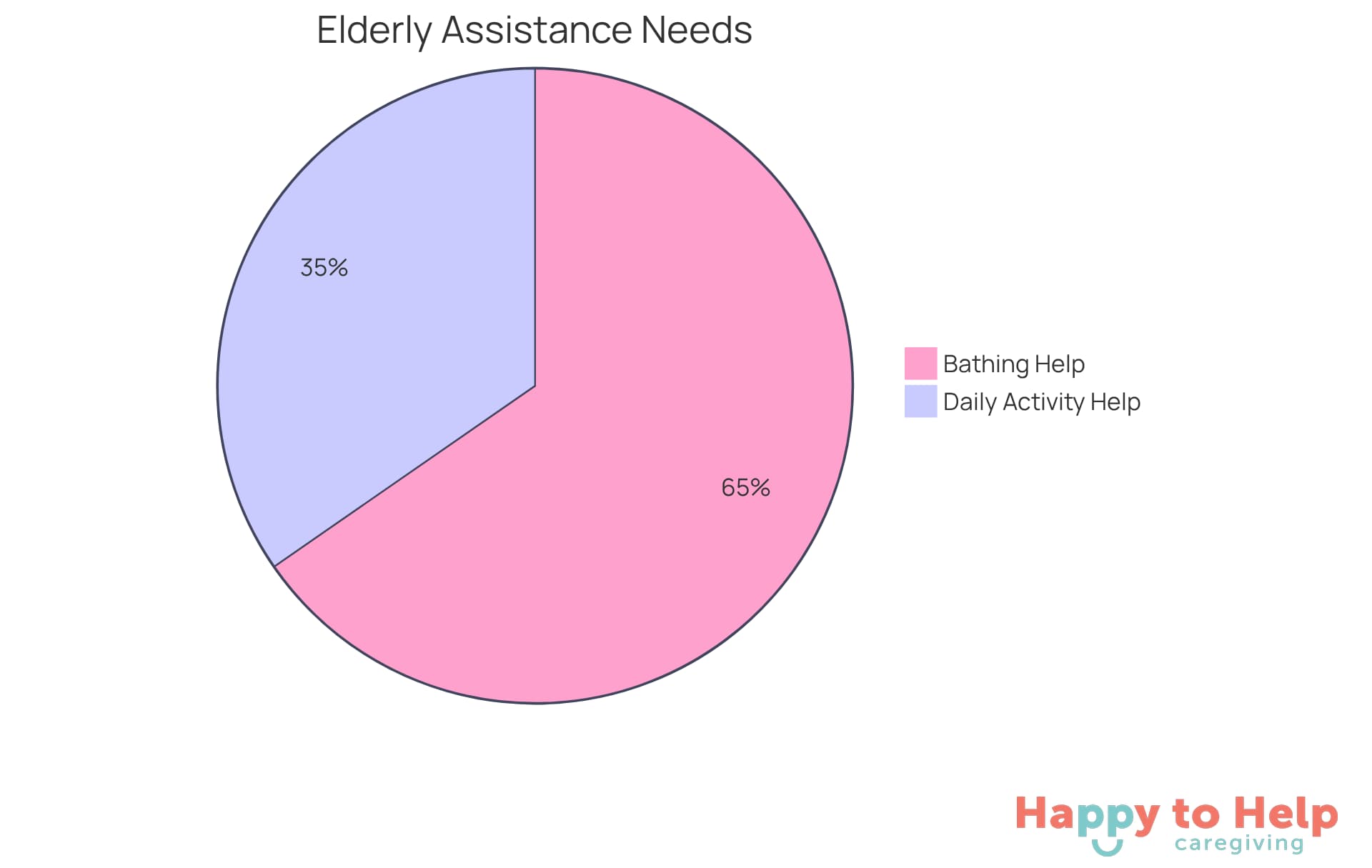
The implications of this problem are profound. Many older adults struggle with maintaining their independence, which can lead to increased feelings of isolation and loneliness. For instance, statistics reveal that:
- 44% of home care recipients require assistance with at least one daily activity
- 83% need help specifically with bathing and showering
This highlights the urgent need for effective support systems.
Private companions for elderly offer a practical solution to these challenges. By managing daily tasks, they enable elderly individuals to focus on enjoying their lives rather than feeling overwhelmed by chores. For example, consistent meal preparation not only promotes healthier eating habits but also fosters social interaction during meals, which is crucial for mental well-being. Caregivers often observe that their involvement significantly uplifts the spirits of their clients, allowing them to engage more fully in their routines. As one provider noted, "When elderly individuals feel supported in their daily activities, they regain confidence and a sense of control over their lives."
This support is especially vital for those recovering from hospital stays, ensuring a smoother transition back to independence. Moreover, the emotional support offered by providers addresses the significant issue of chronic loneliness among the elderly, making their role even more essential.
Ultimately, the assistance provided by a private companion for elderly individuals goes beyond merely completing tasks; it significantly enhances their overall quality of life, enabling them to thrive in the comfort of their homes.
Safety Monitoring: Ensuring a Secure Environment
Safety is a significant concern for caregivers of elderly individuals. Many families worry about their loved ones being in potentially hazardous environments. Without proper oversight, elderly individuals may face risks that could lead to accidents or emergencies.
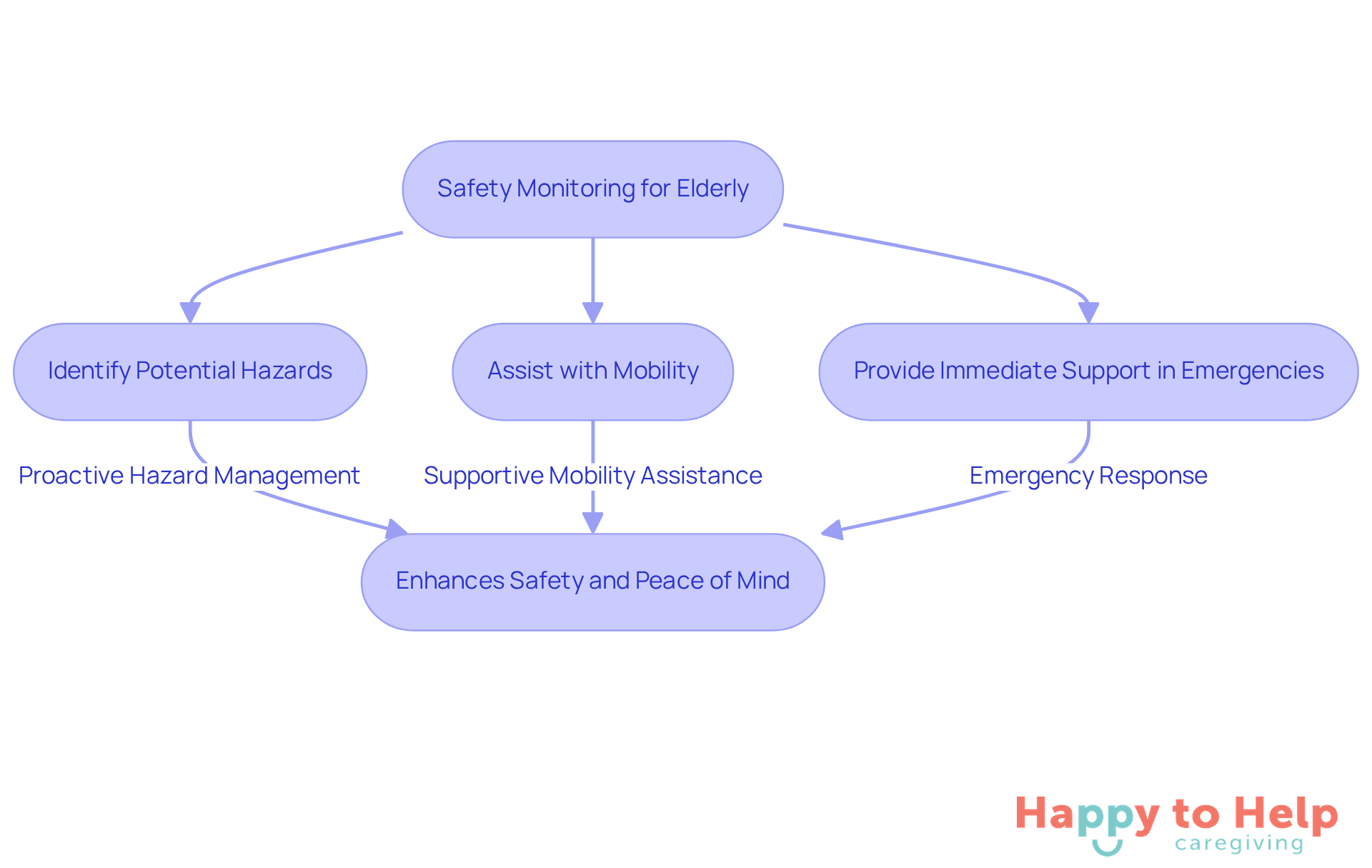
Private companions for the elderly effectively address this issue. They:
- Identify potential hazards in the home
- Assist with mobility
- Provide immediate support in case of emergencies
This proactive approach not only protects elderly individuals from accidents but also reassures families that their loved ones are cared for in a secure environment.
By employing a private companion for elderly individuals, caregivers can significantly enhance safety measures. This solution fosters peace of mind for families, knowing that their loved ones are in a safe and supportive setting.
Social Engagement: Promoting Interaction and Activity
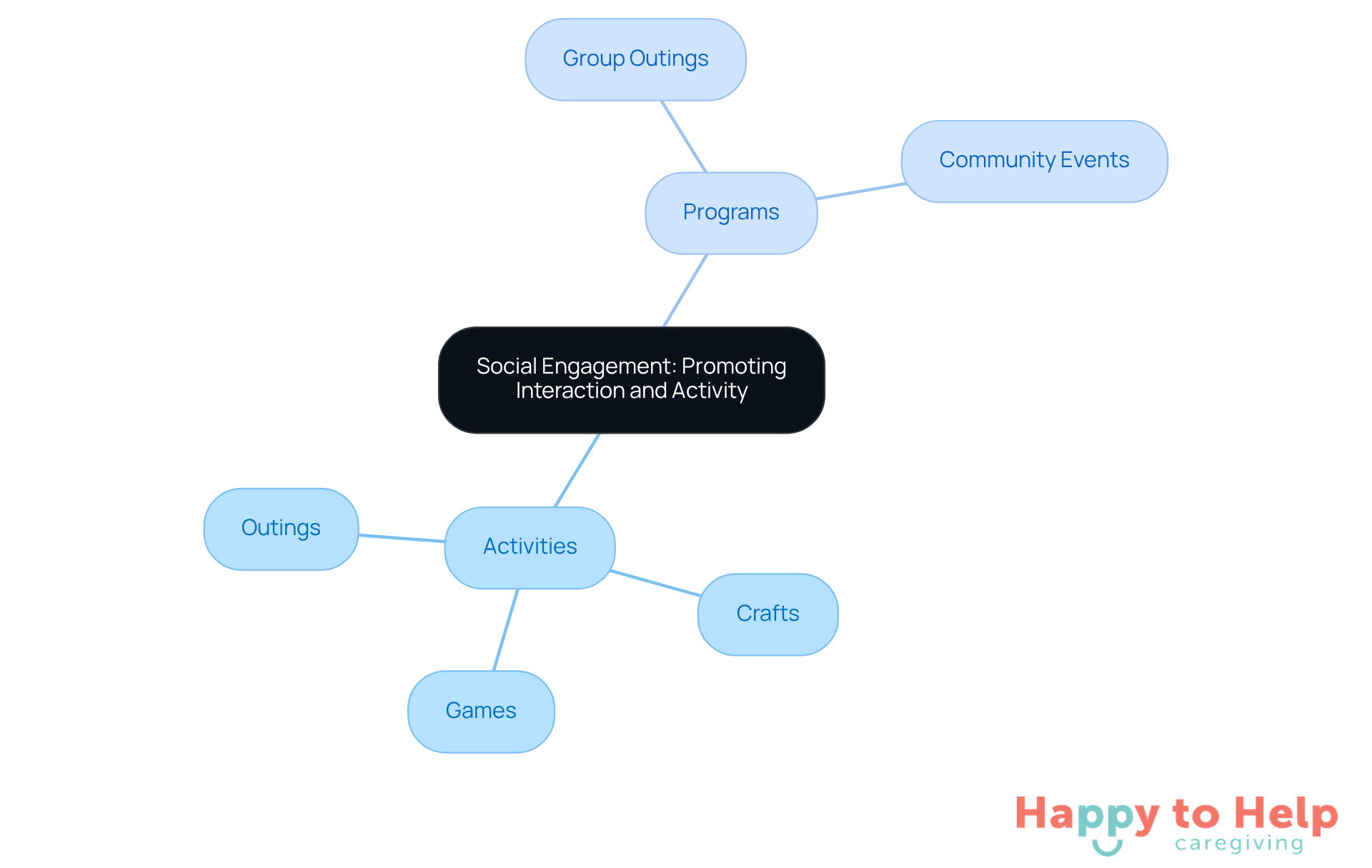
Companion caregivers face a significant challenge: ensuring that older adults have a private companion for elderly to combat social isolation. This issue not only affects emotional well-being but also hampers cognitive function. Research shows that older adults who engage in social activities experience improved mood and overall health, highlighting the importance of social interaction in companion care.
To combat this problem, caregivers can encourage participation in enjoyable activities like:
- Games
- Crafts
- Outings
These interactions are essential for fostering connections and a sense of purpose, which are crucial for maintaining a fulfilling lifestyle. For instance, studies indicate that frequent social interactions can lead to reduced rates of depression and enhanced cognitive health.
Implementing programs that promote interaction, such as:
- Group outings
- Community events
can provide vital cognitive stimulation. This not only helps slow cognitive decline but also improves overall brain function. Ultimately, promoting social interaction in elderly care goes beyond mere companionship; having a private companion for elderly individuals is integral to enhancing their quality of life.
Peace of Mind: Family Assurance Through Companion Care
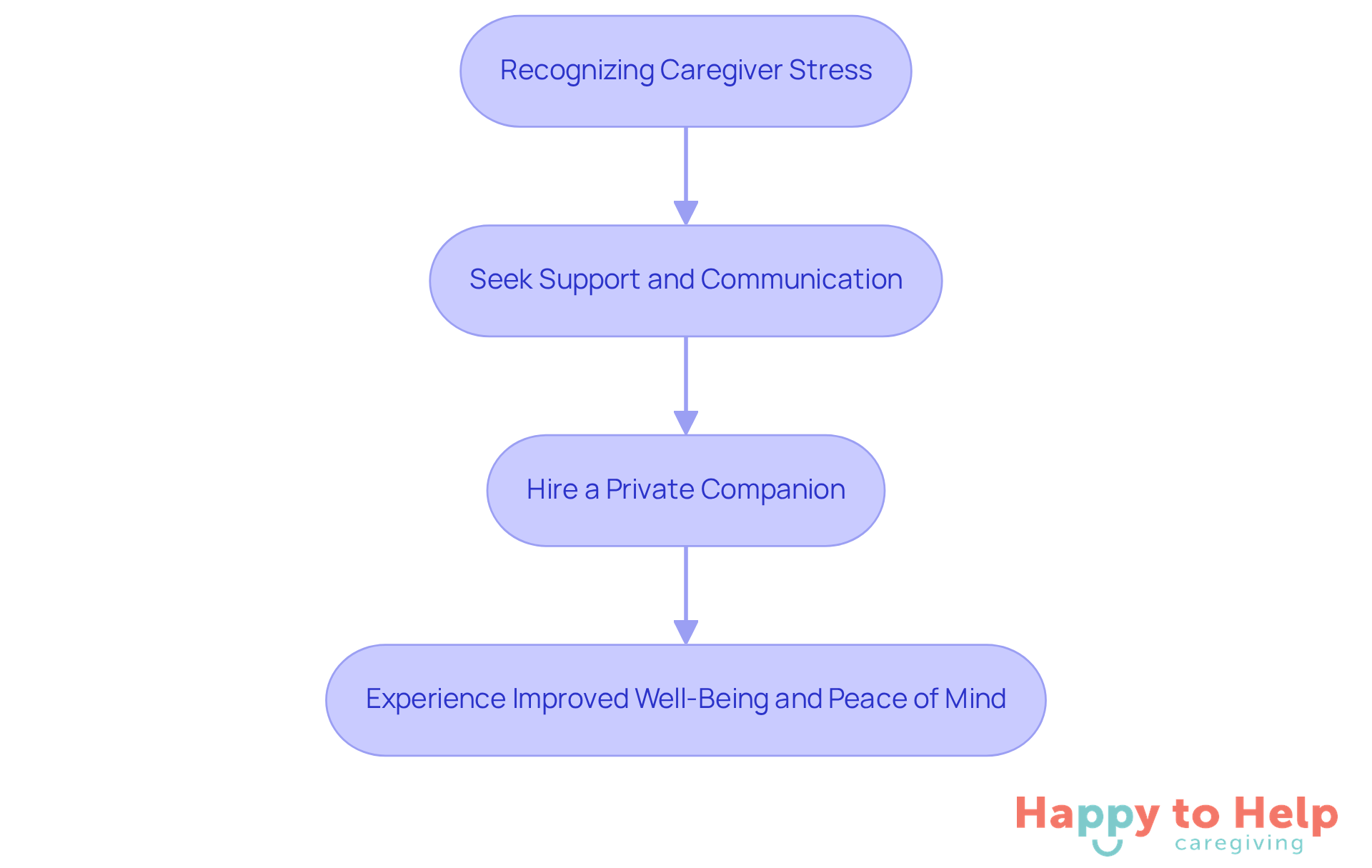
Caring for elderly loved ones can be a daunting task, often leaving caregivers feeling overwhelmed and anxious about their safety and well-being. This constant worry can take a toll on their own responsibilities and mental health.
The implications of this stress are significant; caregivers may struggle to balance their duties while fearing for their loved ones' safety. Frequent updates and communication from support providers can alleviate some of this burden, fostering a collaborative care environment. Research indicates that effective communication between caregivers and support providers can significantly reduce stress levels, with relatives reporting notably lower peace scores when supported (p = 0.007).
Companion care, especially through a private companion for elderly, emerges as a practical solution to these challenges. By hiring a private companion for elderly care, families can ensure their loved ones receive compassionate and attentive support. This not only enriches the lives of elderly individuals but also strengthens family bonds, allowing everyone to feel more secure and engaged in the caregiving process.
Testimonials from relatives highlight the transformative impact of companion assistance. One caregiver shared, "Having a companion for my mother has not only eased my worries but has also brought joy and companionship to her life." Prioritizing open communication and consistent updates can significantly enhance the caregiving experience, providing peace of mind for families.
Customized Care Plans: Tailored Support for Individual Needs
Elders often face unique challenges that require tailored support. Without addressing these specific needs, caregivers may struggle to provide effective assistance, leading to frustration for both parties.
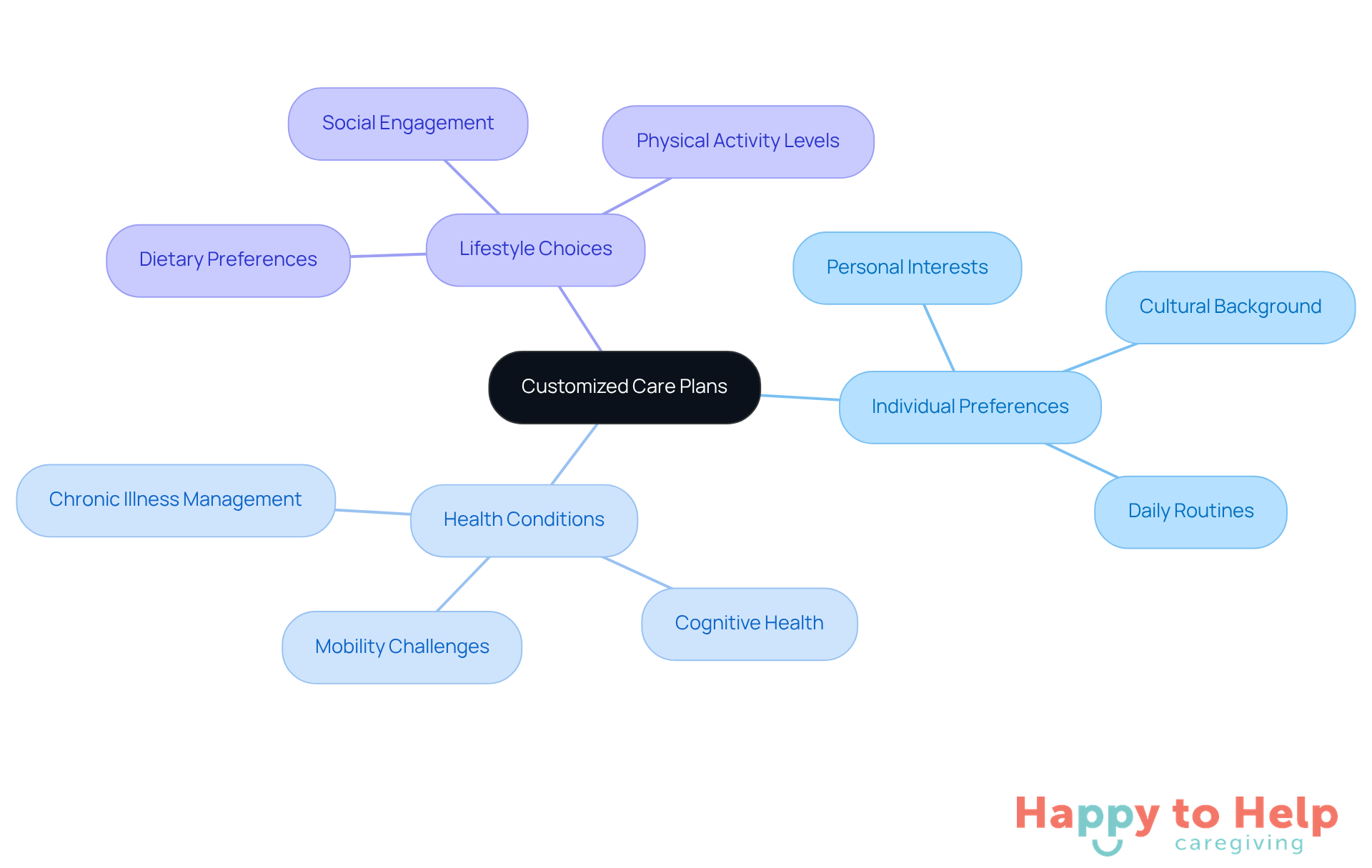
Customized care plans are essential in this context. They take into account individual preferences, health conditions, and lifestyle choices, ensuring that the support provided is relevant and effective. This personalized approach not only enhances the caregiving experience but also makes it more impactful for the elderly.
Flexible Scheduling: Adapting to Family Needs
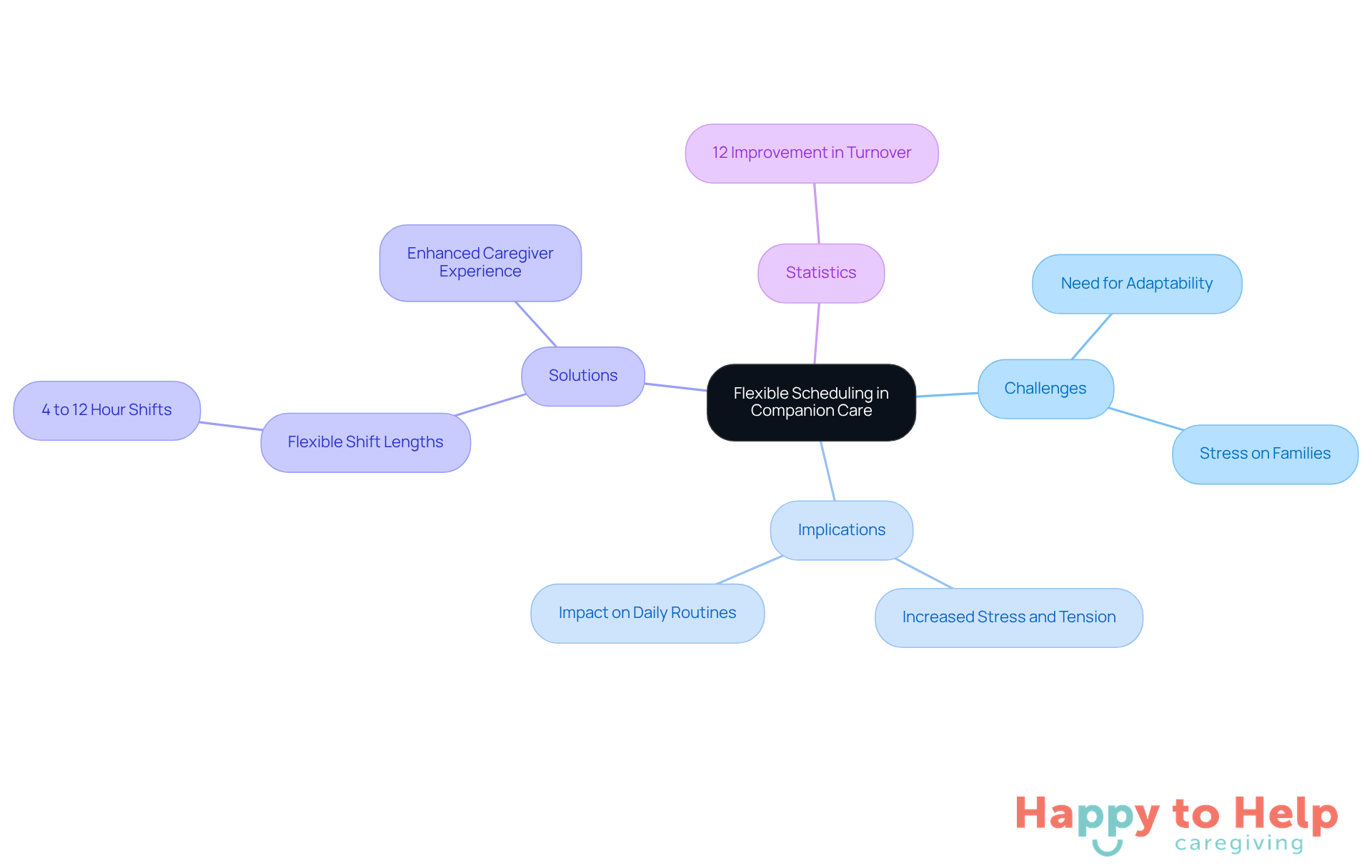
Companion care services face a significant challenge: the need for adaptability. Caregivers must adjust their hours to meet the specific requirements of households, which can range from part-time to full-time support. This flexibility is crucial for ensuring that elderly individuals have a private companion for elderly care whenever they need it. Without such adaptability, families may struggle to maintain their daily routines while ensuring their loved ones' well-being.
The implications of inflexible caregiving can be profound. Households often juggle multiple obligations, and when caregivers cannot coordinate their schedules with family needs, it can lead to increased stress and tension. As Maria Trapenasso notes, "The constant pull between work, childcare and eldercare can be overwhelming for the sandwich generation, especially women." This highlights the importance of a private companion for elderly individuals who are dedicated to adjusting their schedules, allowing seniors to feel safe and supported while enabling relatives to manage their own responsibilities effectively.
Fortunately, there are solutions. Flexible scheduling significantly enhances the caregiving experience and strengthens the bond between support providers and families. For instance, statistics from Arrow Senior Living indicate a 12% improvement in turnover due to flexible scheduling, underscoring its importance in the caregiving landscape. Additionally, Sinceri Senior Living offers shift lengths ranging from 4 to 12 hours, showcasing the variety of options available to families. By embracing these flexible solutions, caregivers can serve as a private companion for elderly, providing essential support during critical moments, such as mornings when seniors need help preparing for the day or evenings when companionship is particularly important.
Post-Hospital Recovery: Support for Smooth Transitions
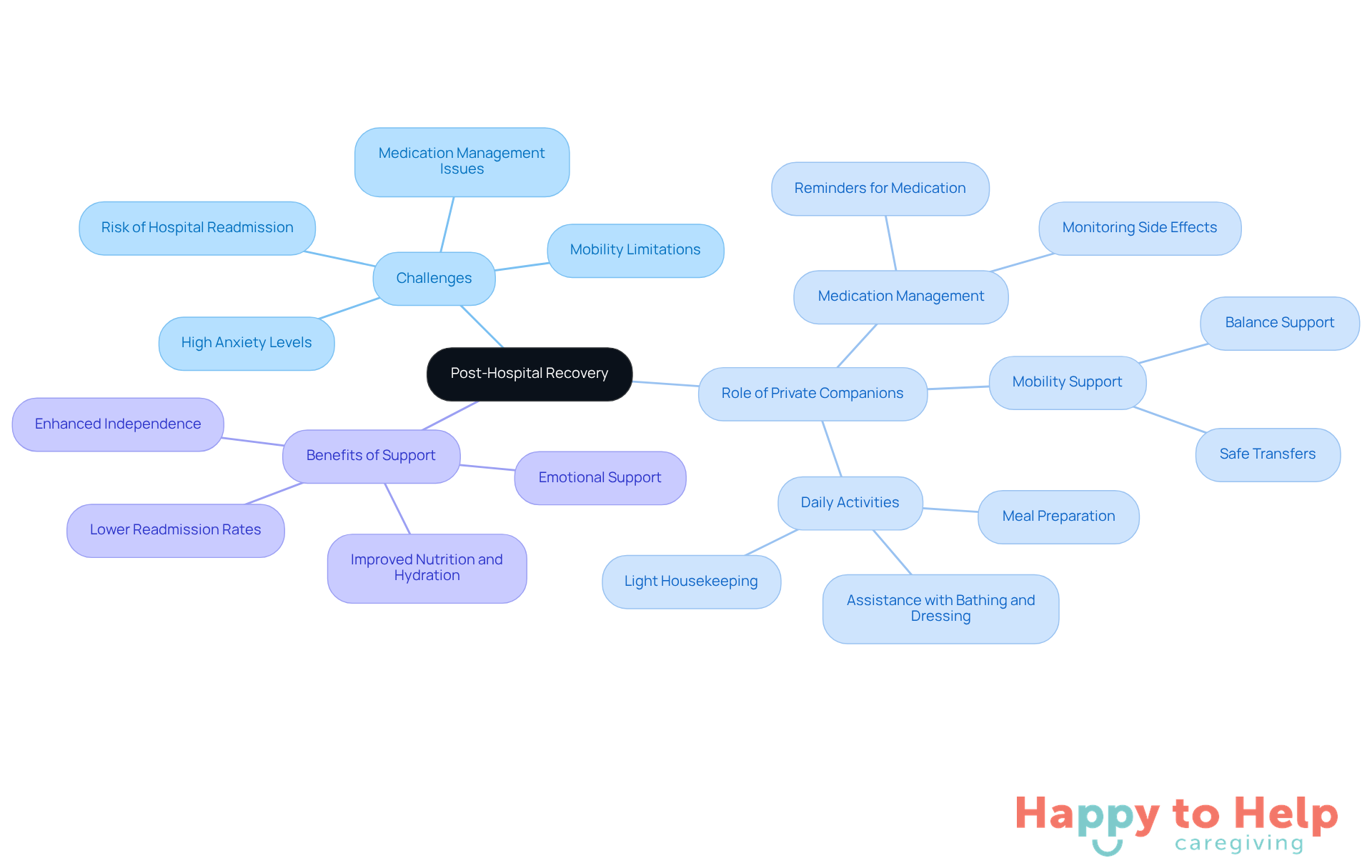
Elderly individuals often face significant challenges during the post-hospital recovery phase, making the transition from hospital to home a critical time. Anxiety can run high, and without proper support, the risk of hospital readmission increases. A study by the National Institutes of Health highlights this issue, revealing that older adults with home care services had significantly lower readmission rates. This underscores the importance of having skilled support providers involved in recovery outcomes.
Private companions for elderly play a vital role in addressing these challenges. They assist with essential tasks such as:
- Medication management
- Mobility support
- Daily activities
These tasks are crucial for adhering to recovery plans. These private companions for elderly provide emotional support and companionship, helping seniors feel secure and less isolated, which fosters a positive environment conducive to healing. As noted by Genuine Global Care, "Home care is more than a service - it’s peace of mind for families and a vital step in long-term recovery."
Moreover, support providers help with meal preparation to ensure adequate nutrition and hydration, both of which are essential for recovery and enhancing the immune system. Having a private companion for elderly individuals can significantly impact their ability to regain independence while ensuring safety and well-being during this critical transition.
To maximize the benefits of in-home care, families should prioritize selecting skilled and compassionate support providers. This proactive approach not only aids in physical healing but also alleviates the emotional burdens that often accompany recovery.
Enhanced Quality of Life: Comprehensive Benefits of Companion Care
A private companion for elderly individuals addresses a significant problem they face: isolation and loneliness. These issues can lead to cognitive decline and depression, severely impacting their quality of life.
The implications of this problem are profound. Research shows that elderly individuals who feel isolated often experience poorer mental and physical health. They may struggle with nutrition and hydration, as they lack the support needed during meal times.
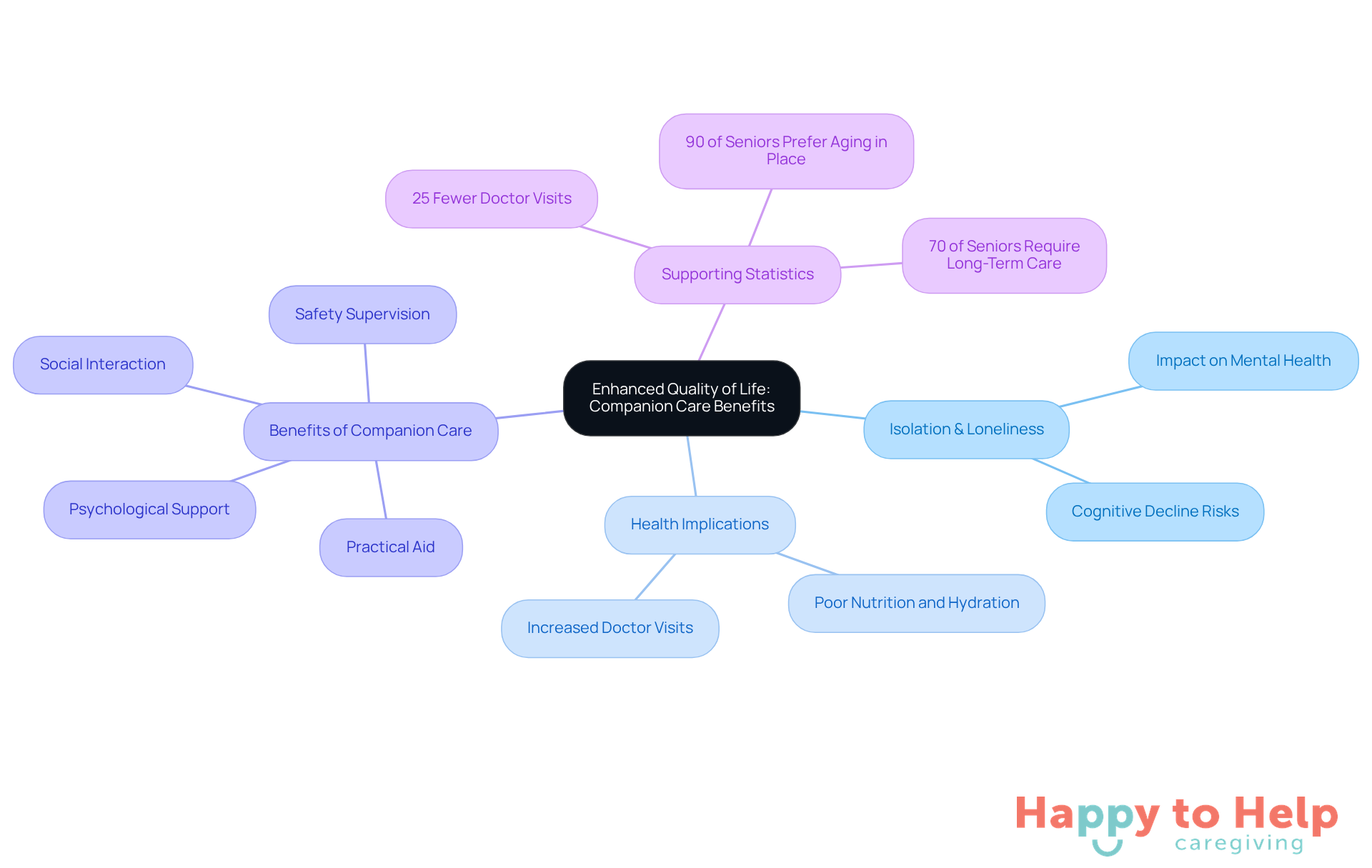
However, a private companion for elderly care offers a practical solution. A private companion for elderly individuals provides essential psychological support, practical aid, safety supervision, and social interaction. This holistic approach not only promotes better mental and physical health but also encourages the inclusion of a private companion for elderly to foster a sense of community and belonging.
As Sean Diswe, COO for Devoted Care Services, states, "By focusing on emotional well-being, we are actively helping older adults in Camarillo avoid the devastating effects of isolation and live richer, happier lives at home."
Moreover, older adults utilizing in-home care services report 25% fewer doctor visits annually, highlighting the health advantages of companion care. By creating a supportive environment, a private companion for elderly enables seniors to thrive, making this service an invaluable resource for families seeking to enhance the lives of their loved ones at home.
Taking the Next Steps
Hiring a private companion for elderly care addresses critical issues such as loneliness, safety, and daily living challenges. These problems can significantly diminish the quality of life for seniors, leading to feelings of isolation and vulnerability.
The implications of these challenges are profound. Without adequate support, elderly individuals may struggle with daily tasks, face safety risks, and experience a decline in mental health. This is where the solution comes in: hiring a private companion.
A tailored approach not only provides emotional support but also ensures that elderly individuals receive the practical assistance they need to thrive in their own homes. The presence of a compassionate companion can transform daily experiences, helping older adults maintain their independence while fostering a sense of belonging and security.
Key benefits of private companionship include:
- Emotional support that alleviates isolation
- Practical assistance with daily tasks
- Safety monitoring to prevent accidents
- Promotion of social engagement through various activities
These elements work together to create a nurturing environment where elderly individuals can flourish. Additionally, flexible scheduling and customized care plans enhance the effectiveness of companion services, ensuring that the unique needs of each senior are met.
Ultimately, the significance of hiring a private companion for elderly care cannot be overstated. Families seeking to improve their loved ones' well-being should recognize the profound impact that companionship can have on mental and physical health. By investing in personalized care, families not only provide essential support for their elderly relatives but also gain peace of mind, knowing that their loved ones are receiving compassionate and attentive care. Embracing this approach is a vital step towards fostering a healthier, happier, and more connected life for seniors.
https://iframe.tely.ai/cta/eyJhcnRpY2xlX2lkIjogIjY5MjY0M2EyNTA1M2U2YTE3NTJiNzdlNiIsICJjb21wYW55X2lkIjogIjY4ZWU1ZGNhNzMxNzYyNTU3ZjNjOTVjMSIsICJpbmRleCI6IG51bGwsICJ0eXBlIjogImFydGljbGUifQ==Frequently Asked Questions
What challenges do elderly individuals face that Happy to Help Caregiving addresses?
Elderly individuals often face loneliness and isolation, which can negatively impact their mental health and overall well-being. Happy to Help Caregiving provides private companions to combat these issues by offering personalized companionship tailored to their unique needs.
How does personalized companionship benefit older adults?
Personalized companionship fosters a sense of safety and enhances the psychological and social well-being of older adults, promoting independence and dignity while reducing feelings of isolation.
What evidence supports the effectiveness of personalized companionship for seniors?
Research indicates that 95% of participants using AI companions reported decreased feelings of loneliness after one year, highlighting the critical role of tailored companionship in alleviating social isolation among older adults.
How do private companions provide emotional support to elderly individuals?
Private companions offer emotional support through frequent interactions, nurturing a sense of belonging and companionship that is vital for sustaining mental health and reducing feelings of isolation.
What statistics highlight the impact of loneliness on elderly individuals?
Chronic loneliness increases the risk of dementia by 50% and raises the chance of premature death by 26%. Engaging in social activities with friends can reduce levels of depression and anxiety among older adults.
What practical assistance do private companions offer to seniors?
Private companions assist elderly individuals with daily living tasks such as meal preparation, medication reminders, and light housekeeping, helping them maintain their independence and improve their overall quality of life.
Why is practical assistance important for elderly individuals?
Many older adults struggle with daily tasks, leading to feelings of dependence and discomfort. Practical assistance allows them to focus on enjoying life rather than being overwhelmed by chores, thus enhancing their mental well-being.
How does Happy to Help Caregiving enhance the quality of life for older adults?
By providing personalized companionship and practical assistance, Happy to Help Caregiving helps elderly individuals regain confidence, maintain independence, and significantly improve their overall quality of life while thriving in their homes.
List of Sources
- Happy to Help Caregiving: Personalized Companionship for Seniors
- Companion robot helps seniors find connection at Denver assisted living center (https://9news.com/article/life/companion-robot-helps-seniors/73-429b669f-eb71-4c2b-9043-089dc89f97f5)
- AI personal companions offers low-tech way to combat loneliness in senior living residents (https://mcknightsseniorliving.com/news/ai-personal-companions-offers-low-tech-way-to-combat-loneliness-in-senior-living-residents)
- Lonely Seniors Are Turning To AI Bots For Companionship (https://forbes.com/sites/rashishrivastava/2025/10/18/lonely-seniors-are-turning-to-ai-bots-for-companionship)
- Meela launches and secures $3.5M to tackle loneliness in older adults (https://mobihealthnews.com/news/meela-launches-and-secures-35m-tackle-loneliness-older-adults)
- AI Care Companions for Seniors (https://health.usnews.com/senior-care/articles/ai-care-companions-for-seniors)
- Emotional Support: Alleviating Loneliness and Isolation
- The Silent Epidemic of Senior Loneliness (https://honorcare.com/news/silent-epidemic-of-senior-loneliness)
- Trends in Loneliness Among Older Adults from 2018-2023 (https://ihpi.umich.edu/national-poll-healthy-aging/reports-and-resources/trends-loneliness-among-older-adults-2018-2023)
- For seniors dealing with social isolation, NYC programs provide intergenerational events (https://cbsnews.com/newyork/news/cost-of-caregiving-the-life-story-club-nyc-friendly-visiting-program)
- Humana gives more than $12M in grants to prevent loneliness, support seniors’ emotional health (https://mcknightshomecare.com/news/humana-gives-more-than-12m-in-grants-to-prevent-loneliness-support-seniors-emotional-health)
- New initiative aims to reduce loneliness among older adults in Louisville (https://news.louisville.edu/news/new-initiative-aims-reduce-loneliness-among-older-adults-louisville)
- Practical Assistance: Daily Living Support for Seniors
- Families Prefer In-Home Care To Senior Living – Yet Struggle To Identify Needed Support (https://homehealthcarenews.com/2025/11/families-prefer-in-home-care-to-senior-living-yet-struggle-to-identify-needed-support)
- 2025 Home Care Statistics: Trends & Insights To Know (https://premierhcinc.com/blog/home-care-statistics)
- 10 Ways Companion Caregivers Enhance Seniors' Quality of Life - Happy To Help (https://happytohelpcaregiving.com/10-ways-companion-caregivers-enhance-seniors-quality-of-life)
- 28 Senior Care Statistics: In-Home & Assisted Living | Shortlister (https://myshortlister.com/insights/senior-care-statistics)
- Families caring for older adults at home say aging in place should not be taken lightly, but may be worth it (https://cbsnews.com/newyork/news/aging-in-place-home-remodeling-cost-of-caregiving)
- Safety Monitoring: Ensuring a Secure Environment
- Home Safety Month, Garbage Cans, and Aging in Place (https://lifework.arizona.edu/news/2025/home-safety-month-garbage-cans-and-aging-place)
- Technology to Prevent Falls for Seniors (https://health.usnews.com/senior-care/articles/technology-to-prevent-falls-for-seniors)
- New guidance on electronic monitoring devices aims to balance resident safety, privacy (https://mcknightsseniorliving.com/news/new-guidance-on-electronic-monitoring-devices-aims-to-balance-resident-safety-privacy)
- Smart Surveillance Boosts Safety, Connection for Seniors Aging at Home (https://ltcnews.com/articles/smart-surveillance-boosts-safety-seniors-aging-at-home)
- In Senior Homes, A.I. Technology Is Sensing Falls Before They Happen (https://nytimes.com/2025/10/29/realestate/in-senior-homes-ai-technology-is-sensing-falls-before-they-happen.html)
- Social Engagement: Promoting Interaction and Activity
- Social engagement helps older adults feel younger, live longer: study (https://mcknightsseniorliving.com/news/social-engagement-helps-older-adults-feel-younger-live-longer-study)
- Unveiling the dynamics of social engagement and subjective health in older adults: A gendered perspective (https://sciencedirect.com/science/article/pii/S0531556524001141)
- Older adults prioritize social activities, inclusiveness in massive survey assessing what matters most to them (https://mcknights.com/news/older-adults-prioritize-social-activities-inclusiveness-in-massive-survey-assessing-what-matters-most-to-them)
- The Vital Role of Social Activities and Outings for Seniors — Renaissance Center Nashville (https://rencenternashville.org/all-news/the-vital-role-of-social-activities-and-outings-for-seniors)
- Why Socialization is Important for Older Adults (https://newsroom.clevelandclinic.org/2022/12/09/why-socialization-is-important-for-older-adults)
- Peace of Mind: Family Assurance Through Companion Care
- 10 Benefits of Professional Companion Services for Family Caregivers - Happy To Help (https://happytohelpcaregiving.com/10-benefits-of-professional-companion-services-for-family-caregivers)
- Family Peace of Mind of Individuals Over 65 Years of Age With Chronic Diseases: A Cross‐Sectional Study - PMC (https://pmc.ncbi.nlm.nih.gov/articles/PMC11937873)
- New Report Reveals Crisis Point for America’s 63 million Family Caregivers (https://press.aarp.org/2025-07-24-New-Report-Reveals-Crisis-Point-for-Americas-63-million-Family-Caregivers)
- Support for Family Caregivers Brings Peace of Mind (https://hiredhandshomecare.com/support-for-family-caregivers-brings-peace-of-mind)
- 4 Steps to Hire a Nurse for a Day: A Family Caregiver's Guide - Happy To Help (https://happytohelpcaregiving.com/4-steps-to-hire-a-nurse-for-a-day-a-family-caregivers-guide)
- Customized Care Plans: Tailored Support for Individual Needs
- How Personalized Care Plans Enhance Medical Services in Long-Term Care (https://rosewood-nursing.com/post/how-personalized-care-plans-enhance-medical-services-in-long-term-care)
- Customized Care at Home: The Benefits of Personalized Care Plans - VNA Health Group (https://vnahg.org/customized-care-at-home-the-benefits-of-personalized-care-plans)
- Personalized Care Plans: Tailoring Support to Individual Needs in Assisted Living | Juniper Senior Living (https://junipercommunities.com/personalized-care-plans-tailoring-support-to-individual-needs-in-assisted-living)
- The Incredible Benefits of Home Care, in 7 Amazing Stats - Companions For Seniors (https://companionsforseniors.com/2019/08/benefits-home-care-amazing-stats-trends-reports)
- Flexible Scheduling: Adapting to Family Needs
- The need for caregiving benefits may have reached a fever pitch (https://hrdive.com/news/sandwich-generation-needs-caregiving-benefits/802864)
- ‘Groundbreaking’ companionship exemption to give home care agencies better flexibility, attorney says (https://mcknightshomecare.com/news/groundbreaking-companionship-exemption-to-give-home-care-agencies-better-flexibility-attorney-says)
- Senior Living Operators Embrace More Flexible Scheduling Practices to Improve Staffing (https://seniorhousingnews.com/2024/08/06/senior-living-operators-embrace-more-flexible-scheduling-practices-to-improve-staffing)
- 9 Ways to Find Caregivers With Flexible Scheduling Options - MedCity News (https://medcitynews.com/2025/05/9-ways-to-find-caregivers-with-flexible-scheduling-options)
- Helping Caregivers Thrive With Caregiver Leave, Flexible Work and More (https://adp.com/spark/articles/2025/03/helping-caregivers-thrive-with-caregiver-leave-flexible-work-and-more.aspx)
- Post-Hospital Recovery: Support for Smooth Transitions
- Post-Hospital Discharge: Why In-Home Care Improves Recovery for Florida Seniors (https://visitingangels.com/pasco/news-info/post-hospital-discharge-why-in-home-care-improves-recovery/26199)
- Understanding Post-Hospital Care: A Key to Successful Aging in Place for Seniors - Caretech (https://caretechinc.com/understanding-post-hospital-care-a-key-to-successful-aging-in-place-for-seniors)
- Post-Hospital Care for Seniors Supports Healing (https://picseniorcare.com/how-post-hospital-care-for-seniors-makes-recovery-easier)
- Post Hospital Care at Home Prevents Readmissions (https://genuineglobalcare.com/post-hospital-care-at-home-prevents-readmissions)
- Home Care and the New Healthcare Ecosystem: Reducing Readmissions and Supporting Aging in Place - Family & Nursing Care (https://familynursingcare.com/home-care-and-the-new-healthcare-ecosystem-reducing-readmissions-and-supporting-aging-in-place)
- Enhanced Quality of Life: Comprehensive Benefits of Companion Care
- Devoted Care Services Continues Prioritizing Senior Emotional Well-Being with Companion Care in Camarillo, CA (https://theglobeandmail.com/investing/markets/markets-news/GetNews/36085080/devoted-care-services-continues-prioritizing-senior-emotional-wellbeing-with-companion-care-in-camarillo-ca)
- The Incredible Benefits of Home Care, in 7 Amazing Stats - Companions For Seniors (https://companionsforseniors.com/2019/08/benefits-home-care-amazing-stats-trends-reports)
- Comfort Keepers® mentioned in recent AARP Bulletin highlighting the benefits of companion care for seniors | Comfort Keepers (https://comfortkeepers.com/articles/media-center/in-the-news/comfort-keepers-mentioned-in-recent-aarp-bulletin-highlighting-the-benefits-of-companion-care-for-seniors)
- Denver researchers say robot companions can improve senior citizens' quality of life (https://npr.org/2025/06/04/nx-s1-5319315/denver-researchers-say-robot-companions-can-improve-senior-citizens-quality-of-life)