10 Benefits of In Home Senior Assistance for Family Caregivers

For families in our service areas
For families in our service areas, this guide explains caregiver support and how non-medical in-home caregiving can support care planning in East Idaho, Treasure Valley & Magic Valley, Northern Wasatch, North Central West Virginia & Southwestern Pennsylvania, and Northeast Ohio.
Understanding In Home Senior Assistance
The landscape of caregiving for older adults is changing, and family caregivers are facing unique challenges. With the increasing demand for personalized in-home assistance, families are seeking solutions that not only cater to the physical needs of seniors but also support their emotional well-being.
This article explores ten compelling benefits of in-home senior assistance. These services can significantly alleviate caregiver stress, enhance the quality of life for seniors, and create a supportive environment that fosters independence.
What are the key advantages that make in-home assistance a practical choice for families navigating the complexities of elder care? Let's delve into the solutions that can help caregivers manage their responsibilities more effectively.
Happy to Help Caregiving: Personalized In-Home Care for Seniors
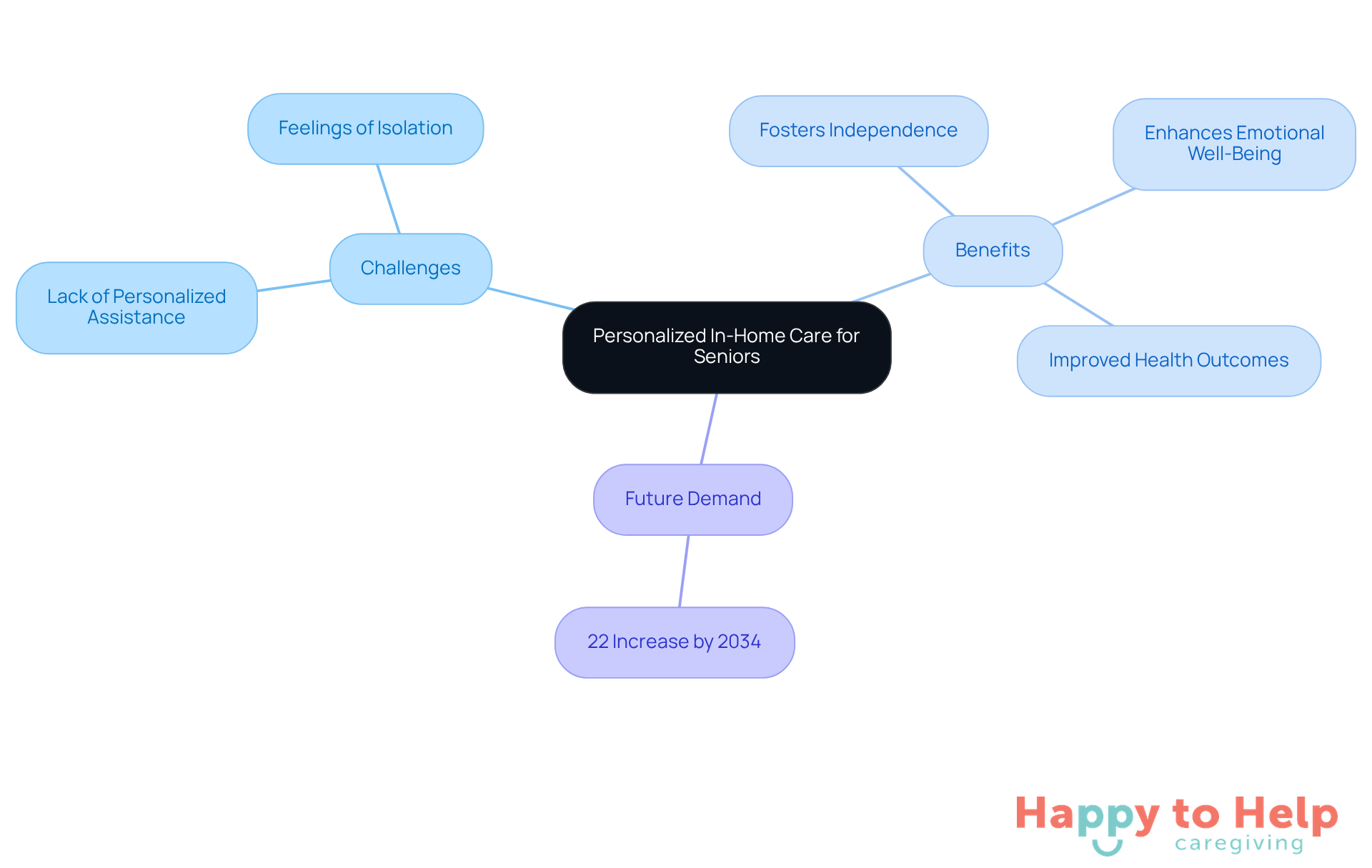
The challenge of providing adequate care for older adults often stems from a lack of personalized assistance. Many caregivers struggle to meet the unique needs of their clients, which can lead to feelings of isolation and diminished quality of life. This is where Happy to Help Caregiving excels, offering tailored in-home assistance designed specifically for older adults.
By focusing on individual lifestyles and preferences, Happy to Help Caregiving ensures that each client receives support that fosters independence and comfort in their own homes. Caregivers are trained to engage clients in enjoyable activities, significantly enhancing their emotional well-being. This personalized approach not only promotes autonomy but also leads to improved health outcomes, as older adults who receive customized assistance are more likely to maintain their independence and experience reduced feelings of loneliness.
With the U.S. population aged 65 and older projected to grow significantly, the demand for personalized home healthcare services is expected to increase by 22% by 2034. As Catherine Park, a digital marketer, notes, "More families are opting for in-home assistance because it’s personal, flexible, and increasingly backed by technology and policy." This highlights the importance of adapting caregiving methods to meet the evolving needs of older adults.
Emotional Support: Alleviating Loneliness Through Companionship Care
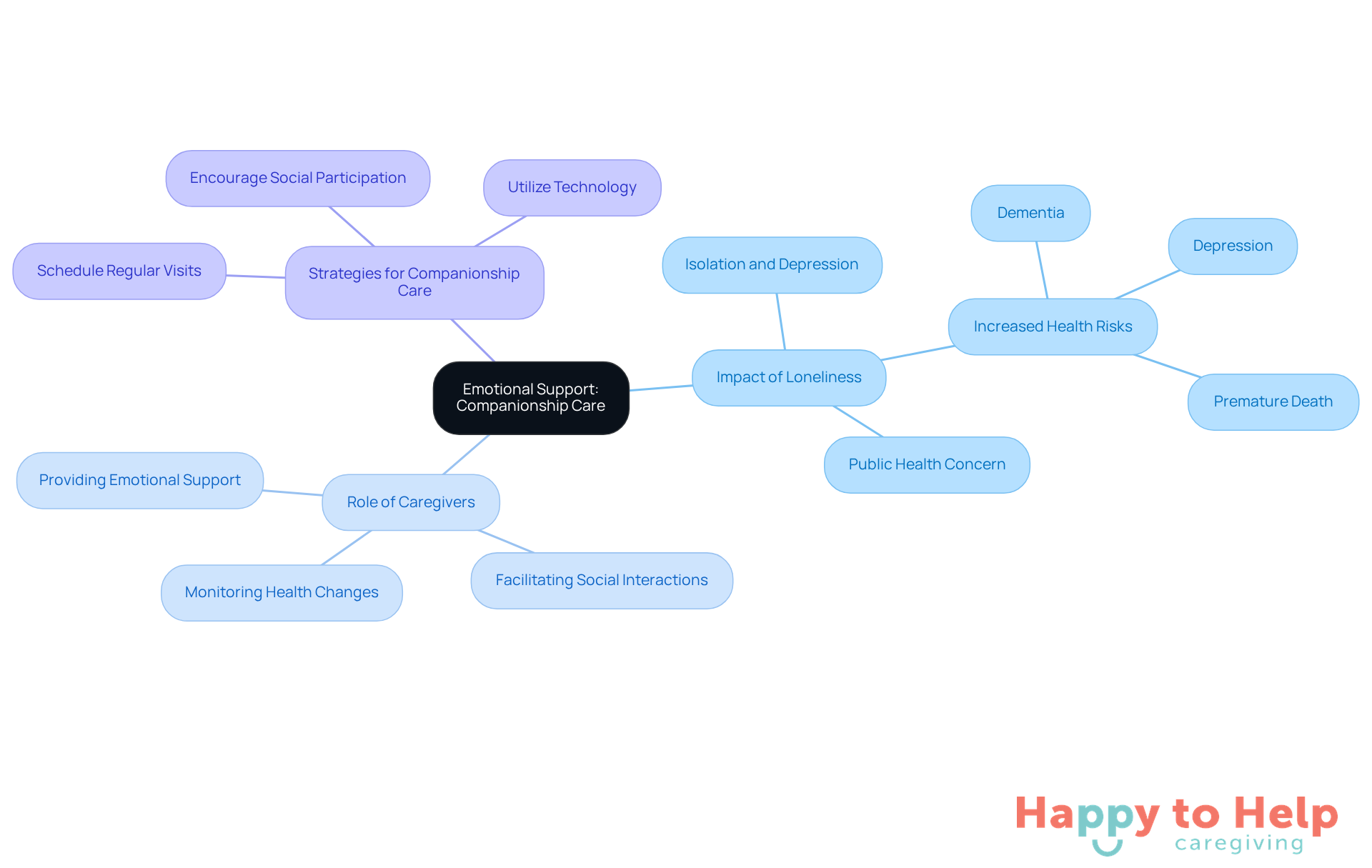
Loneliness is a significant challenge faced by older adults, often leading to feelings of isolation and depression. This emotional struggle can severely impact their mental health and overall well-being. Caregivers play a crucial role in addressing this issue through companionship care, which provides the emotional support that seniors need to combat loneliness.
Companionship care involves engaging clients in meaningful conversations and activities, fostering essential social interactions. Studies indicate that regular companionship can significantly reduce feelings of isolation, leading to improved mental health outcomes. By prioritizing emotional assistance, caregivers can offer in home senior assistance that helps elderly individuals maintain a positive outlook on life, ultimately enhancing their quality of living at home.
To implement effective companionship care, caregivers can:
- Schedule regular visits to engage in conversations and activities.
- Encourage participation in social events or group activities.
- Utilize technology to connect clients with family and friends.
By focusing on these actionable strategies, caregivers can make a meaningful difference in the lives of older adults, helping them feel valued and connected.
Post-Hospital Recovery Assistance: Ensuring Safe Transitions at Home
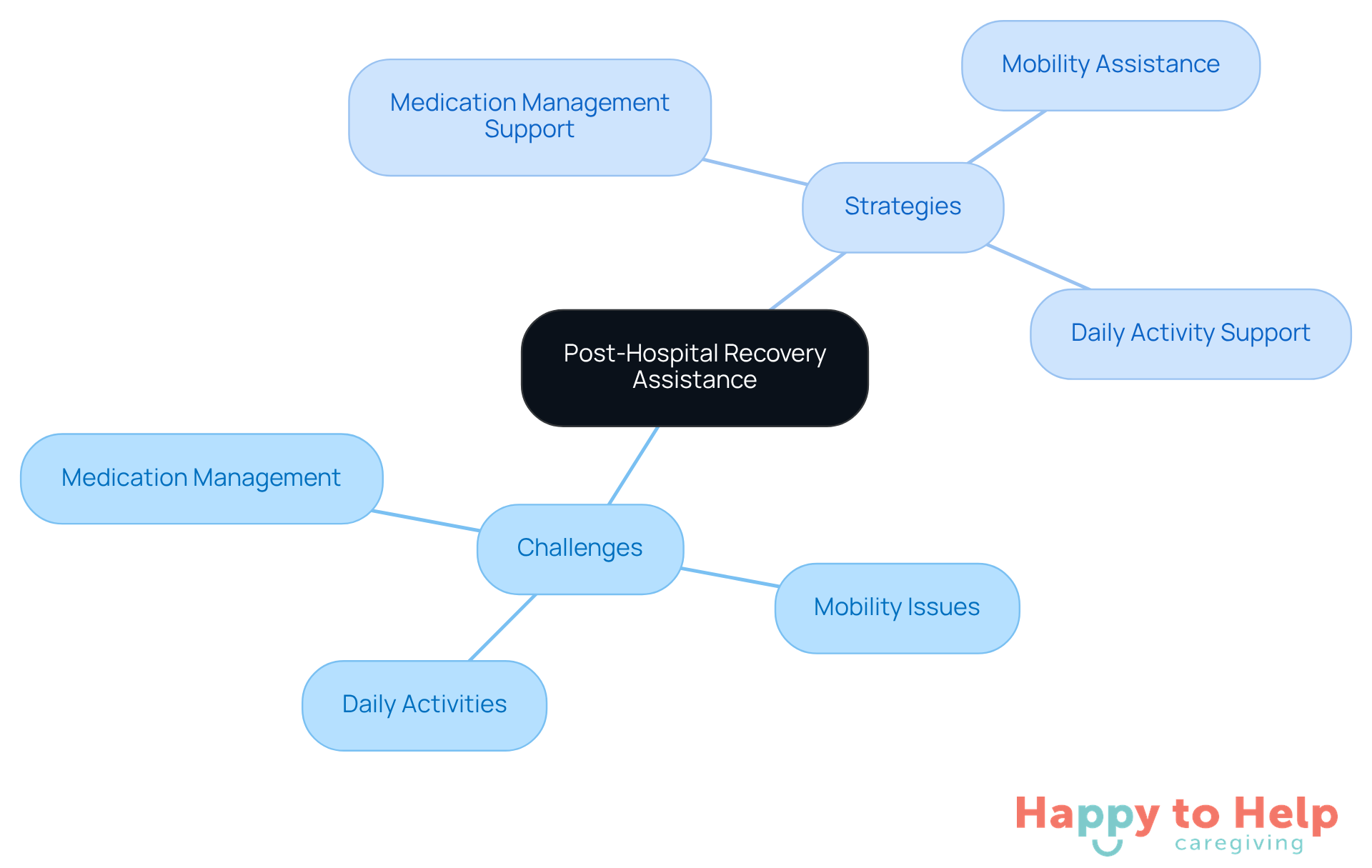
Post-hospital recovery assistance is a significant challenge for seniors transitioning back home, which can be alleviated through in home senior assistance. Many face difficulties such as:
- Medication management
- Mobility issues
- The need for help with daily activities
This situation can lead to increased stress and anxiety, complicating the recovery process.
To address these challenges, caregivers play a vital role in providing customized support. This assistance not only aids in physical recovery but also helps alleviate the emotional burdens that often accompany such transitions. Happy to Help Caregiving significantly reduces the risk of complications and readmissions by ensuring that seniors receive in home senior assistance.
Incorporating effective strategies can further enhance recovery outcomes. Caregivers should focus on:
- Medication management
- Assisting with mobility
- Offering support for daily activities
By doing so, they promote a smoother recovery process and improve the overall well-being of seniors.
Respite Care: Supporting Family Caregivers and Preventing Burnout
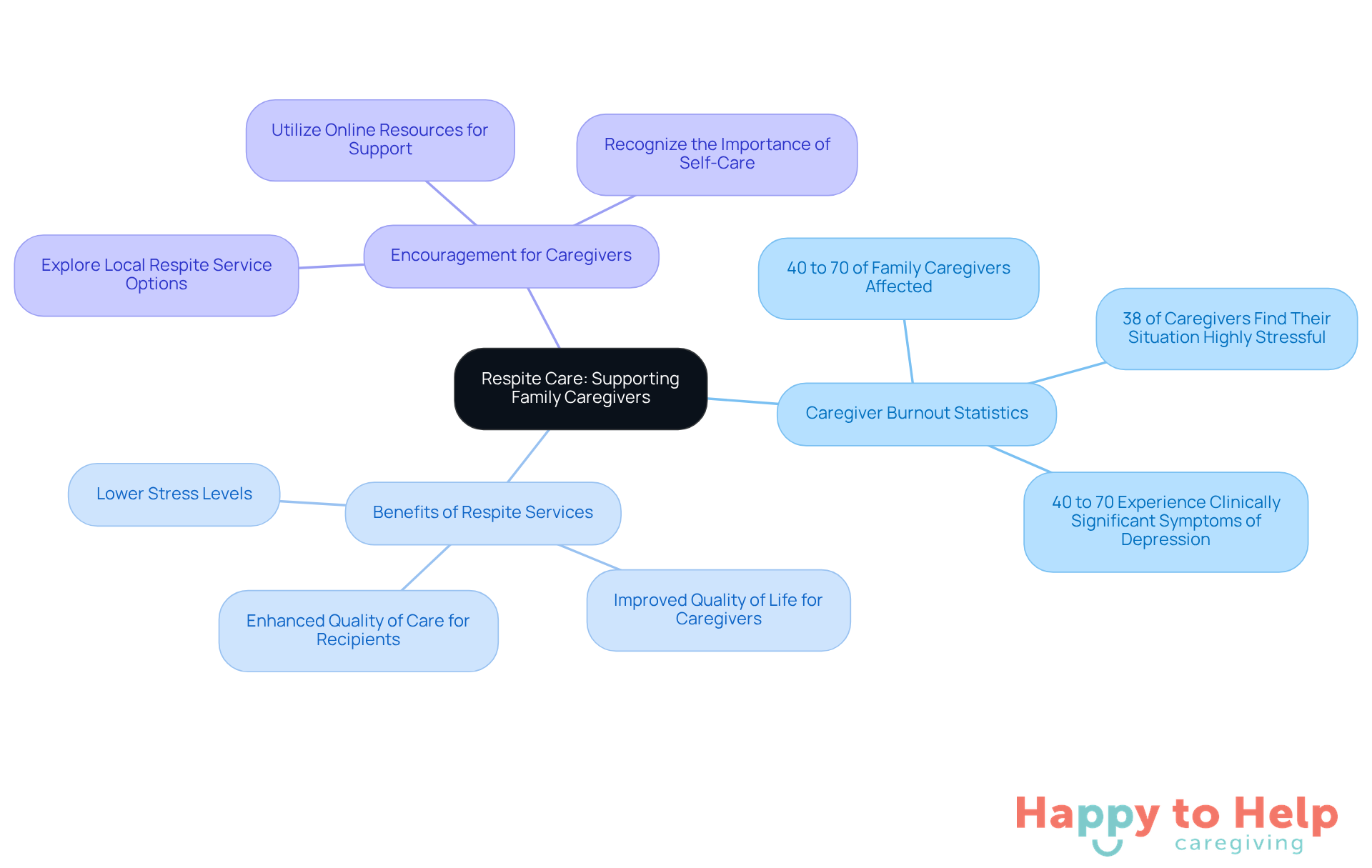
Caregiver burnout is a significant issue affecting 40% to 70% of family members in caregiving roles, leading to physical and emotional fatigue. This strain can hinder the quality of care provided to loved ones, making it essential to address this challenge.
Respite assistance offers vital support, allowing caregivers to take necessary breaks while ensuring their loved ones continue to receive quality attention with in home senior assistance. By providing temporary relief, services like Happy to Help Caregiving offer in home senior assistance that empowers family members to recharge and maintain their health. This balance is crucial for sustaining long-term caregiving connections.
Studies show that individuals who utilize respite services report lower stress levels and enhanced overall well-being. Regular breaks not only benefit caregivers but also improve the quality of life for those they care for.
The positive feedback from families underscores the transformative impact of respite support, establishing it as a key component of effective caregiving strategies. Caregivers are encouraged to explore respite service options by reaching out to local programs or visiting online resources for support.
Flexible Scheduling: Tailoring Care to Individual Needs
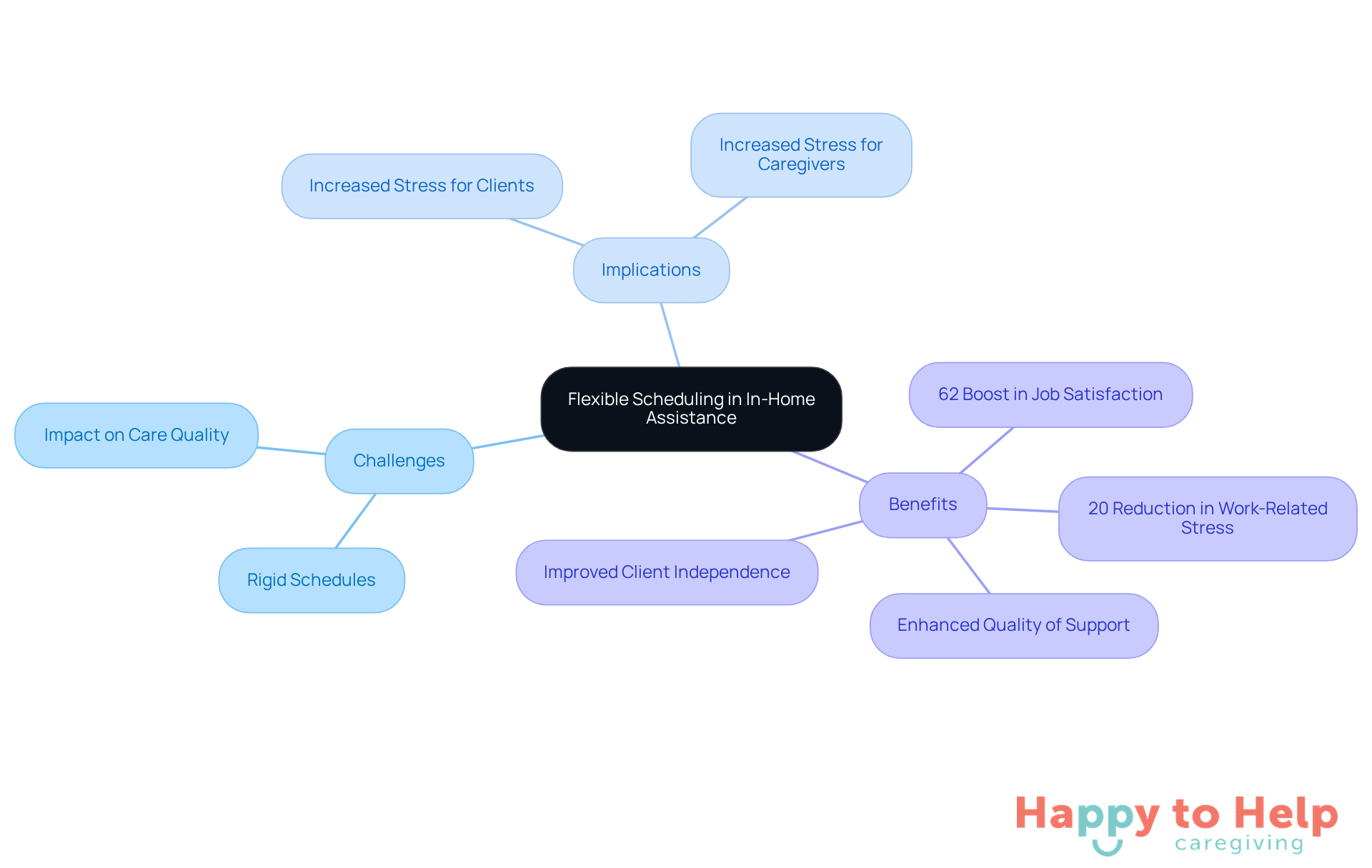
Flexible scheduling is a critical issue in in-home assistance. Many caregivers face the challenge of rigid schedules that do not accommodate the unique needs of their clients. This inflexibility can hinder the quality of care and disrupt the daily routines of seniors, impacting their independence and well-being.
The implications of this problem are significant. Seniors may struggle to receive the support they need at the right times, leading to increased stress for both clients and caregivers. As one provider noted, 'Flexible scheduling for in home senior assistance isn’t merely a convenience - it’s a lifeline for families managing support with daily life.'
Fortunately, flexible scheduling provides a practical solution in home senior assistance. By tailoring services to meet individual preferences, caregivers can enhance the quality of support provided. This adaptability not only helps seniors maintain their routines but also fosters a sense of autonomy.
Research supports the benefits of flexible scheduling, indicating that it can boost job satisfaction by 62% and reduce work-related stress by 20%. These statistics highlight the positive effects of adjustable support on both providers and clients, making it clear that prioritizing flexibility is essential in caregiving.
24/7 Availability: Ensuring Continuous Support and Peace of Mind
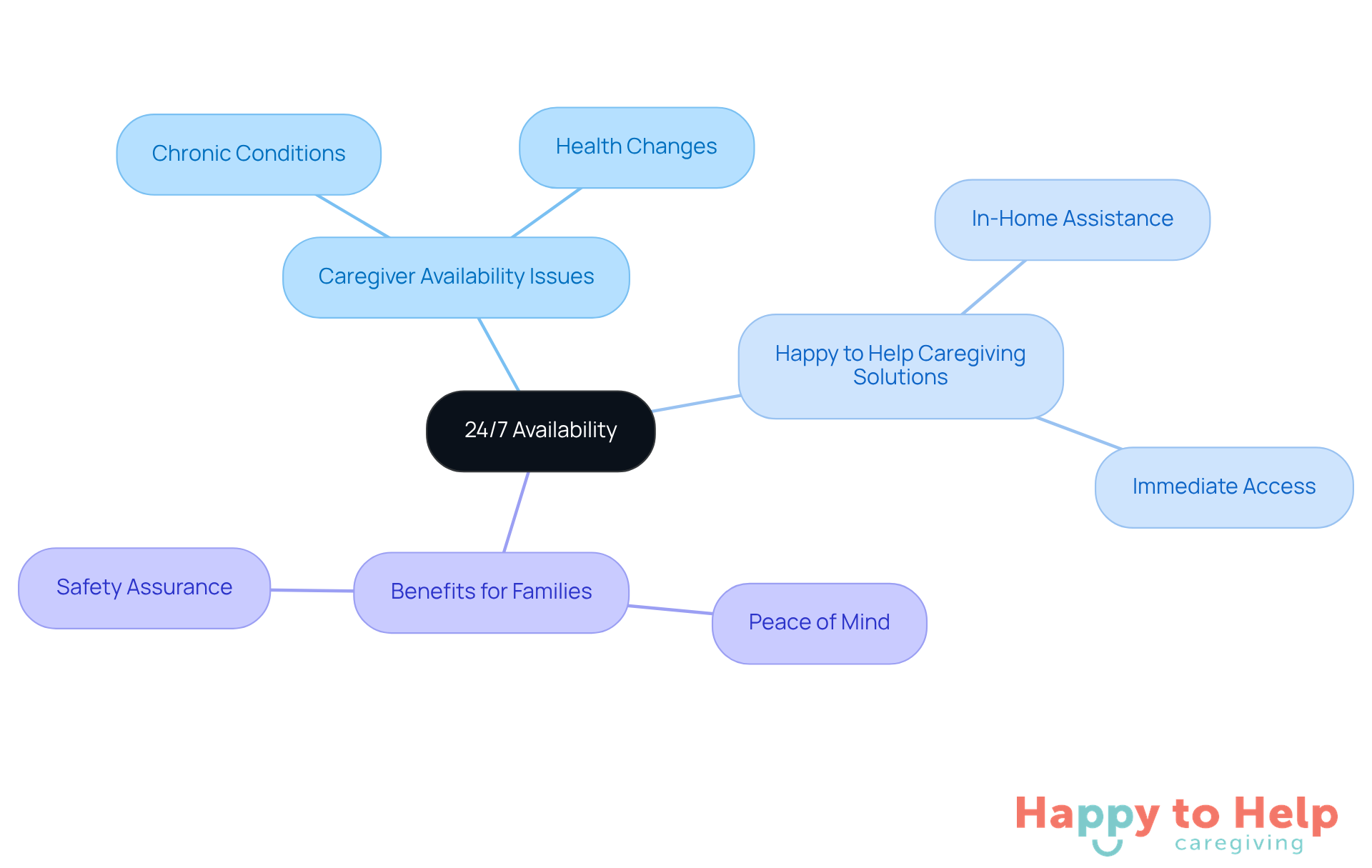
The problem of caregiver availability can significantly impact older adults and their families. Many seniors require constant assistance, especially those with chronic conditions or those who may experience sudden health changes, highlighting the importance of in home senior assistance. This lack of support can lead to anxiety for both clients and their loved ones, as they worry about safety and well-being.
Happy to Help Caregiving addresses this issue by providing in home senior assistance around-the-clock, ensuring that seniors receive the help they need whenever it arises. This commitment fosters a secure environment where older adults can thrive, knowing they are never alone. Families can rest assured, as their loved ones have immediate access to in home senior assistance at any time, alleviating concerns about their safety and health.
Technology Integration: Enhancing Communication and Care Management
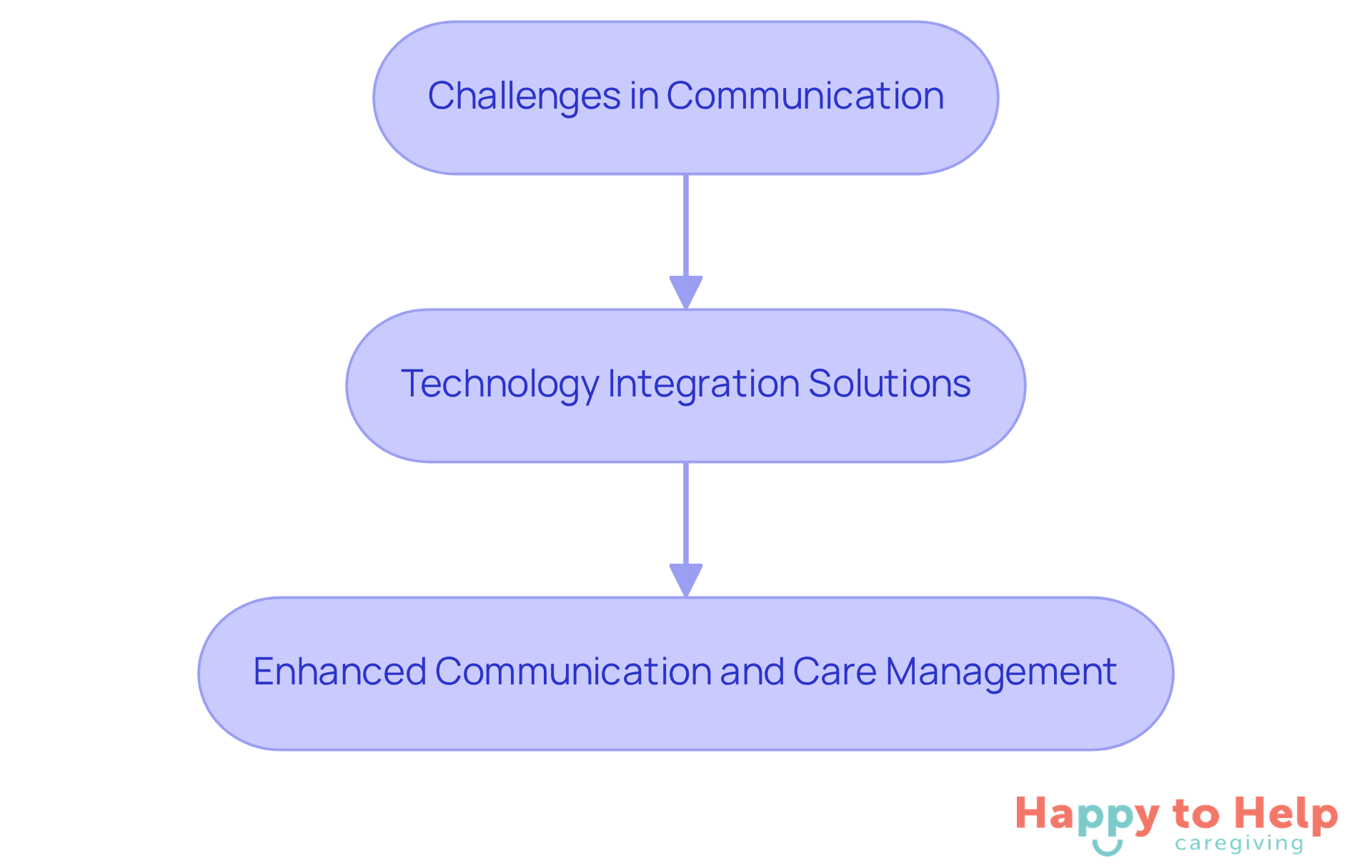
Caregivers often face significant challenges in communication, which can lead to feelings of isolation and uncertainty for both them and the families they serve. When updates and important information are not shared in real-time, trust can erode, and families may feel disconnected from their loved ones' care.
This lack of transparency can have serious implications for the well-being of those receiving care. Families want to be involved and informed, but without effective communication tools, this becomes difficult. Caregivers need solutions that not only streamline communication but also foster trust and collaboration.
Technology integration offers a powerful solution. Tools like online notes for family members and communication applications enable providers to share updates instantly. This real-time sharing keeps families engaged and informed, enhancing their involvement in their loved ones' care.
Moreover, technology optimizes the management of assistance. Caregivers can access essential information and resources at their fingertips, making their jobs easier and more efficient. Happy to Help Caregiving embraces these innovations to improve the overall quality of assistance and communication, ensuring that caregivers and families work together effectively.
Tailored Care Plans: Customizing Support for Individual Needs
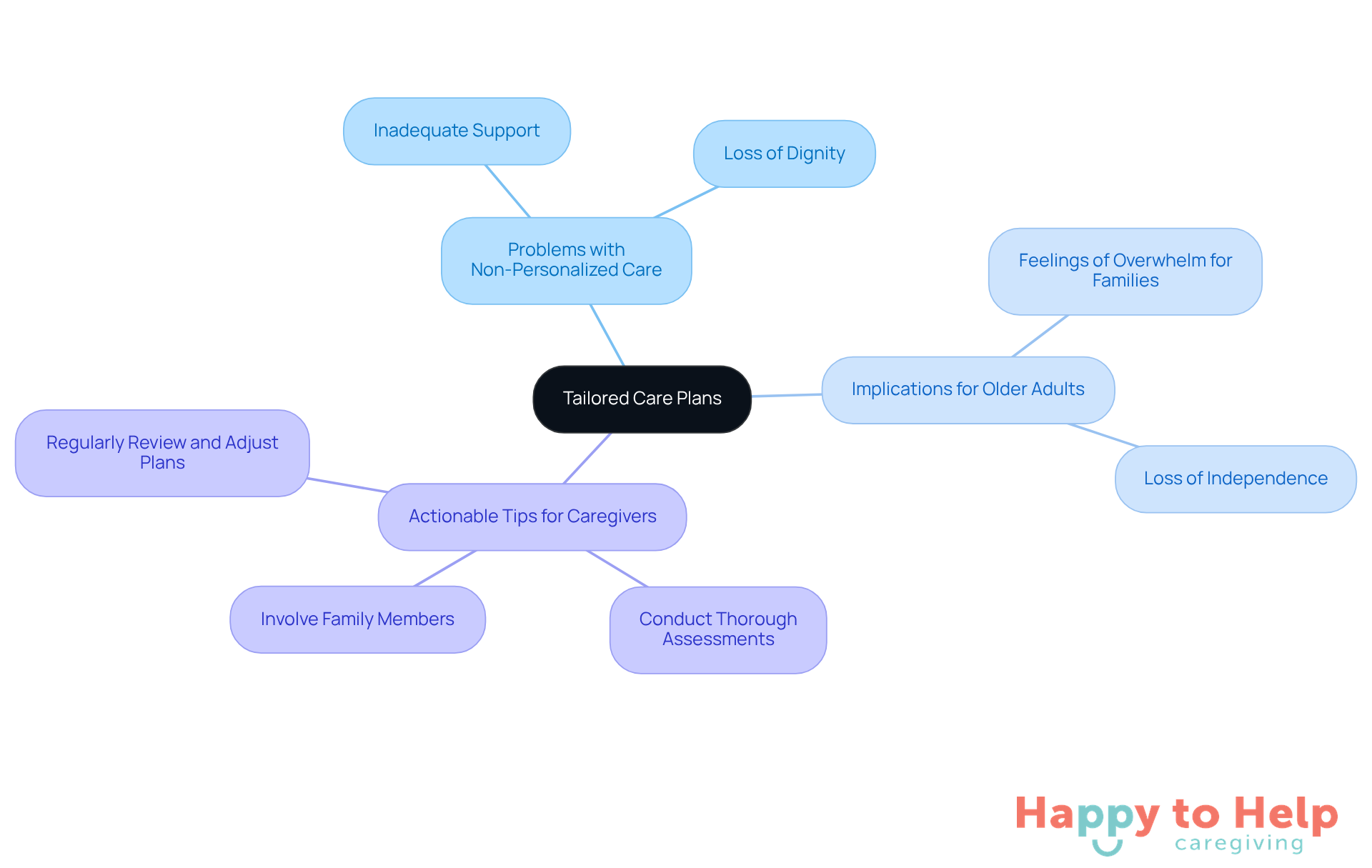
Customized support plans address a significant problem in delivering effective in-home assistance for older adults. Without tailored strategies, caregivers may struggle to meet the unique needs of their clients, leading to inadequate support and diminished quality of life.
This lack of personalized care can have serious implications. Older adults may feel a loss of independence and dignity, which can negatively impact their overall well-being. Families often find themselves overwhelmed, unsure of how to provide the necessary support that respects their loved ones' preferences and health conditions.
The solution lies in developing customized support plans. Happy to Help Caregiving collaborates with families to create these personalized strategies, ensuring that all aspects of care are addressed. By focusing on individual needs, caregivers can offer assistance that truly makes a difference in clients' lives, enhancing their quality of support while promoting independence.
To implement effective support plans, caregivers should consider the following actionable tips:
- Conduct thorough assessments of clients' needs and preferences.
- Involve family members in the planning process to ensure all concerns are addressed.
- Regularly review and adjust the support plan as clients' needs evolve.
By concentrating on personalized care, caregivers can significantly improve the lives of older adults, allowing them to maintain their dignity and independence.
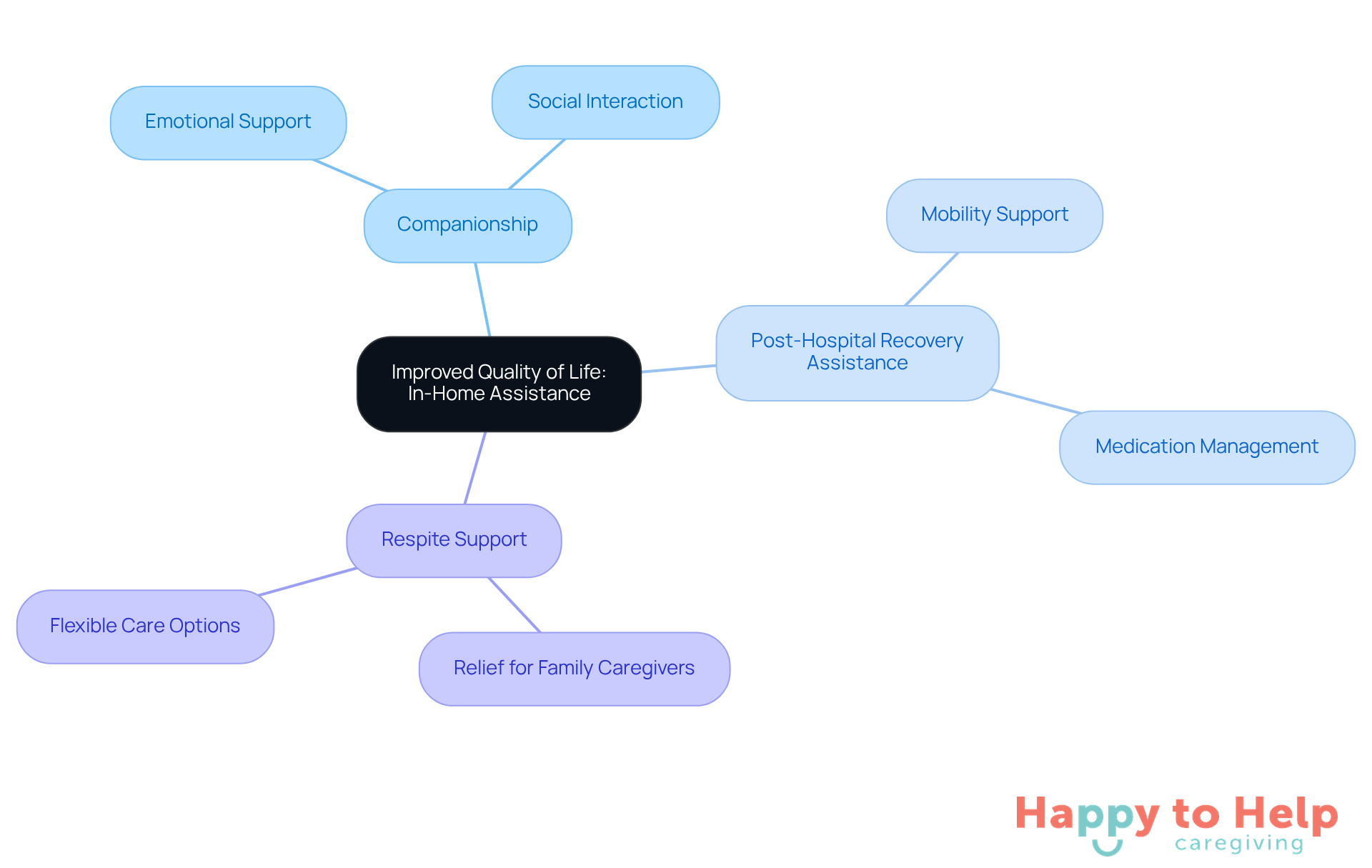
Improved Quality of Life: The Comprehensive Benefits of In-Home Assistance
Many older adults face challenges in maintaining their independence as they age. This can lead to feelings of isolation and a decline in their overall quality of life. Caregivers often struggle to meet the physical, emotional, and social needs of their loved ones, which can be overwhelming and stressful.
In home senior assistance provides a practical solution to these challenges. By providing personalized assistance, services such as:
- Companionship
- Post-hospital recovery assistance
- Respite support
are essential for in home senior assistance, enabling seniors to uphold their independence while receiving the help they need. Happy to Help Caregiving takes a holistic approach, ensuring that clients not only get assistance with daily activities but also enjoy a fulfilling life at home.
The comprehensive benefits of in home senior assistance make it a preferred choice for families who want the best for their loved ones. With the right support, caregivers can alleviate their burdens and enhance the well-being of older adults, creating a more enriching environment for everyone involved.
Your Path Forward
In-home senior assistance addresses a significant problem for family caregivers: the unique needs of older adults. Caregivers often face emotional and physical challenges, struggling to provide the necessary support while maintaining their own well-being. This burden can lead to stress and burnout, impacting both caregivers and their loved ones.
The implications of these challenges are profound. Seniors may experience a decline in their quality of life without adequate support, leading to feelings of isolation and loss of independence. Family caregivers, on the other hand, may find themselves overwhelmed, unable to balance their responsibilities effectively. This situation calls for a solution that not only alleviates caregiver burdens but also enhances the well-being of older adults.
In-home senior assistance offers a practical solution. Services like Happy to Help Caregiving provide personalized care tailored to individual preferences, empowering seniors to maintain their independence and dignity in the comfort of their own homes. Key benefits include:
- Emotional support through companionship
- Effective post-hospital recovery strategies
- Respite care for family caregivers
- Flexible scheduling options
As the demand for in-home senior assistance continues to rise, embracing these personalized approaches is crucial. Families are encouraged to explore available options and consider the profound impact that tailored care can have on their loved ones' lives. By ensuring that seniors receive the respect, dignity, and support they deserve, families can foster a supportive environment where their loved ones can truly thrive.
https://iframe.tely.ai/cta/eyJhcnRpY2xlX2lkIjogIjY5MjRmMjA2Y2Q1NjY3YWUxYjQzNTcwZiIsICJjb21wYW55X2lkIjogIjY4ZWU1ZGNhNzMxNzYyNTU3ZjNjOTVjMSIsICJpbmRleCI6IG51bGwsICJ0eXBlIjogImFydGljbGUifQ==Frequently Asked Questions
What is Happy to Help Caregiving?
Happy to Help Caregiving is a service that provides personalized in-home assistance specifically designed for older adults, focusing on their individual lifestyles and preferences to enhance independence and comfort.
How does Happy to Help Caregiving support emotional well-being for seniors?
Caregivers engage clients in enjoyable activities and meaningful conversations, which significantly enhances their emotional well-being and helps reduce feelings of loneliness.
Why is personalized care important for older adults?
Personalized care is crucial because it fosters independence, improves health outcomes, and helps reduce feelings of isolation, leading to a better quality of life for older adults.
What is companionship care?
Companionship care involves providing emotional support to seniors through meaningful conversations and activities, which helps combat loneliness and improve mental health.
What strategies can caregivers use to implement effective companionship care?
Caregivers can schedule regular visits, encourage participation in social events, and utilize technology to connect clients with family and friends.
What challenges do seniors face during post-hospital recovery?
Seniors may experience difficulties such as medication management, mobility issues, and the need for assistance with daily activities, which can increase stress and complicate recovery.
How does Happy to Help Caregiving assist with post-hospital recovery?
Caregivers provide customized support that aids in physical recovery and alleviates emotional burdens, significantly reducing the risk of complications and readmissions.
What key areas should caregivers focus on to enhance recovery outcomes for seniors?
Caregivers should focus on medication management, assisting with mobility, and offering support for daily activities to promote a smoother recovery process.
List of Sources
- Happy to Help Caregiving: Personalized In-Home Care for Seniors
- Trends in Senior Care: What to Expect in 2025 (https://agingconnections.org/blog/trends-in-senior-care-what-to-expect-in-2025)
- Top healthcare trends of 2026: Aging in place is driving innovation in home-based care and technology (https://definitivehc.com/blog/aging-in-place-driving-innovation)
- The Future of Aging: Is In-Home Care the New Standard? - WorldHealth.net (https://worldhealth.net/news/future-of-aging-is-in-home-care-new-standard)
- Why Senior Home Care is More Important Than Ever (https://homeinstead.com/home-care/usa/la/carencro/347/news-and-media/senior-home-care-is-more-important-than-ever)
- Home Care Industry Trends to Watch in 2025 (https://firstlighthomecare.com/blog/home-care-industry-trends)
- Emotional Support: Alleviating Loneliness Through Companionship Care
- Combat Loneliness: The Benefits of Companion Care for Seniors (https://allheartcare.com/more-than-just-company-the-vital-role-of-companion-care-for-seniors)
- Social connection linked to improved health and reduced risk of early death (https://who.int/news/item/30-06-2025-social-connection-linked-to-improved-heath-and-reduced-risk-of-early-death)
- 1 in 3 older adults still experience loneliness and isolation (https://michiganmedicine.org/health-lab/1-3-older-adults-still-experience-loneliness-and-isolation)
- Middle-aged Americans and loneliness: New study shows an alarming trend | Emory University | Atlanta GA (https://news.emory.edu/stories/2025/04/hs-middle-aged-adults-and-loneliness-22-04-2023/story.html)
- The Unbeatable Benefits of Companion Care for Seniors (https://comforcare.com/massachusetts/canton/resources/blog/the-unbeatable-benefits-of-companion-care-for-seniors)
- Post-Hospital Recovery Assistance: Ensuring Safe Transitions at Home
- Smart Homes and Post-Hospital Care: Supporting Seniors Aging in Place (https://hcprosonline.com/smart-homes-and-post-hospital-care-supporting-seniors-aging-in-place)
- Sent Home To Heal, Patients Avoid Wait for Rehab Home Beds - KFF Health News (https://kffhealthnews.org/news/article/patients-rehab-at-home-unclog-hospital-bed-nursing-home-waiting-list)
- After the hospital, support to help patients thrive at home | Penn Medicine (https://pennmedicine.org/news/after-the-hospital-support-to-help-patients-thrive-at-home)
- Post-Hospital Care for Seniors Supports Healing (https://picseniorcare.com/how-post-hospital-care-for-seniors-makes-recovery-easier)
- Post-Hospital Home Care: The Key to a Smoother, Safer Recovery (https://heavenathomecare.com/how-post-hospital-home-care-helps-seniors-recover)
- Respite Care: Supporting Family Caregivers and Preventing Burnout
- Caregiver Statistics: Health, Technology, and Caregiving Resources (https://caregiver.org/resource/caregiver-statistics-health-technology-and-caregiving-resources)
- State Innovations to Advance Respite Care: Policy Strategies Shared at the State-Federal Respite Summit - NASHP (https://nashp.org/state-innovations-to-advance-respite-care-policy-strategies-shared-at-the-state-federal-respite-summit)
- New Report Reveals Crisis Point for America’s 63 million Family Caregivers (https://press.aarp.org/2025-07-24-New-Report-Reveals-Crisis-Point-for-Americas-63-million-Family-Caregivers)
- Improving Support for Family Caregivers (https://nationalacademies.org/news/2025/07/improving-support-for-family-caregivers)
- Flexible Scheduling: Tailoring Care to Individual Needs
- A Better Solution Home Care (https://abs.care/Home-Care-Staffing-Shortages-How-They-Impact-Home-Care-Services)
- 9 Ways to Find Caregivers With Flexible Scheduling Options - MedCity News (https://medcitynews.com/2025/05/9-ways-to-find-caregivers-with-flexible-scheduling-options)
- The Critical Role of Flexibility in Home Care Scheduling for Family Peace of Mind (https://relevar.com/the-critical-role-of-flexibility-in-home-care-scheduling-for-family-peace-of-mind)
- Exploring the Rising Demand for Flexible Work in Healthcare (https://healthecareers.com/career-resources/nurse-career/rising-demand-for-flexible-work-in-healthcare)
- Home Care Providers Turn to Tech for More Flexible, Cost-Effective Models (https://homehealthcarenews.com/2025/02/home-care-providers-turn-to-tech-for-more-flexible-cost-effective-models)
- 24/7 Availability: Ensuring Continuous Support and Peace of Mind
- 2025 Home Care Statistics: Trends & Insights To Know (https://premierhcinc.com/blog/home-care-statistics)
- The Benefits of 24-Hour Support: Ensuring Constant Care and Peace of Mind (https://rightathome.co.uk/cheshireeast/news-item/the-benefits-of-24-hour-support-ensuring-constant-care-and-peace-of-mind)
- 10 Benefits of Care Around the Clock for Your Loved Ones - Happy To Help (https://happytohelpcaregiving.com/10-benefits-of-care-around-the-clock-for-your-loved-ones)
- Facts & Figures (https://ahcancal.org/Assisted-Living/Facts-and-Figures/Pages/default.aspx)
- 24/7 Senior Care Services: What You Need to Know (https://allseniors.org/articles/24-7-senior-care-services-what-you-need-to-know)
- Technology Integration: Enhancing Communication and Care Management
- 6 Tech Tools Transforming Caregiving for Aging Loved Ones (https://ltcnews.com/articles/tech-tools-transforming-caregiving-aging-loved-ones)
- How Technology Enhances Communication in Senior Care (https://business.seminolebusiness.org/news/details/how-technology-enhances-communication-in-senior-care)
- Modern Tools That Improve Safety and Accountability in Elder Care Settings (https://dcreport.org/2025/11/24/modern-tech-tools-improving-safety-in-elder-care-facilities)
- CAN Tech (https://caregiveraction.org/can-tech)
- How AI Could Change Family Caregiving (https://aarp.org/caregiving/basics/how-ai-can-help-caregivers)
- Tailored Care Plans: Customizing Support for Individual Needs
- Importance of Personalized Senior Home Care in Burlington NC (https://wisdomseniorcare.com/the-importance-of-personalized-care-plans-for-seniors)
- Home Care Impact on Recovery of Patient (A Statistics Report) (https://lovinghomecareinc.com/home-care-recovery-statistics)
- New Models of In-Home Support for Safe, Personalized Care | Tendly Home (https://tendlyhome.com/articles/new-models-in-home-support)
- HumanCare Helps Families Thrive With Personalized and Compassionate Home Care (https://digitaljournal.com/pr/news/vehement-media/humancare-helps-families-thrive-personalized-1703048575.html)
- The Impact of Personalized Home Health Plans on Recovery Outcomes (https://regencyhcs.com/blog/the-impact-of-personalized-home-health-plans-on-recovery-outcomes)
- Improved Quality of Life: The Comprehensive Benefits of In-Home Assistance
- New Study Finds That While Aging Seniors Prefer In-Home Care, Most Are Critically Underprepared for Future Healthcare Needs | Cross Country Healthcare, Inc. (https://ir.crosscountry.com/news-releases/news-release-details/new-study-finds-while-aging-seniors-prefer-home-care-most-are)
- Study finds that caring for older people at home can be just as good (https://ox.ac.uk/news/2021-04-19-study-finds-caring-older-people-home-can-be-just-good-or-even-better-hospital-care)
- Growing Trend of Private Pay Home Care for Elderly (https://regencyhcs.com/blog/growing-trend-of-private-pay-home-care-for-elderly)
- 2025 Home Care Statistics: Trends & Insights To Know (https://premierhcinc.com/blog/home-care-statistics)
- Warning From Older Adults: Care for Aging in America Needs Urgent Rethinking (https://johnahartford.org/newsroom/view/warning-from-older-adults-care-for-aging-in-america-needs-urgent-rethinking)