

For families in our service areas
For families in our service areas, this guide explains caregiving and how non-medical in-home caregiving can support care planning in East Idaho, Treasure Valley & Magic Valley, Northern Wasatch, North Central West Virginia, and Northeast Ohio.
Why Live In Carers for the Elderly Matters
Aging can be a daunting journey, often filled with challenges that significantly impact the quality of life for seniors and their families. The emotional and physical toll can be overwhelming, leading to feelings of isolation and anxiety. As the demand for personalized support grows, live-in carers have emerged as a vital resource, offering tailored assistance that addresses both physical and emotional needs.
This article explores the numerous benefits of live-in carers for the elderly. These dedicated professionals not only enhance daily living but also foster a sense of security and companionship. By providing consistent support, they help alleviate the burdens faced by families, ensuring that older adults receive the care they deserve.
What truly sets live-in care apart? It transforms the lives of older adults facing the complexities of aging, offering a solution that promotes independence while ensuring safety and comfort.
Happy to Help Caregiving: Personalized In-Home Support for Seniors
Caring for elderly individuals at home can be challenging, especially when the support from live in carers for the elderly does not meet their unique needs. Many families struggle to find live in carers for the elderly who truly cater to the specific requirements of their loved ones. This gap in care can lead to feelings of insecurity and discomfort for seniors, impacting their overall quality of life.
Happy to Help Caregiving addresses this issue by providing live in carers for the elderly who offer customized in-home assistance tailored to each client's needs. This personalized approach not only enhances the quality of life for seniors but also fosters a sense of security and comfort in their own homes. Caregivers are trained to engage clients in meaningful activities, promoting both physical and emotional well-being.
With a strong emphasis on compassion and empathy, Happy to Help Caregiving stands out as a leader in the in-home assistance sector. Their commitment to enhancing the lives of those they support ensures that families can feel confident in the care their loved ones receive.
Companionship Care: Alleviating Loneliness and Isolation
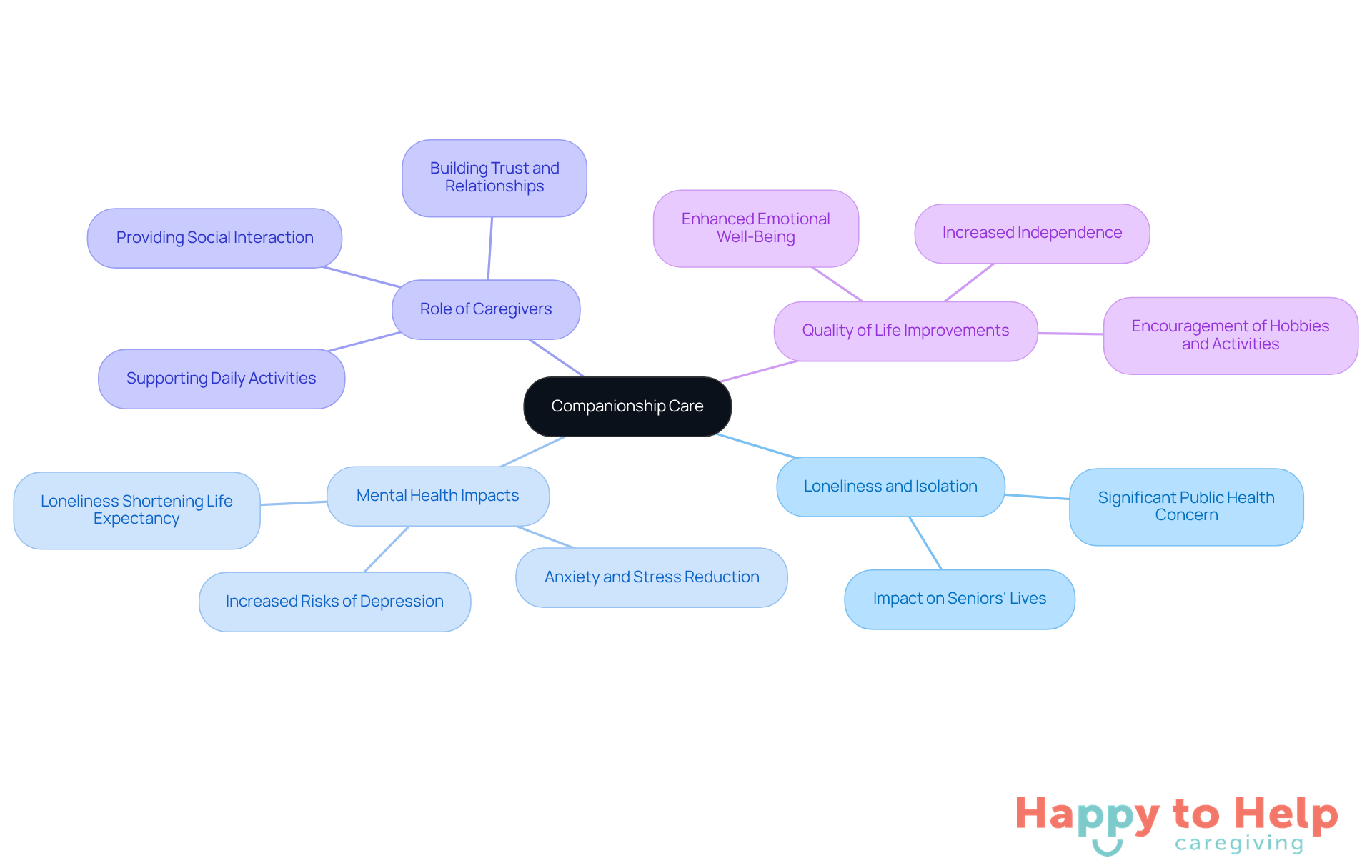
Companionship care addresses a significant problem: loneliness and isolation among older adults. These feelings can severely impact mental health, leading to increased risks of depression and anxiety. In fact, studies show that chronic loneliness can shorten life expectancy more than being overweight or sedentary, and as much as smoking.
The implications of this issue are profound. Older adults living alone often struggle with a lack of social interaction, which is essential for their emotional well-being. Engaging in conversations, sharing stories, and participating in activities can uplift an elder's mood and enhance their overall quality of life. This emotional support not only combats feelings of isolation but also fosters a sense of belonging and connection.
So, what can caregivers do? Live in carers for the elderly play a crucial role by providing consistent social interaction. They help elderly individuals maintain their autonomy and self-respect by offering live in carers for the elderly, enabling them to age in their own homes while feeling appreciated and understood. By offering companionship, caregivers can significantly improve the quality of life for older adults.
In summary, companionship care is vital for combating loneliness and enhancing the well-being of older adults. Caregivers can implement practical strategies to ensure that their clients feel connected and valued in their daily lives.
Post-Hospital Recovery Assistance: Ensuring Safe Transitions
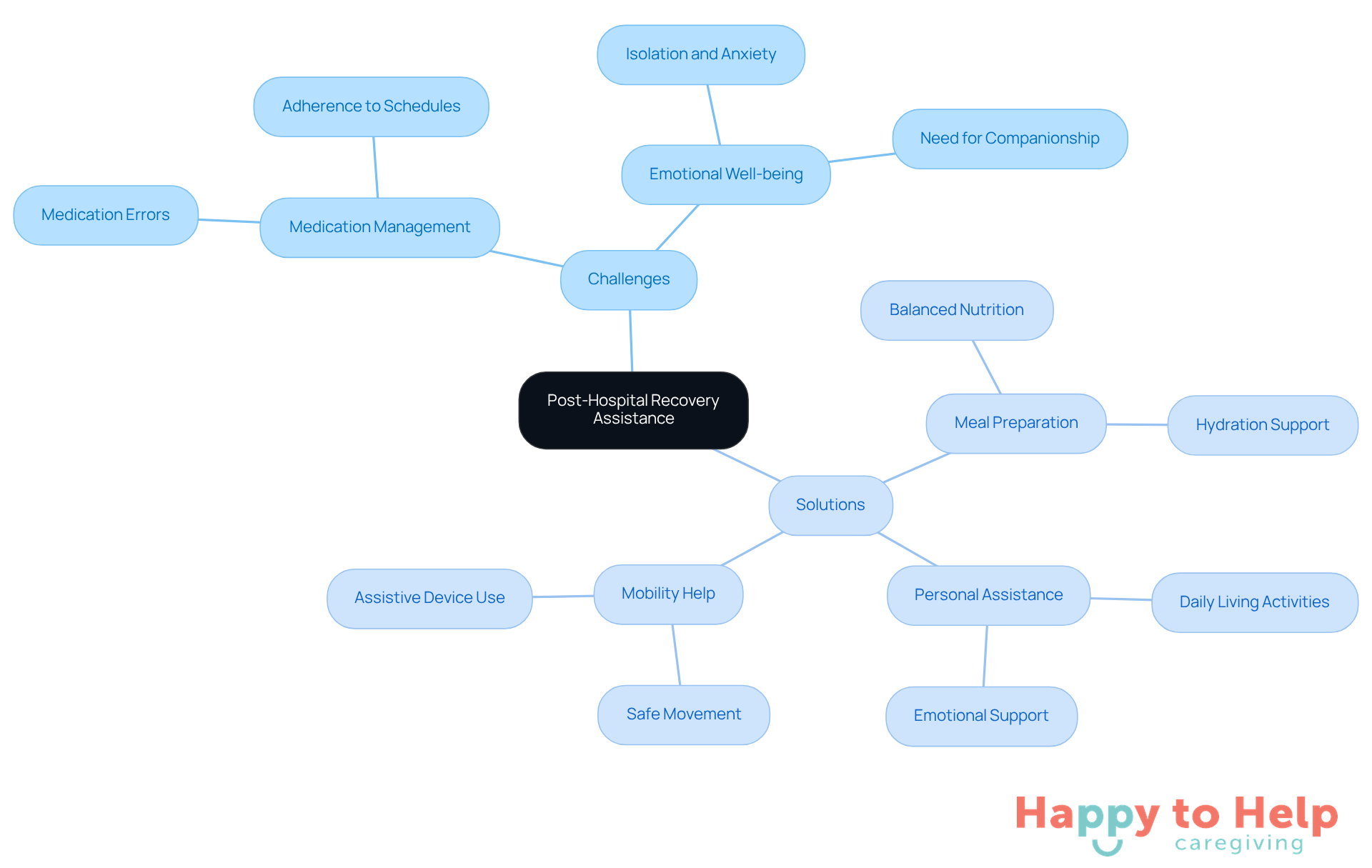
Post-hospital recovery assistance presents a significant challenge for families and caregivers. Transitioning from a medical facility back to home can be fraught with difficulties, including managing medication schedules and ensuring emotional well-being during this vulnerable time. Without proper support, patients may face increased risks of complications and readmissions, which can be distressing for both them and their families.
To address these challenges, caregivers can implement practical solutions. By offering customized support such as:
- Meal preparation
- Personal assistance
- Mobility help
live-in carers for the elderly play a crucial role in helping seniors regain their strength and confidence. This tailored assistance not only enhances recovery but also lowers the likelihood of complications, allowing loved ones to recover comfortably in familiar surroundings.
Ultimately, ensuring safe transitions from hospital to home is essential for the well-being of patients and peace of mind for families. By prioritizing post-hospital recovery assistance, caregivers can make a significant difference in the recovery journey.
Respite Care: Supporting Family Caregivers' Well-Being
Caregivers face a significant challenge: burnout. This exhaustion can stem from the physical and emotional demands of providing care, leading to serious implications for both the caregiver and the individual receiving care. Without adequate support, caregivers may find themselves overwhelmed, which can compromise the quality of care they provide.
Respite services offer a vital solution. By enabling family providers to take necessary breaks, these services ensure that their loved ones continue to receive quality support. Temporary relief from caregiving responsibilities allows family members to rejuvenate, attend to personal matters, or simply rest, all while knowing their loved ones are in competent hands.
This balance is essential for preserving the health and well-being of both caretakers and elderly individuals. Utilizing respite services can prevent caregiver burnout, ultimately leading to a more sustainable caregiving experience.
Emotional Support: Enhancing Mental Well-Being for Seniors
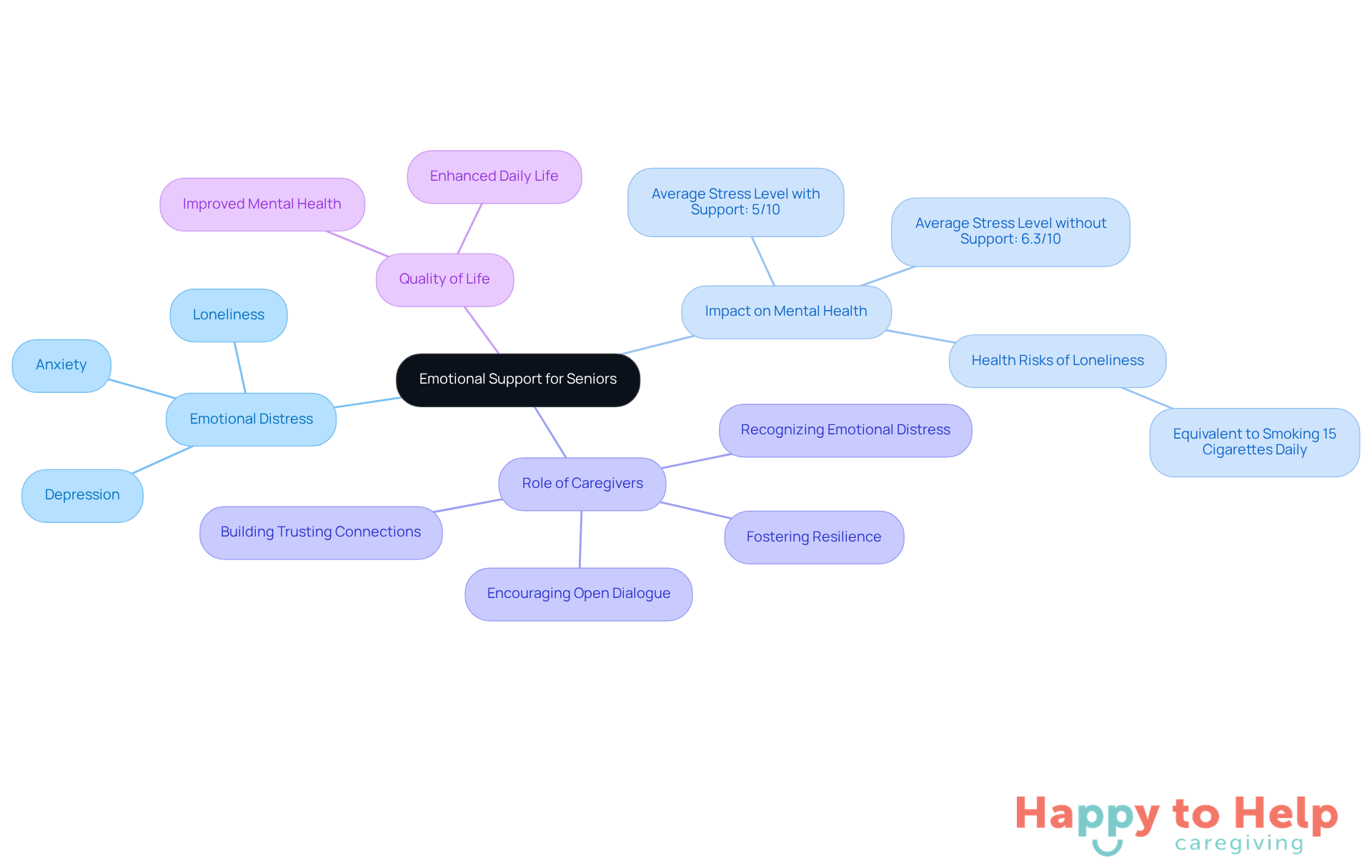
Emotional distress among older adults is a significant issue that can severely impact their mental health. Many elderly individuals experience feelings of anxiety, depression, and loneliness, which can lead to a lower quality of life. Alarmingly, 1 in 3 older adults have a clinical diagnosis of anxiety or depression, highlighting the prevalence of mental health issues in this demographic.
The implications of this emotional distress are profound. Research shows that older adults with emotional support report an average stress level of 5 out of 10, compared to 6.3 for those lacking such support. Furthermore, social isolation poses health risks comparable to smoking 15 cigarettes daily, underscoring the critical need for companionship.
Caregivers can play a vital role in addressing these challenges. Live in carers for the elderly are specifically trained to recognize signs of emotional distress, enabling them to offer essential assistance. By encouraging open dialogue and building trusting connections, caregivers help elderly individuals feel valued and understood. This emotional connection not only improves mental health but also enriches daily life, making it more fulfilling and enjoyable.
In addition to providing practical support, caregivers foster resilience, assisting elderly individuals in managing losses and transitions in their life phase. This comprehensive approach significantly enhances the quality of life for older adults, making live in carers for the elderly essential partners in their well-being.
Engaging Activities: Promoting Active Lifestyles for Seniors
Engaging activities are crucial for addressing the challenge of inactivity among older adults. Many seniors face a decline in physical and cognitive health due to a lack of stimulating activities. This not only affects their physical well-being but also limits their social interactions, which are vital for emotional health.
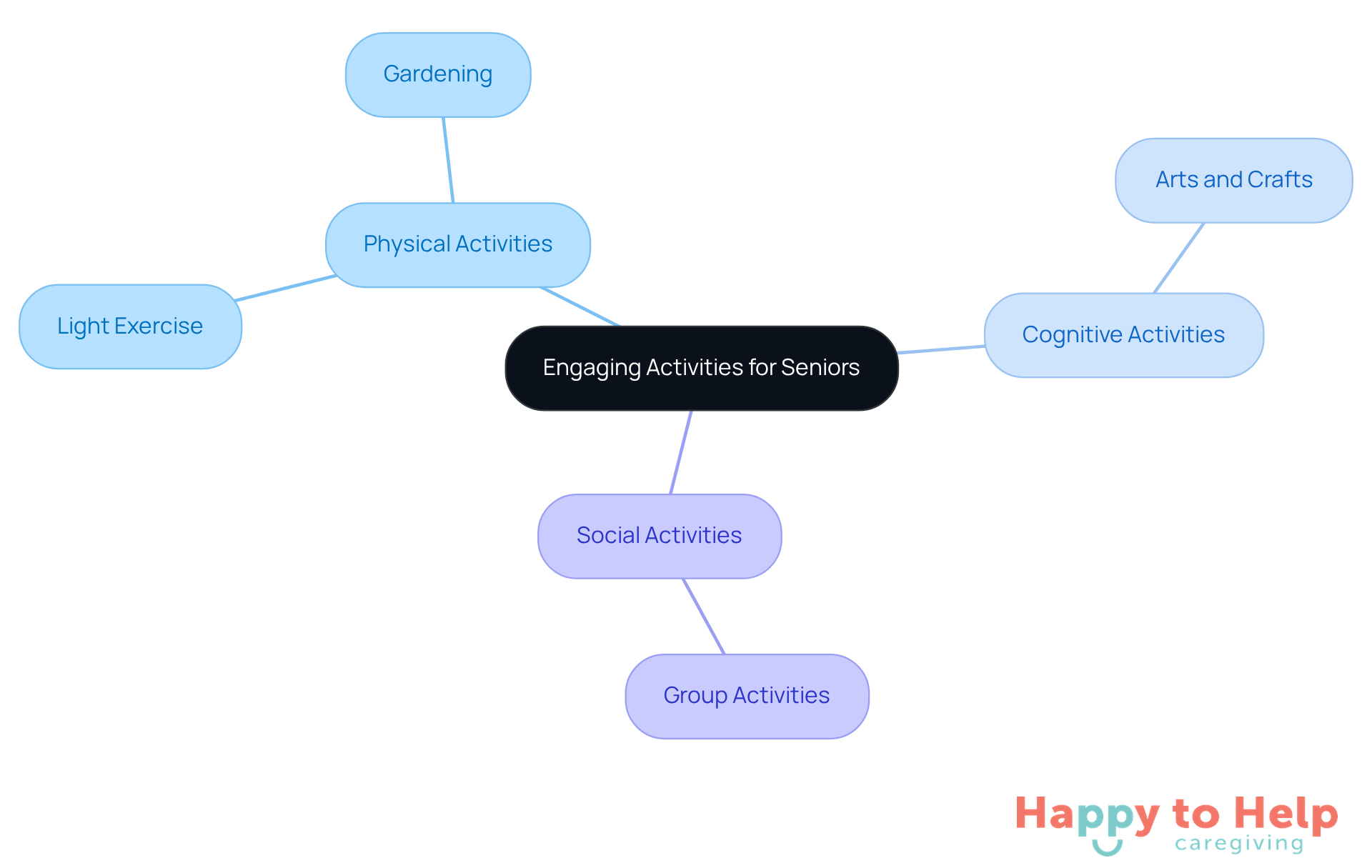
Live in carers for the elderly can play a significant role in facilitating a variety of activities tailored to individual interests, such as:
- Gardening
- Arts and crafts
- Light exercise
These activities not only keep older adults physically active but also stimulate cognitive function and enhance social interaction. By promoting involvement in pleasurable activities, caregivers help seniors maintain their autonomy and improve their overall wellness.
Programs like EnhanceFitness have demonstrated their effectiveness, with participation from over 105,000 individuals. Impressively, 94 percent of participants rated their improvement in physical abilities as 3 or higher, showcasing the tangible benefits of these activities. As Paige Denison, Director of Health, Wellness, and Project Enhance at Sound Generations, states, "Of course we work on physical muscle-strengthening in EnhanceFitness - but we also work our social muscles!" This highlights the dual advantages of physical and social involvement in the activities encouraged by support providers.
Furthermore, fostering social connections through group activities is essential for emotional health. Live in carers for the elderly play a vital role in promoting a vibrant, active lifestyle for seniors, ensuring they remain engaged and connected.
Promoting Independence: Empowering Seniors in Their Own Homes
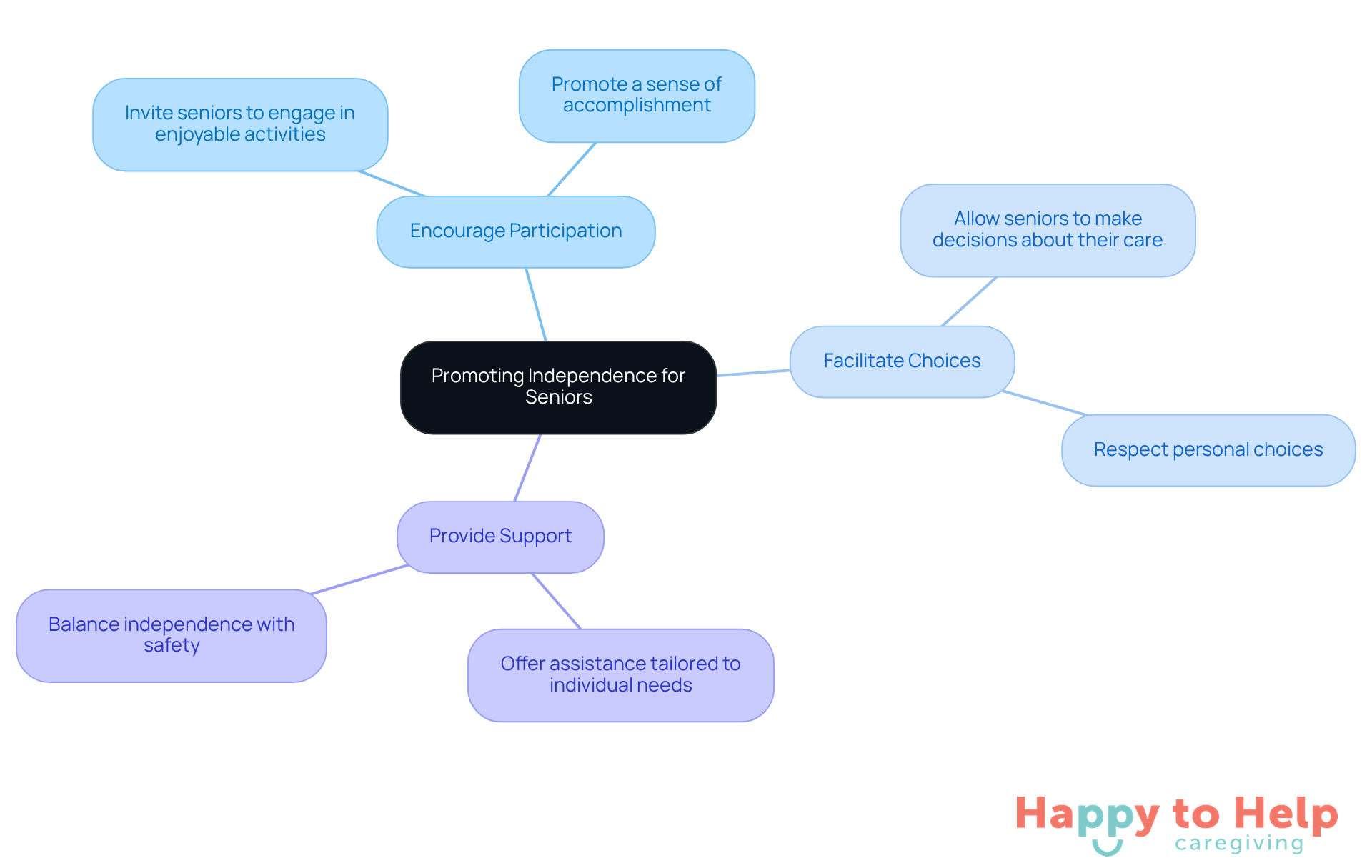
Promoting independence is a significant challenge for live in carers for the elderly. Many older adults struggle with the loss of autonomy, which can lead to feelings of helplessness and decreased quality of life. Caregivers play a crucial role in addressing this issue by empowering seniors to participate in daily activities and make choices about their care.
To combat these feelings of dependency, caregivers can encourage older individuals to take charge of their routines. This approach fosters a sense of respect and independence, allowing seniors to retain authority over their lives. By offering the right level of assistance, live in carers for the elderly can help elderly individuals manage their daily tasks while ensuring their safety and well-being.
Here are some actionable tips for caregivers:
- Encourage Participation: Invite seniors to engage in activities they enjoy, promoting a sense of accomplishment.
- Facilitate Choices: Allow older adults to make decisions about their care, reinforcing their autonomy.
- Provide Support: Offer assistance tailored to individual needs, balancing independence with safety.
By implementing these strategies, caregivers can significantly improve the quality of life for older adults, helping them maintain their independence and dignity.
Safety Assurance: Creating Secure Home Environments
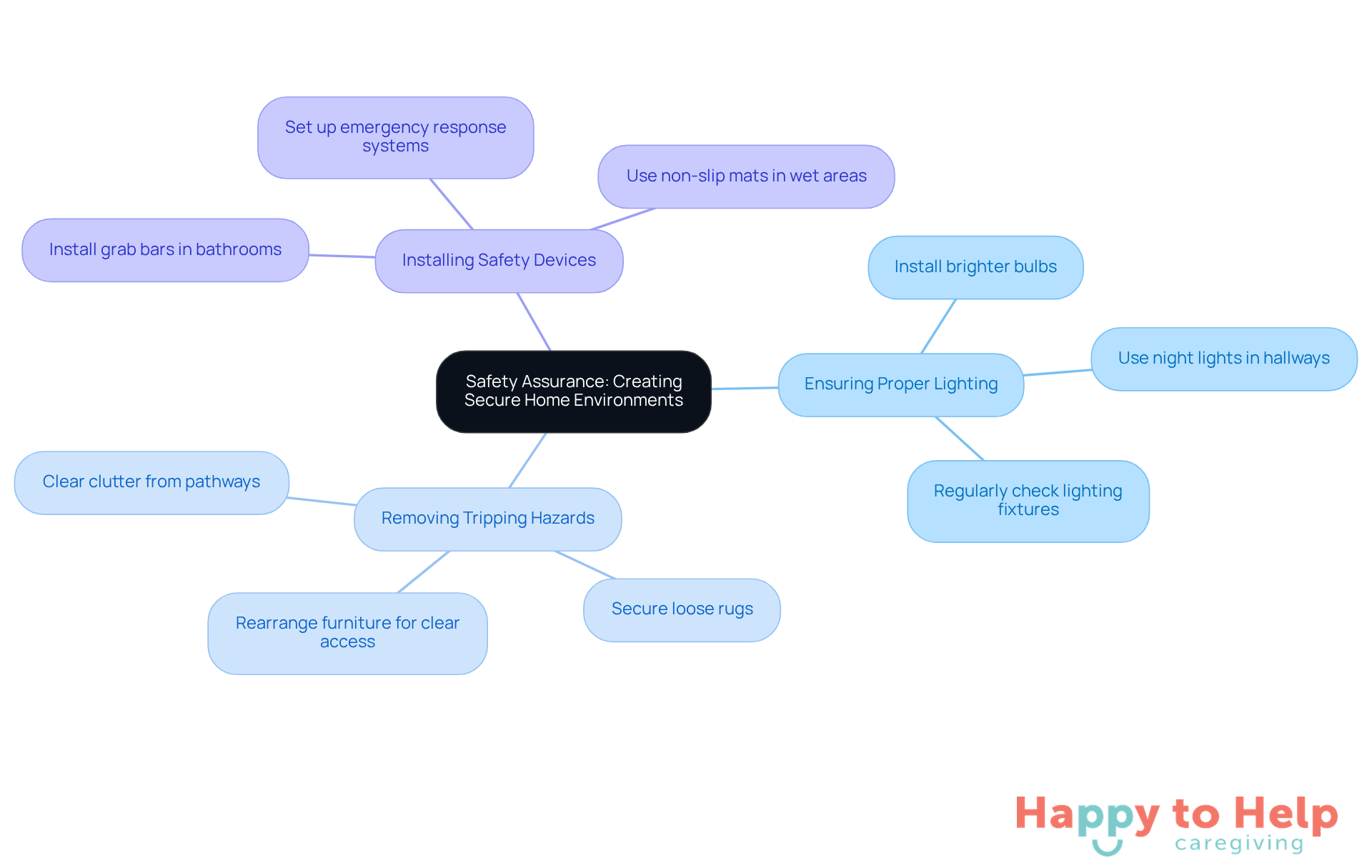
Safety assurance poses a significant challenge in the role of live-in carers for the elderly. Live-in carers for the elderly often encounter various hazards within the home that can jeopardize the well-being of older adults. These risks can lead to accidents, causing distress not only for the individuals receiving care but also for their families.
To address these concerns, caregivers must be proactive in identifying potential dangers. This includes:
- Ensuring proper lighting
- Removing tripping hazards
- Installing safety devices such as grab bars and emergency response systems
By taking these steps, caregivers can create a secure home environment that fosters a sense of safety and support.
When older adults feel secure, they can focus on their recovery and daily activities without the constant fear of accidents. Implementing these safety measures not only enhances the quality of care but also promotes independence and peace of mind for both caregivers and those they assist.
Flexible Scheduling: Tailoring Care to Individual Needs
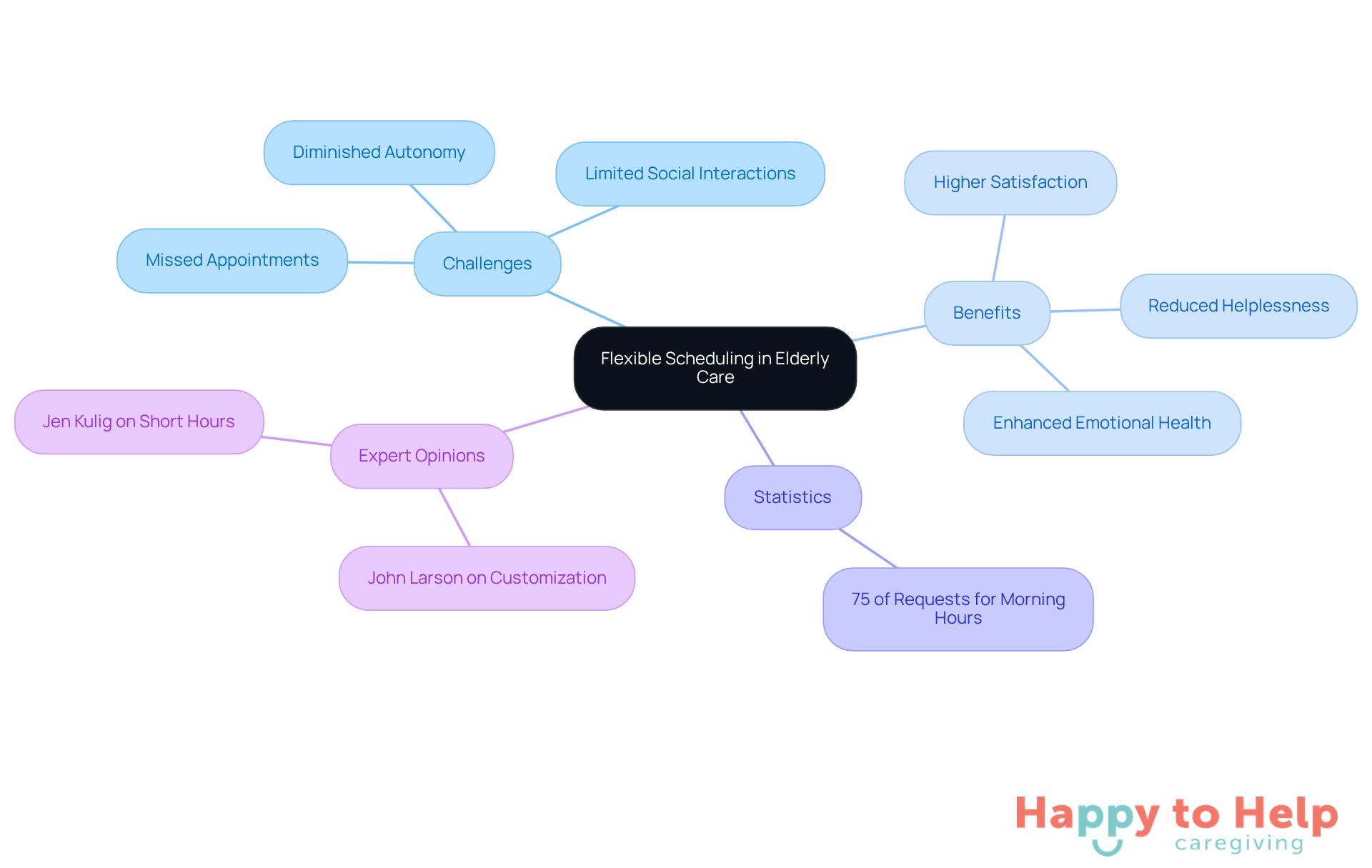
Flexible scheduling presents a significant challenge for live in carers for the elderly, often leading to a mismatch between the needs of older adults and the availability of caregivers. This rigidity can result in missed appointments, limited social interactions, and a diminished sense of autonomy for seniors, ultimately affecting their emotional well-being.
Research highlights that seniors who receive individualized support experience higher levels of satisfaction and enhanced emotional health. For instance, a study found that adaptable support arrangements significantly reduce feelings of helplessness and loneliness, fostering a greater sense of independence. Regular visits from caregivers not only provide essential assistance but also encourage social interaction, combating isolation among older adults. In fact, 75% of assistance requests were for morning hours, underscoring the demand for flexible scheduling.
To address these challenges, support professionals emphasize the importance of customizing assistance timetables for live in carers for the elderly to meet personal requirements. As John Larson, CEO of a prominent caregiving agency, stated, "The capacity to adjust support according to an elderly individual's preferences and lifestyle results in improved outcomes and a more satisfying experience for both the caregiver and the client." This tailored approach not only meets urgent support needs but also fosters lasting emotional resilience, enabling older adults to thrive in their familiar environments.
Technology Integration: Enhancing Communication and Care Management
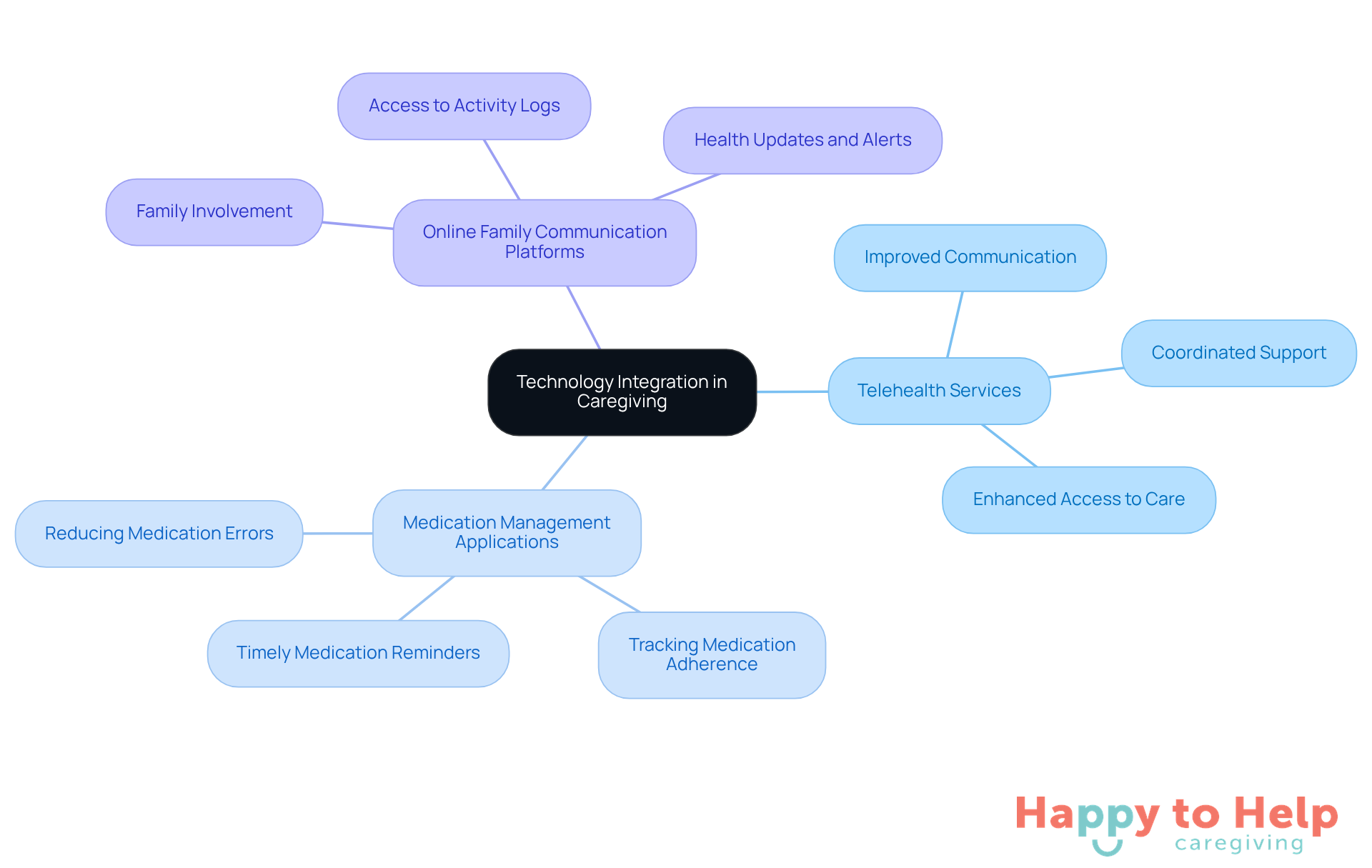
Caregivers often face significant challenges in managing communication and support for seniors. These difficulties can lead to feelings of isolation for both seniors and their families, impacting the overall quality of care.
To address these issues, technology integration emerges as a vital solution. Tools like telehealth services, medication management applications, and online family communication platforms enable providers to deliver more effective and coordinated support. By leveraging these technologies, caregivers can ensure that seniors receive timely assistance and that their care plans are effectively managed.
Moreover, these technologies not only enhance the quality of support but also keep families informed and involved in their loved ones' well-being. This involvement is crucial for fostering a supportive environment that promotes the health and happiness of seniors.
Making the Right Choice
The role of live-in carers for the elderly is crucial in addressing the challenges faced by seniors and their families. Many older adults struggle with loneliness, safety concerns, and the need for personalized care. These issues can significantly impact their quality of life, making it essential to find effective solutions.
Live-in carers provide compassionate support tailored to the unique needs of older adults. By fostering emotional connections and promoting independence, they help seniors remain in the comfort of their own homes while receiving the care they deserve. This approach not only combats loneliness but also facilitates a safe environment, enhancing the overall well-being of clients.
Key benefits of live-in care include:
- Companionship
- Assistance during post-hospital recovery
- Vital respite care for family caregivers
- Engaging activities
- Flexible scheduling
These benefits help maintain seniors' autonomy and emotional health. Moreover, the integration of technology enhances communication and care management, creating a more supportive environment for both seniors and their families.
Ultimately, live-in carers empower elderly individuals, ensuring their safety and enriching their lives. Families seeking care for their loved ones should consider the myriad advantages of personalized in-home support. This type of care not only meets immediate needs but also fosters a fulfilling and dignified life for seniors. By embracing these caregiving options, families can pave the way for a brighter, healthier future for the elderly, allowing them to thrive in their own homes.
https://iframe.tely.ai/cta/eyJhcnRpY2xlX2lkIjogIjY5MjUwZjk0MTk5OWZjNThlNjA5NGVjOSIsICJjb21wYW55X2lkIjogIjY4ZWU1ZGNhNzMxNzYyNTU3ZjNjOTVjMSIsICJpbmRleCI6IG51bGwsICJ0eXBlIjogImFydGljbGUifQ==Frequently Asked Questions
What is Happy to Help Caregiving?
Happy to Help Caregiving is a service that provides personalized in-home support for seniors, offering live-in carers who cater to the unique needs of elderly individuals to enhance their quality of life.
How does Happy to Help Caregiving improve the quality of life for seniors?
The service enhances seniors' quality of life by offering customized in-home assistance that fosters a sense of security and comfort, while engaging clients in meaningful activities that promote physical and emotional well-being.
What is companionship care and why is it important?
Companionship care addresses loneliness and isolation among older adults, which can negatively impact mental health. It provides social interaction, helping to uplift the mood of seniors and improve their overall quality of life.
How can live-in carers help alleviate loneliness in elderly individuals?
Live-in carers provide consistent social interaction, allowing elderly individuals to maintain their autonomy and self-respect while feeling appreciated and understood, significantly improving their quality of life.
What challenges do families face during post-hospital recovery for seniors?
Families may struggle with managing medication schedules and ensuring emotional well-being during the transition from a medical facility to home, which can increase the risk of complications and readmissions.
What type of support do caregivers provide during post-hospital recovery?
Caregivers offer customized support such as meal preparation, personal assistance, and mobility help to aid seniors in regaining strength and confidence during their recovery.
Why is post-hospital recovery assistance essential?
It is essential for ensuring safe transitions from hospital to home, enhancing the recovery process, and providing peace of mind for families by lowering the likelihood of complications.
List of Sources
- Happy to Help Caregiving: Personalized In-Home Support for Seniors
- Top healthcare trends of 2026: Aging in place is driving innovation in home-based care and technology (https://definitivehc.com/blog/aging-in-place-driving-innovation)
- Customized Care at Home: The Benefits of Personalized Care Plans - VNA Health Group (https://vnahg.org/customized-care-at-home-the-benefits-of-personalized-care-plans)
- The Future of Aging: Is In-Home Care the New Standard? - WorldHealth.net (https://worldhealth.net/news/future-of-aging-is-in-home-care-new-standard)
- Trends and Innovations in Senior Care | Amada Blog (https://amadaseniorcare.com/2025/01/trends-and-innovations-in-senior-care)
- How Personalized In-Home Care can Improve Seniors Quality of Life - Freedom Home Care (https://freedomhomecare.net/2024/11/21/how-personalized-in-home-care-can-improve-seniors-quality-of-life)
- Companionship Care: Alleviating Loneliness and Isolation
- Why Home Care Providers Are Increasingly Offering Companion Care Services for Seniors | Aaniie, formerly Smartcare Software (https://aaniie.com/news/why-home-care-providers-are-increasingly-offering-companion-care-services-for-seniors)
- The Emotional Benefits of Companion Care for Seniors (https://comfortkeepers.com/offices/texas/round-rock/resources/news/the-emotional-benefits-of-companion-care-for-seniors)
- Combat Loneliness: The Benefits of Companion Care for Seniors (https://allheartcare.com/more-than-just-company-the-vital-role-of-companion-care-for-seniors)
- The Unbeatable Benefits of Companion Care for Seniors (https://comforcare.com/massachusetts/canton/resources/blog/the-unbeatable-benefits-of-companion-care-for-seniors)
- The Value of Companion Care for Seniors- Home Care Powered By AUAF (https://homecare-aid.com/the-value-of-companion-care-for-seniors)
- Post-Hospital Recovery Assistance: Ensuring Safe Transitions
- Post Hospital Care at Home Prevents Readmissions (https://genuineglobalcare.com/post-hospital-care-at-home-prevents-readmissions)
- After the Hospital: How Home Health Care Supports Recovery at Home - Advanced Nursing & Home Care (https://advancednursing.care/blog/after-the-hospital-how-home-health-care-supports-recovery-at-home)
- Post Hospital Care: Why it is Critical for Recovery ? 2025 (https://safehandshhc.com/2025/01/10/post-hospital-care)
- 10 Essential Post-Hospital Recovery Assistance Services for Caregivers - Happy To Help (https://happytohelpcaregiving.com/10-essential-post-hospital-recovery-assistance-services-for-caregivers)
- Respite Care: Supporting Family Caregivers' Well-Being
- Caregivers and the Importance of Respite Care (https://benedictineliving.org/resources/news/caregivers-and-the-importance-of-respite-care)
- A bill in Congress would return $5,000 to millions of family caregivers every year, but will it pass? (https://cbsnews.com/newyork/news/credit-for-caring-act-family-caregiver-tax-credit)
- Caring For the Caregiver: Preventing Burnout - AMHC (https://amhc.org/news/caregiver)
- How Does Respite Care Helps Prevent Caregiver Burnout (https://sundaleseniorliving.com/news-and-articles/the-role-of-respite-care-in-preventing-caregiver-burnout)
- Improving Support for Family Caregivers (https://nationalacademies.org/news/2025/07/improving-support-for-family-caregivers)
- Emotional Support: Enhancing Mental Well-Being for Seniors
- The Importance of Having a Support System (https://mentalhealthfirstaid.org/news/the-importance-of-having-a-support-system)
- Caring’s 2025 Mental Health Study Finds Nearly 1 in 3 Seniors Diagnosed with Anxiety or Depression (https://cbs42.com/business/press-releases/globenewswire/9459544/carings-2025-mental-health-study-finds-nearly-1-in-3-seniors-diagnosed-with-anxiety-or-depression)
- Psychological Support for Seniors: Why Mental Wellness Matters in Later Life | Home Care agency in New York (https://angelcareny.com/psychological-support-for-seniors-why-mental-wellness-matters-in-later-life)
- Lending a hand to close friends boosts daily mood in older adults (https://news.umich.edu/lending-a-hand-to-close-friends-boosts-daily-mood-in-older-adults)
- How 1 in 4 older adults regain happiness after struggling (https://sciencedaily.com/releases/2025/10/251010091600.htm)
- Engaging Activities: Promoting Active Lifestyles for Seniors
- 8 Engaging Activity Ideas to Keep Seniors Active and Happy (https://visitingangels.com/everett/articles/engaging-activities-for-seniors/23463)
- Activities for Seniors That Boost Health, Happiness, and Independence — The Aspenwood Company (https://theaspenwoodcompany.com/news/activities-for-seniors-that-boost-health-happiness-and-independence)
- EnhanceFitness: Helping Older Adults Get Active and Stay Independent - News & Events | odphp.health.gov (https://odphp.health.gov/news/202407/enhancefitness-helping-older-adults-get-active-and-stay-independent)
- Best Games for Seniors to Stay Active at Home | Fun & Easy Ideas (https://aplaceathome.com/reston-va/games-for-seniors-to-stay-physically-active)
- Staying Active and Engaged: 40 Fun Activities for Seniors – Cornerstone Management (https://cornerstonemgmt.com/staying-active-and-engaged-40-fun-activities-for-seniors)
- Promoting Independence: Empowering Seniors in Their Own Homes
- 2025 Home Care Statistics: Trends & Insights To Know (https://premierhcinc.com/blog/home-care-statistics)
- Caregivers: Empower older adults to take charge of their health (https://mcknightshomecare.com/caregivers-empower-older-adults-to-take-charge-of-their-health)
- How Caregivers Promote Senior Independence - UDS Foundation (https://udservices.org/how-caregivers-promote-senior-independence)
- Senior Independence: How Caregivers Can Help Promote It (https://seniorhelpers.com/resources/blogs/2024-07-20)
- Safety Assurance: Creating Secure Home Environments
- As falling deaths rise for older adults, how home safety can make a difference (https://denver7.com/news/local-news/as-falling-deaths-rise-for-older-adults-how-home-safety-can-make-a-difference)
- Angels: Making sure elderly are safe at home (https://morningjournalnews.com/news/local-news/2024/12/angels-making-sure-elderly-are-safe-at-home)
- Home Safety Month, Garbage Cans, and Aging in Place (https://lifework.arizona.edu/news/2025/home-safety-month-garbage-cans-and-aging-place)
- Home Safety for Seniors: Statistics & Proven Safety Solutions (https://agesafeamerica.com/home-safety-hub/articles/home-safety-seniors-statistics-solutions)
- Flexible Scheduling: Tailoring Care to Individual Needs
- New U.S. Workforce Report: Nearly 70% of Family Caregivers Report Difficulty Balancing Career and Caregiving Responsibilities, Spurring Long-Term Impacts to U.S. Economy (https://press.aarp.org/2024-5-16-US-Workforce-Report-70-Caregivers-Difficulty-Balancing-Career-Caregiving-Responsibilities)
- DOL Proposes Rule to Reinstate Companionship & Live-in Exemptions from Minimum Wage and Overtime for Third-Party Employers | Littler (https://littler.com/news-analysis/asap/dol-proposes-rule-reinstate-companionship-live-exemptions-minimum-wage-and)
- 9 Ways to Find Caregivers With Flexible Scheduling Options - MedCity News (https://medcitynews.com/2025/05/9-ways-to-find-caregivers-with-flexible-scheduling-options)
- The Importance of Flexible Care Options in Retirement Living (https://thehighpointresidence.com/blog/the-importance-of-flexible-care-options-in-retirement-living)
- Flexible Care Models Give Home Care Clients ‘What They Want When They Want It’ (https://homehealthcarenews.com/2025/10/flexible-care-models-give-home-care-clients-what-they-want-when-they-want-it)
- Technology Integration: Enhancing Communication and Care Management
- Senior Living Technology Trends 2025: What’s Shaping the Future of Care (https://butterflymx.com/blog/senior-living-technology-trends-2025)
- Modern Tools That Improve Safety and Accountability in Elder Care Settings (https://dcreport.org/2025/11/24/modern-tech-tools-improving-safety-in-elder-care-facilities)
- Medicare Telehealth Waivers Expire With Potential ‘Big Impact’ for Senior Living Operators (https://seniorhousingnews.com/2025/10/01/medicare-telehealth-waivers-expire-with-potential-big-impact-for-senior-living-operators)
- Millions of seniors lose access to telehealth services in wake of shutdown (https://pbs.org/newshour/show/millions-of-seniors-lose-access-to-telehealth-services-in-wake-of-shutdown)
- How Technology will Transform Senior Care in 2025 (https://thecareconcierges.com/how-technology-will-transform-senior-care-in-2025)