10 Benefits of Live-In Companion Care for Your Loved Ones
For families in our service areas
For families in our service areas, this guide explains companion care and how non-medical in-home caregiving can support care planning in East Idaho, Treasure Valley & Magic Valley, Northern Wasatch, North Central West Virginia, and Northeast Ohio.
The Importance of Live-In Companion Care
As our loved ones age, they often face unique challenges that can weigh heavily on their hearts. Feelings of loneliness, declining health, and the need for consistent support can create a sense of isolation. This is where live-in companion care steps in as a vital solution. It offers not just assistance with daily tasks but also emotional enrichment that enhances overall well-being.
Imagine the comfort of having someone by your side, someone who understands and cares. This personalized approach not only alleviates feelings of isolation but also fosters a sense of security and connection for seniors. It’s about creating a nurturing environment where they can thrive.
What benefits can live-in companion care truly provide? It can transform the lives of elderly individuals and their families in profound ways. By offering companionship and support, it helps ease the stress and burnout often felt by caregivers, allowing families to focus on what truly matters—spending quality time together.
In this journey, we’ll explore how compassionate care can make a difference, bringing warmth and connection into the lives of those who need it most.
Happy to Help Caregiving: Personalized Companionship for Seniors
At Happy to Help Caregiving, we understand the emotional challenges that come with caring for older adults. Our focus is on providing personalized companionship, ensuring that each client feels truly seen and valued. We believe that everyone deserves to feel a sense of belonging and safety, especially in their own homes.
Our caregivers are dedicated to tailoring their approach to meet the unique needs and preferences of each individual. By involving clients in meaningful activities, we not only promote their psychological well-being but also enhance their overall quality of life. Imagine the joy of engaging in cherished hobbies or simply sharing stories with someone who genuinely cares.
We know that caregiving can be overwhelming at times, leading to feelings of stress and burnout. That’s why we’re here—to offer compassionate support that makes a difference. Our caregivers are trained to foster connections that uplift and inspire, creating an environment where older adults can truly flourish.
Let us reassure you: you’re not alone in this journey. With Happy to Help Caregiving, you can find the emotional and practical support you need to live in companion care. Together, we can create a nurturing space where your loved ones can thrive.
Emotional Support: Alleviating Loneliness and Isolation
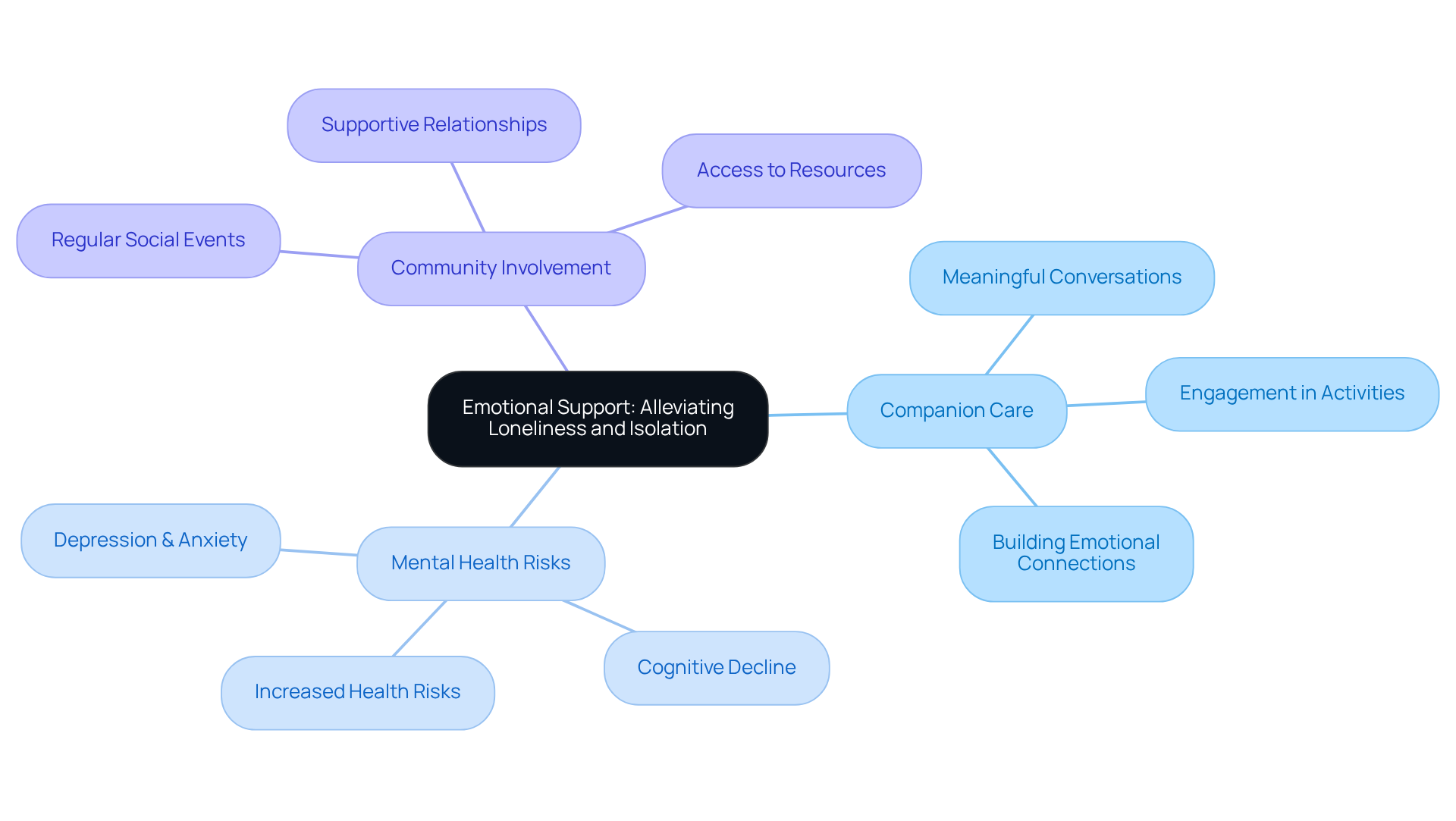
Companion care is truly essential in providing the psychological support that many elderly individuals need. It significantly helps to alleviate the loneliness and isolation that can often accompany aging. Caregivers do more than just offer companionship; they engage in meaningful conversations and activities that foster social interaction. This emotional connection is crucial for enhancing mental well-being. Research indicates that loneliness and social isolation are major risk factors for mental health issues in the elderly, leading to increased rates of depression, anxiety, and cognitive decline.
In fact, the National Center for Chronic Disease Prevention and Health Promotion reports that one in three older adults feels a lack of companionship. This absence can negatively impact their mental health and overall quality of life. By nurturing supportive relationships, those who live in companion care receive help that makes them feel valued and connected, which in turn bolsters their emotional well-being and resilience against mental health challenges.
Family supporters are encouraged to actively involve older adults in regular social events. This involvement can strengthen the benefits of companion care, ensuring that our loved ones feel supported and cherished. Together, we can create a community where every elderly individual knows they are not alone.
Daily Living Assistance: Helping with Routine Activities
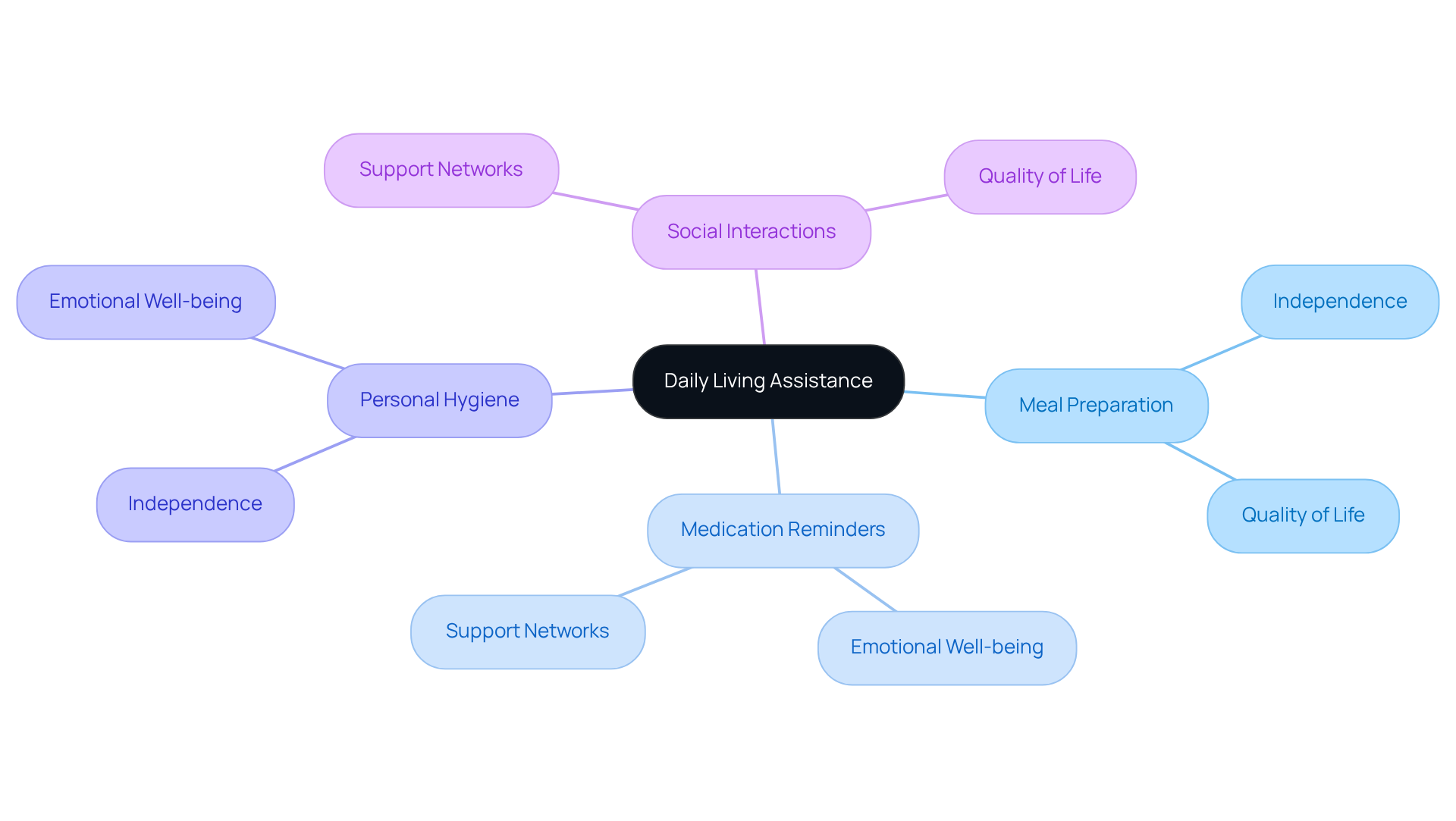
Companion caregivers who live in companion care play a vital role in assisting elderly individuals with essential daily tasks, such as meal preparation, medication reminders, and personal hygiene. This support not only fosters independence but also allows older adults to maintain their cherished routines, which are crucial for their emotional and physical well-being. Engaging in familiar activities can significantly reduce feelings of helplessness and confusion, providing much-needed structure and stability in their lives.
Moreover, the social interactions encouraged by caregivers help older adults preserve their abilities and build support networks, ultimately enhancing their overall quality of life. As one caregiver beautifully expressed, "Caring for someone else is the closest experience to being cared for," underscoring the reciprocal nature of caregiving. With the right assistance, older adults can truly enjoy an improved quality of life, highlighting the importance of regular routines in their care.
It's noteworthy that 82% of older adults wish to live in companion care in their homes for as long as possible, highlighting the critical role of in-home care and the support providers who help make this preference a reality. While consistency in routines is essential, incorporating flexibility allows for spontaneous activities that can further enrich the lives of older adults. This balance of structure and spontaneity can lead to a more fulfilling and joyful experience for both caregivers and those they care for.
Safety and Security: Ensuring a Safe Home Environment
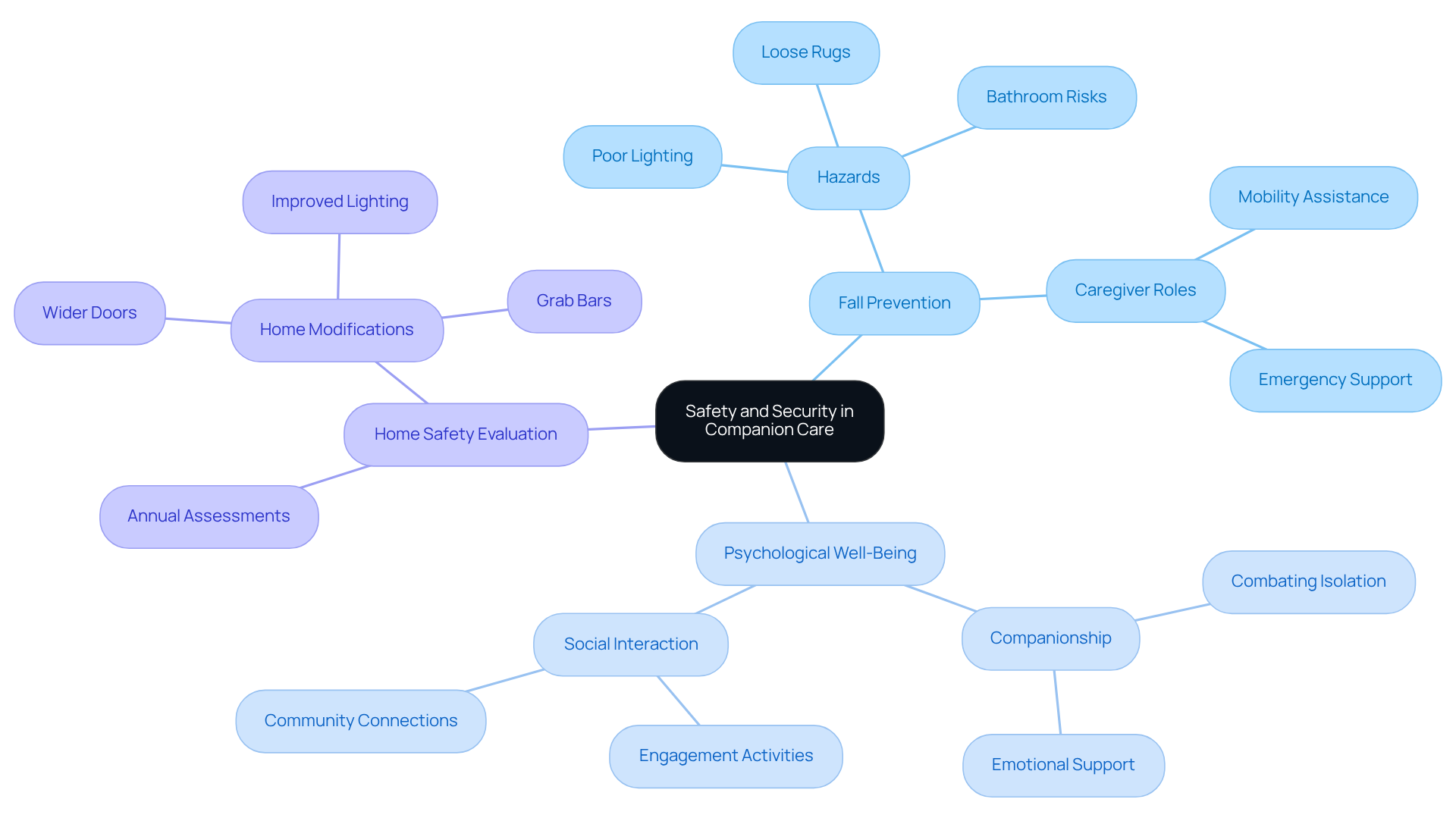
Companion support providers are vital in creating a safe home environment for older adults who live in companion care. They keep a watchful eye for potential hazards, like loose rugs and poor lighting, which often lead to falls—responsible for over half of all fall injuries among seniors. In fact, 55% of fall injuries in older individuals occur at home, and one in three older adults will experience a fall each year. By assisting with mobility and providing immediate help during emergencies, caregivers significantly reduce the risk of accidents. This proactive approach not only protects seniors but also eases families' worries by ensuring their loved ones live in companion care, which offers a safe and nurturing environment.
Moreover, caregivers enhance psychological well-being by offering companionship, combating feelings of isolation and boosting mental health. Live in companion care fosters essential social interaction that supports emotional and mental wellness. Their presence transforms safety from a reactive concern into a proactive partnership, enriching the overall quality of life for elderly individuals who live in companion care at home.
Furthermore, all ER physicians agree that a yearly Home Safety Evaluation is crucial for ensuring the elderly remain secure at home. This highlights the indispensable role of support providers in maintaining a safe living space for individuals who live in companion care. With compassionate care, they not only safeguard physical health but also nurture emotional connections, creating a warm and supportive atmosphere for those they serve.
Tailored Care Plans: Customizing Support for Individual Needs
At Happy to Help Caregiving, we understand the emotional challenges that caregivers face. It can be overwhelming, and feelings of stress and burnout are all too common. That’s why we develop tailored care plans that truly reflect the individual needs and preferences of each client.
By taking the time to evaluate important elements like health conditions, lifestyle, and personal interests, our supporters can offer assistance that’s not just helpful, but genuinely uplifting. This customized approach ensures that older adults receive the precise support they need to thrive.
Imagine the relief of knowing that your loved one is getting care that respects their unique journey. Our goal is to enhance the overall caregiving experience, making it more manageable and fulfilling for everyone involved. Together, we can create a nurturing environment where both caregivers and clients feel valued and understood.
https://iframe.tely.ai/cta/eyJhcnRpY2xlX2lkIjogIjY5MTUxZmZlN2M0NjgzZDk0ZDM2NzIwNCIsICJjb21wYW55X2lkIjogIjY4ZWU1ZGNhNzMxNzYyNTU3ZjNjOTVjMSIsICJpbmRleCI6IDQsICJ0eXBlIjogImFydGljbGUifQ==Social Engagement: Encouraging Interaction and Activities
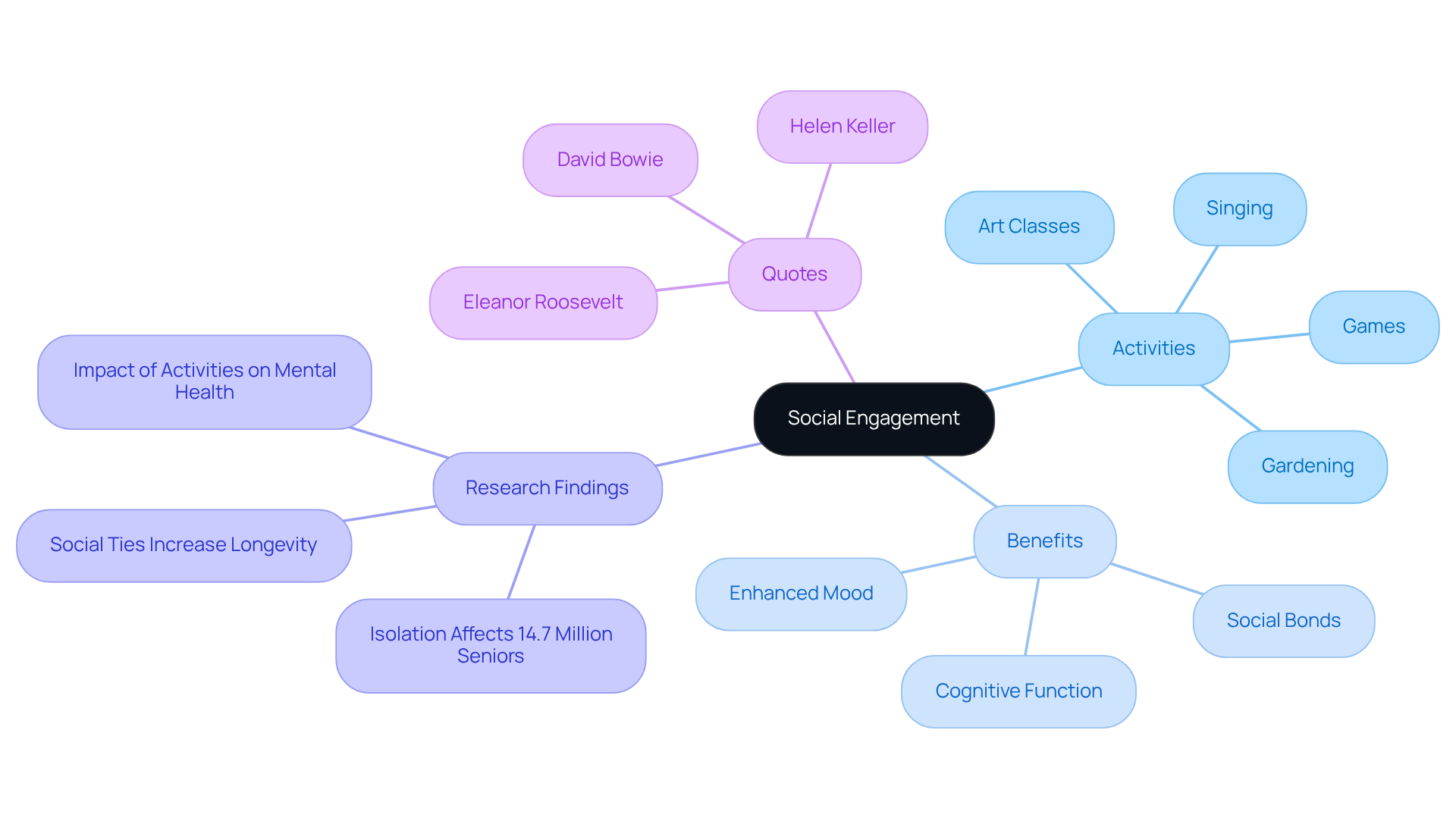
Companion caregivers truly make a difference in the lives of seniors by fostering social engagement. They organize activities that encourage interaction—think games, outings, and hobbies. These pursuits not only bring joy but also significantly boost cognitive function and mental well-being. Research shows that strong social ties can increase the odds of long-term survival by 50%. This is especially important in elderly care, where maintaining community connections is vital for overall health.
Programs that incorporate playful experiences, like table games or gardening, have proven to enhance memory and strengthen social bonds, leading to better mental health outcomes. For instance, the case study 'Singing Familiar Songs' illustrates how encouraging older adults to sing along to their favorite tunes can uplift their mood and spark cherished memories. Similarly, 'Creating Art for Seniors' highlights the benefits of engaging in art activities, which can enhance emotional expression and cognitive abilities.
Moreover, social interactions can help combat feelings of loneliness, which affect around 14.7 million older Americans. Activities that promote socialization, such as singing familiar songs or joining art classes, have been linked to improved mood and cognitive performance. Seniors who regularly engage in enjoyable social interactions often perform better on cognitive tests, showcasing the direct impact of social engagement on mental sharpness.
Notable figures have emphasized the importance of kindness and connection in aging. Eleanor Roosevelt once said, "the best and most beautiful things in the world must be felt with the heart." This sentiment resonates deeply in elderly care. By nurturing social relationships, caregivers who live in companion care not only enhance the quality of life for older adults but also foster a supportive environment where they can thrive emotionally and intellectually.
Continuity of Care: Building Trust with Consistent Companionship
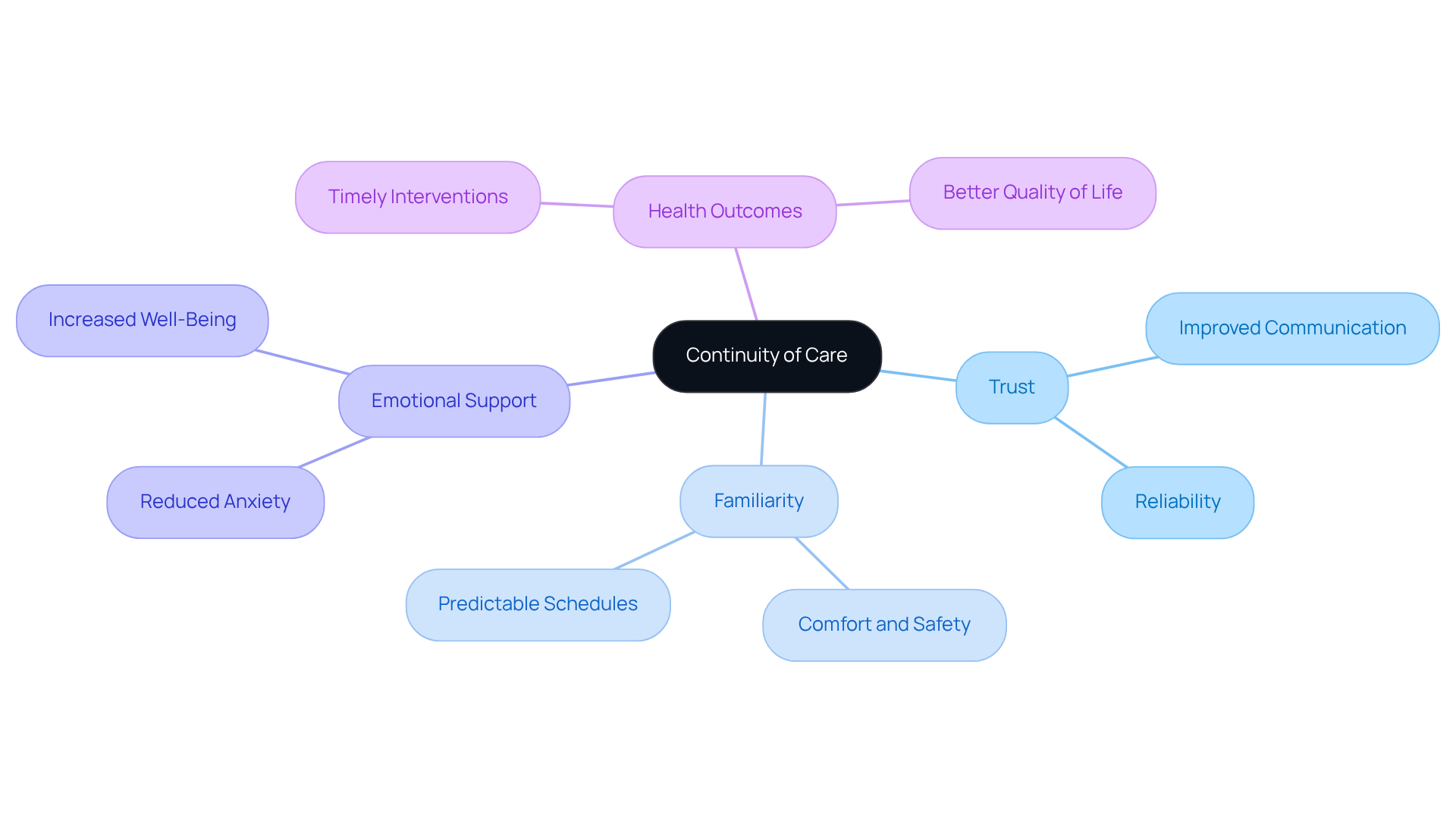
Reliable supporters play a crucial role in nurturing trust and familiarity—vital components for effective live in companion care. When older adults are matched with companions they know, they experience heightened comfort and safety. This connection leads to better communication and collaboration. Continuity not only enhances the caregiving experience in live in companion care but also strengthens the bond between the provider and the elderly, ultimately promoting better health outcomes.
Studies reveal that older adults with consistent caregiving connections are less likely to experience anxiety and depression. They benefit from the stability that familiarity provides. In fact, caregivers report a staggering 62% increase in anxiety and depression compared to non-caregivers, underscoring the importance of emotional support in caregiving.
Caregivers who consistently interact with the same elderly individuals can notice subtle changes in their health. This awareness enables timely interventions and adjustments to care plans. Building these relationships is crucial, as it fosters an environment where seniors feel valued and understood. As one supporter beautifully put it, "Establishing trust involves being available and attentive; it’s the small details that create a significant impact."
This sentiment resonates in the case study titled "The Role of Consistency in Caregiver-Client Relationships," which emphasizes how consistent caregivers nurture familiarity and emotional stability. Such insights highlight the profound impact of consistent companionship in caregiving, reinforcing the idea that older adults who live in companion care can greatly enhance their quality of life.
Peace of Mind: Family Assurance Through Professional Care
Families find significant peace of mind knowing their loved ones are cared for by trained professionals. This assurance allows family members to focus on their own lives, confident that their senior relatives are safe, supported, and engaged in meaningful activities. Happy to Help Caregiving’s commitment to personalized care fosters a trusting environment, where families can rest easy, knowing their loved ones receive the attention and compassion they deserve.
Testimonials from families highlight this feeling. Many express appreciation for the dedicated individuals who treat their relatives like family. For instance, Susan McQ emphasizes the remarkable assistance provided by caregivers, stating, "Your team are incredibly hard workers, problem solvers and excellent communicators." This professional approach not only enhances the quality of life for older adults but also eases the psychological burden on families, allowing them to enjoy their time together without worry.
Considering that 47% of long-distance supporters report emotional distress, the importance of professional assistance in alleviating family concerns cannot be overstated. To explore how Happy to Help Caregiving can support your family, consider requesting a free in-home consultation.
https://iframe.tely.ai/cta/eyJhcnRpY2xlX2lkIjogIjY5MTUxZmZlN2M0NjgzZDk0ZDM2NzIwNCIsICJjb21wYW55X2lkIjogIjY4ZWU1ZGNhNzMxNzYyNTU3ZjNjOTVjMSIsICJpbmRleCI6IDcsICJ0eXBlIjogImFydGljbGUifQ==Health Monitoring: Supporting Wellness and Recovery
Companion assistants play a vital role in caring for our elderly loved ones. They not only track vital signs but also manage medications and observe any changes in behavior or condition. This attentive approach helps in spotting potential health issues early, allowing for timely intervention and support.
Imagine the peace of mind that comes from knowing someone is there to monitor health closely. Caregivers are not just providing a service; they are offering emotional and practical support that can ease the stress and burnout often felt by families. By prioritizing health monitoring, they contribute significantly to the overall wellness and recovery of their clients.
Every small action counts. When caregivers focus on these essential tasks, they create an environment where elderly individuals can thrive. It’s about more than just health; it’s about fostering a sense of security and comfort. Together, we can ensure that our loved ones receive the compassionate care they deserve.
https://iframe.tely.ai/cta/eyJhcnRpY2xlX2lkIjogIjY5MTUxZmZlN2M0NjgzZDk0ZDM2NzIwNCIsICJjb21wYW55X2lkIjogIjY4ZWU1ZGNhNzMxNzYyNTU3ZjNjOTVjMSIsICJpbmRleCI6IDgsICJ0eXBlIjogImFydGljbGUifQ==Quality of Life Improvement: Enriching Daily Experiences
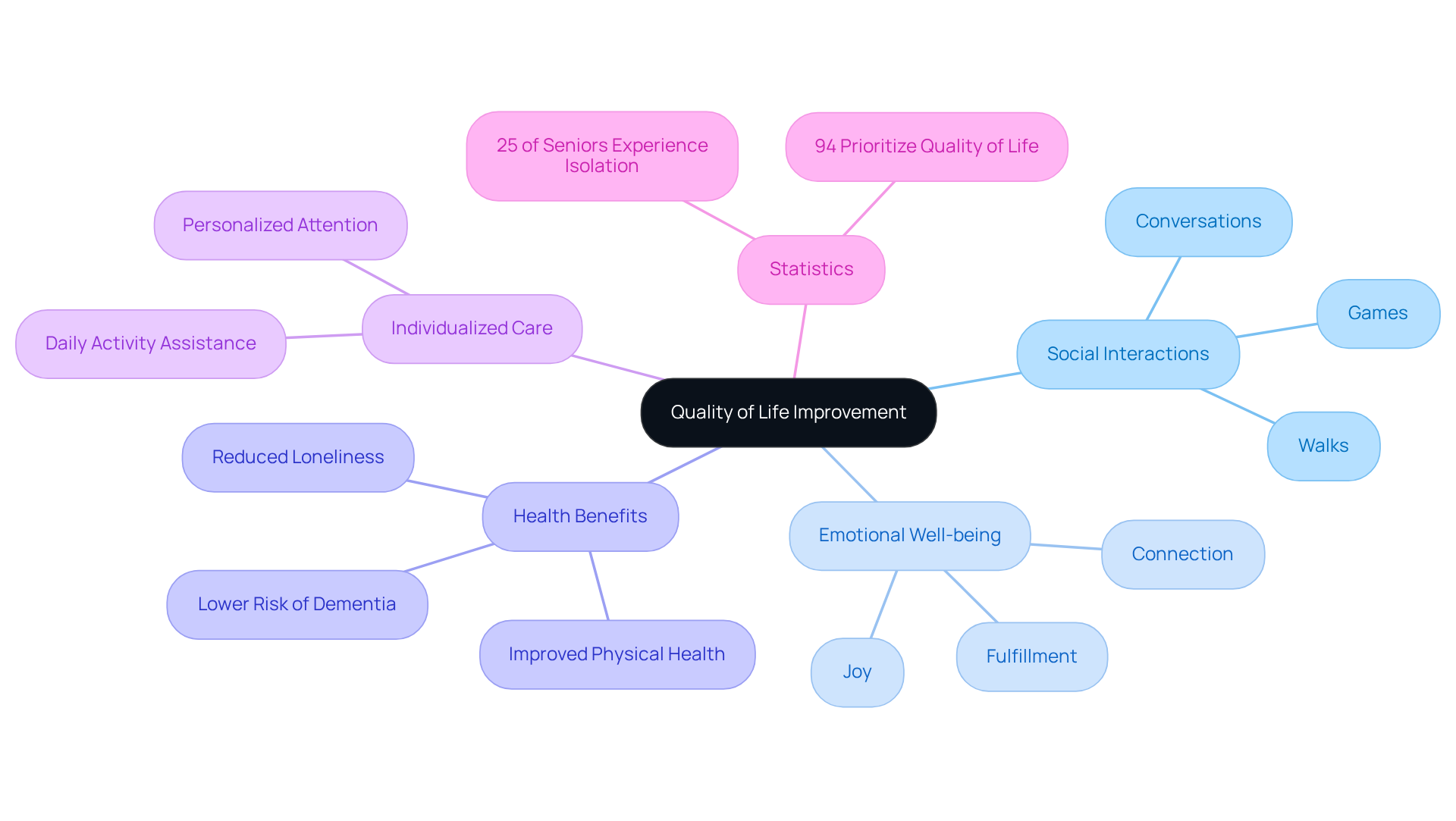
Live-in companion care significantly enhances the quality of life for seniors, enriching their daily experiences in meaningful ways. Caregivers engage clients in enjoyable activities, encourage hobbies, and facilitate social interactions that nurture joy and fulfillment. This holistic approach not only boosts emotional well-being but also promotes a vibrant and active lifestyle.
Regular social interactions—like conversations, walks, and games—are vital in combating loneliness and preventing health issues such as dementia and depression. Companionship has been shown to lower the risk of various health conditions, including heart disease and chronic inflammation. It's concerning that nearly 25 percent of adults aged 65 and older face some form of social isolation, which highlights the importance of these enriching activities.
By providing individualized attention and assistance, caregivers empower older adults to maintain their autonomy while ensuring they can live in companion care and enjoy a fulfilling life at home. As Edward Albert wisely noted, the simple act of caring is heroic. It significantly uplifts the spirits of older adults, making them feel valued and connected.
Ultimately, when seniors live in companion care with a compassionate caregiver, their daily routines transform into enriching experiences, allowing them to thrive in their familiar surroundings. Moreover, 94% of older adults prioritize maintaining their quality of life over simply living longer, underscoring the importance of these enriching daily experiences.
Key Takeaways for Caregivers
Live-in companion care provides essential support for seniors, significantly enhancing their quality of life through personalized companionship, emotional support, and practical assistance. This approach not only meets the physical needs of older adults but also fosters meaningful connections that help combat loneliness and isolation, allowing them to thrive in the comfort of their own homes.
Throughout this article, we’ve explored the key benefits of live-in companion care:
- Emotional support alleviates feelings of loneliness.
- Daily living assistance promotes independence and routine.
- Safety measures ensure a secure home environment.
- Tailored care plans, along with consistent companionship, further enhance the overall well-being of seniors.
This allows them to engage in enriching activities that boost their mental and emotional health.
Recognizing the profound impact of live-in companion care reveals that investing in such services goes beyond meeting basic needs; it enriches the lives of seniors and provides peace of mind for their families. By fostering an environment of trust, connection, and support, live-in caregivers play an essential role in helping older adults lead fulfilling, vibrant lives. Embracing the advantages of this care model creates a nurturing atmosphere where seniors feel valued, secure, and engaged.
https://iframe.tely.ai/cta/eyJhcnRpY2xlX2lkIjogIjY5MTUxZmZlN2M0NjgzZDk0ZDM2NzIwNCIsICJjb21wYW55X2lkIjogIjY4ZWU1ZGNhNzMxNzYyNTU3ZjNjOTVjMSIsICJpbmRleCI6IG51bGwsICJ0eXBlIjogImFydGljbGUifQ==Frequently Asked Questions
What is the primary focus of Happy to Help Caregiving?
The primary focus of Happy to Help Caregiving is to provide personalized companionship for seniors, ensuring that each client feels seen, valued, and experiences a sense of belonging and safety in their own homes.
How do caregivers at Happy to Help Caregiving support the emotional well-being of seniors?
Caregivers support the emotional well-being of seniors by tailoring their approach to meet individual needs, engaging clients in meaningful activities, and fostering connections that uplift and inspire, thereby enhancing the overall quality of life.
What emotional challenges do elderly individuals face that companion care can help alleviate?
Elderly individuals often face loneliness and isolation, which can lead to mental health issues such as depression and anxiety. Companion care provides psychological support through meaningful conversations and activities that foster social interaction.
What statistics highlight the importance of companionship for older adults?
Research indicates that one in three older adults feels a lack of companionship, which negatively impacts their mental health. Companion care helps to nurture supportive relationships that make seniors feel valued and connected.
What types of daily living assistance do caregivers provide?
Caregivers provide assistance with essential daily tasks such as meal preparation, medication reminders, and personal hygiene, which helps seniors maintain their independence and cherished routines.
Why is maintaining daily routines important for older adults?
Maintaining daily routines is crucial for the emotional and physical well-being of older adults, as it reduces feelings of helplessness and confusion, providing structure and stability in their lives.
What do older adults prefer regarding their living situation?
82% of older adults wish to live in companion care in their homes for as long as possible, emphasizing the importance of in-home care and support providers in fulfilling this preference.
How do caregivers balance structure and spontaneity in care?
Caregivers balance structure and spontaneity by maintaining consistency in routines while also allowing for spontaneous activities, which can enrich the lives of older adults and lead to a more fulfilling experience.