10 Benefits of Meal Planning for Seniors That Family Caregivers

For families in our service areas
For families in our service areas, this guide explains caregiver support and how non-medical in-home caregiving can support care planning in East Idaho, Treasure Valley & Magic Valley, Northern Wasatch, North Central West Virginia & Southwestern Pennsylvania, and Northeast Ohio.
Understanding Meal Planning
Meal planning for seniors presents a significant challenge for caregivers, as it involves balancing nutritional needs with personal preferences. Many older adults face dietary restrictions that complicate this task, making it essential for caregivers to navigate these complexities effectively.
This situation not only adds stress to the caregiving role but can also impact the quality of life for seniors. When meals are not planned thoughtfully, it can lead to poor nutrition, decreased independence, and missed opportunities for social interaction during shared meals.
So, how can caregivers transform mealtime from a source of stress into a joyful experience? Here are some actionable strategies:
- Assess Nutritional Needs: Understand the specific dietary requirements of the senior in your care.
- Incorporate Preferences: Engage seniors in the meal planning process to include their favorite foods.
- Plan Ahead: Create a weekly meal plan that accommodates dietary restrictions while ensuring variety.
- Make it Social: Encourage shared meals with family or friends to foster connections.
By implementing these strategies, caregivers can streamline the meal planning process, enhance health outcomes, and cultivate meaningful connections through shared meals.
Happy to Help Caregiving: Personalized Meal Planning Support for Seniors
Caring for older adults often presents unique challenges, particularly regarding meal planning for seniors. Many caregivers struggle to meet the specific dietary needs of their loved ones while also considering their personal tastes. This can lead to mealtime becoming a source of stress rather than enjoyment, impacting the overall quality of life for elderly individuals.
Happy to Help Caregiving addresses this issue by providing customized meal planning for seniors that is tailored to their unique dietary requirements. This service ensures that each client receives meals that not only meet their dietary needs but also cater to their preferences. By collaborating with families, caregivers can create meal planning for seniors that enhances the mealtime experience, making it both enjoyable and nutritious.
With this approach, caregivers can transform mealtime into a positive experience, ultimately improving the quality of life for those they care for. By focusing on personalized dietary solutions, Happy to Help Caregiving empowers families to provide the best possible care.
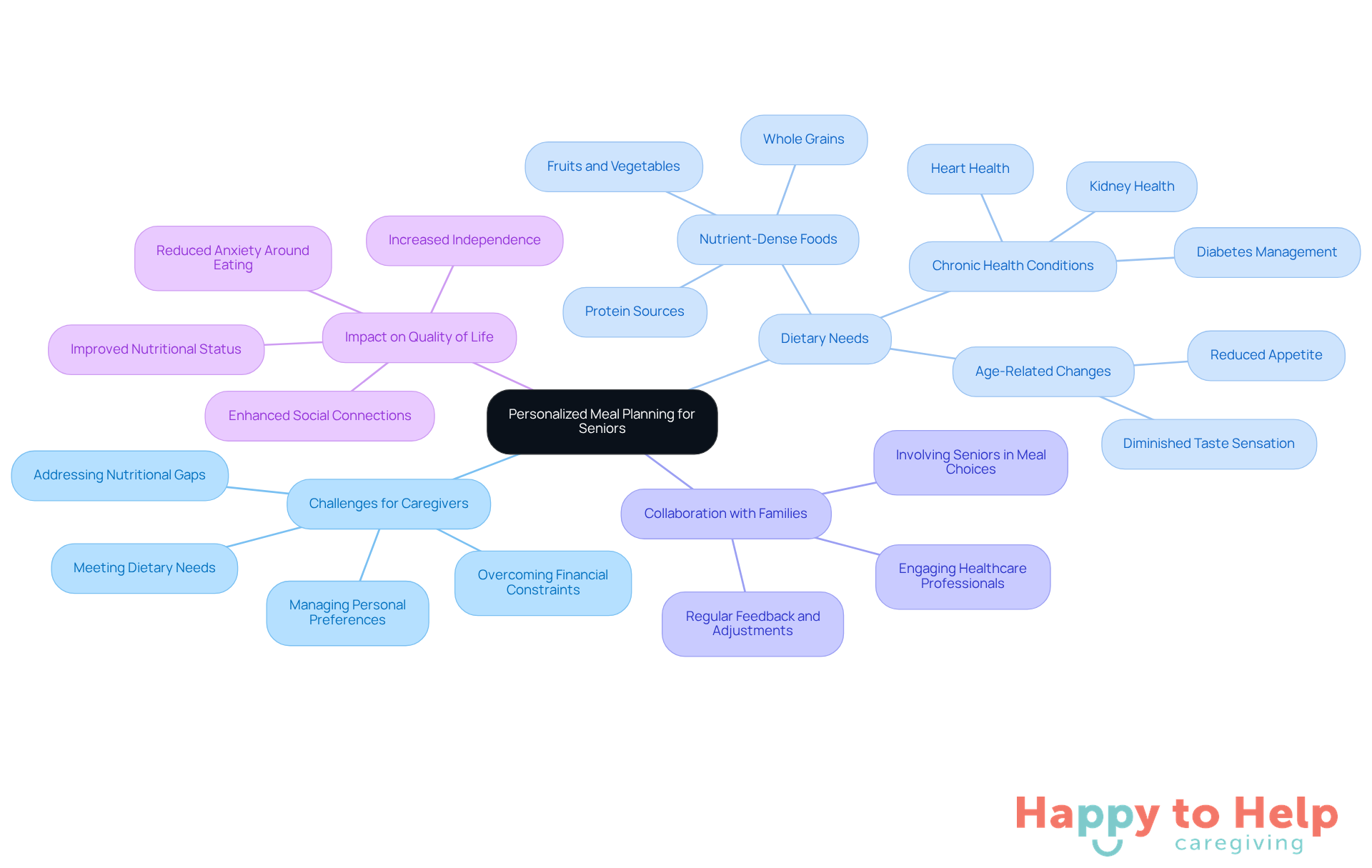
Promotes Balanced Nutrition: Ensuring Seniors Get Essential Nutrients
Meal preparation addresses a significant problem: older adults often struggle to obtain essential nutrients like vitamins, minerals, and proteins. This challenge can lead to nutritional deficiencies, which may adversely affect their overall health and wellness.
Caregivers can ensure that seniors receive a variety of foods that meet dietary recommendations by engaging in meal planning for seniors. This proactive approach not only helps prevent deficiencies but also supports overall well-being, particularly for those with specific dietary restrictions or health conditions.
To implement this solution effectively, caregivers can consider the following tips:
- Plan meals weekly to include a range of nutrient-rich foods.
- Incorporate expert advice on meal planning for seniors that addresses dietary needs specific to older adults.
- Utilize resources like meal planning for seniors, meal prep services, or community programs that focus on senior nutrition.
By taking these steps, caregivers can significantly enhance the nutritional intake of older adults, promoting healthier lifestyles and improved quality of life.
Supports Health Management: Tailoring Meals to Specific Dietary Needs
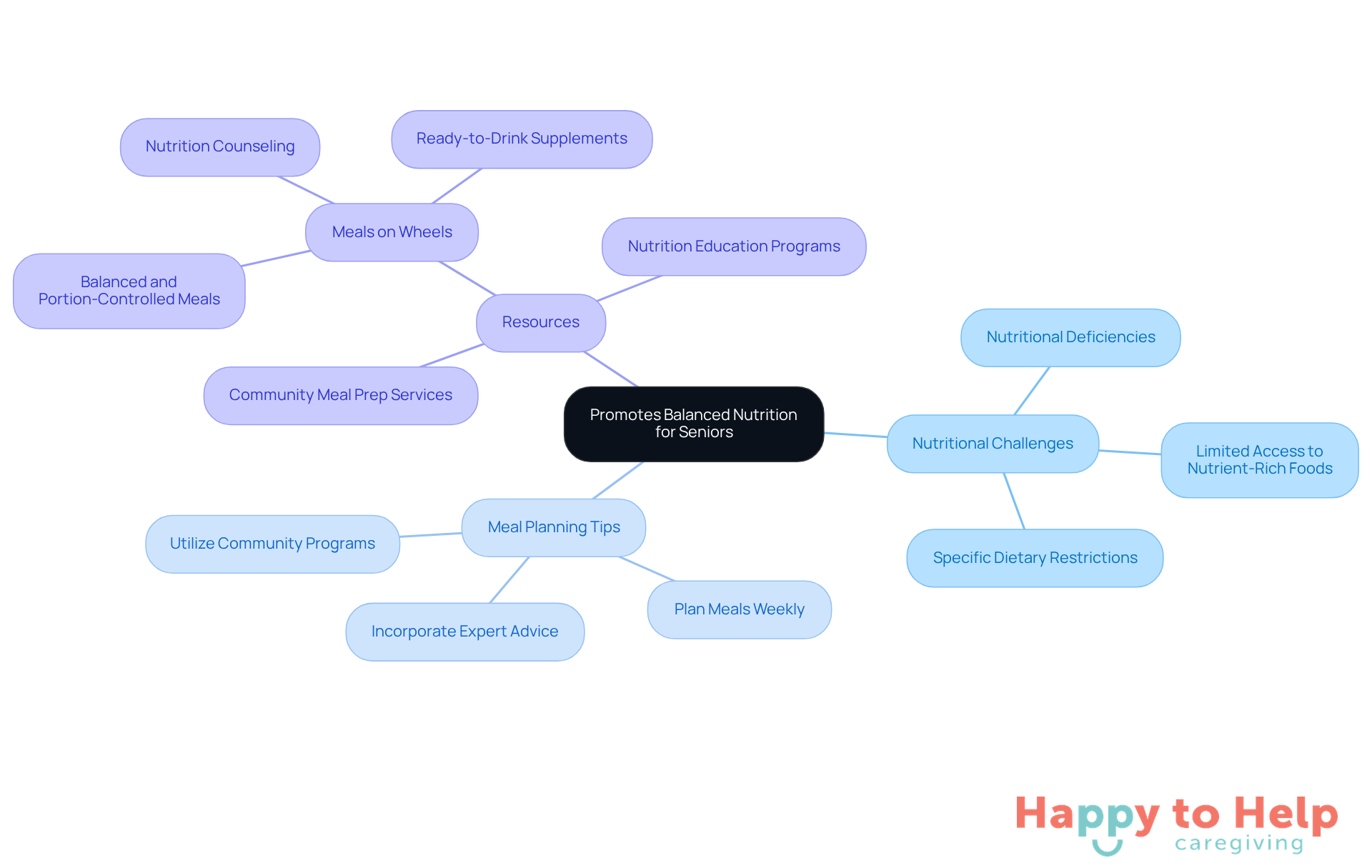
Meal planning for seniors is essential for managing health, particularly for older adults with chronic conditions. Caregivers face the challenge of meal planning for seniors by customizing meals to meet specific dietary needs, such as low-sodium options for heart health or diabetic-friendly meals. This tailored approach to meal planning for seniors is crucial for ensuring that older adults receive the necessary nutrients while avoiding foods that could worsen their health issues.
Research shows that nearly 93% of older adults have at least one chronic condition, and about 80% have two or more. This statistic underscores the importance of focusing on individual dietary requirements. By prioritizing meal planning for seniors, caregivers can significantly enhance their clients' overall health and well-being, which leads to better health outcomes and improved quality of life.
Moreover, introducing medically customized diets (MTMs) could prevent 2.6 million hospitalizations each year. This highlights the critical role of adequate nutrition in meal planning for seniors to maintain their health and autonomy. A proactive strategy not only boosts physical health but also fosters emotional well-being, as nutritious food provides a sense of security and comfort in familiar surroundings.
Services like Meals on Wheels are vital for older adults, emphasizing the need for meal planning for seniors who struggle with food preparation. They ensure access to nutritious meals and help maintain social connections, further supporting the health and happiness of this population.
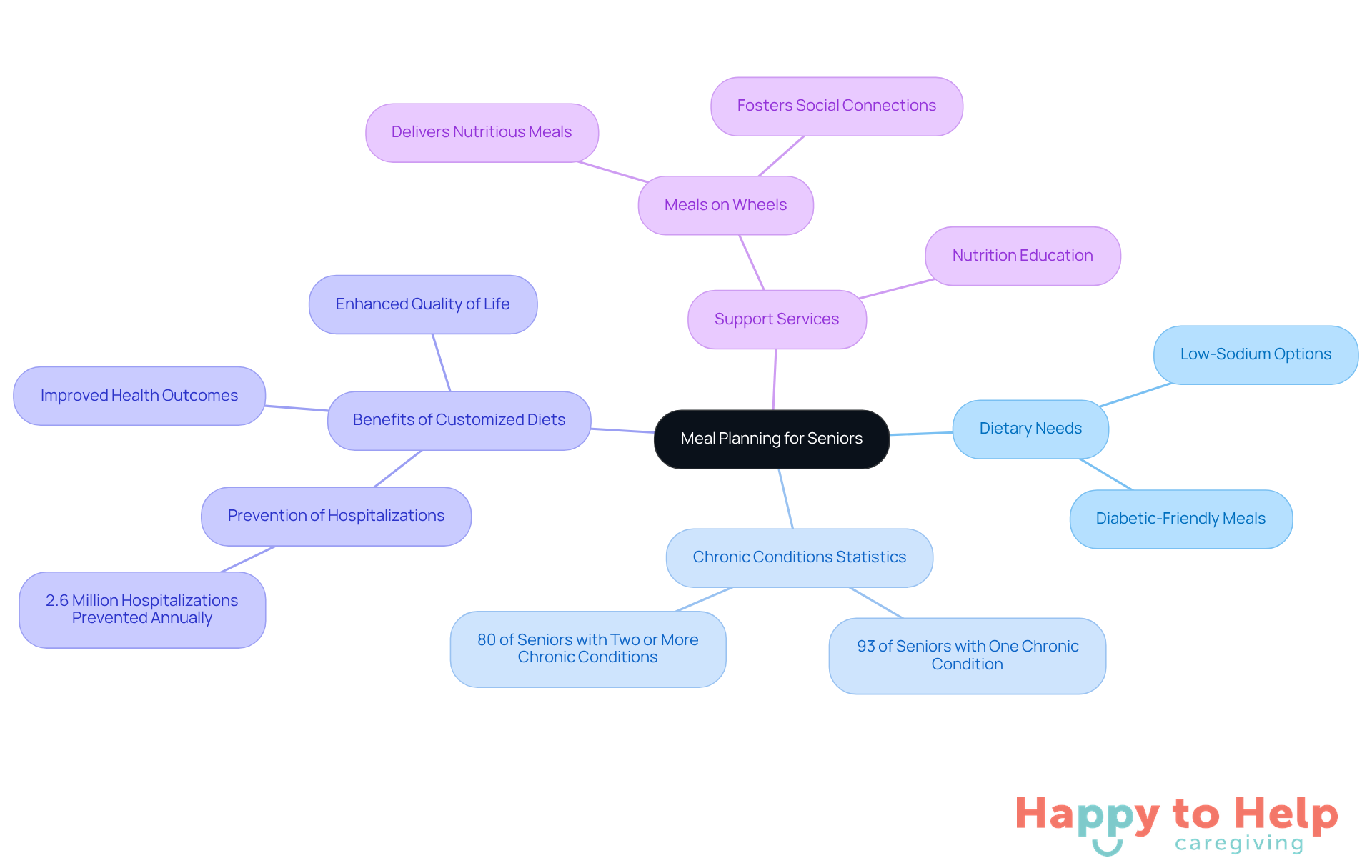
Reduces Stress: Simplifying Meal Preparation for Families and Seniors
Food organization presents a significant challenge for caregivers, often leading to increased stress and disarray in daily routines. When caregivers lack a clear plan, they may find themselves scrambling to prepare meals at the last minute, which can create a chaotic environment. This disorganization not only consumes valuable time but also detracts from the quality moments families could spend together, worrying instead about what to cook each day.
However, efficient food organization can alleviate these issues. By implementing a structured approach, caregivers can streamline meal preparation, allowing families to focus on nurturing relationships rather than on meal planning for seniors. This method has been shown to reduce food waste by controlling the amount of fresh produce and leftovers that spoil, ultimately leading to savings on groceries.
Moreover, studies indicate that organized food preparation is linked to a decrease in unhealthy snacking among both parents and children across various demographics. Caregivers can also assist seniors with meal planning for seniors by incorporating nutrient-dense foods into their diets, which is crucial for maintaining health and managing chronic conditions. As highlighted by Kind Senior Care, "Proper nutrition plays a critical role in overall health, especially for seniors."
In conclusion, by prioritizing food organization, families can cultivate a more harmonious atmosphere, enabling them to focus on what truly matters - spending meaningful time together.
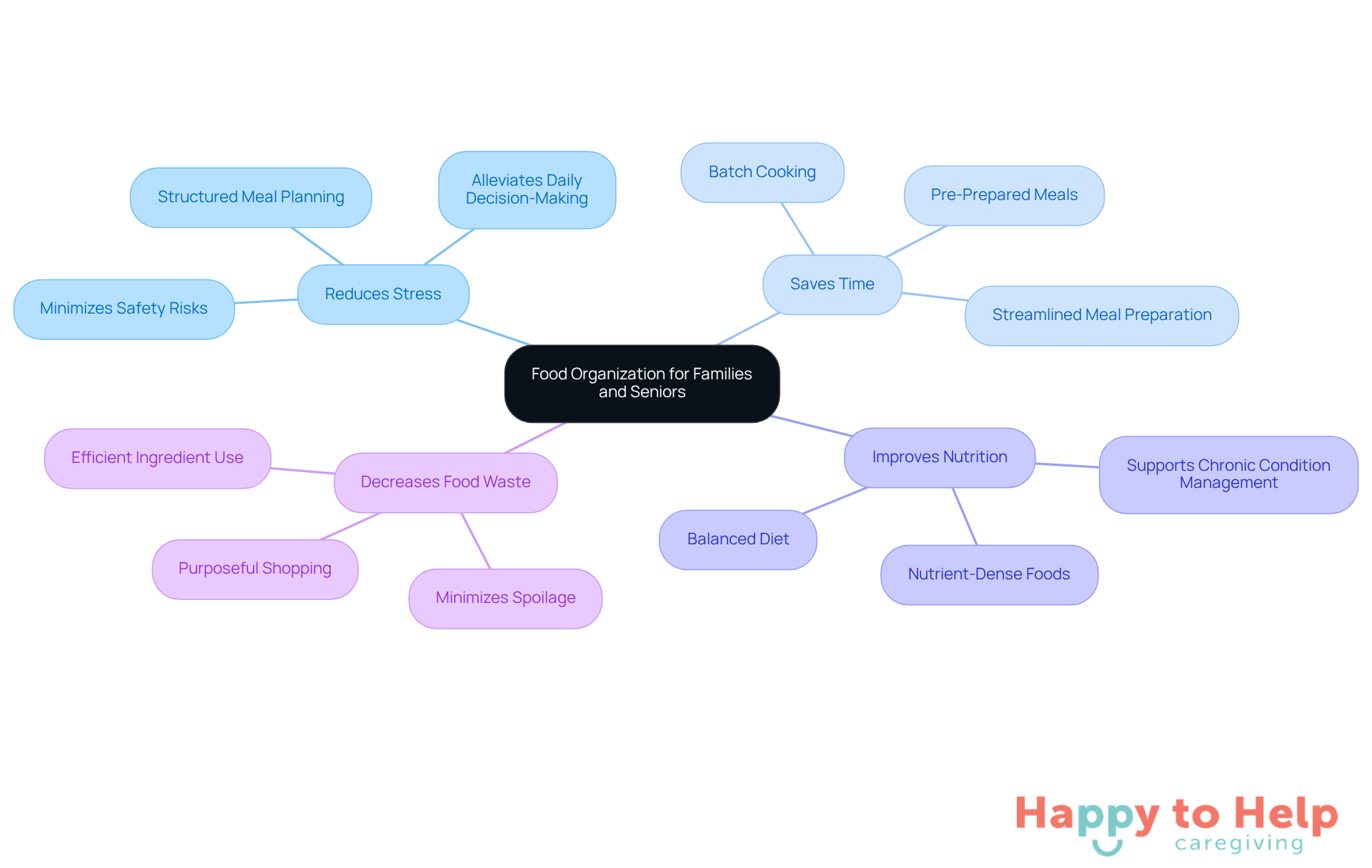
Prevents Food Waste: Maximizing Resources Through Thoughtful Planning
Meal planning for seniors presents a significant solution to the problem of food waste, particularly for caregivers. This approach encourages intentional purchasing and preparation, ensuring that only essential ingredients are bought. As a result, the likelihood of food spoiling in the refrigerator is greatly reduced.
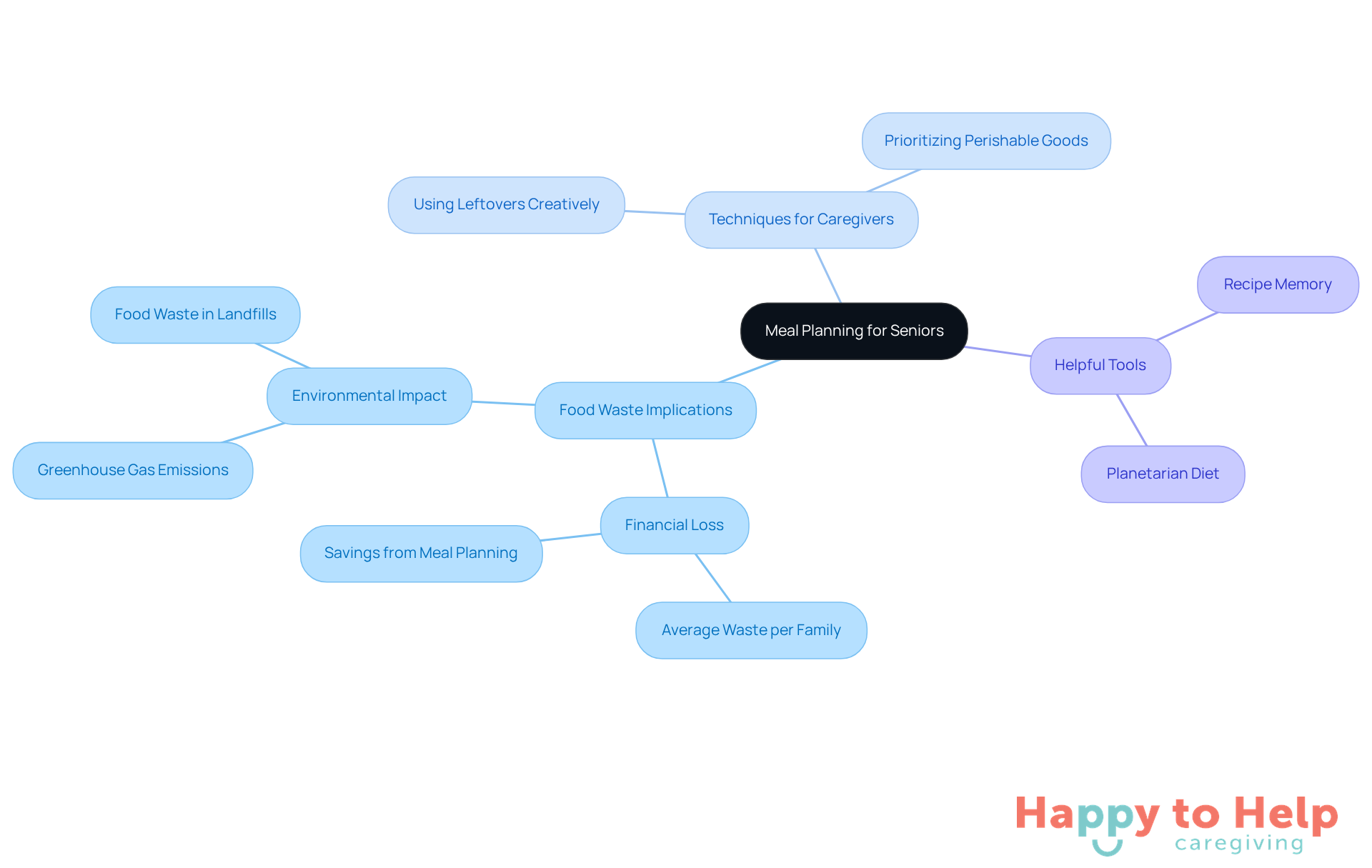
The implications of food waste are substantial. On average, U.S. families waste $1,500 in groceries each year, which translates to an annual loss of about $750 for those who plan meals effectively. Moreover, food waste contributes to 2.6% of yearly greenhouse gas emissions in the U.S., comparable to the emissions produced by 1 in 7 vehicles on the road.
To combat these issues, caregivers can adopt efficient food organization techniques. This includes:
- Using leftovers creatively
- Prioritizing perishable goods
By doing so, they can optimize resources and promote a healthier lifestyle through effective meal planning for seniors. As Tricia Greyshock aptly states, "Knowledge is power!"
Additionally, tools like Recipe Memory can assist caregivers in organizing their food plans and minimizing waste effectively. Embracing sustainable eating habits, such as those outlined in the Planetarian Diet, further enhances the benefits of meal preparation.
Encourages Social Interaction: Fostering Connections Through Shared Meals
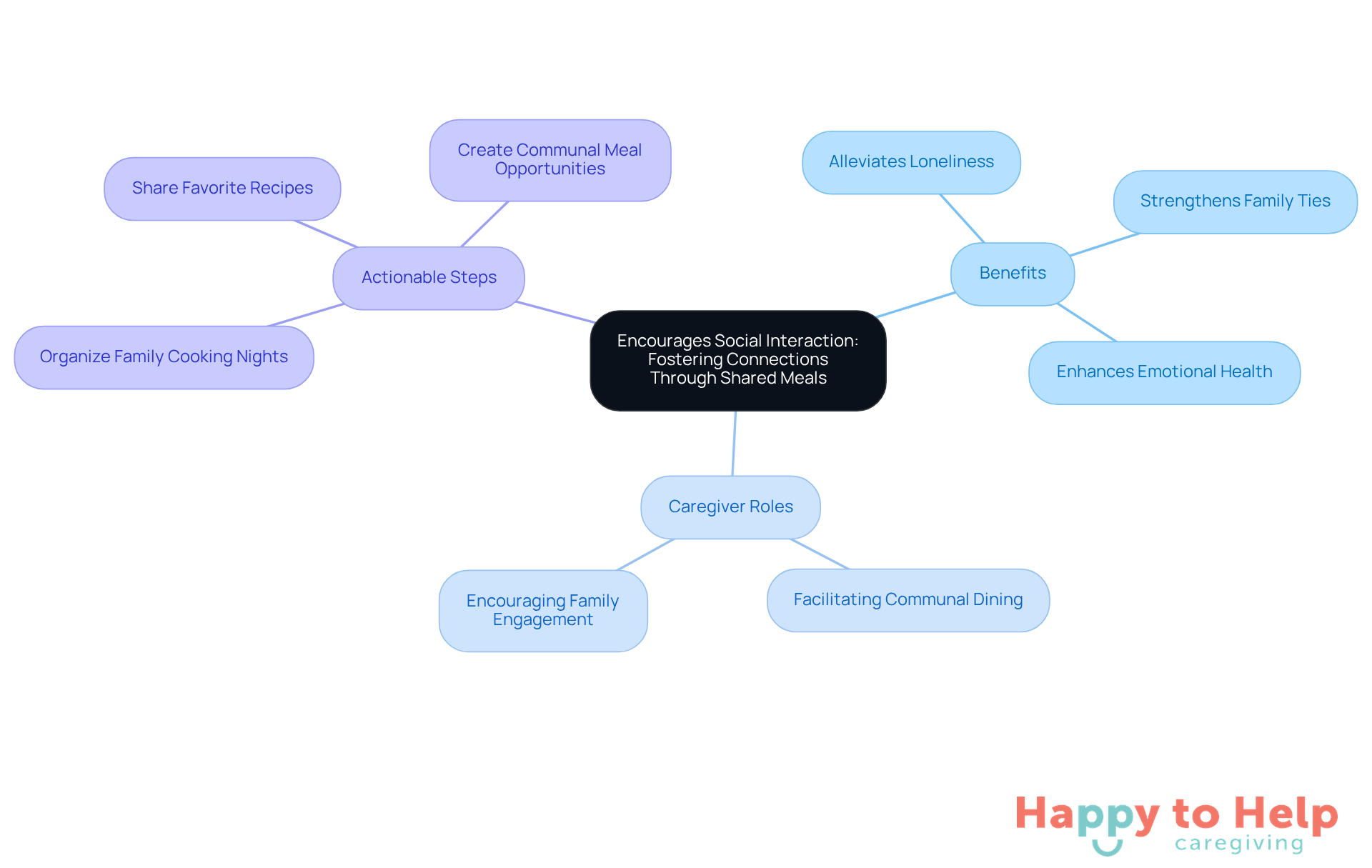
Meal planning for seniors can be a significant challenge for caregivers, especially when it comes to fostering social interaction among older adults. Many seniors experience feelings of loneliness and emotional distress, which can negatively impact their overall well-being. This issue not only affects their mental health but also weakens family connections, making it crucial for caregivers to find effective solutions.
One effective way to address this problem is through meal planning for seniors that encourages communal dining. When families come together to organize and prepare food, they create valuable opportunities for bonding and communication. This joint effort not only strengthens family ties but also enhances the emotional health of older adults. Research published in Frontiers in Public Health shows that communal dining can alleviate feelings of loneliness, promoting a sense of belonging and community among seniors.
Caregivers play a vital role in facilitating these communal dining experiences. By encouraging families to engage in meal planning for seniors and share meals together, caregivers can help seniors feel more included in their families and communities. This approach has been shown to activate the brain's endorphin system, which strengthens emotional bonds and improves mental well-being.
Furthermore, the 2025 World Happiness Report highlights that food sharing is a strong predictor of well-being, comparable to income and employment. As Megan Elias notes, "Humans have usually cooked with others because it’s more energy and resource-efficient to do this." This underscores the practical benefits of communal cooking and dining.
To implement these solutions, caregivers can:
- Organize regular family cooking nights.
- Encourage seniors to share their favorite recipes.
- Create opportunities for communal meals in care homes.
Case studies indicate that communal dining in care homes leads to enhanced mental health and cognition among older adults, further emphasizing the positive effects of shared dining experiences. By promoting family connections through cooking, caregivers can significantly improve the quality of life for seniors.
Improves Safety in the Kitchen: Reducing Risks for Seniors During Meal Prep
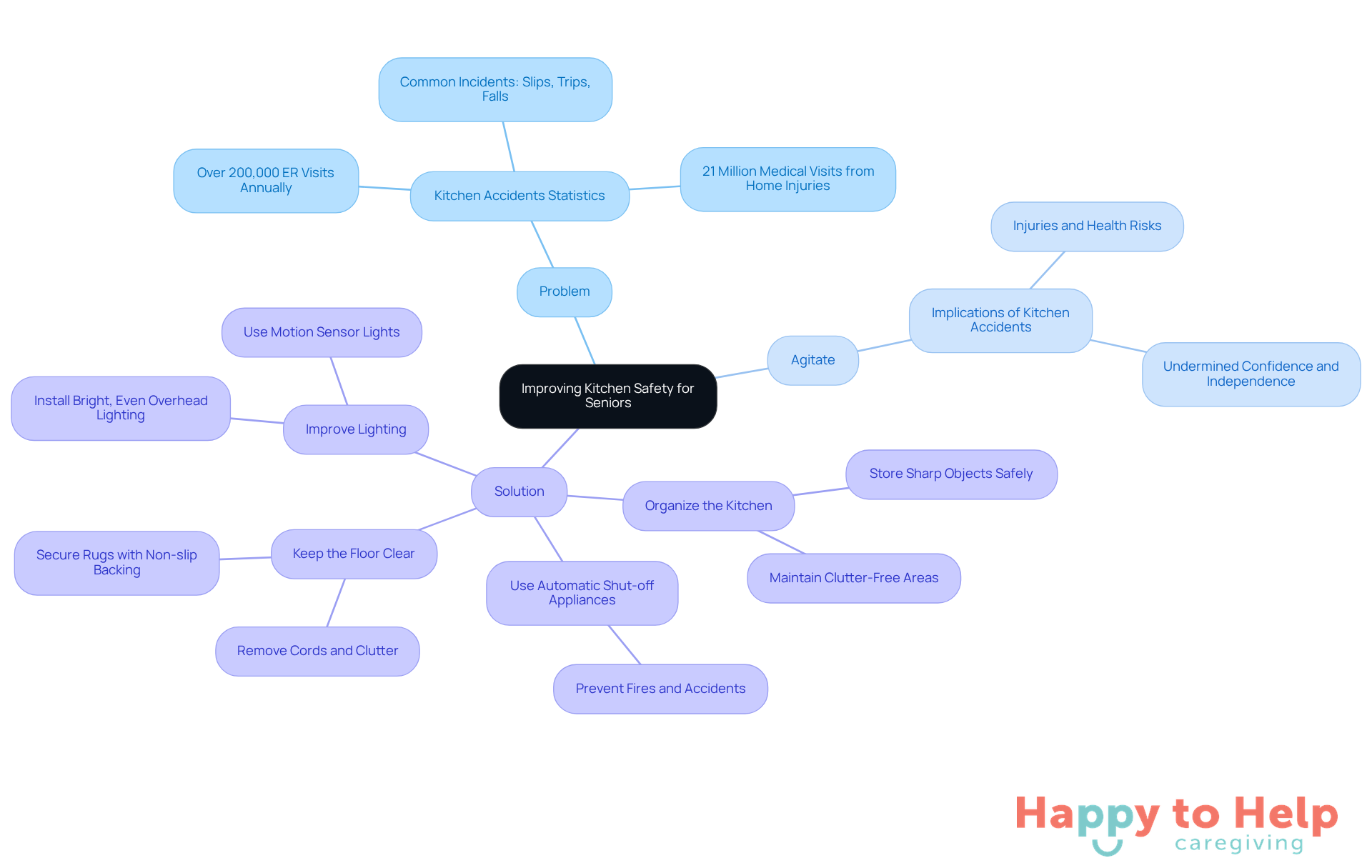
Problem: Kitchen safety is a significant concern for caregivers of older adults. Each year, over 200,000 kitchen accidents in the U.S. lead to emergency room visits, with slips, trips, and falls being the most common incidents among this demographic, according to CopperSmith.
Agitate: These accidents can have serious implications, not only causing injuries but also undermining the confidence and independence of older adults in the kitchen. Caregivers must recognize the importance of a safe cooking environment to prevent these incidents and promote a healthy lifestyle.
Solution: To enhance kitchen safety, caregivers can implement several practical strategies:
- Organize the kitchen: Store sharp objects out of reach and maintain clutter-free cooking areas to minimize hazards.
- Use automatic shut-off appliances: These can prevent fires and other accidents.
- Keep the floor clear: Ensure that electrical cords, rugs, and clutter are off the floor to reduce the risk of trips and falls.
- Improve lighting: Proper lighting is essential for safe food preparation.
Experts emphasize that meal planning for seniors, which prioritizes safety in meal preparation, can significantly reduce the likelihood of injuries, allowing older adults to enjoy cooking while maintaining their independence. Additionally, modifying cooking techniques for older adults with physical limitations is crucial to ensure their safety and confidence in the kitchen.
Enhances Quality of Life: Boosting Well-Being Through Structured Meals
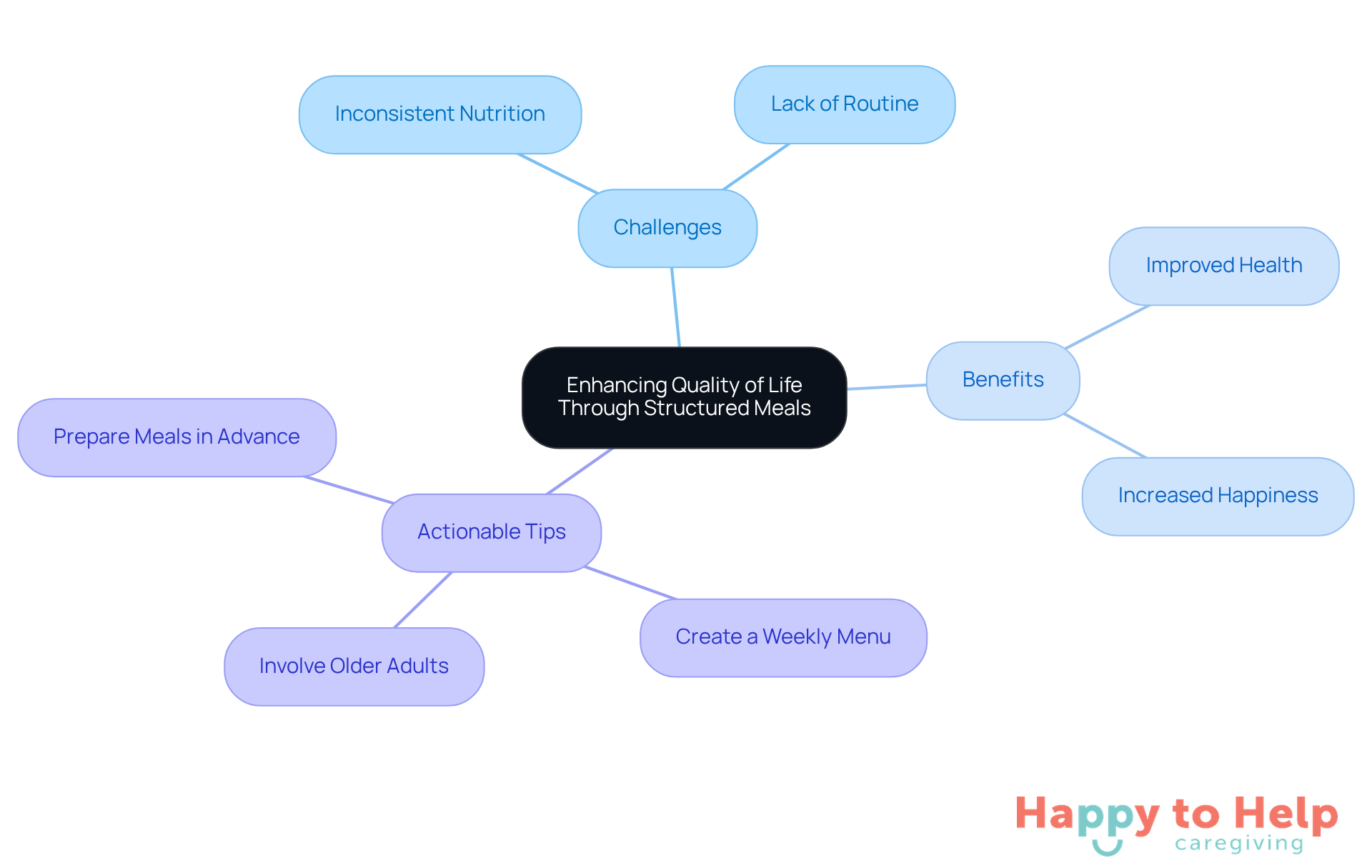
Meal planning for seniors presents a significant challenge for caregivers of older adults, often leading to inconsistent nutrition and a lack of routine. This inconsistency can negatively impact physical health, mood, and energy levels, ultimately diminishing the quality of life for elderly individuals.
To address this issue, caregivers can implement meal planning for seniors that prioritizes nutritious dishes. By implementing meal planning for seniors to ensure that older adults have regular access to balanced meals, caregivers can significantly enhance their clients' overall health and happiness.
Here are some actionable tips for effective meal planning:
- Create a weekly menu that includes a variety of nutritious options.
- Involve older adults in meal planning for seniors to cater to their preferences.
- Meal planning for seniors allows you to prepare meals in advance to ensure consistency and convenience.
By adopting these strategies, caregivers can foster a healthier, more enjoyable mealtime experience for older adults.
Promotes Independence: Empowering Seniors Through Meal Planning
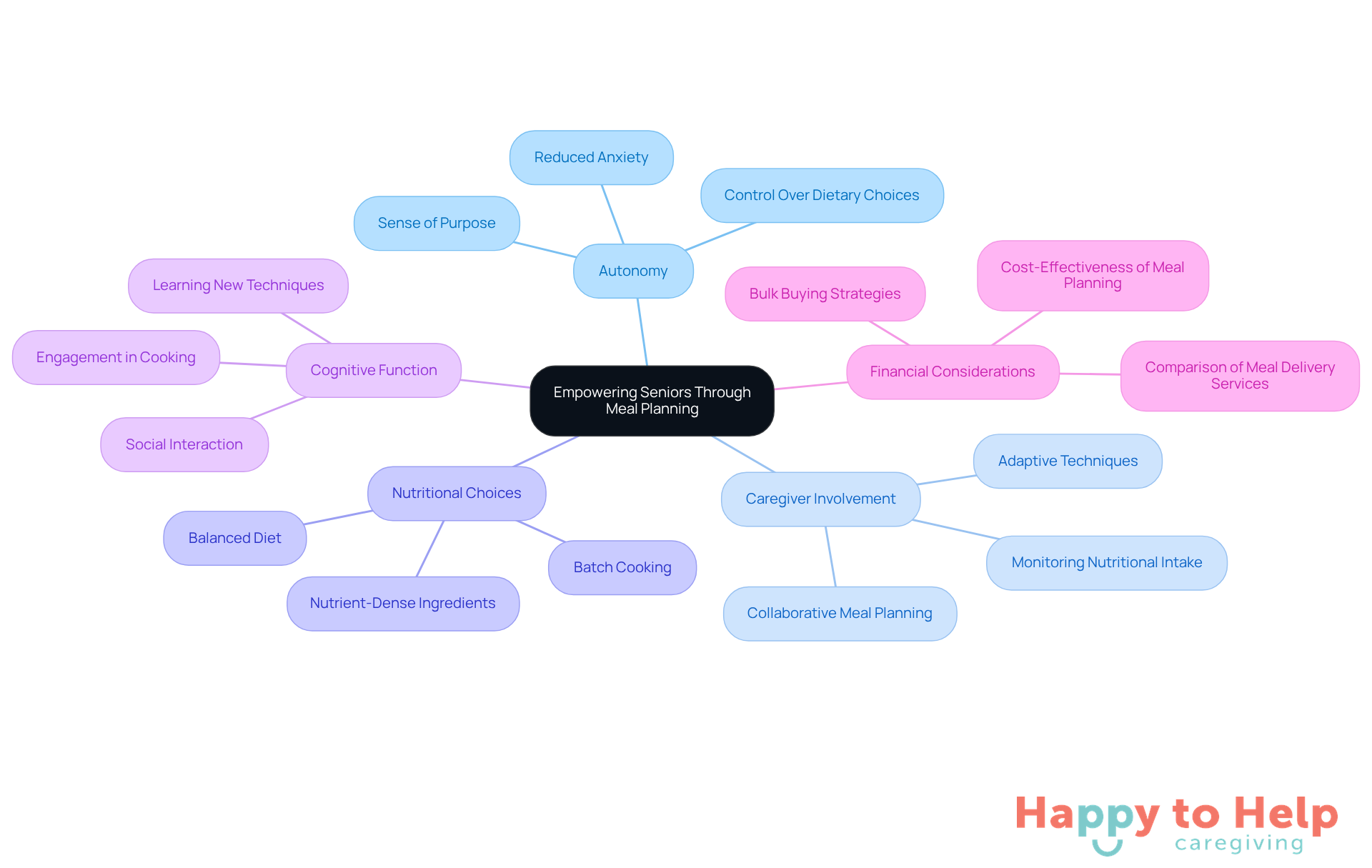
Meal planning for seniors presents a significant challenge, often impacting their autonomy and nutritional choices. When they are not actively involved in the food arrangement process, they may feel a loss of control over their dietary decisions, which can affect their dignity and self-esteem as they age.
To address this issue, caregivers can play a crucial role in meal planning for seniors by introducing adaptive techniques that make food preparation more accessible and enjoyable. For instance, they can assist older adults with meal planning for seniors by developing a weekly dining plan that aligns with their routines, ensuring that meals are both nutritious and appealing. This involvement not only fosters a sense of control but also reinforces their autonomy.
Engaging older adults in food preparation can lead to healthier eating practices. By collaborating with caregivers, they can explore new ingredients and cooking methods, enhancing their diet and boosting cognitive function. As one caregiver noted, "Enabling older adults to make their own food selections is essential for their overall well-being." This collaborative approach not only increases nutritional intake but also cultivates a sense of purpose and connection to their food, ultimately supporting their mental and emotional health.
Moreover, food preparation serves as an opportunity for learning and involvement, allowing older adults to take pride in their ability to influence their dietary choices. Caregivers can facilitate this by organizing commonly used items for easy access and promoting nutrient-dense ingredients, helping older adults maintain a balanced diet while reducing food waste. Empowerment through meal planning for seniors not only supports their autonomy but also enhances their quality of life, making it a vital aspect of caregiving.
It's also important to recognize that food delivery services can be more expensive than traditional grocery shopping and home cooking. Therefore, efficient food organization becomes a financially wise option for older adults, ensuring they can enjoy nutritious meals without unnecessary costs.
Empowers Seniors: The Comprehensive Benefits of Meal Planning Services
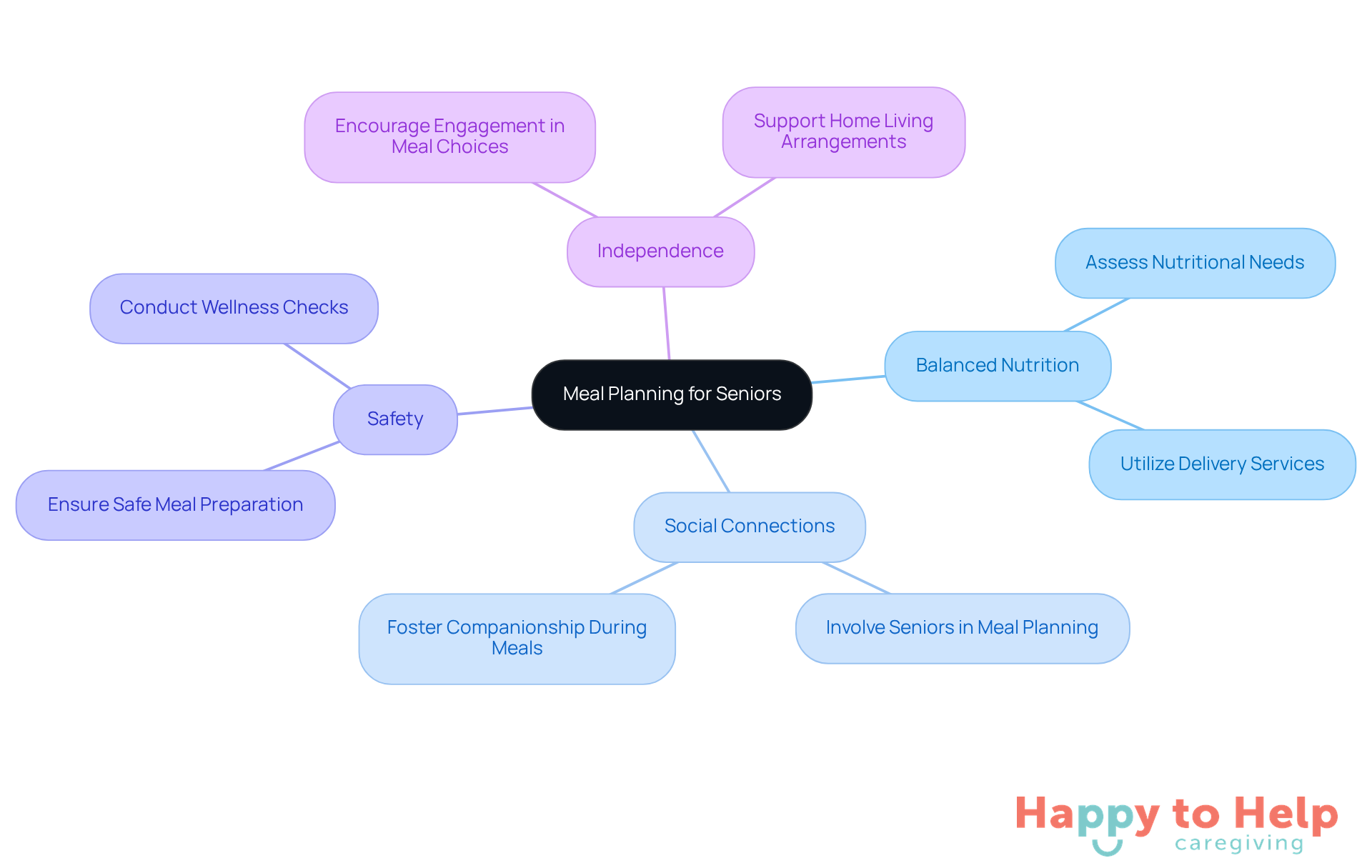
Meal planning for seniors addresses a significant challenge they face: maintaining a healthy lifestyle. Many older adults struggle with balanced nutrition, which can lead to health issues and social isolation. This problem not only affects their physical well-being but also their emotional health, making it crucial for caregivers to find effective solutions.
By integrating meal planning for seniors into caregiving, families can provide essential support. These services not only ensure that seniors receive balanced meals through meal planning for seniors but also foster social connections and enhance safety in their homes. This approach promotes independence and significantly improves the overall quality of life for seniors.
To implement these solutions effectively, caregivers can consider the following actionable tips:
- Assess nutritional needs: Understand the dietary requirements of your loved one. Plan meals together by involving seniors in meal planning for seniors to encourage engagement.
- Utilize delivery services: Explore meal delivery options that cater to specific dietary needs.
By taking these steps, caregivers can empower their loved ones to thrive in their own homes.
Your Path Forward
Meal planning for seniors presents a significant challenge for caregivers, impacting the overall quality of life for elderly individuals. Without a structured approach, seniors may struggle to meet their unique nutritional needs, leading to meals that are neither enjoyable nor healthful. This situation can turn mealtime into a source of stress rather than a moment of connection and nourishment.
The implications of inadequate meal planning are profound. It can result in unbalanced nutrition, hinder health management, and increase stress for caregivers. Additionally, it may lead to food waste, limit social interaction, compromise kitchen safety, and diminish the independence of seniors. These factors highlight the urgent need for a thoughtful meal planning strategy that not only addresses dietary requirements but also fosters emotional well-being and strengthens family bonds.
Fortunately, caregivers can embrace meal planning as a comprehensive solution. By prioritizing personalized dietary solutions, they can empower seniors to maintain their independence and dignity while enhancing their physical and emotional health. This practice creates a nurturing environment that promotes health, happiness, and meaningful connections, ultimately enriching the caregiving experience for everyone involved.
In conclusion, meal planning is not just about sustenance; it is a vital tool for improving the lives of seniors. Caregivers are encouraged to adopt this approach, ensuring that mealtimes become opportunities for connection and nourishment.
https://iframe.tely.ai/cta/eyJhcnRpY2xlX2lkIjogIjY5MjRmMWQxZWM0Y2FiOGU3NGVjMDBjMiIsICJjb21wYW55X2lkIjogIjY4ZWU1ZGNhNzMxNzYyNTU3ZjNjOTVjMSIsICJpbmRleCI6IG51bGwsICJ0eXBlIjogImFydGljbGUifQ==Frequently Asked Questions
What unique challenges do caregivers face when planning meals for seniors?
Caregivers often struggle to meet the specific dietary needs of older adults while considering their personal tastes, which can make mealtime a source of stress rather than enjoyment.
How does Happy to Help Caregiving support meal planning for seniors?
Happy to Help Caregiving provides customized meal planning tailored to the unique dietary requirements and preferences of seniors, enhancing the mealtime experience to make it enjoyable and nutritious.
Why is balanced nutrition important for seniors?
Older adults often struggle to obtain essential nutrients, which can lead to nutritional deficiencies and adversely affect their overall health and wellness. Meal planning helps ensure they receive a variety of foods that meet dietary recommendations.
What tips can caregivers use to enhance seniors' nutritional intake?
Caregivers can plan meals weekly to include a range of nutrient-rich foods, incorporate expert advice on meal planning specific to older adults, and utilize resources like meal prep services or community programs focused on senior nutrition.
How does meal planning support health management for seniors with chronic conditions?
Customizing meals to meet specific dietary needs, such as low-sodium options or diabetic-friendly meals, is crucial for managing health and ensuring seniors receive necessary nutrients while avoiding harmful foods.
What is the significance of medically customized diets for seniors?
Medically customized diets can prevent a significant number of hospitalizations each year, highlighting the importance of adequate nutrition in maintaining health and autonomy among older adults.
How do services like Meals on Wheels contribute to senior nutrition?
Meals on Wheels provides access to nutritious meals for older adults who struggle with food preparation, helping to maintain their health, social connections, and overall happiness.
List of Sources
- Happy to Help Caregiving: Personalized Meal Planning Support for Seniors
- Findings From New Study Reinforce That Home-Delivered Meals Provide Critical Health and Social Benefits to Older Adults and Caregivers (https://mealsonwheelsamerica.org/news/findings-from-new-study-reinforce-that-home-delivered-meals-provide-critical-health-and-social-benefits-to-older-adults-and-caregivers)
- The Power of Personalized Meals for Seniors (https://chefsforseniors.com/blog/the-power-of-personalized-meals-for-seniors)
- Personalized Meal Plans and Nutrition for Seniors - American Retirement Homes (https://americanretirementhomes.org/personalized-meal-plans-nutrition-for-seniors)
- New study confirms: Home-delivered meals a ‘lifeline’ for older adults (https://mcknightshomecare.com/news/new-study-confirms-home-delivered-meals-a-lifeline-for-older-adults)
- Promotes Balanced Nutrition: Ensuring Seniors Get Essential Nutrients
- Nutrition (https://mealsonwheelsamerica.org/our-work/nutrition)
- The Importance of Balanced Nutrition as You Age (https://baptistretirement.org/news-blog/the-importance-of-balanced-nutrition-as-you-age)
- Changing nutritional needs for older adults | Penn Medicine (https://pennmedicine.org/news/changing-nutritional-needs-for-older-adults)
- The changing nutritional needs of older adults and how to meet them (https://heart.org/en/news/2024/12/18/the-changing-nutritional-needs-of-older-adults-and-how-to-meet-them)
- Supports Health Management: Tailoring Meals to Specific Dietary Needs
- Nutrition (https://mealsonwheelsamerica.org/our-work/nutrition)
- McGovern, Malliotakis Introduce Bipartisan Bill to Address Link Between Diet and Chronic Disease (https://mcgovern.house.gov/news/documentsingle.aspx?DocumentID=400249)
- Home-Delivered Medical Meals Could Prevent Millions Of Hospitalizations A Year (https://usnews.com/news/health-news/articles/2025-04-14/home-delivered-medical-meals-could-prevent-millions-of-hospitalizations-a-year)
- Central Health launches medically-tailored meal program for chronic care patients (https://kvue.com/article/news/local/austin-central-health-medically-tailored-meal-program-chronic-care-patients/269-45ddb3c3-916b-4d19-b39e-29ba18312104)
- Reduces Stress: Simplifying Meal Preparation for Families and Seniors
- The Benefits of Meal Planning For Older Adults (https://homeinstead.com/home-care/usa/la/carencro/347/news-and-media/the-benefits-of-meal-planning-for-older-adults)
- Meal prep helps families stick to healthy meal plans in face of stress (https://publichealth.uga.edu/meal-prep-helps-families-stick-to-healthy-meal-plans-in-face-of-stress)
- The Substantial Benefits of Meal Planning for Seniors (https://kindseniorcare.com/2024/12/09/the-benefits-of-meal-planning-for-seniors-at-home)
- New survey: 91% of parents say their family is less stressed when they eat together (https://newsroom.heart.org/news/new-survey-91-of-parents-say-their-family-is-less-stressed-when-they-eat-together)
- Meal Prep for Stressful Weeks: Easy, Healthy Ideas (https://caily.com/blog/meal-planning-for-caregivers-easy-tips-to-thrive)
- Prevents Food Waste: Maximizing Resources Through Thoughtful Planning
- New Data Shows How Families Can Reduce Food Waste and Make Groceries Last Longer (https://kron4.com/business/press-releases/cision/20251119PH29103/new-data-shows-how-families-can-reduce-food-waste-and-make-groceries-last-longer)
- Sustainable Food Consumption in Nursing Homes: Less Food Waste with the Right Plate Color? | MDPI (https://mdpi.com/2071-1050/12/16/6525)
- Why Meal Planning Matters for Reducing Food Waste (and Saving Money) (https://recipememory.com/blog/why-meal-planning-matters-for-reducing-food-waste-and-saving-money)
- Create meals, not waste: Planning ahead to reduce food waste (https://hennepin.us/en/climate-action/what-we-can-do/create-meals-not-waste)
- Meal Planning for the Planet: How Reducing Food Waste Starts in Your Kitchen - Southern Sustainability Institute (https://southernsustainabilityinstitute.org/meal-planning-for-the-planet-how-reducing-food-waste-starts-in-your-kitchen)
- Encourages Social Interaction: Fostering Connections Through Shared Meals
- CitizenPortal.ai - Article not found (https://citizenportal.ai/articles/5619204/Baltimore-County/Maryland/Study-Reveals-Health-Benefits-of-Shared-Meals-for-Older-Adults)
- How Dining Together Builds Community in Senior Living (https://somerbypeachtreecity.com/how-dining-together-builds-community-in-senior-living)
- Sharing a meal with friends and family could be the key to better mental health (https://nationalgeographic.com/health/article/communal-dining-loneliness-epidemic)
- Findings From New Study Reinforce That Home-Delivered Meals Provide Critical Health and Social Benefits to Older Adults and Caregivers (https://prnewswire.com/news-releases/findings-from-new-study-reinforce-that-home-delivered-meals-provide-critical-health-and-social-benefits-to-older-adults-and-caregivers-302570034.html)
- Group Meals to Combat Senior Loneliness (https://seniorhelpers.com/pa/carlisle/resources/blogs/2024-03-15)
- Improves Safety in the Kitchen: Reducing Risks for Seniors During Meal Prep
- Kitchen Safety for Seniors: Tips for a Safer, Smarter Space (https://hopebridge.care/kitchen-safety-for-seniors-tips-for-a-safer-smarter-space)
- Kitchen Safety for Seniors | @amacforamerica (https://amac.us/blog/health-and-wellness/kitchen-safety-for-seniors)
- Safe Cooking Practices for Seniors: Tips and Strategies (https://seniorhelpers.com/sc/charleston/resources/blogs/2024-09-12)
- Kitchen Safety Tips For Seniors | Sarasota, FL | Visiting Angels (https://visitingangels.com/sarasota/news-info/kitchen-safety-tips-eldery-sarasota-florida/26308)
- Enhances Quality of Life: Boosting Well-Being Through Structured Meals
- The Benefits of Meal Planning For Older Adults (https://homeinstead.com/home-care/usa/la/carencro/347/news-and-media/the-benefits-of-meal-planning-for-older-adults)
- Findings From New Study Reinforce That Home-Delivered Meals Provide Critical Health and Social Benefits to Older Adults and Caregivers (https://mealsonwheelsamerica.org/news/findings-from-new-study-reinforce-that-home-delivered-meals-provide-critical-health-and-social-benefits-to-older-adults-and-caregivers)
- How Good Meal Programs Improve Seniors' Mental Health (https://seatonseniorliving.com/senior-living-blog/how-good-meal-programs-improve-seniors-mental-health)
- The Health and Well-being Impacts of Community Shared Meal Programs for Older Populations: A Scoping Review (https://academic.oup.com/innovateage/article/6/7/igac068/6775943)
- Benefits of Meals on Wheels for Seniors (https://carelink.org/benefits-of-meals-on-wheels-how-does-it-help-seniors)
- Promotes Independence: Empowering Seniors Through Meal Planning
- The Benefits of Meal Planning For Older Adults (https://homeinstead.com/home-care/usa/la/carencro/347/news-and-media/the-benefits-of-meal-planning-for-older-adults)
- Independence and older adults: Importance and promoting it (https://medicalnewstoday.com/articles/independence-and-the-elderly)
- A Culinary Lifeline: How Meal Delivery Services Are Empowering Senior Independence (https://ltcnews.com/articles/culinary-lifeline-meal-delivery-services-empowering-senior-independence)
- How Improved Meal Planning and Preparation Keep Seniors Healthy (https://blhc.org/how-improved-meal-planning-and-preparation-keep-seniors-healthy)
- Empowers Seniors: The Comprehensive Benefits of Meal Planning Services
- Findings From New Study Reinforce That Home-Delivered Meals Provide Critical Health and Social Benefits to Older Adults and Caregivers (https://prnewswire.com/news-releases/findings-from-new-study-reinforce-that-home-delivered-meals-provide-critical-health-and-social-benefits-to-older-adults-and-caregivers-302570034.html)
- Findings From New Study Reinforce That Home-Delivered Meals Provide Critical Health and Social Benefits to Older Adults and Caregivers (https://mealsonwheelsamerica.org/news/findings-from-new-study-reinforce-that-home-delivered-meals-provide-critical-health-and-social-benefits-to-older-adults-and-caregivers)
- A Culinary Lifeline: How Meal Delivery Services Are Empowering Senior Independence (https://ltcnews.com/articles/culinary-lifeline-meal-delivery-services-empowering-senior-independence)
- Meals on Wheels America Announces Bold Plan to End the Wait for Millions of Seniors Facing Food Insecurity and Social Isolation (https://prnewswire.com/news-releases/meals-on-wheels-america-announces-bold-plan-to-end-the-wait-for-millions-of-seniors-facing-food-insecurity-and-social-isolation-302220455.html)
- Groundbreaking Study by WellSky® Foundation and Meals on Wheels America Reveals Meal Delivery Services Significantly Reduce Senior Hospitalizations - WellSky (https://wellsky.com/groundbreaking-study-by-wellsky-foundation-and-meals-on-wheels-america-reveals-meal-delivery-services-significantly-reduce-senior-hospitalizations)