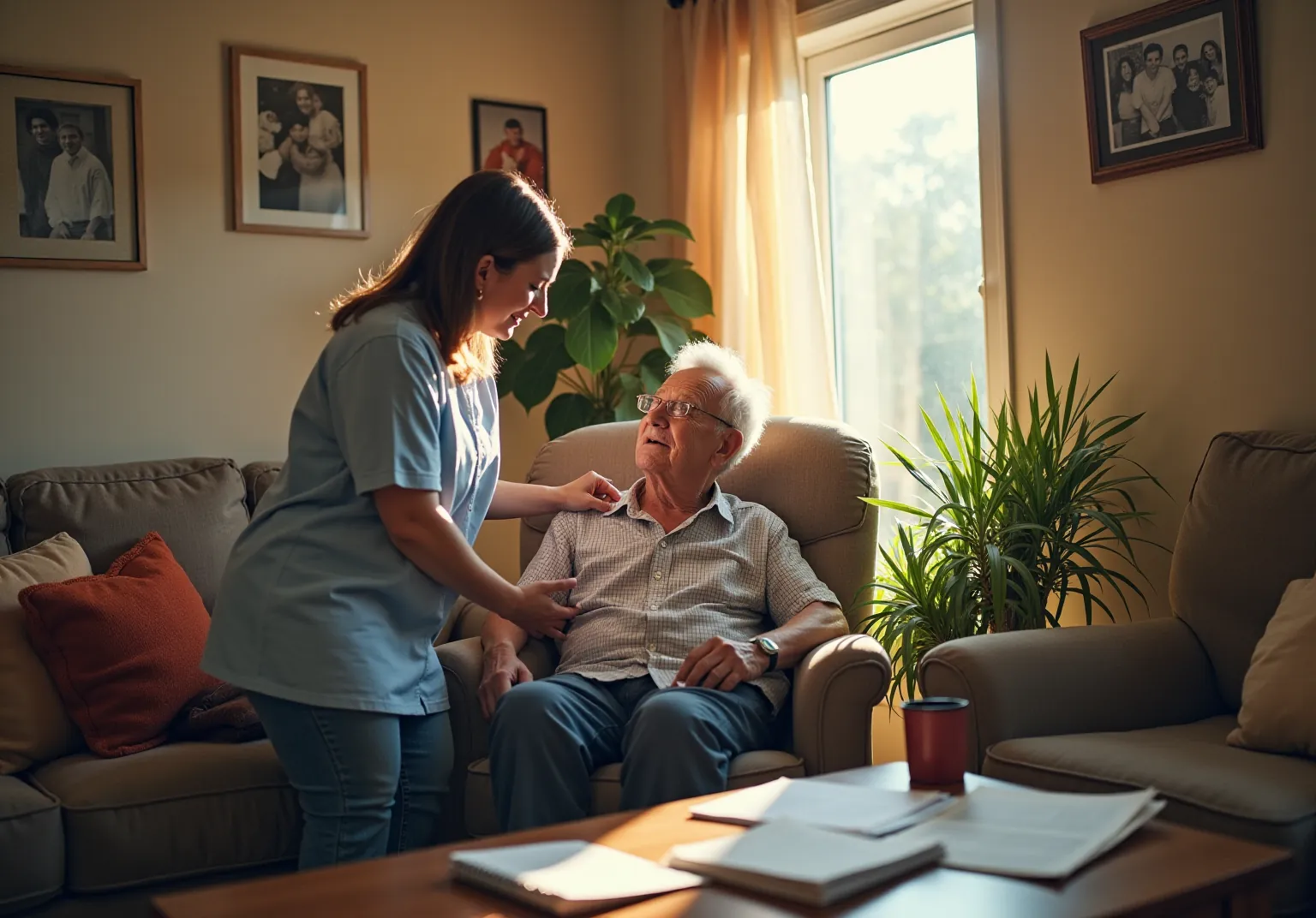
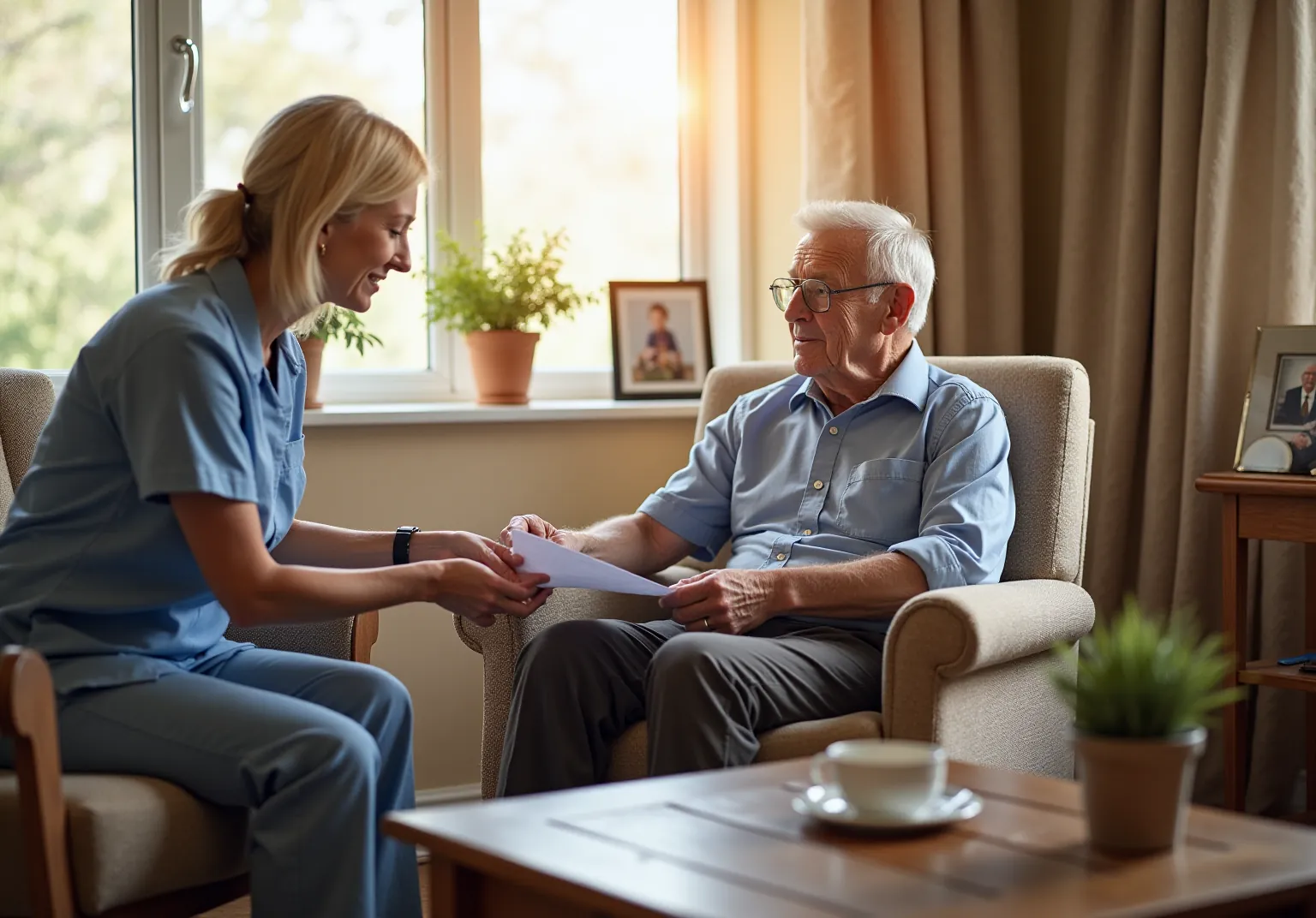
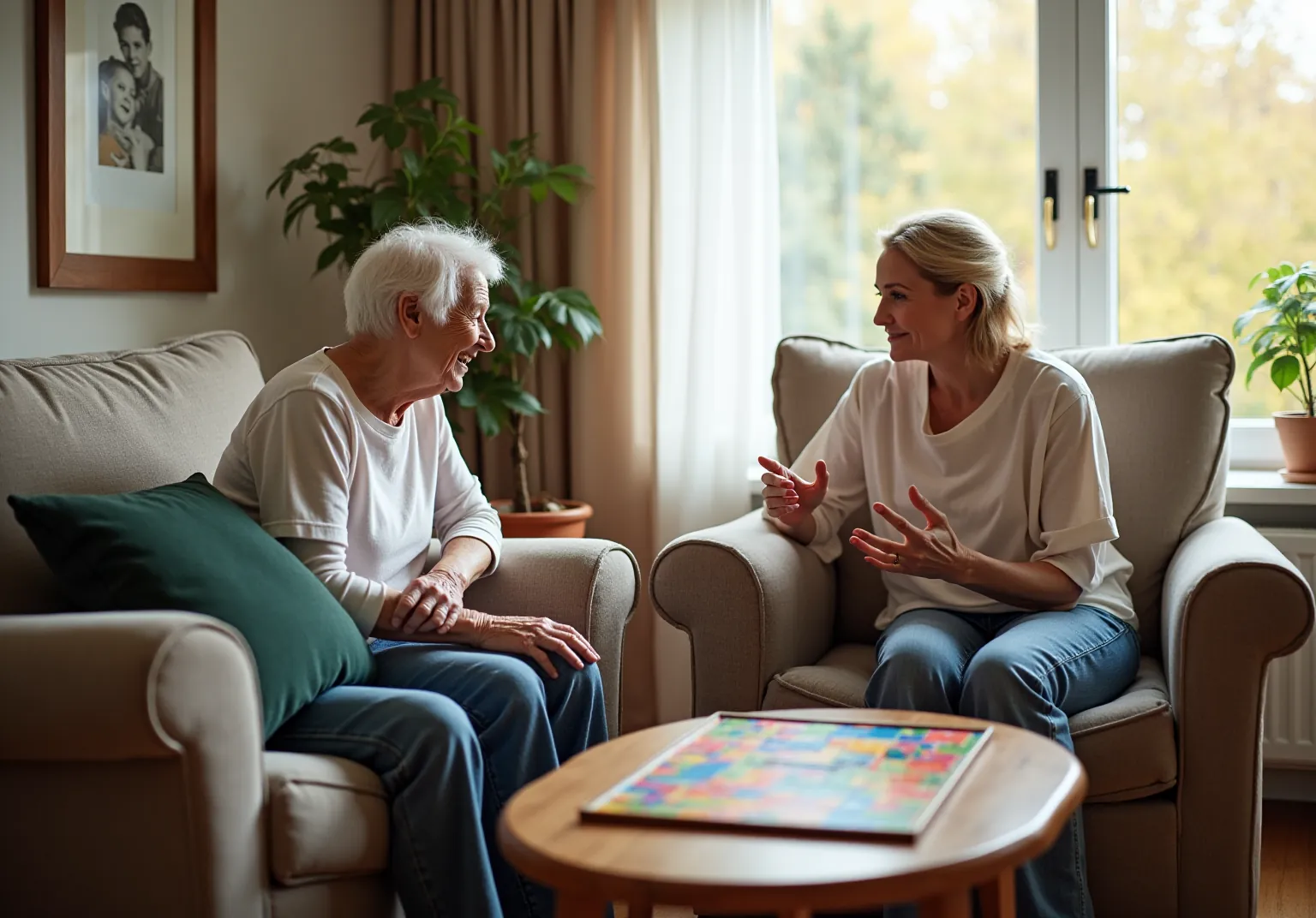
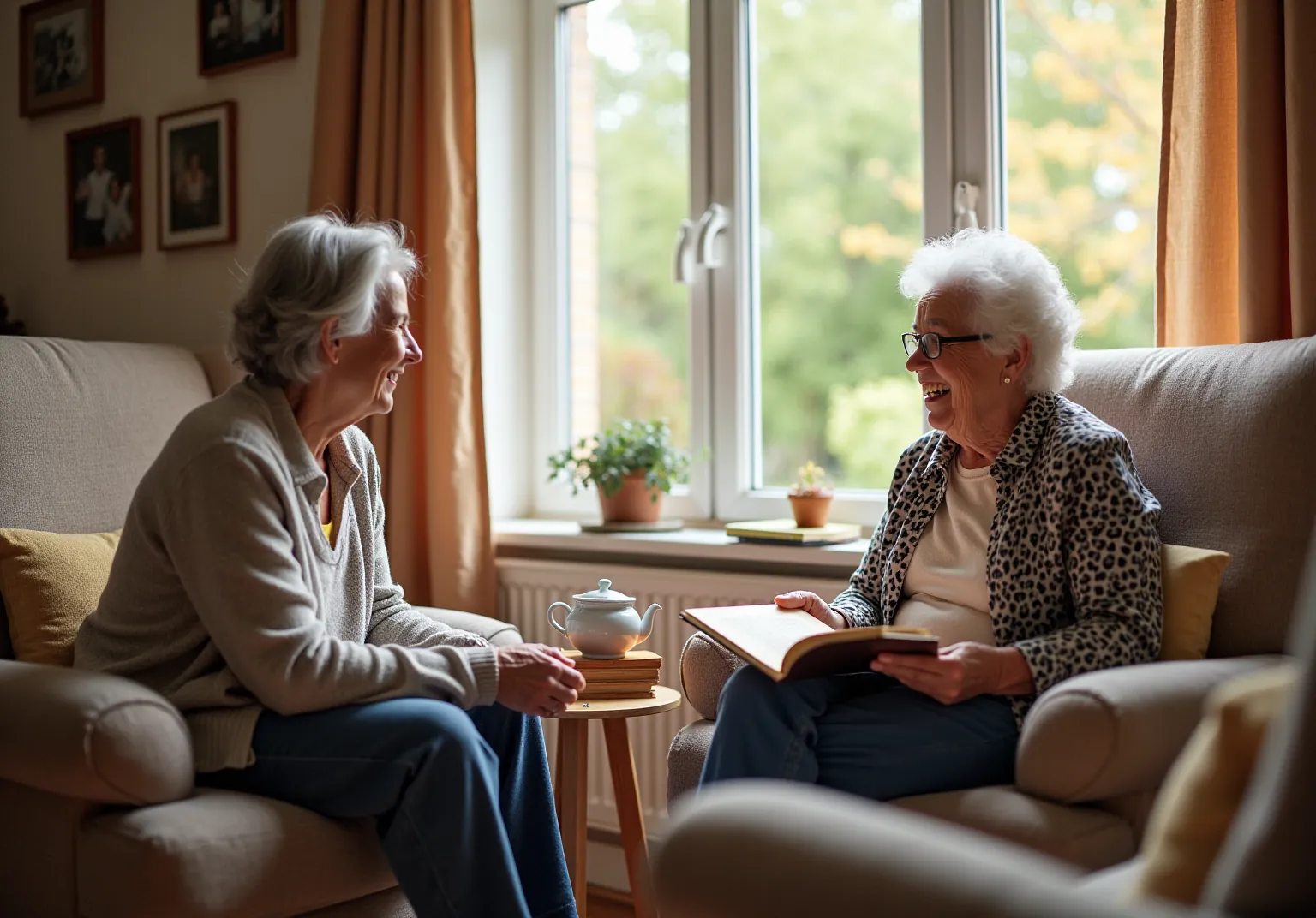
10 Benefits of Private Duty Sitters for the Elderly Care
For families in our service areas
For families in our service areas, this guide explains caregiving and how non-medical in-home caregiving can support care planning in East Idaho, Treasure Valley & Magic Valley, Northern Wasatch, North Central West Virginia, and Northeast Ohio.
Why Private Duty Sitters for the Elderly Matters
As the elderly population continues to grow, the need for effective, compassionate care at home has never been more pressing. Caregivers face significant challenges in providing this care, often feeling overwhelmed by the demands placed upon them. The implications of inadequate support can lead to increased stress for both seniors and their families, highlighting the urgency of finding viable solutions.
Private duty sitters offer a vital solution to this problem. They provide personalized support that not only enhances the quality of life for seniors but also alleviates the burden on family caregivers. These professionals play a crucial role in fostering connections, promoting health, and creating a nurturing environment for the elderly. By ensuring safety, emotional well-being, and independence, private duty sitters can truly transform the daily lives of older adults. This article delves into the myriad benefits of private duty sitters, exploring how they can make a meaningful difference in the lives of seniors and their families.
Happy to Help Caregiving: Personalized In-Home Care for Seniors
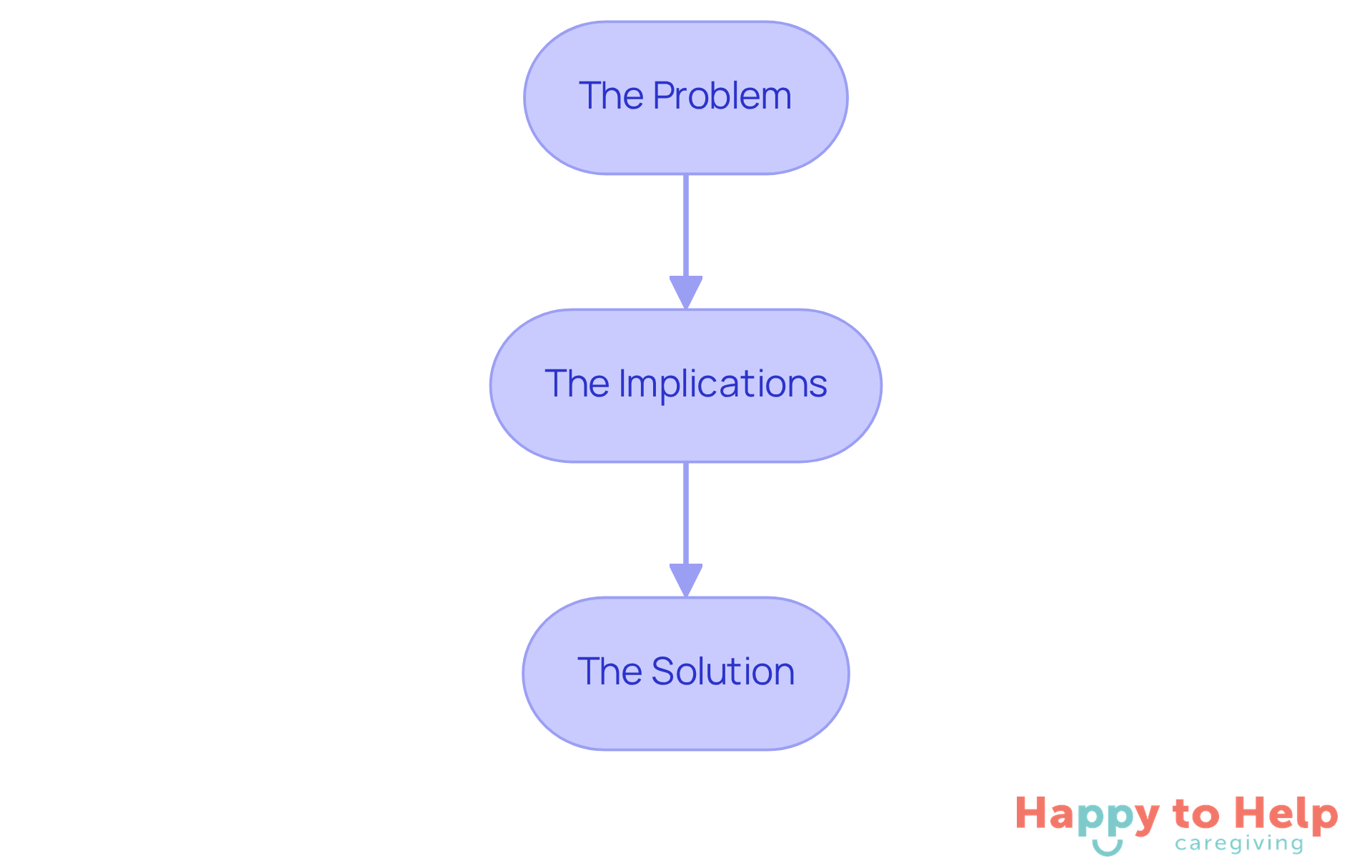
The Problem: As our population ages, many older adults face challenges in receiving adequate support at home. This can lead to feelings of isolation and a decline in overall well-being.
The Implications: Without proper assistance, older adults may struggle with daily activities, increasing their risk of falls and injuries. Families often feel overwhelmed, unsure of how to provide the necessary care while balancing their own responsibilities.
The Solution: Happy to Help Caregiving offers customized in-home support, specifically through private duty sitters for the elderly, tailored to the unique needs of older adults. With services ranging from companionship to post-hospital recovery assistance, clients receive support from private duty sitters for the elderly in the comfort of their own homes. This personalized approach not only promotes independence but also enhances the quality of life, allowing older adults to thrive in familiar surroundings.
According to the National Council on Aging, in-home assistance is not only safer but also more affordable, helping maintain family unity. As the demand for elderly home support grows, Happy to Help Caregiving stands out by providing private duty sitters for the elderly, which reduces the likelihood of falls and injuries, ensuring peace of mind for families.
Caregivers are trained to understand and meet the unique needs of each client, fostering meaningful connections that contribute to emotional well-being. By emphasizing customized caregiving services, older adults can maintain their routines and engage in activities they enjoy, leading to a more fulfilling life.
With a commitment to empathy and effective communication, Happy to Help Caregiving sets a standard for in-home care, ensuring that every elder receives the attention and support they deserve.
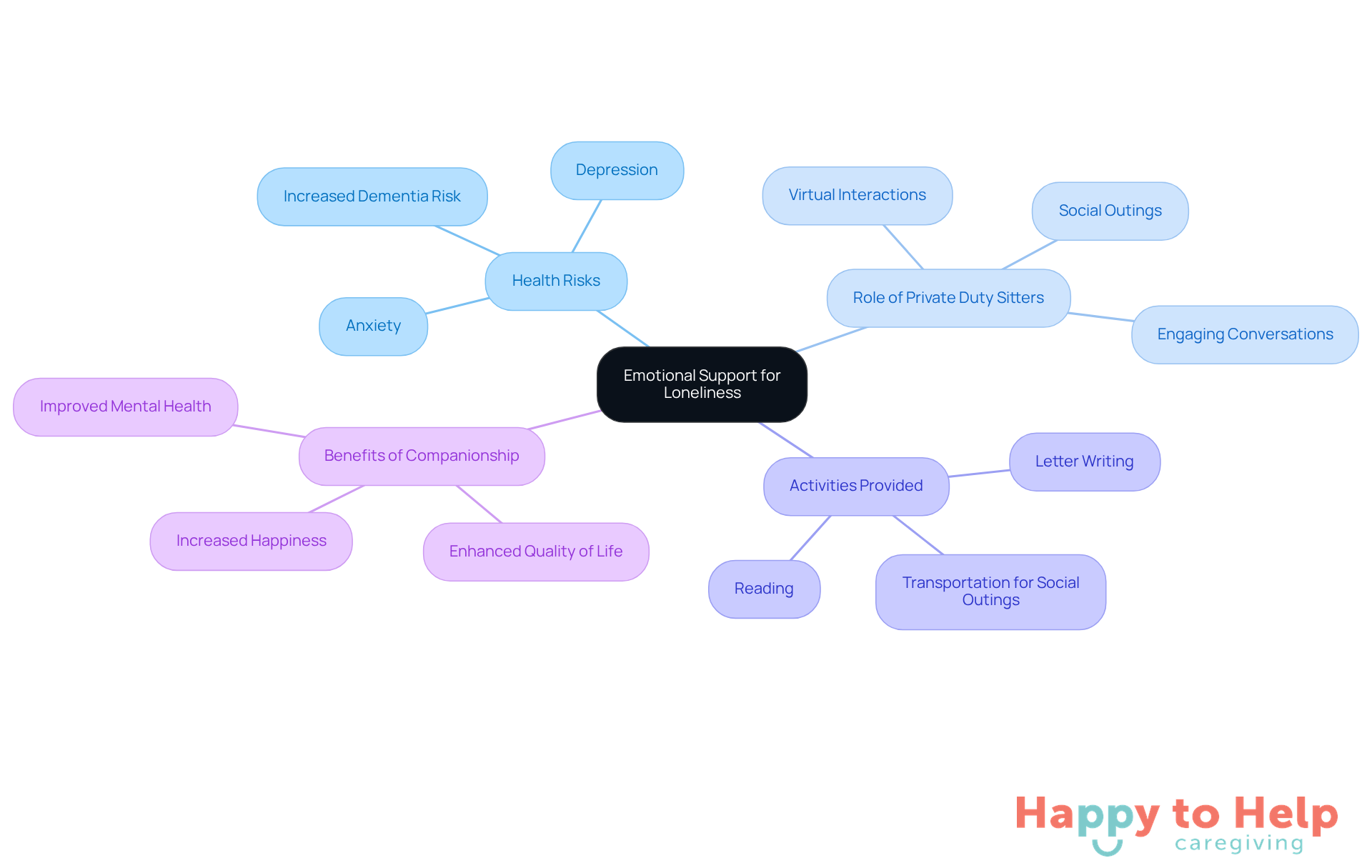
Emotional Support: Alleviating Loneliness with Private Duty Sitters
Loneliness among older adults is a significant issue that can lead to severe health risks, including a 50% increased risk of dementia and a higher likelihood of depression and anxiety. Private duty sitters for the elderly play a crucial role in addressing this problem by offering emotional support that alleviates feelings of isolation. Through engaging conversations, reading, and enjoyable activities like letter writing and transportation for social outings, caregivers foster meaningful companionship essential for mental health.
This emotional bond not only enhances the quality of life for older adults but also contributes to their overall happiness and well-being. For instance, support providers frequently accompany elderly individuals to social gatherings or facilitate virtual interactions with family and friends, ensuring they remain connected to their communities. Research shows that individualized care plans, which include regular social interactions, can significantly reduce feelings of loneliness among seniors.
Moreover, the presence of a caregiver fulfills the social needs of older adults while providing respite for family caregivers, who may also experience isolation. By addressing these emotional needs, private duty sitters for the elderly create a nurturing environment that fosters social interaction and emotional stability. The compassionate assistance they provide is essential in combating loneliness and improving the emotional well-being of elderly individuals.
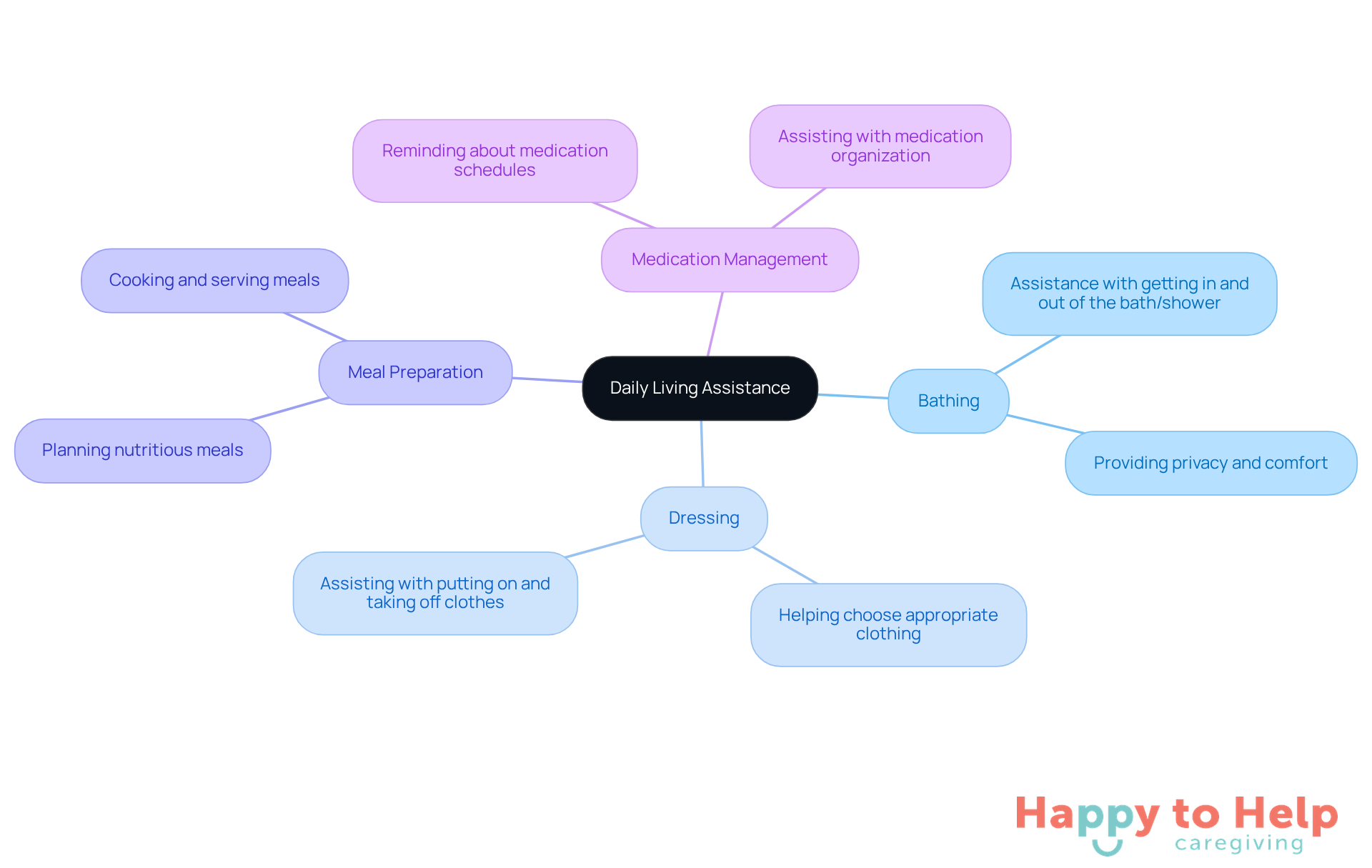
Daily Living Assistance: Supporting Independence Through Private Sitters
Elderly individuals often face challenges with daily living tasks, such as:
- Bathing
- Dressing
- Meal preparation
- Medication management
These difficulties can significantly impact their independence and overall well-being. Without proper support, older adults may struggle to maintain their safety and quality of life.
Private duty sitters for the elderly offer essential assistance, enabling seniors to maintain their independence while ensuring their safety. By helping with these vital tasks, caregivers enable older adults to live meaningful lives in their own homes. This support not only enhances their daily routines but also contributes to their emotional and physical health.
Incorporating the help of private duty sitters for the elderly can be a practical solution for families seeking to support their elderly loved ones. By engaging these caregivers, families can ensure that their loved ones receive the necessary assistance while enjoying the comfort of their own homes.
Safety and Security: Ensuring Peace of Mind with Private Duty Sitters
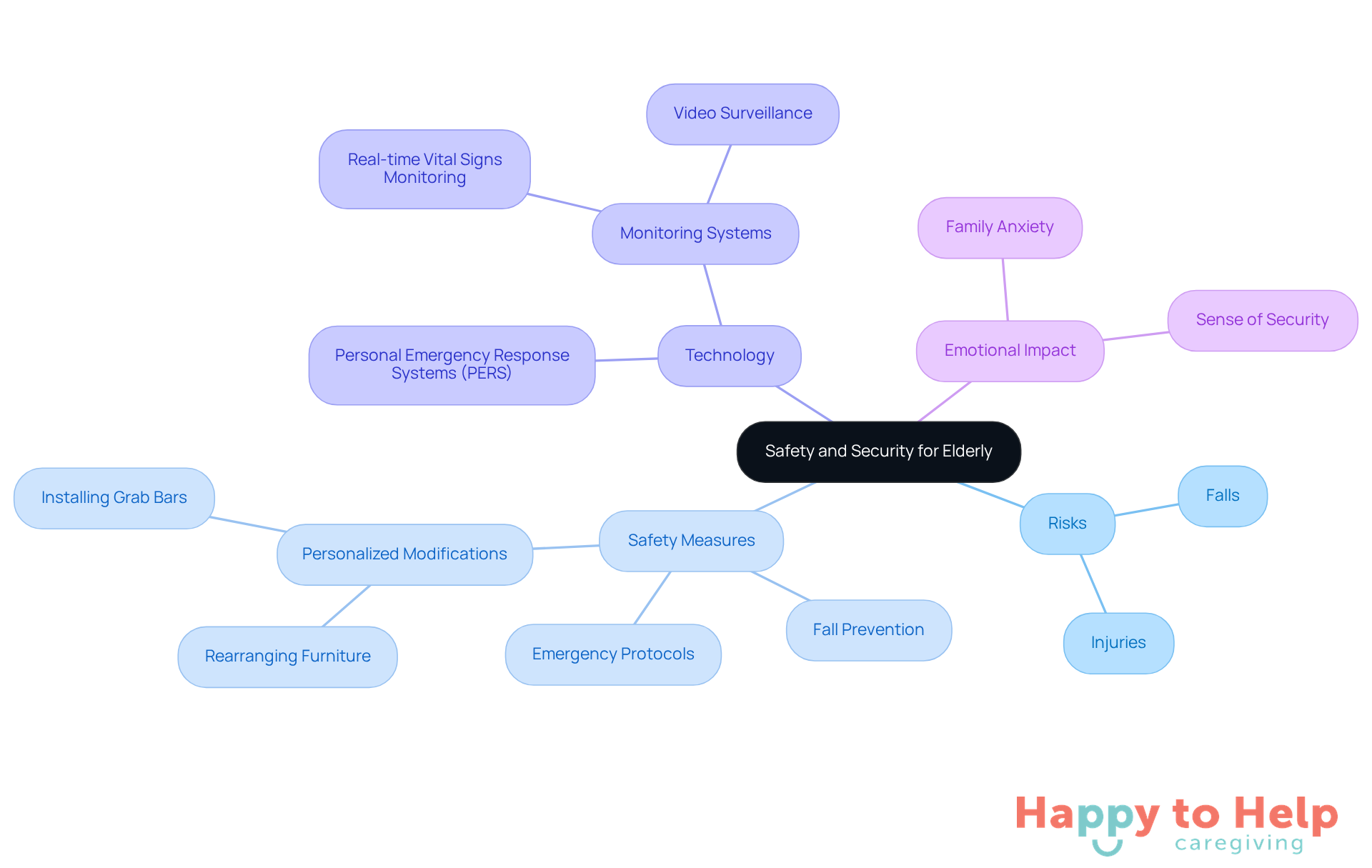
The safety and security of elderly individuals at home are ensured by private duty sitters for the elderly. However, older adults face significant risks, particularly from falls, which can lead to serious injuries. Statistics show that these incidents are often preventable through effective safety measures. This situation not only endangers the elderly but also causes anxiety for their families, who worry about their loved ones' well-being.
To address these challenges, caregivers are trained to recognize potential hazards and implement safety measures, such as fall prevention strategies and emergency response protocols. They utilize Personal Emergency Response Systems (PERS), allowing elderly individuals to call for help at the push of a button, adding an essential layer of security. Additionally, sophisticated monitoring systems enable real-time observation of residents' vital signs, alerting support staff if a resident falls or exhibits unusual health conditions, facilitating prompt intervention.
The presence of private duty sitters for the elderly not only safeguards elderly individuals but also alleviates family concerns. Caregivers monitor daily routines, enabling them to detect changes in mobility or cognitive function that may signal the need for additional support. This proactive approach helps prevent minor challenges from escalating into serious safety issues.
Moreover, caregivers often implement personalized safety measures tailored to individual needs. For instance, rearranging furniture to create clearer pathways or installing grab bars in bathrooms can significantly enhance safety. These modifications improve the living environment, making it safer and more accessible for older adults.
The significance of safety and security in elderly support cannot be overstated. With the rising dangers linked to aging, having private duty sitters for the elderly ensures that individuals receive the attention and assistance they require to maintain their independence while minimizing risks. As Phillip Saucedo noted, "When it comes to assisted living, safety is always a top priority." This commitment to safety fosters a sense of tranquility for both older adults and their families, highlighting the vital role of private duty sitters for the elderly in elder care.
Flexibility: Tailoring Care to Meet Individual Needs with Private Sitters
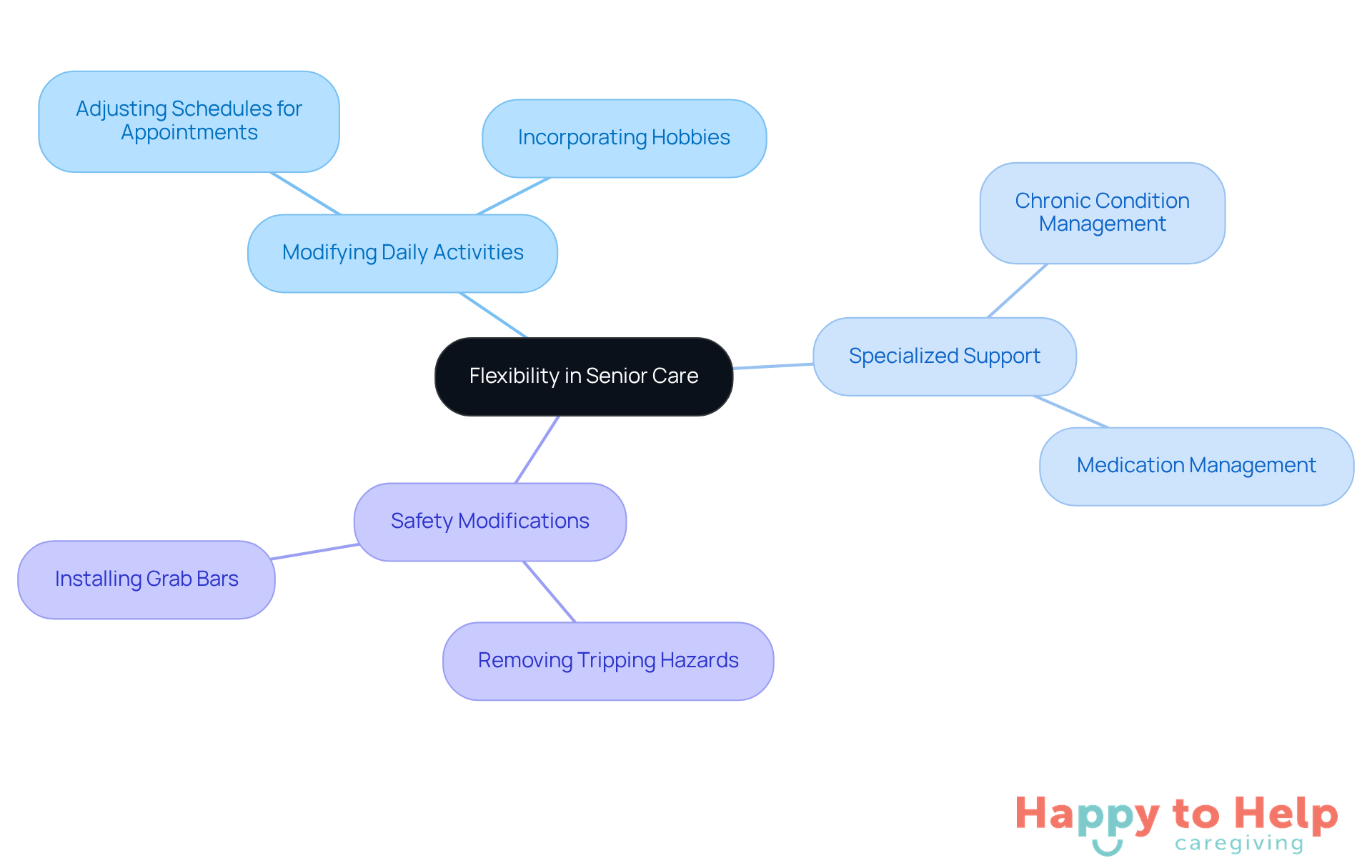
One significant challenge caregivers face is the lack of flexibility in care plans for seniors. This rigidity can lead to unmet needs and dissatisfaction among both caregivers and those they care for. For instance, seniors may require adjustments to their schedules for medical appointments or wish to engage in hobbies that enhance their quality of life.
To address these issues, hiring private duty sitters for the elderly offers a practical solution. These caregivers can create personalized care plans that cater to the unique needs and preferences of each senior. This includes:
- Modifying daily activities
- Providing specialized support for chronic conditions
- Implementing safety modifications like removing tripping hazards and adding grab bars
Such tailored approaches not only ensure that seniors receive the necessary assistance at the right times but also significantly enhance their overall experience.
Statistics support the effectiveness of individualized support plans. For example, studies show that 36.6% of participants in home care programs reported that these visits ensured continuity of treatment. This highlights the importance of customized care in maintaining health and well-being. By focusing on personal requirements, private caregivers foster a nurturing environment that empowers older adults, leading to improved health outcomes and a more fulfilling daily life.
In summary, the flexibility offered by private duty sitters for the elderly is crucial for improving the quality of care for seniors. By addressing the specific needs of each individual, caregivers can promote independence, comfort, and emotional wellness through companionship and cognitive engagement.
Social Engagement: Fostering Connections Through Private Duty Sitters
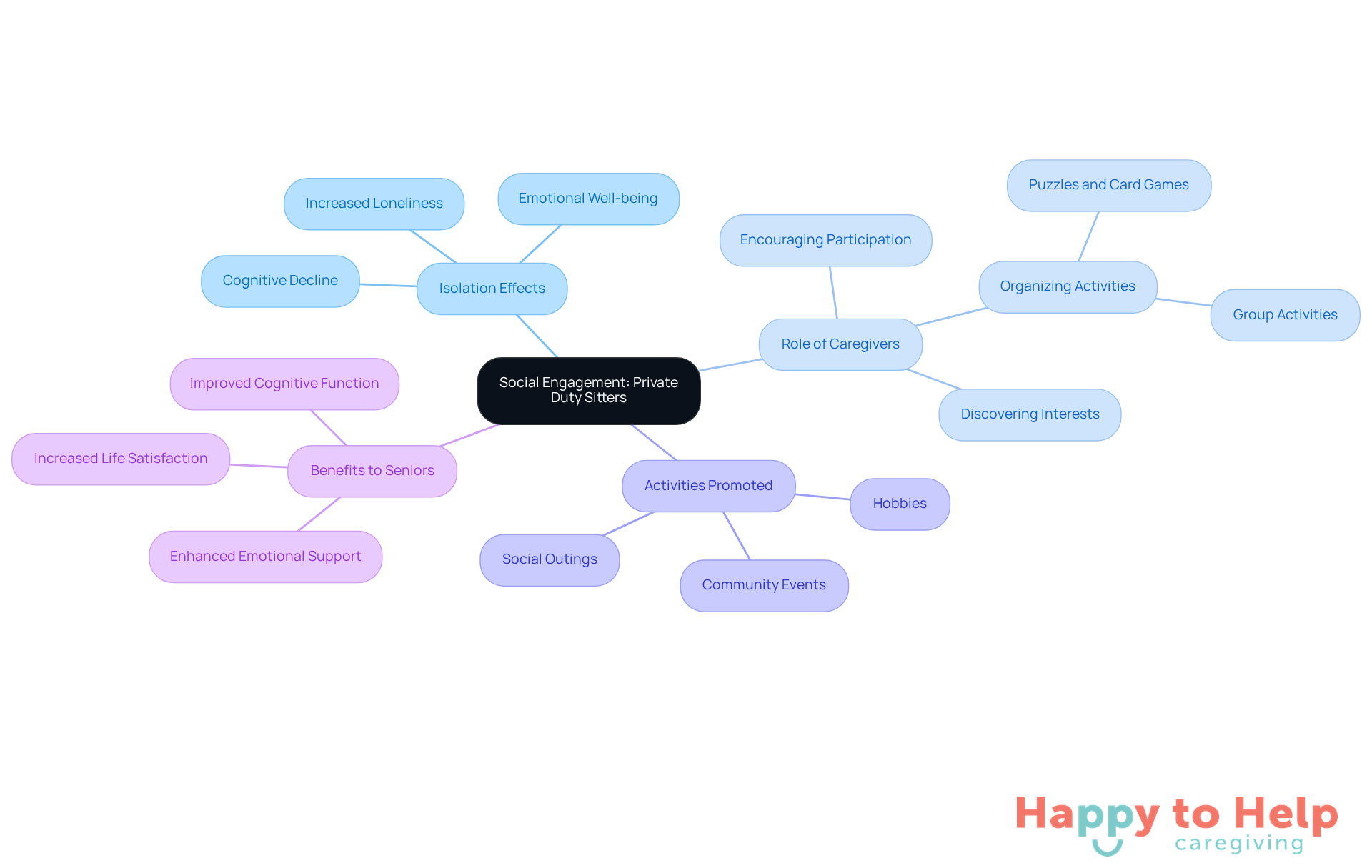
The isolation faced by elderly individuals is significantly addressed by private duty sitters for the elderly. This isolation can lead to detrimental effects on cognitive function and emotional well-being. Research indicates that older adults who maintain social connections experience improved cognitive performance, with an average enhancement of approximately 0.704 in cognitive function among those utilizing home care. During the holiday season, feelings of loneliness can intensify, making companionship even more crucial.
To combat these challenges, caregivers play a vital role in fostering social engagement. They actively encourage participation in various activities, hobbies, and community events. By organizing group activities like puzzles and card games, caregivers promote teamwork and communication, helping to build connections among seniors. Additionally, caregivers can assist older adults in discovering new interests, ensuring their social lives remain vibrant and fulfilling.
As one researcher noted, "It’s important to prioritize and facilitate these connections, recognizing their profound impact on seniors’ lives." By prioritizing social interactions, private duty sitters for the elderly create a nurturing environment that supports the overall health and happiness of seniors.
Respite Care: Easing Family Caregiver Burnout with Private Sitters
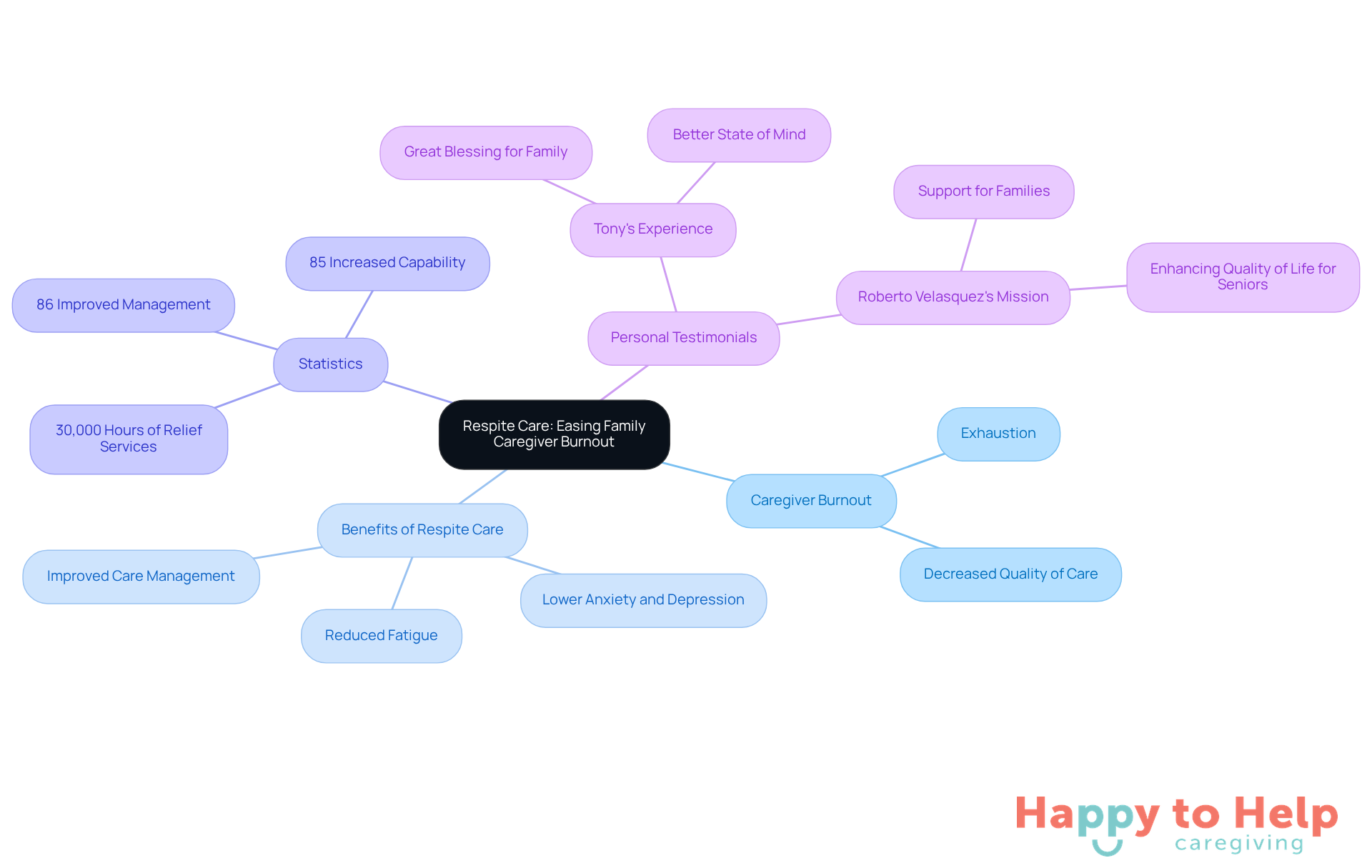
Caregiver burnout is a significant issue faced by family providers who often struggle with the demands of assistance. This exhaustion can lead to decreased quality of care for seniors, as caregivers may feel overwhelmed and unable to recharge. Respite support offered by private duty sitters for the elderly is essential in addressing this problem, allowing family members to take necessary breaks, attend to personal matters, or simply recharge.
The implications of caregiver burnout are profound. Research indicates that individuals who take regular breaks report reduced levels of fatigue, anxiety, and depression, ultimately improving their capacity to provide support. For instance, a program in San Diego County provided over 30,000 hours of relief services, significantly enhancing providers' ability to manage care. Notably, 86% of participants indicated improved management, and 85% felt more capable in their roles.
Support providers consistently highlight the positive effects of respite services. One provider described the services as a 'great blessing' for their family, enabling them to return to caregiving with renewed energy and a better state of mind. This sentiment reflects a broader trend where caregivers recognize that dedicating time for themselves enhances their connection with the individuals they support, fostering patience and emotional resilience.
Roberto Velasquez, President & CEO of the Southern Caregiver Resource Center, underscores the mission to assist families and communities in navigating the challenges of caring for adults with chronic and disabling conditions. Private duty sitters for the elderly help alleviate the strain on family members while also enhancing the quality of life for seniors. By ensuring that clients receive personalized attention and support, these sitters create a nurturing environment that promotes independence and well-being. Thus, respite support is not merely a luxury; it is a vital component of effective caregiving that benefits both supporters and their family members.
Continuity of Care: Ensuring Consistent Support with Private Duty Sitters
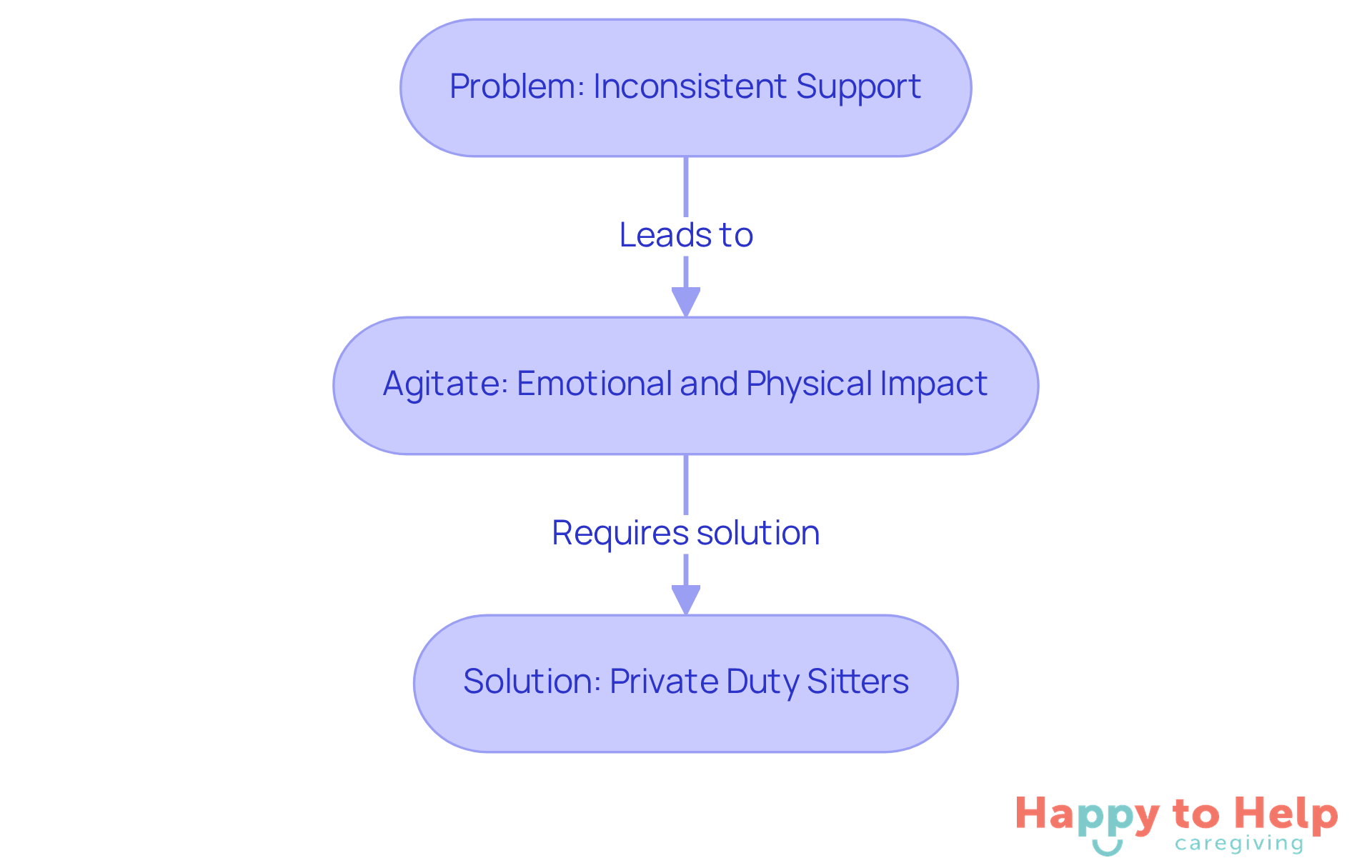
Problem: Inconsistent support for elderly individuals can hinder their emotional and physical well-being. When caregivers do not provide regular assistance, seniors may feel anxious and unsafe, which can negatively impact their health outcomes.
Agitate: This lack of continuity can lead to a disconnect between caregivers and seniors, making it difficult to understand each individual's unique needs and preferences. Without a consistent caregiver, elderly individuals may struggle to establish trust, which is crucial for their overall comfort and health.
Solution: Private duty sitters for the elderly play a vital role in addressing this issue by providing consistent support. This reliability fosters trust and rapport, allowing seniors to feel more at ease. Moreover, caregivers become familiar with each senior's distinct routines and preferences, significantly enhancing the quality of care provided. By prioritizing continuity in caregiving provided by private duty sitters for the elderly, we can improve the emotional and physical health outcomes for our elderly population.
Cost-Effectiveness: Evaluating the Financial Benefits of Private Duty Sitters
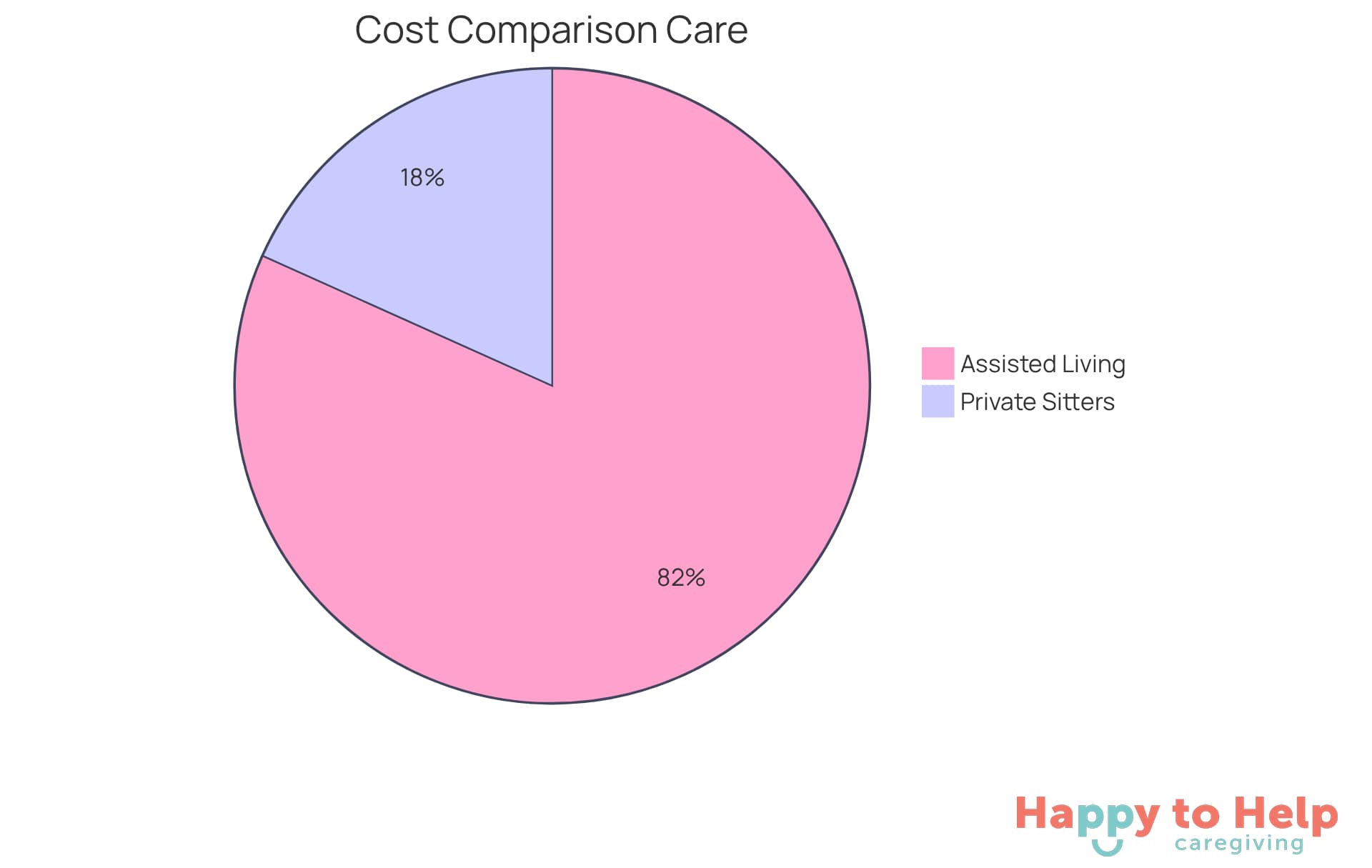
Hiring private duty sitters for the elderly offers a cost-effective solution for families seeking in-home assistance for their loved ones. The financial burden of assisted living facilities can be significant, with the national average reaching around $5,900 per month in 2024. This high cost can strain family budgets, making it essential to explore alternatives. In contrast, private duty sitters for the elderly provide a more budget-friendly option, allowing families to customize support plans that fit their financial needs. For instance, part-time assistance can start at just $15 per hour, significantly reducing overall expenses compared to the higher fees of assisted living, which often include additional charges for services like medication management and specialized care.
Statistics reveal that about 63% of home assistance services are funded privately, underscoring the growing preference for in-home solutions among families. Financial advisors emphasize the importance of budgeting for in-home support, noting that it can lead to long-term savings by minimizing hospital visits and reducing the need for more intensive care later on. Additionally, families can take advantage of tax credits of up to $4,000 to help offset caregiving costs, making the option of hiring private sitters even more financially viable.
In summary, the financial benefits of in-home assistance not only provide immediate savings but also foster a sustainable approach to elder care. This allows families to maintain quality support without jeopardizing their financial stability.
Quality of Life Improvement: Enhancing Daily Living with Private Duty Sitters
Private duty sitters address a significant problem faced by older adults: loneliness and isolation. Many seniors prefer to age in place, yet they often struggle with daily tasks and emotional support. This situation can lead to a diminished quality of life, making it essential to find effective solutions.
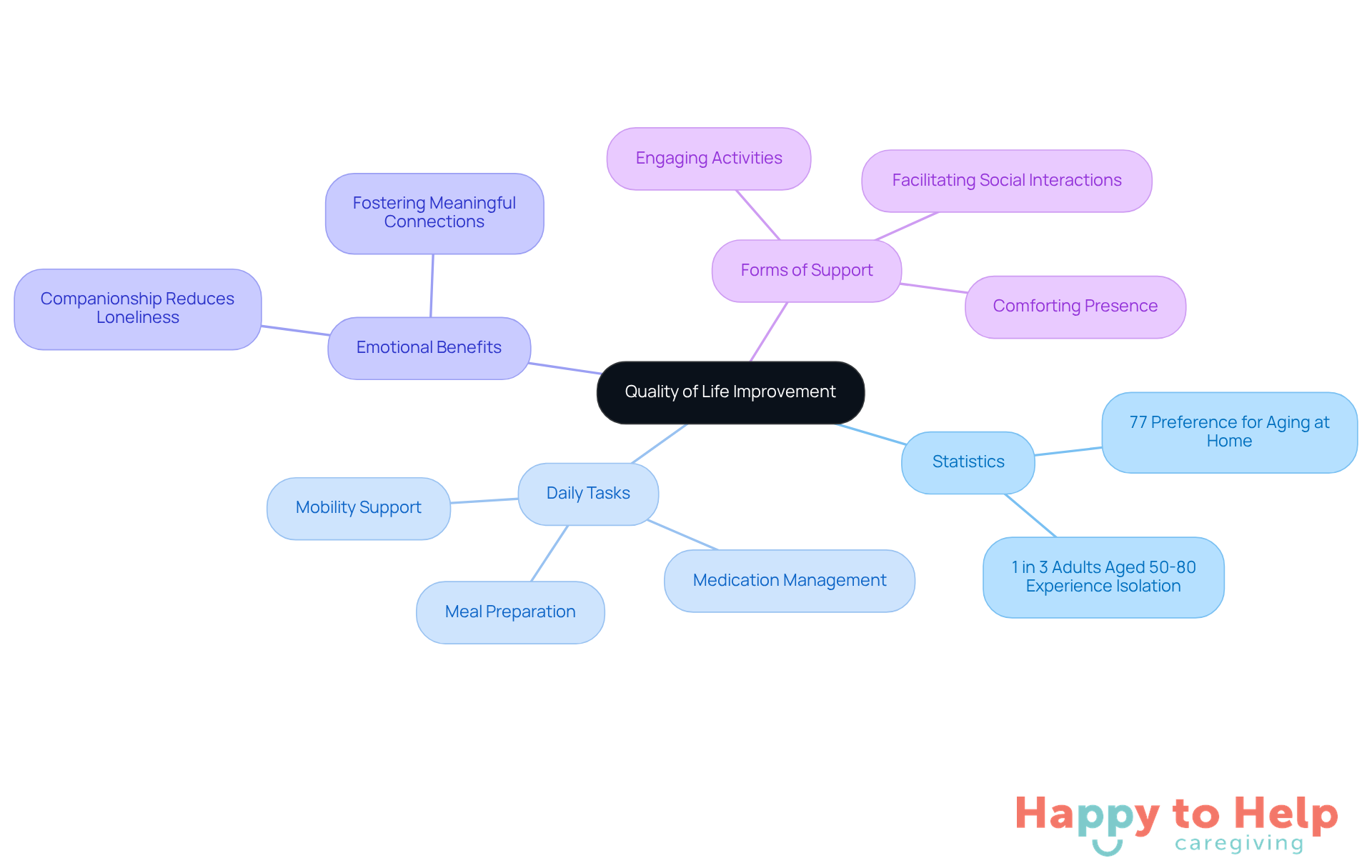
Statistics reveal that 77% of adults over 50 favor aging in their own homes, highlighting a strong preference for home-based assistance over institutional care. This preference underscores the need for personalized support strategies that adapt to the evolving needs of elderly individuals. Caregivers play a vital role in this process, offering assistance with essential daily tasks such as:
- Meal preparation
- Medication management
- Mobility support
All while respecting the autonomy of their clients.
The emotional benefits of tailored support are equally important. Caregivers foster meaningful connections with older adults, which can significantly alleviate feelings of loneliness. Research indicates that one in three adults aged 50-80 report experiencing isolation at least occasionally. By providing companionship, home assistance can effectively reduce these feelings, offering a more supportive environment than institutional settings.
Personalized support can take many forms, including:
- Engaging seniors in enjoyable activities
- Facilitating social interactions
- Simply being a comforting presence
Caregivers often share testimonials that illustrate the positive impact of their involvement on clients' daily lives. This commitment to enhancing quality of life through compassionate, tailored care distinguishes private duty sitters as invaluable partners in the journey of aging gracefully at home.
Taking the Next Steps
The role of private duty sitters in elderly care presents a significant challenge for families seeking to provide the best support for their loved ones. Many caregivers face the daunting task of ensuring that seniors receive the personalized assistance they need while also addressing feelings of loneliness and safety concerns.
These challenges can lead to increased stress for both seniors and their families. Loneliness can severely impact the emotional well-being of older adults, while safety issues can create anxiety for caregivers. This is where private duty sitters come into play, offering tailored support that enhances the quality of life for seniors.
Private duty sitters provide personalized in-home assistance, addressing the unique challenges faced by older adults. They alleviate loneliness, ensure safety, and offer flexibility in care plans. The emotional connections formed between caregivers and seniors not only combat feelings of isolation but also promote a sense of security and trust.
Moreover, hiring private sitters is often more cost-effective than assisted living facilities, making in-home care a practical choice for families. By investing in private duty sitters, families can ensure that their loved ones receive the support they need to thrive.
Ultimately, the impact of private duty sitters extends beyond mere assistance; it transforms the lives of elderly individuals, allowing them to age gracefully in the comfort of their homes. Emphasizing the importance of personalized care solutions can inspire families to explore these options, ensuring that their loved ones receive the nurturing environment that benefits everyone involved.
https://iframe.tely.ai/cta/eyJhcnRpY2xlX2lkIjogIjY5MmZiYWIwODAyMzUzNTMyMmNmNTI0OCIsICJjb21wYW55X2lkIjogIjY4ZWU1ZGNhNzMxNzYyNTU3ZjNjOTVjMSIsICJpbmRleCI6IG51bGwsICJ0eXBlIjogImFydGljbGUifQ==Frequently Asked Questions
What challenges do older adults face at home?
Older adults often face challenges such as feelings of isolation and a decline in overall well-being due to inadequate support at home. They may struggle with daily activities, increasing their risk of falls and injuries.
How does Happy to Help Caregiving address the needs of seniors?
Happy to Help Caregiving offers customized in-home support through private duty sitters, tailored to the unique needs of older adults. Their services include companionship and post-hospital recovery assistance, promoting independence and enhancing the quality of life for seniors in their own homes.
What are the benefits of in-home assistance for older adults?
In-home assistance is safer and more affordable, helping to maintain family unity. It reduces the likelihood of falls and injuries, ensuring peace of mind for families while allowing older adults to thrive in familiar surroundings.
How do private duty sitters help alleviate loneliness among seniors?
Private duty sitters provide emotional support through engaging conversations, enjoyable activities, and social outings. They help reduce feelings of isolation, which can lead to severe health risks such as depression and increased risk of dementia.
What types of daily living assistance do private duty sitters provide?
Private duty sitters assist with daily living tasks such as bathing, dressing, meal preparation, and medication management. This support helps seniors maintain their independence and ensures their safety and quality of life.
How do private duty sitters contribute to the emotional well-being of older adults?
By fostering meaningful companionship and facilitating social interactions, private duty sitters enhance the quality of life and overall happiness of older adults. They provide a nurturing environment that helps combat loneliness and improve emotional stability.
What is the impact of individualized care plans for seniors?
Individualized care plans that include regular social interactions can significantly reduce feelings of loneliness among seniors, contributing to their overall emotional well-being and happiness.
List of Sources
- Happy to Help Caregiving: Personalized In-Home Care for Seniors
- Family caregivers prefer in-home care over senior living, new industry report finds (https://mcknightshomecare.com/news/family-caregivers-prefer-in-home-care-over-senior-living-new-industry-report-finds)
- Why Senior Home Care is More Important Than Ever (https://homeinstead.com/home-care/usa/la/carencro/347/news-and-media/senior-home-care-is-more-important-than-ever)
- The Future of Aging: Is In-Home Care the New Standard? - WorldHealth.net (https://worldhealth.net/news/future-of-aging-is-in-home-care-new-standard)
- The Benefits of In-home Care for the Elderly | Mass Care Link (https://masscarelink.org/the-benefits-of-in-home-care)
- The Benefits of In-Home Care for Seniors - Consumer Directed Choices (https://cdchoices.org/2023/11/27/the-benefits-of-in-home-care-for-seniors)
- Emotional Support: Alleviating Loneliness with Private Duty Sitters
- Elderly Isolation: Combating Loneliness Through Home Healthcare - VNA Health Group (https://vnahg.org/elderly-isolation-combating-loneliness-through-home-healthcare)
- Addressing Loneliness in Private Pay Home Care (https://regencyhcs.com/blog/addressing-loneliness-in-private-pay-home-care)
- Private Duty Care Helps Heal Loneliness in Older Adults (https://phoenixhomehc.com/news/learn-how-private-duty-care-helps-to-heal-loneliness-in-older-adults)
- Trends in Loneliness Among Older Adults from 2018-2023 (https://ihpi.umich.edu/national-poll-healthy-aging/reports-and-resources/trends-loneliness-among-older-adults-2018-2023)
- Summary - Social Isolation and Loneliness in Older Adults - NCBI Bookshelf (https://ncbi.nlm.nih.gov/books/NBK557972)
- Daily Living Assistance: Supporting Independence Through Private Sitters
- CDC: More than 20% of 85+ adults need ADL assistance (https://mcknightsseniorliving.com/news/cdc-more-than-20-of-85-adults-need-adl-assistance)
- Family caregivers prefer in-home care over senior living, new industry report finds (https://mcknightshomecare.com/news/family-caregivers-prefer-in-home-care-over-senior-living-new-industry-report-finds)
- News Releases (https://hcaoa.org/news-releases.html)
- How Senior In-Home Care Promotes Independence in San Antonio, TX (https://news10.com/business/press-releases/ein-presswire/866935491/how-senior-in-home-care-promotes-independence-in-san-antonio-tx)
- Disability and Care Needs Among Older Americans - PMC (https://pmc.ncbi.nlm.nih.gov/articles/PMC4221755)
- Safety and Security: Ensuring Peace of Mind with Private Duty Sitters
- How Technology Enhances Safety and Security in Assisted Living | Integrated Care Communities (https://icarecommunities.com/how-technology-enhances-safety-and-security-in-assisted-living)
- Safety and Security: How Senior Living Communities Offer Peace of Mind - MorseLife (https://morselife.org/blog/safety-and-security-how-senior-living-communities-offer-peace-of-mind)
- In-Home Care Continuously Supports Senior Safety (https://homehelpershomecare.com/sc-valley/community-blog/2025/august/how-in-home-care-continuously-supports-senior-safety)
- Flexibility: Tailoring Care to Meet Individual Needs with Private Sitters
- 9 Ways to Find Caregivers With Flexible Scheduling Options - MedCity News (https://medcitynews.com/2025/05/9-ways-to-find-caregivers-with-flexible-scheduling-options)
- The Future of Private Home Care: What to Expect in 2025 (https://anodyne-services.com/2024/08/14/the-future-of-private-home-care-what-to-expect-in-2025)
- Customized Care at Home: The Benefits of Personalized Care Plans - VNA Health Group (https://vnahg.org/customized-care-at-home-the-benefits-of-personalized-care-plans)
- How Flexible Scheduling Improves The Home Care Experience For Families – CCN – Columbus County News (https://columbuscountynews.com/2025/12/how-flexible-scheduling-improves-the-home-care-experience-for-families)
- Flexible Care Models Give Home Care Clients ‘What They Want When They Want It’ (https://homehealthcarenews.com/2025/10/flexible-care-models-give-home-care-clients-what-they-want-when-they-want-it)
- Social Engagement: Fostering Connections Through Private Duty Sitters
- The Importance of Social Connections for Elder Care in Home (https://cherishedagency.com/the-importance-of-social-connections-for-elder-care-in-home-living)
- The Role of Home Care in Addressing Social Isolation for Seniors (https://ultimatecareny.com/resources/the-role-of-home-care-in-addressing-social-isolation-for-seniors)
- Staying Socially Active: Creative Ways Tampa In-Home Care Services Can Enrich Senior Social Lives (https://visitingangels.com/npr/news-info/staying-socially-active-creative-ways-tampa-in-home-care-services-can-enrich-senior-social-lives/25145)
- Promoting Social Connection: The Impact of Caregivers on Combatting Loneliness (https://homewatchcaregivers.com/sterling/about-us/blog/promoting-social-connection-the-impact-of-caregi)
- Helping Older Adults Take Charge of Their Social Well-Being - News & Events | odphp.health.gov (https://odphp.health.gov/news/202509/helping-older-adults-take-charge-their-social-well-being)
- Respite Care: Easing Family Caregiver Burnout with Private Sitters
- Caregivers and the Importance of Respite Care (https://benedictineliving.org/resources/news/caregivers-and-the-importance-of-respite-care)
- News & Success Stories | Live Well San Diego (https://livewellsd.org/Home/Components/News/News/513/153)
- Federal budget committee greenlights millions in spending for family caregivers, respite services (https://mcknightshomecare.com/news/federal-budget-committee-greenlights-millions-in-spending-for-family-caregivers-respite-services)
- Continuity of Care: Ensuring Consistent Support with Private Duty Sitters
- Continuity of Care for Elderly Individuals Receiving In-Home Care (https://7dayhomecare.com/continuity-of-care-for-elderly-individuals-receiving-in-home-care)
- Continuity of Care for Older Adults - Older People’s Health Issues - Merck Manual Consumer Version (https://merckmanuals.com/home/older-people-s-health-issues/providing-care-to-older-adults/continuity-of-care-for-older-adults)
- Caregiver-Patient Matching in Home Care (https://carevoyant.com/home-health-blog/caregiver-patient-matching-home-care)
- D-CARE study finds caregiver satisfaction higher with dementia care programs than usual care (https://uclahealth.org/news/release/d-care-study-finds-caregiver-satisfaction-higher-with)
- "Continuity of care: A turning point for caregiving" | Bob Roth posted on the topic | LinkedIn (https://linkedin.com/posts/bobrothchs\_seniors-want-familiar-trusted-caregivers-activity-7349437352827637762-cBRH)
- Cost-Effectiveness: Evaluating the Financial Benefits of Private Duty Sitters
- Growing Trend of Private Pay Home Care for Elderly (https://regencyhcs.com/blog/growing-trend-of-private-pay-home-care-for-elderly)
- Cost of Assisted Living vs. In-Home Care: Key Considerations (https://carescout.com/resources/cost-of-assisted-living-vs-in-home-care-key-considerations)
- How to Pay for a Home Care Worker (https://aarp.org/caregiving/financial-legal/afford-a-homecare-worker)
- HCAOA Addresses Cost-Effectiveness of Home Care in Letter to the Editor of TheHill.com (https://hcaoa.org/newsletters/hcaoa-addresses-cost-effectiveness-of-home-care-in-letter-to-the-editor-of-thehillcom)
- The Cost-Effectiveness of Homecare Services for Adults and Older Adults: A Systematic Review - PMC (https://pmc.ncbi.nlm.nih.gov/articles/PMC9960182)
- Quality of Life Improvement: Enhancing Daily Living with Private Duty Sitters
- 2025 Home Care Statistics: Trends & Insights To Know (https://premierhcinc.com/blog/home-care-statistics)
- Growing Trend of Private Pay Home Care for Elderly (https://regencyhcs.com/blog/growing-trend-of-private-pay-home-care-for-elderly)
- What is the Growing Trend of Private Pay Home Care for Elderly? - At Peace Health (https://atpeacehealth.com/growing-trend-of-private-pay-home-care-for-elderly)
- Warning From Older Adults: Care for Aging in America Needs Urgent Rethinking (https://johnahartford.org/newsroom/view/warning-from-older-adults-care-for-aging-in-america-needs-urgent-rethinking)
- How Personalized In-Home Care can Improve Seniors Quality of Life - Freedom Home Care (https://freedomhomecare.net/2024/11/21/how-personalized-in-home-care-can-improve-seniors-quality-of-life)