Respite Care Benefits for California Family Caregivers

Active service-area notice
Happy to Help does not currently list California as an active service area. This article is general educational information. For local care availability, browse our active service areas.
Browse active service areasFor families in our service areas
For families in our service areas, this guide explains respite care and how non-medical in-home caregiving can support care planning in East Idaho, Treasure Valley & Magic Valley, Northern Wasatch, North Central West Virginia, and Northeast Ohio.
Understanding Respite Care in California
As family caregivers face increasing demands, the risk of burnout becomes a significant concern. This not only jeopardizes their well-being but also affects the quality of care they provide to their loved ones. The implications of caregiver burnout are profound, leading to stress, fatigue, and a decline in the overall caregiving experience.
Respite care in California stands out as a crucial solution, offering caregivers a much-needed opportunity to recharge. By utilizing these services, caregivers can ensure that their loved ones continue to receive compassionate support while they take the time to rejuvenate. However, the challenge remains: how can caregivers effectively integrate respite care into their routines?
To alleviate stress and enhance family dynamics, caregivers can adopt several practical strategies:
- Explore local respite care options that fit their needs and schedules.
- Establish a regular respite care routine to help normalize the process, making it easier for both caregivers and their loved ones.
- Prioritize their own well-being to significantly improve the quality of care they provide.
This article will delve into the multifaceted benefits of respite care, illustrating how it can transform the caregiving experience for both providers and recipients.
Happy to Help Caregiving: Prevent Caregiver Burnout with Respite Services
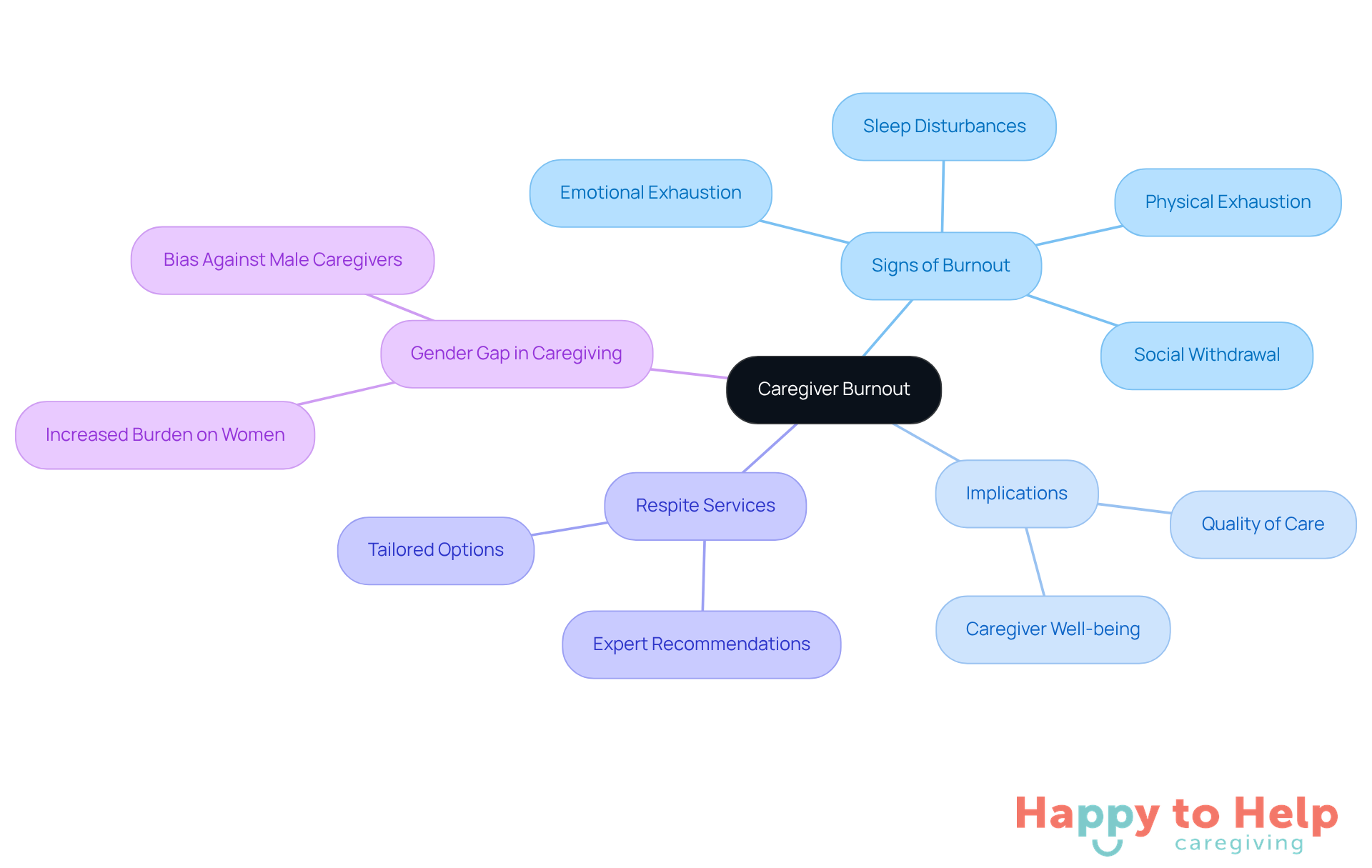
Respite services address a critical issue: caregiver burnout. Many caregivers face emotional and physical exhaustion, social withdrawal, and sleep disturbances. Research indicates that over 60% of caregivers experience these signs of burnout, which can severely impact the quality of care they provide.
The implications of this burnout are significant. When caregivers are overwhelmed, their ability to offer compassionate and effective support diminishes. Regular breaks are essential for recharging, allowing caregivers to return to their responsibilities revitalized. Expert recommendations, such as those from the ARCH National Respite Network, emphasize the importance of taking meaningful breaks from routine.
Happy to Help Caregiving offers tailored respite care California options designed to meet the unique needs of each family. These services enable caregivers to take necessary time off without guilt, ensuring their loved ones continue to receive compassionate care in a secure environment. By implementing effective relief support initiatives, caregivers can enhance their well-being and improve the overall quality of life for both themselves and their relatives.
Moreover, it's important to recognize the gender gap in caregiving responsibilities. Women often bear a greater load, making it even more crucial to provide effective support. By prioritizing regular breaks and utilizing respite care in California, caregivers can sustain their health and maintain a high standard of care.
Emotional Relief: Alleviate Stress Through Respite Care
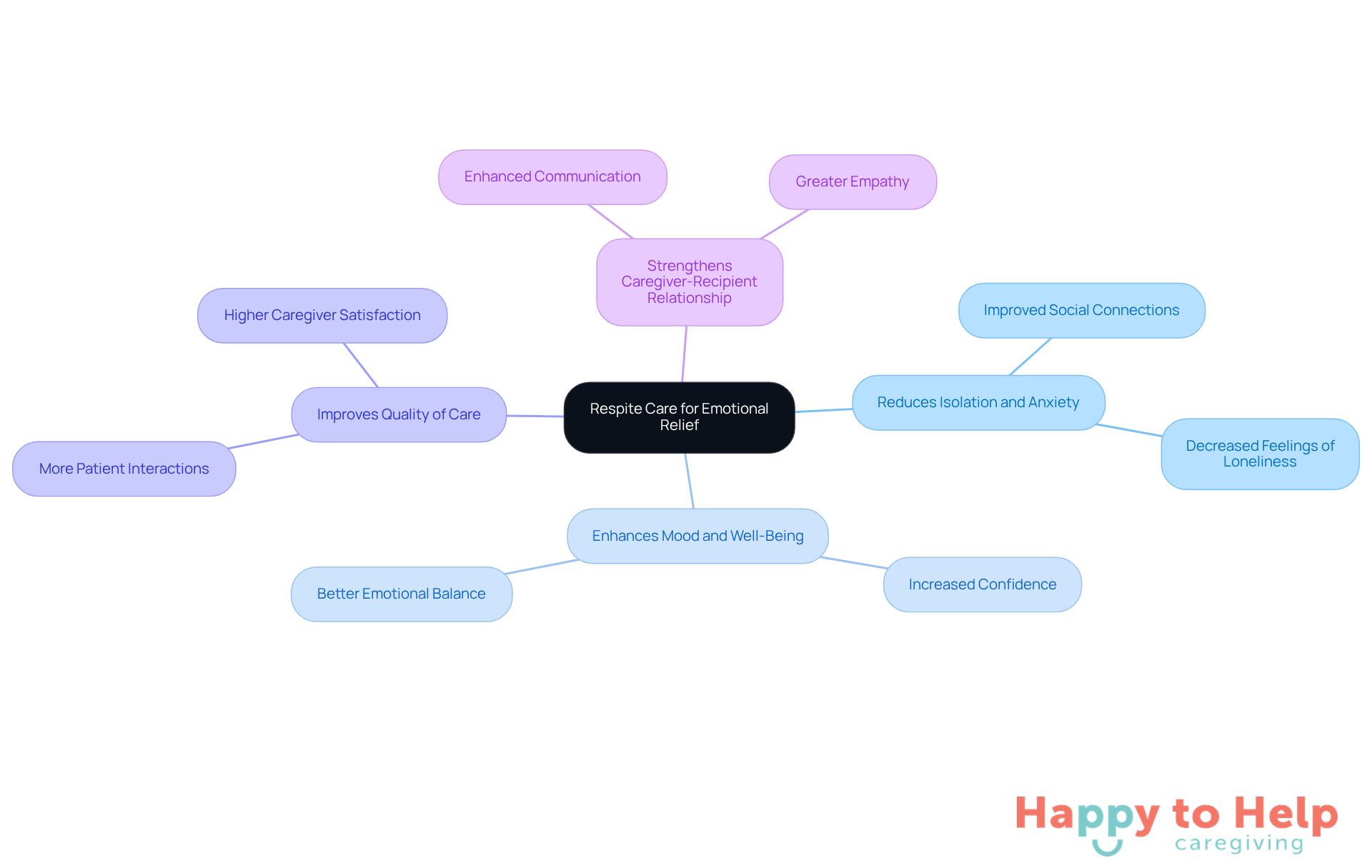
Caregiving often leads to significant emotional strain, resulting in feelings of isolation, anxiety, and burnout. This strain can severely impact both the caregiver's well-being and the quality of care provided.
Respite care in California serves as a crucial resource, allowing caregivers to take necessary breaks from their daily responsibilities. Engaging in self-care activities during these breaks can significantly enhance mood and foster a more positive outlook. Mental health experts emphasize that dedicating time to personal wellness is essential; caregivers who utilize short breaks report feeling more capable, confident, and balanced.
This revitalization not only benefits the caregiver but also positively affects the recipient. Enhanced mental well-being in caregivers leads to superior overall support. For instance, research indicates that respite care in California can reduce feelings of stress and depression, enabling caregivers to return to their roles rejuvenated and more patient.
By alleviating the emotional burden of caregiving, respite care California provides temporary relief services that strengthen the connection between the provider and the receiver, ultimately improving the quality of life for both individuals.
Key Benefits of Respite Support:
- Reduces feelings of isolation and anxiety
- Enhances mood and overall well-being
- Improves the quality of care provided
- Strengthens the caregiver-recipient relationship
Incorporating these strategies can lead to a healthier, more balanced caregiving experience.
Strengthen Family Bonds: Enhance Relationships with Respite Care
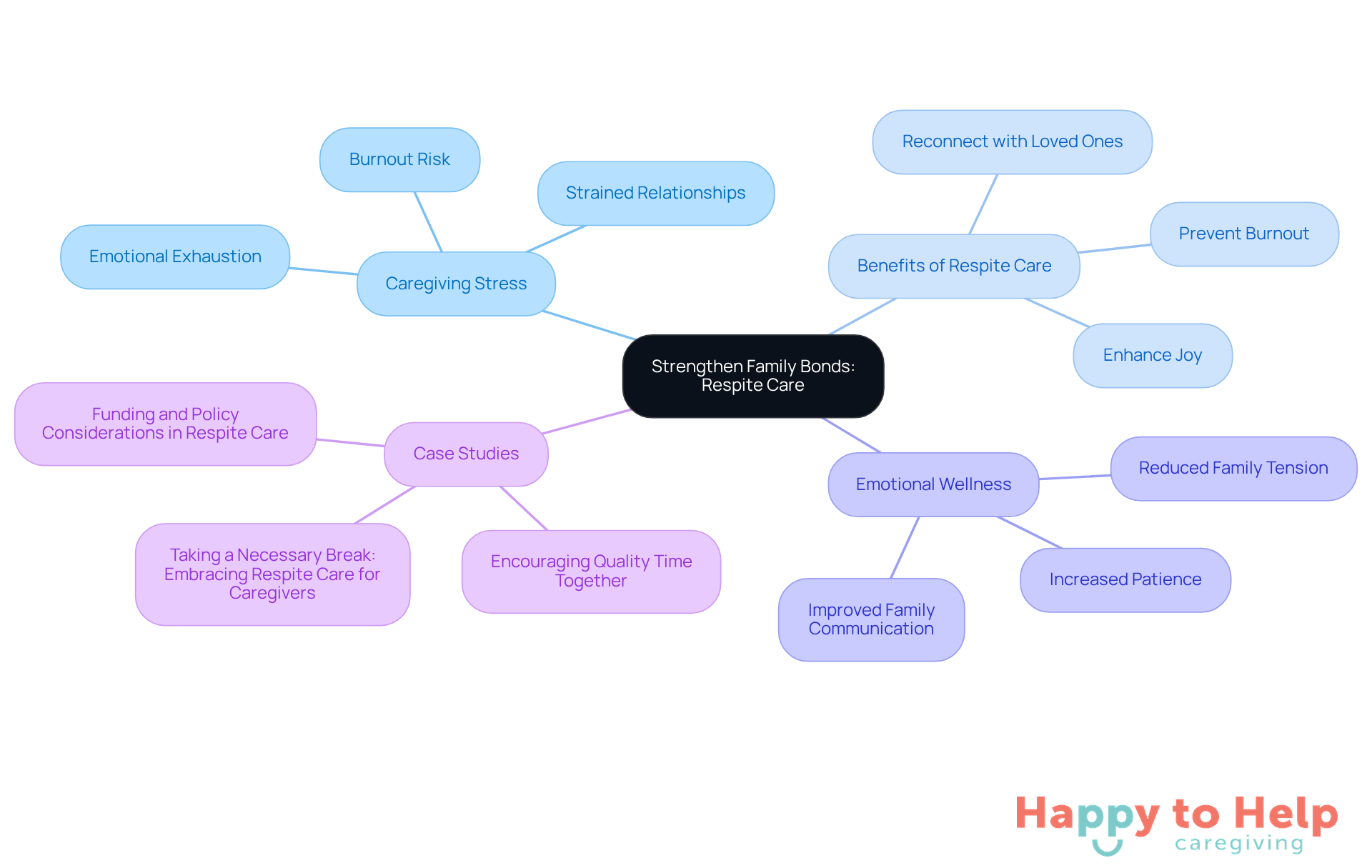
Caregiving can be a demanding role, often leading to stress and exhaustion. This pressure can strain relationships, making it difficult for caregivers to connect meaningfully with their loved ones. When caregivers are overwhelmed, the emotional wellness of the entire household can suffer, resulting in less joy and connection among family members.
Temporary support, such as respite care in California, offers a vital solution. By providing caregivers with essential time off, they can reconnect with relatives and friends, easing the burden of caregiving duties. This break not only alleviates stress but also fosters more meaningful interactions, allowing families to appreciate each other's contributions more fully. Studies indicate that temporary support helps prevent caregiver burnout while enhancing relationships among relatives, creating a more positive home environment.
For instance, households that prioritize emotional wellness through supportive services experience heightened joy. Case studies, such as 'Encouraging Quality Time Together,' illustrate how relief support enables families to spend quality time together, strengthening their bonds and creating lasting memories. As Allen Brown notes, "Families stay happier when emotions are cared for too."
Investing in respite care California is a practical step for households looking to nurture a supportive atmosphere. By doing so, families can encourage long-term harmony and stability, benefiting both caregivers and their loved ones.
Quality of Care: Improve Support for Loved Ones with Respite Services
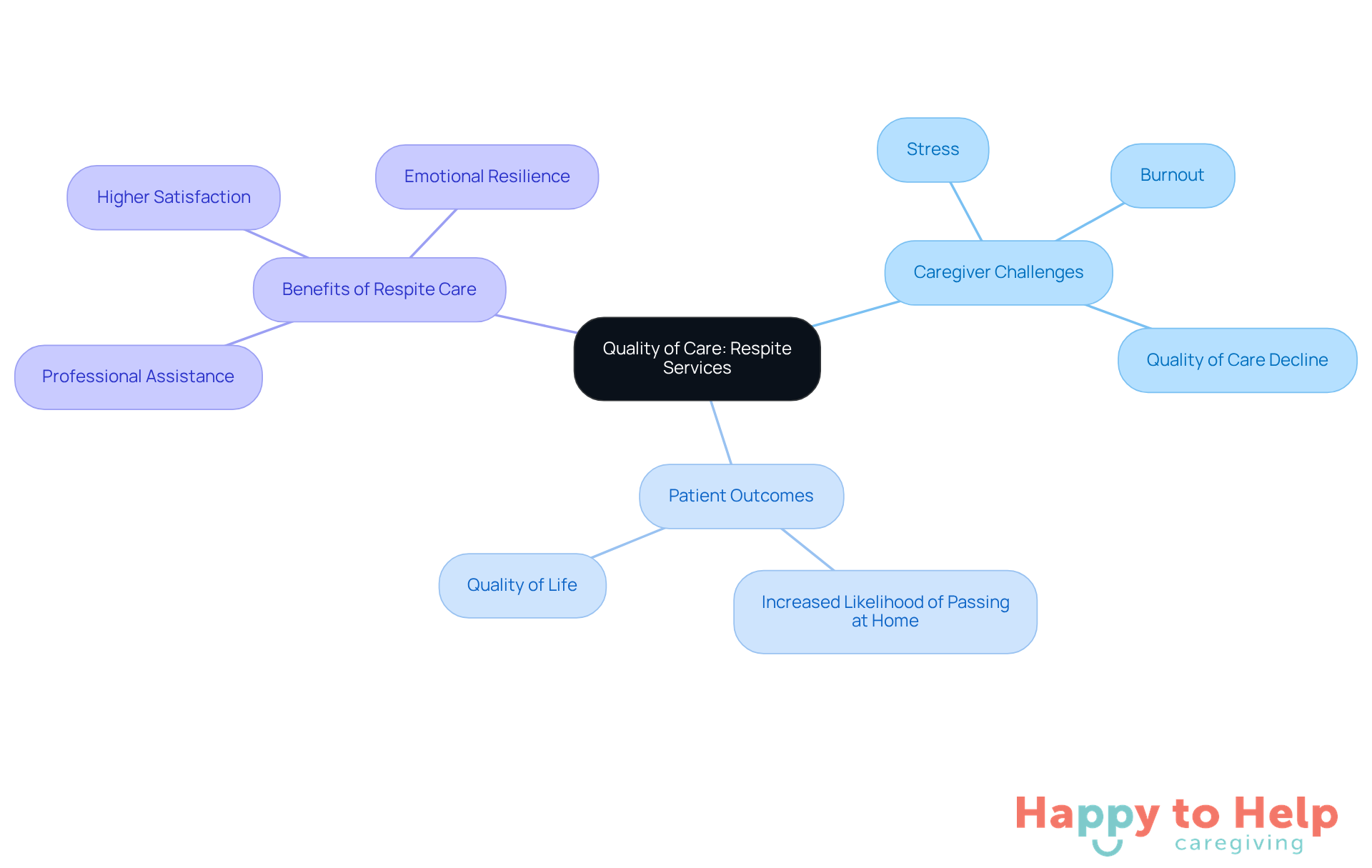
Caregivers often face significant challenges, including stress and burnout, as they provide essential support to their loved ones. This burden can lead to a decline in the quality of care, affecting both the caregiver and the patient. In fact, studies show that patients are 2.7 times more likely to pass away at home when respite care California services are available, underscoring the importance of support for caregivers.
Respite care California provides a practical solution by ensuring that loved ones receive steady, high-quality assistance, even when primary support providers need a break. Engaging trained professionals allows families to have peace of mind, knowing their loved ones are in capable hands. Moreover, caregivers who utilize these services report higher satisfaction levels, as they help prevent burnout and promote emotional resilience.
As Kelley Kilpatrick, a specialist in nursing research, states, "An at-home palliative and end-of-life support strategy that addresses the physical, psychological, spiritual, and social needs of patients and their supporters allows patients to stay at home longer and to pass away at home when that is their desire." By ensuring that trained professionals are involved, families can return to their caregiving roles refreshed and better equipped to meet their loved ones' needs, ultimately fostering a stronger, more positive connection.
Physical Health: Support Caregiver Well-Being with Respite Care
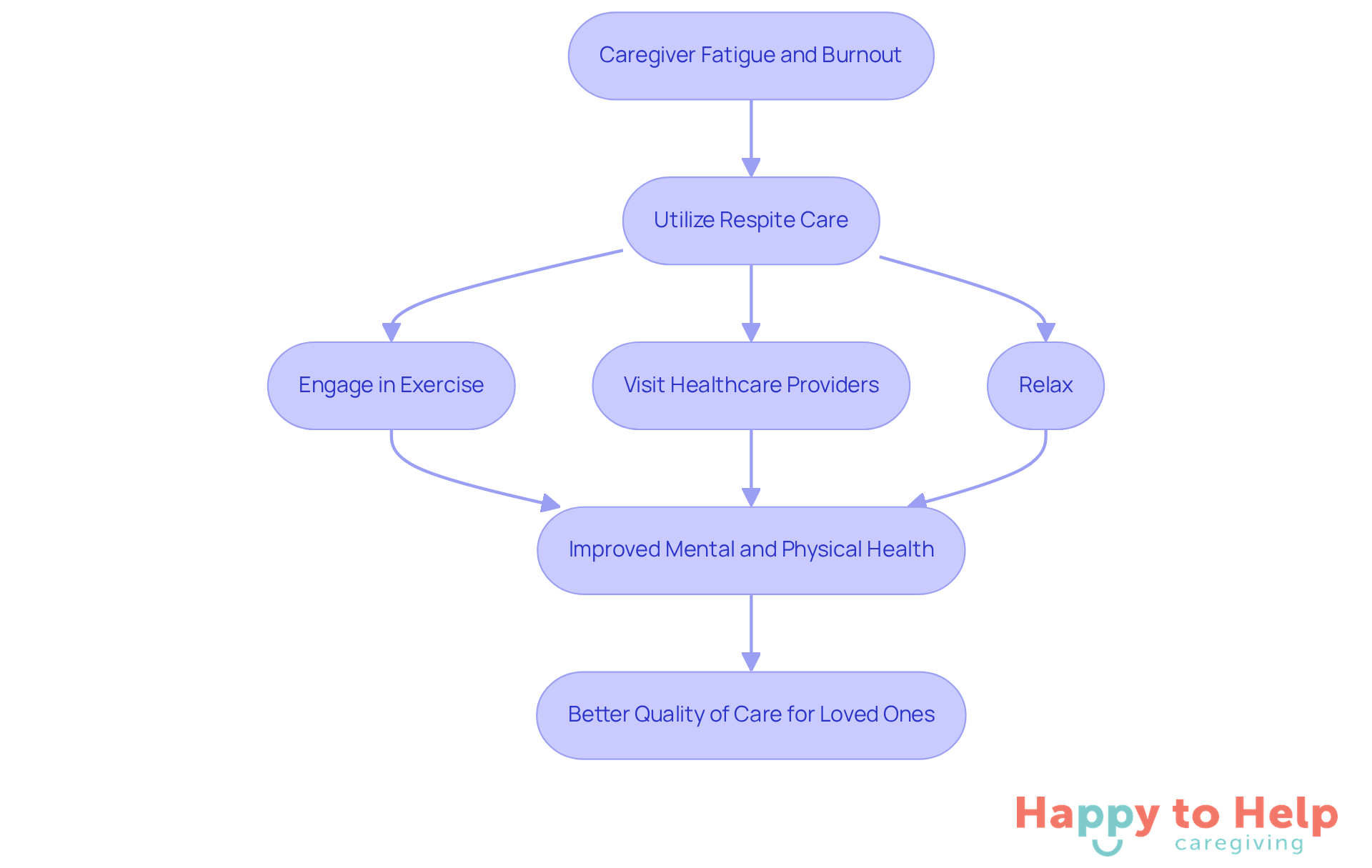
Caregivers often prioritize their loved ones' needs over their own, leading to significant fatigue and burnout. This problem can have serious implications for both the caregiver and the person receiving care. Without proper support, caregivers may struggle to maintain their physical and mental health, which can ultimately affect the quality of care they provide.
Respite care California offers a vital solution, allowing caregivers to focus on their well-being. By taking time for themselves, they can engage in exercise, visit healthcare providers, or simply relax. Research published in the American Journal of Geriatric Psychiatry indicates that just a few hours of relief support each week can significantly enhance a caregiver's mental and physical health. This not only lowers the risk of exhaustion but also improves overall well-being.
For instance, caregivers in Huntsville, TX, utilizing relief services from Sundale Senior Living report feeling more competent, assured, and stable. These feelings are crucial for sustaining their caregiving responsibilities over time. By incorporating these essential breaks into their routine, caregivers can rejuvenate, leading to better support for their loved ones and a healthier, more resilient caregiving experience through respite care California.
Sustainable Caregiving: Enable Long-Term Support with Respite Services
Caregivers often face the challenge of exhaustion, which can hinder their ability to provide consistent support. This exhaustion not only affects their health but also impacts the quality of care they can offer to family members.
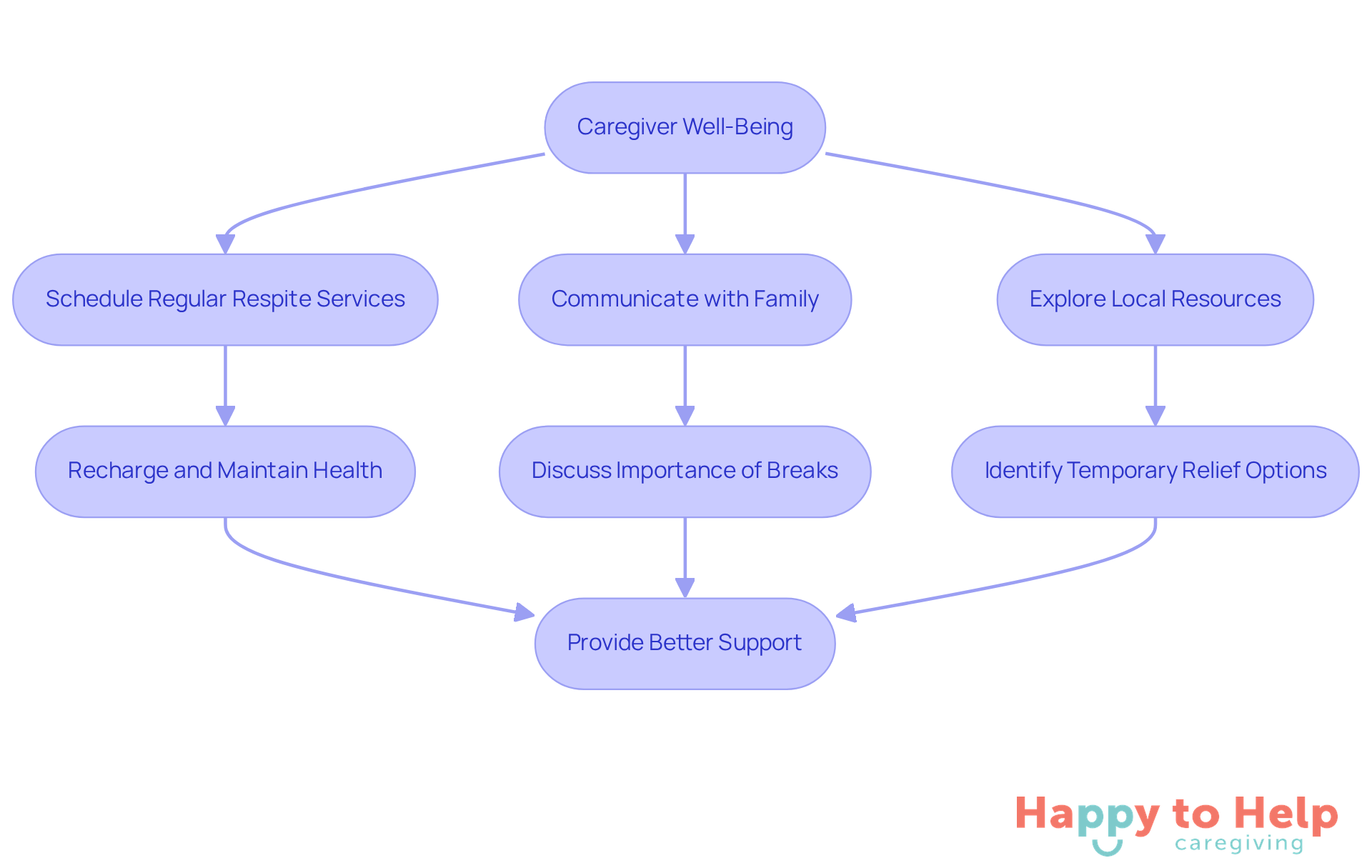
To combat this issue, incorporating respite care California into a caregiving schedule is essential. By consistently utilizing respite care California services, caregivers can maintain their health and well-being, ensuring they are equipped to deliver reliable assistance over time.
Here are some actionable tips for caregivers:
- Schedule regular respite services to recharge.
- Communicate with family members about the importance of these breaks.
- Explore local resources that provide respite care California as temporary relief options.
By prioritizing their own well-being, caregivers can provide better support for their loved ones.
Flexible Options: Customize Respite Care to Fit Your Needs
Finding the right respite care California services can pose a challenge for caregivers. Many struggle to balance their responsibilities while ensuring their loved ones receive the care they need. This situation can lead to stress and burnout, making it crucial to explore tailored solutions.
Fortunately, respite care California can be tailored to meet the specific needs of each household. Options include:
- In-home assistance: Caregivers can receive help directly in their homes, allowing them to take a much-needed break.
- Adult day programs: These programs provide a safe environment for loved ones during the day, giving caregivers peace of mind.
- Short-term stays in support facilities: For those needing a longer respite, temporary stays can offer comprehensive care.
This adaptability enables households to select the optimal choice that aligns with their schedules and the unique requirements of their loved ones. By utilizing respite care in California, both supporters and recipients can obtain the assistance they need, ultimately enhancing the quality of care and reducing caregiver stress.
Cost-Effectiveness: Manage Caregiving Expenses with Respite Services
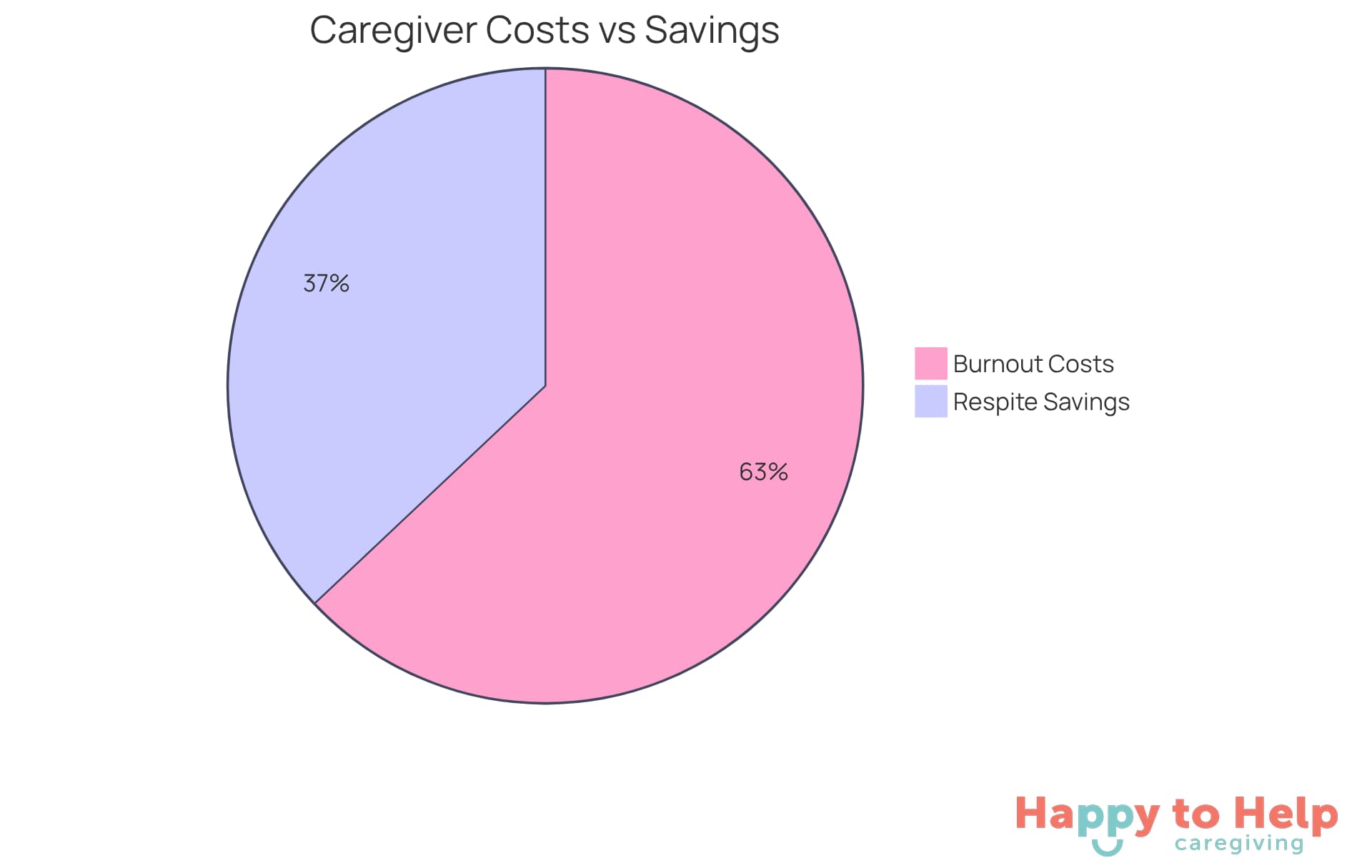
Investing in temporary assistance may seem like an extra cost, but it can lead to significant savings for families over time. The problem lies in caregiver burnout, which can jeopardize the health and well-being of primary providers. This burnout often results in more intensive and costly care options later. Research indicates that caregivers who experience burnout face greater health problems, leading to increased medical costs and potential income loss from missed work. In fact, the financial impact of support worker burnout can exceed $17,000 annually per household, factoring in lost wages and healthcare expenses. With over 11 million unpaid caregivers providing an estimated 18 billion hours of assistance, the scale of this issue is considerable.
Moreover, temporary assistance can equip households with the necessary support to manage caregiving responsibilities more effectively. Financial consultants often recommend planning for respite care in California as a proactive strategy to mitigate future expenses related to more extensive support needs. Recent initiatives, such as the $1.2 million federal funding allocated to New Mexico to improve relief services, highlight ongoing support for programs that families can access.
By utilizing temporary assistance, caregivers can ensure they are not only providing the best care for their loved ones but also safeguarding their financial stability. Essentially, respite care in California serves as a strategic investment that can save families money by reducing the likelihood of escalating support needs and associated costs. This approach enhances the quality of life for both caregivers and care recipients while fostering a sustainable support environment.
Companionship: Combat Loneliness with Respite Care
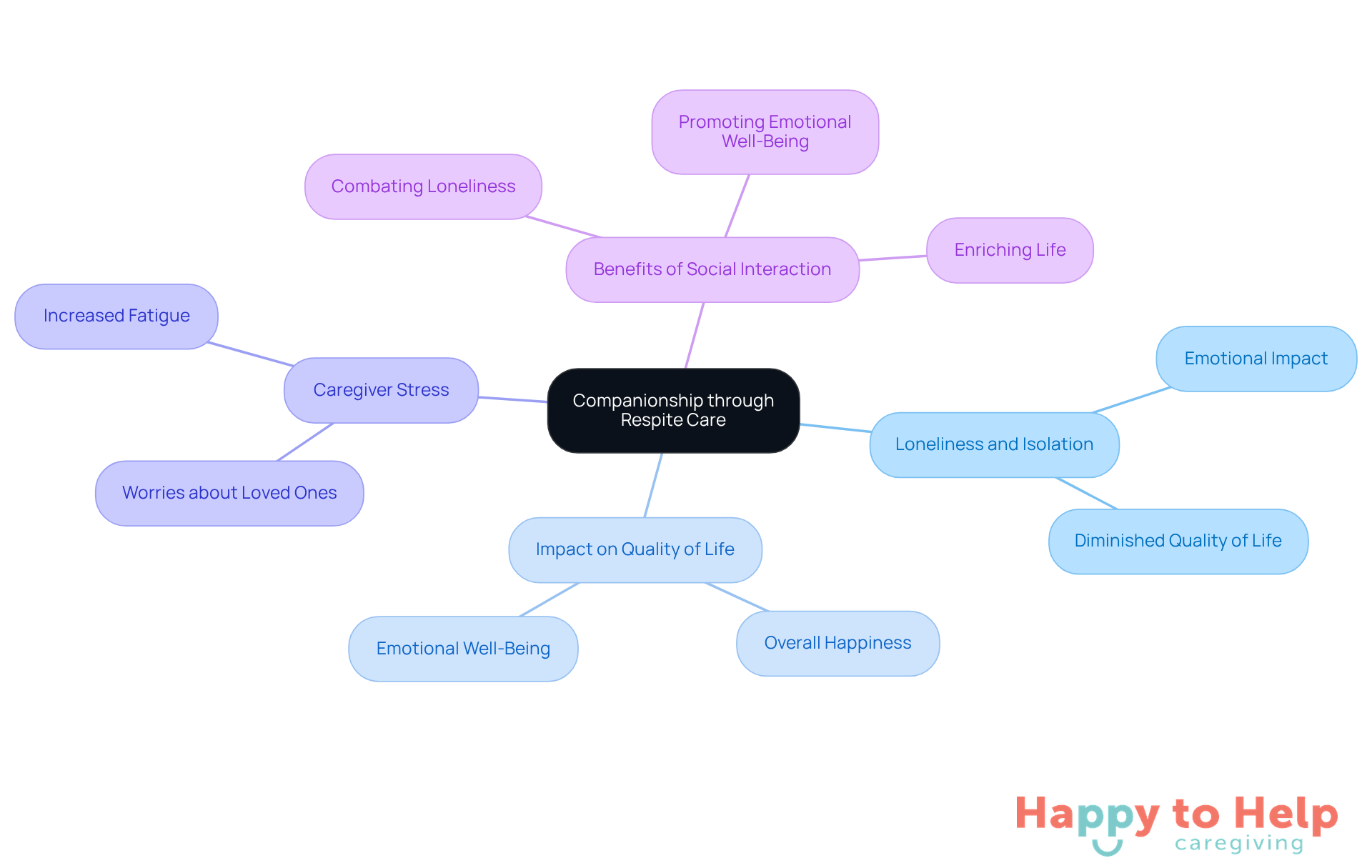
Loneliness and isolation are significant challenges faced by many recipients of respite support. These feelings can lead to a diminished quality of life, affecting emotional well-being and overall happiness. Caregivers often worry about the impact of these emotions on their loved ones, which can add to their own stress and fatigue.
Respite support not only provides caregivers with a much-needed break but also offers recipients the opportunity to engage with new companions. This social interaction is crucial; it can help combat feelings of loneliness and isolation, promoting a more fulfilling and enriched life for both parties involved. By facilitating these connections, respite support serves as a vital solution to enhance emotional well-being.
Care Planning: Maximize Respite Care Benefits with a Tailored Approach
Caregivers often face significant challenges due to a lack of tailored support. This can lead to burnout, emotional distress, and weakened connections with their loved ones. Without proper planning, the unique needs of both support providers and recipients may not be met, resulting in less effective relief services.
To address these issues, families should prioritize thorough planning that considers the specific needs and preferences of everyone involved. Customized strategies can enhance the effectiveness of relief services and lead to improved outcomes for all parties. Studies indicate that tailored relief support can reduce burnout in providers, improve emotional health, and strengthen relationships between supporters and those they care for.
When households engage in comprehensive organization, they can better align support services with their unique situations. This ensures that providers receive the essential assistance needed to rejuvenate and maintain their well-being. For instance, research shows that individuals who utilized tailored break services reported higher satisfaction levels and enhanced emotional well-being. This illustrates the profound impact of personalized support strategies.
By focusing on tailored care planning, families can maximize the benefits of respite care in California. This approach fosters a more supportive environment that promotes the well-being of both caregivers and those they care for.

Making the Right Choice
Respite care in California stands out as a crucial resource for family caregivers grappling with the significant challenge of caregiver burnout. This pressing issue not only affects the well-being of caregivers but also impacts the quality of care provided to their loved ones. By offering essential breaks, respite services empower caregivers to recharge, ultimately allowing them to maintain their health and continue providing compassionate support.
The implications of neglecting respite care are profound. Without these vital breaks, caregivers may experience increased stress and diminished mental health, which can lead to a decline in the quality of care for their loved ones. The benefits of respite care are clear:
- It provides emotional relief
- Enhances the quality of care
- Promotes sustainable caregiving practices
Utilizing these services not only alleviates stress for caregivers but also enriches the lives of care recipients through increased companionship and support.
Moreover, the cost-effectiveness of respite care highlights its importance as a strategic investment in family health and stability. Prioritizing respite care is essential for families striving to create a nurturing environment that fosters long-term well-being. By actively seeking tailored respite solutions and integrating them into caregiving routines, families can effectively combat burnout, improve emotional health, and strengthen their connections.
In conclusion, embracing respite care practices will not only enhance the quality of care provided but also ensure that caregivers and their loved ones thrive together. Families are encouraged to explore available respite options and make them a regular part of their caregiving journey.
https://iframe.tely.ai/cta/eyJhcnRpY2xlX2lkIjogIjY5MjUxM2VmYTkzZmE1YTRmZjkwZDZlZSIsICJjb21wYW55X2lkIjogIjY4ZWU1ZGNhNzMxNzYyNTU3ZjNjOTVjMSIsICJpbmRleCI6IG51bGwsICJ0eXBlIjogImFydGljbGUifQ==Frequently Asked Questions
What is caregiver burnout and how prevalent is it?
Caregiver burnout refers to emotional and physical exhaustion experienced by caregivers, often leading to social withdrawal and sleep disturbances. Research indicates that over 60% of caregivers experience these signs of burnout.
What are the implications of caregiver burnout?
When caregivers are overwhelmed, their ability to provide compassionate and effective support diminishes, negatively impacting the quality of care for their loved ones.
How can respite services help prevent caregiver burnout?
Respite services provide caregivers with regular breaks, allowing them to recharge and return to their responsibilities revitalized, thus enhancing their well-being and the quality of care they provide.
What options does Happy to Help Caregiving offer for respite care?
Happy to Help Caregiving offers tailored respite care options in California designed to meet the unique needs of each family, allowing caregivers to take necessary time off without guilt.
Why is it important to address the gender gap in caregiving?
Women often bear a greater caregiving load, making it crucial to provide effective support to help them maintain their health and sustain a high standard of care.
What emotional benefits does respite care provide to caregivers?
Respite care helps alleviate emotional strain, leading to reduced feelings of isolation, anxiety, and burnout. Caregivers who take breaks report enhanced mood and a more positive outlook.
How does respite care impact the quality of care provided?
Enhanced mental well-being in caregivers due to respite care leads to superior overall support, as caregivers return rejuvenated and more patient, positively affecting the recipient.
What are the key benefits of respite support?
Key benefits include reducing feelings of isolation and anxiety, enhancing mood and overall well-being, improving the quality of care provided, and strengthening the caregiver-recipient relationship.
How does respite care strengthen family bonds?
By providing caregivers with essential time off, respite care allows them to reconnect with relatives and friends, easing the burden of caregiving duties and fostering more meaningful interactions.
What is the long-term impact of investing in respite care for families?
Investing in respite care nurtures a supportive atmosphere, encourages long-term harmony and stability, and benefits both caregivers and their loved ones by enhancing emotional wellness and family connections.
List of Sources
- Happy to Help Caregiving: Prevent Caregiver Burnout with Respite Services
- Caregiver Statistics: Understanding the Challenges Facing Family Caregivers in California - California Caregiver Resource Centers (https://caregivercalifornia.org/2023/02/03/caregiver-statistics-understanding-the-challenges-facing-family-caregivers-in-california)
- How Respite Care Brings Relief for Caregiver Burnout (https://vitas.com/family-and-caregiver-support/caregiving/caregiver-life-balance/how-respite-care-brings-relief-for-caregiver-burnout)
- Preventing Caregiver Burnout with Respite Care | The Herrick House (https://theherrickhouse.org/news-stories/all-news-stories/stories/2025/04/preventing-caregiver-burnout-with-respite-care)
- How Does Respite Care Helps Prevent Caregiver Burnout (https://sundaleseniorliving.com/news-and-articles/the-role-of-respite-care-in-preventing-caregiver-burnout)
- Emotional Relief: Alleviate Stress Through Respite Care
- How Does Respite Care Helps Prevent Caregiver Burnout (https://sundaleseniorliving.com/news-and-articles/the-role-of-respite-care-in-preventing-caregiver-burnout)
- Caregivers and the Importance of Respite Care (https://benedictineliving.org/resources/news/caregivers-and-the-importance-of-respite-care)
- Improving Support for Family Caregivers (https://nationalacademies.org/news/2025/07/improving-support-for-family-caregivers)
- Strengthen Family Bonds: Enhance Relationships with Respite Care
- How Respite Care Can Strengthen Family Relationships (https://impactwealth.org/how-respite-care-can-strengthen-family-relationships)
- Benefits of Respite Care for Families and Patients (https://ltcnews.com/articles/respite-care-assisted-living-family-burden-provides-support)
- Supporting Family Dynamics Through Respite Care (https://h2hhc.com/blog/supporting-family-dynamics-through-respite-care-6761a)
- Family Caregiving - Research and data from Pew Research Center (https://pewresearch.org/topic/family-relationships/family-caregiving)
- Quality of Care: Improve Support for Loved Ones with Respite Services
- Respite care more than doubles chances of elderly patients dying at home, study finds (https://mcknights.com/news/respite-care-more-than-doubles-chances-of-elderly-patients-dying-at-home-study-finds)
- Caregivers and the Importance of Respite Care (https://benedictineliving.org/resources/news/caregivers-and-the-importance-of-respite-care)
- Rural Families Have ‘Critical’ Need for More Hospice, Respite Care (https://hospicenews.com/2025/01/06/rural-families-have-critical-need-for-more-hospice-respite-care)
- Respite services significantly increase home deaths for palliative care patients (https://news-medical.net/news/20250923/Respite-services-significantly-increase-home-deaths-for-palliative-care-patients.aspx)
- State Innovations to Advance Respite Care: Policy Strategies Shared at the State-Federal Respite Summit - NASHP (https://nashp.org/state-innovations-to-advance-respite-care-policy-strategies-shared-at-the-state-federal-respite-summit)
- Physical Health: Support Caregiver Well-Being with Respite Care
- How Does Respite Care Helps Prevent Caregiver Burnout (https://sundaleseniorliving.com/news-and-articles/the-role-of-respite-care-in-preventing-caregiver-burnout)
- Respite Care Services: Essential Support for Caregivers (https://esoregon.com/the-benefits-of-respite-care-services-for-caregiver-relief)
- Benefits of Respite Care | Home Helpers Home Care (https://homehelpershomecare.com/blog/2024/august/four-ways-family-caregivers-and-their-loved-ones-can-benefit-from-respite-care)
- Caregivers and the Importance of Respite Care (https://benedictineliving.org/resources/news/caregivers-and-the-importance-of-respite-care)
- Sustainable Caregiving: Enable Long-Term Support with Respite Services
- New Report Reveals Crisis Point for America’s 63 million Family Caregivers (https://press.aarp.org/2025-07-24-New-Report-Reveals-Crisis-Point-for-Americas-63-million-Family-Caregivers)
- We must fund respite care for unpaid caregivers (https://mcknightshomecare.com/we-must-fund-respite-care-for-unpaid-caregivers)
- Respite Services: A Critical Support for Family Caregivers (https://ltsschoices.aarp.org/resources-and-practices/respite-services-critical-support-for-family-caregivers)
- Looking Back and Moving Forward: What the Caregivers SOAR Pilot Taught Us About Respite and Community Support – Riverside Community Care (https://riversidecc.org/looking-back-and-moving-forward-what-the-caregivers-soar-pilot-taught-us-about-respite-and-community-support)
- State Innovations to Advance Respite Care: Policy Strategies Shared at the State-Federal Respite Summit - NASHP (https://nashp.org/state-innovations-to-advance-respite-care-policy-strategies-shared-at-the-state-federal-respite-summit)
- Flexible Options: Customize Respite Care to Fit Your Needs
- Stats, Facts and Things to Know About Respite Care (https://bethesdaseniorliving.com/senior-resources/stats-facts-and-things-to-know-about-respite-care)
- Respite Facts and Talking Points | ARCH National Respite Network & Resource Center (https://archrespite.org/policy/respite-facts-and-talking-points)
- Bipartisan legislation expands respite care options for children with disabilities – Minnesota Senate Republicans (https://mnsenaterepublicans.com/bipartisan-legislation-expands-respite-care-options-for-children-with-disabilities)
- Funding Opportunity: National Lifespan Respite Care Program State Program Enhancement Grants | ACL Administration for Community Living (https://acl.gov/news-and-events/announcements/national-lifespan-respite-care-program-state-program-enhancement)
- Cost-Effectiveness: Manage Caregiving Expenses with Respite Services
- Federal budget committee greenlights millions in spending for family caregivers, respite services (https://mcknightshomecare.com/news/federal-budget-committee-greenlights-millions-in-spending-for-family-caregivers-respite-services)
- New Mexico awarded $1.2M federal grant to expand respite care - New Mexico Aging and Long-Term Services Department - ALTSD (https://aging.nm.gov/2025/10/14/new-mexico-awarded-1-2m-federal-grant-to-expand-respite-care)
- ACL Awards $5M to Increase Availability of Dementia-Specific Respite Care | ACL Administration for Community Living (https://acl.gov/news-and-events/announcements/acl-awards-5m-increase-availability-dementia-specific-respite-care)
- Cost and Cost-effectiveness of Hospital vs Residential Crisis Care for Patients Who Have Serious Mental Illness (https://jamanetwork.com/journals/jamapsychiatry/fullarticle/206200)
- Alzheimer’s Association Center for Dementia Respite Innovation Awards More Than $4 Million to Improve Respite Care for People Living With Dementia and Their Caregivers (https://alz.org/news/2024/alzheimer-s-association-center-for-dementia-respite-innovation-awards-more-than-4-million-to-improv)
- Care Planning: Maximize Respite Care Benefits with a Tailored Approach
- Caregivers and the Importance of Respite Care (https://benedictineliving.org/resources/news/caregivers-and-the-importance-of-respite-care)
- Respite care provides minimal benefits, study finds (https://mcknights.com/news/respite-care-provides-minimal-benefits-study-finds)
- How the Hospice CARE Act Could Change Respite Services (https://hospicenews.com/2024/08/01/how-the-hospice-care-act-could-change-respite-services)
- State Innovations to Advance Respite Care: Policy Strategies Shared at the State-Federal Respite Summit - NASHP (https://nashp.org/state-innovations-to-advance-respite-care-policy-strategies-shared-at-the-state-federal-respite-summit)
- Funding Opportunity: National Lifespan Respite Care Program State Program Enhancement Grants | ACL Administration for Community Living (https://acl.gov/news-and-events/announcements/national-lifespan-respite-care-program-state-program-enhancement)