
For families in our service areas
For families in our service areas, this guide explains caregiving and how non-medical in-home caregiving can support care planning in East Idaho, Treasure Valley & Magic Valley, Northern Wasatch, North Central West Virginia, and Northeast Ohio.
What You Need to Know About 10 Cheerful Messages
Loneliness casts a long shadow over the lives of senior citizens, often leading to feelings of isolation and despair. This emotional burden can significantly impact their overall well-being. However, a simple, heartfelt message can serve as a beacon of light, offering warmth and encouragement that uplifts their spirits.
This article explores ten cheerful messages specifically crafted to brighten the day of older adults. Thoughtful communication not only fosters connection but also enhances their emotional well-being. What if a few kind words could transform a lonely moment into a cherished memory? By reaching out with kindness, caregivers can make a meaningful difference in the lives of seniors.
Wishing You Sunshine and Smiles
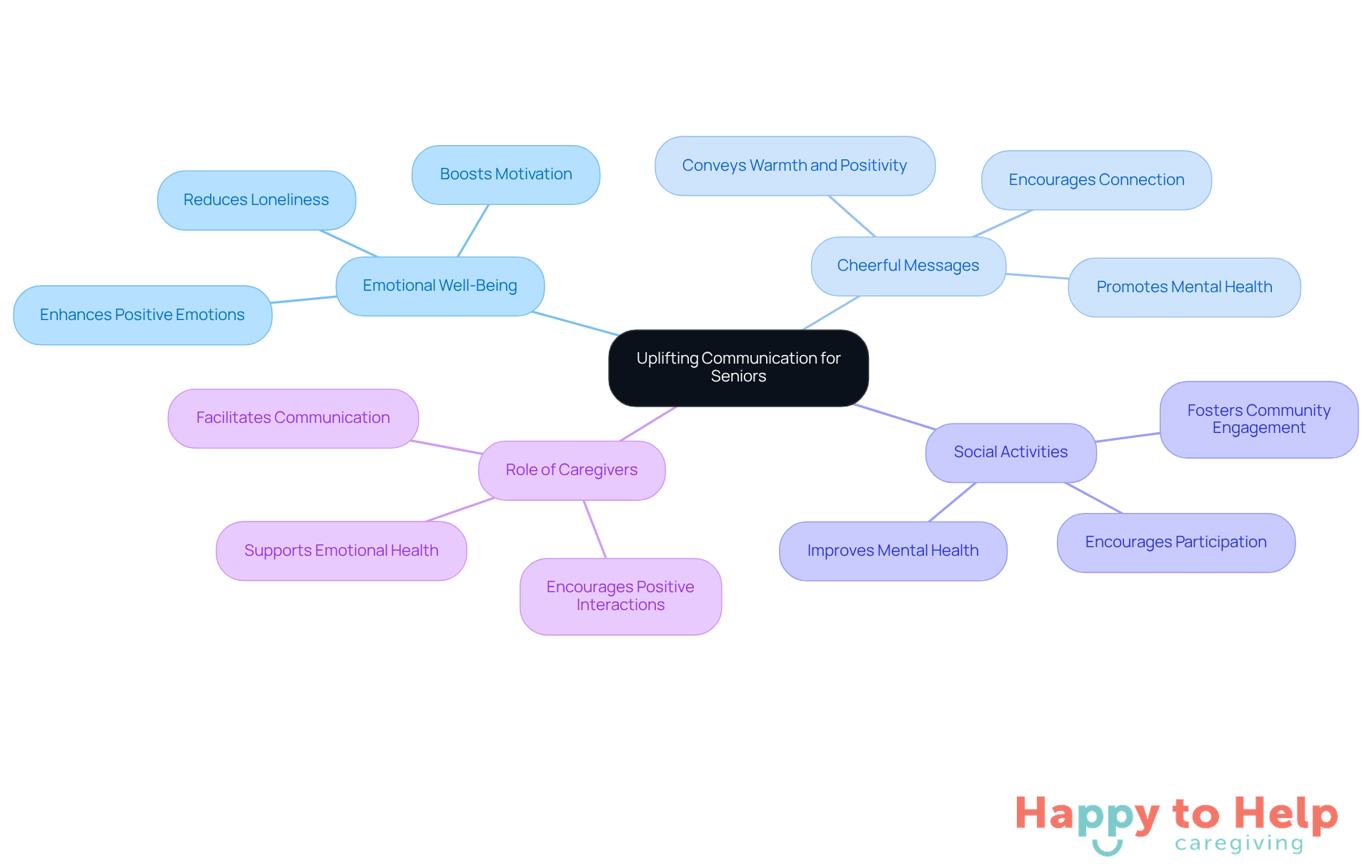
Loneliness and isolation are significant challenges faced by elderly individuals, impacting their emotional well-being. Cheerful messages for senior citizens that wish for sunshine and smiles can uplift their spirits, conveying warmth and positivity. Such sentiments remind them that they are cherished and thought of fondly.
Studies indicate that positively framed messages can boost motivation and emotional health, particularly among seniors. For example, participation in social activities correlates with a 0.35 point lower depression score compared to non-participants. This highlights the importance of positive interactions in combating feelings of loneliness.
To foster a sense of connection and belonging, caregivers can encourage sending heartfelt messages. This simple act not only brightens an elderly person's day but also promotes mental health. By nurturing positive emotions, these messages can significantly reduce feelings of isolation, leading to a more fulfilling life for older adults.
Experts emphasize the need for older adults to engage in social activities, stating, "It is vital to raise the awareness of older adults to participate in social activities." This emphasizes the importance of uplifting communication in elderly care, including cheerful messages for senior citizens, which provides caregivers with a clear solution to enhance the lives of those they care for.
Sending You Hugs and Happy Thoughts
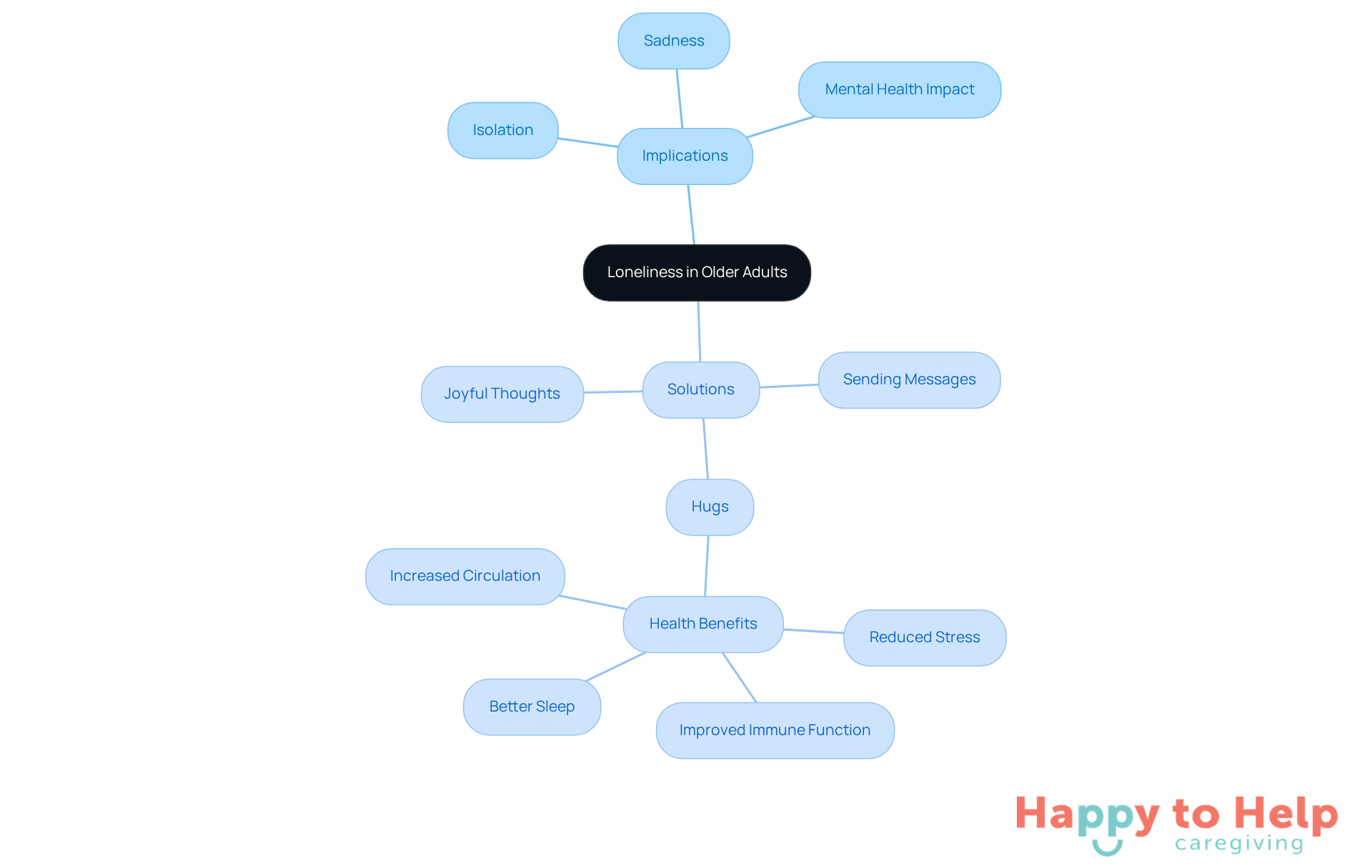
Loneliness is a significant issue faced by older adults, often leading to feelings of isolation and sadness. This emotional distress can have serious implications for their mental health and overall well-being.
A simple yet effective solution is to send messages that include hugs and joyful thoughts. Such messages serve as a reminder that they are not alone and that someone cares deeply for them. This can help alleviate feelings of loneliness and enhance their overall mood, providing much-needed emotional solace.
Remembering the Joyful Moments
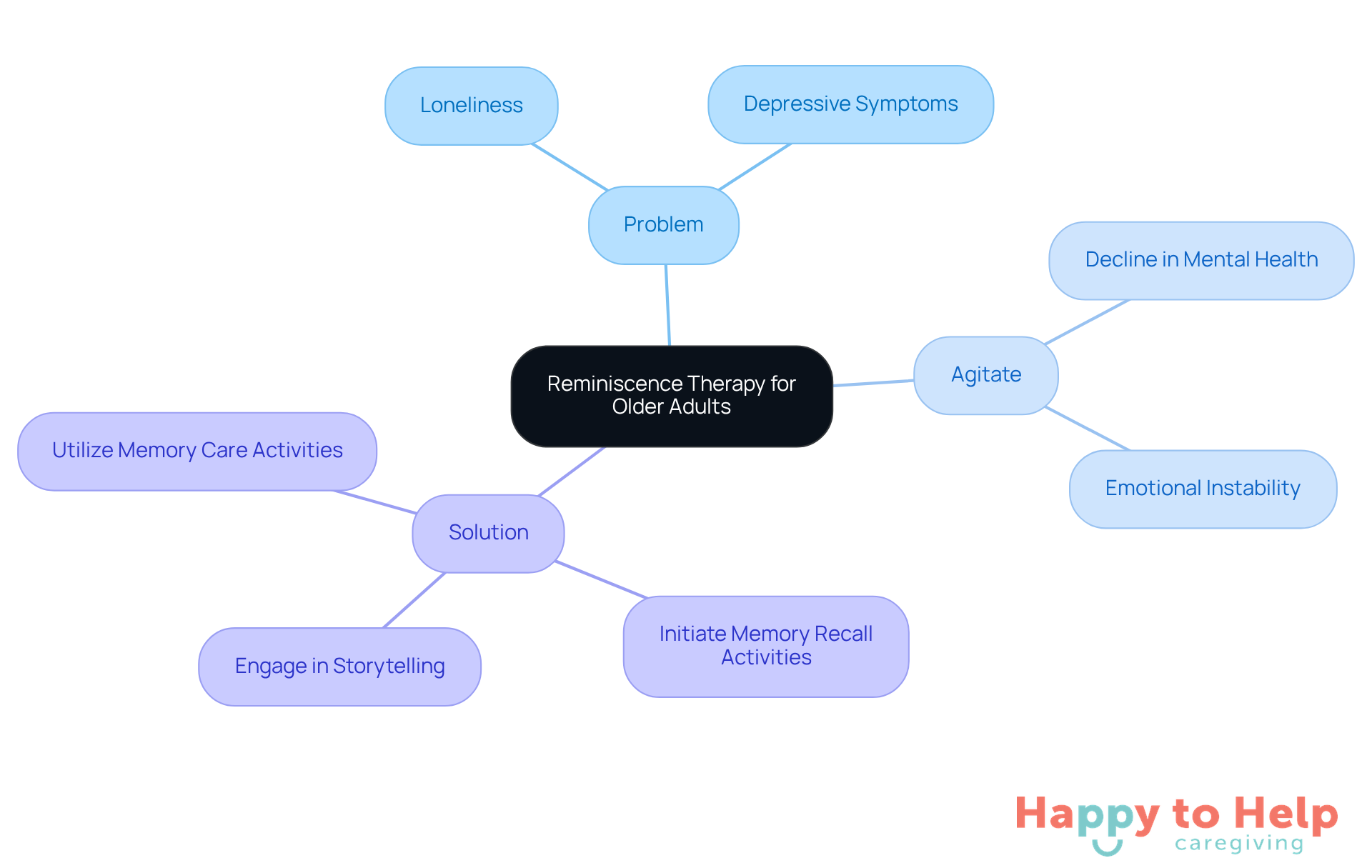
Problem: Many older adults face loneliness and depressive symptoms, with research indicating that nearly one-third experience these challenges. This situation can significantly affect their overall well-being and quality of life.
Agitate: The implications of loneliness and depression are profound, often leading to a decline in mental health and emotional stability. As caregivers, it’s crucial to recognize how these feelings can isolate older adults, making it essential to find effective ways to combat these issues.
Solution: One effective approach is reminiscence therapy (RT), a non-pharmacological treatment that encourages older adults to recall joyful moments from their past. This practice not only enhances mood but also fosters connections with caregivers and family members, reinforcing a sense of belonging. Here are some actionable tips for caregivers:
- Initiate Memory Recall Activities: Encourage your loved ones to share stories about their favorite childhood experiences or significant life events.
- Engage in Storytelling: Create a nurturing environment where older adults feel comfortable reminiscing, which can uplift their spirits.
- Utilize Memory Care Activities: Incorporate activities that promote memory recall, such as looking through old photographs or discussing past hobbies.
As Ben Harrington notes, "reminiscing can enhance mood, elevate self-worth, and assist older adults in reflecting on the richness of their experiences." By implementing these strategies, caregivers can help their loved ones engage with their past and find joy in their present, which can lead to cheerful messages for senior citizens, ultimately making each day a little brighter.
Celebrating Your Wisdom and Kindness
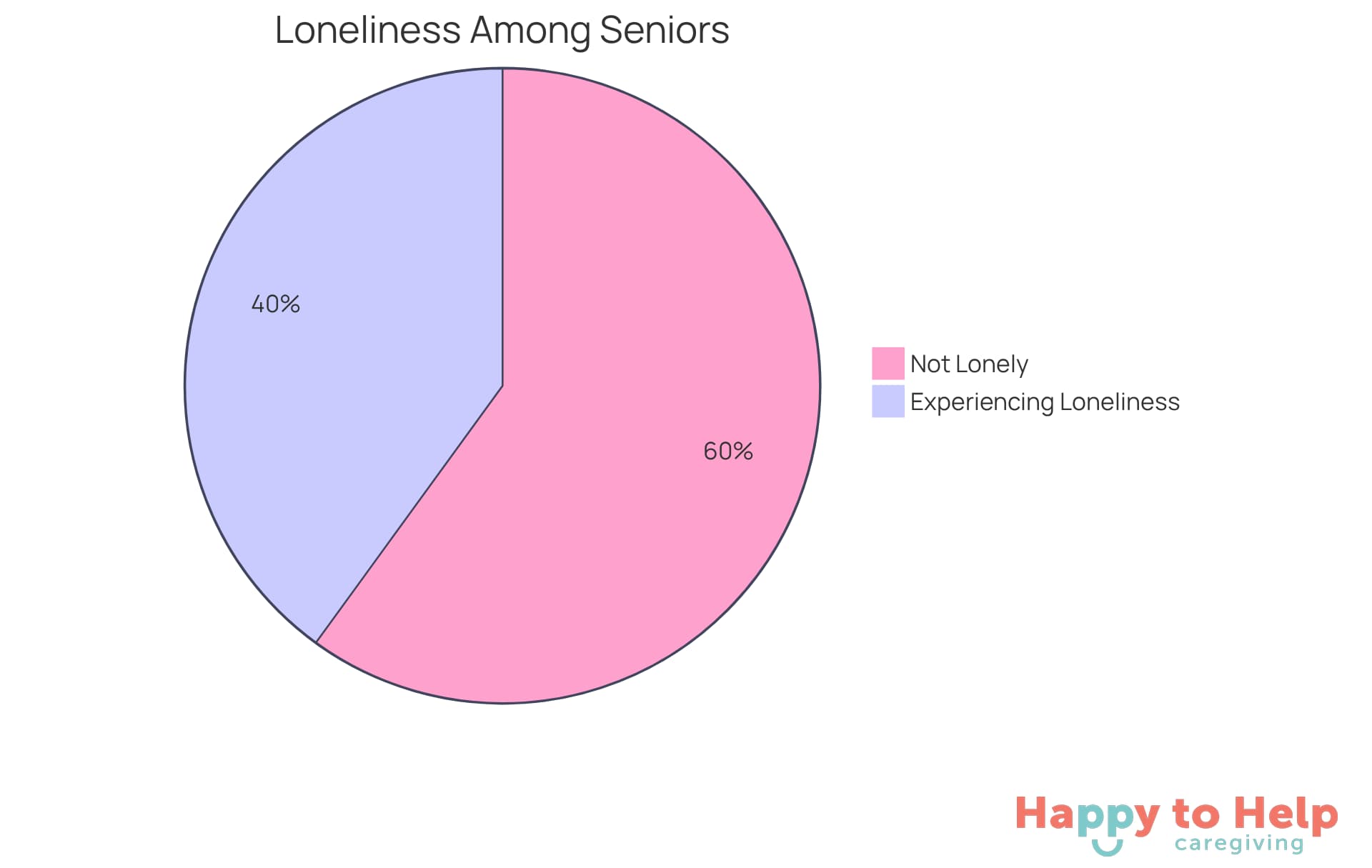
Cheerful messages for senior citizens that celebrate their wisdom and kindness emphasize a significant problem: nearly 40% of older adults experience loneliness and isolation. This issue not only diminishes their self-esteem but also impacts their emotional well-being. By acknowledging their rich life experiences and contributions, we can uplift their spirits through cheerful messages for senior citizens and reinforce their sense of self-worth.
Recognizing their unique journeys honors their past and emphasizes the importance of their wisdom in guiding younger generations. This validation combats feelings of loneliness, which can be as detrimental to health as smoking 15 cigarettes a day, as noted by Stacey Malcolmson, president and CEO of The Senior Source.
To address this issue, caregivers can engage with elderly individuals by communicating through cheerful messages for senior citizens and expressions of gratitude. Celebrating National Elderly Citizens Day, established by President Ronald Reagan in 1988, serves as a reminder of the importance of recognizing older adults' contributions and the ongoing impact they have on society. By fostering these connections, we can greatly improve their emotional well-being, allowing them to feel valued and respected within their families and communities.
Cherishing Our Friendship Always
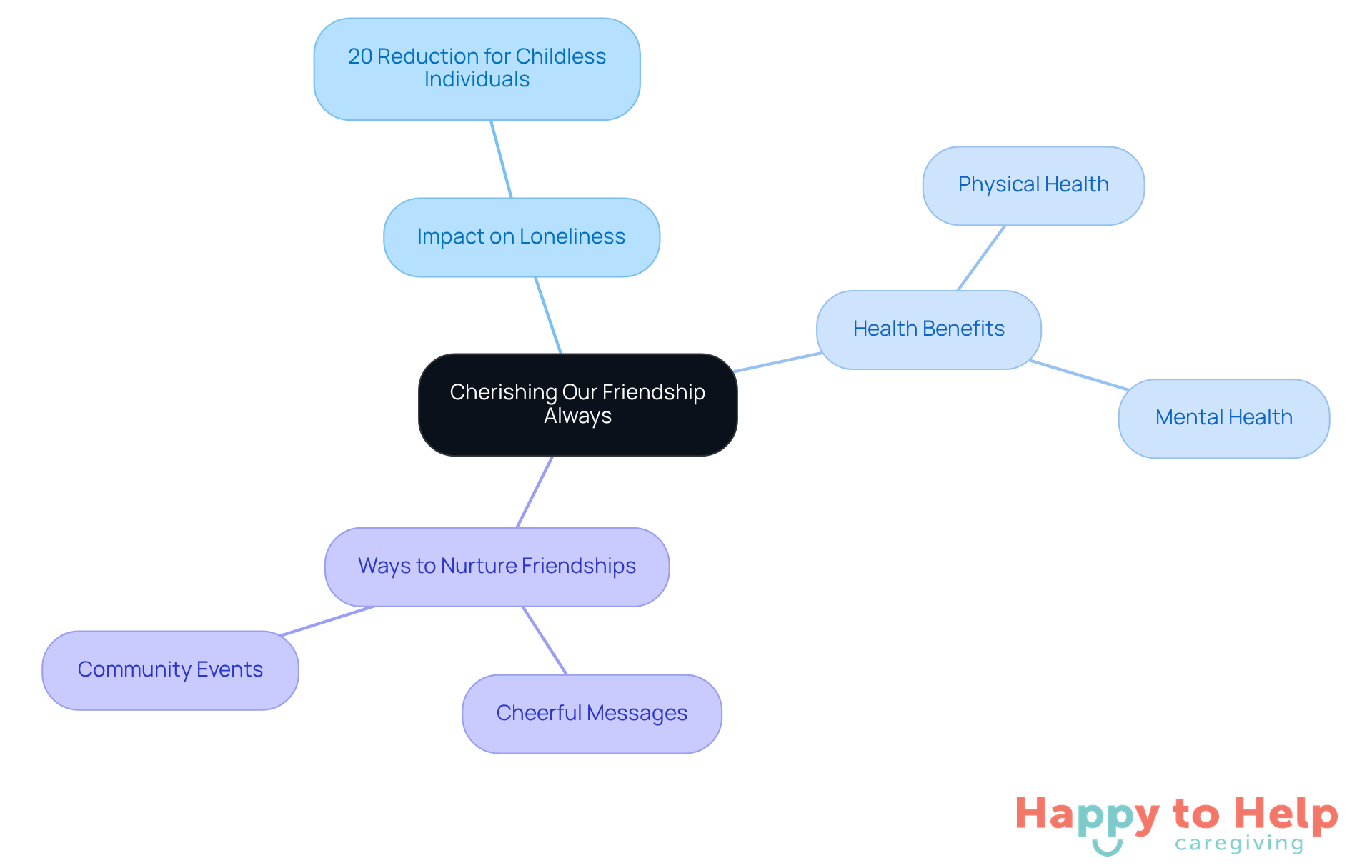
Loneliness among seniors is a significant issue that can deeply affect their emotional well-being. Research indicates that strong, supportive friendships are essential for improving the quality of life for older adults, particularly those who are unmarried, widowed, or without children. For example, individuals without children experience a 20% greater reduction in loneliness when they cultivate strong friendships compared to those with children. This highlights the critical role friendships play in alleviating feelings of isolation.
Moreover, social connections are vital for maintaining both physical and mental health in the elderly. Experts emphasize the importance of creating opportunities for social engagement, whether through community events or familiar settings like libraries and senior centers. As Crystal Ng, a researcher at the university's Survey Research Center, points out, "Since friends are chosen and usually bring joy, they can be especially important for emotional well-being in older age, particularly for those who are unmarried, widowed, divorced, single, or childless." These interactions not only elevate moods but also contribute to a more satisfying existence.
To address these challenges, sending cheerful messages for senior citizens that celebrate friendships can serve as a powerful reminder of the joy and support derived from these bonds. By cherishing and nurturing these relationships, caregivers can help older adults feel valued and connected, ultimately improving their overall quality of life.
Embrace Each Day with Joy
Many older adults struggle to embrace each day with happiness, but cheerful messages for senior citizens can encourage them to focus on the positives in their experiences. This mindset can lead to a diminished quality of life, as they may miss out on the joy found in everyday moments.
To combat this issue, caregivers can play a crucial role in motivating older adults to focus on cheerful messages for senior citizens that bring joy. Encouraging them to appreciate these moments can significantly enhance their overall well-being.
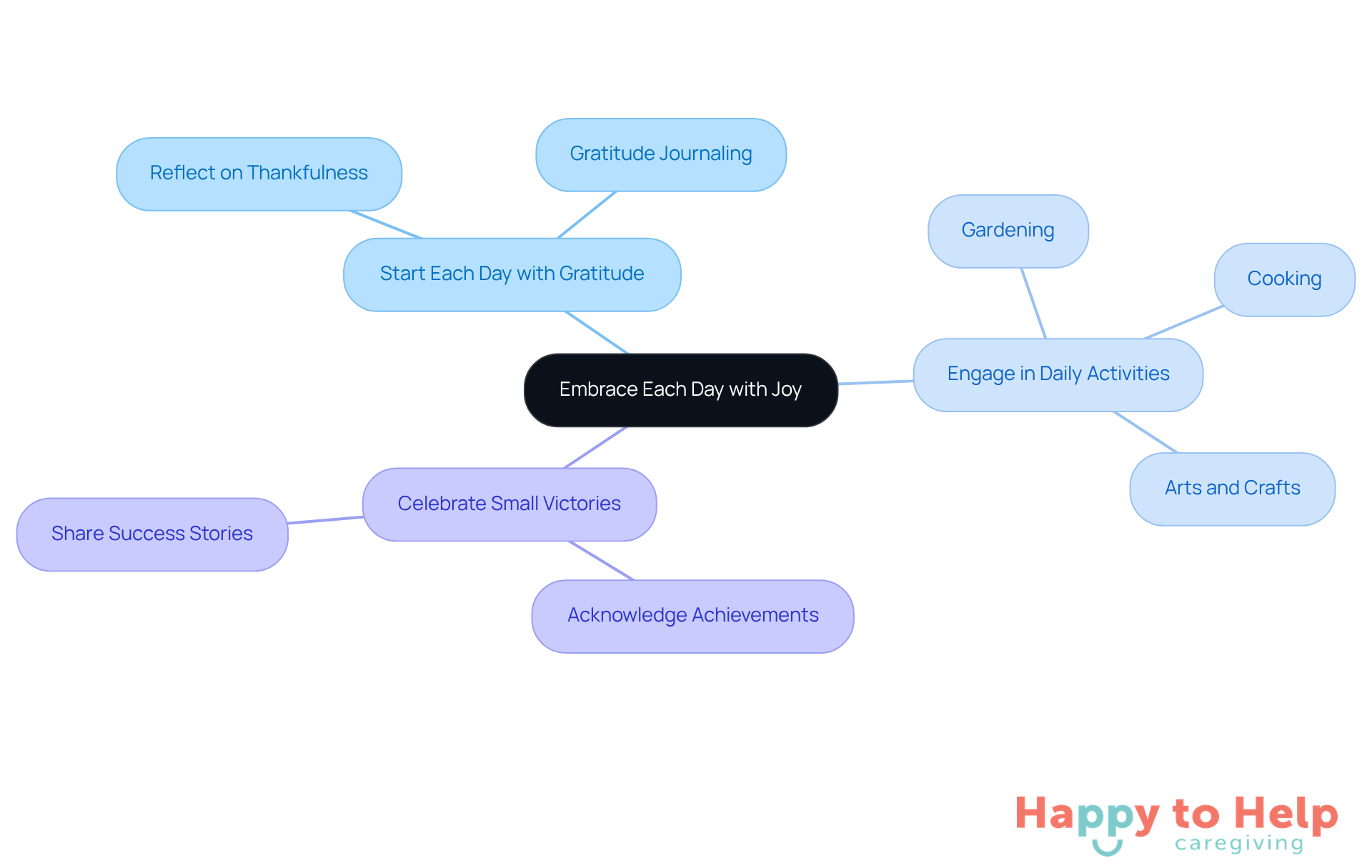
Here are some actionable tips for caregivers:
- Start each day with gratitude: Encourage older adults to reflect on what they are thankful for.
- Engage in daily activities: Help them find joy in simple tasks, like gardening or cooking.
- Celebrate small victories: Acknowledge and celebrate even the smallest achievements to boost their mood.
By implementing these strategies, caregivers can foster a more positive outlook in older adults by sharing cheerful messages for senior citizens, helping them to welcome each day with happiness.
Finding Joy in Life's Little Moments
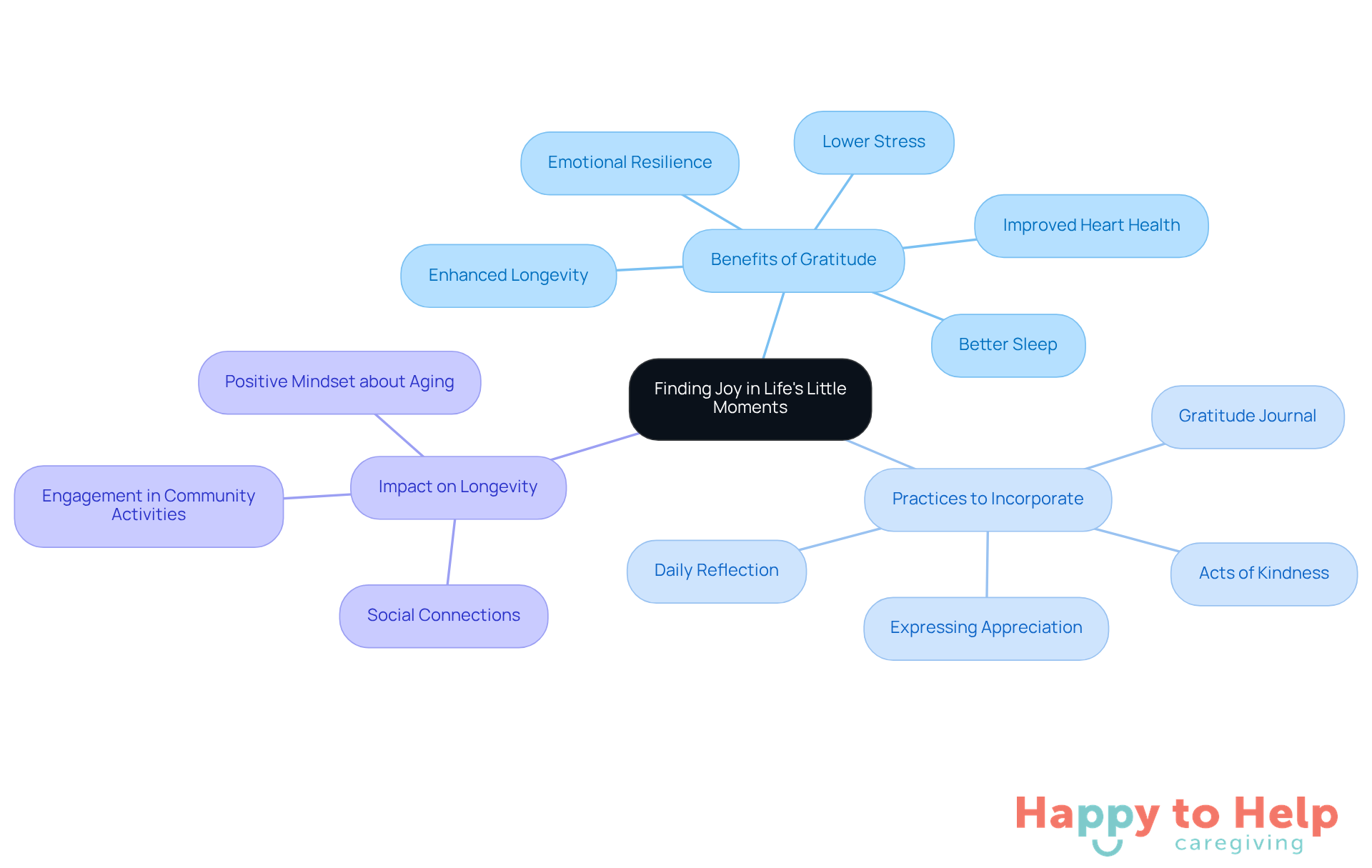
Many seniors struggle to find happiness in everyday moments, which can significantly affect their overall well-being. This lack of appreciation for small joys not only diminishes their daily experiences but can also lead to feelings of loneliness and depression. Research shows that incorporating gratitude into daily routines can combat these issues, lowering blood pressure and reducing symptoms of depression.
For instance, individuals who regularly express thankfulness often report better sleep quality and lower stress levels, contributing to a more fulfilling life. Moreover, studies indicate that older adults with a positive mindset about aging can live up to 7.5 years longer than their peers who do not share this outlook. This highlights the crucial role gratitude plays in enhancing both longevity and quality of life.
Simple practices, such as maintaining a gratitude journal or expressing appreciation to loved ones, can help shift focus from what is lacking to what is abundant. This shift not only enhances emotional resilience but also encourages seniors to recognize their achievements and value their relationships.
By actively engaging in friendships and participating in community activities, older adults can combat feelings of isolation and foster a sense of belonging, which is vital for their mental health. Ultimately, embracing gratitude empowers seniors to discover joy in everyday moments through cheerful messages for senior citizens, enriching their lives significantly.
You Are Loved and Supported
Older adults often face feelings of isolation, which can significantly impact their emotional well-being. This sense of loneliness can lead to a diminished quality of life, making it crucial for caregivers to address these feelings effectively.
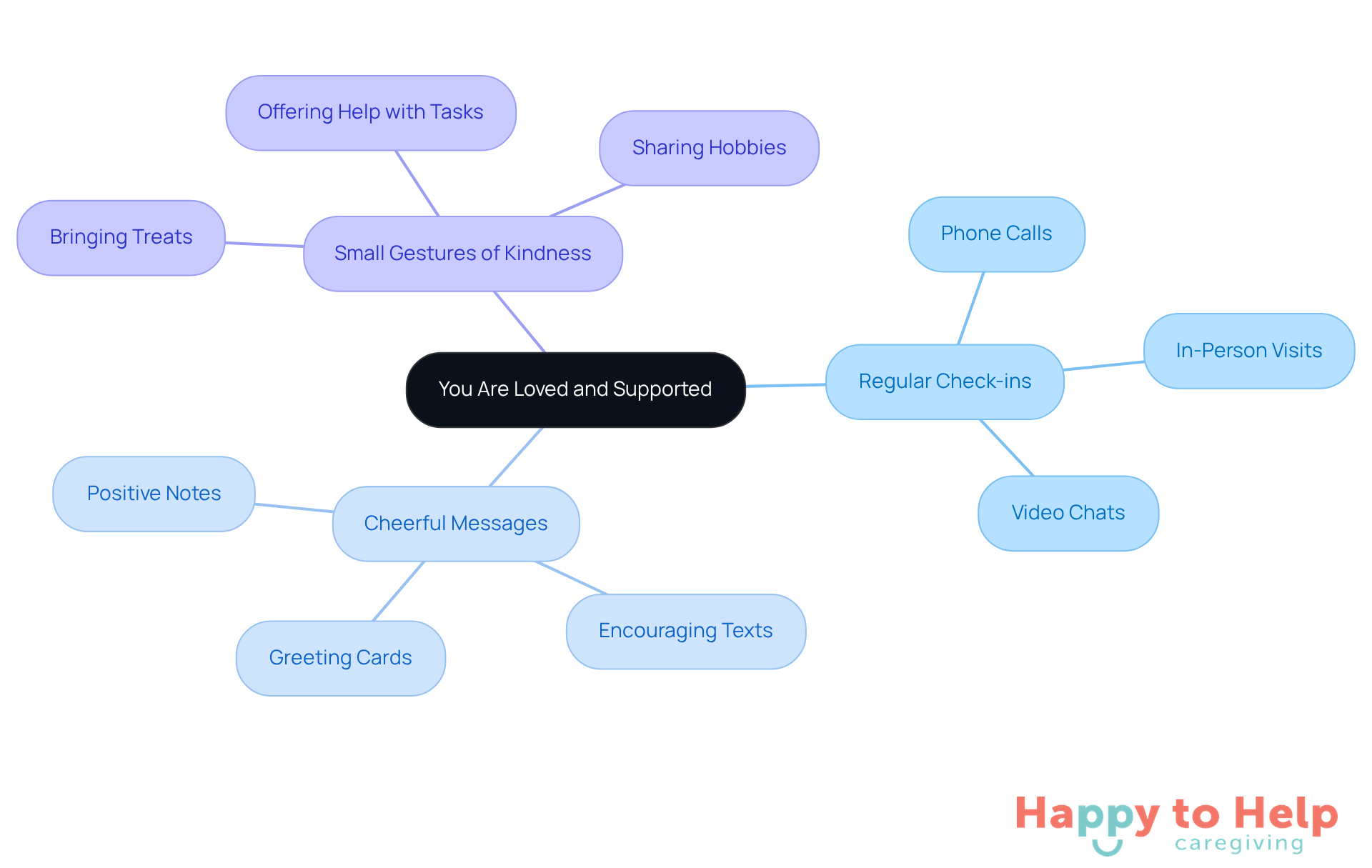
Cheerful messages for senior citizens that reassure older adults they are loved and supported can provide immense comfort. Such communication reinforces their sense of belonging, helping to alleviate feelings of isolation. Caregivers can implement simple yet effective strategies to convey this support, such as:
- Regular check-ins
- Cheerful messages for senior citizens
- Small gestures of kindness
By fostering an environment of love and reassurance, caregivers can play a vital role in enhancing the emotional health of older adults, ensuring they feel valued and connected.
Stay Hopeful and Positive
Encouraging older adults to embrace hope and positivity presents a significant challenge for caregivers. Many older adults face various life challenges that can lead to feelings of despair and isolation. Without a positive outlook, these individuals may struggle to navigate difficulties, which can exacerbate issues like depression and anxiety.
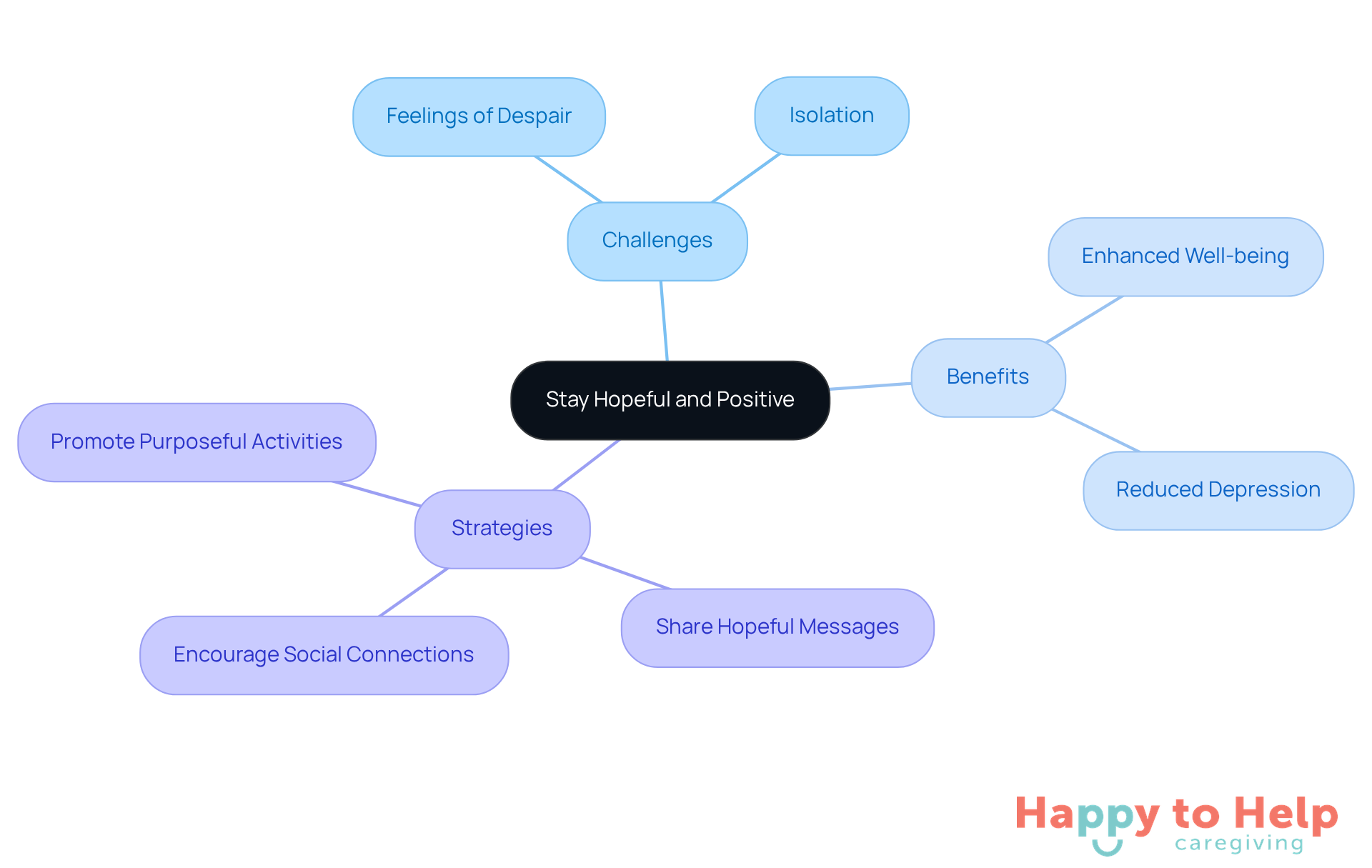
Research shows that a positive outlook can significantly enhance overall well-being. By fostering an attitude centered on positivity, older adults can handle challenges more effectively. Resilience is linked to reduced levels of depression and anxiety, making it crucial for caregivers to integrate positivity into daily interactions.
To support older adults, caregivers can implement the following strategies:
- Share hopeful messages that remind them brighter days are ahead.
- Encourage social connections to combat feelings of isolation.
- Promote activities that foster a sense of purpose and joy.
These approaches not only uplift spirits but also contribute to improved mental and physical health outcomes. By reinforcing the belief that older adults possess the inner strength to overcome obstacles, caregivers can play a vital role in enhancing their resilience.
Enjoy Your Day to the Fullest
Encouraging seniors to embrace each day with enthusiasm presents a significant challenge. Many older adults may struggle to find motivation, leading to a lack of participation in activities that could bring them joy. This not only diminishes their sense of purpose but can also impact their overall fulfillment.
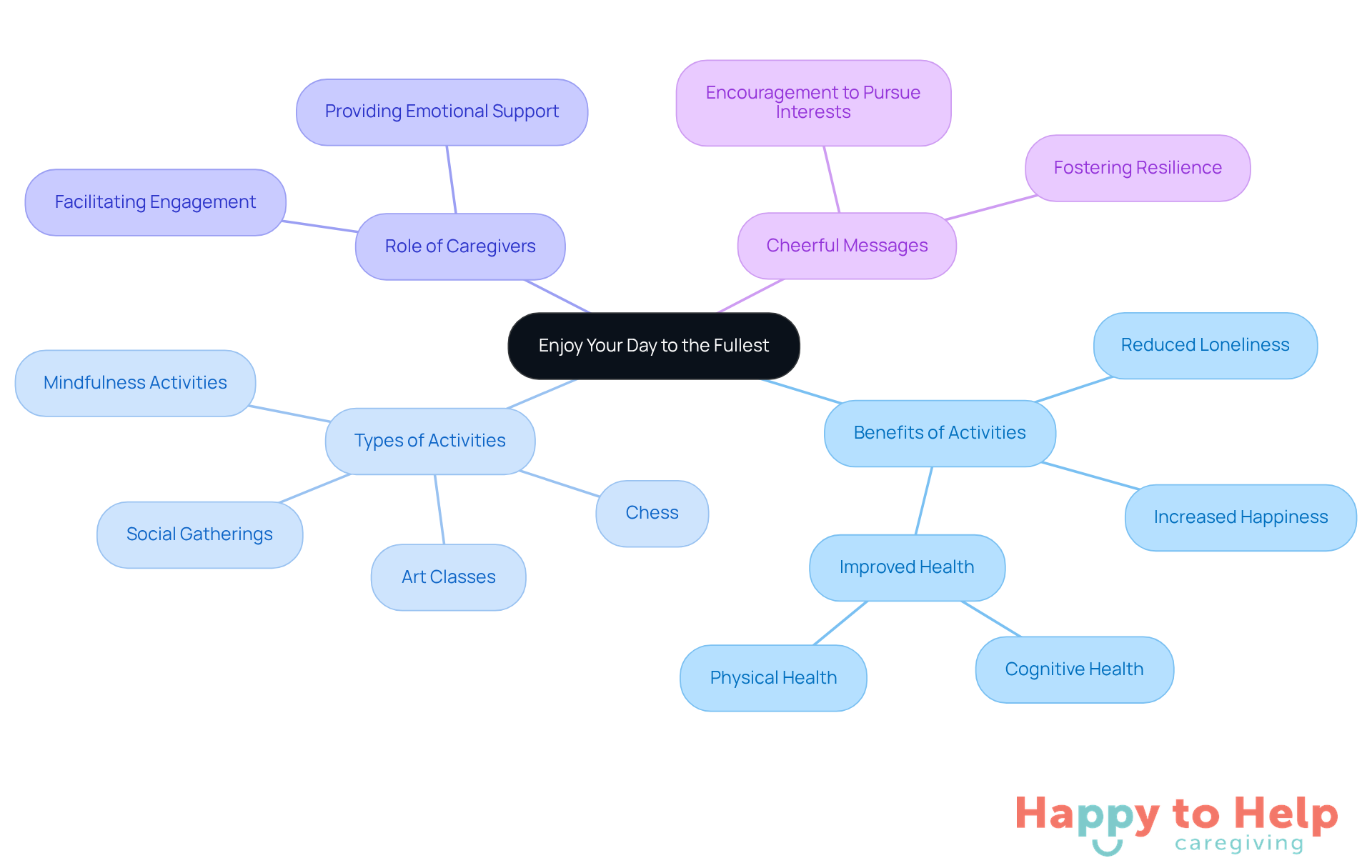
Studies reveal that seniors who engage in fulfilling activities report higher levels of happiness and contentment. In fact, maintaining an active lifestyle can significantly reduce the risk of cognitive impairments and chronic diseases, contributing to a longer, healthier life. Activities such as playing chess or joining art classes have been shown to increase satisfaction and alleviate symptoms of depression in older adults.
To address this issue, cheerful messages for senior citizens that encourage older adults to pursue their interests can lead to substantial improvements in emotional well-being. Specialists agree that cheerful messages for senior citizens are crucial for intentional living, as they foster resilience and a positive outlook. By focusing on activities that resonate with their passions, seniors can create a fulfilling daily routine that enriches their lives and supports their mental health.
Additionally, social interaction through these activities combats loneliness and provides essential emotional support. Caregivers can play a vital role by facilitating these engagements, ensuring that seniors not only participate but thrive in their chosen activities.
Taking the Next Steps
Loneliness among senior citizens is a significant issue that can severely impact their emotional well-being. Cheerful messages serve as a vital tool in combating this loneliness, reminding older adults that they are cherished and valued. By expressing warmth and positivity, these messages uplift spirits and foster a sense of belonging through nurturing connections.
The implications of loneliness are profound, affecting seniors' mental health and overall quality of life. Positive interactions can encourage participation in social activities and celebrate their wisdom and contributions. Caregivers play a crucial role in this process, employing strategies that include:
- Reminiscing about joyful moments
- Expressing gratitude
- Promoting friendships
These actionable approaches can make a significant difference in the lives of older adults.
To address the challenges of loneliness, caregivers should actively engage with seniors through uplifting communications. This engagement not only helps seniors embrace joy and purpose but also fosters resilience and reduces feelings of isolation. Recognizing the power of kindness and support is essential in enriching the lives of seniors, making every day a little brighter and more meaningful.
https://iframe.tely.ai/cta/eyJhcnRpY2xlX2lkIjogIjY5M2Y1MDlhYzVjNjk0NTk3NDczMjcwNSIsICJjb21wYW55X2lkIjogIjY4ZWU1ZGNhNzMxNzYyNTU3ZjNjOTVjMSIsICJpbmRleCI6IG51bGwsICJ0eXBlIjogImFydGljbGUifQ==Frequently Asked Questions
What are the main challenges faced by elderly individuals regarding emotional well-being?
Elderly individuals often face loneliness and isolation, which significantly impact their emotional well-being.
How can cheerful messages affect senior citizens?
Cheerful messages wishing for sunshine and smiles can uplift the spirits of senior citizens, conveying warmth and positivity, and reminding them that they are cherished.
What is the relationship between social activities and depression in older adults?
Participation in social activities is associated with a 0.35 point lower depression score compared to non-participants, highlighting the importance of positive interactions in combating loneliness.
What role do caregivers play in alleviating loneliness among the elderly?
Caregivers can encourage sending heartfelt messages to elderly individuals, which can brighten their day and promote mental health by nurturing positive emotions.
Why is it important for older adults to engage in social activities?
Engaging in social activities is vital for older adults as it helps combat loneliness and enhances their overall emotional health.
What is reminiscence therapy (RT) and how does it help older adults?
Reminiscence therapy (RT) is a non-pharmacological treatment that encourages older adults to recall joyful moments from their past, enhancing mood and fostering connections with caregivers and family members.
What are some actionable tips for caregivers to help older adults reminisce?
Caregivers can initiate memory recall activities, engage in storytelling, and utilize memory care activities such as looking through old photographs or discussing past hobbies to uplift the spirits of older adults.
How does reminiscing benefit older adults?
Reminiscing can enhance mood, elevate self-worth, and assist older adults in reflecting on the richness of their experiences, leading to a more fulfilling life.
List of Sources
- Wishing You Sunshine and Smiles
- The impact of positive activities on mental health: the mediating role of positive emotion - PMC (https://pmc.ncbi.nlm.nih.gov/articles/PMC11666427)
- Does anyone have any happy news to share? (https://agingcare.com/questions/does-anyone-have-any-happy-news-to-share-478829.htm)
- Positive messages enhance older adults’ motivation and recognition memory for physical activity programmes - PMC (https://pmc.ncbi.nlm.nih.gov/articles/PMC5550637)
- The Good News Network: Positive Stories 24/7 (https://goodnewsnetwork.org)
- Frontiers | The impact of social activities on mental health among older adults in China (https://frontiersin.org/journals/public-health/articles/10.3389/fpubh.2024.1422246/full)
- Sending You Hugs and Happy Thoughts
- The Amazing Benefits of Hugs for Seniors (https://hiredhandshomecare.com/the-incredible-benefits-of-hugs-for-seniors)
- Help Change a Senior’s Health with a Hug (https://jfscare.org/blog/how-a-hug-change-a-seniors-health)
- The Incredible Senior Health Benefits Gained Through a Simple Hug (https://amyshelpinghands.ca/family-caregiver-tips-177/the-incredible-senior-health-benefits-gained-through-a-simple-hug)
- The Benefits of Human Contact: Hugs and Senior Health (https://goldenharmonync.com/hugs-and-senior-health)
- Remembering the Joyful Moments
- 15 Wise and Inspiring Quotes About Aging (https://psychologytoday.com/us/blog/fulfillment-at-any-age/201201/15-wise-and-inspiring-quotes-about-aging)
- (https://belleviecare.co.uk/support-advice/60-elderly-care-quotes-to-lift-your-spirits)
- Effectiveness of reminiscence therapy on multiple health outcomes for older adults: an umbrella review - PMC (https://pmc.ncbi.nlm.nih.gov/articles/PMC12587503)
- The Benefits of Reminiscing - 50 Plus News and Views Magazine (https://50plusnewsandviews.com/the-benefits-of-reminiscing)
- The Benefits of Nostalgia Activities for Seniors (https://yumaseniorliving.com/post/the-benefits-of-nostalgia-activities-for-seniors)
- Celebrating Your Wisdom and Kindness
- Find out how you can celebrate National Senior Citizens Day (https://nbcdfw.com/news/local/national-senior-citizens-day-celebrate/3907705)
- National Senior Citizens Day is coming with a chance to recognize lifelong contributions (https://southtexasnews.com/brenham\_banner\_press/news/national-senior-citizens-day-is-coming-with-a-chance-to-recognize-lifelong-contributions/article\_53773d91-d19f-5b06-bc6a-0af20d1a7dbc.html)
- Celebrating Seniors: National Senior Citizens Day offers chance to recognize lifelong contributions - Dalton Daily Citizen (https://daltoncitizen.com/2025/08/20/celebrating-national-senior-citizens-day-offers-chance-to-recognize-lifelong-contributions)
- Celebrating Seniors | Senior Citizen’s Day (https://benedictineliving.org/resources/news/celebrating-purpose-at-every-age-how-seniors-continue-to-inspire-and-lead)
- Happy National Senior Citizen’s Day! A time to respect, cherish, and celebrate our seniors (https://griceconnect.com/senior-moments/happy-national-senior-citizens-day-a-time-to-respect-cherish-and-celebrate-our-seniors-11102482)
- Cherishing Our Friendship Always
- Friendship can be an important lifeline for older adults without children (https://medicalxpress.com/news/2025-12-friendship-important-lifeline-older-adults.html)
- Lending a hand to close friends boosts daily mood in older adults (https://news.umich.edu/lending-a-hand-to-close-friends-boosts-daily-mood-in-older-adults)
- UNH Research Finds Friendship Can Be an Important Lifeline For Older Adults Without Children (https://unh.edu/unhtoday/news/release/2025/12/04/unh-research-finds-friendship-can-be-important-lifeline-older-adults-without)
- Friendship, helping people boosts happiness for older adults - UPI.com (https://upi.com/Health\_News/2025/10/19/friendship-happiness-aging/3721760894904)
- Friendships Are Especially Powerful Late in Life, Poll Says (https://usnews.com/news/health-news/articles/2024-12-16/friendships-are-especially-powerful-late-in-life-poll-says)
- Embrace Each Day with Joy
- With Age Comes Happiness: Here's Why (https://scientificamerican.com/article/with-age-comes-happiness-here-s-why)
- Where Do the World's Happiest Older Adults Live? (https://aarp.org/family-relationships/world-happiness-report)
- 4 positive news stories about older people that will raise a smile (https://thegoodcaregroup.com/news/4-positive-news-stories-about-older-people-will-raise-smile)
- Oldest Americans have highest happiness, lowest depression, study finds (https://mcknights.com/news/oldest-americans-have-highest-happiness-lowest-depression-study-finds)
- Finding Joy in Life's Little Moments
- Joy and purpose make for a longer life full of better years. Aging expert explains how to get them | CNN (https://cnn.com/2025/07/09/health/hobbies-social-longevity-wellness)
- What Role Does Gratitude Play in Aging Well? (https://ncoa.org/article/the-many-gifts-of-gratitude)
- Unlocking Happiness in Retirement: Wellness Benefits of Senior Living (https://presbyterianseniorliving.org/blog/unlocking-happiness-in-retirement)
- How Seniors Can Find Joy In Their Daily Life (https://discoveryvillages.com/senior-living-blog/how-seniors-can-find-joy-in-their-daily-life)
- You Are Loved and Supported
- Why a Family Support System is Important for the Elderly | Liberty Home Care and Hospice (https://libertyhomecareandhospice.com/why-a-family-support-system-is-important-for-the-elderly)
- The Importance Of Love As We Age (https://tributeseniorliving.com/the-importance-of-love-as-we-age)
- Health Benefits of Love & Connection for Seniors in Long-Term Care | Shaughnessy Seniors Community (https://shaughnessyseniors.com/news/health-benefits-of-love-connection-for-seniors-in-long-term-care)
- The Value of Friendships as We Age (https://ihpi.umich.edu/national-poll-healthy-aging/national-findings/value-friendships-we-age)
- Summary - Social Isolation and Loneliness in Older Adults - NCBI Bookshelf (https://ncbi.nlm.nih.gov/books/NBK557972)
- Stay Hopeful and Positive
- Resilience, successful aging, and hope in hospitalized older people - PMC (https://pmc.ncbi.nlm.nih.gov/articles/PMC12551435)
- Embracing Resilience: A New Perspective on Aging (https://psychologytoday.com/us/blog/the-psychology-of-aging/202401/embracing-resilience-a-new-perspective-on-aging)
- The effect of positive thinking on resilience and life satisfaction of older adults: a randomized controlled trial - Scientific Reports (https://nature.com/articles/s41598-023-30684-y)
- THE POWER OF RESILIENCE: INSPIRATIONAL STORIES OF SENIORS WHO BOUNCED BACK (https://medium.com/@ron\_96552/the-power-of-resilience-inspirational-stories-of-seniors-who-bounced-back-8d236e457160)
- For older adults, ‘hope’ may be a key piece for improving health, psychological and social well-being (https://news.vcu.edu/article/for\_older\_adults\_hope\_may\_be\_a\_key\_piece\_for\_improving\_health)
- Enjoy Your Day to the Fullest
- The Benefits of Engaging Recreational Activities for Seniors (https://brooklynheightssl.com/blog/the-benefits-of-engaging-recreational-activities-for-seniors)
- Participating in Activities You Enjoy As You Age (https://nia.nih.gov/health/healthy-aging/participating-activities-you-enjoy-you-age)
- Health Benefits of Recreation for Seniors | Improve Senior Wellness (https://benedictineliving.org/resources/news/more-than-just-fun-how-recreational-activities-enhance-well-being-for-seniors)
- How Purposeful Living for Seniors Inspires Health and Lasting Joy (https://hiredhandshomecare.com/the-life-changing-benefits-of-purposeful-living-for-seniors)