10 Engaging Intergenerational Activities for Seniors and Youth
For families in our service areas
For families in our service areas, this guide explains caregiving and how non-medical in-home caregiving can support care planning in East Idaho, Treasure Valley & Magic Valley, Northern Wasatch, North Central West Virginia & Southwestern Pennsylvania, and Northeast Ohio.
What You Need to Know About 10 Engaging Intergenerational Activities
Engaging across generations is crucial as society faces a growing disconnect between seniors and youth. This gap risks not only the erosion of invaluable life lessons but also deprives younger individuals of the rich experiences that older adults can share.
To address this issue, caregivers can explore a variety of intergenerational activities - from storytelling sessions to collaborative gardening. These initiatives can foster meaningful connections and enhance emotional well-being for everyone involved.
But how can caregivers effectively bridge this divide? Here are some actionable solutions:
- Storytelling Sessions: Encourage seniors to share their life stories, providing younger individuals with insights and wisdom.
- Collaborative Gardening: Create opportunities for both age groups to work together, promoting teamwork and shared experiences.
- Skill-Sharing Workshops: Organize sessions where seniors can teach skills, such as cooking or crafting, to younger participants.
By implementing these strategies, caregivers can create lasting bonds between age groups, enriching the lives of both seniors and youth.
Storytelling Sessions: Bridging Generations Through Shared Narratives
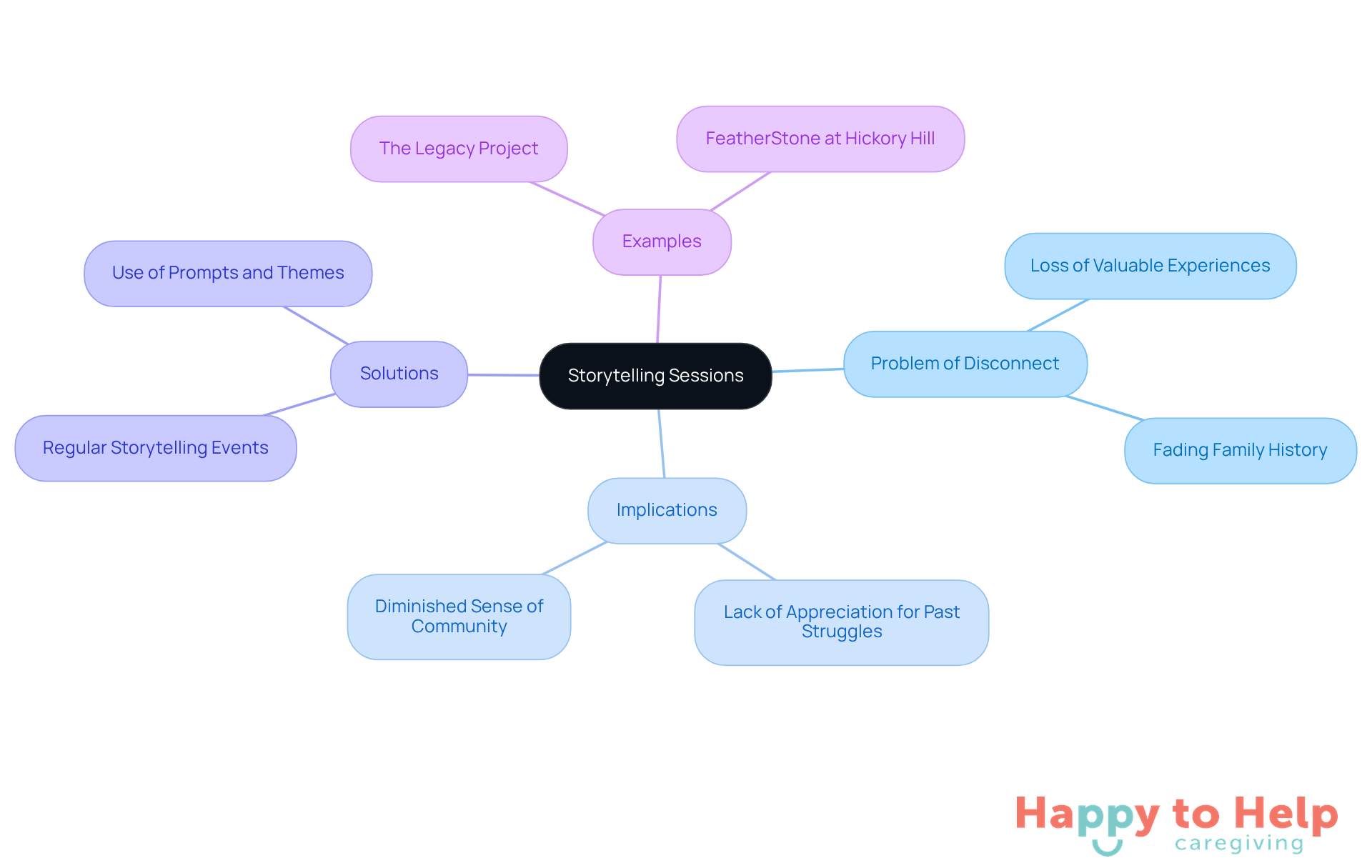
Storytelling sessions highlight a significant problem: the disconnect between older individuals and younger generations. This gap can lead to a loss of valuable life experiences and lessons that elders have to offer. Without these connections, family history may fade, and young people might miss out on understanding the resilience and wisdom of their elders.
The implications of this disconnect are profound. Young people may lack appreciation for the struggles and triumphs of previous generations, leading to a diminished sense of community and shared identity. Regular storytelling events can serve as a solution by promoting intergenerational activities for seniors and youth, fostering engagement and understanding between age groups. By encouraging both older individuals and younger participants to share their narratives, these sessions can strengthen familial bonds and community ties.
Utilizing prompts or themes during storytelling can enhance participation, making it easier for everyone to connect. Programs like the Legacy Project exemplify effective storytelling initiatives, where students record the life narratives of older adults. This not only preserves history but also fosters enduring connections and mutual respect.
Experts in gerontology emphasize that storytelling is a vital tool for reinforcing identity and connection. It allows older adults to reflect on significant life moments while nurturing empathy and understanding across generations. By implementing regular storytelling sessions as intergenerational activities for seniors and youth, caregivers can bridge the generational gap, ensuring that valuable lessons and experiences are passed down.
Arts and Crafts: Creative Collaboration for All Ages
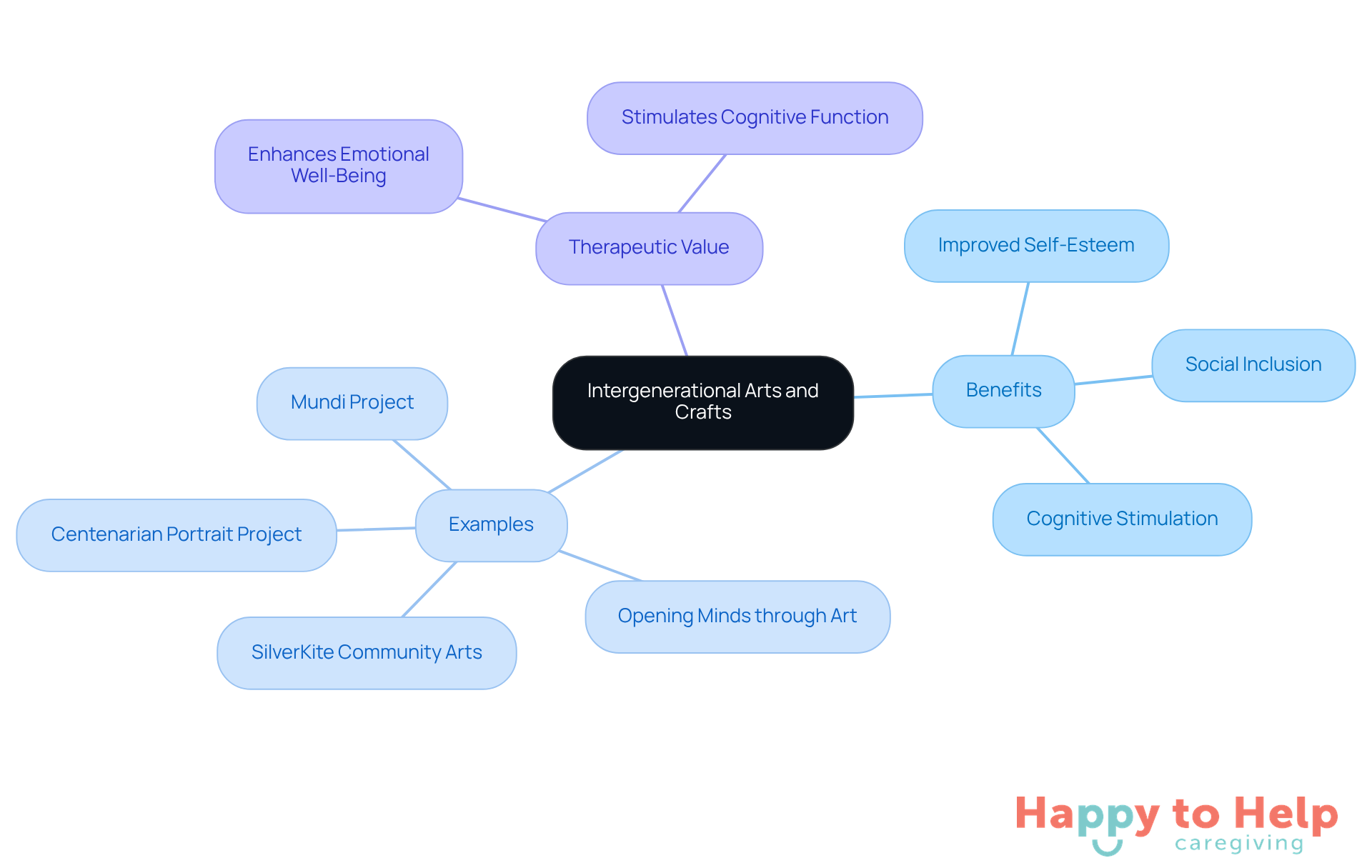
Arts and crafts projects offer intergenerational activities for seniors and youth to collaborate creatively, addressing the problem of ageism and fostering connections across generations. Engaging in intergenerational activities for seniors and youth, like painting, scrapbooking, or creating greeting cards, not only promotes artistic expression but also enhances relationships between different age groups. These projects can be tailored to accommodate varying abilities, ensuring that every participant can contribute meaningfully.
Research shows that intergenerational activities for seniors and youth significantly benefit both groups. For example, the Centenarian Portrait Project connected 465 centenarians with teenage artists, effectively combating ageism and fostering understanding through shared creative experiences. Additionally, initiatives like Opening Minds through Art (OMA) have demonstrated positive impacts on engagement and well-being for individuals living with dementia, underscoring the therapeutic value of creative collaboration.
Art therapists emphasize the importance of these age-diverse activities, noting that they stimulate cognitive function and enhance emotional well-being. Through arts and crafts, older individuals can experience improved self-esteem and social inclusion, while young people gain valuable insights and empathy towards previous generations. Successful intergenerational activities for seniors and youth, such as those facilitated by SilverKite Community Arts and the Mundi Project, exemplify how creativity can bridge generational gaps, enriching the lives of all involved.
Cooking and Baking: Nourishing Connections Through Culinary Experiences
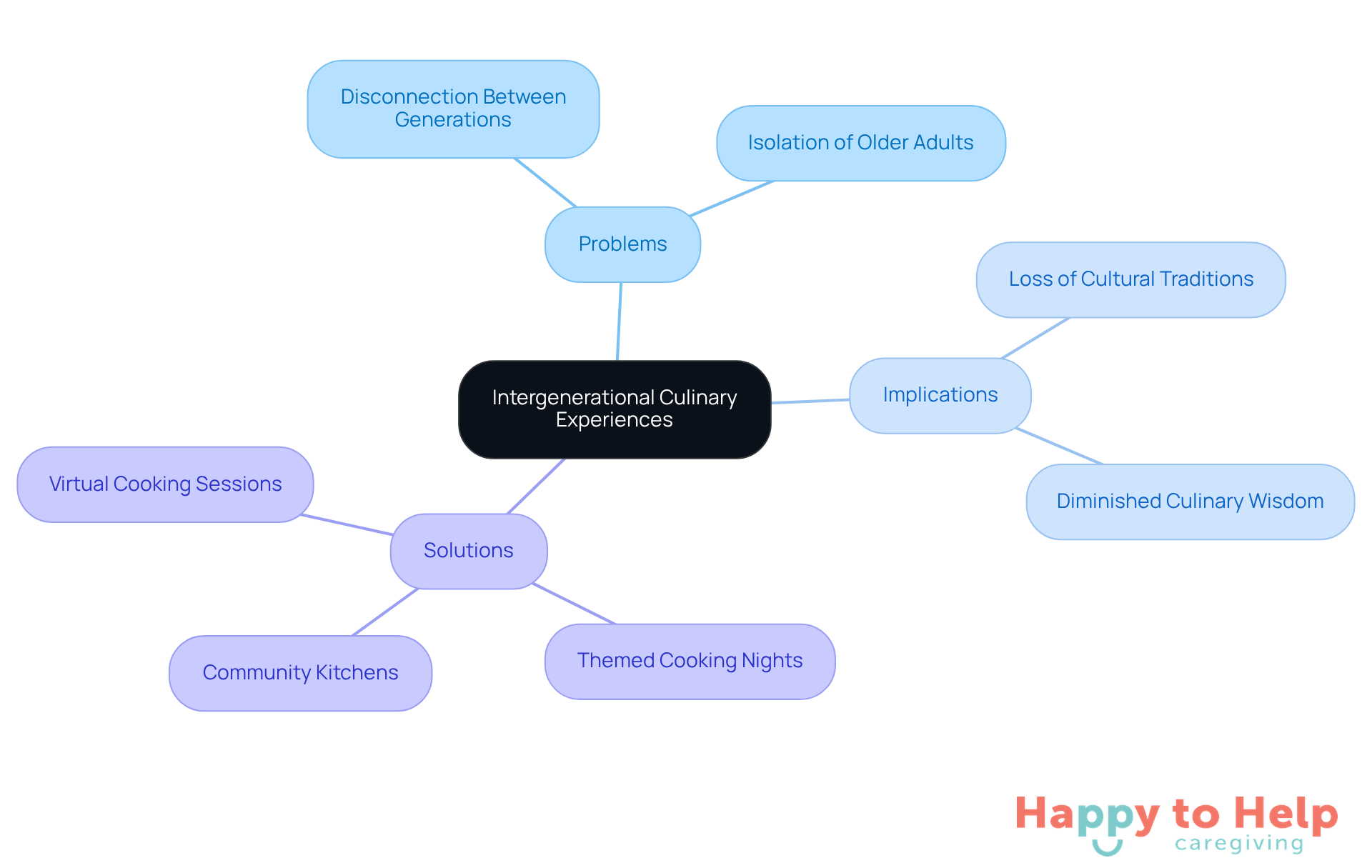
Cooking and baking together can be seen as intergenerational activities for seniors and youth that address a significant problem: the disconnection between older adults and youth. This lack of interaction can lead to weakened family bonds and a diminished sense of belonging. Engaging in intergenerational activities for seniors and youth through collaborative culinary activities not only nourishes the body but also strengthens vital connections.
The implications of this disconnection are profound. Without engaging in intergenerational activities for seniors and youth to share experiences, older adults may feel isolated, while younger generations miss out on valuable cultural traditions and culinary wisdom. Cooking together provides a platform for storytelling, allowing older adults to pass down cherished family recipes and techniques.
So, how can caregivers promote intergenerational activities for seniors and youth to foster these enriching experiences? Here are some actionable solutions:
- Host themed cooking nights or friendly baking competitions to infuse excitement and encourage participation.
- Utilize community kitchens that connect teens with older adults, promoting cross-generational interactions.
- Explore virtual cooking sessions, especially in the wake of COVID-19, to create adaptable bonding opportunities for families.
As Nella Gerhold aptly states, "The act of cooking, sharing, and eating meals is not only a necessity but also a powerful emotional and cultural connector." By implementing these strategies, caregivers can enhance mood, cognitive abilities, and trust across generations, ultimately enriching the lives of all participants.
Outdoor Adventures: Exploring Nature Together for Lasting Bonds
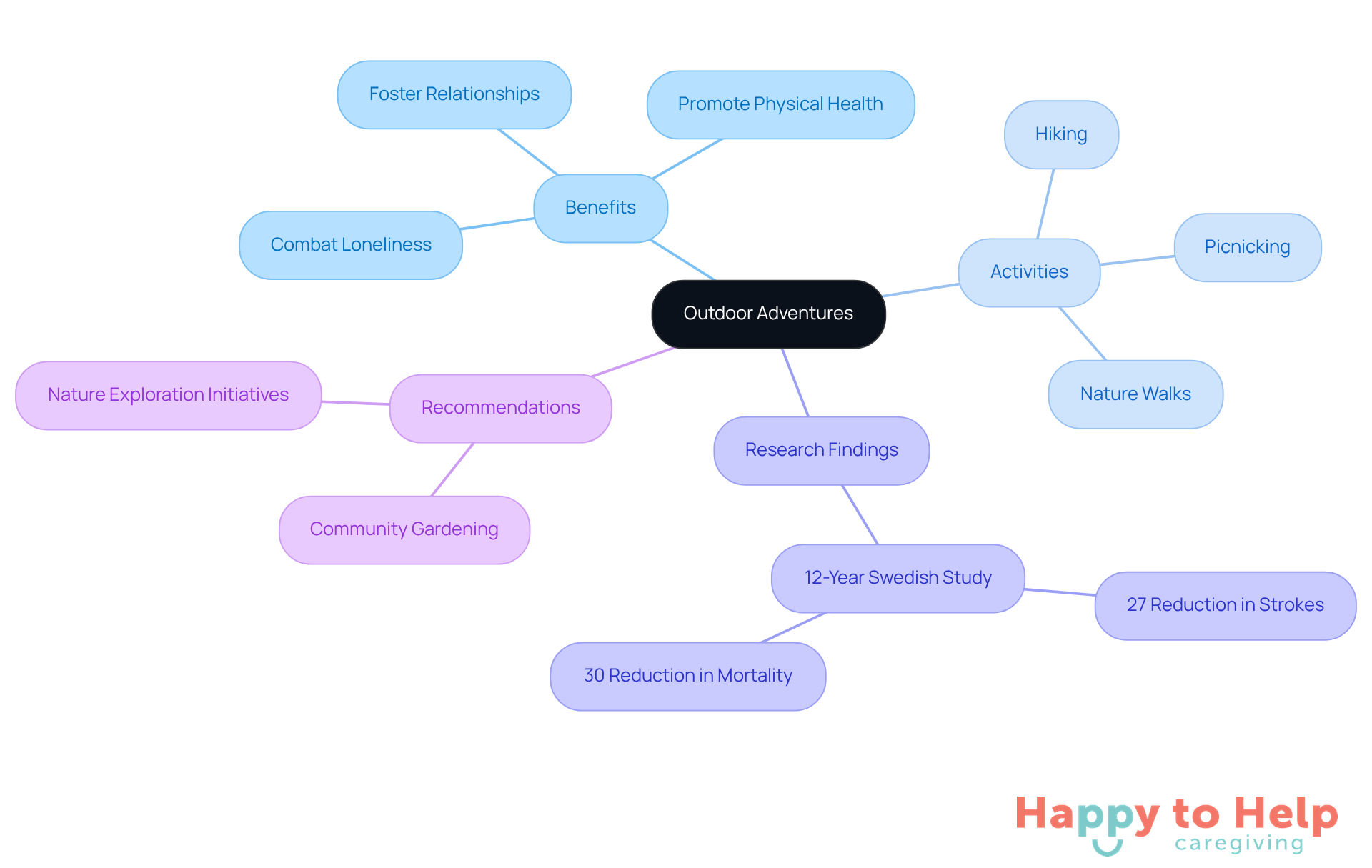
Outdoor adventures like hiking, picnicking, and nature walks present a significant opportunity to address the problem of loneliness among older adults. Intergenerational activities for seniors and youth not only promote physical health but also create a relaxed environment for meaningful conversations across generations. Shared experiences in nature can greatly improve relationships, fostering lasting memories and reinforcing connections.
Research highlights the implications of this issue. For instance, a 12-year Swedish study found that older individuals engaging in moderate outdoor activities experienced a 27 percent decrease in strokes and a 30 percent decline in overall mortality. This underscores the heart-protective advantages of gentle outdoor pastimes, making them ideal for family outings.
To combat loneliness and enhance intergenerational relationships, successful outdoor programs, such as community gardening and nature exploration initiatives, serve as effective intergenerational activities for seniors and youth. These programs encourage collaboration and communication, allowing participants to learn from one another while enjoying nature's benefits. Environmental psychologists note that nature's calming effects can enhance empathy and understanding between generations, making outdoor adventures ideal for intergenerational activities for seniors and youth to nurture these connections.
Regularly planning outings to local parks or nature reserves can further promote physical activity and cultivate a sense of community. Families can explore nearby green spaces together, discovering the joy of nature, which is especially vital in today's fast-paced world. By prioritizing intergenerational activities for seniors and youth, families can create a supportive atmosphere that enriches the lives of both older adults and young people.
Games and Puzzles: Engaging Minds Across Generations
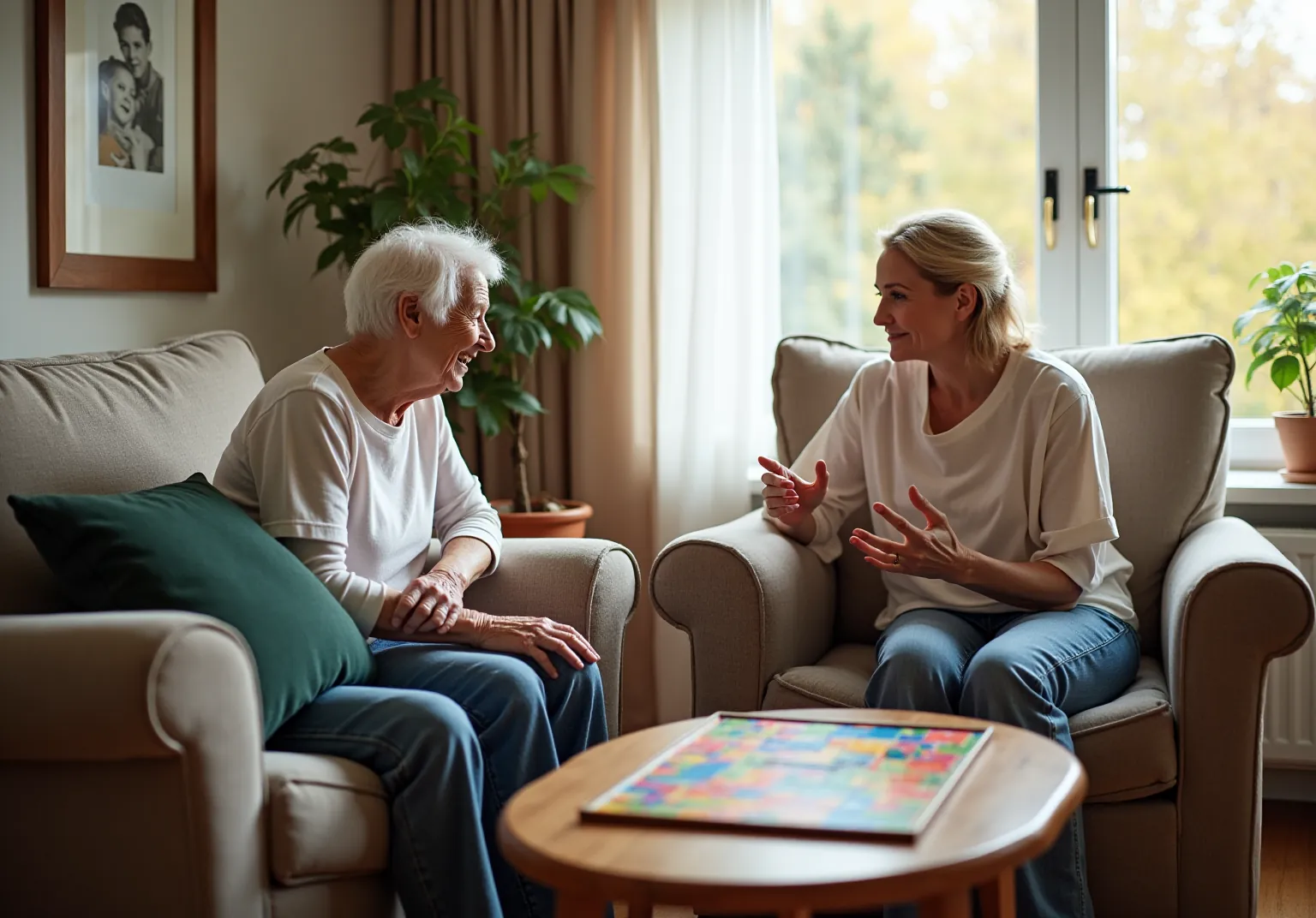
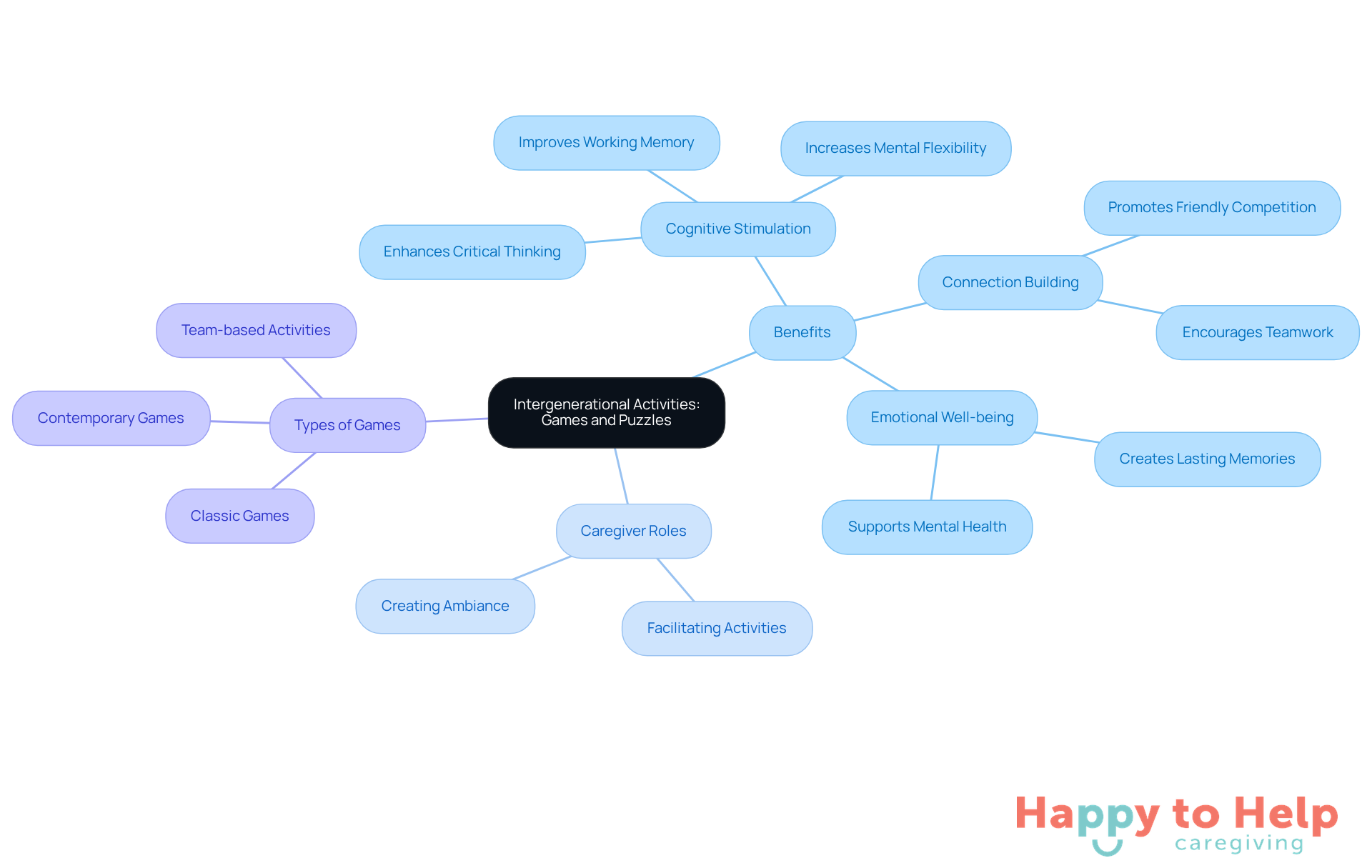
Engaging in games and puzzles as part of intergenerational activities for seniors and youth presents a significant challenge for caregivers seeking to connect these groups. Without intergenerational activities for seniors and youth, opportunities for fun and cognitive development may be lost, resulting in a disconnect between generations. Research shows that nearly half of all Baby Boomers are now participating in video games, primarily for mental stimulation. This trend highlights the growing appeal of intergenerational activities for seniors and youth among older adults, emphasizing the need for caregivers to facilitate these interactions.
To address this issue, caregivers can create a lively ambiance by arranging intergenerational activities for seniors and youth, including game nights or puzzle contests. These events not only promote friendly competition but also enhance connections through intergenerational activities for seniors and youth. Child development specialists emphasize that games activate multiple regions of the brain, providing meaningful cognitive stimulation. This stimulation enhances critical thinking, working memory, and mental flexibility, making game nights enjoyable and beneficial for all ages.
Successful intergenerational activities for seniors and youth can be organized by selecting a combination of classic and contemporary games that engage both older adults and younger individuals. Incorporating elements that encourage teamwork and collaboration can further enhance the experience, ensuring that everyone feels included and engaged. By prioritizing intergenerational activities for seniors and youth, families can create lasting memories while supporting cognitive health and emotional well-being.
Gardening: Cultivating Relationships Through Shared Green Spaces
Gardening presents a unique challenge: many older adults and young people often feel isolated and disconnected from their communities. This lack of interaction can lead to feelings of loneliness and a diminished sense of purpose.
However, gardening offers a practical solution. By participating in intergenerational activities for seniors and youth, such as caring for plants and flowers, individuals of all ages can engage physically and emotionally, fostering a sense of accomplishment and connection.
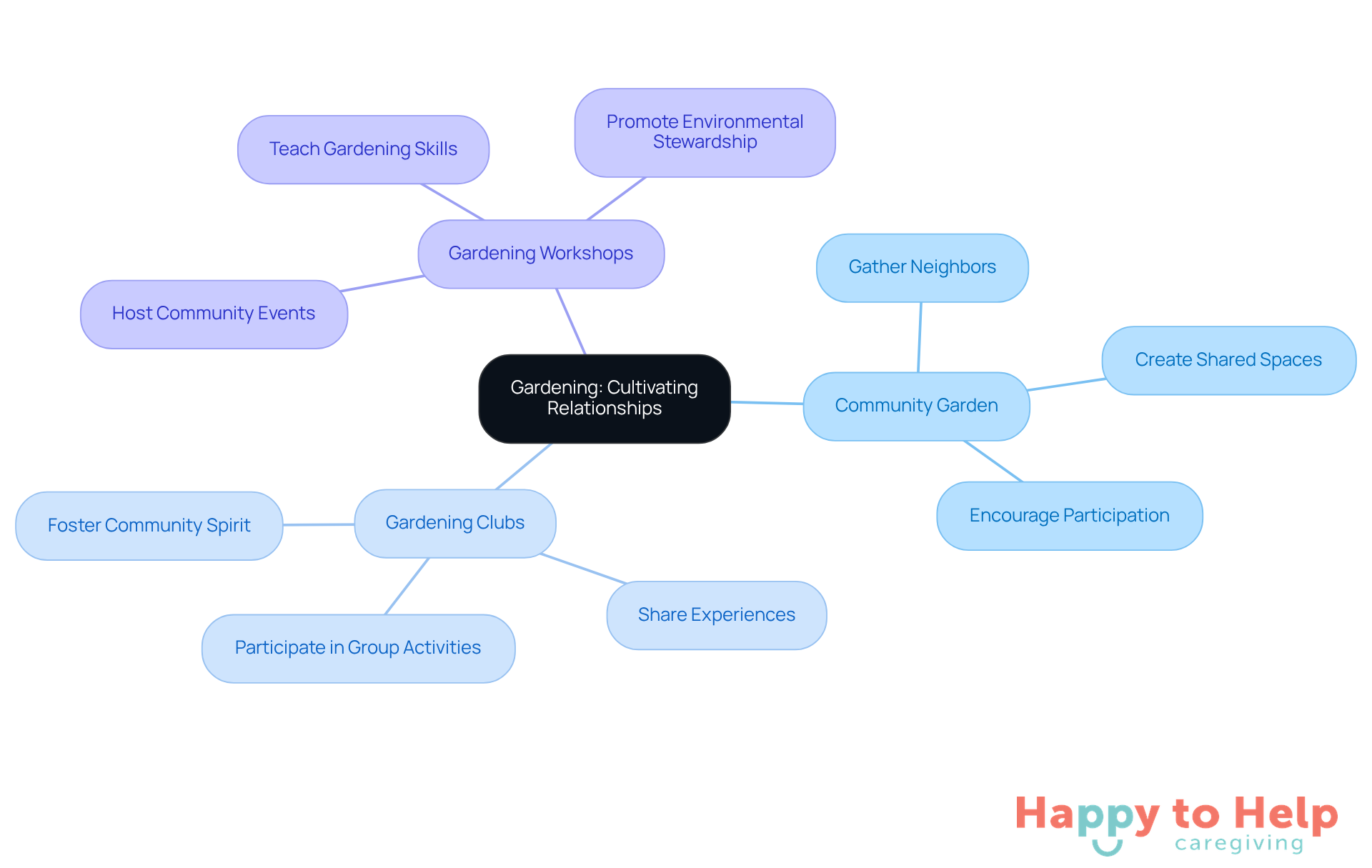
Creating a community garden or joining local gardening clubs can serve as intergenerational activities for seniors and youth to encourage this collaboration. These initiatives not only provide opportunities for shared learning but also promote environmental stewardship.
Incorporating gardening into community activities can significantly enhance social bonds and improve overall well-being. Here are some actionable tips for caregivers:
- Start a community garden: Gather neighbors and friends to cultivate a shared space.
- Join local gardening clubs: Participate in group activities to learn and share experiences.
- Host gardening workshops: Organize events to teach gardening skills and foster community spirit.
By embracing gardening as an example of intergenerational activities for seniors and youth, caregivers can help bridge the gap between generations, creating a vibrant community where everyone thrives.
Happy to Help Caregiving: Supporting Intergenerational Connections
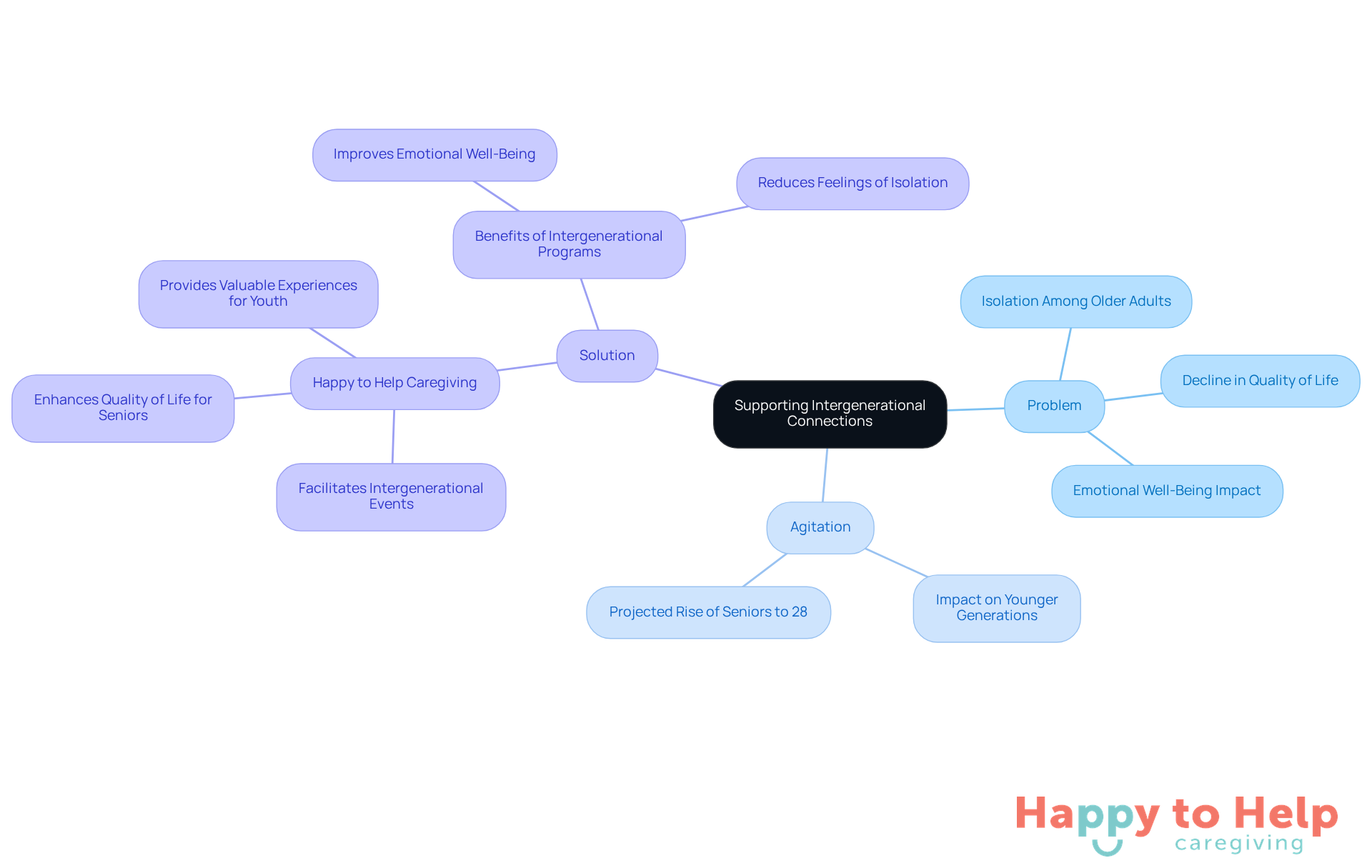
Problem: Isolation among older adults is a significant issue that affects their emotional well-being. Many seniors experience loneliness, which can lead to a decline in their quality of life.
Agitation: This isolation not only impacts their mental health but also deprives younger generations of the wisdom and experiences that older adults can share. As the population of Americans aged 65 and older is projected to rise to 28% in the next 30 years, the urgency to address this problem becomes increasingly critical.
Solution: Happy to Help Caregiving addresses this challenge by utilizing skilled caregivers who coordinate and actively participate in intergenerational events. These caregivers connect older adults with young people, ensuring activities are accessible and enjoyable for everyone involved.
By fostering intergenerational activities for seniors and youth, Happy to Help Caregiving enhances the quality of life for seniors while also providing younger participants with valuable experiences. Programs that promote intergenerational interactions have been shown to improve emotional well-being and reduce feelings of isolation among older adults.
Carma Matti-Jackson, CEO of the Washington Health Care Association, emphasizes this point: "Seniors gain companionship and purpose, while children learn valuable lessons from their elders."
Happy to Help Caregiving's commitment to supporting family engagement through these initiatives not only enriches the lives of its clients but also strengthens the fabric of the community.
Reminiscing: Sharing Memories to Strengthen Intergenerational Bonds
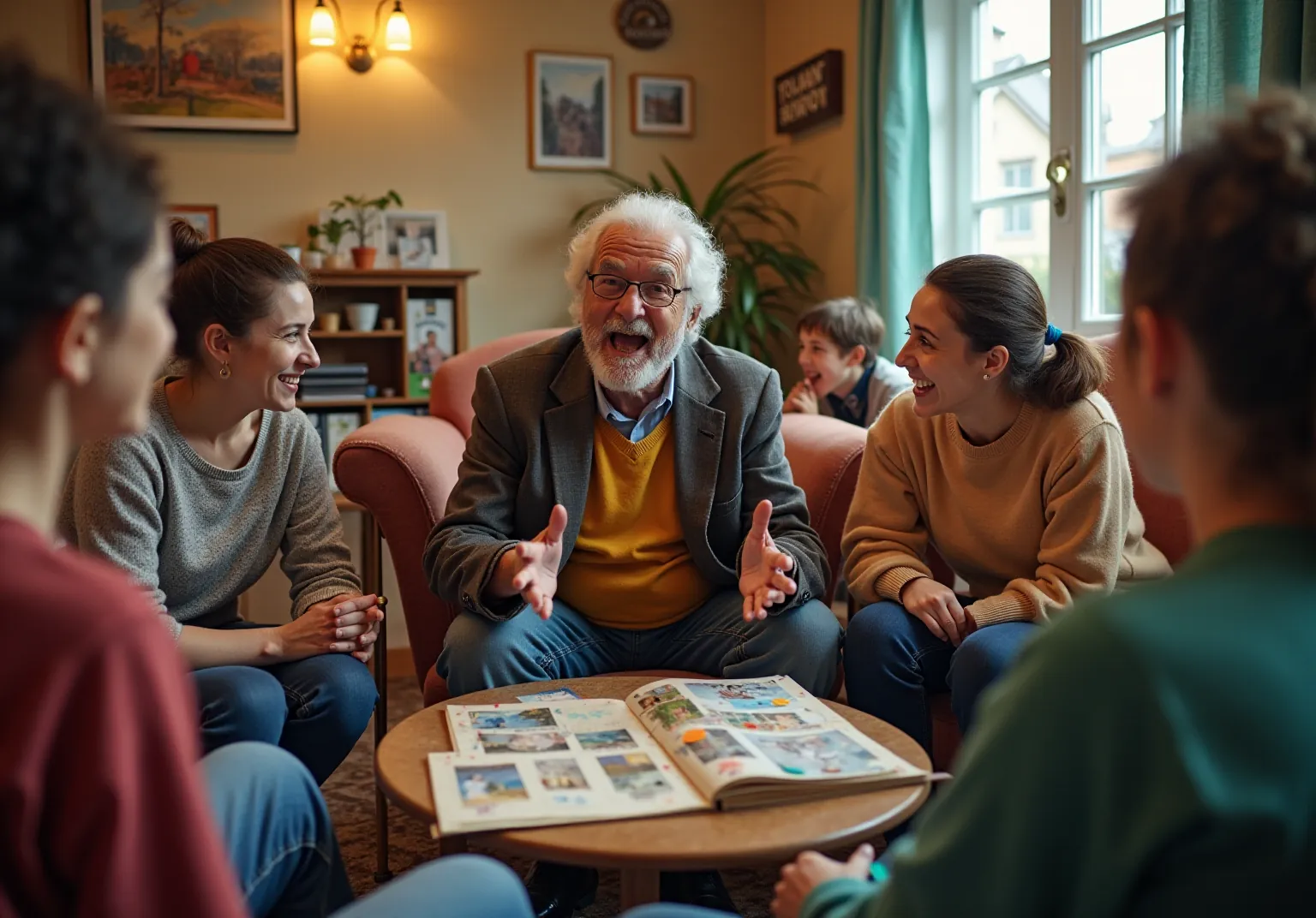
Recollecting experiences presents a significant challenge for older adults who wish to participate in intergenerational activities for seniors and youth by sharing their life stories. This disconnect can lead to a loss of valuable insights and emotional connections. Without these exchanges, the gap created by modern lifestyles widens, leaving both age groups feeling isolated.
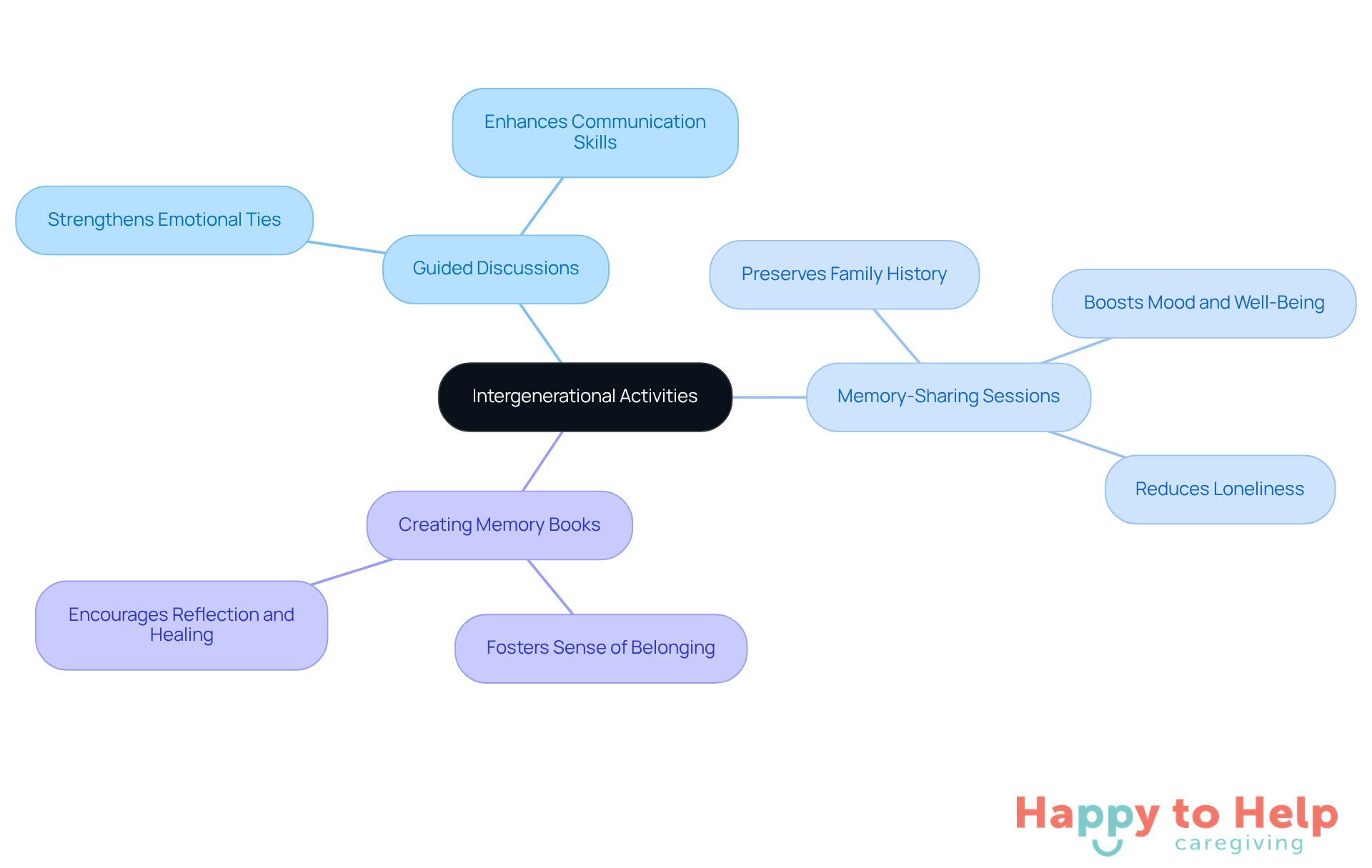
Engaging in intergenerational activities for seniors and youth, including:
- Guided discussions
- Memory-sharing sessions
- Collaboratively creating memory books
can bridge this gap. Encouraging young people to participate in intergenerational activities for seniors and youth by asking questions and delving into conversations about the past enriches their understanding and strengthens emotional ties. Intergenerational activities for seniors and youth foster a sense of belonging and continuity, which are essential for both older adults and younger individuals.
Effective memory-sharing programs have shown that such engagements can greatly improve relationships. They offer important insights and viewpoints that benefit both age groups. Experts emphasize that intergenerational activities for seniors and youth are crucial for emotional well-being, as they help to preserve family history and create lasting bonds. By implementing memory-sharing initiatives, caregivers can enhance the quality of interactions between generations.
Structured Intergenerational Programs: Creating Lasting Connections
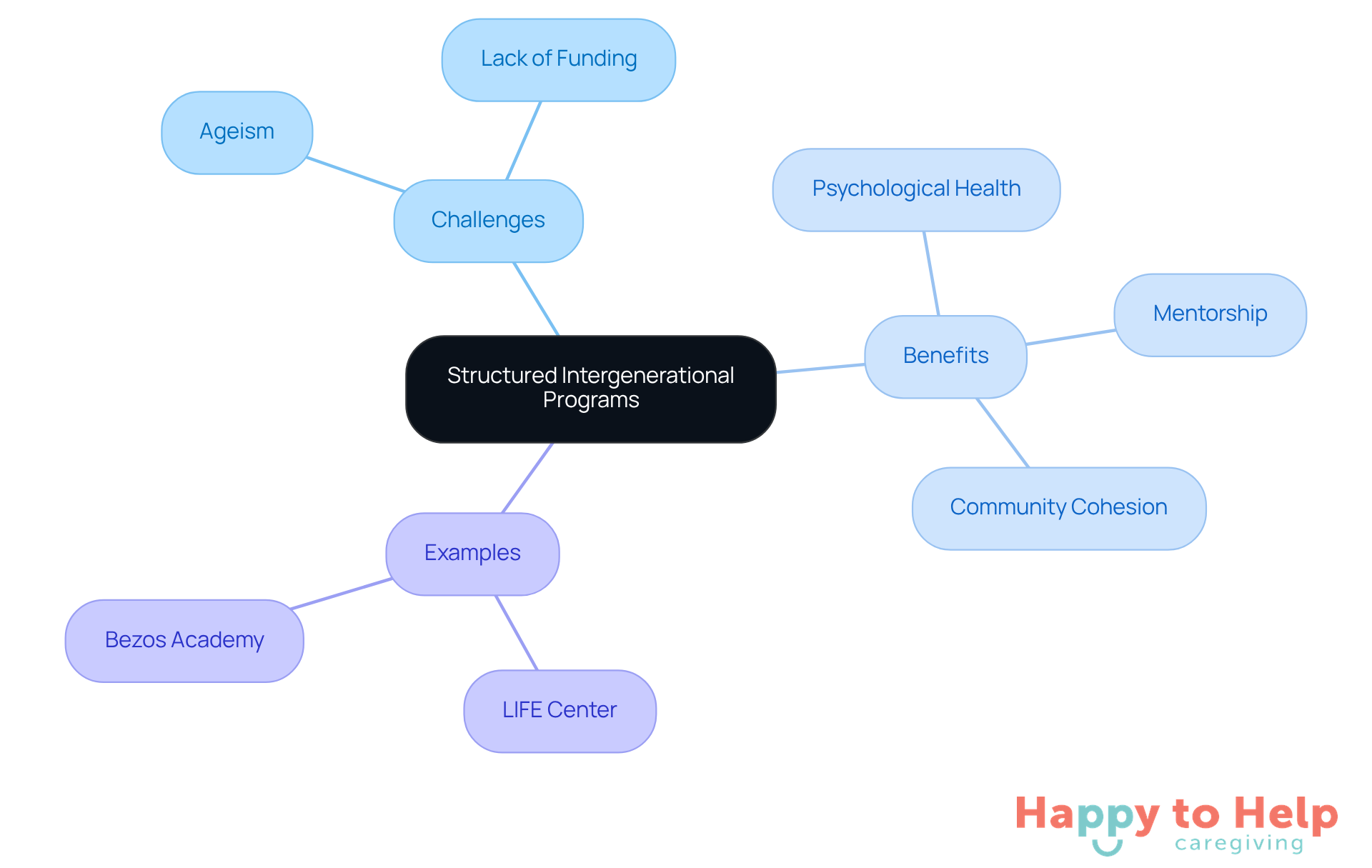
Establishing organized programs that involve different age groups presents a significant challenge due to barriers like ageism and lack of funding. These obstacles hinder the implementation of initiatives that could enhance interactions between seniors and youth, ultimately missing opportunities for meaningful connections and mutual understanding.
However, the positive impact of intergenerational activities for seniors and youth is evident. Research shows that such initiatives can enhance psychological health and decrease inflammation in older adults. Effective mentorship programs that include intergenerational activities for seniors and youth enable older adults to share their knowledge and life experiences, helping younger individuals navigate their challenges. For instance, pairing nursing home residents with students for reading assistance not only improves literacy skills but also fosters lasting bonds that enrich the lives of both groups.
Community organizers emphasize that these interactions help dismantle age-related stereotypes, enabling younger generations to view older adults as valuable mentors rather than just elderly individuals. Programs like the LIFE Center and Bezos Academy illustrate the benefits of structured initiatives, where participants report increased well-being and a renewed sense of purpose.
To cultivate environments that celebrate the strengths of all ages, communities should prioritize these connections. By implementing structured programs that focus on intergenerational activities for seniors and youth, the relationships established can bring joy and respect, ultimately improving the quality of life for both older adults and younger individuals. This approach not only enhances community cohesion but also ensures that the benefits of mentorship are felt across generations.
Community Events: Fostering Intergenerational Connections in Local Settings
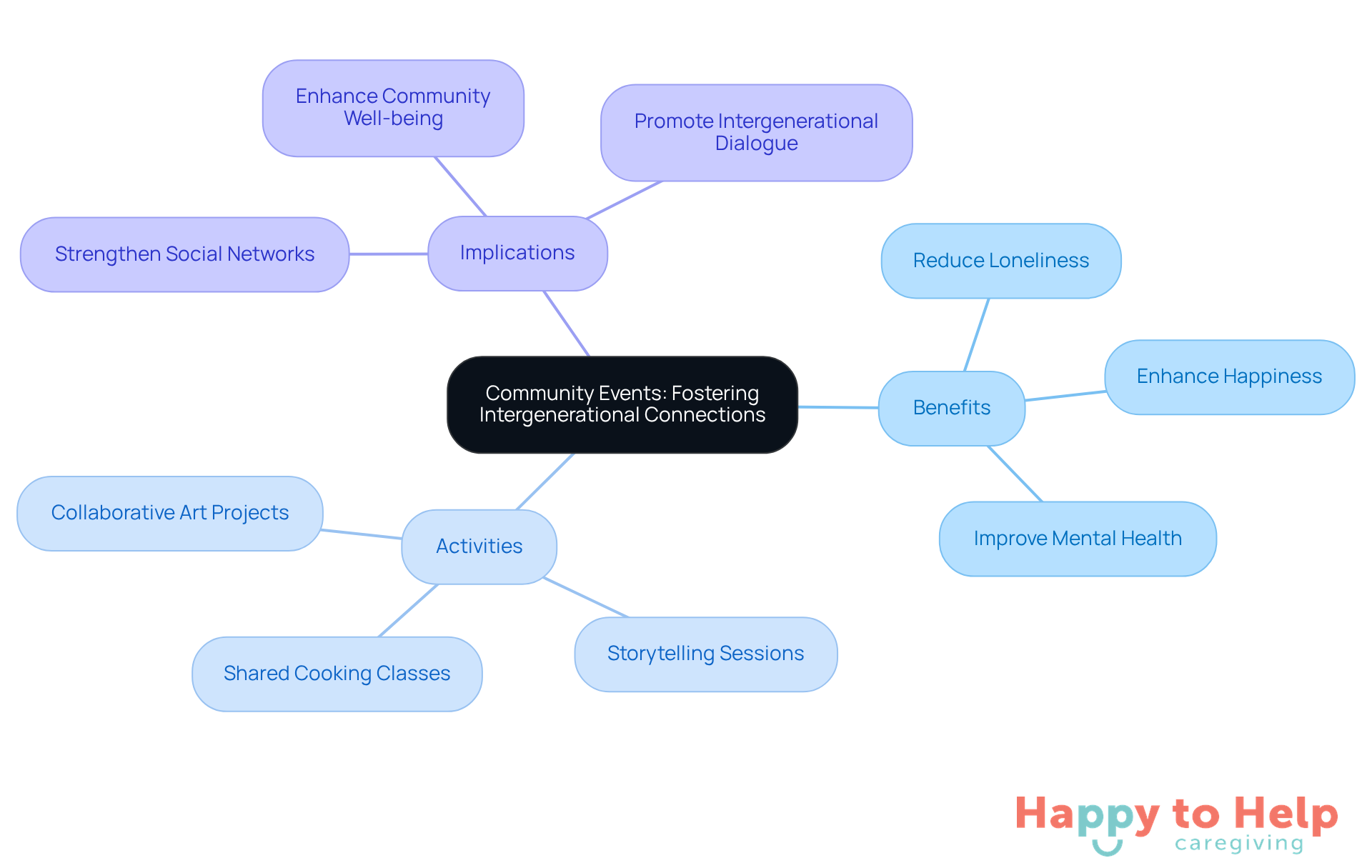
Community events like fairs, festivals, and workshops serve as vital venues for engagement across generations by facilitating intergenerational activities for seniors and youth, addressing a significant problem: feelings of loneliness and anxiety among individuals. These gatherings provide experiences that resonate with all age groups, yet many still struggle to connect meaningfully with others.
The implications of this disconnect can be profound. Sociologists highlight that such gatherings significantly enhance social networks, which are crucial for reducing feelings of isolation. Research shows that individuals who frequently attend community events report feeling happier and less anxious, underscoring the positive impact these interactions have on mental health.
To combat these issues, organizers can plan inclusive events that cater to diverse interests, creating environments where relationships can flourish. Successful activities at local fairs often include:
- Collaborative art projects
- Storytelling sessions
- Shared cooking classes
These not only promote skill-sharing but also deepen connections between participants.
Ultimately, community festivals offer invaluable opportunities for intergenerational activities for seniors and youth to engage meaningfully, enriching the social fabric of the community and enhancing overall well-being. Generations United, a national organization focused on improving the lives of children, youth, and older people, emphasizes the importance of intergenerational activities for seniors and youth through its strategies. By participating in local events, individuals can significantly reduce feelings of loneliness and anxiety, which is crucial in today's fast-paced society.
Making the Right Choice
Engaging in intergenerational activities for seniors and youth addresses a significant problem: isolation. This disconnect not only affects emotional well-being but also diminishes the richness of shared experiences. By bridging the gap between generations through:
- storytelling
- arts and crafts
- cooking
- outdoor adventures
- games
- gardening
- community events
individuals can foster connections that enhance mutual understanding and promote a sense of belonging.
The implications of this isolation are profound. Loneliness can lead to mental health issues, particularly among seniors. Intergenerational initiatives effectively combat this by illustrating how shared activities build relationships. For instance:
- storytelling sessions preserve family history
- arts and crafts encourage creative collaboration
- cooking together not only shares culinary traditions but also strengthens family bonds
- outdoor activities promote physical health and meaningful conversations
- games and puzzles stimulate cognitive engagement
- gardening nurtures a sense of accomplishment
- community events create inclusive environments for all ages
To cultivate a supportive and vibrant community, prioritizing intergenerational activities is essential. Families and caregivers can embrace these opportunities to contribute to a culture of respect and appreciation for both the wisdom of older adults and the fresh perspectives of youth. By fostering these connections, society can create lasting bonds that enrich the lives of individuals across generations, ensuring that valuable lessons, stories, and traditions are passed down and cherished.
https://iframe.tely.ai/cta/eyJhcnRpY2xlX2lkIjogIjY5NDFmMzUyMTE4MTVjMDQxY2UzNWU2NCIsICJjb21wYW55X2lkIjogIjY4ZWU1ZGNhNzMxNzYyNTU3ZjNjOTVjMSIsICJpbmRleCI6IG51bGwsICJ0eXBlIjogImFydGljbGUifQ==Frequently Asked Questions
What is the main issue that storytelling sessions address?
Storytelling sessions address the disconnect between older individuals and younger generations, which can lead to a loss of valuable life experiences and family history.
How do storytelling sessions benefit intergenerational relationships?
They promote engagement and understanding between age groups, strengthen familial bonds, and foster community ties by encouraging both older individuals and younger participants to share their narratives.
What methods can enhance participation in storytelling sessions?
Utilizing prompts or themes during storytelling can enhance participation and make it easier for everyone to connect.
What are some examples of effective storytelling initiatives?
Programs like the Legacy Project, where students record the life narratives of older adults, exemplify effective storytelling initiatives that preserve history and foster connections.
Why is storytelling considered a vital tool in gerontology?
Storytelling reinforces identity and connection, allowing older adults to reflect on significant life moments while nurturing empathy and understanding across generations.
What role do arts and crafts play in bridging generational gaps?
Arts and crafts projects facilitate creative collaboration between seniors and youth, addressing ageism and fostering connections through shared artistic experiences.
Can you provide an example of a successful intergenerational arts project?
The Centenarian Portrait Project connected 465 centenarians with teenage artists, effectively combating ageism and fostering understanding through shared creative experiences.
What benefits do intergenerational arts activities provide for participants?
They stimulate cognitive function, enhance emotional well-being, improve self-esteem and social inclusion for older individuals, and provide young people with valuable insights and empathy towards previous generations.
How does cooking and baking serve as an intergenerational activity?
Cooking and baking together strengthens connections between older adults and youth, allowing for the sharing of cultural traditions and culinary wisdom while nourishing both body and relationships.
What strategies can caregivers implement to promote intergenerational cooking activities?
Caregivers can host themed cooking nights, utilize community kitchens for cross-generational interactions, and explore virtual cooking sessions to create adaptable bonding opportunities.
What emotional and cultural significance does cooking hold in intergenerational activities?
Cooking, sharing, and eating meals serve as powerful emotional and cultural connectors that enhance mood, cognitive abilities, and trust across generations.
List of Sources
- Storytelling Sessions: Bridging Generations Through Shared Narratives
- Intergenerational storytelling program a ‘passion project’ to share residents’ life stories (https://mcknightsseniorliving.com/news/intergenerational-storytelling-program-a-passion-project-to-share-residents-life-stories)
- How Storytelling for Seniors Strengthens Generational Bonds (https://featherstoneliving.com/how-storytelling-for-seniors-bonds-generations)
- The power of intergenerational storytelling to solidify community and effect change (https://americanpressinstitute.org/the-power-of-intergenerational-storytelling-to-solidify-community-and-effect-change)
- Digital Storytelling for Health-Related Outcomes in Older Adults: Systematic Review - PMC (https://pmc.ncbi.nlm.nih.gov/articles/PMC8792772)
- North Bay group aims to connect with others through storytelling (https://cbsnews.com/sanfrancisco/news/north-bay-group-aims-to-connect-with-others-through-storytelling)
- Arts and Crafts: Creative Collaboration for All Ages
- Shared Site Newsletter Fall 2023 - Intergenerational Arts Programming - Generations United (https://gu.org/resources/shared-site-newsletter-volume-1-issue-2)
- Then & Now: Intergenerational Art-Making Through the Years — Ox-Bow (https://ox-bow.org/news-blog/2023/12/6/then-amp-now-intergenerational-art-making-through-the-years)
- Maryland Institute College of Art teams up with senior living center for art display (https://cbsnews.com/baltimore/news/maryland-institute-college-art-north-oak-seniors-display)
- UCA’s Student Led Therapeutic Activity Program art show set for Monday, Dec. 8 (https://uca.edu/news/ucas-student-led-therapeutic-activity-program-art-show-set-for-monday-dec-8)
- Cooking and Baking: Nourishing Connections Through Culinary Experiences
- At This Summer Camp Run by Grandmas, Kids Learn Cooking Skills and Life Advice (https://usnews.com/news/us/articles/2025-08-03/at-this-summer-camp-run-by-grandmas-kids-learn-cooking-skills-and-life-advice)
- Cooking as a Bridge Between Generations: How Food Brings Together Youth and the Elderly - Lasoupe-Cincinnati (https://lasoupecincinnati.com/cooking-as-a-bridge-between-generations-how-food-brings-together-youth-and-the-elderly)
- Intergenerational Summer Camp teaches kids cooking skills and life advice (https://foxsanantonio.com/newsletter-daily/intergenerational-summer-camp-teaches-kids-cooking-skills-and-life-advice-local-news-near-me-crime-law-public-safety)
- Connecting Generations: The Power of Intergenerational Cooking (https://the-ria.ca/news/connecting-generations-the-power-of-intergenerational-cooking)
- Outdoor Adventures: Exploring Nature Together for Lasting Bonds
- 7 Health Benefits Of Outdoor Activities For Seniors (https://rethinkrural.raydientrural.com/blog/benefits-outdoor-activities-for-seniors)
- University of Houston study finds challenging outdoor fun boosts youth development (https://eurekalert.org/news-releases/1104039)
- Intergenerational Play: Connecting Generations Through Fun (https://gametime.com/news/intergenerational-play-connecting-generations-through-fun)
- Outdoor trends report connects children with nature | C&NN (https://childrenandnature.org/resources/outdoor-participation-trends-report-offers-insights-into-how-to-connect-more-children-with-nature)
- Fitzroy Andrew | TheArticle (https://thearticle.com/profile/fitzroyandrew?s-news-22504359-2025-12-15-rise-in-outdoor-activities-signals-a-shift-in-american-leisure-trends)
- Games and Puzzles: Engaging Minds Across Generations
- How puzzle video games can improve brain health and focus | The National (https://thenationalnews.com/lifestyle/wellbeing/2025/05/31/puzzle-video-games-brain-health-focus)
- From Alpha to Boomers: Video games unite 5 to 90-year-olds in play and purpose (https://fox40.com/news/national-and-world-news/video-games-mental-stimulation-elderly-reports-statistics-entertainment-players-gamers)
- Why a Growing Number of Older Adults Are Playing Video Games (https://today.com/video/why-video-games-are-growing-in-popularity-among-older-adults-244251205771)
- Gardening: Cultivating Relationships Through Shared Green Spaces
- Collective shows how communities grow one garden at a time - Austin Weekly News (https://austinweeklynews.com/2024/06/18/collective-shows-how-communities-grow-one-garden-at-a-time)
- The Garden That Heals: How Intergenerational Programs Protect and Empower Our Most Vulnerable - Plan to Protect (https://plantoprotect.com/about-us/news/blog/the-garden-that-heals-how-intergenerational-programs-protect-and-empower-our-most-vulnerable)
- Butterfly Effect Project celebrates fifth season at new Jamesport garden - Riverhead News Review (https://riverheadnewsreview.timesreview.com/2025/10/129188/butterfly-effect-project-celebrates-fifth-season-at-new-jamesport-garden)
- The Intergenerational Garden project at Austin Heath | Inspired Villages (https://inspiredvillages.co.uk/blog/the-intergenerational-garden-project-at-austin-heath)
- Happy to Help Caregiving: Supporting Intergenerational Connections
- The Benefits of Intergenerational Activities for Senior Living Residents and Children (https://health.usnews.com/best-senior-living/articles/the-benefits-of-intergenerational-activities-for-senior-living-residents-and-children)
- How intergenerational connections help older Americans stay happier and healthier (https://pbs.org/newshour/show/how-intergenerational-connections-help-older-americans-stay-happier-and-healthier)
- The Power of Intergenerational Connections: Bridging the Gap Between Generations (https://circleofcare.com/the-power-of-intergenerational-connections-bridging-the-gap-between-generations)
- A National Profile of Sandwich Generation Caregivers Providing Care to Both Older Adults and Children - PMC (https://pmc.ncbi.nlm.nih.gov/articles/PMC10023280)
- Strickland Leads Bipartisan Bill for Intergenerational Caregiving - Marilyn Strickland (https://strickland.house.gov/2025/03/19/strickland-leads-bipartisan-bill-for-intergenerational-caregiving)
- Reminiscing: Sharing Memories to Strengthen Intergenerational Bonds
- The Benefits of Intergenerational Activities for Senior Living Residents and Children (https://health.usnews.com/best-senior-living/articles/the-benefits-of-intergenerational-activities-for-senior-living-residents-and-children)
- 9 Reasons Why Reminiscing Can Benefit Seniors (https://caringseniorservice.com/blog/9-reasons-why-reminiscing-can-benefit-seniors)
- The Benefits of Intergenerational Activities and Traditions - Bethesda Health Group (https://bethesdahealth.org/blog/the-benefits-of-intergenerational-activities-and-traditions)
- Effect of Reminiscence on Cognitive Status and Memory of the Elderly People - PMC (https://pmc.ncbi.nlm.nih.gov/articles/PMC4359728)
- Structured Intergenerational Programs: Creating Lasting Connections
- The Benefits of Intergenerational Activities for Senior Living Residents and Children (https://health.usnews.com/best-senior-living/articles/the-benefits-of-intergenerational-activities-for-senior-living-residents-and-children)
- Intergenerational Care Benefits Children and Seniors. Why Is It Still So Rare? - EdSurge News (https://edsurge.com/news/2024-12-17-intergenerational-care-benefits-children-and-seniors-why-is-it-still-so-rare)
- How one rural Kansas town is bringing kids and nursing home residents together (https://kmuw.org/news/2025-05-16/how-one-rural-kansas-town-is-bringing-kids-and-nursing-home-residents-together)
- University’s intergenerational program aims to expose students to senior living careers (https://mcknightsseniorliving.com/news/universitys-intergenerational-program-aims-to-expose-students-to-senior-living-careers)
- Bridging Generations: How the Care Across Generations Act Could Transform Senior Living - Argentum (https://argentum.org/bridging-generations-how-the-care-across-generations-act-could-transform-senior-living)
- Community Events: Fostering Intergenerational Connections in Local Settings
- Community Events: Building Stronger Connections (https://faithdeannajohnson.org/post/how-local-events-strengthen-community-well-being)
- Bridging generations: inside WJ’s 47th Senior Citizen Thanksgiving Luncheon (https://thesentinel.com/communities/bridging-generations-inside-wj-s-47th-senior-citizen-thanksgiving-luncheon/article_2e491316-780d-4780-9844-9759c74c0e4f.html)
- Local communities need intergenerational problem-solving — and local news can help (https://americanpressinstitute.org/local-communities-need-intergenerational-problem-solving-and-local-news-can-help)
- Penn State Intergenerational Program (https://aese.psu.edu/outreach/intergenerational)
- ‘Generations in Conversation’ launches new UH Mānoa initiative | University of Hawaiʻi System News (https://hawaii.edu/news/2025/12/09/generations-in-conversation-event)