
For families in our service areas
For families in our service areas, this guide explains caregiver support and how non-medical in-home caregiving can support care planning in East Idaho, Treasure Valley & Magic Valley, Northern Wasatch, North Central West Virginia, and Northeast Ohio.
The Importance of Assistive Devices for Elderly Caregivers
Aging presents numerous challenges that can complicate daily life for seniors and their caregivers. Many older adults prefer to age in place, which heightens the need for effective assistive devices. This article delves into ten essential tools designed to enhance mobility and safety, empowering seniors to maintain their independence and quality of life. As caregivers face the complexities of elderly care, a crucial question arises: which devices truly foster autonomy and ensure the well-being of their loved ones?
Happy to Help Caregiving: Personalized In-Home Support for Seniors
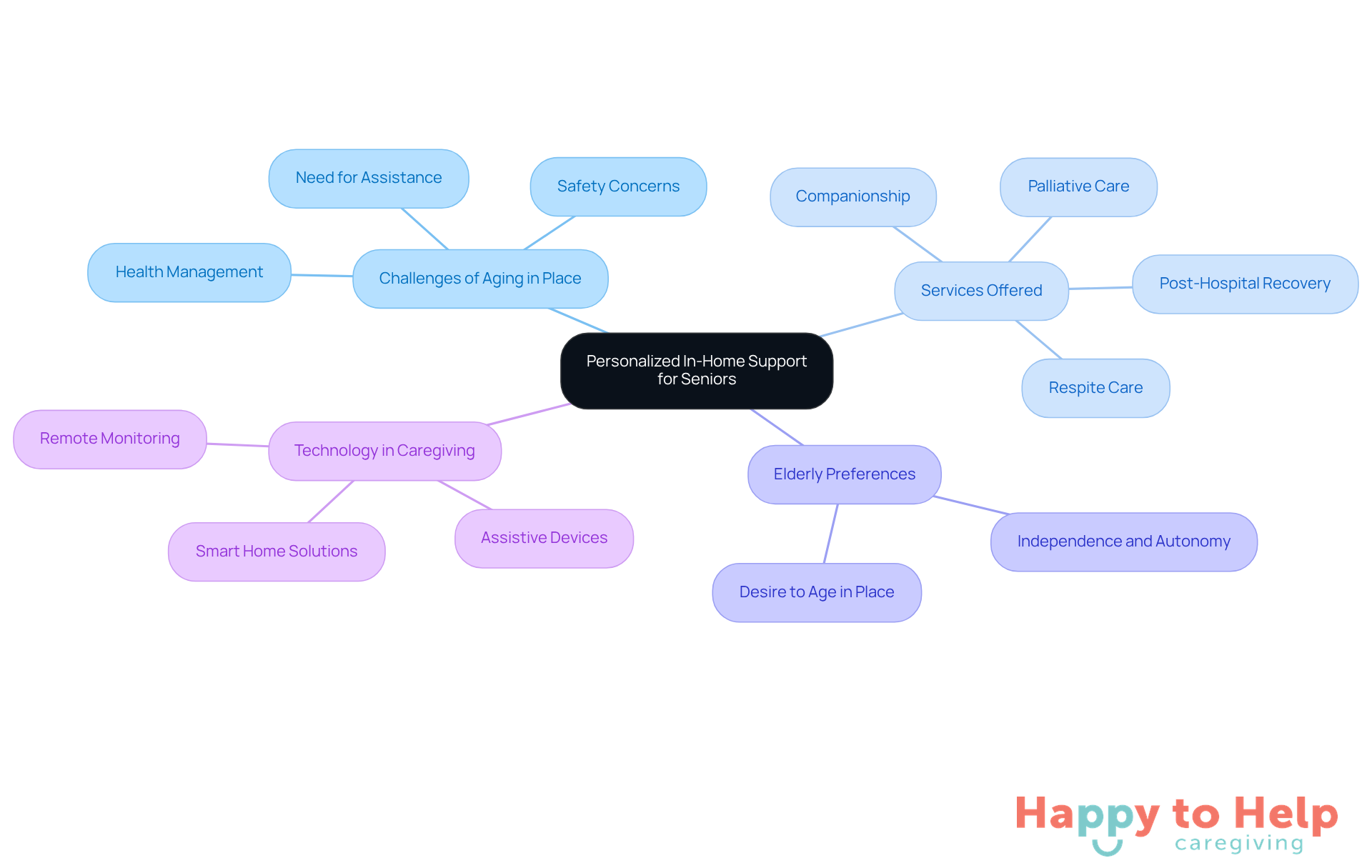
Aging in place presents significant challenges for elderly individuals and their caregivers. Many older adults prefer to remain in their homes, yet they often require assistance to maintain their independence and safety. This need underscores the importance of home care services that cater to these preferences.
To address these challenges, Happy to Help Caregiving offers compassionate in-home assistance tailored to the unique needs of seniors. Their services range from companionship and post-hospital recovery support to respite care and palliative care, all designed to enhance the quality of life for individuals in their own homes. Notably, 75% of older adults prefer to age in place, highlighting the demand for effective home care solutions.
Incorporating assistive devices for elderly into caregiving strategies is essential for promoting autonomy and ensuring safety. These assistive devices for elderly not only facilitate physical activities but also bolster emotional well-being by enabling them to maintain a sense of independence. As one caregiver remarked, 'Assistive devices for elderly have transformed the way my clients live, allowing them to feel more in control and less dependent on others.'
By utilizing technology such as smart medication dispensers, voice-activated assistants, and automated lighting, caregivers can create a safer and more supportive environment. Additionally, the surveillance features of smart home technology help ensure that older adults remain safe and secure, ultimately enhancing the overall quality of care.
This commitment to personalized, technology-enhanced support underscores Happy to Help Caregiving's dedication to enriching the lives of their clients.
Standard Cane: Essential Mobility Aid for Stability
Falls among elderly individuals pose a significant problem, leading to serious injuries and even fatalities. Research indicates that falls are the leading cause of both fatal and non-fatal injuries in this demographic, with approximately 14 million older adults experiencing falls each year. This alarming statistic translates to 1 in 4 Americans aged 65 and older. In 2021 alone, falls resulted in 38,000 deaths among those aged 65 and older. Therefore, ensuring safety and mobility for these individuals with the help of assistive devices for elderly is crucial.
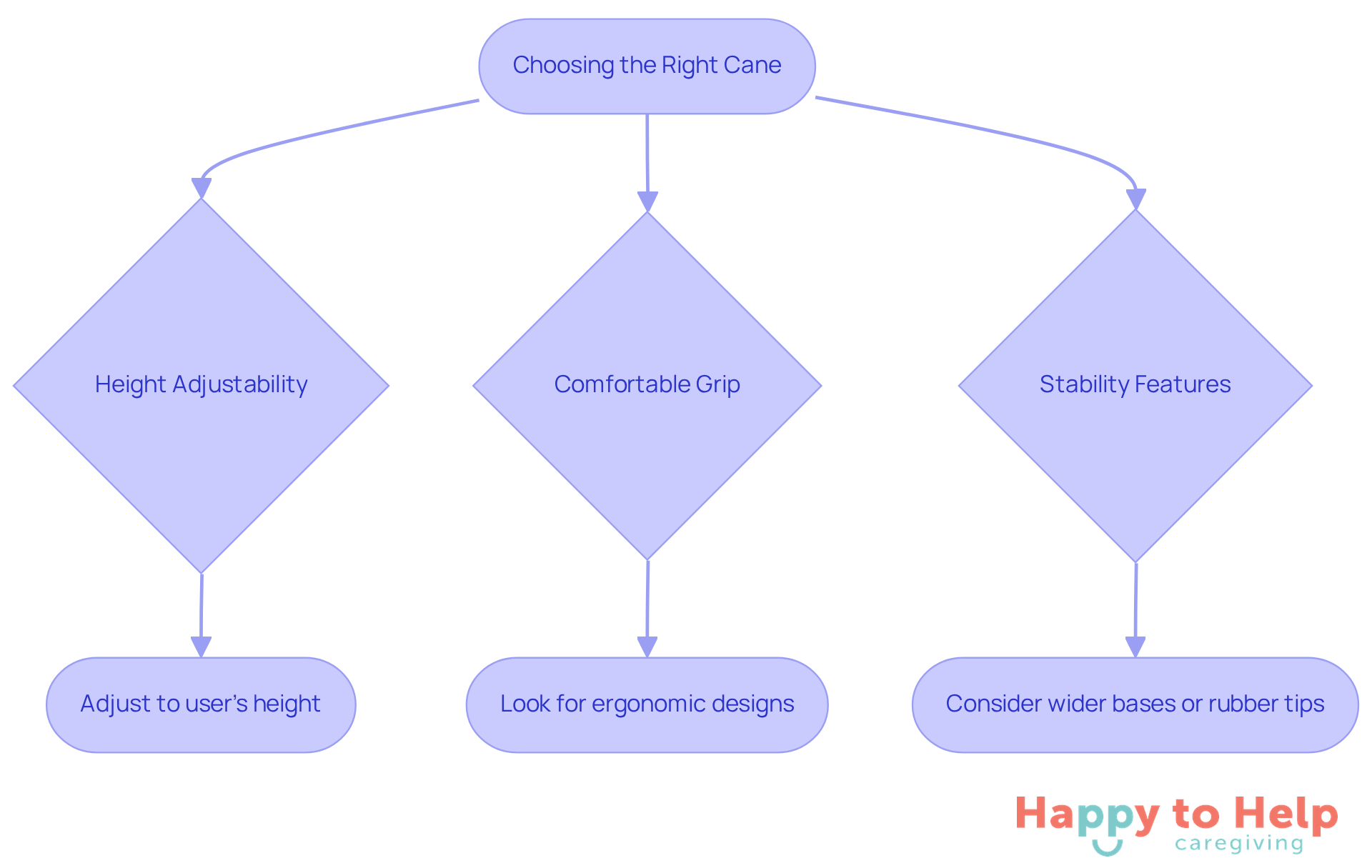
Choosing the right cane can be a vital solution to this issue. When selecting a cane, caregivers should prioritize features like height adjustability and grip comfort. Adjustable canes provide a customized fit, enhancing comfort and support. Additionally, the handle design should minimize stress on the hands, particularly for older adults with arthritis or diminished hand strength. A well-chosen cane is one of the assistive devices for elderly that not only aids in movement but also fosters a sense of safety and confidence, encouraging seniors to remain active and engaged in their daily lives.
By focusing on these essential factors, caregivers can significantly improve the quality of life for their loved ones. Here are some actionable tips:
- Height Adjustability: Ensure the cane can be adjusted to the user's height for optimal support.
- Comfortable Grip: Look for handles designed to reduce hand strain.
- Stability Features: Consider canes with additional stability features, such as a wider base or rubber tips.
By prioritizing these elements, caregivers can help older adults navigate their environments with greater confidence and security using assistive devices for elderly.
Rolling Walker: Enhanced Mobility and Safety for Seniors
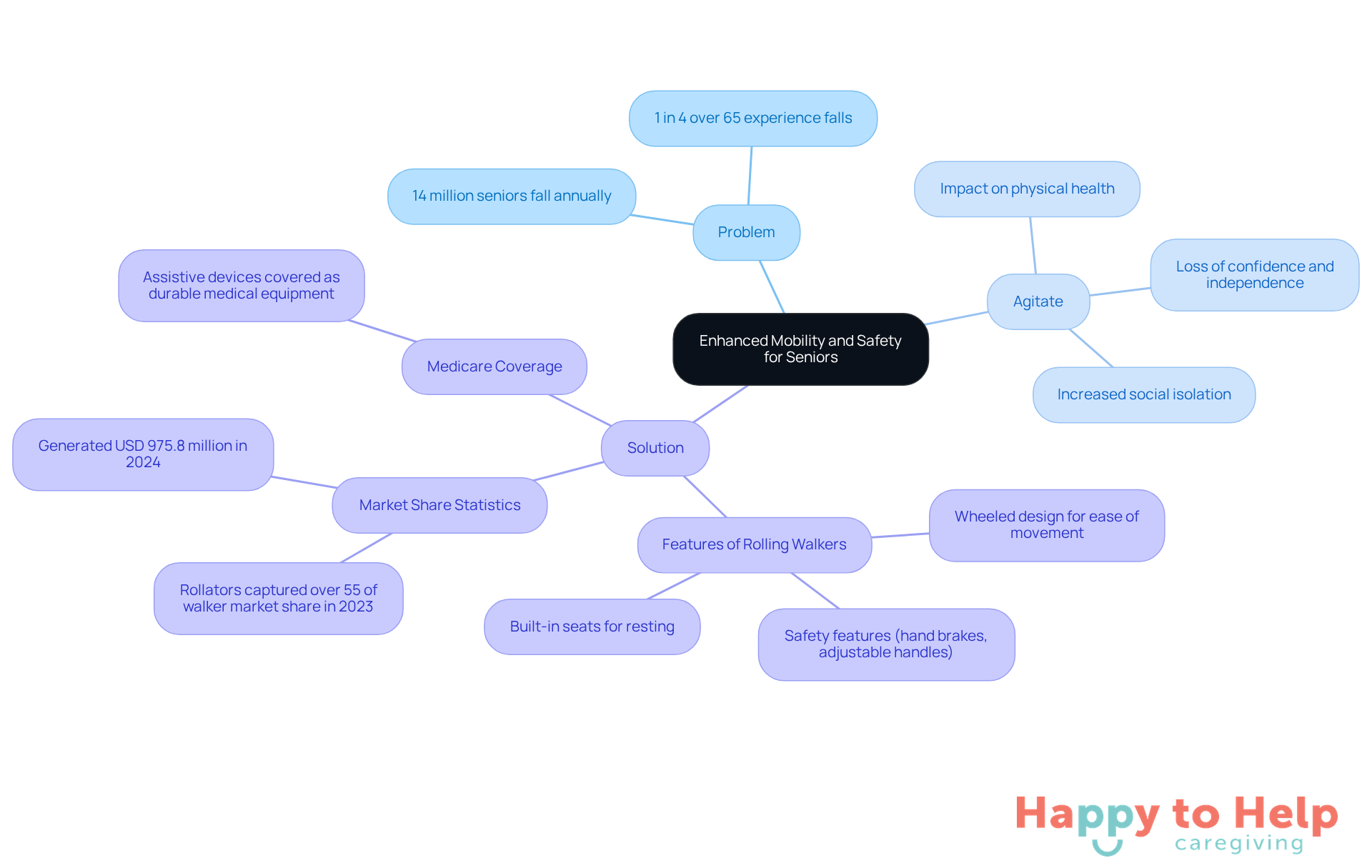
Problem: Mobility and safety are significant concerns for seniors, particularly as falls can lead to severe injuries. Studies show that over 14 million senior citizens in the U.S. report falling each year, with one in four individuals over 65 experiencing falls annually. This alarming trend highlights the urgent need for effective solutions to enhance movement and prevent accidents.
Agitate: The implications of these falls are profound, affecting not only the physical health of seniors but also their confidence and independence. Caregivers often face the challenge of ensuring their loved ones can navigate their environments safely, which can be daunting given the risks involved. The fear of falling can limit social engagement and lead to isolation, further impacting the well-being of elderly individuals.
Solution: Enter rolling walkers, commonly known as rollators. These devices significantly improve movement and safety for seniors. Designed with wheels, rollators allow users to navigate their surroundings with ease while providing stable support. Many models come equipped with built-in seats, enabling users to rest as needed, which is crucial for maintaining stamina during outings.
Safety features are paramount; most rollators include hand brakes for secure stopping and adjustable handles to accommodate various heights, ensuring comfort and stability. Recent trends show a growing preference for rollators among elderly individuals, capturing over 55% of the walker market share in 2023 and generating USD 975.8 million in 2024. Occupational therapists emphasize that these walkers not only aid movement but also play a vital role in fall prevention.
Innovations in rollator design have introduced advanced safety features, such as secure braking systems and ergonomic designs that boost user confidence. These developments empower seniors to engage in social activities and maintain independence without the fear of falling. Additionally, Medicare Part B covers assistive devices for elderly individuals, such as rollators, as durable medical equipment when appropriately chosen for the patient's needs, making them a feasible option for many caregivers.
As the senior population continues to grow, the demand for reliable and stylish assistive devices for elderly, like rollators, is expected to rise, making them essential tools for caregivers and their families.
Power Wheelchair: Freedom of Movement for Limited Mobility
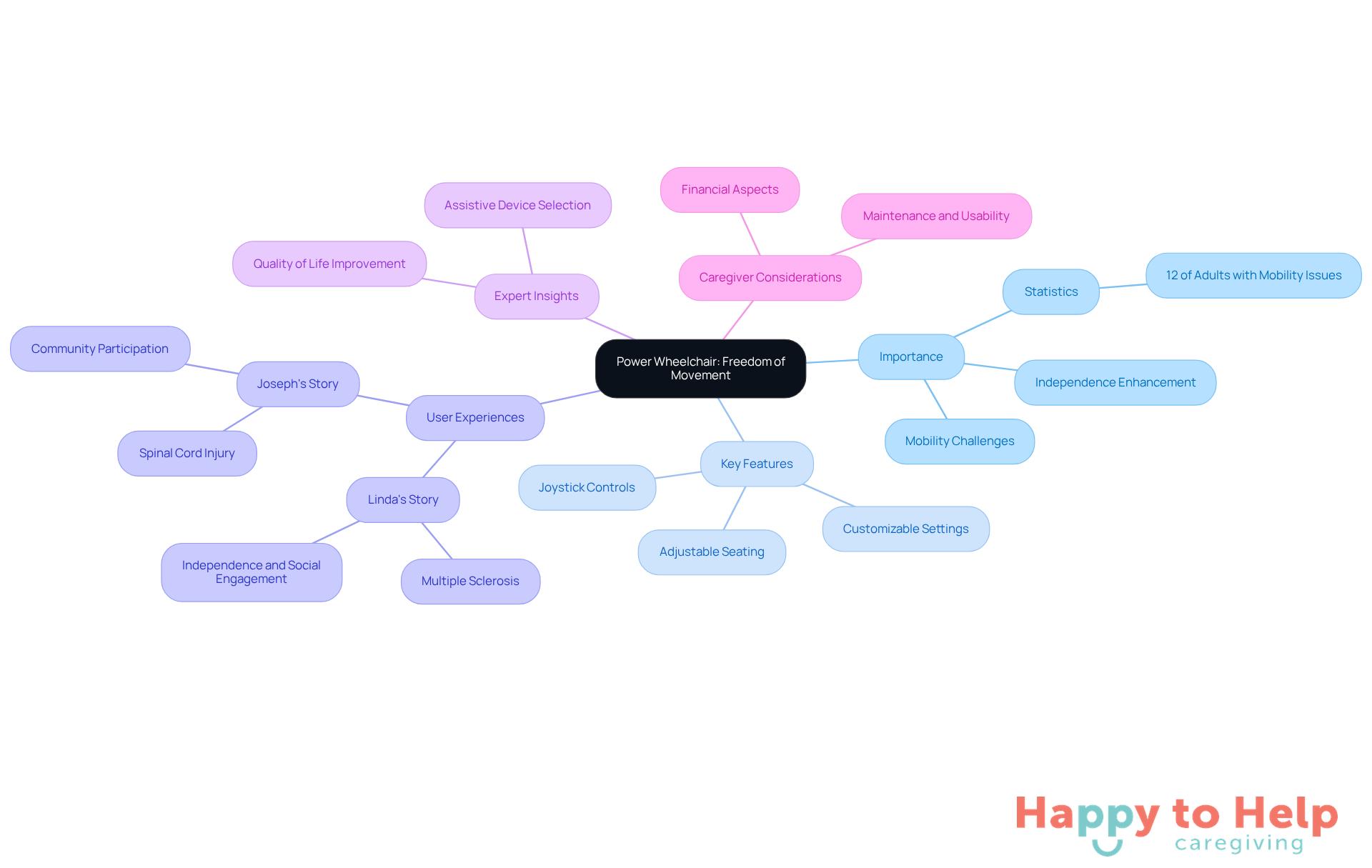
Power wheelchairs are important assistive devices for elderly individuals, offering essential freedom of movement for seniors facing mobility challenges. Approximately 12% of adults in the United States experience significant difficulty walking or climbing stairs, underscoring the critical role these devices play. These advanced electric chairs are designed for ease of use, allowing individuals to navigate their environments with minimal effort. Key features include:
- Adjustable seating positions
- Joystick controls
- Various customizable settings that enhance comfort and accessibility
For example, the Robooter E60 Pro can climb slopes of up to 15 degrees and reach speeds of 6.2 MPH, showcasing the latest advancements in power wheelchair technology and enabling users to tackle diverse terrains effortlessly.
The impact of power wheelchairs on daily life is profound. Linda, a 69-year-old with multiple sclerosis, transitioned to a power wheelchair funded primarily by her private insurance. She describes her wheelchair as an extension of herself, highlighting how it has greatly improved her independence and social engagement. Similarly, Joseph, who has a spinal cord injury, found that using a power wheelchair allowed him to participate more fully in community life, despite his initial reluctance. With an average of 10 years of experience among users, these individuals illustrate the long-term benefits of power wheelchairs.
Experts in mobility emphasize that power wheelchairs, as assistive devices for elderly, not only enhance physical movement but also foster a sense of independence. As one expert noted, 'The appropriate assistive devices for elderly can significantly change an elderly person's quality of life, allowing them to participate in activities they enjoy without the burden of physical limitations.' This highlights the importance of selecting assistive devices for elderly, including a power wheelchair that meets personal needs, ensuring older adults can maintain their independence and enjoy fulfilling lives. Caregivers should also consider financial aspects, such as insurance coverage and potential costs, along with battery life and charging time to ensure usability without frequent recharging. Proper assessment and fitting are crucial to prevent complications from an improper wheelchair fit.
Medical Alert Device: Immediate Help for Emergencies
Medical alert devices are essential assistive devices for elderly individuals who may face emergencies while alone. This situation poses a significant problem, as it can lead to delayed assistance during critical moments. Families often worry about their loved ones' safety, knowing that help may not be readily available when needed.
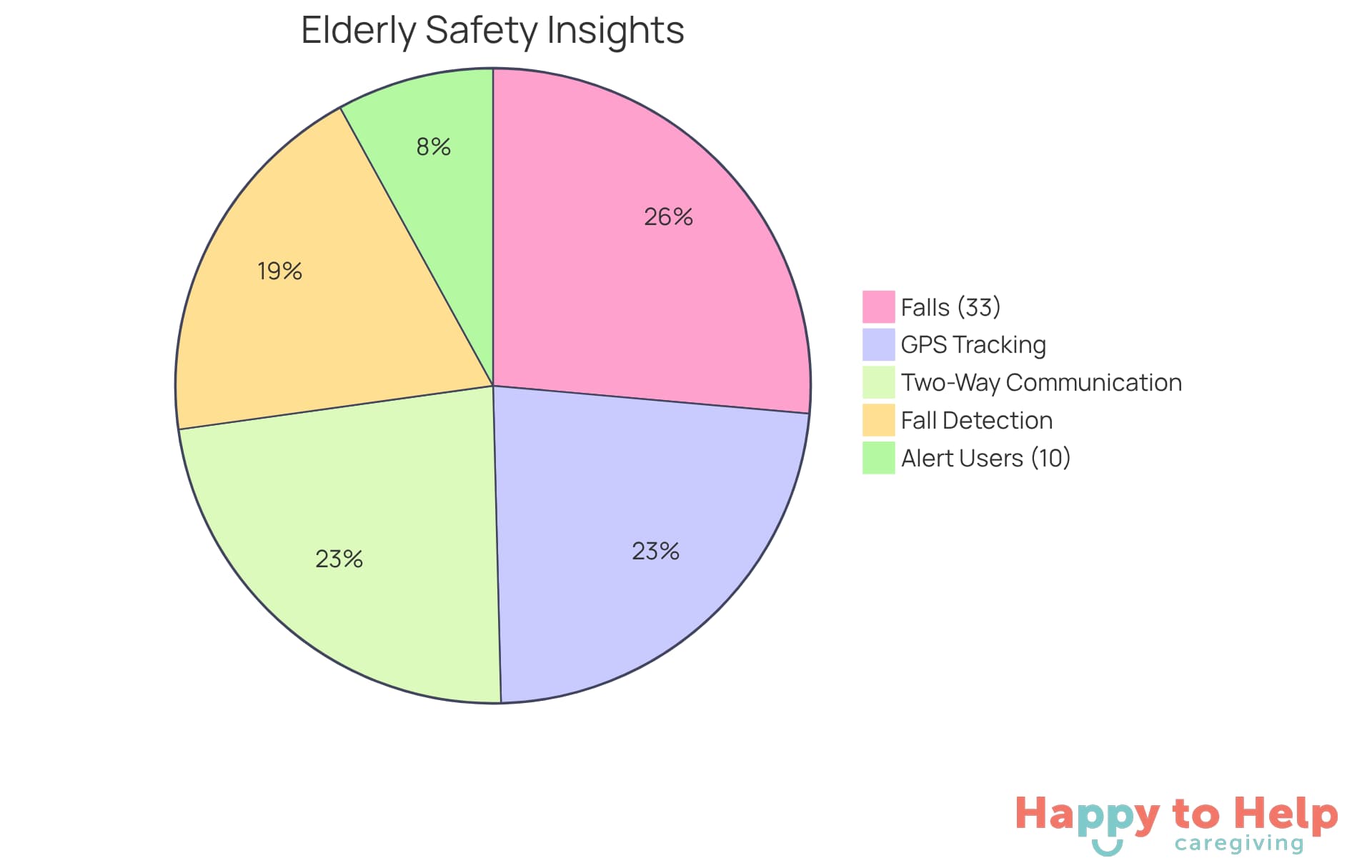
The implications of this issue are serious. With 1 in 3 older adults experiencing accidental falls annually, the risk of injury increases significantly. Alarmingly, only 1 in 10 older adults currently utilize personal emergency response systems, highlighting a gap in safety measures that could enhance their independence and well-being.
Fortunately, modern medical alert systems are effective assistive devices for elderly individuals, offering practical solutions. These devices come equipped with advanced features such as:
- Automatic fall detection, which can trigger alerts without user input
- GPS tracking, ensuring help can be dispatched regardless of the user's location
- Two-way voice communication, allowing elderly individuals to speak directly with trained responders, which enhances response accuracy during emergencies
As the market for personal medical alert systems continues to grow, driven by an aging population and the demand for assistive devices for elderly, these tools are becoming increasingly sophisticated. They empower older adults to maintain their independence while ensuring prompt access to assistance when required. Monthly costs for medical alert systems typically range from $20 to $60 or more, making it essential for families to consider their budget when selecting a system.
Bed Handle: Safe Transition In and Out of Bed
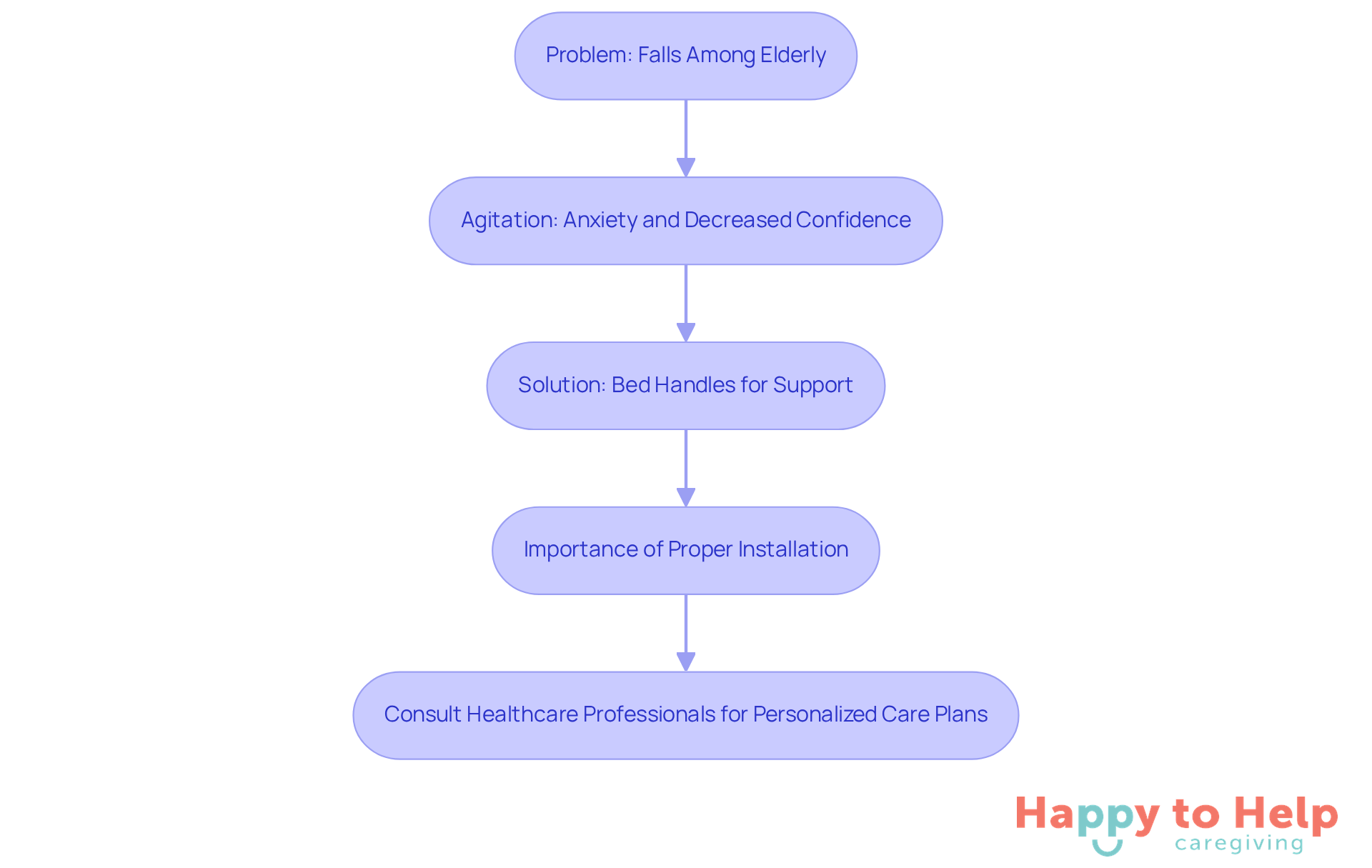
Problem: Falls are a significant concern for elderly individuals, particularly those aged 65 and older. They are a leading cause of injury-related death in this age group, making it crucial to find effective solutions to enhance safety during daily activities.
Agitate: The fear of falling can lead to anxiety and decreased confidence among older adults. This anxiety not only affects their mental well-being but also impacts their ability to perform essential movements, such as getting in and out of bed. Caregivers often share this worry, feeling the weight of responsibility for their loved ones' safety.
Bed handles are essential assistive devices for elderly individuals, offering crucial support when transitioning in and out of bed. These tools securely fasten to the bed frame, offering a robust hold that improves balance and stability. By facilitating easier movement, assistive devices for elderly, including bed handles, significantly reduce the risk of falls. Physical therapists emphasize that proper use of bed handles, considered assistive devices for elderly, can empower older adults to maintain their independence during daily routines, allowing them to perform movements like sitting up or turning over without external assistance.
Real-life examples illustrate the effectiveness of bed handles in preventing falls. Older adults who use assistive devices for elderly report enhanced confidence when entering and exiting bed, which consequently reduces anxiety regarding possible accidents. Additionally, caregivers find that assistive devices for elderly, including bed handles, not only enhance safety but also alleviate their own worries, knowing that their loved ones have reliable support.
However, it is crucial to ensure that bed handles are installed correctly to avoid potential dangers associated with improper use. Consulting healthcare professionals or home care providers when considering bed handles can help create personalized care plans that prioritize safety. Integrating bed handles into an elderly individual's care plan can be a proactive measure in fall prevention strategies, ensuring that they can navigate their environment safely and with dignity.
Button Hook: Aids in Dressing for Seniors with Dexterity Issues
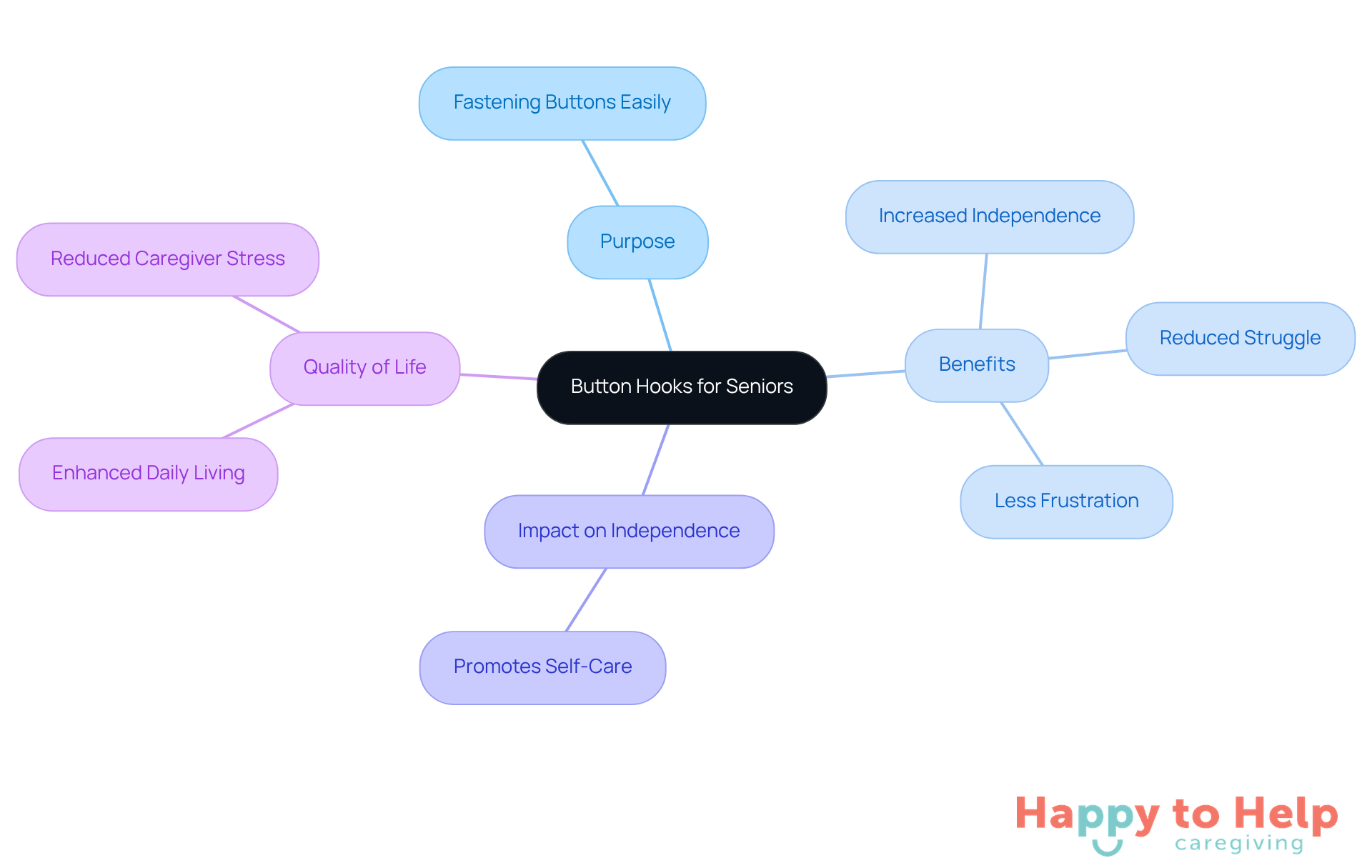
For older adults with limited dexterity, assistive devices for elderly can significantly alleviate the challenge of dressing. This difficulty not only affects their ability to dress independently but can also lead to frustration and a diminished quality of life.
Button hooks emerge as a practical solution to this problem. These invaluable tools allow users to fasten buttons with minimal effort, promoting greater independence in personal care. By reducing the struggle associated with dressing, button hooks are important assistive devices for elderly individuals, enhancing their overall quality of life despite mobility challenges.
Incorporating button hooks into daily routines can significantly alleviate the stress of dressing, making it a more manageable task for both older adults and their caregivers.
Chair Lift: Support for Sitting and Standing
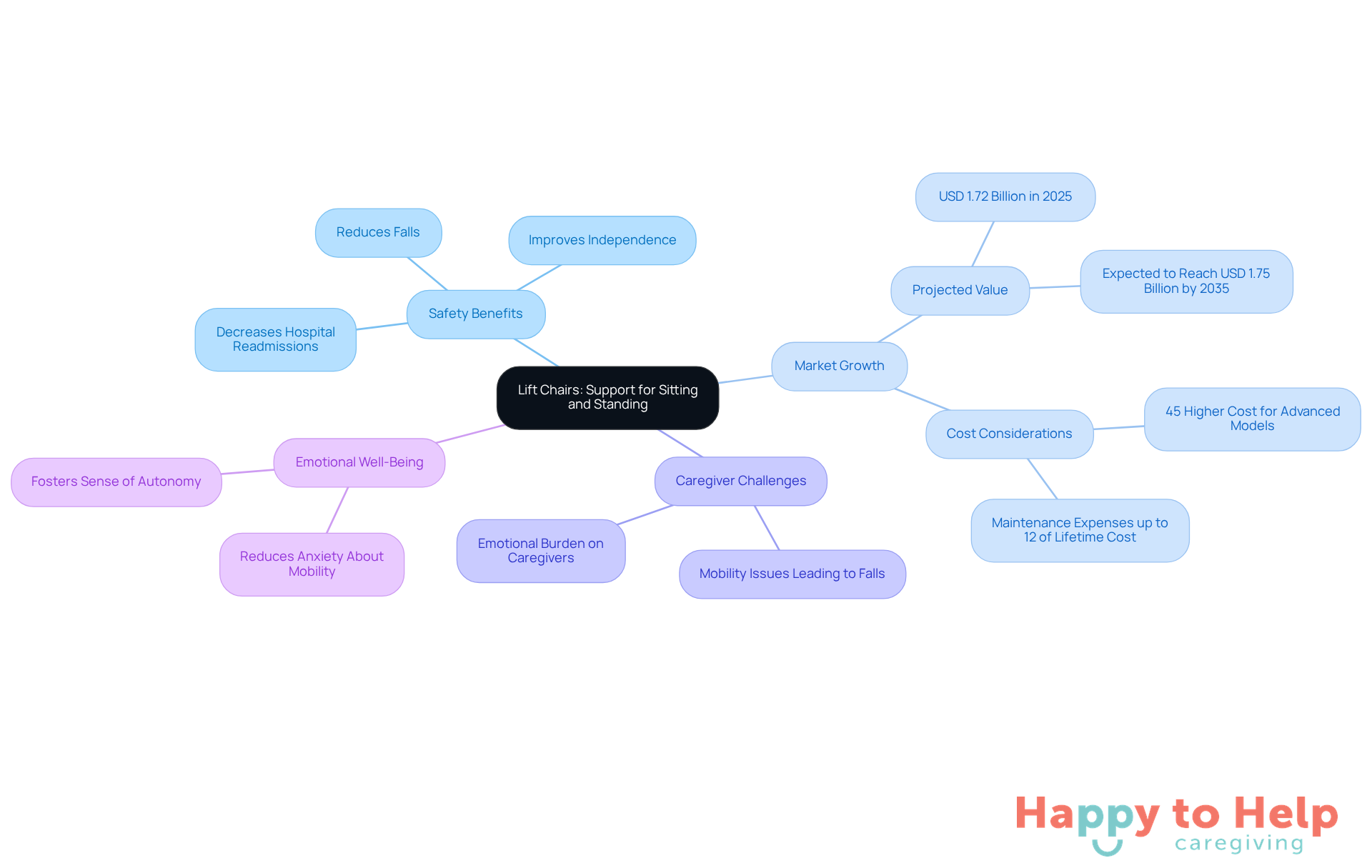
Lift chairs are important assistive devices for elderly individuals who have difficulty sitting down and standing up. These motorized chairs gently tilt forward, providing support and reducing strain on the body. By allowing users to shift smoothly between sitting and standing, lift chairs improve safety and comfort, enabling older adults to maintain their independence in daily activities. Notably, they help reduce hospital readmissions linked to home accidents, reinforcing their safety benefits for elderly users.
The challenges faced by caregivers are significant. Mobility issues can lead to falls and injuries, which not only affect the physical health of seniors but also their emotional well-being. For instance, two 92-year-old residents regained their independence and comfort after installing an Aritco HomeLift, which seamlessly integrates into their home while offering essential assistance for movement. Rehabilitation specialists emphasize that assistive devices for elderly, such as lift chairs, are crucial for preventing falls and facilitating safer transitions in and out of a seated position.
Current data reveals that the global lift chair market is projected to grow significantly, driven by the increasing demand for assistive devices for elderly individuals among the aging population. In 2025, the market value reached USD 1.72 billion, with expectations to grow further as more families recognize the importance of these devices in improving quality of life. However, caregivers should note that the average cost of advanced lift chairs is 45% higher than standard recliners, which is an important financial consideration.
Lift chairs not only support physical health but also contribute to emotional well-being. They help reduce anxiety associated with mobility challenges and foster a sense of autonomy among users. Advanced models even include heat and massage options to promote circulation and ease joint stiffness, further enhancing comfort and health benefits.
Reminder Alarm Clock: Daily Management for Seniors
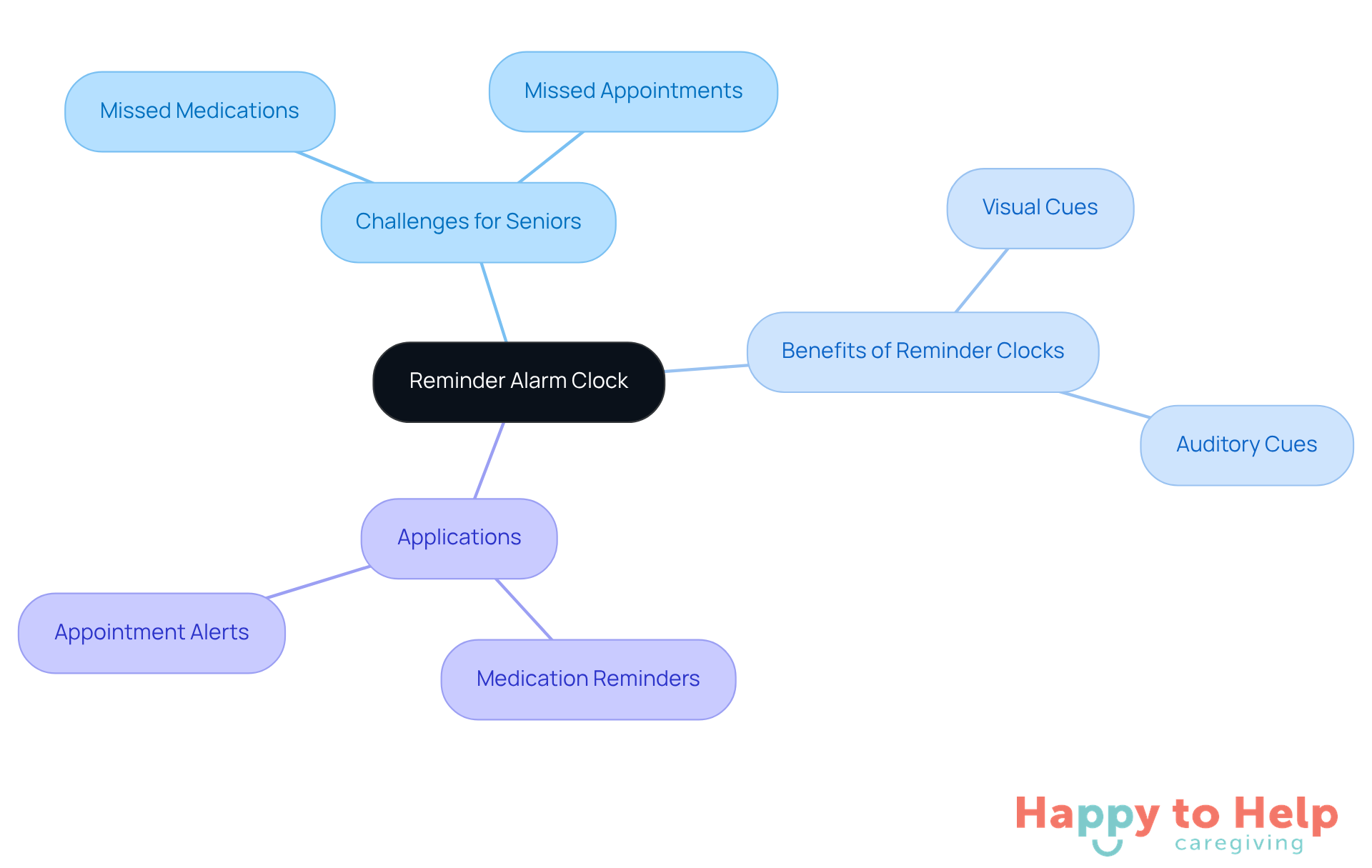
Elderly individuals often face challenges in organizing their daily schedules, which can lead to missed medications and appointments. This issue not only affects their health but also their sense of independence. Caregivers need effective solutions, including assistive devices for elderly, to help their loved ones maintain a routine and avoid these pitfalls.
One practical solution is the use of reminder alarm clocks. These clocks can be programmed with multiple alarms for medication reminders, appointments, and other important tasks. By providing both visual and auditory cues, reminder clocks are considered assistive devices for elderly individuals to help them stay on track with their daily activities.
Incorporating reminder clocks into a daily routine can significantly lower the risk of missed medications or appointments. This not only promotes a sense of independence but also enhances the overall well-being of elderly individuals. By utilizing assistive devices for elderly, caregivers can help their loved ones maintain a structured and fulfilling life.
Wireless TV Headphones: Enhanced Entertainment Experience
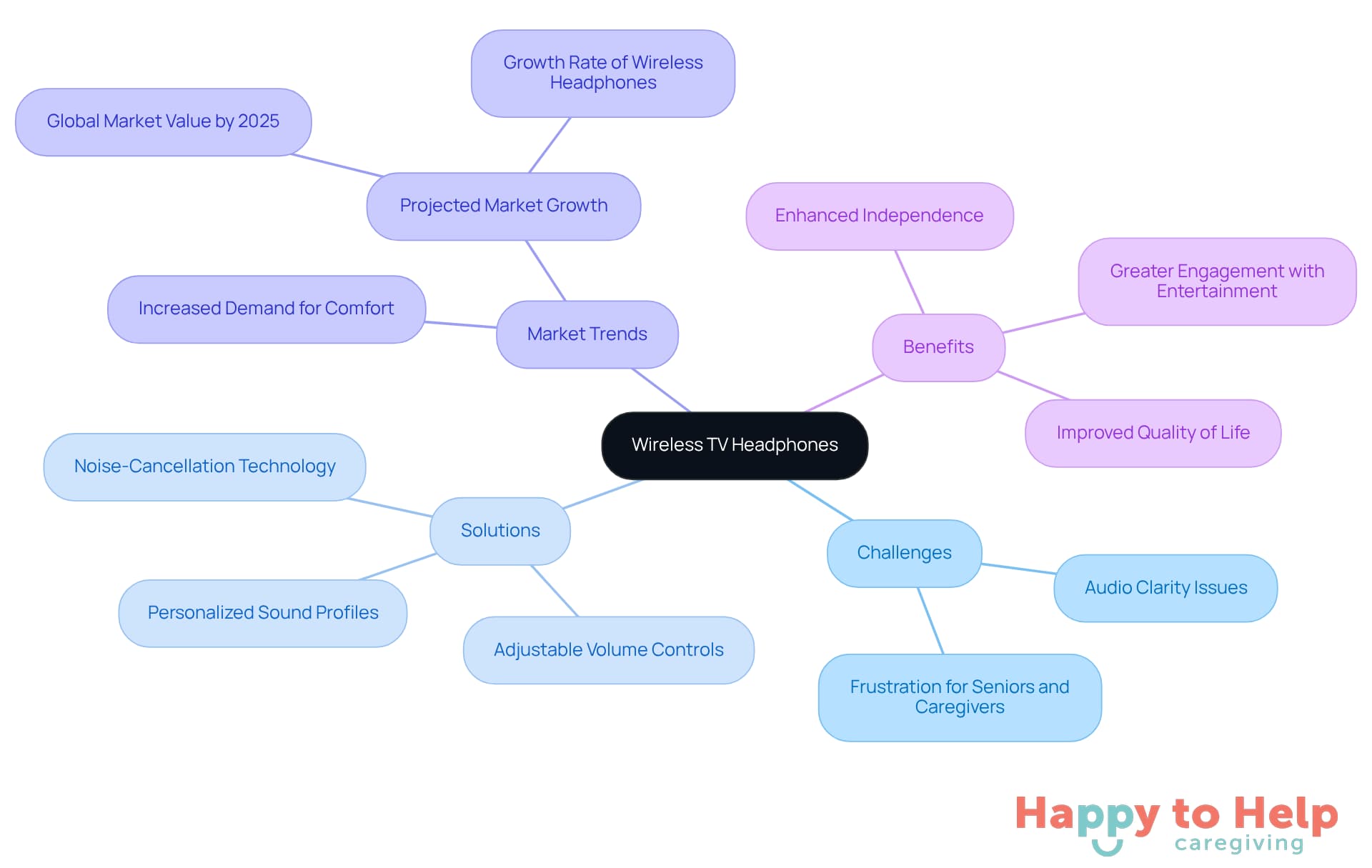
Older adults often face challenges when it comes to enjoying their favorite shows and films, particularly due to difficulties with audio clarity. This can lead to frustration, not only for them but also for those around them. The implications of this issue are significant, as it can diminish their overall entertainment experience and sense of independence.
Wireless TV headphones offer a practical solution to this problem. Designed with features like adjustable volume controls and advanced noise-cancellation technology, products such as Avantree headphones cater specifically to individuals with hearing impairments. By enhancing dialogue clarity and minimizing background noise, these headphones allow older adults to engage more fully with their entertainment, fostering enjoyment and independence.
Current trends in audio technology highlight the importance of comfort and user-friendly features. The global headphones market is projected to reach approximately USD 45.26 billion by 2025, underscoring the growing demand for such products. Real-life examples, like the volume boosting capabilities and EQ filters of Avantree headphones, demonstrate how assistive devices for elderly can transform the viewing experience. This ensures that seniors remain connected and entertained in their own homes.
According to audiologists, advancements in audio technology are crucial for enhancing the overall entertainment experience for elderly individuals. By investing in quality wireless headphones, caregivers can significantly improve the quality of life for older adults, allowing them to enjoy their favorite media without disturbing others.
Taking the Next Steps
The integration of assistive devices into elderly care presents a significant challenge for caregivers, as they strive to enhance the independence and safety of older adults. Without these essential tools, many seniors face difficulties in navigating their daily routines, which can lead to decreased quality of life and increased safety concerns.
To address these issues, various assistive devices have been highlighted, including:
- canes
- rolling walkers
- power wheelchairs
- medical alert systems
- bed handles
- button hooks
- lift chairs
- reminder alarm clocks
- wireless TV headphones
Each device targets specific challenges faced by seniors, such as mobility issues and the need for independence in daily activities. By focusing on personalized, technology-enhanced solutions, caregivers can effectively support their clients while promoting autonomy.
As the aging population continues to grow, the demand for innovative assistive devices will only increase. Caregivers are encouraged to explore these options and consider how they can implement them into their care strategies. By investing in the right tools, families can ensure that their elderly loved ones enjoy a fulfilling and safe life at home. This reinforces the importance of compassionate, personalized care in enhancing the well-being of seniors.
https://iframe.tely.ai/cta/eyJhcnRpY2xlX2lkIjogIjY5MjI2NTE3NGUzNmZmNzE5NDQ4Mjc3MiIsICJjb21wYW55X2lkIjogIjY4ZWU1ZGNhNzMxNzYyNTU3ZjNjOTVjMSIsICJpbmRleCI6IG51bGwsICJ0eXBlIjogImFydGljbGUifQ==Frequently Asked Questions
What services does Happy to Help Caregiving provide for seniors?
Happy to Help Caregiving offers personalized in-home assistance, including companionship, post-hospital recovery support, respite care, and palliative care, aimed at enhancing the quality of life for seniors.
Why is aging in place important for older adults?
Aging in place is important because 75% of older adults prefer to remain in their homes, which highlights the need for effective home care solutions to maintain their independence and safety.
How do assistive devices benefit elderly individuals?
Assistive devices help promote autonomy, ensure safety, facilitate physical activities, and enhance emotional well-being by allowing seniors to maintain a sense of independence.
What types of technology can caregivers use to support seniors?
Caregivers can use technology such as smart medication dispensers, voice-activated assistants, automated lighting, and surveillance features of smart home technology to create a safer environment for seniors.
What is the significance of falls among elderly individuals?
Falls are the leading cause of both fatal and non-fatal injuries among older adults, with approximately 14 million experiencing falls each year, making safety and mobility crucial for this demographic.
What should caregivers consider when choosing a cane for seniors?
Caregivers should prioritize height adjustability, grip comfort, and stability features when selecting a cane to ensure optimal support and reduce stress on the hands.
What are rolling walkers, and how do they assist seniors?
Rolling walkers, or rollators, are mobility aids designed with wheels that provide stable support, enhance movement, and allow seniors to navigate their surroundings easily while offering built-in seating for resting.
What safety features are important in rollators?
Important safety features in rollators include hand brakes for secure stopping, adjustable handles for comfort, and ergonomic designs to boost user confidence and prevent falls.
Is there financial assistance available for obtaining assistive devices for seniors?
Yes, Medicare Part B covers assistive devices for elderly individuals, such as rollators, as durable medical equipment when appropriately chosen for the patient's needs.
What is the current trend regarding the use of rollators among seniors?
Rollators have captured over 55% of the walker market share in 2023, indicating a growing preference among elderly individuals for these mobility aids.
List of Sources
- Happy to Help Caregiving: Personalized In-Home Support for Seniors
- In-Home Care for Seniors - Caregiving News and Tips (https://aarp.org/caregiving/home-care)
- Smart Homes and Post-Hospital Care: Supporting Seniors Aging in Place (https://hcprosonline.com/smart-homes-and-post-hospital-care-supporting-seniors-aging-in-place)
- Home Care Industry Trends to Watch in 2025 (https://firstlighthomecare.com/blog/home-care-industry-trends)
- 13 Home Care Trends To Watch For in 2024 (And Thoughts From 11 Experts) | CareAcademy (https://careacademy.com/blog/home-care-trends)
- Top healthcare trends of 2026: Aging in place is driving innovation in home-based care and technology (https://definitivehc.com/blog/aging-in-place-driving-innovation)
- Standard Cane: Essential Mobility Aid for Stability
- References - The Future of Disability in America - NCBI Bookshelf (https://ncbi.nlm.nih.gov/books/NBK11419)
- Friend or Foe? Study Examines Seniors' Increasing Use of Walking Aids | UVM News | The University of Vermont (https://uvm.edu/uvmnews/news/friend-or-foe-study-examines-seniors-increasing-use-walking-aids)
- Get the Facts on Falls Prevention (https://ncoa.org/article/get-the-facts-on-falls-prevention)
- The Benefits Of Using A Walking Cane For Balance And Mobility (https://strongarmhealth.com/blogs/news/the-benefits-of-using-a-walking-cane-for-balance-and-mobility?srsltid=AfmBOoprLzaaTmkEAQqtjmMia4s3pZIb-HTWCkXP\_Xu-M-xTyEIl9TL6)
- Rolling Walker: Enhanced Mobility and Safety for Seniors
- New Lightweight Mobility Devices Cater to Active Elderly - INTCO Medical (https://intcowheelchair.com/news/new-lightweight-mobility-devices-cater-to-active-elderly)
- Mobility Assistive Device Use in Older Adults (https://aafp.org/pubs/afp/issues/2021/0615/p737.html)
- Elderly Walker Market Size, Share Analysis Report 2032 (https://snsinsider.com/reports/elderly-walker-market-5887)
- Breaking News: Fall 2025 Brings a New Era of Lightweight Walkers and Rollators for Seniors (https://cbs42.com/business/press-releases/ein-presswire/850373373/breaking-news-fall-2025-brings-a-new-era-of-lightweight-walkers-and-rollators-for-seniors)
- Elderly Walkers Market Size, Share & Trends, 2025–2034 (https://gminsights.com/industry-analysis/elderly-walkers-market)
- Power Wheelchair: Freedom of Movement for Limited Mobility
- This Wheelchair User Was Just Awarded $41.5 Million to Design the Power Wheelchair of the Future (https://newmobility.com/this-wheelchair-user-was-just-awarded-41-5-million-to-design-the-power-wheelchair-of-the-future)
- Exploring the Benefits of Power Wheelchairs for Seniors (https://mpowerchairs.com/blogs/news/exploring-the-benefits-of-power-wheelchairs-for-seniors?srsltid=AfmBOor30YZEF8B9LRP7ar5dG06H9tajiNVicP\_KDe-zCD8BsaXnOdnx)
- The power of power wheelchairs: Mobility choices of community-dwelling, older adults - PMC (https://pmc.ncbi.nlm.nih.gov/articles/PMC4818588)
- Wheelchair and Power Mobility for Adults | PM&R KnowledgeNow (https://now.aapmr.org/wheelchair-and-power-mobility)
- Understanding Wheelchair Use in Older Adults From the National Health and Aging Trends Study (https://sciencedirect.com/science/article/pii/S0003999323005300)
- Medical Alert Device: Immediate Help for Emergencies
- 7 Innovations In Elderly Alert Systems That Are Changing Senior Care | Fingerlakes1.com (https://fingerlakes1.com/2025/11/07/7-innovations-in-elderly-alert-systems-that-are-changing-senior-care)
- Are medical alerts worth it for seniors? Here's what experts say (https://cbsnews.com/news/are-medical-alerts-worth-it-for-seniors-what-experts-say)
- Mobile Medical Alert Systems: A Lifeline for Senior Safety and Independence (https://ltcnews.com/articles/mobile-medical-alert-system-senior-safety-independence)
- Medical Alert Systems: 2023-2024 Research and Statistics (https://theseniorlist.com/research/medical-alert-device-consumer-usage-study)
- What if you fall and can't get up? The fear is driving sales of personal emergency response systems (https://vermontpublic.org/local-news/2025-10-17/what-if-you-fall-and-cant-get-up-the-fear-is-driving-sales-of-personal-emergency-response-systems)
- Bed Handle: Safe Transition In and Out of Bed
- A Guide to Bed Safety Bed Rails in Hospitals, Nursing Homes and Home H (https://fda.gov/medical-devices/hospital-beds/guide-bed-safety-bed-rails-hospitals-nursing-homes-and-home-health-care-facts)
- Bed Rails for Seniors: Safety Pros and Cons (https://californiamobility.com/are-bed-rails-safe-for-seniors-heres-what-to-know)
- Bedrail Injuries in Nursing Homes - How These Injuries Happen (https://nursinghomeabusecenter.com/nursing-home-injuries/bedrails)
- The Benefits and Risks of Bed Rails for Older Adults (https://piedmontmedicalinc.net/the-benefits-and-risks-of-bed-rails-for-older-adults)
- Button Hook: Aids in Dressing for Seniors with Dexterity Issues
- 25 Inspirational Occupational Therapy Quotes That Highlight The Power OTs (https://careoptionsforkids.com/blog/occupational-therapy-quotes)
- 29 Occupational Therapy Quotes! • OT Potential (https://otpotential.com/blog/occupational-therapy-quotes)
- The Caregiver Guide – Adaptive Clothing and Dressing Aids (https://llmedico.com/a/blog/the-caregiver-guide-adaptive-clothing-and-dressing-aids?srsltid=AfmBOorS0te7cj8AlvGZwcKy\_JEAPAuEyg44YONWQtIz4pP6wSI1W01b)
- TOP 20 ADAPTIVE CLOTHING CONSUMER STATISTICS 2025 (https://bestcolorfulsocks.com/blogs/news/adaptive-clothing-consumer-statistics?srsltid=AfmBOopgOCS-IqHKMsnPk7Pk0VNa4z6Jym2xMeOPYgi8XtHpPToKlt1u)
- The Best Occupational Therapy Quotes - The OT Toolbox (https://theottoolbox.com/occupational-therapy-quotes)
- Chair Lift: Support for Sitting and Standing
- Designing Independence with an Aritco HomeLift Compact (https://aritco.com/case\_studies/designing-independence-with-an-aritco-homelift-compact)
- The global Lift Chair market size is USD 3954.2 million in 2024. (https://cognitivemarketresearch.com/lift-chair-market-report)
- Lift Chair Market Size, Share & Trends Analysis, 2035 (https://globalgrowthinsights.com/market-reports/lift-chair-market-102789)
- The Benefits of Lift Chairs for Home Comfort and Safety (https://jamesmedical.com/post/the-benefits-of-lift-chairs-for-home-comfort-and-safety)
- The Benefits of a Lift Chair: Comfort and Independence (https://millermobility.com/the-benefits-of-a-lift-chair-comfort-and-independence)
- Reminder Alarm Clock: Daily Management for Seniors
- 15 Wise and Inspiring Quotes About Aging (https://psychologytoday.com/us/blog/fulfillment-at-any-age/201201/15-wise-and-inspiring-quotes-about-aging)
- 10 Inspiring Quotes about Aging | Senior Health | Masonicare (https://masonicare.org/resources/blog/10-inspiring-quotes-about-aging)
- A smart medicine reminder kit with mobile phone calls and some health monitoring features for senior citizens (https://sciencedirect.com/science/article/pii/S2405844024023399)
- (https://belleviecare.co.uk/support-advice/60-elderly-care-quotes-to-lift-your-spirits)
- 20 Inspirational Senior Care Quotes (https://1plus1cares.com/20-inspirational-senior-care-quotes)
- Wireless TV Headphones: Enhanced Entertainment Experience
- 5 Reasons to Choose Wireless TV Headphones for Seniors (https://gorsun.com/5-reasons-to-choose-wireless-tv-headphones-for-seniors?srsltid=AfmBOoojICuyDJTgSCsN\_NP2fYU0xnB2wSm47eMEm6BTnqUhwt53oeQ-)
- 31+ Important Headphones Statistics & Facts (2025) (https://headphonesaddict.com/headphones-statistics)
- The Power of Wireless TV Headphones for Seniors (https://h2hhc.com/blog/wireless-tv-headphones-for-seniors)
- Wireless Headphones: A Game Changer for Seniors (https://kareaudio.com/blogs/tv-for-hard-of-hearing/wireless-headphones-for-seniors?srsltid=AfmBOooo1H80Cu7MY9Kmh4G9A5yqfuPCFQ5JvppI5Y0pF\_B9gjiQdOH\_)
- Headphones Statistics By Market Size, Usage, Ownership and Facts (2025) (https://electroiq.com/stats/headphones-statistics)