10 Essential Assistive Devices for Seniors' Independence
For families in our service areas
For families in our service areas, this guide explains caregiving and how non-medical in-home caregiving can support care planning in East Idaho, Treasure Valley & Magic Valley, Northern Wasatch, North Central West Virginia, and Northeast Ohio.
Why Assistive Devices Matters
As the elderly population continues to grow, maintaining independence is a pressing concern for many seniors and their caregivers. This challenge can lead to feelings of helplessness and frustration, both for seniors and their loved ones. Assistive devices play a crucial role in addressing this issue, offering practical solutions that enhance safety and improve quality of life.
However, with so many options available, families often struggle to determine which devices are truly essential for their loved ones. This article explores ten vital assistive devices designed to empower seniors, ensuring they can navigate daily challenges with confidence and dignity. By understanding the importance of these tools, caregivers can make informed decisions that significantly impact their loved ones' independence.
Happy to Help Caregiving: Personalized In-Home Support for Seniors
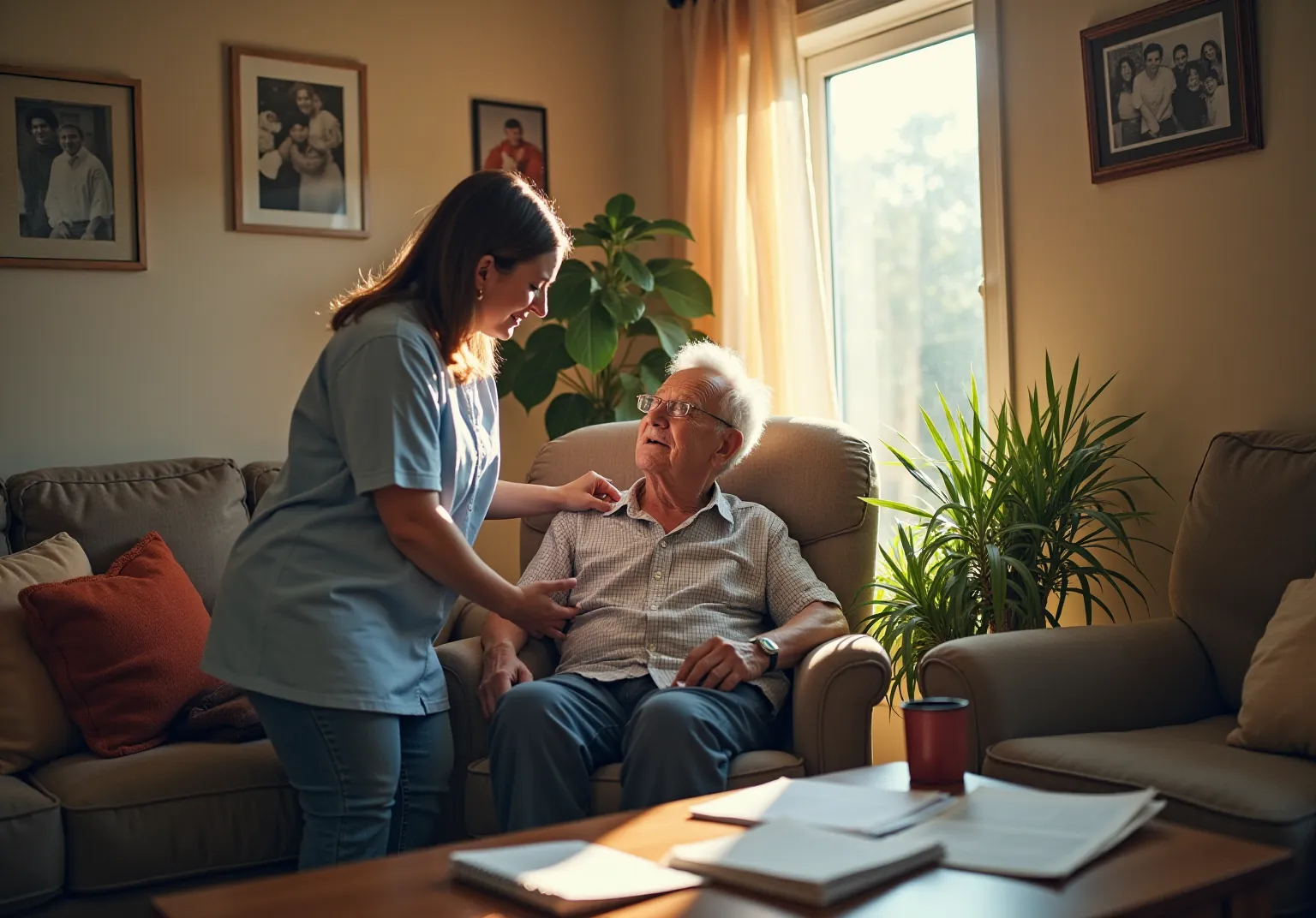
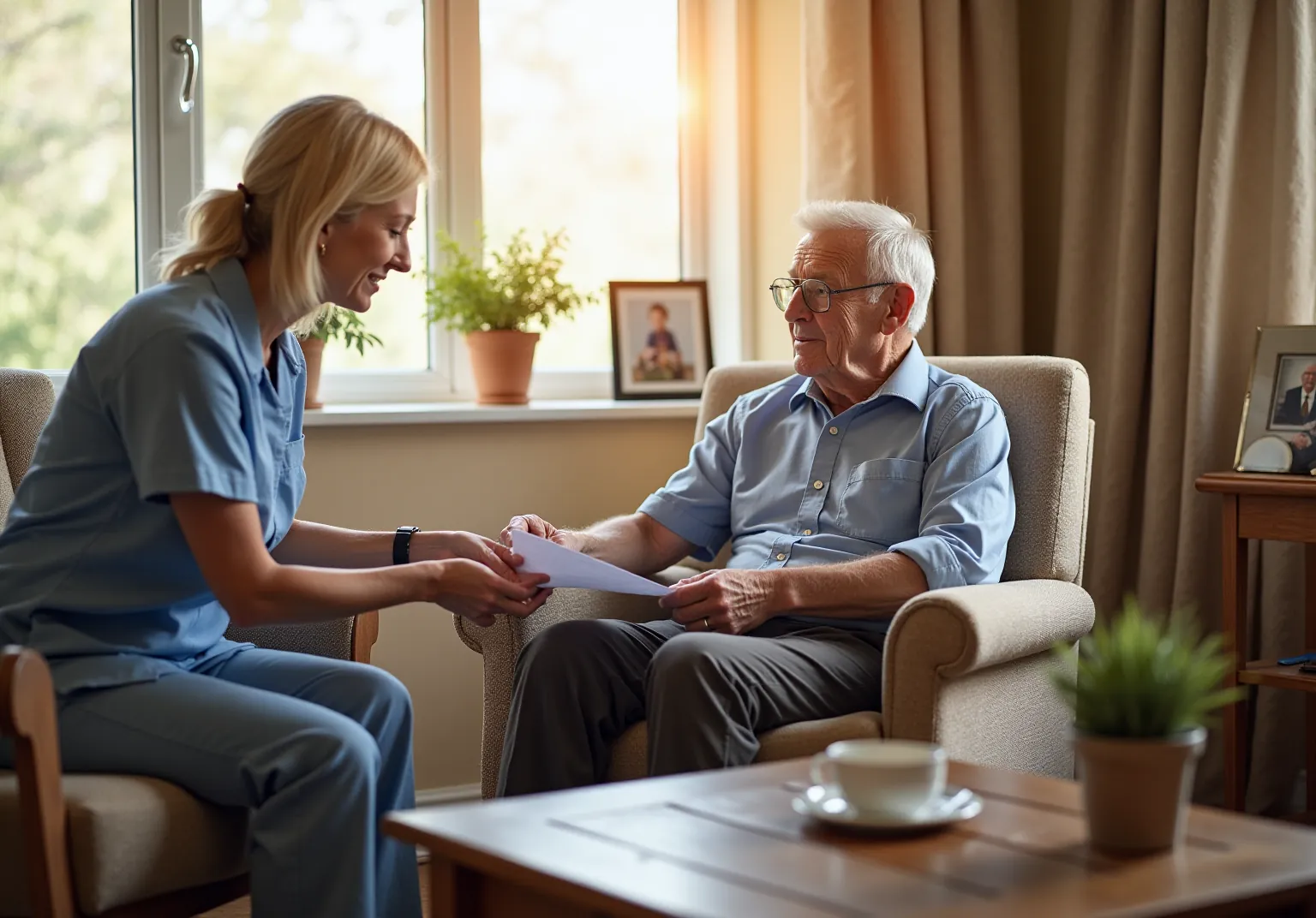
Caring for older adults can be a significant challenge for families and caregivers. Many struggle to provide the necessary support while ensuring their loved ones maintain their independence and dignity. This situation can lead to feelings of frustration and helplessness for both caregivers and the elderly.
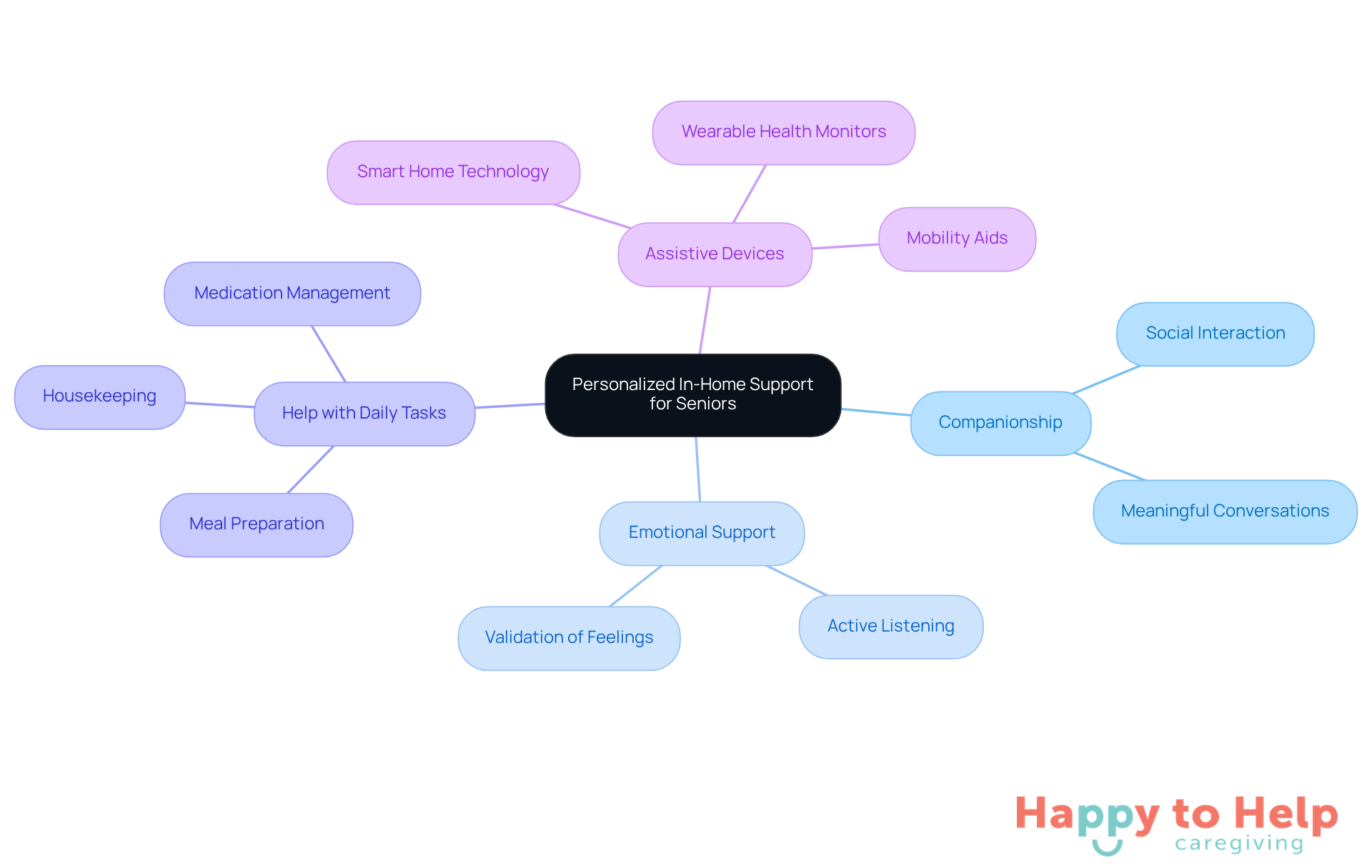
Happy to Help Caregiving addresses these challenges by offering tailored in-home assistance, including assistive devices for seniors. This service focuses on enhancing the quality of life for seniors through:
- Companionship
- Emotional support
- Help with daily tasks
- The use of assistive devices for seniors
By customizing care plans to meet individual needs, Happy to Help Caregiving empowers elderly individuals to receive the necessary support in a familiar environment.
With this approach, caregivers can alleviate their concerns, knowing that their loved ones are receiving compassionate care that respects their autonomy. This not only improves the well-being of older adults but also provides peace of mind for families.
Medical Alert Device: Immediate Emergency Assistance for Seniors
For older adults who wish to live independently, assistive devices for seniors are a significant concern for their safety. Emergencies can happen at any time, and assistive devices for seniors that allow for quick calls for help are crucial. Without immediate assistance, the consequences can be dire, leaving both seniors and their caregivers anxious about their well-being.
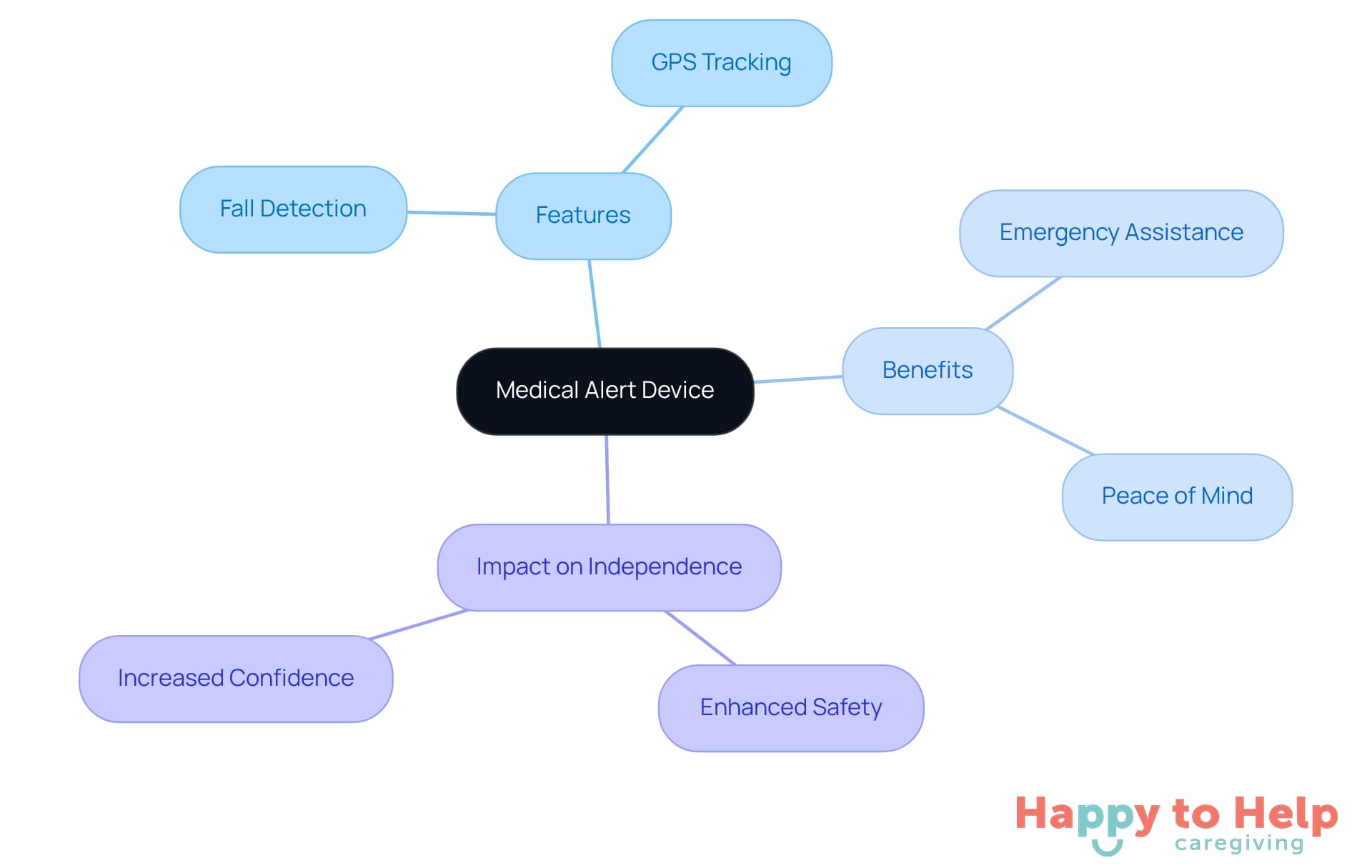
Assistive devices for seniors, such as medical alert systems, address this problem effectively. These assistive devices for seniors allow users to summon help at the push of a button, ensuring that assistance is just a call away. Many models come equipped with advanced features like fall detection and GPS tracking, which provide an added layer of security. This technology not only enhances safety but also instills confidence in older adults, knowing they can receive help whenever they need it.
By investing in a medical alert system, caregivers can significantly improve the quality of life for their loved ones. These assistive devices for seniors empower them to maintain their independence while ensuring that help is readily available in emergencies.
Walkers and Rollators: Essential Mobility Aids for Enhanced Independence
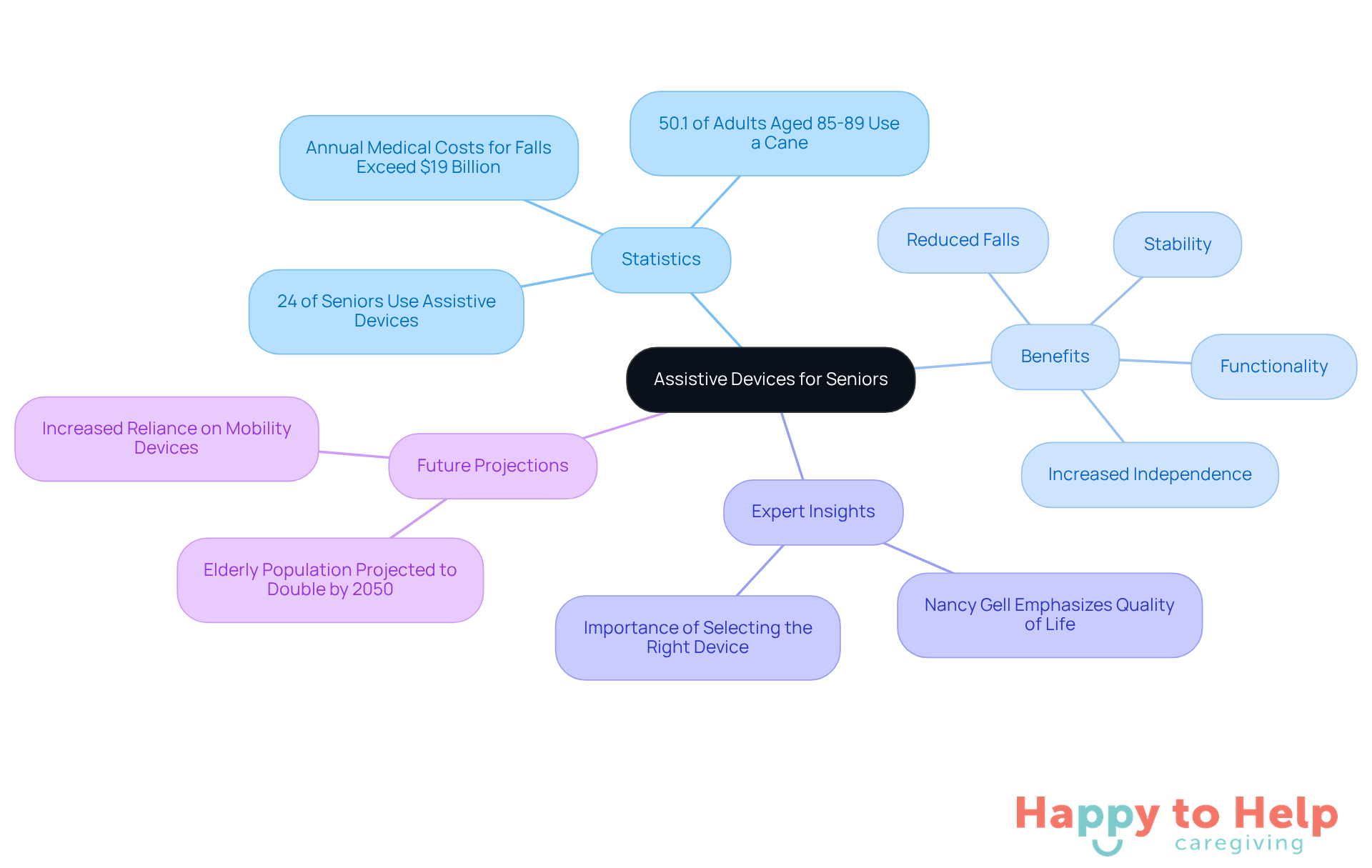
Mobility challenges are a significant concern for older adults, but assistive devices for seniors can help improve their ability to navigate their homes and communities. Recent studies reveal that 24% of U.S. adults aged 65 and older use assistive devices for seniors, which underscores their critical role in fostering independence. Without assistive devices for seniors, many of them face increased risks of falls and decreased engagement in daily activities.
Walkers and rollators are essential assistive devices for seniors that serve as solutions to these challenges. Walkers provide stability, while rollators offer added functionality with features like seats and storage compartments. These assistive devices for seniors not only encourage older adults to remain active but also significantly reduce the likelihood of falls, promoting a sense of autonomy.
Experts like physical therapist Nancy Gell emphasize that selecting the right assistive devices for seniors can greatly enhance the quality of life for elderly individuals. By facilitating participation in daily activities and social interactions, assistive devices for seniors help to restore both mobility and confidence. Success stories abound, illustrating how walkers and rollators have transformed lives, ultimately improving overall well-being.
As the elderly population is projected to double by 2050, the importance of assistive devices for seniors in promoting independence will only grow. Caregivers should consider assistive devices for seniors as vital tools in supporting the mobility and quality of life for older adults.
Stair Lifts: Safe Navigation for Multi-Level Homes
Stair lifts are significant assistive devices for seniors who face mobility challenges in multi-level homes. The risk of falls is a pressing concern, with stair-related injuries leading to over 1 million hospital visits annually. This issue not only jeopardizes physical safety but also impacts the independence of older adults, making it crucial to find effective solutions.
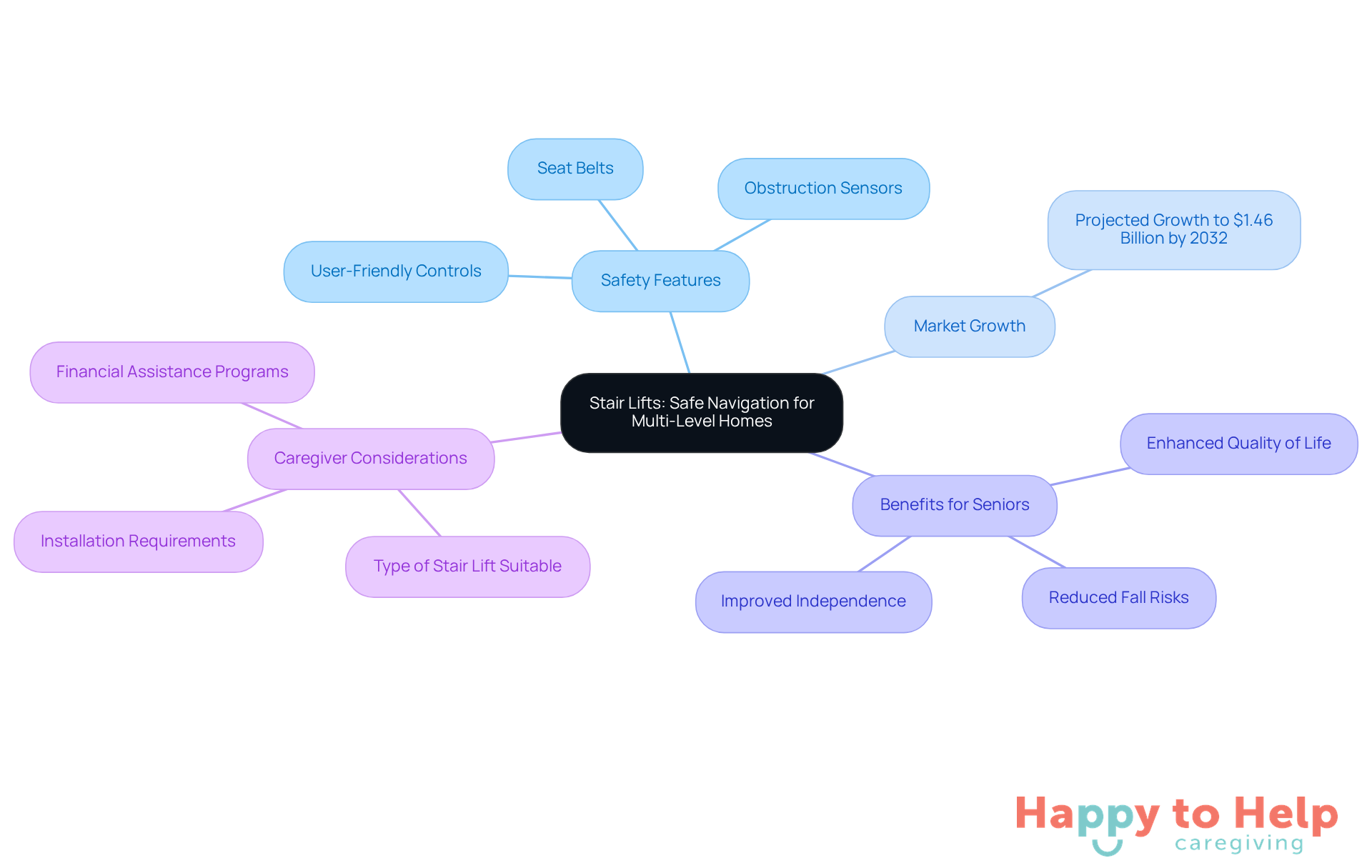
Modern stair lifts address these concerns by offering advanced safety features, such as seat belts and obstruction sensors, which enhance user security during operation. Additionally, user-friendly controls and customizable options ensure that stair lifts can seamlessly fit into any home environment. By facilitating easy access to all levels of the home, assistive devices for seniors such as stair lifts empower older adults to age in place, preserving their dignity and enhancing their quality of life.
Occupational therapists emphasize that stair lifts not only improve physical safety but also bolster older adults' confidence in their ability to maintain independence. As the stair lift market is projected to grow to $1.46 billion by 2032, this reflects the increasing demand for assistive devices for seniors as mobility solutions among the aging population. Many families report that installing a stair lift has transformed their loved ones' daily lives, allowing for safe and free navigation within their homes.
When selecting the right stair lift, caregivers should consider several factors:
- The type of stair lift suitable for their home.
- Installation requirements to ensure proper setup.
- Available financial assistance programs to ease the cost burden.
By addressing these considerations, caregivers can make informed decisions that significantly enhance the quality of life for their loved ones.
Hearing Aids: Enhancing Communication and Social Interaction
Hearing loss is a significant challenge for older adults, impacting their ability to communicate and engage socially. This issue can lead to feelings of isolation and loneliness, which are detrimental to emotional health. Fortunately, assistive devices for seniors, like hearing aids, provide a practical solution to this problem, significantly improving communication and social interaction.
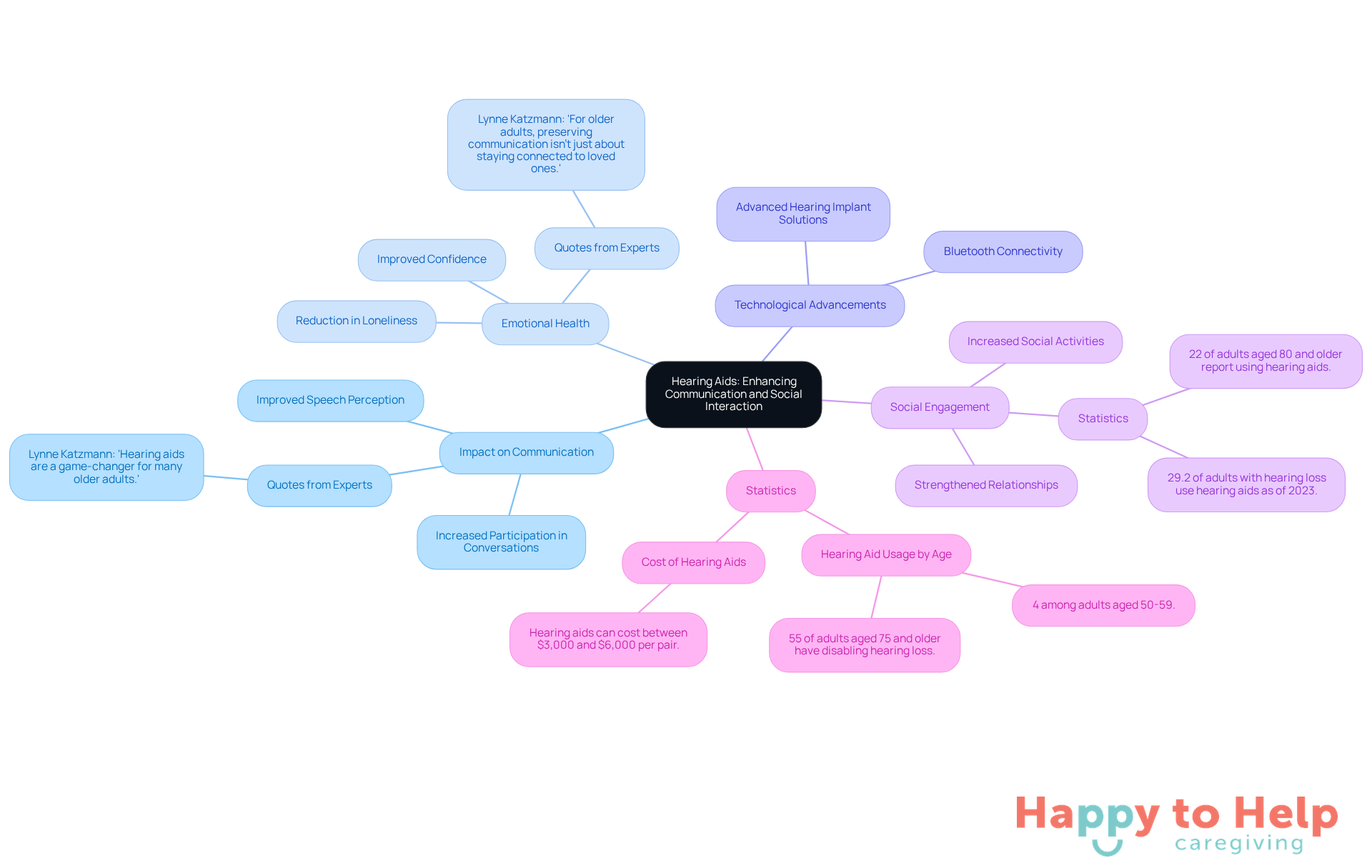
By enhancing sounds and clarifying speech, hearing aids enable older adults to participate actively in discussions and social events. Recent advancements, such as Bluetooth connectivity, allow users to stream audio directly from smartphones and other devices, enriching their auditory experience. Research indicates that older adults who use hearing devices experience increased social involvement and a reduction in loneliness. In fact, 22 percent of adults aged 80 and older report using these devices, highlighting their importance in the elderly population.
Audiologists emphasize the transformative effects of modern hearing aids. Lynne Katzmann, Founder and CEO, notes, "Hearing aids are a game-changer for many older adults." These assistive devices for seniors not only restore sound but also help seniors regain confidence in social situations. With features designed for various environments, users can enjoy conversations in both quiet and noisy settings, encouraging participation in community activities and enhancing overall quality of life.
A systematic review found that using hearing devices for 6 to 16 weeks led to significant improvements in hearing-specific quality of life. This supports the assertion that hearing aids facilitate social engagement and emotional well-being for elderly individuals. In summary, hearing aids are more than just tools; they are gateways to a more fulfilling life, enabling older adults to reconnect with family and friends and maintain their mental health.
Smart Home Devices: Automating Daily Tasks for Greater Control
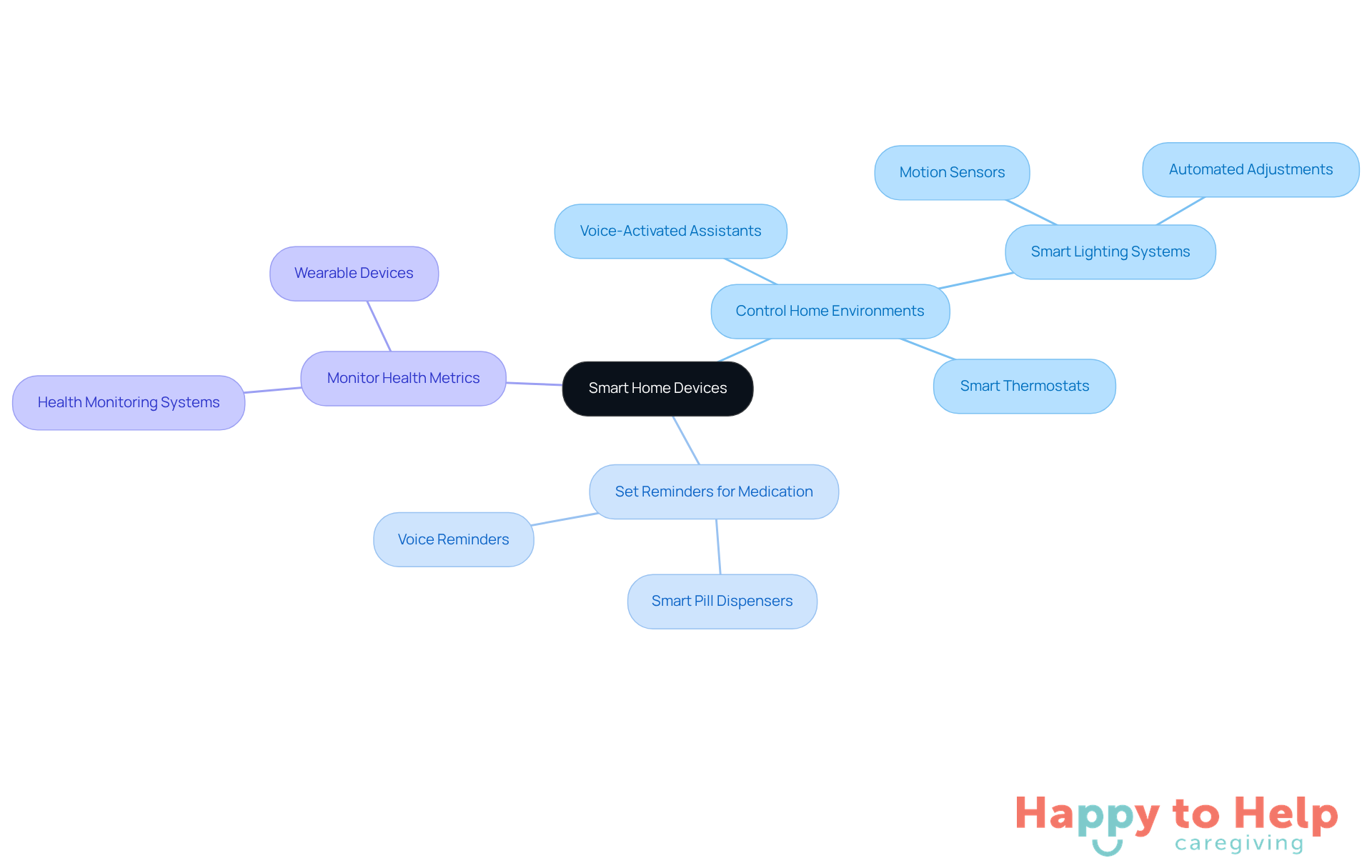
Many older adults face challenges in managing daily activities, which is why assistive devices for seniors can help alleviate feelings of frustration and dependence on caregivers. This struggle not only affects their quality of life but also places additional stress on those providing care.
Intelligent home gadgets, such as voice-activated helpers and automated lighting, offer a practical solution to these challenges. These technologies can:
- Control home environments
- Set reminders for medication
- Monitor health metrics
By incorporating assistive devices for seniors into their homes, older adults can enhance their self-sufficiency and safety, allowing them to maintain greater control over their living environments.
Adaptive Devices for Dressing: Promoting Self-Sufficiency in Daily Tasks
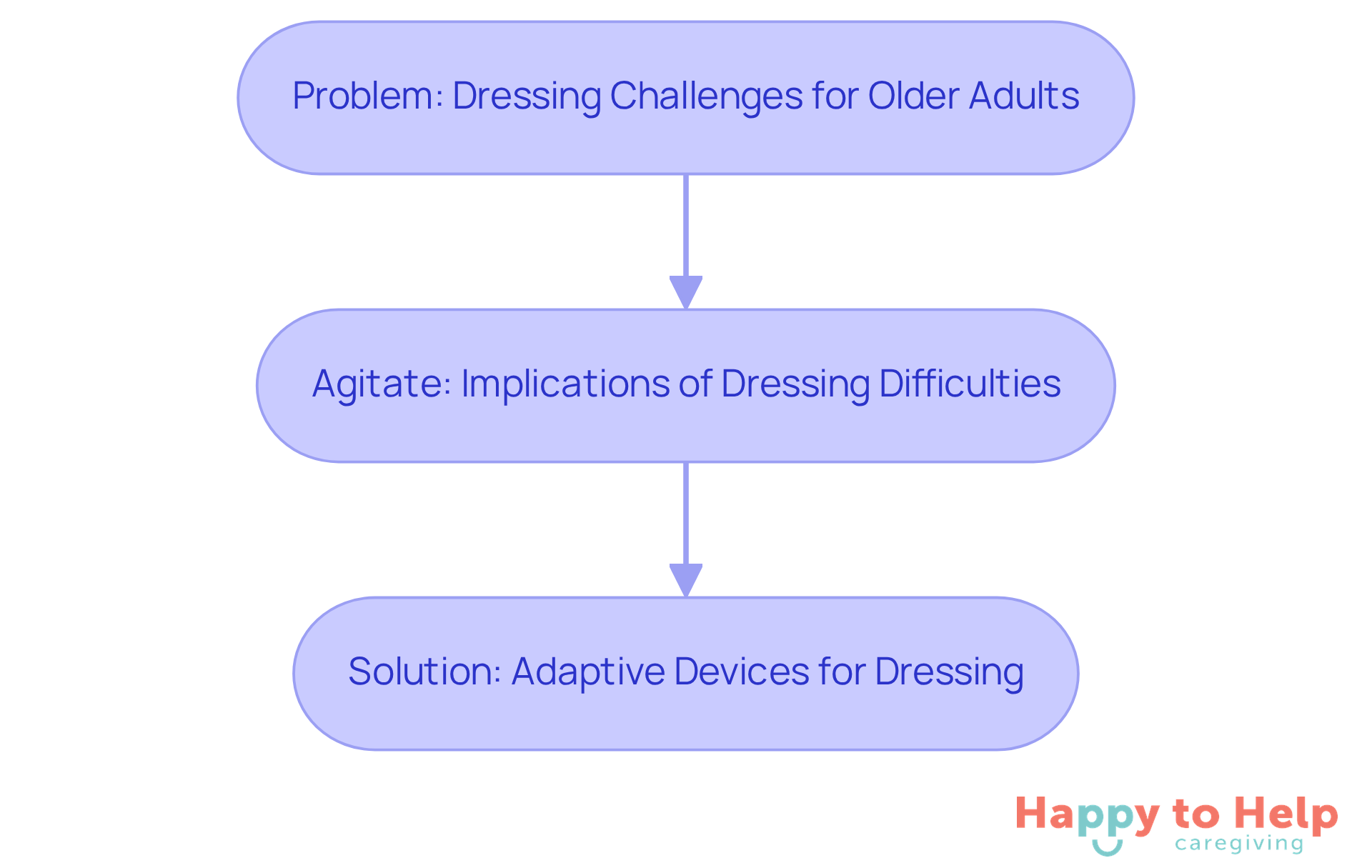
Problem: Many older adults face challenges when it comes to dressing independently due to limited mobility or dexterity. This can lead to a loss of dignity and independence in daily life, which is a significant concern for both seniors and their caregivers.
Agitate: The implications of these challenges are serious. Notably, 1 in 4 adults over the age of 65 experience falls each year, often exacerbated by difficulties in dressing. This not only affects their physical safety but also their self-esteem and overall quality of life. Occupational therapists emphasize that preserving independence is crucial, as many seniors may require support for activities they once managed on their own.
Solution: Assistive devices for seniors, including adaptive tools like button hooks and long-handled shoehorns, can make a significant difference in dressing. These assistive devices for seniors simplify the dressing process, enabling older adults to dress independently and maintain their dignity. By promoting self-sufficiency, they enhance self-esteem and provide a greater sense of control over one’s life. As the U.S. Census Bureau forecasts that by 2030, all baby boomers will be over 65, the demand for adaptive apparel and aids will continue to rise. Therefore, it is essential for older adults to have access to assistive devices for seniors, which not only promote independence but also enhance safety during dressing.
Reachers and Grabbers: Assisting with Daily Retrieval Tasks
For older adults, mobility challenges can pose significant risks. Bending or stretching to pick up items from the floor or reach high shelves can lead to falls and injuries, creating a daunting daily task. This not only affects their independence but also their overall quality of life.
Reachers and grabbers are assistive devices for seniors that serve as invaluable tools in addressing these issues. By allowing older adults to retrieve items independently, assistive devices for seniors significantly reduce the risk of accidents. They enhance the overall quality of life for seniors by making daily tasks safer and more manageable.
Incorporating reachers and grabbers into daily routines can empower older adults, fostering a sense of independence and confidence. Caregivers can encourage their use, ensuring that seniors can navigate their environments safely and effectively.
Raised Toilet Seats: Enhancing Comfort and Safety in the Bathroom
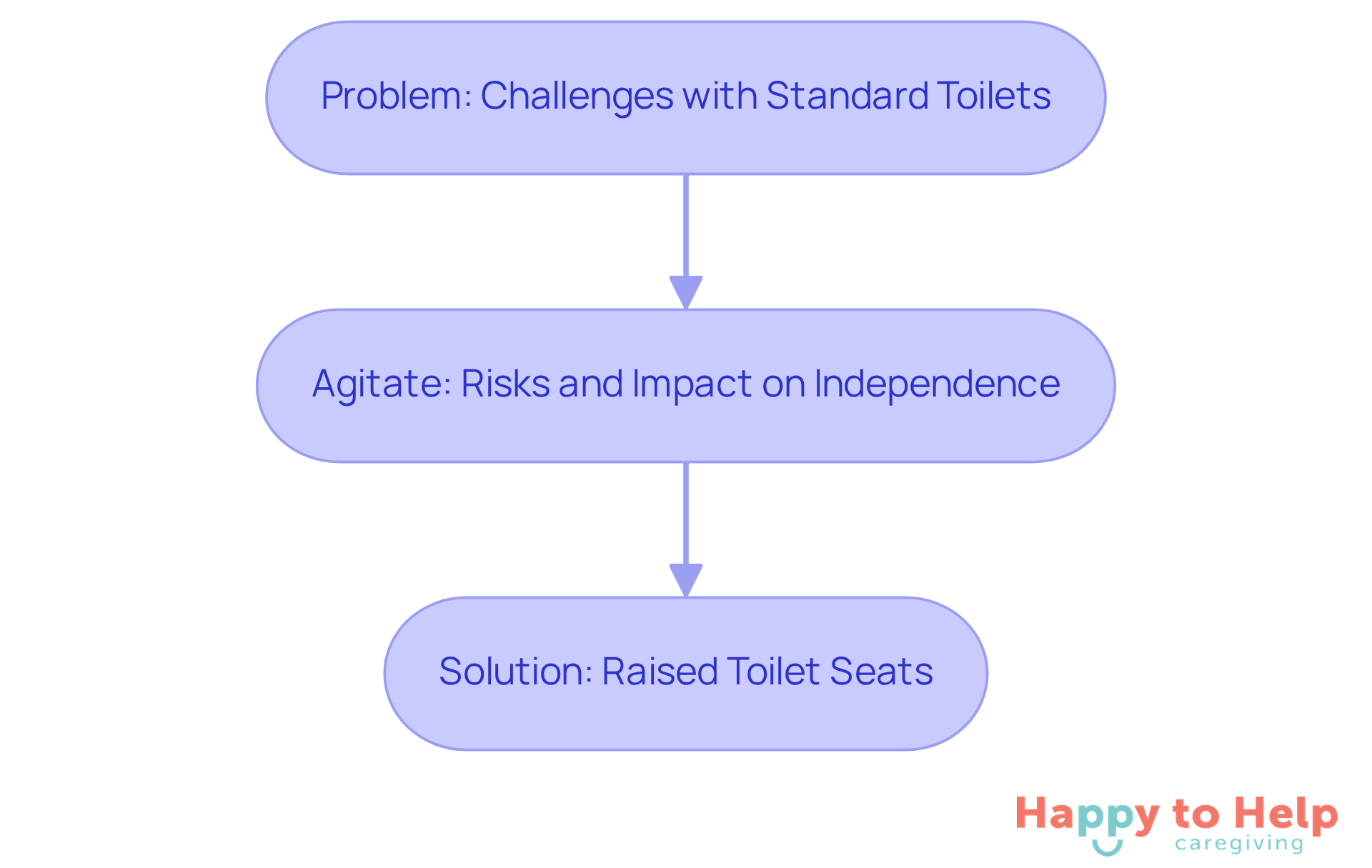
Problem: Many elderly individuals face significant challenges when using standard toilets, which can lead to discomfort and increased risk of falls. The height of a typical toilet can strain knees and hips, making it difficult to sit down and stand up safely.
Agitate: This issue not only affects their physical well-being but can also diminish their confidence and independence in daily activities. Caregivers often worry about the safety of their loved ones in the bathroom, as slips and falls can lead to serious injuries.
Elevated toilet seats are effective assistive devices for seniors, offering a practical solution to these challenges. These assistive devices for seniors, by raising the height of the toilet, reduce strain on the knees and hips, making it easier for elderly individuals to use the bathroom. Many models include handles for added support, enhancing both safety and comfort. Installing a raised toilet seat, which is one of the assistive devices for seniors, can significantly improve an elderly person's bathroom experience, promoting self-sufficiency and peace of mind for caregivers.
Chair Lifts: Facilitating Safe Transitions from Sitting to Standing
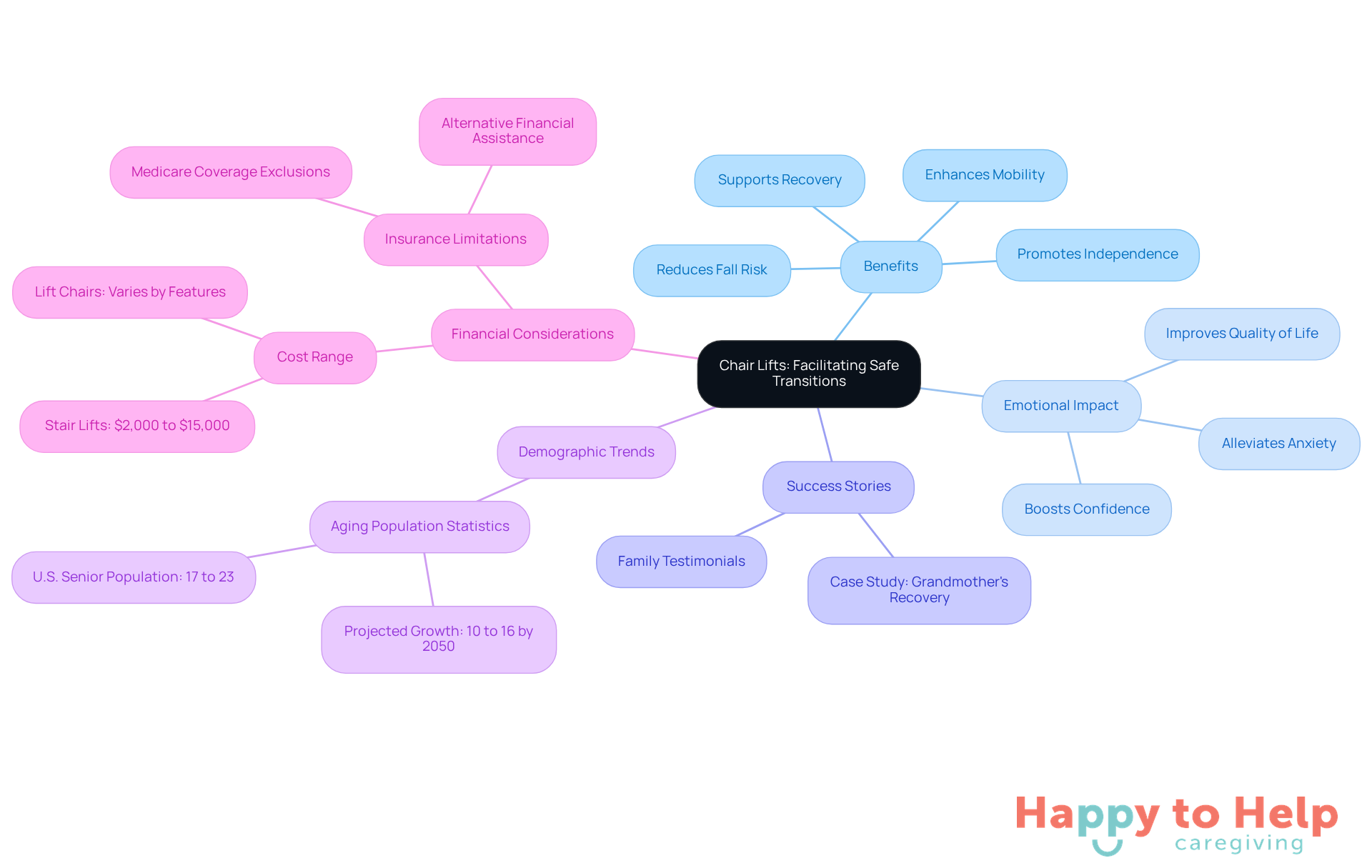
Chair lifts are essential assistive devices for seniors that address a significant problem: the difficulty of moving safely from sitting to standing. This challenge greatly increases the risk of falls, which can lead to serious injuries. The implications are profound, as falls can diminish independence and quality of life.
By promoting safe transitions, assistive devices for seniors, such as chair lifts, serve as a vital solution. Designed with adjustable heights and comfortable seating, assistive devices for seniors cater to a variety of individual needs, allowing older adults to maintain their independence and engage in daily activities with confidence. Physical therapists emphasize that assistive devices for seniors not only enhance mobility but also contribute to emotional well-being by alleviating anxiety associated with falling. As one physical therapist noted, assistive devices for seniors like lift chairs are designed to provide exceptional support and comfort, making it easier for them to stand up or sit down.
Success stories highlight the transformative impact of chair lifts. For instance, one family shared how their grandmother, who had previously struggled with mobility, regained her confidence and self-sufficiency after using a chair lift.
With the global population aged 65 and older expected to rise from 10% in 2022 to 16% by 2050, the importance of assistive devices for seniors in promoting self-sufficiency and improving quality of life cannot be overstated. However, families must also consider the financial aspect. The cost of stair lifts can vary significantly, ranging from $2,000 to over $15,000, and Medicare does not cover these devices. This financial consideration is crucial for families looking to invest in solutions that promote safety and independence.
Moving Forward with Assistive Devices
The importance of assistive devices for seniors is significant, as they are crucial in promoting independence and enhancing the quality of life for older adults. These devices address mobility, safety, and daily living challenges, empowering seniors to maintain their dignity and autonomy in familiar environments.
However, many caregivers may not fully understand the range of assistive devices available or how they can impact their loved ones' lives. This lack of awareness can lead to missed opportunities for improving seniors' well-being. Without these tools, seniors may struggle with daily tasks, leading to increased dependence and a diminished quality of life.
To address this issue, families and caregivers should explore various assistive devices, such as:
- Medical alert systems
- Walkers
- Stair lifts
- Hearing aids
- Smart home devices
Each of these tools serves a specific purpose, from ensuring immediate assistance in emergencies to facilitating safe navigation within the home. By investing in these technologies, caregivers can significantly enhance the well-being of their loved ones.
As the aging population continues to grow, the need for assistive devices will only increase. Families are encouraged to consider how these devices can support seniors' independence while providing peace of mind for caregivers. Investing in assistive devices not only fosters a sense of security but also contributes to a better quality of life for all involved.
https://iframe.tely.ai/cta/eyJhcnRpY2xlX2lkIjogIjY5MjY0MzdjZGIzM2UyOThlOGE1MTJjZSIsICJjb21wYW55X2lkIjogIjY4ZWU1ZGNhNzMxNzYyNTU3ZjNjOTVjMSIsICJpbmRleCI6IG51bGwsICJ0eXBlIjogImFydGljbGUifQ==Frequently Asked Questions
What services does Happy to Help Caregiving provide for seniors?
Happy to Help Caregiving offers personalized in-home support for seniors, including companionship, emotional support, help with daily tasks, and the use of assistive devices tailored to individual needs.
How does Happy to Help Caregiving empower elderly individuals?
By customizing care plans to meet individual needs, Happy to Help Caregiving allows elderly individuals to receive necessary support in a familiar environment, enhancing their quality of life while respecting their autonomy.
What is the role of medical alert devices for seniors?
Medical alert devices allow seniors to summon help quickly in emergencies by pushing a button. They often include features like fall detection and GPS tracking, enhancing safety and instilling confidence in older adults.
How do medical alert systems improve the quality of life for seniors?
By providing immediate assistance in emergencies, medical alert systems empower seniors to maintain their independence while ensuring that help is readily available, reducing anxiety for both seniors and their caregivers.
What are walkers and rollators, and how do they assist seniors?
Walkers and rollators are assistive devices that help improve mobility for seniors. Walkers provide stability, while rollators offer additional features like seats and storage, encouraging older adults to remain active and reducing the risk of falls.
Why are assistive devices important for older adults?
Assistive devices are crucial for older adults as they help enhance independence, reduce the risk of falls, and promote engagement in daily activities, ultimately improving their overall well-being.
What is the projected future of the elderly population and the need for assistive devices?
The elderly population is expected to double by 2050, highlighting the growing importance of assistive devices in promoting independence and quality of life for older adults.
List of Sources
- Happy to Help Caregiving: Personalized In-Home Support for Seniors
- Top healthcare trends of 2026: Aging in place is driving innovation in home-based care and technology (https://definitivehc.com/blog/aging-in-place-driving-innovation)
- Compassion in Action: How Personalized Senior Care Enhances Quality of Life - Miss Bell (https://missbellcares.com/compassion-in-action-personalized-senior-care)
- Trends in Senior Care: What to Expect in 2025 (https://agingconnections.org/blog/trends-in-senior-care-what-to-expect-in-2025)
- The Future of Aging: Is In-Home Care the New Standard? - WorldHealth.net (https://worldhealth.net/news/future-of-aging-is-in-home-care-new-standard)
- Caring Senior Service Banks Growth Goals On New House-Made Technology (https://homehealthcarenews.com/2025/10/caring-senior-service-banks-growth-goals-on-new-house-made-technology)
- Medical Alert Device: Immediate Emergency Assistance for Seniors
- Are medical alerts worth it for seniors? Here's what experts say (https://cbsnews.com/news/are-medical-alerts-worth-it-for-seniors-what-experts-say)
- U.S. Medical Alert Systems Market to Rise USD 7.76 Bn by 2034 (https://towardshealthcare.com/insights/us-medical-alert-systems-market-sizing)
- Medical Alert Systems: 2023-2024 Research and Statistics (https://theseniorlist.com/research/medical-alert-device-consumer-usage-study)
- Mobile Medical Alert Systems: A Lifeline for Senior Safety and Independence (https://ltcnews.com/articles/mobile-medical-alert-system-senior-safety-independence)
- Walkers and Rollators: Essential Mobility Aids for Enhanced Independence
- Friend or Foe? Study Examines Seniors' Increasing Use of Walking Aids | UVM News | The University of Vermont (https://uvm.edu/uvmnews/news/friend-or-foe-study-examines-seniors-increasing-use-walking-aids)
- New 2025 Summer Guide Empowers Seniors to Stay Independent as Mobility Equipment Innovation Surges Nationwide (https://cbs42.com/business/press-releases/ein-presswire/827097148/new-2025-summer-guide-empowers-seniors-to-stay-independent-as-mobility-equipment-innovation-surges-nationwide)
- Mobility Device Use Among Older Adults and Incidence of Falls and Worry About Falling: Findings From the 2011–2012 National Health and Aging Trends Study - PMC (https://pmc.ncbi.nlm.nih.gov/articles/PMC4439269)
- Comfort Keepers of Pitman, NJ Shares the Benefits of Mobility Aids for Seniors (https://kron4.com/business/press-releases/ein-presswire/866931728/comfort-keepers-of-pitman-nj-shares-the-benefits-of-mobility-aids-for-seniors)
- Incidence and dynamics of mobility device use among community-dwelling older adults in the United States - PMC (https://pmc.ncbi.nlm.nih.gov/articles/PMC12288708)
- Stair Lifts: Safe Navigation for Multi-Level Homes
- The Growing Demand for Stair Lift Purchases: What’s Driving It? (https://jamesmedical.com/post/the-growing-demand-for-stair-lift-purchases-whats-driving-it)
- New Outdoor Stair Lift from Leaf Home Brings Safe, Confident Access to Outdoor Spaces (https://prnewswire.com/news-releases/new-outdoor-stair-lift-from-leaf-home-brings-safe-confident-access-to-outdoor-spaces-302529520.html)
- Benefits Of Having A Stairlift In Your Home (https://stairliftguru.co.uk/benefits-of-having-a-stairlift)
- NSM — National Seating & Mobility (https://nsm-seating.com/journal/stair-lift-market-estimated-to-grow-at-a-cagr-of-over-8-during-2019-2025)
- Stair lift statistics 2025 (https://consumeraffairs.com/homeowners/stair-lift-statistics.html)
- Hearing Aids: Enhancing Communication and Social Interaction
- How Hearing Aids Can Transform Your Social Life | McGregor Amasa (https://mcgregoramasa.org/2024/05/14/how-hearing-aids-can-transform-your-social-life)
- Hearing Quotes and Sayings - Inspirational, Insightful and Humorous (https://hearinghealthmatters.org/waynesworld/2022/hearing-quotes-and-sayings)
- Hearing aids make communication easier for people with mild hearing loss (https://evidence.nihr.ac.uk/alert/hearing-aids-make-communication-easier-for-people-with-mild-hearing-loss)
- Latest Hearing Aid Statistics in America | Big Sky Audiology (https://bigskyaudiology.com/current-hearing-aids-statistics-in-america)
- Hearing Loss in Seniors: How to Improve Communication (https://junipercommunities.com/hearing-loss-in-seniors-how-to-improve-communication-find-the-right-hearing-aids)
- Smart Home Devices: Automating Daily Tasks for Greater Control
- ‘Smart home’ tech the answer for aging in place, older adults say (https://mcknightsseniorliving.com/news/smart-home-tech-the-answer-for-aging-in-place-older-adults-say)
- Embracing Technology: How Smart Home Devices Enhance Senior Living in 2025 (https://carepatrol.com/lorain-medina-wooster-mansfield/embracing-technology-how-smart-home-devices-enhance-senior-living-in-2025)
- Older Americans Are Leveraging More Technology (https://aarp.org/pri/topics/technology/internet-media-devices/2025-technology-trends-older-adults)
- The Best Smart Home Devices to Help Aging in Place (https://nytimes.com/wirecutter/reviews/smart-home-for-seniors)
- Empowering Independence: Smart Home Solutions For Aging In Place - International Council on Active Aging® (https://icaa.cc/industrynews/2024-11/Empowering-independence-Smart-home-solutions-for-aging-in-place.htm)
- Adaptive Devices for Dressing: Promoting Self-Sufficiency in Daily Tasks
- Adaptive Clothing for Seniors (https://humancareny.com/blog/adaptive-clothing-for-seniors)
- List of Assistive Devices for the Elderly – Essential Tools for Improved Independence (https://medsupplieshub.com/blogs/medsupplieshub-blog/list-of-assistive-devices-for-the-elderly-essential-tools-for-improved-independence?srsltid=AfmBOoqObkBnmNmmDZeiH\_X7SIJYy74615i8GUtUSCa7H3dr9BP7UR3z)
- The Caregiver Guide – Adaptive Clothing and Dressing Aids (https://llmedico.com/a/blog/the-caregiver-guide-adaptive-clothing-and-dressing-aids?srsltid=AfmBOopQqzDj1R58-UT7VB2MYtFT34t7PQdfN63ytbecx5IMjQUq6RIN)
- Assistive Devices for People With Disabilities | Kaiser Permanente (https://healthy.kaiserpermanente.org/health-wellness/health-encyclopedia/he.assistive-devices-for-people-with-disabilities.ty7204)
- The Importance of Adaptive Equipment as We Age (https://concordialm.org/blog/the-importance-of-adaptive-equipment-as-we-age)
- Reachers and Grabbers: Assisting with Daily Retrieval Tasks
- 10 Essential Assistive Devices for Elderly Caregivers - Happy To Help (https://happytohelpcaregiving.com/10-essential-assistive-devices-for-elderly-caregivers)
- (PDF) Effects of Tracking Technology on Daily Life of Persons With Dementia: Three Experimental Single-Case Studies (https://researchgate.net/publication/261923008\_Effects\_of\_Tracking\_Technology\_on\_Daily\_Life\_of\_Persons\_With\_Dementia\_Three\_Experimental\_Single-Case\_Studies)
- Unlock Effortless Reach and Grab: Discover the Vive Rotating Reacher - (https://supplyingseniors.com/blogs/news/unlock-effortless-reach-and-grab-discover-the-vive-rotating-reacher?srsltid=AfmBOorVynzqv1ehgUG7YXBW-tx6YqQhpXz3w7PFBPszWJm8T5KbMDhw)
- 30 Inspirational Physical Therapy Quotes - Care Options for Kids (https://careoptionsforkids.com/blog/physical-therapy-quotes)
- Reachers Market | Global Market Analysis Report - 2035 (https://futuremarketinsights.com/reports/reachers-market)
- Raised Toilet Seats: Enhancing Comfort and Safety in the Bathroom
- Bathroom Safety for Seniors: Essential Tips for Elderly Care (https://lovinghomecareinc.com/senior-bathroom-safety-tips)
- Raised Toilet Seats Decade Long Trends, Analysis and Forecast 2025-2033 (https://archivemarketresearch.com/reports/raised-toilet-seats-329137)
- Raised Toilet Seats in the Real World: 5 Uses You'll Actually See (2025) (https://linkedin.com/pulse/raised-toilet-seats-real-world-5-uses-youll-actually-see-2025-00wze)
- Chair Lifts: Facilitating Safe Transitions from Sitting to Standing
- Lift Chairs 101: Health Benefits, Design Trends, and Tips (https://caremade.ca/blogs/the-accessibility-blog/lift-chairs-101-health-benefits-design-trends-and-buying-tips-for-seniors)
- Stair lift statistics 2025 (https://consumeraffairs.com/homeowners/stair-lift-statistics.html)
- The Benefits of Lift Chairs for Home Comfort and Safety (https://jamesmedical.com/post/the-benefits-of-lift-chairs-for-home-comfort-and-safety)
- How Lift Chairs Improve Mobility and Comfort for Aging at Home - AmeriStaff Nursing Services (https://ameristaffservices.com/lift-chairs-improve-mobility)