Understanding Your Options
Elderly companion care services provide essential benefits that significantly enhance the emotional, social, and physical well-being of older adults. These services address the emotional challenges faced by seniors, alleviating feelings of loneliness and offering the emotional support they need. By assisting with daily living activities, they foster a sense of security for both seniors and their families. This compassionate care ultimately leads to an improved overall quality of life, bringing reassurance and encouragement to those involved.
The Importance of Benefits of Elderly Companion Care
Elderly companion care services have emerged as a vital resource, addressing the unique challenges faced by older adults—particularly in combating loneliness and enhancing emotional well-being. By providing personalized companionship, these services not only improve the quality of life for seniors but also offer significant peace of mind for their families. However, with so many options available, families may feel overwhelmed. How can they determine the right level of support needed to ensure their loved ones thrive in a nurturing environment? This article explores ten essential benefits of elderly companion care services, shedding light on how they can transform the lives of seniors and their families alike.
Happy to Help Caregiving: Personalized Companionship for Seniors
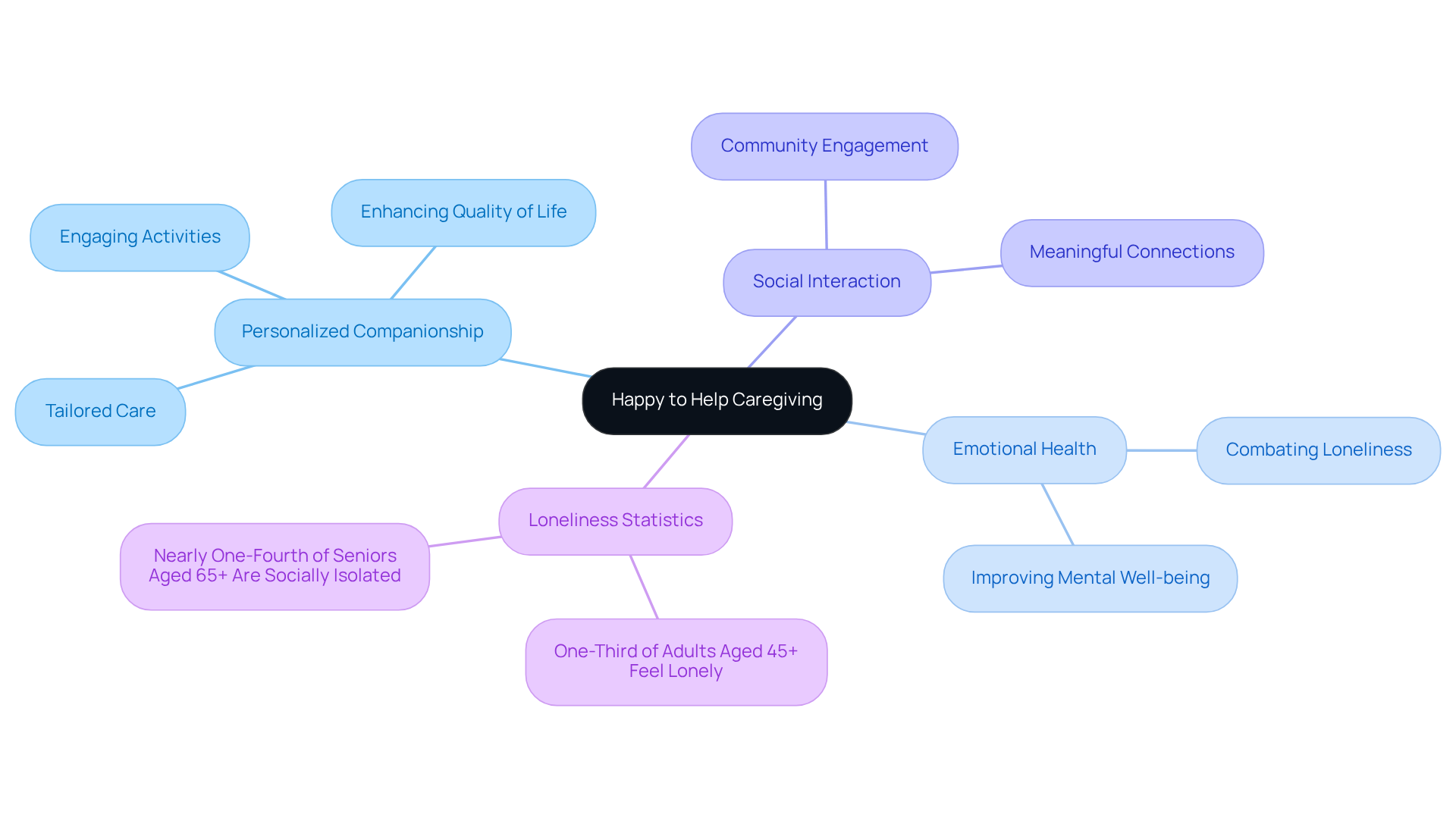
Happy to Help Caregiving excels in offering elderly companion care services that provide personalized companionship for elderly individuals, ensuring that each client receives care specifically tailored to their unique needs and preferences. This approach nurtures a deep sense of belonging and significantly enhances the emotional health of older adults, allowing them to thrive in the comfort of their own homes.
Our caregivers actively engage clients in meaningful activities that promote essential social interaction and emotional support. These connections are crucial for maintaining a high quality of life. Studies indicate that over one-third of adults aged 45 and older experience feelings of loneliness, according to the University of Michigan’s National Poll on Healthy Aging. Nearly one-fourth of seniors aged 65 and older are considered socially isolated.
By addressing these challenges, elderly companion care services provide vital support in combating loneliness and enhancing the overall emotional well-being of elderly individuals. As Tia Walker aptly states, 'Caregiving often calls us to lean into love we didn’t know possible,' highlighting the transformative power of compassionate, personalized support.
Reduced Loneliness: The Emotional Support of Companion Care
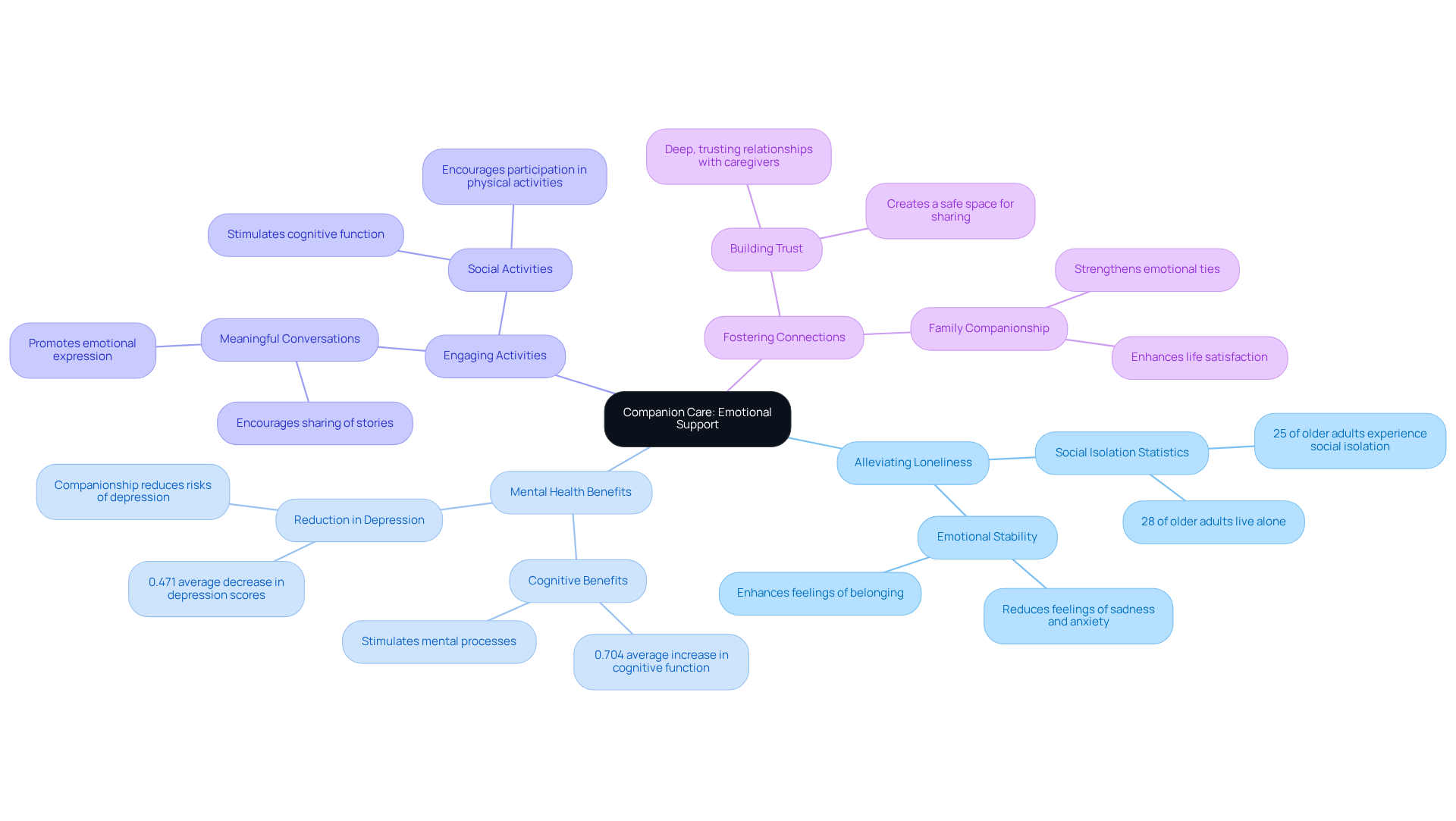
Elderly companion care services play a crucial role in alleviating loneliness among older adults, significantly impacting their mental health. Caregivers offer more than just physical assistance; they provide essential emotional support by engaging clients in meaningful conversations and enjoyable activities. This companionship is especially significant for older adults who may have faced the loss of friends or family, nurturing a sense of worth and understanding.
According to a University of Michigan survey, around a quarter of older adults experience some level of social isolation, highlighting the pressing need for companionship. By nurturing these connections, caregivers enhance older adults' emotional health, leading to improved overall well-being and life satisfaction. The presence of a caring companion not only alleviates feelings of sadness and anxiety but also encourages older adults to participate in social activities, stimulating their minds and promoting cognitive function.
As noted by the Institute on Aging, breaking free from isolation through companionship offers numerous mental health benefits, such as stimulating the brain and fostering empathy. Ultimately, the emotional assistance provided through companion care is vital for fostering resilience and a positive outlook in the lives of elderly individuals. This compassionate support creates a nurturing environment where older adults can thrive, feel valued, and embrace life with renewed joy.
Enhanced Daily Living: Assistance with Activities of Daily Living
Elderly companion care services are designed to support elderly individuals with essential activities of daily living (ADLs), such as:
- Bathing
- Dressing
- Meal preparation
- Medication reminders
This assistance, including elderly companion care services, is vital as it not only helps older adults maintain their independence but also ensures their safety and well-being at home. Imagine the peace of mind that comes from knowing someone is there to help with these crucial duties.
By offering elderly companion care services, helpers enable elderly individuals to reside comfortably and assuredly in their own residences. It’s about more than just assistance; elderly companion care services focus on fostering a nurturing environment where they can thrive. Every moment of support contributes to a sense of security and dignity, allowing them to enjoy their lives fully.
In times of stress and uncertainty, elderly companion care services can provide a compassionate companion that can make all the difference. These helpers are dedicated to understanding the unique needs of each individual, providing not just physical assistance but also emotional comfort. Together, we can create a community where our elderly loved ones feel valued and cared for, ensuring they never have to face the challenges of aging alone.
https://iframe.tely.ai/cta/eyJhcnRpY2xlX2lkIjogIjY4ZjQyYTM1NDM4OTAyYTg1NGRmNWNiNyIsICJjb21wYW55X2lkIjogIjY4ZWU1ZGNhNzMxNzYyNTU3ZjNjOTVjMSIsICJpbmRleCI6IDIsICJ0eXBlIjogImFydGljbGUifQ==Peace of Mind: Family Assurance Through Companion Care
Families often grapple with anxiety about their loved ones' well-being, especially when they can no longer manage daily tasks independently. Elderly companion care services, such as those provided by Happy to Help Caregiving, offer significant peace of mind. It ensures that seniors are not alone and are receiving essential assistance. Having a skilled support person to help with daily activities and provide companionship alleviates concerns about safety and health.
This reassurance allows families to focus on their own lives, confident that their loved ones are in capable hands. In fact, studies show that 75% of adults aged 50 and older prefer to age in place, highlighting the importance of reliable in-home support. Family supporters often express relief, noting that the presence of a compassionate helper greatly reduces their stress levels.
As one family caregiver shared, "Knowing that my mom has someone there to help her with daily tasks gives me peace of mind, allowing me to enjoy my time with her without constant worry." The steady assistance provided by Happy to Help Caregiving's elderly companion care services not only enhances the quality of life for seniors but also fosters a sense of security for families. This enables them to cherish their relationships without the ongoing concern for their loved ones' safety.
https://iframe.tely.ai/cta/eyJhcnRpY2xlX2lkIjogIjY4ZjQyYTM1NDM4OTAyYTg1NGRmNWNiNyIsICJjb21wYW55X2lkIjogIjY4ZWU1ZGNhNzMxNzYyNTU3ZjNjOTVjMSIsICJpbmRleCI6IDMsICJ0eXBlIjogImFydGljbGUifQ==Customized Care Plans: Tailoring Services to Individual Needs
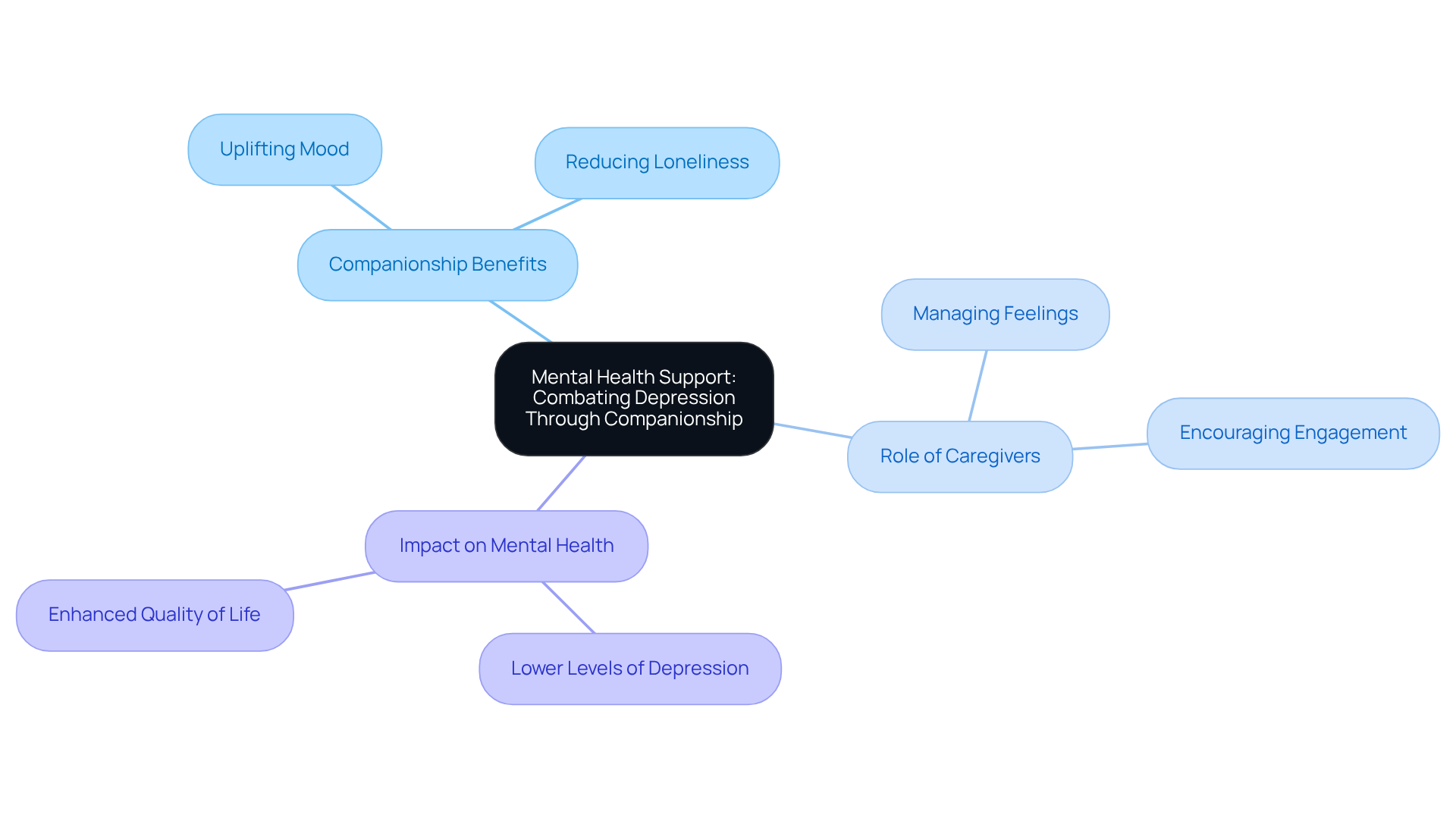
At Happy to Help Caregiving, we understand that each client has unique needs, preferences, and lifestyles. That’s why every client benefits from a customized care plan designed specifically for them. This tailored approach allows our caregivers to provide relevant support, whether it’s engaging in cherished hobbies, managing medications, or simply offering companionship.
Tailoring our services not only enhances the quality of life for seniors but also fosters a deep sense of understanding and value. Customized assistance plans help reduce stress for residents by providing appropriate levels of support, promoting stability and routine. We believe that the collaborative development of these plans, involving family members and healthcare professionals, is crucial to ensuring all aspects of a client’s needs are met.
As the demand for elderly companion care services continues to grow, it’s essential to recognize that these individualized plans significantly enhance emotional well-being and promote independence. The adaptability of these support plans allows for adjustments as residents’ needs evolve, ensuring they remain effective and relevant.
By focusing on the specific requirements of each client, our caregivers create a nurturing environment that respects autonomy while ensuring necessary support. This dedication to individualized elderly companion care services is essential in addressing the various challenges older adults face, ultimately leading to improved health outcomes and a more fulfilling life.
Health Benefits: Preventing Conditions Through Social Engagement
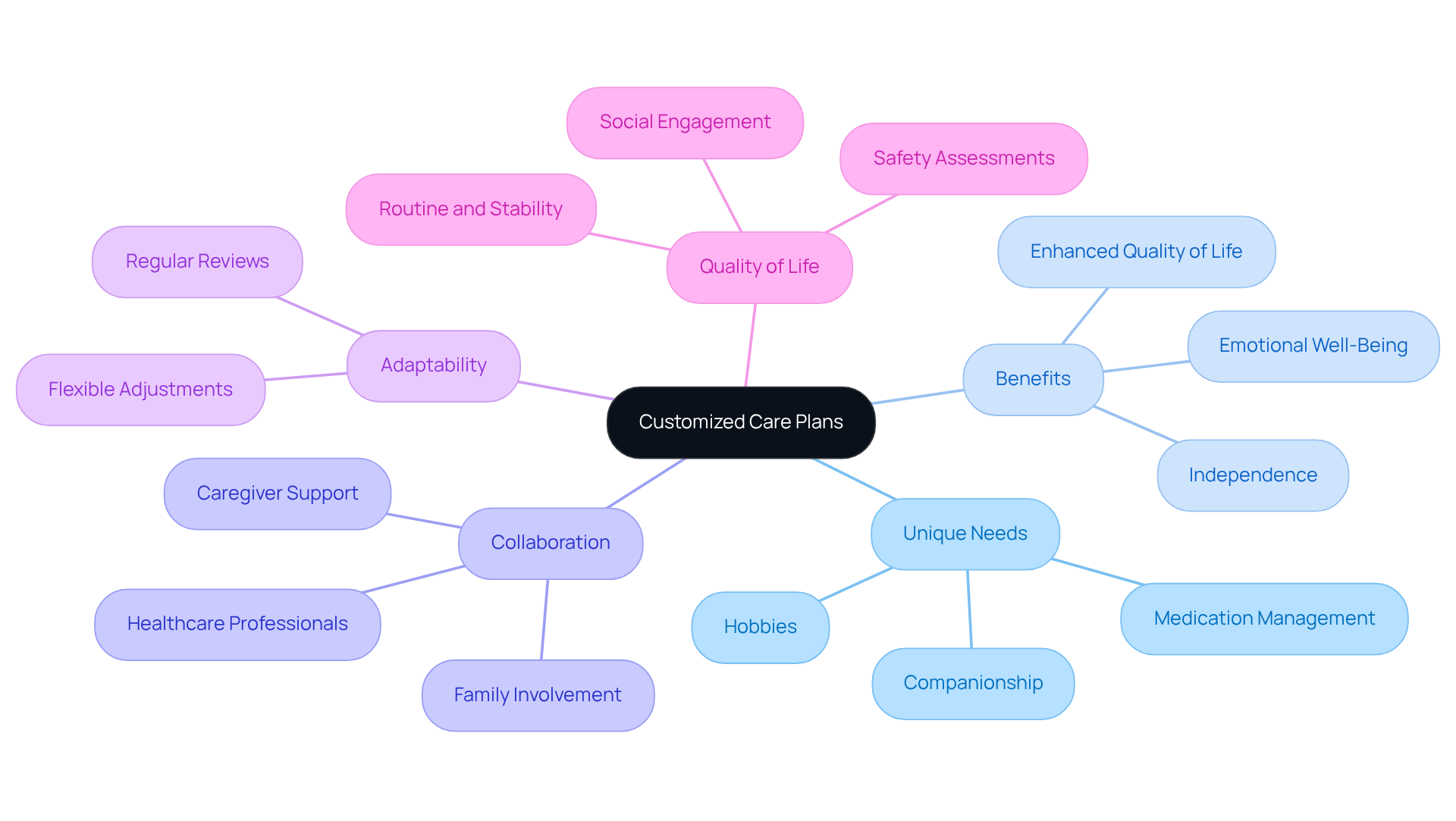
Social interaction is essential for preventing a range of health issues in older adults, including depression, cognitive decline, and heart disease. It's heartening to know that research shows high levels of social interaction can reduce mortality risk by 42%. This highlights how vital companionship is in promoting longevity.
Companion caregivers within elderly companion care services play a crucial role by actively encouraging social interaction through various activities, outings, and meaningful conversations. These efforts significantly enhance both mental and physical health. By fostering these important connections, companion support not only improves the quality of life for seniors but also contributes to their overall well-being and longevity.
Health experts emphasize that strong social connections can protect against serious health problems. This makes elderly companion care services an invaluable aspect of elderly support, providing reassurance and comfort to both seniors and their families.
Respite for Family Caregivers: Alleviating Caregiver Burden
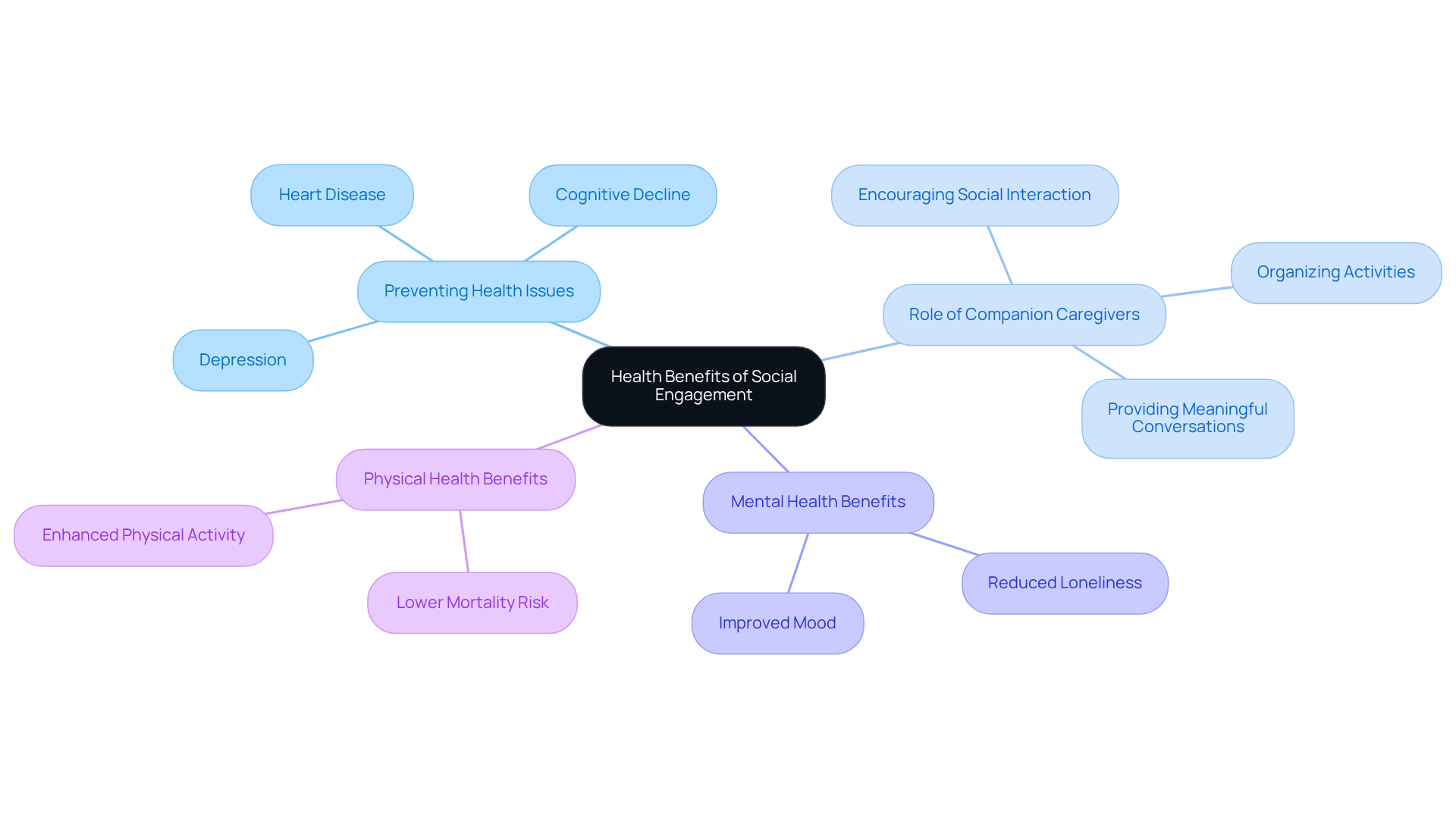
Family supporters often find themselves overwhelmed by immense stress and exhaustion due to their demanding responsibilities. It's crucial to recognize the emotional toll this can take. Elderly companion care services offer vital respite, enabling family members to take necessary breaks, manage personal matters, or simply rejuvenate. This assistance not only enhances the well-being of the caregiver but also ensures that seniors receive consistent quality attention and companionship through elderly companion care services.
Research reveals that 80% of individuals living with dementia rely on informal assistance from relatives, translating to around 16 million family supporters in the U.S. This statistic underscores the importance of robust support systems for those who give so much of themselves. By alleviating the burden on caregivers, elderly companion care services nurture a healthier dynamic for everyone involved. It enables supporters to prioritize their own well-being while ensuring their loved ones thrive in a supportive environment.
Testimonials from families highlight that having a companion significantly reduces feelings of isolation and stress, fostering a more balanced caregiving experience. These personal stories remind us that support is not just about assistance; it’s about creating a caring and compassionate atmosphere where both caregivers and seniors can flourish together.
Mental Health Support: Combating Depression Through Companionship
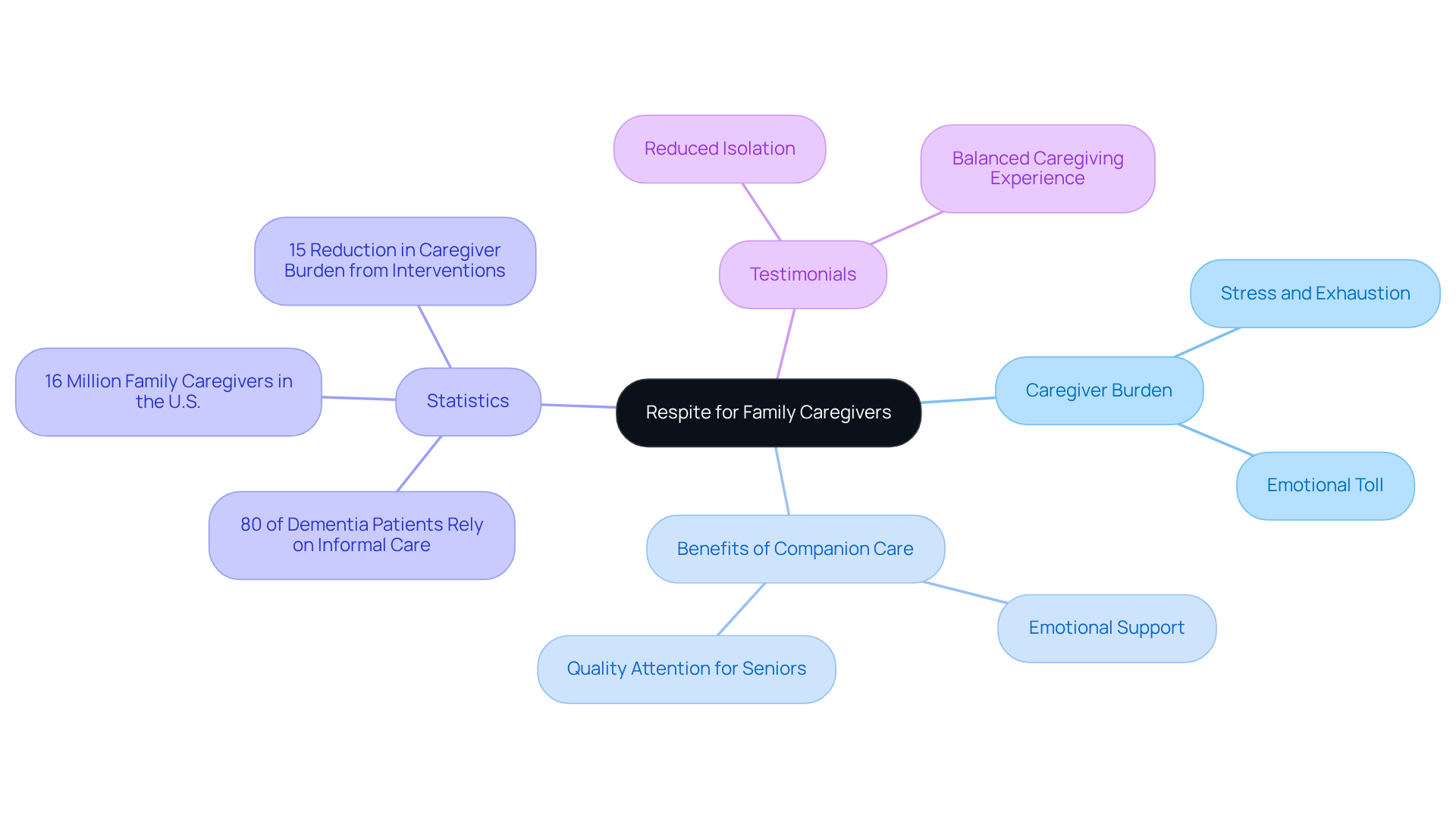
Elderly companion care services are essential for enhancing the mental well-being of older adults, particularly in addressing feelings of depression and anxiety. Engaging caregivers involved in elderly companion care services provide not just companionship but also meaningful conversations that can significantly uplift an elderly person's mood and overall outlook on life. Research indicates that social interactions and emotional support are crucial in alleviating loneliness, a feeling often linked to depression in older adults. Psychologists stress that nurturing connections through companionship can foster improved mental well-being, as these relationships help older adults feel valued and understood.
Moreover, the assistance from caregivers plays a vital role in combating depression among older adults. By offering consistent emotional support and companionship, caregivers can help older adults manage their feelings, encouraging them to engage in activities they love and nurturing a sense of purpose. Recent findings highlight that older adults who receive elderly companion care services report lower levels of depression and anxiety, showcasing the transformative impact of these services.
In conclusion, the emotional and social support provided by elderly companion care services not only diminishes feelings of isolation but also enriches the quality of life for older adults, making companionship a fundamental element of mental well-being. To further enhance support for elderly individuals, family caregivers are encouraged to actively engage in regular conversations and activities that resonate with their loved ones, fostering a deeper bond and promoting overall well-being.
Flexible Scheduling: Adapting to Seniors' Changing Needs
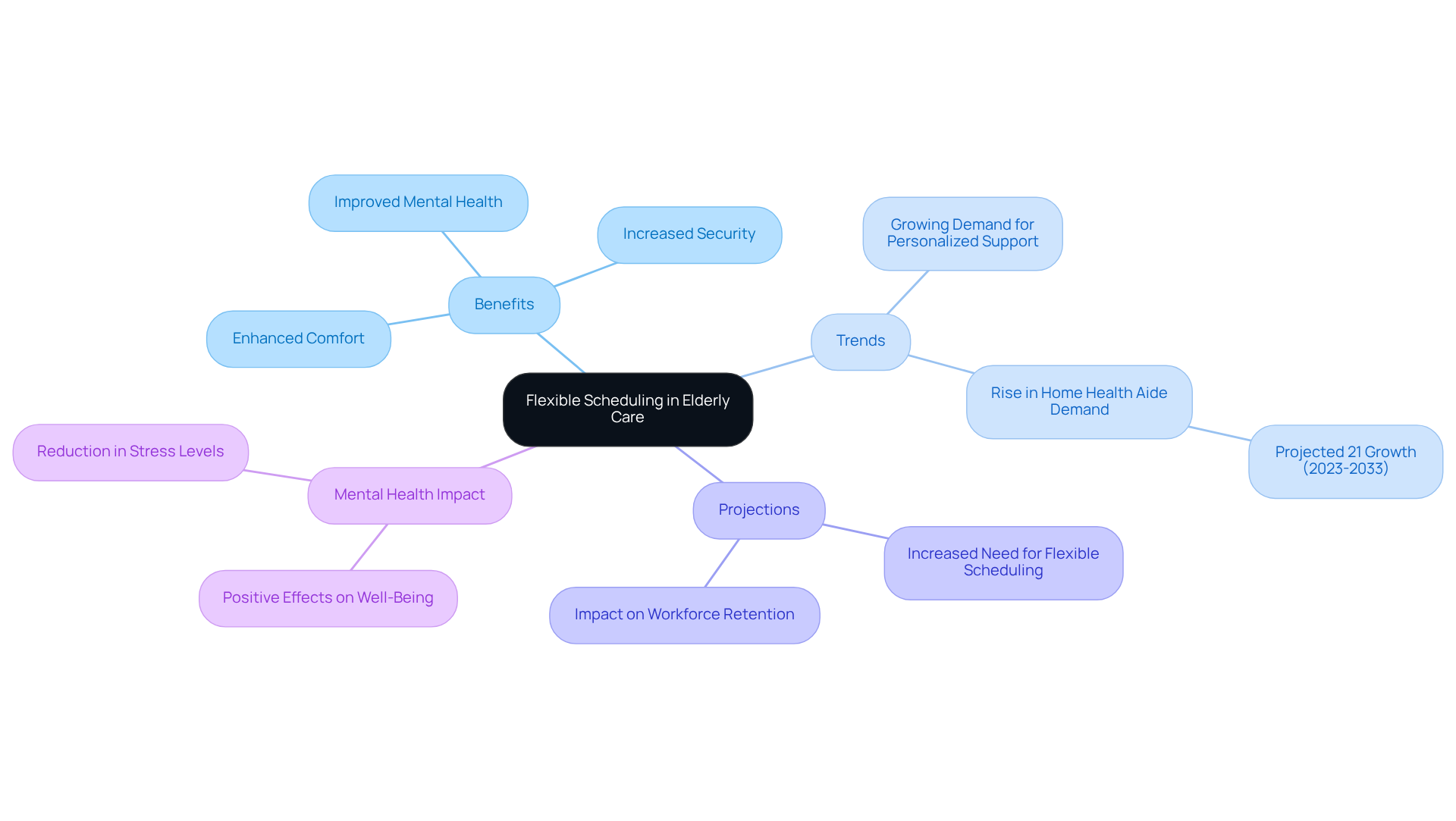
A significant advantage of companion support lies in its inherent flexibility. Caregivers are ready to adjust their schedules to meet the evolving needs of elderly individuals. Whether it involves providing extra assistance during recovery or adapting to new health challenges, this adaptability is essential. It ensures that seniors receive the right level of support precisely when they need it, enhancing their overall comfort and sense of security.
Current trends reveal a growing demand for personalized support solutions, such as elderly companion care services, that can quickly respond to the dynamic health conditions of elderly clients. In fact, the need for home health and personal assistance aide workers is projected to rise by 21% from 2023 to 2033. This underscores the increasing necessity for elderly companion care services as adaptable caregiving solutions. By focusing on flexible scheduling, elderly companion care services can effectively meet these changing needs, ensuring that older adults feel supported and valued throughout their journey.
As specialists emphasize, adaptable scheduling not only improves service delivery but also positively impacts mental health and overall well-being. This makes it a crucial element of quality companionship support. It’s important to remember that the compassionate care provided through these services can make a profound difference in the lives of both caregivers and those they support.
Improved Quality of Life: The Comprehensive Benefits of Companion Care
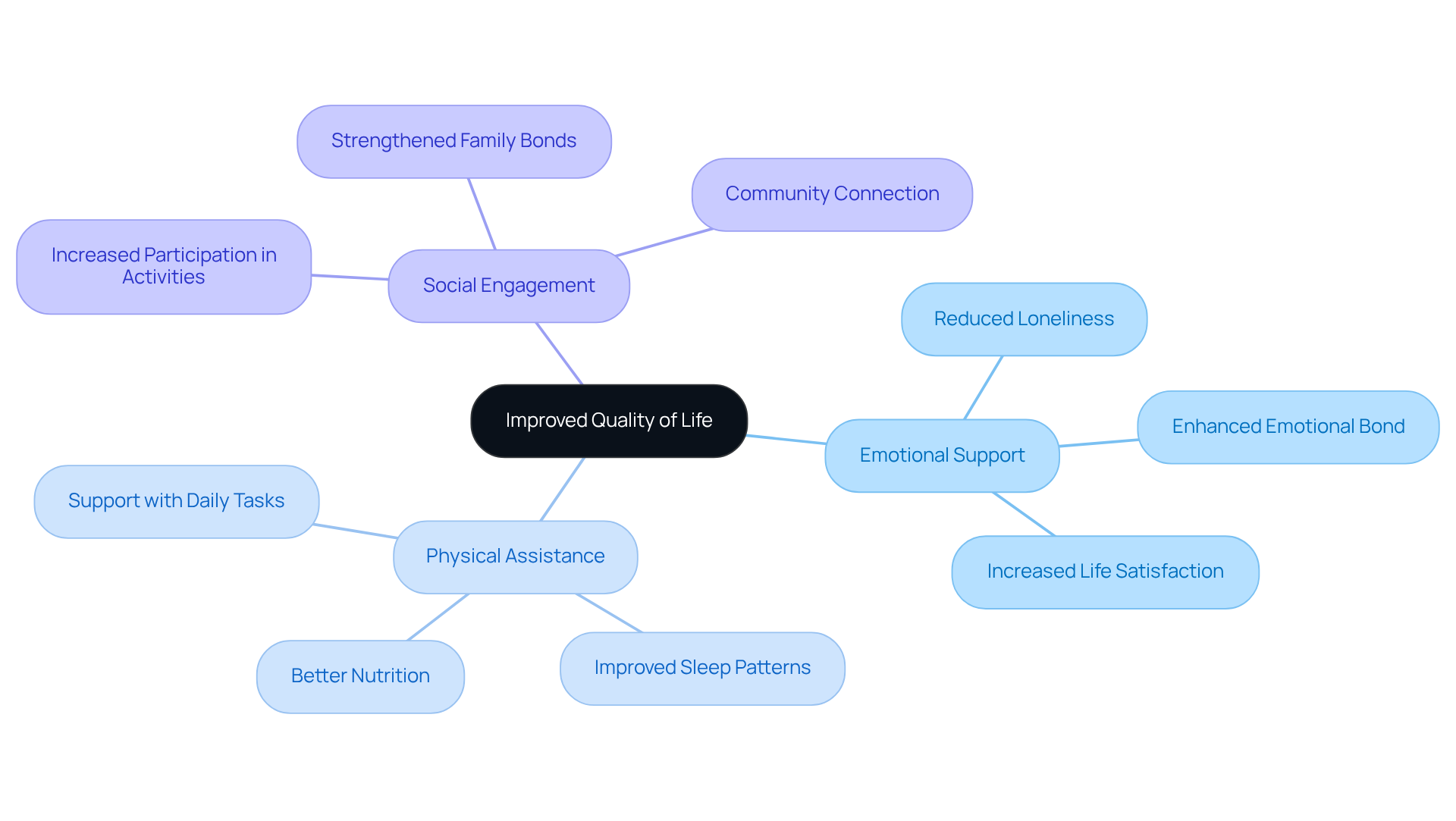
Elderly companion care services are essential for enhancing the quality of life for elderly individuals by addressing their emotional, physical, and social needs. Caregivers provide tailored companionship, assist with daily tasks, and offer emotional support. This nurturing approach allows older adults to maintain their independence and dignity.
Not only does this support improve the well-being of seniors, but it also alleviates concerns for their families, fostering a sense of security and peace of mind. The emotional bond formed through companionship can significantly reduce feelings of loneliness and isolation, which are common among the elderly. As one caregiver beautifully expressed, 'The greatest gift you can give someone is your time, your attention, and your love.' This highlights the profound impact of dedicated companionship.
Recent data reveals that older adults receiving companionship experience better mental health outcomes, increased participation in social activities, and heightened overall life satisfaction. For instance, studies suggest that companion support can lead to improved sleep patterns and better nutrition among seniors.
By prioritizing the holistic needs of elderly individuals, elderly companion care services emerge as an invaluable offering in the realm of elderly care. It transforms lives and strengthens the bonds of family and community, ultimately creating a warmer, more compassionate environment for all.
Your Path Forward
Elderly companion care services play a vital role in enriching the lives of seniors by offering personalized support that meets their emotional, physical, and social needs. This type of care not only alleviates feelings of loneliness and isolation but also nurtures a sense of belonging and well-being, enabling elderly individuals to flourish in their own homes. By tailoring care to each client's unique requirements, these services ensure that seniors receive the attention and companionship they truly deserve, ultimately enhancing their quality of life.
Throughout this article, we have highlighted key benefits of elderly companion care services. These include:
- Reduced feelings of loneliness
- Improved daily living assistance
- Peace of mind for families
- The significance of customized care plans
The emotional and mental health support provided by caregivers is crucial in addressing issues like depression and anxiety. Furthermore, the flexibility of scheduling allows for a responsive approach to the evolving needs of seniors. By fostering meaningful connections and encouraging social engagement, these services greatly contribute to the overall health and happiness of older adults.
In a world where many seniors confront the challenges of aging alone, the value of companion care cannot be overstated. It is essential for families to acknowledge the transformative influence that personalized companionship can have on their loved ones. By investing in elderly companion care services, families not only enhance the lives of their seniors but also ease their own worries about safety and well-being. Embracing this compassionate support can lead to a richer, more fulfilling experience for both seniors and their families, creating a community where everyone feels valued and cared for.
https://iframe.tely.ai/cta/eyJhcnRpY2xlX2lkIjogIjY4ZjQyYTM1NDM4OTAyYTg1NGRmNWNiNyIsICJjb21wYW55X2lkIjogIjY4ZWU1ZGNhNzMxNzYyNTU3ZjNjOTVjMSIsICJpbmRleCI6IG51bGwsICJ0eXBlIjogImFydGljbGUifQ==Frequently Asked Questions
What services does Happy to Help Caregiving provide for seniors?
Happy to Help Caregiving offers personalized companionship for elderly individuals, ensuring that care is tailored to their unique needs and preferences. This includes engaging clients in meaningful activities that promote social interaction and emotional support.
How does elderly companion care impact loneliness among older adults?
Elderly companion care helps alleviate loneliness by providing emotional support through meaningful conversations and enjoyable activities. This companionship is crucial for older adults who may have lost friends or family, enhancing their emotional health and overall well-being.
What are the statistics regarding social isolation among seniors?
According to a University of Michigan survey, about one-quarter of older adults experience some level of social isolation, highlighting the need for companionship to improve their quality of life.
What activities do caregivers assist with in elderly companion care?
Caregivers assist elderly individuals with essential activities of daily living (ADLs) such as bathing, dressing, meal preparation, and medication reminders.
How does companion care support the independence of elderly individuals?
Companion care supports independence by helping elderly individuals with daily tasks, ensuring their safety and well-being at home, and allowing them to reside comfortably in their own residences.
What emotional benefits does companionship provide to older adults?
Companionship offers emotional support that alleviates feelings of sadness and anxiety, encourages participation in social activities, and stimulates cognitive function, ultimately fostering resilience and a positive outlook in their lives.
Why is it important for elderly individuals to have a caring companion?
A caring companion provides vital emotional assistance, creating a nurturing environment that allows older adults to thrive, feel valued, and embrace life with renewed joy, especially during times of stress and uncertainty.