10 Essential Caregiver Qualities for Family Caregivers

For families in our service areas
For families in our service areas, this guide explains caregiver support and how non-medical in-home caregiving can support care planning in East Idaho, Treasure Valley & Magic Valley, Northern Wasatch, North Central West Virginia & Southwestern Pennsylvania, and Northeast Ohio.
The Importance of Caregiver Qualities
Caring for loved ones can be an immensely rewarding yet challenging journey, especially for family caregivers who often face significant emotional and physical demands. When caregivers lack essential qualities, the quality of care can suffer, leading to increased stress for both the caregiver and the recipient. This situation not only affects the caregiver's well-being but also impacts the trust and connection necessary for effective caregiving.
Understanding the fundamental qualities that make caregivers effective is crucial for enhancing the care provided. By cultivating these traits, caregivers can significantly improve the well-being of those they care for. In this article, we will explore ten essential caregiver qualities that foster trust and connection. Additionally, we will discuss practical strategies for caregivers to develop these qualities, ensuring a more compassionate and effective caregiving experience.
Happy to Help Caregiving: Personalized In-Home Support for Quality Care
Caring for seniors and individuals with special needs can be challenging, especially when they lack adequate support at home. This situation can lead to feelings of isolation and decreased quality of life.
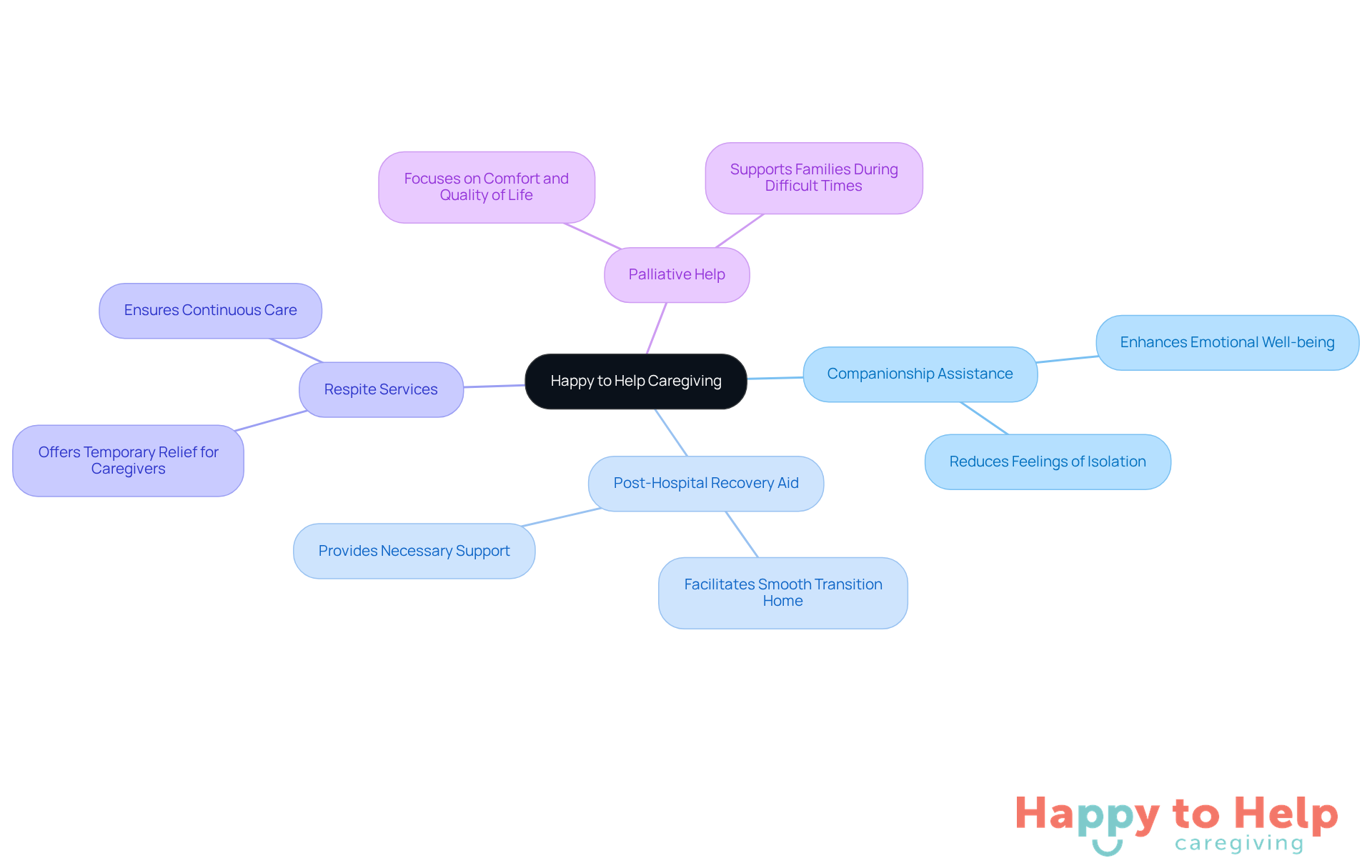
Happy to Help Caregiving addresses these challenges by offering personalized in-home assistance designed to enhance well-being. Their services include:
- Companionship assistance
- Post-hospital recovery aid
- Respite services
- Palliative help
All aimed at fostering independence and security.
With a commitment to compassionate care, Happy to Help Caregiving demonstrates key caregiver qualities to ensure that individuals receive the support they need in the comfort of their own homes. This approach not only promotes a sense of ease but also significantly improves the overall quality of life for those they serve.
Empathy and Compassion: Building Trust in Caregiving Relationships
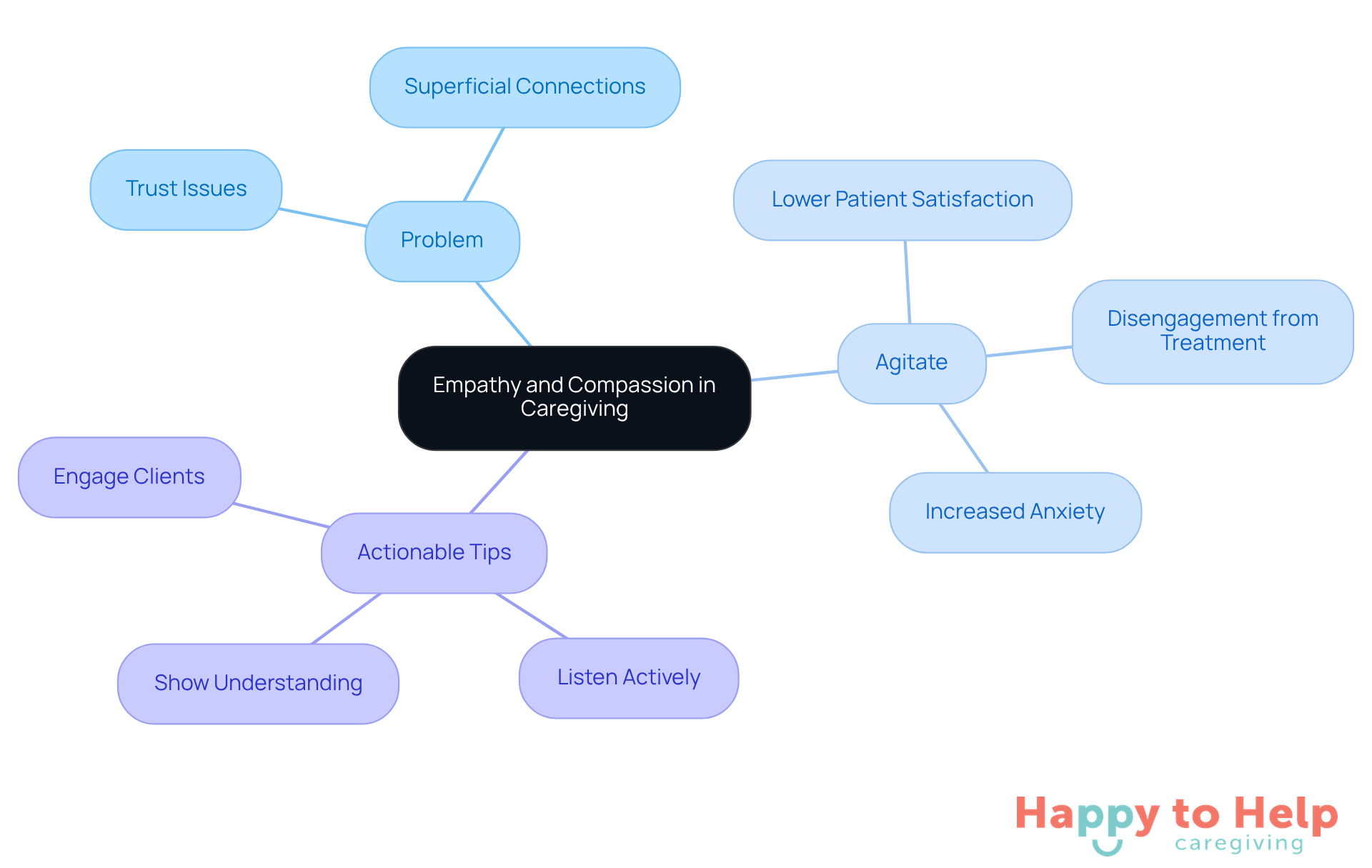
Problem: Caregivers often struggle with establishing trust and understanding in their relationships with clients. Without empathy and compassion, these connections can feel superficial, leaving individuals feeling undervalued and misunderstood.
Agitate: This lack of emotional connection can lead to disengagement from treatment, negatively impacting health outcomes. Research shows that caregivers who lack essential caregiver qualities may experience lower patient satisfaction and increased anxiety among clients. For example, studies indicate that high levels of empathy correlate with better patient satisfaction and reduced feelings of loneliness, particularly among older adults.
To combat these challenges, caregivers should prioritize caregiver qualities like empathy and compassion in their practice. Here are some actionable tips:
- Listen Actively: Take the time to truly hear what clients are saying, validating their feelings and experiences.
- Show Understanding: Use empathetic language and body language to convey that you care.
- Engage Clients: Encourage clients to participate actively in their treatment plans, fostering a sense of ownership over their health.
By embodying these caregiver qualities, caregivers can foster a nurturing environment that enhances the overall quality of life for those they serve. Compassion is not just a desirable quality; it is essential for building trust and strong connections between providers and recipients.
Reliability and Dependability: Ensuring Consistent Care for Clients
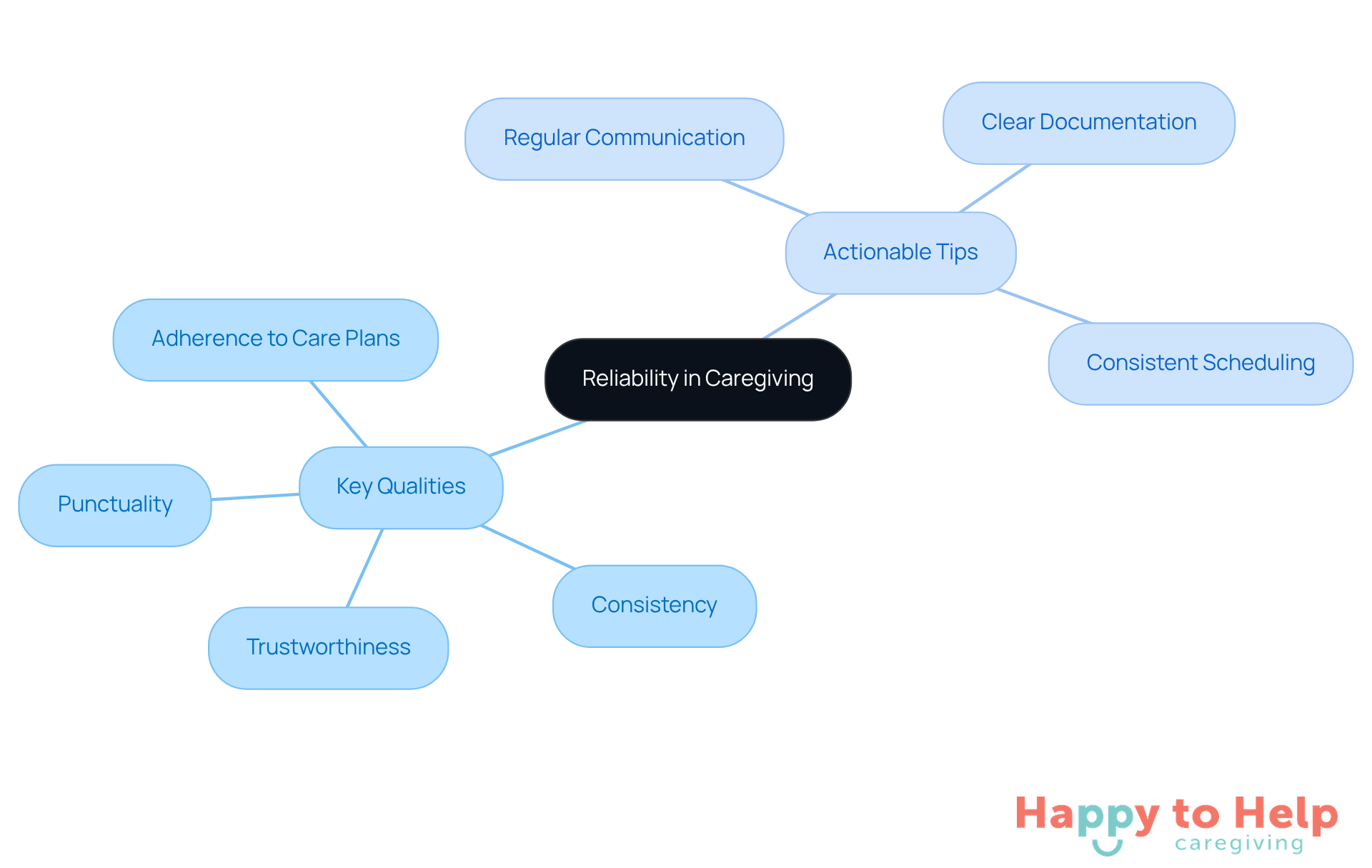
Trustworthiness and consistency are crucial caregiver qualities. Individuals and their families need to feel confident that the support they receive will be reliable and prompt.
Agitate: When caregivers are not timely or do not follow care plans, it can erode trust and confidence among patients and their families. This inconsistency can be particularly detrimental for seniors and individuals with special needs, who thrive on routine and familiarity.
Caregiver qualities, such as being punctual and adhering to care plans, can help establish trust. Here are some actionable tips:
- Communicate regularly with patients and their families to keep them informed.
- Create a consistent schedule that patients can rely on.
- Document care plans clearly and ensure all caregivers are on the same page.
By implementing these strategies, caregivers can foster a sense of security and reliability, ultimately enhancing the quality of care.
Effective Communication Skills: Enhancing Caregiver-Client Interactions
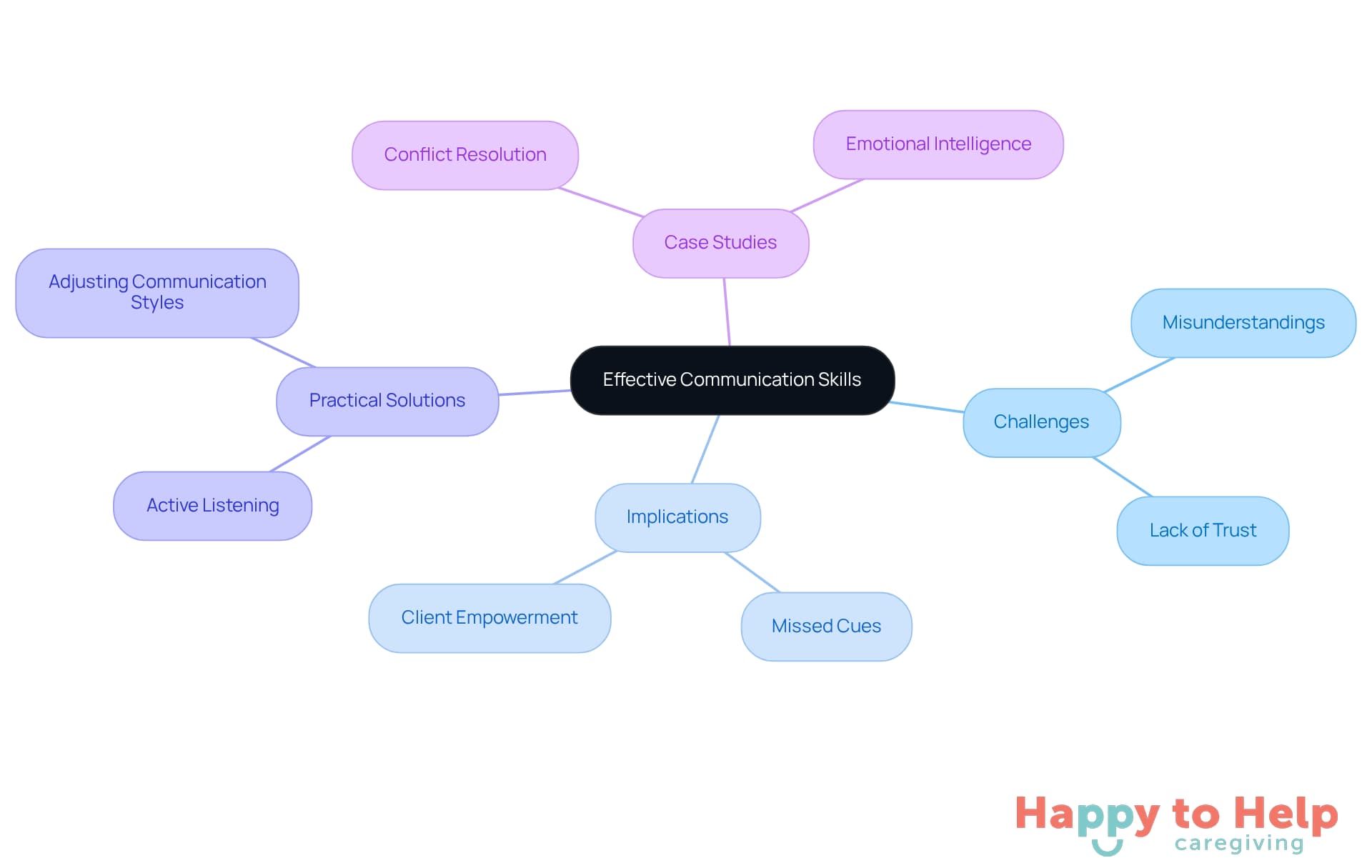
Effective communication skills are among the important caregiver qualities that pose a significant challenge for caregivers, impacting their ability to connect with individuals and their families. When caregivers lack essential caregiver qualities for effective communication, it can lead to misunderstandings and a lack of trust, ultimately affecting the quality of care provided.
The implications of poor communication are profound. Caregivers who do not listen actively or convey information clearly may miss vital cues about a client's needs. This not only hinders understanding but also creates an environment where clients feel less empowered to express their preferences. In fact, studies show that those who practice active listening and exhibit empathy demonstrate important caregiver qualities that greatly improve the quality of support. A notable study revealed that 63.9% of patients reported greater satisfaction with providers who exhibited caregiver qualities like genuine concern and compassion, underscoring the importance of establishing trust through effective communication.
To address these challenges, caregivers can implement several practical solutions that demonstrate important caregiver qualities. First, they should focus on developing caregiver qualities, particularly active listening skills, which can significantly enhance their interactions with clients. Additionally, caregivers can adjust their communication styles, reflecting important caregiver qualities to better meet the needs of those they assist and foster a collaborative environment. Reliable providers are also better equipped to notice subtle shifts in a patient's condition, leading to prompt interventions. This familiarity not only reduces anxiety associated with new faces but also establishes a predictable routine that enhances emotional stability for seniors.
In 2025, the emphasis on communication remains paramount, as it directly influences the caregiver-client relationship and overall well-being. Case studies further illustrate the impact of communication skills. For instance, individuals trained in conflict resolution and emotional intelligence reported reduced tension during challenging discussions with families. This highlights the importance of providing support workers with effective communication strategies, which are essential caregiver qualities.
By nurturing a setting of open conversation, providers can greatly enhance the quality of life for those they assist. Establishing communication as a fundamental aspect of successful support is essential for caregivers aiming to enhance their caregiver qualities.
Patience and Understanding: Key Traits for Navigating Care Challenges
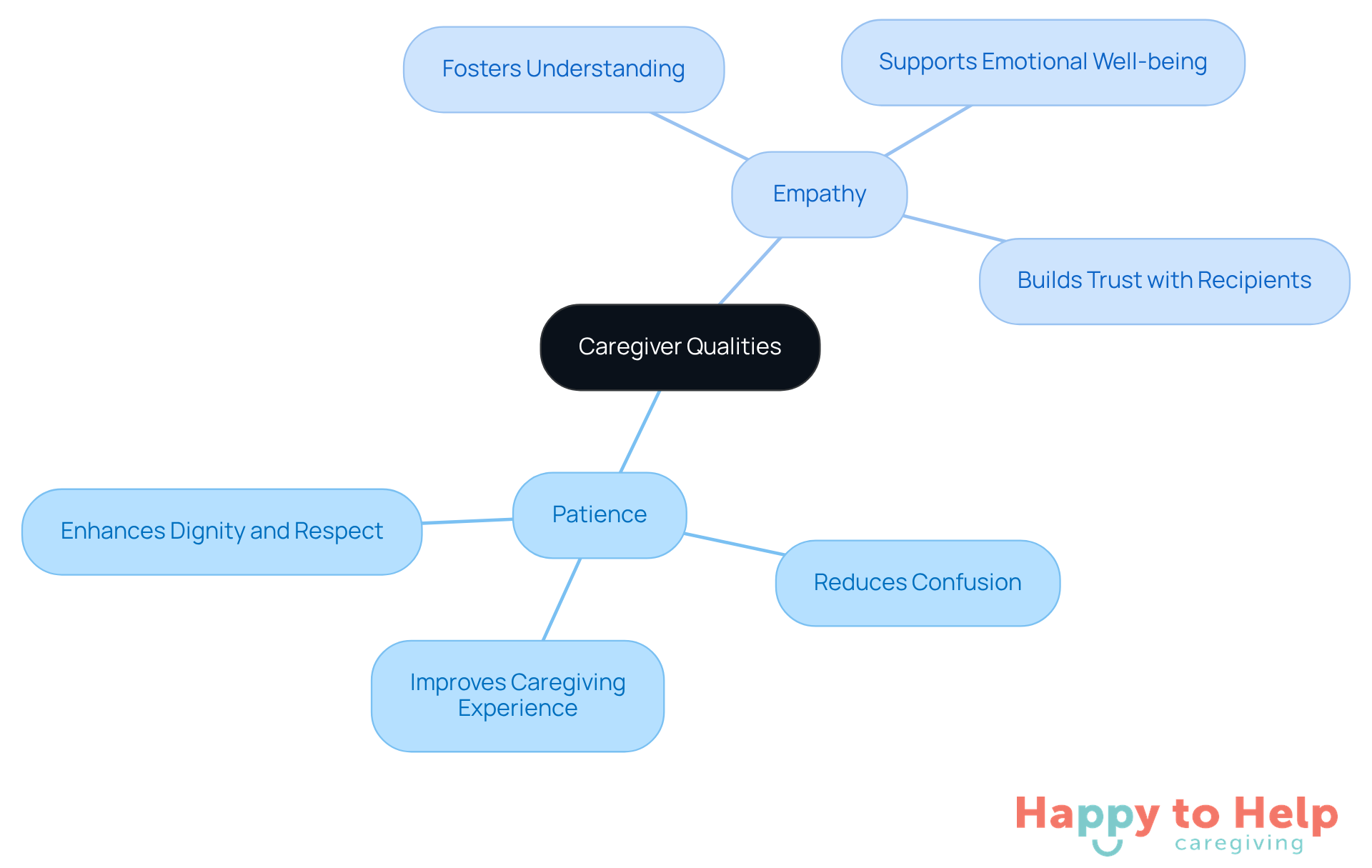
Patience and empathy are crucial caregiver qualities, especially when supporting individuals with memory loss or mobility challenges. Caregiver qualities are often tested in demanding situations that require a calm and understanding approach. Research shows that nearly one in four caregivers provide over 40 hours of assistance each week, often while managing their own health and financial pressures. This high demand can lead to frustration, making it essential for caregivers to demonstrate caregiver qualities like patience and empathy.
By adopting a patient demeanor, caregivers exemplify important caregiver qualities that enable them to provide necessary support without increasing feelings of confusion or distress in those they assist. This approach not only improves the caregiving experience but also fosters dignity and respect for the individuals receiving care. Case studies reveal that caregiver qualities, particularly patience, enable caregivers to better handle the emotional and physical challenges that arise, leading to improved outcomes for both the caregiver and the recipient.
Understanding the unique challenges faced by caregivers, such as the emotional toll of witnessing a loved one's decline, can significantly enhance their effectiveness. Since 2015, the number of family caregivers has increased by 20 million, highlighting the urgent need for assistance and education in managing these challenges. For instance, the case study 'Caring for My Aging Father' illustrates the struggles a family faces while managing a loved one's cognitive decline, underscoring the importance of patience and understanding in these situations.
By prioritizing patience and empathy, caregivers can embody important caregiver qualities that create a more compassionate and effective support environment, ensuring that individuals feel valued and respected throughout their caregiving journey.
Flexibility and Adaptability: Responding to Evolving Client Needs
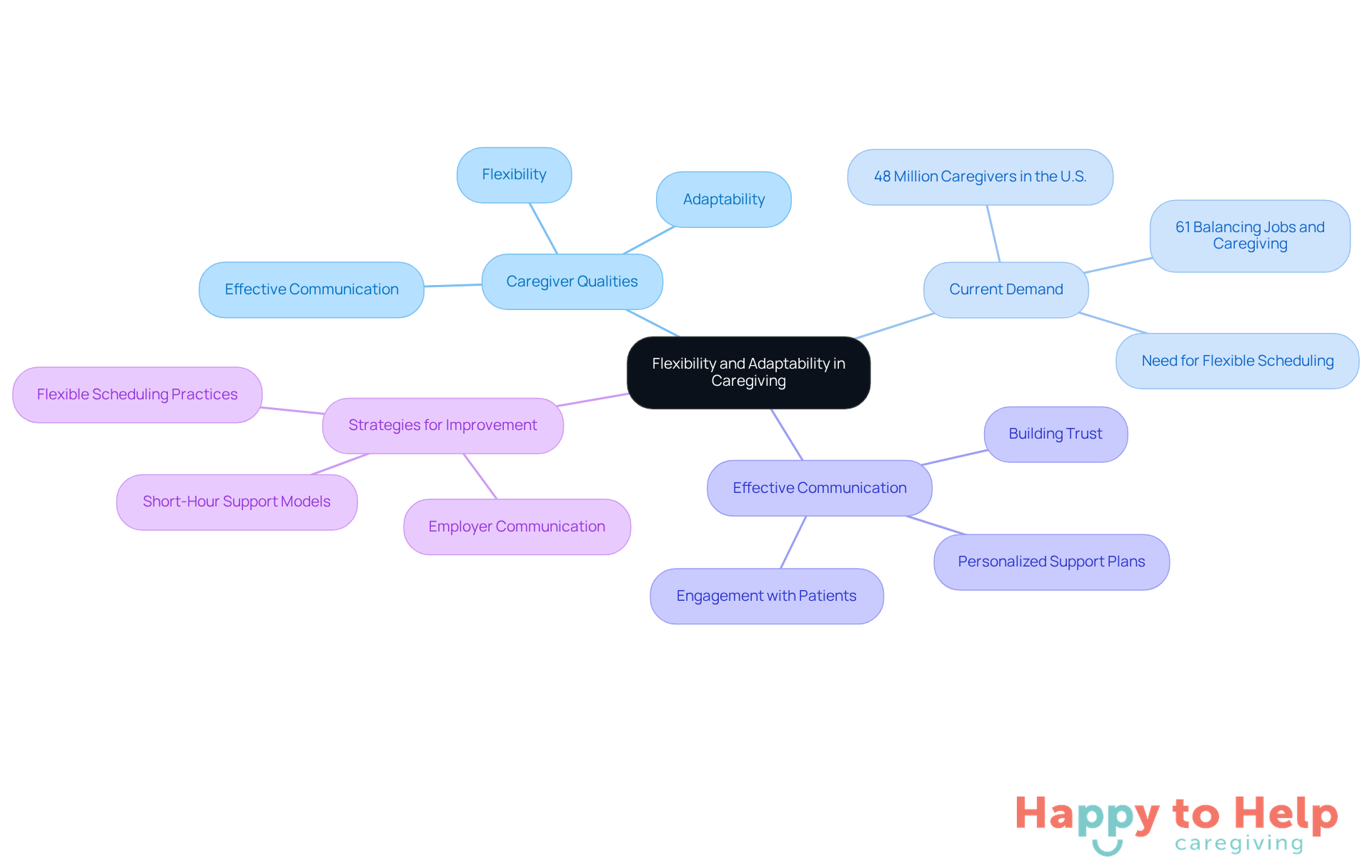
Flexibility and adaptability are essential caregiver qualities, especially as they navigate the evolving needs of those they support. When a patient's health condition changes suddenly, providers who can swiftly adjust their strategies not only ensure continuous support but also foster a sense of safety for the individual. This responsiveness is essential; studies indicate that caregiver qualities, particularly flexibility, significantly enhance satisfaction and overall service quality.
In 2025, the demand for adaptable caregiving is more pronounced than ever. Nearly 48 million people in the U.S. are supporting adult relatives, with 61% of these caregivers balancing full- or part-time jobs. This reality underscores the necessity for caregiver qualities that promote adaptability in caregiving. Organizations that prioritize flexible scheduling and short-hour support models have reported improved retention rates among caregivers, as these practices align better with patient needs.
Effective communication is a vital caregiver quality that contributes to adaptability. Care providers who engage actively with patients and their families can better understand and anticipate changes in support requirements. This proactive approach not only enhances the caregiving experience but also builds trust, leading to more personalized support plans that cater to the unique preferences and needs of each client. As the caregiving landscape evolves, maintaining a focus on caregiver qualities like flexibility will remain a cornerstone of high-quality home support.
To further bolster adaptability, caregivers are encouraged to communicate their scheduling needs with employers. This dialogue can help ease the stress of juggling caregiving responsibilities with work commitments, ultimately fostering a more sustainable caregiving experience.
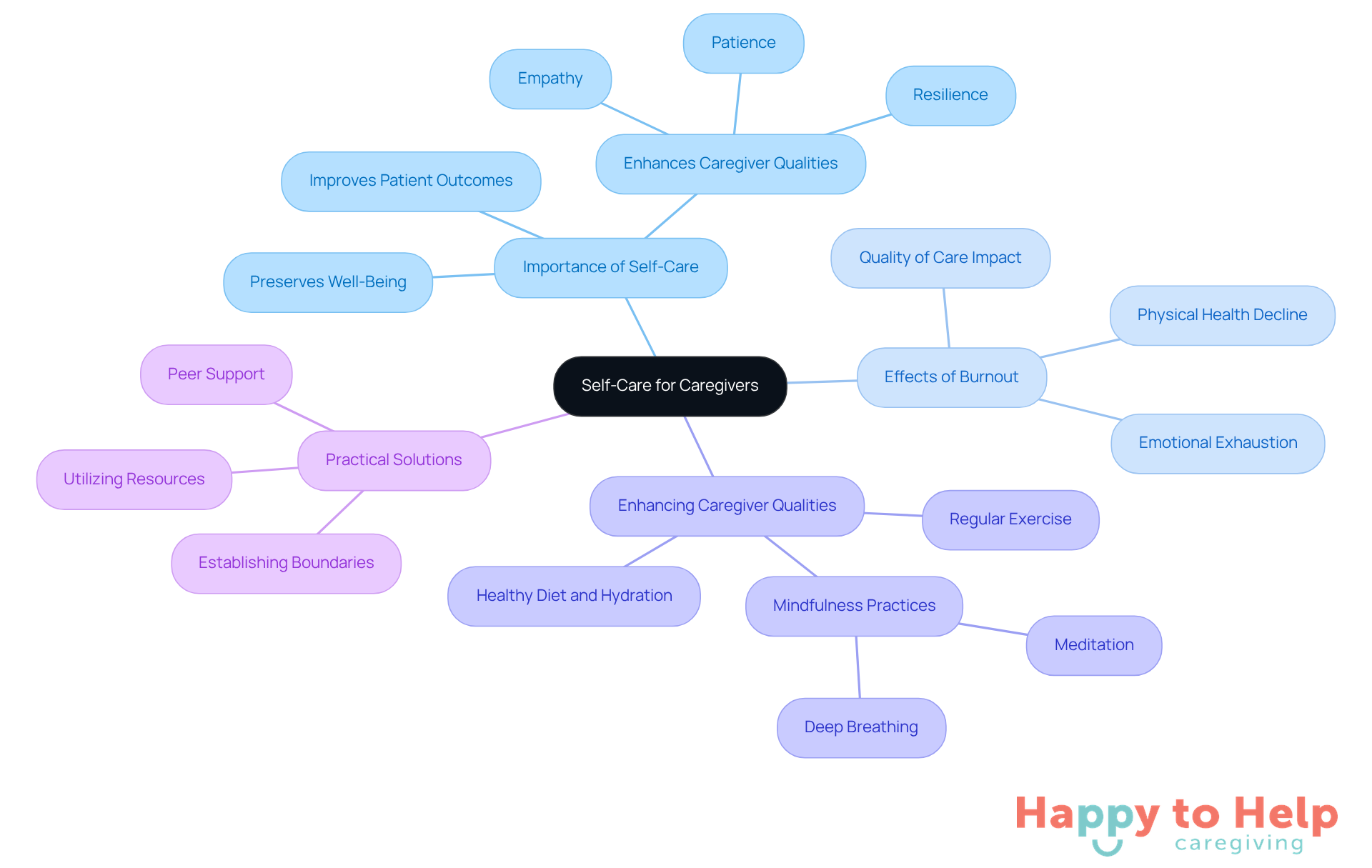
Self-Care for Caregivers: Maintaining Well-Being to Enhance Care Quality
Self-care is crucial for caregivers, as it helps preserve their well-being and showcases essential caregiver qualities for providing high-quality assistance. The physical and emotional demands of caregiving can lead to significant burnout if caregiver qualities are not addressed. This burnout not only affects the caregiver qualities but also impacts the quality of care they provide.
Prioritizing personal health through regular exercise, adequate rest, and effective stress management techniques enhances the caregiver qualities that contribute to resilience and effectiveness. By dedicating time to self-care, caregivers can nurture their caregiver qualities, improve their mental health, and reduce stress levels. For instance, individuals who engage in daily wellness practices, such as mindfulness and hydration reminders, report lower stress levels and enhanced mental health.
Moreover, studies indicate that healthier providers contribute to better patient outcomes, reinforcing the idea that caregiver qualities are integral to quality treatment. As highlighted during National Family Caregivers Month, promoting a culture of self-care is essential for caregivers to maintain their caregiver qualities and continue offering compassionate assistance.
To combat feelings of isolation and stress, caregivers can implement several practical solutions:
- Establish clear boundaries to protect personal time.
- Seek assistance from peers to share experiences and advice.
- Utilize available resources to enhance support.
These approaches can greatly improve caregiver qualities, enhancing the caregiving experience for both providers and those they care for.
Detail-Oriented Approach: Ensuring Comprehensive Care for Clients
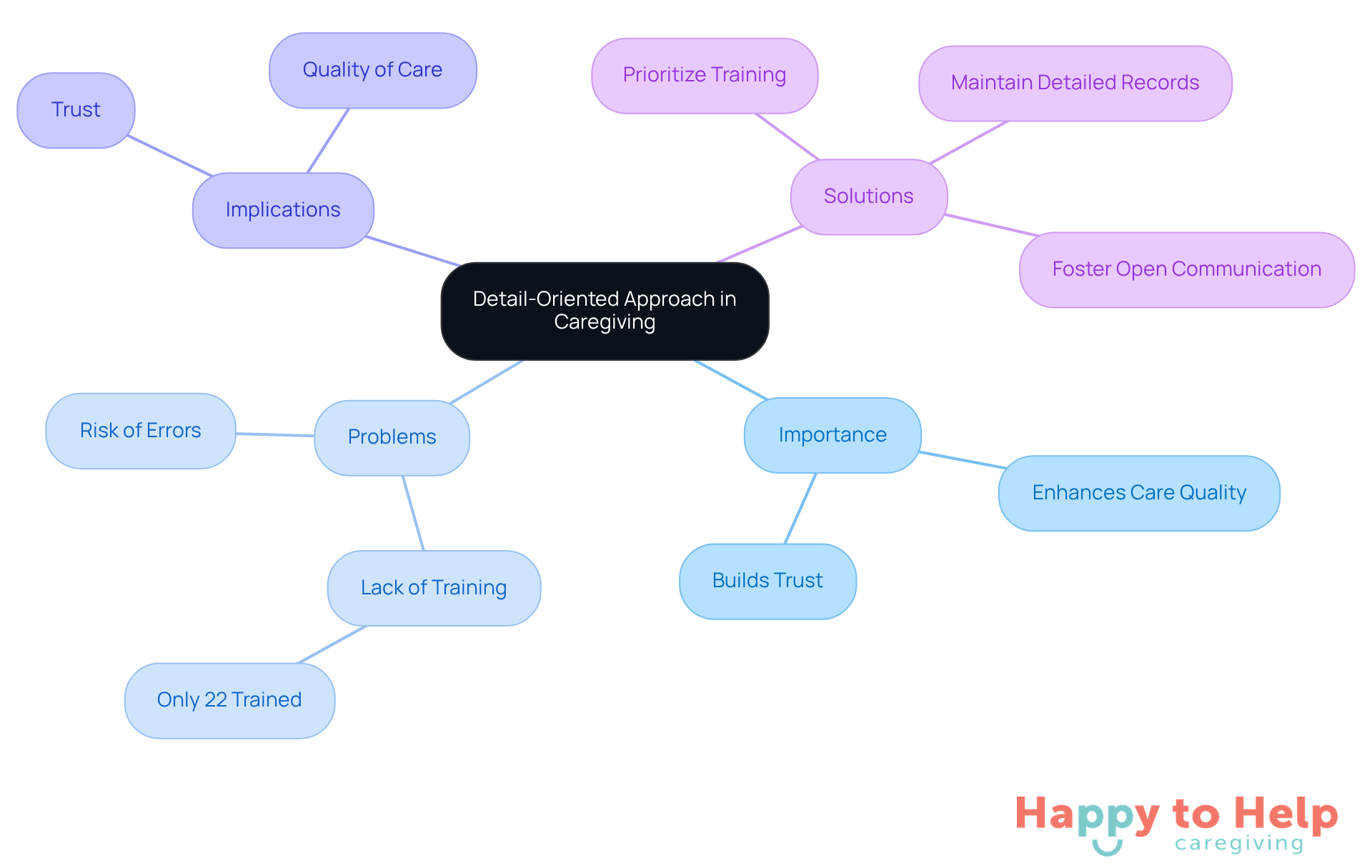
A detail-oriented approach is essential for those exhibiting caregiver qualities, as it ensures that every aspect of a client's care is thoroughly managed. However, a significant problem arises: studies show that only 22% of caregivers have received training for medical or nursing tasks. This lack of training can lead to mistakes in medication schedules, dietary restrictions, and individual preferences, ultimately compromising the quality of care.
The implications of this issue are serious. Without meticulous attention to detail, support providers risk not only making errors but also losing the trust of those they assist. Trust is crucial; it enhances caregiver qualities, leading to better health outcomes and improving the overall quality of services provided. For instance, case studies like 'Observation and Attention to Detail in Caregiving' highlight that caregiver qualities, such as maintaining precise records and closely observing changes in health conditions, enable caregivers to respond more effectively to client needs.
So, what can caregivers do to improve their attention to detail? Here are some actionable solutions:
- Prioritize Training: Seek out training opportunities to enhance skills in medication management and health monitoring.
- Maintain Detailed Records: Keep accurate and up-to-date records of clients' health conditions and preferences.
- Foster Open Communication: Encourage clients to share their needs and concerns, building a trusting relationship.
Furthermore, with 70% of supporters overseeing recipients' health conditions, the caregiver qualities required for being detail-oriented in domestic assistance cannot be overstated. As the demand for home care services continues to grow due to the aging population, the necessity for support providers to exhibit caregiver qualities becomes increasingly critical.
Being Present: Fostering Connection and Engagement in Caregiving
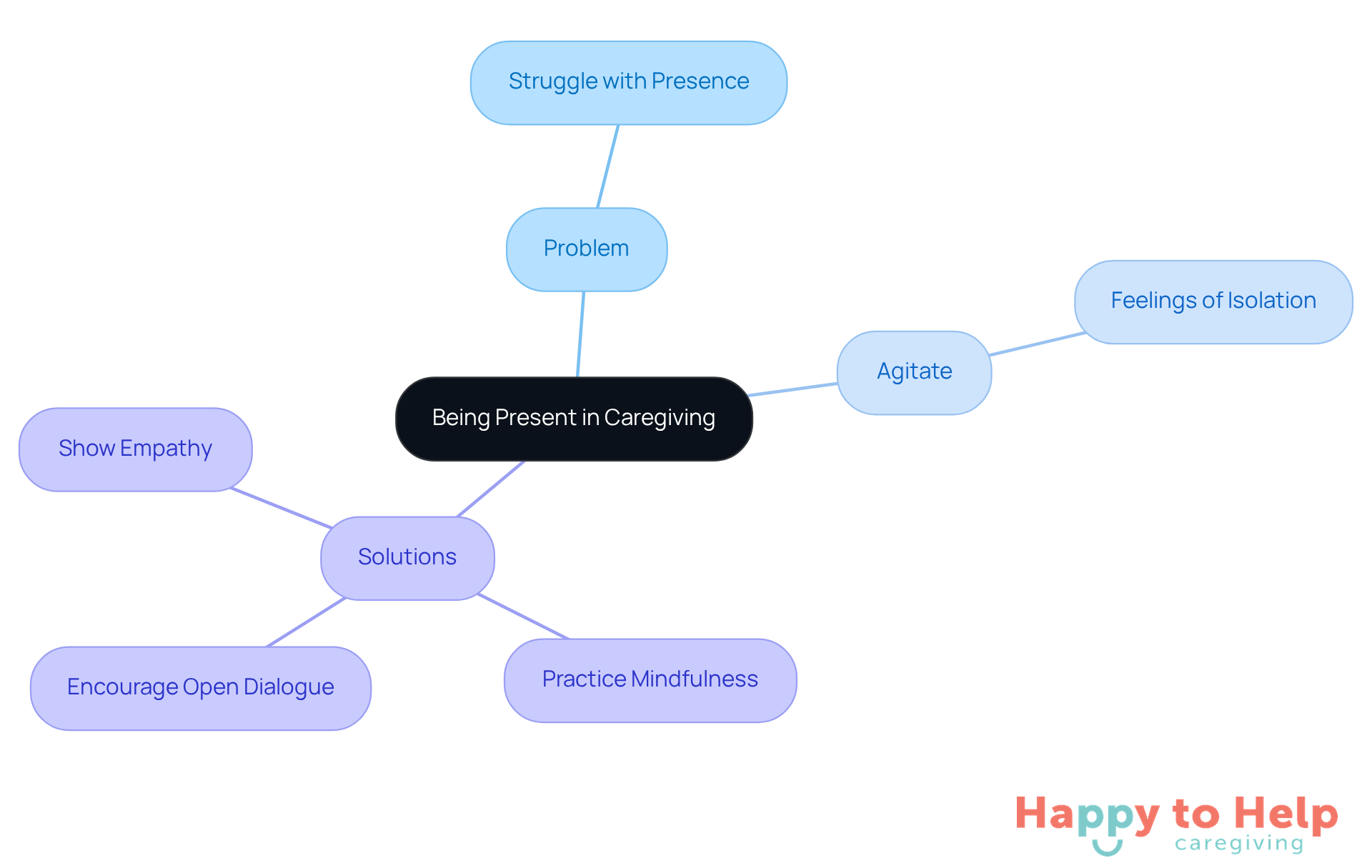
Problem: Caregivers often struggle with being fully present, which can hinder their ability to connect with those they care for.
Agitate: This lack of presence can lead to feelings of isolation for clients, making it difficult for them to express their emotions and needs. When caregivers fail to actively listen and engage, it creates a barrier to open communication, ultimately impacting the overall well-being of those they assist.
To foster a supportive environment, caregivers should prioritize caregiver qualities like active listening and engagement. Here are some actionable tips:
- Practice mindfulness: Take a moment to focus on the person in front of you, setting aside distractions.
- Encourage open dialogue: Create a safe space for clients to share their thoughts and feelings.
- Show empathy: Validate their emotions to help them feel valued and understood.
By implementing these strategies, caregivers can enhance their presence and demonstrate important caregiver qualities, leading to a more fulfilling caregiving experience for both themselves and their clients.
Strong Support Network: Essential for Caregiver Resilience and Effectiveness
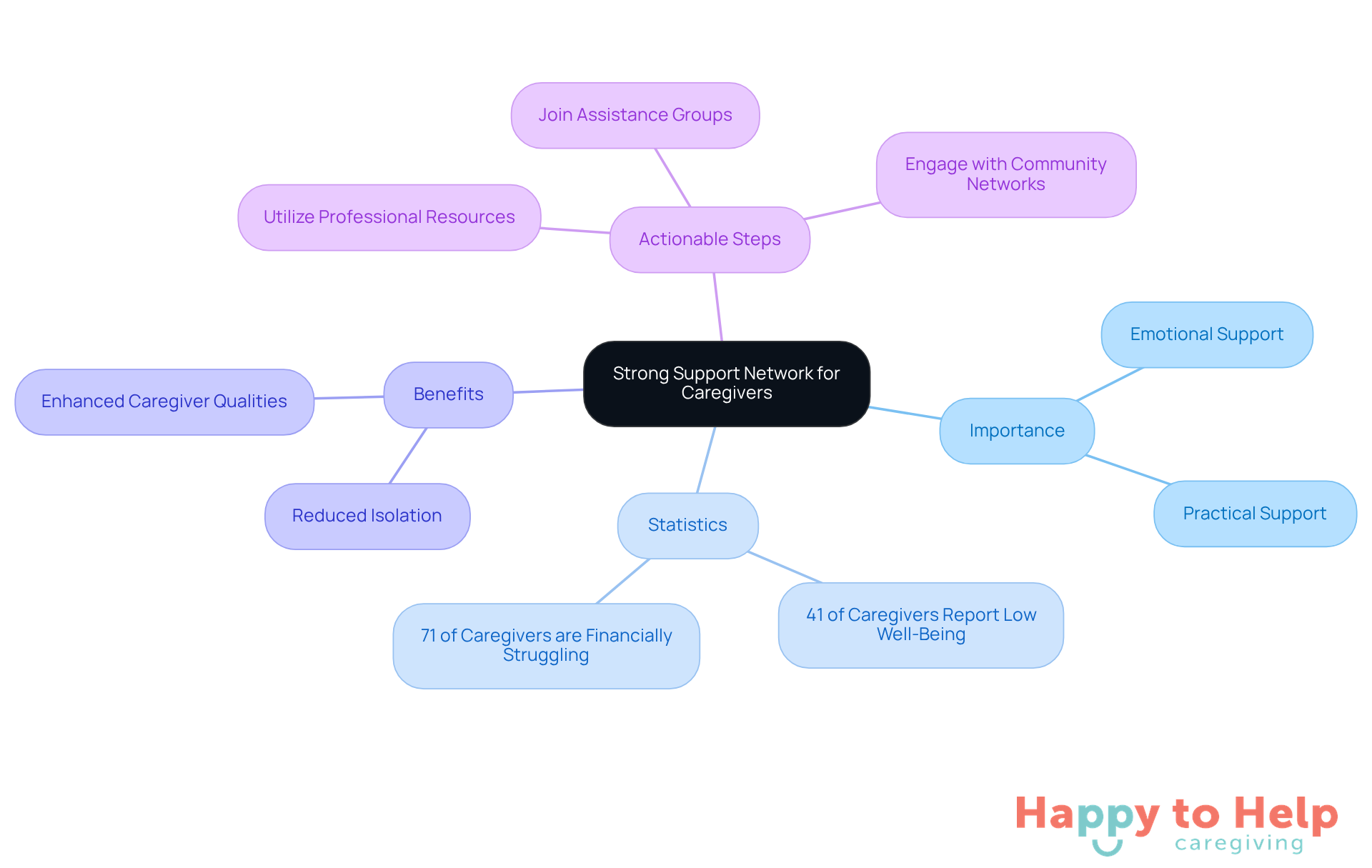
A strong assistance network is crucial for caregivers, as it embodies essential caregiver qualities by providing both emotional and practical support to navigate the complexities of caregiving. Many caregivers struggle with feelings of isolation and stress, which can significantly impact their well-being. In fact, studies reveal that 41% of caregivers report low overall well-being-32% higher than those not in caregiving roles. This statistic underscores the importance of assistance networks in alleviating anxiety and depression.
These networks not only bolster the mental health of caregivers but also enhance the caregiver qualities that contribute to the quality of care they provide. Engaging with support groups can help reduce feelings of isolation, making a substantial difference in caregivers' lives. For example, the case study "Building a Lifeline for Family Caregivers" highlights how Ianacare connects caregivers with essential resources. This connection enables caregivers to develop better coping strategies and fosters a sense of empowerment, benefiting both themselves and those they care for.
To enhance your caregiving experience, consider the following actionable steps:
- Join assistance groups to share experiences and gain support.
- Utilize professional resources for guidance and advice.
- Engage with community networks to build connections and reduce stress.
By actively seeking out these resources, caregivers can significantly enhance their well-being and develop important caregiver qualities in the care they provide.
Key Takeaways for Caregivers
The qualities of family caregivers are crucial in enhancing the experience for both caregivers and those they serve. Caregivers face significant challenges, including emotional strain and the need for effective communication. These challenges can lead to feelings of isolation and burnout, impacting the quality of care provided.
To address these issues, caregivers should embody traits such as:
- Empathy
- Reliability
- Effective communication
- Adaptability
By doing so, they can offer personalized support that significantly improves the quality of life for individuals in their care. These essential characteristics foster trust and connection, ensuring that clients feel valued and understood throughout their caregiving journey.
Key points highlight the importance of caregiver qualities:
- Empathy and compassion build trust
- Reliability and effective communication enhance relationships and care outcomes
- Patience and understanding are vital for navigating challenges
- Flexibility allows caregivers to respond to evolving client needs
- Prioritizing self-care is essential for maintaining well-being, ultimately leading to improved care quality
- A strong support network is critical in alleviating the stress and isolation that many caregivers face, reinforcing their effectiveness
In conclusion, cultivating essential caregiver qualities is paramount. As the demand for personalized in-home support continues to rise, caregivers are encouraged to focus on developing these traits. By investing in their own well-being and building strong connections with clients, caregivers will not only improve their own lives but also create a more compassionate and effective caregiving environment that benefits everyone involved.
https://iframe.tely.ai/cta/eyJhcnRpY2xlX2lkIjogIjY5MjY0MzkzYmE1MjYxOTlhNjlhODMyMCIsICJjb21wYW55X2lkIjogIjY4ZWU1ZGNhNzMxNzYyNTU3ZjNjOTVjMSIsICJpbmRleCI6IG51bGwsICJ0eXBlIjogImFydGljbGUifQ==Frequently Asked Questions
What services does Happy to Help Caregiving offer?
Happy to Help Caregiving offers personalized in-home assistance services including companionship assistance, post-hospital recovery aid, respite services, and palliative help.
How does Happy to Help Caregiving enhance the quality of life for clients?
By providing compassionate care and personalized support, Happy to Help Caregiving fosters independence and security, significantly improving the overall quality of life for those they serve.
Why is empathy and compassion important in caregiving relationships?
Empathy and compassion are crucial for establishing trust and understanding in caregiving relationships. They help prevent feelings of undervaluation and disengagement, which can negatively impact health outcomes.
What are some tips for caregivers to demonstrate empathy and compassion?
Caregivers can demonstrate empathy and compassion by actively listening to clients, using empathetic language and body language, and encouraging clients to participate in their treatment plans.
What role does reliability play in caregiving?
Reliability is essential for building trust with clients and their families. Consistent and timely care helps individuals feel secure and confident in the support they receive.
How can caregivers ensure consistent care for their clients?
Caregivers can ensure consistent care by communicating regularly with patients and their families, creating a reliable schedule, and clearly documenting care plans to keep all caregivers informed.
List of Sources
- Happy to Help Caregiving: Personalized In-Home Support for Quality Care
- FastStats (https://cdc.gov/nchs/fastats/home-health-care.htm)
- Demand for Home Care Expected to Surge 22% by 2034 (https://respiratory-therapy.com/public-health/healthcare-policy/home-care/demand-home-care-expected-surge-22-2034)
- Home (https://homehealthcarenews.com)
- Blog - Happy To Help (https://happytohelpcaregiving.com/blog)
- Home Care News | Senior Care News | Right at Home (https://rightathome.net/news)
- Empathy and Compassion: Building Trust in Caregiving Relationships
- Empathy in Action: Why Your Aging Parent Deserves a Caregiver - WorldHealth.net (https://worldhealth.net/news/why-your-aging-parent-deserves-a-caregiver)
- Empathy’s Influence: Dementia Patients Supporting Caregivers (https://caes.ucdavis.edu/news/empathys-influence-dementia-patients-supporting-caregivers)
- The Critical Role of Care and Compassion in Senior Caregiving (https://seniorlifestyle.com/resources/blog/compassion-in-senior-care-careers)
- Empathy in Action: Marie's Dedication to Caregivers | United Way Worldwide (https://unitedway.org/news/empathy-in-action-maries-dedication-to-caregivers)
- The Importance of Empathy and Compassion in Bedside Care (https://breezehospiceservices.com/resources/the-importance-of-empathy-and-compassion-in-bedside-care)
- Reliability and Dependability: Ensuring Consistent Care for Clients
- Caregivers are in crisis. How bad it is depends on where you live, new data shows. (https://ca.news.yahoo.com/caregivers-crisis-bad-depends-where-090225123.html)
- Caregiver Statistics: Demographics (https://caregiver.org/resource/caregiver-statistics-demographics)
- 70+ Inspirational Caregiver Quotes (https://h2hhc.com/blog/inspirational-caregiver-quotes)
- Home Care Statistics In 2025: Key Insights In Home Care (https://sagapixel.com/marketing/home-care-statistics)
- 27 Inspirational Quotes for Caregivers (https://ultimatecareny.com/resources/27-quotes-for-caregivers)
- Effective Communication Skills: Enhancing Caregiver-Client Interactions
- Effective Communication Strategies in Senior Care: Empowering Residents, Families, and Caregivers - MedCity News (https://medcitynews.com/2023/12/effective-communication-strategies-in-senior-care-empowering-residents-families-and-caregivers)
- Communication Breakdowns Are a Major Hurdle for Caregivers (https://prnewswire.com/news-releases/communication-breakdowns-are-a-major-hurdle-for-caregivers-302443844.html)
- How to Enhance Communication Between Home Health Caregivers and Clients (https://nursemagic.ai/post/how-to-enhance-communication-between-home-health-caregivers-and-clients)
- The Importance of Caregiver-Client Relationships in Senior Well-Being (https://homeinstead.com/home-care/usa/in/goshen/588/news-and-media/the-importance-of-caregiver-client-relationships-in-senior-well-being)
- Determining Evidence for Family Caregiver Communication: Associating Communication Behaviors With Breakdown and Repair - PMC (https://pmc.ncbi.nlm.nih.gov/articles/PMC10474591)
- Patience and Understanding: Key Traits for Navigating Care Challenges
- New Report Reveals Crisis Point for America’s 63 million Family Caregivers (https://press.aarp.org/2025-07-24-New-Report-Reveals-Crisis-Point-for-Americas-63-million-Family-Caregivers)
- Opinion | America’s Caregivers Are in Crisis (https://nytimes.com/2025/11/24/opinion/caregiving-crisis.html)
- Hospices Facing a US Caregiving 'Crisis' (https://hospicenews.com/2025/06/02/hospices-facing-a-us-caregiving-crisis)
- As Family Caregiving Grows, So Does the Need for Reform - Medicare Rights Center (https://medicarerights.org/medicare-watch/2025/08/14/as-family-caregiving-grows-so-does-the-need-for-reform)
- Flexibility and Adaptability: Responding to Evolving Client Needs
- 5 ways the caregiving crisis is reshaping the workplace in 2025 (https://cariloop.com/blog/how-the-caregiving-crisis-is-reshaping-the-workplace)
- Flexible Care Models Give Home Care Clients ‘What They Want When They Want It’ (https://homehealthcarenews.com/2025/10/flexible-care-models-give-home-care-clients-what-they-want-when-they-want-it)
- The Future of Flexibility: Supporting Caregivers in Deskless Roles (https://shrm.org/enterprise-solutions/insights/future-of-flexibility-supporting-caregivers-deskless-roles)
- Caregiving While Working Calls for Workplace Flexibility (https://aarp.org/pri/topics/work-finances-retirement/employers-workforce/employer-caregiving-survey)
- Your Working Caregiver Experience Matters: What Every Working Caregiver Should Know (https://lifework.arizona.edu/news/2025/your-working-caregiver-experience-matters-what-every-working-caregiver-should-know)
- Self-Care for Caregivers: Maintaining Well-Being to Enhance Care Quality
- Changes in Health Indicators Among Caregivers... (https://cdc.gov/mmwr/volumes/73/wr/mm7334a2.htm)
- National Family Caregivers Month 2025 | Plug-in to Care Hub (https://caregiveraction.org/nfc2025)
- World Health Day 2025: Caregiver Support & Wellness Tips (https://learn2care.us/blog/world-health-day-2025-caregiver-wellness-tips)
- Detail-Oriented Approach: Ensuring Comprehensive Care for Clients
- The Caregiving Landscape: Data & Insights on the Caregiver Experience in the U.S. (https://caregiveraction.org/caregiver-statistics)
- Family Caregiver Support, Education Needs Growing (https://hospicenews.com/2025/11/11/family-caregiver-support-education-needs-growing)
- 8 Essential Caregiver Skills You Need To Succeed - NCCDP (https://nccdp.org/8-essential-caregiver-skills-you-need-to-succeed)
- Encouraging Home Care Statistics for 2023 (https://axiscare.com/blog/encouraging-home-care-statistics)
- Caregiver Crisis: New Report Gives a “Wake Up” Call to Congress - Herb Weiss (https://rinewstoday.com/caregiver-crisis-new-report-gives-a-wake-up-call-to-congress-herb-weiss)
- Being Present: Fostering Connection and Engagement in Caregiving
- New Report Reveals Crisis Point for America’s 63 million Family Caregivers (https://states.aarp.org/maryland/caregiving-report)
- The senior population is booming. Caregiving is struggling to keep up (https://cnbc.com/2025/11/21/senior-caregiving-labor.html)
- “Out of the clear blue sky she tells me she loves me”: Connection experiences between caregivers and people with dementia - PMC (https://pmc.ncbi.nlm.nih.gov/articles/PMC10500033)
- 70+ Inspirational Caregiver Quotes (https://h2hhc.com/blog/inspirational-caregiver-quotes)
- The number of family caregivers is surging (https://19thnews.org/2025/07/family-caregivers-surging-aarp)
- Strong Support Network: Essential for Caregiver Resilience and Effectiveness
- Building a lifeline for family caregivers across the US (https://news.mit.edu/2025/ianacare-builds-lifeline-for-family-caregivers-across-us-0811)
- Improving Support for Family Caregivers (https://nationalacademies.org/news/2025/07/improving-support-for-family-caregivers)
- The Caregiving Landscape: Data & Insights on the Caregiver Experience in the U.S. (https://caregiveraction.org/caregiver-statistics)
- The Importance of Community for Caregivers: Building Your Support Network (https://momsinmotion.net/the-importance-of-community-for-caregivers-building-your-support-network)
- Number of Family Caregivers Supporting Older Adults Increased Nearly One-Third Between 2011 and 2022 | Johns Hopkins Bloomberg School of Public Health (https://publichealth.jhu.edu/2025/number-of-family-caregivers-supporting-older-adults-increased-nearly-one-third-between-2011-and-2022)