10 Essential Check-In Services for Seniors to Enhance Care
For families in our service areas
For families in our service areas, this guide explains caregiving and how non-medical in-home caregiving can support care planning in East Idaho, Treasure Valley & Magic Valley, Northern Wasatch, North Central West Virginia & Southwestern Pennsylvania, and Northeast Ohio.
Why Check-In Services Matters
Loneliness and isolation are pressing issues that significantly impact the well-being of seniors. Many older adults face these challenges daily, leading to detrimental effects on their mental health.
The implications of these feelings can be profound, often resulting in decreased quality of life and increased health risks. As the demand for tailored care increases, caregivers must find effective ways to combat solitude and foster a sense of community among elderly individuals.
One solution lies in the integration of essential check-in services. These services can provide a lifeline, offering companionship and support that is crucial for mental health. This article explores ten vital services designed to enhance care for seniors, ensuring they not only feel supported but also empowered to thrive in their daily lives.
Happy to Help Caregiving: Companionship Care for Seniors
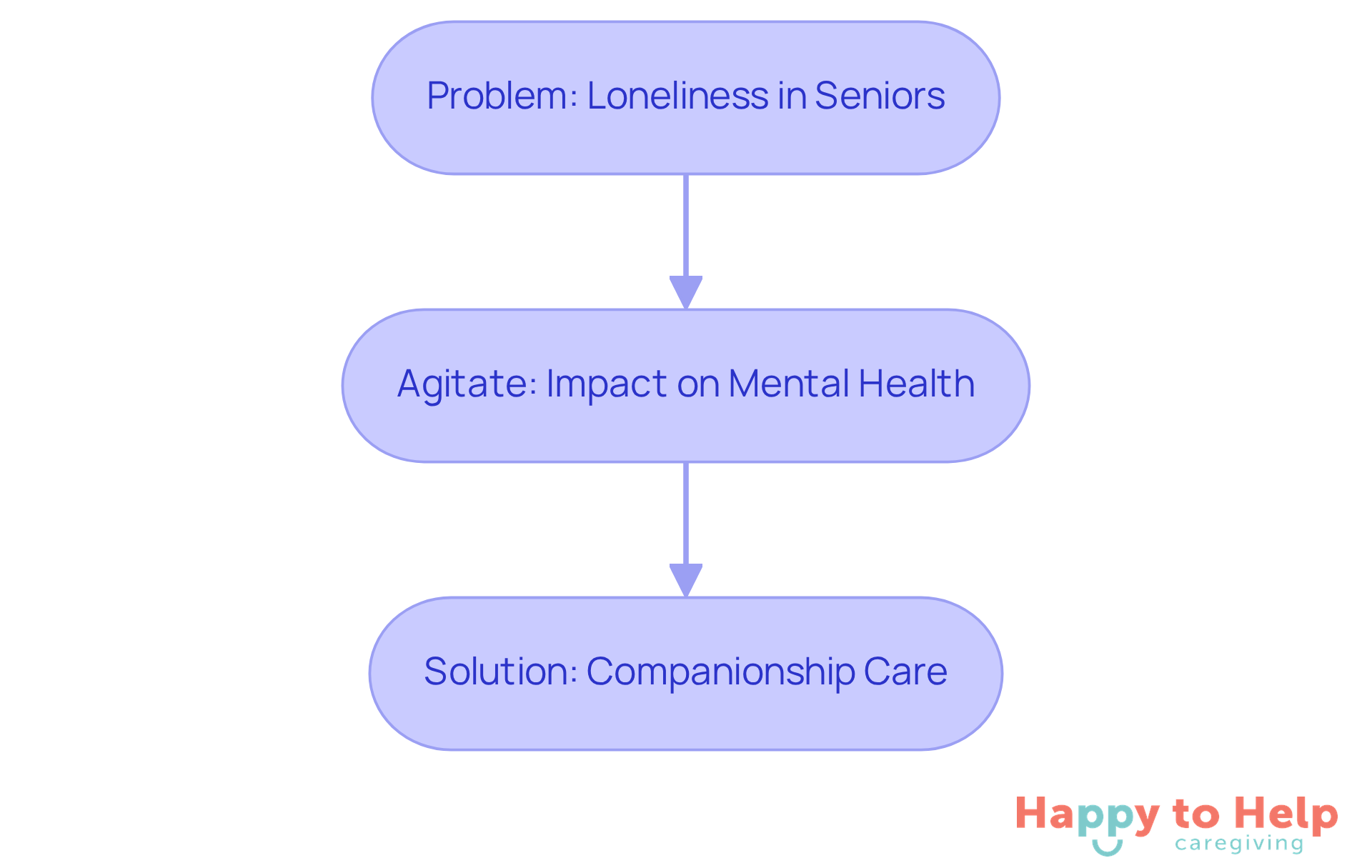
Problem: Many older adults experience feelings of loneliness, especially those living alone. This isolation can significantly impact their mental health and emotional well-being.
Agitate: Loneliness not only affects emotional stability but can also lead to serious health issues. Without companionship, elderly individuals may struggle to engage in meaningful activities, further exacerbating their feelings of isolation.
Solution: Happy to Help Caregiving provides devoted companionship care, ensuring that older adults receive not just physical assistance but also emotional support. Caregivers engage clients in meaningful conversations, activities, and hobbies, fostering a sense of belonging. This check in service for seniors is crucial for elderly individuals living alone, as it helps preserve their mental health and emotional well-being, enabling them to flourish in their familiar surroundings.
Daily Check-In Calls: Enhancing Safety and Well-Being
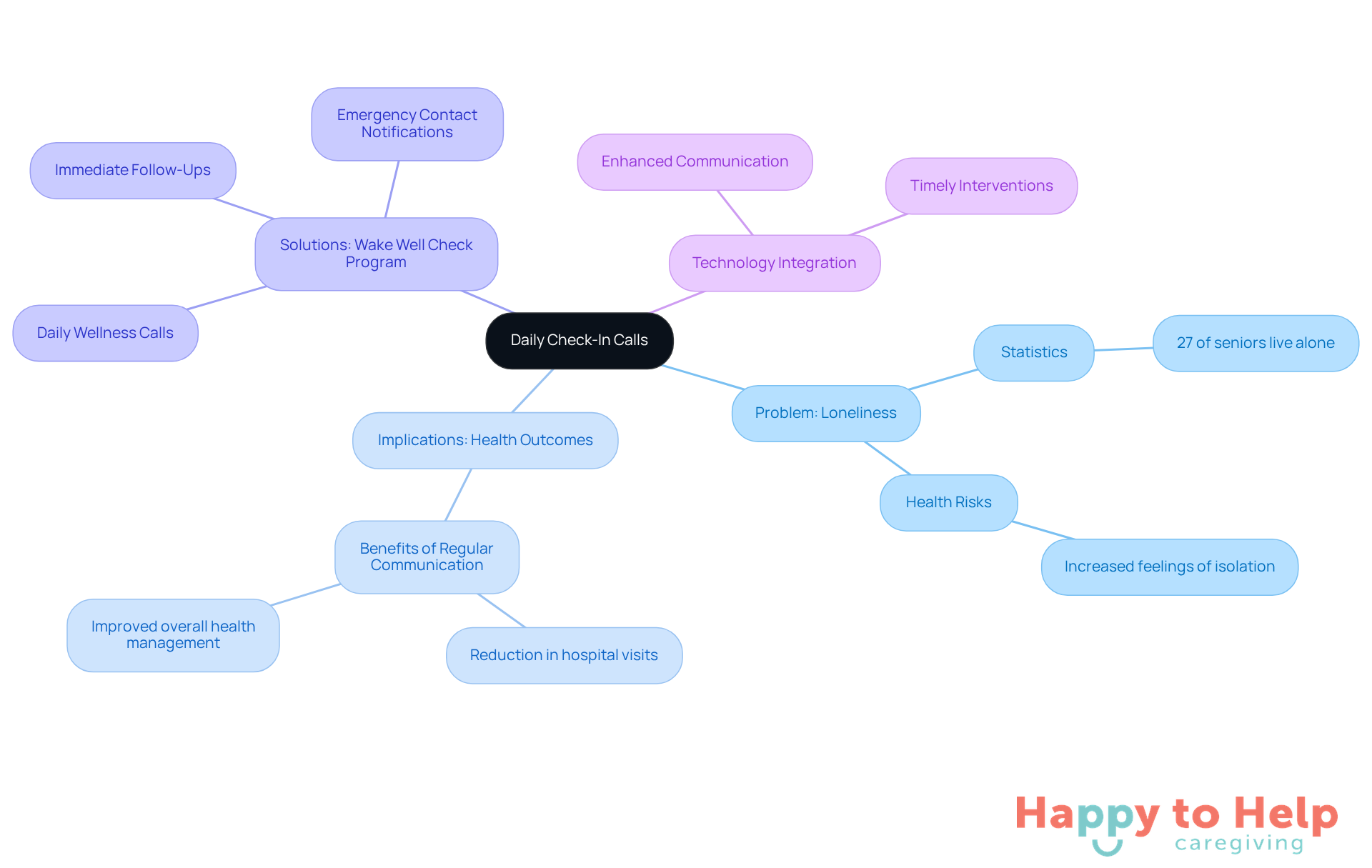
Daily check in service for seniors represents a critical service offered by Happy to Help Caregiving, aimed at enhancing the safety and well-being of older adults. The problem is clear: many older adults face loneliness and health risks, particularly those living alone. In fact, over 27 percent of individuals aged 60 and older reside alone, making these calls vital for addressing feelings of isolation and ensuring safety in their homes.
The implications of this issue are significant. Studies show that regular communication can lead to better health outcomes; for instance, weekly phone check-ins have been linked to a reduction in hospital visits for older cancer patients. This highlights the preventive benefits of maintaining regular contact. As Leon Smith, Founder of ConfirmOk, emphasizes, "These are not just soft-touch problems. This is about time-sensitive safety. People have medical episodes, falls, or simply bad days and no one knows until it is too late."
So, what’s the solution? Programs like the Wake Well Check Program illustrate the effectiveness of daily wellness calls as a check in service for seniors. Participants receive reassurance and immediate follow-ups if a call goes unanswered, creating a responsive safety net that can make all the difference. This proactive approach not only nurtures a sense of belonging but also significantly enhances well-being.
Moreover, the integration of technology in these check-ins improves communication and ensures timely interventions when necessary. The check in service for seniors through daily calls is not just a service; it is an essential component of comprehensive elder care, fostering connection and support for older adults.
Emotional Support: Reducing Loneliness Through Regular Check-Ins
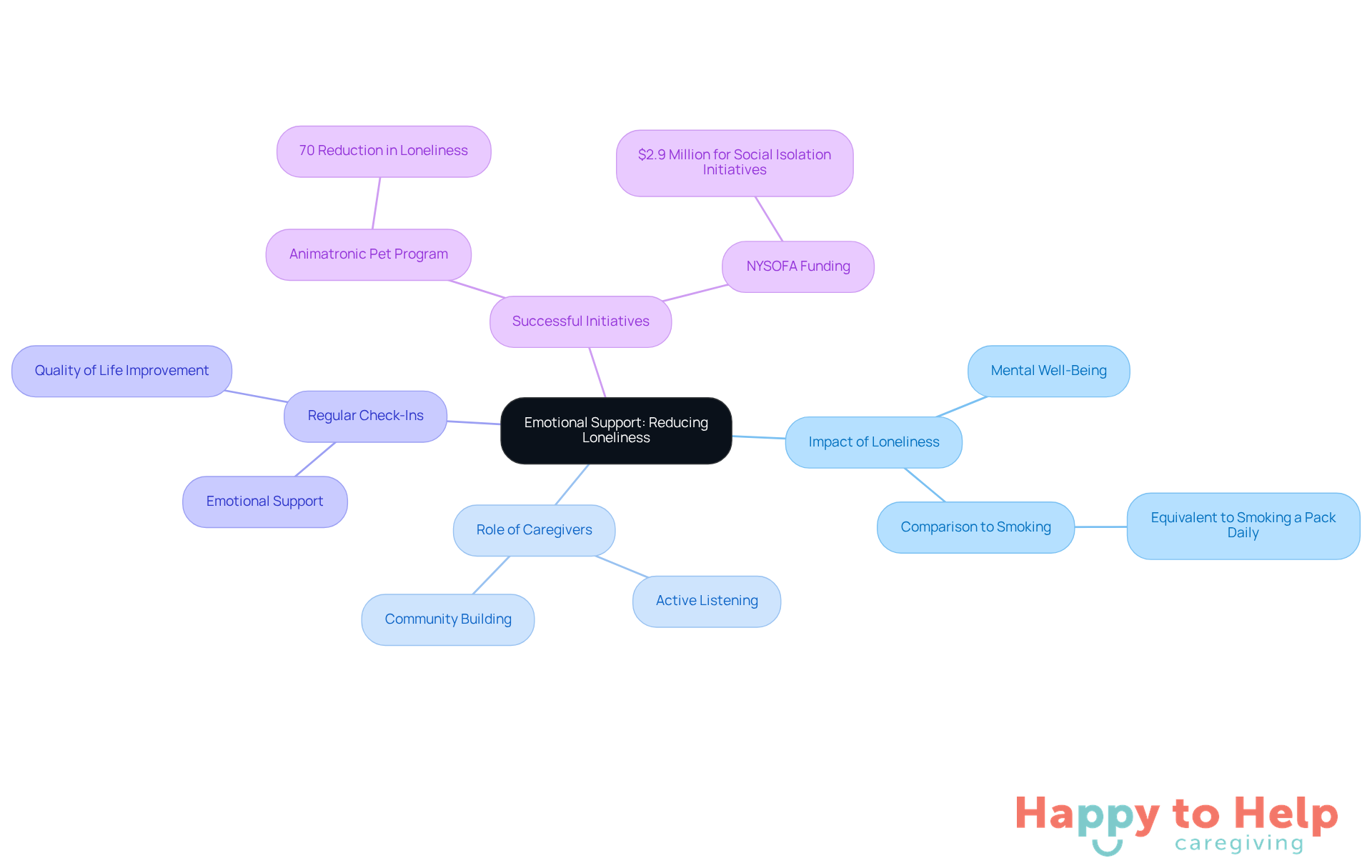
Loneliness and isolation are significant challenges faced by older adults, impacting their mental well-being. Regular check-ins, as part of a check in service for seniors, can provide essential emotional support, helping to alleviate these feelings. Caregivers at Happy to Help Caregiving are trained to listen actively and engage clients in meaningful conversations. This emotional connection not only lifts the spirits of elders but also fosters a sense of community and belonging, which is crucial for their mental health.
The implications of social isolation are alarming. Research indicates that its effects on well-being can be as detrimental as smoking nearly a pack of cigarettes daily. This stark comparison highlights the urgent need for regular interactions. Initiatives like the animatronic pet program, funded by NYSOFA, have demonstrated a remarkable 70 percent reduction in self-reported loneliness among participants.
By nurturing these relationships, caregivers play a vital role in enhancing the mental well-being of older adults. Regular check-ins are not just beneficial; the check in service for seniors is a key element of effective support. Implementing these practices can significantly improve the quality of life for those in their care.
Automated Monitoring: Leveraging Technology for Senior Safety
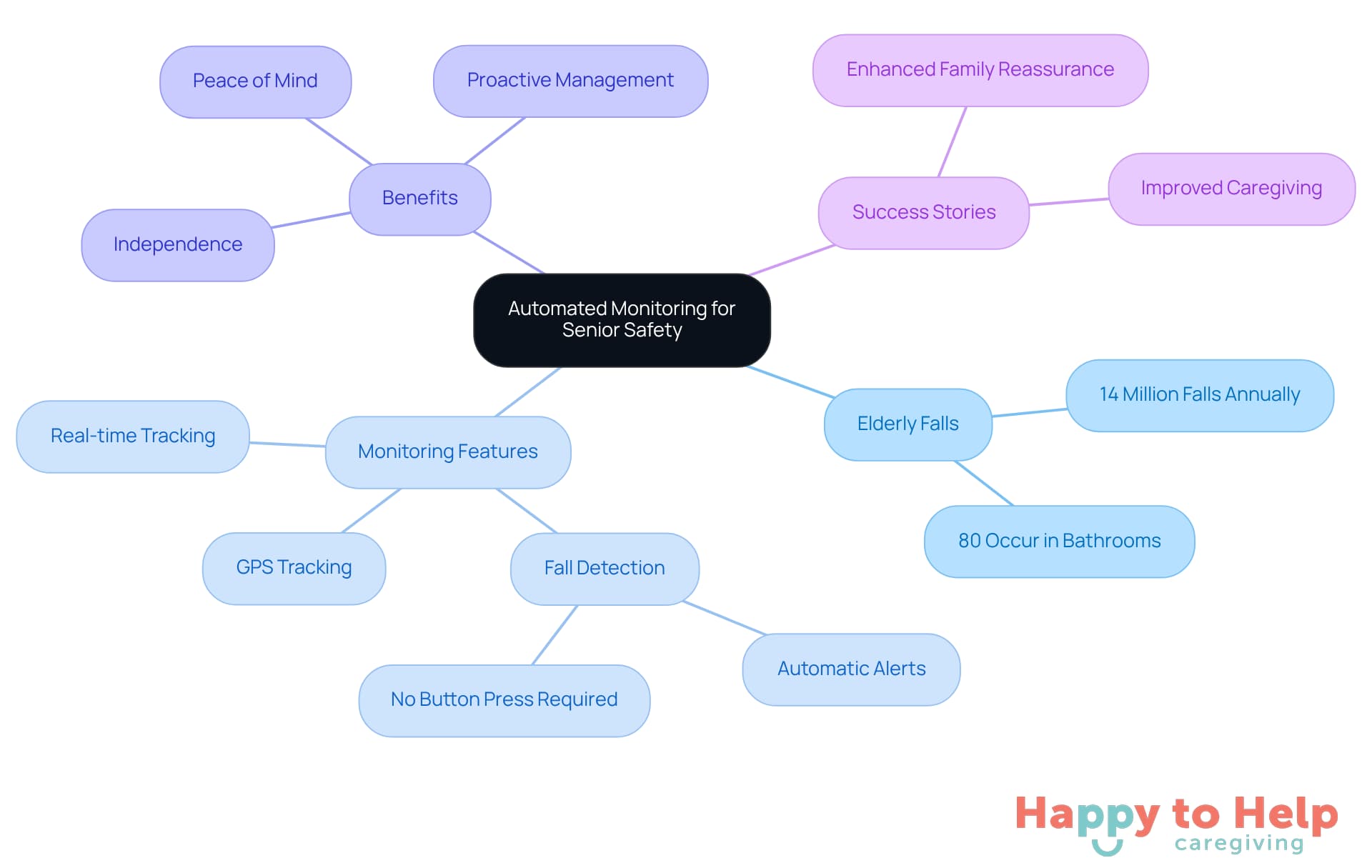
Elderly safety is a pressing concern, particularly with over 14 million older adults experiencing falls each year. The implications are serious, as 80% of these falls occur in the bathroom, according to the Ohio Department of Aging. This highlights the urgent need for effective solutions to protect our loved ones.
Automated monitoring systems are stepping up to address this issue. They offer real-time tracking of vital signs, fall detection, and prompt alerts to caregivers and family members during emergencies. For instance, modern devices equipped with automatic fall detection can notify monitoring centers without requiring the user to press a button, ensuring immediate assistance even if the individual is incapacitated. This technology not only enhances safety but also empowers older adults to maintain their independence.
Moreover, the incorporation of GPS tracking in mobile safety devices allows older adults to stay connected while engaging in daily activities outside their homes. This portability ensures that help is always just a call away, providing peace of mind for both seniors and their families. Continuous 24/7 monitoring is crucial for those living alone, as it is part of the check-in service for seniors, guaranteeing that someone is always available to respond to emergencies.
Success stories abound, showcasing how these automated systems have transformed caregiving. Families report improved peace of mind knowing their relatives are safe with the check-in service for seniors, while caregivers benefit from remote access to health information, enabling proactive management. Selecting devices with robust battery life and backup power is essential to ensure continuous operation.
As technology continues to advance, the effectiveness of these systems in enhancing elderly safety and well-being becomes increasingly clear. They are not just a luxury; they are an essential component of modern caregiving.
Personalized Care Plans: Tailoring Services to Individual Needs
At Happy to Help Assistance, many elderly individuals face the challenge of receiving inadequate support tailored to their unique needs. This lack of personalized care can lead to feelings of isolation and a diminished quality of life.
Research from a 2019 clinical study led by Dr. Tinetti highlights the importance of personalized treatment plans, showing that older adults engaged in such plans experience significantly enhanced quality of life. In fact, nearly 2.5 times as many participants felt involved in decisions regarding their treatment compared to those receiving conventional support.
So, how can caregivers address this issue? Happy to Help Assistance meticulously designs personalized service plans for each client, including a check in service for seniors that reflects their individual preferences and lifestyles. This approach ensures that elderly individuals receive appropriate support through a check in service for seniors, whether it involves assistance with daily activities, companionship, or health monitoring.
For example, older adults who engage in tailored support are more inclined to preserve their autonomy, as helpers focus on providing aid only where needed. This not only improves the overall support experience but also empowers older adults by honoring their capabilities and motivating them to stay engaged in their daily lives.
By prioritizing individual preferences and routines, Happy to Help Caregiving effectively transforms routine assistance into meaningful companionship. This ultimately enriches the lives of older adults and alleviates feelings of loneliness and isolation. Families are encouraged to share comprehensive information about their loved ones when developing a support plan, ensuring that the assistance provided aligns with each individual's unique lifestyle.
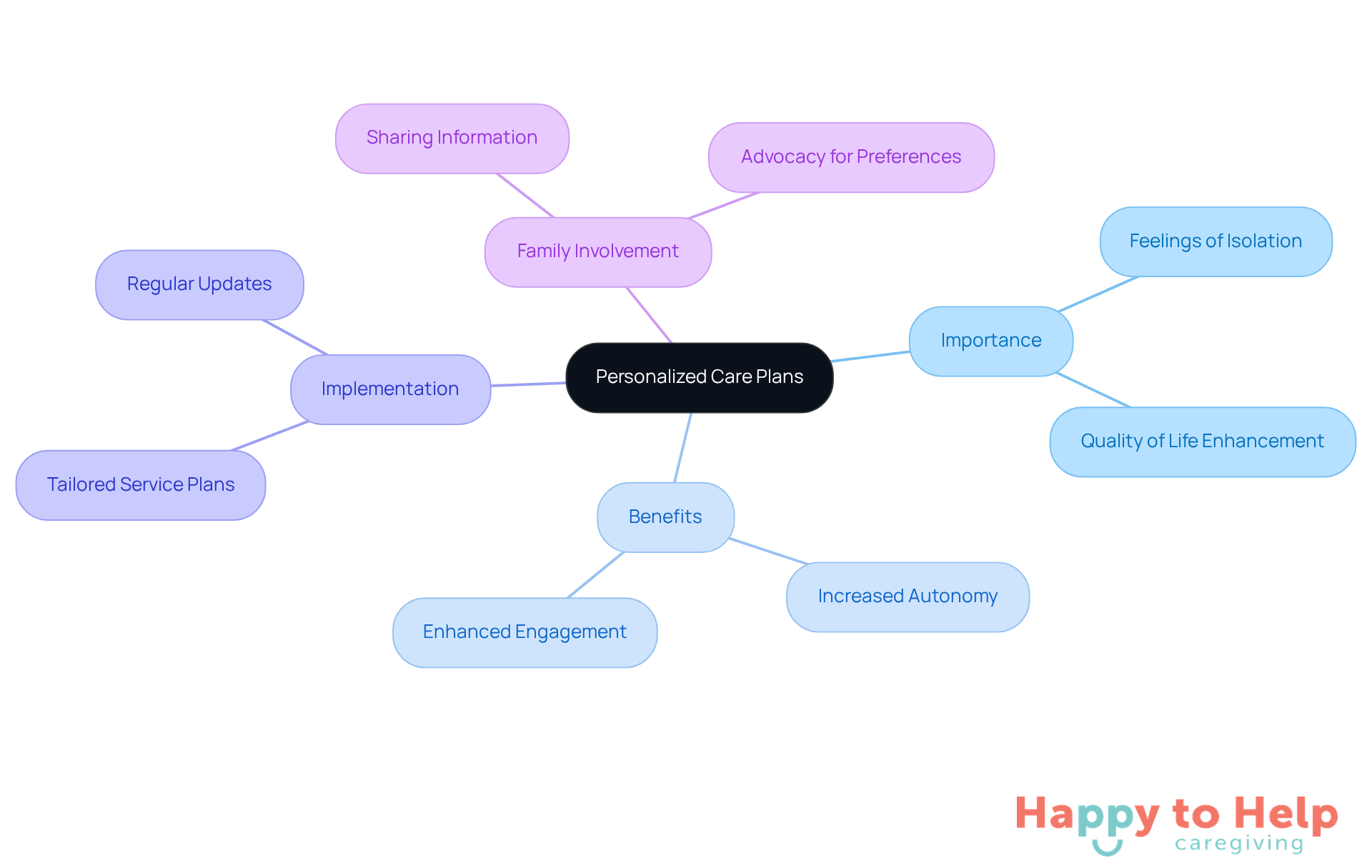
Respite Care: Supporting Family Caregivers with Temporary Relief
Caregiving can be an incredibly demanding role, often leading to significant stress for those who provide support. Family caregivers frequently find themselves overwhelmed, struggling to balance their responsibilities with personal needs. This stress not only affects their well-being but also impacts the quality of care they can offer to their loved ones.
Research shows that caregivers who experience high levels of stress may find it challenging to deliver the check in service for seniors that is essential for their attention and support. In fact, studies indicate that utilizing respite services can lead to lower stress levels and improved health outcomes for caregivers. According to Kimberly Hodges, "With support providers increasingly requested to deliver more intense and complex assistance, respite services are essential for offering them a much-needed break."
Respite services, like those offered by Happy to Help Caregiving, provide vital temporary relief for family supporters. These services allow caregivers to step away from their duties to rejuvenate, attend to personal matters, or simply take a well-deserved break. By prioritizing caregiver well-being, the check in service for seniors fosters a more sustainable caregiving environment, ensuring that seniors continue to thrive in their familiar surroundings.
Moreover, the financial benefits of respite services are noteworthy. Research indicates that for every $1,000 invested in respite services, there is an 8% decrease in the probability of hospitalization. This highlights the potential cost savings and wellness advantages linked to these services, making them a practical solution for caregivers seeking relief.
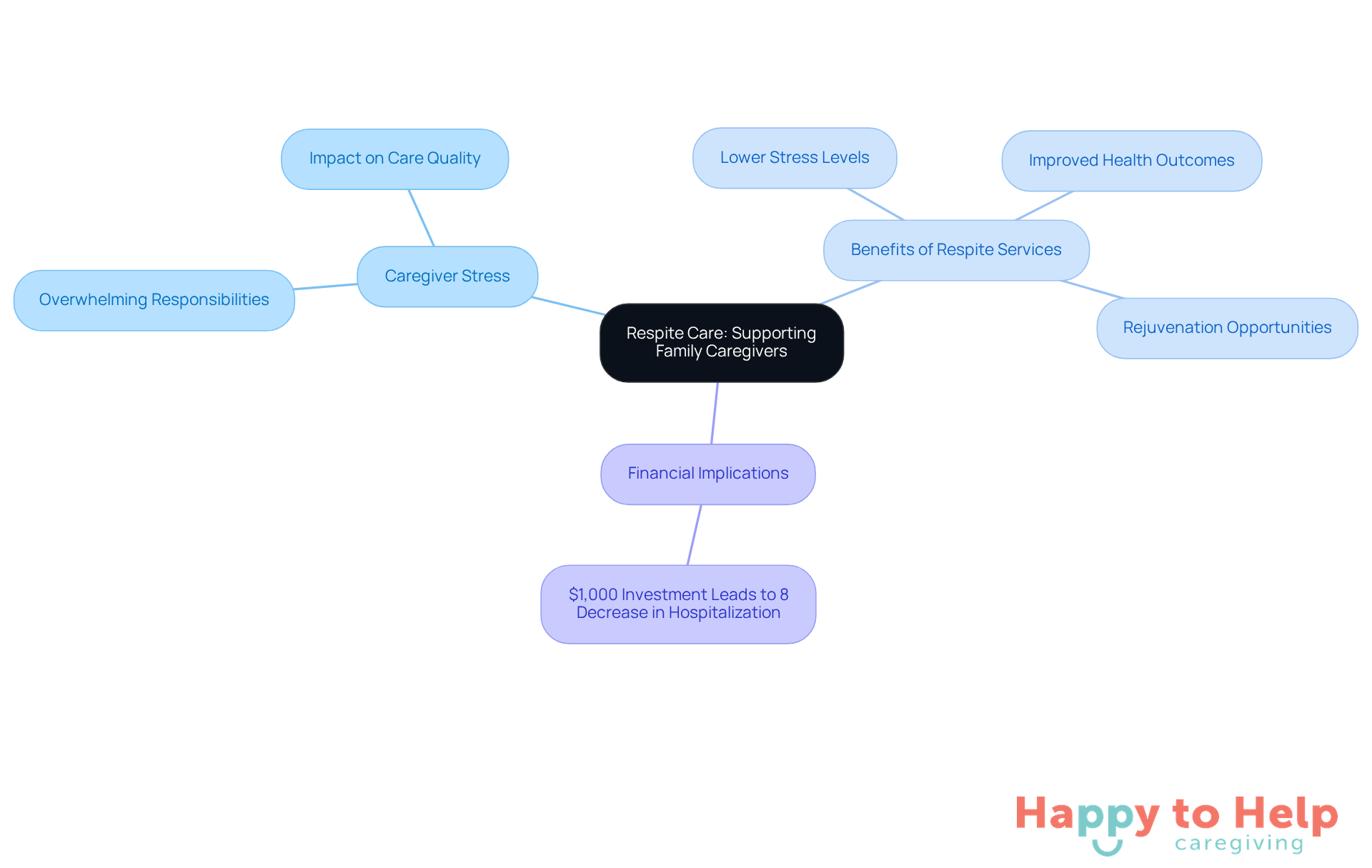
Health Monitoring: Ensuring Timely Medical Attention for Seniors
Health monitoring presents a significant challenge in caregiving. Without regular oversight, vital signs can fluctuate, medication compliance may falter, and general health can deteriorate, leading to serious complications. This not only affects the well-being of older adults but can also result in increased hospital stays and a loss of autonomy.
Happy to Help Caregiving addresses this issue through a proactive approach. Caregivers routinely monitor vital signs, ensuring that any changes are swiftly addressed. By focusing on medication compliance and general condition, they facilitate prompt medical care, significantly lowering the chances of complications. This method not only helps older adults maintain their health but also supports their independence.
Incorporating regular health monitoring into caregiving routines is essential. Here are some actionable tips for caregivers:
- Establish a routine for checking vital signs and medication schedules.
- Document changes in health to identify patterns that may require medical attention.
- Communicate regularly with healthcare providers to ensure comprehensive care.
By implementing these strategies, caregivers can enhance the quality of care provided, ultimately helping older adults preserve their health and autonomy.
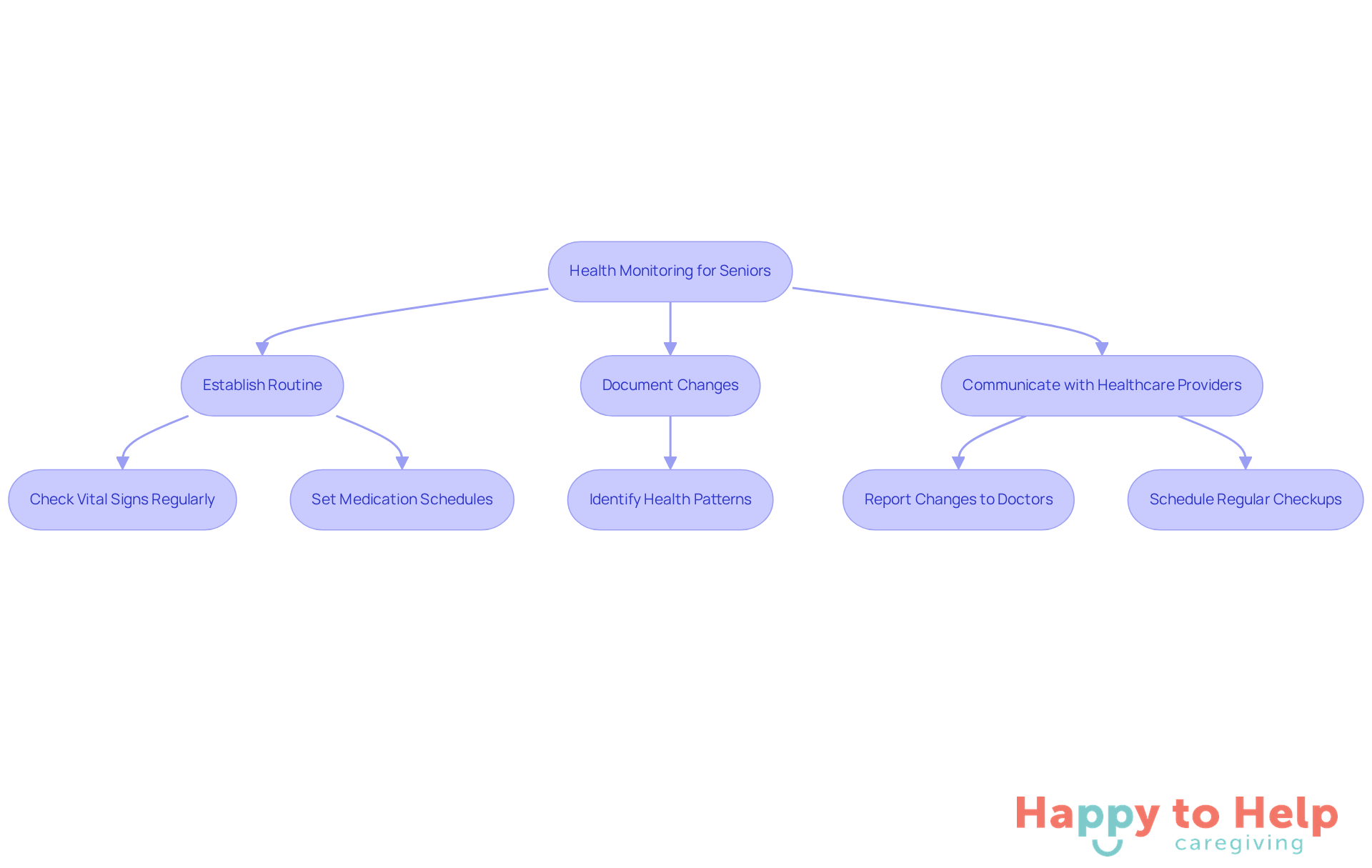
Social Interaction: Fostering Community Connections Through Check-Ins
Loneliness among older adults is a significant issue that can lead to serious mental health challenges. The check in service for seniors provided by Happy to Help Caregiving plays a vital role in addressing this problem by fostering social interaction and helping seniors stay connected to their communities. Caregivers actively promote involvement in local events and activities, such as the Friendly Visiting program, which assists homebound elderly individuals.
This engagement is essential for combating loneliness and enhancing mental health. Studies show that older adults who participate in their communities experience a reduced risk of depression, anxiety, heart disease, and high blood pressure. By encouraging social involvement, caregivers can help older adults preserve their mental well-being and significantly enhance their quality of life.
Dr. Jennifer Wong emphasizes the importance of proactive community involvement, noting that loneliness can shrink parts of the brain. Building meaningful relationships through social activities is crucial for enhancing overall fulfillment and happiness. Caregivers can take actionable steps to promote these connections by utilizing a check in service for seniors, ensuring that older adults not only feel less isolated but also enjoy a richer, more engaged life.
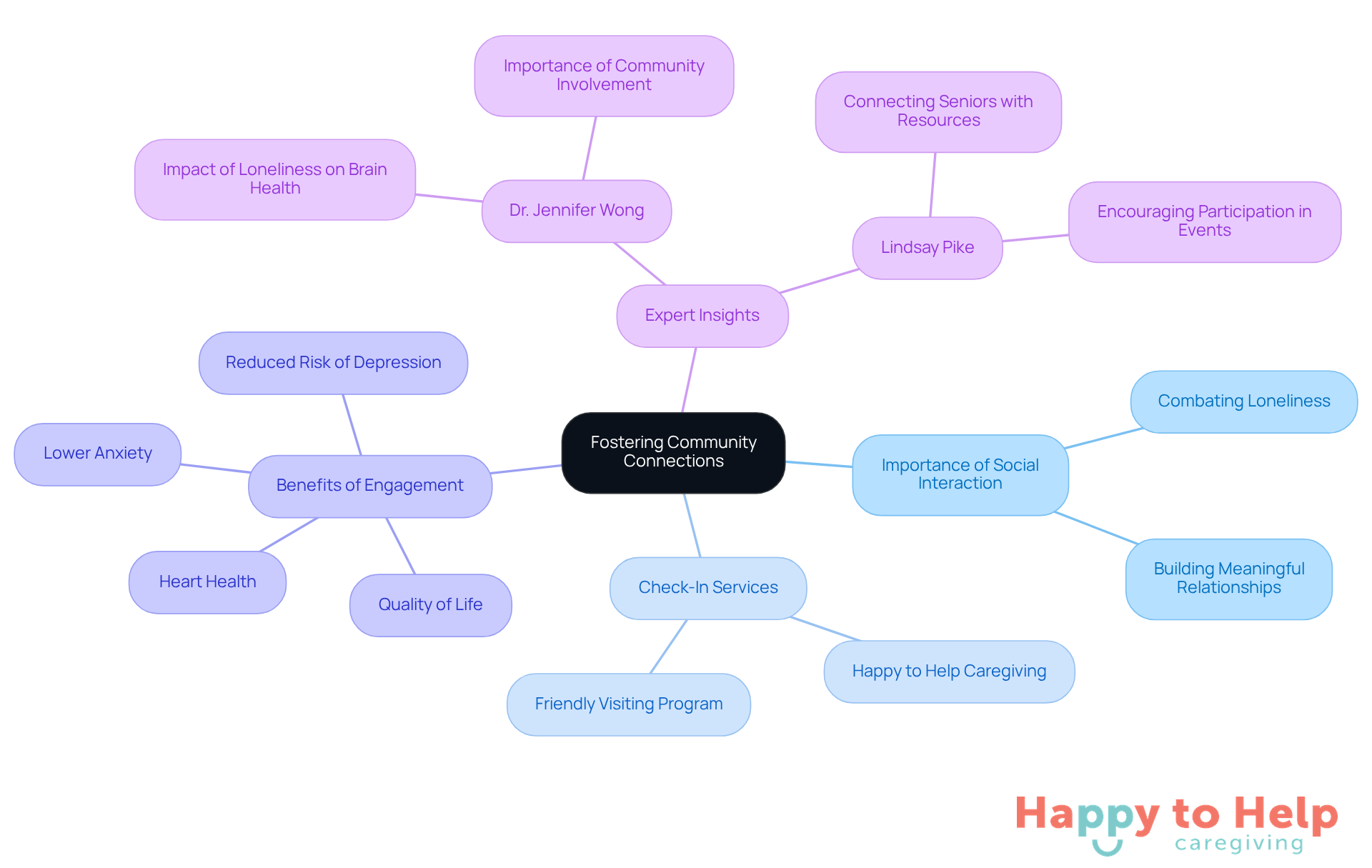
Empowerment: Promoting Independence Through Regular Check-Ins
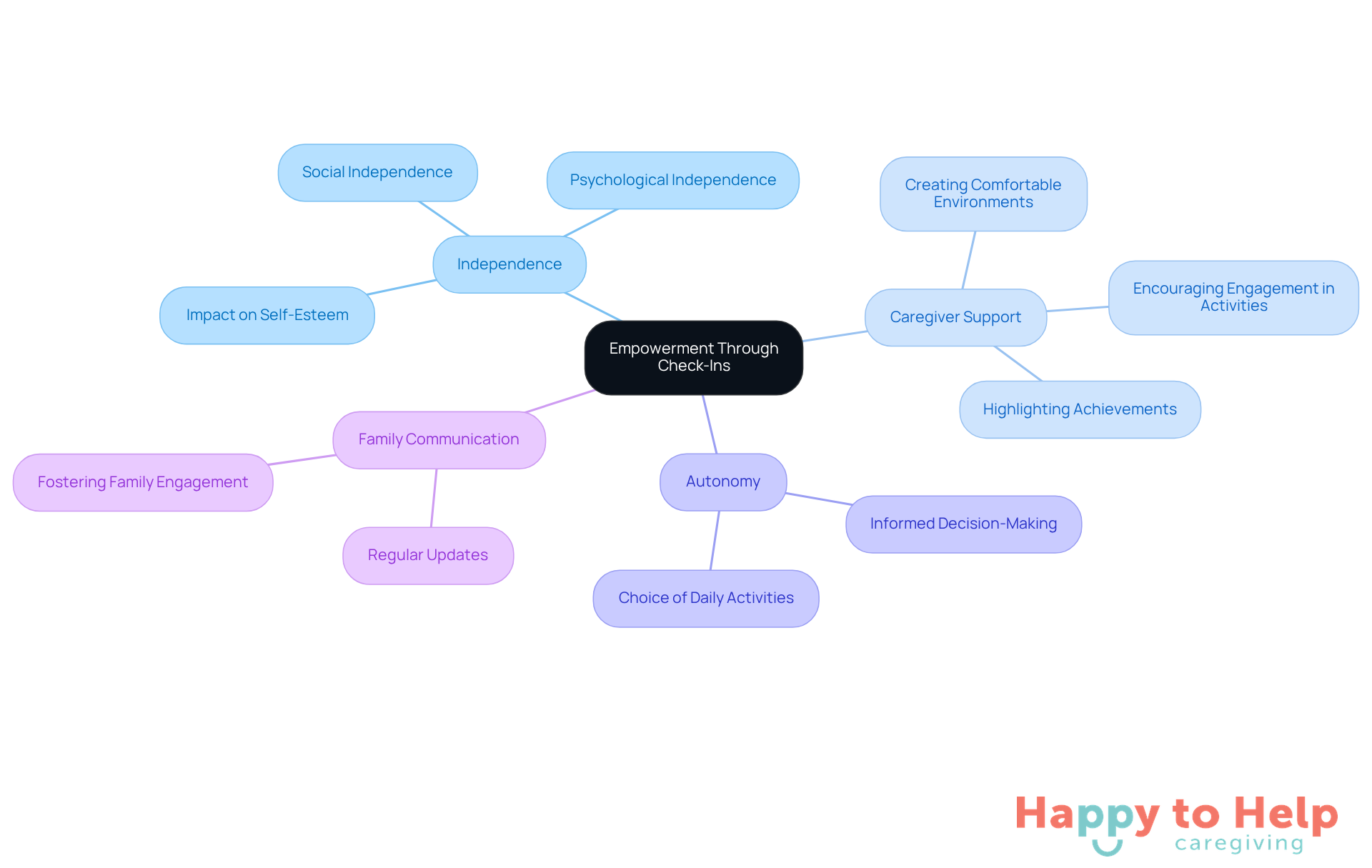
Routine check-ins by support providers at Happy to Help Caregiving highlight a significant problem: many elderly individuals struggle to maintain their independence. This challenge can lead to feelings of isolation and decreased self-esteem, impacting their overall well-being.
When caregivers create an environment where elderly individuals feel comfortable sharing their needs and preferences, they empower them to make informed decisions about their care. This autonomy is crucial for enhancing self-esteem and enabling older adults to lead fulfilling lives in the comfort of their own homes. Research shows that when older adults can choose their daily activities, their mental and physical health improves significantly.
Gerontologists emphasize that independence is not solely about physical capabilities; it also involves psychological and social dimensions. Caregiver support plays a vital role in this process, reinforcing the confidence of older adults and encouraging them to engage in activities that promote their well-being.
Moreover, regular communication with family members about older adults' progress is essential. Nearly 9 in 10 home and community-based services providers report staffing challenges, making consistent updates crucial for fostering family engagement and support.
Ultimately, the check-in service for seniors serves as a vital connection, ensuring that older adults feel valued and supported in their journey toward independence.
Quality of Life: Enhancing Senior Living Through Check-In Services
Happy to Help Caregiving's check in service for seniors addresses a significant problem: the loneliness and depression that many elderly individuals face. These feelings can severely impact their quality of life, leading to a decline in both physical and emotional well-being.
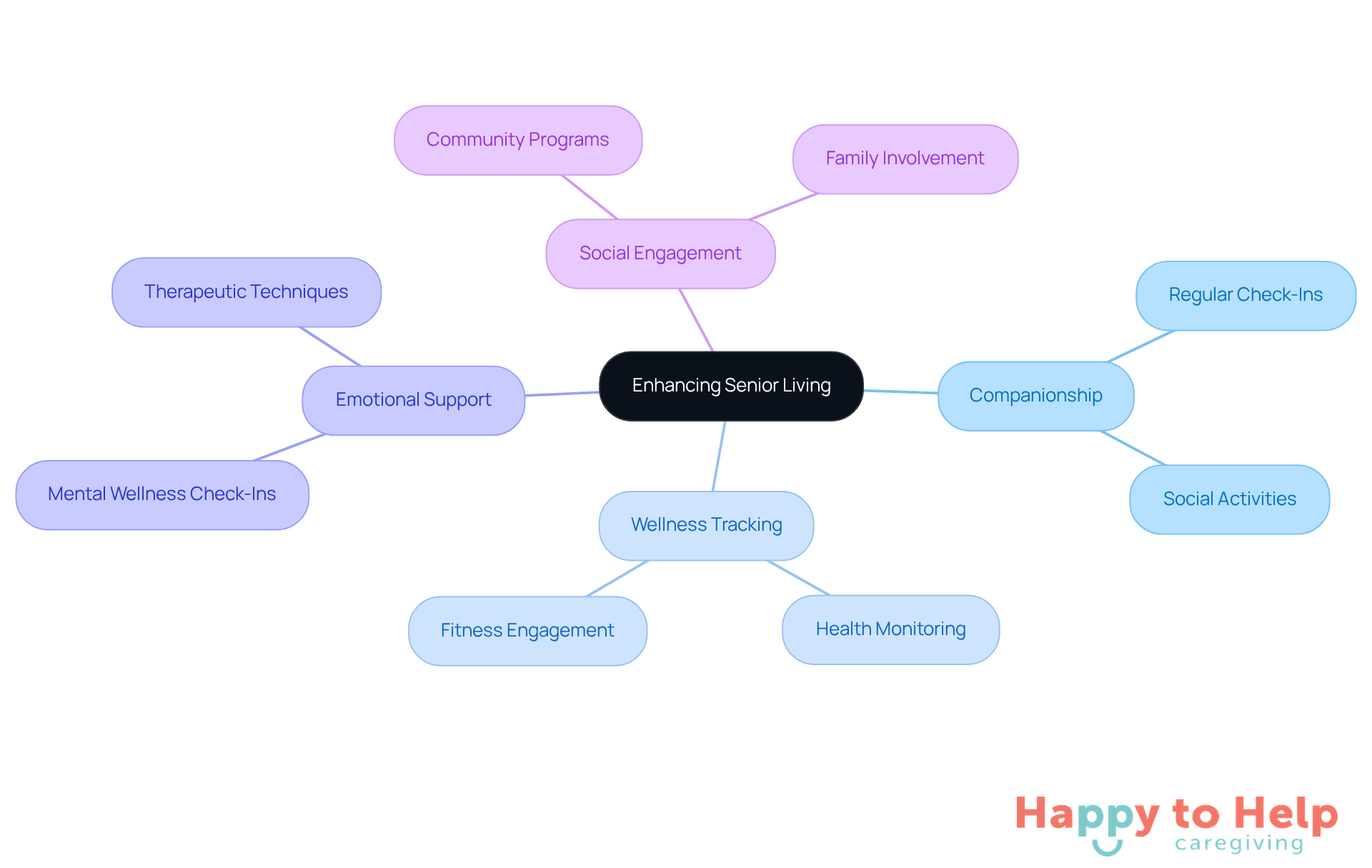
By incorporating companionship, wellness tracking, emotional support, and social engagement, caregivers create a comprehensive care experience tailored to the diverse needs of older adults. This holistic approach not only promotes physical health but also nurtures emotional stability, allowing seniors to thrive in the comfort of their own homes.
Research highlights the importance of regular mental wellness check-ins. Studies suggest that these check-ins can significantly enhance overall well-being, reducing feelings of loneliness and depression. In fact, regular mental wellness check-ins can lower relapse rates by 25-40% and improve treatment adherence by 30%.
Moreover, elders who receive coordinated support report improved well-being and greater satisfaction with their living circumstances. By emphasizing a comprehensive approach to assistance, Happy to Help Caregiving ensures that older adults maintain their independence while receiving the necessary support for a fulfilling life.
As CarePatrol emphasizes, the check in service for seniors is essential in senior care to preserve emotional well-being and prevent long-term complications. This highlights the critical role that caregivers play in enhancing the quality of life for seniors.
Making the Right Choice
Check-in services for seniors address a critical problem: loneliness and isolation, which can severely impact their well-being and quality of life. These pervasive issues not only lead to emotional distress but also increase health risks, making it essential to create a supportive environment where older adults can thrive.
Daily check-ins and companionship care are vital solutions that caregivers can implement. These services not only provide safety and reassurance but also foster emotional connections, significantly reducing feelings of loneliness. Additionally, integrating technology, such as automated monitoring systems, enhances safety while allowing seniors to maintain their independence. Personalized care plans ensure that each individual's unique needs are met, enriching their lives and promoting both mental and physical health.
Investing in check-in services is not merely about assistance; it’s about enhancing the overall quality of life for seniors. Encouraging families to engage in these services can lead to healthier, happier, and more fulfilled lives for older adults. As society increasingly recognizes the significance of these services, it is imperative to prioritize and advocate for comprehensive elder care solutions that foster connection, support, and independence for seniors.
https://iframe.tely.ai/cta/eyJhcnRpY2xlX2lkIjogIjY5MjUxM2VlYzllMzYyY2Y1ZDgyYjA5MiIsICJjb21wYW55X2lkIjogIjY4ZWU1ZGNhNzMxNzYyNTU3ZjNjOTVjMSIsICJpbmRleCI6IG51bGwsICJ0eXBlIjogImFydGljbGUifQ==Frequently Asked Questions
What is the main problem that many older adults face regarding their emotional well-being?
Many older adults experience feelings of loneliness, especially those living alone, which can significantly impact their mental health and emotional well-being.
How does loneliness affect the health of elderly individuals?
Loneliness can lead to serious health issues, affecting emotional stability and making it difficult for elderly individuals to engage in meaningful activities, further exacerbating feelings of isolation.
What services does Happy to Help Caregiving provide to address loneliness in seniors?
Happy to Help Caregiving offers devoted companionship care, providing not just physical assistance but also emotional support through meaningful conversations, activities, and hobbies.
What is the purpose of the daily check-in calls offered by Happy to Help Caregiving?
The daily check-in calls aim to enhance the safety and well-being of older adults, particularly those living alone, by addressing feelings of isolation and ensuring their safety at home.
What percentage of individuals aged 60 and older live alone, making check-in calls vital?
Over 27 percent of individuals aged 60 and older reside alone, highlighting the importance of regular check-in calls.
What are the health benefits associated with regular communication for older adults?
Regular communication, such as weekly phone check-ins, has been linked to better health outcomes, including a reduction in hospital visits for older cancer patients.
How does the Wake Well Check Program function as a safety net for seniors?
The Wake Well Check Program involves daily wellness calls, providing reassurance and immediate follow-ups if a call goes unanswered, creating a responsive safety net for older adults.
What role do caregivers play in reducing loneliness among seniors?
Caregivers at Happy to Help Caregiving are trained to listen actively and engage clients in meaningful conversations, fostering emotional connections that enhance mental well-being.
What alarming comparison is made regarding the effects of social isolation on well-being?
Research indicates that the effects of social isolation can be as detrimental as smoking nearly a pack of cigarettes daily, emphasizing the urgent need for regular interactions.
How effective are initiatives like the animatronic pet program in reducing loneliness among older adults?
The animatronic pet program has demonstrated a remarkable 70 percent reduction in self-reported loneliness among participants, highlighting the effectiveness of such initiatives.
List of Sources
- Happy to Help Caregiving: Companionship Care for Seniors
- Navigating Loss: How Companion Care at Home Supports Seniors During Grief Awareness Month (https://ahelpinghandga.com/navigating-loss-how-companion-care-at-home-supports-seniors-during-grief-awareness-month)
- Trends in Loneliness Among Older Adults from 2018-2023 (https://ihpi.umich.edu/national-poll-healthy-aging/reports-and-resources/trends-loneliness-among-older-adults-2018-2023)
- Older adults find support through health care companions (https://news-medical.net/news/20250924/Older-adults-find-support-through-health-care-companions.aspx)
- AI Care Companions for Seniors (https://health.usnews.com/senior-care/articles/ai-care-companions-for-seniors)
- Companion Care at Home Reduces Loneliness for Seniors During the Holidays (https://lifesathomecare.com/companion-care-at-home-reduces-loneliness-for-seniors-during-the-holidays)
- Daily Check-In Calls: Enhancing Safety and Well-Being
- Weekly phone check-ins cut hospital visits for older cancer patients, study finds (https://mcknights.com/news/weekly-phone-check-ins-cut-hospital-visits-for-older-cancer-patients-study-finds)
- Dayton’s Senior Safe program provides regular check-ins for elders (https://wdtn.com/news/daytons-senior-safe-program-provides-regular-check-ins-for-elders)
- The Power of a Daily Call: How Communities Are Protecting Residents Who Live Alone (https://finance.yahoo.com/news/power-daily-call-communities-protecting-110000241.html)
- Daily check-in calls provide peace of mind for Wake seniors, their loved ones (https://wral.com/story/daily-check-in-calls-provide-peace-of-mind-for-wake-seniors-their-loved-ones/20713994)
- Emotional Support: Reducing Loneliness Through Regular Check-Ins
- How Remote Care Management helps seniors feel less lonely and healthier (https://medsien.com/articles/how-remote-care-management-helps-seniors-feel-less-lonely-and-healthier)
- SoCal Seniors Get New 'Joy Calls' Service Free: An AI Companion That Combats Loneliness and Isolation Over the Phone (https://prnewswire.com/news-releases/socal-seniors-get-new-joy-calls-service-free-an-ai-companion-that-combats-loneliness-and-isolation-over-the-phone-302528658.html)
- NYSOFA Brings ElliQ Proactive Care Companion Technology to Older Adults, Reducing Social Isolation, Supporting Independence, Connection and Engagement (https://aging.ny.gov/news/nysofa-brings-elliq-proactive-care-companion-technology-older-adults-reducing-social-isolation)
- Humana Foundation Expands National Efforts to Improve Seniors’ Emotional Health (https://humanafoundation.org/news-humana-foundation/press-releases/humana-foundation-expands-national-efforts-to-improve-seniors-emotional-health)
- Automated Monitoring: Leveraging Technology for Senior Safety
- Sage Adds AI-Powered Fall Detection and Wellness Trend Monitoring to its All-in-One Senior Care Platform (https://prnewswire.com/news-releases/sage-adds-ai-powered-fall-detection-and-wellness-trend-monitoring-to-its-all-in-one-senior-care-platform-302475863.html)
- Growing AI capabilities for senior living now include automated updates to residents’ families (https://mcknightsseniorliving.com/news/growing-ai-capabilities-for-senior-living-now-include-automated-updates-to-residents-families)
- Best Technologies for Senior Safety at Home (https://roboticsandautomationnews.com/2025/10/16/best-technologies-for-senior-safety-at-home/95604)
- 7 Innovations In Elderly Alert Systems That Are Changing Senior Care | Fingerlakes1.com (https://fingerlakes1.com/2025/11/07/7-innovations-in-elderly-alert-systems-that-are-changing-senior-care)
- Senior Monitoring Devices: Enhancing Safety and Independence (https://seniorlivingnearme.com/resources/senior-monitoring-devices-enhancing-safety-and-independence)
- Personalized Care Plans: Tailoring Services to Individual Needs
- Customized Care at Home: The Benefits of Personalized Care Plans - VNA Health Group (https://vnahg.org/customized-care-at-home-the-benefits-of-personalized-care-plans)
- Novel Care Model May Improve Outcomes for Older Adults With Multiple Chronic Conditions (https://consultqd.clevelandclinic.org/novel-care-model-may-improve-outcomes-for-older-adults-with-multiple-chronic-conditions)
- Importance of Personalized Senior Home Care in Burlington NC (https://wisdomseniorcare.com/the-importance-of-personalized-care-plans-for-seniors)
- Boosting Confidence Through Personal Care Plans for Seniors (https://seniorlifestyle.com/resources/blog/personalized-care-plans-for-seniors)
- Creating Individualized Mental Health Care Plans for Seniors - Supportive Care (https://thesupportivecare.com/blog/creating-individualized-mental-health-care-plans-for-seniors)
- Respite Care: Supporting Family Caregivers with Temporary Relief
- Respite care more than doubles chances of elderly patients dying at home, study finds (https://mcknights.com/news/respite-care-more-than-doubles-chances-of-elderly-patients-dying-at-home-study-finds)
- How Respite Care Improves Quality of Life for Seniors and People with Disabilities (https://bucknerwestminster.org/news-blog/how-respite-care-improves-quality-of-life-for-seniors-and-people-with-disabilities)
- Respite Facts and Talking Points | ARCH National Respite Network & Resource Center (https://archrespite.org/policy/respite-facts-and-talking-points)
- Improving Support for Family Caregivers (https://nationalacademies.org/news/2025/07/improving-support-for-family-caregivers)
- State Innovations to Advance Respite Care: Policy Strategies Shared at the State-Federal Respite Summit - NASHP (https://nashp.org/state-innovations-to-advance-respite-care-policy-strategies-shared-at-the-state-federal-respite-summit)
- Health Monitoring: Ensuring Timely Medical Attention for Seniors
- 2025 Senior Health, Technology Trends | Right at Home Pierce County (https://rightathome.net/pierce-county/blog/2025-senior-trends)
- Elderly Care Technology: 6 Trends Shaping Home Health in 2025 (https://mindbowser.com/elderly-care-technology-in-home-health-care)
- Why Regular Health Checkups Are Key to Senior Safety - WelbeHealth (https://welbehealth.com/regular-health-checkups-for-senior-safety)
- The Importance of Preventative Screenings for Seniors | Suvida Healthcare (https://suvidahealthcare.com/blog/the-importance-of-preventative-screenings-for-seniors)
- 5 Essential Health Monitors for Seniors in 2025 - Resource for Seniors and Caregivers | SeniorSite (https://seniorsite.org/resource/5-essential-health-monitors-for-seniors-in-2025)
- Social Interaction: Fostering Community Connections Through Check-Ins
- The Importance of Community for Older Adults (https://archwellhealth.com/news/the-importance-of-community-for-older-adults)
- For seniors dealing with social isolation, NYC programs provide intergenerational events (https://cbsnews.com/newyork/news/cost-of-caregiving-the-life-story-club-nyc-friendly-visiting-program)
- The Importance of Social Interaction in Senior Communities (https://friendshipcenters.org/the-importance-of-social-interaction-in-senior-communities)
- Staying Connected is Vital in Aging Well (https://owensborohealth.org/news-events/news-media/2024/staying-connected-vital-aging-well)
- Strong social connections improve older adults’ well-being regardless of setting, study finds (https://mcknights.com/news/strong-social-connections-improve-older-adults-well-being-regardless-of-setting-study-finds)
- Empowerment: Promoting Independence Through Regular Check-Ins
- From Companionship to Confidence: How Caregivers Empower Seniors Daily - Miss Bell (https://missbellcares.com/from-companionship-to-confidence-caregivers-empower-seniors)
- Independence trumps longevity as top priority in aging: survey (https://mcknightsseniorliving.com/news/independence-trumps-longevity-as-top-priority-in-aging-survey)
- BrightStar Care is empowering seniors to live their best lives - Cross Timbers Gazette | Southern Denton County | Flower Mound | News (https://crosstimbersgazette.com/2025/10/26/brightstar-care-is-empowering-seniors-to-live-their-best-lives)
- Empower Seniors to Feel Secure in Their Environment » LifeWorx Home Care (https://lifeworx.com/resources/articles/empower-seniors-to-feel-secure-in-their-environment)
- Independence and older adults: Importance and promoting it (https://medicalnewstoday.com/articles/independence-and-the-elderly)
- Quality of Life: Enhancing Senior Living Through Check-In Services
- Why Mental Health Check-Ins Are Essential in Senior Care for Aging Parents - CarePatrol of NW San Antonio, Hill Country (https://carepatrol.com/nw-san-antonio-hill-country/why-mental-health-check-ins-are-essential-in-senior-care-for-aging-parents)
- Why Consistent Mental Health Check-Ins Matter for Seniors in Memory Care - Supportive Care (https://thesupportivecare.com/blog/why-consistent-mental-health-check-ins-matter-for-seniors-in-memory-care)
- Catholic Eldercare :: Today’s Technology is Improving Senior Care (https://catholiceldercare.org/newsevents/stories/todays-technology-improving-senior-care)
- ‘We’re Back, Baby’: 6 Senior Living Leaders Predict Memory Care’s Future (https://seniorhousingnews.com/2025/10/17/were-back-baby-6-senior-living-leaders-predict-memory-cares-future)