
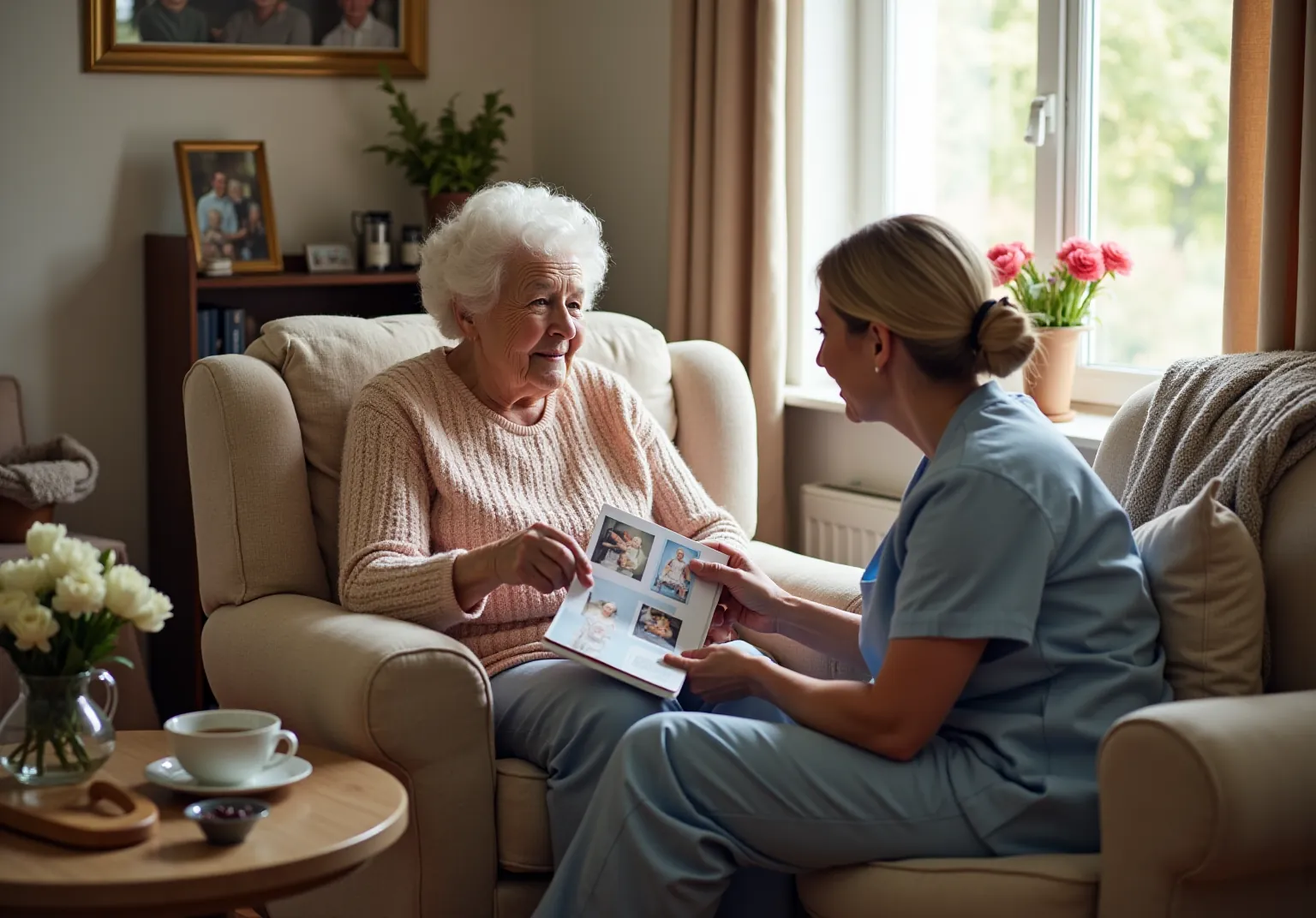
For families in our service areas
For families in our service areas, this guide explains dementia care and how non-medical in-home caregiving can support care planning in East Idaho, Treasure Valley & Magic Valley, Northern Wasatch, North Central West Virginia, and Northeast Ohio.
Why Dementia Care Providers Matters
The rising number of individuals living with dementia - over six million in the U.S. alone - highlights a pressing issue: the urgent need for specialized care that addresses the unique challenges faced by both patients and their caregivers. This situation not only affects those diagnosed but also places significant emotional and physical burdens on their families.
As caregivers navigate the complexities of dementia care, they often feel overwhelmed and uncertain about the best ways to support their loved ones. With so many options available, families may struggle to find services that meet their loved ones' needs while also alleviating their own burdens.
This article delves into ten essential dementia care providers that empower family caregivers with tailored support, effective training, and innovative solutions to enhance the quality of life for those affected.
Happy to Help Caregiving: Personalized Care Plans Tailored to Individual Needs
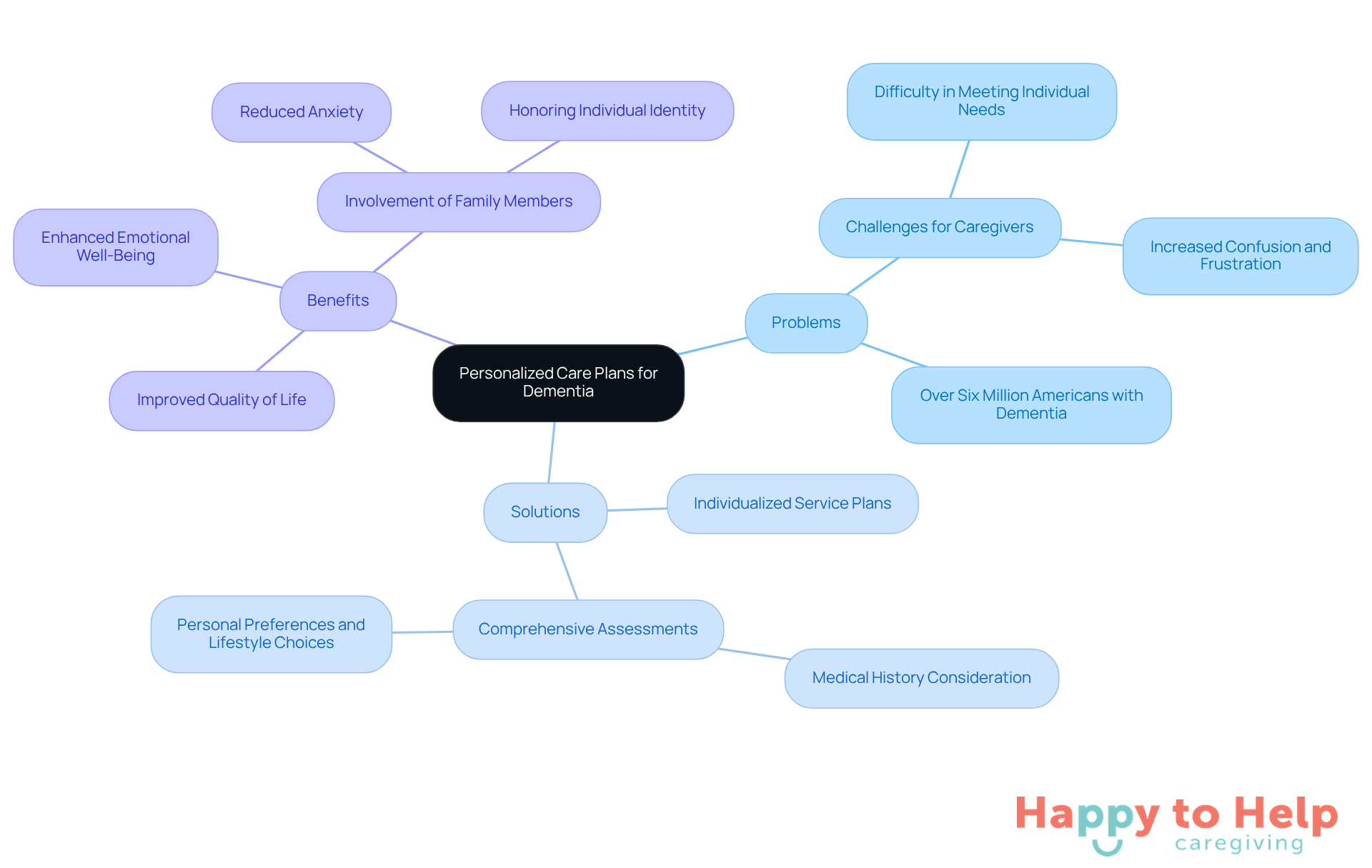
Problem: Over six million Americans are living with dementia, highlighting a critical need for effective care strategies. Caregivers, including dementia care providers, often face challenges in providing support that truly meets the unique needs of each individual.
Agitate: Without tailored care plans from dementia care providers, caregivers may struggle to meet the specific requirements of their clients, resulting in increased confusion and frustration for both parties. This can significantly impact the quality of life for those living with dementia, as generic approaches fail to foster autonomy and a sense of safety in familiar environments.
Happy to Help Caregiving, among the dementia care providers, addresses these challenges by creating individualized service plans that cater to the unique requirements of every client. These plans are developed through comprehensive assessments that consider medical history, personal preferences, and lifestyle choices. This personalized approach enables dementia care providers to offer more effective assistance, significantly improving the quality of life for clients.
By focusing on the distinct features of each person, caregivers not only encourage autonomy but also foster a feeling of safety and ease. Research shows that personalized support from dementia care providers enhances emotional well-being, decreases confusion, and promotes meaningful interactions, resulting in better outcomes for both clients and their supporters.
Engaging in familiar activities, such as listening to favorite songs or folding laundry, can evoke positive memories and enhance the overall caregiving experience. As one support provider noted, the insights gained from individualized support plans are invaluable in understanding and addressing challenging behaviors like anger, confusion, and wandering, making the support process more compassionate and effective.
Furthermore, including family members in the planning process lessens anxiety and ensures that the support given honors the individual’s true self.
Comprehensive Training Programs for Caregivers: Ensuring Quality and Compassion
Dementia care providers face significant challenges when assisting clients, especially in communication and emotional support. Without proper training, these difficulties can lead to misunderstandings and increased stress for both caregivers and clients.
Happy to Help Caregiving acknowledges these challenges and provides extensive training programs specifically designed for dementia care providers. These programs cover essential topics such as:
- Communication strategies
- Behavioral management
- Emotional assistance techniques
By equipping caregivers with these vital skills, the agency enhances the quality of care provided. This training fosters a compassionate environment that effectively meets the emotional and physical needs of clients, ensuring that dementia care providers are well-prepared to handle the complexities of care.
Emotional Support Strategies: Alleviating Loneliness and Enhancing Well-Being
Loneliness is a significant challenge faced by many clients, particularly those living with dementia. This isolation can lead to a decline in mental health, making it crucial for caregivers to address these feelings effectively.
To combat this issue, Happy to Help Caregiving employs various emotional assistance strategies. Caregivers are trained to:
- Engage clients in meaningful conversations
- Encourage participation in enjoyable activities
- Provide companionship
These interactions not only alleviate feelings of isolation but also foster a positive atmosphere that enhances the overall mental well-being of clients.
By implementing these strategies, caregivers can create a supportive environment that promotes connection and joy, ultimately improving the quality of life for those they care for.
Flexible Scheduling Options: Adapting to Family Needs and Preferences
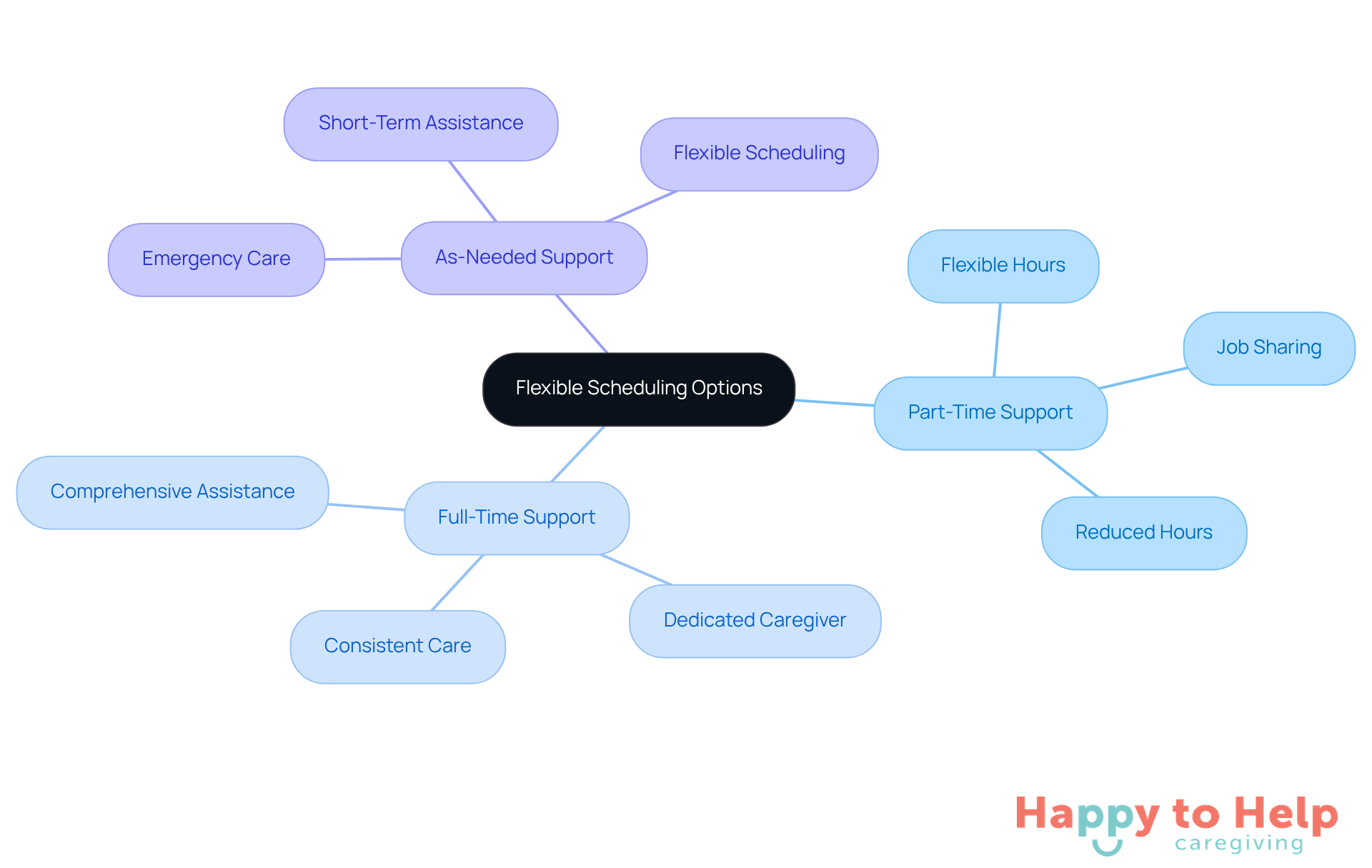
Caregivers often face the challenge of managing unique household needs, which can lead to stress and uncertainty. When support options are inflexible, it becomes difficult for families to balance their caregiving duties effectively. This is where adaptable scheduling options come into play.
Happy to Help Caregiving recognizes that every household is different. That’s why they offer flexible assistance on a part-time, full-time, or as-needed basis. This allows families to choose the level of support that best fits their lifestyle, ensuring they receive the help they need when they need it.
By providing these adaptable scheduling options, Happy to Help Caregiving not only alleviates the burden on caregivers but also guarantees that clients obtain the necessary support tailored to their specific circumstances. This flexibility is essential in helping families navigate their caregiving responsibilities with greater ease.
Technology Integration: Enhancing Communication and Care Management
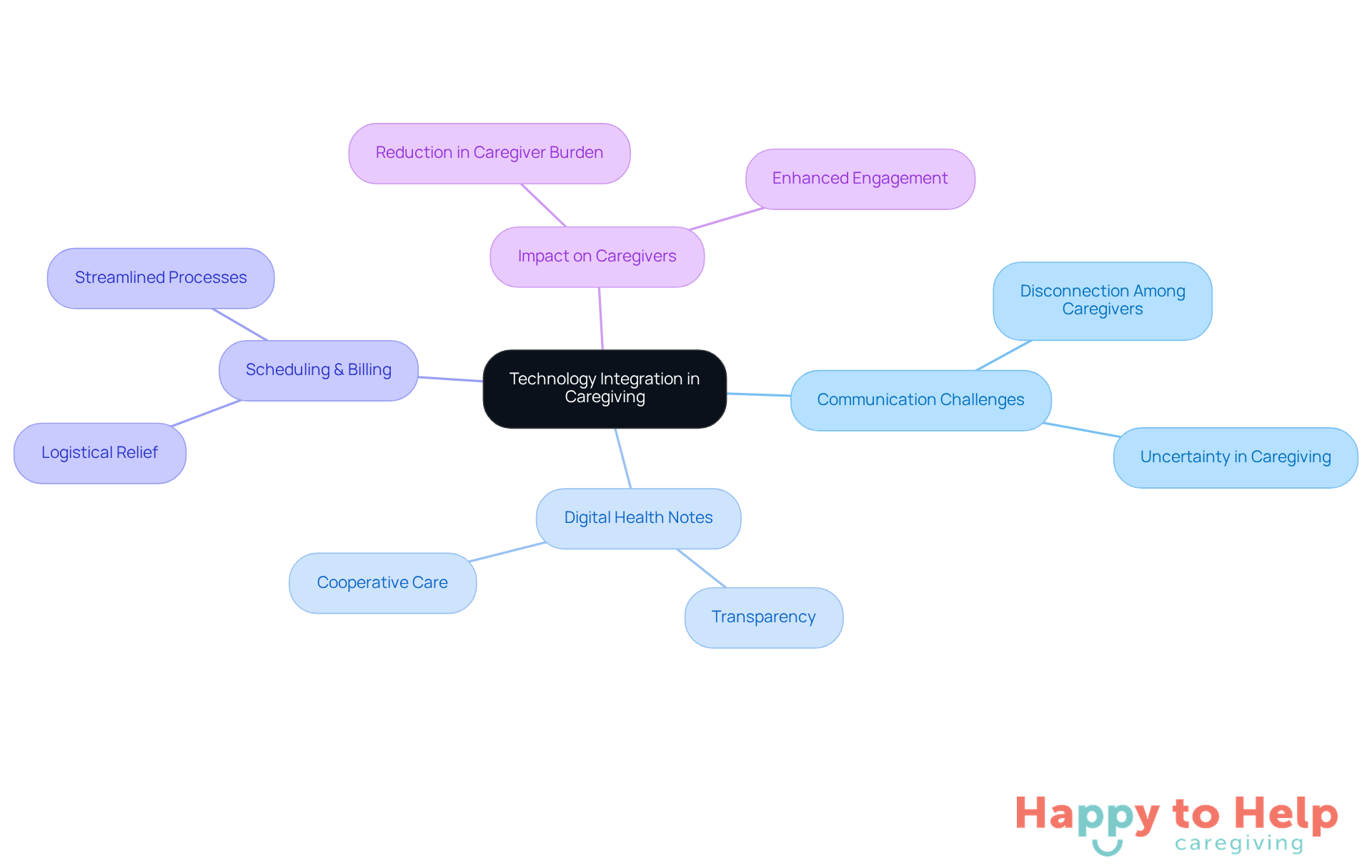
Caregivers face significant challenges in communication and support management, especially when caring for loved ones with dementia. The complexities of daily routines and wellness conditions can leave family members feeling disconnected and uncertain. This lack of clarity can hinder effective caregiving, making it essential to find solutions that foster collaboration and understanding among caregivers.
Technology emerges as a vital solution to these issues. Digital health notes serve as an invaluable resource, keeping relatives informed about their loved one's daily activities and health status. This transparency is crucial for families navigating the intricacies of dementia care providers, as it encourages a cooperative approach to caregiving. Additionally, technology streamlines scheduling and billing processes, relieving families of logistical burdens that can add stress to their caregiving responsibilities.
Industry leaders stress the importance of integrating these tools to enhance the overall caregiving experience. As Miriam Jocelyn Rodriguez noted, "Brain CareNotes is a highly scalable, usable, and acceptable mobile support intervention." With over 11 million Americans providing unpaid support for individuals with Alzheimer's disease and related dementias, dementia care providers recognize the profound impact of technology on communication in home assistance. Rodriguez further highlighted that "approximately $271.6 billion worth of assistance is provided by informal providers," underscoring the critical role technology plays in supporting these caregivers.
By facilitating better information flow and coordination, Happy to Help Caregiving empowers families to feel more engaged and supported throughout their caregiving journey.
Consistent Caregiver Assignments: Building Trust and Familiarity
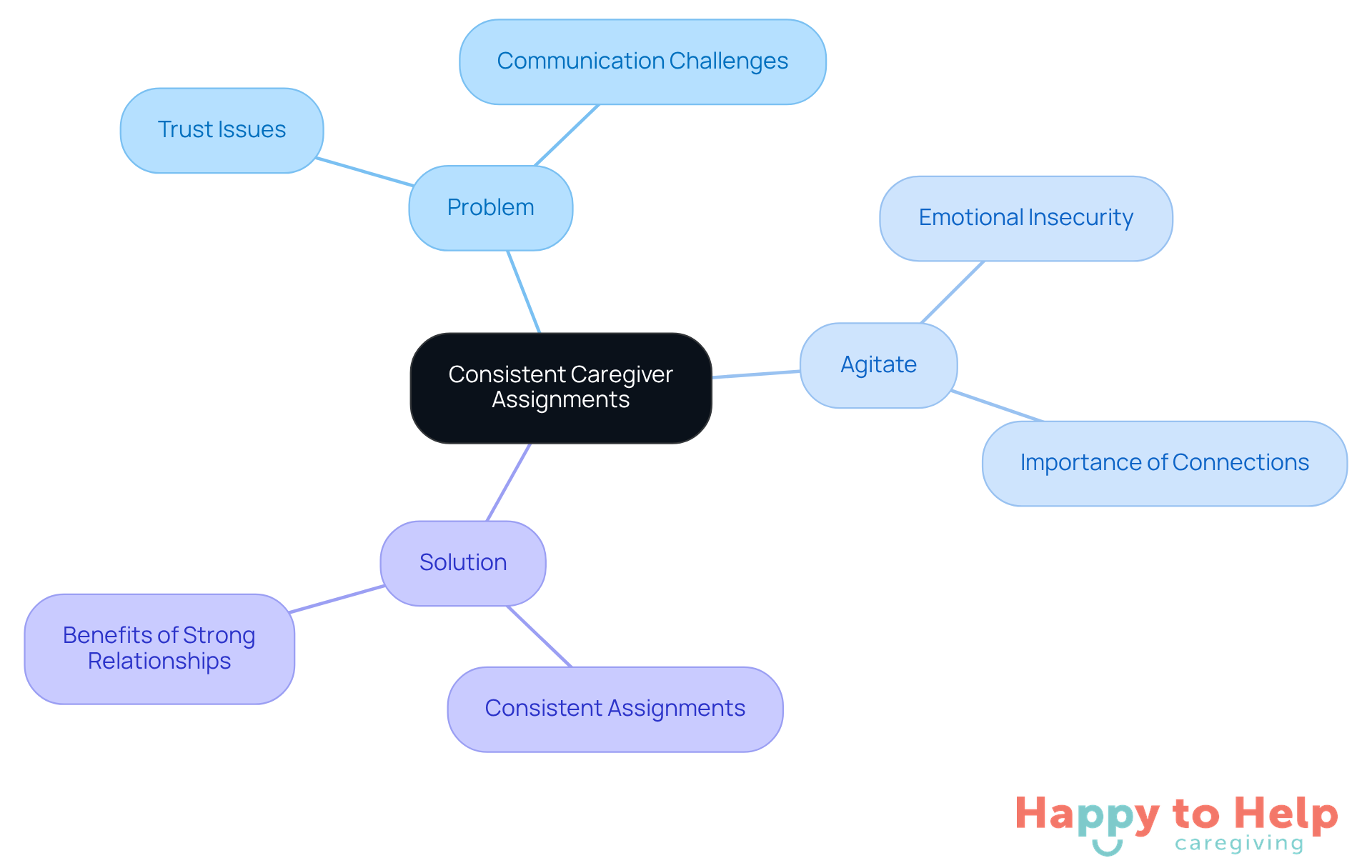
Problem: Inconsistent caregiver assignments can undermine trust and communication between clients and support providers. When clients receive assistance from different caregivers, it becomes challenging to establish strong connections, which are crucial for effective collaboration.
Agitate: This lack of familiarity can lead to emotional insecurity for clients, making it difficult for caregivers to fully understand and respond to their specific needs and preferences. As one provider noted, "The connections we establish with our clients are the basis of efficient support." With the average support worker remaining in their role for four years, long-term assignments are vital for building trust and familiarity.
Solution: To address these challenges, Happy to Help Caregiving emphasizes consistent support staff assignments. By ensuring that clients receive assistance from the same dementia care providers, stronger connections are fostered, which enhances communication and collaboration. Furthermore, 44 percent of caregivers report delivering high-intensity assistance, highlighting the importance of a reliable network. Ultimately, the emotional connections formed through regular tasks create a nurturing atmosphere that promotes trust and improves the overall quality of care.
Community Engagement Initiatives: Strengthening Support Networks for Families
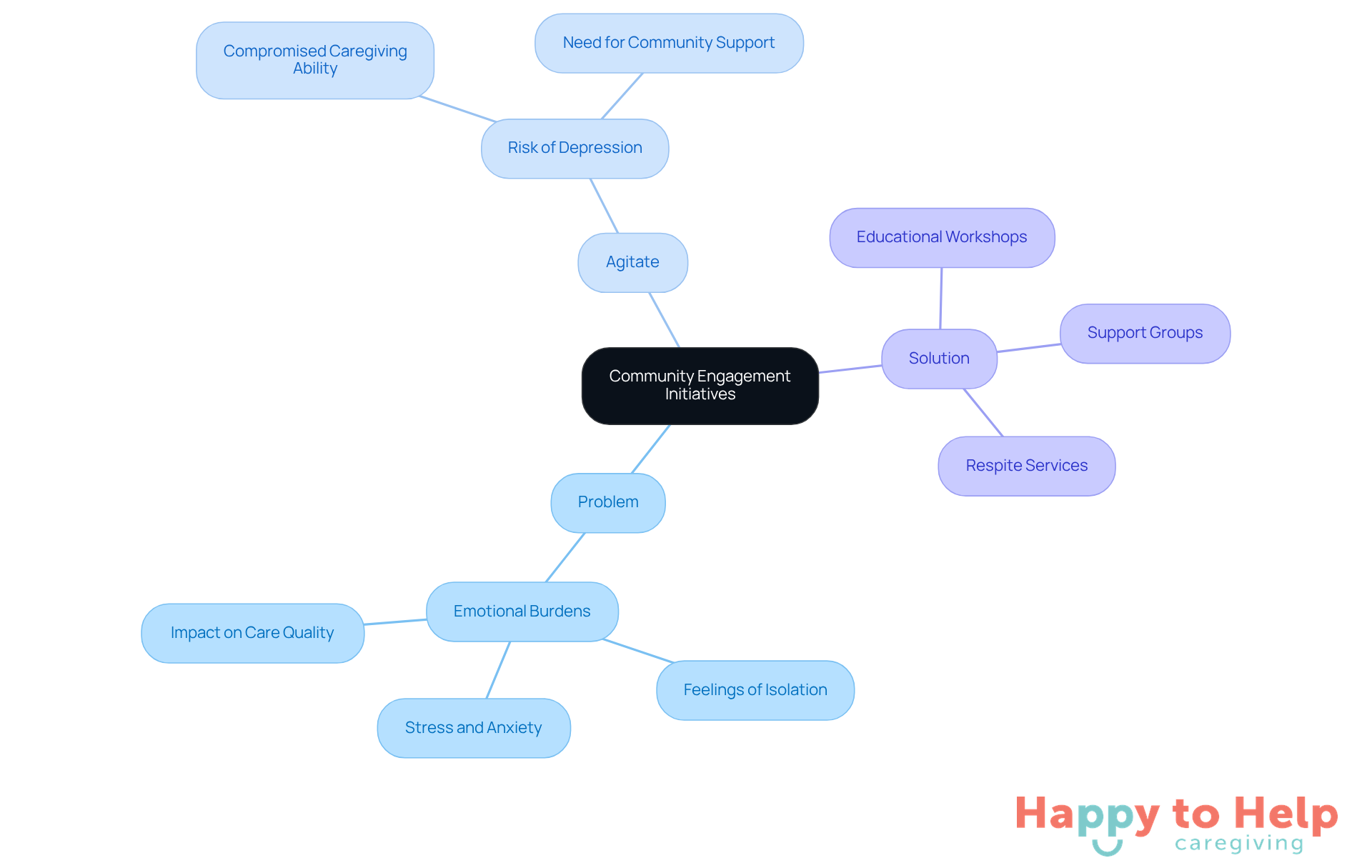
Problem: Caregivers managing dementia face significant emotional and mental burdens. The challenges that dementia care providers encounter can lead to feelings of isolation and stress, impacting both the caregiver and the individual receiving care.
Agitate: Research indicates that without adequate support, caregivers are at risk of depression, which can further complicate their ability to provide effective care. This highlights the urgent need for community involvement and resources that dementia care providers can use to alleviate these pressures.
Solution: Happy to Help Caregiving is dedicated to enhancing community involvement to strengthen support networks for caregivers. By partnering with local organizations, the agency promotes access to essential resources such as:
- Support groups
- Educational workshops
- Respite services
These initiatives empower families, fostering a sense of belonging and community that significantly alleviates the burdens of caregiving. As social workers frequently emphasize, robust networks are essential for families and dementia care providers, allowing them to exchange experiences and resources that can lead to improved outcomes for both caregivers and those they assist.
The beneficial effects of community involvement are clear, especially for dementia care providers. It not only provides vital information and emotional support to dementia care providers but also enhances their overall well-being, enabling them to thrive in their roles. As one expert states, "The connection between a provider and the individual they assist is a testament to the power of love and human connection," underscoring the emotional importance of these support systems.
Palliative Support Care: Managing Symptoms and Enhancing Quality of Life
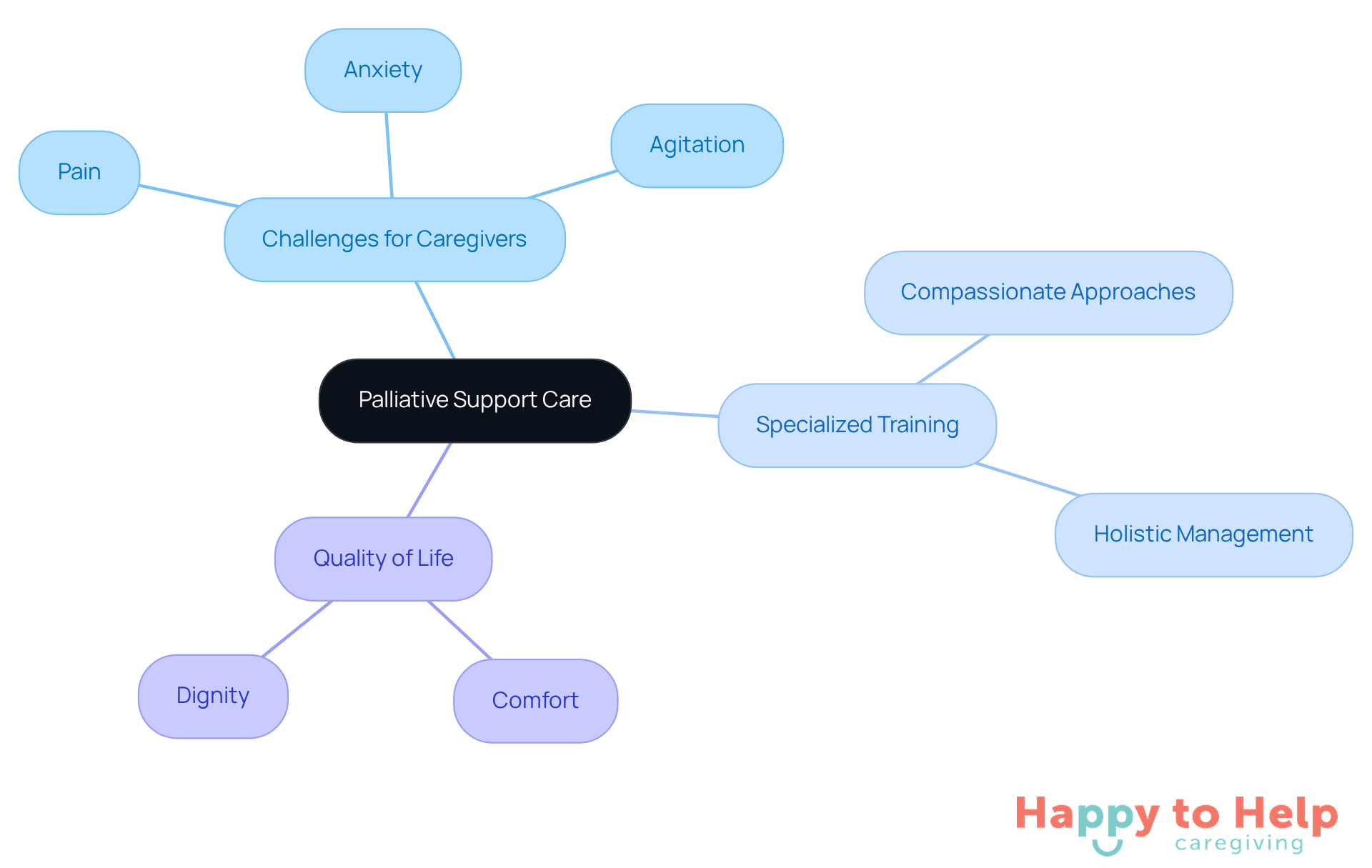
Palliative support assistance is crucial for caregivers dealing with dementia. Dementia care providers often face the challenge of managing symptoms such as pain, anxiety, and agitation, which can significantly impact the quality of life for both clients and their families. This situation can lead to feelings of helplessness and frustration for caregivers, making it essential to address these issues effectively.
To combat these challenges, Happy to Help Caregiving provides specialized training for caregivers. This training equips them with compassionate and holistic approaches to manage symptoms effectively. By focusing on improving the quality of life, caregivers can offer comfort and dignity to clients, ensuring that their emotional and physical needs are met throughout their support journey.
Incorporating these strategies not only enhances the caregiving experience but also fosters a supportive environment for clients, allowing them to feel valued and understood.
Respite Care Services: Supporting Family Caregivers and Preventing Burnout
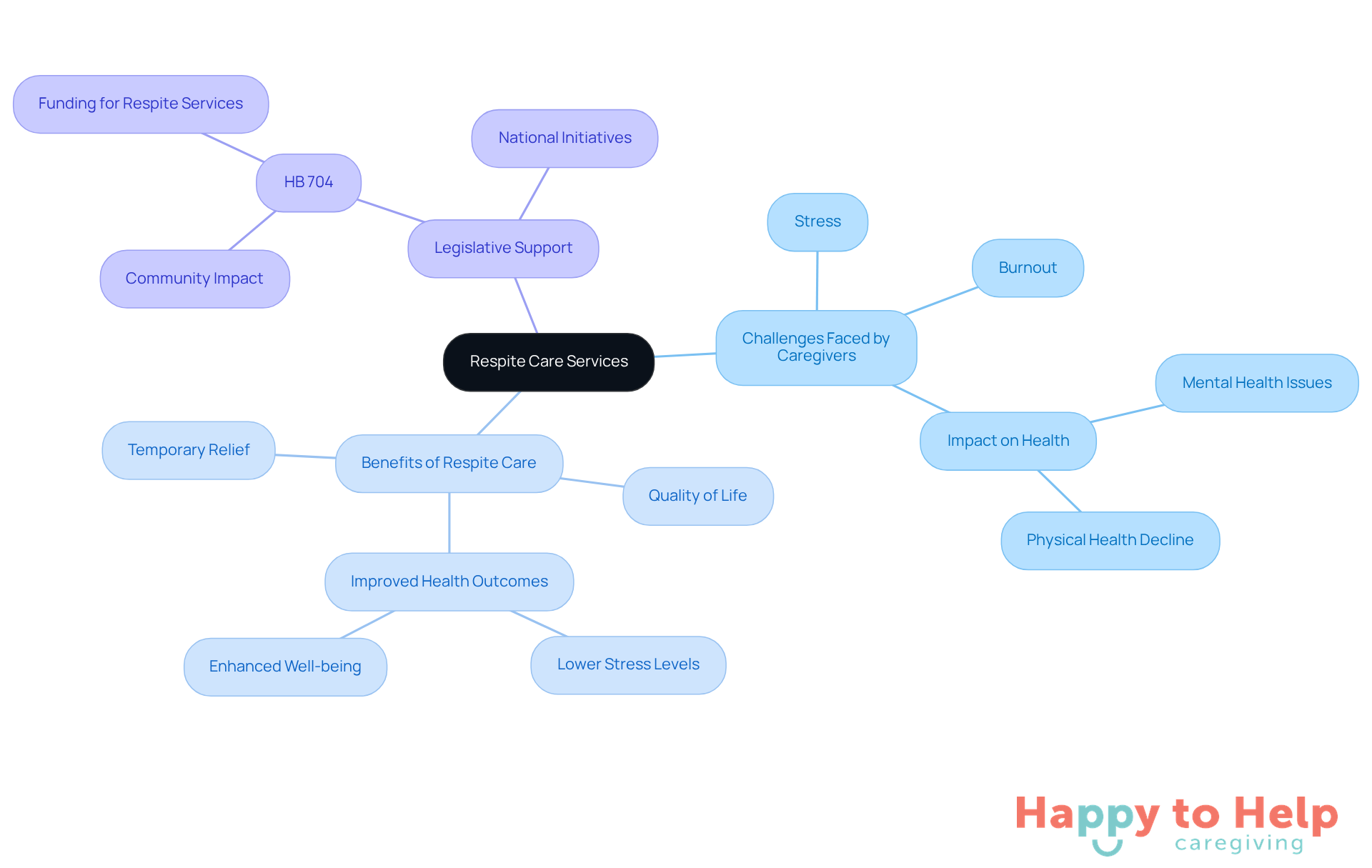
Caregivers face significant challenges, including stress and burnout, which can severely impact their well-being. In New Hampshire alone, around 168,000 individuals providing care experience these issues, leading to detrimental effects on their mental and physical health. Mental health experts, such as Kim Whitmore from the ARCH National Respite Network, emphasize that 'respite care is one of the most-frequently requested assistance services.' This highlights the urgent need for effective support systems.
Respite services offer a crucial solution by providing temporary relief for caregivers. These services allow family members to take essential breaks, rejuvenate, and manage personal responsibilities while ensuring their loved ones receive ongoing, high-quality support. Research shows that those who utilize respite services experience significantly lower levels of stress and burnout, resulting in improved health outcomes.
Legislative support, like the approval of HB 704, underscores the importance of these services in the community. By easing the stresses linked to caregiving, respite services not only enhance the quality of life for caregivers but also foster a healthier, more sustainable caregiving environment. Access to these services is vital for ensuring that caregivers can continue to provide the support their loved ones need.
Family Testimonials: Insights into Quality and Impact of Care Services
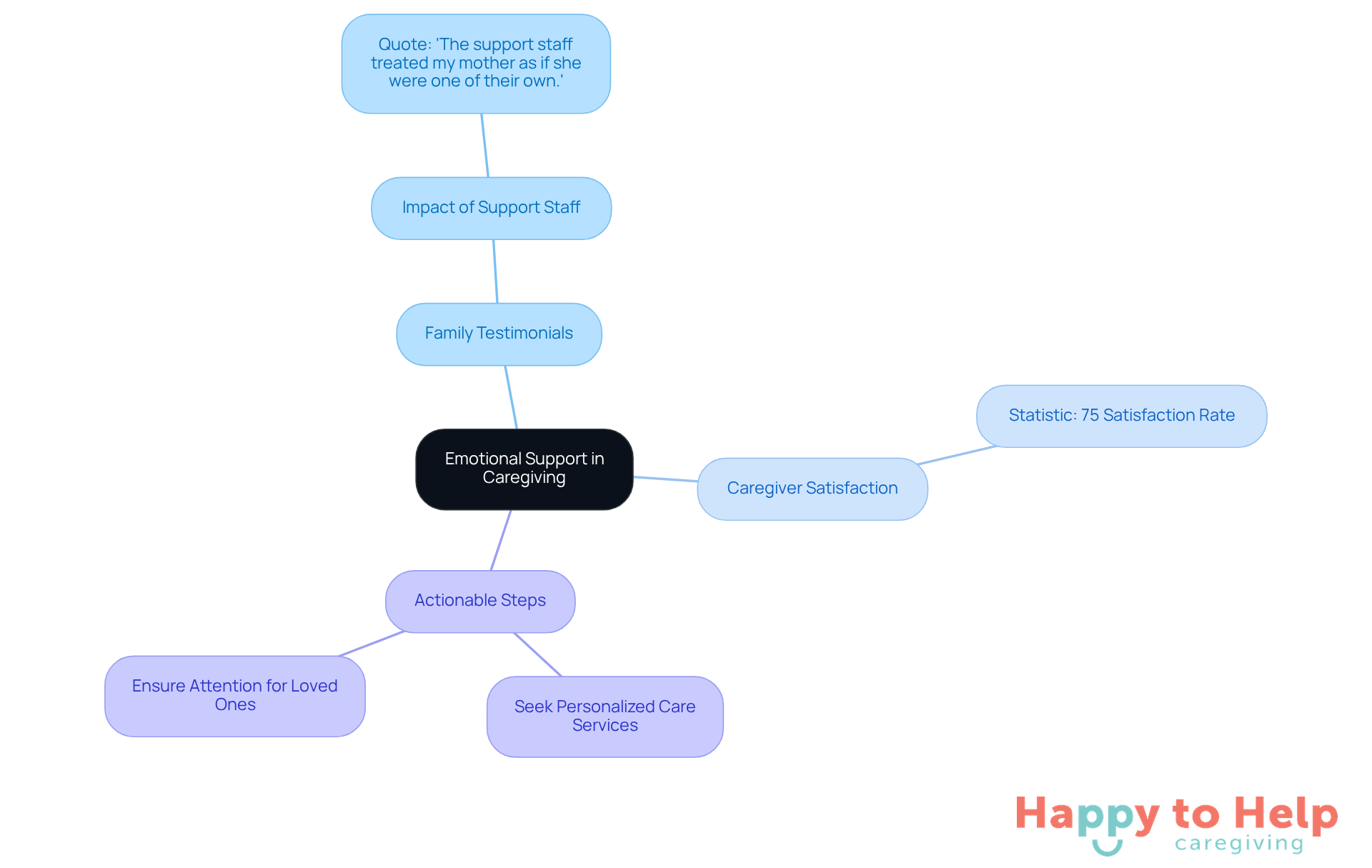
Family testimonials highlight a significant problem: many caregivers struggle to provide the emotional support their loved ones need. This lack of tailored attention can lead to diminished emotional wellness and a lower quality of life for those receiving care. For instance, one family shared, "The support staff treated my mother as if she were one of their own, and it significantly impacted her joy." Such experiences reveal the profound effects of in-home caregiving, emphasizing its value.
Statistics further illustrate this issue. Recent data shows that:
- 75% of caregivers reported being mostly or very satisfied with the support their loved ones received.
This underscores the effectiveness of Happy to Help Caregiving's approach. By sharing these stories, families contribute to a narrative that highlights the essential role of dedicated caregivers in enhancing the lives of those they serve.
To address the challenges faced by dementia care providers, it’s crucial to recognize the importance of empathetic support. Families can take actionable steps by:
- Seeking services that prioritize personalized care
- Ensuring their loved ones receive the attention they deserve
This not only improves emotional wellness but also fosters a deeper connection between caregivers and those they serve.
Making the Right Choice
Personalized care in dementia support is crucial. Many caregivers face the challenge of providing adequate support tailored to the unique needs of individuals living with dementia. This lack of personalized care can lead to diminished quality of life, increased feelings of isolation, and a sense of helplessness for both clients and caregivers.
To address these challenges, it’s essential to implement strategies that enhance the caregiving experience. Comprehensive training for caregivers is vital, as it equips them with the skills needed to recognize and respond to the specific needs of those they care for. Emotional support strategies, such as active listening and empathy, can significantly improve interactions and foster a sense of safety and autonomy for clients. Additionally, flexible scheduling allows caregivers to adapt to the varying needs of their clients, ensuring that support is available when it’s most needed.
Moreover, integrating technology and community engagement initiatives can strengthen the support network for families. These resources not only provide vital information but also help reduce feelings of isolation among caregivers and clients alike.
Families should actively seek out dementia care services that prioritize personalized approaches and ongoing support. Engaging with providers that offer tailored care plans, consistent caregiver assignments, and community resources can alleviate the burdens of caregiving. By fostering a collaborative environment that values emotional well-being and connection, we can enhance the lives of those living with dementia and uplift the caregivers who support them.
https://iframe.tely.ai/cta/eyJhcnRpY2xlX2lkIjogIjY5MjNhMDk0MjcyNDliYTNkMmMzZTVlYyIsICJjb21wYW55X2lkIjogIjY4ZWU1ZGNhNzMxNzYyNTU3ZjNjOTVjMSIsICJpbmRleCI6IG51bGwsICJ0eXBlIjogImFydGljbGUifQ==Frequently Asked Questions
What is the main problem addressed by Happy to Help Caregiving?
The main problem is that over six million Americans are living with dementia, creating a critical need for effective and personalized care strategies for caregivers and dementia care providers.
Why are tailored care plans important for dementia care?
Tailored care plans are important because they address the unique needs of each individual, helping caregivers meet specific requirements and improving the quality of life for those living with dementia. Generic approaches often fail to foster autonomy and a sense of safety.
How does Happy to Help Caregiving create individualized service plans?
Happy to Help Caregiving creates individualized service plans through comprehensive assessments that consider each client's medical history, personal preferences, and lifestyle choices.
What benefits do personalized care plans provide?
Personalized care plans enhance emotional well-being, decrease confusion, promote meaningful interactions, and encourage autonomy and safety for clients living with dementia.
How can engaging in familiar activities benefit clients?
Engaging in familiar activities, such as listening to favorite songs or folding laundry, can evoke positive memories and enhance the overall caregiving experience.
What role do family members play in the care planning process?
Involving family members in the planning process helps lessen anxiety and ensures that the support provided honors the individual’s true self.
What challenges do dementia care providers face?
Dementia care providers face challenges in communication and emotional support, which can lead to misunderstandings and increased stress for both caregivers and clients.
What kind of training programs does Happy to Help Caregiving offer?
Happy to Help Caregiving offers extensive training programs covering communication strategies, behavioral management, and emotional assistance techniques specifically designed for dementia care providers.
How do emotional support strategies help clients?
Emotional support strategies help alleviate feelings of loneliness and isolation, enhancing mental well-being by engaging clients in meaningful conversations, encouraging enjoyable activities, and providing companionship.
What is the overall goal of Happy to Help Caregiving?
The overall goal of Happy to Help Caregiving is to improve the quality of life for clients living with dementia by providing personalized care and emotional support through well-trained caregivers.
List of Sources
- Happy to Help Caregiving: Personalized Care Plans Tailored to Individual Needs
- The Role of Personalized Care Plans in Memory Care | Medical News Bulletin (https://medicalnewsbulletin.com/the-role-of-personalized-care-plans-in-memory-care)
- Leading the way in dementia-friendly care (https://wellspan.org/articles/2025/11/web---dementia-friendly-care)
- The Importance of a Personalised Dementia Care Plan (https://rubislawpark.com/news-events/the-importance-of-a-personalised-dementia-care-plan)
- Enhancing Dementia Care | The Power of Personalized Care Plans (https://allheartcare.com/the-importance-of-personalized-care-plans-in-dementia-support)
- Comprehensive Training Programs for Caregivers: Ensuring Quality and Compassion
- Factors associated with receipt of caregiver training among family and unpaid caregivers of people living with dementia (https://sciencedirect.com/science/article/pii/S2667032125000186)
- Caregiver training: Evidence of its effectiveness for cognitive and functional improvement in older adults - PMC (https://pmc.ncbi.nlm.nih.gov/articles/PMC10078788)
- Dementia training program significantly improves home care worker skills, study finds (https://mcknights.com/news/dementia-training-program-significantly-improves-home-care-worker-skills-study-finds)
- Medicare 2025 Initiatives Driving Change in Caregiver Training (https://learn2care.us/blog/how-medicare-2025-initiatives-will-shape-caregiver-training)
- New Report Recommends Innovative Training Programs to Address Rise in Dementia Needs (https://caregiver.org/news/new-report-recommends-innovative-training-programs-to-address-rise-in-dementia-needs)
- Emotional Support Strategies: Alleviating Loneliness and Enhancing Well-Being
- (https://belleviecare.co.uk/support-advice/dementia-quotes-to-lift-your-spirits)
- Caregiver Dementia Quotes (Encouragement For Dementia Caregivers) (https://optoceutics.com/caregiver-dementia-quotes-encouragement-dementia-caregivers?srsltid=AfmBOor5NOSHYphhtCHVABTAi7TGXt\_qFVbFKiHObiHE4UJhx0SCuPNa)
- Memory Care: Three New Methods of Support for Families (https://frontporch.net/community/walnut-village/blog/memory-care-revolution-three-new-methods-of-support-for-families)
- Top List of Inspirational Dementia Quotes for Caregivers (https://rochesterlawcenter.com/dementia-resources/dementia-quotes)
- 4 Inspiring Quotes for Caring for a Loved One With Alzheimer’s | myALZteam (https://myalzteam.com/resources/inspiring-quotes-for-caring-for-a-loved-one-with-alzheimers)
- Flexible Scheduling Options: Adapting to Family Needs and Preferences
- Flexible Scheduling In Healthcare: Benefits For Staff, Patients, And Providers (https://wheniwork.com/blog/flexible-scheduling-in-healthcare)
- NBC Universal - Parents At Work (https://parentsatwork.com.au/case\_studies/nbc-universal)
- Workplace flexibility is the most used, wanted benefit among caregivers: AARP (https://thehill.com/homenews/4668936-aarp-workplace-flexibility-most-used-wanted-benefit-caregivers)
- 9 Ways to Find Caregivers With Flexible Scheduling Options - MedCity News (https://medcitynews.com/2025/05/9-ways-to-find-caregivers-with-flexible-scheduling-options)
- Technology Integration: Enhancing Communication and Care Management
- NYSOFA’s Rollout of AI Companion Robot ElliQ Shows 95% Reduction in Loneliness (https://aging.ny.gov/news/nysofas-rollout-ai-companion-robot-elliq-shows-95-reduction-loneliness)
- 10 Quotes That Capture 2020 — And Suggest What’s Next for Senior Living (https://seniorhousingnews.com/2020/12/01/10-quotes-that-capture-2020-and-suggest-whats-next-for-senior-living)
- 5 Sticky Note Worthy Quotes from KARE-ing Conversations - Senior Living Foresight (https://seniorlivingforesight.net/5-sticky-note-worthy-quotes-from-kare-ing-conversations)
- Technology caregiver intervention for Alzheimer's disease (I‐CARE): Feasibility and preliminary efficacy of Brain CareNotes (https://agsjournals.onlinelibrary.wiley.com/doi/10.1111/jgs.18591)
- Medium (https://medium.com/@r\_scott\_munro/37-quotes-on-health-care-and-health-tech-from-2016-e34576edfc1f)
- Consistent Caregiver Assignments: Building Trust and Familiarity
- Inspiring Caregiver Quotes for Everyday Heroes (https://humancareny.com/blog/inspiring-caregiver-quotes-for-everyday-heroes)
- Caregiving Crisis: 45% Increase in Americans Providing Care (https://aarp.org/caregiving/basics/caregiving-in-us-survey-2025)
- Caregiver Statistics: Demographics (https://caregiver.org/resource/caregiver-statistics-demographics)
- 20 Caregiver Quotes That Will Inspire You - MD Home Health (https://mdhomehealth.com/2018/06/10/20-caregiver-quotes-that-will-inspire-you)
- CaringBridge (https://caringbridge.org/resources/inspirational-quotes-on-caregiving)
- Community Engagement Initiatives: Strengthening Support Networks for Families
- 27 Inspirational Quotes for Caregivers (https://ultimatecareny.com/resources/27-quotes-for-caregivers)
- Inspirational Quotes for Compassionate Caregivers (https://humancareny.com/blog/inspirational-quotes-for-caregivers)
- Community Service Quotes (https://lycoming.edu/community-service/community-service-quotes.aspx)
- Palliative Support Care: Managing Symptoms and Enhancing Quality of Life
- Integrating palliative and dementia care can cut emergency visits and hospitalizations in half (https://medicalxpress.com/news/2025-01-palliative-dementia-emergency-hospitalizations.html)
- Assisted Dying - Key Statistics - My Death, My Decision (https://mydeath-mydecision.org.uk/key-statistics)
- Palliative care (https://who.int/news-room/fact-sheets/detail/palliative-care)
- Respite Care Services: Supporting Family Caregivers and Preventing Burnout
- Improving Support for Family Caregivers (https://nationalacademies.org/news/2025/07/improving-support-for-family-caregivers)
- New Futures | 2025 Caregiver Respite and Senior Volunteer Programs (https://new-futures.org/2025-Caregivers-and-Volunteers)
- Funding Opportunity: National Lifespan Respite Care Program State Program Enhancement Grants | ACL Administration for Community Living (https://acl.gov/news-and-events/announcements/national-lifespan-respite-care-program-state-program-enhancement)
- It’s Time to Care for Caregivers: Senator Markey Announces Comprehensive Family Caregiving Legislative Agenda | U.S. Senator Ed Markey of Massachusetts (https://markey.senate.gov/news/press-releases/11/20/2025/its-time-to-care-for-caregivers-senator-markey-announces-comprehensive-family-caregiving-legislative-agenda)
- Congressman Nick Langworthy Introduces Bill to Support the Wellbeing of Family Caregivers (https://langworthy.house.gov/media/press-releases/congressman-nick-langworthy-introduces-bill-support-wellbeing-family)
- Family Testimonials: Insights into Quality and Impact of Care Services
- 70+ Inspirational Caregiver Quotes (https://h2hhc.com/blog/inspirational-caregiver-quotes)
- 27 Inspirational Quotes for Caregivers (https://ultimatecareny.com/resources/27-quotes-for-caregivers)
- Family caregiver satisfaction with inpatient rehabilitation care (https://journals.plos.org/plosone/article?id=10.1371/journal.pone.0213767)
- Topic: Home care in the U.S. (https://statista.com/topics/4049/home-care-in-the-us?srsltid=AfmBOoqInNtHjMQSXnO-vQnF3mUbI51ni3E6l99KwdxHrt6Mj5BA1O8b)
- 25+ Inspirational Quotes for Caregivers (https://caringseniorservice.com/blog/quotes-for-caregiver-inspiration)