10 Essential Dementia Caregiver Services for Family Support

For families in our service areas
For families in our service areas, this guide explains dementia care and how non-medical in-home caregiving can support care planning in East Idaho, Treasure Valley & Magic Valley, Northern Wasatch, North Central West Virginia & Southwestern Pennsylvania, and Northeast Ohio.
The Importance of Dementia Caregiver Services for Family
Caring for a loved one with dementia presents a significant emotional challenge, often leaving family members feeling overwhelmed and isolated. As the number of individuals affected by dementia continues to rise, the demand for effective caregiver services grows. These services are crucial not only for supporting the patient but also for enhancing the well-being of those providing care.
This article will explore ten essential dementia caregiver services aimed at empowering families, alleviating stress, and improving the quality of life for both caregivers and their loved ones. Caregivers face complex challenges in navigating dementia care, and it’s vital they employ strategies that allow them to maintain their own health and happiness.
Happy to Help Caregiving: Personalized In-Home Support for Dementia Care
Caring for individuals with dementia presents significant challenges that dementia caregiver services aim to address. Feelings of isolation and the emotional toll of caregiving can weigh heavily on those providing dementia caregiver services. This situation not only affects the caregiver's well-being but also impacts the quality of care provided to the individual, emphasizing the need for dementia caregiver services.
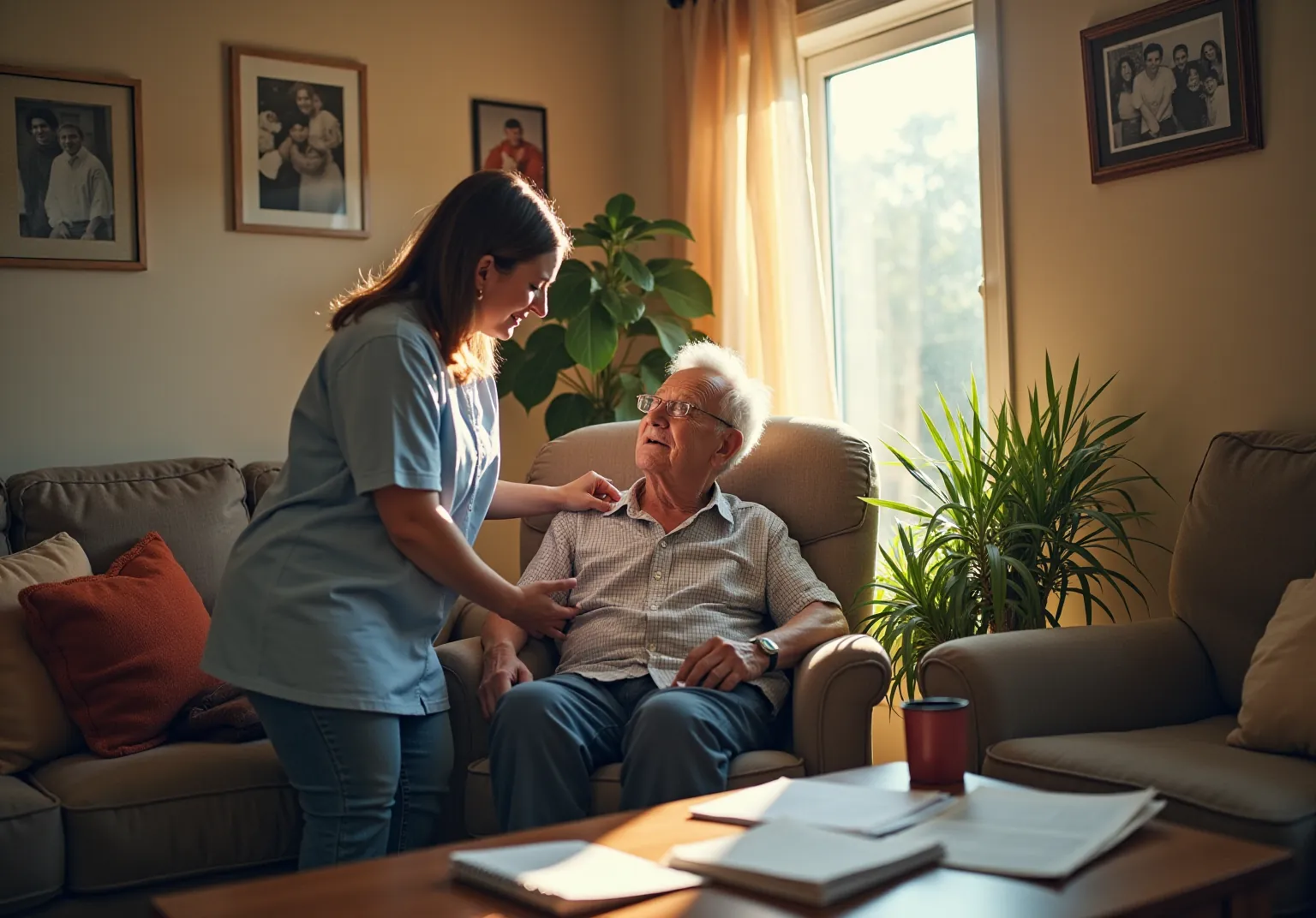
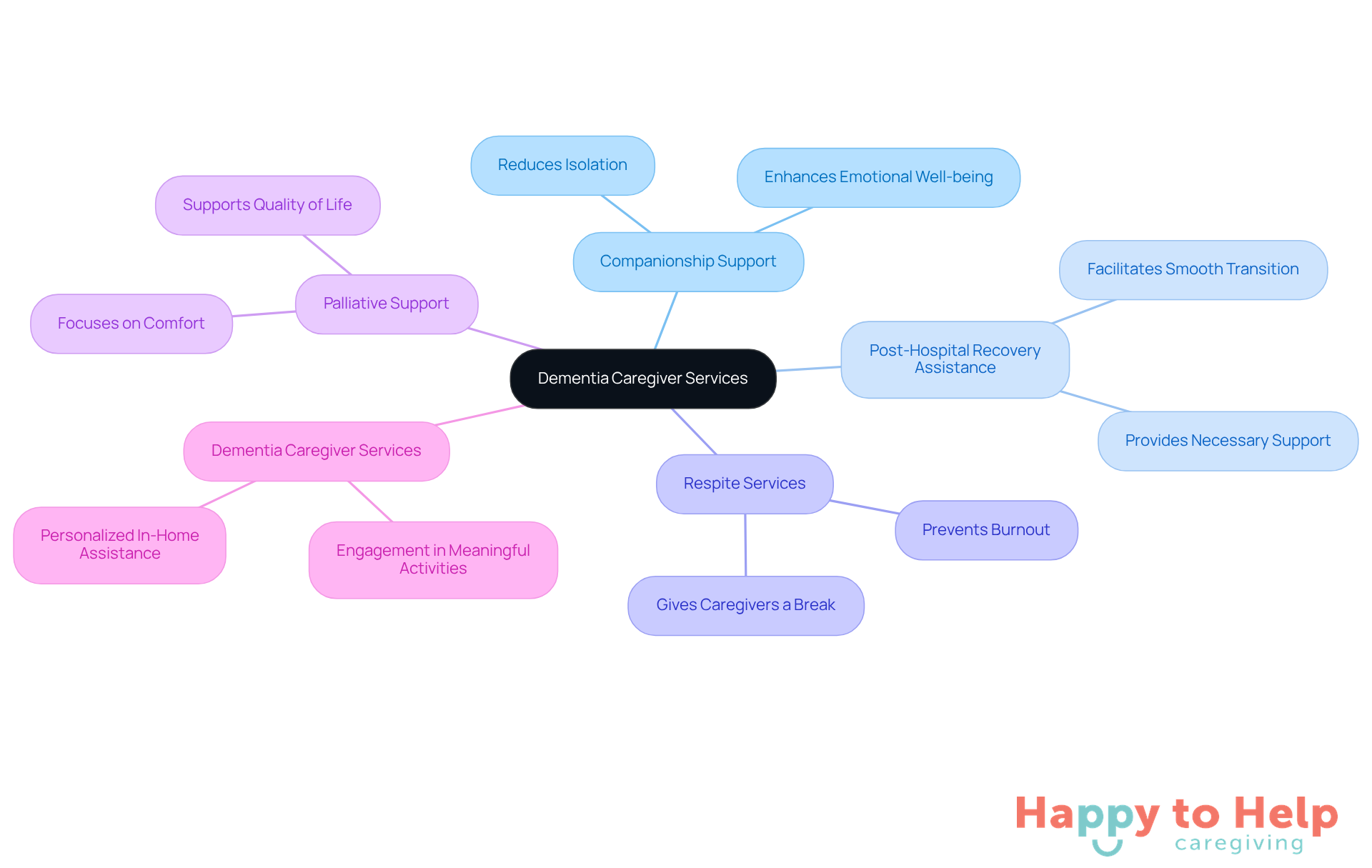
Happy to Help Caregiving addresses these issues by providing dementia caregiver services that offer personalized in-home assistance tailored to the unique needs of clients with dementia. Their services include:
- Companionship support
- Post-hospital recovery assistance
- Respite services
- Palliative support
- Dementia caregiver services
Each service is designed to enhance the quality of life for clients, ensuring they receive compassionate care in the comfort of their own homes.
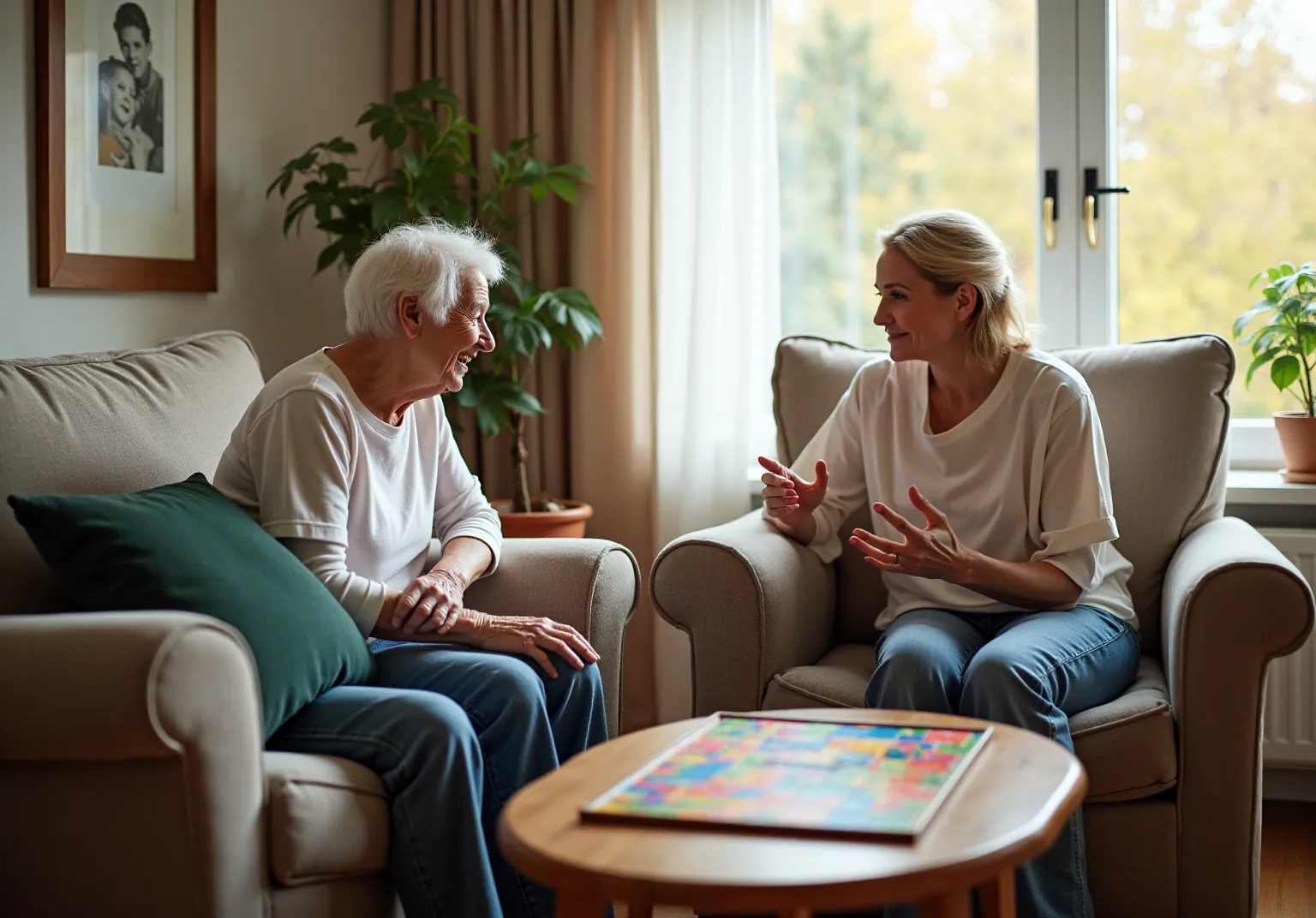
The trained support providers engage clients in meaningful activities, which helps reduce feelings of isolation and fosters a sense of safety and autonomy. By involving clients in their care, caregivers can create a more supportive environment that benefits everyone involved.
Teepa Snow Approach™: Transformative Techniques for Dementia Care
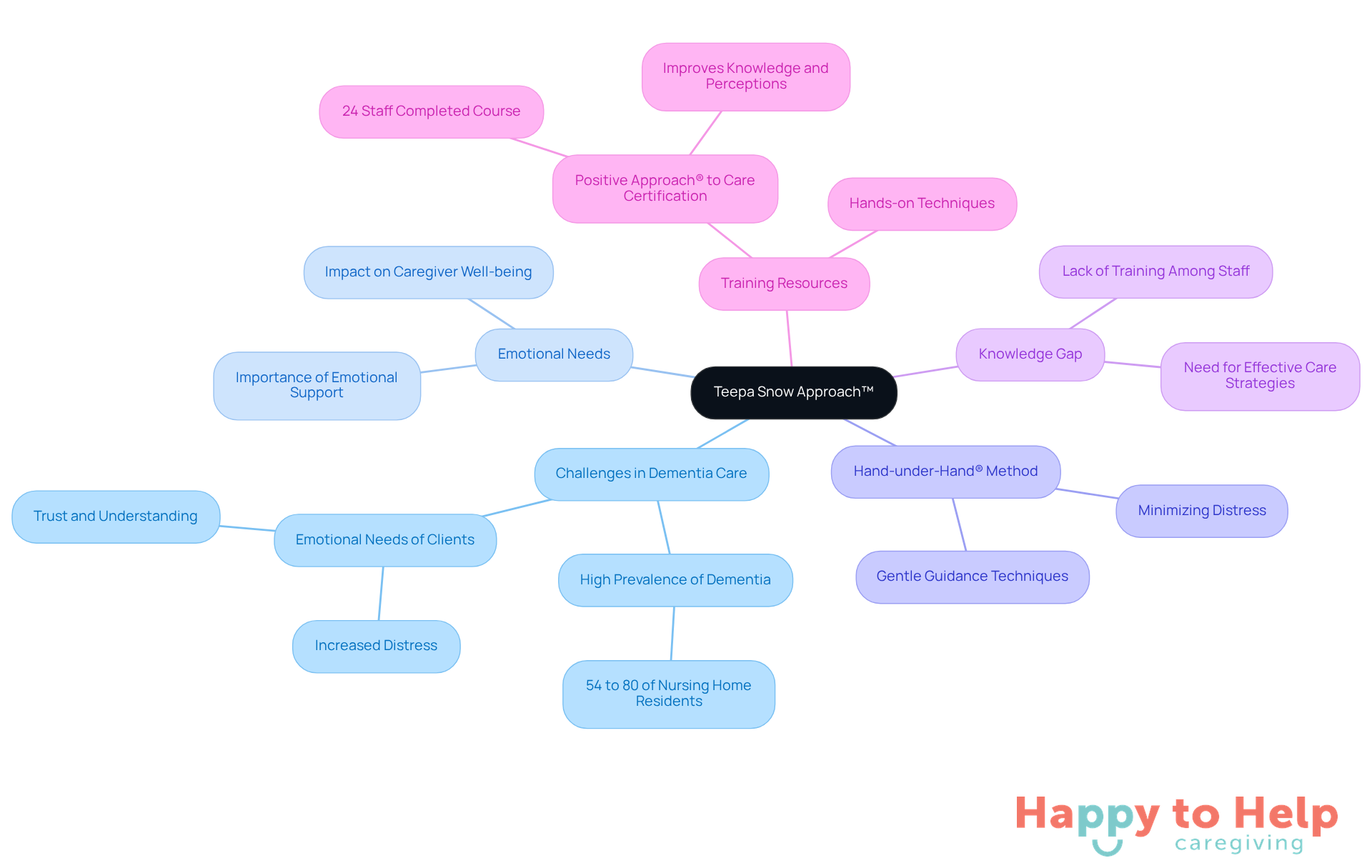
The Teepa Snow Approach™ addresses a significant issue: the challenges that dementia caregiver services encounter when interacting with individuals experiencing cognitive decline. Research indicates that between 54% and 80% of residents in nursing homes are affected by this condition, highlighting the urgent need for effective caregiving strategies.
Caregivers often struggle to meet the emotional needs of their clients, which can hinder trust and understanding. This gap in emotional support can lead to increased distress for both caregivers and individuals in their care. To combat this, caregivers are encouraged to adopt techniques like the Hand-under-Hand® method. This approach allows caregivers to guide and support individuals gently, minimizing distress and promoting comfort.
Moreover, there is a notable knowledge gap among nursing home staff regarding effective dementia care. This underscores the importance of training and resources, including dementia caregiver services like the Positive Approach® to Care Certification course. By investing in education, caregivers can enhance their skills and provide better support.
To make a meaningful impact, caregivers should regularly practice the Hand-under-Hand® method, adapting their approach to meet the unique needs of each individual. By fostering a compassionate environment and utilizing these effective techniques, caregivers can significantly improve the quality of life for those they serve.
Caregiver's Guide to Understanding Dementia Behaviors: Essential Strategies for Caregivers
Understanding the behaviors associated with cognitive decline is crucial for effective dementia caregiver services. These actions often arise from unmet needs or confusion, presenting significant challenges for dementia caregiver services. Without proper strategies, dementia caregiver services can help caregivers avoid feeling overwhelmed, which may lead to increased stress and strained interactions with their loved ones.
To address these challenges, caregivers can adopt several effective strategies:
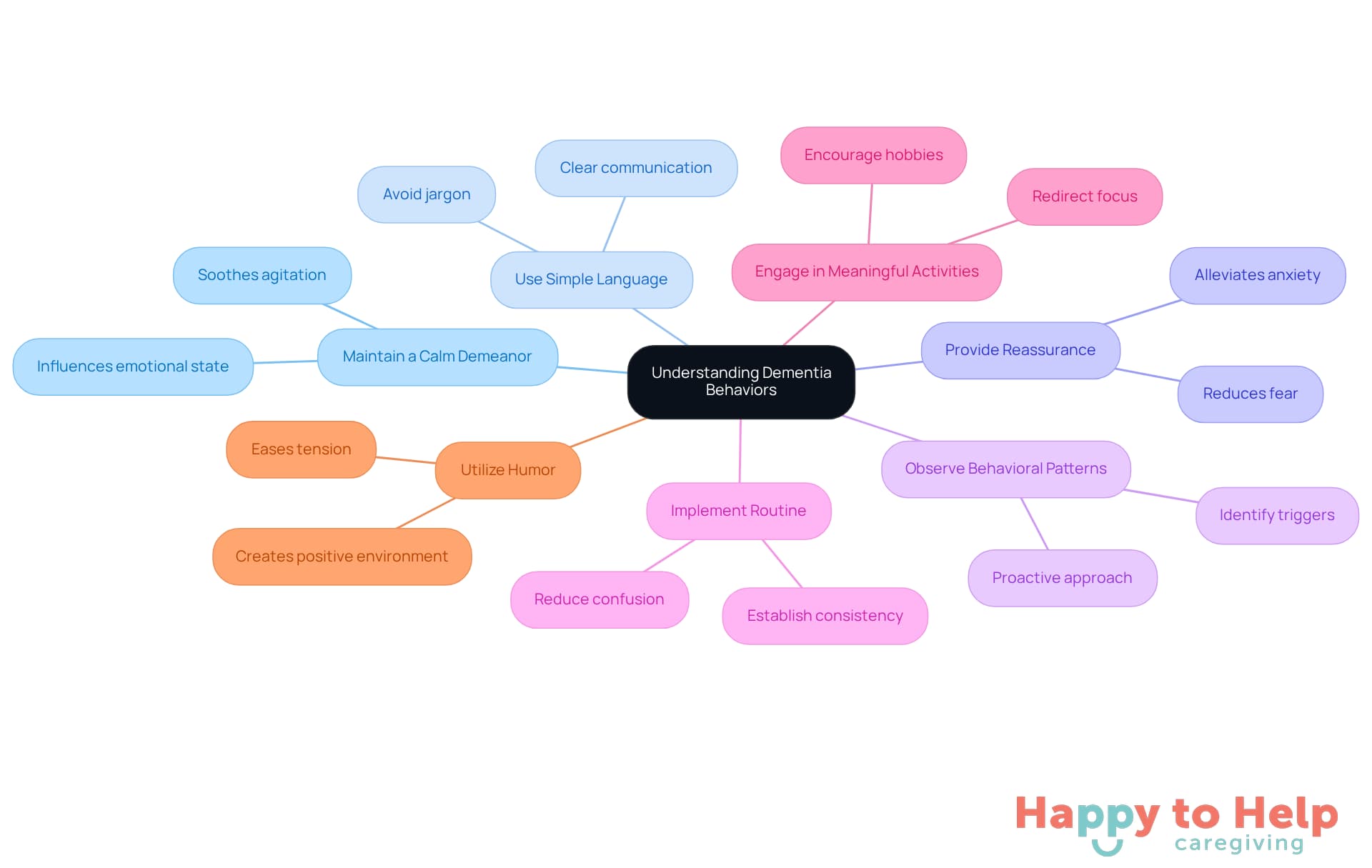
- Maintain a Calm Demeanor: A calm presence can soothe agitation and confusion. Caregivers utilizing dementia caregiver services should strive to remain composed, as their emotional state significantly influences the person with cognitive impairment.
- Use Simple Language: Clear and straightforward communication is vital. Avoiding complex sentences and jargon in favor of simple phrases can enhance understanding.
- Provide Reassurance: Frequent reassurance can alleviate anxiety. Reminding loved ones that they are safe and supported helps reduce feelings of fear or distress.
- Observe Behavioral Patterns: By closely monitoring behaviors, caregivers can identify triggers and patterns. This proactive approach in dementia caregiver services allows them to anticipate needs and mitigate potential issues before they escalate.
- Implement Routine: With the help of dementia caregiver services, establishing a consistent daily structure and predictability benefits individuals with dementia. Familiarity can help reduce confusion and anxiety.
- Engage in Meaningful Activities: Activities that resonate with the individual’s interests can redirect focus and reduce challenging behaviors. Encouraging participation in hobbies or tasks that bring joy is essential for fulfillment, especially in dementia caregiver services.
- Utilize Humor: Light-heartedness can ease tension. Caregivers may find that humor, including dementia-aware jokes, can lighten the mood on tough days, creating a more positive environment.
Recent studies underscore the importance of these strategies. Those who implement them report lower levels of stress and improved interactions with their loved ones. For example, individuals who maintain a calm demeanor and use simple language often find they can de-escalate potentially challenging situations more effectively. Recognizing that actions frequently serve as a means of communication enables dementia caregiver services to respond with compassion and tolerance, ultimately enhancing the quality of support they provide.
Comprehensive Dementia Care Programs: Holistic Support for Patients and Caregivers
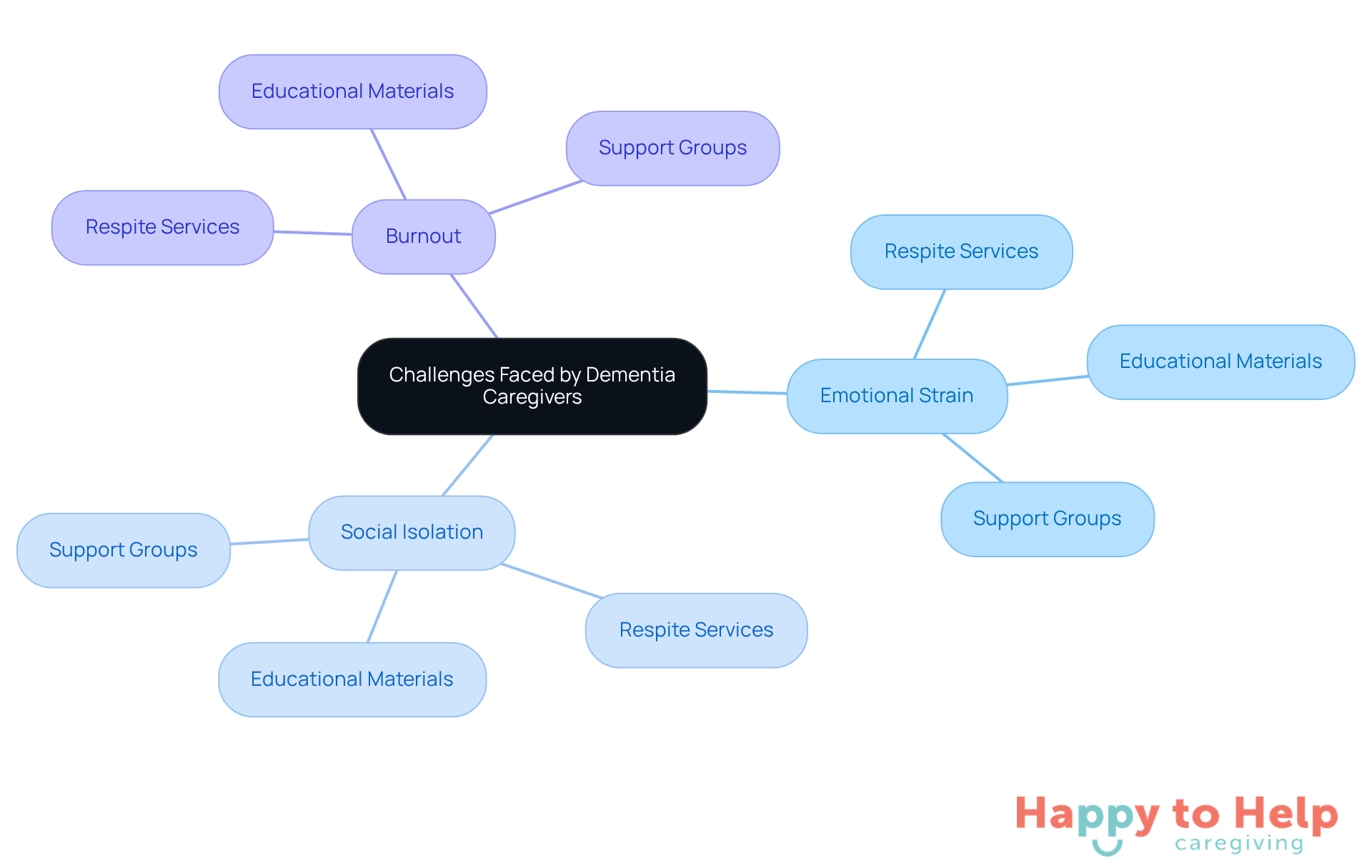
Problem: Caregivers of dementia patients often face overwhelming challenges, including emotional strain and social isolation. These difficulties can lead to burnout and decreased quality of life for both caregivers and patients.
Agitate: The emotional toll of caregiving can be significant. Many caregivers report feelings of stress, anxiety, and loneliness as they navigate the complexities of supporting a loved one with dementia. This situation not only affects their well-being but also impacts the care they provide.
Comprehensive dementia caregiver services provide holistic support that addresses these issues. These programs provide:
- Respite services to give caregivers a much-needed break.
- Educational materials to help them understand dementia better.
- Support groups that connect them with others facing similar challenges.
By fostering a supportive environment, these programs enhance the quality of life for everyone involved, ensuring that caregivers feel empowered and equipped to provide the best care possible.
GUIDE Model: Innovative Approaches to Enhance Dementia Care Experiences
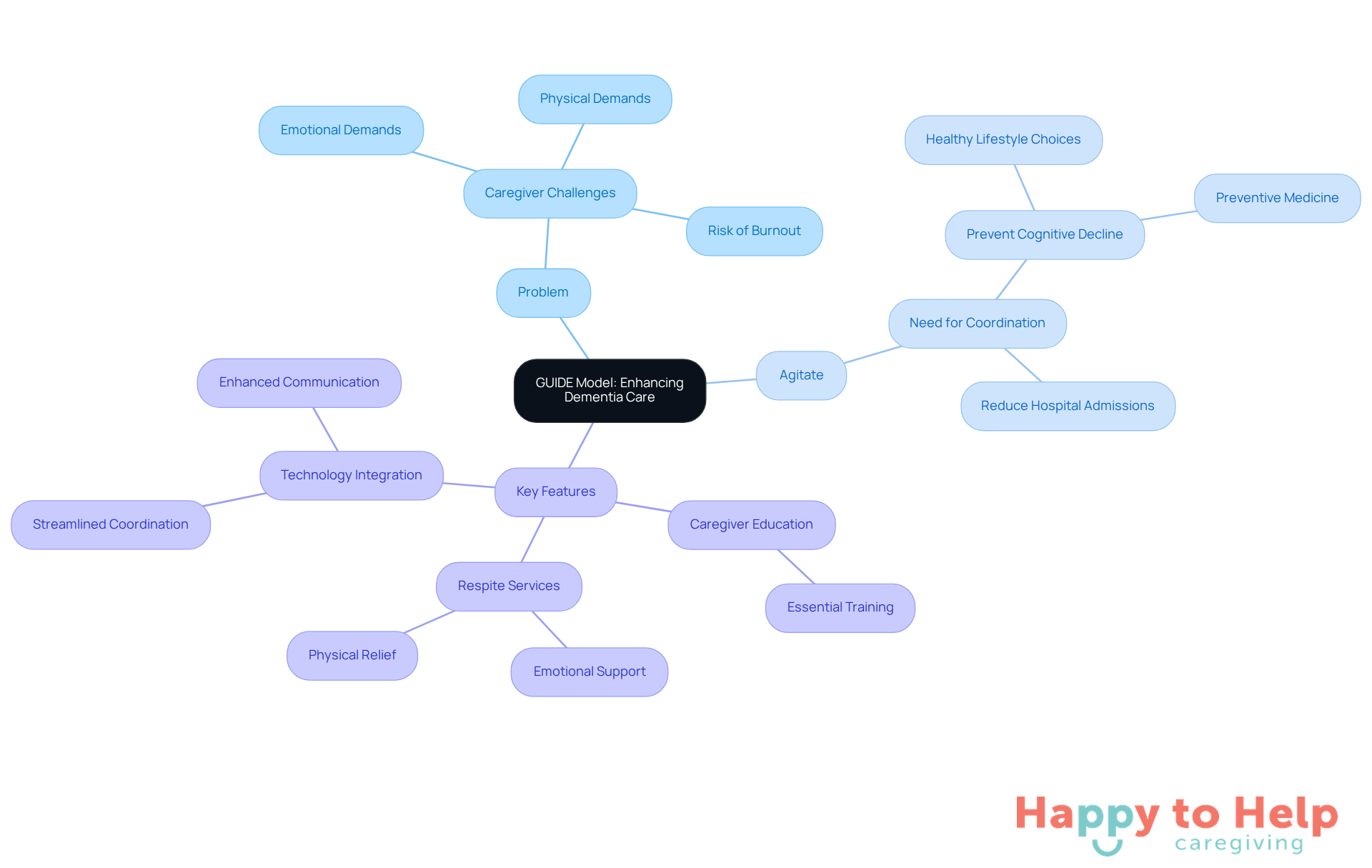
Caregivers of individuals living with dementia often face overwhelming challenges that can be alleviated through dementia caregiver services. The emotional and physical demands of caregiving can lead to burnout, making it difficult to provide the necessary dementia caregiver services.
Agitate: Recent studies indicate that efficient coordination in cognitive impairment support can significantly reduce hospital admissions and the need for extended assistance. Alarmingly, around 40% of cognitive decline cases could be avoided or postponed through healthy lifestyle choices and preventive medicine. This underscores the urgent need for proactive health strategies that not only benefit patients but also support their caregivers.
The GUIDE Model (Guiding an Improved Dementia Experience) offers a groundbreaking approach that prioritizes coordinated support through dementia caregiver services for individuals living with dementia. By focusing on personalized treatment strategies and caregiver education, the model enhances the overall experience for patients while promoting better health outcomes for caregivers.
Key features of the GUIDE Model include:
- Caregiver Education: Providing essential training to help caregivers manage the complexities of dementia support.
- Respite Services: Providing dementia caregiver services to address the emotional and physical demands placed on family caregivers, allowing them to recharge.
- Technology Integration: Streamlining coordination and enhancing communication through dedicated coordinators who work closely with families to create tailored plans.
Families participating in the GUIDE program have reported relief and reassurance in managing dementia support, highlighting the model's effectiveness. Case studies illustrate its success in providing essential support services, including assistance with daily activities and companionship. As the GUIDE Model prepares for its official launch on July 1, 2024, it represents a promising initiative focused on transforming cognitive health support and assisting the families who provide it.
Alzheimer's Association: Comprehensive Resources and Support for Caregivers
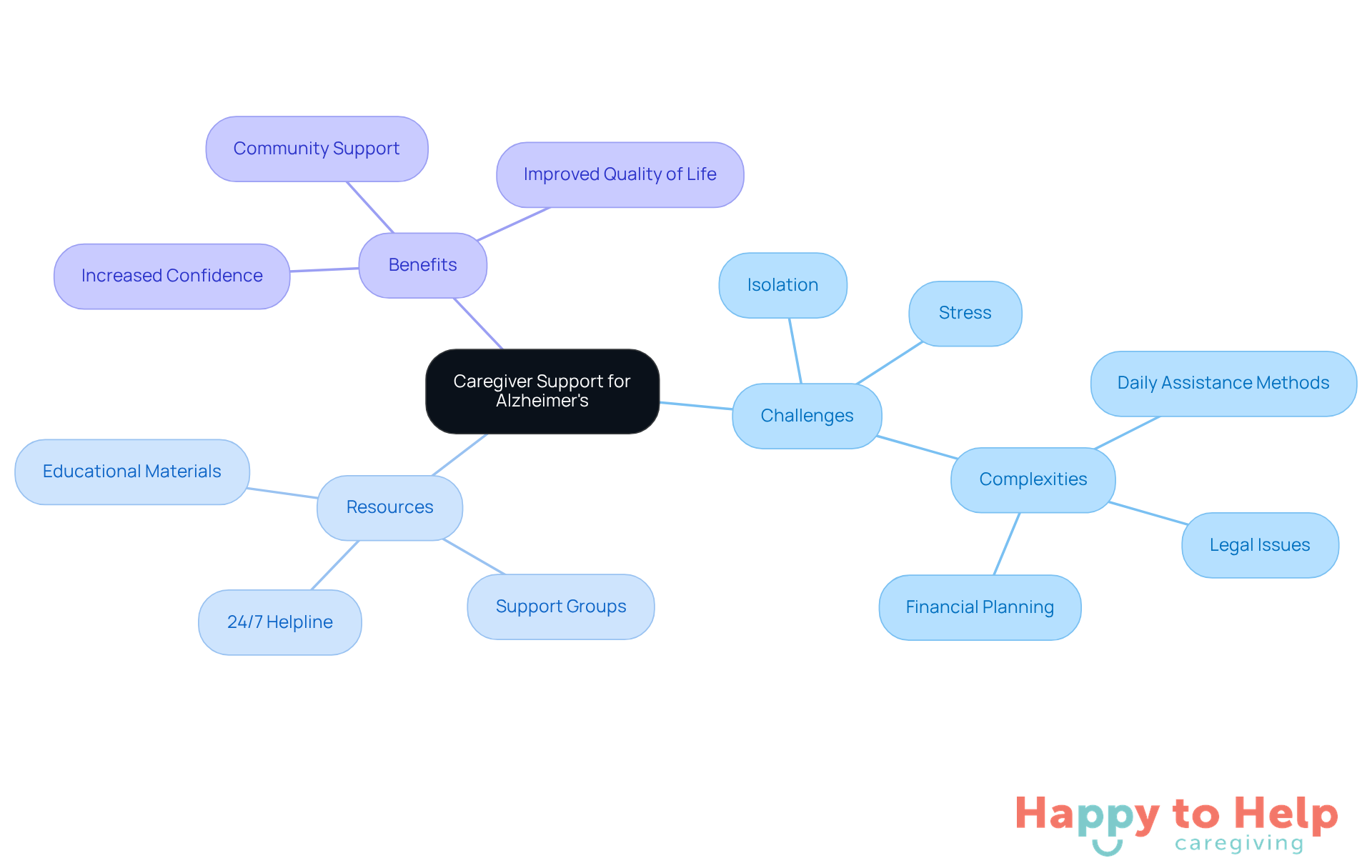
Caregivers for individuals with Alzheimer's or other dementias often encounter significant challenges, which can be alleviated by utilizing dementia caregiver services. In 2023, an estimated 11.5 million people provided around 18.4 billion hours of unpaid assistance, highlighting the immense burden they carry. This role can lead to feelings of isolation and stress, making it crucial for caregivers to seek dementia caregiver services for support.
Agitate: The complexities of cognitive decline support can be overwhelming. Caregivers often struggle with daily assistance methods, legal issues, and financial planning. Without proper resources, the confidence of those providing dementia caregiver services can wane, impacting the quality of care they provide. Many caregivers of those with dementia report feeling alone in their journey, highlighting the importance of dementia caregiver services to alleviate emotional strain.
The Alzheimer's Association offers a variety of dementia caregiver services tailored for caregivers. These include:
- Educational materials
- Support groups
- A 24/7 helpline
Engaging with these resources can significantly boost caregivers' confidence, enabling them to manage dementia caregiver services more effectively. Support groups foster a sense of community, allowing caregivers to share experiences and strategies related to dementia caregiver services. Real-world examples show that participation in these groups can alleviate feelings of isolation and enhance emotional resilience.
Additionally, the 'Caring for Care Providers' agenda emphasizes legislative support, further enhancing the resources available to caregivers. By utilizing these tools, caregivers who provide dementia caregiver services are better equipped to face the challenges of memory-related conditions, ultimately improving their quality of life and that of their loved ones.
Caregiver.org: Practical Tips for Managing Dementia Behaviors
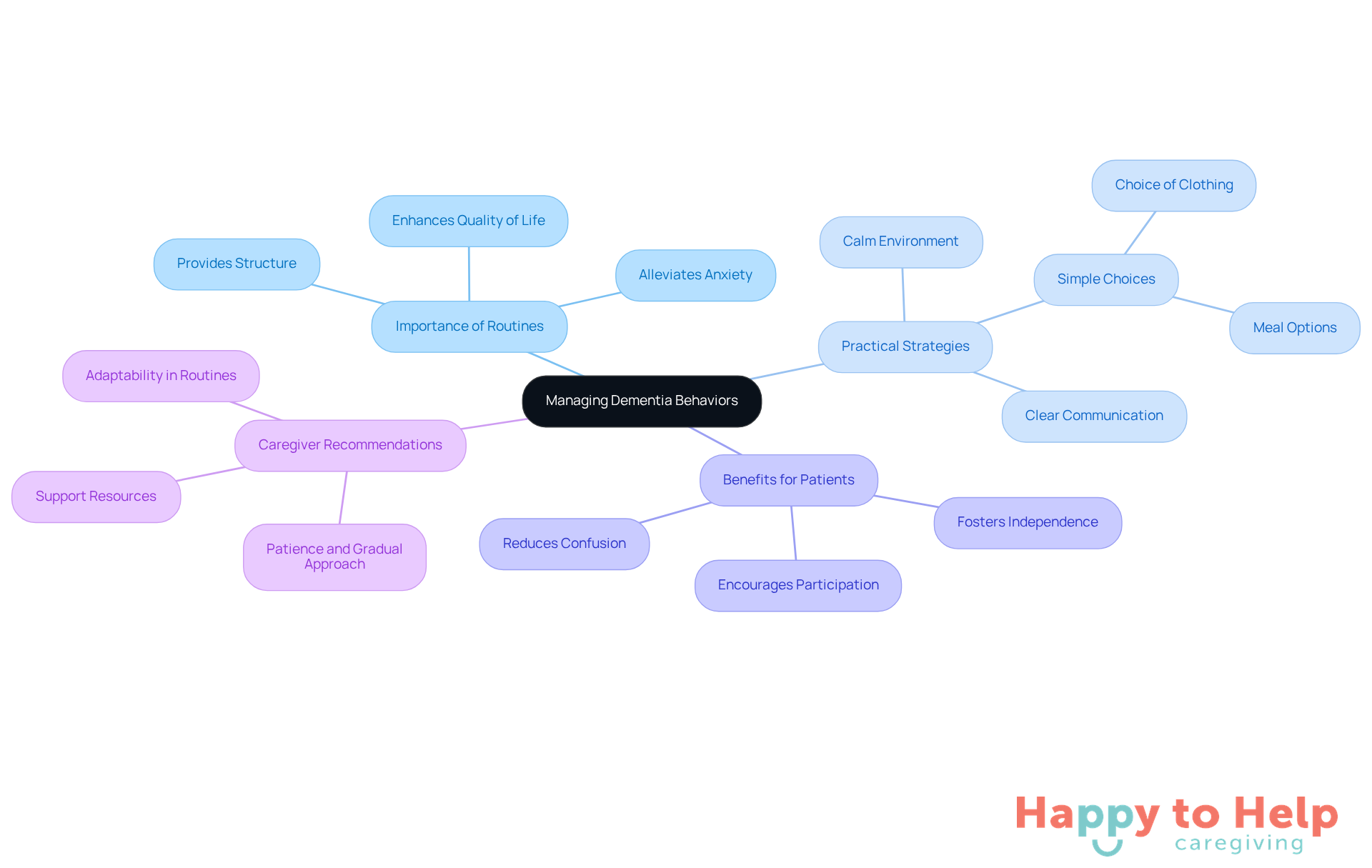
Creating routines is a fundamental aspect of effective memory care, which greatly enhances dementia caregiver services and significantly improves the quality of life for both patients and caregivers. The challenge lies in the fact that individuals experiencing cognitive decline often struggle with memory loss, leading to anxiety and confusion. Research shows that daily routines can assist in managing these issues by offering structure and predictability, which can alleviate these feelings.
Notably, routines are stored in long-term memory, making them particularly beneficial for dementia patients. Caregivers are encouraged by dementia caregiver services to implement consistent schedules for meals, activities, and personal care. These familiar patterns foster a sense of security and independence, which is crucial for both patients and their caregivers.
Practical strategies for dementia caregiver services include using clear communication and maintaining a calm environment. Support providers should tackle tasks gradually and with patience, allowing patients with memory issues to participate at their own speed. This method alleviates frustration and encourages participation in daily activities, reinforcing their sense of autonomy.
Effective routines often include straightforward choices, such as permitting patients to choose their clothing or determine meal options. Offering simple choices promotes independence in dementia patients, helping them feel more in control of their lives. Caregivers should remain adaptable, modifying routines as necessary to meet the evolving requirements of their loved ones.
The significance of routines is reflected in several dementia caregiver services, emphasizing that a structured environment can lead to smoother days and enhanced interactions. By creating a consistent environment, caregivers can greatly diminish agitation and improve the overall assistance experience. As noted by staff at Sunflower Communities, effective communication is essential in helping dementia patients transition and find peace in their daily lives.
Center for Health Care Strategies: Engaging Community-Based Support for Caregivers
Caregivers often face significant challenges, including feelings of isolation and emotional strain. Without adequate support, these individuals can struggle to manage their responsibilities effectively, which can lead to burnout and decreased well-being.
To address these issues, dementia caregiver services provide crucial community-based assistance. Engaging with local resources, such as support groups and educational workshops, provides caregivers with essential tools and emotional support offered by dementia caregiver services. These connections not only help caregivers feel less alone but also empower them in their roles, ultimately benefiting both themselves and their loved ones.
By fostering these relationships, caregivers can enhance their coping strategies and improve their overall quality of life. It's vital for caregivers to seek out dementia caregiver services and take advantage of the support available in their communities.
National Institute on Aging: Research-Based Resources for Dementia Care
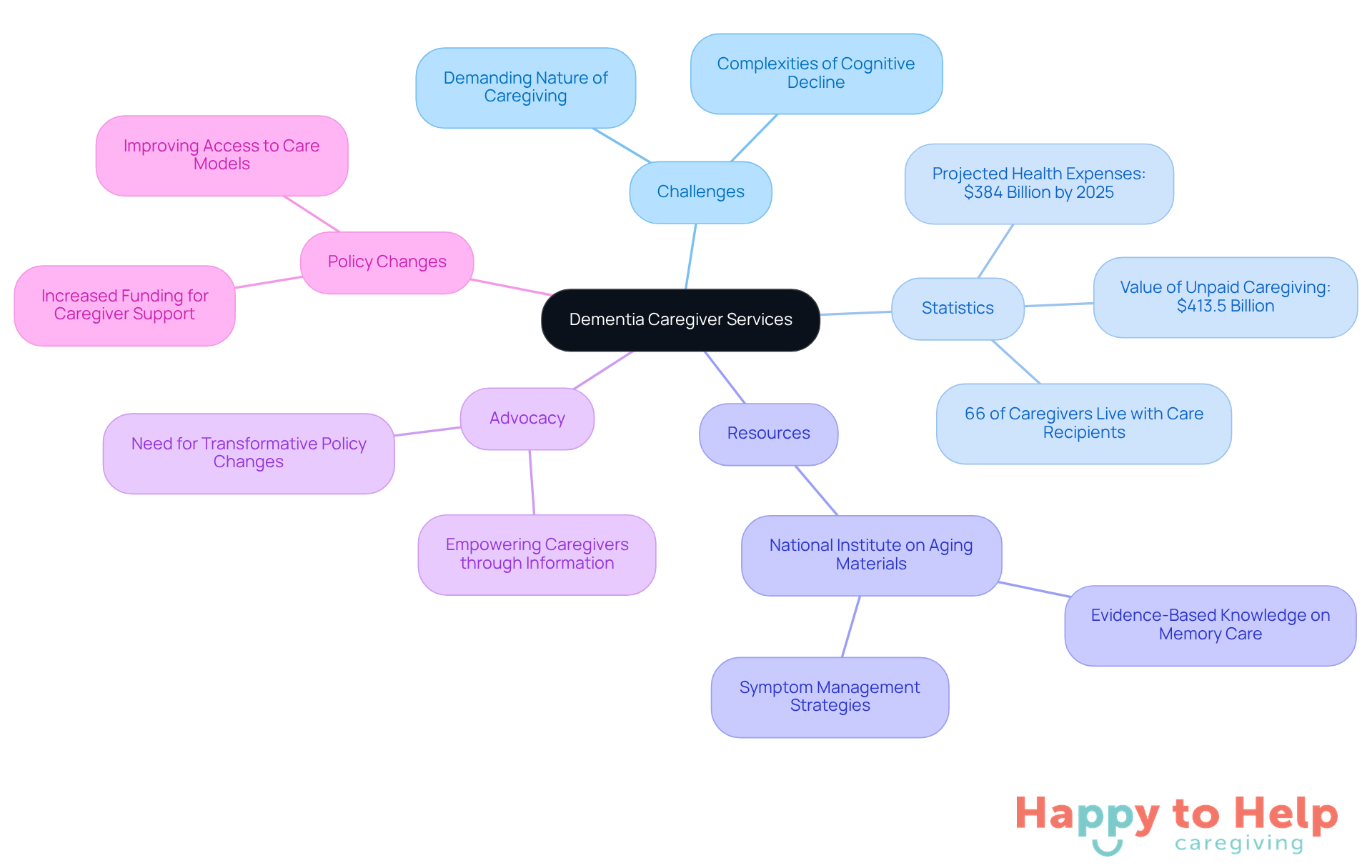
Caregivers face significant challenges when managing the complexities of cognitive decline in individuals, highlighting the importance of dementia caregiver services. Statistics reveal that 66% of caregivers live with the person they care for, highlighting the demanding nature of this role. Additionally, with projected health and long-term care expenses reaching $384 billion in 2025, understanding effective management strategies is crucial.
To support caregivers, the National Institute on Aging provides a wealth of research-based materials on dementia caregiver services. These resources offer evidence-based knowledge on memory care, equipping caregivers with effective methods for symptom management. By utilizing these tools, dementia caregiver services can enhance caregivers' decision-making processes, ensuring their loved ones receive compassionate support.
Dr. Chen emphasizes the need for transformative policy changes to bolster caregiver support, underscoring the importance of advocacy in this field. Staying informed not only empowers those involved in dementia caregiver services but also fosters a supportive environment that can significantly improve the quality of life for individuals living with dementia.
In summary, caregivers can navigate these challenges by leveraging available resources and advocating for necessary changes, ultimately leading to better outcomes for both themselves and those they care for.
Local Support Groups: Community Connections for Caregiver Support
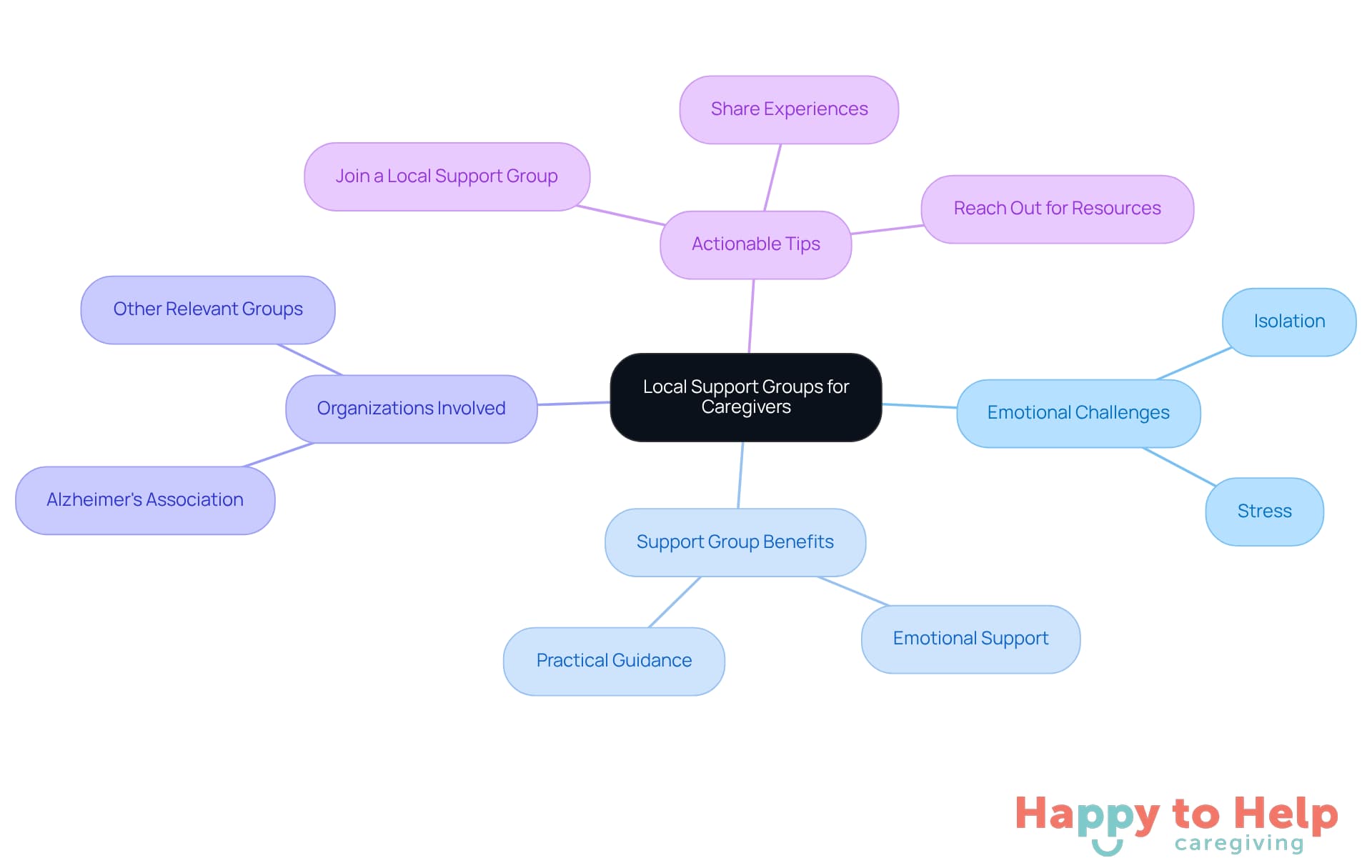
Caregivers often face significant emotional challenges, including feelings of isolation and stress. Without adequate support, these challenges can lead to burnout and decreased well-being.
Local support groups that offer dementia caregiver services are essential in addressing these issues, providing both emotional support and practical guidance. These groups create a safe environment where caregivers can openly share their experiences, challenges, and victories. By connecting with peers who genuinely understand their situations, caregivers gain invaluable insights and a sense of camaraderie that alleviates feelings of isolation.
Organizations such as the Alzheimer's Association play a crucial role in providing dementia caregiver services to enable these support networks. They ensure that caregivers have access to dementia caregiver services and other resources they require, fostering a community that enhances their well-being. Recent trends show a rising involvement in these groups, highlighting a greater awareness of the significance of community ties in improving caregivers' lives.
Engaging in these support systems not only fosters emotional resilience but also empowers caregivers to navigate the complexities of their roles with greater confidence. Here are some actionable tips for caregivers:
- Join a local support group to connect with others in similar situations.
- Reach out to organizations like the Alzheimer's Association for resources and guidance.
- Share your experiences with peers to gain insights and support.
By actively participating in these networks, caregivers can significantly improve their emotional health and overall effectiveness in their roles.
Key Takeaways for Caregivers
Caring for individuals with dementia presents significant challenges, making the role of dementia caregiver services essential. Caregivers often face emotional strain and practical difficulties, which can lead to feelings of isolation and burnout. Recognizing these challenges is the first step toward finding effective solutions.
Dementia caregiver services offer critical support that addresses these issues. Personalized in-home assistance, innovative techniques like the Teepa Snow Approach™, and comprehensive programs provide not only practical help but also emotional and educational resources. These services are designed to alleviate feelings of isolation, offer respite, and improve communication strategies, all of which are vital for managing the complexities of dementia care.
Engaging with dementia caregiver services is crucial for enhancing the quality of life for both caregivers and those they care for. By utilizing available resources, caregivers can build a supportive network that empowers them in their roles. It’s important for caregivers to actively seek out these services, participate in local support groups, and advocate for necessary changes in policy and practice. This proactive approach not only improves their own well-being but also enriches the lives of those they care for, fostering a more compassionate and effective caregiving environment.
https://iframe.tely.ai/cta/eyJhcnRpY2xlX2lkIjogIjY5MjI0ZjdkZmViYTIxODdjZTM2NWJlOCIsICJjb21wYW55X2lkIjogIjY4ZWU1ZGNhNzMxNzYyNTU3ZjNjOTVjMSIsICJpbmRleCI6IG51bGwsICJ0eXBlIjogImFydGljbGUifQ==Frequently Asked Questions
What challenges do dementia caregivers face?
Dementia caregivers often experience feelings of isolation and emotional toll, which can affect their well-being and the quality of care they provide.
What services does Happy to Help Caregiving offer for dementia care?
Happy to Help Caregiving provides personalized in-home assistance that includes companionship support, post-hospital recovery assistance, respite services, palliative support, and dementia caregiver services.
How does Happy to Help Caregiving enhance the quality of life for clients?
Their services engage clients in meaningful activities, reducing feelings of isolation and fostering a sense of safety and autonomy, thereby creating a supportive environment.
What is the Teepa Snow Approach™?
The Teepa Snow Approach™ is a set of techniques designed to improve interactions between caregivers and individuals experiencing cognitive decline, emphasizing emotional support and effective caregiving strategies.
What is the Hand-under-Hand® method?
The Hand-under-Hand® method is a technique that allows caregivers to guide and support individuals gently, minimizing distress and promoting comfort during caregiving.
Why is training important for dementia caregivers?
Training, such as the Positive Approach® to Care Certification course, helps caregivers enhance their skills and effectively meet the emotional needs of their clients, which is crucial for building trust and understanding.
What strategies can caregivers use to understand dementia behaviors?
Caregivers can maintain a calm demeanor, use simple language, provide reassurance, observe behavioral patterns, implement routine, engage in meaningful activities, and utilize humor.
How can maintaining a calm demeanor benefit dementia care?
A calm presence can soothe agitation and confusion, significantly influencing the emotional state of individuals with cognitive impairment and improving interactions.
What role does routine play in dementia care?
Establishing a consistent daily structure helps reduce confusion and anxiety for individuals with dementia, creating familiarity and predictability.
How can engaging in meaningful activities help individuals with dementia?
Activities that resonate with an individual’s interests can redirect focus and reduce challenging behaviors, contributing to a sense of fulfillment and joy.
List of Sources
- Happy to Help Caregiving: Personalized In-Home Support for Dementia Care
- Alzheimer's Disease Facts and Figures (https://alz.org/alzheimers-dementia/facts-figures)
- Caregiver Statistics: Demographics (https://caregiver.org/resource/caregiver-statistics-demographics)
- New Medicare program offers much-needed relief for caregivers of dementia patients (https://finance.yahoo.com/news/new-medicare-program-offers-much-needed-relief-for-caregivers-of-dementia-patients-203450020.html)
- New NIA grant advances tools for dementia caregiving (https://news-medical.net/news/20251015/New-NIA-grant-advances-tools-for-dementia-caregiving.aspx)
- Teepa Snow Approach™: Transformative Techniques for Dementia Care
- NURSING HOME STAFF KNOWLEDGE ABOUT DEMENTIA: THE IMPACT OF TEEPA SNOW’S POSITIVE APPROACH® TO CARE CERTIFICATION - PMC (https://pmc.ncbi.nlm.nih.gov/articles/PMC6228905)
- Positive Approach to Care — START Senior Solutions (https://startseniorsolutions.org/classes/positive-approach-to-care)
- Hand-under-Hand: A Key Technique in the Positive Approach to Care - NursePartners, Inc (https://nursepartners.org/hand-under-hand-a-key-technique-in-the-positive-approach-to-care)
- 6 Tips for Better Dementia Communication • Dementia Map (https://dementiamap.com/tips-better-dementia-communication)
- Caregiver's Guide to Understanding Dementia Behaviors: Essential Strategies for Caregivers
- Alzheimer's Disease Facts and Figures (https://alz.org/alzheimers-dementia/facts-figures)
- ADI - Dementia statistics (https://alzint.org/about/dementia-facts-figures/dementia-statistics)
- Fact Sheet: U.S. Dementia Trends (https://prb.org/resources/fact-sheet-u-s-dementia-trends)
- New Survey Reveals Critical Gaps in Awareness and Understanding of Agitation in Alzheimer’s Dementia - Alliance for Aging Research (https://agingresearch.org/news/new-survey-reveals-critical-gaps-in-awareness-and-understanding-of-agitation-in-alzheimers-dementia)
- (https://belleviecare.co.uk/support-advice/dementia-quotes-to-lift-your-spirits)
- GUIDE Model: Innovative Approaches to Enhance Dementia Care Experiences
- Pa., N.J. and Del.families can now enroll in a new Medicare dementia program (https://whyy.org/articles/medicare-dementia-guide-program-pennsylvania-new-jersey-delaware)
- Evaluation of the Guiding an Improved Dementia Experience (GUIDE) Model (https://mathematica.org/projects/evaluation-of-the-guiding-an-improved-dementia-experience-model)
- GUIDE Model: Aid for People Living with Dementia, Unpaid Caregivers - LeadingAge (https://leadingage.org/serialpost/guide-model-aid-for-people-living-with-dementia-unpaid-caregivers)
- CMS Announces New Dementia Care Model, GUIDE | Mass Senior Care (https://maseniorcare.org/member-resources/e-news-updates/cms-announces-new-dementia-care-model-guide)
- Alzheimer's Association: Comprehensive Resources and Support for Caregivers
- Alzheimer's Disease Facts and Figures (https://alz.org/alzheimers-dementia/facts-figures)
- It’s Time to Care for Caregivers: Senator Markey Announces Comprehensive Family Caregiving Legislative Agenda | U.S. Senator Ed Markey of Massachusetts (https://markey.senate.gov/news/press-releases/11/20/2025/its-time-to-care-for-caregivers-senator-markey-announces-comprehensive-family-caregiving-legislative-agenda)
- National Family Caregivers and National Alzheimer’s Disease Awareness Month Recognized During November - Union County Daily Digital (https://unioncountydailydigital.com/articles/national-family-caregivers-and-national-alzheimers-disease-awareness-month-recognized-during-november)
- Alzheimer’s Association Honors the Nearly 12 Million Americans Who Serve as Dementia Caregivers and Shares New Resources to Help Them Thrive (https://alz.org/news/2025/november-national-family-caregivers-alzheimers-disease-awareness-month)
- New Alzheimer’s Association Report Reveals Top Stressors for Caregivers and Lack of Care Navigation Support and Resources (https://alz.org/news/2024/new-alzheimers-association-report-reveals-top-stressors-caregivers)
- Caregiver.org: Practical Tips for Managing Dementia Behaviors
- UCSF Leads Statewide Efforts to Improve Dementia Care, Diagnosis (https://ucsf.edu/news/2025/06/430296/ucsf-leads-statewide-efforts-improve-dementia-care-diagnosis)
- Dementia Caregiver Resources Stanford PD Community Blog (https://parkinsonsblog.stanford.edu/2025/09/dementia-caregiver-resources)
- Dealing With Dementia: A Caregivers Guide (2025 Update) (https://sunflowercommunities.org/dealing-with-dementia)
- Data, Assessment, and Analysis | Alzheimer's Association (https://alz.org/professionals/public-health/public-health-topics/data-assessment-analysis)
- The Importance of a Daily Routine for Dementia Patients (https://koelschseniorcommunities.com/resource/the-importance-of-a-daily-routine-for-dementia-patients)
- Center for Health Care Strategies: Engaging Community-Based Support for Caregivers
- D-CARE study finds caregiver satisfaction higher with dementia care programs than usual care (https://uclahealth.org/news/release/d-care-study-finds-caregiver-satisfaction-higher-with)
- Caregiving connects us, community strengthens us - VA News (https://news.va.gov/143323/caregiving-connects-us-community-strengthens-us)
- National Family Caregivers and National Alzheimer’s Disease Awareness Month Recognized During November - Union County Daily Digital (https://unioncountydailydigital.com/articles/national-family-caregivers-and-national-alzheimers-disease-awareness-month-recognized-during-november)
- Study: Dementia caregivers prefer dementia care programs over usual care (https://mcknights.com/news/study-dementia-caregivers-prefer-dementia-care-programs-over-usual-care)
- Caregiver Action Network (https://caregiveraction.org)
- National Institute on Aging: Research-Based Resources for Dementia Care
- News & Announcements (https://nia.nih.gov/research/dbsr/news)
- Alzheimer's Disease Facts and Figures (https://alz.org/alzheimers-dementia/facts-figures)
- One in Five People with Dementia Receive No Care, Global Study Finds (https://ysph.yale.edu/news-article/one-in-five-people-with-dementia-receive-no-care-global-study-finds)
- $3 million National Institute on Aging grant will provide much-needed support to underserved dementia caregivers (https://publichealth.gmu.edu/news/2025-10/3-million-national-institute-aging-grant-will-provide-much-needed-support-underserved)
- Development and Implementation of an Anticipatory Care Calendar for people with learning disabilities or dementia - Quality in Care Awards Programme (https://qualityincare.org/case_studies/development_and_implementation_of_an_anticipatory_care_calendar_for_people_with_learning_disabilities_or_dementia)
- Local Support Groups: Community Connections for Caregiver Support
- Caregiving connects us, community strengthens us - VA News (https://news.va.gov/143323/caregiving-connects-us-community-strengthens-us)
- Caregiver Statistics: One in Four Americans Are Now Caregivers, According to New Report (https://caregivingkinetics.com/caregiver-statistics)
- Caregiver Statistics: Demographics (https://caregiver.org/resource/caregiver-statistics-demographics)
- Emotional Support for Spouses/Partners of Individuals with Dementia (https://caregiver.org/news/emotional-support-spousespartners-individuals-dementia)
- The Why and How of Dementia Caregiver Support Groups (https://springvillagedover.com/news/the-why-and-how-of-dementia-caregiver-support-groups)