10 Essential Discussion Groups for Seniors to Foster Connection
For families in our service areas
For families in our service areas, this guide explains caregiving and how non-medical in-home caregiving can support care planning in East Idaho, Treasure Valley & Magic Valley, Northern Wasatch, North Central West Virginia, and Northeast Ohio.
Why Discussion Groups Matters
Loneliness among seniors is a growing concern that can severely affect their mental and physical health. As social connections become increasingly vital for emotional well-being, the implications of isolation can be profound. Various organizations have recognized this issue and are creating opportunities for older adults to engage and connect.
This article explores ten essential discussion groups designed specifically for seniors. These platforms not only foster friendships but also provide valuable support and resources. What challenges do these groups address? How can they transform the lives of older adults seeking connection and community? Let's delve into the solutions that these groups offer.
Happy to Help Caregiving: Senior Connection Discussion Group
Loneliness among seniors is a significant issue that can adversely affect mental well-being. Many older adults struggle to connect with others, leading to feelings of isolation and depression. This challenge is particularly pressing as social connections are vital for maintaining a healthy mindset.
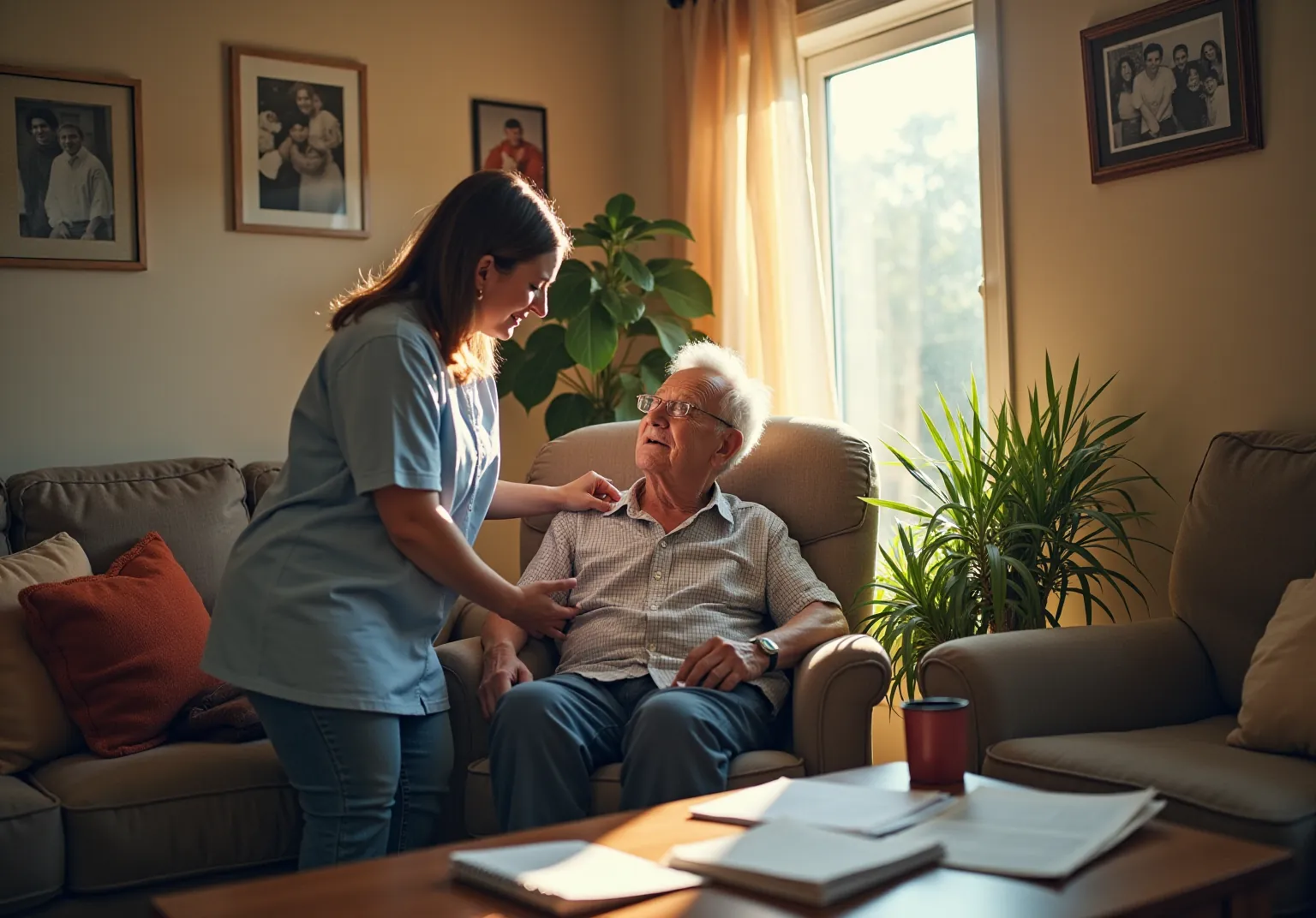
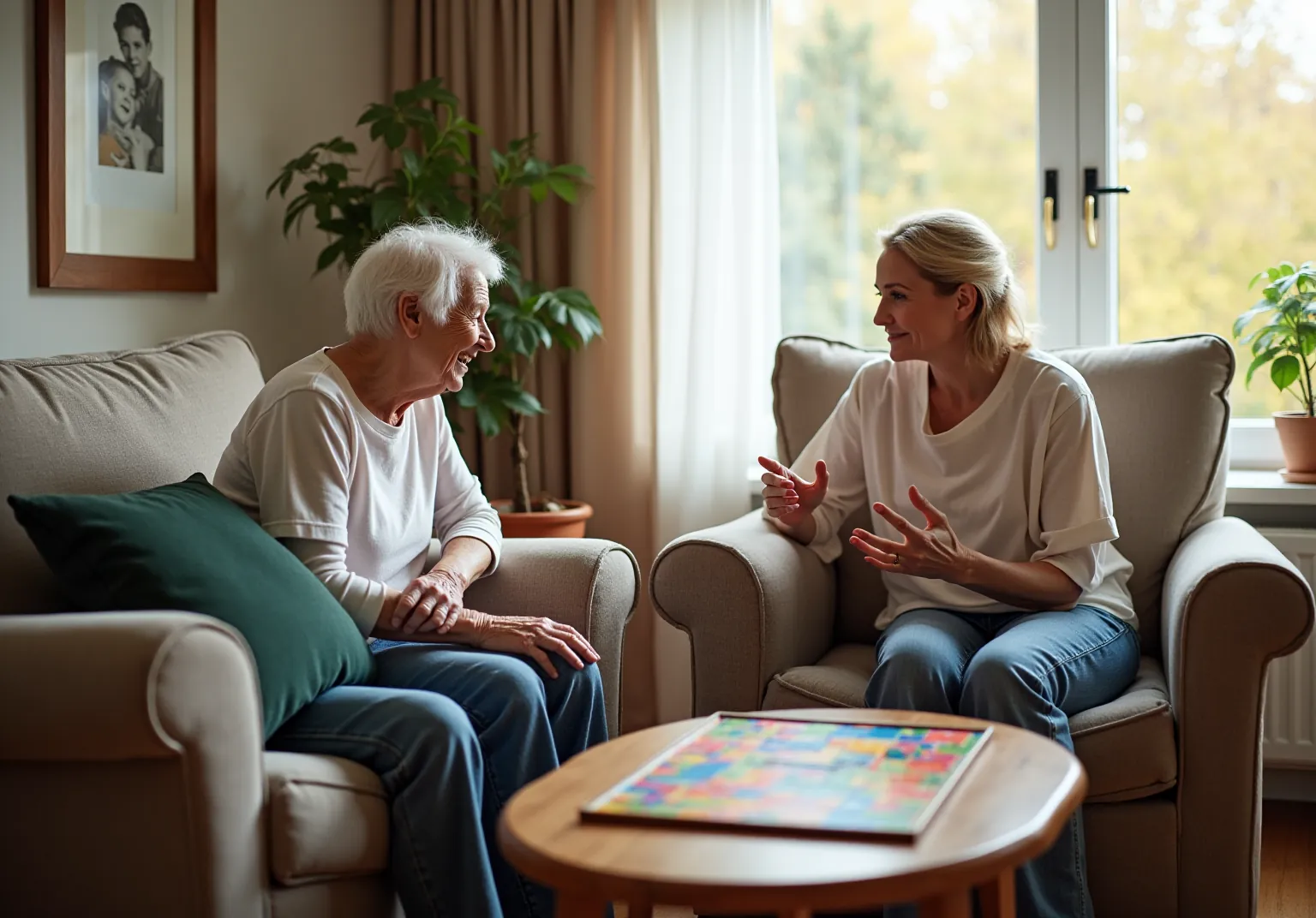
Happy to Help Caregiving addresses this problem through its dedicated discussion groups for seniors. This initiative creates a safe environment where seniors can share their experiences, discuss challenges, and build friendships. By fostering these relationships, the group combats loneliness and promotes mental well-being.
Caregivers play a crucial role in facilitating these conversations. They ensure that each participant feels appreciated and listened to, which significantly enhances their overall quality of life. By participating in discussion groups for seniors, seniors not only find companionship but also receive valuable insights and support from their peers.
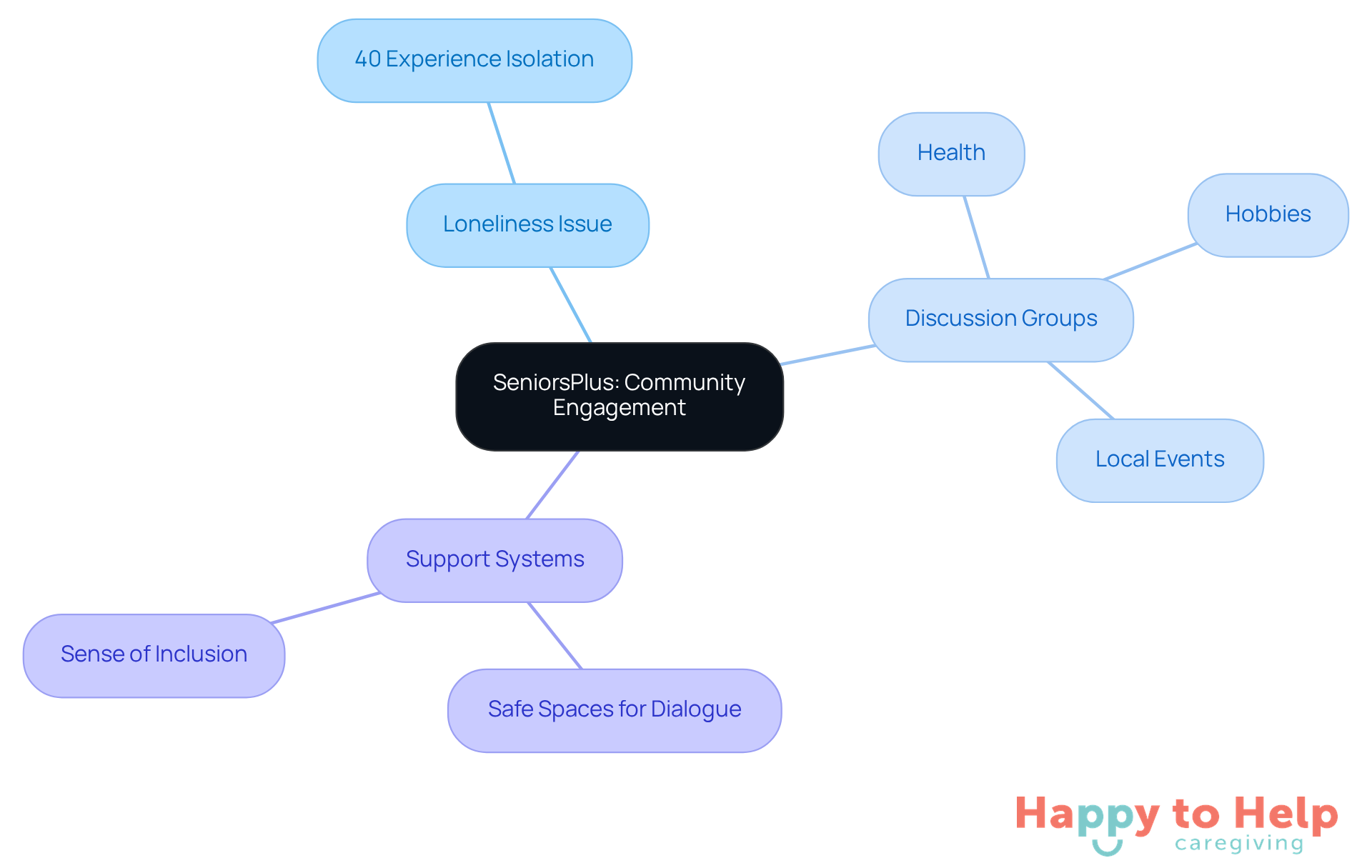
SeniorsPlus: Community Engagement Discussion Groups
Loneliness is a significant issue for older adults, with four in ten experiencing feelings of isolation. This problem can lead to serious implications for mental and physical health, making it crucial to address.
SeniorsPlus recognizes this challenge and arranges discussion groups for seniors that cater to their interests. These discussion groups for seniors focus on topics such as:
- Health
- Hobbies
- Local events
By engaging in discussion groups for seniors, older adults not only combat loneliness but also remain active and involved in their communities.
A strong support system is vital for elderly individuals, providing them with a sense of inclusion and opportunities for social interaction. SeniorsPlus creates safe spaces for dialogue and connection, playing a crucial role in enhancing the quality of life for older adults. As Betty Friedan aptly stated, "Aging is not lost youth but a new stage of opportunity and strength," emphasizing the positive aspects of social engagement.
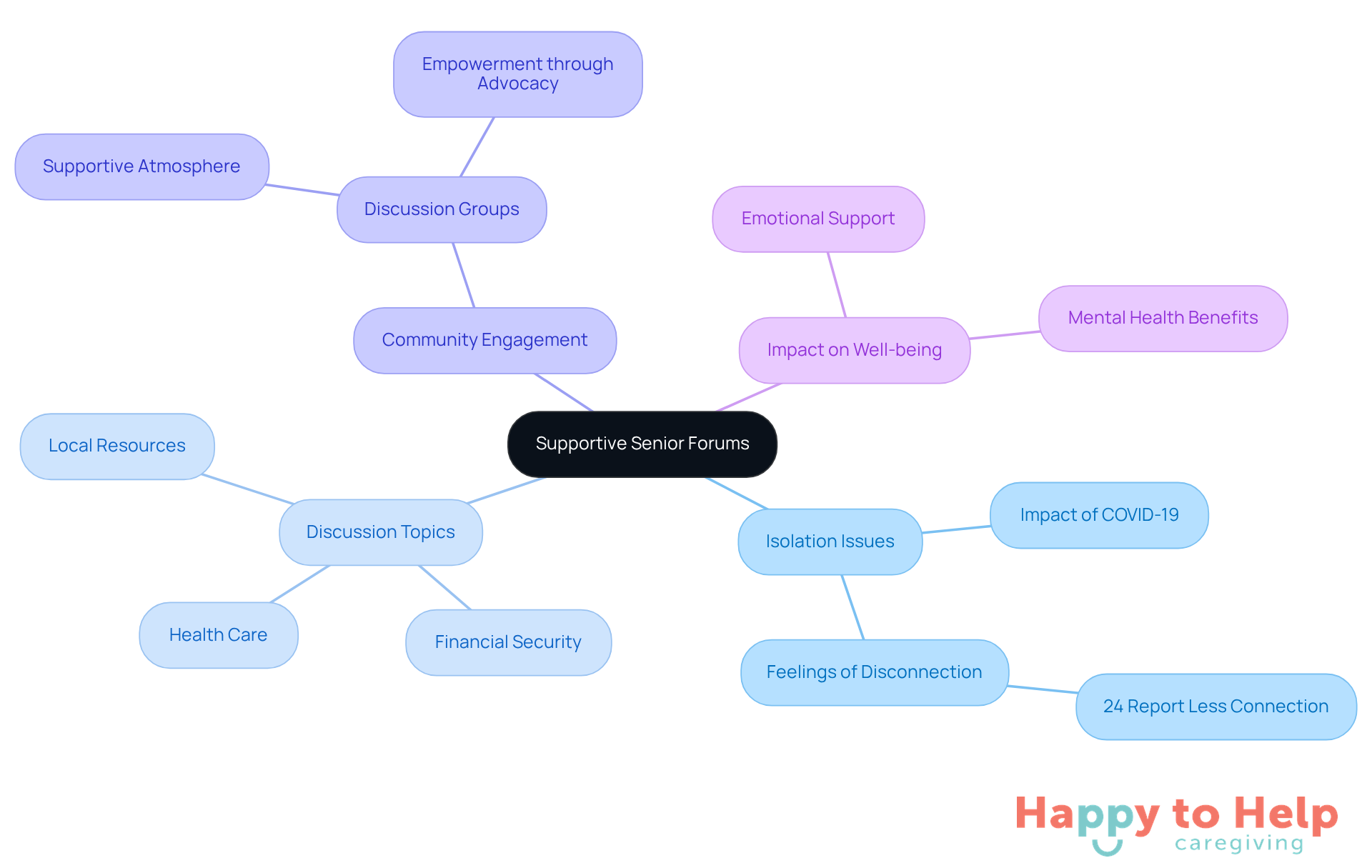
National Council on Aging: Supportive Senior Forums
The National Council on Aging (NCOA) addresses a pressing issue: many older adults feel isolated, particularly since COVID-19. In fact, 24 percent of participants aged 50 and above reported feeling less connected to their neighborhoods. This disconnection can significantly impact their mental and emotional well-being, making it crucial to foster community ties.
To combat this isolation, NCOA organizes essential discussion groups for seniors to engage in discussions about health care, financial security, and local resources. These discussion groups for seniors create a supportive atmosphere for participants to voice their concerns and exchange solutions, nurturing a strong sense of community. By engaging in these discussions, older adults not only increase their awareness of available resources but also empower themselves to advocate for their needs effectively.
Aging specialists emphasize that such forums are vital for promoting healthcare awareness and financial security. By addressing key issues that affect their well-being, seniors can better navigate the complexities of healthcare systems and financial planning, ultimately leading to an improved quality of life. Tia Walker's perspective that 'to care for those who once cared for us is one of the highest honors' underscores the importance of community support and advocacy in these conversations.
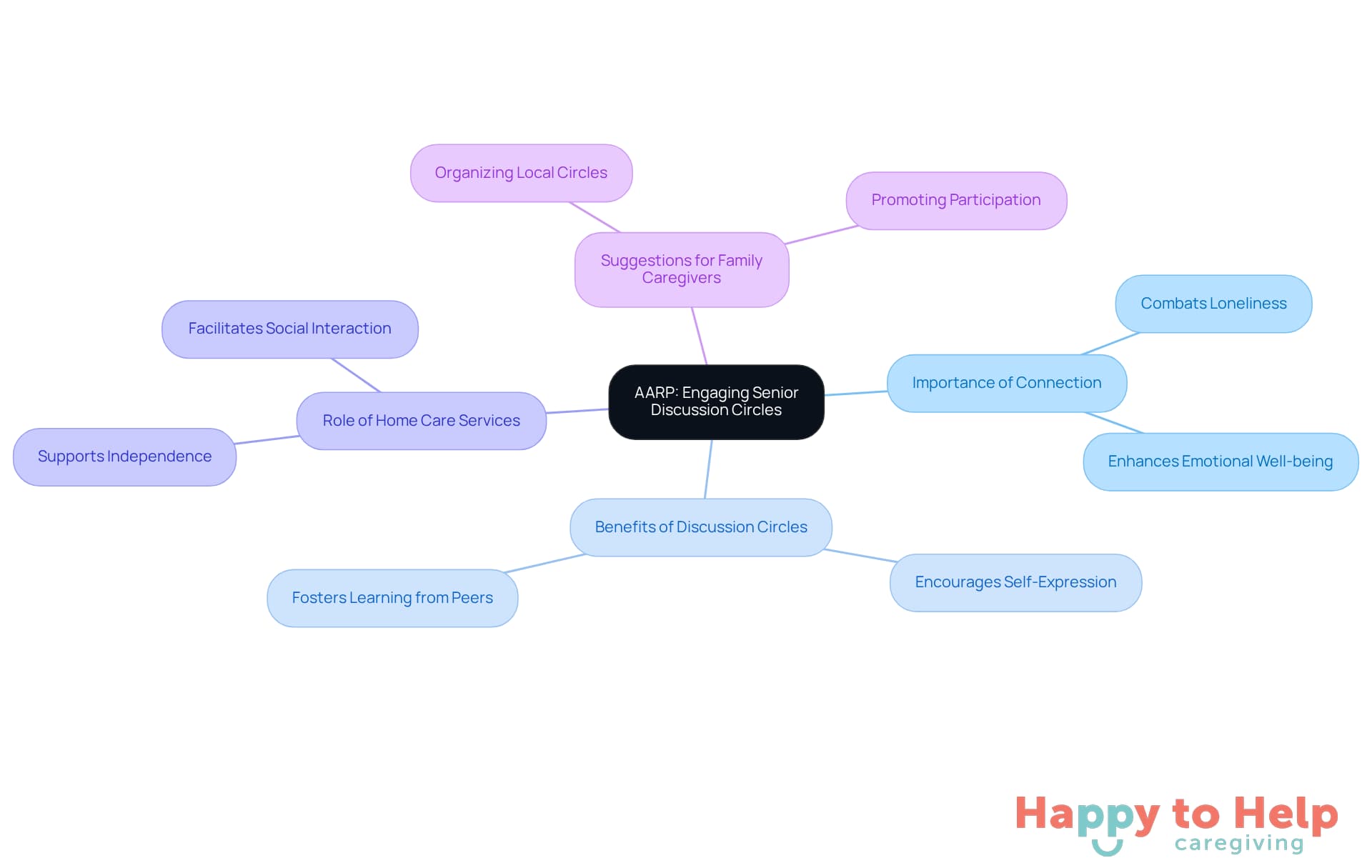
AARP: Engaging Senior Discussion Circles
Isolation among older adults is a significant issue that can lead to feelings of loneliness and negatively impact emotional well-being. AARP addresses this problem by promoting engaging discussion groups where older adults can connect over shared interests and experiences. These circles cover a variety of topics, from current events to personal stories, encouraging participants to express themselves and learn from one another. As Edward Albert aptly stated, "The simple act of caring is heroic," underscoring the importance of connection in enhancing emotional health.
Research shows that social involvement is crucial for older adults, as it combats loneliness and supports long-term health. Home care services play a vital role in this context, helping seniors maintain their independence while providing opportunities for social interaction. For family caregivers, promoting participation in dialogue circles can be an effective strategy. Consider recommending local AARP circles to your loved ones or even organizing a discussion gathering at home. This proactive approach can significantly enrich their social lives and foster a supportive network that leads to lasting friendships.
Alzheimer's Association: Caregiver and Senior Support Groups
Caregivers of individuals with dementia often face significant emotional challenges, including feelings of isolation and stress. These issues can lead to burnout, impacting both their well-being and the quality of care they provide.
Discussion groups for seniors, such as those offered by the Alzheimer's Association, play a crucial role in addressing these challenges. They create a nurturing environment where caregivers can share experiences and coping strategies. This sense of community not only alleviates feelings of isolation but also fosters understanding among those facing similar difficulties.
Mental health experts emphasize the importance of emotional support within these communities. Participating in discussion groups for seniors can significantly improve caregivers' well-being, reducing stress and the likelihood of burnout. Research indicates that caregivers who participate in support sessions report a better quality of life and lower usage of psychotropic medications, particularly when their care recipients have fewer restrictions in daily activities.
To enhance your caregiving experience, consider joining discussion groups for seniors as a support network. Here are some actionable tips:
- Connect with local groups: Find a support network in your area through the Alzheimer's Association or other organizations.
- Share your experiences: Open up about your challenges and learn from others.
- Seek expert advice: Attend workshops or seminars to gain insights from mental health professionals.
By participating in these support networks, caregivers can build resilience and improve their mental health, ultimately benefiting both themselves and their loved ones.

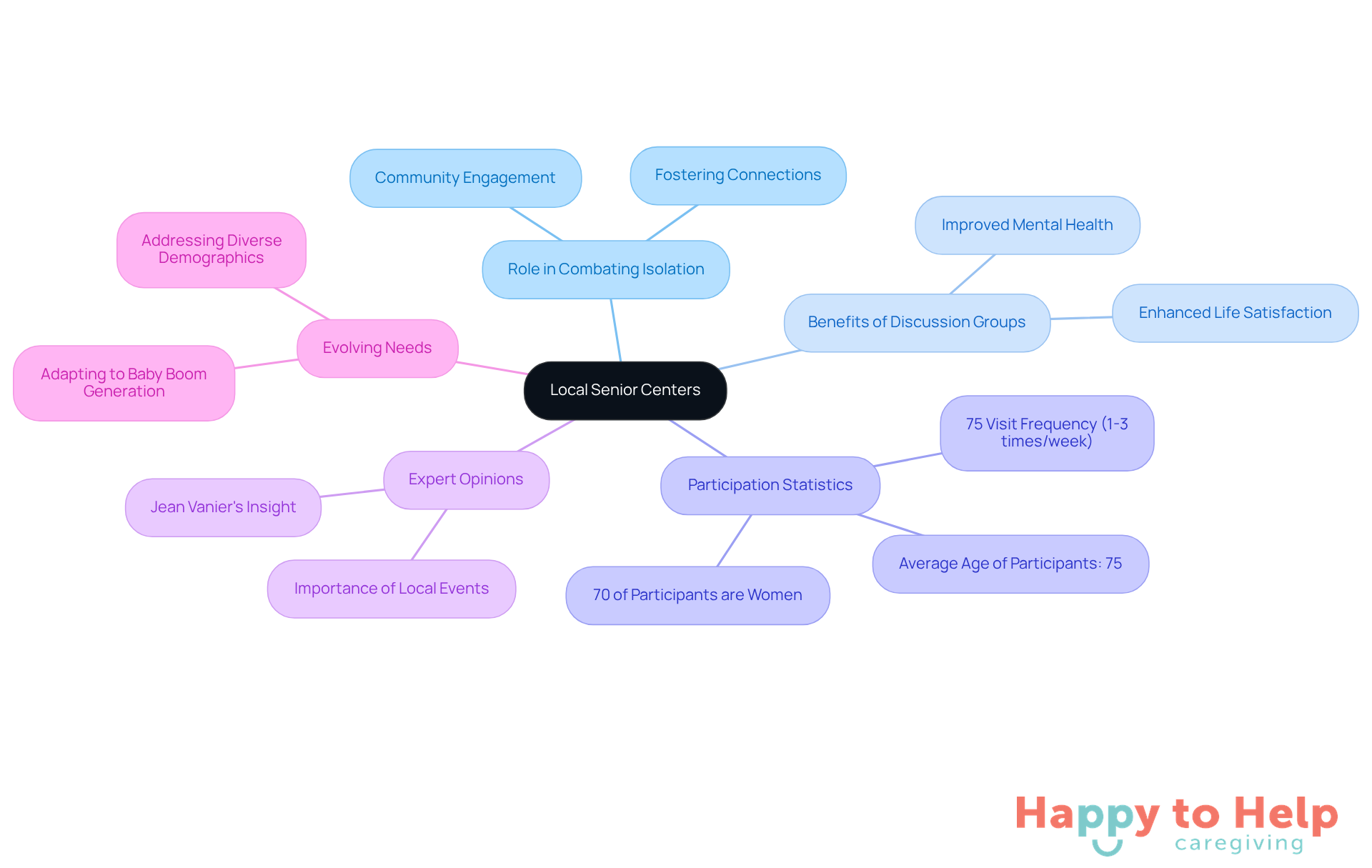
Local Senior Centers: Community Discussion Groups
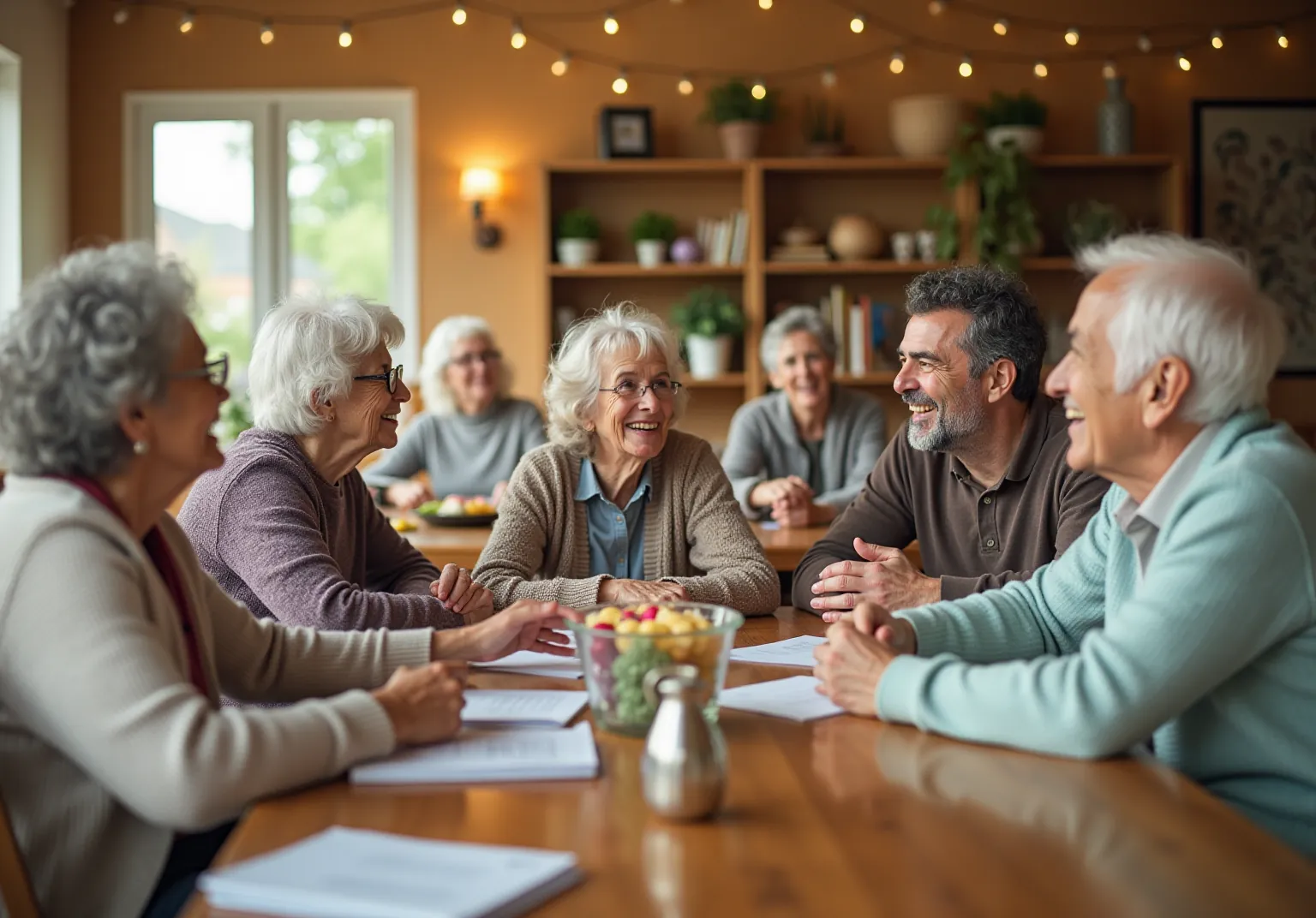
Local elder centers play a crucial role in addressing the problem of social isolation among older adults. These centers organize discussion groups for seniors that encourage them to come together and share their perspectives on various topics, including local events and health concerns. This inclusive environment fosters connections among peers, which is essential for combating loneliness.
Studies indicate that participation in these networks significantly enhances social connections, leading to improved mental health outcomes. Many older individuals report feeling less isolated and more content with their lives. In fact, 75% of participants visit their centers 1 to 3 times per week, highlighting the importance of these interactions in promoting a sense of belonging.
Experts emphasize that local events and forums are vital for strengthening social ties among seniors, ultimately contributing to their overall well-being. As Jean Vanier noted, "One of the wonderful aspects of a group is that it allows us to embrace and assist individuals in a manner we couldn't as single entities." By engaging in these community conversations, older adults not only share their experiences but also build supportive networks that enrich their lives.
Moreover, elder facilities are evolving to meet the needs of the aging baby boom generation, making discussion groups for seniors increasingly relevant today. By participating in these gatherings, seniors can find solutions to the challenges they face, enhancing their quality of life.
Meetup.com: Interest-Based Senior Groups
Social isolation is a significant challenge faced by many older adults. This lack of connection can lead to feelings of loneliness and negatively impact both mental and physical health. Engaging with others who share similar interests in discussion groups for seniors is crucial for fostering social connections and enhancing overall well-being.
Meetup.com offers a practical solution by enabling older adults to discover and participate in discussion groups for seniors that are based on their interests within their local area. Whether it’s joining a book club, a hiking group, or a crafting circle, this platform allows individuals to connect with others who share their passions. By participating in discussion groups for seniors, older adults can broaden their social networks and engage in pursuits that enhance their mental and physical health.

National Institute on Aging: Health Discussion Forums for Seniors
Older adults often face challenges in accessing relevant health information, which can impact their ability to make informed decisions about their well-being. This lack of knowledge can lead to poor health outcomes and decreased quality of life.
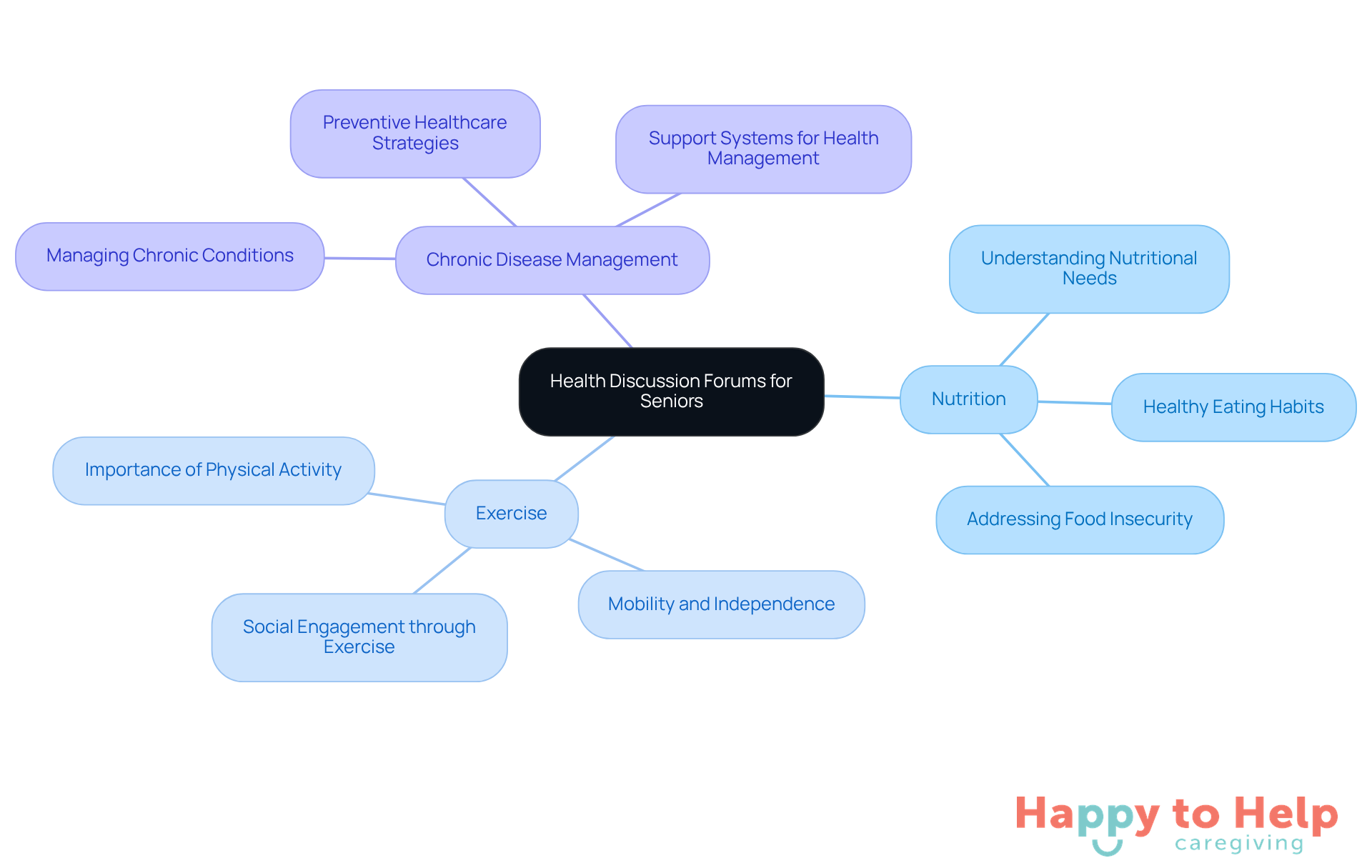
To address this issue, the National Institute on Aging hosts health forums that focus on essential topics such as:
- Nutrition
- Exercise
- Chronic disease management
These discussion groups for seniors offer older individuals the opportunity to learn from specialists and exchange experiences with peers.
By participating in these health conversations, older adults can gain valuable insights and make knowledgeable choices regarding their health and wellness. Participating in discussion groups for seniors not only empowers them but also fosters a supportive community where they can share their journeys.
Senior Companion Program: Volunteer-Led Discussion Groups
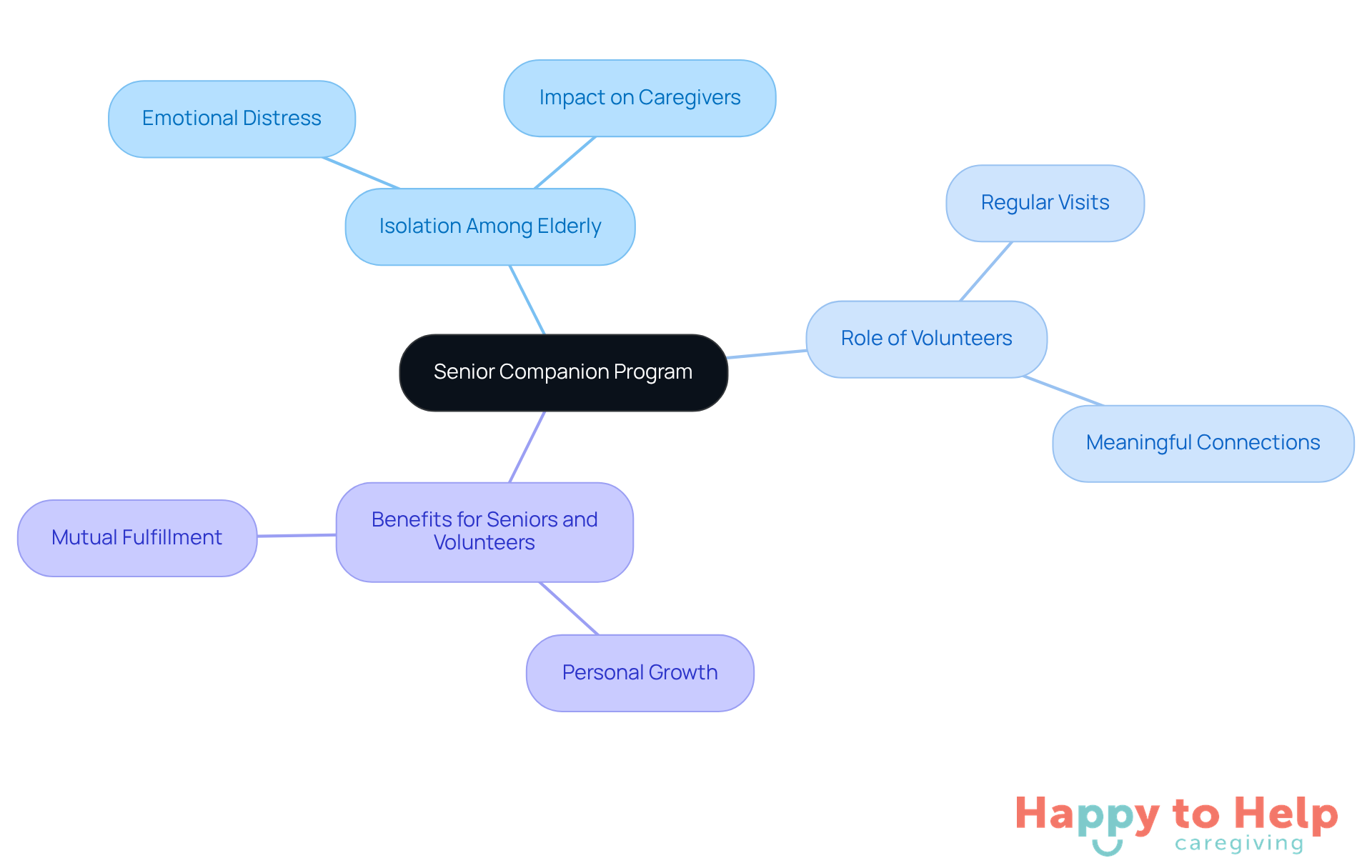
Isolation among elderly individuals is a significant problem that can lead to emotional distress and a decline in overall well-being. Many older adults face loneliness, which can negatively impact their mental and physical health. This issue not only affects the elderly but also places a burden on caregivers who strive to provide support and companionship.
The Senior Companion Program addresses this challenge by connecting volunteers with elderly individuals. Through regular visits and conversations, these volunteers help reduce feelings of isolation, fostering meaningful connections. This program enables older adults to share their stories and experiences, creating a supportive community that benefits everyone involved.
Not only does the program aid older adults, but it also enhances the lives of volunteers. By engaging in these interactions, volunteers experience personal growth and fulfillment, creating a mutually beneficial relationship. This initiative serves as a practical solution for caregivers looking to improve the quality of life for the elderly by participating in discussion groups for seniors, while also enriching their own lives.
National Senior Games Association: Sports and Wellness Discussion Events
The National Senior Games Association addresses a significant problem: only about 40% of older adults meet the CDC guidelines for aerobic physical activity. This low engagement in physical activities can lead to a decline in overall well-being and social isolation among seniors.
The implications of this issue are profound. Without regular physical activity, older adults may struggle with health challenges and miss out on valuable social interactions. These discussion groups for seniors not only promote fitness but also serve as vital platforms for social connection, enabling participants to share experiences and strategies for maintaining an active lifestyle.
To combat this, the National Senior Games Association organizes sports and wellness events alongside discussion groups for seniors that encourage older adults to actively engage in physical activities. These events foster fellowship, as older individuals assist each other in their wellness journeys. Research shows that social support significantly influences participation in health programs; individuals with stronger family support are more likely to engage in health initiatives.
As Andrew Walker, MPH, NSGA Director of Health & Well-Being, states, "A core component of neuromuscular training is balance, which is especially important for both sports performance and falls prevention in senior athletes." By addressing the challenges of ageism, these events are crucial for building a connected and active community among older adults.

Your Path Forward
Loneliness among seniors is a pressing issue that can significantly impact their well-being. Engaging in discussion groups offers a vital solution, fostering meaningful connections and providing a supportive environment for older adults. These gatherings not only serve as platforms for social interaction but also empower seniors to share experiences and gain insights that enhance their overall quality of life.
Various organizations and programs highlight the diverse opportunities available for seniors to connect. Initiatives like Happy to Help Caregiving create nurturing environments, while AARP offers engaging circles that address the pervasive issue of isolation. The National Council on Aging and local senior centers further emphasize the importance of community engagement. Additionally, platforms like Meetup.com facilitate interest-based connections, enriching social lives and combating loneliness.
The significance of these discussion groups extends beyond mere conversation. They empower seniors to advocate for their needs, share valuable health information, and build supportive networks. As the landscape of senior care evolves, recognizing and promoting these opportunities for connection becomes essential. Encouraging older adults to actively participate in their communities can enhance their quality of life, ensuring they experience the companionship and support fundamental to their health and happiness.
https://iframe.tely.ai/cta/eyJhcnRpY2xlX2lkIjogIjY5MjBmZDg0YzQ4NjU1NjRkNDliYzZiYSIsICJjb21wYW55X2lkIjogIjY4ZWU1ZGNhNzMxNzYyNTU3ZjNjOTVjMSIsICJpbmRleCI6IG51bGwsICJ0eXBlIjogImFydGljbGUifQ==Frequently Asked Questions
Why is loneliness a significant issue among seniors?
Loneliness among seniors can adversely affect mental well-being, leading to feelings of isolation and depression. Social connections are vital for maintaining a healthy mindset.
How does Happy to Help Caregiving address loneliness in seniors?
Happy to Help Caregiving addresses loneliness by organizing dedicated discussion groups for seniors, providing a safe environment for them to share experiences, discuss challenges, and build friendships.
What role do caregivers play in discussion groups for seniors?
Caregivers facilitate conversations in discussion groups, ensuring each participant feels appreciated and listened to, which enhances their overall quality of life.
What topics are covered in SeniorsPlus discussion groups?
SeniorsPlus discussion groups focus on topics such as health, hobbies, and local events, helping seniors engage with their interests and combat loneliness.
How does participating in discussion groups benefit older adults?
By engaging in discussion groups, older adults combat loneliness, remain active in their communities, and build a strong support system that provides a sense of inclusion and opportunities for social interaction.
What issue does the National Council on Aging (NCOA) address regarding seniors?
NCOA addresses the issue of isolation among older adults, particularly exacerbated by COVID-19, as many report feeling less connected to their neighborhoods.
What types of discussions take place in NCOA's senior forums?
NCOA organizes discussions on health care, financial security, and local resources, creating a supportive atmosphere for seniors to voice concerns and exchange solutions.
Why are discussion groups important for seniors' well-being?
Discussion groups are vital for promoting healthcare awareness and financial security, helping seniors navigate complex systems and advocate for their needs, ultimately improving their quality of life.
List of Sources
- SeniorsPlus: Community Engagement Discussion Groups
- The Power of Community Quotes (https://ellevatenetwork.com/articles/8538-quotes-about-the-power-of-community)
- 16 positive quotes about ageing | Brightwater (https://brightwatergroup.com/news-media/16-positive-quotes-about-ageing)
- Unveiling the dynamics of social engagement and subjective health in older adults: A gendered perspective (https://sciencedirect.com/science/article/pii/S0531556524001141)
- 15 Good Quotes for Seniors That Will Brighten Your Day in 2025 (https://arhomecare.com/15-good-quotes-for-seniors-that-will-brighten-your-day-in-2025)
- THE IMPORTANCE OF COMMUNITY FOR SENIORS IN 2024 — Polara Health (https://polarahealth.com/blog/the-importance-of-community-and-engagement-for-seniors-in-2024)
- National Council on Aging: Supportive Senior Forums
- New AARP Survey Reveals Older Adults Want to Age in Place (https://aarp.org/home-living/home-and-community-preferences-survey-2021)
- Stats On The Benefits Of Joining A Older Adult Club (https://fortgreenecouncil.org/single-post/some-facts-about-senior-centers)
- (https://belleviecare.co.uk/support-advice/60-elderly-care-quotes-to-lift-your-spirits)
- 20 Inspirational Senior Care Quotes (https://1plus1cares.com/20-inspirational-senior-care-quotes)
- National Council on Aging Site Visit Highlights Partnerships Impacting Older Adults (https://utmb.edu/scoa/research/pahowho/news-archive/2025/05/01/national-council-on-aging-site-visit-highlights-partnerships-impacting-older-adults)
- AARP: Engaging Senior Discussion Circles
- 27 Inspirational Quotes for Caregivers (https://ultimatecareny.com/resources/27-quotes-for-caregivers)
- Alzheimer's Association: Caregiver and Senior Support Groups
- Alzheimer’s Association Encourages Dementia Caregivers to Make Their Health and Well-Being an Equal Priority (https://alz.org/news/2024/november-national-family-caregivers-month)
- Caregiver Statistics: Health, Technology, and Caregiving Resources (https://caregiver.org/resource/caregiver-statistics-health-technology-and-caregiving-resources)
- Effect of support groups on caregiver’s quality of life (https://onlinelibrary.wiley.com/doi/10.1111/famp.12684)
- New Alzheimer’s Association Report Reveals Top Stressors for Caregivers and Lack of Care Navigation Support and Resources (https://alz.org/news/2024/new-alzheimers-association-report-reveals-top-stressors-caregivers)
- Local Senior Centers: Community Discussion Groups
- Stats On The Benefits Of Joining A Older Adult Club (https://fortgreenecouncil.org/single-post/some-facts-about-senior-centers)
- The Power of Community Quotes (https://ellevatenetwork.com/articles/8538-quotes-about-the-power-of-community)
- Older adults prioritize social activities, inclusiveness in massive survey assessing what matters most to them (https://mcknights.com/news/older-adults-prioritize-social-activities-inclusiveness-in-massive-survey-assessing-what-matters-most-to-them)
- Somerset County News: Somerset County Public Forum in Bridgewater on June 4th | Raritan Neighbors NJ - Patch Labs (https://raritanneighbors.town.news/g/raritan-nj/n/309028/somerset-county-news-somerset-county-public-forum-bridgewater-june-4th)
- Older Adults: Exploring Their Changing Demographics and Health Outlook | Feature | Parks and Recreation Magazine | NRPA (https://nrpa.org/parks-recreation-magazine/2017/january/older-adults-exploring-their-changing-demographics-and-health-outlook)
- Meetup.com: Interest-Based Senior Groups
- The Importance of Socialization for Seniors - Bethesda Health Group (https://bethesdahealth.org/blog/the-importance-of-socialization-for-seniors)
- 2022 was a year of friendship and connections on Meetup (https://prnewswire.com/news-releases/2022-was-a-year-of-friendship-and-connections-on-meetup-301695254.html)
- Why Socialization is Important for Older Adults (https://newsroom.clevelandclinic.org/2022/12/09/why-socialization-is-important-for-older-adults)
- National Institute on Aging: Health Discussion Forums for Seniors
- Aging Stats (https://agingstats.gov)
- Older adults prioritize social activities, inclusiveness in massive survey assessing what matters most to them (https://mcknights.com/news/older-adults-prioritize-social-activities-inclusiveness-in-massive-survey-assessing-what-matters-most-to-them)
- 52+ Senior Health Statistics, Facts & Trends (https://humancareny.com/blog/52-senior-health-statistics-facts-trends)
- 15 Good Quotes for Seniors That Will Brighten Your Day in 2025 (https://arhomecare.com/15-good-quotes-for-seniors-that-will-brighten-your-day-in-2025)
- Warning From Older Adults: Care for Aging in America Needs Urgent Rethinking (https://johnahartford.org/newsroom/view/warning-from-older-adults-care-for-aging-in-america-needs-urgent-rethinking)
- Senior Companion Program: Volunteer-Led Discussion Groups
- The Senior Companion Program Plus: An Innovative Training Approach for Alzheimer’s Disease and Related Dementia (https://mdpi.com/2227-9032/11/13/1966)
- AmeriCorps program matches older people who need a helping hand with an older volunteer looking to help (https://cpr.org/2025/11/20/americorps-senoir-companion-program)
- 1 in 3 older adults still experience loneliness and isolation (https://michiganmedicine.org/health-lab/1-3-older-adults-still-experience-loneliness-and-isolation)
- Senior Companion Volunteer Brings Peace of Mind (https://missoulaagingservices.org/news-events/blog-pages/senior-companion-volunteer-brings-peace-of-mind.html)
- Trends in Loneliness Among Older Adults from 2018-2023 (https://ihpi.umich.edu/national-poll-healthy-aging/reports-and-resources/trends-loneliness-among-older-adults-2018-2023)
- National Senior Games Association: Sports and Wellness Discussion Events
- News and Events – National Senior Games Association (https://nsga.com/category/news-and-events)
- Case studies/International Olympic Committee - Strategic Planning (https://strategy.wikimedia.org/wiki/Case\_studies/International\_Olympic\_Committee)
- The Frequency and Health Benefits of Physical Activity for Older Adults - PMC (https://pmc.ncbi.nlm.nih.gov/articles/PMC5488312)
- Americans engaged in sports per day US 2024| Statista (https://statista.com/statistics/189562/daily-engagement-of-the-us-poppulation-in-sports-and-exercise?srsltid=AfmBOorEdhx2q-pz-dNtxKXKHsluEa27srlWkfZpTB-XIhCcexuwQ4hJ)