10 Essential Elderly Mobility Aids for Family Caregivers
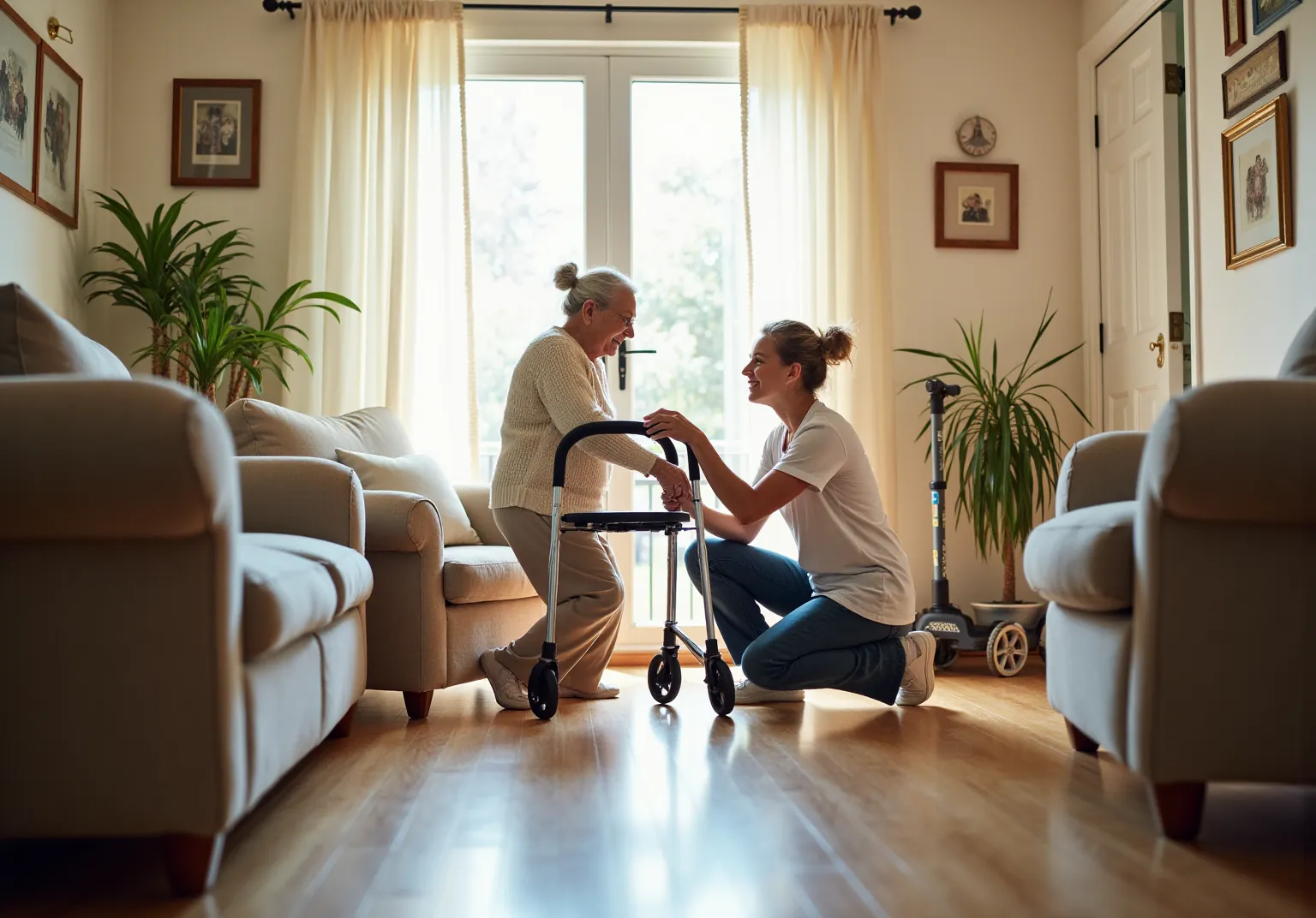
For families in our service areas
For families in our service areas, this guide explains caregiver support and how non-medical in-home caregiving can support care planning in East Idaho, Treasure Valley & Magic Valley, Northern Wasatch, North Central West Virginia & Southwestern Pennsylvania, and Northeast Ohio.
Understanding Elderly Mobility Aids
Elderly individuals often encounter significant mobility challenges that can hinder their independence and diminish their quality of life. This vulnerability not only increases the risk of accidents but also leads to social isolation. Family caregivers play a vital role in addressing these issues by utilizing various mobility aids that enhance safety and promote autonomy.
However, with a plethora of options available, caregivers may struggle to identify which aids are most effective for their loved ones' unique needs. This article explores ten essential mobility aids designed to empower seniors, ensuring they can navigate their homes and communities with confidence and ease.
Happy to Help Caregiving: Personalized In-Home Support for Mobility Needs
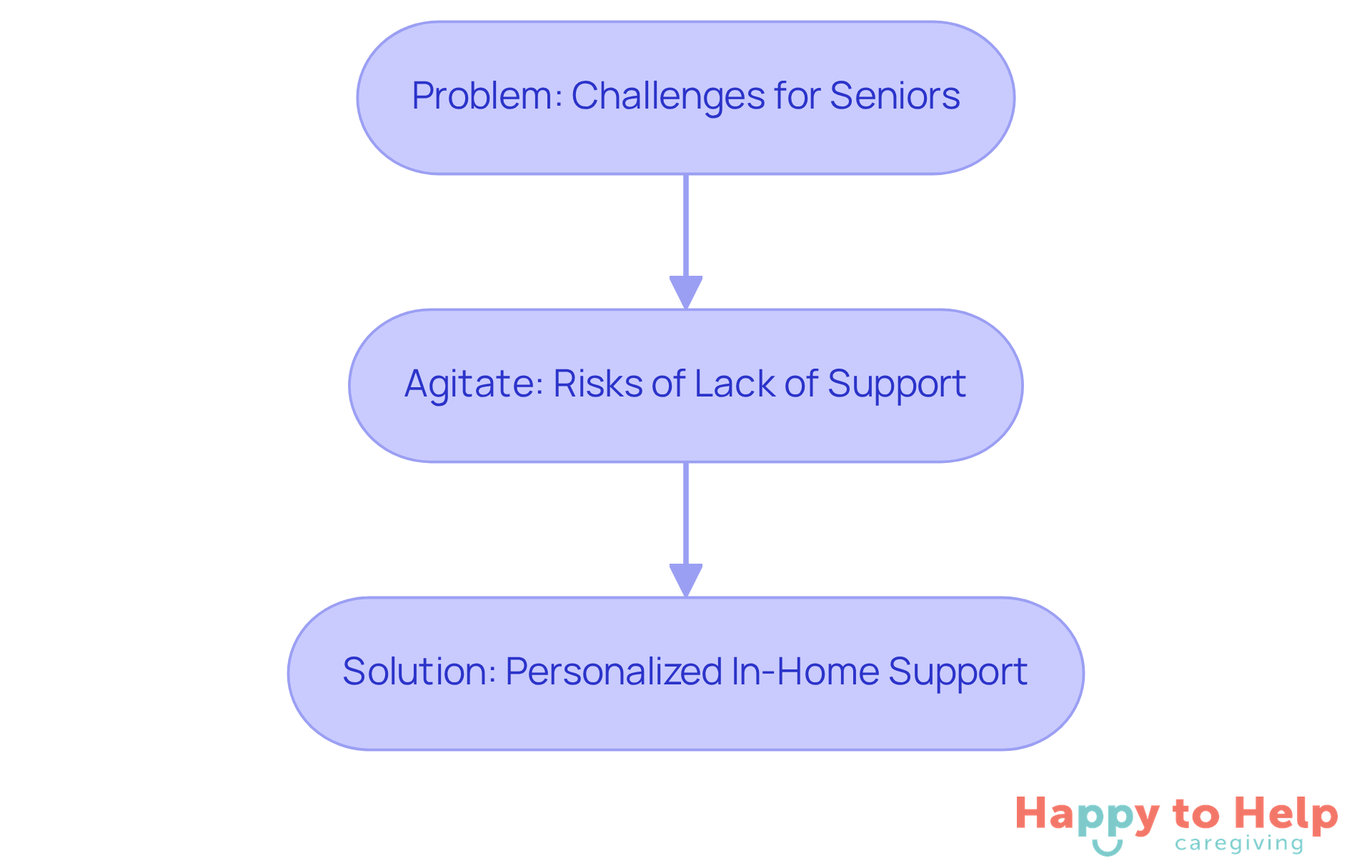
Problem: Many seniors and individuals with movement difficulties face challenges in maintaining their independence at home. This can lead to feelings of insecurity and a diminished quality of life.
Agitate: Without proper support, these individuals may struggle with daily tasks, increasing their risk of accidents and reducing their overall well-being. The lack of tailored assistance can leave them feeling vulnerable and isolated.
Solution: Happy to Help Caregiving addresses these issues by offering customized in-home assistance. Their trained caregivers evaluate individual needs and suggest suitable elderly mobility aids that enhance both independence and safety. By focusing on personalized care, they empower clients to navigate their homes comfortably and confidently, fostering a sense of security and well-being.
Canes: Essential Support for Stability and Balance
For many individuals, maintaining balance and stability can be a significant challenge. This issue is particularly pressing for those who require assistance with elderly mobility aids, as it can lead to falls and injuries. Caregivers play a crucial role in addressing these challenges, ensuring that their loved ones have the support they need through elderly mobility aids.
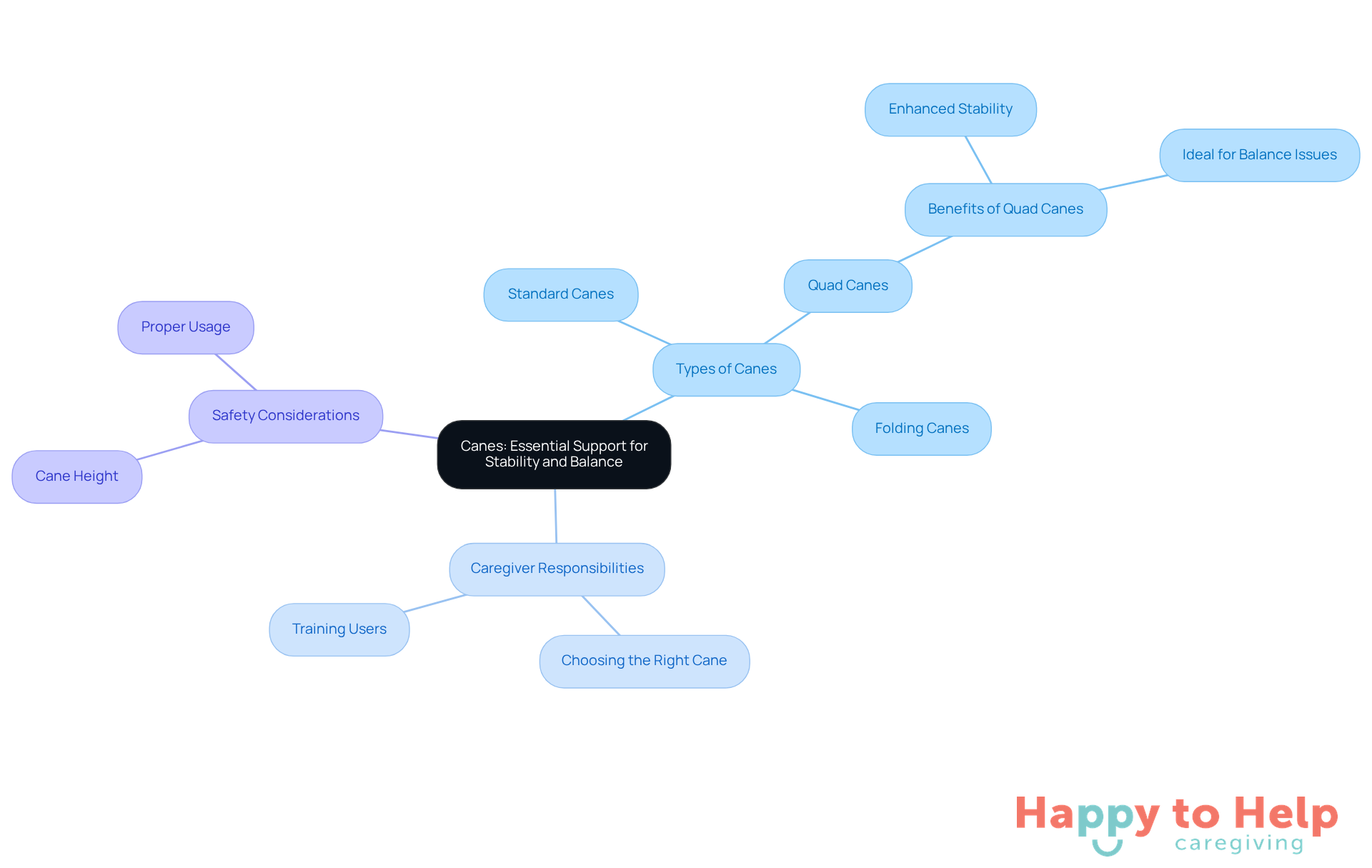
Canes are a vital tool in the category of elderly mobility aids for providing this support. They come in various styles, including:
- Standard canes
- Quad canes
- Folding canes
Quad canes, classified as elderly mobility aids with their four-pronged base, offer enhanced stability, making them ideal for individuals with significant balance issues. Caregivers should be aware of the different options for elderly mobility aids available to choose the best fit for their needs.
To maximize safety, it’s essential that the cane is the appropriate height for the user. Additionally, caregivers should ensure that individuals are trained in the proper use of the cane. This training can significantly reduce the risk of accidents and improve the overall effectiveness of the cane. By taking these steps, caregivers can provide essential support and enhance the safety and independence of those they care for with the help of elderly mobility aids.
Walkers: Sturdy Frames for Enhanced Mobility and Safety
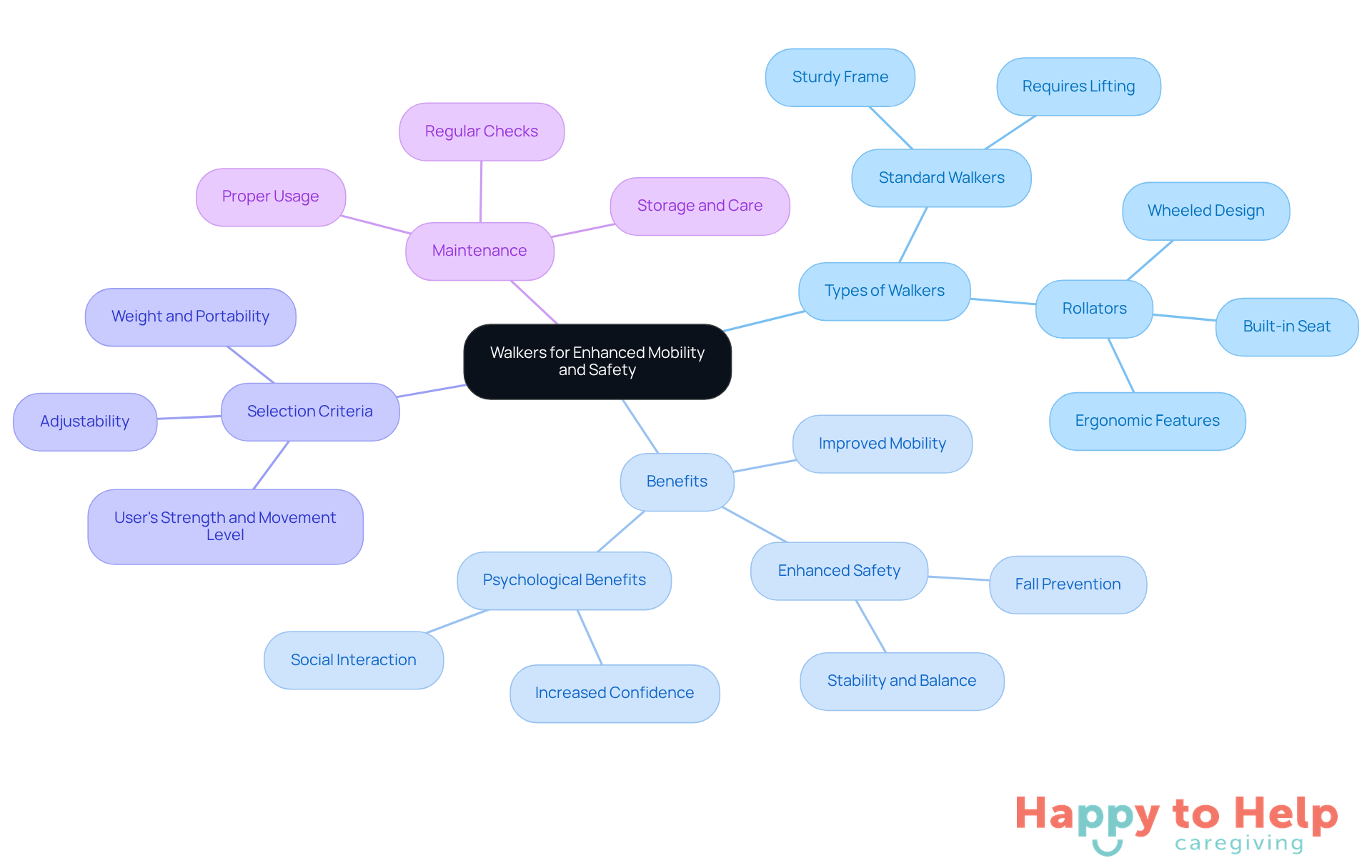
Walkers are essential support devices that provide more assistance than canes, featuring a sturdy frame that allows individuals to lean on them while walking. However, caregivers often face the challenge of selecting the right elderly mobility aids for seniors, which can significantly impact their mobility and independence.
The implications of this choice are profound. Without the right walker, seniors may struggle with balance and movement, leading to decreased confidence and increased risk of falls. This is where understanding the different types of walkers becomes crucial. Standard walkers and rolling walkers, commonly known as rollators, each serve unique purposes. Rollators, in particular, are beneficial as they often come equipped with wheels for easier mobility and a built-in seat, allowing individuals to rest when necessary. This feature is especially advantageous for seniors who may need regular breaks during outings, enhancing their overall movement experience.
To address this issue, caregivers should thoroughly evaluate the user's strength and movement level to choose the most appropriate walker. Occupational therapists frequently recommend rollators for their ability to enhance balance and movement. Selecting elderly mobility aids that meet personal requirements is vital; the right walker not only improves safety by providing reliable support but also promotes independence, enabling older adults to engage in daily activities with confidence.
Regular maintenance of these elderly mobility aids is essential to ensure their longevity and safety, as emphasized by healthcare professionals. With options ranging from lightweight models like the Rollz Flex to those with added features such as storage compartments, there is a walker to meet every elderly individual's unique needs. Furthermore, using rollators can boost self-esteem and dignity, positively impacting the overall well-being of seniors.
Wheelchairs: Key to Navigating Life with Ease
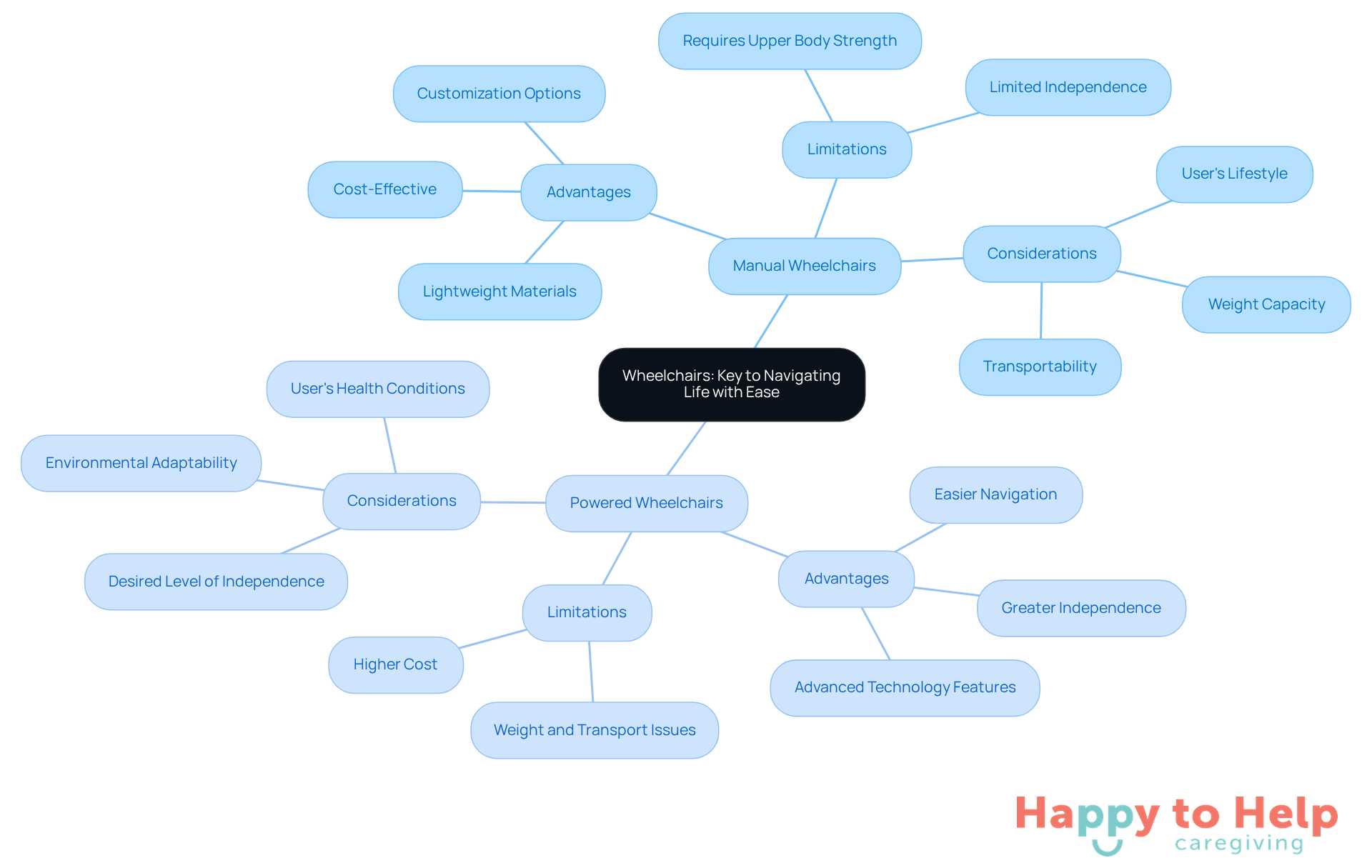
Wheelchairs are essential for individuals with limited mobility, but caregivers often face challenges in selecting the right type. The primary options are manual and powered wheelchairs, each with distinct advantages and limitations. Manual wheelchairs require upper body strength to propel, making them suitable for some users but not all. On the other hand, powered wheelchairs offer greater independence, particularly for those with limited upper body strength, allowing for easier navigation in various environments.
When choosing a wheelchair, caregivers must consider several factors, including:
- The individual's lifestyle
- Weight capacity
- Transportability
Recent advancements in wheelchair technology have significantly improved both manual and powered options. For example, lightweight materials like magnesium and aluminum have reduced the weight of manual wheelchairs to under 20 pounds, making them easier to transport and handle.
Looking ahead, powered wheelchairs are set to feature even more sophisticated technology by 2025, such as AI-powered navigation and voice control. These innovations not only enhance mobility for older adults but also serve as elderly mobility aids that foster a sense of independence, enabling them to engage more fully in their communities. The rising interest in 'smart manual wheelchair features' highlights the demand for technology integration in mobility aids.
Mobility specialists stress the importance of selecting the right wheelchair based on individual needs. Alicia Koontz from the Human Engineering Research Laboratories points out that many older adults struggle with their wheelchairs, underscoring the need for elderly mobility aids as tailored solutions. Research shows that older adults using elderly mobility aids like powered wheelchairs report higher independence levels compared to those relying on manual options. This is especially vital for seniors with physical limitations, as elderly mobility aids, such as powered wheelchairs, can greatly enhance their quality of life.
Ultimately, the decision between manual and powered wheelchairs should be guided by the user's health conditions, lifestyle preferences, and desired level of independence. By understanding these differences, caregivers can make informed choices that best support their loved ones' mobility and overall well-being.
Mobility Scooters: Freedom to Explore Beyond the Home
Elderly mobility aids can help address the significant challenges posed by mobility limitations for older adults, often hindering their independence and community engagement. This issue can lead to feelings of isolation and decreased quality of life. Caregivers play a crucial role in addressing these challenges by considering elderly mobility aids, like mobility scooters, as a viable solution.
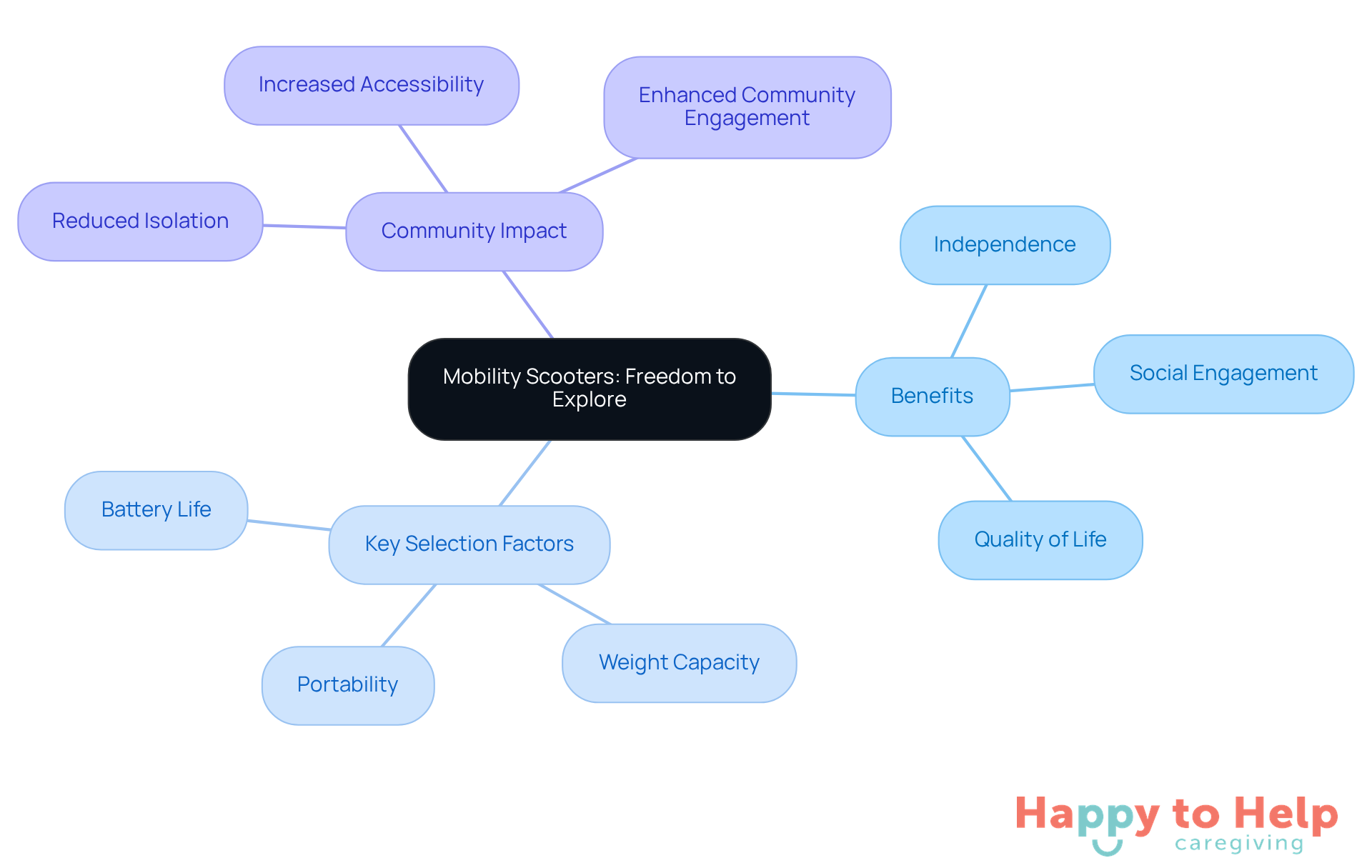
Mobility scooters serve as important elderly mobility aids for older adults who wish to maintain their independence while engaging with their communities. These user-friendly devices allow seniors to shop, visit friends, or participate in outdoor activities with ease. When selecting a scooter, caregivers should prioritize several key factors:
- Battery life: Determines how far the scooter can travel on a single charge.
- Weight capacity: Ensures the scooter can safely support the user.
- Portability: Affects how easily the scooter can be transported or stored.
Experts in elderly care stress that preserving movement is essential for older adults' overall well-being, and this can be supported by the use of elderly mobility aids. As one expert observed, 'Elderly mobility aids, such as mobility scooters, enable older adults to regain their freedom, allowing them to engage in social activities and sustain connections with their communities.' This independence not only enhances their quality of life but also fosters a sense of belonging and engagement in society.
The advantages of scooter usage extend beyond individual users; they also positively influence community dynamics. By enabling easier access to local stores, parks, and community events, scooters assist seniors in remaining engaged members of their neighborhoods, diminishing feelings of isolation and loneliness. As the global population ages, the role of scooters in promoting independence and community engagement will only continue to grow.
Rollators: Mobility Aids with Built-in Resting Options
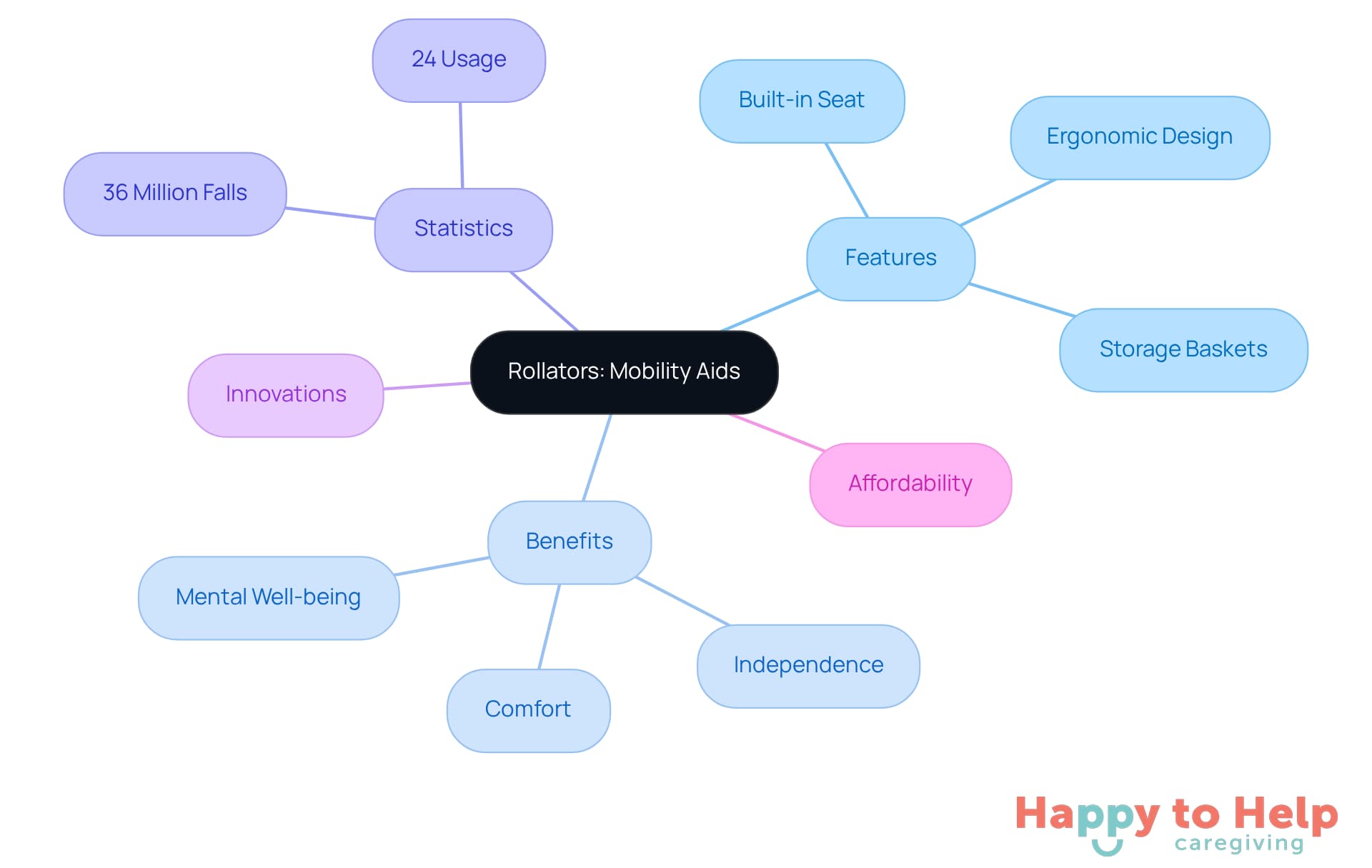
Rollators serve as advanced elderly mobility aids, equipped with wheels and a built-in seat, allowing individuals to rest whenever necessary. This feature is especially beneficial for older adults who may tire during walks, as it serves as one of the elderly mobility aids that enable them to maintain independence without overexertion. Many modern rollators also include storage baskets for personal items, enhancing their practicality for daily use.
Caregivers should prioritize the user's comfort when selecting a rollator and ensure the device is appropriately sized. A well-adjusted rollator, which is one of the elderly mobility aids, can significantly enhance movement and confidence, empowering older adults to engage more fully in everyday activities. Rehabilitation specialists emphasize that rollators not only improve physical mobility but also support mental well-being by encouraging social interaction and outdoor activities.
Statistics reveal that 24% of U.S. adults aged 65 and older reported using elderly mobility aids in the last month, highlighting their prevalence among older individuals. Furthermore, over 36 million older adults experience falls each year, underscoring the critical role that elderly mobility aids, such as rollators, play in fall prevention. The latest models feature ergonomic designs, adjustable handle heights, and secure braking systems, making them safer and easier to use. Baeho Joo notes that professional walking aid prescriptions improve gait parameters, particularly for those requiring a 4-wheel walker, reinforcing the effectiveness of these devices.
These innovations reflect a cultural shift towards empowering older adults to lead active lifestyles by utilizing elderly mobility aids, reducing the risk of falls and promoting overall health. Elderly mobility aids, such as the right rollator, enable elderly individuals to enjoy greater freedom and an improved quality of life. The typical cost of a basic rollator is approximately $19.95 USD, making it an attainable choice for family caregivers seeking movement solutions.
Stairlifts: Safe Access Solutions for Multi-Level Living
Stairlifts are essential for seniors living in multi-level homes, providing a safe and convenient way to access different floors. The problem is clear: many older adults face mobility challenges, making the use of elderly mobility aids essential to prevent serious injuries from falls. In fact, about 36 million older adults fall each year, making it crucial to address this issue.
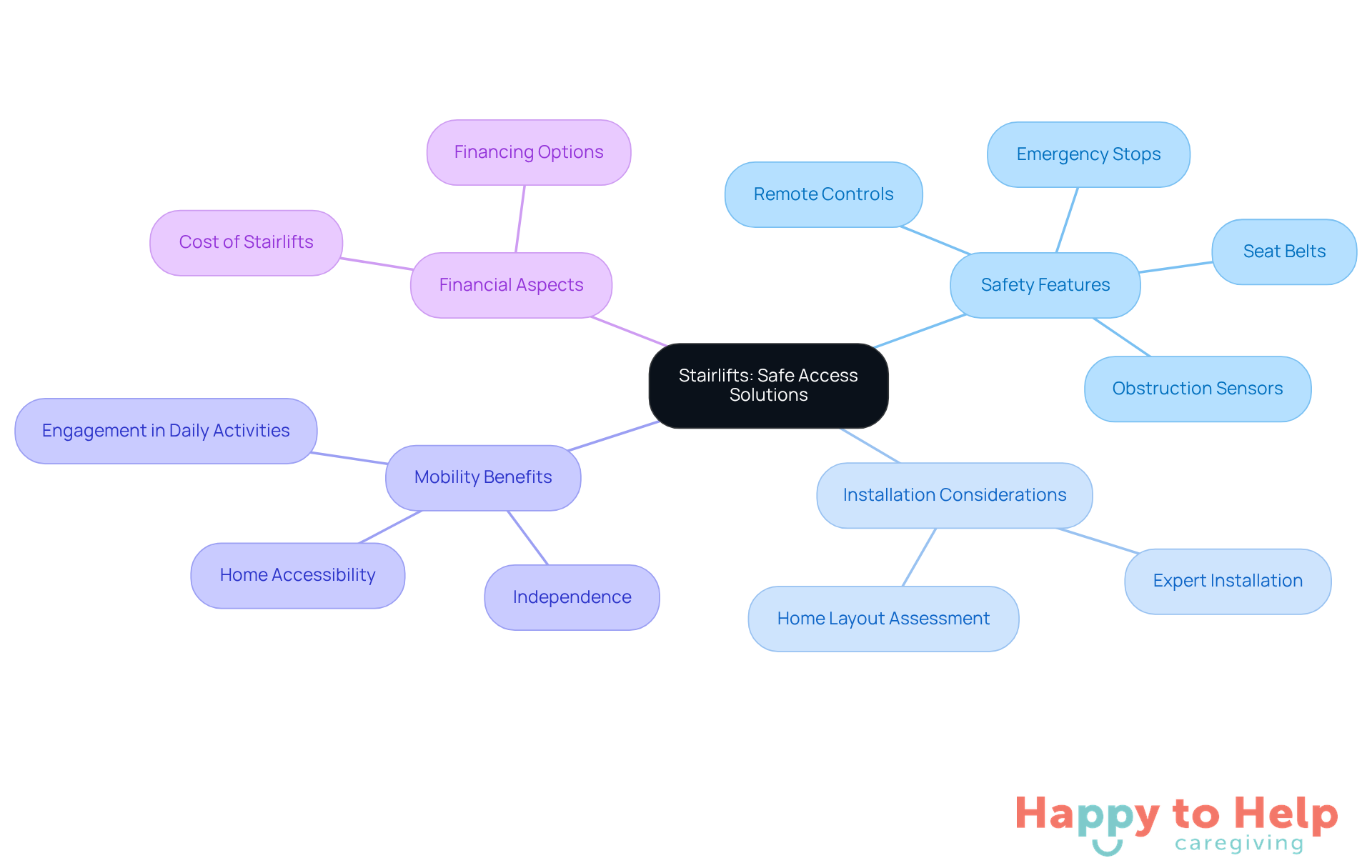
Modern stairlifts are designed specifically for individuals with limited movement. They can be installed on both straight and curved staircases, ensuring they fit various home layouts. Safety features like seat belts, obstruction sensors, emergency stop buttons, and remote controls significantly reduce the risk of accidents, offering peace of mind to users and their families.
When considering a stairlift, caregivers should evaluate the home’s layout and the specific mobility needs of their loved ones. This assessment helps determine whether a straight or curved stairlift is the best fit. Expert installation is vital for safe and efficient operation, and regular maintenance checks - recommended at least once a year - are necessary to ensure ongoing safety and functionality.
The advantages of elderly mobility aids like stairlifts go beyond mobility; they enhance overall home accessibility, allowing seniors to maintain their independence and dignity in familiar surroundings. By facilitating easy movement between floors, stairlifts create a safer home environment, enabling older adults to engage more fully in daily routines and social activities. As Kieran Harris notes, transitioning to assistive technology is key to aging in place, with stairlifts playing a central role in this process.
Caregivers should also consider the financial aspects, as many companies offer financing options for stairlift purchases. By addressing both the practical and financial considerations, caregivers can make informed decisions that significantly improve the quality of life for their loved ones.
Grab Bars: Essential Safety Features for Home Environments
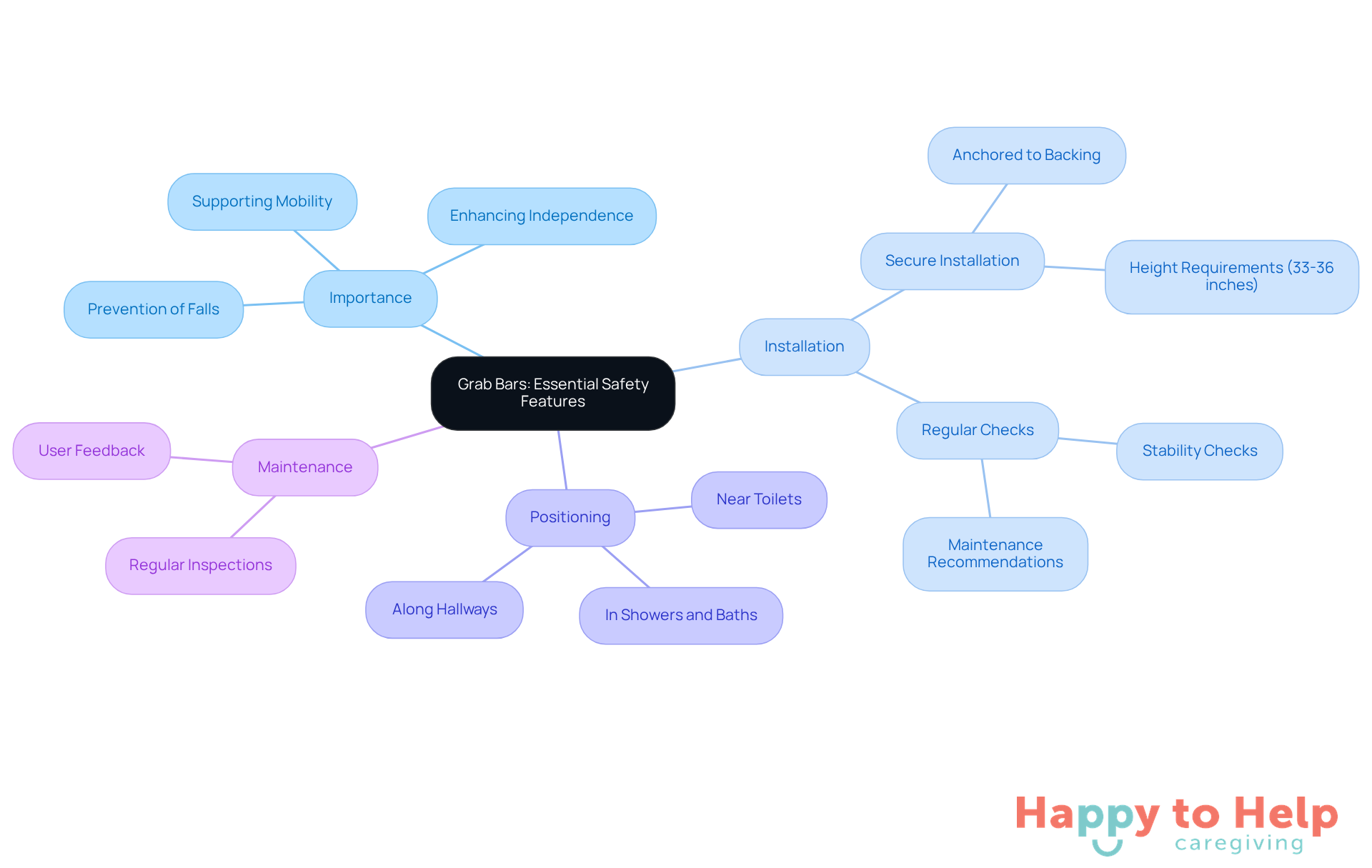
Falls in the home, especially in bathrooms, pose a significant risk to safety. Grab bars are essential safety features that provide the necessary support and stability to help prevent these accidents. Without proper support, individuals may struggle to maintain their balance, leading to potentially serious injuries.
To mitigate this risk, caregivers should ensure that grab bars are securely installed near toilets, in showers, and along hallways. It's crucial to position them at appropriate heights for the user, as this can greatly enhance their effectiveness. Regular checks for stability are also recommended to maintain safety and ensure that the grab bars continue to provide reliable support.
By taking these proactive steps, caregivers can create a safer environment for those they assist, significantly reducing the likelihood of falls.
Shower Chairs: Safe Bathing Solutions for Seniors
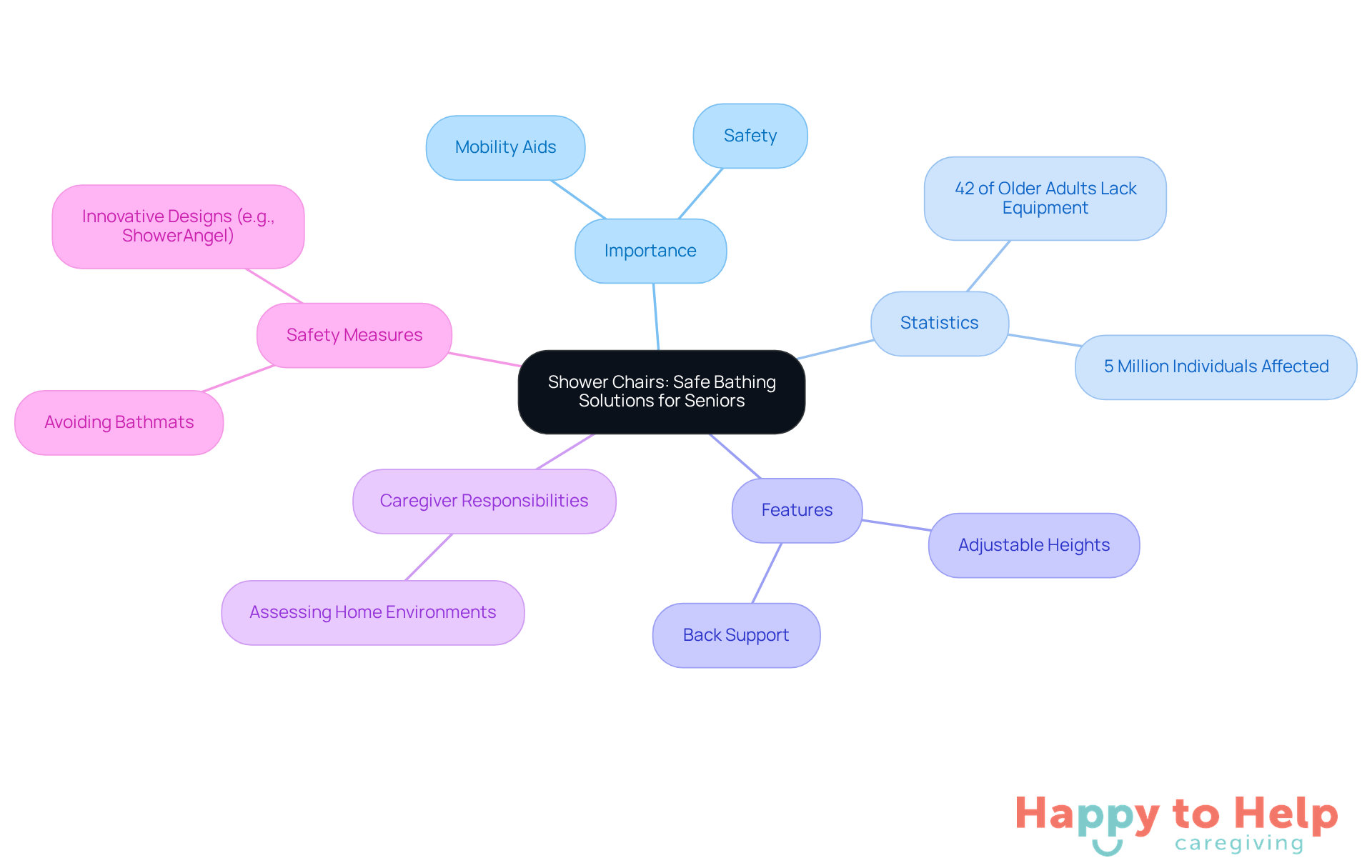
Shower chairs are essential elderly mobility aids that ensure the safety of seniors during bathing. The risk of slips and falls is significant, especially for older adults, which makes the use of elderly mobility aids, such as stable seating options, crucial. Alarmingly, 42% of older adults aged 65 and over who need elderly mobility aids for bathing lack them, which translates to about 5 million individuals in the US. This highlights a pressing problem that caregivers must address.
To mitigate these risks, caregivers should prioritize selecting shower chairs as elderly mobility aids that enhance comfort and stability. Features such as back support and adjustable heights cater to individual needs, ensuring that the chair is securely positioned within the shower area. Occupational therapists stress the importance of choosing a chair that aligns with the user's physical capabilities, as proper selection of elderly mobility aids can greatly enhance independence and reduce the likelihood of accidents.
Moreover, caregivers should systematically assess the home environment of older adults to ensure that the right elderly mobility aids are chosen. By integrating safety measures - like avoiding bathmats or rugs in the bathroom - families can create a more secure bathing environment. Innovative designs, such as the ShowerAngel with its no-fall base and ergonomic features, further improve the bathing experience for older adults. These steps not only enhance safety but also significantly improve the quality of life for seniors who utilize elderly mobility aids.
Transfer Benches: Enhancing Bathing Safety and Accessibility
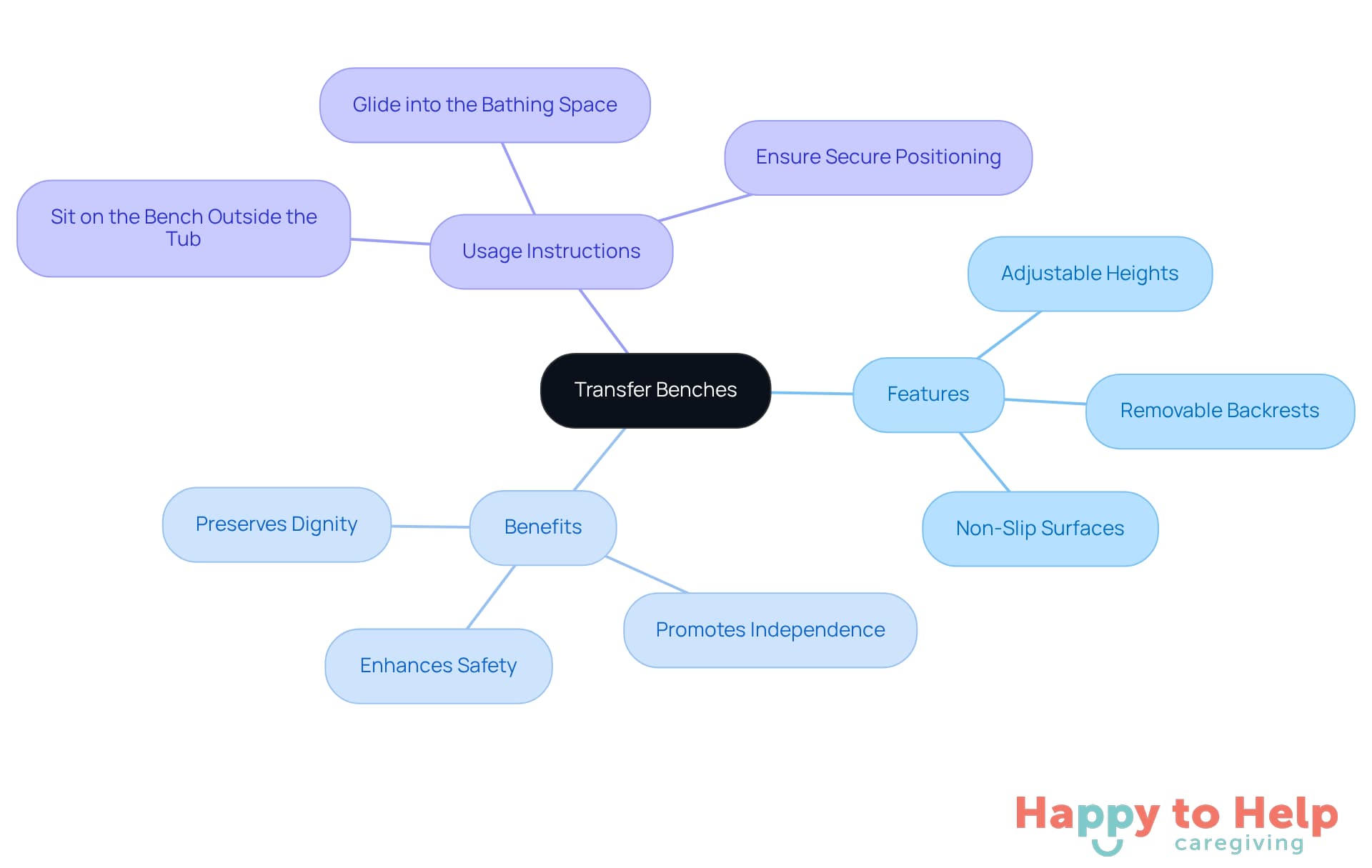
Elderly mobility aids, such as transfer benches, are essential tools that help elderly individuals safely enter and exit the bathtub, significantly improving bathing accessibility. The problem is clear: many seniors struggle with this daily task, which can lead to dangerous slips and falls. In fact, studies show that over half of falls in the bathroom among community-living older adults are linked to transfers. This makes the presence of a secure transfer bench a vital safety measure.
These innovative devices provide a stable surface that connects the tub and the bathroom floor, allowing individuals to sit comfortably while transferring. Recent advancements in transfer bench designs include:
- Adjustable heights
- Removable backrests
- Non-slip surfaces
By facilitating a smoother transition in and out of the bathtub, transfer benches promote independence and dignity during personal care routines.
To maximize the advantages of a transfer bench, caregivers should ensure it is securely positioned and that the user feels comfortable using it. The correct application involves sitting on the bench outside the tub and gliding into the bathing space. This approach reduces the need for lifting and decreases stress on both the helper and the person being assisted. Geriatric care specialists emphasize that elderly mobility aids not only enhance safety but also preserve the dignity and independence of seniors, enabling them to maintain their personal hygiene with confidence.
In summary, transfer benches are invaluable for family members looking to improve the bathing experience for their loved ones. By understanding their features and benefits, caregivers can make informed decisions that enhance safety and comfort during bathing.
Moving Forward with Elderly Mobility Aids
Elderly mobility aids present a significant challenge for caregivers, as they are essential for enhancing the quality of life for seniors. Without proper support, caregivers may struggle to help their loved ones maintain independence and safety, which can lead to feelings of frustration and helplessness.
The implications of inadequate mobility support are profound. Seniors may face increased risks of falls and reduced engagement in daily activities, which can diminish their dignity and overall well-being. This situation not only affects the seniors but also places a heavy burden on family caregivers, who may feel overwhelmed by the responsibility of ensuring their loved ones' safety and comfort.
To address these challenges, caregivers must understand the various types of mobility aids available, such as:
- Canes
- Walkers
- Wheelchairs
- Stairlifts
Each aid offers unique benefits tailored to individual needs, helping to mitigate risks associated with mobility challenges. By selecting the right aids, caregivers can empower their loved ones to navigate their homes safely and engage meaningfully with their communities.
Staying informed about the latest trends and innovations in mobility aids is crucial for caregivers. This knowledge enables them to make informed decisions that enhance the independence and quality of life for seniors. Investing in appropriate mobility aids not only enriches the seniors' experiences but also fosters a sense of connection to the world around them.
https://iframe.tely.ai/cta/eyJhcnRpY2xlX2lkIjogIjY5MjdhNWNkMjI0NDc2YzA3YjhmODllMiIsICJjb21wYW55X2lkIjogIjY4ZWU1ZGNhNzMxNzYyNTU3ZjNjOTVjMSIsICJpbmRleCI6IG51bGwsICJ0eXBlIjogImFydGljbGUifQ==Frequently Asked Questions
What challenges do seniors and individuals with movement difficulties face at home?
Seniors and individuals with movement difficulties often struggle to maintain their independence, which can lead to feelings of insecurity, a diminished quality of life, and an increased risk of accidents.
How does Happy to Help Caregiving support individuals with mobility needs?
Happy to Help Caregiving provides customized in-home assistance by evaluating individual needs and suggesting suitable elderly mobility aids. Their trained caregivers focus on personalized care to empower clients, helping them navigate their homes comfortably and confidently.
What types of canes are available as elderly mobility aids?
The types of canes available include standard canes, quad canes, and folding canes. Quad canes offer enhanced stability with their four-pronged base, making them ideal for individuals with significant balance issues.
Why is proper cane height and training important?
Ensuring that the cane is the appropriate height for the user helps maximize safety. Additionally, training individuals in the proper use of the cane can significantly reduce the risk of accidents and improve its overall effectiveness.
What are the differences between standard walkers and rollators?
Standard walkers provide basic support, while rollators have a sturdy frame with wheels, allowing for easier mobility and often include a built-in seat for resting. Rollators are particularly beneficial for seniors who may need regular breaks during outings.
How can caregivers select the right walker for seniors?
Caregivers should evaluate the user's strength and movement level to choose the most appropriate walker. Understanding the unique purposes of standard walkers and rollators is crucial for enhancing the mobility and independence of seniors.
What maintenance is required for elderly mobility aids?
Regular maintenance of elderly mobility aids, such as walkers and canes, is essential to ensure their longevity and safety. This includes checking for wear and tear and ensuring that all components are functioning properly.
How do elderly mobility aids like rollators impact seniors’ well-being?
Using rollators can boost seniors' self-esteem and dignity, positively impacting their overall well-being by promoting independence and enabling them to engage in daily activities with confidence.
List of Sources
- Happy to Help Caregiving: Personalized In-Home Support for Mobility Needs
- Home Care Industry Trends to Watch in 2025 (https://firstlighthomecare.com/blog/home-care-industry-trends)
- Top healthcare trends of 2026: Aging in place is driving innovation in home-based care and technology (https://definitivehc.com/blog/aging-in-place-driving-innovation)
- 13 Home Care Trends To Watch For in 2024 (And Thoughts From 11 Experts) | CareAcademy (https://careacademy.com/blog/home-care-trends)
- How 3 Top Trends Have Shaped Home-Based Care This Year (https://homehealthcarenews.com/2025/08/how-3-top-trends-have-shaped-home-based-care-this-year)
- High care costs push families toward home solutions (https://hmenews.com/article/high-care-costs-push-families-toward-home-solutions)
- Canes: Essential Support for Stability and Balance
- Why You Should Look Into a Quad Cane Over a Single-Point Cane Now (https://warriorservicecompany.org/why-you-should-look-into-a-quad-cane-over-a-single-point-cane-now)
- Technology to Prevent Falls for Seniors (https://health.usnews.com/senior-care/articles/technology-to-prevent-falls-for-seniors)
- Are Quad Canes The Right Choice? Understanding The Benefits (https://trualta.com/resources/blog/are-quad-canes-the-right-choice-understanding-the-benefits)
- Integrating Smart Technology in Walking Canes for Enhanced Mobility & Safety (https://walking-canes.net/blogs/news/integrating-smart-technology-into-walking-canes-enhancing-mobility-and-personal-safety?srsltid=AfmBOoqLv7uAkjqmQD8ruLxWGYIgmhYTOnlPiulnsMLeKiSvzxoYTkvT)
- Smart Walking Canes 2025: Health Monitoring & Mobility Support (https://walking-canes.net/blogs/news/smart-walking-canes-with-health-monitoring-enhancing-wellness-and-mobility-support?srsltid=AfmBOool7q9ltU0Q7CrHDFJFXsWaUPV5DoRAZDKu16kYO0gMFoyyUPvU)
- Walkers: Sturdy Frames for Enhanced Mobility and Safety
- News - Why the Elderly Need to Use Rollators (https://zuoweicare.com/news/why-the-elderly-need-to-use-rollators)
- Safety through mobility: How rollators can reduce the risk of falling (https://drivedevilbiss.com/en/news-artikel/2025/fall_prevention)
- The Benefits of Rollator Walkers for Seniors (https://ezwalkerrollators.com/blog/post/the-benefits-of-rollator-walkers-for-seniors-maintaining-independence-and-safety?srsltid=AfmBOopxCnQKNbOlrVgpOTlyVVd5AqgHnc62V9fH95uvKe9clMneITXh)
- Walkers for Seniors with Seat | Modern Walkers (https://rollz.com/walker-for-seniors)
- From Basic to Advanced: Exploring the World of Walkers and Rollators - Wheelchair & Mobility Scooters Guide (https://1800wheelchair.com/news/from-basic-to-advanced-exploring-the-world-of-walkers-and-rollators?srsltid=AfmBOopuDAw-8x5mO20RuJSebJoIxOyltQ6FQuEXZF0XoedjjxzNqOcl)
- Wheelchairs: Key to Navigating Life with Ease
- Advancing Mobility: The Cutting-Edge Innovations in Electric Wheelchair Technology (https://medigy.com/news/blogs/advancing-mobility-the-cutting-edge-innovations-in-electric-wheelchair-technology)
- Understanding Wheelchair Use in Older Adults From the National Health and Aging Trends Study (https://sciencedirect.com/science/article/pii/S0003999323005300)
- Latest News on Innovations in Manual Wheelchair Technology (https://tousdawheelchair.com/latest-news-on-innovations-in-manual-wheelchair-technology)
- Demographic Profile of Older Adults Using Wheeled Mobility Devices - PMC (https://pmc.ncbi.nlm.nih.gov/articles/PMC3124894)
- Mobility Scooters: Freedom to Explore Beyond the Home
- New 2025 Summer Guide Empowers Seniors to Stay Independent as Mobility Equipment Innovation Surges Nationwide (https://cbs42.com/business/press-releases/ein-presswire/827097148/new-2025-summer-guide-empowers-seniors-to-stay-independent-as-mobility-equipment-innovation-surges-nationwide)
- The 2025 Senior Mobility Scooter Market: Intelligent and Portable Innovations Redefining Mobility for Older Adults - SUPERPI (https://superpirobot.com/news/industry-knowledge/the-2025-senior-mobility-scooter-market-intelligent-and-portable-innovations-redefining-mobility-for-older-adults)
- Mobility Scooters: A Game-Changer for Independent Living - INTCO Medical (https://intcowheelchair.com/news/mobility-scooters-a-game-changer-for-independent-living)
- Electric Mobility Scooters: Empowering Seniors in Age-Friendly Cities- (https://intcomedical.com/news/info/How-Electric-Mobility-Scooters-Transform-Urban-Travel-for-Seniors.html)
- The impact of mobility scooters on their users. Does their usage help or hinder?: A state of the art review - PMC (https://pmc.ncbi.nlm.nih.gov/articles/PMC4510203)
- Rollators: Mobility Aids with Built-in Resting Options
- News - Why the Elderly Need to Use Rollators (https://zuoweicare.com/news/why-the-elderly-need-to-use-rollators)
- Breaking News: Fall 2025 Brings a New Era of Lightweight Walkers and Rollators for Seniors (https://cbs42.com/business/press-releases/ein-presswire/850373373/breaking-news-fall-2025-brings-a-new-era-of-lightweight-walkers-and-rollators-for-seniors)
- Rollator Walkers: Innovative Rollator Features & Designs (https://senior.com/blogs/mobility-aids/rollator-walker-innovations-exploring-the-latest-features-and-designs-revolutionizing-mobility)
- An observational study of the impact of professional walking aid prescription on gait parameters for individuals with suspected balance impairments (https://sciencedirect.com/science/article/pii/S2405844024136808)
- Mobility Device Use Among Older Adults and Incidence of Falls and Worry About Falling: Findings From the 2011–2012 National Health and Aging Trends Study - PMC (https://pmc.ncbi.nlm.nih.gov/articles/PMC4439269)
- Stairlifts: Safe Access Solutions for Multi-Level Living
- New Outdoor Stair Lift from Leaf Home Brings Safe, Confident Access to Outdoor Spaces (https://prnewswire.com/news-releases/new-outdoor-stair-lift-from-leaf-home-brings-safe-confident-access-to-outdoor-spaces-302529520.html)
- The Life-Changing Benefits of Stairlifts for Seniors and Those with Mobility Challenges - Denver, CO | Mobility City (https://denverco.mobilitycity.com/the-life-changing-benefits-of-stairlifts-for-seniors-and-those-with-mobility-challenges)
- How Stairlifts Improve Home Accessibility – Harmar (https://harmar.com/blog/how-stairlifts-improve-home-accessibility)
- Aging In Place: How Stairlifts Improves Senior Living (https://seniorstairlifts.co.uk/news/senior-living-aging-in-place)
- Stair Lifts: Your Solution to Multi-Level Living - Wheelchair & Mobility Scooters Guide (https://1800wheelchair.com/news/stair-lifts-your-solution-to-multi-level-living?srsltid=AfmBOorRsqqInNkj3JIx6sAom-wicLSDkRc0MehVls1zRcNKJ5ZNr_dw)
- Grab Bars: Essential Safety Features for Home Environments
- NFPA 101 Code Update: Grab Bars Now Required in All Showers (https://base-4.com/nfpa-101-grab-bar-requirements-showers)
- The Importance of Grab Bars for Home Safety and Mobility (https://101mobility.com/blog/the-importance-of-grab-bars-for-home-safety-and)
- How Grab Bars Improve Safety For Seniors (https://trualta.com/resources/blog/how-grab-bars-improve-safety-for-seniors)
- Grab Bars for Seniors | Safe Bathroom & Fall Prevention Solutions (https://agesafeamerica.com/home-safety-hub/blog/grab-bars-new-seat-belts)
- Efficacy of Installation of Temporary Bathing Transfer Aids by Older Adults - PMC (https://pmc.ncbi.nlm.nih.gov/articles/PMC10938608)
- Shower Chairs: Safe Bathing Solutions for Seniors
- Innovative Senior Living Products, Inc. Launching New Shower and Bath Chair Innovation Thursday April 17th (https://wric.com/business/press-releases/ein-presswire/801303015/innovative-senior-living-products-inc-launching-new-shower-and-bath-chair-innovation-thursday-april-17th)
- 'Stabilize in Showers, Set in Seconds': FULLOT Launches Inovative Shower Chairs to Elevate Bathing Safety & Comfort (https://fox59.com/business/press-releases/ein-presswire/812084085/stabilize-in-showers-set-in-seconds-fullot-launches-inovative-shower-chairs-to-elevate-bathing-safety-comfort)
- Showering and Bathing Risks for Seniors | West Hartford Health (https://westhartfordhealth.com/news/senior-safety/bathing-risks-seniors)
- Unmet Need for Equipment to Help With Bathing and Toileting Among Older US Adults - PMC (https://pmc.ncbi.nlm.nih.gov/articles/PMC7985819)
- Older Adults Receiving Rehabilitation Services Are More Likely to Get Bathing and Toileting Equipment Installed - PMC (https://pmc.ncbi.nlm.nih.gov/articles/PMC9969985)
- Transfer Benches: Enhancing Bathing Safety and Accessibility
- Shower Transfer Benches for Elderly (https://quickchangewrap.co.uk/blogs/news/shower-transfer-benches-for-elderly?srsltid=AfmBOoqaUnLd1Bci0Mg3FospktoFOkwE0fxipRo3q6KxhkTrE4kgET3y)
- The Importance of Transfer Benches & Shower Chairs for Senior Safety (https://prohealproducts.com/es/blogs/news/transfer-benches-shower-chairs-senior-safety?srsltid=AfmBOopP1mnX1bXaQ7fSl8nZptX1oG13rUF2DRJ0zO6FgAUJBnYk8Z7Z)
- Top Transfer Benches for Safe and Comfortable Bathing in 2025 (https://dohomehealthcare.com/blogs/news/top-transfer-benches-for-safe-and-comfortable-bathing-in-2025)
- Safety and Convenience: Tub Transfer Bench - Oakley (https://oakleyhomeaccess.com/blog/safety-and-convenience-tub-transfer-bench-2)
- Tub Transfer Bench Explained: Caregiver FAQs (https://trualta.com/resources/blog/tub-transfer-bench-explained-caregiver-faqs)