Understanding Factors for Choosing San Antonio
Choosing the right nursing home in San Antonio presents a significant challenge for families, impacting the quality of life for their loved ones. Many caregivers face a daunting array of factors to consider, including:
- Proximity to family
- Quality of care
- Staff qualifications
- Available amenities
This decision can be overwhelming, as it not only affects practical needs but also the emotional and social well-being of residents.
With so many options available, how can families navigate this complex landscape? Understanding the essential considerations can help caregivers make informed choices that enhance their loved ones' lives. In this article, we will explore ten key factors to guide families in selecting a facility that meets both practical and emotional needs.
Happy to Help Caregiving: Personalized In-Home Care Solutions
Caregivers often face the challenge of finding adequate support for seniors and individuals with special needs. Many traditional care facilities may not provide the personalized attention that these individuals require, leading to feelings of insecurity and discomfort in their own homes.
This lack of tailored care can significantly impact the quality of life for clients, making it essential for families to explore better options. Personalized care strategies are crucial, as they align with individual lifestyles and preferences, ensuring that clients receive the support they need to thrive.
Happy to Help Caregiving specializes in providing personalized in-home care solutions that cater to these unique needs. Their services include:
- Companionship care
- Post-hospital recovery assistance
- Respite care
- Palliative support care
By focusing on improving the quality of life for clients, Happy to Help Caregiving guarantees that individuals obtain the necessary support to flourish in their own environments. This customized approach fosters a sense of security and comfort, making it a vital consideration for households evaluating care facility options.
Proximity to Family: Importance of Location in San Antonio Nursing Homes
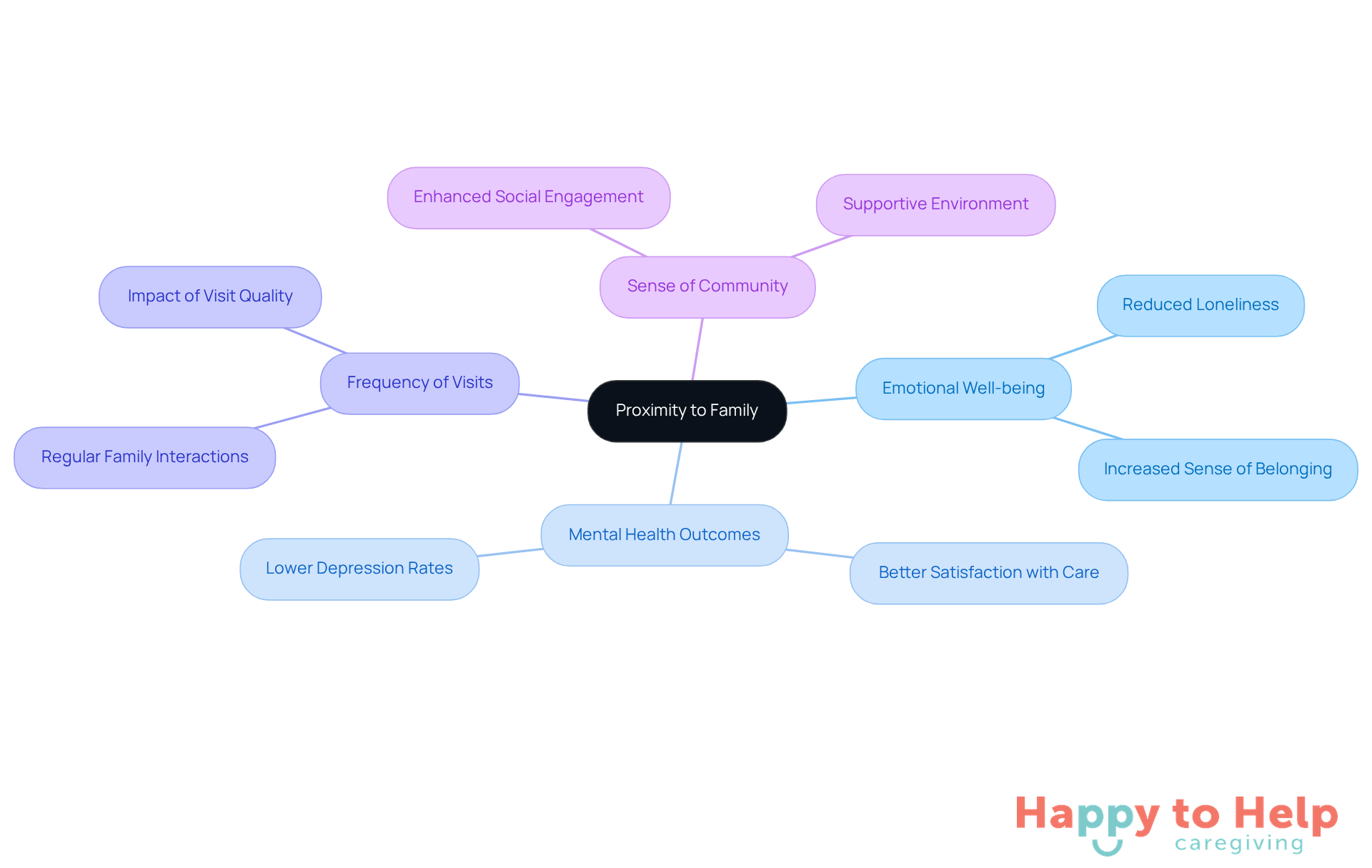
Choosing a nursing home in San Antonio nursing homes presents a significant challenge: the distance from relatives. This factor can greatly impact the emotional well-being of residents. Research shows that individuals who receive regular visits from family members often experience better mental health outcomes and greater satisfaction with their care.
To address this issue, families should carefully consider the proximity of potential care facilities. By selecting San Antonio nursing homes that are close to loved ones, they can facilitate frequent visits, ensuring that their relatives feel supported and connected. This thoughtful approach not only enhances the emotional health of residents but also fosters a sense of community and belonging.
Quality of Care: Evaluating Nursing Home Standards in San Antonio
Finding the right care facility for your loved ones can be a daunting task. Families often struggle with the challenge of ensuring their cherished ones receive the best possible care. This concern is compounded by the need to navigate various standards and regulations that govern care facilities.
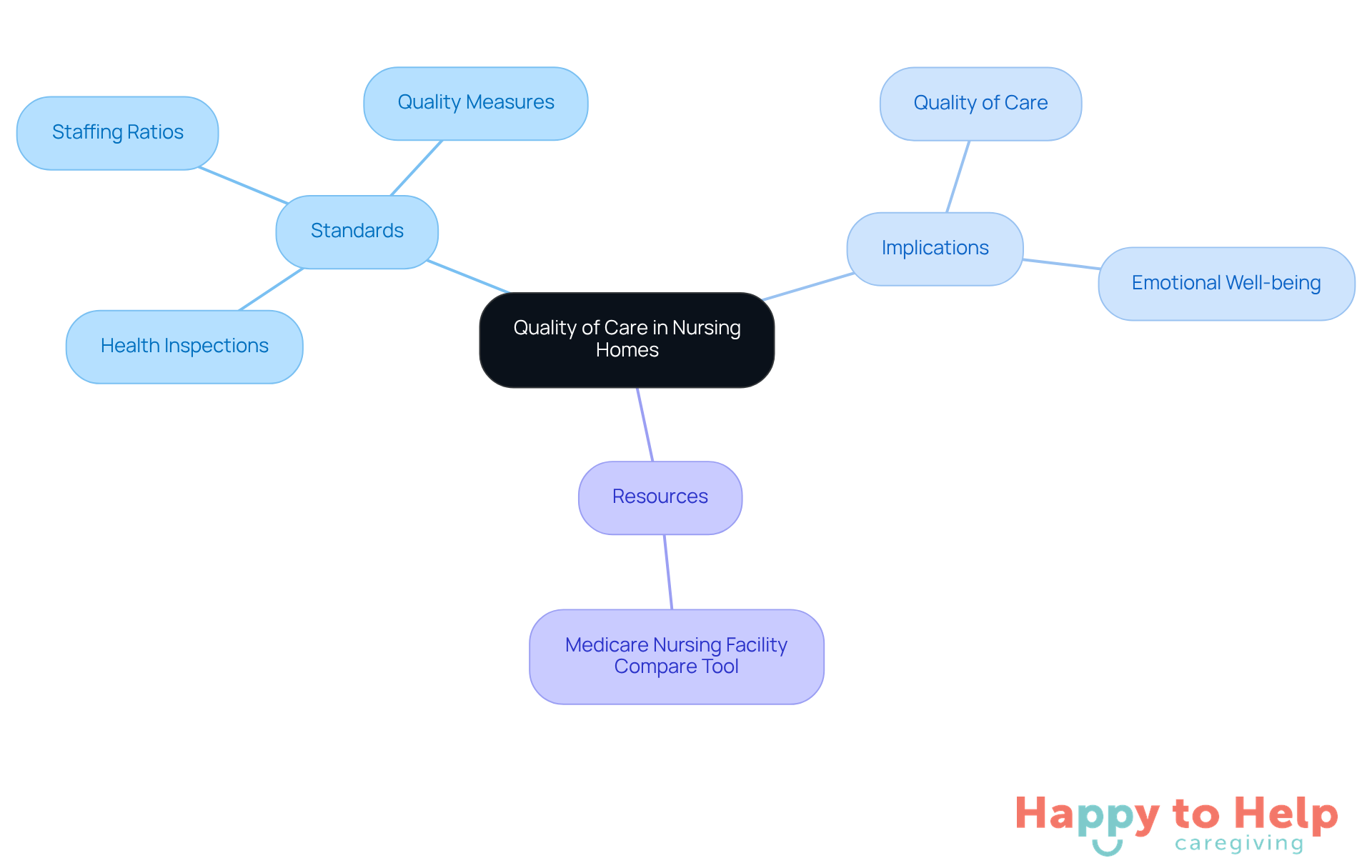
To make informed decisions, families should prioritize facilities that consistently meet or exceed state and federal standards. These standards include:
- Regular health inspections
- Appropriate staffing ratios
- Various quality measures
The implications of choosing a subpar facility can be significant, affecting not only the quality of care but also the emotional well-being of both residents and their families.
One effective solution is to utilize resources like the Medicare Nursing Facility Compare tool. This resource provides valuable ratings based on comprehensive criteria, helping families locate care facilities that prioritize high-quality treatment and resident satisfaction. By leveraging this tool, families can ensure they are making informed choices about their loved ones' care.
Thriving care facilities in San Antonio nursing homes are characterized by their commitment to upholding high care standards. Such dedication not only enhances the quality of life for residents but also fosters a sense of trust and safety among families. As healthcare experts emphasize, the essence of care lies in compassion and commitment. Therefore, it is crucial for families to select establishments that embody these principles.
Staff Qualifications: Assessing Caregiver Expertise in Nursing Homes
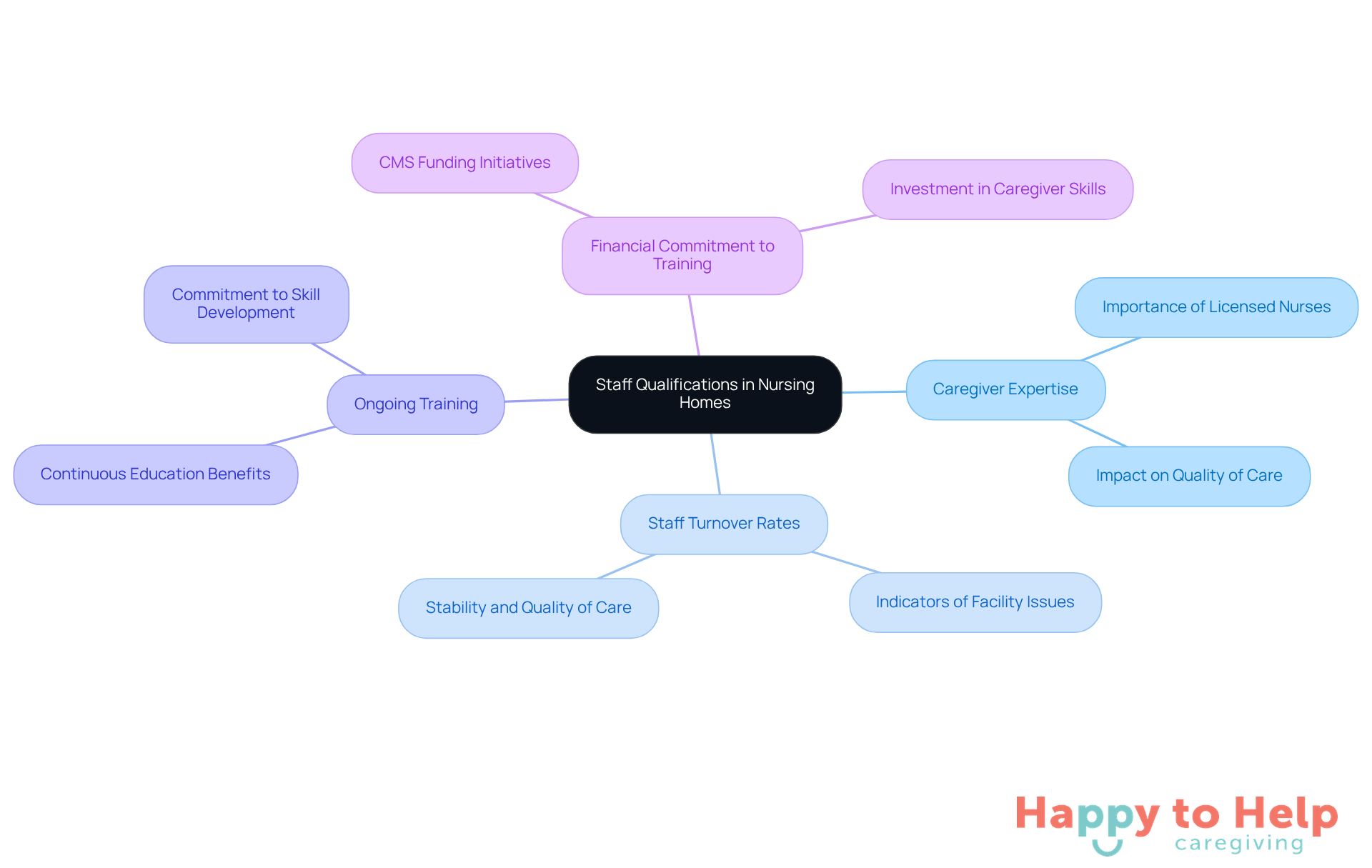
When assessing care facilities, families face a significant challenge: ensuring that the staff is adequately qualified and trained. This issue is crucial because the quality of care directly depends on the expertise of the caregivers. Without licensed nurses and certified healthcare assistants, individuals may not receive the necessary medical attention tailored to their needs.
High staff turnover rates can further complicate matters, often indicating underlying issues within the facility. Families should actively inquire about these rates, as they can reflect the overall stability and quality of care. Additionally, understanding the facility's commitment to ongoing training and development is vital. Continuous education not only enhances caregiver skills but also directly impacts the quality of care provided.
In Texas, existing training criteria for care facility personnel emphasize the importance of skill and empathy in caregiving. This reinforces the idea that effective training leads to better outcomes for residents. For instance, the recent introduction of a $75 million fund by CMS for staff training in care facilities underscores the commitment to improving caregiver skills.
As Tia Walker aptly noted, "Caregiving often calls us to lean into love we didn’t know possible." This highlights the profound impact that well-trained caregivers can have on the lives of those they support. By prioritizing staff qualifications and ongoing training, families can ensure that their loved ones receive the high-quality care they deserve.
Facility Amenities: Key Features to Look for in San Antonio Nursing Homes
Facilities play a crucial role in shaping the overall experience for individuals in care settings. Families often face the challenge of finding environments that truly enhance quality of life. Without comfortable living spaces and engaging activities, residents may feel isolated and dissatisfied.
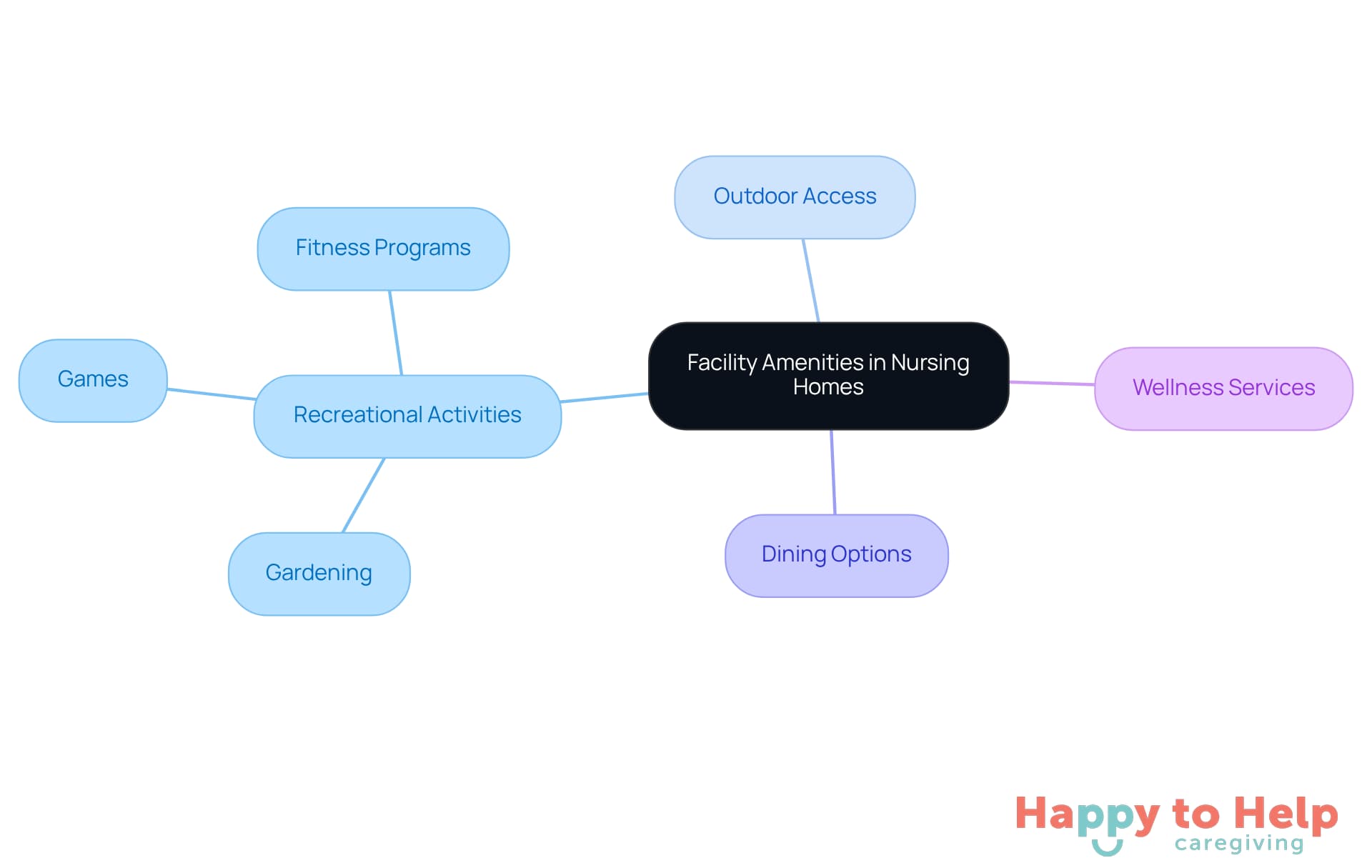
To address this issue, families should prioritize facilities that offer a variety of recreational activities, such as:
- Gardening
- Games
- Fitness programs
Access to outdoor areas is also essential, as these elements significantly contribute to a more fulfilling life. On-site dining options and wellness services further support a holistic approach to care, ensuring that residents' physical and emotional needs are met.
Moreover, facilities that foster social interaction and provide enjoyable activities can lead to improved mental and emotional wellness. Research indicates that participation in recreational activities boosts life satisfaction and reduces symptoms of depression among older adults. Therefore, it’s vital for families to seek San Antonio nursing homes that emphasize these attributes.
According to the National Center for Assisted Living, nearly 80 percent of assisted living residents and their families express satisfaction with the care they receive. This statistic highlights the importance of choosing facilities equipped with strong amenities. By focusing on environments that encourage interaction and enjoyment, families can help ensure their loved ones thrive in a supportive and enriching atmosphere.
Resident Activities: Importance of Social Engagement in Nursing Homes
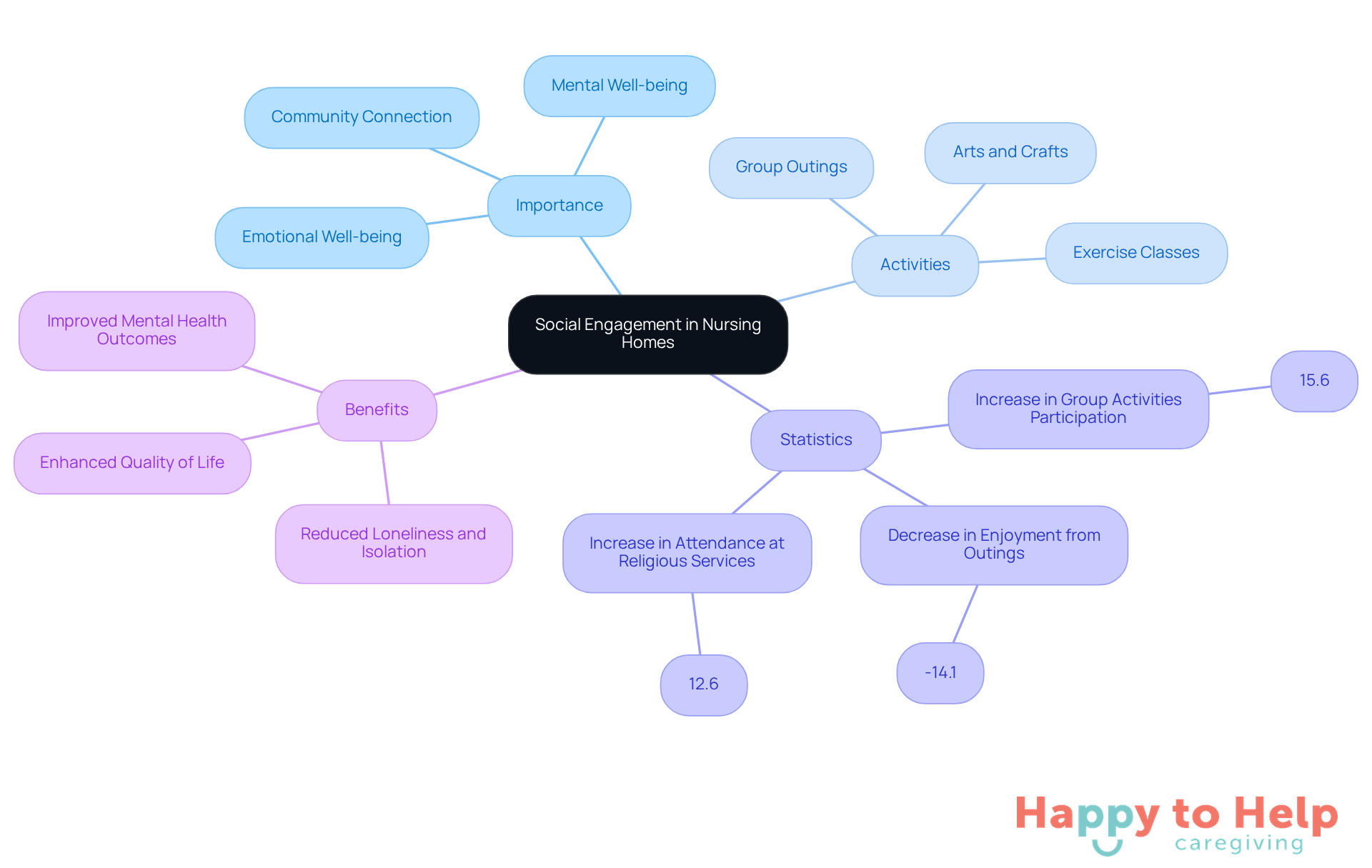
Social engagement is crucial for maintaining the mental and emotional well-being of individuals residing in San Antonio nursing homes. However, many residents face challenges related to loneliness and isolation. Research indicates that organized social opportunities can significantly reduce these feelings in San Antonio nursing homes, with studies showing a 15.6% increase in participation in group activities after individuals move to long-term care communities. Yet, it's concerning that enjoyment from outings decreases by 14.1% post-move, underscoring the need for equitable access to social opportunities.
To address these issues, families should actively explore the variety of activities offered at potential facilities. Options include:
- Group outings
- Arts and crafts
- Exercise classes
These activities can foster a vibrant community environment. Facilities such as San Antonio nursing homes that promote participation in social activities not only enhance quality of life but also lead to improved mental health outcomes. For instance, involvement in religious services rose by 12.6% among residents, highlighting the importance of community ties.
By prioritizing social interaction, care facilities can create environments where individuals feel valued and connected. This approach nurtures a sense of community and enhances overall well-being. As researchers emphasize, "Connection with others is more important than physical health," illustrating the vital role of social engagement in improving the quality of life for residents in care facilities.
Financial Considerations: Understanding Costs and Payment Options
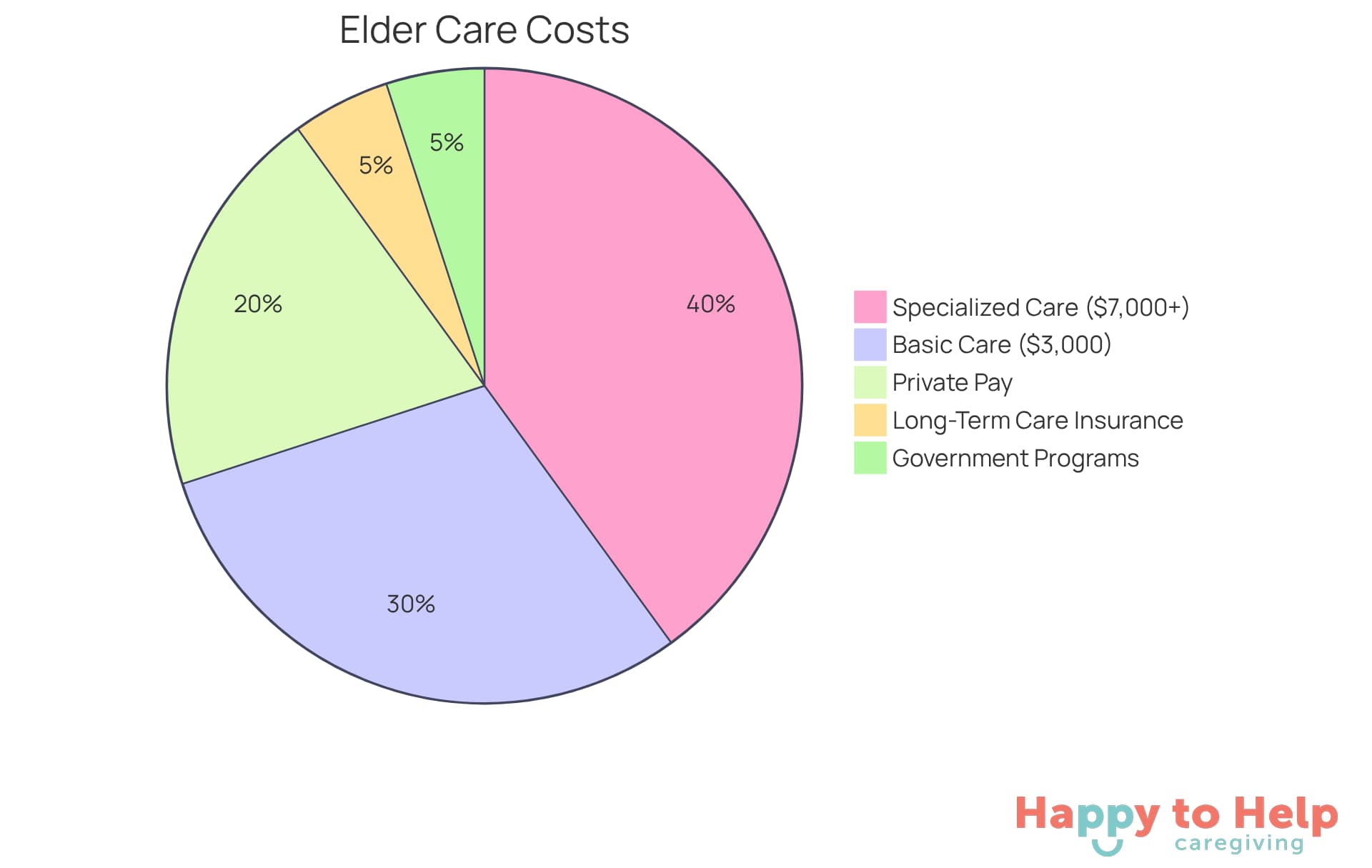
Navigating the financial environment of elder care poses a significant challenge for households in San Antonio nursing homes. The average monthly cost for San Antonio nursing homes can vary greatly, influenced by factors like location, amenities, and the level of care needed. For example, basic care facilities may start around $3,000, while those offering specialized services can exceed $7,000 per month.
This financial burden can quickly deplete savings, making it crucial for families to explore various payment options. The following are common choices:
- Private pay is a common choice, but it often leads to financial strain.
- Long-term care insurance can serve as a safety net, covering some expenses, but it’s vital to review policy details to understand coverage limits.
- Government programs like Medicaid can provide significant assistance, though navigating eligibility requirements and application processes can be complex.
Understanding what services are covered under each payment option is essential. Families should ask about potential out-of-pocket expenses, such as co-pays for specific therapies or additional services not included in the base rate. As Senator John Hoeven stated, "Caring for seniors is perhaps the greatest responsibility we have. Those who have walked before us have given so much and made possible the life we all enjoy." This highlights the importance of planning and support in addressing these financial challenges.
By proactively planning and exploring all available financial resources, households can make informed decisions that align with their loved ones' care needs and financial situations. The case study on "Addressing the Hidden Crisis in Aging Populations" illustrates the complexities families face, emphasizing the need for targeted interventions to improve mental health support and community engagement for seniors. This holistic approach to financial planning not only addresses costs but also considers the emotional and social aspects of caregiving.
Safety and Security: Evaluating Protective Measures in Nursing Homes
Safety and security in care facilities present a significant challenge for families. Many facilities struggle with protective measures, which can leave residents vulnerable. Current data shows that one in five nursing homes faces difficulties in coordinating with community partners during emergencies. This lack of preparedness can have serious implications for the safety of the elderly.
To address these concerns, families should take proactive steps:
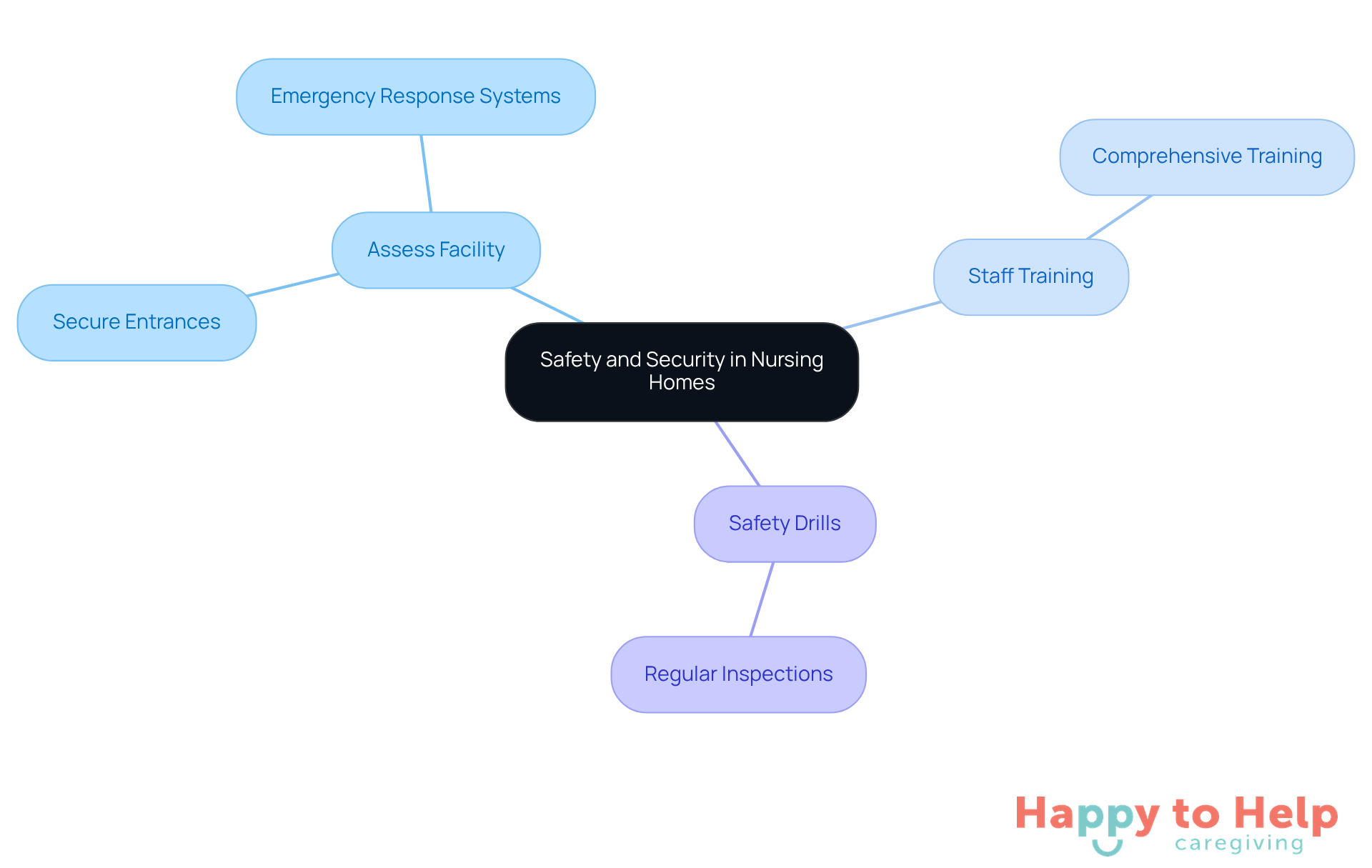
- Assess the facility's secure entrances and robust emergency response systems.
- Ensure that staff undergo comprehensive training in safety protocols.
- Regular safety drills and inspections are also crucial indicators of a facility's commitment to occupant safety.
Experts emphasize the importance of implementing effective security protocols. These measures not only prepare facilities to manage emergencies but also foster a sense of safety for residents and their loved ones. Families need to feel assured that their loved ones are protected from potential dangers and that the facility is equipped to respond effectively in times of crisis.
Family Involvement: Importance of Communication with Nursing Home Staff
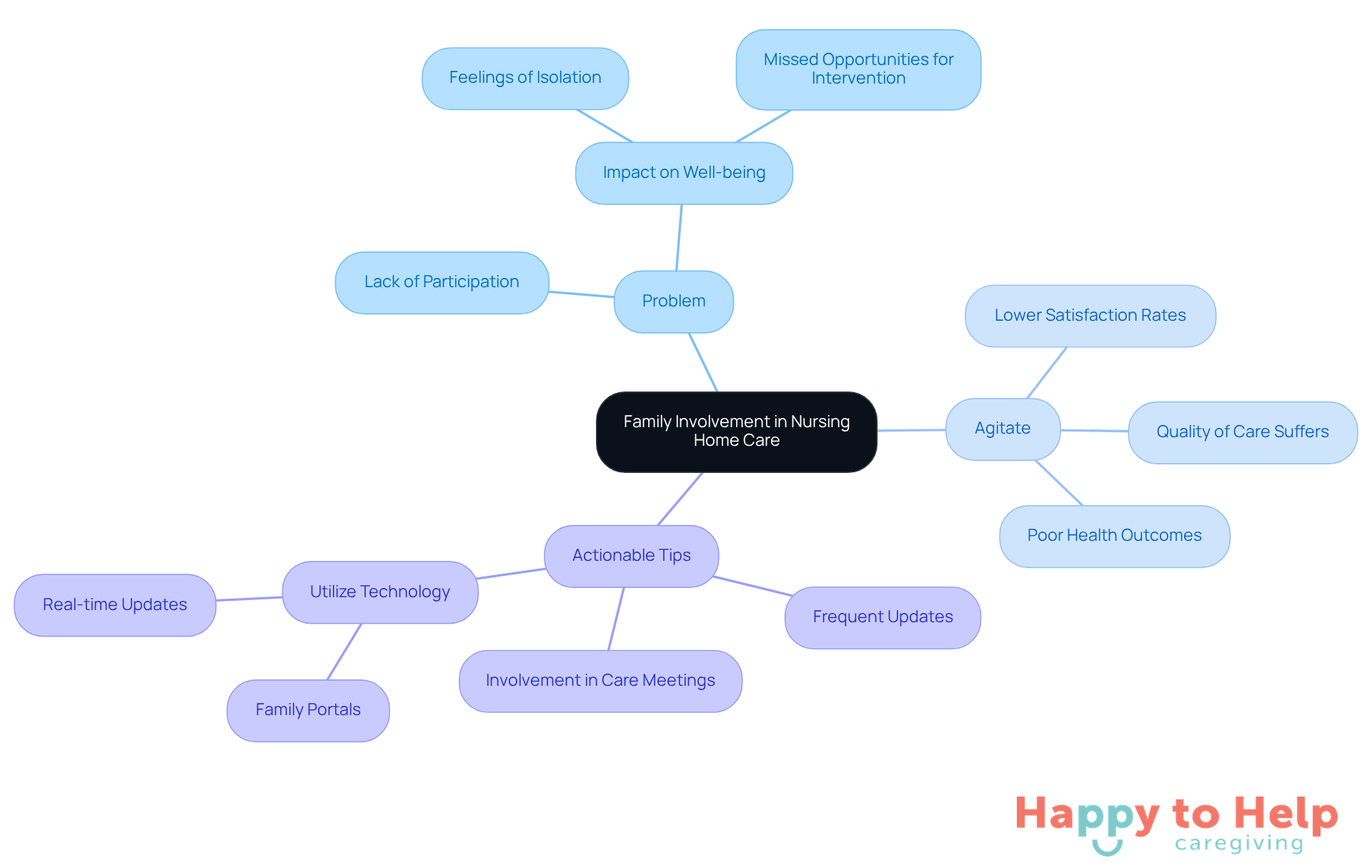
Problem: Active participation of relatives in assisted living care is often lacking, which can negatively impact the well-being of residents. Without open lines of communication with the staff at San Antonio nursing homes, relatives may struggle to discuss care plans or address concerns in a timely manner.
Agitate: This lack of involvement can lead to feelings of isolation for residents and may result in missed opportunities for early intervention in cases of neglect or abuse. When families are not engaged, the quality of care can suffer, leading to lower satisfaction rates and poorer health outcomes for loved ones.
To foster a collaborative environment, relatives should establish regular communication with the staff at San Antonio nursing homes. Here are some actionable tips:
- Frequent Updates: Stay informed about your loved one's health and progress by requesting regular updates from caregivers.
- Involvement in Care Meetings: Attend care meetings to discuss care plans and express any concerns.
- Utilize Technology: Use portals for real-time updates to enhance the caregiving experience and reduce staff burnout.
Facilities that emphasize community involvement often report higher satisfaction rates. When relatives are present and engaged, a culture of accountability is nurtured, encouraging staff to adhere to care protocols. By clearly expressing expectations and maintaining respectful relationships with caregivers, families can create a positive environment that benefits both residents and staff.
Reviews and Testimonials: Gathering Insights on Nursing Home Quality
Assessing the quality of care at nursing facilities can be challenging for families. Without reliable feedback, it’s difficult to gauge the standard of care provided. This uncertainty can lead to anxiety about the well-being of loved ones.
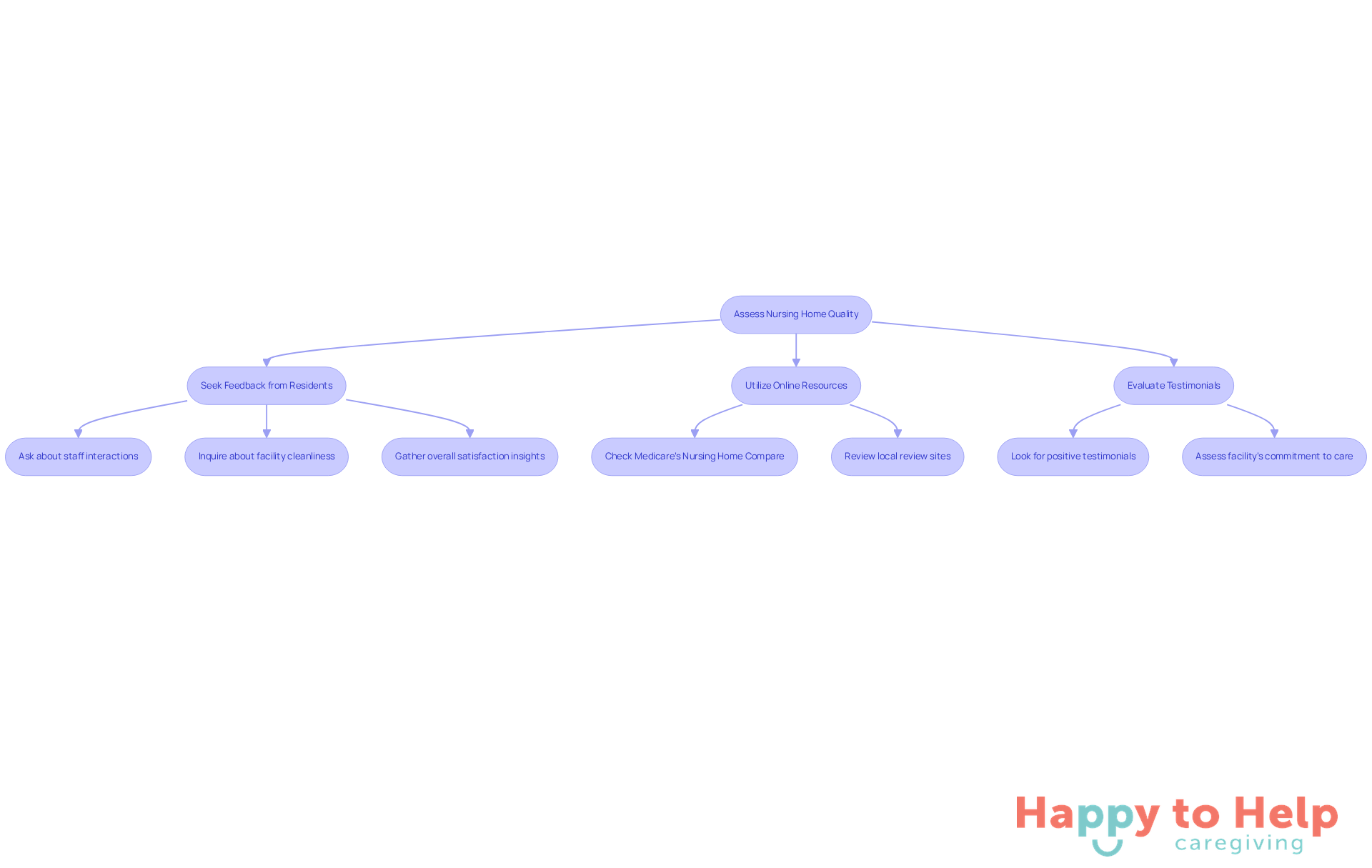
To address this issue, families should actively seek feedback from current and former residents, as well as their relatives. Gathering insights on staff interactions, facility cleanliness, and overall satisfaction can provide valuable perspectives. Additionally, utilizing online resources like Medicare's Nursing Home Compare and local review sites can help families evaluate the reputation of potential facilities.
Positive testimonials often reflect a facility's commitment to high-quality care and resident well-being. By prioritizing these evaluations, families can make informed decisions that ensure their loved ones receive the best possible care.
Key Takeaways for Caregivers
Choosing a nursing home in San Antonio presents a significant challenge for families, as it directly impacts the quality of life for their loved ones. The problem lies in the overwhelming number of factors to consider, such as personalized care, proximity to family, quality of care, staff qualifications, and facility amenities. Each of these elements can greatly influence the well-being of residents.
Families often feel the emotional weight of this decision, knowing that their loved ones deserve the best support possible. The implications of not prioritizing these factors can lead to dissatisfaction and a lack of engagement in the residents' lives. Therefore, it’s crucial to evaluate care standards and staff expertise, as well as the importance of social engagement and recreational activities.
To navigate this complex process, families should take an active role in selecting a nursing home. Utilizing available resources to gather information is essential. Here are some actionable tips:
- Research: Look into the facility’s reputation and reviews.
- Visit: Schedule tours to get a feel for the environment and staff interactions.
- Ask Questions: Inquire about care plans, staff qualifications, and activities available.
By understanding these essential factors, families can ensure their loved ones not only receive adequate care but also thrive in a supportive and enriching atmosphere. Prioritizing these considerations will lead to better outcomes, ultimately enhancing the overall quality of life for seniors in care facilities.
https://iframe.tely.ai/cta/eyJhcnRpY2xlX2lkIjogIjY5Mjc5NTAyMDFkMWUzYmY0NmRiMjRhNiIsICJjb21wYW55X2lkIjogIjY4ZWU1ZGNhNzMxNzYyNTU3ZjNjOTVjMSIsICJpbmRleCI6IG51bGwsICJ0eXBlIjogImFydGljbGUifQ==Frequently Asked Questions
What are the challenges caregivers face when seeking support for seniors and individuals with special needs?
Caregivers often struggle to find adequate support, as many traditional care facilities may not provide the personalized attention that seniors and individuals with special needs require, leading to feelings of insecurity and discomfort in their own homes.
Why is personalized care important for clients?
Personalized care is crucial as it aligns with individual lifestyles and preferences, ensuring that clients receive the tailored support they need to thrive and improving their overall quality of life.
What services does Happy to Help Caregiving offer?
Happy to Help Caregiving offers several services, including companionship care, post-hospital recovery assistance, respite care, and palliative support care.
How does the proximity to family affect residents in nursing homes?
Proximity to family is significant as it can greatly impact the emotional well-being of residents. Regular visits from family members often lead to better mental health outcomes and greater satisfaction with their care.
What should families consider when choosing a nursing home in San Antonio?
Families should consider the proximity of potential care facilities to their loved ones to facilitate frequent visits, which enhances emotional health and fosters a sense of community.
What standards should families prioritize when evaluating nursing homes?
Families should prioritize facilities that meet or exceed state and federal standards, including regular health inspections, appropriate staffing ratios, and various quality measures.
How can families make informed decisions about nursing home care?
Families can utilize resources like the Medicare Nursing Facility Compare tool, which provides valuable ratings based on comprehensive criteria to help locate care facilities that prioritize high-quality treatment and resident satisfaction.
What characterizes thriving care facilities in San Antonio nursing homes?
Thriving care facilities are characterized by their commitment to upholding high care standards, which enhances the quality of life for residents and fosters trust and safety among families.
List of Sources
- Happy to Help Caregiving: Personalized In-Home Care Solutions
- The Future of Aging: Is In-Home Care the New Standard? - WorldHealth.net (https://worldhealth.net/news/future-of-aging-is-in-home-care-new-standard)
- 2025 Home Care Statistics: Trends & Insights To Know (https://premierhcinc.com/blog/home-care-statistics)
- Top healthcare trends of 2026: Aging in place is driving innovation in home-based care and technology (https://definitivehc.com/blog/aging-in-place-driving-innovation)
- How Personalized In-Home Care can Improve Seniors Quality of Life - Freedom Home Care (https://freedomhomecare.net/2024/11/21/how-personalized-in-home-care-can-improve-seniors-quality-of-life)
- Proximity to Family: Importance of Location in San Antonio Nursing Homes
- Family visits and depression among residential aged care residents: An integrative review (https://sciencedirect.com/science/article/pii/S0020748923001335)
- The Importance of Family Involvement in Long Term Care - (https://shakerplace.org/news/the-importance-of-family-involvement-in-long-term-care)
- Nursing Home Family Visits: Enhancing Well-being And Connection (https://neighborsdc.org/news/the-role-of-family-visits-in-enhancing-the-well-being-of-nursing-home-residents)
- Quality of Care: Evaluating Nursing Home Standards in San Antonio
- 20 Inspirational Senior Care Quotes (https://1plus1cares.com/20-inspirational-senior-care-quotes)
- 85 Nursing Quotes: Words of Wisdom for Nurses | USAHS (https://usa.edu/blog/nursing-quotes)
- District court strikes down CMS minimum nurse staffing rule | AHA News (https://aha.org/news/headline/2025-04-08-district-court-strikes-down-cms-minimum-nurse-staffing-rule)
- Texas Judge Overturns Controversial Nursing Facility Staffing Rule | KFF (https://kff.org/medicaid/texas-judge-overturns-controversial-nursing-facility-staffing-rule)
- Nursing Home Quotes (https://pinterest.com/ideas/nursing-home-quotes/958191842627)
- Staff Qualifications: Assessing Caregiver Expertise in Nursing Homes
- Caregiver Quotes: 50+ Inspiring Encouragement Quotes for Strength (https://h2hhc.com/blog/inspiring-caregiver-quotes)
- 27 Inspirational Quotes for Caregivers (https://ultimatecareny.com/resources/27-quotes-for-caregivers)
- 20 Caregiver Quotes That Will Inspire You - MD Home Health (https://mdhomehealth.com/2018/06/10/20-caregiver-quotes-that-will-inspire-you)
- CaringBridge (https://caringbridge.org/resources/inspirational-quotes-on-caregiving)
- UPDATED: CMS confirms launch of $75M nursing home staff training fund (https://mcknights.com/news/breaking-cms-administrator-confirms-launch-of-75m-nursing-home-training-fund)
- Facility Amenities: Key Features to Look for in San Antonio Nursing Homes
- Health Benefits of Recreation for Seniors | Improve Senior Wellness (https://benedictineliving.org/resources/news/more-than-just-fun-how-recreational-activities-enhance-well-being-for-seniors)
- Just The Facts: Assisted Living Is A Safe, High-Quality Long Term Care Option For America’s Seniors (https://ahcancal.org/News-and-Communications/Press-Releases/Pages/Just-The-Facts-Assisted-Living-Is-A-Safe,-High-Quality-Long-Term-Care-Option-For-America’s-Seniors.aspx)
- Resident Activities: Importance of Social Engagement in Nursing Homes
- Long-term care communities can boost social engagement in older adults (https://news-medical.net/news/20250804/Long-term-care-communities-can-boost-social-engagement-in-older-adults.aspx)
- Social engagement helps older adults feel younger, live longer: study (https://mcknightsseniorliving.com/news/social-engagement-helps-older-adults-feel-younger-live-longer-study)
- Senior care facilities key in reversing loneliness, researchers find (https://mcknights.com/news/senior-care-facilities-key-in-reversing-loneliness-researchers-find)
- Residential Care Increases Social Participation But Gaps Remain (https://news.cuanschutz.edu/news-stories/residential-care-increases-social-participation-but-gaps-remain)
- Nursing Home Activities Participation Statistics (https://rosewood-nursing.com/post/nursing-home-activities-participation-statistics)
- Financial Considerations: Understanding Costs and Payment Options
- Nursing Home Cost Statistics (https://rosewood-nursing.com/post/nursing-home-cost-statistics)
- 20 Inspirational Senior Care Quotes (https://1plus1cares.com/20-inspirational-senior-care-quotes)
- Healthcare Case Studies (https://hsa.ie/eng/your\_industry/health\_and\_social\_care\_sector/healthcare\_case\_studies)
- Safety and Security: Evaluating Protective Measures in Nursing Homes
- (https://belleviecare.co.uk/support-advice/60-elderly-care-quotes-to-lift-your-spirits)
- Nursing Homes Reported Wide-Ranging Challenges Preparing for Public Health Emergencies and Natural Disasters (https://oig.hhs.gov/reports/all/2023/nursing-homes-reported-wide-ranging-challenges-preparing-for-public-health-emergencies-and-natural-disasters)
- 27 Inspirational Quotes for Caregivers (https://ultimatecareny.com/resources/27-quotes-for-caregivers)
- Emergency preparedness initiative aims to ‘disrupt’ senior living industry’s ‘outdated and reactive’ response to crises (https://mcknightsseniorliving.com/news/emergency-preparedness-initiative-aims-to-disrupt-senior-living-industrys-outdated-and-reactive-response-to-crises)
- 20 Inspirational Senior Care Quotes (https://1plus1cares.com/20-inspirational-senior-care-quotes)
- Family Involvement: Importance of Communication with Nursing Home Staff
- How Improved Communication with Families Helps Senior Living Communities (https://intelichart.com/news-and-press/how-improved-communication-with-families-helps-senior-living-communities)
- Why Is Family Involvement Crucial in Preventing Nursing Home Negligence? - LeFante Law Office P.C. (https://lefantelaw.com/why-is-family-involvement-crucial-in-preventing-nursing-home-negligence)
- Why Family Involvement Matters in Long-Term Senior Care (https://rosewood-nursing.com/post/why-family-involvement-matters-in-long-term-senior-care)
- How to Improve Communication Between Families and Long-Term Care Providers (https://rosewood-nursing.com/post/how-to-improve-communication-between-families-and-long-term-care-providers?239e530a\_page=6)
- Reviews and Testimonials: Gathering Insights on Nursing Home Quality
- Resident satisfaction indicators in long term care settings in the United States: A scoping review (https://sciencedirect.com/science/article/pii/S2667032123000483)
- 10 Inspiring Patient Experience Quotes | Relias (https://relias.com/blog/patient-experience-quotes)
- 10 Different Ways Nursing Homes Can Get More Testimonials (https://ltcnews.com/articles/ways-nursing-homes-can-get-testimonials)
- Family Satisfaction With Nursing Home Care: The Role of Facility Characteristics and Resident Quality-of-Life Scores - PMC (https://pmc.ncbi.nlm.nih.gov/articles/PMC5777240)
- Evaluation of the ‘Ladder to the Moon, Culture Change Studio Engagement Programme’ staff training: Two quasi-experimental case studies | Request PDF (https://researchgate.net/publication/313538369\_Evaluation\_of\_the\_'Ladder\_to\_the\_Moon\_Culture\_Change\_Studio\_Engagement\_Programme'\_staff\_training\_Two\_quasi-experimental\_case\_studies)