
Understanding Helpers
Navigating the world of family caregiving presents significant challenges. Caregivers often experience emotional strain, isolation, and overwhelming responsibilities. As more individuals take on these vital roles, the need for effective support tools and resources becomes increasingly urgent.
This article will explore ten essential helpers designed to ease the caregiving journey. These solutions not only alleviate the burdens faced by caregivers but also enhance the quality of life for both caregivers and their loved ones. What innovative strategies can caregivers adopt to transform their experience and ensure they are supported in this demanding role?
Happy to Help Caregiving: Personalized In-Home Care Services
Caring for seniors and individuals with special needs often presents significant challenges, particularly regarding loneliness and isolation. These feelings can lead to a decline in mental and emotional well-being, making it essential to address them effectively.
Happy to Help Caregiving specializes in providing personalized in-home care services that utilize skilled helpers to combat these issues. Their offerings include:
- Companionship care
- Post-hospital recovery assistance
- Respite care
- Palliative care
Each service aims to enhance the quality of life for clients, ensuring they receive the support necessary to thrive in their own homes.
By focusing on preserving independence, the trained staff at Happy to Help Caregiving serve as helpers by providing emotional support and engaging clients in enjoyable activities. This approach not only reduces feelings of loneliness but also fosters a sense of community and belonging, which is vital for overall well-being.
Grammarly: Enhance Communication with Writing Assistance
In caregiving, clear communication is essential, yet many providers struggle with this challenge. Unclear messages can lead to misunderstandings, affecting the quality of care delivered. Experts emphasize that precise communication is crucial, as it directly influences caregiving outcomes.
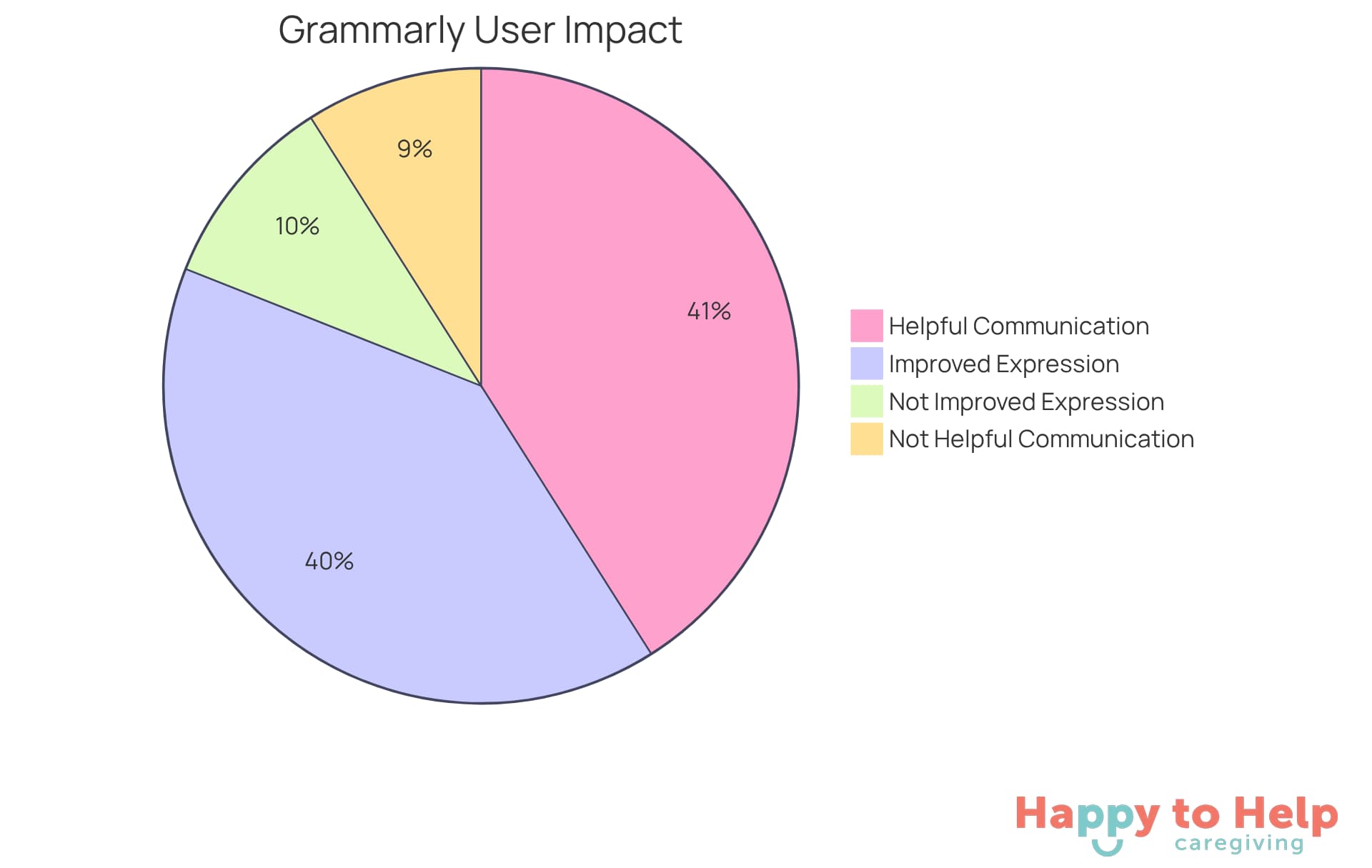
Grammarly addresses this problem effectively. By offering immediate grammar and style recommendations, it empowers caregivers to craft clear and concise care plans, updates, and communications with relatives. A survey revealed that:
- 82% of users found Grammarly helpful in achieving clearer communication, which fosters better understanding among family members and healthcare providers.
- 80% of respondents noted an increase in their ability to express thoughts and concerns.
Moreover, the tool boosts writing confidence. This confidence is vital for caregivers, as it enables them to communicate more effectively. Incorporating writing support tools like Grammarly ensures that caregivers act as helpers in maintaining precise and informative records, promoting a collaborative atmosphere that benefits everyone involved in the care process.
Rytr: AI Writing Assistant for Care Plans and Updates
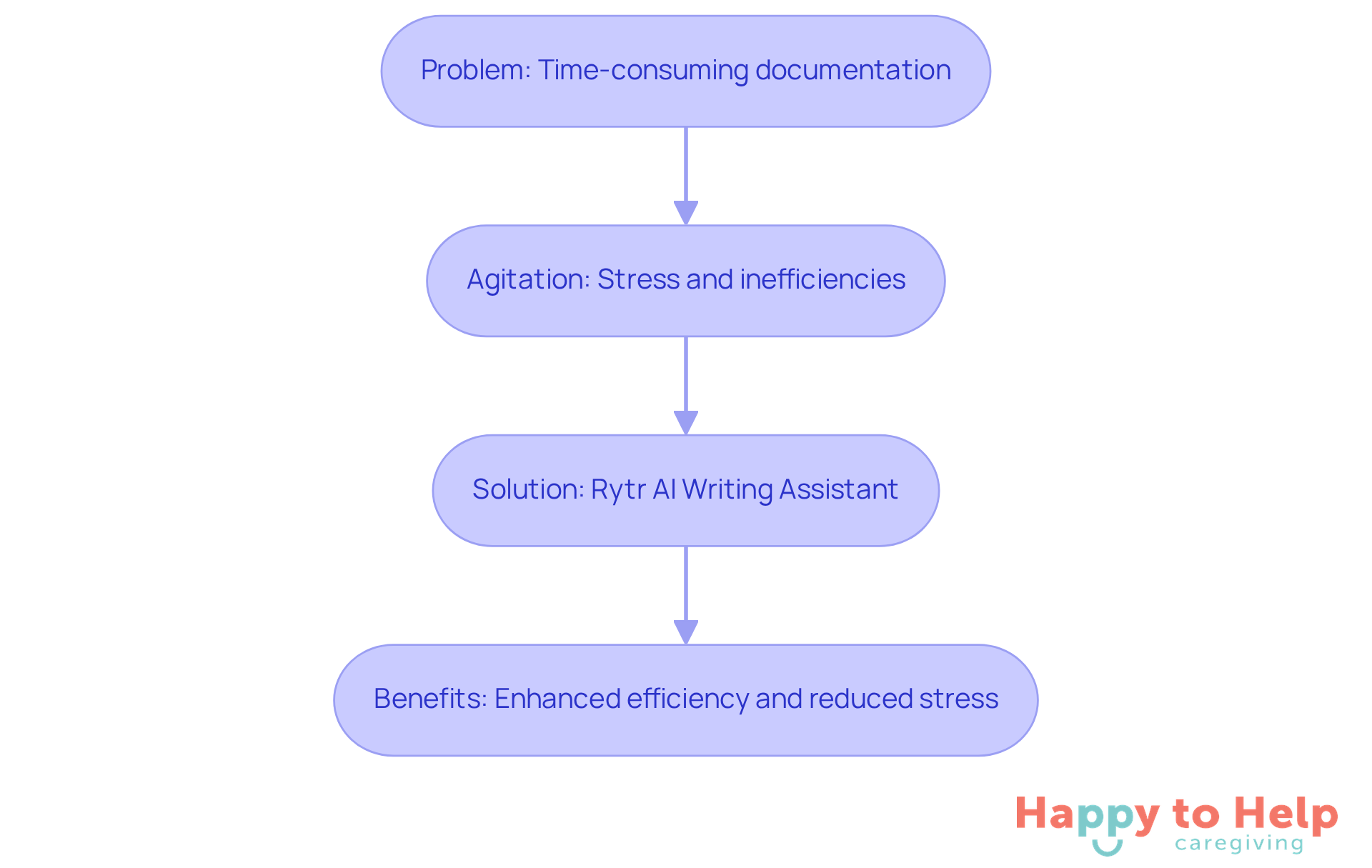
Problem: Caregivers often struggle with the time-consuming task of creating care plans and updates, which can detract from their primary focus - delivering quality care to clients.
Agitation: This documentation burden not only consumes valuable time but can also lead to stress and inefficiencies in their workflow. Caregivers may find themselves overwhelmed, impacting their ability to provide the best support possible.
Solution: Rytr is transforming how support providers create care plans and updates by acting as an efficient AI writing assistant and providing helpers. This innovative tool streamlines the writing process, allowing caretakers to produce high-quality documents with ease. With a variety of templates and styles available, support providers can customize their communications to suit different audiences, ensuring clarity and relevance.
The efficiency achieved through Rytr greatly minimizes the time allocated to documentation, enabling healthcare providers to utilize helpers and focus more on the crucial task of delivering care. Success stories from support providers emphasize how Rytr has changed their workflow, with many mentioning that it has made the documentation process not only quicker but also more structured. Caregivers have expressed appreciation for the tool's ability to streamline their writing tasks, stating that it enhances their overall efficiency and reduces stress.
By reducing the burden of paperwork, Rytr empowers helpers to focus on what truly matters - the well-being of their clients.
The Op-Ed Project: Advocacy and Writing Resources for Caregivers
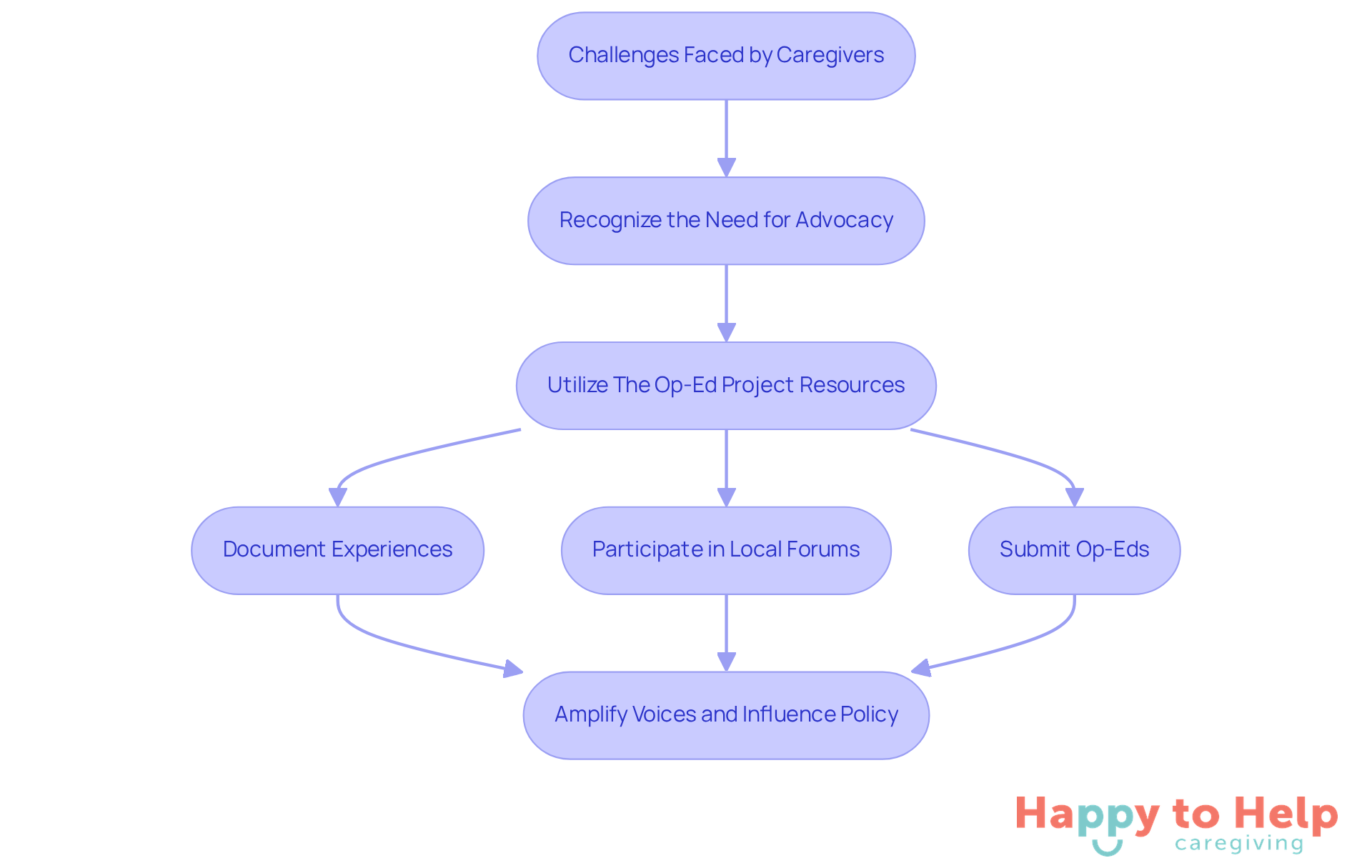
Caregivers face significant challenges that often go unrecognized. They encounter financial and health burdens that can be overwhelming, impacting not only their well-being but also that of their family members. This situation highlights the urgent need for systemic enhancements in support and resources for caregivers and their helpers.
The implications of these challenges are profound. U.S. household supporters contribute labor valued at $873.5 billion each year, underscoring their essential role as an overlooked economic force. By sharing their experiences, caregivers can raise awareness about their struggles and act as helpers to advocate for necessary changes in policy and community support.
To address these issues, caregivers are encouraged to take action. The Op-Ed Project provides vital tools for advocacy, offering specialized training in writing and public speaking. By documenting their experiences and participating in local forums, caregivers can amplify their voices. Submitting op-eds is another effective way to raise awareness and drive change, ensuring that their narratives resonate with policymakers and the public alike.
In summary, caregivers must leverage their experiences as helpers to advocate for themselves and their communities. By doing so, they can foster a collective voice that not only highlights their challenges but also influences the necessary policy changes to enhance available resources and services.
Care.com: Find Additional Caregiver Support
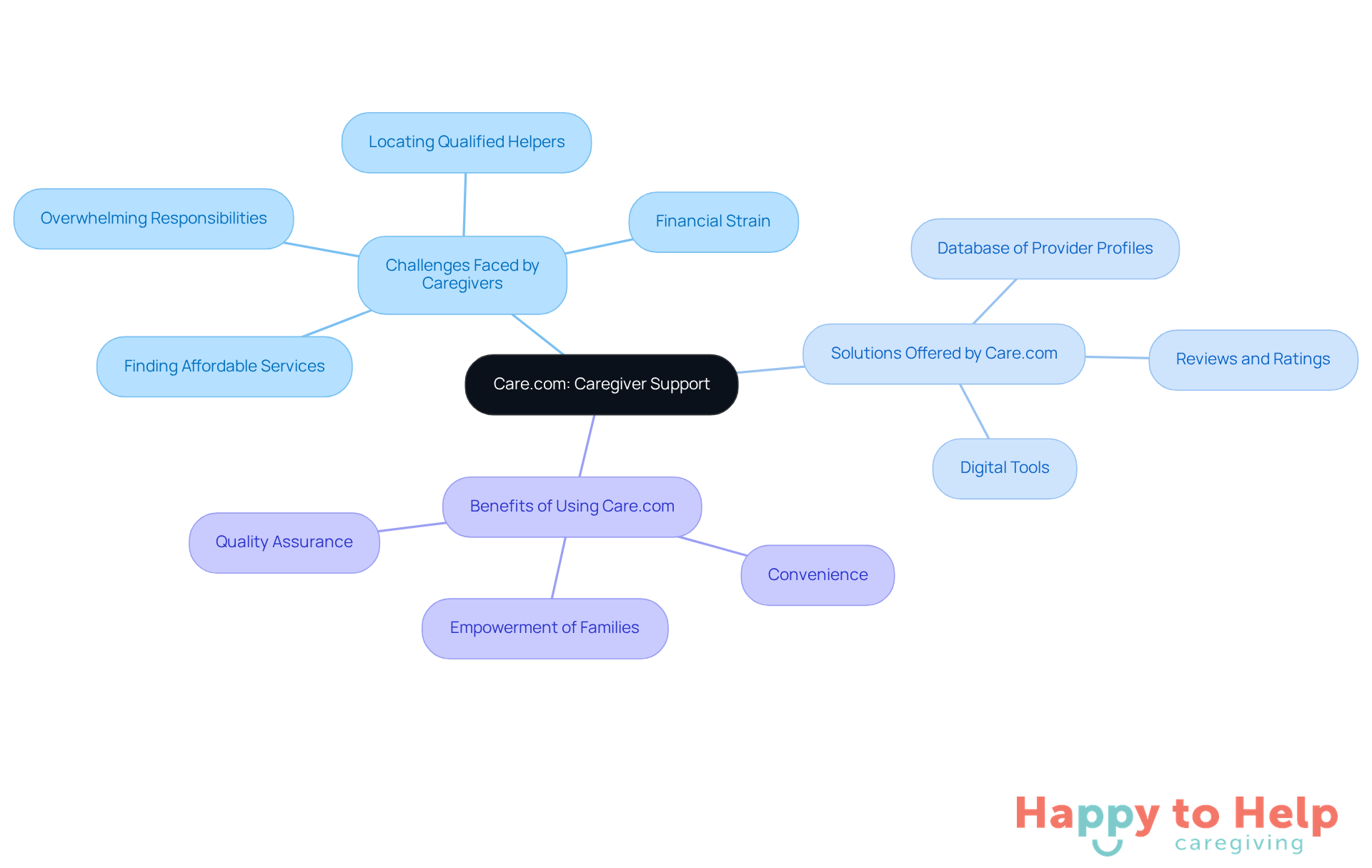
Care.com serves as a crucial resource for households seeking additional support, connecting them with qualified providers through a comprehensive platform. The challenge is clear: with approximately 63 million Americans providing ongoing assistance to family members, the demand for accessible support resources has surged. Caregivers often face the daunting task of finding the right helpers, whether for short-term respite or specialized care. This is where Care.com shines, offering a vast database of provider profiles, complete with reviews and ratings, enabling families to find the perfect match for their loved ones' unique needs.
As more households turn to online platforms for support, the reliance on digital solutions continues to grow. The increasing need for support services makes platforms like Care.com essential helpers, providing not just convenience but also assurance of quality care. Success stories abound, with families sharing positive experiences in finding support providers who enhance the well-being of their loved ones. Lindsey Copeland notes that "over the past decade, a greater number of personal supporters (28%) have encountered challenges in locating affordable services for those they assist." This highlights the critical role that platforms like Care.com play in addressing these challenges.
By leveraging these online tools, caregivers can alleviate some of their burdens with the help of helpers, ensuring their loved ones receive top-notch care while also safeguarding their own well-being. Care.com not only simplifies the search for support but also empowers families to make informed decisions, ultimately enhancing the caregiving experience.
AARP: Resources and Support for Family Caregivers
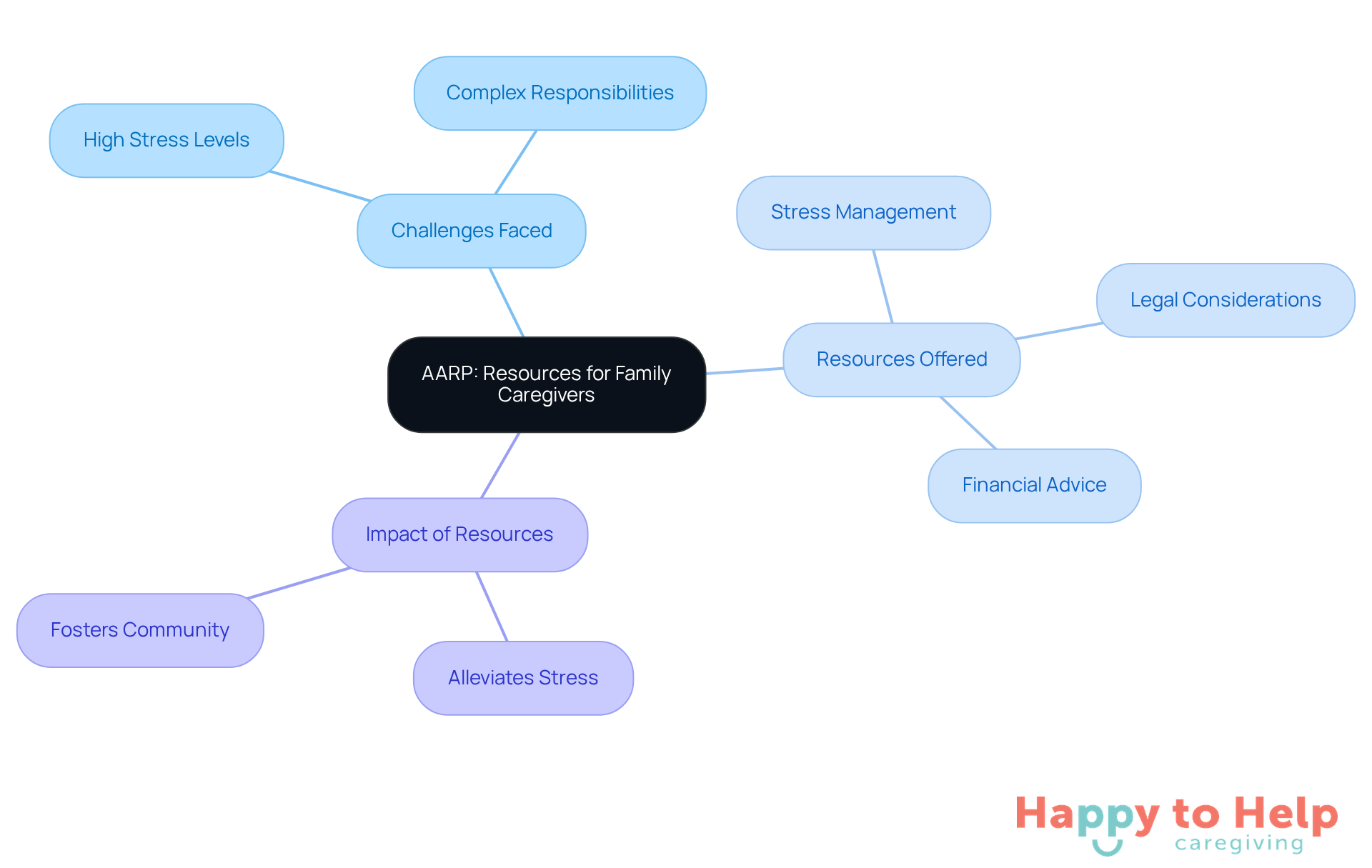
Caregivers face significant challenges, including high levels of stress and the complexities of managing their responsibilities. With around 63 million Americans currently acting as supporters - a nearly 50% increase since 2015 - this issue is more pressing than ever. Alarmingly, 40% of caregivers report that their responsibilities negatively impact their stress levels, highlighting the urgent need for effective support.
AARP provides a comprehensive selection of resources tailored for family helpers, who address these diverse challenges. Their platform offers educational materials on crucial topics such as:
- Stress management
- Legal considerations
- Financial advice
These resources empower caregivers and their helpers to handle their duties more effectively and find nearby assistance services, ensuring access to essential help.
Caregivers have expressed that utilizing AARP's materials significantly alleviates their stress. One support provider noted, "Using AARP's tools greatly reduces stress," underscoring the personal impact of these resources. This support not only enhances their caregiving journey but also fosters a sense of community among caregivers, reinforcing the value of shared experiences and knowledge.
To navigate the demands of caregiving, helpers are encouraged to explore AARP's website for specific tools that can assist them. By leveraging these resources, they can better manage their responsibilities and reduce stress, ultimately improving their overall well-being.
CaringBridge: Coordinate Support and Share Updates
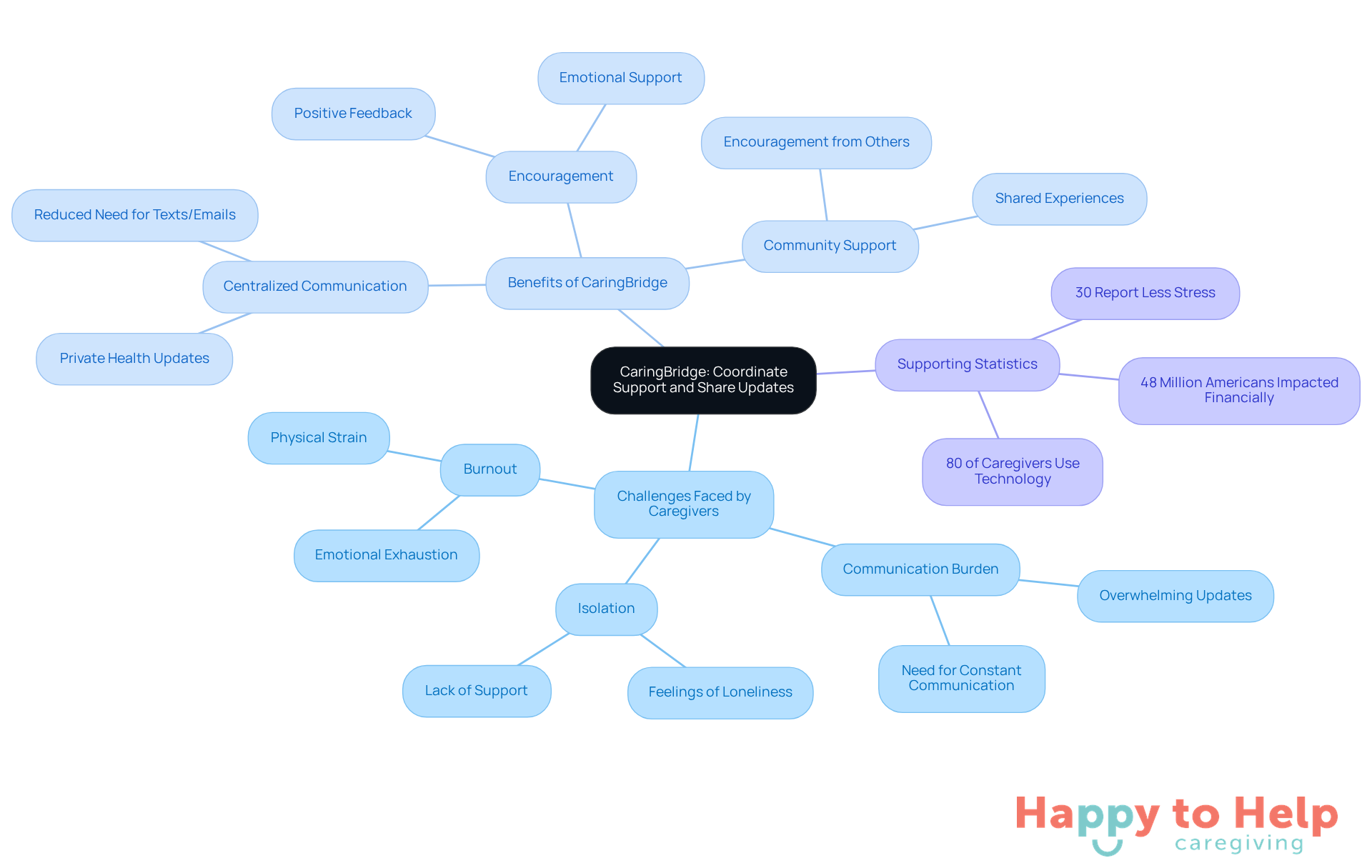
Caring for a loved one can be overwhelming, especially when it comes to keeping family and friends updated. Nearly 30% of caregivers report feeling less stressed after using platforms like CaringBridge, which highlights the significant burden of communication they face.
This stress can lead to feelings of isolation and burnout. Caregivers often struggle to manage multiple responsibilities, including meals, transportation, and errands, while also trying to keep everyone informed about their loved one's health. This is where CaringBridge steps in as a vital resource.
CaringBridge allows caregivers and helpers to create a private page to share health updates, celebrate milestones, and request assistance. By centralizing communication, it not only alleviates the pressure of constant updates but also fosters a supportive community around the caregiver. As one user noted, "CaringBridge gave my community a way to give me encouragement and pick-me-ups from a distance."
The organization emphasizes the importance of connection, stating, "This report underscores our belief that connection and community are critical, and a necessary part of the healthcare system." With 80% of individuals aged 50 and older using technology to assist with caregiving at least once a month, platforms like CaringBridge are essential in facilitating these interactions.
In summary, CaringBridge plays a crucial role in supporting caregivers and their families during challenging times, transforming their experience and enhancing their overall well-being.
Eldercare Locator: Find Local Resources for Seniors
Caregivers often struggle to find local services tailored for seniors, which can significantly impact the quality of care they provide. Without access to essential resources, seniors may experience decreased well-being and lower life satisfaction. This challenge highlights the need for reliable helpers and support options that can enhance their lives.
The Eldercare Locator serves as a vital solution for caregivers seeking trustworthy local services. This national platform connects caregivers with a variety of support alternatives, including:
- Meal programs
- Transportation services
- Home assistance
By utilizing the Eldercare Locator, helpers can easily access the resources that improve the quality of life for their loved ones.
Research shows that when seniors have access to local resources, their overall well-being improves, leading to better health outcomes. Helpers can use the Eldercare Locator to find services that meet their loved ones' specific needs, ensuring they receive the comprehensive care necessary for thriving at home.
Eldercare specialists advocate for the use of this tool, emphasizing its effectiveness in linking families with essential community services that serve as helpers in promoting independence and well-being. The latest options available through the Eldercare Locator include various programs designed to assist seniors, making it easier for caregivers to find the right support for their unique circumstances.
MyCareLink: Digital Care Management for Family Caregivers
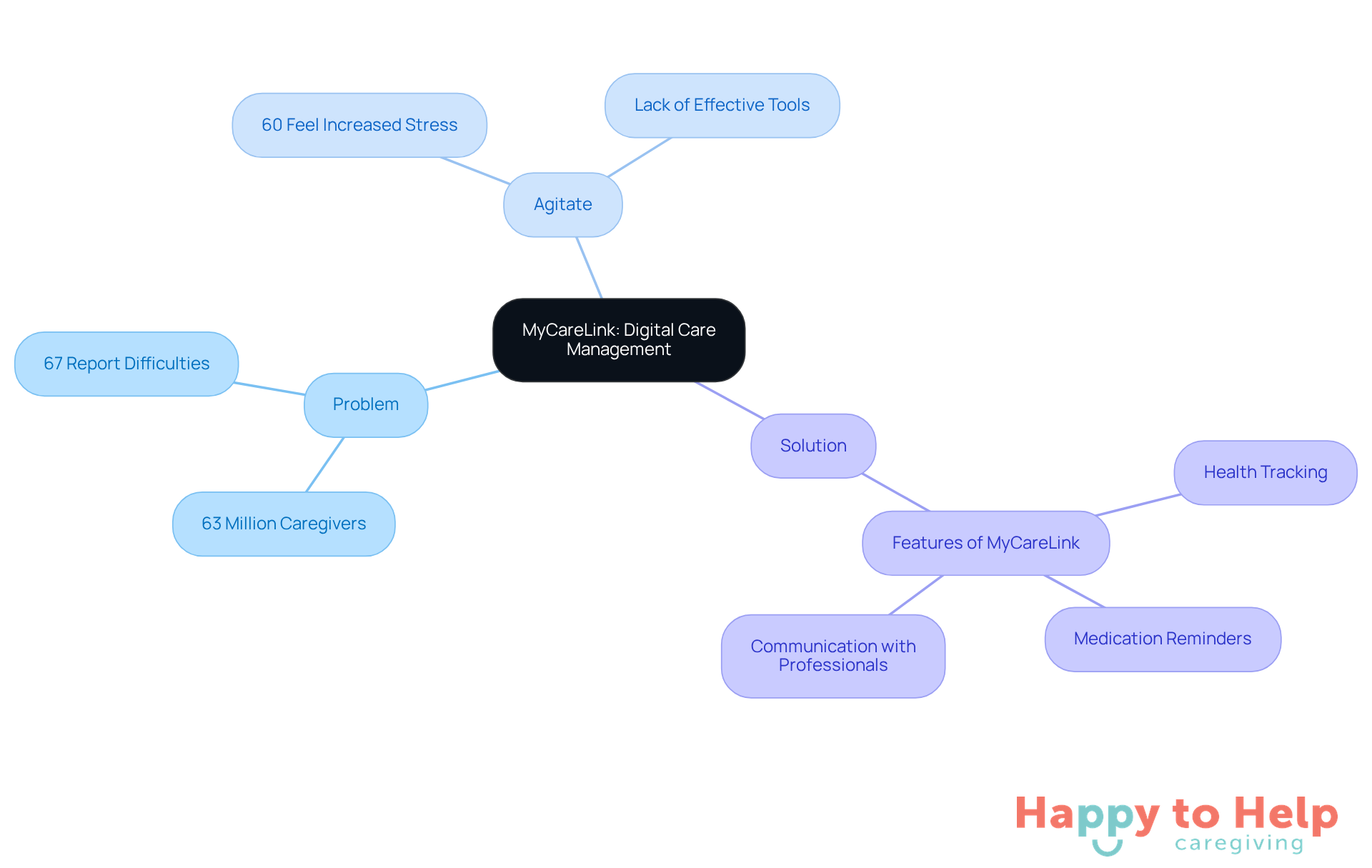
Problem: Caregivers face significant challenges in managing the well-being of their loved ones. With almost 63 million Americans acting as family supporters, many struggle to balance work and caregiving responsibilities. In fact, 67% of employed caregivers report difficulties in managing these dual roles, leading to increased stress and concern.
Agitate: This emotional strain is compounded by the fact that over 60% of caregivers feel that their responsibilities heighten their own stress levels. The lack of effective tools to streamline communication and documentation often results in provider burnout, making it crucial to find solutions that alleviate these burdens.
Solution: MyCareLink offers a comprehensive digital health management platform designed to empower family members in monitoring their loved ones' well-being. This innovative tool allows health helpers to track essential health information, set medication reminders, and communicate effortlessly with healthcare professionals. By centralizing care management, MyCareLink enhances provider efficiency, providing immediate access to vital information that supports optimal care delivery.
Caregivers have expressed appreciation for the helpers that MyCareLink provides by simplifying their daily tasks. One support person noted that the platform's reminders and health monitoring features have made managing complex medication schedules easier, ultimately improving their loved one's adherence to treatment plans. This feedback underscores the platform's role in boosting confidence among providers, ensuring they can offer the best possible helpers to those in need.
Furthermore, the client/family portal provides round-the-clock access to schedules, invoices, and agency communications, enhancing the comprehensive support MyCareLink delivers. By streamlining communication and reducing administrative burdens, MyCareLink not only helps caregivers manage their responsibilities more effectively but also aims to reduce the emotional strain they experience.
Family Caregiver Alliance: Education and Support for Caregivers
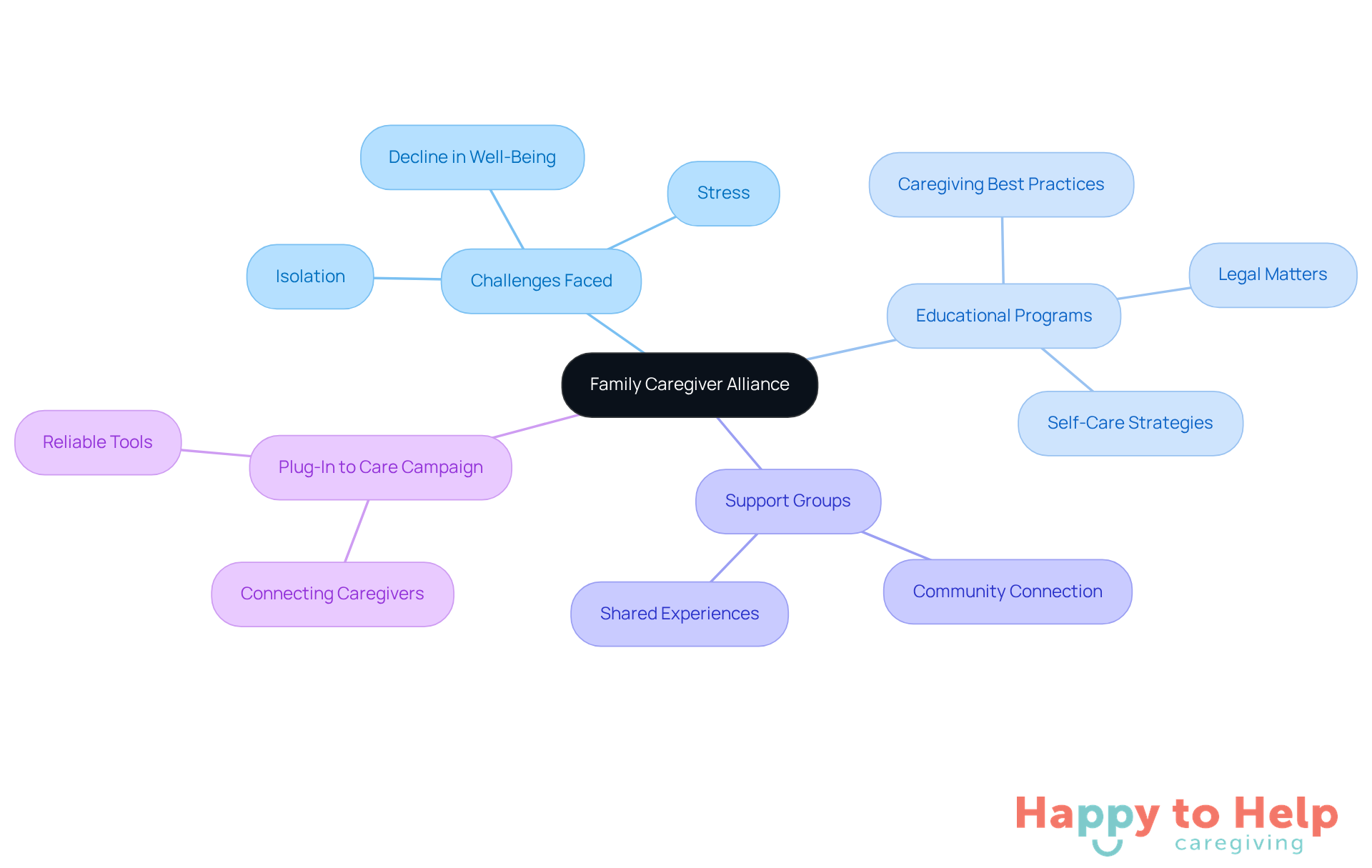
The challenges faced by family caregivers are significant. Many experience feelings of isolation and stress, which can lead to deteriorating mental health. Research indicates that nearly half of caregivers report a decline in their well-being, underscoring the urgent need for support.
To address these issues, the Family Caregiver Alliance offers a wealth of resources designed to empower helpers and caregivers. Their educational programs provide essential knowledge on:
- Caregiving best practices
- Legal matters
- Self-care strategies
Helpers in support groups play a crucial role in this framework, fostering a sense of community and understanding among caregivers. As one participant noted, "Being part of a support group has made me feel less alone in my journey; sharing experiences with others who understand my challenges is invaluable."
Moreover, the Alliance's 'Plug-In to Care' campaign connects caregivers with reliable tools and helpers, further emphasizing the importance of trustworthy support. These resources not only equip caregivers with practical skills but also promote emotional resilience. Participants in educational programs often report improved mental health and increased confidence in their caregiving roles.
In summary, the Family Caregiver Alliance is dedicated to enhancing the quality of life for caregivers. By providing access to vital information and fostering connections through support groups, they help make the caregiving experience more manageable and fulfilling.
Your Path Forward
Caring for family members presents a significant challenge, often leaving caregivers feeling overwhelmed and unsupported. This journey requires a variety of resources and support systems to ensure both caregivers and those they care for can thrive. The implications of inadequate support can lead to increased stress and burnout among caregivers, ultimately affecting the quality of care provided.
To address these challenges, the article highlights ten essential tools and services that can ease the caregiving journey:
- Personalized in-home care services combat loneliness and promote independence.
- Advanced writing tools like Grammarly and Rytr enhance communication and efficiency.
These resources are vital for improving the overall quality of care.
Key insights emphasize the importance of clear communication in caregiving, the necessity for effective advocacy, and the value of community support. Platforms such as CaringBridge and Care.com facilitate better communication and connection among families, providing access to qualified caregivers and essential resources. Additionally, organizations like AARP and the Family Caregiver Alliance offer educational materials and support networks that empower caregivers to navigate their responsibilities more effectively.
In conclusion, the significance of these tools cannot be overstated. By leveraging these resources, caregivers can alleviate stress, enhance their caregiving experience, and ultimately improve the well-being of their loved ones. Embracing technology and community support is essential for fostering resilience and ensuring that caregivers are not alone in their journey. Caregivers should explore these options and advocate for the support they need, as doing so not only benefits them but also enriches the lives of those they care for.
https://iframe.tely.ai/cta/eyJhcnRpY2xlX2lkIjogIjY5MjY0MzY0ZGUyNDgxZjQ1MzJkZTdhYiIsICJjb21wYW55X2lkIjogIjY4ZWU1ZGNhNzMxNzYyNTU3ZjNjOTVjMSIsICJpbmRleCI6IG51bGwsICJ0eXBlIjogImFydGljbGUifQ==Frequently Asked Questions
What services does Happy to Help Caregiving provide?
Happy to Help Caregiving offers personalized in-home care services, including companionship care, post-hospital recovery assistance, respite care, and palliative care.
How does Happy to Help Caregiving address feelings of loneliness and isolation?
The trained staff at Happy to Help Caregiving provide emotional support and engage clients in enjoyable activities, which helps reduce feelings of loneliness and fosters a sense of community and belonging.
Why is clear communication important in caregiving?
Clear communication is essential in caregiving because unclear messages can lead to misunderstandings, negatively affecting the quality of care delivered.
How does Grammarly assist caregivers in communication?
Grammarly offers immediate grammar and style recommendations, helping caregivers craft clear and concise care plans, updates, and communications with relatives, which fosters better understanding among family members and healthcare providers.
What percentage of Grammarly users found it helpful for clearer communication?
A survey revealed that 82% of users found Grammarly helpful in achieving clearer communication.
What challenges do caregivers face when creating care plans and updates?
Caregivers often struggle with the time-consuming task of creating care plans and updates, which can detract from their primary focus of delivering quality care to clients.
How does Rytr help caregivers with documentation?
Rytr acts as an AI writing assistant that streamlines the writing process, allowing caregivers to produce high-quality documents quickly and efficiently, which minimizes the time spent on documentation.
What benefits have caregivers reported from using Rytr?
Caregivers have reported that Rytr enhances their overall efficiency, reduces stress, and allows them to focus more on delivering care rather than being overwhelmed by paperwork.
List of Sources
- Happy to Help Caregiving: Personalized In-Home Care Services
- Growing Trend of Private Pay Home Care for Elderly (https://regencyhcs.com/blog/growing-trend-of-private-pay-home-care-for-elderly)
- Home Care Industry Trends to Watch in 2025 (https://firstlighthomecare.com/blog/home-care-industry-trends)
- Older adults find support through health care companions (https://news-medical.net/news/20250924/Older-adults-find-support-through-health-care-companions.aspx)
- Caring Senior Service Banks Growth Goals On New House-Made Technology (https://homehealthcarenews.com/2025/10/caring-senior-service-banks-growth-goals-on-new-house-made-technology)
- Why Home Care Providers Are Increasingly Offering Companion Care Services for Seniors | Aaniie, formerly Smartcare Software (https://aaniie.com/news/why-home-care-providers-are-increasingly-offering-companion-care-services-for-seniors)
- Grammarly: Enhance Communication with Writing Assistance
- (PDF) EXAMINING THE IMPACT OF AI-POWERED WRITING TOOLS ON INDEPENDENT WRITING SKILLS OF HEALTH SCIENCE GRADUATES (https://researchgate.net/publication/387548476\_EXAMINING\_THE\_IMPACT\_OF\_AI-POWERED\_WRITING\_TOOLS\_ON\_INDEPENDENT\_WRITING\_SKILLS\_OF\_HEALTH\_SCIENCE\_GRADUATES)
- Grammarly Launches Specialized AI Agents and Writing Surface for Students and Professionals (https://businesswire.com/news/home/20250818186419/en/Grammarly-Launches-Specialized-AI-Agents-and-Writing-Surface-for-Students-and-Professionals)
- 27 Inspirational Quotes for Caregivers (https://ultimatecareny.com/resources/27-quotes-for-caregivers)
- AI in Healthcare: Key Adoption and Impact Statistics| Chanty (https://chanty.com/blog/ai-healthcare-statistics)
- Grammarly Survey Unveils Widespread Adoption, Positive Impact, and Areas for Improvement | Learning Technology Solutions | University of Illinois Chicago (https://learning.uic.edu/news-stories/grammarly-survey-unveils-widespread-adoption-positive-impact-and-areas-for-improvement)
- Rytr: AI Writing Assistant for Care Plans and Updates
- 4 Statistics: AI in Healthcare Saves Time | athenahealth (https://athenahealth.com/resources/blog/4-statistics-ai-in-healthcare)
- AI in Hospital Operations: 2025 Trends, Efficiency & Data | IntuitionLabs (https://intuitionlabs.ai/articles/ai-hospital-operations-2025-trends)
- AI is Reshaping Retirement, Caregiving, and Health (https://ltcnews.com/articles/ai-reshaping-retirement-caregiving-health)
- HHS Launches New Caregiving AI Initiative to 'Spark Innovative Support' (https://hospicenews.com/2025/11/18/hhs-launches-new-caregiving-ai-initiative-to-spark-innovative-support)
- Analysis: AI scribes save physicians time, improve patient interactions and work satisfaction (https://permanente.org/analysis-ai-scribes-save-physicians-time-improve-patient-interactions-and-work-satisfaction)
- The Op-Ed Project: Advocacy and Writing Resources for Caregivers
- Caregiving in the US 2025 (https://aarp.org/pri/topics/ltss/family-caregiving/caregiving-in-the-us-2025)
- What Is the Caregiver Crisis? | Johns Hopkins Bloomberg School of Public Health (https://publichealth.jhu.edu/2025/what-is-the-caregiver-crisis)
- National Alliance for Caregiving: Caregiving in the US 2025 Report (https://johnahartford.org/resources/view/national-alliance-for-caregiving-caregiving-in-the-us-2025-report)
- HHS Launches $2 Million AI Challenge to Support Family Caregivers (https://shrm.org/advocacy/hhs-launches--2-million-ai-challenge-to-support-family-caregiver)
- New Report Reveals U.S. Family Caregivers Perform Equivalent of a Staggering $873.5 Billion Worth of Labor, Would Surpass Revenue of Top Global Companies | Otsuka US (https://otsuka-us.com/news/new-report-reveals-us-family-caregivers-perform-equivalent-staggering-8735-billion-worth-labor)
- Care.com: Find Additional Caregiver Support
- New Care.com Research Uncovers a Major Threat to Retention as Employers Underestimate Burnout | IAC (https://ir.iac.com/news-releases/news-release-details/new-carecom-research-uncovers-major-threat-retention-employers)
- Family Caregiver Support, Education Needs Growing (https://hospicenews.com/2025/11/11/family-caregiver-support-education-needs-growing)
- HHS Launches $2 Million AI Challenge to Support Family Caregivers (https://shrm.org/advocacy/hhs-launches--2-million-ai-challenge-to-support-family-caregiver)
- As Family Caregiving Grows, So Does the Need for Reform - Medicare Rights Center (https://medicarerights.org/medicare-watch/2025/08/14/as-family-caregiving-grows-so-does-the-need-for-reform)
- A Place for Mom Releases Dual Reports on the Future of Family Caregiving, Including a New Talkspace Collaboration Highlighting Caregiver Mental Health (https://businesswire.com/news/home/20251124760580/en/A-Place-for-Mom-Releases-Dual-Reports-on-the-Future-of-Family-Caregiving-Including-a-New-Talkspace-Collaboration-Highlighting-Caregiver-Mental-Health)
- AARP: Resources and Support for Family Caregivers
- New State-by-State Data Expose the Crushing Financial Strain of Family Caregiving — and Call for Immediate Federal and State Action (https://press.aarp.org/2025-10-28-New-Data-Expose-Financial-Strain-of-Family-Caregiving)
- National Alliance for Caregiving: Caregiving in the US 2025 Report (https://johnahartford.org/resources/view/national-alliance-for-caregiving-caregiving-in-the-us-2025-report)
- Caregiving in the US 2025 (https://aarp.org/pri/topics/ltss/family-caregiving/caregiving-in-the-us-2025)
- The Caregiving Landscape: Data & Insights on the Caregiver Experience in the U.S. (https://caregiveraction.org/caregiver-statistics)
- Caregiver Statistics: Demographics (https://caregiver.org/resource/caregiver-statistics-demographics)
- CaringBridge: Coordinate Support and Share Updates
- CaringBridge Helps Veterans and their loved ones stay connected during health challenges - VA News (https://news.va.gov/89442/caringbridge-helps-veterans-loved-ones-stay-connected-health-challenges)
- U.S. Caregivers' Use of Technology to Help with Caregiving (https://aarp.org/pri/topics/ltss/family-caregiving/caregiving-technology-survey)
- New CaringBridge Impact Report Finds Online Health Communities Reduce Caregiver Loneliness and Overwhelm (https://cbs42.com/business/press-releases/cision/20251120DC29082/new-caringbridge-impact-report-finds-online-health-communities-reduce-caregiver-loneliness-and-overwhelm)
- CaringBridge (https://caringbridge.org/resources/inspirational-quotes-on-caregiving)
- Eldercare Locator: Find Local Resources for Seniors
- Senior Living Statistics (https://rosewood-nursing.com/post/senior-living-statistics)
- Elderly Care Statistics (https://rosewood-nursing.com/post/elderly-care-statistics)
- Get the Facts on Senior Centers and How They Serve Older Adults (https://ncoa.org/article/get-the-facts-on-senior-centers)
- Support for the Caregivers of Older Adults (https://ncoa.org/caregivers/benefits/caregiver-support)
- Facts & Figures (https://ahcancal.org/Assisted-Living/Facts-and-Figures/Pages/default.aspx)
- MyCareLink: Digital Care Management for Family Caregivers
- National Family Caregiver Month 2025: How Tech Supports Care (https://caresmartz360.com/blog/home-care/empowering-family-caregivers-with-technology-this-caregivers-month)
- Building a lifeline for family caregivers across the US (https://news.mit.edu/2025/ianacare-builds-lifeline-for-family-caregivers-across-us-0811)
- How AI Could Change Family Caregiving (https://aarp.org/caregiving/basics/how-ai-can-help-caregivers)
- HHS Launches $2 Million AI Challenge to Support Family Caregivers (https://shrm.org/advocacy/hhs-launches--2-million-ai-challenge-to-support-family-caregiver)
- Caregiver Statistics: Health, Technology, and Caregiving Resources (https://caregiver.org/resource/caregiver-statistics-health-technology-and-caregiving-resources)
- Family Caregiver Alliance: Education and Support for Caregivers
- National Family Caregivers Month 2025 (https://johnahartford.org/resources/view/national-family-caregivers-month-2025)
- National Family Caregivers Month 2025 | Plug-in to Care Hub (https://caregiveraction.org/nfc2025)
- HHS Launches $2 Million AI Challenge to Support Family Caregivers (https://shrm.org/advocacy/hhs-launches--2-million-ai-challenge-to-support-family-caregiver)
- Caregiver Statistics: Health, Technology, and Caregiving Resources (https://caregiver.org/resource/caregiver-statistics-health-technology-and-caregiving-resources)
- HHS Backs AI Innovation for America’s Caregivers | HHS.gov (https://hhs.gov/press-room/hhs-backs-ai-innovation-for-americas-caregivers.html)