

For families in our service areas
For families in our service areas, this guide explains home care and how non-medical in-home caregiving can support care planning in East Idaho, Treasure Valley & Magic Valley, Northern Wasatch, North Central West Virginia, and Northeast Ohio.
What You Need to Know About Home Care Lakewood Services
The landscape of home care services in Lakewood is changing, offering family caregivers a vital lifeline in their challenging roles. These caregivers often face overwhelming stress and emotional burdens, and it’s essential to recognize their struggles. With a focus on personalized support, these services not only enhance the quality of life for seniors but also help lighten the load for caregivers.
As families navigate the complexities of care, they may wonder how these essential services can be tailored to meet the unique needs of each individual. It’s crucial to ensure that both independence and well-being are prioritized. By providing compassionate care, we can foster an environment where caregivers feel supported and understood, allowing them to focus on what truly matters - their loved ones.
Happy to Help Caregiving: Personalized In-Home Care Services
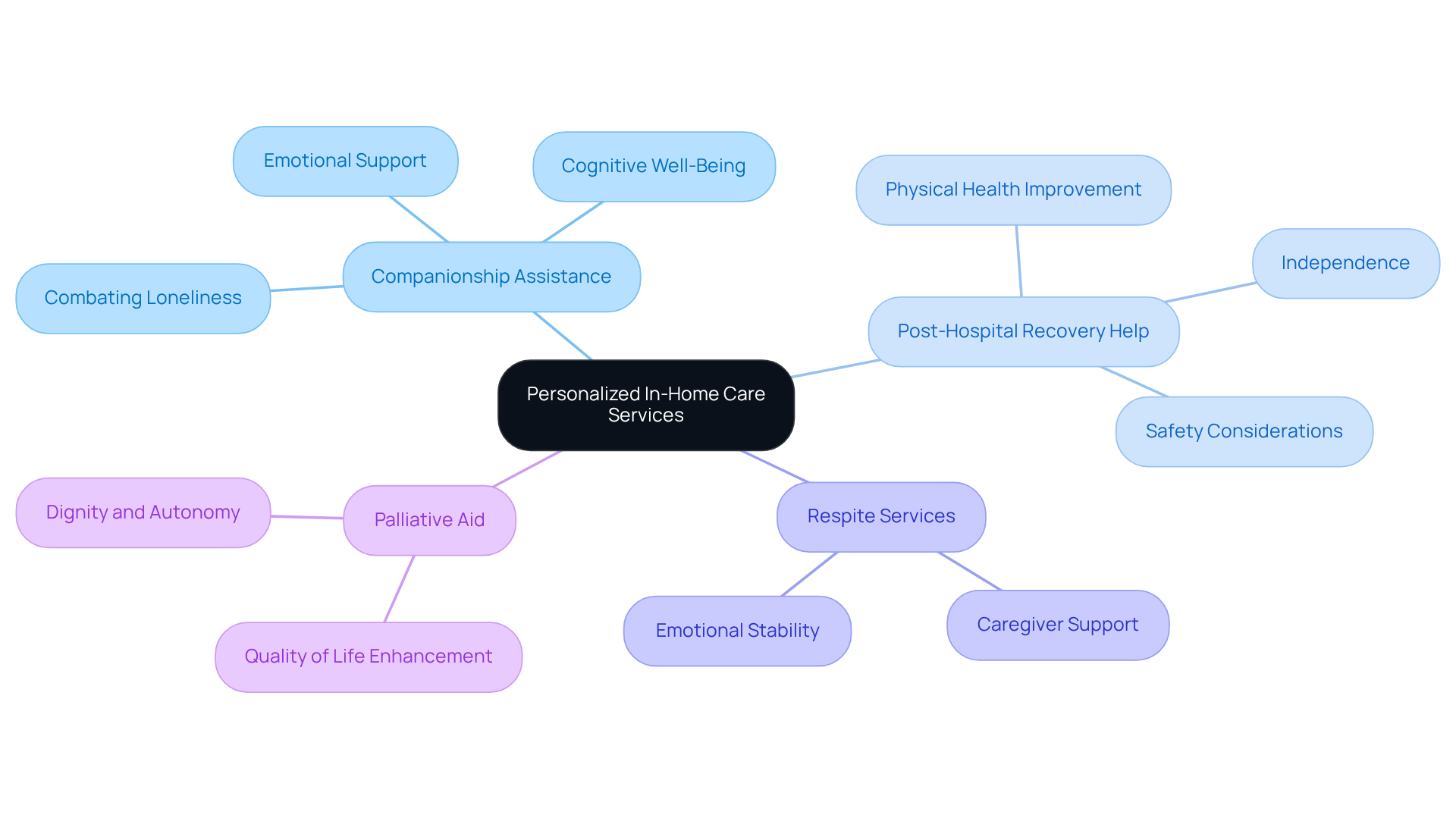
At Happy to Help Caregiving, we truly understand the emotional challenges that caregivers face. We aim to significantly enhance the quality of life for seniors and individuals with special needs by providing personalized home care Lakewood services. Our primary services - companionship assistance, post-hospital recovery help, respite services, and palliative aid - are thoughtfully customized to meet each individual’s unique requirements.
This personalized approach ensures that individuals receive the essential support they need to thrive with home care Lakewood in their own homes. It also fosters a profound sense of security and comfort. By prioritizing independence while offering expert assistance, we empower our clients to maintain their dignity and autonomy.
The positive impact of such tailored support is evident. Studies consistently show that personalized home care in Lakewood greatly benefits older adults, enhancing their physical health, emotional well-being, and overall satisfaction with life. For instance, personalized support models are expected to transform senior living standards by 2025, ensuring improved quality of life and better medical outcomes for seniors.
Moreover, caregivers emphasize that consistent social engagement combats isolation and supports cognitive well-being. This further highlights the importance of tailored assistance in enriching the lives of seniors. We are here to help, providing not just services, but a compassionate partnership that nurtures both clients and their families.
Emotional Support: Alleviating Loneliness Through Companionship Care
Companionship assistance is more than just a service; it’s a lifeline for seniors, offering the emotional support they need to combat feelings of loneliness and isolation. Caregivers engage clients in meaningful conversations and activities, nurturing connections that significantly enhance emotional well-being.
Research shows that consistent social engagement leads to better mental health outcomes. This makes companionship support an essential part of home care Lakewood services. It’s not just about providing care; it’s about fostering relationships that bring joy and comfort to those we serve.
Imagine the warmth of a friendly chat or the joy of sharing a favorite hobby. These moments can transform a day, reminding seniors that they are valued and loved. By prioritizing companionship, we help create an environment where emotional health thrives.
In this journey, we understand the stress and burnout caregivers often face. It’s important to acknowledge these feelings and know that support is available. Together, we can navigate these challenges in home care Lakewood, ensuring that both caregivers and seniors feel cared for and connected.
Let’s embrace the power of companionship, knowing that every conversation and shared activity can make a world of difference.
Post-Hospital Recovery Assistance: Ensuring Safe Transitions Home
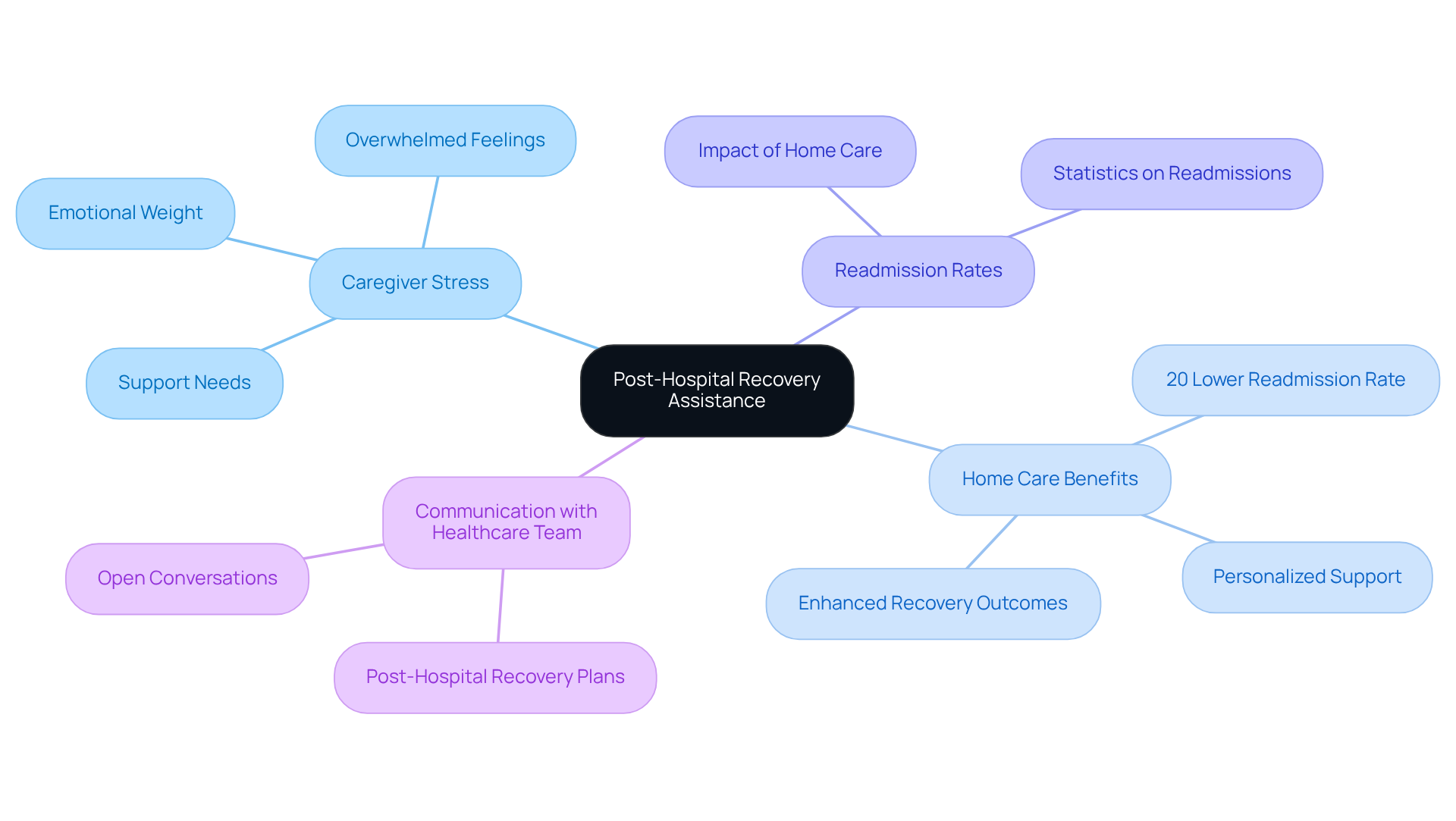
Recovering at home care Lakewood after a hospital stay can be challenging for both patients and their caregivers. It’s essential to recognize the emotional weight that caregivers carry, often feeling stressed and overwhelmed. Post-hospital recovery assistance through home care Lakewood can be a lifeline, offering the support needed to navigate daily activities, manage medications, and assist with mobility. This kind of help is not just about practical tasks; it’s about fostering a safe and nurturing environment that significantly reduces the risk of complications, including hospital readmissions, which can affect up to 20% of patients after discharge.
In fact, studies show that patients receiving assistance at home enjoy a 20% lower readmission rate compared to those who only receive treatment in a hospital. By providing personalized support through home care Lakewood tailored to individual needs, caregivers can help their loved ones regain independence more quickly. Healthcare experts emphasize that effective home care in Lakewood during this critical time leads to better recovery outcomes. As Dr. Smith, a respected healthcare provider, wisely notes, "Safe transitions home are essential for recovery, and support from family members is key to ensuring patients heal effectively in their own environment."
Moreover, patients recovering at home often report a quicker return to their previous level of function and independence. It’s important to have open conversations with your loved one’s healthcare team about post-hospital recovery plans. This ensures a smooth transition home, allowing both patients and caregivers to feel supported and understood during this significant time.
Respite Care: Supporting Family Caregivers and Preventing Burnout
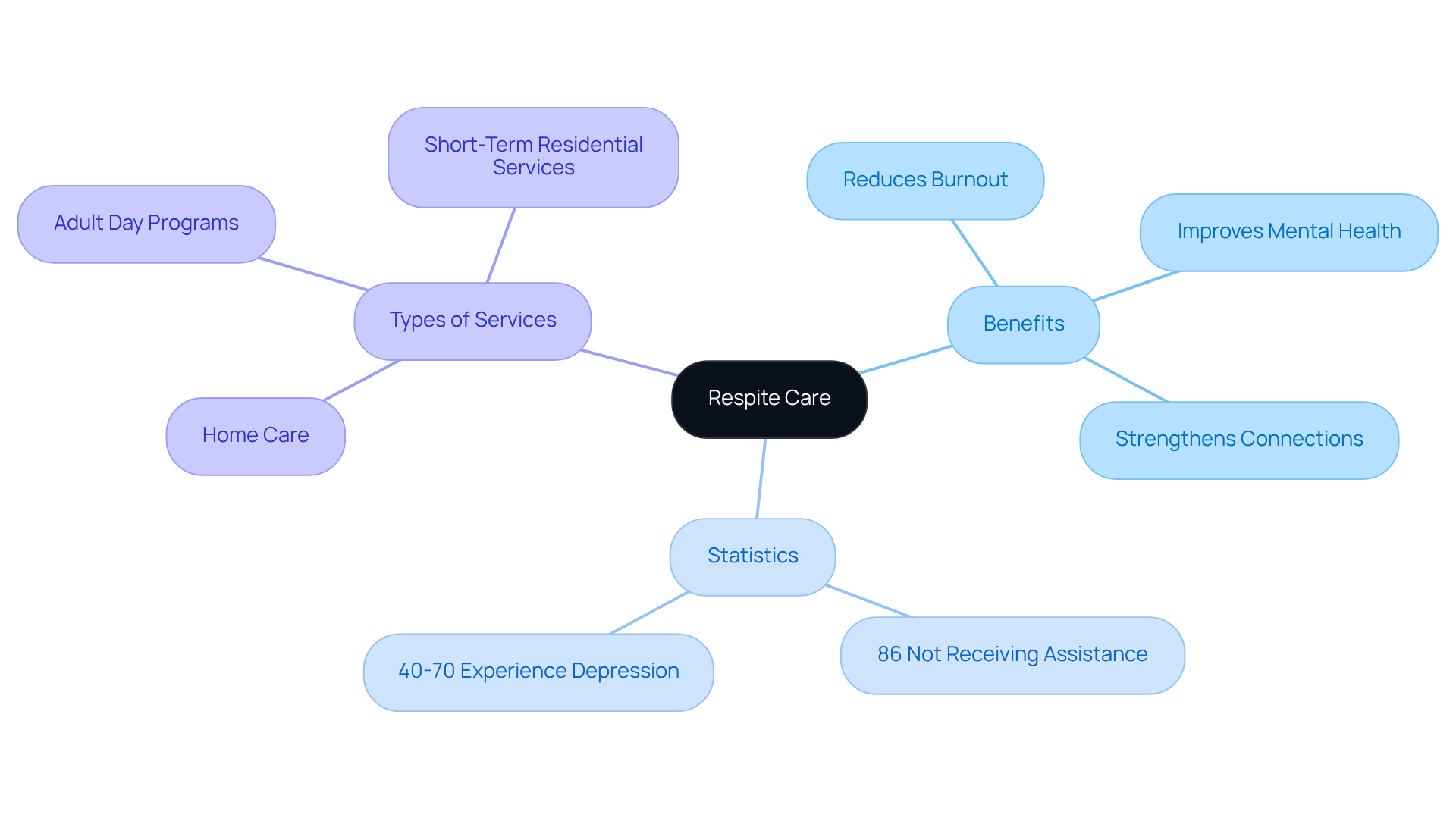
Respite services offer family supporters a much-needed break from their caregiving duties. This temporary relief allows caregivers to focus on their own health and well-being, reducing the risk of burnout. While family members take time to rest and recharge, clients continue to receive quality support, benefiting both the caregiver and the recipient.
Research shows that 86% of individuals supporting an adult aren’t receiving respite assistance, highlighting the urgent need for these services. Caregivers who utilize respite services often return feeling revitalized and more patient, which helps strengthen their connections with those they support. Mental health professionals stress the importance of self-care; as one expert wisely noted, "You cannot pour from an empty cup." Additionally, studies reveal that 40% to 70% of family supporters experience significant symptoms of depression, underscoring the mental health challenges they face.
Respite support can take many forms, such as:
- home care Lakewood
- adult day programs
- short-term residential services
By alleviating feelings of isolation and stress, respite support serves as a lifeline for caregivers, enabling them to fulfill their caregiving responsibilities without sacrificing their own well-being. As caregiving demands continue to grow, the importance of these support systems cannot be overstated.
Palliative Support Care: Enhancing Quality of Life for Chronic Illnesses
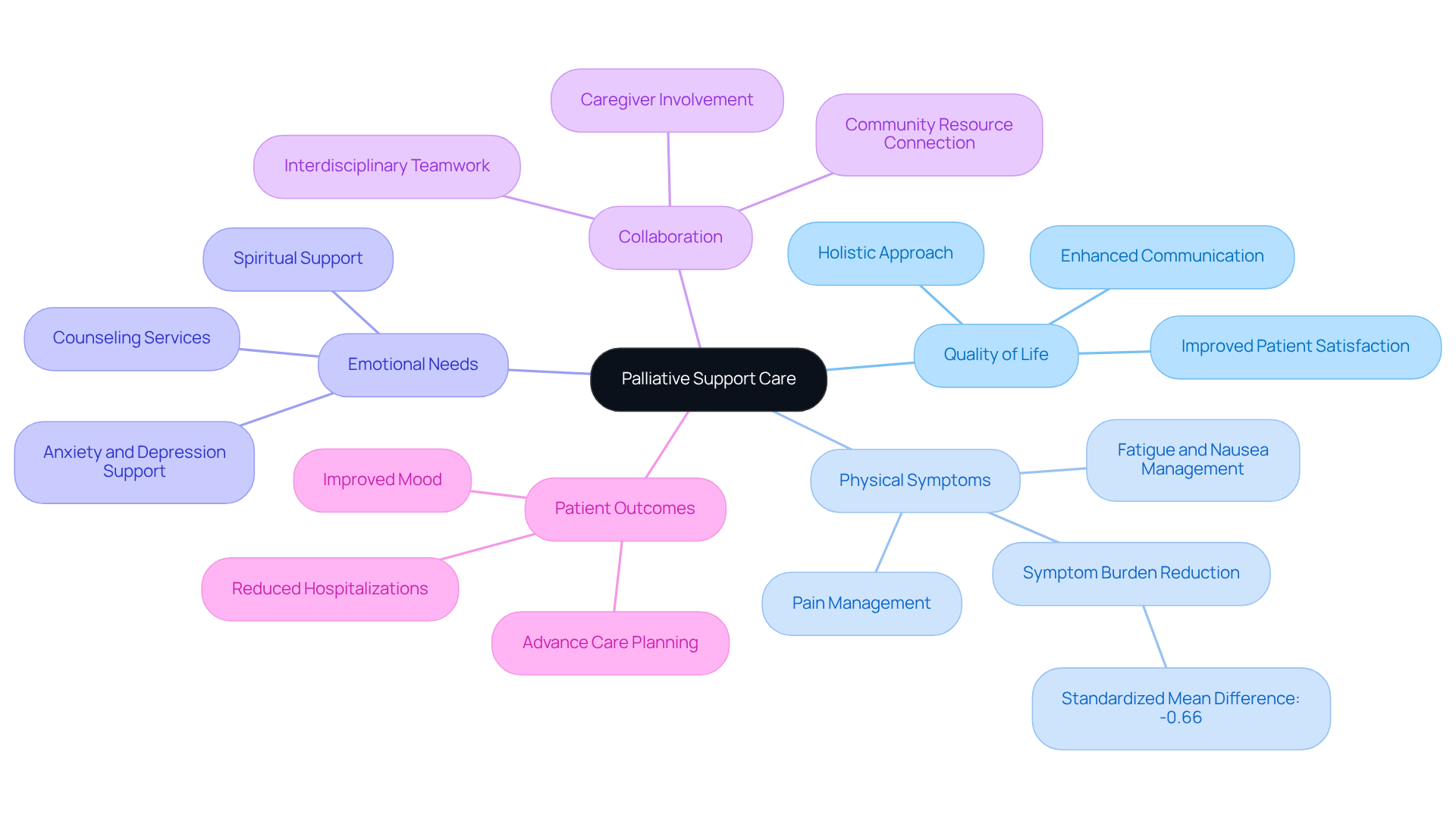
Palliative assistance is all about enhancing the quality of life for those navigating chronic illnesses. It’s not just about tackling physical symptoms; it’s about addressing emotional and psychological needs too. Caregivers work hand in hand with clients, helping to manage pain, provide comfort, and support overall well-being. This collaboration enables individuals to lead fulfilling lives, even in the face of health challenges.
Recent advancements in palliative support have shown remarkable improvements in patient outcomes. For instance, studies indicate that palliative care can lead to a standardized mean difference of -0.66 in symptom burden at 1- to 3-month follow-ups. This highlights its effectiveness in managing chronic illnesses and improving mood.
Healthcare providers emphasize that introducing palliative support early on not only eases distressing symptoms but also fosters better communication about treatment goals. This ultimately enhances the patient experience and satisfaction. It’s a comprehensive support system that’s crucial for tackling the challenges of chronic illness, ensuring that patients receive the compassionate care they truly deserve.
Tailored Care Plans: Customizing Services to Individual Needs
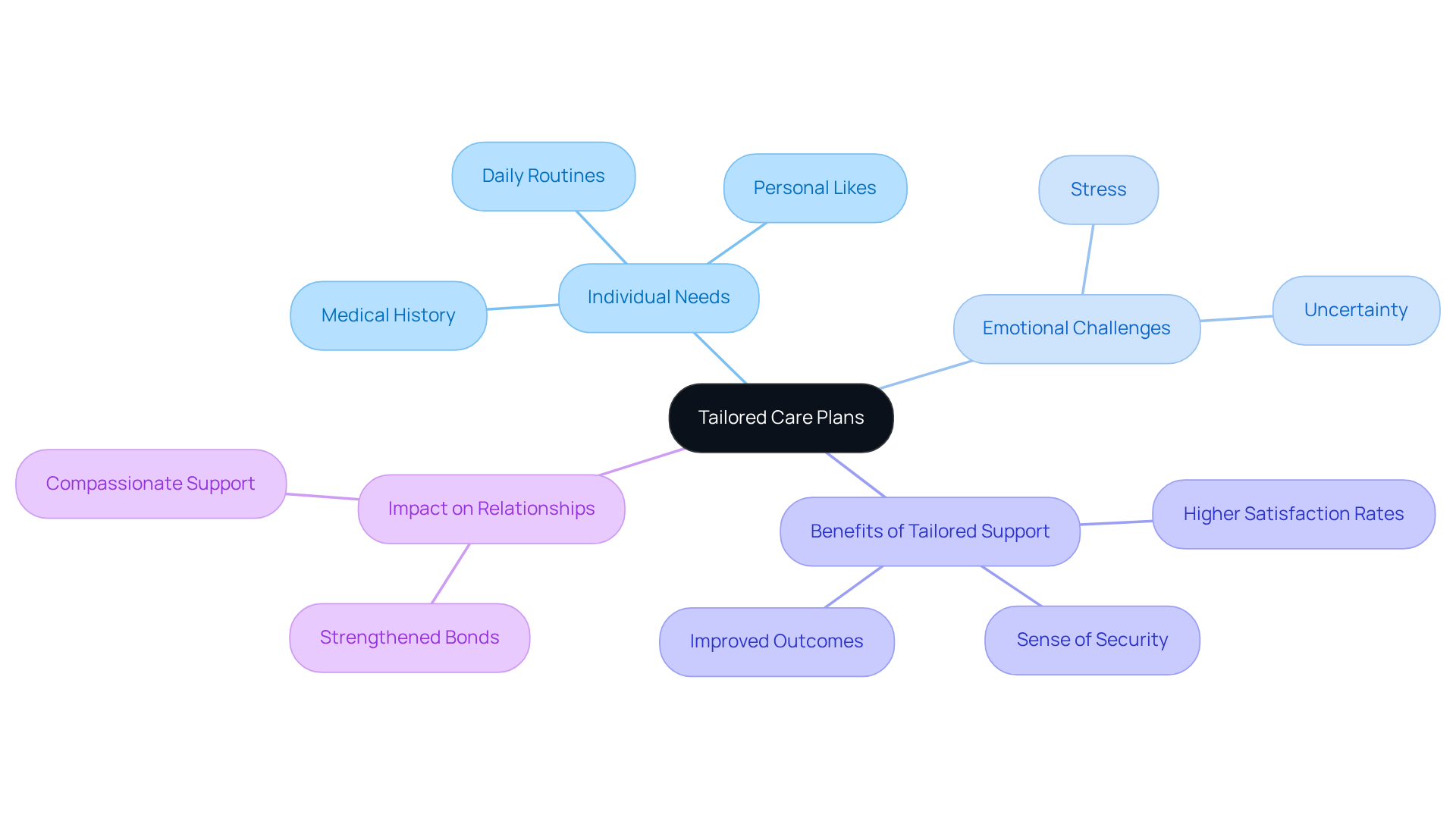
Customized treatment plans are vital for effective home care Lakewood services. They’re thoughtfully crafted to reflect the unique needs, preferences, and lifestyles of each individual. By taking into account essential factors like medical history, daily routines, and personal likes, caregivers can develop a plan that significantly enhances the individual’s quality of life and fosters independence.
Many families face emotional challenges when seeking care for their loved ones. The stress and uncertainty can be overwhelming. However, research shows that tailored support plans lead to higher satisfaction rates. A 2024 J.D. Power study found that family satisfaction with assisted living and memory support has risen notably. Families often share stories of improved outcomes and a newfound sense of security for their loved ones.
This personalized approach in home care Lakewood not only empowers individuals but also strengthens the bond between caregivers and care recipients. It ensures that support is both compassionate and effective. As Tia Walker beautifully puts it, "Support often calls us to lean into love we didn’t know possible." This quote captures the profound impact of personalized assistance on both those receiving care and those providing it.
In the end, knowing that there’s a tailored plan in place can bring peace of mind to families, allowing them to focus on what truly matters: the well-being of their loved ones.
24/7 Availability: Ensuring Constant Support and Peace of Mind
Support providers being present at all times forms the backbone of effective home care in Lakewood. This constant availability significantly impacts the well-being of both clients and their families. Knowing that their loved ones are never alone brings families peace of mind, allowing them to relax, knowing help is just a moment away. In emergencies or during routine care, having support personnel available around the clock fosters a sense of safety and comfort in familiar surroundings.
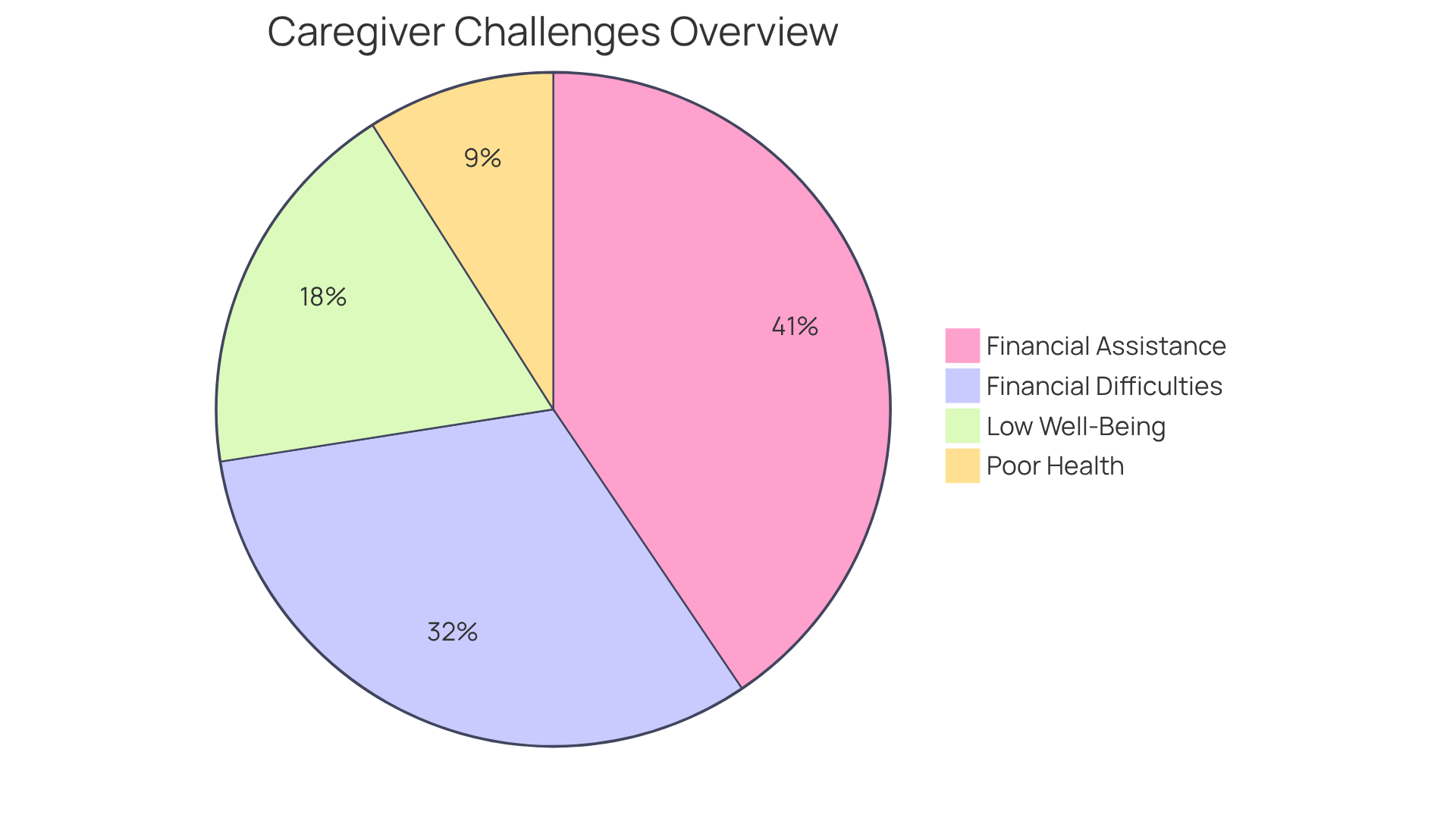
Families often express deep relief at the thought of trained professionals ready to handle emergencies and provide companionship. This reassurance is invaluable, especially considering that nearly 20% of caregivers report their health as fair or poor due to their responsibilities. Additionally, 41% of caregivers indicate low overall well-being, a figure notably higher than those not in caregiving roles, underscoring the emotional toll of caregiving.
The financial strain on caregivers is also considerable. A staggering 71% face financial difficulties, and 90% provide some form of financial assistance for their loved ones. Continuous support through home care Lakewood not only enhances the quality of life for clients but also allows family members to focus on their own health and well-being, secure in the knowledge that their loved ones are in capable hands. This holistic approach to support leads to better mental health outcomes for both caregivers and those they assist. In fact, 40% of caregivers report that their responsibilities negatively affect their stress levels, highlighting the crucial role of 24/7 availability in fostering peace of mind.
Technology Integration: Enhancing Communication and Care Coordination
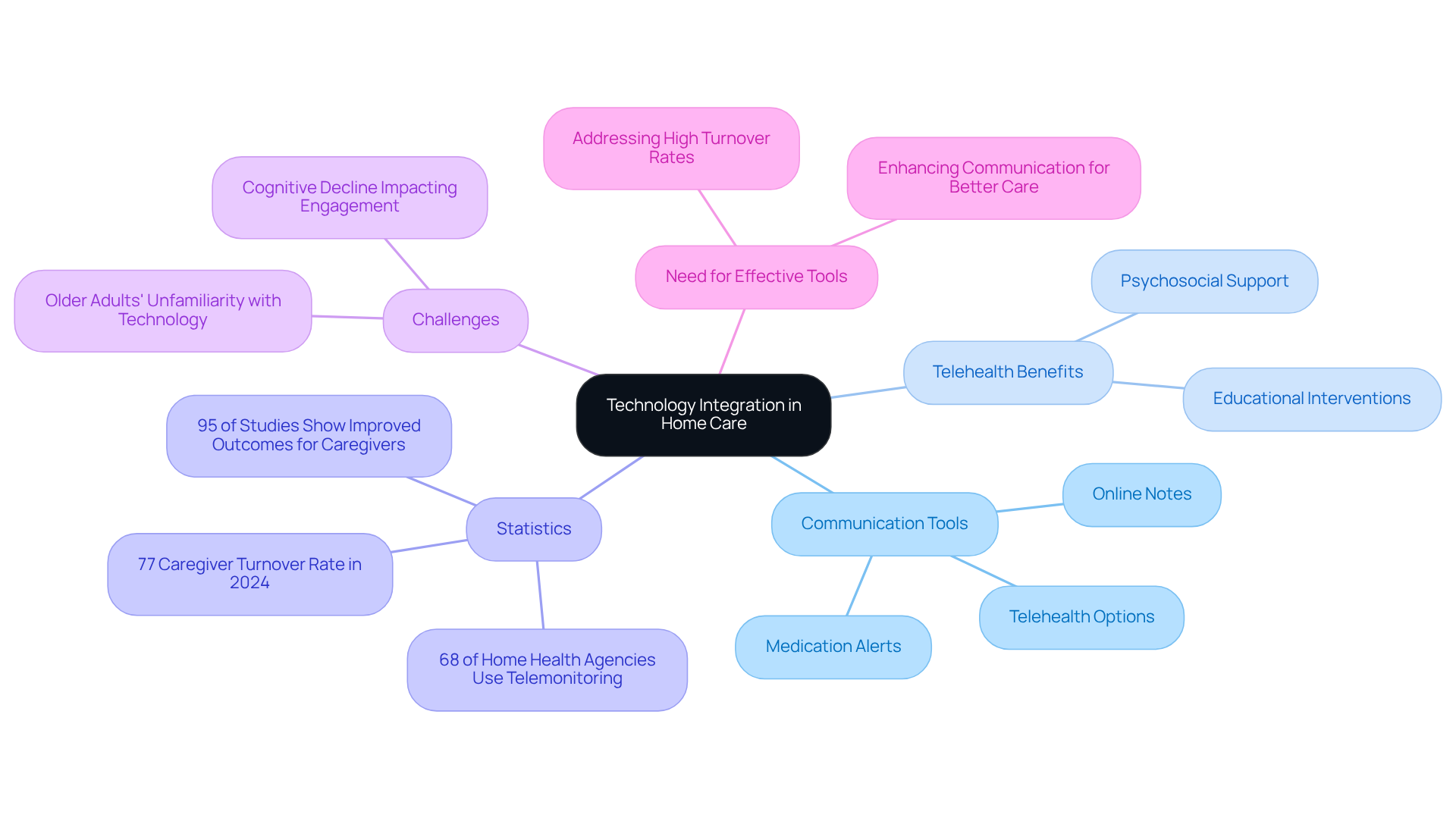
The integration of technology in home care Lakewood services truly enhances communication and service coordination. Tools like online notes for family members, medication alerts, and telehealth options empower supporters to keep families informed and engaged in their loved ones' care. This seamless communication builds trust, ensuring that everyone is aligned with the client's needs and preferences.
Telehealth has shown remarkable effectiveness in providing educational interventions and psychosocial support. In fact, over 95% of studies indicate substantial improvements in outcomes for caregivers. Many caregivers express that these technologies not only simplify communication but also enhance their ability to oversee assistance efficiently. As one provider shared, "The use of telehealth has changed my method of support, making it simpler to connect with healthcare professionals and obtain essential resources."
With more than 68% of Medicare-certified home health agencies utilizing telemonitoring or virtual assistance, the impact of technology on communication with providers is profound. This shift leads to better outcomes for both providers and those receiving support. However, we must acknowledge the challenges older adults face in using technology, such as unfamiliarity and cognitive decline, which can hinder their engagement with these valuable tools.
Moreover, the high staff turnover rate of 77% in 2024 underscores the urgent need for effective communication tools in the home support sector. By addressing these challenges and embracing technology, we can foster a more supportive environment in home care Lakewood for both caregivers and clients, ensuring that everyone feels connected and cared for.
Trained Caregivers: Ensuring Quality and Trust in Home Care
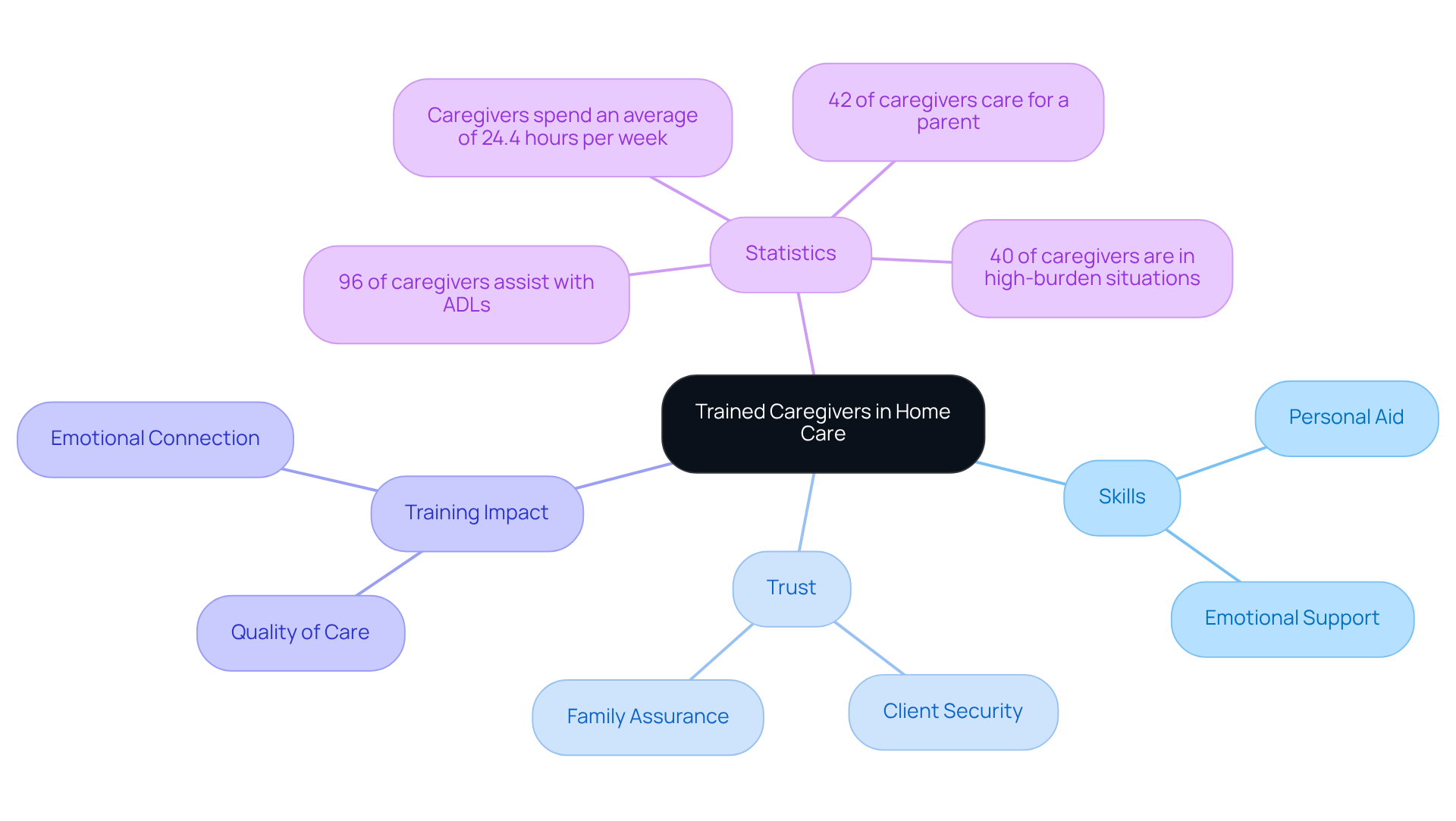
Skilled professionals form the heart of quality home assistance services. They possess the abilities needed to meet the diverse needs of individuals, offering everything from personal aid to emotional support. Their rigorous training not only sharpens their skills but also builds trust with clients and their families. This trust is vital, as families can feel secure knowing their loved ones are in capable hands.
Research shows that support programs for caregivers lead to better outcomes for patients and their family supporters. This reinforces the idea that well-trained providers are essential for effective home care Lakewood services. Families depend on attendants for the well-being of their loved ones, and that trust must be earned - not just through kindness, but through competence.
The impact of provider training goes beyond personal interactions; it significantly boosts the overall quality of home care Lakewood services. Clients receive compassionate and professional support tailored to their unique needs. As the demand for skilled support workers grows due to an aging population, the importance of thorough training becomes even more critical.
More than 96% of caregivers assist with activities of daily living (ADLs), showcasing the practical skills that trained caregivers bring to the table. This dedication to care not only addresses the immediate needs of clients but also nurtures a deeper emotional connection, ensuring that families feel supported and understood.
Promoting Independence: Empowering Clients to Thrive at Home
Promoting independence is a fundamental goal of home care Lakewood services. Caregivers play a crucial role in motivating individuals to engage in daily activities and make decisions about their care. This not only fosters a sense of autonomy but also nurtures their spirit.
Imagine a caregiver encouraging a client to choose their meals or decide on their daily routine. These small choices can significantly impact their sense of control and well-being. By providing the right support and resources, home care Lakewood caregivers empower clients to thrive in their own homes, enhancing their overall quality of life.
It’s heartwarming to see how this support transforms lives. One caregiver shared, "Seeing my client smile when they make a choice is the best part of my day." Such moments highlight the compassionate care that in-home services offer, creating a deeper emotional connection.
In this nurturing environment, clients not only receive assistance but also feel valued and respected. Caregivers are there to guide them, ensuring they feel confident and secure in their choices. Together, they create a space where independence flourishes, and every day brings new opportunities for joy and fulfillment.
Moving Forward with Home Care Lakewood Services
Personalized home care services in Lakewood truly make a difference in the lives of seniors and their caregivers. These services focus on individualized support, addressing not just the physical needs of clients but also nurturing their emotional well-being, independence, and sense of belonging. This holistic approach allows seniors to thrive in their own homes, while caregivers receive the much-needed respite and support to prevent burnout.
Key services highlighted in this article are vital for effective home care:
- Companionship assistance
- Post-hospital recovery support
- Respite care
- Palliative aid
Each of these services plays a crucial role in promoting emotional health, ensuring safe transitions after hospitalization, and empowering clients to maintain their independence. Moreover, the integration of technology enhances communication and care coordination, making it easier for families to stay engaged in their loved ones' care.
The significance of personalized home care services cannot be overstated. They improve the lives of seniors and provide essential support to family caregivers, allowing them to focus on their own health and well-being. By embracing these vital services, families can create a nurturing environment that fosters independence, emotional connection, and overall satisfaction for everyone involved. Investing in quality home care is a proactive step towards ensuring a brighter, healthier future for both clients and caregivers alike.
https://iframe.tely.ai/cta/eyJhcnRpY2xlX2lkIjogIjY5MWU1YWI2YzBkNDJlMTUwMDY1YWNhZSIsICJjb21wYW55X2lkIjogIjY4ZWU1ZGNhNzMxNzYyNTU3ZjNjOTVjMSIsICJpbmRleCI6IG51bGwsICJ0eXBlIjogImFydGljbGUifQ==Frequently Asked Questions
What services does Happy to Help Caregiving provide?
Happy to Help Caregiving provides personalized in-home care services, including companionship assistance, post-hospital recovery help, respite services, and palliative aid, all customized to meet individual needs.
How does personalized care benefit seniors and individuals with special needs?
Personalized care enhances the quality of life for seniors and individuals with special needs by providing essential support that fosters a sense of security, comfort, independence, and dignity.
What is the significance of companionship assistance in home care?
Companionship assistance offers emotional support to seniors, helping to combat feelings of loneliness and isolation through meaningful conversations and activities, which significantly enhance their emotional well-being.
How does post-hospital recovery assistance improve recovery outcomes?
Post-hospital recovery assistance helps patients navigate daily activities, manage medications, and assist with mobility, leading to a 20% lower hospital readmission rate and quicker recovery to previous levels of function and independence.
What is the role of caregivers in the home care process?
Caregivers provide not only practical support but also emotional support, helping both seniors and their families feel cared for and connected during challenging times.
How does Happy to Help Caregiving address the needs of caregivers?
Happy to Help Caregiving acknowledges the stress and burnout that caregivers may experience and offers support to help them navigate these challenges while ensuring that both caregivers and seniors feel connected.
What impact does social engagement have on seniors' mental health?
Consistent social engagement through companionship support leads to better mental health outcomes for seniors, highlighting the importance of fostering relationships that bring joy and comfort.