
For families in our service areas
For families in our service areas, this guide explains caregiver support and how non-medical in-home caregiving can support care planning in East Idaho, Treasure Valley & Magic Valley, Northern Wasatch, North Central West Virginia, and Northeast Ohio.
Understanding Home Palliative Care Services
As families navigate the complex and emotional landscape of end-of-life care, it’s clear that the need for effective home palliative care services is more pressing than ever. These services not only provide essential medical support but also address the emotional and psychological needs of both patients and their caregivers.
With many seniors choosing to age in place, understanding the critical components of personalized palliative care can truly empower families. It allows them to make informed decisions during such a challenging time.
How can caregivers ensure they have the right resources to enhance their loved ones' quality of life? It’s a question that weighs heavily on many hearts. The journey can be overwhelming, but there is hope and support available.
By recognizing the emotional challenges and stress that caregivers face, we can begin to explore the compassionate care that can make a difference. Together, we can navigate this path with understanding and love.
Happy to Help Caregiving: Personalized Palliative Support Services
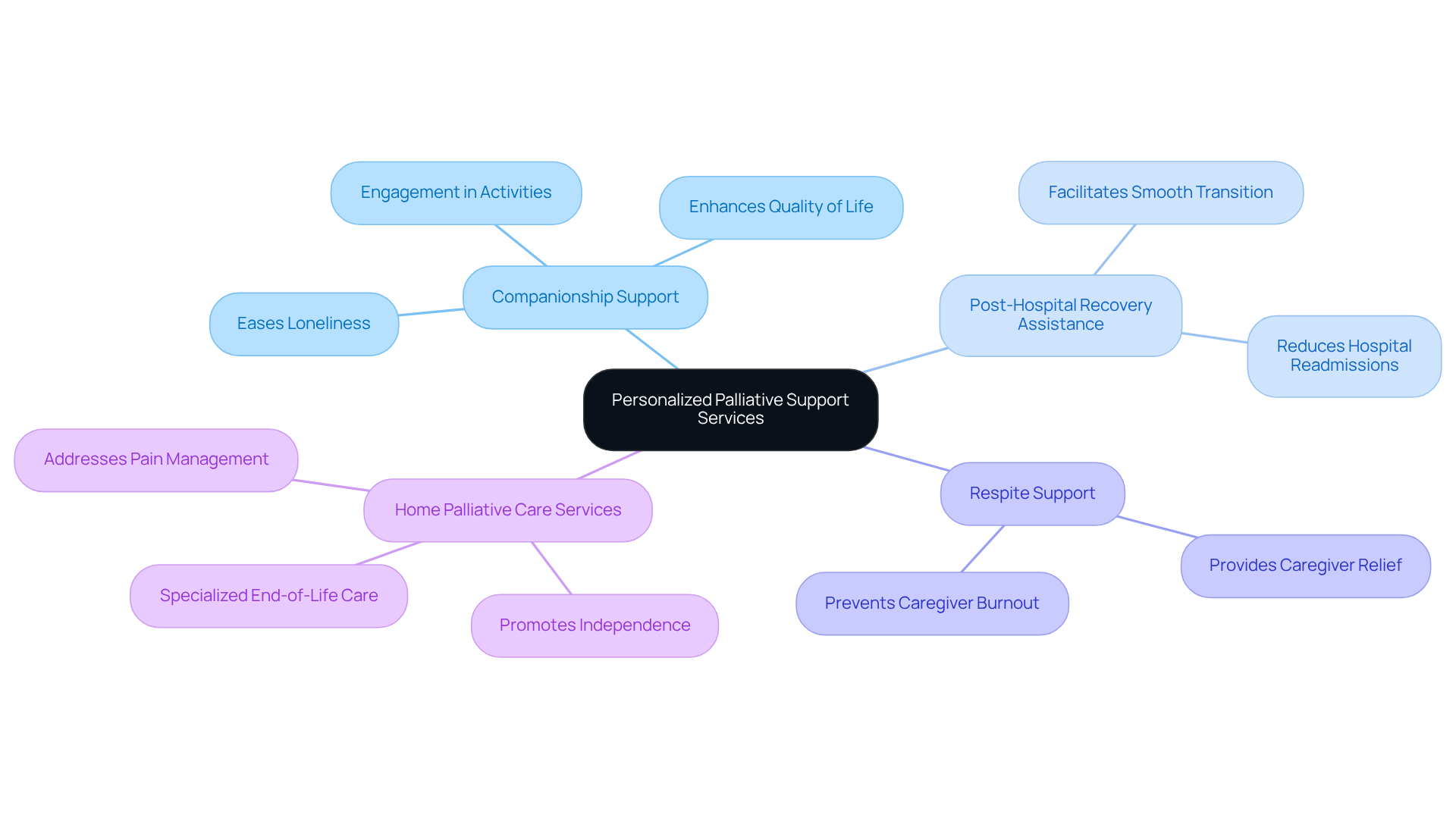
Happy to Help Caregiving truly understands the emotional journey of those facing end-of-life challenges. They excel in providing customized support services that cater to the unique needs of each client. Their extensive offerings include:
- Companionship support
- Post-hospital recovery assistance
- Respite support
- Home palliative care services for specialized end-of-life care
Each service is thoughtfully designed to promote independence and enhance well-being, ensuring clients receive both psychological and physical support in the comfort of their own homes.
Companionship care is essential in palliative support. It not only eases feelings of loneliness but also significantly enhances the overall quality of life for seniors. Did you know that 90% of adults over 65 prefer to age in place at home? This statistic underscores the importance of services that prioritize mental well-being alongside physical health. Caregivers are trained to engage clients in enjoyable activities, fostering meaningful interactions that uplift spirits and nurture mental health. Whether it’s facilitating hobbies, sharing stories, or simply lending a listening ear, the presence and connection provided during these challenging times are invaluable. As Carl W. Buechner wisely said, "They may forget what you said, but they will never forget how you made them feel," reminding us of the profound impact of companionship.
As we look toward 2025, there’s a growing recognition of the importance of companionship in home palliative care services. With more seniors choosing to age in place, the demand for home palliative care services that prioritize emotional well-being alongside physical health is increasing. Happy to Help Caregiving is leading the way in this movement, ensuring that clients receive not only the necessary medical support but also the companionship that enriches their lives. Additionally, addressing the hidden crisis in aging populations regarding pain management, companionship assistance can play a crucial role in providing comfort and support, ultimately enhancing the quality of life for seniors.
Mount Sinai at Home: Expert Symptom Management for Palliative Care
At Mount Sinai at Home, we truly understand the emotional challenges that caregivers face when supporting loved ones with serious illnesses. It can be overwhelming, filled with stress and burnout. That’s why our dedicated team is here to help, prioritizing the alleviation of distressing symptoms like pain, nausea, and fatigue through personalized treatment plans tailored to each individual’s unique needs.
We take a compassionate, multidisciplinary approach, ensuring that our support encompasses both physical and emotional dimensions. This holistic care greatly enhances the quality of life for individuals by utilizing home palliative care services, allowing them to find comfort in their own homes. We believe that everyone deserves to feel supported and cared for with the help of home palliative care services during such challenging times.
Our commitment to personalized support in home palliative care services reflects the current trends in end-of-life care, highlighting the significance of addressing the comprehensive needs of patients. We’re here to provide not just medical assistance, but also emotional reassurance, fostering a nurturing environment where individuals and their families can feel safe and understood.
As one caregiver shared, "Having this support at home made all the difference for us. It felt like we weren’t alone in this journey." This sentiment echoes the heart of our mission - to ensure that no one has to navigate these difficult moments alone. Together, we can create a space of compassion and care, helping you and your loved ones find peace and comfort.
Cleveland Clinic: Education and Advocacy in Palliative Care
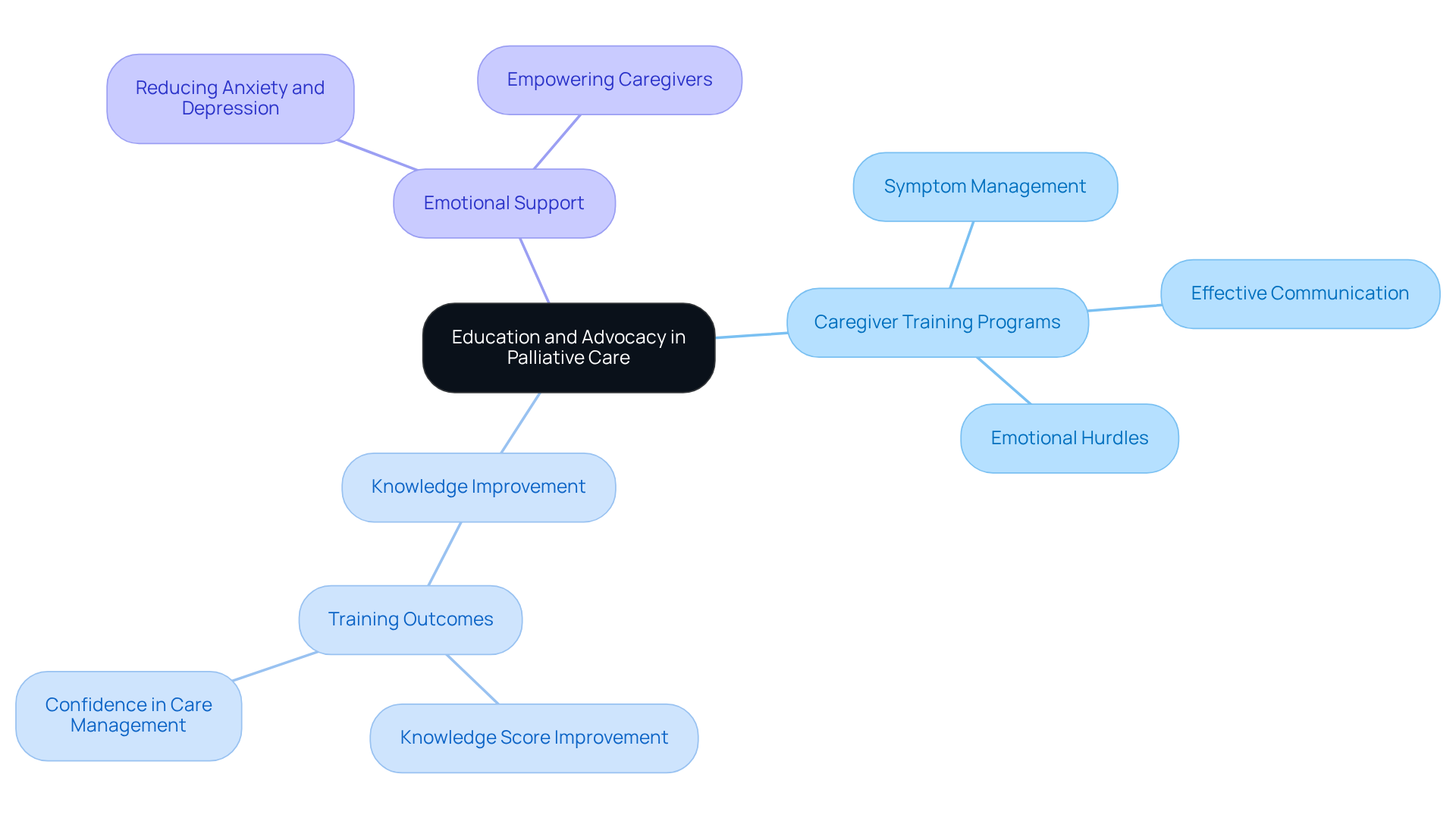
Happy to Help Caregiving understands the emotional challenges that families face during end-of-life support. Knowledgeable families are better equipped to navigate the difficulties that come with severe illnesses. That’s why the organization emphasizes education and advocacy, offering comprehensive training programs designed to empower caregivers.
These programs provide essential knowledge on symptom management, effective communication strategies, and the emotional hurdles of caregiving. Research shows that caregiver training significantly improves outcomes for those receiving support. In fact, the median total score for knowledge and practice of palliative support rises from 90 to 100 after training.
By prioritizing caregiver training, Happy to Help Caregiving ensures that families feel empowered and confident in their ability to provide compassionate support during challenging times. As Shelli Feder beautifully puts it, "We can’t change the fact that you’re dying. But what we can change is how you’re feeling in this moment."
This commitment to education not only enhances the quality of support provided but also nurtures a caring atmosphere for both individuals receiving treatment and their families. It’s about creating a space where everyone feels understood and supported, fostering connections that matter.
Wellstar: Home-Based Palliative Care Services
At Happy to Help Caregiving, we understand the emotional and physical challenges that come with significant health issues. Our specialized home palliative care services focus on providing not just symptom relief, but also the emotional support that individuals and their families desperately need during these tough times. Our dedicated team collaborates closely with families to craft personalized support plans tailored to the unique needs of each individual. This approach not only elevates the quality of care but also empowers individuals to maintain their independence in the comfort of their own homes.
The significance of personalized treatment plans in palliative care is profound. Research shows that these tailored plans lead to greater satisfaction and improved health outcomes, as they comprehensively address both medical and emotional needs. Healthcare professionals emphasize that a client-centered approach fosters better communication and teamwork among caregivers, individuals, and families, ultimately enhancing the overall experience.
As we move into 2025, the focus on personalized treatment plans continues to evolve. Innovative strategies are being implemented to ensure that each person's preferences and values are respected. Heartwarming success stories from families highlight the transformative impact of customized support, demonstrating how tailored interventions can significantly improve the quality of life for both individuals and their loved ones. By prioritizing personalized assistance, Happy to Help Caregiving is paving the way for the future of supportive services, ensuring that everyone receives the compassionate and effective care they truly deserve.
NCBI Review: Essential Components of Quality Home Palliative Care
Caring for a loved one at home during their final days can be incredibly challenging. Many caregivers experience feelings of stress and burnout as they navigate this emotional journey. A review by NCBI highlights the essential components of quality home palliative care services that can help alleviate some of these burdens.
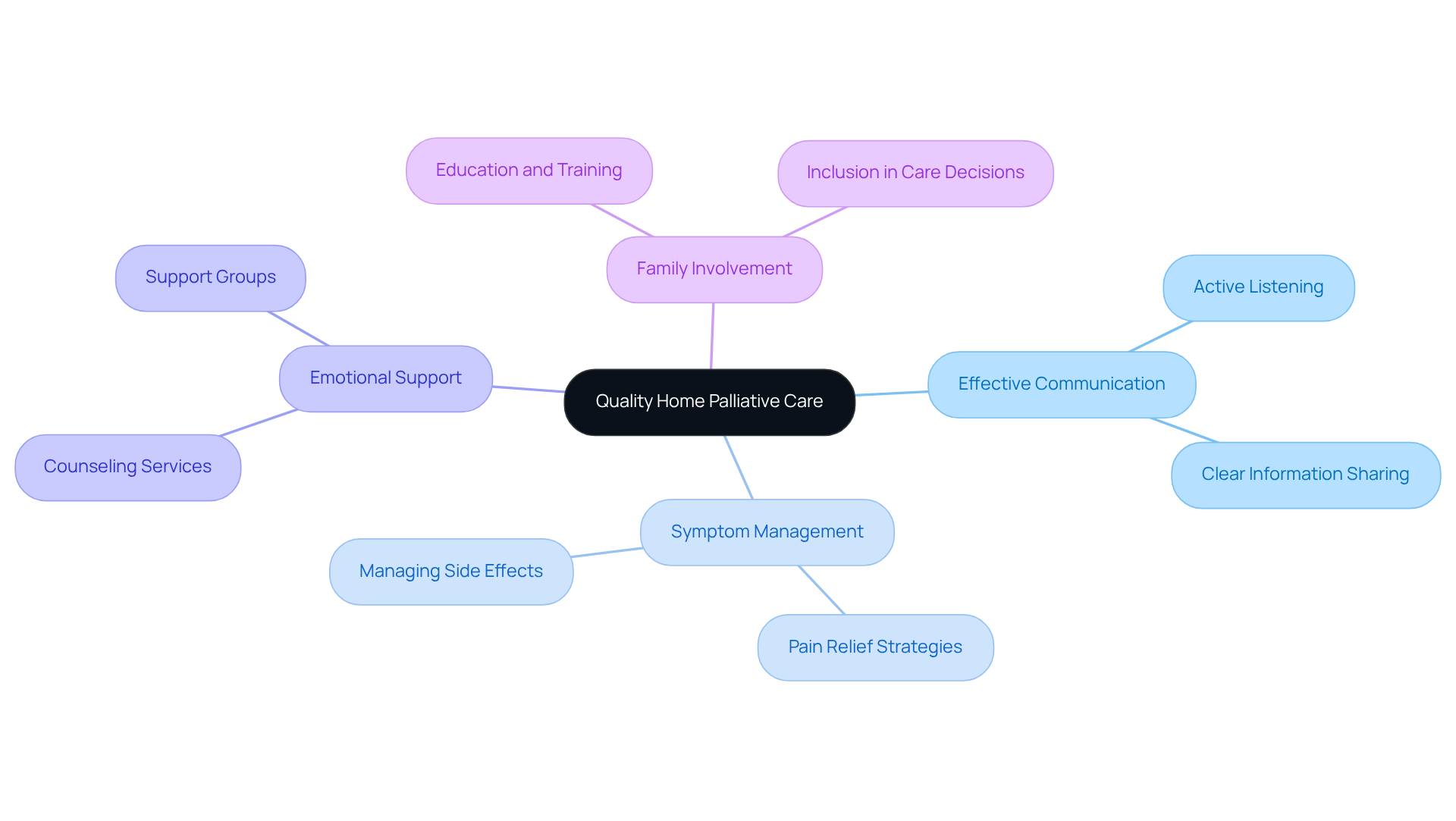
Effective communication, symptom management, emotional support, and family involvement are crucial elements that ensure patients receive comprehensive care. These home palliative care services address not only the physical needs but also the emotional and spiritual well-being of both patients and their families.
Imagine having a team that understands your struggles and provides the support you need. Care providers should seek home palliative care services that prioritize these components, as they can significantly enhance the overall standard of support for your loved ones. Remember, you’re not alone in this journey; compassionate care is available to help you every step of the way.
Cleveland Clinic: Types of Palliative Care Explained
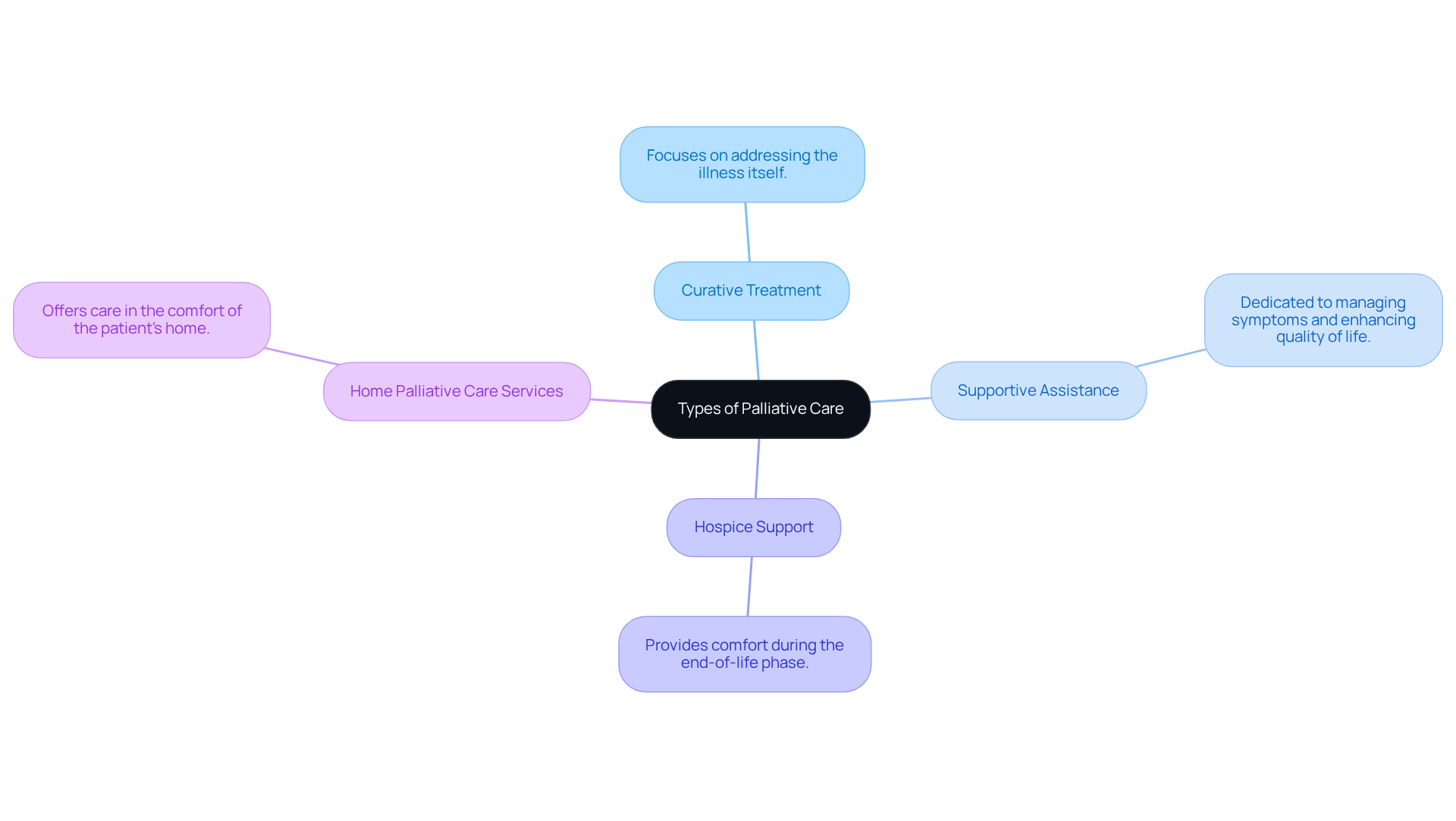
At Cleveland Clinic, we understand the emotional challenges caregivers face when navigating the complexities of home palliative care services. It can be overwhelming, and the feelings of stress and burnout are all too common. That’s why we offer a comprehensive overview of the types of palliative assistance available, including home palliative care services, as well as curative, supportive, and hospice services.
Each type of care serves a specific purpose:
- Curative treatment focuses on addressing the illness itself.
- Supportive assistance is dedicated to managing symptoms and enhancing quality of life.
- Hospice support provides comfort during the end-of-life phase, ensuring that both patients and their families feel cared for and supported.
It’s important for families to be aware of these distinctions. Understanding the different types of support, such as home palliative care services, can empower you to make informed choices about the care your loved ones receive. Remember, you’re not alone in this journey. We’re here to help you every step of the way, providing compassionate care tailored to your needs.
NCBI Insights: Teamwork in Palliative Care for Better Outcomes
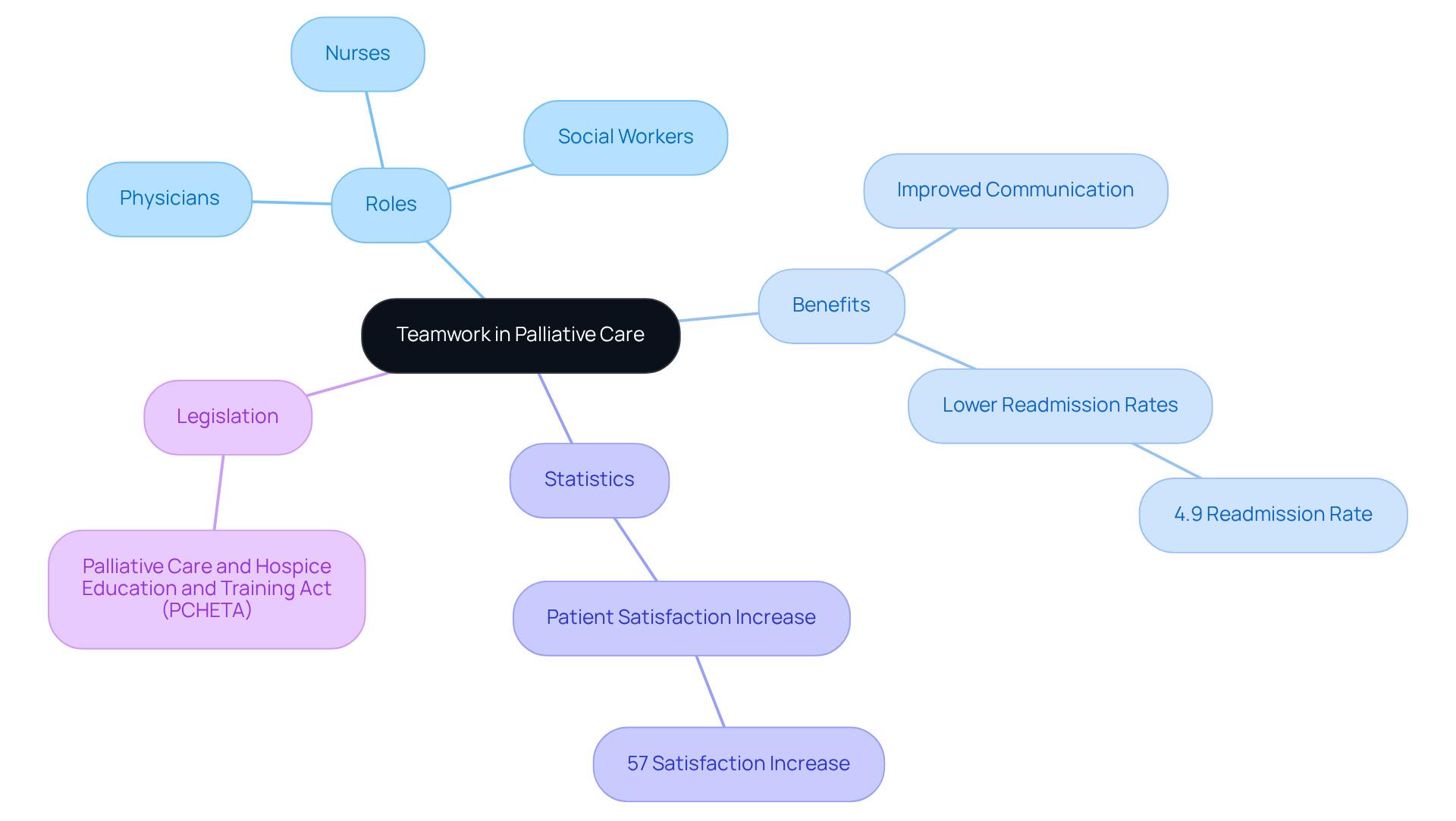
Recent studies reveal the vital role of teamwork in delivering home palliative care services for end-of-life support. When physicians, nurses, social workers, and other healthcare specialists come together, they ensure that every aspect of an individual's care is addressed. This collaborative approach not only enhances communication and coordination but also significantly improves the quality of home palliative care services provided. For instance, research indicates that individuals receiving supportive care through these collaborative teams experience lower readmission rates, with only 4.9% readmitted within seven days after discharge.
Healthcare professionals emphasize that effective communication is essential in end-of-life care settings. Poor communication can lead to higher readmission rates, which adds to the stress caregivers already face. By embracing a collaborative model, caregivers can foster a supportive environment that meets both the physical and emotional needs of individuals, ultimately leading to better outcomes for them and their families with home palliative care services.
Moreover, the Comfort and Hospice Education and Training Act (PCHETA), reintroduced in July 2025, aims to enhance end-of-life services. It underscores the importance of collaboration in improving satisfaction among individuals. In fact, 57% of studies found a significant increase in satisfaction linked to team-based support. This reinforces the idea that when we work together, we can create a more compassionate and effective care experience.
Cleveland Clinic: Social and Spiritual Support in Palliative Care
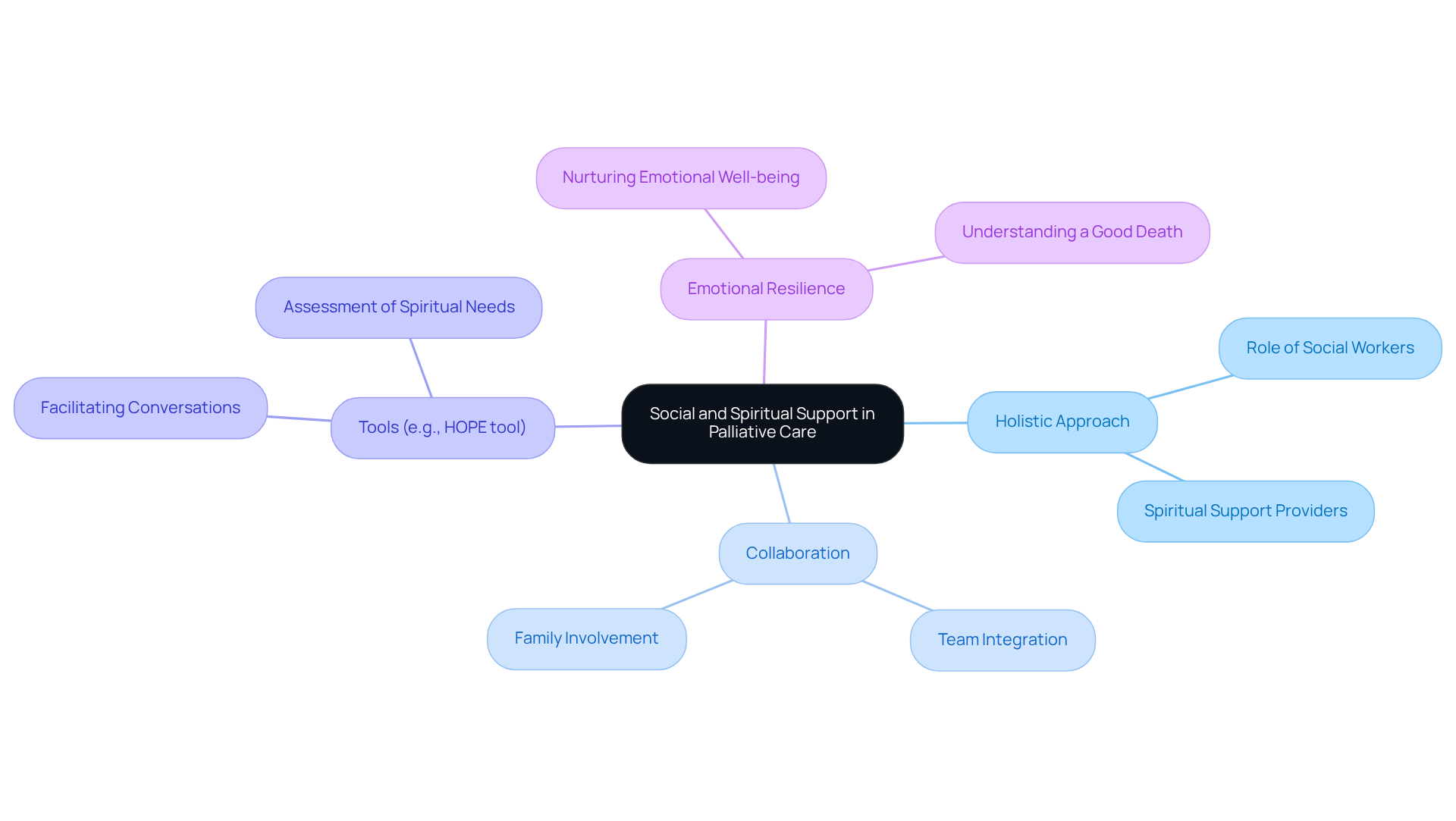
Cleveland Clinic emphasizes the vital role of social and spiritual support in end-of-life care. These elements are crucial for meeting the emotional and psychological needs of individuals and their families. By integrating social workers and spiritual support providers into the palliative care team, healthcare professionals can offer a more holistic approach that enhances well-being during these challenging times.
Tools like the HOPE tool can help facilitate conversations about spiritual needs, ensuring that care aligns with personal preferences. Understanding the evolving concept of a 'good death' allows caregivers to tailor their support to what matters most to individuals, addressing the emotional distress and spiritual challenges they may face.
This collaborative model not only eases physical symptoms but also nurtures emotional resilience, empowering individuals to navigate their experiences with greater peace and dignity. In these moments, the compassionate care provided can truly make a difference, fostering a sense of connection and understanding that is so essential.
NCBI Findings: Timely and Responsive Care in Palliative Settings
The results from NCBI highlight how crucial it is to have prompt and attentive support in end-of-life settings. Families often face overwhelming emotions during this time, and having rapid access to healthcare professionals can make a world of difference. Timely interventions for symptom management not only improve patient comfort but also help ease the distress that families experience.
It's essential for families to seek out home palliative care services that prioritize quick response systems. This ensures that their loved ones receive the vital support they need from home palliative care services when it matters most. Remember, you’re not alone in this journey; compassionate care is available to help guide you through these challenging moments.
Cleveland Clinic: When to Initiate Palliative Care
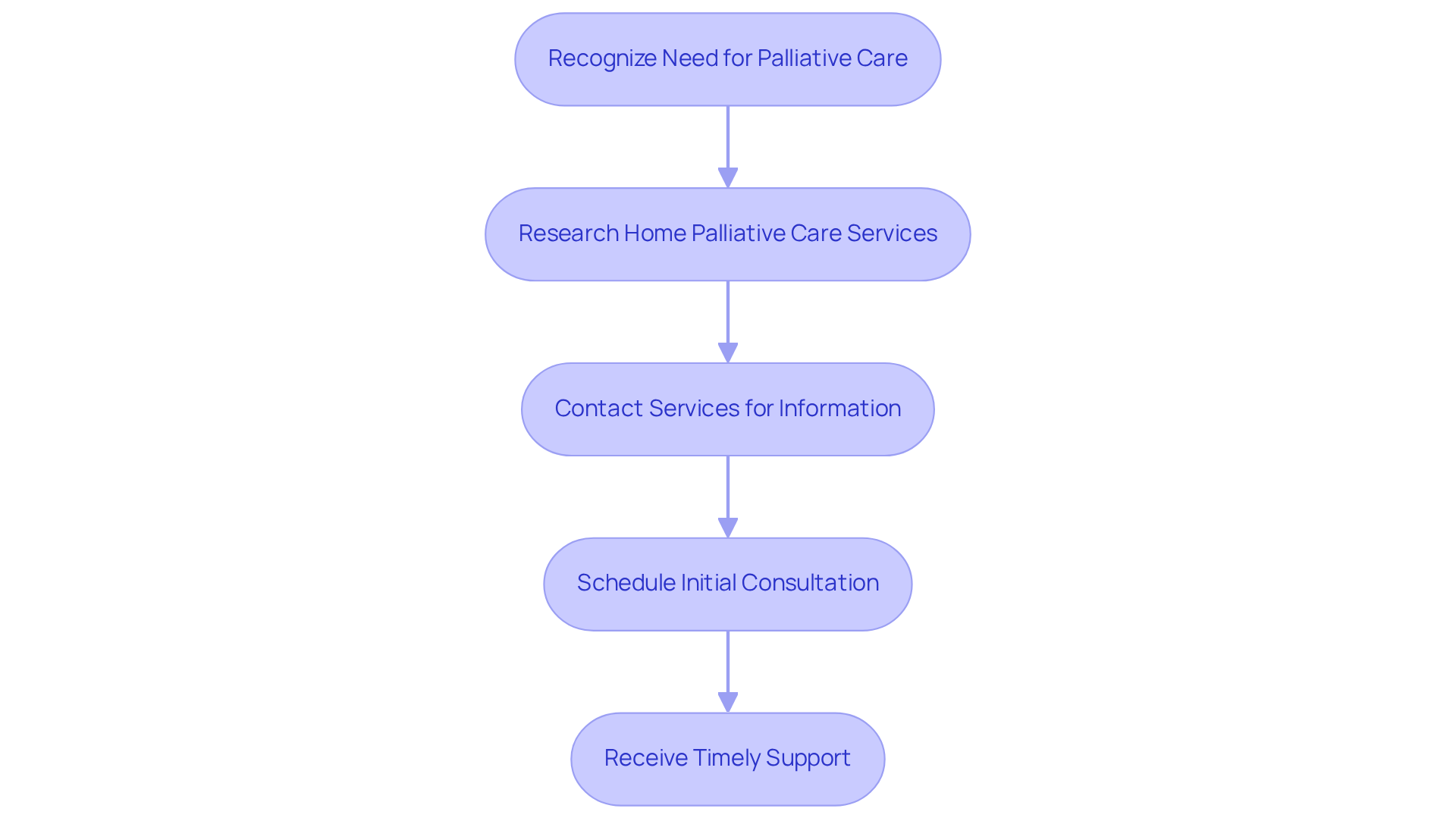
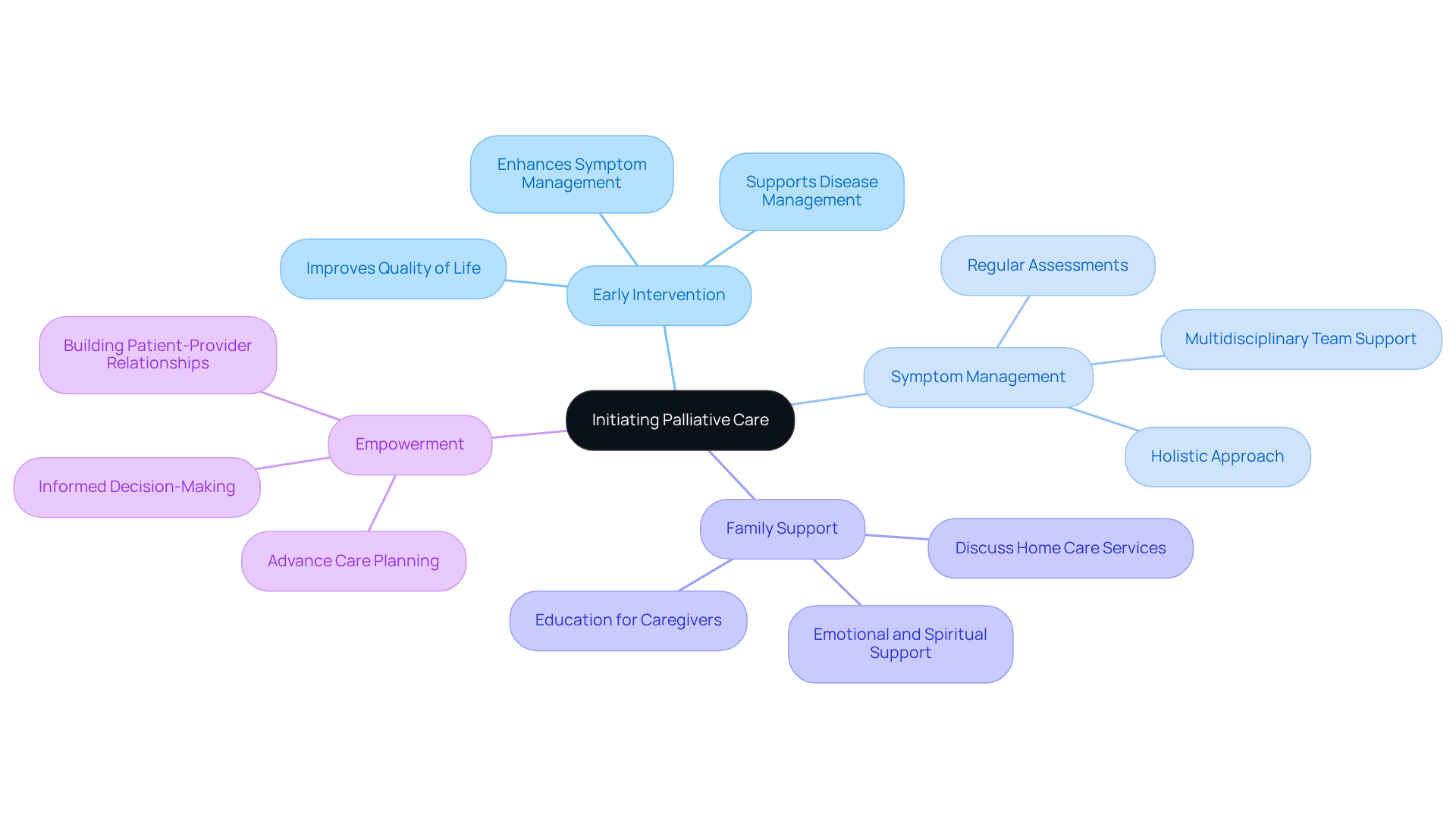
Cleveland Clinic emphasizes the importance of starting supportive treatment as soon as a severe illness is identified. This early intervention not only helps manage symptoms better but also significantly enhances the patient's quality of life.
Families often face overwhelming stress and uncertainty during these times. It’s crucial to discuss home palliative care services with healthcare providers early in the treatment process. This proactive approach can maximize the benefits of care, providing much-needed support for both patients and their loved ones.
By addressing these concerns early, families can feel more empowered and connected to the care process. Remember, you’re not alone in this journey; compassionate support is available to help you navigate these challenging moments.
Your Path Forward
Home palliative care services hold immense significance for family caregivers. These vital services offer not just medical support but also emotional and psychological assistance, helping both patients and their families navigate the complexities of end-of-life care with dignity and compassion. By focusing on personalized care plans, companionship, and timely interventions, these services truly enhance the quality of life for individuals facing serious health challenges.
Throughout this discussion, organizations like Happy to Help Caregiving, Mount Sinai at Home, and Cleveland Clinic stand out for their dedication to providing comprehensive palliative care. Key insights reveal:
- How companionship can reduce feelings of isolation
- The importance of caregiver education for effective symptom management
- The advantages of a collaborative approach involving a multidisciplinary team
Together, these elements create a more supportive environment for both patients and their families.
As families journey through the emotional landscape of caregiving, it’s essential to recognize the resources available to them. Seeking home palliative care services that prioritize personalized support, education, and timely responses can significantly ease stress and enhance the overall caregiving experience. By embracing these essential services, families can ensure their loved ones receive the compassionate care they deserve, fostering a sense of peace and connection during these challenging times.
https://iframe.tely.ai/cta/eyJhcnRpY2xlX2lkIjogIjY5MWU1YWJmMDAzNjA5ODRkZWZlZjlhOCIsICJjb21wYW55X2lkIjogIjY4ZWU1ZGNhNzMxNzYyNTU3ZjNjOTVjMSIsICJpbmRleCI6IG51bGwsICJ0eXBlIjogImFydGljbGUifQ==Frequently Asked Questions
What services does Happy to Help Caregiving offer for palliative support?
Happy to Help Caregiving offers personalized palliative support services that include companionship support, post-hospital recovery assistance, respite support, and home palliative care services for specialized end-of-life care.
How does companionship support benefit seniors in palliative care?
Companionship support eases feelings of loneliness and significantly enhances the overall quality of life for seniors. It promotes mental well-being by engaging clients in enjoyable activities and fostering meaningful interactions.
Why is companionship important for seniors who prefer to age in place?
Companionship is crucial as 90% of adults over 65 prefer to age in place at home. It addresses both emotional and physical health needs, ensuring seniors feel connected and supported during challenging times.
What approach does Mount Sinai at Home take in palliative care?
Mount Sinai at Home employs a compassionate, multidisciplinary approach to palliative care, focusing on alleviating distressing symptoms like pain, nausea, and fatigue through personalized treatment plans.
How does personalized support enhance the quality of life for individuals receiving palliative care?
Personalized support in home palliative care services addresses comprehensive needs, providing not just medical assistance but also emotional reassurance, creating a nurturing environment for individuals and their families.
What role does caregiver training play in palliative care according to Happy to Help Caregiving?
Caregiver training is essential as it empowers families with knowledge on symptom management, effective communication, and emotional support, significantly improving outcomes for those receiving care.
What impact does education and advocacy have on families facing end-of-life challenges?
Education and advocacy equip families with the necessary tools to navigate severe illnesses, enhancing their confidence and ability to provide compassionate support during difficult times.
How does Happy to Help Caregiving ensure that families feel supported during caregiving?
Happy to Help Caregiving emphasizes education and training, fostering an environment where families feel empowered and understood, ultimately ensuring they do not have to navigate end-of-life challenges alone.