
Understanding Insights on Nursing Home Care for
Navigating the complexities of nursing home care for veterans presents a significant challenge for families striving to support their loved ones. With numerous options available, understanding the unique needs and benefits tailored to former military personnel is essential. However, what happens when the very systems designed to assist them become overwhelming?
This situation can lead to confusion and frustration for caregivers, making it difficult to make informed decisions. Families may feel lost amid the myriad of services and eligibility criteria, which can ultimately impact the quality of care their loved ones receive.
To address these challenges, this article provides essential insights into nursing home care for veterans. It offers guidance on available services, eligibility criteria, and financial support options. By equipping families with this knowledge, they can navigate the complexities of care more effectively, ensuring a better quality of life for those who have served.
Happy to Help Caregiving: Personalized In-Home Care for Veterans
Many former service members face challenges in obtaining the support they need as they transition back to civilian life. This lack of adequate assistance can lead to feelings of isolation and hinder their ability to maintain independence.
Happy to Help Caregiving addresses this issue by offering customized in-home assistance specifically designed for former military personnel. Services include:
- Companionship
- Help with everyday tasks
- Tailored support plans that cater to their unique needs
By providing these essential services, Happy to Help Caregiving not only promotes independence but also significantly enhances the quality of life for those who have served our country. With the right support in a familiar setting, former service members can thrive and enjoy a fulfilling life.
VA Long-Term Care Services: Understanding Your Options
Caregivers often struggle to find the right nursing home care for veterans, which can feel overwhelming. Understanding the available options is crucial for ensuring that loved ones receive the best care possible.
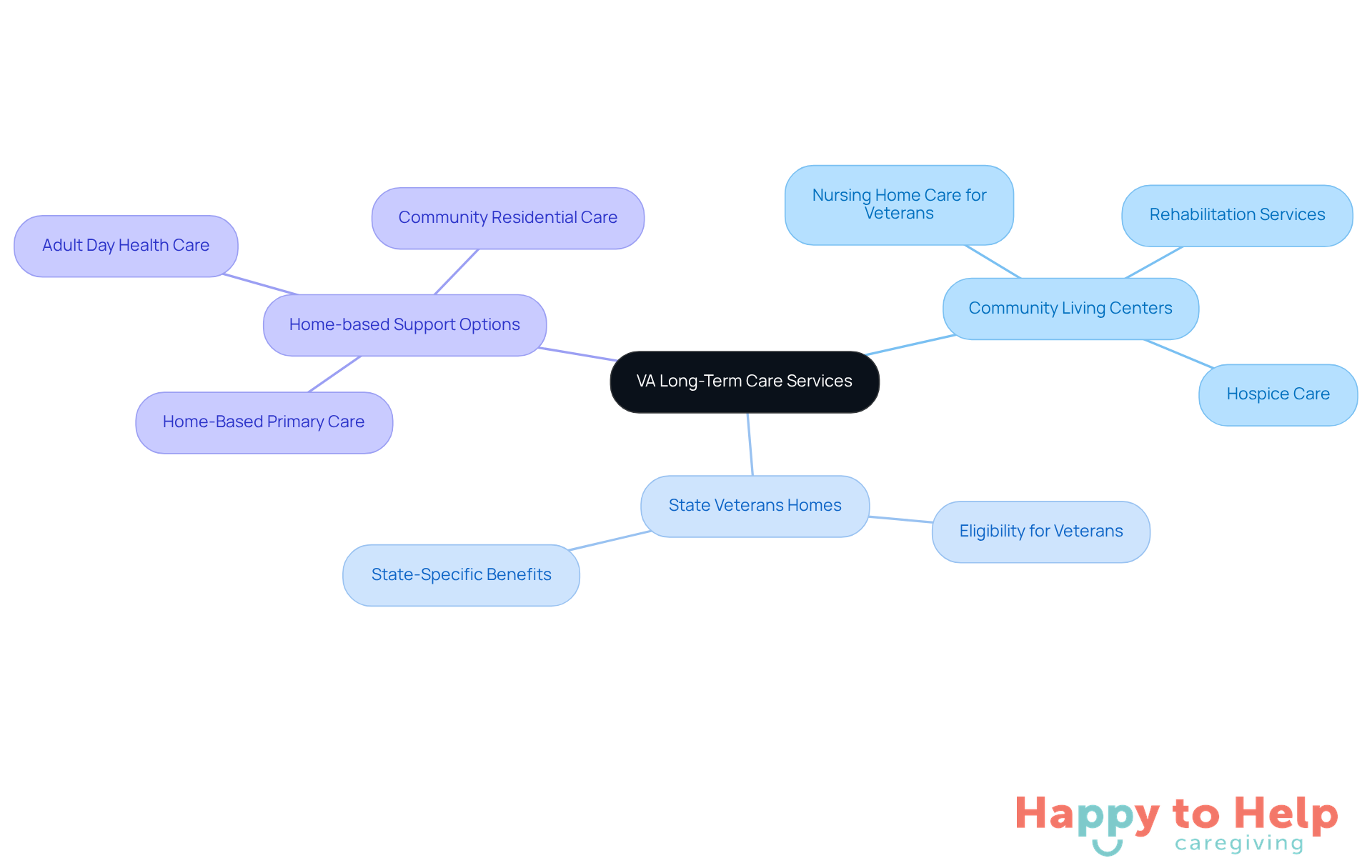
The VA provides nursing home care for veterans along with a range of services tailored to meet the diverse needs of former military personnel. These include:
- Community Living Centers (nursing home care for veterans)
- State Veterans Homes
- Home-based support options
Each service is designed to address specific requirements, from skilled nursing support to assistance with daily living tasks.
By familiarizing themselves with these choices, families can make informed decisions that enhance the quality of life for their loved ones. It's essential to explore these resources to find the most suitable support.
Eligibility for VA Nursing Home Care: Who Qualifies?
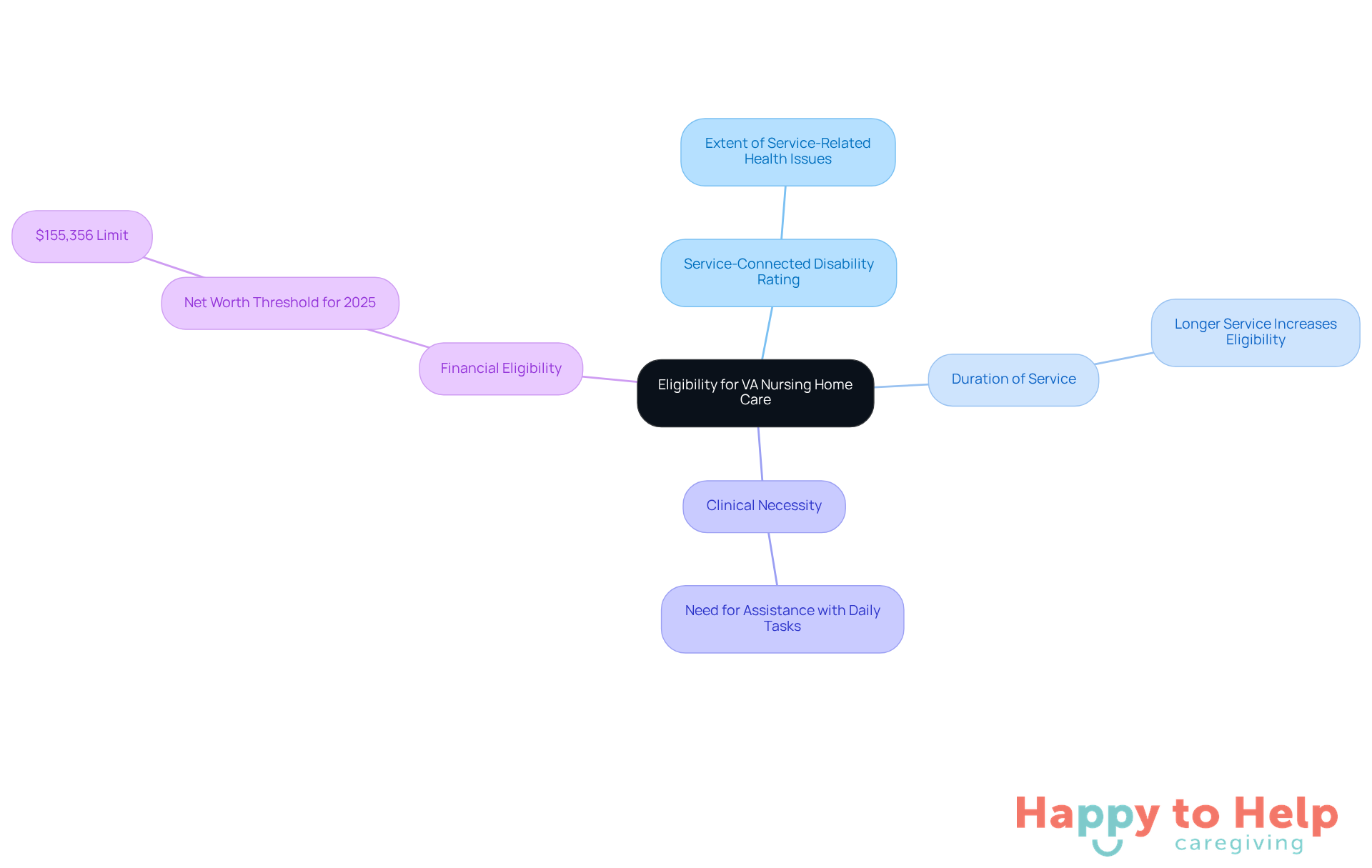
To be eligible for nursing home care for veterans, individuals who served in the military face several key requirements. The primary issue is the need for a service-connected disability rating, which reflects the extent of their service-related health issues. Additionally, the duration of service plays a significant role; those who have served longer generally have a better chance of qualifying. A clinical necessity for support is also crucial, meaning that former service members must demonstrate a need for help with daily tasks due to health issues or disabilities.
Financial eligibility is another critical factor. For 2025, the net worth threshold for former military personnel seeking assistance is set at $155,356, which includes both yearly income and measurable assets. This threshold ensures that assistance is directed toward those who genuinely need it.
Real-life examples highlight the impact of these criteria. For instance, a 70-year-old disabled former service member recently inquired about the application process for long-term support assistance for his wife with Alzheimer's. This underscores the necessity for clear guidance in navigating these benefits. Furthermore, the VA's commitment to improving access to services is evident, as they continue to refine their methods to better assist former military personnel and their families.
Currently, thousands of former military personnel are eligible for nursing home care for veterans, which reflects the growing demand for such services. According to Bridget Craig, demand for home-based, long-term assistance is projected to increase by more than 50 percent by 2040. This highlights the importance of understanding eligibility criteria. VA representatives stress that eligibility is not solely based on combat status but rather on the individual's disability rating and financial situation. This approach ensures that all former service members, regardless of their service record, have the opportunity to obtain the support they need.
Additionally, former service members should be aware that improper transfers of assets may lead to penalties, emphasizing the importance of careful financial planning when applying for benefits.
VA Financial Support: How Much Does the VA Pay for Nursing Home Care?
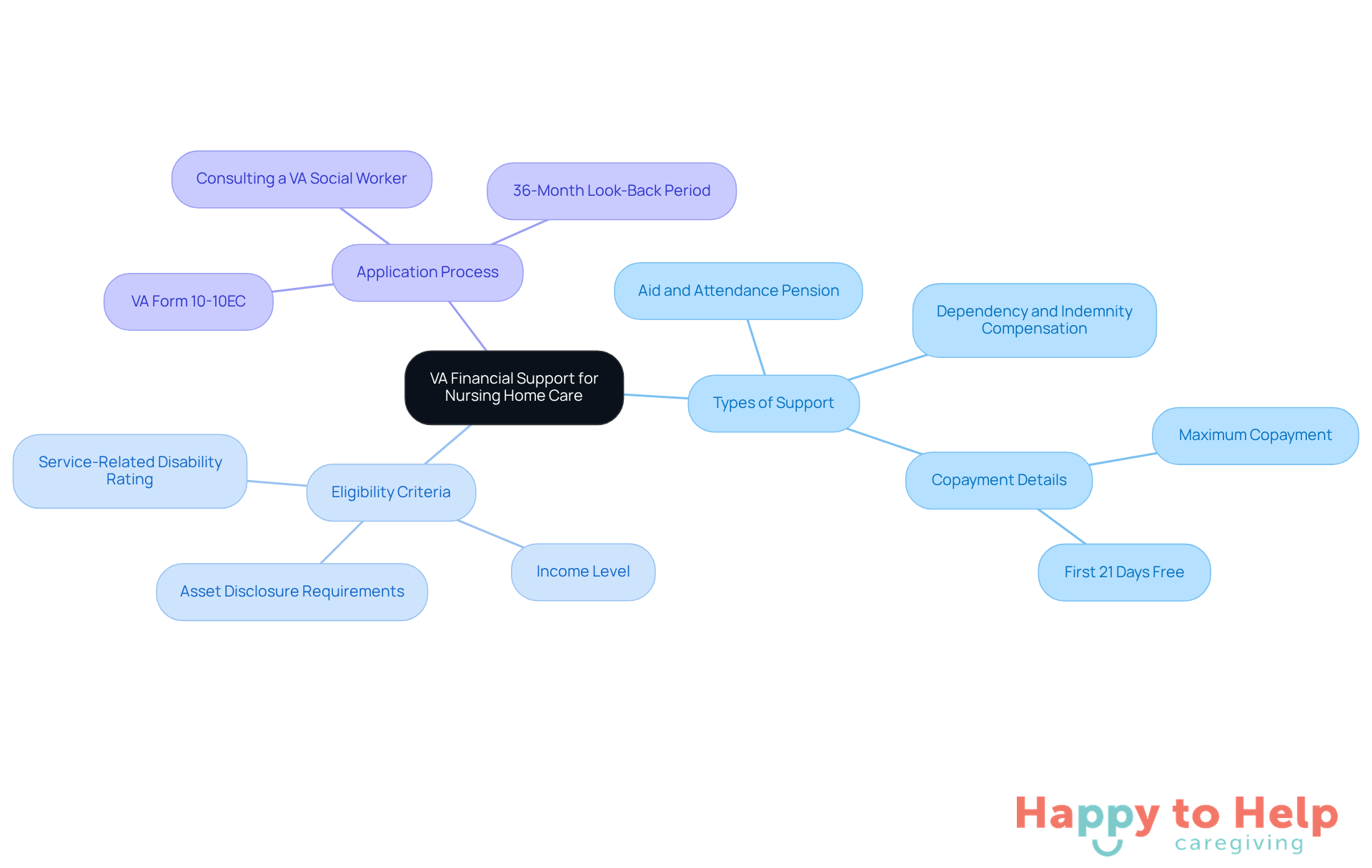
The financial burden of nursing home care for veterans can be overwhelming for families, particularly for those with veteran members. The VA provides significant financial assistance, but this support varies based on an individual's service-related disability rating and income level. For eligible former service members, the VA typically covers most expenses related to nursing home care for veterans, which can greatly alleviate the financial strain on families. In 2025, the maximum copayment for former military personnel was set at $97 per day, starkly contrasting with the national median costs of $285 for a semi-private room and $320 for a private room. Importantly, no service member pays for the first 21 days of care in any 12-month period, making this financial assistance crucial for those who may require long-term care due to chronic illnesses or disabilities.
Veterans can also benefit from nursing home care for veterans and programs like the Aid and Attendance Pension, which provides additional financial support for those needing help with daily tasks or who are housebound. This program enhances the basic VA pension, ensuring that former service members receive the necessary support to maintain their quality of life. Furthermore, the Dependency and Indemnity Compensation program offers financial assistance for surviving spouses of veterans, helping them manage nursing home costs.
Navigating the application process can be challenging for families. Veterans must disclose their assets, income, and deductible expenses when applying for extended support services. The VA enforces a 36-month look-back period to prevent improper asset transfers, ensuring that benefits reach those who genuinely need them. Consulting with a VA social worker can provide valuable guidance in exploring support options and understanding eligibility criteria. Additionally, former military personnel must complete VA Form 10-10EC to determine copay amounts for nursing home admission.
Instances of former service members obtaining financial support highlight the positive impact of these programs. Many families have successfully utilized VA resources to secure essential support for their loved ones, which helps alleviate the burden of high nursing home care for veterans. As the VA continues to enhance its support for older service members, understanding these financial options is crucial for families seeking the best assistance solutions.
Accessing VA Benefits: Steps to Secure Nursing Home Care
Obtaining VA support for nursing home assistance can be a daunting task for former service members. Many face challenges in navigating the application process for VA health services, which is the first step in securing the necessary support. In 2021, approximately 6.8 million veterans received care through the Veterans Health Administration (VHA), underscoring the critical need for these services.
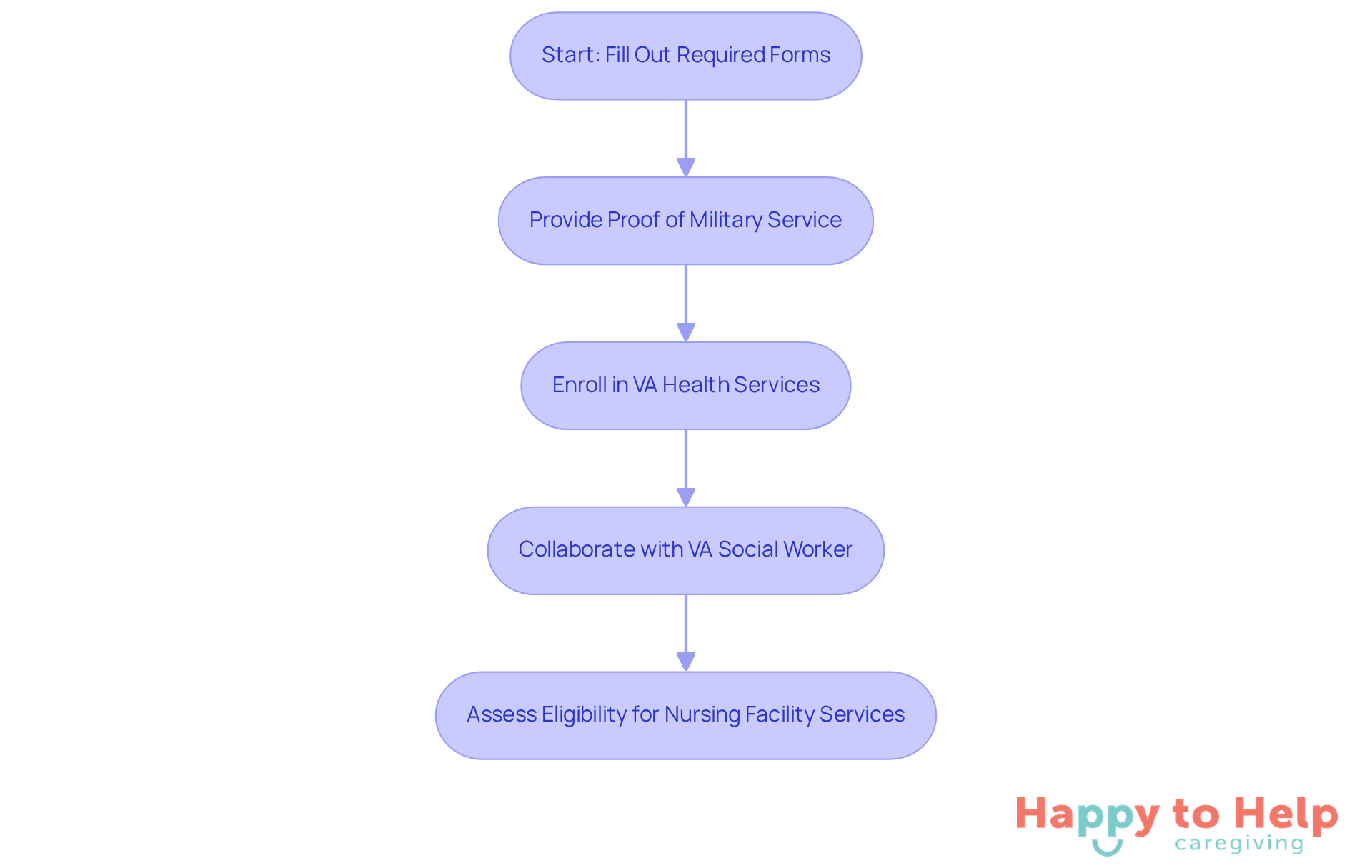
To tackle this issue, former service members must first:
- Fill out the required forms.
- Provide proof of their military service to apply for VA health services.
Once enrolled, they can collaborate with a VA social worker to assess their eligibility for nursing facility services and initiate the application process for specific benefits. Staying organized and informed throughout this journey is vital for success.
Veterans are encouraged to:
- Keep detailed records of their application materials.
- Maintain regular communication with their VA social worker, who can provide valuable guidance and assistance.
Success stories from veterans who have navigated this process highlight the importance of persistence and the resources available to them. As one VA social worker noted, "Understanding the steps and having the right support can make all the difference in obtaining the assistance individuals need."
By following these steps and utilizing available resources, former service members can effectively secure nursing home assistance through VA entitlements.
Additional Senior Care Benefits for Veterans: What You Should Know
Veterans face significant challenges when it comes to securing adequate nursing home care for veterans to assist with their daily living tasks. Financial strain can hinder their ability to maintain independence, especially for those requiring nursing home care for veterans or other forms of assisted living. The Aid and Attendance program addresses this issue by providing essential financial aid, allowing former service members to access the support they need.
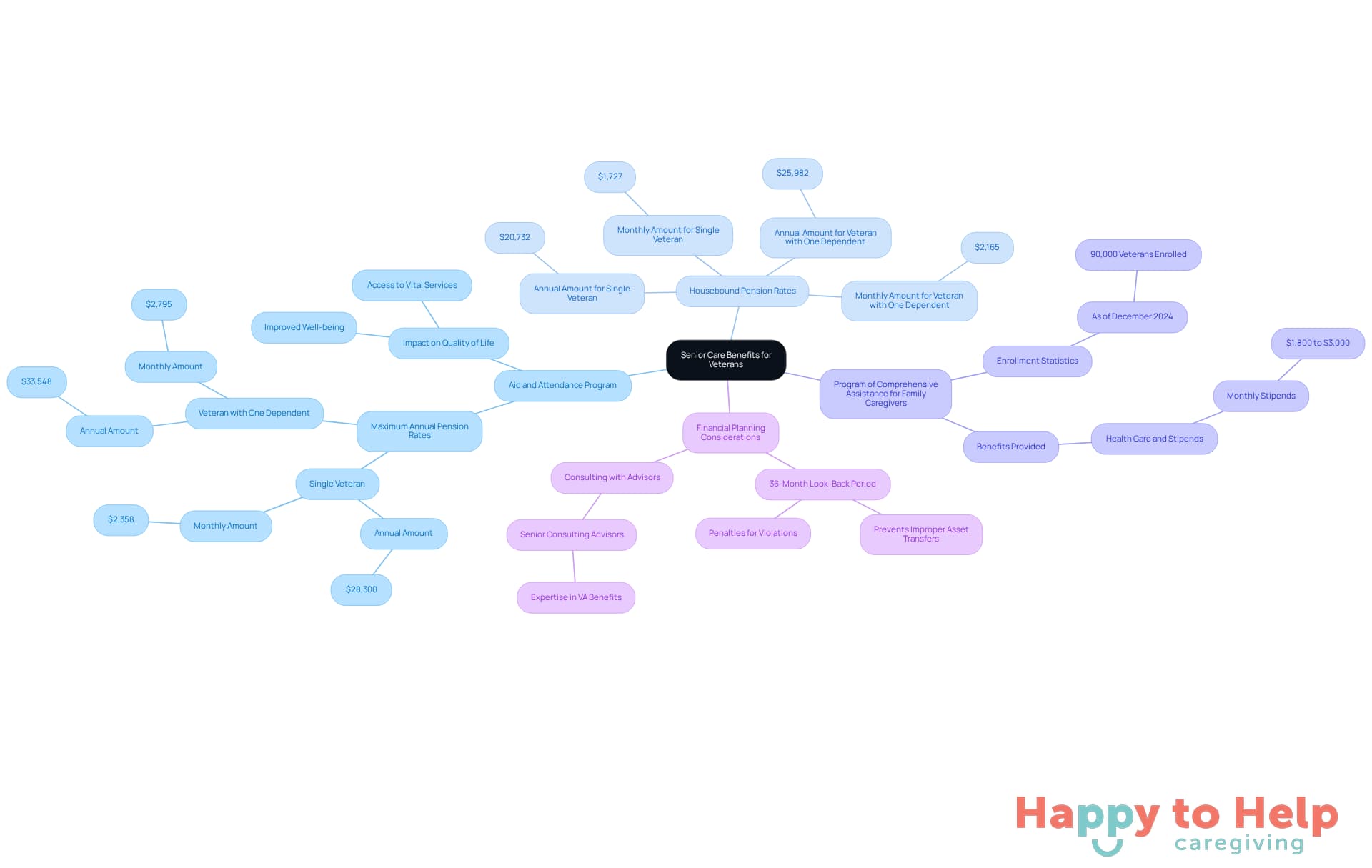
Recent changes to the Aid and Attendance program have increased the Maximum Annual Pension Rates by 2.5%. This adjustment means that more veterans can qualify for benefits while still meeting financial eligibility criteria. For instance, a veteran with one dependent can now receive up to $33,548 annually, or $2,795 monthly. This financial relief can significantly ease the burden associated with nursing home care for veterans.
The impact of the Aid and Attendance program extends beyond financial support; it enhances the overall quality of life for veterans. By facilitating access to vital services such as companionship, medical care, and assistance with daily tasks, the program plays a crucial role in improving well-being, especially in the context of nursing home care for veterans. Additionally, the Housebound Pension Rates provide further context, offering $20,732 annually or $1,727 monthly for those in need.
As of December 2024, nearly 90,000 servicemen and women were enrolled in the Program of Comprehensive Assistance for Family Caregivers (PCAFC) or the VA's Program of General Caregiver Support Services. This statistic underscores the growing demand for these essential services.
It's essential for veterans and their families to be aware of the VA's 36-month look-back period, which prevents improper asset transfers that could affect eligibility for benefits. This detail is vital when planning for financial assistance. VA Secretary Doug Collins emphasized the importance of these programs, stating they provide consistency and stability for veterans and their caregivers. The extension of assistance until 2028 ensures that legacy participants can continue receiving the support they need, reinforcing the VA's commitment to enhancing the lives of former service members and their families.
By exploring these options, families can discover comprehensive solutions for nursing home care for veterans tailored to their loved ones' unique needs. Consulting with Senior Consulting Advisors can also be beneficial, as they specialize in helping veterans navigate the complexities of VA benefits.
VA Benefits and Medicare: Understanding the Relationship
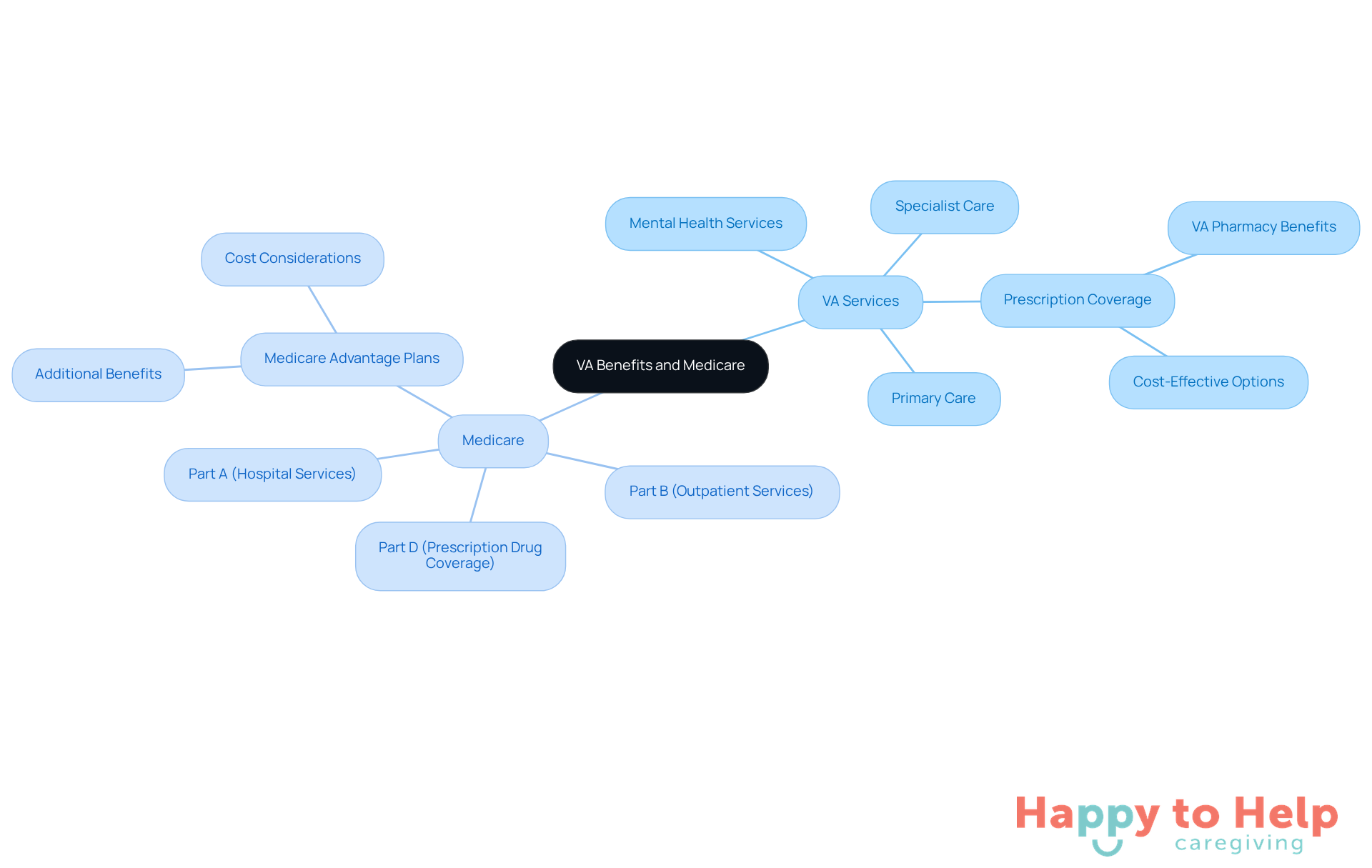
Veterans often face challenges when trying to navigate their healthcare options. Many qualify for both VA services and Medicare, yet understanding how to utilize these programs together can be daunting. This lack of clarity can lead to missed opportunities for comprehensive care and improved health outcomes.
However, combining VA assistance with Medicare can significantly enhance healthcare coverage. While the VA provides a range of services, Medicare offers additional treatment options, especially for those seeking care outside the VA system. By grasping how to maneuver through these benefits, veterans can achieve better health results and more thorough care.
Community Resources for Veterans: Finding Support for Nursing Home Care
Former military personnel and their families often face significant challenges in accessing community resources. Many struggle to navigate the complexities of the VA system, which can lead to feelings of isolation and frustration. This situation is particularly concerning given that approximately 4,235,821 rural servicemen and women, making up 25.6% of the total military population, are enrolled in the VA healthcare system, with 60% affected by service-related conditions.
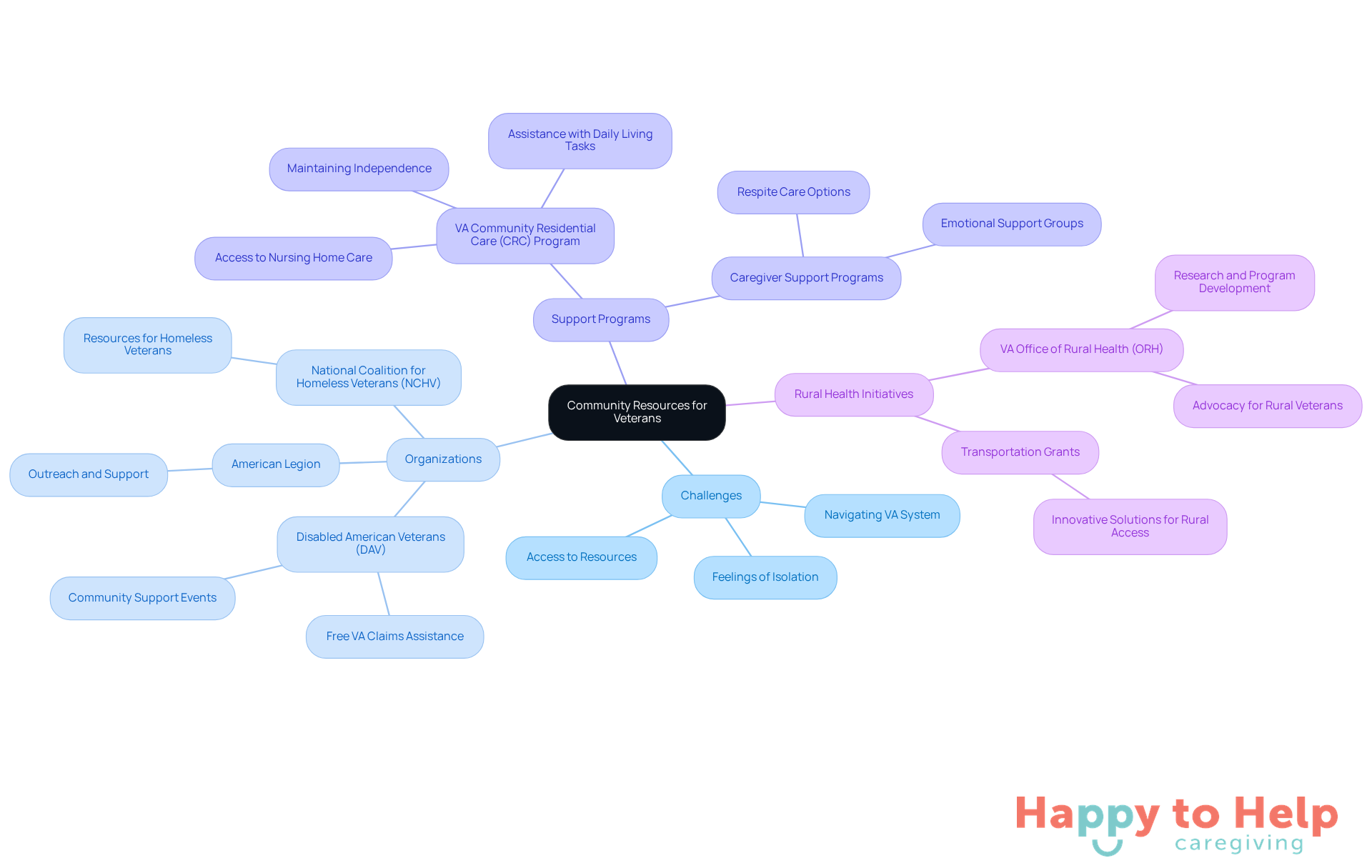
To address these challenges, various local service organizations and assistance groups play a crucial role. For instance, the Disabled American Veterans (DAV) organization offers free help with VA claims and connects former service members with essential services. This fosters a sense of community and provides the emotional support needed during difficult times.
Moreover, community military service organizations frequently organize groups that allow families to share experiences and strategies, enhancing the caregiving journey. These networks not only improve the caregiving experience but also reinforce the support system for former military personnel, ensuring they receive the care they require.
Additionally, initiatives like the VA's Community Residential Care (CRC) Program provide qualified former service members access to nursing home care for veterans through authorized assisted living facilities. This program provides oversight and assistance with daily living tasks, illustrating how local resources can connect independent living with nursing home care for veterans. By maintaining their dignity and autonomy, former military personnel can receive essential support.
The VA Office of Rural Health (ORH) emphasizes the need for focused assistance services to enhance healthcare delivery for rural military personnel. By utilizing these community resources, families can build a more resilient support network, significantly improving the quality of care for former service members.
Challenges for Family Caregivers: Supporting Veterans in Nursing Homes
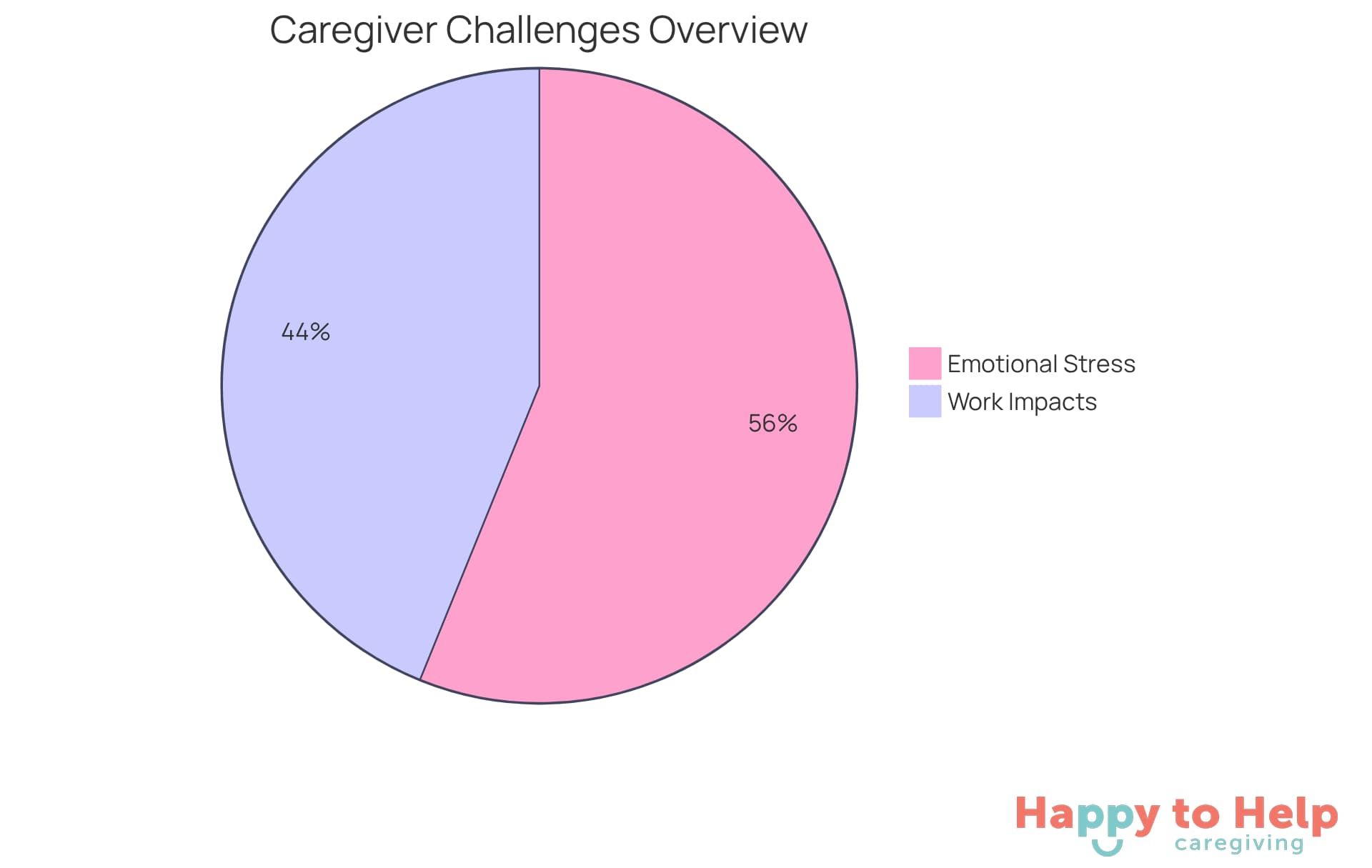
Family caregivers of veterans face significant challenges in nursing home care for veterans. They often experience high levels of emotional stress and struggle to navigate complex healthcare systems. In fact, statistics show that 64% of caregivers report high emotional stress, with many finding it difficult to balance caregiving responsibilities with their personal lives. This stress is further compounded by the need for effective communication with healthcare providers, which can feel overwhelming. Nearly half of caregivers report negative impacts on their work obligations due to their caregiving roles.
These challenges highlight the urgent need for support strategies to alleviate caregiver burdens. Resources like caregiver assistance groups provide a platform for sharing experiences and coping strategies, fostering a sense of community among caregivers. Educational programs empower caregivers with the knowledge needed to advocate effectively for their loved ones. As one caregiver noted, "Discovering a group for assistance made all the difference; it helped me feel less isolated and more prepared to tackle the challenges I face."
Real-life examples illustrate the emotional toll on caregivers. Many express feelings of anxiety and frustration when interacting with the healthcare system, especially when organizing nursing home care for veterans who have complex needs. Recent legislation, including the Senator Elizabeth Dole 21st Century Veterans Healthcare and Benefits Improvement Act, aims to improve assistance for former military personnel and their caregivers. This legislation underscores the importance of home-based services and community resources. By emphasizing support for caregivers, we can enhance the overall welfare of both former military personnel and their families, ensuring they receive the compassionate care they deserve.
Key Takeaways on Nursing Home Care for Veterans: Essential Facts
Navigating the landscape of VA benefits can be challenging for family caregivers of veterans. Many are unaware of the range of services and financial assistance available through the VA for nursing home care for veterans, which can lead to confusion and frustration. This lack of understanding can hinder caregivers from accessing the support their loved ones need.
Recognizing the eligibility criteria and the relationship between VA benefits and Medicare is crucial. Families often struggle to find the right resources, which can exacerbate the stress of caregiving. Additionally, the challenges faced by family caregivers - such as emotional and physical strain - can impact the quality of care provided to veterans.
To address these issues, caregivers should seek out community resources and support systems designed to assist them. Understanding the available services related to nursing home care for veterans and how to access them can significantly improve the caregiving experience. By fostering a network of support, families can ensure that veterans receive the compassionate care they deserve.
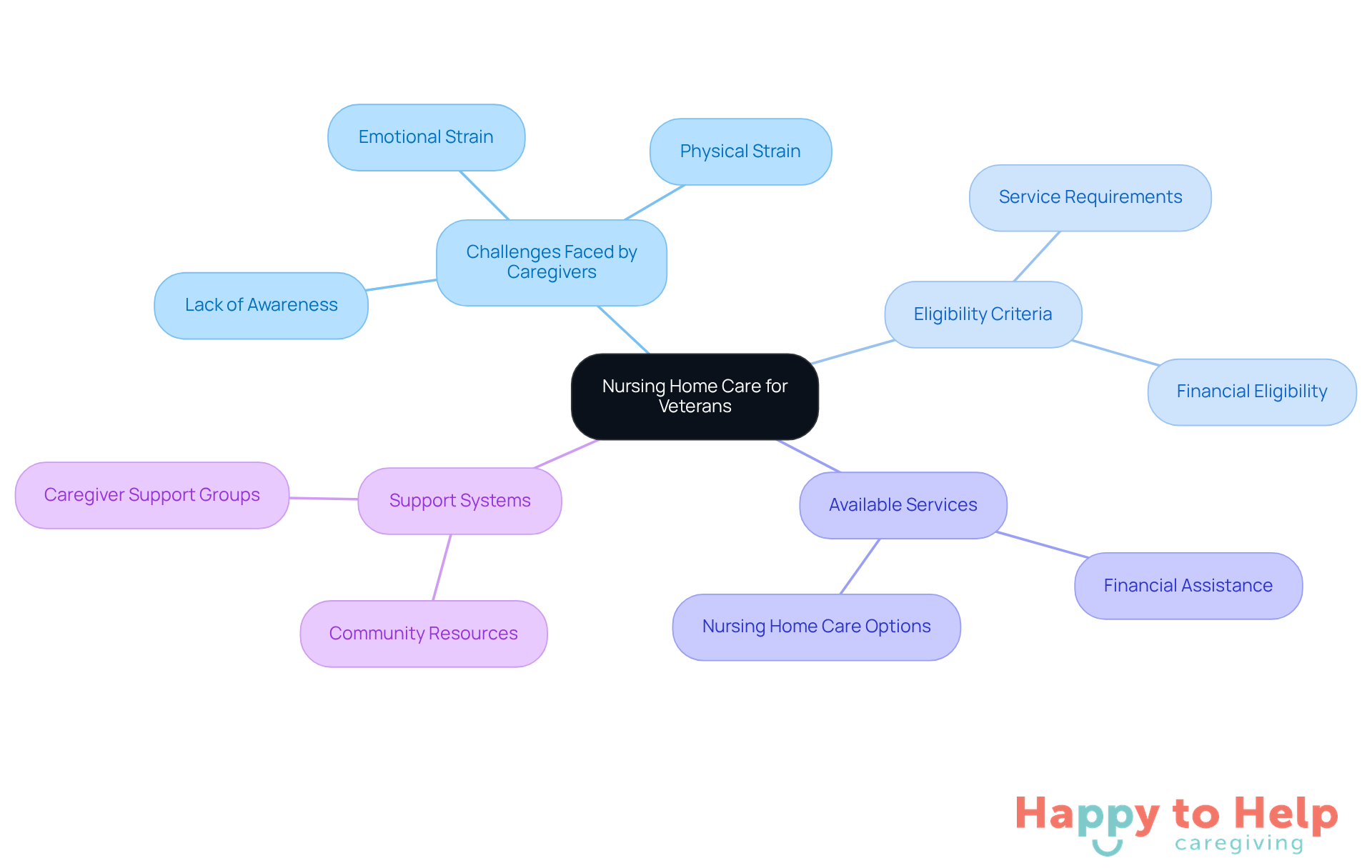
Key Takeaways for Caregivers
Understanding the challenges of nursing home care for veterans is crucial for ensuring that former service members receive the support they deserve. Many families struggle with navigating the complexities of care options, which can lead to inadequate support for their loved ones. This situation not only affects the veterans but also places a significant emotional and financial burden on their families.
To address these challenges, families must be aware of the tailored in-home care services and comprehensive information about VA long-term care options available to them. By actively seeking out assistance and fostering connections within the community, caregivers can significantly improve the quality of life for veterans. Personalized care, eligibility criteria, and financial assistance through the VA are essential elements that families should understand.
Key points to consider include:
- The diverse range of services offered by the VA
- The critical eligibility requirements for nursing home care
- The financial support that can alleviate the burden on veterans and their families
Additionally, community resources and support systems play a vital role in helping families navigate caregiving complexities. Understanding these elements is crucial for making informed decisions and ensuring that veterans access the necessary care.
As the demand for nursing home care for veterans continues to grow, it is imperative for families to stay informed about available resources and support options. Embracing these insights will not only empower families but also honor the sacrifices made by those who served. By prioritizing compassionate care and utilizing the resources at their disposal, caregivers can enhance the well-being of veterans, ultimately ensuring they receive the care they need and deserve.
https://iframe.tely.ai/cta/eyJhcnRpY2xlX2lkIjogIjY5MjNhMGQ1NmIzYzAyYTIxMjhhY2RmZSIsICJjb21wYW55X2lkIjogIjY4ZWU1ZGNhNzMxNzYyNTU3ZjNjOTVjMSIsICJpbmRleCI6IG51bGwsICJ0eXBlIjogImFydGljbGUifQ==Frequently Asked Questions
What services does Happy to Help Caregiving provide for veterans?
Happy to Help Caregiving offers personalized in-home assistance for veterans, including companionship, help with everyday tasks, and tailored support plans that cater to their unique needs.
How does Happy to Help Caregiving benefit former military personnel?
The services provided by Happy to Help Caregiving promote independence and significantly enhance the quality of life for veterans, allowing them to thrive in a familiar setting.
What types of long-term care services does the VA offer for veterans?
The VA provides several long-term care options for veterans, including Community Living Centers (nursing home care), State Veterans Homes, and home-based support options.
What are the eligibility requirements for VA nursing home care for veterans?
To qualify for VA nursing home care, veterans must have a service-connected disability rating, demonstrate a clinical necessity for support, and meet financial eligibility criteria, including a net worth threshold of $155,356 for 2025.
Why is understanding eligibility criteria important for veterans seeking nursing home care?
Understanding eligibility criteria is crucial because it helps families make informed decisions about care options and ensures that assistance is directed toward those who genuinely need it.
What factors influence a veteran's eligibility for nursing home care?
Key factors influencing eligibility include the veteran's service-connected disability rating, duration of service, clinical necessity for support, and financial situation.
What should veterans be cautious about when applying for benefits?
Veterans should be aware that improper transfers of assets may lead to penalties, emphasizing the need for careful financial planning when applying for benefits.
List of Sources
- Happy to Help Caregiving: Personalized In-Home Care for Veterans
- Supporting America's Military and Veteran Caregivers (https://rand.org/pubs/research\_reports/RRA3212-1.html)
- VA Tries to Keep Up With Drastic Veteran In-Home Care Increase (https://military.com/feature/2025/10/08/va-tries-keep-drastic-veteran-home-care-increase.html)
- Caregivers and Family Support (https://hsrd.research.va.gov/research\_topics/caregiving.cfm)
- New Law Supports Home Care, Caregivers for Military Veterans (https://elderlawrillc.com/new-law-supports-home-care-caregivers-for-military-veterans)
- Serving older Veterans every step of the way - VA News (https://news.va.gov/142743/serving-older-veterans-every-step-of-the-way)
- VA Long-Term Care Services: Understanding Your Options
- VA Tries to Keep Up With Drastic Veteran In-Home Care Increase (https://military.com/feature/2025/10/08/va-tries-keep-drastic-veteran-home-care-increase.html)
- Long-term care statistics 2025 (https://singlecare.com/blog/news/long-term-care-statistics)
- Long-Term Care Services for Veterans (https://everycrsreport.com/reports/R44697.html)
- New Community Residential Care Housing Program to support aging Veterans - VA News (https://news.va.gov/142726/community-residential-care-housing-program)
- Central Virginia VA Health Care System Opens New Liberty Lodge Community Living Center | VA Richmond health care | Veterans Affairs (https://va.gov/richmond-health-care/news-releases/central-virginia-va-health-care-system-opens-new-liberty-lodge-community-living-center)
- Eligibility for VA Nursing Home Care: Who Qualifies?
- VA Tries to Keep Up With Drastic Veteran In-Home Care Increase (https://military.com/feature/2025/10/08/va-tries-keep-drastic-veteran-home-care-increase.html)
- Long-term care facilities enhance lives of Veterans - VA News (https://news.va.gov/137567/long-term-facilities-enhance-lives-of-veterans)
- New 2025 Updates to Veterans Benefits for Assisted Living (https://floridaseniorconsulting.com/updated-veterans-aid-and-attendance-benefits-for-assisted-living)
- VA Financial Support: How Much Does the VA Pay for Nursing Home Care?
- Veterans Administration Gives Significant Boost to SNF VCA Rates (https://ahcancal.org/News-and-Communications/Blog/Pages/Veterans-Administration-Gives-Significant-Boost-to-SNF-VCA-Rates.aspx)
- A Guide to VA Nursing Homes (https://aplaceformom.com/caregiver-resources/articles/va-nursing-homes)
- New 2025 Updates to Veterans Benefits for Assisted Living (https://floridaseniorconsulting.com/updated-veterans-aid-and-attendance-benefits-for-assisted-living)
- Do VA Benefits Pay for a Nursing Home? (https://rosewood-nursing.com/post/do-va-benefits-pay-nursing-home)
- Breaking Down the Cost of Nursing Homes for Veterans (https://myveteransolutions.com/blog/breaking-down-the-cost-of-nursing-homes-for-veterans)
- Accessing VA Benefits: Steps to Secure Nursing Home Care
- Spread the word: The 2025 Veterans Benefits Guide is now available - VA News (https://news.va.gov/137659/spread-the-word-the-2025-veterans-benefits-guide-is-now-available)
- New Law Supports Home Care, Caregivers for Military Veterans (https://elderlawrillc.com/new-law-supports-home-care-caregivers-for-military-veterans)
- VA Tries to Keep Up With Drastic Veteran In-Home Care Increase (https://military.com/feature/2025/10/08/va-tries-keep-drastic-veteran-home-care-increase.html)
- New 2025 Updates to Veterans Benefits for Assisted Living (https://floridaseniorconsulting.com/updated-veterans-aid-and-attendance-benefits-for-assisted-living)
- The Promise and Challenges of VA Community Care: Veterans' Issues in Focus - PMC (https://pmc.ncbi.nlm.nih.gov/articles/PMC10273892)
- Additional Senior Care Benefits for Veterans: What You Should Know
- New 2025 Updates to Veterans Benefits for Assisted Living (https://floridaseniorconsulting.com/updated-veterans-aid-and-attendance-benefits-for-assisted-living)
- VA extends ‘legacy’ caregiver benefits through 2028 (https://militarytimes.com/news/your-military/2025/11/20/va-extends-legacy-caregiver-benefits-through-2028)
- Senior Care for Veterans: The Aid and Attendance Benefit (https://amadaseniorcare.com/2021/02/funding-senior-care-through-va-benefits-and-pensions)
- VA Benefits 2025: What Every Veteran Family Should Know | Operation Family Fund (https://operationfamilyfund.org/va-benefits-2025-update-what-every-veteran-family-should-know)
- Assisted Living Benefits for Veterans and Their Spouses - WTOP News (https://wtop.com/news/2025/08/veteran-benefits-for-assisted-living-what-you-need-to-know)
- VA Benefits and Medicare: Understanding the Relationship
- What Veterans and Their Spouses Need to Know About Medicare Coverage (https://vfw.org/media-and-events/latest-releases/archives/2024/10/what-veterans-and-their-spouses-need-to-know-about-medicare-coverage)
- 8 Ways Veterans Can Maximize VA and Medicare (https://aarp.org/medicare/how-to-maximize-va-medicare-benefits)
- Dual Insurance Coverage Is Common Among VA Enrollees – Publication Brief (https://hsrd.research.va.gov/research/citations/pubbriefs/articles.cfm?RecordID=1272)
- References - The Future of Disability in America - NCBI Bookshelf (https://ncbi.nlm.nih.gov/books/NBK11419)
- Medicare and VA benefits: An all-in-one guide for veterans (https://healthpartners.com/blog/medicare-for-veterans)
- Community Resources for Veterans: Finding Support for Nursing Home Care
- VA improves access for veterans using community care (https://dav.org/learn-more/news/2025/va-improves-access-for-veterans-using-community-care)
- Rural Veterans and Access to Healthcare Overview - Rural Health Information Hub (https://ruralhealthinfo.org/topics/returning-soldier-and-veteran-health)
- New Community Residential Care Housing Program to support aging Veterans - VA News (https://news.va.gov/142726/community-residential-care-housing-program)
- Caregiving connects us, community strengthens us - VA News (https://news.va.gov/143323/caregiving-connects-us-community-strengthens-us)
- Challenges for Family Caregivers: Supporting Veterans in Nursing Homes
- New Law Supports Home Care, Caregivers for Military Veterans (https://elderlawrillc.com/new-law-supports-home-care-caregivers-for-military-veterans)
- Caregivers and Family Support (https://hsrd.research.va.gov/research\_topics/caregiving.cfm)
- Supporting America's Military and Veteran Caregivers (https://rand.org/pubs/research\_reports/RRA3212-1.html)
- New Report Reveals Crisis Point for America’s 63 million Family Caregivers (https://press.aarp.org/2025-07-24-New-Report-Reveals-Crisis-Point-for-Americas-63-million-Family-Caregivers)
- The National Alliance for Caregiving and AARP Release Caregiving Report - CAPC - News Bites (https://capc.org/blog/new-data-on-family-caregivers-in-the-us)
- Key Takeaways on Nursing Home Care for Veterans: Essential Facts
- Identifying potential long-stay residents in veterans health administration nursing homes - PMC (https://pmc.ncbi.nlm.nih.gov/articles/PMC9477184)
- Hints of a different way-case studies in practice-based evidence: Computerized protocols to assist clinical research (https://researchgate.net/publication/309054187\_Hints\_of\_a\_different\_way-case\_studies\_in\_practice-based\_evidence\_Computerized\_protocols\_to\_assist\_clinical\_research)
- New VA Mission Statement recognizes sacred commitment to all Veterans, their families, caregivers and survivors - VA News (https://news.va.gov/117260/new-mission-statement-commitment-all-veterans)
- New 2025 Updates to Veterans Benefits for Assisted Living (https://floridaseniorconsulting.com/updated-veterans-aid-and-attendance-benefits-for-assisted-living)
- VA Benefits 2025: What Every Veteran Family Should Know | Operation Family Fund (https://operationfamilyfund.org/va-benefits-2025-update-what-every-veteran-family-should-know)