10 Essential Insights on Veterans Benefits Aid and Attendance

For families in our service areas
For families in our service areas, this guide explains veteran home care and how non-medical in-home caregiving can support care planning in East Idaho, Treasure Valley & Magic Valley, Northern Wasatch, North Central West Virginia, and Northeast Ohio.
What You Need to Know About Insights on Veterans Benefits Aid and
Navigating veterans benefits can often feel like an uphill battle, particularly when it comes to understanding Aid and Attendance. Many former service members grapple with feelings of isolation and uncertainty, often unaware of the vital support available to them. This article explores ten essential insights into VA Aid and Attendance benefits, highlighting eligibility criteria, the application process, and the significant impact these benefits can have on veterans' lives.
What challenges do veterans face in accessing these crucial resources? How can they overcome these obstacles to secure the assistance they deserve? By addressing these questions, we aim to provide clear, actionable solutions that empower veterans to access the benefits they need.
Happy to Help Caregiving: Personalized Support for Veterans
Former military personnel often face significant challenges when transitioning to civilian life, particularly feelings of isolation and loneliness. These issues can deeply affect their mental well-being, making it crucial to address them effectively.
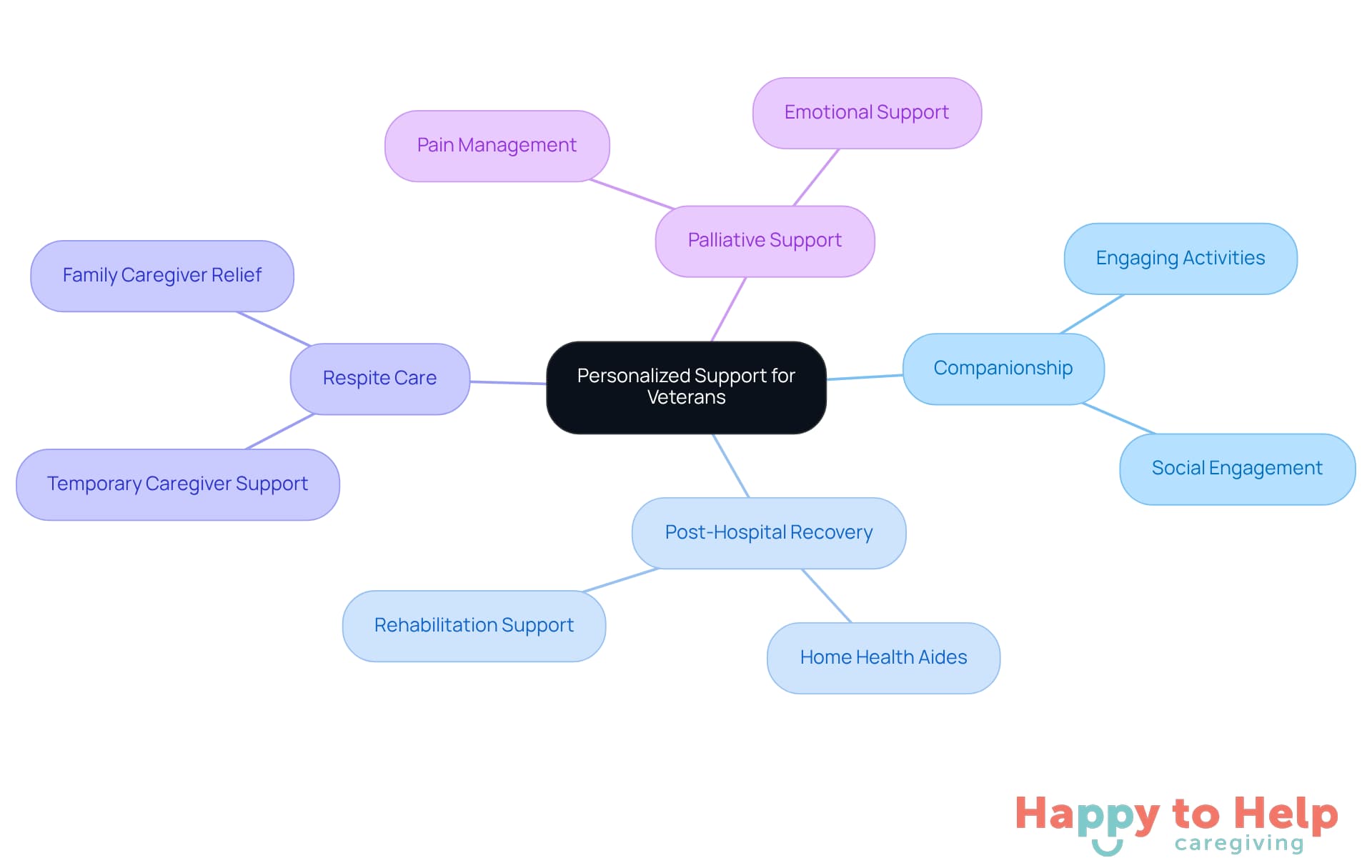
Happy to Help Caregiving specializes in offering customized in-home care services that cater specifically to these needs. By focusing on:
- Companionship
- Post-hospital recovery
- Respite care
- Palliative support
the agency ensures that service members receive compassionate and personalized care in the comfort of their own homes. This approach not only enhances their autonomy but also fosters a profound sense of safety and wellness.
Caregivers are expertly trained to engage former service members in meaningful activities, which significantly alleviates feelings of isolation. The impact of companionship care on their mental health is substantial, as it promotes social engagement and emotional support - vital components for a fulfilling life at home.
In summary, addressing the emotional needs of former military personnel through tailored caregiving services can lead to improved mental health and overall well-being.
Eligibility Criteria for VA Aid and Attendance Benefits
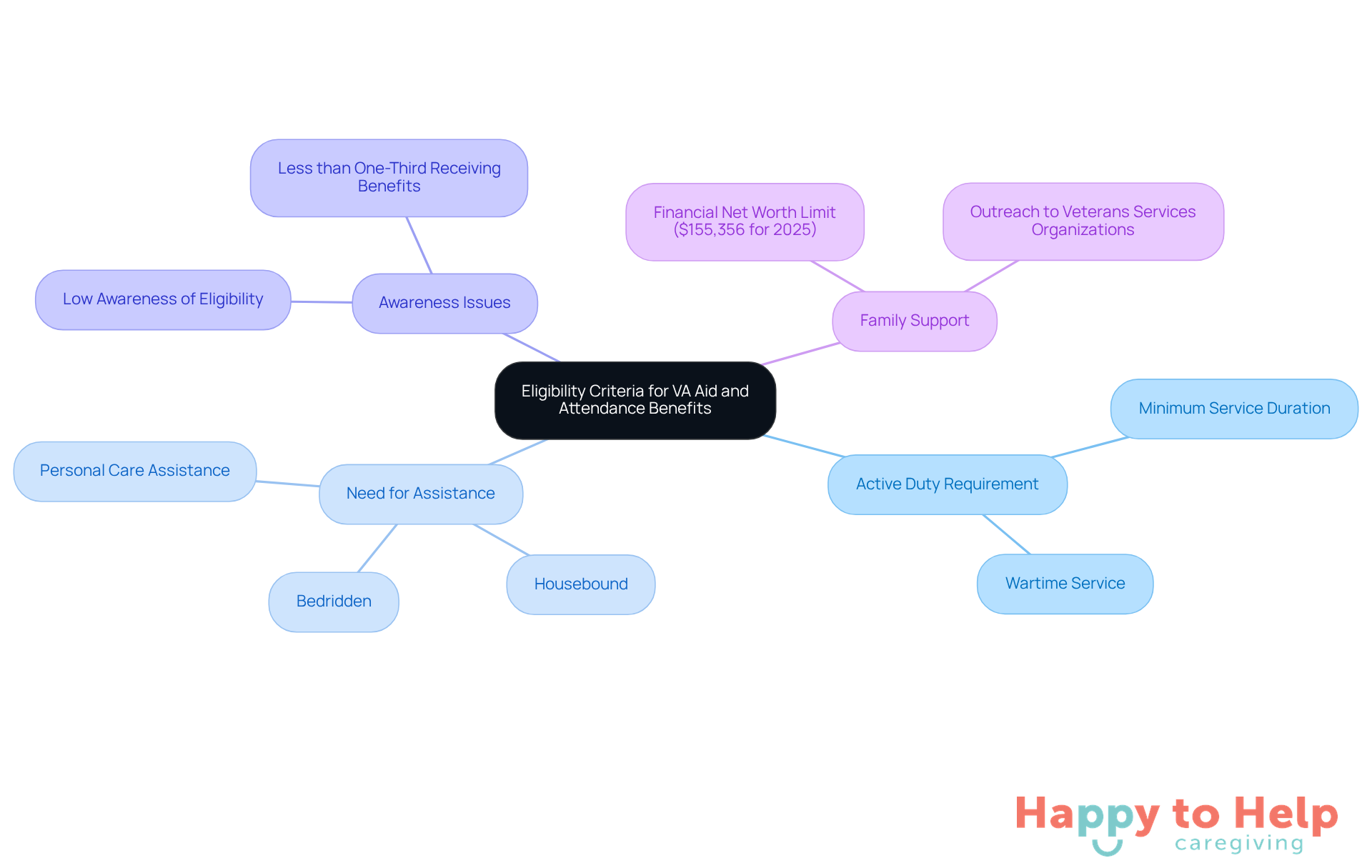
To qualify for veterans benefits aid and attendance, veterans must meet specific criteria. This includes:
- Completing a minimum of 90 days of active duty, with at least one day served during a recognized wartime period.
- Showing a need for help with daily living activities due to physical or mental limitations, such as being bedridden, requiring personal care assistance, or being housebound due to a disability.
Unfortunately, awareness of these criteria is lacking. Recent studies indicate that fewer than one-third of potentially eligible veterans actually receive Aid and Support resources. This highlights a significant problem: many veterans who could benefit from veterans benefits aid and attendance are unaware of their eligibility. As Kali S. Thomas points out, targeted outreach and education efforts are crucial to ensure equal access to these VA services.
Families play a vital role in navigating the application process. Understanding the eligibility requirements, including the financial net worth limit of $155,356 for 2025, can greatly influence their ability to secure necessary support for their loved ones. To facilitate this process, families should consider reaching out to Veterans Services Organizations for guidance on applications and eligibility. This proactive step can make a significant difference in accessing the aid that veterans deserve.
Financial Criteria for VA Aid and Attendance Benefits
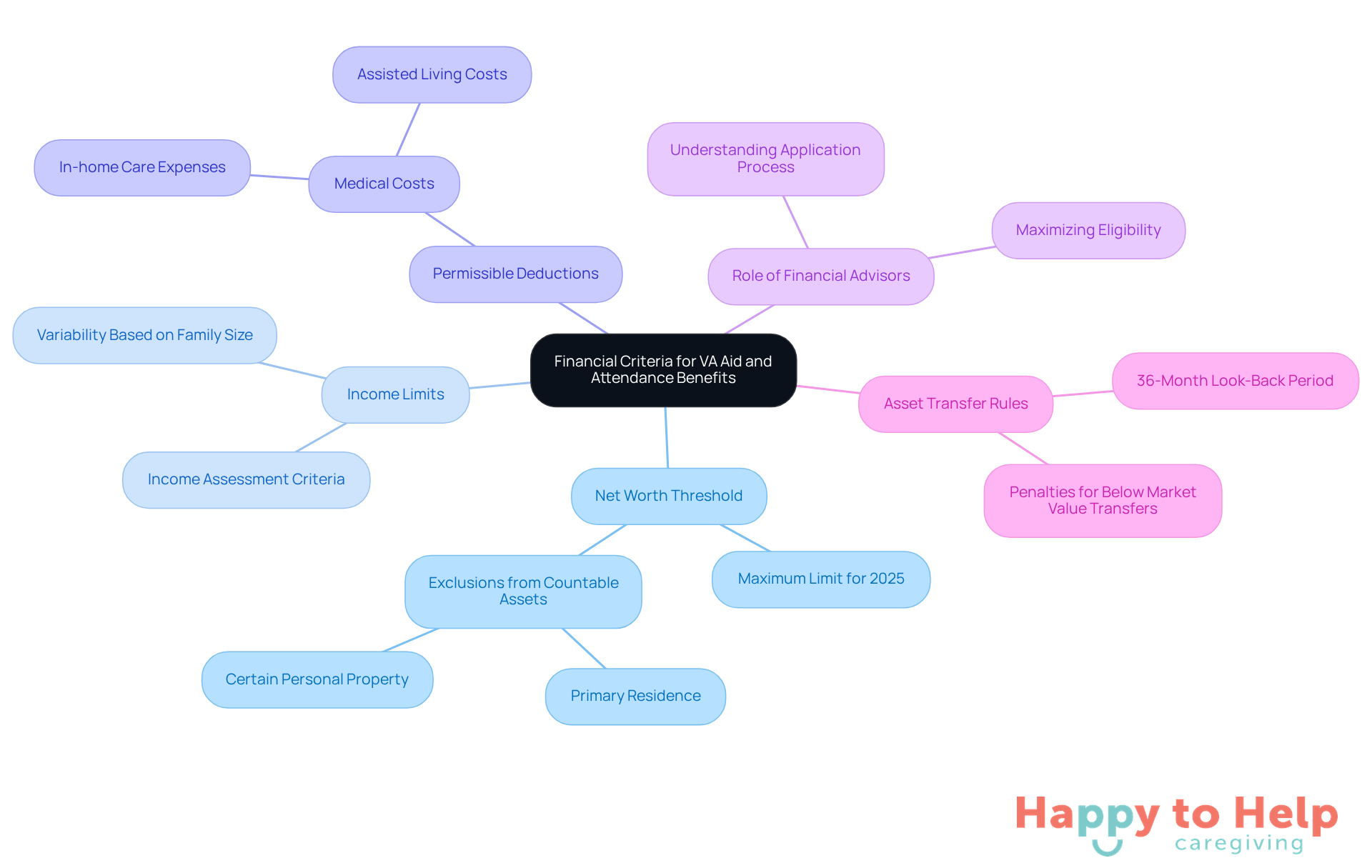
Veterans seeking veterans benefits aid and attendance assistance face specific financial hurdles. One significant challenge is the maximum net worth threshold of $159,240 for 2025. This limit includes all countable assets, but it excludes the primary residence and certain personal property. Additionally, income must remain below a specified limit, which varies based on family size and other factors.
Families need to carefully evaluate their financial situations. Permissible medical costs can be deducted from income assessments, potentially improving eligibility for veterans benefits aid and attendance. For instance, former service members can factor in expenses related to in-home care or assisted living when evaluating their financial needs for veterans benefits aid and attendance.
To navigate these complexities effectively, engaging with financial advisors can be invaluable. They can provide insights into maximizing eligibility and understanding the application process. Moreover, it’s essential to be aware of the 36-month look-back period for asset transfers. Transferring assets below market value during this timeframe can significantly impact eligibility.
How to Apply for VA Aid and Attendance Benefits
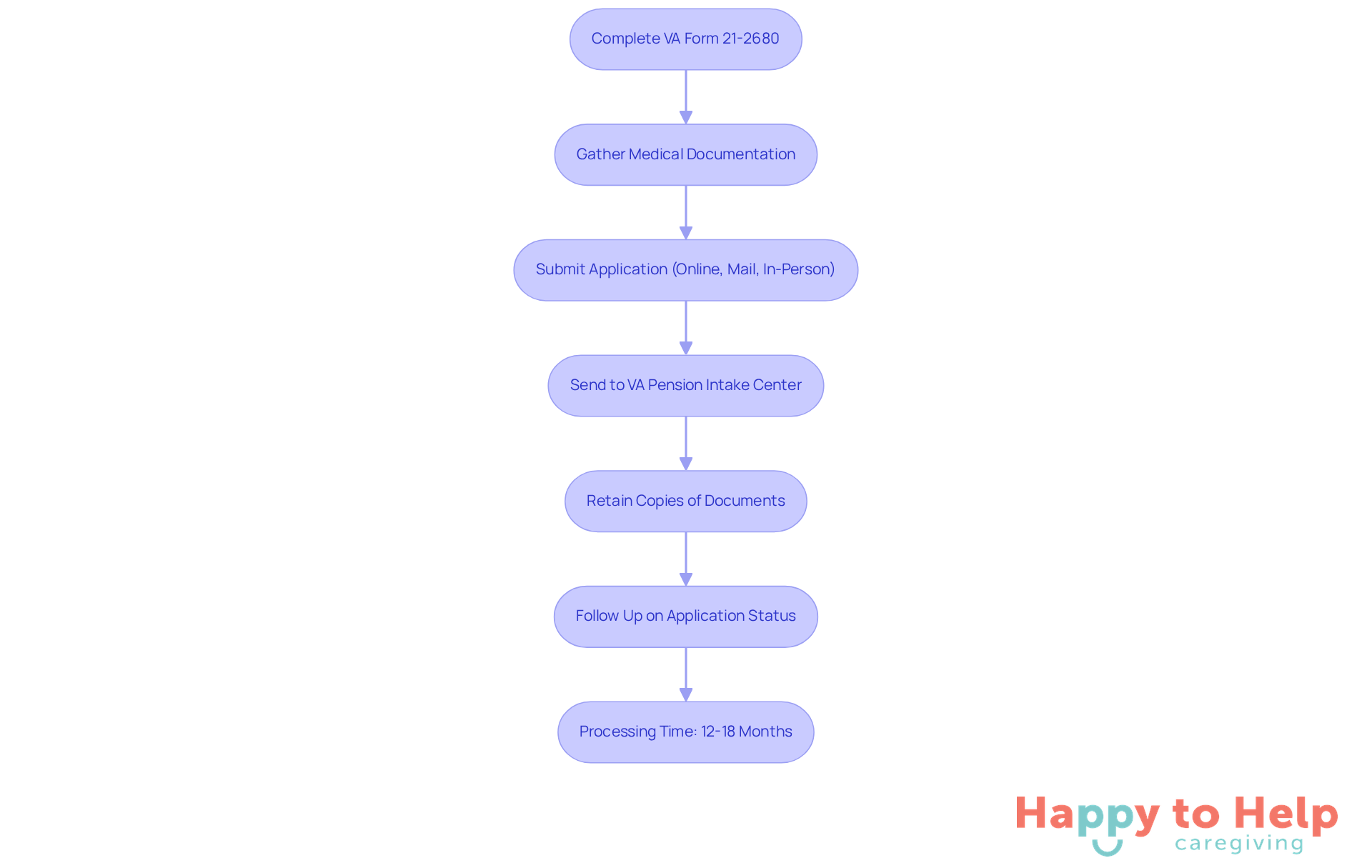
Applying for veterans benefits aid and attendance can be a daunting task for veterans and their families. The process requires careful attention to detail and several key steps, which can often feel overwhelming. Veterans must start by completing VA Form 21-2680, a crucial document that evaluates their need for assistance. This form must be supported by medical documentation from a physician, verifying the individual's need for help.
Once the form is completed, applications can be submitted online, by mail, or in person at a local VA office. It's essential to send the completed forms and evidence to the Department of Veterans Affairs Pension Intake Center at PO Box 5365, Janesville, WI 53547-5365. Families should retain copies of all submitted documents and proactively follow up on the application status to ensure timely processing. The average processing time for these applications can range from 12 to 18 months, making early preparation advisable.
Moreover, applicants should be aware that the application form has expanded significantly, now requiring comprehensive information that can total over 40 pages. As one specialist noted, 'The veterans benefits aid and attendance is a remarkable advantage that can assist wartime service members or their surviving spouses in covering senior living expenses - but applying for it typically necessitates the help of a professional, along with a significant amount of patience.'
Another critical aspect to consider is the financial eligibility for veterans benefits aid and attendance. Individuals' total assets and yearly income must remain under $155,356 for 2025, with a 36-month review period for asset transfers. This complexity underscores the importance of thoroughness in the application process. By understanding these requirements and preparing accordingly, veterans and their families can navigate the application process more effectively.
Common Challenges and Solutions in Applying for VA Benefits
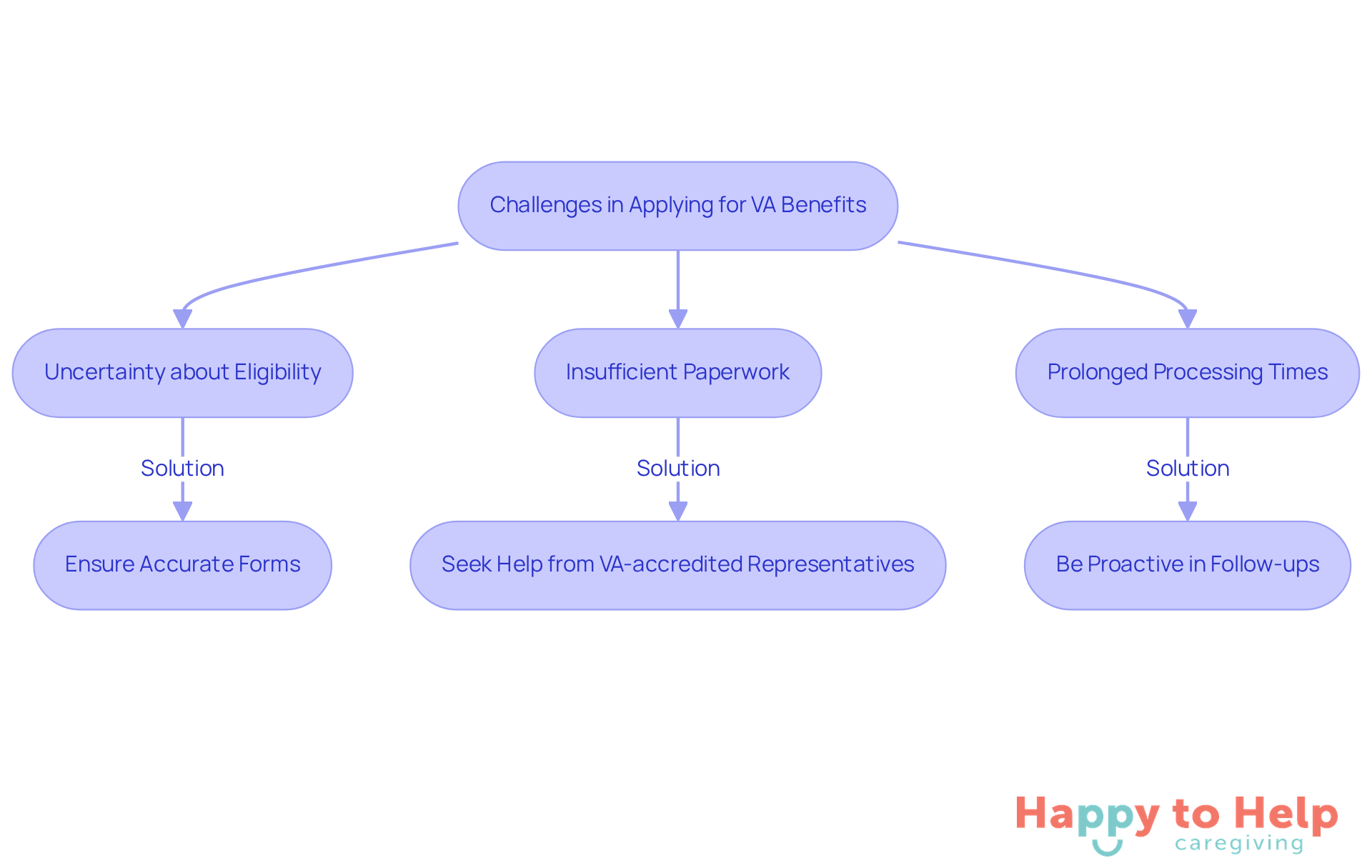
Many former service members encounter significant challenges when seeking veterans benefits aid and attendance. These include:
- Uncertainty about eligibility criteria
- Insufficient paperwork
- Prolonged processing times
Such obstacles can lead to frustration and delays in receiving the support they need.
To tackle these issues effectively, families should ensure that all required forms are filled out accurately and completely. This attention to detail can prevent unnecessary setbacks in the application process. Additionally, seeking help from a VA-accredited representative can clarify the process and significantly improve the chances of a successful application.
Moreover, being proactive in following up with the VA is crucial. Regular check-ins can help address any issues that may arise during processing, ensuring that applications move forward smoothly. By taking these steps, families can navigate the complexities of veterans benefits aid and attendance more effectively.
Wartime Service Requirements for VA Aid and Attendance
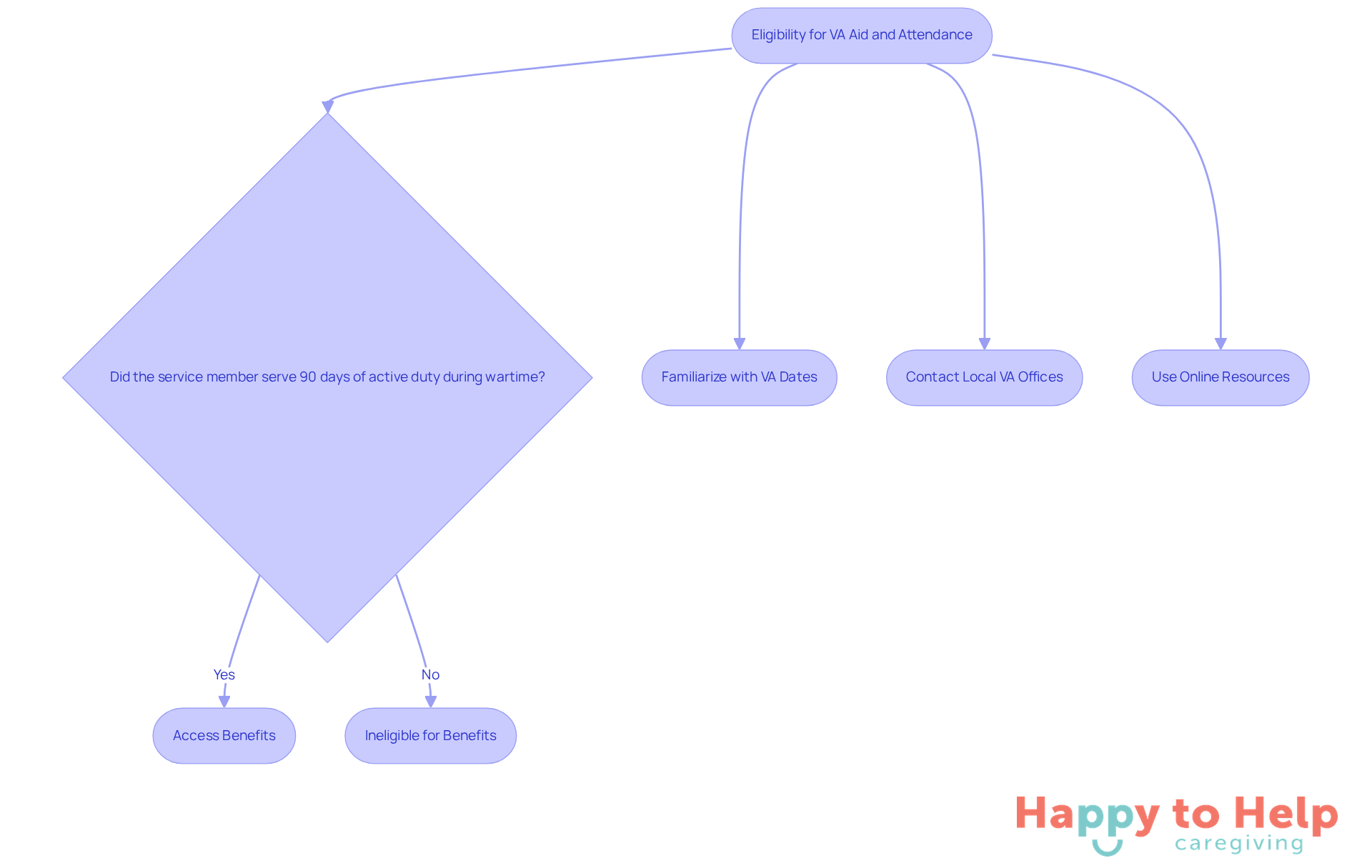
To qualify for veterans benefits aid and attendance, service members must have completed a minimum of 90 days of active duty, including at least one day during a recognized wartime period. However, many former service members struggle to obtain crucial information about their entitlements, particularly regarding printed materials. This lack of access can hinder their ability to secure the assistance they need.
Statistics show that approximately 60% of former military personnel served during recognized wartime periods, such as:
- World War I
- World War II
- The Korean War
- The Vietnam War
- The Gulf War
Understanding these eligibility criteria is vital for former service members and their families as they navigate the application process for veterans benefits aid and attendance. Yet, logistical obstacles often impede caregivers from effectively supporting their loved ones in accessing these essential services.
To address these challenges, caregivers can take proactive steps. First, they should:
- Familiarize themselves with the specific dates and conflicts recognized by the VA as qualifying for wartime service.
- Reach out to local VA offices or veteran service organizations to obtain valuable resources and guidance.
- Utilize online platforms that compile information about VA benefits to streamline the process, ensuring that caregivers have the necessary tools to assist former service members in securing the support they require.
Overview of Housebound Benefits for Veterans
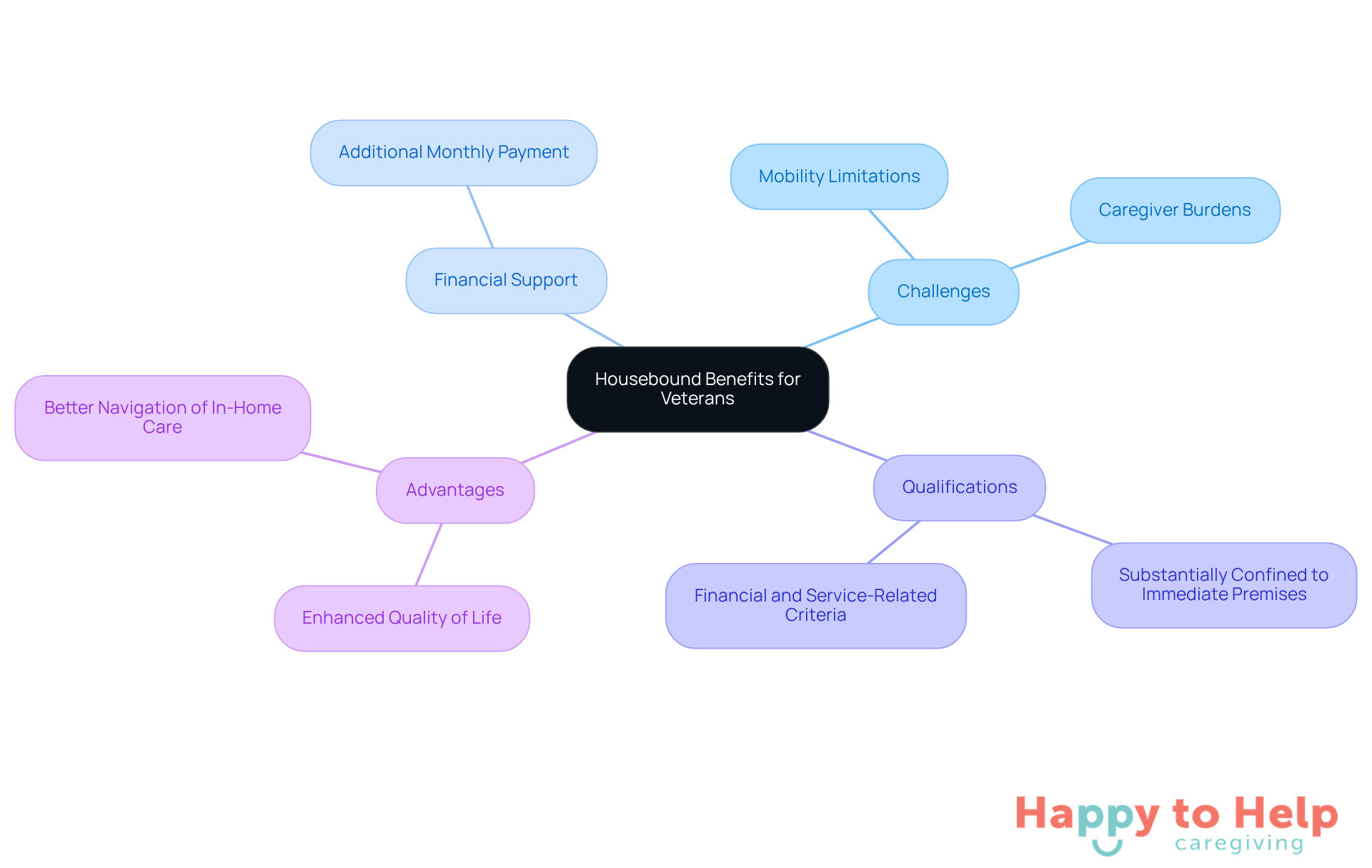
Housebound assistance addresses a significant challenge faced by many former service members: being permanently confined to their homes due to disabilities. This situation not only limits their mobility but also places a heavy burden on caregivers who strive to provide adequate support.
To alleviate this issue, Housebound assistance offers an additional monthly payment on top of the standard VA pension. This financial support can be crucial for veterans and their families, helping them secure the in-home care they need.
To qualify for veterans benefits aid and attendance, veterans must demonstrate that they are substantially confined to their immediate premises and meet the same financial and service-related criteria. Understanding these qualifications is essential for caregivers seeking to access this vital support.
By grasping the advantages of Housebound assistance, veterans and their families can better navigate the complexities of in-home care, ensuring they receive the necessary resources to enhance their quality of life.
Role of Expert Assistance in VA Benefits Applications
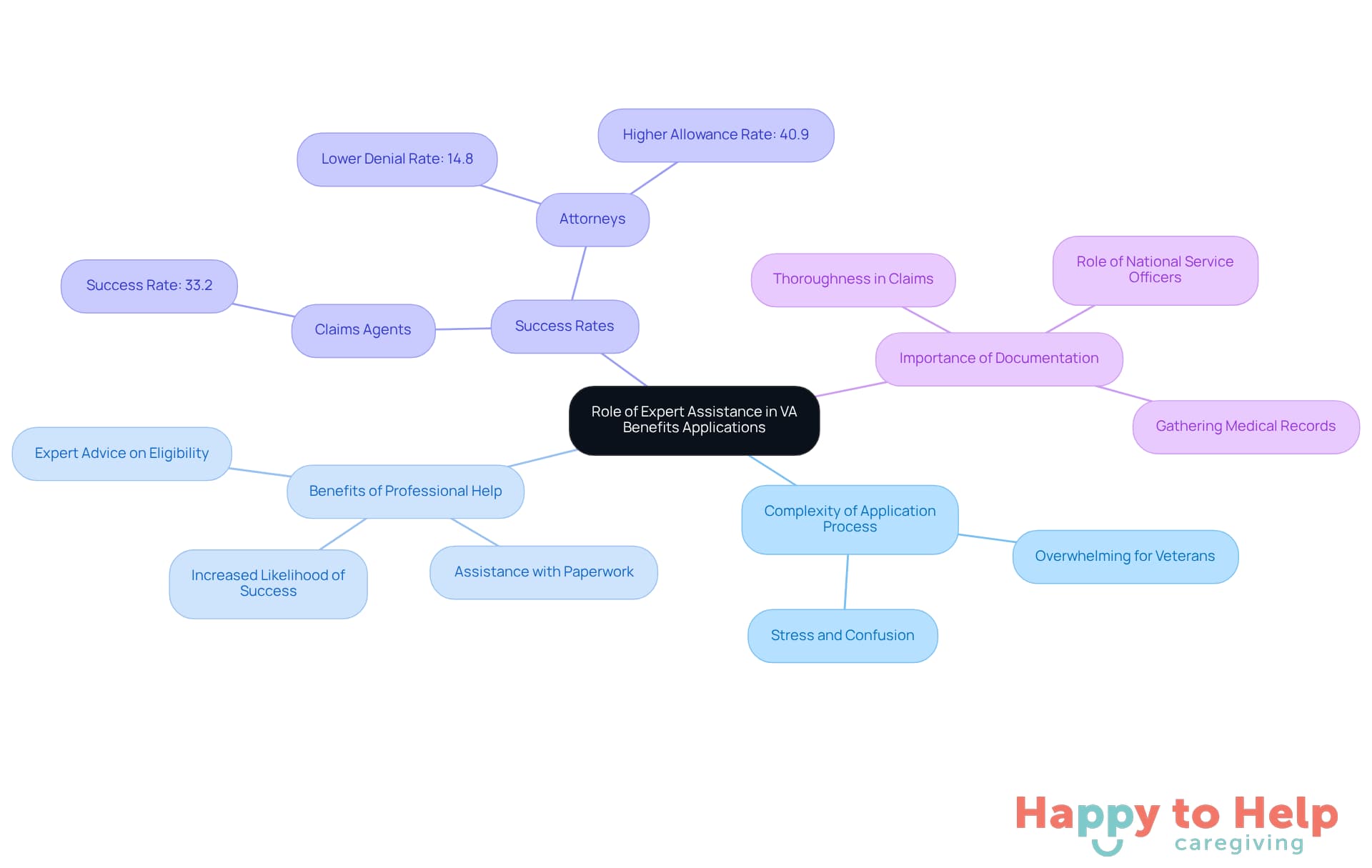
Navigating the VA services application process can be overwhelming for former military personnel and their families. This complexity often leads to stress and confusion, making it difficult to access the support they deserve.
However, expert assistance can significantly improve this experience. Professionals specializing in VA support offer essential advice on eligibility standards, help fill out required forms, and ensure that all necessary paperwork is submitted correctly. This support not only alleviates stress but also enhances the likelihood of a successful application and prompt access to benefits.
Statistics highlight the importance of seeking professional help. For instance, former service members represented by claims agents have a success rate of 33.2% in their appeals. In contrast, those represented by attorneys experience a lower denial rate of 14.8% and a higher allowance rate of 40.9%. These figures underscore the value of professional guidance in navigating the claims process.
Success stories abound, with many former service members reporting that expert advice helped them secure benefits they initially thought were out of reach. As one VA entitlements specialist noted, "Proper documentation is crucial," emphasizing the need for thoroughness in the application process.
Additionally, gathering necessary medical and service records is vital for initiating claims. The role of National Service Officers, who are trained to identify and claim every possible condition, further highlights the benefits of professional assistance.
With the right support, former service members can navigate the intricacies of VA entitlements more efficiently, ensuring they receive veterans benefits aid and attendance that they deserve.
Success Stories: Real-Life Examples of VA Benefits
Many former service members struggle to access the care they need, impacting their quality of life. This challenge can leave them feeling isolated and dependent on others for daily tasks. However, there is a solution: Aid and Attendance assistance can provide the financial support necessary to improve their situation.
For example, one individual faced significant difficulties due to health problems, making daily tasks a challenge. With the help of financial assistance, they were able to hire in-home caregivers. This not only offered the necessary support but also restored their independence and dignity.
Sharing these success stories can inspire other former service members to explore their eligibility for assistance. By taking proactive steps to apply, they too can enhance their quality of life and regain a sense of autonomy.
Key Takeaways on VA Aid and Attendance Benefits
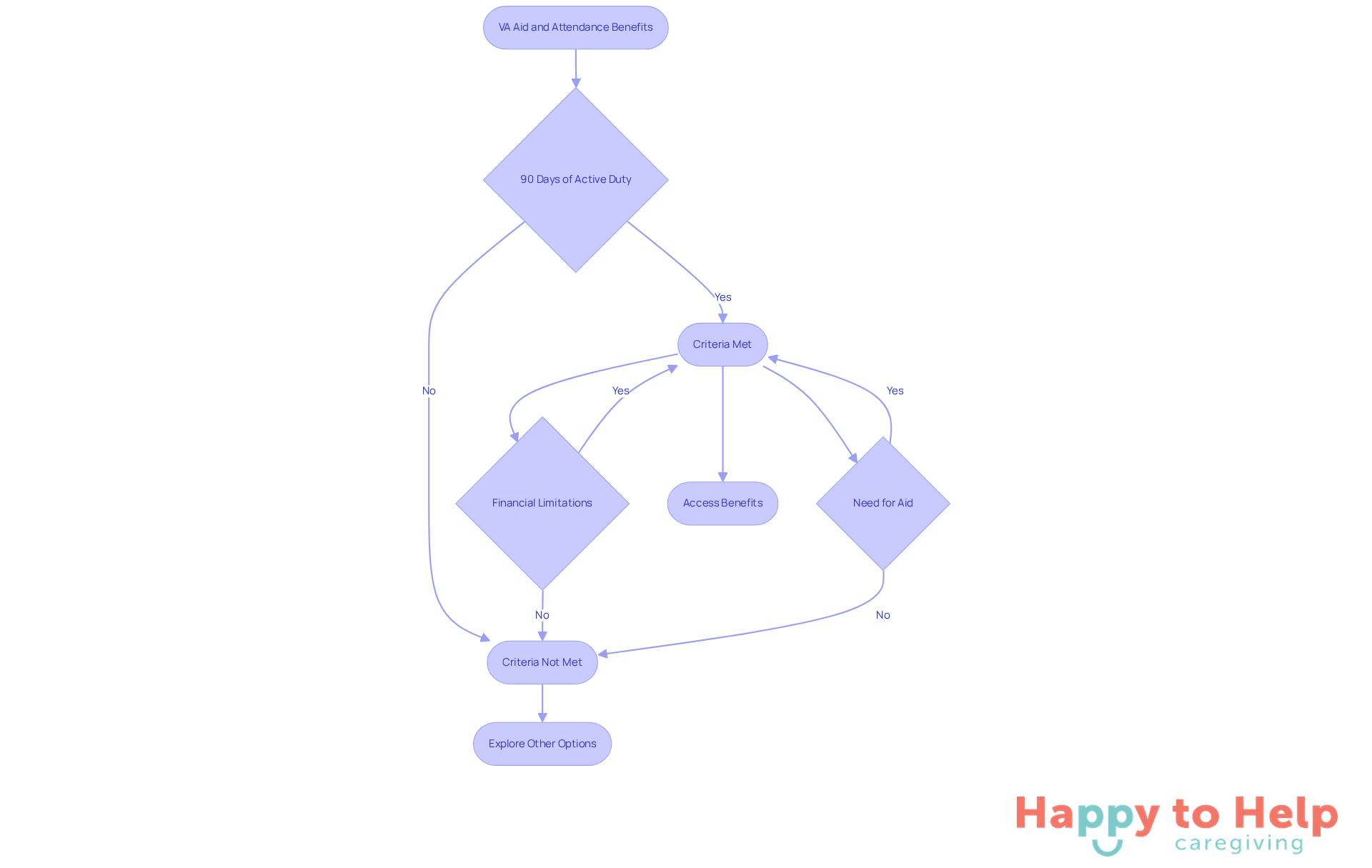
VA Aid and Attendance assistance, also known as veterans benefits aid and attendance, is vital for service members who need help with daily living tasks, providing essential financial support. However, awareness of this program remains low; research indicates that fewer than one-third of potentially qualified servicemen utilize veterans benefits aid and attendance. This lack of awareness can have serious implications, as many veterans may struggle to afford necessary care and maintain their independence without the support of veterans benefits aid and attendance.
To qualify for this assistance, former military personnel must meet specific criteria:
- They need to have served at least 90 days of active duty, with at least one day during wartime.
- They must demonstrate financial limitations, with a net worth cap of $155,356 for 2025.
- They must show a genuine need for aid due to health issues or disabilities.
The VA enforces a 36-month look-back period to prevent asset transfers aimed at qualifying for assistance, which is crucial for understanding financial eligibility.
Despite these advantages, many veterans are unaware of the benefits available to them. Real-life instances highlight the transformative impact of veterans benefits aid and attendance: veterans who receive this assistance report an enhanced quality of life, enabling them to afford essential care and maintain their independence. The monthly payment ranges for veterans benefits aid and attendance programs vary, providing substantial financial aid that can help cover care costs.
The application process can be daunting, often requiring detailed documentation and strict adherence to VA guidelines. Seeking expert assistance can significantly improve the chances of a successful application. Understanding the differences between housebound benefits and veterans benefits aid and attendance is essential for veterans and their families to ensure they receive the support they deserve. As the Department of Veterans Affairs states, qualifying for veterans benefits aid and attendance requires meeting specific criteria related to military service, medical needs, and financial eligibility.
Your Path Forward
Navigating the complexities of veterans benefits aid and attendance presents a significant challenge for many former military personnel. Unfortunately, many eligible veterans remain unaware of their entitlements, leading to substantial hardships. This lack of awareness not only affects their access to essential support but also impacts their overall quality of life.
Families play a pivotal role in advocating for their loved ones, ensuring they understand the available resources and the steps needed to access them. Engaging with professionals can streamline the application process, mitigating common challenges and enhancing the likelihood of success. By emphasizing personalized caregiving and expert assistance, veterans can significantly improve their quality of life and maintain their independence.
Ultimately, veterans benefits aid and attendance can transform lives. It is crucial for veterans and their families to take proactive steps in exploring eligibility and applying for these benefits. By doing so, they can unlock essential financial support that fosters well-being and independence. Empowering former service members with knowledge and resources is not just a responsibility; it is a commitment to honoring their sacrifices and ensuring they receive the care they rightfully deserve.
https://iframe.tely.ai/cta/eyJhcnRpY2xlX2lkIjogIjY5MjY0Mzk2ZGUyNDgxZjQ1MzJkZTdiZiIsICJjb21wYW55X2lkIjogIjY4ZWU1ZGNhNzMxNzYyNTU3ZjNjOTVjMSIsICJpbmRleCI6IG51bGwsICJ0eXBlIjogImFydGljbGUifQ==Frequently Asked Questions
What challenges do former military personnel face when transitioning to civilian life?
Former military personnel often experience feelings of isolation and loneliness, which can significantly affect their mental well-being.
What services does Happy to Help Caregiving provide for veterans?
Happy to Help Caregiving offers customized in-home care services focusing on companionship, post-hospital recovery, respite care, and palliative support for veterans.
How does companionship care impact the mental health of veterans?
Companionship care promotes social engagement and emotional support, which are vital for reducing feelings of isolation and improving the overall mental health of veterans.
What are the eligibility criteria for VA Aid and Attendance benefits?
To qualify, veterans must have completed a minimum of 90 days of active duty, with at least one day during a recognized wartime period, and must show a need for help with daily living activities due to physical or mental limitations.
Why is awareness of eligibility criteria for Aid and Attendance benefits important?
Many potentially eligible veterans are unaware of the criteria, leading to fewer than one-third receiving the benefits they could qualify for. Targeted outreach and education are crucial for ensuring access to these services.
What financial criteria must veterans meet to qualify for Aid and Attendance benefits?
Veterans must have a maximum net worth of $159,240 (for 2025), excluding their primary residence and certain personal property, and their income must remain below a specified limit based on family size.
How can families assist veterans in navigating the application process for Aid and Attendance benefits?
Families can reach out to Veterans Services Organizations for guidance on applications and eligibility, which can significantly help in securing necessary support for their loved ones.
What should veterans consider regarding permissible medical costs when applying for Aid and Attendance benefits?
Veterans can deduct permissible medical costs, such as in-home care or assisted living expenses, from income assessments to potentially improve their eligibility for benefits.
What is the 36-month look-back period for asset transfers concerning Aid and Attendance benefits?
The 36-month look-back period means that transferring assets below market value during this timeframe can significantly impact eligibility for Aid and Attendance benefits.
List of Sources
- Happy to Help Caregiving: Personalized Support for Veterans
- New Law Supports Home Care, Caregivers for Military Veterans (https://elderlawrillc.com/new-law-supports-home-care-caregivers-for-military-veterans)
- Veteran Directed Care keeps Veteran at home and comfortable - VA News (https://news.va.gov/142577/veteran-directed-care-keeps-veteran-home)
- Home New (https://veteranshomecare.com)
- VA Tries to Keep Up With Drastic Veteran In-Home Care Increase (https://military.com/feature/2025/10/08/va-tries-keep-drastic-veteran-home-care-increase.html)
- Caregivers and Family Support (https://hsrd.research.va.gov/research\_topics/caregiving.cfm)
- Eligibility Criteria for VA Aid and Attendance Benefits
- Inequities in access to VA’S aid and attendance enhanced pension benefit to help Veterans pay for long‐term care - PMC (https://pmc.ncbi.nlm.nih.gov/articles/PMC8143693)
- Navigating Veterans Benefits: Your Guide to Aid and Attendance Options (https://mortonelderlaw.com/top-veterans-benefits-aid-and-attendance-eligibility-and-details)
- New 2025 Updates to Veterans Benefits for Assisted Living (https://floridaseniorconsulting.com/updated-veterans-aid-and-attendance-benefits-for-assisted-living)
- VA Aid and Attendance benefits and Housebound allowance | Veterans Affairs (https://va.gov/pension/aid-attendance-housebound)
- Financial Criteria for VA Aid and Attendance Benefits
- New 2025 Updates to Veterans Benefits for Assisted Living (https://floridaseniorconsulting.com/updated-veterans-aid-and-attendance-benefits-for-assisted-living)
- Navigating Veterans Benefits: Your Guide to Aid and Attendance Options (https://mortonelderlaw.com/top-veterans-benefits-aid-and-attendance-eligibility-and-details)
- How to Get Aid and Attendance Approval (The Insider's Guide) (https://vaclaimsinsider.com/how-to-get-aid-and-attendance-approval)
- Upcoming Changes to Veterans Aid and Attendance Pension | KWGD (https://kwgd.com/news/upcoming-changes-to-veterans-aid-and-attendance-pension)
- How to Apply for VA Aid and Attendance Benefits
- VA eliminates Veteran family health care backlog (https://news.va.gov/press-room/va-eliminates-veteran-family-health-care-backlog)
- What to Know About Applying for the VA Aid & Attendance Benefit | The Herrick House (https://theherrickhouse.org/news-stories/all-news-stories/stories/2025/01/apply-va-aid-attendance-benefit)
- VA Aid and Attendance benefits and Housebound allowance | Veterans Affairs (https://va.gov/pension/aid-attendance-housebound)
- New 2025 Updates to Veterans Benefits for Assisted Living (https://floridaseniorconsulting.com/updated-veterans-aid-and-attendance-benefits-for-assisted-living)
- VA reduces backlog of Veterans waiting for VA benefits by 57% (https://news.va.gov/press-room/va-reduces-backlog-of-veterans-waiting-for-va-benefits-by-57)
- Common Challenges and Solutions in Applying for VA Benefits
- Unseen battles: The harsh realities of veterans' access to health care (https://statnews.com/2024/04/29/veterans-difficulties-accessing-health-care)
- Ahead of Veterans Day, Sec. Collins vows to keep improving VA services - VA News (https://news.va.gov/press-room/ahead-of-veterans-day-sec-collins-vows-to-keep-improving-va-services)
- VA reduces backlog of Veterans waiting for VA benefits by 57% (https://news.va.gov/press-room/va-reduces-backlog-of-veterans-waiting-for-va-benefits-by-57)
- Legion offers up recommended reforms to VA claims process (https://legion.org/information-center/news/legislative/2025/october/legion-offers-up-recommended-reforms-to-va-claims-process)
- Modernizing the disability claims process - VA News (https://news.va.gov/123338/modernizing-the-disability-claims-process)
- Wartime Service Requirements for VA Aid and Attendance
- Spread the word: The 2025 Veterans Benefits Guide is now available - VA News (https://news.va.gov/137659/spread-the-word-the-2025-veterans-benefits-guide-is-now-available)
- Veterans go without critical VA services, 37,000 VA employees missing pay due to Democrats’ government shutdown - VA News (https://news.va.gov/press-room/veterans-go-without-critical-va-services-37000-va-employees-missing-pay-due-to-democrats-government-shutdown)
- Veterans benefits increase 2.5% in 2025 (https://dav.org/learn-more/news/2025/veterans-benefits-increase-2-5-in-2025)
- Navigating Veterans Benefits: Your Guide to Aid and Attendance Options (https://mortonelderlaw.com/top-veterans-benefits-aid-and-attendance-eligibility-and-details)
- VA Benefits 2025: What Every Veteran Family Should Know | Operation Family Fund (https://operationfamilyfund.org/va-benefits-2025-update-what-every-veteran-family-should-know)
- Role of Expert Assistance in VA Benefits Applications
- VA Supplemental Claim Success Rate - All Veteran (https://allveteran.com/va-supplemental-claim-success-rate)
- Maximize Your VA Rating & Secure Benefits | Expert Guidance for Veterans - Claim Climbers (https://claimclimbers.com/maximize-your-va-rating-secure-benefit)
- Legal Document Analyzer | Accubits Case Study (https://accubits.com/case\_studies/legaldoc-ai-assistant)
- (https://hsrd.research.va.gov/publications/vets\_perspectives/0621-Veterans-Perspectives-on-Wellness-Guide.cfm)
- Why Professional Advocacy is the Veteran’s Best Option (https://vetadvocates.org/cpages/why-professional-advocacy)
- Key Takeaways on VA Aid and Attendance Benefits
- New 2025 Updates to Veterans Benefits for Assisted Living (https://floridaseniorconsulting.com/updated-veterans-aid-and-attendance-benefits-for-assisted-living)
- Inequities in access to VA’S aid and attendance enhanced pension benefit to help Veterans pay for long‐term care - PMC (https://pmc.ncbi.nlm.nih.gov/articles/PMC8143693)
- Navigating Veterans Benefits: Your Guide to Aid and Attendance Options (https://mortonelderlaw.com/top-veterans-benefits-aid-and-attendance-eligibility-and-details)
- Ahead of Veterans Day, Sec. Collins vows to keep improving VA services - VA News (https://news.va.gov/press-room/ahead-of-veterans-day-sec-collins-vows-to-keep-improving-va-services)
- VA Benefits 2025: What Every Veteran Family Should Know | Operation Family Fund (https://operationfamilyfund.org/va-benefits-2025-update-what-every-veteran-family-should-know)