
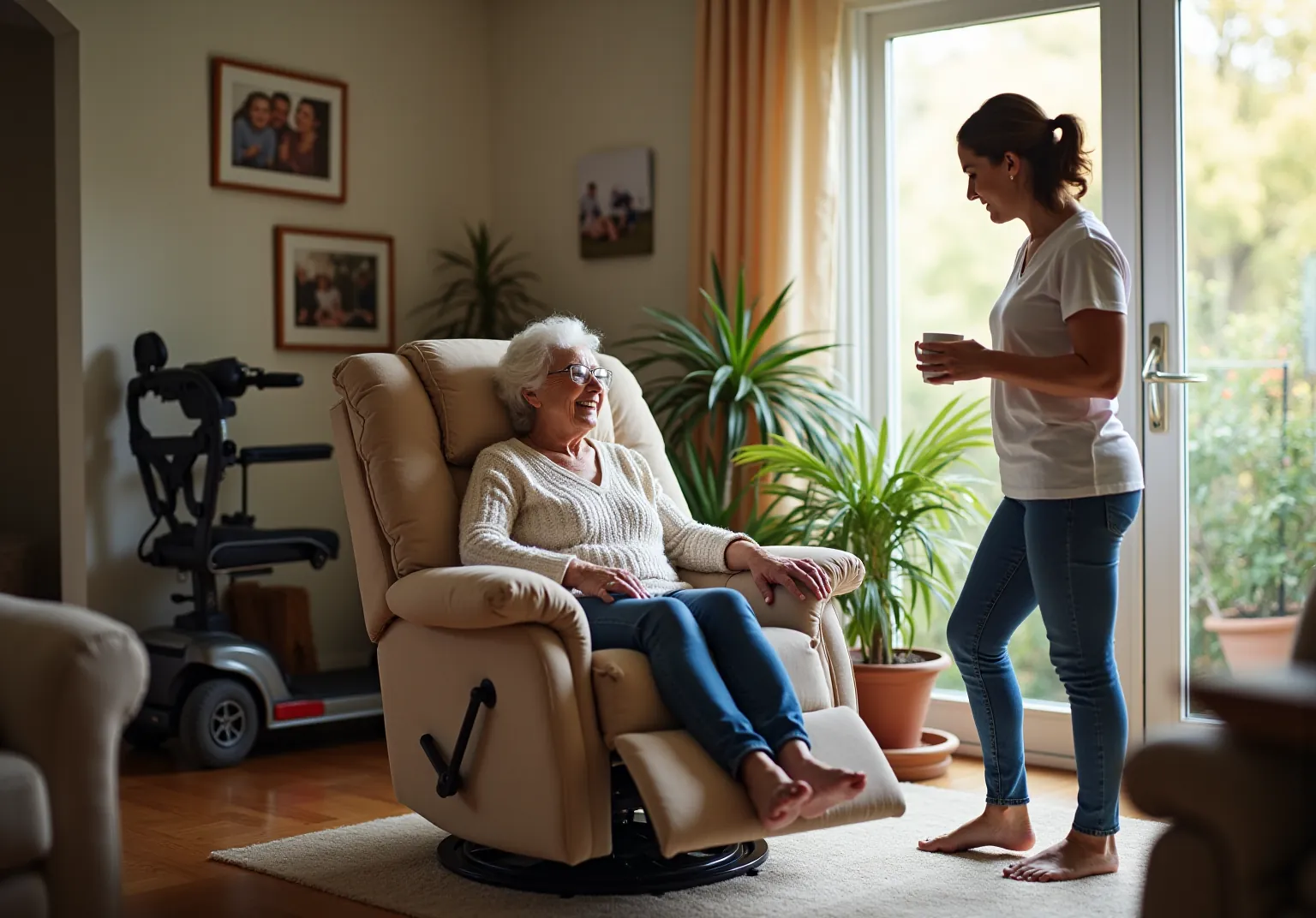
For families in our service areas
For families in our service areas, this guide explains caregiving and how non-medical in-home caregiving can support care planning in East Idaho, Treasure Valley & Magic Valley, Northern Wasatch, North Central West Virginia, and Northeast Ohio.
What You Need to Know About Mobility Products
As the population of older adults continues to grow, maintaining independence is a critical concern for many. This challenge not only affects their quality of life but also places a significant burden on caregivers. The right mobility products can significantly enhance autonomy, allowing seniors to navigate their homes and communities with confidence.
However, with an overwhelming array of options available, caregivers often struggle to select the most effective tools to support their loved ones. This article explores ten essential mobility products that not only promote independence but also address the unique challenges seniors face in their daily lives. By understanding these products, caregivers can make informed decisions that enhance the well-being of those they care for.
Happy to Help Caregiving: Personalized In-Home Support for Enhanced Independence
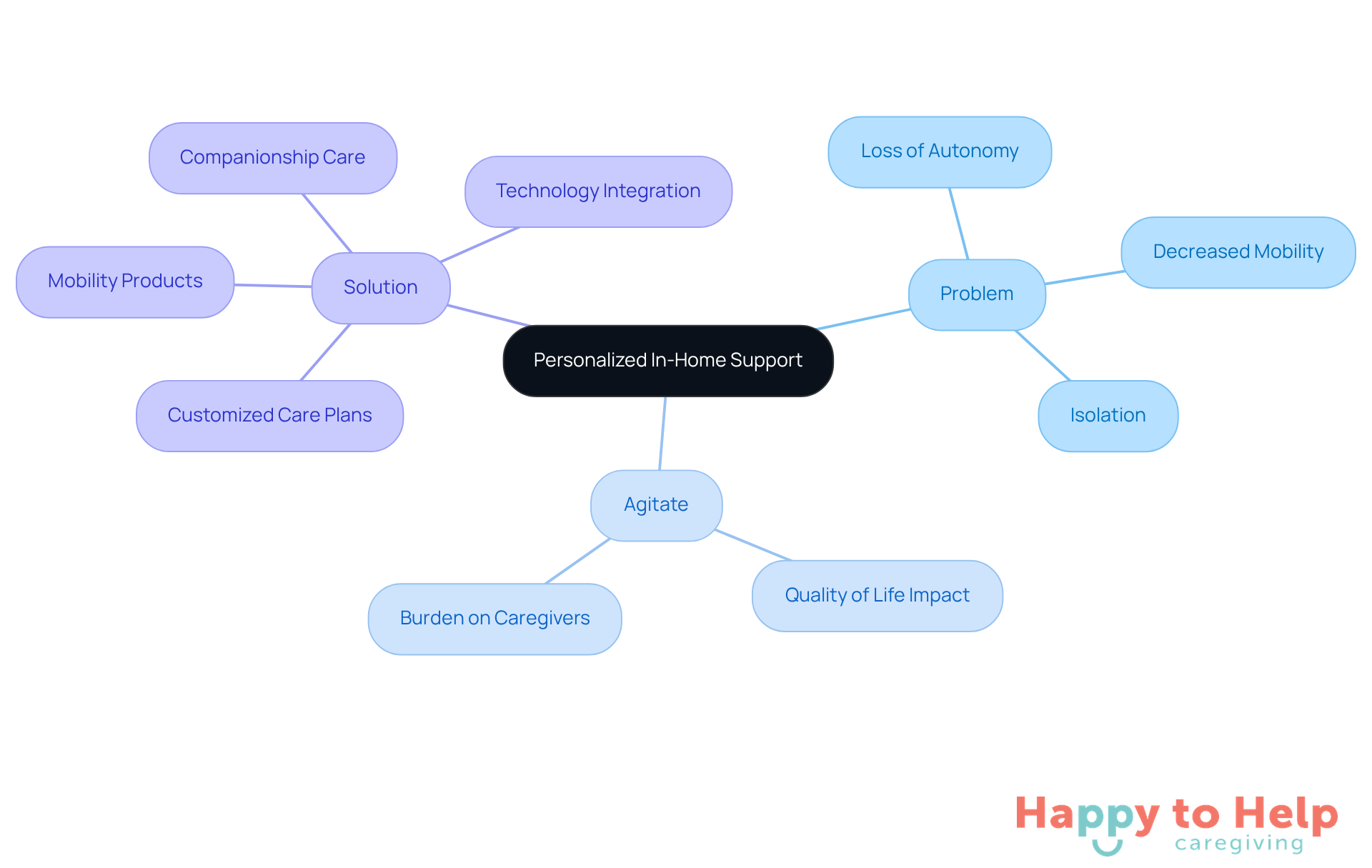
Problem: Many older adults struggle to maintain their autonomy as they age, facing challenges that can hinder their daily activities and overall well-being. This can lead to feelings of insecurity and discomfort in their own homes.
Agitate: The implications of losing independence are significant. Without proper support, older adults may experience decreased mobility, isolation, and a decline in mental health. This not only affects their quality of life but also places a burden on family caregivers who may feel overwhelmed by the demands of care.
Solution: Happy to Help Caregiving excels in providing customized in-home assistance that greatly improves the autonomy of older adults. By tailoring care plans to individual needs, caregivers enhance the use of mobility products for seniors and well-being, enabling clients to uphold their daily activities while nurturing a sense of security in their residences. Services such as companionship care and post-hospital recovery assistance ensure that clients receive the necessary support to thrive in familiar surroundings.
Additionally, the integration of technology, including smart home devices and telehealth services, empowers older adults by enhancing their safety and facilitating communication with caregivers. This commitment to personalized care not only improves the quality of life for older adults but also addresses their emotional and mental well-being, allowing them to live with dignity and confidence. As the landscape of elderly care evolves towards hyper-personalized care plans, Happy to Help Caregiving remains at the forefront, adapting to the unique preferences and lifestyles of each client.
Canes: Essential Support for Stability and Balance
Mobility challenges are a significant concern for older adults, making mobility products for seniors crucial to prevent falls and maintain independence. Canes serve as crucial assistive devices, offering necessary support to improve balance and stability while walking. However, many caregivers may not realize the importance of selecting the right type of cane to meet specific mobility needs.
Research shows that a properly fitted cane can reduce the risk of falls by up to 30%. This reduction is largely due to the cane's ability to distribute weight evenly and provide an additional point of contact with the ground. Physical therapists, like Christopher Norman and Milicia McDowell, emphasize the importance of factors such as height adjustment and grip comfort when choosing a cane. These elements are vital for ensuring optimal support and usability.
For instance, mobility products for seniors like quad canes are particularly beneficial for older adults with significant balance issues, thanks to their wider base of support. Modern cane designs, which are among the mobility products for seniors, also incorporate ergonomic features and lightweight materials, making them easier to handle and more effective in promoting independence.
To enhance safety and confidence, it’s essential for caregivers to select the appropriate cane and ensure it is correctly adjusted to the individual's height. By doing so, older adults can navigate their surroundings with greater ease, ultimately improving their quality of life.

Walkers and Rollators: Enhanced Mobility and Safety
Mobility challenges are a significant concern for older adults, making mobility products for seniors crucial in maintaining their independence and reducing the risk of falls. With over 36 million older adults reporting falls each year, the need for effective assistance devices is clear. Walkers and rollators are important mobility products for seniors, offering the necessary support to enhance balance and stability.
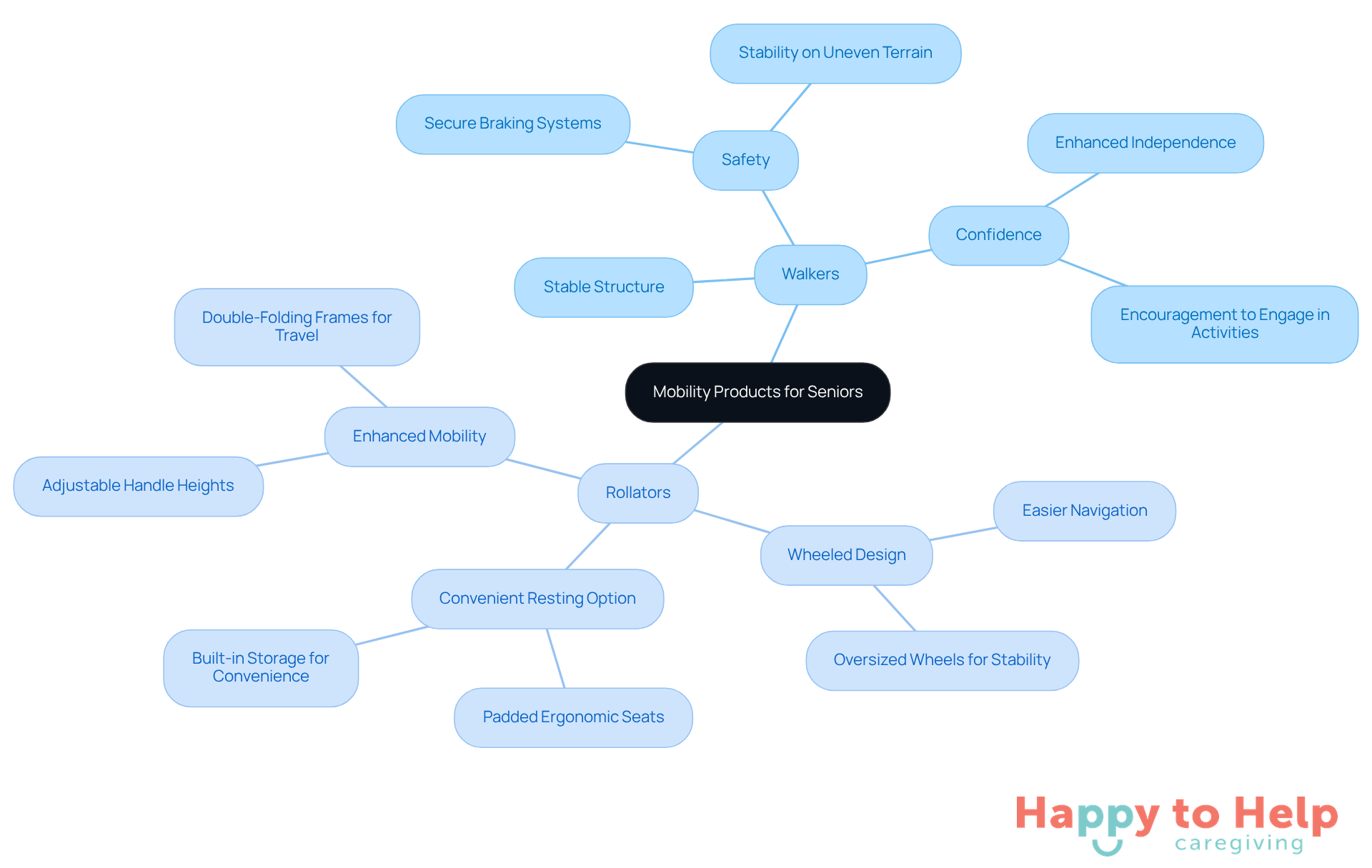
- Walkers offer a stable structure for individuals to lean on.
- Rollators, equipped with wheels and often a seat, are ideal for longer outings.
These mobility products for seniors not only improve movement but also instill confidence, enabling seniors to navigate their environments safely. For those who tire easily, rollators provide a convenient resting option, eliminating the need to find a separate seat.
Recent advancements in mobility products for seniors have introduced features like padded ergonomic seats, adjustable handle heights, and secure braking systems. These innovations enhance comfort and safety, reflecting a growing awareness of the importance of mobility in maintaining independence and quality of life for older adults.
Success stories abound, with many older adults reporting increased confidence and social engagement after using these devices. Occupational therapists emphasize that the right assistive device can significantly reduce the risk of falls, enabling seniors to participate in daily activities with greater assurance. As the elderly population continues to grow, the demand for effective mobility solutions like walkers and rollators is expected to rise.
The market for mobility products for seniors, specifically elderly walkers, is projected to expand at a CAGR of 6.44% from 2024 to 2032, underscoring the increasing need for these devices. Dr. Karen Fields notes, "These innovations are not solely focused on lighter frames; they aim to provide older adults confidence - the ability to shop, travel, and even enjoy cruise ships or casinos without concern for fatigue, falls, or insufficient support." When considering safety features, walkers generally offer a more stable frame, while rollators provide the benefit of mobility with the option to rest, catering to various needs.
Manual Wheelchairs: Reliable Mobility Solutions
For older adults facing mobility challenges, mobility products for seniors, like manual wheelchairs, present a reliable solution. Many individuals still possess some upper body strength, allowing them to navigate their surroundings independently. This independence is crucial for engaging in social activities, which can significantly enhance their quality of life.
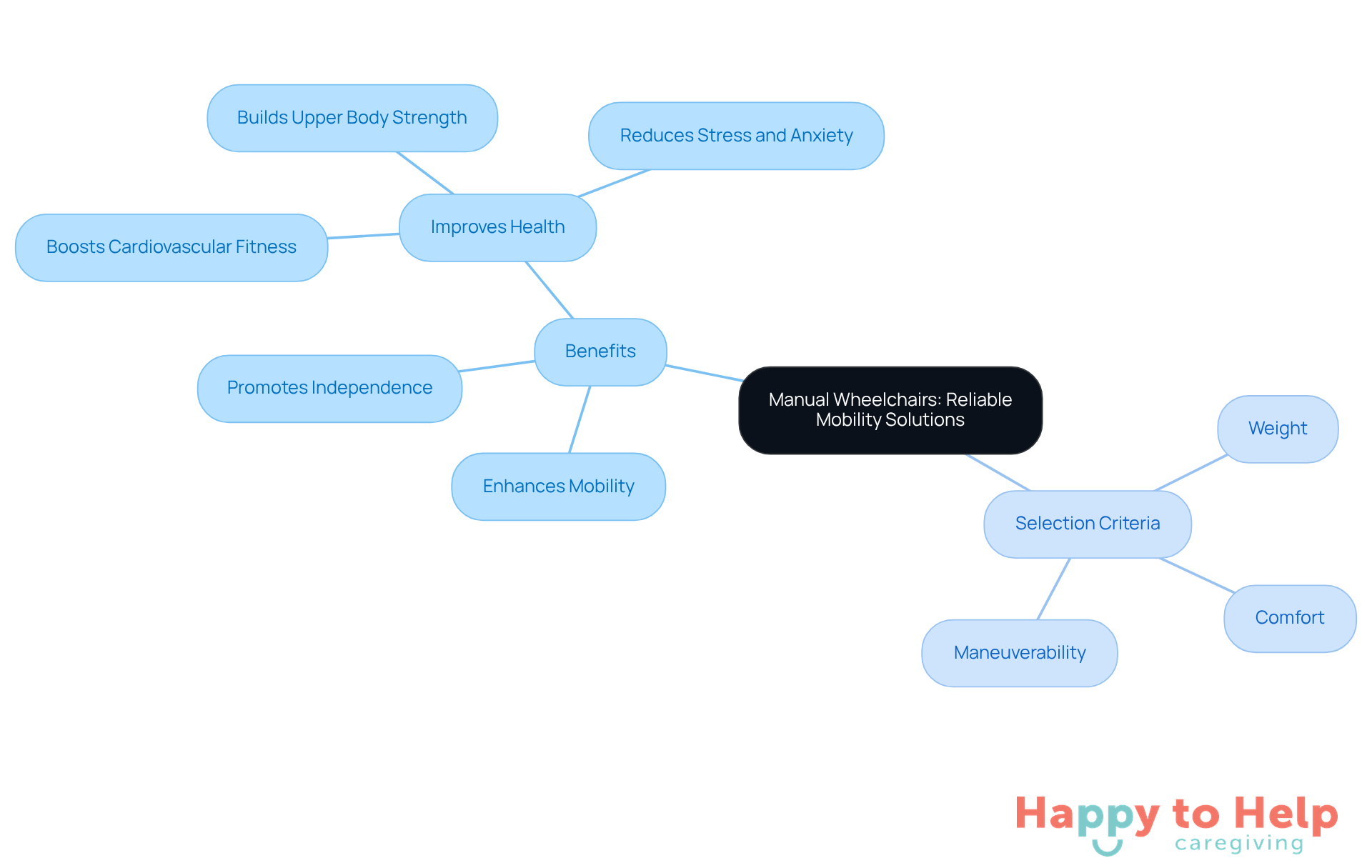
However, selecting the right manual wheelchair can be daunting. Caregivers must consider factors such as:
- Weight
- Maneuverability
- Comfort
These elements are vital for ensuring that the wheelchair meets the user's needs effectively. Regular use of a manual wheelchair not only aids mobility but can also improve upper body strength and cardiovascular health, making it a beneficial option for active older adults.
In summary, manual wheelchairs are effective mobility products for seniors that offer a practical solution for enhancing mobility and independence among older adults. By carefully considering the selection criteria, caregivers can help their loved ones maintain an active and fulfilling lifestyle.
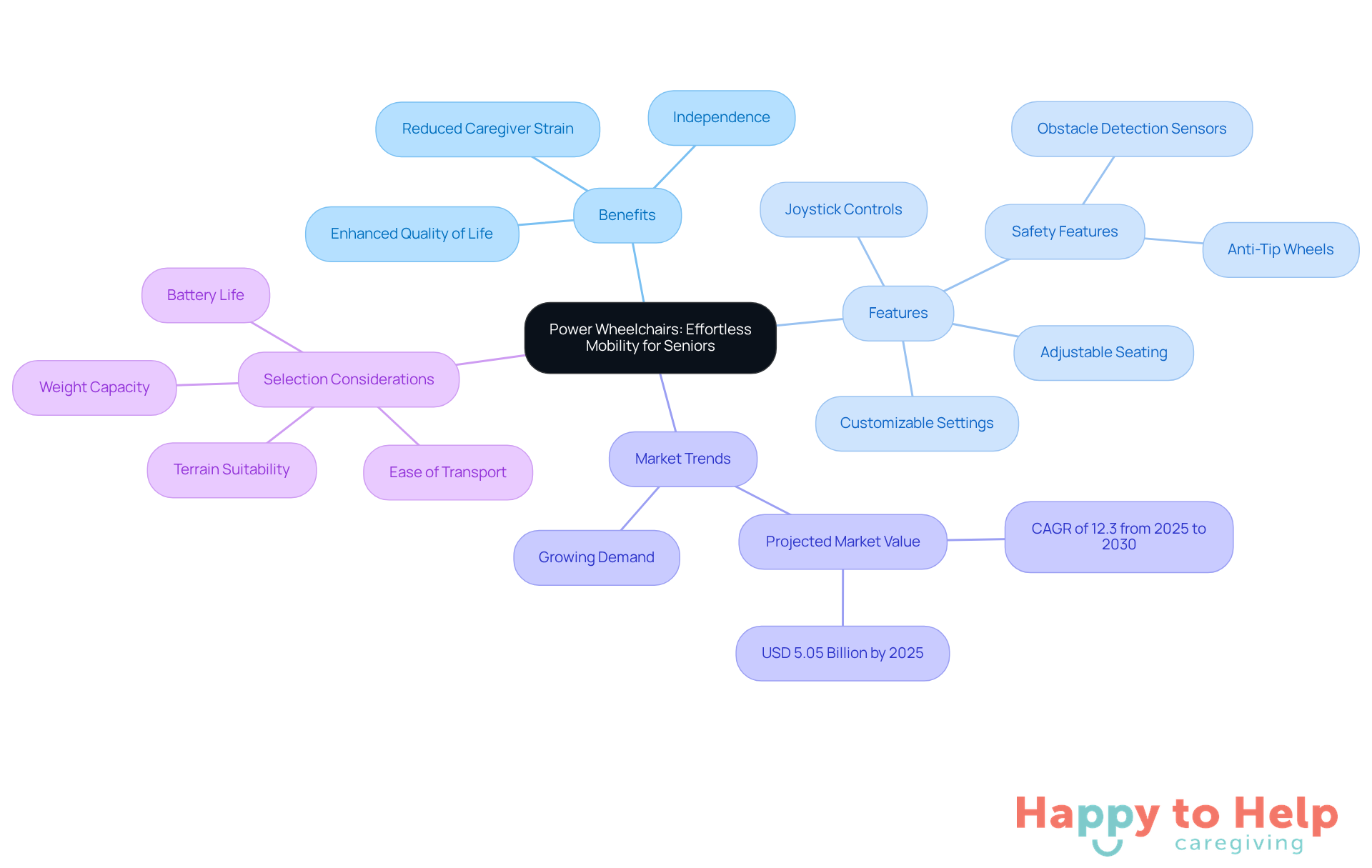
Power Wheelchairs: Effortless Mobility for Seniors
Power wheelchairs are crucial mobility products for seniors that help address a significant challenge for caregivers: the mobility limitations faced by older adults. These limitations can lead to increased physical strain on caregivers, as they often assist with transportation and daily activities. The introduction of mobility products for seniors, including electric wheelchairs, has emerged as a vital solution, empowering seniors to regain control over their movement and enhancing their independence.
These motorized devices are equipped with features like adjustable seating, joystick controls, and customizable settings, making them suitable for a diverse range of users. Experts highlight that the global market for mobility products for seniors, particularly electric wheelchairs, is projected to reach USD 5.05 billion by 2025, reflecting the growing demand for these essential mobility aids.
When selecting a power wheelchair, caregivers should consider several key factors:
- Battery life: Ensures the wheelchair can be used throughout the day without frequent recharging.
- Weight capacity: Important for accommodating different users safely.
- Ease of transport: Facilitates mobility for both the user and the caregiver.
These considerations help ensure that the wheelchair is one of the mobility products for seniors that aligns with the individual's lifestyle and mobility needs, ultimately fostering a greater sense of autonomy. Success stories abound, showcasing older adults who have embraced mobility products for seniors, such as power wheelchairs, to engage in activities they once found challenging, from running errands to enjoying outdoor excursions.
For instance, the Robooter E60 Pro is designed for outdoor enthusiasts, enabling individuals to navigate rugged landscapes with ease. Meanwhile, the Pride Jazzy Elite offers stability and comfort for everyday use, making it an excellent choice for those seeking reliable mobility in their daily lives.
Mobility Scooters: Freedom to Explore with Ease
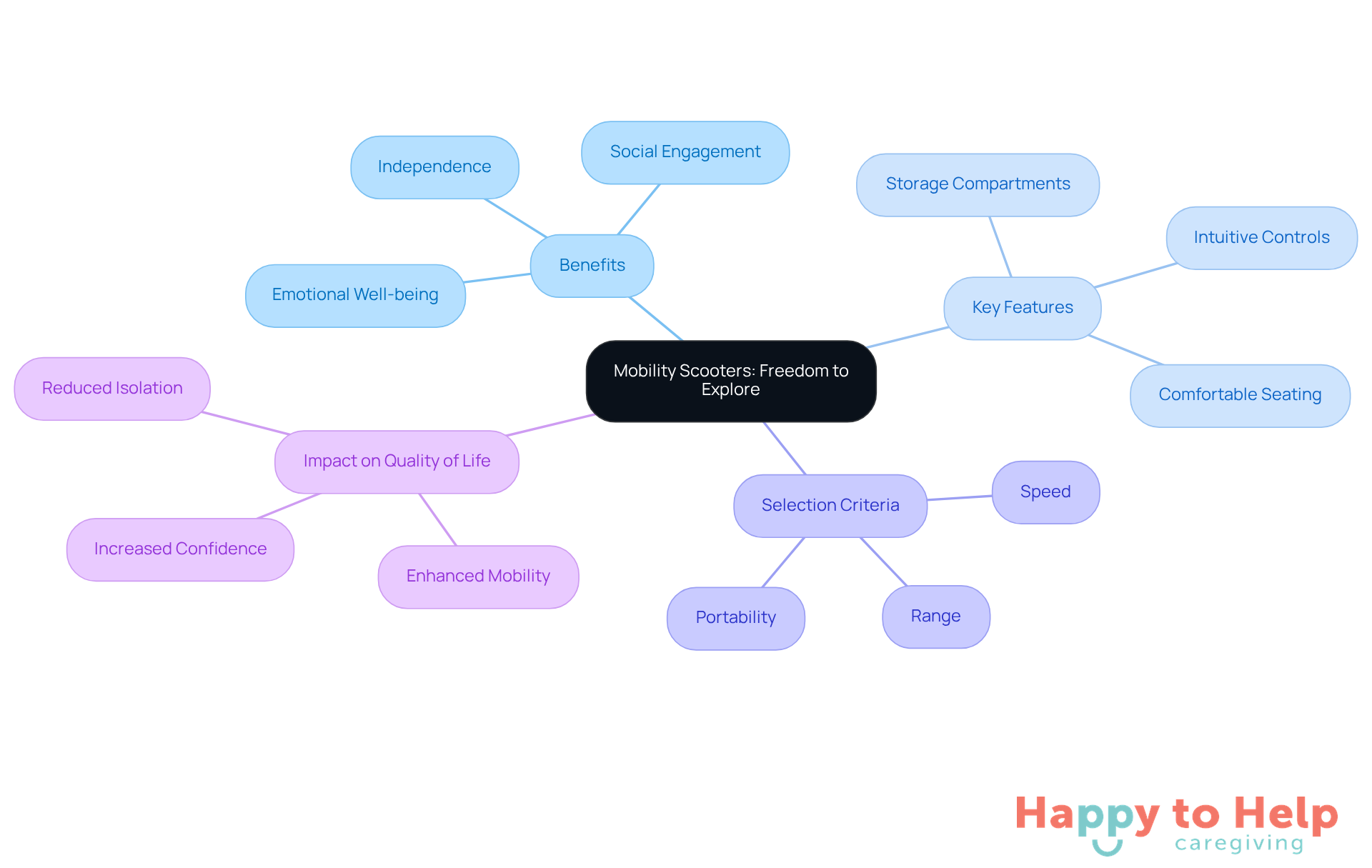
Mobility limitations can significantly impact seniors' independence and social engagement, making mobility products for seniors essential for enhancing their quality of life. Many older adults struggle to navigate their communities, which can lead to feelings of isolation and decreased quality of life. This challenge is particularly pressing as maintaining social connections is vital for emotional well-being.
Mobility products for seniors, including mobility scooters, offer a practical solution to these issues. Designed for outdoor use, these scooters can easily navigate various terrains, making them ideal for shopping trips, social events, or leisurely outings. Key features such as comfortable seating, ample storage compartments, and intuitive controls enhance the user experience. For instance, the GEMINI model, with its larger wheels and enhanced mileage, provides stability and comfort for outdoor activities, allowing individuals to explore their neighborhoods with confidence.
When selecting a scooter, caregivers should consider essential factors like range, speed, and portability to ensure it aligns with the user's lifestyle. Lightweight and foldable models, such as the E-CARY, are particularly advantageous for those who travel frequently or have limited storage space. Geriatric care specialists emphasize that these mobility products for seniors not only improve mobility but also foster social interactions, enabling older adults to participate in community activities and maintain friendships.
Mobility products for seniors, like mobility scooters, play a crucial role in enhancing outdoor movement and improving the overall quality of life for older adults. They empower individuals to experience greater freedom and independence, ultimately enriching their daily lives.
Stairlifts: Safe Access to All Levels of the Home
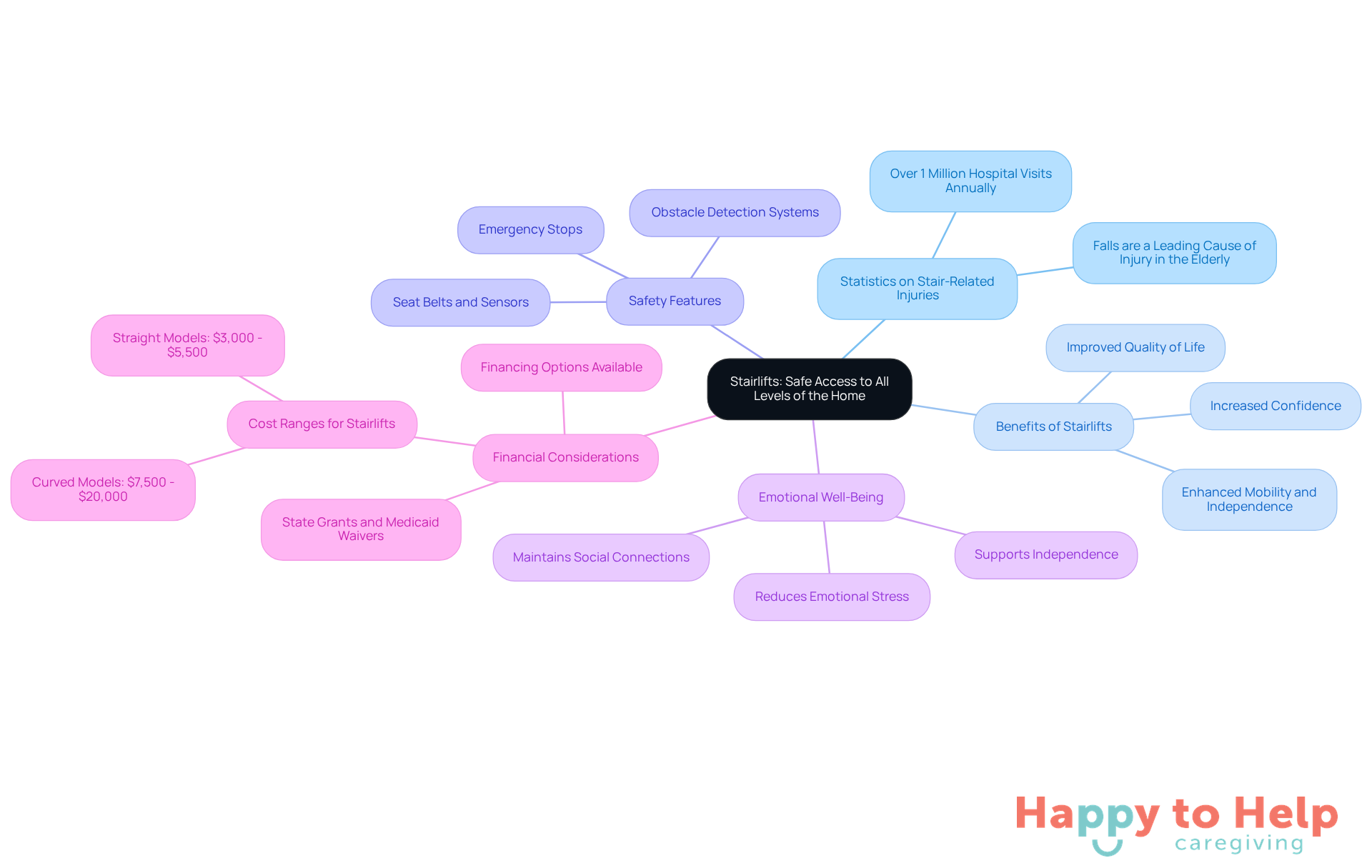
Stair-related injuries pose a significant problem for seniors, accounting for over 1 million hospital visits annually. This alarming statistic underscores the challenges faced by caregivers in ensuring the safety and mobility of their loved ones through mobility products for seniors. Navigating multi-level homes can be daunting for seniors, leading to a heightened risk of falls and decreased independence, making mobility products for seniors essential.
Stairlifts emerge as a practical solution to these challenges. By alleviating the physical demands of stair climbing, mobility products for seniors not only enhance mobility but also play a crucial role in fall prevention. Tailored to fit various stair configurations, stairlifts ensure a perfect match for any home. Equipped with essential safety features like seat belts and obstruction sensors, they provide peace of mind for both users and their families.
The installation of a stairlift, which is one of the mobility products for seniors, can dramatically improve an elderly person's quality of life, allowing them to remain in their cherished homes longer and with greater independence. Many seniors report increased confidence and improved daily routines after incorporating mobility products for seniors, including stairlifts, into their living spaces. As Kieran Harris notes, "A stair lift does more than solve a physical problem; it also supports emotional well-being."
Professionals in home security advocate for stairlift installations as a proactive measure to reduce fall risks, emphasizing their significance in maintaining a secure and accessible home environment. Caregivers should also explore financing options, as state grants and Medicaid waivers increasingly recognize stairlifts as essential home modifications, making them more accessible for families.
Grab Bars and Handrails: Essential Safety Features
Falls among older adults are a significant concern, particularly in high-risk areas of the home like bathrooms and staircases. Each year, over 14 million older adults experience falls, which can lead to serious injuries and a loss of independence. This alarming statistic highlights the urgent need for effective preventive measures.
One of the most effective solutions is the installation of grab bars and handrails. These essential features provide crucial support, allowing seniors to navigate their environments with confidence. According to security specialists, proper installation is vital; grab bars should be firmly anchored and set at heights between 33 to 36 inches for optimal accessibility. Regular inspections for stability and wear can further enhance their effectiveness in preventing falls.
As Dr. Jane Smith, a geriatric specialist, states, "Installing grab bars in key areas of the home is one of the most effective ways to prevent falls and related injuries among older adults." Furthermore, recent security standards mandate that all new bathtubs and showers incorporate grab bars unless the threshold is ½ inch or lower and the shower floor is slip-resistant when wet. This compliance not only meets safety regulations but also significantly improves the quality of life for individuals facing mobility challenges through the use of mobility products for seniors.
Incorporating these protective features is a proactive measure towards maintaining independence and ensuring a secure living environment by utilizing mobility products for seniors.

Shower Chairs and Transfer Benches: Safe Bathing Solutions
Bathing can be a significant challenge for elderly individuals, often leading to dangerous falls. This not only impacts their personal hygiene but also their overall well-being. Caregivers face the critical task of ensuring safety during these daily routines.
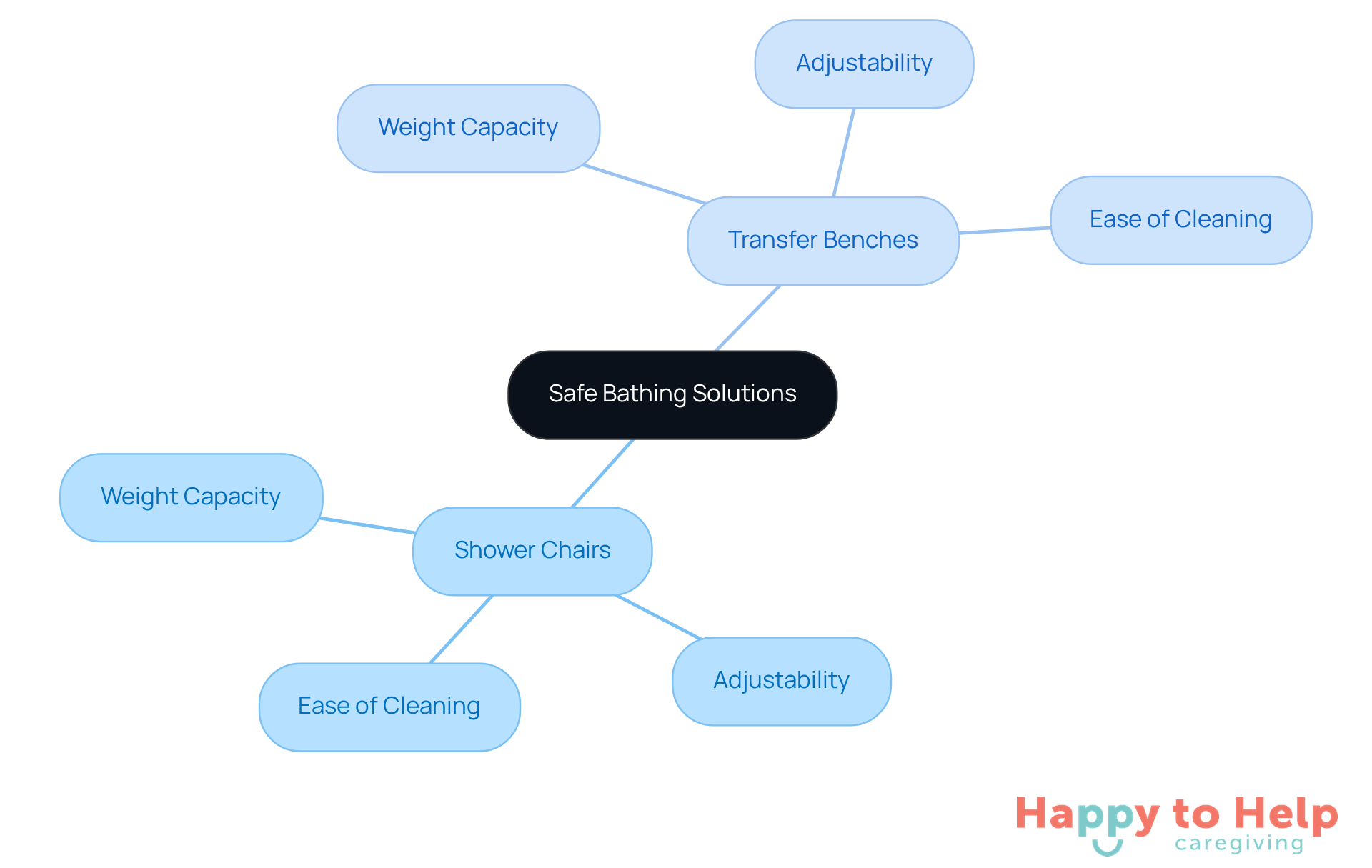
Shower chairs and transfer benches are examples of mobility products for seniors that provide effective solutions to this problem. They provide a stable seating option while bathing, significantly reducing fatigue and the risk of accidents. When selecting the right equipment, caregivers should consider essential features such as:
- Weight capacity
- Adjustability
- Ease of cleaning
These factors ensure that the chosen mobility products for seniors meet the specific needs of the individual, promoting both safety and independence.
Lift Chairs: Support for Daily Living Activities
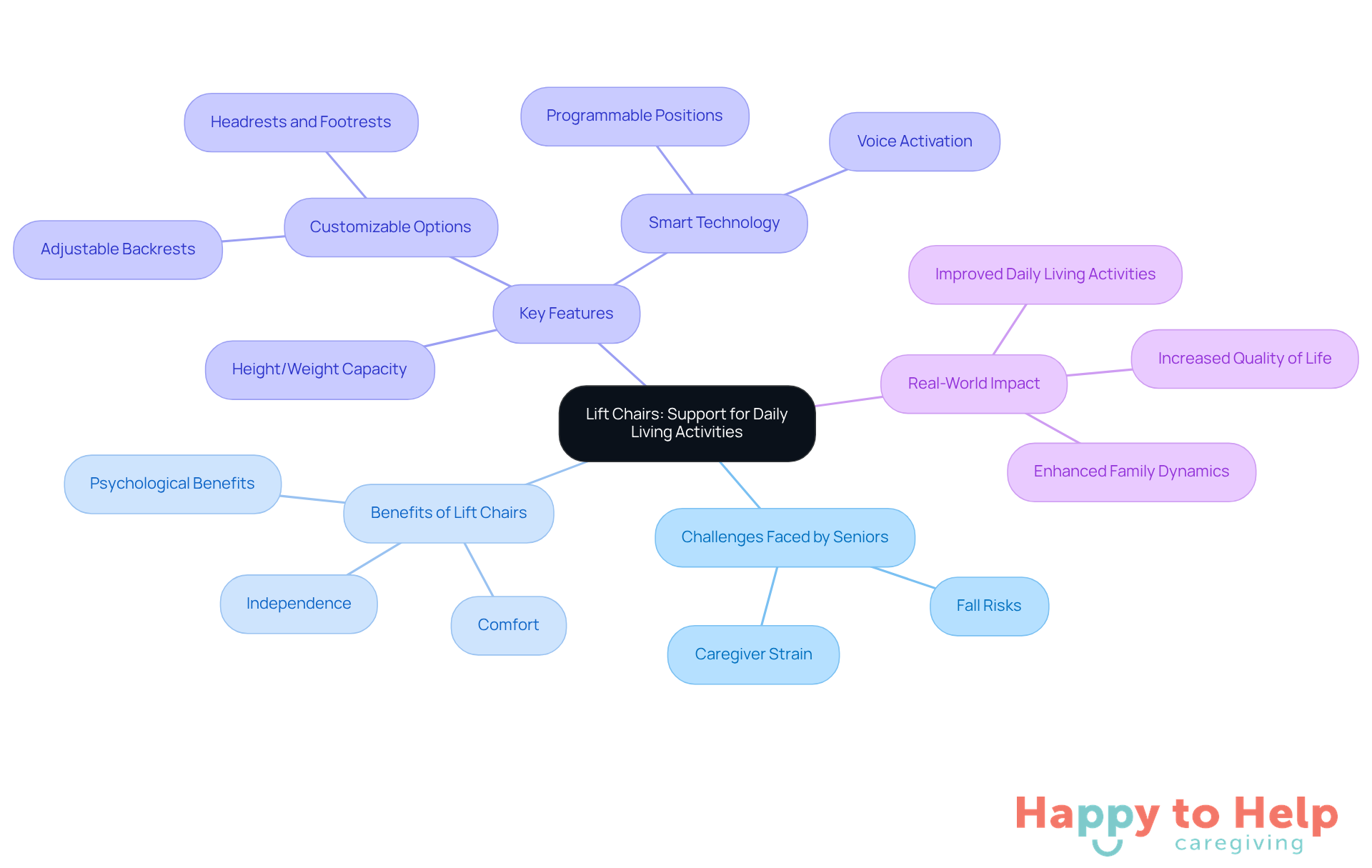
Lift chairs are essential mobility products for seniors that address a significant problem: the difficulty of standing up from a seated position. This challenge not only increases the risk of falls but also places strain on joints and caregivers. The implications are serious, as falls can lead to severe injuries and a loss of independence for older adults.
Fortunately, mobility products for seniors like lift chairs offer a practical solution. These innovative chairs feature a smooth lifting mechanism that elevates users to a standing position, significantly reducing fall risks. Many modern models come equipped with additional features like reclining options and heat settings, enhancing comfort and promoting relaxation.
When selecting a lift chair, caregivers should consider several key factors to ensure it meets the specific needs of the individual. Important features include:
- The user's height and weight capacity
- Customizable options such as adjustable backrests, headrests, and footrests
These adjustments allow seniors to find their most comfortable seating position, alleviating stiffness and improving overall well-being.
Recent advancements in lift chairs have introduced smart technology, including programmable positions and voice activation, catering to a wider range of preferences. Physical therapists emphasize the importance of mobility products for seniors, noting that these chairs not only provide physical support but also foster independence and confidence among older individuals. Dr. Karen Fields, a geriatric care specialist, states, "These aren’t just mechanical devices. They’re real-life solutions that prevent injuries, reduce caregiver strain, and keep older adults living at home longer."
Real-world examples highlight the transformative impact of lift chairs on users' lives. Families report that these chairs have significantly decreased fall risks and improved daily living activities, allowing older adults to engage more actively in their homes. The psychological benefits are equally important; the autonomy gained from using a lift chair contributes to a higher quality of life and better family dynamics.
In summary, lift chairs are one of the mobility products for seniors that represent a thoughtful solution, empowering elderly individuals to maintain their independence and dignity. With the power lift chair recliner market projected to reach $2.5 billion in 2025, the growing demand for these products underscores their vital role in enhancing the quality of life for seniors.
Making the Right Choice
Mobility products are essential for enhancing the independence and quality of life for seniors. Many older adults face significant challenges in navigating their environments, which can lead to decreased confidence and increased risk of accidents. This situation not only affects their mobility but also their overall well-being.
To address these challenges, caregivers must prioritize the selection of appropriate mobility aids. Products like:
- canes
- walkers
- wheelchairs
- scooters
- stairlifts
- grab bars
- shower chairs
- lift chairs
each serve unique purposes, providing stability and support that enable seniors to move safely within their homes. Choosing the right mobility aids tailored to individual needs is crucial, as it directly impacts a senior's ability to engage in daily activities and maintain social connections.
Moreover, integrating personalized in-home support services can amplify the benefits of these mobility products. This combination ensures that seniors can maintain their autonomy while receiving the assistance they need. By fostering independence through the right tools and support, caregivers can help seniors achieve a higher quality of life.
Ultimately, the significance of mobility products extends beyond functionality; they represent a pathway to dignity and enhanced well-being. As the elderly population continues to grow, the demand for these essential aids will only increase. Caregivers and families must prioritize the selection and integration of suitable mobility solutions, ensuring that older adults can thrive in their homes and communities.
https://iframe.tely.ai/cta/eyJhcnRpY2xlX2lkIjogIjY5MjY2NjI3YmM0ODhkNDFmZWVlZWU0NiIsICJjb21wYW55X2lkIjogIjY4ZWU1ZGNhNzMxNzYyNTU3ZjNjOTVjMSIsICJpbmRleCI6IG51bGwsICJ0eXBlIjogImFydGljbGUifQ==Frequently Asked Questions
What challenges do older adults face that affect their independence?
Older adults often struggle with decreased mobility, isolation, and a decline in mental health, which can hinder their daily activities and overall well-being, leading to feelings of insecurity in their own homes.
How does Happy to Help Caregiving support older adults?
Happy to Help Caregiving provides personalized in-home assistance tailored to individual needs, enhancing the autonomy of older adults through customized care plans, companionship care, and post-hospital recovery assistance.
What role does technology play in supporting older adults?
Technology, including smart home devices and telehealth services, enhances safety and facilitates communication with caregivers, empowering older adults to live independently while ensuring their well-being.
Why are canes important for older adults?
Canes are essential mobility products that provide support for balance and stability while walking, helping to prevent falls and maintain independence in older adults.
What factors should be considered when selecting a cane?
Important factors include height adjustment and grip comfort, as a properly fitted cane can reduce the risk of falls by distributing weight evenly and providing additional support.
What are the differences between walkers and rollators?
Walkers offer a stable structure for leaning, while rollators are equipped with wheels and often include a seat, making them ideal for longer outings and providing a resting option for users.
How do mobility products like walkers and rollators impact older adults?
These devices enhance movement, instill confidence, and enable seniors to navigate their environments safely, ultimately improving their quality of life and encouraging social engagement.
What innovations have been made in mobility products for seniors?
Recent advancements include padded ergonomic seats, adjustable handle heights, and secure braking systems, which enhance comfort and safety for older adults using these mobility aids.
What is the projected growth of the mobility products market for seniors?
The market for mobility products, specifically elderly walkers, is projected to expand at a CAGR of 6.44% from 2024 to 2032, reflecting the increasing need for effective mobility solutions among older adults.
How do walkers and rollators contribute to safety for seniors?
Walkers provide a more stable frame, while rollators offer mobility with the option to rest, catering to various needs and significantly reducing the risk of falls for older adults.
List of Sources
- Happy to Help Caregiving: Personalized In-Home Support for Enhanced Independence
- The Future of Private Home Care: What to Expect in 2025 (https://anodyne-services.com/2024/08/14/the-future-of-private-home-care-what-to-expect-in-2025)
- How Personalized Care Models Are Transforming Senior Living in 2025 (https://stpetersassistedliving.com/blog/how-personalized-care-models-are-revolutionizing-senior-living-in-2025)
- Home Care Trends 2026: Preparing for Senior Care - Assisting Hands Centennial (https://assistinghands.com/77/colorado/centennial/blog/home-care-trends-2026-preparing-for-senior-care)
- Trends and Innovations in Senior Care | Amada Blog (https://amadaseniorcare.com/2025/01/trends-and-innovations-in-senior-care)
- Senior Living Trends in 2025 | Juniper (https://junipercommunities.com/senior-living-trends-in-2025)
- Canes: Essential Support for Stability and Balance
- Walking Canes in the Real World: 5 Uses You'll Actually See (2025) | Quick Primer | Top 5 Use-Cases | Integration Notes | Top Companies & Ecosystems | (https://linkedin.com/pulse/walking-canes-real-world-5-uses-youll-actually-see-7bcic)
- Home Care Rancho Santa Fe, CA - Supporting Seniors With Mobility Devices (https://canaanhomecare.com/supporting-seniors-with-mobility-devices)
- Walking Canes for Seniors 2025: Improve Mobility & Confidence (https://walking-canes.net/blogs/news/how-the-right-walking-cane-can-improve-mobility-and-confidence-for-seniors-in-2025?srsltid=AfmBOoqCMWqKm7pXyTPTziJIdU2CBdK2YPj5URxbdN4cX4oRaNDHh9nI)
- The best canes for 2025, according to nurses, physiotherapists and physical therapists (https://health.yahoo.com/wellness/healthy-aging/mobility/article/best-cane-221730730.html)
- Smart Walking Canes 2025: Health Monitoring & Mobility Support (https://walking-canes.net/blogs/news/smart-walking-canes-with-health-monitoring-enhancing-wellness-and-mobility-support?srsltid=AfmBOoria8RN3fSfI-r\_GHnTkLcEGp5HPn\_ckilWXSTzn\_HyRjjByX5I)
- Walkers and Rollators: Enhanced Mobility and Safety
- Breaking News: Fall 2025 Brings a New Era of Lightweight Walkers and Rollators for Seniors (https://kron4.com/business/press-releases/ein-presswire/850373373/breaking-news-fall-2025-brings-a-new-era-of-lightweight-walkers-and-rollators-for-seniors)
- Breaking News: Fall 2025 Brings a New Era of Lightweight Walkers and Rollators for Seniors (https://cbs42.com/business/press-releases/ein-presswire/850373373/breaking-news-fall-2025-brings-a-new-era-of-lightweight-walkers-and-rollators-for-seniors)
- Elderly Walker Market Size, Share Analysis Report 2032 (https://snsinsider.com/reports/elderly-walker-market-5887)
- Mobility Device Use Among Older Adults and Incidence of Falls and Worry About Falling: Findings From the 2011–2012 National Health and Aging Trends Study - PMC (https://pmc.ncbi.nlm.nih.gov/articles/PMC4439269)
- Manual Wheelchairs: Reliable Mobility Solutions
- Exploring the Advantages of Manual Wheelchairs: Key Benefits Unveiled - INTCO Medical (https://intcowheelchair.com/news/exploring-the-advantages-of-manual-wheelchairs-key-benefits-unveiled)
- The Role of Manual Wheelchairs in Promoting Independence and Mobility for Users (https://mobilityshopdirect.com.au/blogs/news/role-manual-wheelchairs-promoting-independence-mobility?srsltid=AfmBOoo-bn5K4QNliLgmy8\_Af46A4E1FKEBOmx6zBvjk8LrGF3sq8Jan)
- Why Manual Wheelchairs Remain Popular in Active Living - INTCO Medical (https://intcowheelchair.com/news/why-manual-wheelchairs-remain-popular-in-active-living)
- Understanding Wheelchair Use in Older Adults From the National Health and Aging Trends Study (https://sciencedirect.com/science/article/pii/S0003999323005300)
- Power Wheelchairs: Effortless Mobility for Seniors
- Exploring the Benefits of Power Wheelchairs for Seniors (https://mpowerchairs.com/blogs/news/exploring-the-benefits-of-power-wheelchairs-for-seniors?srsltid=AfmBOop2wCgqod25gHHU83PZcSPpF-tT59ZXWVb5riSGTeRX2y1VZX-P)
- Electric Wheelchair Market Size, Share, Growth Report, 2030 (https://grandviewresearch.com/industry-analysis/electric-wheelchair-market-report)
- How Electric Power Chairs Improve Quality of Life for Seniors and the Disabled - SUPERPI (https://superpirobot.com/news/industry-knowledge/how-electric-power-chairs-improve-quality-of-life-for-seniors-and-the-disabled)
- Top Electric Wheelchairs for Elderly Users Needing Extra Support - Wheelchair & Mobility Scooters Guide (https://1800wheelchair.com/news/top-electric-wheelchairs-for-elderly-users-needing-extra-support?srsltid=AfmBOop6SdZW7\_WOjefK65B-CuMbSd7gSzAf14oc2bZgs2-PmcsFgRt1)
- Mobility Scooters: Freedom to Explore with Ease
- How Mobility Scooters Improve Seniors’ Independent Living (https://lodstun.com/blogs/news/how-mobility-scooters-improve-seniors-independent-living?srsltid=AfmBOorhshKXHOMqUQ-LF-zj77vZRj6JRP716F\_pZV89jG1WuVnRKSon)
- How Scooters Help Seniors Stay Independent - AmeriGlide Blog (https://ameriglide.com/blog/how-scooters-help-seniors-stay-independent?srsltid=AfmBOooAxYz20HBACl1GumwHh5DoKxDlxN5SEIf1bI8GQXLJYxH5HMxO)
- Mobility Scooters: A Game-Changer for Independent Living - INTCO Medical (https://intcowheelchair.com/news/mobility-scooters-a-game-changer-for-independent-living)
- How Mobility Scooters Empower Seniors and Disabled Users - Wheelchair & Mobility Scooters Guide (https://1800wheelchair.com/news/how-mobility-scooters-empower-seniors-and-disabled-users?srsltid=AfmBOorRdnL648v0-E5dcEUdajYN42zlfArfLp\_iyRBg\_w6lNMKqP4wV)
- The impact of mobility scooters on their users. Does their usage help or hinder?: A state of the art review - PMC (https://pmc.ncbi.nlm.nih.gov/articles/PMC4510203)
- Stairlifts: Safe Access to All Levels of the Home
- The Growing Demand for Stair Lift Purchases: What’s Driving It? (https://jamesmedical.com/post/the-growing-demand-for-stair-lift-purchases-whats-driving-it)
- Stair Lifts: Your Solution to Multi-Level Living - Wheelchair & Mobility Scooters Guide (https://1800wheelchair.com/news/stair-lifts-your-solution-to-multi-level-living?srsltid=AfmBOopyLf703ZVYN3R6\_CUS61RQNyXpCi0bkVOk5AYhxa7I-6LL2IM9)
- Stair Lifts Market Research 2024-2029 with Exclusive Data on 37 Vendors Including Acorn, Ameriglide, Bruno Independent Living Aids, Harmar, HIDRAL, Otolift, Savaria, Stannah, ThyssenKrupp, Vimec (https://globenewswire.com/news-release/2024/10/08/2959829/28124/en/Stair-Lifts-Market-Research-2024-2029-with-Exclusive-Data-on-37-Vendors-Including-Acorn-Ameriglide-Bruno-Independent-Living-Aids-Harmar-HIDRAL-Otolift-Savaria-Stannah-ThyssenKrupp-.html)
- Aging In Place: How Stairlifts Improves Senior Living (https://seniorstairlifts.co.uk/news/senior-living-aging-in-place)
- Designing Accessible Homes: How Stair Lifts Reshape the Way We Live | NorthPennNow (https://northpennnow.com/news/2025/aug/14/designing-accessible-homes-how-stair-lifts-reshape-the-way-we-live)
- Grab Bars and Handrails: Essential Safety Features
- The Importance of Grab Bars for Home Safety and Mobility (https://101mobility.com/blog/the-importance-of-grab-bars-for-home-safety-and)
- NFPA 101 Code Update: Grab Bars Now Required in All Showers (https://base-4.com/nfpa-101-grab-bar-requirements-showers)
- Fall-prevention program can help reduce harmful in-home falls by nearly 40% | WashU Medicine (https://medicine.washu.edu/news/fall-prevention-program-can-help-reduce-dangerous-in-home-tumbles-by-nearly-40)
- Technology to Prevent Falls for Seniors (https://health.usnews.com/senior-care/articles/technology-to-prevent-falls-for-seniors)
- Bathroom Grab Bars Really Do Prevent Falls: What you need to know (https://retirementlivingsourcebook.com/articles/bathroom-grab-bars-really-do-prevent-falls-what-you-need-to-know)
- Shower Chairs and Transfer Benches: Safe Bathing Solutions
- The Importance of Transfer Benches for the Elderly – Allen Medical Equipment (https://allenmedicalequipment.com/the-importance-of-transfer-benches-for-the-elderly?srsltid=AfmBOooVU-5OB-krqPFWmlVqSZG6oTpshqlouHSkvV\_KPtRmWoPeatvN)
- Bathroom Safety 101: The Impact of Shower Seats for Seniors | O'Flynn Medical (https://oflynnmedical.com/blog/bathroom-safety-101-the-impact-of-shower-seats-for-seniors)
- Preventing Bathroom Falls: Why A Shower Chair Is Essential (https://trualta.com/resources/blog/preventing-bathroom-falls-why-a-shower-chair-is-essential)
- Shower Transfer Benches for Elderly (https://blog.quickchange.com/blog/shower-transfer-benches-for-elderly)
- The Importance of Transfer Benches & Shower Chairs for Senior Safety (https://prohealproducts.com/es/blogs/news/transfer-benches-shower-chairs-senior-safety?srsltid=AfmBOoo5G8J6P2nCajBQg-SfoNSw\_anat7lERrzF9PY4MSQthzLHu56\_)
- Lift Chairs: Support for Daily Living Activities
- Breaking News: 2025 Ushers in Safer Home Care with Advanced Patient Lift Transfer Chairs and Hoyer Lifts (https://fox59.com/business/press-releases/ein-presswire/850381529/breaking-news-2025-ushers-in-safer-home-care-with-advanced-patient-lift-transfer-chairs-and-hoyer-lifts)
- The Latest Trends in Mobility Aid Technology for 2025 (https://everythingmedicalonline.com/blogs/news/the-latest-trends-in-mobility-aid-technology-for-2025?srsltid=AfmBOor9sfMz1BaY3jy9vLQUIQByLv5yO2qqR\_U1obbHtw2aXRA-zxLE)
- How a Lift Chair Makes Daily Life Easier for Older Adults (https://hyprim.com/blogs/news/lift-chair-makes-daily-life?srsltid=AfmBOorDY6aL1d68uEELTBmETofQFsgSAhTT2Ev49lzU2MM3FHM1so-p)
- Power Lift Chair Recliners Future-proof Strategies: Trends, Competitor Dynamics, and Opportunities 2025-2033 (https://archivemarketresearch.com/reports/power-lift-chair-recliners-525462)
- Lift Chairs How Lift Chairs Improve Quality of Daily Living (https://affinityhomemedical.com/blogs/news/transform-your-living-space-how-lift-chairs-improve-quality-of-life-for-seniors-and-people-with-mobility-issues?srsltid=AfmBOop917PWkDk6XihVTChDyddHXf3KRWfAcZa0A75Pm3dMirc4YviI)