

Active service-area notice
Happy to Help does not currently list MS as an active service area. This article is general educational information. For local care availability, browse our active service areas.
Browse active service areasFor families in our service areas
For families in our service areas, this guide explains home care and how non-medical in-home caregiving can support care planning in East Idaho, Treasure Valley & Magic Valley, Northern Wasatch, North Central West Virginia, and Northeast Ohio.
Why MS Home Care Services Matters
Families facing the challenges of Multiple Sclerosis (MS) often navigate an emotional and logistical maze. The need for effective support is paramount, as these families deal with feelings of isolation and the complexities of caregiving. Understanding the unique needs of MS patients is crucial, and this article explores ten essential home care services designed to significantly enhance the quality of life for both patients and their caregivers.
As families seek solutions to alleviate their struggles, the question arises: how can tailored home care services transform the caregiving experience? By implementing these services, caregivers can foster a nurturing environment that addresses the specific challenges associated with MS. This article aims to provide clear, practical solutions that can make a meaningful difference in the lives of those affected by this condition.
Happy to Help Caregiving: Personalized In-Home Support for MS Families
Families affected by Multiple Sclerosis (MS) face significant challenges in managing daily care. The complexities of MS can lead to feelings of isolation and emotional distress for both individuals and their caregivers. This situation often leaves families searching for effective support solutions that can enhance the quality of life for their loved ones.
Happy to Help Caregiving specializes in addressing these challenges by providing personalized MS home care support tailored specifically for families dealing with MS. Their services focus on creating individualized plans that cater to the unique needs and preferences of each person. This approach not only fosters autonomy but also ensures that individuals receive compassionate care in the comfort of their own homes.
By concentrating on the distinct obstacles encountered by MS households, Happy to Help Caregiving emerges as a reliable ally in navigating the complexities of MS home care services. Caregivers are trained to engage individuals in meaningful activities, which helps alleviate feelings of isolation and promotes emotional well-being.
The agency's commitment to empathy and effective communication is evident in the positive testimonials from families. They appreciate the tailored support provided by MS home care, which enables their loved ones to thrive despite the challenges posed by MS. For families seeking assistance, Happy to Help Caregiving offers a practical solution that prioritizes both care and compassion.
Companionship Care: Alleviating Loneliness for MS Patients
Companionship care provided through MS home care addresses a significant problem: loneliness and isolation among individuals with Multiple Sclerosis (MS). These feelings can severely impact mental health, often leading to depression. Caregivers play a crucial role in mitigating these challenges by actively engaging clients in meaningful conversations and activities, which are vital for fostering social interaction that may be limited due to mobility issues.
The implications of loneliness are profound. Recent studies show that many individuals with MS experience loneliness, a situation often worsened by factors like employment status and the need for MS home care as their disability progresses. This emotional support is essential, as it encourages individuals to pursue hobbies and interests that enhance their overall quality of life. By creating a supportive atmosphere, caregivers not only promote emotional wellness but also help reduce the likelihood of depression, which is prevalent among those with MS.
So, what can caregivers do? Simple actions can make a significant difference. Sharing a favorite book, engaging in light physical activities, or just being present to listen can profoundly impact the emotional landscape of loved ones. These small gestures foster companionship and reinforce the importance of social connections in the lives of individuals with MS, demonstrating that MS home care addressing feelings of loneliness can lead to improved mental health outcomes and highlights the critical role caregivers play in their loved ones' lives.

Post-Hospital Recovery Assistance: Facilitating Smooth Transitions for MS Patients
Post-hospital recovery support presents a significant challenge for individuals with MS, making MS home care essential as they transition from medical facilities to their homes. During this vulnerable period, caregivers in MS home care face the daunting task of providing essential assistance, which includes:
- Managing medications
- Following discharge instructions
- Adapting to new health challenges
Without adequate support, the risk of hospital readmissions increases, complicating the recovery process.
As a healthcare expert notes, "Effective transitional assistance initiatives must be based on involvement of individuals and their families, ensuring that caregivers are well-equipped to aid their loved ones." This highlights the critical need for caregivers to be prepared and informed. Personalized care not only facilitates a smoother recovery but also significantly reduces the risk of hospital readmissions. In fact, individuals receiving home healthcare experience a 60% reduced risk of readmission within 30 days compared to those without such assistance.
To enhance the recovery experience, caregivers should focus on closely monitoring health conditions and providing emotional support. This approach enables individuals to regain their independence and confidence, ultimately improving their quality of life. Furthermore, caregiver readiness is essential in MS home care, as it directly impacts the quality of post-hospital support and the overall recovery journey for individuals with MS.

Respite Care: Supporting Family Caregivers of MS Patients
Caregiving for MS patients can be incredibly demanding, often leading to physical and emotional exhaustion. This burden can result in caregiver burnout, which not only affects the caregiver's health but also the quality of care provided to the patient. Without adequate support, caregivers may struggle to maintain their well-being, ultimately impacting family dynamics.
Respite services offer a vital solution to this problem. By utilizing these services, caregivers can take necessary breaks to recharge, ensuring they remain effective in their roles. This support allows caregivers to focus on their own health while guaranteeing that their loved ones continue to receive excellent assistance.
Incorporating respite care into caregiving routines is crucial for sustaining both caregiver and patient well-being. It’s essential for caregivers to prioritize their own health to maintain a balanced family dynamic and provide the best care possible.

Palliative Support Care: Enhancing Comfort for MS Patients
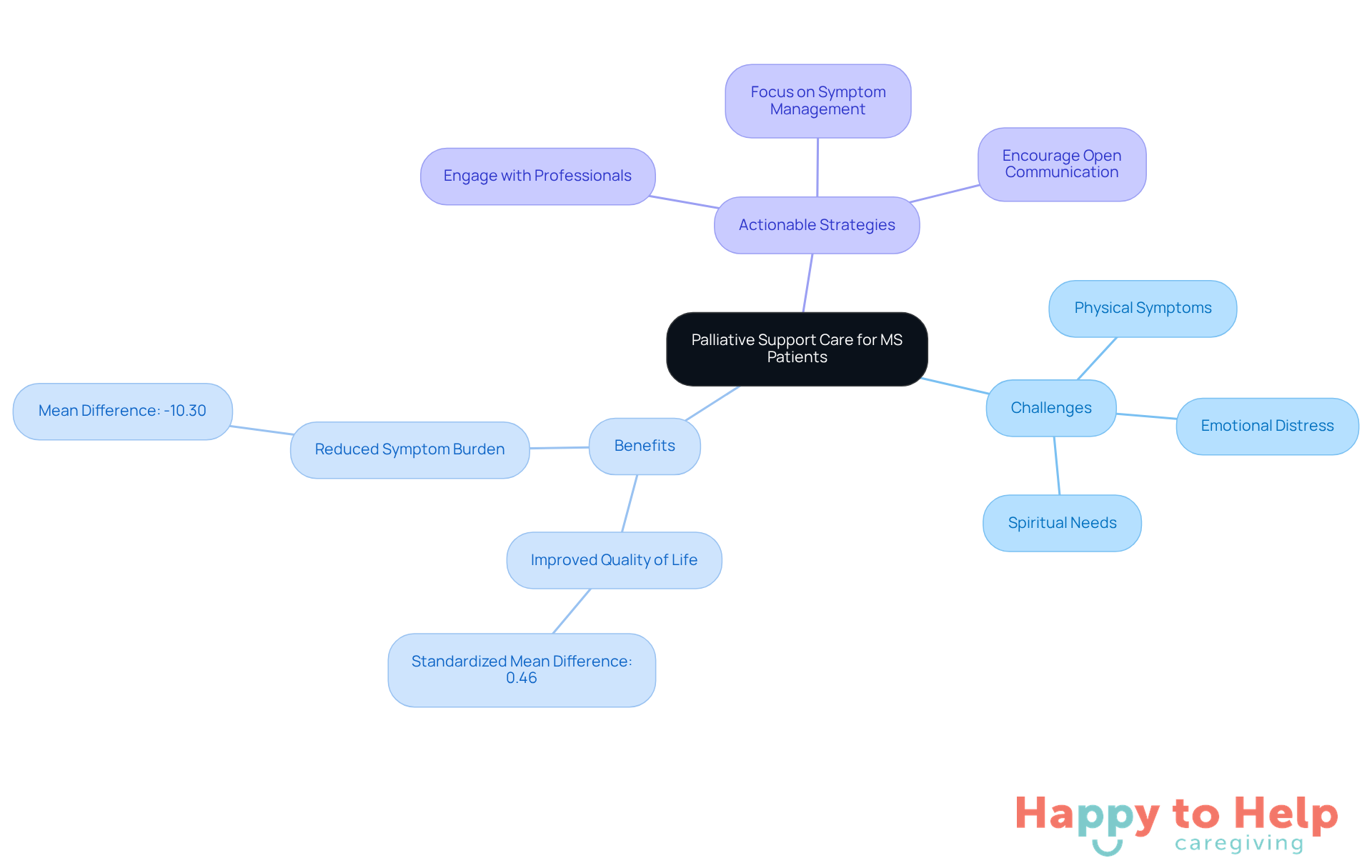
Palliative assistance is crucial for individuals with multiple sclerosis (MS), as it significantly improves their comfort and quality of life. The challenges faced by these individuals often include managing physical symptoms, emotional distress, and spiritual needs. Without adequate support, the burden of these issues can lead to a diminished quality of life.
Research shows that palliative support is linked to a statistically significant enhancement in quality of life, with a standardized mean difference of 0.46 noted in a meta-analysis of randomized clinical trials. Additionally, it has been demonstrated to significantly lessen symptom burden, with a mean difference of -10.30 at 1- to 3-month follow-up, indicating a substantial reduction in symptoms. This highlights the importance of effective symptom management and emotional support.
Support providers trained in palliative approaches offer compassionate help, guiding patients through the complexities of their situation while preserving their dignity. As a CU physician noted, "individuals with multiple sclerosis can gain from palliative assistance at any phase of the disease." This underscores the vital role of palliative resources in managing MS.
To address the increasing demand for community-based palliative services, caregivers can implement several actionable solutions:
- Engage with trained professionals who specialize in palliative care to ensure comprehensive support.
- Focus on symptom management by utilizing pain relief strategies and emotional support resources.
- Encourage open communication with patients about their needs and preferences, fostering a sense of control and dignity.
By adopting these strategies, caregivers can enhance the overall well-being of individuals with MS through MS home care, ensuring they feel valued and cared for throughout their journey.
Flexible Scheduling: Adapting to the Needs of MS Families
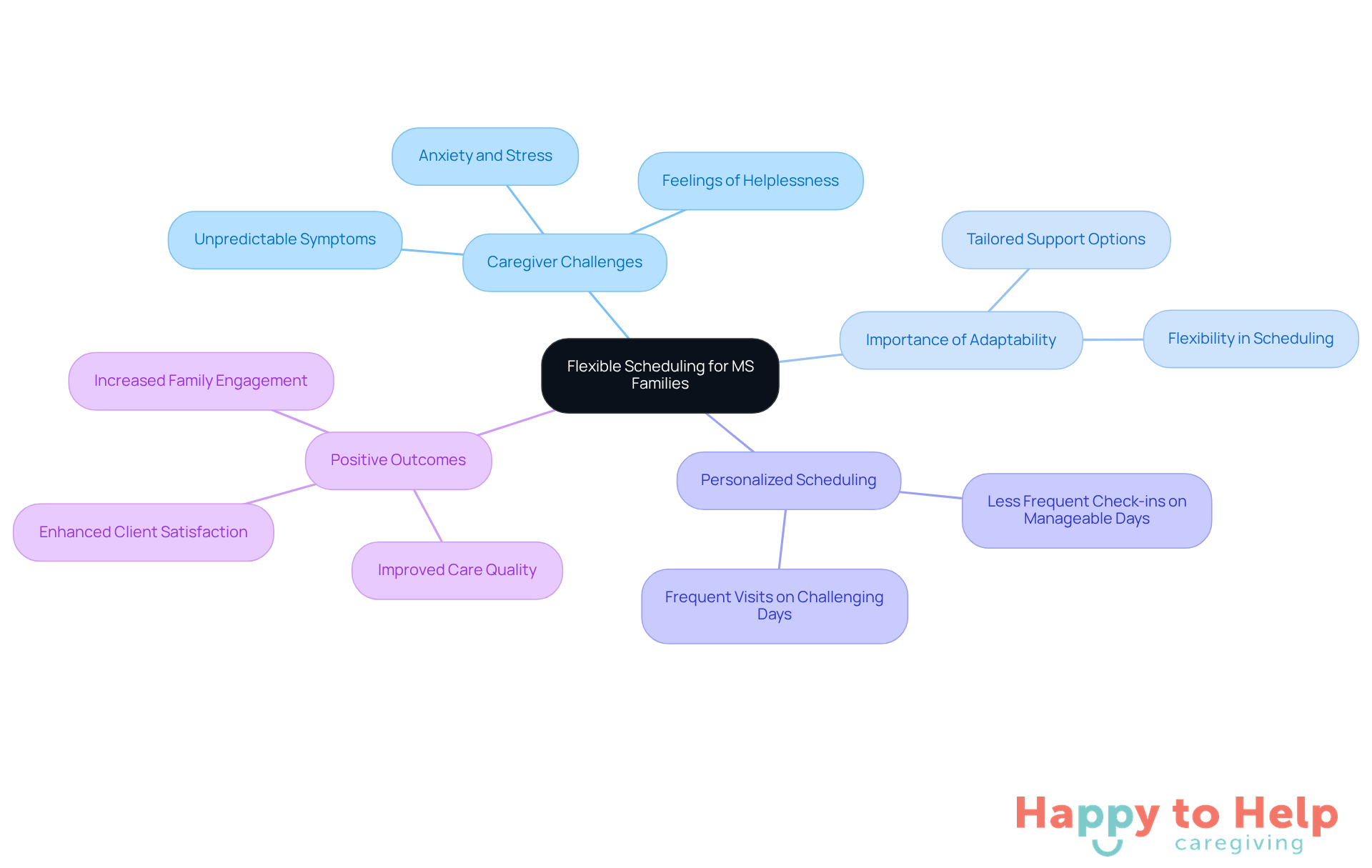
Adaptable scheduling is a crucial aspect of Happy to Help Caregiving, addressing a significant challenge faced by caregivers of patients with multiple sclerosis (MS). These individuals often experience unpredictable symptoms that can disrupt their daily routines, creating stress for both patients and their families. Without a flexible approach, caregivers may struggle to provide the necessary support when it’s needed most.
This unpredictability can lead to feelings of helplessness and anxiety among caregivers, as they may find it difficult to ensure their loved ones receive timely assistance. For instance, on particularly challenging days, more frequent visits may be essential, while less frequent check-ins might suffice when symptoms are manageable. This inconsistency underscores the importance of having adaptable support options available.
By offering personalized scheduling alternatives, Happy to Help Caregiving empowers families to tailor their support services to meet specific needs. This flexibility not only enhances client satisfaction but also fosters a sense of security and comfort for both patients and their relatives. As one caregiver noted, "Being able to modify my schedule based on my loved one's needs has made all the difference in their comfort and happiness."
Ultimately, this adaptability leads to better outcomes. Families report feeling more supported and engaged in their loved ones' care, reinforcing the significance of tailored support in managing MS.
24/7 Caregiver Availability: Ensuring Constant Support for MS Patients
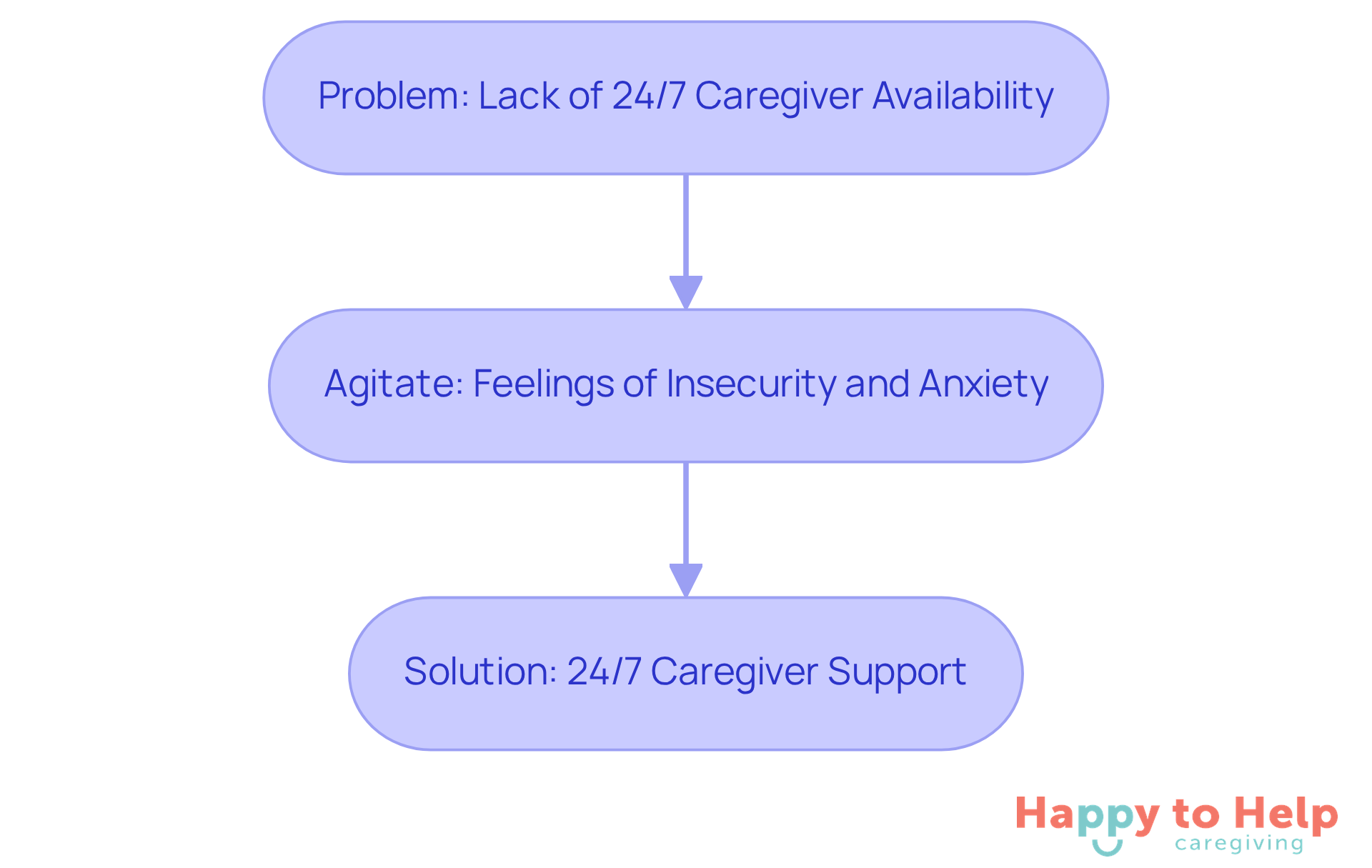
Problem: Individuals with Multiple Sclerosis (MS) often face unpredictable health challenges that require immediate attention. This can create significant stress for both the individuals and their families, as they may not always have access to timely support.
Agitate: The lack of 24/7 caregiver availability can lead to feelings of insecurity and anxiety. Families may worry about their loved ones being alone during critical moments, which can affect their overall peace of mind. Knowing that help is not readily available can exacerbate the challenges faced by those living with MS.
Solution: Happy to Help Caregiving addresses this issue by providing caregivers who are available around the clock. This constant support provided by MS home care ensures that individuals with MS receive immediate assistance whenever needed, whether it’s for a sudden health concern or simply for companionship during tough times. With caregivers on hand 24/7, individuals can feel secure, knowing that help is just a call away. This level of support not only enhances the quality of life for those with MS but also reassures their families, which allows them to focus on other aspects of life, such as MS home care.
Tailored Care Plans: Meeting the Unique Needs of MS Patients
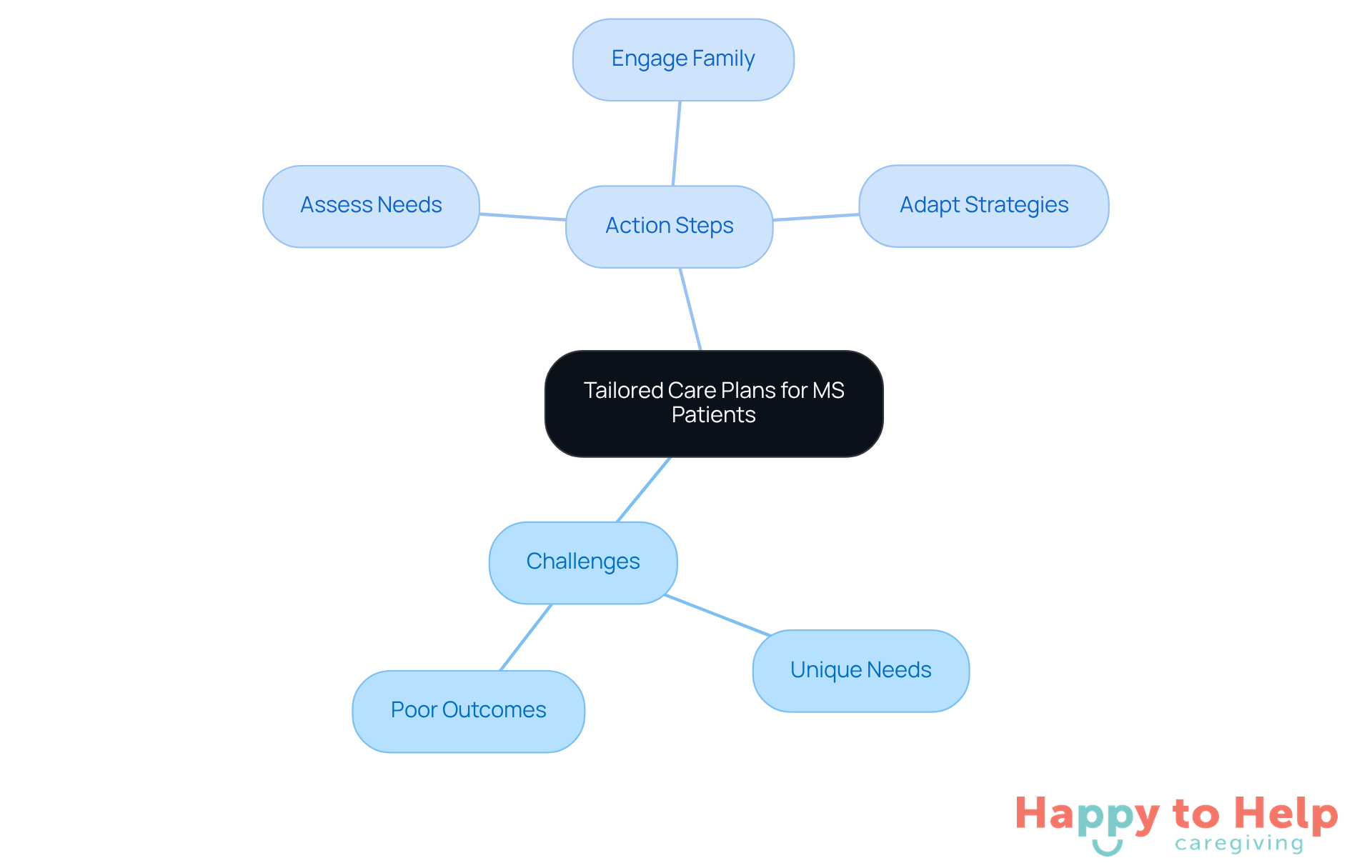
Caregivers face a significant challenge: each individual they support has unique needs and challenges. When these needs are not effectively addressed, it can lead to poor patient outcomes and dissatisfaction.
Customized support plans are essential in overcoming this issue. By collaborating closely with relatives, caregivers can create personalized care strategies that consider the individual's medical history, preferences, and daily habits. This tailored approach not only improves patient outcomes but also enhances satisfaction, as patients feel their specific needs are met with compassion and understanding.
To implement effective customized support plans, caregivers should:
- Assess the unique needs of each individual regularly.
- Engage family members in the care planning process.
- Continuously adapt care strategies based on feedback and changing circumstances.
By focusing on these actionable steps, caregivers can ensure that they provide the highest level of care, fostering a supportive environment that prioritizes the well-being of those they serve.
Technology Integration: Enhancing Communication for MS Families
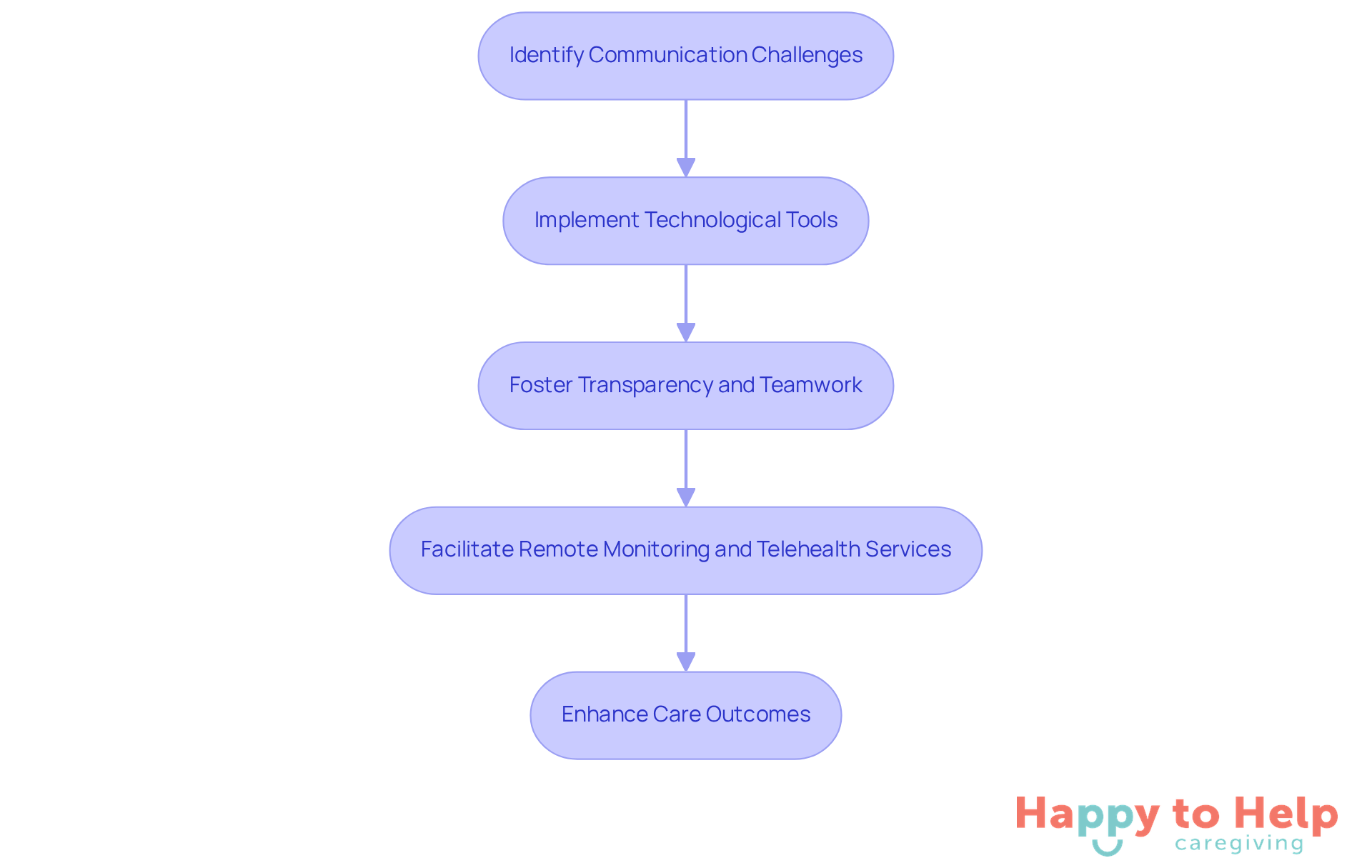
Effective communication between caregivers and relatives is a significant challenge in caregiving practices. When communication falters, it can lead to misunderstandings and a lack of trust, which ultimately affects the quality of care provided.
To address this issue, Happy to Help Caregiving employs various technological tools, such as online notes and scheduling applications. These resources keep relatives informed about their loved ones' support, fostering transparency and teamwork. By promoting this openness, caregivers can ensure that relatives remain actively involved in the support process, which is crucial for building trust.
Moreover, technology facilitates remote monitoring and telehealth services, allowing individuals to receive timely assistance and interventions when necessary. By utilizing these tools, caregivers can deliver more efficient and effective support, enhancing the overall experience for both patients and their relatives.
In summary, integrating technology into caregiving not only improves communication but also strengthens the relationship between caregivers and families, ultimately leading to better care outcomes.
Improved Family Dynamics: Strengthening Relationships Through Home Care
Problem: Caregiving often places a heavy burden on family members, leading to increased strain and responsibility. This can disrupt household dynamics and diminish the quality of interactions among family members.
Agitate: When caregivers are overwhelmed by daily tasks, they may struggle to connect with their loved ones. This disconnect can foster feelings of isolation and stress, not just for the caregiver but also for the patient. Research shows that shared caregiving responsibilities can significantly impact emotional well-being, creating a less harmonious home life.
Solution: Utilizing ms home care services can help alleviate these pressures. By utilizing ms home care to shift daily care tasks to trained professionals, families can focus on meaningful interactions. This transition fosters a supportive environment for both the patient and their loved ones. As family therapists emphasize, professional assistance can help reduce feelings of isolation and stress, reinforcing the importance of love and compassion in caregiving relationships.
Jennifer L. Wolff notes, "Many caregivers face extraordinary demands and should be the focus of support services." Prioritizing these dynamics allows families to navigate the complexities of caregiving with greater resilience and unity.

Your Path Forward
Families navigating the complexities of Multiple Sclerosis (MS) face significant challenges that require comprehensive support. The emotional and physical toll of this condition can be overwhelming, not just for patients but also for their caregivers. Loneliness, caregiver burnout, and the need for effective recovery assistance are pressing issues that demand attention.
To address these challenges, specialized MS home care services are essential. These services provide personalized care, companionship, and flexibility, which are crucial in meeting the unique needs of patients and their families. By leveraging these resources, caregivers can foster a nurturing environment that promotes independence and enhances the quality of life for those living with MS.
Key insights highlight the importance of companionship care in combating loneliness, the critical role of post-hospital recovery assistance, and the necessity of respite care to prevent caregiver burnout. Additionally, incorporating technology to improve communication and offering tailored care plans further underscore the multifaceted approach required to support MS patients effectively. Each of these elements contributes to a holistic caregiving experience that prioritizes well-being and emotional health.
Ultimately, investing in specialized MS home care services not only benefits patients but also strengthens family dynamics and promotes resilience in caregivers. Embracing these essential services can lead to improved mental health outcomes and foster deeper connections among family members. For families affected by MS, seeking out and utilizing these resources is a vital step towards navigating the challenges of caregiving with compassion and understanding.
https://iframe.tely.ai/cta/eyJhcnRpY2xlX2lkIjogIjY5MjI2NTFhNDc3MzE1NjNkYjViNzM0YyIsICJjb21wYW55X2lkIjogIjY4ZWU1ZGNhNzMxNzYyNTU3ZjNjOTVjMSIsICJpbmRleCI6IG51bGwsICJ0eXBlIjogImFydGljbGUifQ==Frequently Asked Questions
What challenges do families affected by Multiple Sclerosis (MS) face in managing daily care?
Families affected by MS face significant challenges such as feelings of isolation and emotional distress, which can complicate daily care management.
How does Happy to Help Caregiving support families dealing with MS?
Happy to Help Caregiving provides personalized in-home support tailored specifically for MS families, creating individualized care plans that cater to the unique needs and preferences of each person.
What is the focus of Happy to Help Caregiving's services?
The focus is on fostering autonomy and providing compassionate care in the comfort of individuals' homes, while addressing the distinct challenges encountered by MS households.
How do caregivers at Happy to Help Caregiving engage with MS patients?
Caregivers are trained to engage individuals in meaningful activities and conversations, which helps alleviate feelings of isolation and promotes emotional well-being.
What impact does companionship care have on MS patients?
Companionship care helps address loneliness and isolation, which can severely impact mental health and lead to depression, by fostering social interaction through meaningful engagement.
What are some simple actions caregivers can take to alleviate loneliness for MS patients?
Caregivers can share a favorite book, engage in light physical activities, or simply be present to listen, all of which can significantly improve the emotional landscape of individuals with MS.
What role does post-hospital recovery support play for MS patients?
Post-hospital recovery support is essential as it helps individuals transition from medical facilities to their homes, managing medications, following discharge instructions, and adapting to new health challenges.
How does personalized care during post-hospital recovery affect hospital readmission rates?
Individuals receiving home healthcare experience a 60% reduced risk of hospital readmission within 30 days compared to those without such assistance, emphasizing the importance of personalized care.
What should caregivers focus on to enhance the recovery experience for MS patients?
Caregivers should closely monitor health conditions and provide emotional support to help individuals regain independence and confidence, ultimately improving their quality of life.
List of Sources
- Happy to Help Caregiving: Personalized In-Home Support for MS Families
- CaringBridge (https://caringbridge.org/resources/inspirational-quotes-on-caregiving)
- MS Care Partner Connection: A One-Stop Shop for Caregivers in Need of Support and Information (https://prnewswire.com/news-releases/ms-care-partner-connection-a-one-stop-shop-for-caregivers-in-need-of-support-and-information-302374056.html)
- Caregivers: Tips for Navigating a New MS Diagnosis (https://templehealth.org/about/blog/caregivers-tips-navigating-new-ms-diagnosis)
- Association of personalised care plans with monitoring and control of clinical outcomes, prescription of medication and utilisation of primary care services in patients with type 2 diabetes: an observational real-world study (https://tandfonline.com/doi/full/10.1080/02813432.2022.2036458)
- Inspirational Caregiver Quotes (https://homehelpershomecare.com/blog/2022/february/10-inspirational-self-care-quotes-for-caregivers)
- Companionship Care: Alleviating Loneliness for MS Patients
- Loneliness report (https://mssociety.org.uk/research/news/loneliness-and-social-isolation-affect-three-five-people-ms)
- CaringBridge (https://caringbridge.org/resources/inspirational-quotes-on-caregiving)
- CMSC 2016 Annual Meeting – multiple sclerosis patients at higher risk for loneliness, study shows (https://mscare.org/cmsc16-multiple-sclerosis-patients-at-higher-risk-for-loneliness-study-shows)
- Inspirational Quotes for Multiple Sclerosis: Find Strength & Hope - LifeHack Quotes (https://quotes.lifehack.org/collections/inspirational-quotes-multiple-sclerosis)
- Loneliness in Multiple Sclerosis: Possible Antecedents and Correlates (https://rehabnurse.org/rehab-nursing-specialty/loneliness-in-multiple-sclerosis-possible-antecedents-and-correlates)
- Post-Hospital Recovery Assistance: Facilitating Smooth Transitions for MS Patients
- 10 Inspiring Patient Experience Quotes | Relias (https://relias.com/blog/patient-experience-quotes)
- The Importance of Home Care in Preventing Hospital Readmissions (https://ultimatecareny.com/resources/the-importance-of-home-care-in-preventing-hospital-readmissions)
- Transitional Care Interventions in Improving Patient and Caregiver Outcomes After Discharge: A Scoping Review (https://mdpi.com/2227-9032/13/3/312)
- The Role of Home Care in Post-Surgical Recovery (https://ultimatecareny.com/resources/the-role-of-home-care-in-post-surgical-recovery)
- Respite Care: Supporting Family Caregivers of MS Patients
- The care burden and social support levels of caregivers of patients with multiple sclerosis (https://sciencedirect.com/science/article/pii/S1212411716300472#!)
- Respite Facts and Talking Points | ARCH National Respite Network & Resource Center (https://archrespite.org/policy/respite-facts-and-talking-points)
- CaringBridge (https://caringbridge.org/resources/inspirational-quotes-on-caregiving)
- Caregiver Burden in Multiple Sclerosis: Recent Trends and Future Directions - PMC (https://pmc.ncbi.nlm.nih.gov/articles/PMC7242779)
- Exploring the Benefits of Respite Services to Family Caregivers: Methodological Issues and Current Findings - PMC (https://pmc.ncbi.nlm.nih.gov/articles/PMC5550302)
- Palliative Support Care: Enhancing Comfort for MS Patients
- Multiple Sclerosis Palliative Care Soars in US Hospitals | HCPLive (https://hcplive.com/view/multiple-sclerosis-palliative-care-hospitals)
- Ten-year trends of palliative care utilization associated with multiple sclerosis patients in the United States from 2005 to 2014 - PubMed (https://pubmed.ncbi.nlm.nih.gov/30454687)
- 2024’s Most Read Palliative Care News Stories (https://hospicenews.com/2024/12/20/2024s-most-read-palliative-care-news-stories)
- Palliative Care for MS Patients (https://medschool.cuanschutz.edu/patient-care/clinical-affairs/newsroom/news-display-page/medical-news/palliative-care-for-ms-patients)
- Palliative Care and Patient and Caregiver Outcomes (https://jamanetwork.com/journals/jama/fullarticle/2585979)
- Flexible Scheduling: Adapting to the Needs of MS Families
- Caregiver Quotes: 50+ Inspiring Encouragement Quotes for Strength (https://h2hhc.com/blog/inspiring-caregiver-quotes)
- New website offers information for MS caregivers (https://multiplesclerosisnewstoday.com/news-posts/2025/01/22/new-website-offers-information-ms-caregivers)
- Effects of flexible scheduling and virtual visits on burnout for clinicians - PubMed (https://pubmed.ncbi.nlm.nih.gov/35279627)
- Flexible Scheduling in Healthcare: The Key to a Happier, More Productive Workforce - Staffbot Flex (https://staffbotflex.com/flexible-scheduling-in-healthcare-the-key-to-a-happier-more-productive-workforce)
- MS Care Partner Connection: A One-Stop Shop for Caregivers in Need of Support and Information (https://prnewswire.com/news-releases/ms-care-partner-connection-a-one-stop-shop-for-caregivers-in-need-of-support-and-information-302374056.html)
- 24/7 Caregiver Availability: Ensuring Constant Support for MS Patients
- MS Care Partner Connection: A One-Stop Shop for Caregivers in Need of Support and Information (https://prnewswire.com/news-releases/ms-care-partner-connection-a-one-stop-shop-for-caregivers-in-need-of-support-and-information-302374056.html)
- Chronic Illness Quotes: From Inner Strength to Laughter - Mission:Cure (https://mission-cure.org/chronic-illness-quotes-from-inner-strength-to-laughter)
- 39 Caregiver Statistics, Facts & Trends (https://humancareny.com/blog/39-caregiver-statistics-facts-trends)
- Caregiver Statistics: Demographics (https://caregiver.org/resource/caregiver-statistics-demographics)
- The Number Of Family Caregivers Helping Older US Adults Increased From 18 Million To 24 Million, 2011–22 | Health Affairs Journal (https://healthaffairs.org/doi/10.1377/hlthaff.2024.00978)
- Tailored Care Plans: Meeting the Unique Needs of MS Patients
- 70+ Inspirational Caregiver Quotes (https://h2hhc.com/blog/inspirational-caregiver-quotes)
- Patient Satisfaction with Physicians and Nurse Practitioners in Multiple Sclerosis Centers (https://ijmsc.org/view/patient-satisfaction-with-physicians-and-nurse-practitioners-in-multiple-sclerosis-centers)
- 40 Inspirational Quotes for Caregivers - Care Options for Kids (https://careoptionsforkids.com/blog/inspirational-quotes-for-caregivers)
- 27 Inspirational Quotes for Caregivers (https://ultimatecareny.com/resources/27-quotes-for-caregivers)
- BARLO MS Centre at St. Michael’s Hospital provides tailored care for patients with Multiple Sclerosis (https://unityhealth.to/2025/05/tailored-care-for-multiple-sclerosis-patients)
- Technology Integration: Enhancing Communication for MS Families
- 6 Tech Tools Transforming Caregiving for Aging Loved Ones (https://ltcnews.com/articles/tech-tools-transforming-caregiving-aging-loved-ones)
- Caregiver Statistics: Health, Technology, and Caregiving Resources (https://caregiver.org/resource/caregiver-statistics-health-technology-and-caregiving-resources)
- Technology Use Among Older Adults and Their Caregivers: Cross-Sectional Survey Study - PMC (https://pmc.ncbi.nlm.nih.gov/articles/PMC11084119)
- How AI Could Change Family Caregiving (https://aarp.org/caregiving/basics/how-ai-can-help-caregivers)
- How Technology Improves Communication Between Families And Care Staff (https://thehighpointresidence.com/blog/how-technology-improves-communication-between-families-and-care-staff)
- Improved Family Dynamics: Strengthening Relationships Through Home Care
- Caregiving Statistics US 2025: Insights for Family Caregivers (https://zencaregiving.org/caregiving-statistics-us-2025)
- Caregiving Crisis: 45% Increase in Americans Providing Care (https://aarp.org/caregiving/basics/caregiving-in-us-survey-2025)
- The Impact of Home Care on Family Dynamics (https://h2hhc.com/blog/the-impact-of-home-care-on-family-dynamics)
- Caregiver Quotes: 50+ Inspiring Encouragement Quotes for Strength (https://h2hhc.com/blog/inspiring-caregiver-quotes)
- Fact Sheet: Trends in Family Care for Older Americans (https://prb.org/resources/fact-sheet-trends-in-family-care-for-older-americans)