10 Essential Respite Help Options for Family Caregivers

For families in our service areas
For families in our service areas, this guide explains respite care and how non-medical in-home caregiving can support care planning in East Idaho, Treasure Valley & Magic Valley, Northern Wasatch, North Central West Virginia, and Northeast Ohio.
The Importance of Respite Help Options
Caregiving often feels like an endless cycle of responsibilities, leaving those who provide support grappling with stress and isolation. Nearly 1 in 4 caregivers dedicate over 40 hours each week to this demanding role, highlighting the urgent need for effective respite care options.
The implications of this burden are significant. Caregivers may experience burnout, which can affect their health and the quality of care they provide. This article explores ten essential respite help services designed to alleviate these burdens, offering caregivers not only relief but also a chance to reclaim their own well-being.
How can caregivers navigate the complexities of these options to ensure both they and their loved ones thrive? By understanding the available services, caregivers can make informed choices that support their needs and enhance their caregiving experience.
Happy to Help Caregiving: Personalized In-Home Respite Care
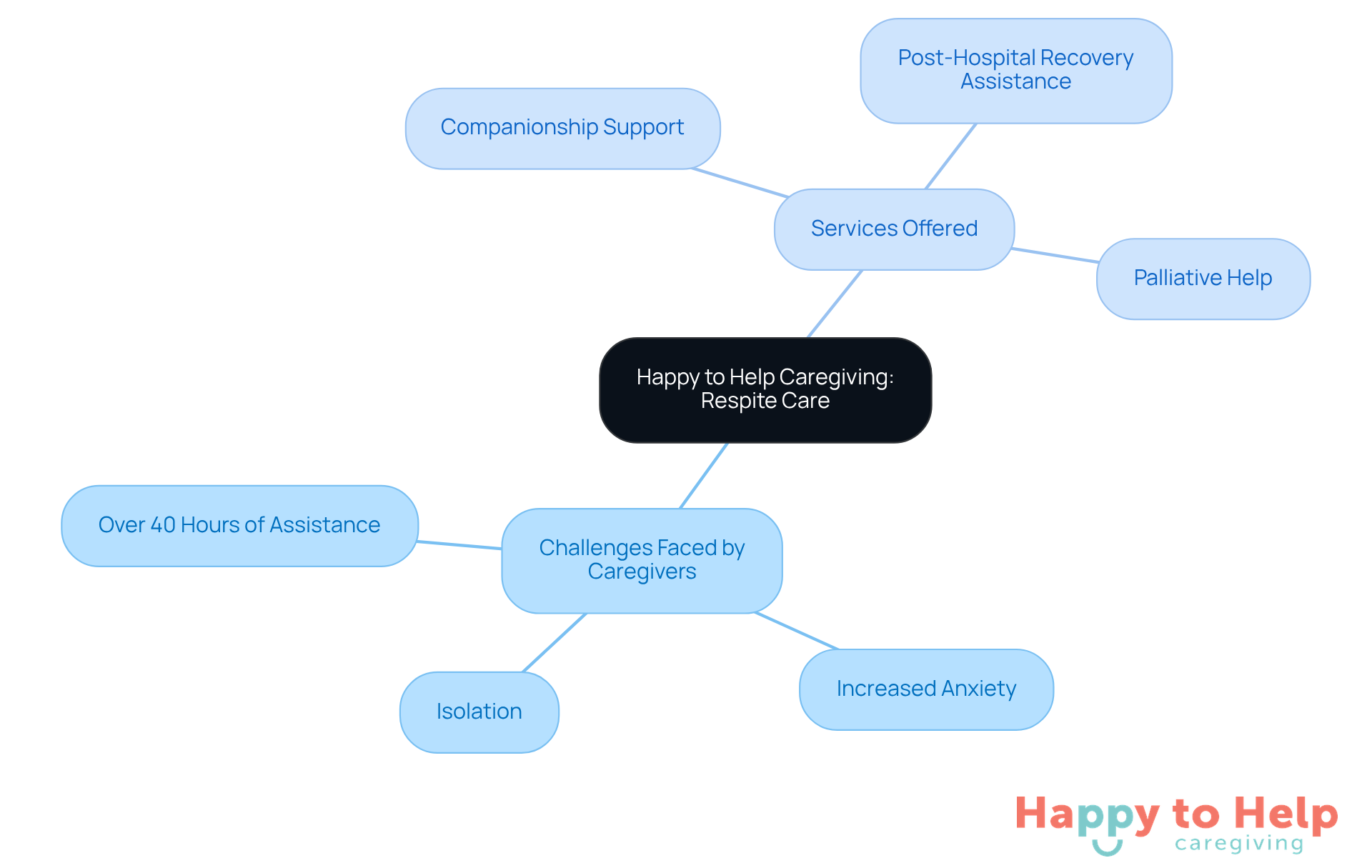
Caregivers often face significant challenges, particularly when it comes to balancing their responsibilities with their own well-being. Studies reveal that nearly 1 in 4 individuals providing support offer over 40 hours of assistance each week. This overwhelming demand can lead to stress and feelings of isolation, highlighting the urgent need for effective respite help services.
The implications of this burden are profound. Caregivers may experience increased anxiety and diminished mental health, which can affect their ability to provide quality care. Without adequate support, the emotional and physical toll can become unsustainable, impacting both the caregiver and the loved one receiving care.
Happy to Help Caregiving addresses these challenges by offering tailored in-home respite help services. Their extensive range of services includes:
- Companionship support
- Post-hospital recovery assistance
- Palliative help
These services are designed to improve the quality of life for clients in the comfort of their own homes. By providing adaptable scheduling and round-the-clock availability, they tackle the specific issues faced by family supporters, especially those managing complex medical conditions.
The benefits of personalized in-home support extend beyond immediate relief. Research shows that caregivers who can rely on professional assistance often experience reduced anxiety and improved mental health. Efficient relief services, such as respite help, not only alleviate stress but also enable caregivers to engage in social activities, preserving their own well-being.
As the number of household supporters is projected to rise by 20 million from 2015 to 2025, the importance of services like those offered by Happy to Help Caregiving cannot be overstated. Their commitment to empathy and personalized care enhances the caregiving experience and contributes to the overall well-being of families navigating the complexities of in-home care.
In-Home Respite Services: Comfort and Convenience for Caregivers
Caregivers often face significant challenges, including high levels of stress and burnout. This can lead to feelings of isolation and anxiety, not just for them but also for their loved ones. The emotional well-being of both parties is crucial, and finding a solution is essential.
Respite help through in-home services provides a valuable option for caregivers. These services allow loved ones to remain in a familiar environment, reducing the stress associated with relocation. Customizable to meet specific needs, these services ensure that clients receive the same level of support and attention they are accustomed to, which is vital for their emotional health.
Research shows that living at home can positively impact a senior’s emotional state, helping to alleviate feelings of loneliness and anxiety. As the demand for in-home assistance grows - predicted to increase as older adults outnumber children in the U.S. by 2034 - households are recognizing the importance of these services. They not only support their loved ones but also contribute to the caregivers' well-being.
By utilizing in-home respite help, caregivers can take necessary personal time, knowing their loved ones are in capable hands. This approach not only enhances the quality of life for seniors but also helps caregivers manage their stress effectively.
Day Center Respite Care: Structured Support for Family Caregivers
Day center services provide respite help to address a significant problem faced by caregivers: the overwhelming burden of supporting their loved ones without adequate assistance. This situation can lead to caregiver burnout and emotional strain, making it essential to find effective solutions.
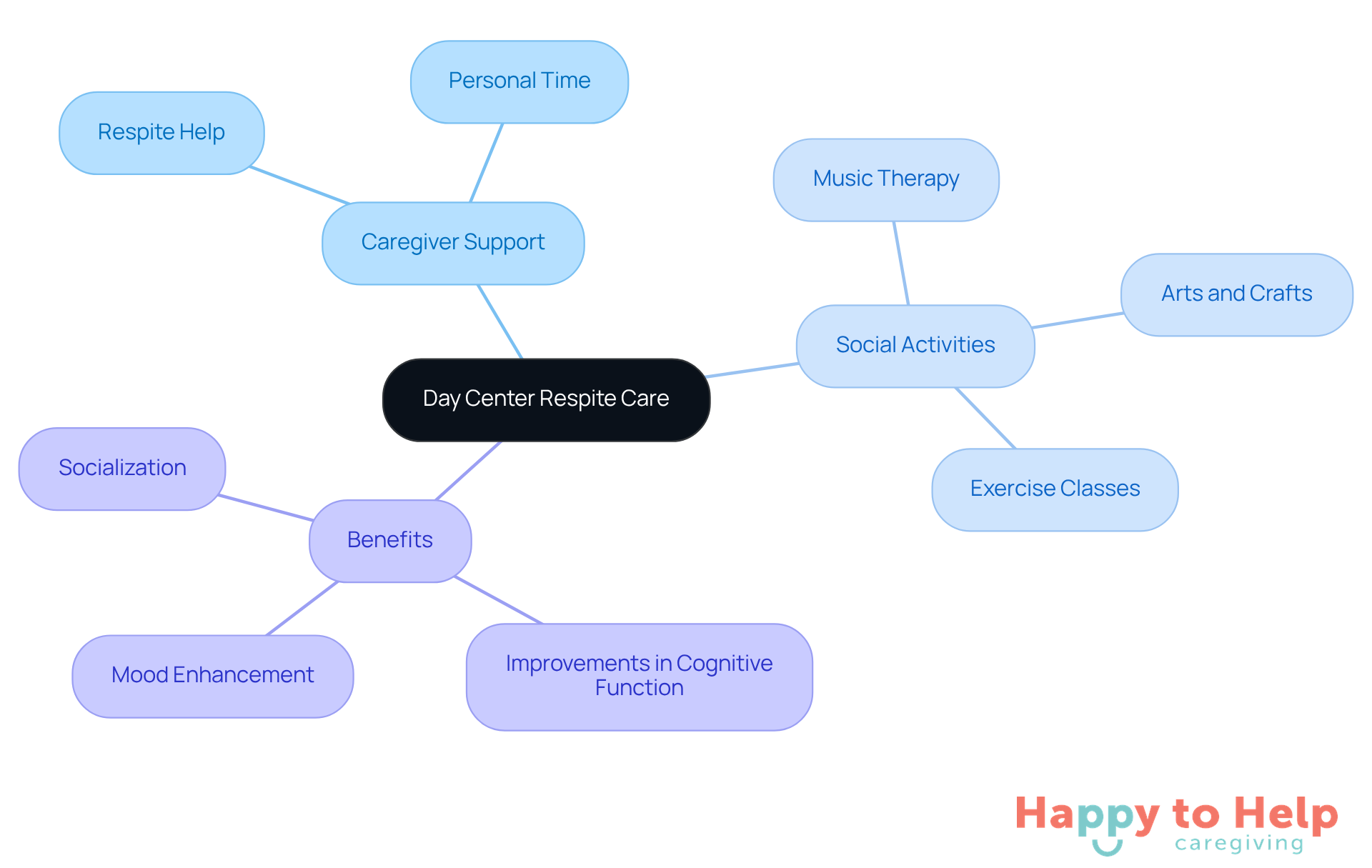
These centers provide organized support, creating a safe and nurturing environment where clients can engage in various social activities. Such activities are crucial for mental stimulation and emotional well-being, helping to alleviate feelings of loneliness and isolation. Caregivers benefit immensely from this arrangement, as it offers them respite help to attend to personal matters or simply take a much-needed break.
The advantages of social activities in day centers are numerous. Engaging in group activities fosters connections among participants, enhancing their overall quality of life. For example, many day centers implement programs like:
- Arts and crafts
- Music therapy
- Exercise classes
These programs have been shown to improve cognitive function and mood among seniors.
Moreover, these centers play a pivotal role in promoting socialization. By providing a structured schedule filled with diverse activities, they encourage interaction and friendship among participants. This is particularly beneficial for those who may feel isolated at home. Families often report significant improvements in their loved ones' happiness and health as a result of these social engagements.
In summary, day center support services offer respite help by alleviating the strain on caregivers while also enriching the lives of seniors through meaningful social interactions and expert support. This makes them an essential resource in the caregiving environment.
Overnight Respite Care: Temporary Residential Solutions for Caregivers
Caregivers often face the challenge of needing respite help from their demanding responsibilities. This situation can lead to stress and burnout, making it essential for them to seek reliable respite help.
Overnight services provide respite help by offering temporary housing options for individuals who require a longer break. These services offer respite help to caregivers, enabling them to rest, travel, or attend to personal commitments while ensuring their loved ones are cared for in a safe and supportive environment.
Facilities that provide overnight support are equipped to address various needs, giving caregivers peace of mind. Knowing that their loved ones are in capable hands allows caregivers to recharge and return to their responsibilities with renewed energy.
Funding Respite Care: Understanding Costs and Insurance Coverage
Financing temporary support can be a significant challenge for families. The complexity of navigating funding options often adds to the stress caregivers experience. Without adequate financial resources, many families struggle to access the respite help they need.
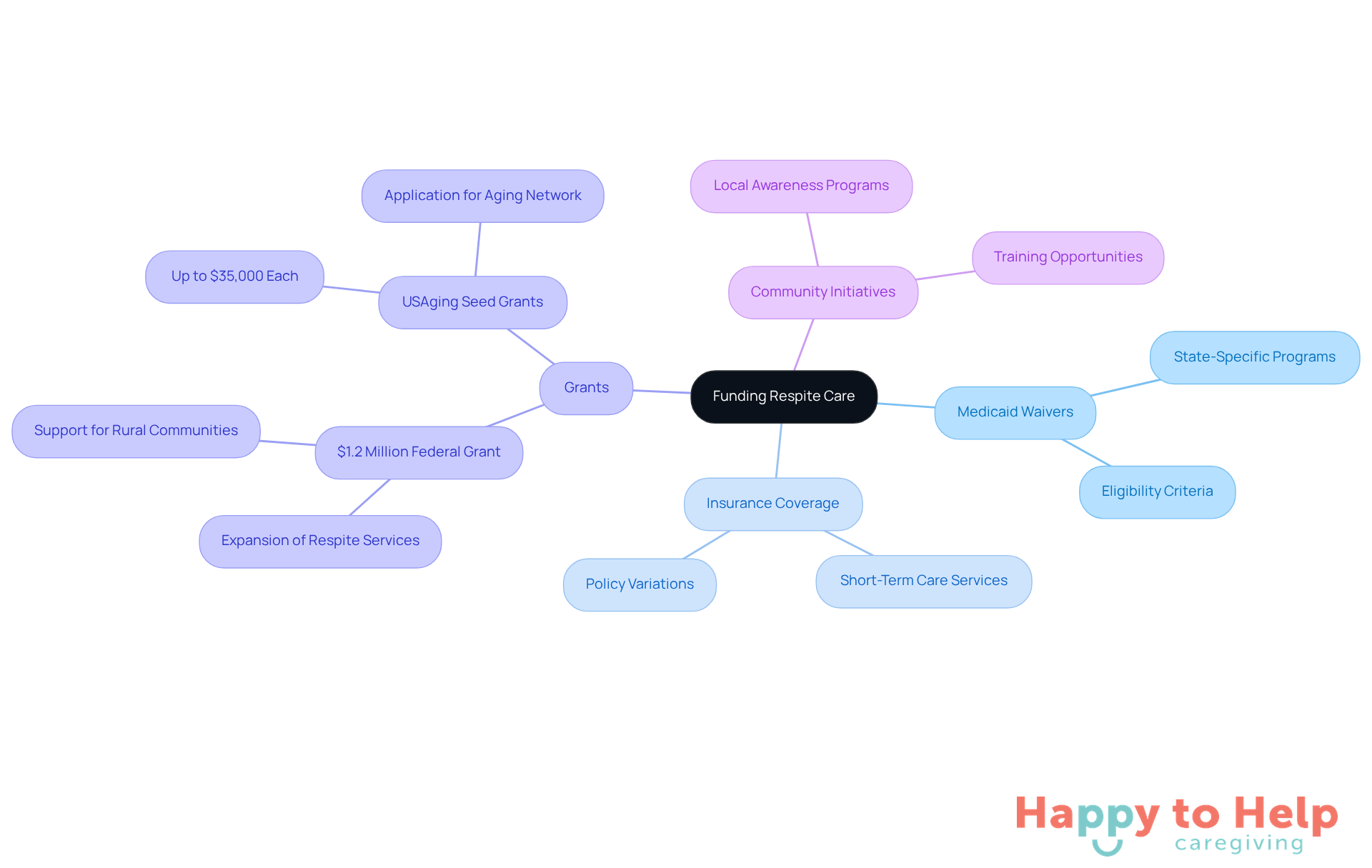
Fortunately, there are several alternatives available that can provide respite help to alleviate this burden. Many states offer Medicaid waivers specifically designed for low-income individuals, which can provide essential support. Additionally, some insurance plans may cover certain short-term care services, making it easier for families to manage costs.
It's crucial for caregivers to actively explore these funding options. Investigating grants and community initiatives can further lessen the financial strain associated with respite help services. By taking these steps, families can find the support they need to navigate this complicated process.
Technology in Respite Care: Enhancing Communication and Coordination
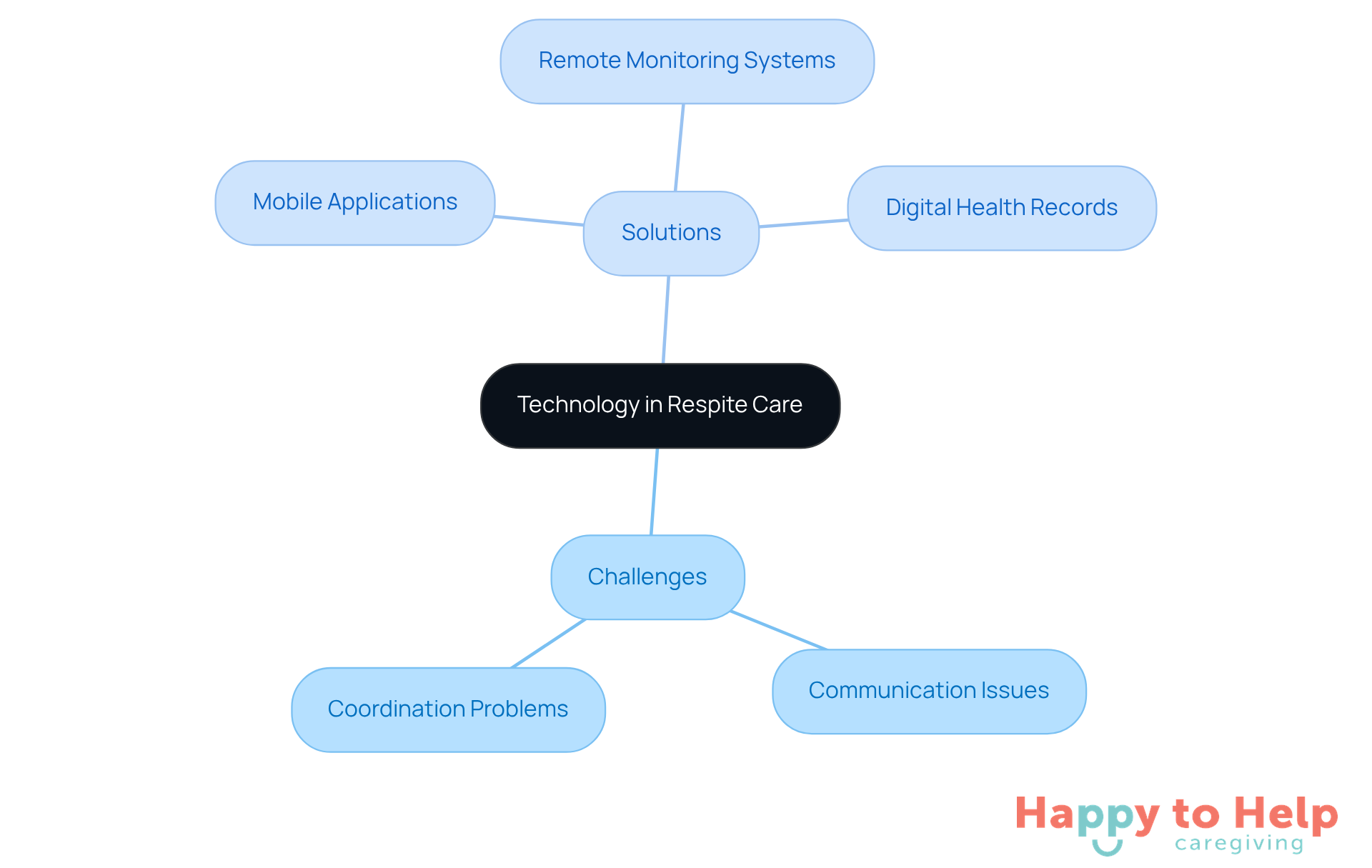
Caregivers often face significant challenges in communication and coordination, which can lead to stress and confusion for both them and the families they support. When caregivers, clients, and relatives are not on the same page, it can hinder the quality of care provided and leave families feeling anxious about their loved ones' well-being.
To address these issues, technology offers practical solutions that can enhance respite help. Tools such as:
- mobile applications for scheduling
- remote monitoring systems
- digital health records
facilitate smooth communication among all parties involved. These technologies ensure that everyone is informed and engaged in the support process, ultimately improving the quality of care.
By integrating these technological solutions, families can gain peace of mind, knowing that their loved ones are receiving the best possible respite help and support. Embracing these tools not only enhances services but also fosters a more connected and informed caregiving environment.
Caregiver Support Groups: Building Community and Reducing Isolation
Caregivers often face significant challenges, including feelings of isolation and stress. These emotional burdens can take a toll on their mental health, making it difficult to provide the best care for their loved ones.
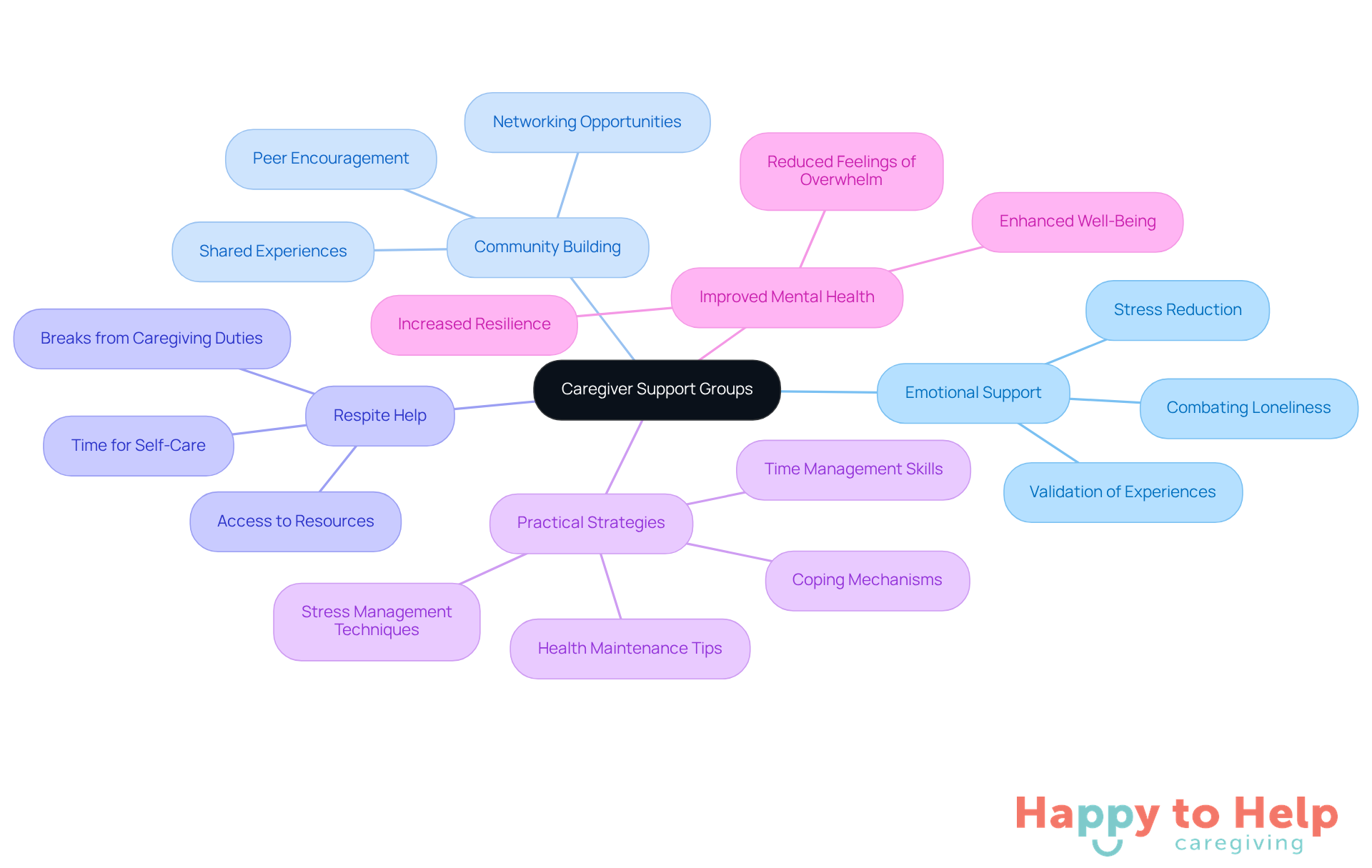
Support groups for caregivers provide vital respite help in addressing these issues. They create a community where individuals can share experiences, seek advice, and find emotional support. By participating in these groups, caregivers can combat feelings of loneliness and gain resilience.
Engaging in caregiver support groups can lead to improved mental health and a greater sense of empowerment in caregiving roles. These groups not only provide a space for connection but also offer respite help to caregivers by equipping them with practical strategies to manage their responsibilities more effectively.
Local Respite Care Agencies: Finding Support in Your Community
Finding nearby respite help services can be a significant challenge for caregivers. Without easy access to these essential services, including respite help, caregivers may feel overwhelmed and unsupported, which can lead to burnout and decreased quality of care for their loved ones.
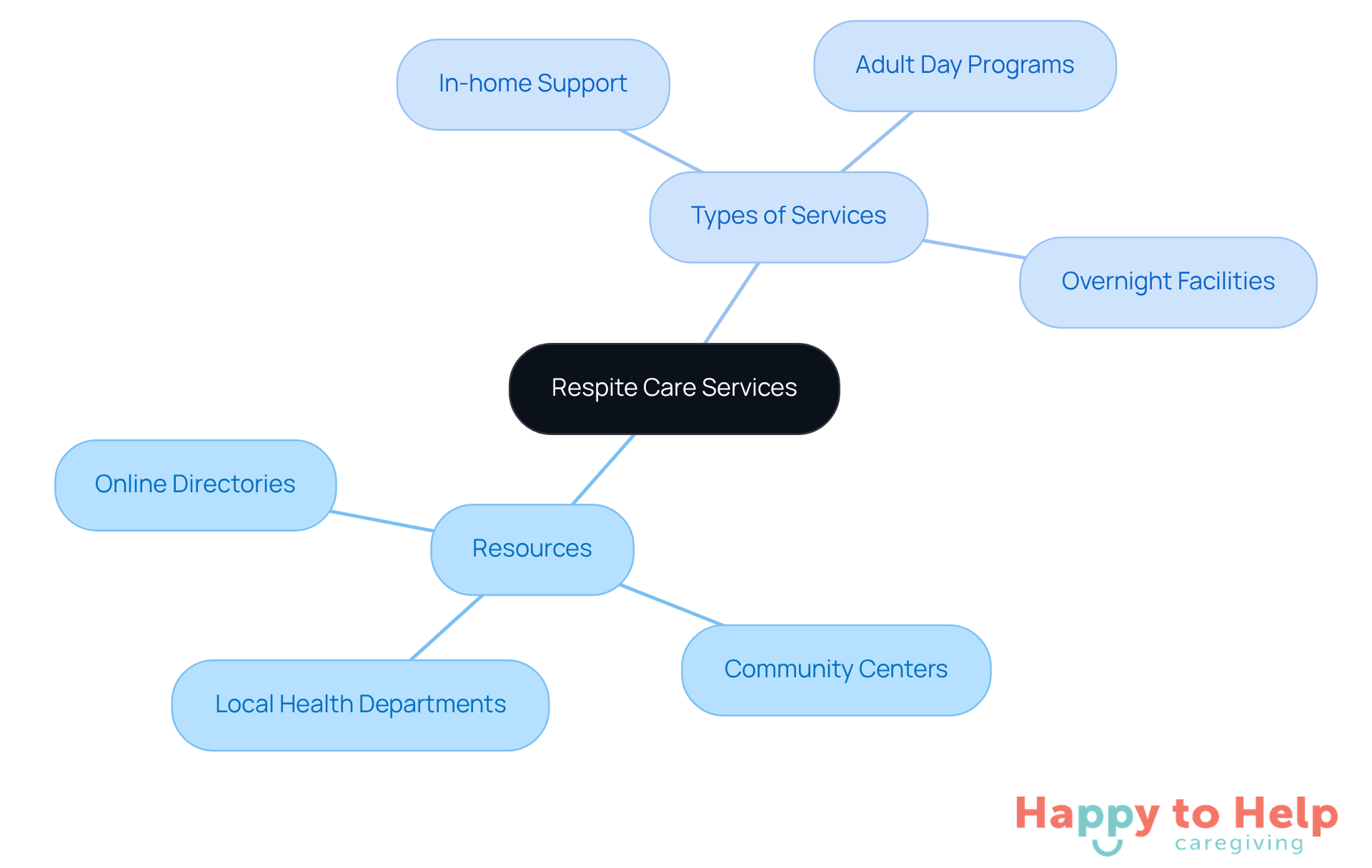
To address this issue, caregivers should consider utilizing various resources available to them. Online directories, community centers, and local health departments are excellent starting points for locating relief services. These resources can help caregivers discover options such as:
- In-home support
- Adult day programs
- Overnight facilities
Providing essential respite help to manage their responsibilities effectively.
Planning Respite Care: Strategies for Effective Scheduling
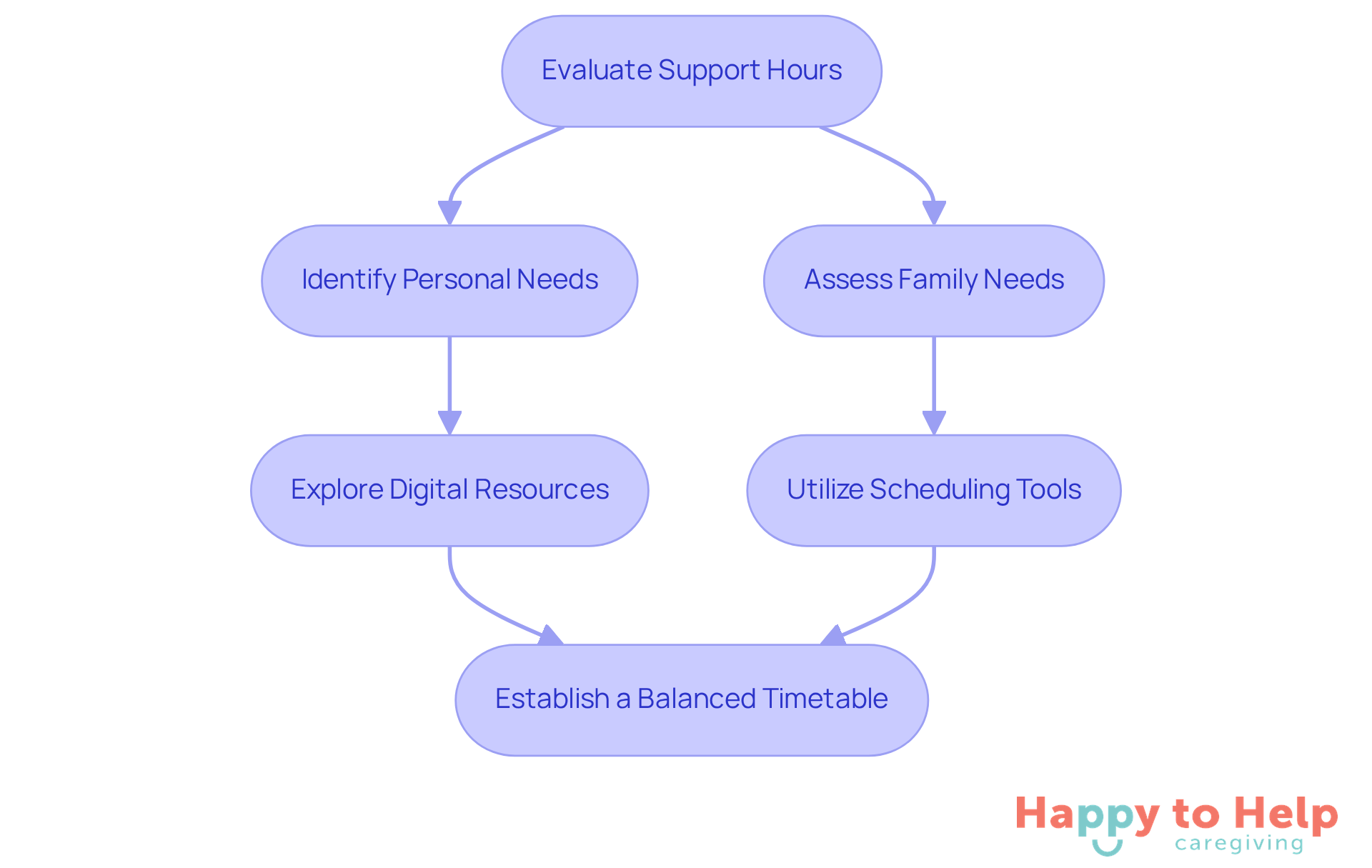
Efficient preparation for respite help is crucial for caregivers who need to balance their personal requirements with family support. The problem is clear: nearly 80% of urgent calls for help go unanswered when older adults are alone. This statistic highlights the critical need for effective planning and a reliable plan for respite help.
Without proper planning, caregivers may experience increased strain and stress. Research shows that individuals who obtain respite help report a reduction in self-reported strain over time, emphasizing the beneficial effect of organized relief services on overall well-being. By establishing a break support timetable that considers both personal time and the specific needs of family members, caregivers can significantly alleviate stress and improve their quality of life.
Experts stress the importance of proactive planning. For instance, a study revealed that those providing more than 30 hours of assistance each week have a heightened need for relief. This underscores the necessity of incorporating respite help into their support routines. As Romi Gubes, Co-Founder and CEO of Sensi.AI, states, "Tech is a tool, not a replacement for people," highlighting that digital tools can enhance the caregiving experience without replacing the human connection.
To effectively manage their responsibilities, caregivers should explore various digital resources available for relief planning. Utilizing online calendars and scheduling apps can facilitate seamless communication and coordination among all parties involved. These tools not only help coordinate support schedules but also ensure that providers and their families stay updated and ready for breaks.
In summary, caregivers are encouraged to evaluate their support hours and establish a balanced timetable that prioritizes both their wellness and that of their family members. By taking these steps, they can create a more manageable and fulfilling caregiving experience.
Overcoming Barriers to Respite Care: Solutions for Family Caregivers
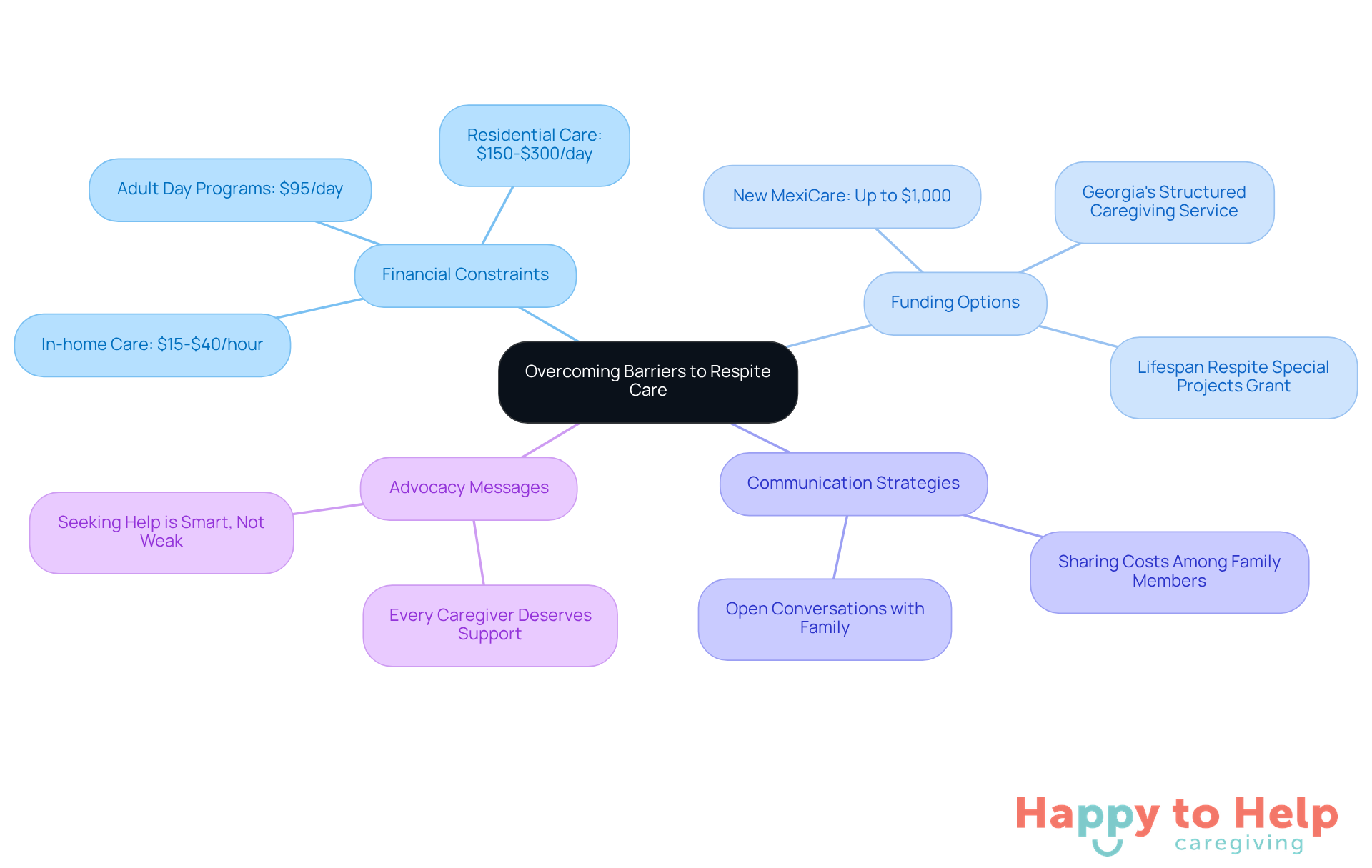
Caregivers often face significant challenges when seeking temporary support, primarily due to financial constraints. Research indicates that many households find it difficult to afford respite help, with costs ranging from $15 to $40 per hour for in-home care, $150 to $300 per day for residential options, and around $95 per day for adult day programs.
To address these financial hurdles, caregivers can explore various funding options. State programs and community resources can provide financial assistance. For instance, New Mexico's New MexiCare program offers up to $1,000 for support expenses, while Georgia's Structured Caregiving Service allows family members to receive compensation for their caregiving efforts. Additionally, the Lifespan Respite Special Projects grant from the Administration for Community Living (ACL) provides further support for caregivers in need.
Engaging in open conversations with family members about the need for temporary support can alleviate feelings of guilt and foster a supportive environment. Families might consider sharing the costs of respite services, making it more feasible for everyone involved. Local agencies often have information on sliding-scale fees and voucher programs that can help lessen the financial burden.
Advocates emphasize that seeking respite help is not a sign of weakness but rather a smart strategy for sustainability. As one advocacy representative noted, "Every individual providing support deserves assistance, and every person receiving assistance benefits when their supporter is rested and healthy." Another advocate remarked, "Asking for help isn't a sign of weakness-it's a sign of wisdom." By tackling financial limitations and utilizing available resources, caregivers can prioritize their well-being and ensure they receive the necessary support to continue their vital caregiving roles.
Key Takeaways for Caregivers
Caregiving can be an overwhelming burden, making respite care services not just beneficial but essential for family caregivers. The stress and exhaustion that come with this role can take a toll on their well-being, highlighting the need for effective support options.
By exploring various respite help options - from personalized in-home support to day centers and overnight care - caregivers can find the relief they need. In-home respite care offers comfort and familiarity, while day centers provide structured social activities that foster community. Overnight care allows caregivers to recharge, ensuring they can continue to provide quality care for their loved ones.
Understanding funding options and leveraging technology can significantly enhance the caregiving experience, making it more manageable and less isolating. Caregivers should recognize that asking for assistance is a sign of strength, not weakness. By actively pursuing these resources and support systems, they can safeguard their mental and emotional health.
Embracing these strategies fosters a healthier, more sustainable caregiving journey. This not only benefits caregivers but also enhances the quality of care provided to those they love. Seeking respite help is vital; it empowers caregivers to maintain their well-being while continuing to offer compassionate support.
https://iframe.tely.ai/cta/eyJhcnRpY2xlX2lkIjogIjY5MmY5MWFkY2E4MDg5MWIwMmZiMDEwNiIsICJjb21wYW55X2lkIjogIjY4ZWU1ZGNhNzMxNzYyNTU3ZjNjOTVjMSIsICJpbmRleCI6IG51bGwsICJ0eXBlIjogImFydGljbGUifQ==Frequently Asked Questions
What challenges do caregivers commonly face?
Caregivers often experience significant challenges such as high levels of stress, burnout, feelings of isolation, and anxiety, particularly when balancing their caregiving responsibilities with their own well-being.
How many hours do caregivers typically provide assistance each week?
Studies reveal that nearly 1 in 4 individuals providing support offer over 40 hours of assistance each week.
What services does Happy to Help Caregiving offer?
Happy to Help Caregiving provides tailored in-home respite help services, including companionship support, post-hospital recovery assistance, and palliative help.
How does in-home respite care benefit caregivers?
In-home respite care reduces anxiety and improves mental health for caregivers, allowing them to engage in social activities and preserve their own well-being.
Why is in-home respite care important for seniors?
In-home respite care allows seniors to remain in a familiar environment, which can alleviate feelings of loneliness and anxiety, positively impacting their emotional state.
What is the projected increase in household supporters by 2025?
The number of household supporters is projected to rise by 20 million from 2015 to 2025.
What are day center respite care services?
Day center respite care services provide organized support in a safe environment where clients can engage in various social activities, helping to alleviate caregiver burnout and emotional strain.
What types of activities are offered at day centers?
Day centers often implement programs such as arts and crafts, music therapy, and exercise classes, which improve cognitive function and mood among seniors.
How do day centers promote socialization for seniors?
Day centers provide a structured schedule filled with diverse activities that encourage interaction and friendship among participants, which is beneficial for those who may feel isolated at home.
What overall benefits do respite care services provide for families?
Respite care services alleviate the strain on caregivers while enriching the lives of seniors through meaningful social interactions and expert support, contributing to the overall well-being of families navigating in-home care.
List of Sources
- Happy to Help Caregiving: Personalized In-Home Respite Care
- New Report Reveals Crisis Point for America’s 63 million Family Caregivers (https://press.aarp.org/2025-07-24-New-Report-Reveals-Crisis-Point-for-Americas-63-million-Family-Caregivers)
- Stats, Facts and Things to Know About Respite Care (https://bethesdaseniorliving.com/senior-resources/stats-facts-and-things-to-know-about-respite-care)
- Number of Family Caregivers Supporting Older Adults Increased Nearly One-Third Between 2011 and 2022 | Johns Hopkins Bloomberg School of Public Health (https://publichealth.jhu.edu/2025/number-of-family-caregivers-supporting-older-adults-increased-nearly-one-third-between-2011-and-2022)
- Medicare program now providing free dementia care to Virginia patients, caregivers (https://13newsnow.com/article/news/local/virginia/virginia-medicare-program-free-dementia-care-patients-caregivers/291-e7a907be-01c8-4c1f-a1fa-ce7817790503)
- In-Home Respite Services: Comfort and Convenience for Caregivers
- How In-Home Care Can Improve a Senior’s Quality of Life (https://lifesathomecare.com/how-in-home-care-can-improve-a-seniors-quality-of-life)
- Benefits of Respite Care for Families and Patients (https://ltcnews.com/articles/respite-care-assisted-living-family-burden-provides-support)
- Respite services utilization and self-rated health of older family caregivers in the United States: Differences between young-old and old-old caregivers | ARCH National Respite Network & Resource Center (https://archrespite.org/bibliography/respite-services-utilization-and-self-rated-health-of-older-family-caregivers-in-the-united-states-differences-between-young-old-and-old-old-caregivers)
- The Benefits of In-Home Care for Seniors: Why Aging at Home is the Best Option - At Home Care Inc (https://at-home-care.com/the-benefits-of-in-home-care-for-seniors-why-aging-at-home-is-the-best-option)
- Respite Services: A Critical Support for Family Caregivers (https://ltsschoices.aarp.org/resources-and-practices/respite-services-critical-support-for-family-caregivers)
- Day Center Respite Care: Structured Support for Family Caregivers
- New Report Reveals Crisis Point for America’s 63 million Family Caregivers (https://press.aarp.org/2025-07-24-New-Report-Reveals-Crisis-Point-for-Americas-63-million-Family-Caregivers)
- Caregiver Statistics: Demographics (https://caregiver.org/resource/caregiver-statistics-demographics)
- NEWS: Caregivers Need to Take a Break - Respite For All (https://respiteforall.org/news-caregivers-need-to-take-a-break)
- Overnight Respite Care: Temporary Residential Solutions for Caregivers
- Respite Facts and Talking Points | ARCH National Respite Network & Resource Center (https://archrespite.org/policy/respite-facts-and-talking-points)
- Stats, Facts and Things to Know About Respite Care (https://bethesdaseniorliving.com/senior-resources/stats-facts-and-things-to-know-about-respite-care)
- Exploring the Benefits of Respite Services to Family Caregivers: Methodological Issues and Current Findings - PMC (https://pmc.ncbi.nlm.nih.gov/articles/PMC5550302)
- Caregiver Respite: An Essential Component of Home & Community-Based Long-Term Care - PMC (https://pmc.ncbi.nlm.nih.gov/articles/PMC9052870)
- The Caregiving Landscape: Data & Insights on the Caregiver Experience in the U.S. (https://caregiveraction.org/caregiver-statistics)
- Funding Respite Care: Understanding Costs and Insurance Coverage
- News & Updates | ARCH National Respite Network & Resource Center (https://archrespite.org/news)
- New Mexico awarded $1.2M federal grant to expand respite care - New Mexico Aging and Long-Term Services Department - ALTSD (https://aging.nm.gov/2025/10/14/new-mexico-awarded-1-2m-federal-grant-to-expand-respite-care)
- Bill would fund respite grants and broaden caregiver support eligibility, advocates say (https://citizenportal.ai/articles/6288143/Bill-would-fund-respite-grants-and-broaden-caregiver-support-eligibility-advocates-say)
- New Resources Available for Improving Respite Care Services for Caregivers | ACL Administration for Community Living (https://acl.gov/news-and-events/announcements/new-resources-available-improving-respite-care-services-caregivers)
- Technology in Respite Care: Enhancing Communication and Coordination
- How aged care provider Mayflower used technology to increase their funding - Telstra Health (https://telstrahealth.com/case\_studies/how-aged-care-provider-mayflower-used-technology-to-increase-their-funding)
- Association Between Mobile App Use and Caregivers’ Support System, Time Spent on Caregiving, and Perceived Well-being: Survey Study From a Large Employer (https://jmir.org/2022/4/e28504)
- Respite Care Services Management Software | OneTouch Health (https://onetouchhealth.com.au/solutions/respite-care-services)
- 27 Inspirational Quotes for Caregivers (https://ultimatecareny.com/resources/27-quotes-for-caregivers)
- Medium (https://medium.com/@r\_scott\_munro/37-quotes-on-health-care-and-health-tech-from-2016-e34576edfc1f)
- Caregiver Support Groups: Building Community and Reducing Isolation
- Caregiving Statistics US 2025: Insights for Family Caregivers (https://zencaregiving.org/caregiving-statistics-us-2025)
- Empowering Caregivers: Support groups offer guidance and community (https://grandrapidsmn.com/news/empowering-caregivers-support-groups-offer-guidance-and-community/article\_e5d82649-fa5f-4df5-85af-378b8c9254d8.html)
- The Power of Community in Supporting Family Caregivers (https://acadia.com/en-us/media/perspectives/acadia-stories/the-power-of-community-in-supporting-family-caregivers)
- Family Caregiver Annual Report and Statistics | SeniorLiving.org (https://seniorliving.org/research/family-caregiver-report-statistics)
- How Caregiver Support Groups Improve Mental Health (https://trualta.com/resources/blog/how-caregiver-support-groups-improve-mental-health)
- Local Respite Care Agencies: Finding Support in Your Community
- State Awarded $1.2M Federal Grant To Expand Respite Care (https://ladailypost.com/state-awarded-1-2m-federal-grant-to-expand-respite-care)
- Respite Facts and Talking Points | ARCH National Respite Network & Resource Center (https://archrespite.org/policy/respite-facts-and-talking-points)
- New respite care facility offers hope for families (https://aol.com/articles/respite-care-facility-offers-hope-063622108.html)
- Planning Respite Care: Strategies for Effective Scheduling
- Respite Facts and Talking Points | ARCH National Respite Network & Resource Center (https://archrespite.org/policy/respite-facts-and-talking-points)
- Home care tech platform leverages AI to optimize patient, caregiver experiences (https://mcknightshomecare.com/news/home-care-tech-platform-leverages-ai-to-optimize-patient-caregiver-experiences)
- Stats, Facts and Things to Know About Respite Care (https://bethesdaseniorliving.com/senior-resources/stats-facts-and-things-to-know-about-respite-care)
- Home Care Providers Turn to Tech for More Flexible, Cost-Effective Models (https://homehealthcarenews.com/2025/02/home-care-providers-turn-to-tech-for-more-flexible-cost-effective-models)
- Overcoming Barriers to Respite Care: Solutions for Family Caregivers
- Why Getting Respite Care Feels Impossible (And How to Overcome the Hidden Barriers) (https://cindymartindale.substack.com/p/why-getting-respite-care-feels-impossible)
- “It’s So Tough!”: Barriers to Respite Care for Families of Children With Disabilities | Request PDF (https://researchgate.net/publication/397909110\_It's\_So\_Tough\_Barriers\_to\_Respite\_Care\_for\_Families\_of\_Children\_With\_Disabilities)
- Family Caregivers Struggling In Some States More Than Others (https://disabilityscoop.com/2025/10/31/family-caregivers-struggling-in-some-states-more-than-others/31710)
- State Innovations to Advance Respite Care: Policy Strategies Shared at the State-Federal Respite Summit - NASHP (https://nashp.org/state-innovations-to-advance-respite-care-policy-strategies-shared-at-the-state-federal-respite-summit)
- Respite Services: A Critical Support for Family Caregivers (https://ltsschoices.aarp.org/resources-and-practices/respite-services-critical-support-for-family-caregivers)