10 Essential Senior Help Services for Family Caregivers

For families in our service areas
For families in our service areas, this guide explains caregiver support and how non-medical in-home caregiving can support care planning in East Idaho, Treasure Valley & Magic Valley, Northern Wasatch, North Central West Virginia & Southwestern Pennsylvania, and Northeast Ohio.
The Importance of Senior Help Services
Caring for elderly loved ones presents a significant challenge, often accompanied by emotional and physical strains. As the aging population grows, family caregivers face a complex landscape of needs and resources. This complexity can lead to feelings of isolation and burnout, making the caregiving journey even more daunting.
To address these challenges, it’s essential to explore senior help services that can support family caregivers. These services not only alleviate some of the burdens but also enhance the well-being of both caregivers and their elderly loved ones. By implementing these practical solutions, caregivers can transform their experience, ensuring that they and their loved ones thrive in their daily lives.
How can these services make a difference? By providing valuable insights and practical solutions, caregivers can find the support they need to navigate their responsibilities more effectively.
Happy to Help Caregiving: Personalized In-Home Care Services
The Challenge of Caregiving
Caring for elderly loved ones can be a daunting task, especially when it comes to addressing their emotional and social needs. Loneliness is a significant issue for many seniors, leading to feelings of isolation and depression. In fact, research indicates that approximately 70% of Americans aged 65 and older will require some type of assistance during their lifetime. This highlights the essential role of senior help services in improving the quality of life for the elderly.
The Impact of Loneliness
The implications of loneliness are profound. Seniors who lack companionship often experience a decline in mental health, which can exacerbate existing health issues. As one supporter noted, "Companionship assistance is vital; it changes the everyday lives of our clients, making them feel appreciated and linked." This underscores the importance of fostering social connections through meaningful interactions.
Tailored Solutions from Happy to Help Caregiving
Happy to Help Caregiving excels in providing customized in-home assistance services tailored to the unique requirements of each client. Their core offerings include:
- Companionship Care: Engaging clients in meaningful activities to combat loneliness and foster social connections.
- Post-Hospital Recovery Assistance: Supporting individuals returning home after medical procedures to ensure a smooth recovery process.
- Respite Service: Offering short-term relief for family supporters, allowing them to take necessary breaks and alleviate burnout.
- Palliative Support Services: Focusing on individuals with serious illnesses, prioritizing comfort and quality of life.
With 24/7 availability and flexible scheduling, Happy to Help Caregiving ensures that clients receive the support they need to thrive in their own homes. As the demand for senior help services continues to rise, particularly among the aging population, Happy to Help Caregiving remains committed to fostering a nurturing environment that promotes independence and emotional well-being.
Area Agency on Aging: Senior Information and Assistance
Area Agencies on Aging (AAAs) are vital resources for seniors and their support providers, offering essential information and assistance regarding senior help services.
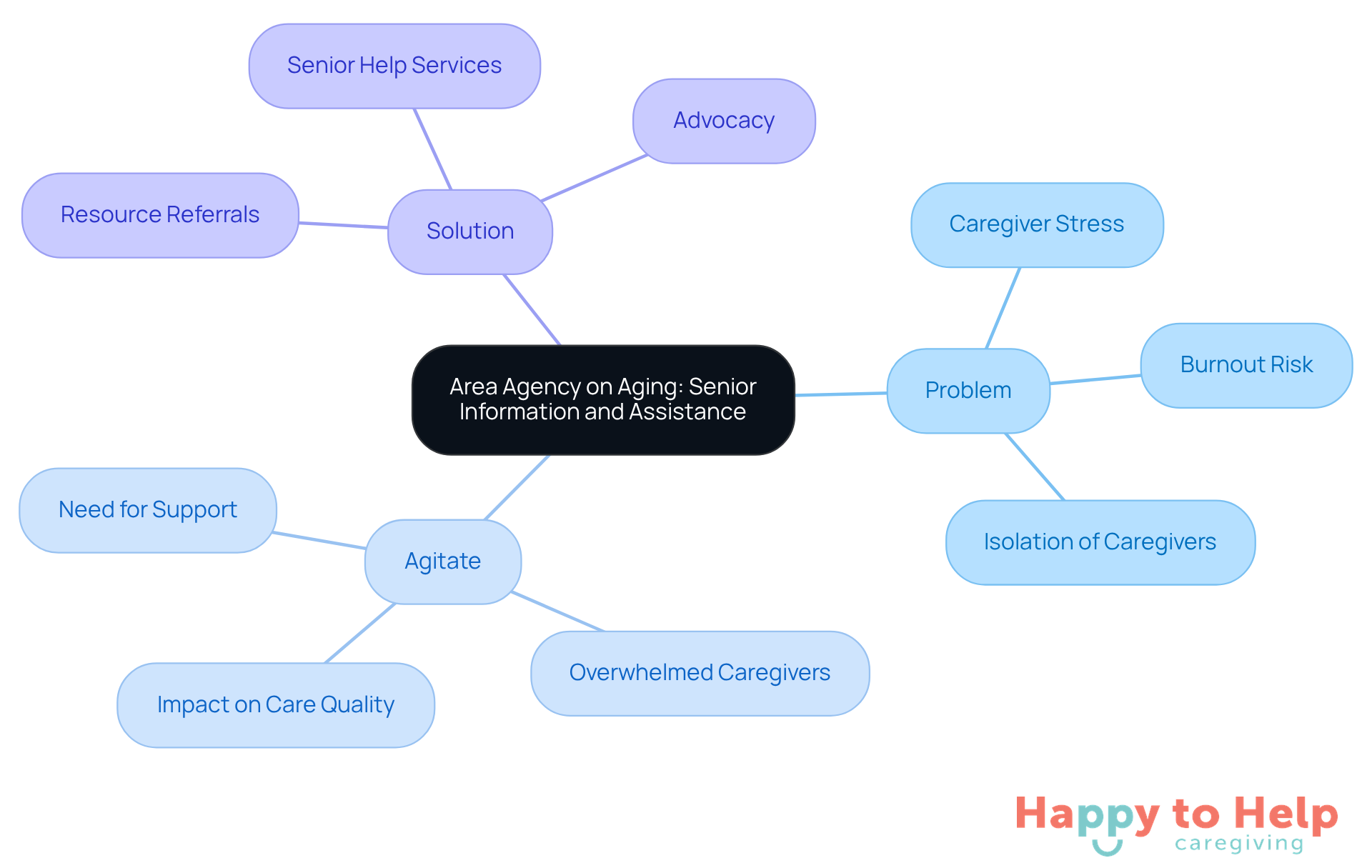
Problem: Caregivers often struggle to find the right resources and support, leading to increased stress and potential burnout.
Agitate: This challenge can significantly impact both the caregiver's well-being and the quality of care provided to seniors. As Ken Poirot aptly states, "No one cares until someone cares; be that one!" Without proper support, caregivers may feel overwhelmed and isolated.
Solution: AAAs provide several key services to alleviate these challenges:
- Resource Referrals: They connect families with local services tailored to their needs, ensuring access to appropriate care and support.
- Senior Help Services: They provide guidance and resources to assist family caregivers in managing their responsibilities effectively, which helps reduce stress and prevent burnout.
- Advocacy: They ensure that seniors' rights are protected and their needs are met by advocating for senior help services that enhance the quality of life for older adults.
With over 1.7 million helpers in Michigan alone, families are encouraged to contact their local AAA for personalized assistance and to discover programs available in their area. This can significantly ease the caregiving experience, as highlighted in the case study on 'Resource Availability for Family Care Providers,' which emphasizes the importance of support systems for family providers. To make the most of this resource, families should prepare for their initial contact by listing specific needs and questions to ensure they receive the most relevant assistance.
Utah Department of Aging and Adult Services: Comprehensive Senior Programs
The growing population of seniors in Utah presents a significant challenge for caregivers. With the number of individuals aged 65 and older increasing by 53% from 2010 to 2020, the demand for support services is more critical than ever. Caregivers often face overwhelming responsibilities, which can lead to stress and burnout.
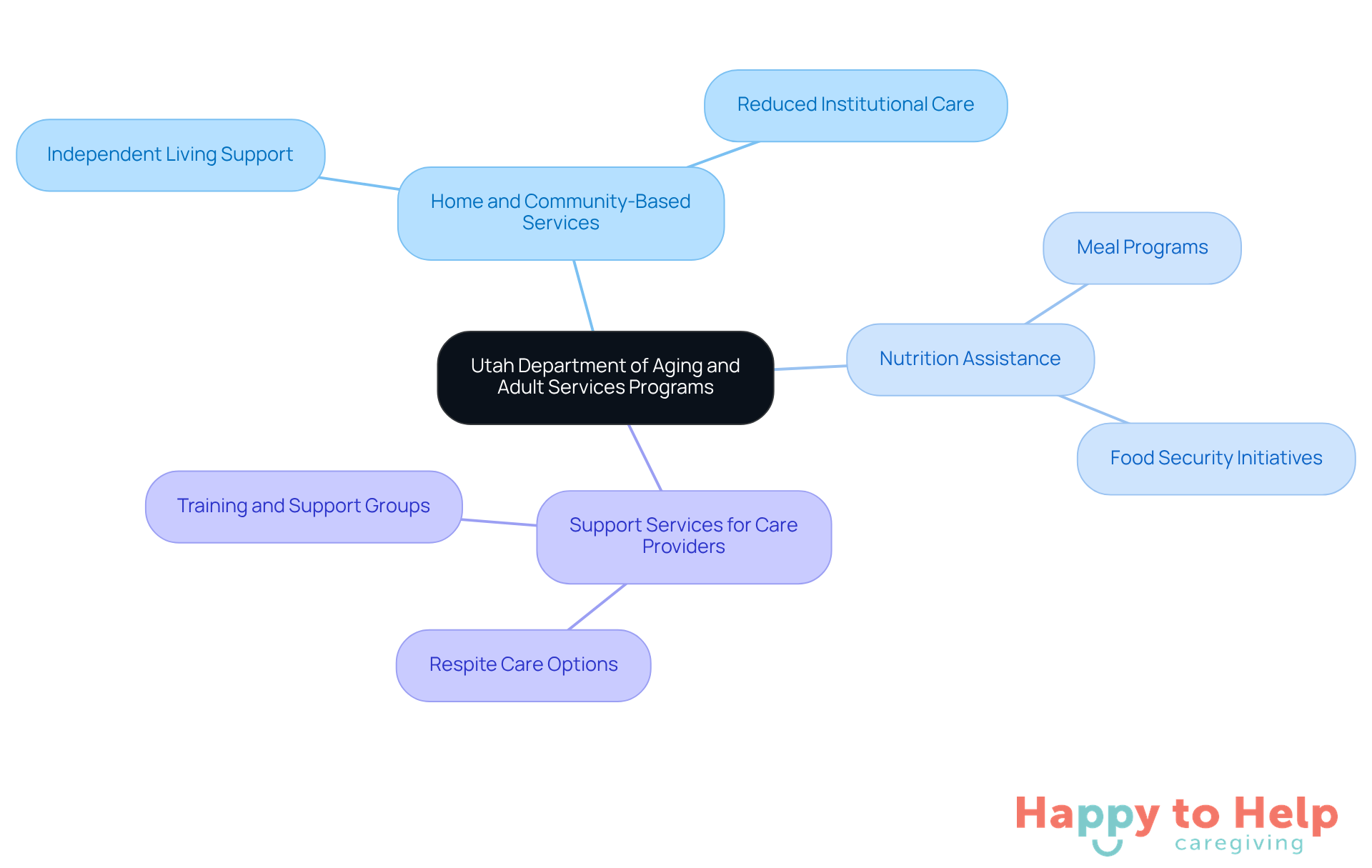
To address these challenges, the Utah Department of Aging and Adult Services offers a variety of essential programs aimed at supporting seniors and their caregivers:
- Home and Community-Based Services: These initiatives help seniors live safely and independently in their own homes, reducing the need for institutional care.
- Nutrition Assistance: Meal programs ensure that seniors receive the necessary nutrition to maintain their health and vitality, tackling the critical issue of food security among older adults. Proper nutrition is vital for preventing health issues and enhancing quality of life.
- Support Services for Care Providers: Resources and respite options are available to assist family providers, allowing them to take necessary breaks while ensuring their loved ones continue to receive quality assistance. Programs such as training and support groups empower caregivers to manage their responsibilities effectively.
These programs play a crucial role in improving the independence and overall well-being of older adults in Utah. They demonstrate a commitment to community-based support, enabling seniors to thrive in familiar settings.
Senior Helpers: Dedicated In-Home Care and Companionship
Caring for elderly individuals, especially those with cognitive impairments like Alzheimer's and dementia, presents significant challenges for caregivers. These conditions can lead to increased stress and emotional strain, making it essential for caregivers to seek effective support.
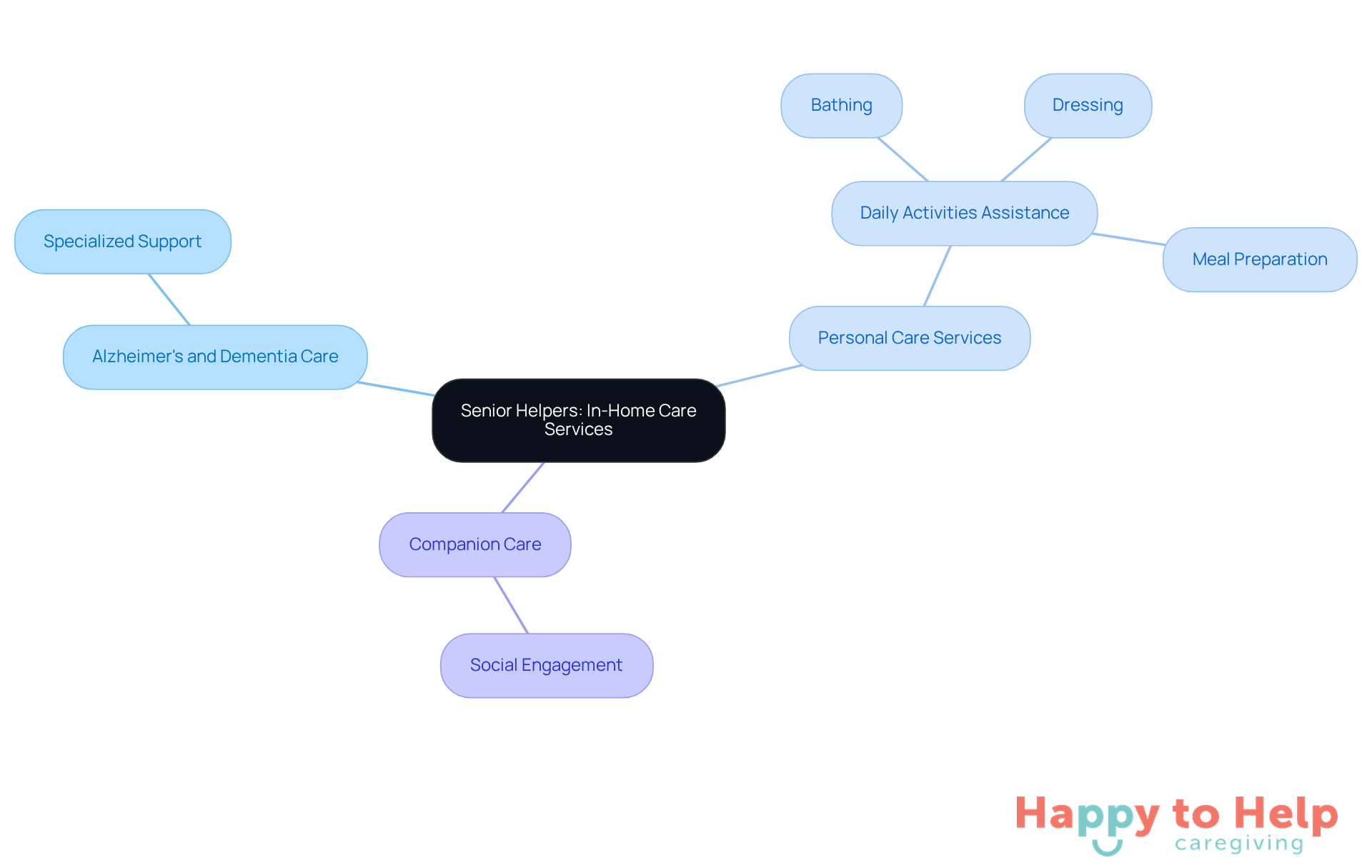
Senior Help Services tackles these challenges by offering a variety of in-home assistance services aimed at improving the well-being of elderly individuals. Their offerings include:
- Alzheimer's and Dementia Care: Specialized support tailored for individuals facing cognitive challenges.
- Personal Care Services: Assistance with daily activities such as bathing, dressing, and meal preparation, ensuring that personal hygiene and nutrition are maintained.
- Companion Care: Engaging clients in social activities to improve their quality of life and reduce feelings of isolation.
With a commitment to compassionate assistance, Senior Helpers offers senior help services that provide practical solutions to empower caregivers and enhance the overall quality of life for elderly individuals.
Homage: Transportation and Mental Health Services for Seniors
Problem: Older adults often face significant challenges related to transportation and mental health, which can lead to feelings of isolation and anxiety.
Agitate: Without reliable transportation, seniors may miss crucial medical appointments and social activities, further exacerbating their emotional struggles. This lack of connection can intensify feelings of loneliness, making it essential to address these issues effectively.
Solution: Happy to Help Caregiving offers vital services that cater to these needs:
- Transportation Assistance: Seniors receive reliable rides to medical appointments and social events, helping them stay connected to essential services and their community.
- Mental Health Support: Tailored counseling services are designed to meet the emotional needs of older adults, alleviating feelings of loneliness and anxiety.
By incorporating these services, Happy to Help Caregiving empowers elderly individuals, fostering independence while prioritizing their mental health. Case studies show that effective mental health assistance can significantly enhance the quality of life for older adults, leading to improved emotional well-being and reduced isolation. Community initiatives that promote social ties have proven to mitigate mental health risks, underscoring the essential role of senior help services for elderly individuals. As mental health professionals emphasize, addressing the emotional well-being of older adults is crucial for their overall health and happiness.
National Institute on Aging: Caregiving Resources and Support
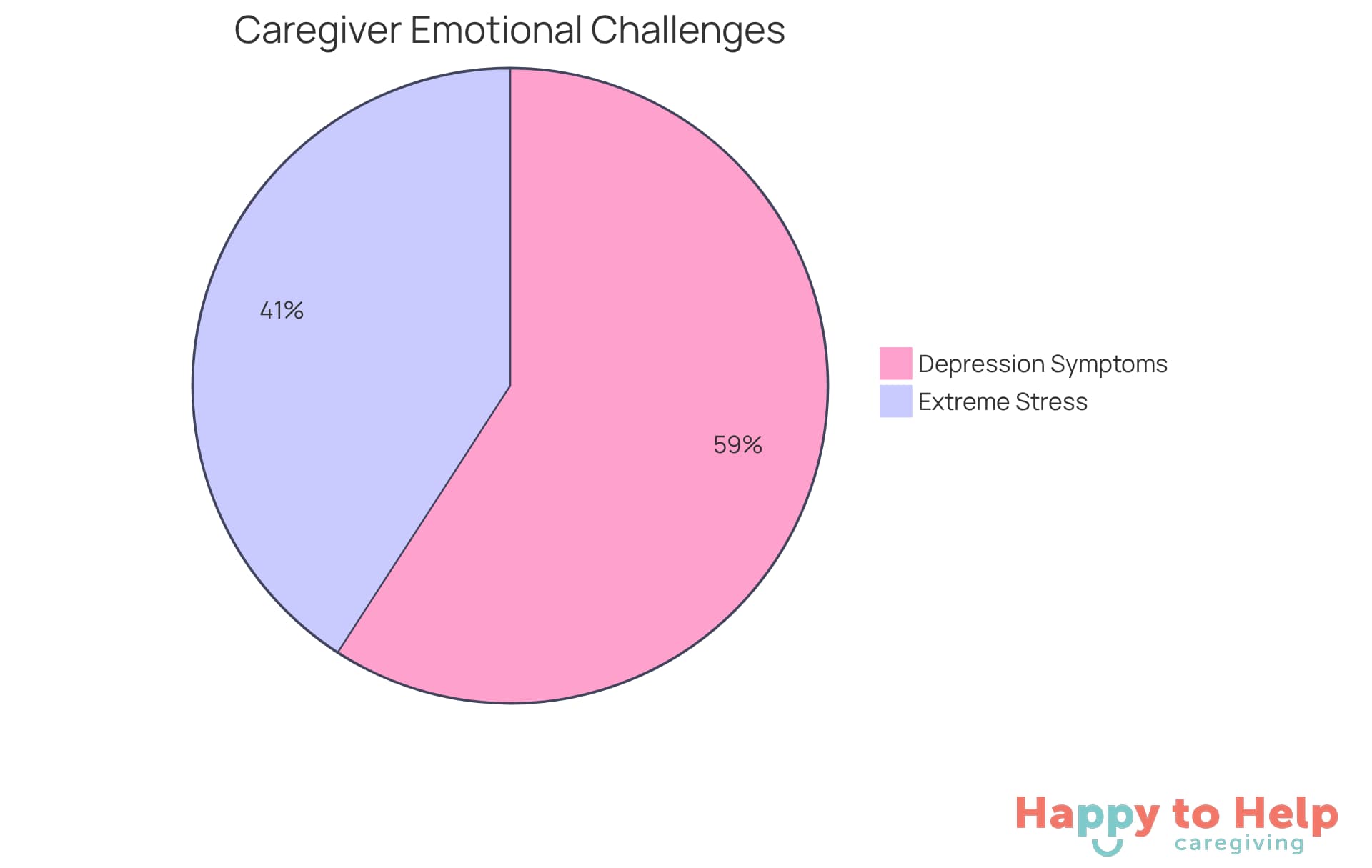
Caregiving can be a challenging journey, often leading to significant emotional and physical strain. Research indicates that 40% to 70% of family caregivers experience clinically significant symptoms of depression. This highlights the urgent need for senior help services and resources to alleviate the stress associated with caregiving. Additionally, the National Alliance for Caregiving and AARP report that 38% of family providers find their circumstances extremely stressful, underscoring the importance of effective assistance networks.
To address these challenges, the National Institute on Aging (NIA) offers a variety of senior help services designed to support family caregivers. These resources are essential for enhancing caregiving skills and overall wellness. Key offerings include:
-
Educational Materials: The NIA provides comprehensive guides that cover best practices in caregiving and effective health management strategies for seniors. These resources equip caregivers with the knowledge needed to navigate the complexities of assistance, ensuring they can provide the best possible care to their loved ones.
-
Assistance Networks: Caregivers can access valuable information about local resource groups and community services through the NIA. Engaging with these networks fosters a sense of community and significantly reduces caregiver stress. Studies show that individuals involved in assistance networks report lower stress levels and improved emotional well-being.
Accessing senior help services can greatly enhance the skills and confidence of caregivers, leading to better outcomes for both them and their care recipients. As the elderly population continues to grow, the importance of these support frameworks becomes increasingly clear. In the U.S. alone, nearly 12 million unpaid family caregivers face challenges that require strong support and education. The Family Caregiver Alliance (FCA) also plays a vital role in providing direct assistance services for caregivers, further emphasizing the need for effective networks.
Alameda County Social Services: Assistance Programs for Seniors
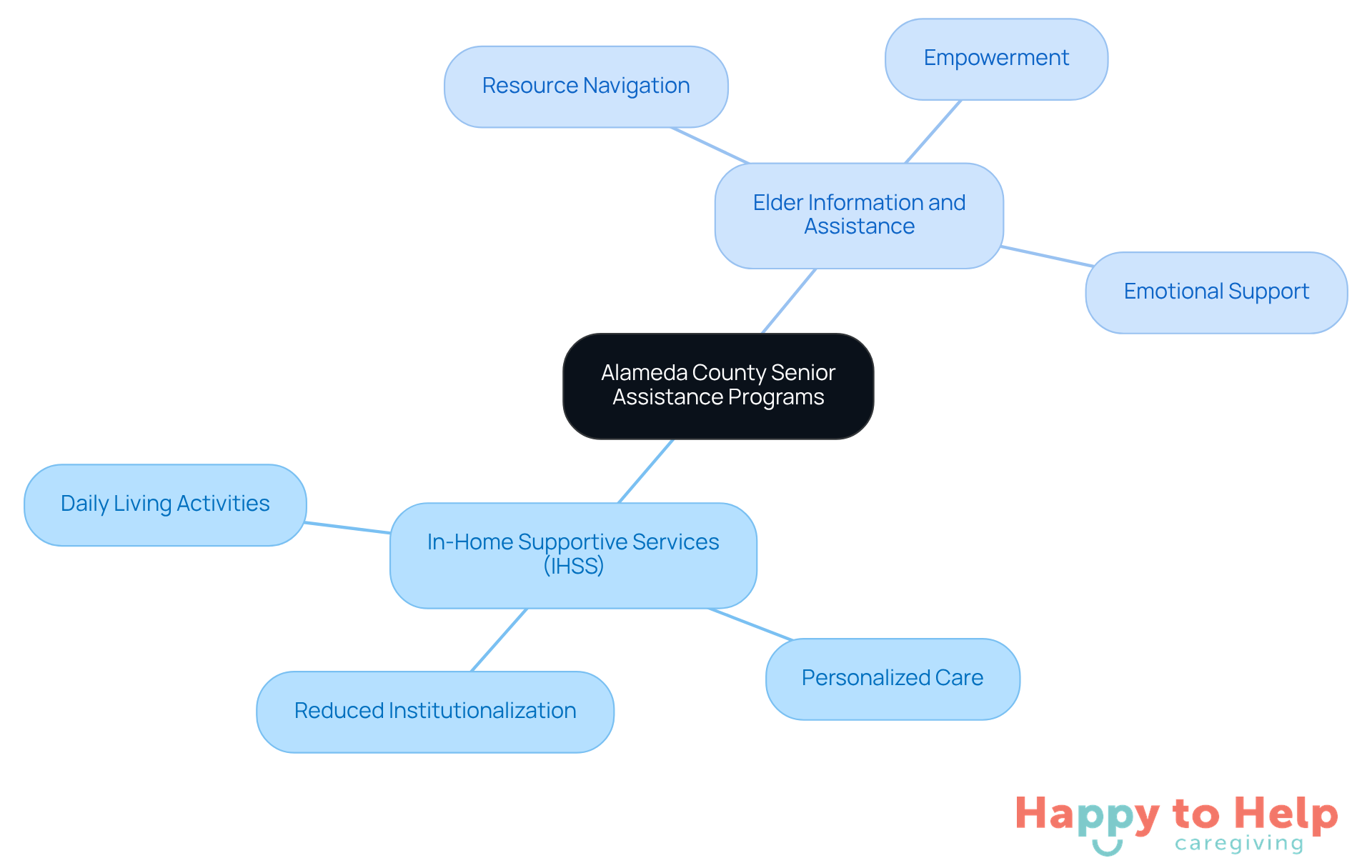
Alameda County Social Services offers senior help services to address a significant challenge faced by older adults: the need for support to maintain independence and enhance quality of life. Many seniors struggle to navigate the complex array of senior help services available, which can lead to feelings of isolation and decreased well-being.
To tackle this issue, Alameda County provides senior help services that include a variety of tailored assistance programs designed specifically for older adults. In-Home Supportive Services (IHSS) is one such program that helps seniors with daily living activities, allowing them to stay in the comfort of their own homes. By providing personalized care through senior help services, IHSS reduces the risk of institutionalization and enables elderly individuals to thrive in familiar environments. Research indicates that strong social ties can boost long-term survival odds by 50%, underscoring the importance of these services.
Another valuable resource is the Elder Information and Assistance program. A dedicated team is on hand to help older adults navigate the myriad of services available to them. This program empowers seniors by connecting them with resources that cater to their unique needs, fostering a sense of autonomy and well-being. As a social services expert notes, "Navigating the available resources can be overwhelming for older adults, but our team is here to simplify that process and ensure they receive the assistance they require."
These senior help services not only assist elderly individuals in their daily lives but also enhance their overall emotional and physical well-being. By prioritizing senior help services, Alameda County Social Services plays a crucial role in promoting the well-being of its elderly population. For family supporters looking to utilize these services effectively, visiting the Alameda County Social Services website or contacting their office directly can provide valuable information and guidance.
Eldorado County Services: Senior Assistance Programs
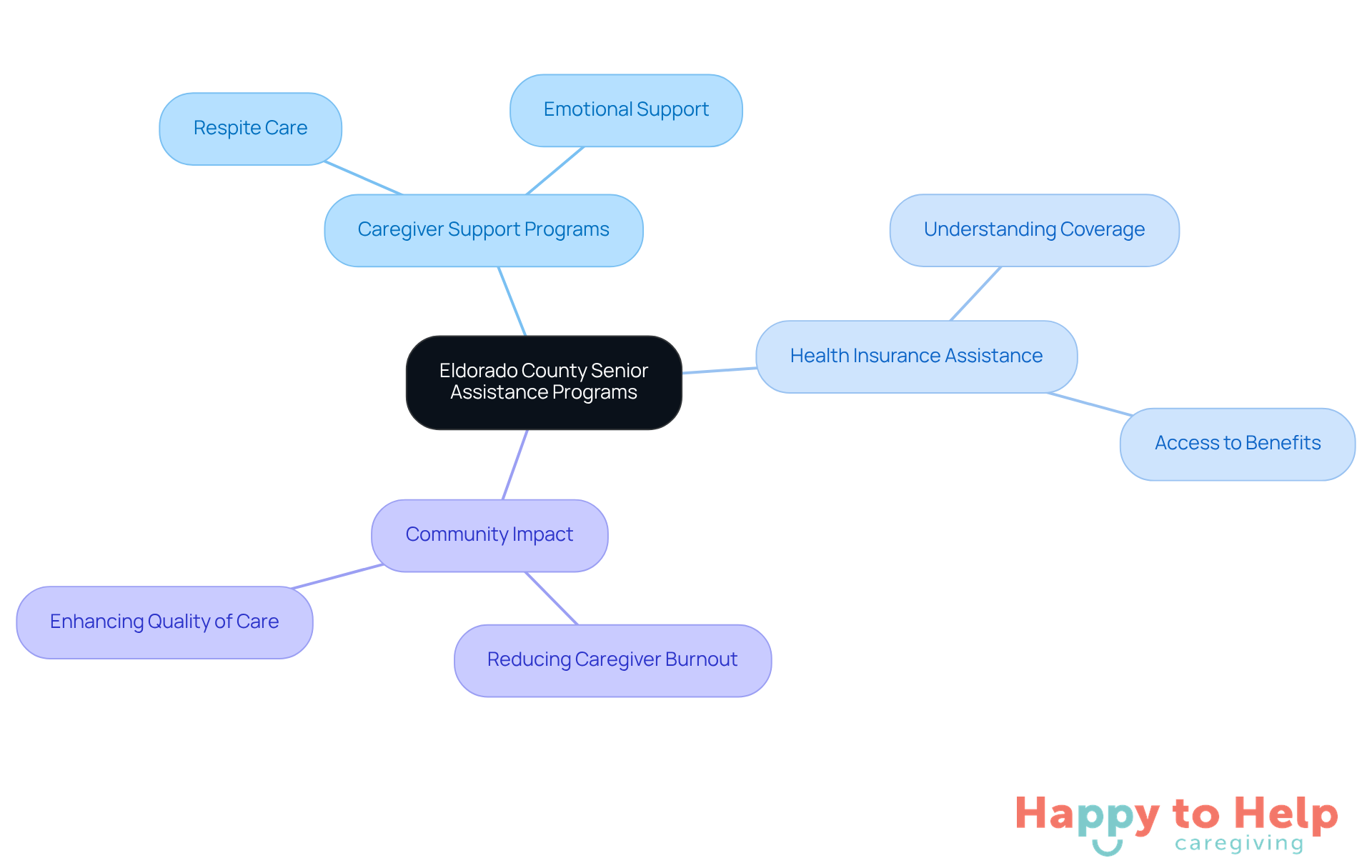
Eldorado County addresses a significant problem faced by many families: the challenges of caregiving. Caregivers often experience emotional and physical stress, leading to feelings of isolation and burnout. This situation not only affects their well-being but also the quality of care they provide to their loved ones.
To alleviate these pressures, Eldorado County provides senior help services with Caregiver Support Programs. These programs provide essential resources and respite care, helping caregivers manage their responsibilities without feeling overwhelmed. By recognizing the demands of caregiving, these initiatives aim to reduce stress and foster a supportive environment for both caregivers and seniors through senior help services.
Another critical issue is navigating health insurance options, which can be daunting for older adults. Eldorado County's Health Insurance Assistance program helps seniors understand their options, ensuring they receive the benefits they need. With approximately 43.5 million individuals in the U.S. currently supporting loved ones, effective health insurance assistance is vital for maintaining access to necessary medical services and enhancing the overall care experience. Experts emphasize that understanding coverage options is crucial for maximizing benefits.
These programs play a vital role in nurturing a supportive community by providing senior help services, empowering both older adults and their supporters to thrive. By addressing the unique challenges faced by caregivers and providing essential resources, Eldorado County demonstrates its commitment to improving the lives of its elderly population. As Tia Walker aptly states, 'To care for those who once cared for us is one of the highest honors.
Illinois Department on Aging: Health Insurance and Support Services
Seniors often face significant challenges when it comes to accessing health insurance and senior help services for support. These challenges can lead to confusion and financial strain, making it difficult for them to receive the care they need.
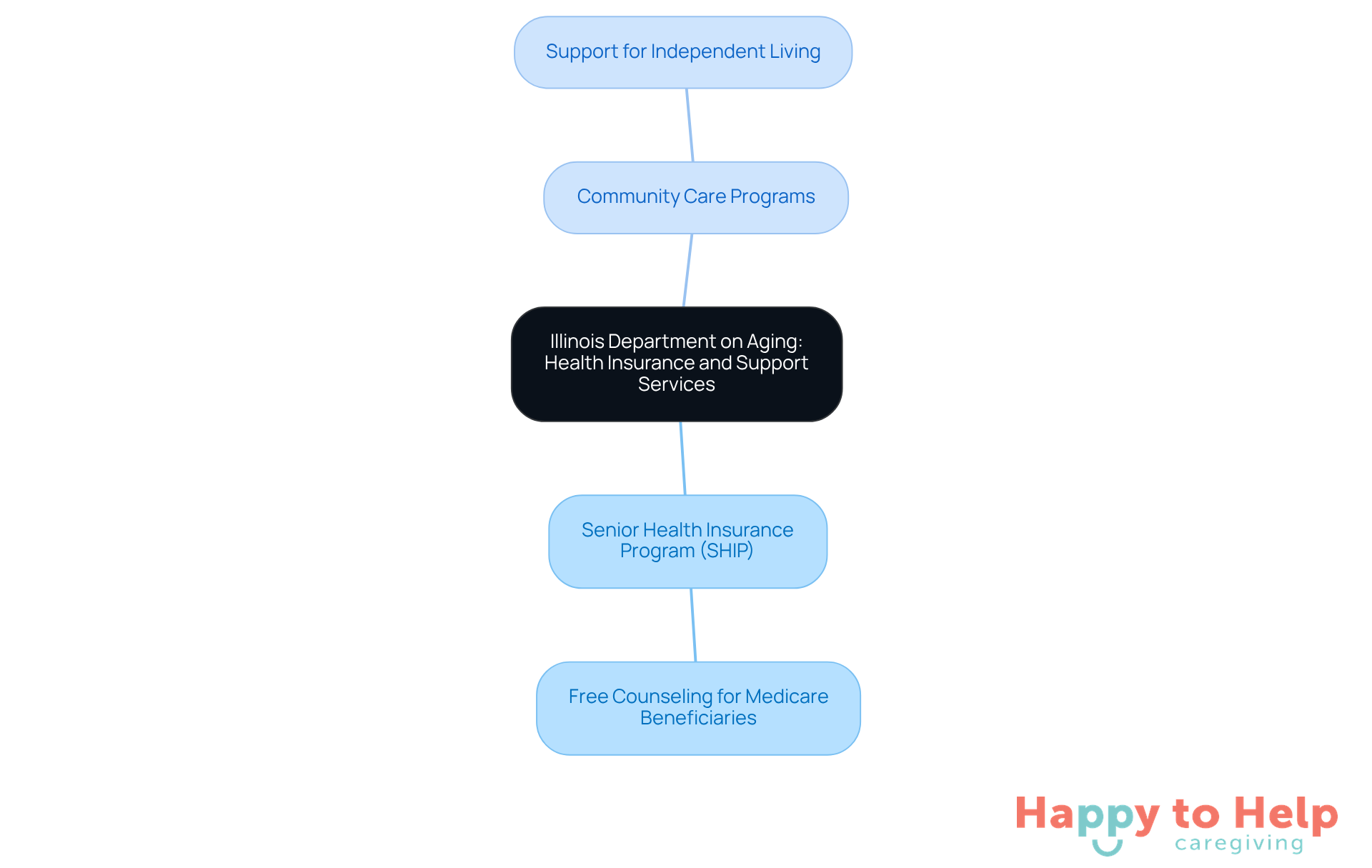
The Illinois Department on Aging addresses these issues by offering essential resources:
- Senior Health Insurance Program (SHIP): This program provides free counseling for Medicare beneficiaries, helping them understand their options and make informed decisions.
- Community Care Programs: These services are designed to support elderly individuals in living independently, ensuring they can maintain their quality of life.
These resources are vital for ensuring that seniors receive the care they need through senior help services without financial strain.
Utah Caregiver Support Program: Resources for Family Caregivers
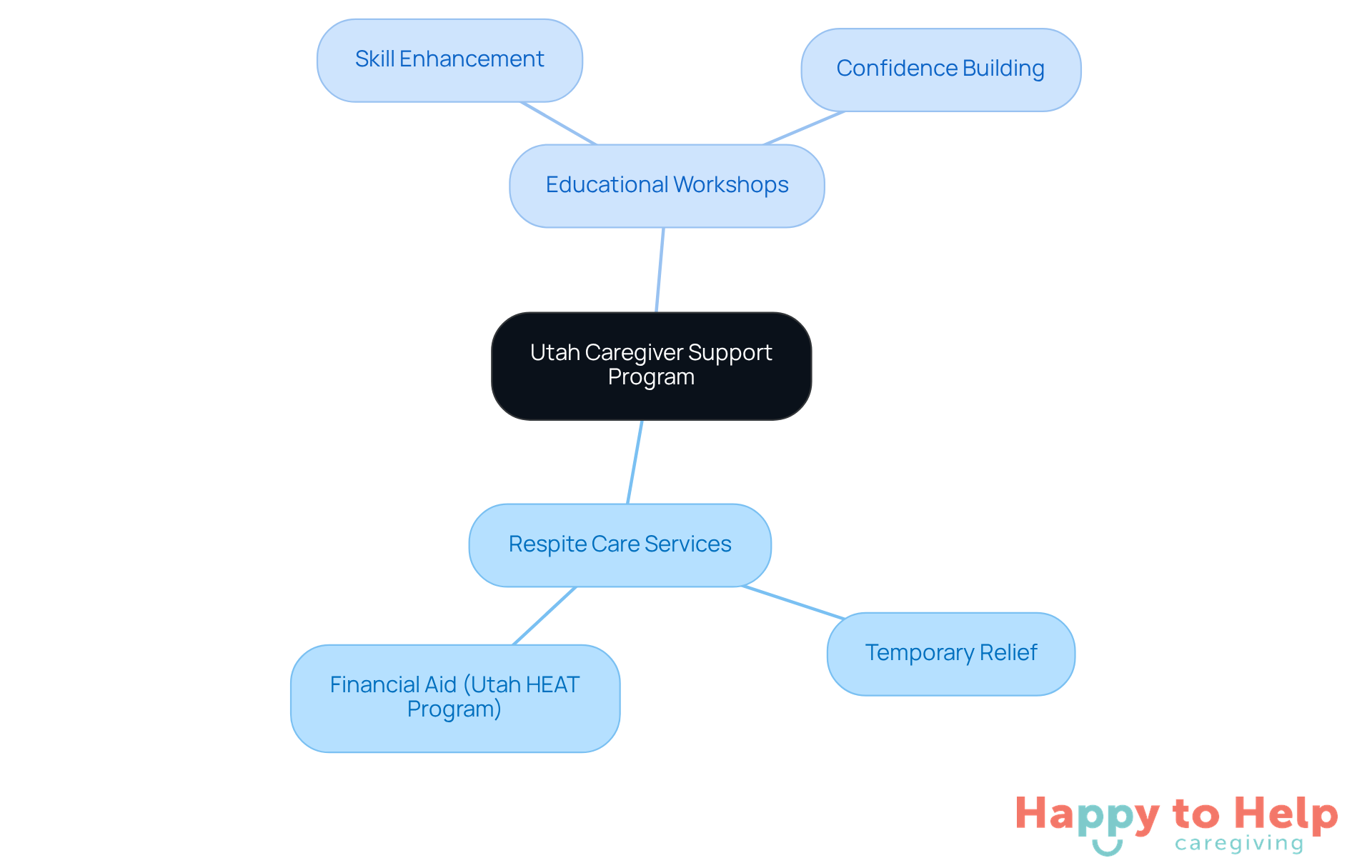
Caregivers often face significant challenges, including the risk of burnout from their demanding roles. This can lead to feelings of overwhelm, making it difficult for them to provide the quality care their loved ones need. To address these issues, the Utah Caregiver Support Program offers essential resources as part of its senior help services designed to support family caregivers.
-
Respite Care Services provide temporary relief for caregivers, allowing them to take necessary breaks to recharge. This is crucial for preventing provider burnout and ensuring they can continue delivering quality care. Additionally, the Utah HEAT Program offers financial aid to help alleviate some of the financial pressures caregivers may encounter.
-
Educational Workshops are another vital resource, designed to enhance caregiving skills and knowledge. These training sessions equip individuals with practical tools and strategies to manage their responsibilities effectively. Insights from caregiving instructors highlight the transformative impact of these workshops, which not only improve care quality but also boost caregivers' confidence in their roles. As Tia Walker notes, 'the transformative power of caregiving' is evident in the skills and assistance gained through these educational opportunities.
Together, these resources empower family caregivers by providing senior help services, ensuring they have the necessary support and training to thrive in their vital roles.
Key Takeaways for Caregivers
The importance of senior help services cannot be overstated, especially for family caregivers who strive to provide the best care for their elderly loved ones. Caregiving can be overwhelming, leading to physical and emotional strain on caregivers. This burden not only affects their well-being but also impacts the quality of life for seniors.
Key services such as:
- Personalized in-home care
- Companionship assistance
- Resource referrals from Area Agencies on Aging
are essential tools for family caregivers. Organizations like the Utah Department of Aging and Adult Services, Senior Helpers, and the Illinois Department on Aging offer comprehensive support that empowers caregivers while ensuring the well-being of seniors. These resources help manage daily responsibilities and combat feelings of isolation and stress that often accompany caregiving.
Family caregivers should actively seek out and utilize the available senior help services. By doing so, they can enhance their caregiving experience, reduce their own stress levels, and significantly improve the lives of the seniors they care for. Embracing these resources fosters a supportive community that values the dignity and independence of older adults, ensuring they thrive in their later years.
https://iframe.tely.ai/cta/eyJhcnRpY2xlX2lkIjogIjY5MjI2NTBhZTUyZmU2NjM2Njg4NjZiYiIsICJjb21wYW55X2lkIjogIjY4ZWU1ZGNhNzMxNzYyNTU3ZjNjOTVjMSIsICJpbmRleCI6IG51bGwsICJ0eXBlIjogImFydGljbGUifQ==Frequently Asked Questions
What challenges do caregivers face when caring for elderly loved ones?
Caregivers often struggle with addressing the emotional and social needs of seniors, particularly loneliness, which can lead to feelings of isolation and depression. Approximately 70% of Americans aged 65 and older will require some form of assistance during their lifetime.
How does loneliness affect seniors?
Loneliness can lead to a decline in mental health for seniors, exacerbating existing health issues. Companionship assistance is essential as it helps seniors feel appreciated and connected, improving their overall quality of life.
What services does Happy to Help Caregiving provide?
Happy to Help Caregiving offers personalized in-home assistance services, including: - Companionship Care: Engaging clients in meaningful activities to combat loneliness. - Post-Hospital Recovery Assistance: Supporting individuals returning home after medical procedures. - Respite Service: Providing short-term relief for family caregivers. - Palliative Support Services: Focusing on comfort and quality of life for individuals with serious illnesses.
How does Happy to Help Caregiving ensure availability for clients?
Happy to Help Caregiving provides 24/7 availability and flexible scheduling to ensure clients receive the support they need to thrive in their own homes.
What role do Area Agencies on Aging (AAAs) play in supporting seniors and caregivers?
AAAs offer essential information and assistance regarding senior help services, including resource referrals, guidance for family caregivers, and advocacy for seniors' rights and needs.
How can AAAs help alleviate caregiver stress?
AAAs connect families with local services tailored to their needs, provide resources to help manage caregiver responsibilities, and advocate for services that enhance the quality of life for seniors, thereby reducing caregiver stress and preventing burnout.
What programs does the Utah Department of Aging and Adult Services offer?
The Utah Department of Aging and Adult Services provides various programs, including: - Home and Community-Based Services: Helping seniors live independently at home. - Nutrition Assistance: Meal programs to ensure seniors receive necessary nutrition. - Support Services for Care Providers: Resources and respite options for family caregivers.
Why is proper nutrition important for seniors?
Proper nutrition is vital for preventing health issues and enhancing the quality of life among older adults, addressing critical food security concerns.
How can families prepare for contacting an Area Agency on Aging?
Families should prepare a list of specific needs and questions to ensure they receive the most relevant assistance when contacting their local AAA.
List of Sources
- Happy to Help Caregiving: Personalized In-Home Care Services
- Caregiving Crisis: 45% Increase in Americans Providing Care (https://aarp.org/caregiving/basics/caregiving-in-us-survey-2025)
- Home Care Industry Trends to Watch in 2025 (https://firstlighthomecare.com/blog/home-care-industry-trends)
- The Future of Private Home Care: What to Expect in 2025 (https://anodyne-services.com/2024/08/14/the-future-of-private-home-care-what-to-expect-in-2025)
- Trends in Senior Care: What to Expect in 2025 (https://agingconnections.org/blog/trends-in-senior-care-what-to-expect-in-2025)
- Caring Senior Service Banks Growth Goals On New House-Made Technology (https://homehealthcarenews.com/2025/10/caring-senior-service-banks-growth-goals-on-new-house-made-technology)
- Area Agency on Aging: Senior Information and Assistance
- November 2025: Family Caregivers Month (https://michigan.gov/whitmer/news/proclamations/2025/11/01/november-2025-family-caregivers-month)
- Exclusive | Little-known caregiver program in NYC gets $6.2M boost – as number of aging seniors expected to boom: ‘At a pressure point’ (https://nypost.com/2025/11/17/us-news/little-known-caregiver-program-in-nyc-gets-6-2m-boost-as-number-of-aging-seniors-expected-to-boom)
- Taking Care of Elderly Parents Quotes (https://ultimatecareny.com/resources/taking-care-of-elderly-parents-quotes)
- 20 Inspirational Senior Care Quotes (https://1plus1cares.com/20-inspirational-senior-care-quotes)
- Area Agencies on Aging Association of Michigan launches one-stop website resource for family caregivers (https://thealpenanews.com/news/2025/11/area-agencies-on-aging-association-of-michigan-launches-one-stop-website-resource-for-family-caregivers)
- Utah Department of Aging and Adult Services: Comprehensive Senior Programs
- Utah's Aging Population Sparks Demand for Caregivers and Home Health Workers - Danville Support Services (https://danvillesupports.com/utahs-aging-population-sparks-demand-for-caregivers-and-home-health-workers)
- 27 Inspirational Quotes for Caregivers (https://ultimatecareny.com/resources/27-quotes-for-caregivers)
- Inspirational Quotes for Compassionate Caregivers (https://humancareny.com/blog/inspirational-quotes-for-caregivers)
- Inspirational Quotes About Caregiving - Home Care Powered By AUAF (https://homecare-aid.com/inspirational-quotes-about-caregiving)
- Taking Care of Our Seniors: An Assessment of Utah's Aging Services - Utah Foundation (https://utahfoundation.org/reports/taking-care-of-our-seniors-an-assessment-of-utahs-aging-services)
- Homage: Transportation and Mental Health Services for Seniors
- Products - Data Briefs - Number 490 - January 2024 (https://cdc.gov/nchs/products/databriefs/db490.htm)
- Epidemiology of Public Transportation Use Among Older Adults in the United States - PMC (https://pmc.ncbi.nlm.nih.gov/articles/PMC9771957)
- Mental health of older adults (https://who.int/news-room/fact-sheets/detail/mental-health-of-older-adults)
- How Can Older Adults Get Help with Using Transportation Services? (https://ncoa.org/article/how-access-to-affordable-transportation-leads-to-better-health-outcomes-for-older-adults)
- Homage in the News - Homage (https://homage.org/homage-in-the-news)
- National Institute on Aging: Caregiving Resources and Support
- New NIA grant advances tools for dementia caregiving (https://news-medical.net/news/20251015/New-NIA-grant-advances-tools-for-dementia-caregiving.aspx)
- $3 million National Institute on Aging grant will provide much-needed support to underserved dementia caregivers (https://publichealth.gmu.edu/news/2025-10/3-million-national-institute-aging-grant-will-provide-much-needed-support-underserved)
- Caregiver Statistics: Health, Technology, and Caregiving Resources (https://caregiver.org/resource/caregiver-statistics-health-technology-and-caregiving-resources)
- Caregiver health literacy and health task performance: Findings from the LitCog caregiver cohort study - PMC (https://pmc.ncbi.nlm.nih.gov/articles/PMC10757034)
- HHS Backs AI Innovation for America’s Caregivers | HHS.gov (https://hhs.gov/press-room/hhs-backs-ai-innovation-for-americas-caregivers.html)
- Alameda County Social Services: Assistance Programs for Seniors
- 15 Good Quotes for Seniors That Will Brighten Your Day in 2025 (https://arhomecare.com/15-good-quotes-for-seniors-that-will-brighten-your-day-in-2025)
- Alameda County will invest $10M in food assistance programs (https://berkeleyside.org/2025/10/27/alameda-county-invest-10m-food-assistance-programs)
- 20 Inspirational Senior Care Quotes (https://1plus1cares.com/20-inspirational-senior-care-quotes)
- 28 Senior Care Statistics: In-Home & Assisted Living | Shortlister (https://myshortlister.com/insights/senior-care-statistics)
- Program Data (https://cdss.ca.gov/inforesources/ihss/program-data)
- Eldorado County Services: Senior Assistance Programs
- El Dorado County Seniors Related News, Information and Events (https://californialocal.com/localnews/el-dorado/ca/topic/show/seniors/overview)
- 70+ Inspirational Caregiver Quotes (https://h2hhc.com/blog/inspirational-caregiver-quotes)
- 27 Inspirational Quotes for Caregivers (https://ultimatecareny.com/resources/27-quotes-for-caregivers)
- Inspirational Quotes for Compassionate Caregivers (https://humancareny.com/blog/inspirational-quotes-for-caregivers)
- CaringBridge (https://caringbridge.org/resources/inspirational-quotes-on-caregiving)
- Illinois Department on Aging: Health Insurance and Support Services
- Medicare Statistics And Facts In 2025 (https://forbes.com/advisor/health-insurance/medicare/medicare-statistics)
- Impact of community care services on the health of older adults: evidence from China - PMC (https://pmc.ncbi.nlm.nih.gov/articles/PMC10151748)
- Health Insurance and the Elderly: Data from MCBS - PMC (https://pmc.ncbi.nlm.nih.gov/articles/PMC4193362)
- 27 Inspirational Quotes for Caregivers (https://ultimatecareny.com/resources/27-quotes-for-caregivers)
- 20 Inspirational Senior Care Quotes (https://1plus1cares.com/20-inspirational-senior-care-quotes)
- Utah Caregiver Support Program: Resources for Family Caregivers
- 70+ Inspirational Caregiver Quotes (https://h2hhc.com/blog/inspirational-caregiver-quotes)
- 40 Inspirational Quotes for Caregivers - Care Options for Kids (https://careoptionsforkids.com/blog/inspirational-quotes-for-caregivers)
- Family Caregiver Resources for Utah (https://states.aarp.org/utah/caregiver-resources)
- Family Caregiving Collaborative (https://nursing.utah.edu/research/groups-projects/family-caregiving-initiative)
- Caring Hearts Canada (https://caringheartscanada.ca/blog/2015/august/20-inspirational-caregiver-quotes)