10 Essential Sitting Services for the Elderly You Need to Know
For families in our service areas
For families in our service areas, this guide explains caregiving and how non-medical in-home caregiving can support care planning in East Idaho, Treasure Valley & Magic Valley, Northern Wasatch, North Central West Virginia & Southwestern Pennsylvania, and Northeast Ohio.
What You Need to Know About Sitting Services for the Elderly
Loneliness and the challenges of aging present significant hurdles for elderly individuals and their families. As the senior population continues to grow, the demand for specialized sitting services that cater to their unique needs becomes increasingly critical. This article explores ten essential sitting services designed to enhance the quality of life for seniors, from companionship care to post-hospital recovery assistance.
How can families ensure their loved ones receive the compassionate, tailored support they deserve? In a world where isolation and health concerns loom large, it’s vital to address these challenges head-on. By understanding the specific needs of seniors, families can take proactive steps to provide the necessary support.
Happy to Help Caregiving: Companionship Care for Seniors
Loneliness is a significant issue for many older adults, with research indicating that 30% report feeling lonely. This isolation can lead to serious health problems, making companionship support essential.
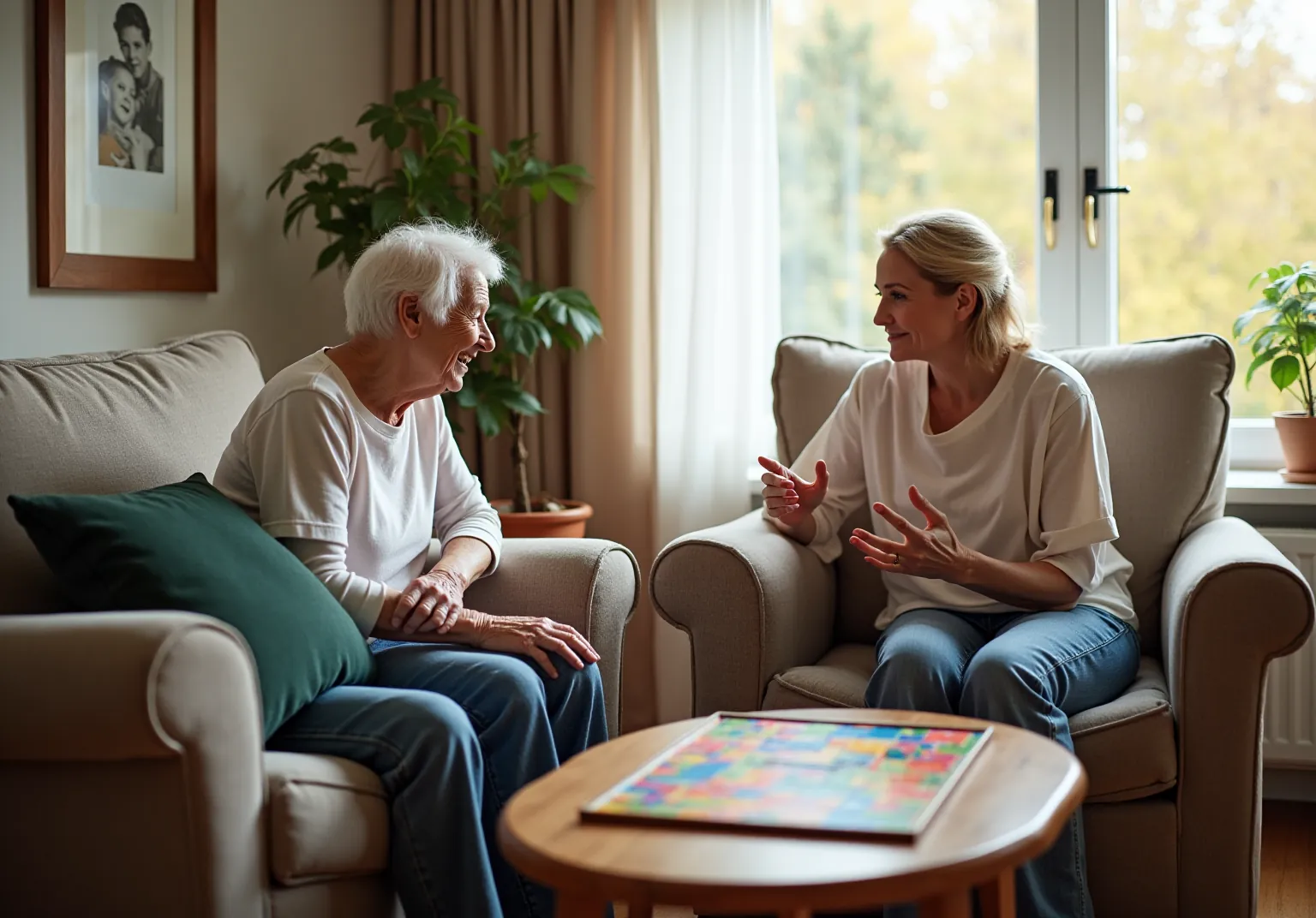
Happy to Help Caregiving addresses this challenge by providing a sitting service for the elderly that offers specialized companionship and fosters meaningful connections between caregivers and older adults. This service goes beyond mere presence; it involves engaging in conversations, participating in hobbies, and providing emotional support. Such interactions are crucial for alleviating feelings of loneliness and enhancing overall well-being.
Caregivers are trained to identify and embrace the unique interests of each client, ensuring that companionship is tailored to foster genuine connections. Regular social interactions significantly enhance the emotional, physical, and cognitive well-being of older adults, reducing the risks associated with isolation.
Programs that prioritize emotional support not only improve the quality of life for older adults but also help them maintain their independence and dignity. By creating an environment where older adults feel valued and understood, Happy to Help Caregiving showcases the transformative power of companionship in their sitting service for the elderly.
Post-Hospital Recovery Assistance: Ensuring Safe Transitions
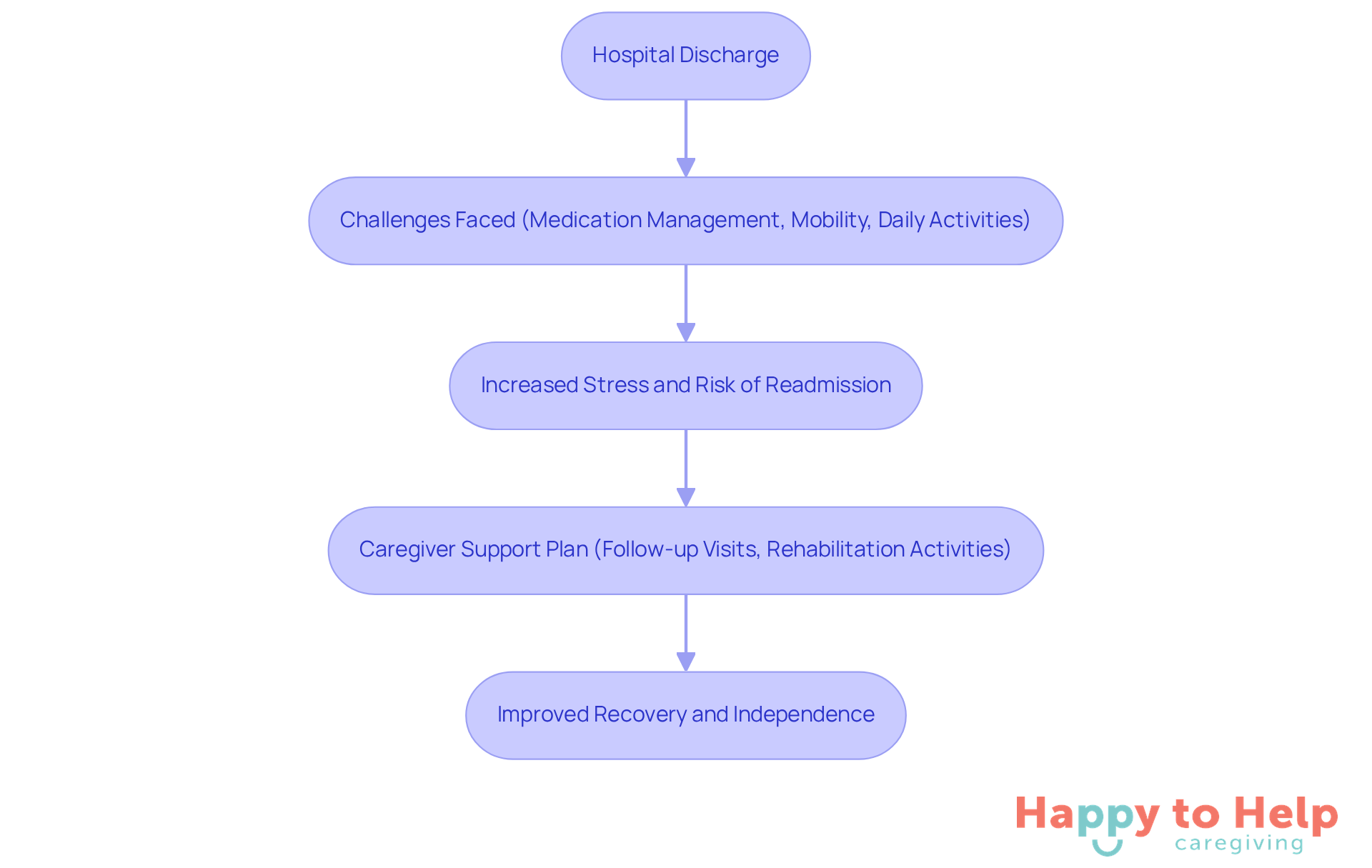
Problem: After a hospital discharge, elderly individuals often face significant challenges in their recovery. Without proper support, they may struggle with medication management, mobility, and daily activities, which are essential for a safe recovery.
Agitate: This lack of assistance can lead to serious implications, including increased stress for both the patients and their families. Studies indicate that older adults who do not receive regular support with everyday activities are at a higher risk of being readmitted to the hospital. Stress-related complications can further exacerbate this issue, with patients potentially returning to the hospital within 30 days of discharge.
Caregivers play a crucial role in providing effective sitting service for the elderly to address these challenges. By creating an organized support plan that includes follow-up visits and rehabilitation activities, caregivers offer a sitting service for the elderly to help them regain their independence while closely monitoring their health to prevent complications. As Lorraine Arkaifie, Founder & Director of Services, states, "Post-hospital support helps seniors recover safely at home, easing stress for loved ones and their families."
Incorporating regular check-ins and assistance with daily tasks can significantly reduce the likelihood of hospital readmission, underscoring the importance of dependable post-hospital support.
Respite Care: Supporting Family Caregivers
Caregiving can be an incredibly demanding role, often leading to burnout and stress for family supporters. Without adequate breaks, caregivers may struggle to provide the best care for their loved ones, which can negatively impact both their well-being and that of those they support.
Happy to Assist Caregiving provides a solution with their sitting service for the elderly. These services, such as the sitting service for the elderly, provide family supporters with a much-needed pause, allowing them to rejuvenate while ensuring their loved ones continue to receive excellent attention. Whether it's for a few hours or several days, these services are tailored to meet the specific needs of each family.
By supplying skilled caregivers to step in, families can feel confident that their loved ones are in capable hands. This not only leads to improved outcomes for those receiving care but also significantly reduces stress for everyone involved. With the right support, caregivers can recharge and return to their roles with renewed energy and focus.

Palliative Support Care: Enhancing Quality of Life
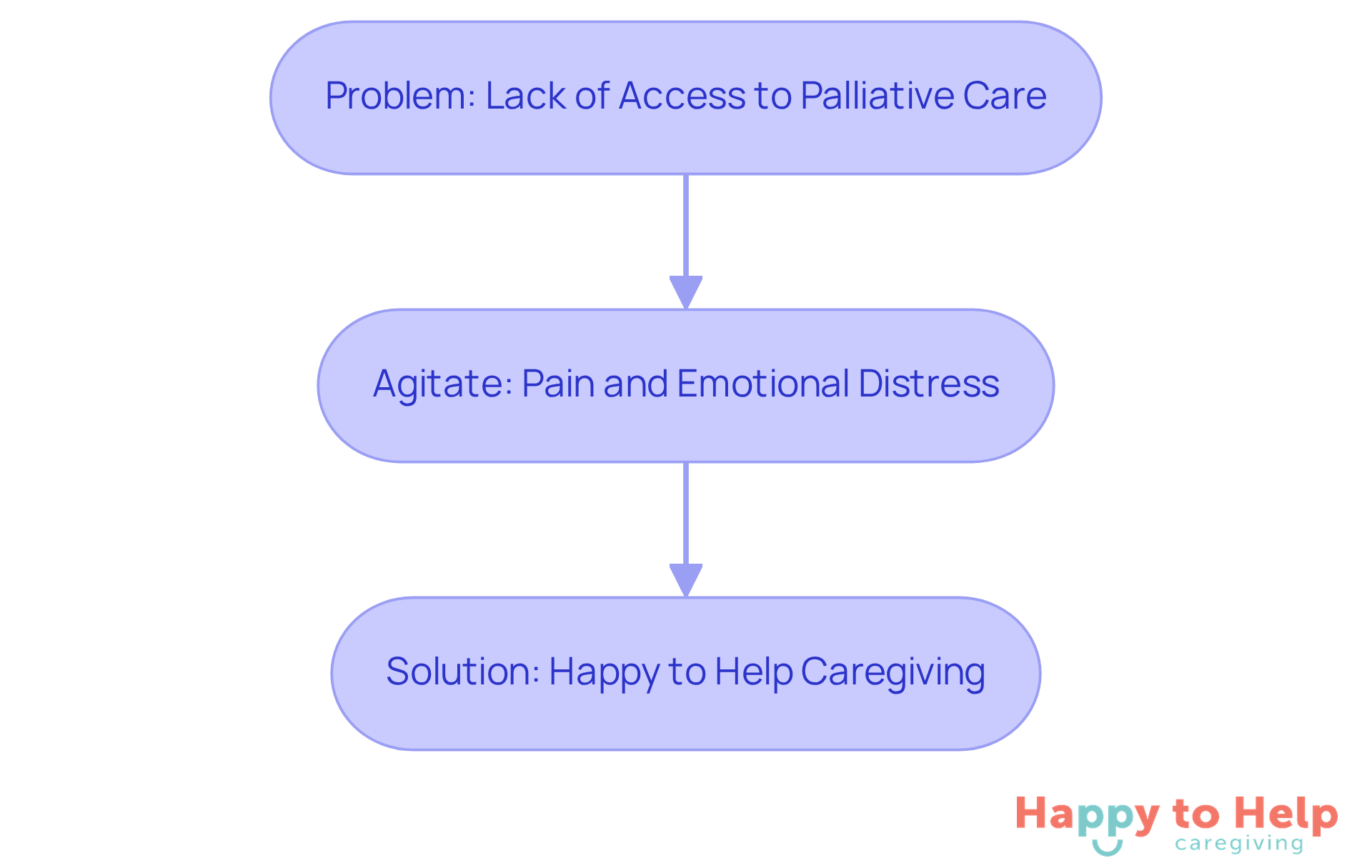
Problem: Many elderly individuals face significant health issues that diminish their quality of life. Research indicates that approximately 56.8 million people require palliative support each year, yet only about 14% currently access these vital services. This gap highlights an urgent need for effective palliative care.
Agitate: Without proper palliative assistance, seniors often endure unnecessary pain and emotional distress. Caregivers struggle to provide the necessary support, which can lead to feelings of isolation and a decline in overall well-being. Dr. Lori Wiener emphasizes that the primary goal of palliative care is to alleviate symptoms and enhance quality of life, underscoring the importance of compassionate support in these environments.
Solution: Happy to Help Caregiving offers meticulously designed palliative assistance that prioritizes pain management while also providing essential emotional support and companionship. This holistic approach not only addresses physical symptoms but also nurtures emotional and spiritual well-being, allowing seniors to maintain their dignity during challenging times. By integrating emotional support, caregivers can significantly improve patients' overall mood and quality of life, making it a fundamental aspect of effective palliative care.
24/7 Availability: Constant Support for Seniors
Elderly individuals often face the challenge of needing constant care, making a sitting service for the elderly a significant concern for both them and their families. This need for assistance can lead to anxiety about safety and well-being, especially when families cannot be present for the sitting service for the elderly.
Happy to Help Caregiving addresses this issue by ensuring that caregivers are available 24/7. The sitting service for the elderly offers constant support that provides peace of mind, allowing older adults to receive help with daily activities, medication reminders, and emergency assistance whenever necessary. Caregivers are trained to respond swiftly to any situation, ensuring that elderly individuals feel secure and supported at all times.
By choosing Happy to Help Caregiving, families can rest assured that their loved ones are in capable hands, receiving the care they need around the clock.
Flexible Scheduling: Tailoring Care to Individual Needs
Caregiving often faces a significant challenge: rigid scheduling that fails to accommodate the unique needs of seniors. This inflexibility can lead to decreased satisfaction and a diminished sense of independence among older adults, making it harder for families to manage their responsibilities effectively.
To address this issue, Happy to Help Caregiving prioritizes flexible scheduling options for their sitting service for the elderly. By allowing caregivers to assist during specific hours or create dynamic schedules that align with clients' preferences, families can ensure that a sitting service for the elderly is available when it’s most needed. Studies indicate that adaptable support models greatly enhance satisfaction among older adults, promoting a feeling of control over their daily activities.
Moreover, support providers emphasize the importance of adjusting to individual client requirements. Tailored support strategies not only improve emotional and physical outcomes for older adults but also enhance staff morale and retention. Successful models of flexible caregiving include:
- Sitting service for the elderly
- Self-scheduling
- Baylor shifts
These models have proven effective in benefiting both caregivers and the clients they serve.
By adopting these innovative methods, Happy to Help Caregiving guarantees that elderly individuals receive the compassionate and responsive care they deserve.

Emotional Support: Combating Loneliness in Seniors
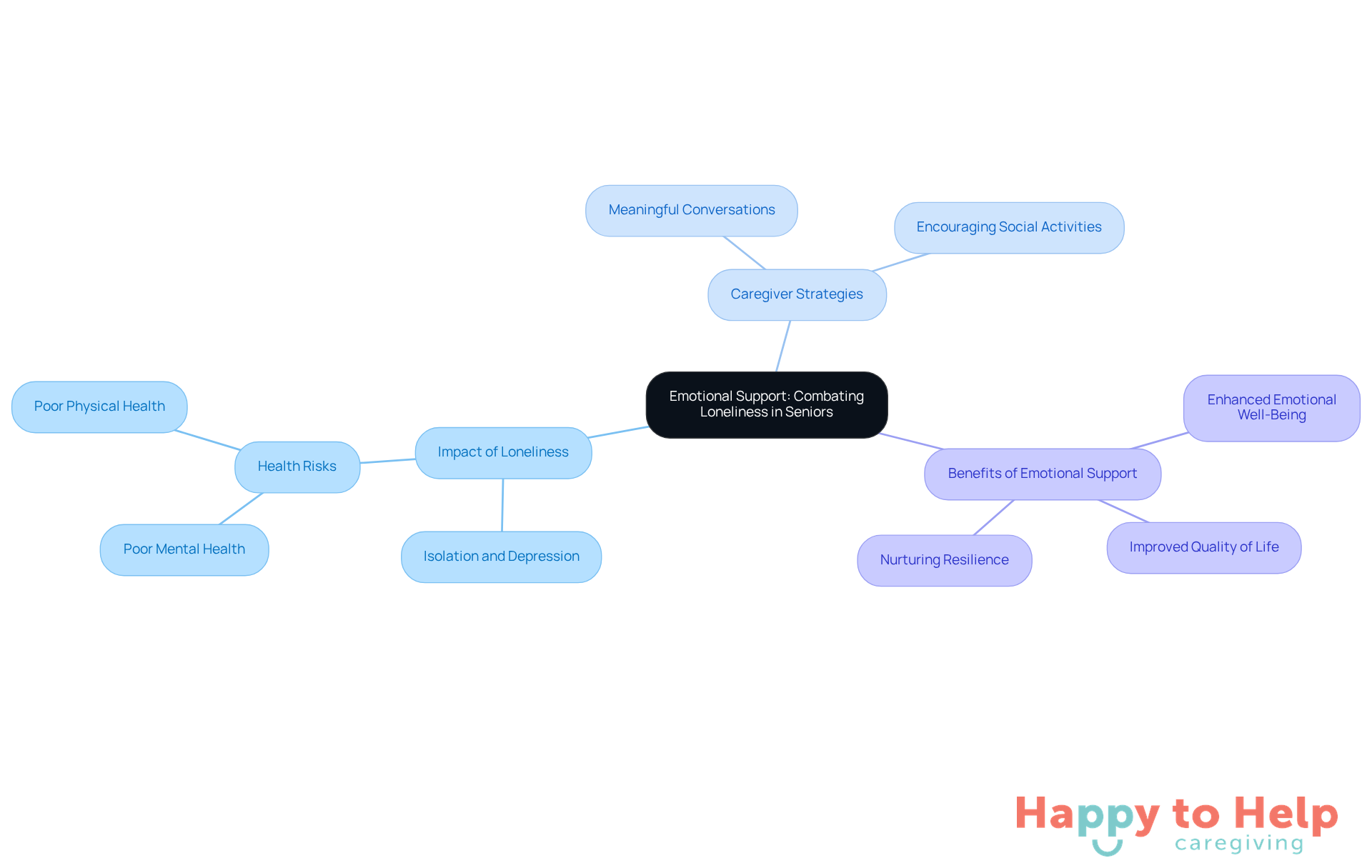
Loneliness is a significant issue faced by many older adults, often leading to feelings of isolation and depression. This emotional struggle can severely impact their overall well-being, making it crucial for caregivers to address it effectively.
To combat this problem, caregivers at Happy to Help Caregiving are trained to engage seniors in meaningful conversations and encourage participation in social activities. By fostering companionship, caregivers can help alleviate feelings of loneliness, making seniors feel valued and connected.
By nurturing strong connections, caregivers significantly enhance the emotional well-being of seniors. This not only improves their quality of life but also reinforces the importance of emotional support in caregiving. Implementing these strategies can create a more fulfilling experience for both caregivers and those they care for.
Technology Integration: Enhancing Caregiver-Family Communication
Communication gaps between caregivers and families can lead to increased stress and uncertainty. Families often feel left in the dark about their loved ones' wellbeing, which can exacerbate feelings of anxiety and helplessness. This disconnect not only affects families but can also impact the quality of care provided to seniors.
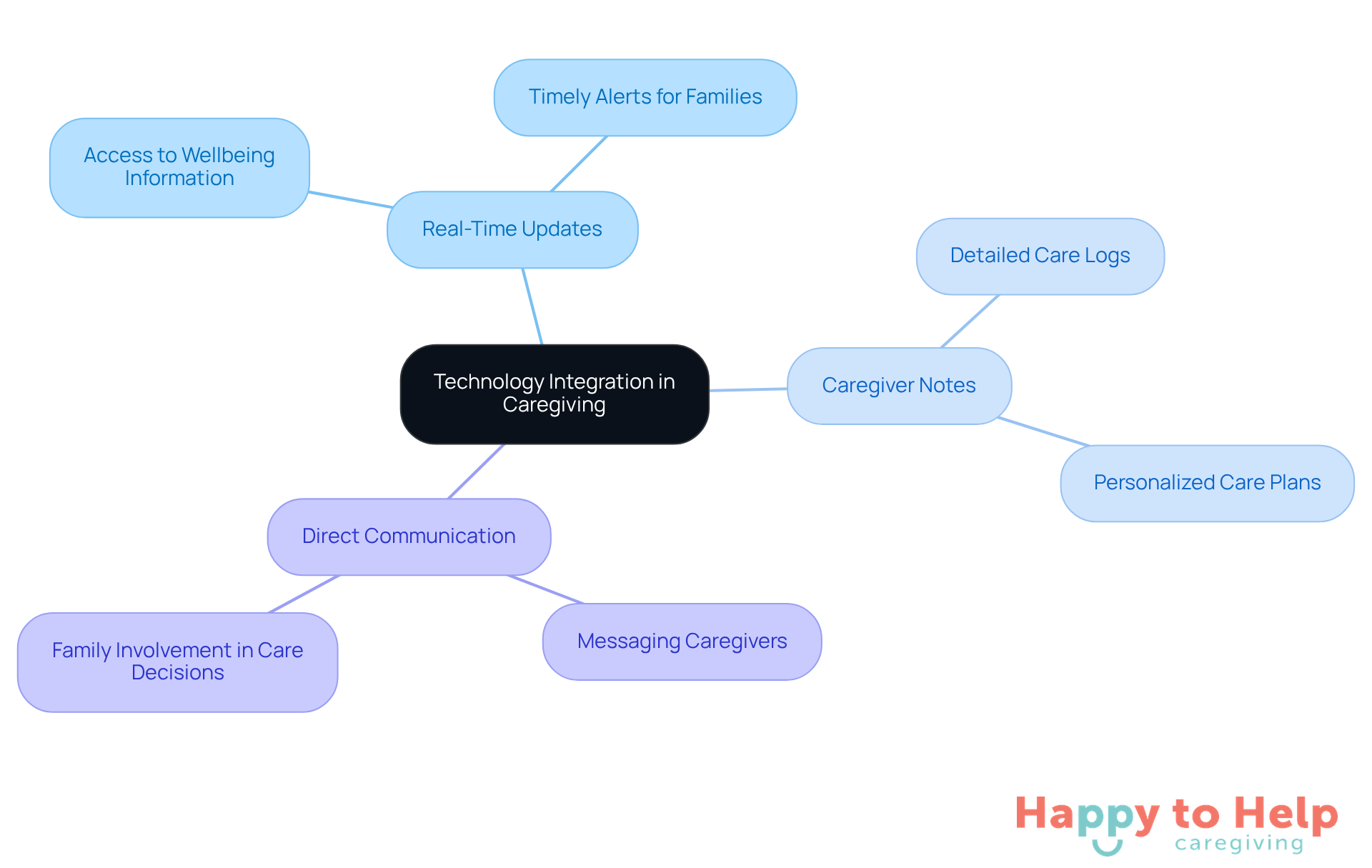
Happy to Help Caregiving addresses this issue by employing technology to enhance communication. Through online platforms, families can:
- Access real-time updates on their loved ones' wellbeing
- View caregiver notes
- Communicate directly with caregivers
This integration of technology keeps families informed and fosters a collaborative approach to caregiving.
By ensuring that everyone is aligned regarding the senior's needs and preferences, Happy to Help Caregiving promotes a supportive environment. This solution not only alleviates family concerns but also enhances the overall caregiving experience.
Personalized Care Plans: Meeting Unique Needs of Seniors
At Happy to Help Caregiving, we recognize a significant challenge: the unique health circumstances and preferences of older adults often lead to inadequate support. This can result in a diminished quality of life and increased dependence on family members.
To address these issues, we emphasize the creation of customized support plans tailored to each client's distinct needs. Our caregivers work closely with families to develop comprehensive plans that outline specific goals and strategies for care. This personalized approach not only ensures that older adults receive the necessary assistance, including a sitting service for the elderly, to thrive in their own homes but also significantly enhances their overall well-being.
By focusing on the individual needs of each client, we foster an environment where older adults can maintain their independence and health with our sitting service for the elderly. Geriatric management professionals highlight that such tailored strategies are essential in overcoming the challenges of aging, leading to a more effective and compassionate support experience.

Caregiver Consistency: Building Trust and Familiarity
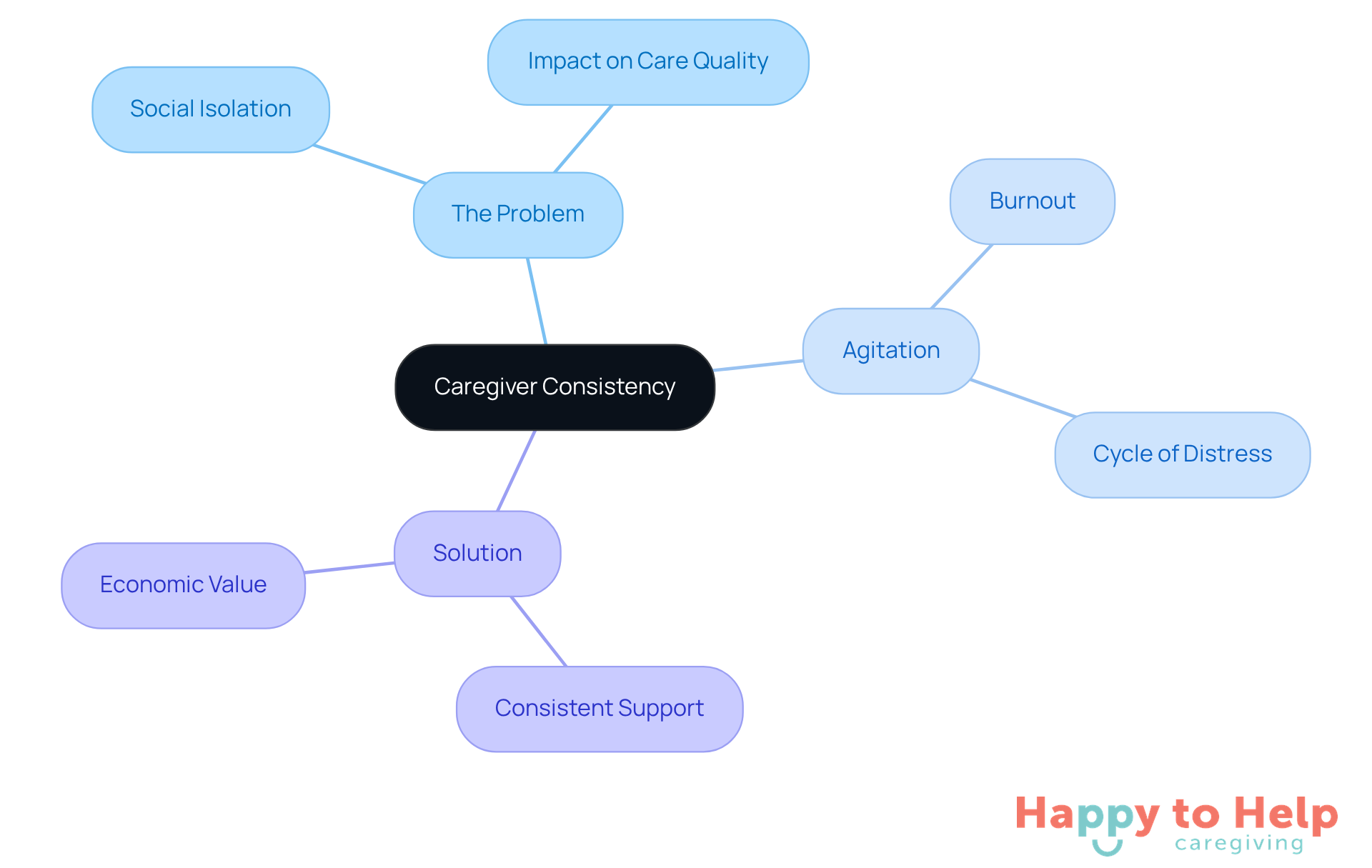
The Problem: Caregivers face significant emotional challenges, with nearly 1 in 4 reporting feelings of social isolation. This isolation not only affects their well-being but also impacts the quality of care they provide to elderly individuals.
Agitation: The emotional toll on caregivers can lead to burnout, which ultimately affects the elderly they support. Studies indicate that older adults who interact with familiar caregivers experience better emotional and mental health outcomes, reducing feelings of anxiety and loneliness. When caregivers are isolated, the quality of support diminishes, creating a cycle of distress for both parties.
Solution: To combat these challenges, it’s crucial to ensure that elderly individuals receive consistent support from familiar caregivers through a sitting service for the elderly. This approach fosters trust and comfort, allowing older adults to feel secure in their care environment. Familiar caregivers develop a deep understanding of their clients' needs, preferences, and routines, significantly enhancing the quality of care.
As Dr. Myechia Minter-Jordan, CEO of AARP, states, "Family supporters are a backbone of our health and long-term assistance systems-often delivering complex support with little or no training." With 63 million Americans projected to serve as family caregivers by 2025, the need for consistency in caregiving is more critical than ever.
Recognizing the economic value of caregiving, which exceeded $470 billion in 2013, underscores the significance of these roles in our healthcare system. By prioritizing familiar support, including sitting service for the elderly, we can improve the caregiving experience for both caregivers and the elderly, ultimately leading to better health outcomes.
Taking the Next Steps
The essential sitting services for the elderly highlighted in this article underscore a significant problem: many older adults face loneliness and inadequate care. This issue not only affects their emotional well-being but also their overall quality of life. Without tailored support, seniors may struggle with feelings of isolation and dependency.
To address these challenges, it’s crucial to recognize the vital role that companionship, post-hospital recovery, respite care, and consistent caregiver support play. These services not only meet the immediate needs of seniors but also foster a sense of dignity and independence. Emotional support is essential in combating loneliness, and flexible scheduling is necessary to accommodate individual needs. Personalized care plans can significantly enhance the caregiving experience, leading to better health outcomes and a higher quality of life.
As the demand for effective elder care continues to grow, families must explore these sitting services to ensure their loved ones receive the compassionate and consistent support they deserve. Embracing these essential services can profoundly impact the lives of both seniors and their caregivers, creating a nurturing environment that promotes health, happiness, and connection.
Frequently Asked Questions
What is the primary issue that Happy to Help Caregiving addresses for seniors?
Happy to Help Caregiving addresses loneliness among older adults, which affects about 30% of them and can lead to serious health problems.
How does Happy to Help Caregiving provide companionship support?
They offer a sitting service that involves engaging in conversations, participating in hobbies, and providing emotional support to foster meaningful connections between caregivers and older adults.
Why is companionship important for older adults?
Companionship helps alleviate feelings of loneliness and enhances overall well-being, significantly improving emotional, physical, and cognitive health.
How are caregivers trained at Happy to Help Caregiving?
Caregivers are trained to identify and embrace the unique interests of each client, ensuring that companionship is tailored to foster genuine connections.
What role do caregivers play in post-hospital recovery assistance?
Caregivers create organized support plans that include follow-up visits and rehabilitation activities to help elderly individuals regain independence and monitor their health post-discharge.
What are the risks of not providing support after hospital discharge?
Without proper support, elderly individuals face challenges such as medication management and mobility, which can lead to increased stress and a higher risk of hospital readmission.
How does respite care benefit family caregivers?
Respite care provides family caregivers with a much-needed break, allowing them to rejuvenate while ensuring their loved ones continue to receive excellent care.
What types of services does Happy to Help Caregiving offer for respite care?
They provide tailored sitting services for the elderly, whether for a few hours or several days, to meet the specific needs of each family.
What is the impact of respite care on caregiving outcomes?
Respite care leads to improved outcomes for those receiving care and significantly reduces stress for family caregivers, allowing them to return to their roles with renewed energy.
List of Sources
- Happy to Help Caregiving: Companionship Care for Seniors
- 10 Ways Companion Caregivers Enhance Seniors' Quality of Life - Happy To Help (https://happytohelpcaregiving.com/10-ways-companion-caregivers-enhance-seniors-quality-of-life)
- Companion Care at Home Reduces Loneliness for Seniors During the Holidays (https://lifesathomecare.com/companion-care-at-home-reduces-loneliness-for-seniors-during-the-holidays)
- 10 Benefits of Professional Companion Services for Family Caregivers - Happy To Help (https://happytohelpcaregiving.com/10-benefits-of-professional-companion-services-for-family-caregivers)
- Trends in Loneliness Among Older Adults from 2018-2023 (https://ihpi.umich.edu/national-poll-healthy-aging/reports-and-resources/trends-loneliness-among-older-adults-2018-2023)
- Lonely Seniors Are Turning To AI Bots For Companionship (https://forbes.com/sites/rashishrivastava/2025/10/18/lonely-seniors-are-turning-to-ai-bots-for-companionship)
- Post-Hospital Recovery Assistance: Ensuring Safe Transitions
- A Smooth Transition Home: Post-Hospital Care for Seniors (https://adultalternativecare.com/a-smooth-transition-home-post-hospital-care-services-for-seniors)
- Post-Hospital Home Care: The Key to a Smoother, Safer Recovery (https://heavenathomecare.com/how-post-hospital-home-care-helps-seniors-recover)
- Sent Home To Heal, Patients Avoid Wait for Rehab Home Beds - KFF Health News (https://kffhealthnews.org/news/article/patients-rehab-at-home-unclog-hospital-bed-nursing-home-waiting-list)
- Smart Homes and Post-Hospital Care: Supporting Seniors Aging in Place (https://hcprosonline.com/smart-homes-and-post-hospital-care-supporting-seniors-aging-in-place)
- Post-Hospital Discharge: Why In-Home Care Improves Recovery for Florida Seniors (https://visitingangels.com/tampafl/news-info/post-hospital-discharge-why-in-home-care-improves-recovery-for-florida-seniors/26196)
- Respite Care: Supporting Family Caregivers
- Respite Care Services: Essential Support for Caregivers (https://esoregon.com/the-benefits-of-respite-care-services-for-caregiver-relief)
- News & Success Stories | Live Well San Diego (https://livewellsd.org/Home/Components/News/News/513/153)
- Family Caregivers Struggling In Some States More Than Others (https://disabilityscoop.com/2025/10/31/family-caregivers-struggling-in-some-states-more-than-others/31710)
- Funding Opportunity: National Lifespan Respite Care Program State Program Enhancement Grants | ACL Administration for Community Living (https://acl.gov/news-and-events/announcements/national-lifespan-respite-care-program-state-program-enhancement)
- Palliative Support Care: Enhancing Quality of Life
- Palliative care (https://who.int/news-room/fact-sheets/detail/palliative-care)
- Support for Serious Illness (https://newsinhealth.nih.gov/2025/07/support-serious-illness)
- Palliative Care Can Improve Quality of Life (https://lvhn.org/news/palliative-care-can-improve-quality-life)
- ‘A good death’: How compassionate care helps people navigate the end of life (https://news.yale.edu/2025/10/13/good-death-how-compassionate-care-helps-people-navigate-end-life)
- 24/7 Availability: Constant Support for Seniors
- 10 Must-Know U.S. Home Care Industry Stats for 2025 - North American Community Hub (https://nchstats.com/us-home-care-industry-stats)
- 24/7 In-Home Care Costs in 2025 - Assisted Living Magazine (https://assistedlivingmagazine.com/24-7-in-home-care-costs-in-2025)
- 2025 Home Care Statistics: Trends & Insights To Know (https://premierhcinc.com/blog/home-care-statistics)
- 28 Senior Care Statistics: In-Home & Assisted Living | Shortlister (https://myshortlister.com/insights/senior-care-statistics)
- Caregivers Can Now Call 211 for Help in 10 New States | United Way Worldwide (https://unitedway.org/news/caregivers-can-now-call-211-for-help-in-10-new-states)
- Flexible Scheduling: Tailoring Care to Individual Needs
- The Future of Senior Care: What to Expect in 2025 and Beyond (https://arhomecare.com/the-future-of-senior-care-what-to-expect-in-2025-and-beyond)
- Flexible Care Models Give Home Care Clients ‘What They Want When They Want It’ (https://homehealthcarenews.com/2025/10/flexible-care-models-give-home-care-clients-what-they-want-when-they-want-it)
- 9 Ways to Find Caregivers With Flexible Scheduling Options - MedCity News (https://medcitynews.com/2025/05/9-ways-to-find-caregivers-with-flexible-scheduling-options)
- Embracing Flexible Scheduling Models in Aging Services: A Path Toward Workforce Stability (https://leadingage.org/embracing-flexible-scheduling-models-in-aging-services-a-path-toward-workforce-stability)
- The Future of Aging: Is In-Home Care the New Standard? - WorldHealth.net (https://worldhealth.net/news/future-of-aging-is-in-home-care-new-standard)
- Emotional Support: Combating Loneliness in Seniors
- Trends in Loneliness Among Older Adults from 2018-2023 (https://ihpi.umich.edu/national-poll-healthy-aging/reports-and-resources/trends-loneliness-among-older-adults-2018-2023)
- Humana Foundation commits $12 million for senior emotional health (https://philanthropynewsdigest.org/news/humana-foundation-commits-12-million-for-senior-emotional-health)
- Lending a hand to close friends boosts daily mood in older adults (https://news.umich.edu/lending-a-hand-to-close-friends-boosts-daily-mood-in-older-adults)
- Psychological Support for Seniors: Why Mental Wellness Matters in Later Life | Home Care agency in New York (https://angelcareny.com/psychological-support-for-seniors-why-mental-wellness-matters-in-later-life)
- Emotional support key to protecting older adults against depression (https://unsw.edu.au/news/2025/09/neighbourhoods-may-hold-key-slowing-cognitive-decline)
- Technology Integration: Enhancing Caregiver-Family Communication
- National Family Caregiver Month 2025: How Tech Supports Care (https://caresmartz360.com/blog/home-care/empowering-family-caregivers-with-technology-this-caregivers-month)
- HHS Launches New Caregiving AI Initiative to 'Spark Innovative Support' (https://hospicenews.com/2025/11/18/hhs-launches-new-caregiving-ai-initiative-to-spark-innovative-support)
- How AI Could Change Family Caregiving (https://aarp.org/caregiving/basics/how-ai-can-help-caregivers)
- Modern Tools That Improve Safety and Accountability in Elder Care Settings (https://dcreport.org/2025/11/24/modern-tech-tools-improving-safety-in-elder-care-facilities)
- HHS Launches $2 Million AI Challenge to Support Family Caregivers (https://shrm.org/advocacy/hhs-launches--2-million-ai-challenge-to-support-family-caregiver)
- Personalized Care Plans: Meeting Unique Needs of Seniors
- Novel Care Model May Improve Outcomes for Older Adults With Multiple Chronic Conditions (https://consultqd.clevelandclinic.org/novel-care-model-may-improve-outcomes-for-older-adults-with-multiple-chronic-conditions)
- Trusted Physician Megan J. Engelen on Bringing Personalized Care to Salt Lake City (https://prnewswire.com/news-releases/trusted-physician-megan-j-engelen-on-bringing-personalized-care-to-salt-lake-city-302624771.html)
- CenterWell Bringing Convenient, Personalized Health Care to Seniors at Gladstone Walmart (https://policy.humana.com/issue-area/news-and-resources/news-press/2025/centerwell-bringing-convenient--personalized-health-care-to)
- ‘We’re Back, Baby’: 6 Senior Living Leaders Predict Memory Care’s Future (https://seniorhousingnews.com/2025/10/17/were-back-baby-6-senior-living-leaders-predict-memory-cares-future)
- Customized Care at Home: The Benefits of Personalized Care Plans - VNA Health Group (https://vnahg.org/customized-care-at-home-the-benefits-of-personalized-care-plans)
- Caregiver Consistency: Building Trust and Familiarity
- D-CARE study finds caregiver satisfaction higher with dementia care programs than usual care (https://uclahealth.org/news/release/d-care-study-finds-caregiver-satisfaction-higher-with)
- New Report Reveals Crisis Point for America’s 63 million Family Caregivers (https://press.aarp.org/2025-07-24-New-Report-Reveals-Crisis-Point-for-Americas-63-million-Family-Caregivers)
- Caregiver Statistics: Demographics (https://caregiver.org/resource/caregiver-statistics-demographics)
- The number of family caregivers is surging (https://19thnews.org/2025/07/family-caregivers-surging-aarp)
- Caregiving in the US 2025 (https://aarp.org/pri/topics/ltss/family-caregiving/caregiving-in-the-us-2025)