
Understanding Steps for Finding Temporary Senior Care
Navigating the labyrinth of caregiving can be overwhelming. The demand for temporary senior care solutions is on the rise, and with it, the number of family caregivers is increasing significantly. This surge creates immense pressure to provide adequate support, often leading to stress and burnout.
Caregivers face a daunting challenge: how can they balance their own needs with the urgent requirements of those they support? This article delves into ten essential steps that empower caregivers to find the right temporary care options. By implementing these strategies, caregivers can ensure both their well-being and that of their loved ones, maintaining quality care amidst the chaos.
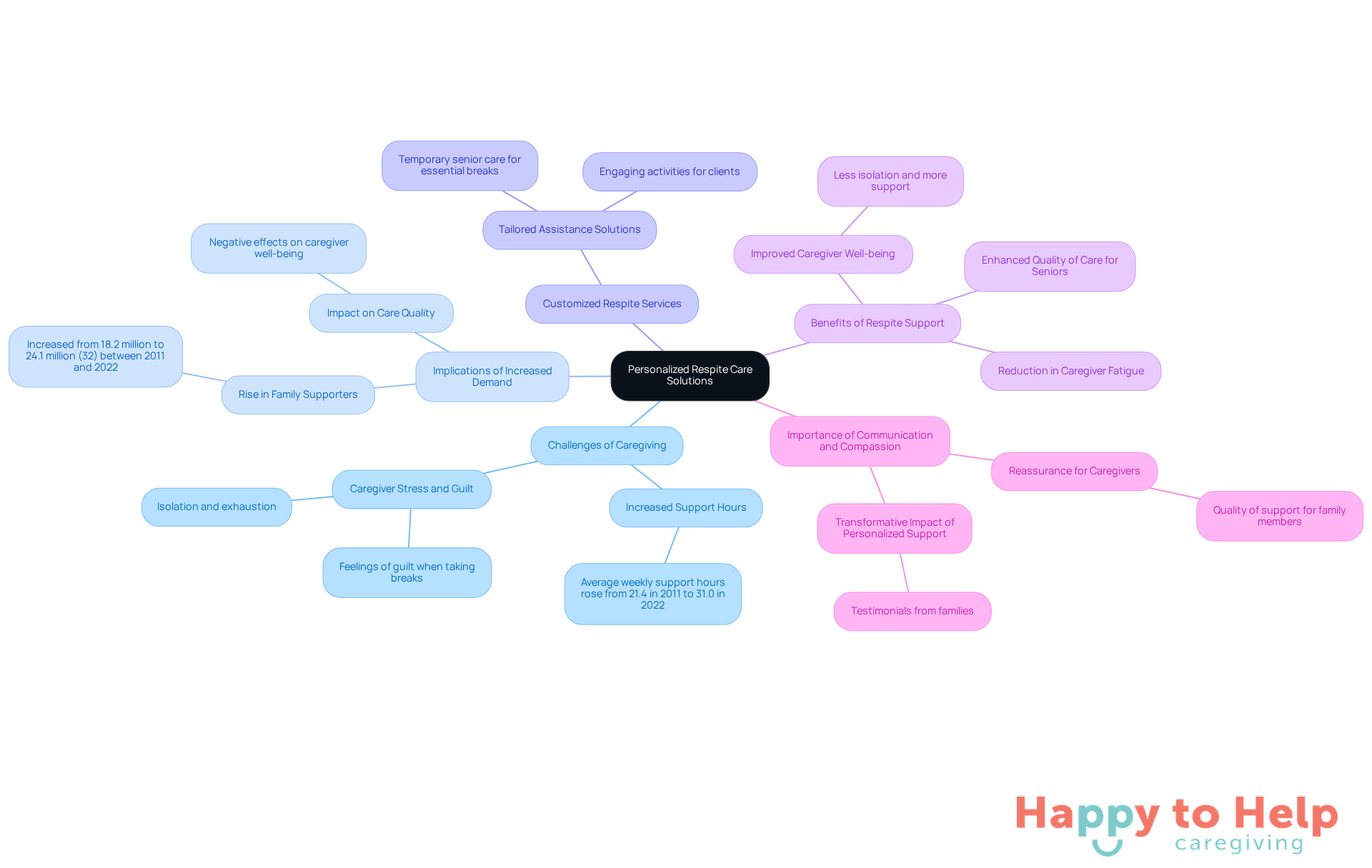
Happy to Help Caregiving: Personalized Respite Care Solutions
Use english for answers
The Challenge of Caregiving
Caregiving can be a demanding role, especially for relatives supporting seniors and individuals with special needs. Recent statistics reveal a significant increase in the hours of assistance required, particularly for older adults with dementia. For instance, the average weekly support hours rose from 21.4 in 2011 to 31.0 in 2022. This surge in demand places immense pressure on caregivers, often leading to heightened stress and feelings of guilt when they consider taking breaks.
The Implications of Increased Demand
The growing number of family supporters - up 32% from 18.2 million to 24.1 million between 2011 and 2022 - underscores the urgent need for respite support. Caregivers frequently experience isolation and exhaustion, which can negatively impact both their well-being and the quality of care they provide. Without adequate support, caregivers may struggle to maintain their own health and emotional stability.
A Solution: Customized Respite Services
Happy to Help Caregiving offers tailored respite assistance solutions designed to alleviate these challenges. Their services provide temporary senior care, offering short-term support that allows caregivers to take essential breaks while ensuring that their loved ones receive compassionate and professional care. By involving clients in enjoyable activities, the staff promotes a sense of safety and wellness in familiar environments.
Benefits of Respite Support
Customized respite services not only reduce caregiver fatigue but also enhance the quality of care for seniors. Caregivers who utilize these services report feeling less isolated and more supported. This approach fosters a healthier caregiving environment, enabling seniors to thrive in their home settings.
The Importance of Communication and Compassion
Effective respite programs prioritize communication and compassion, reassuring caregivers about the quality of support their family members receive. Testimonials from families highlight the transformative impact of personalized support, with many expressing gratitude for the peace of mind it brings. By integrating these tailored solutions, Happy to Help Caregiving emerges as a leader in promoting well-being for both caregivers and their loved ones.
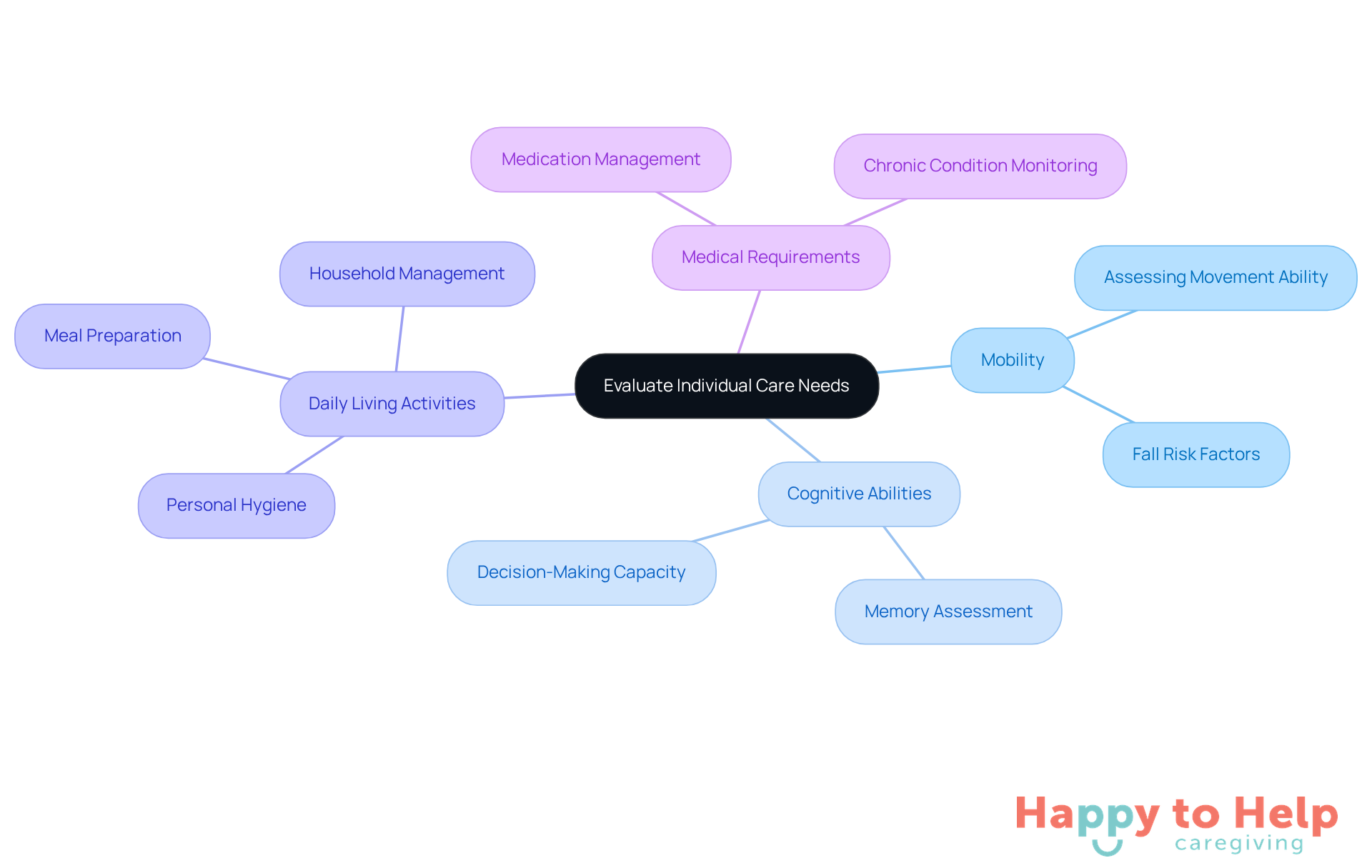
Evaluate Individual Care Needs Before Seeking Help
Before seeking temporary senior care solutions, it's crucial to identify the specific support needs of the individual. Failing to do so can lead to inadequate care, leaving both caregivers and seniors feeling overwhelmed. Factors to consider include:
- Mobility
- Cognitive abilities
- Daily living activities
- Any medical requirements
This evaluation is essential for determining the level of support needed - whether it’s companionship, help with daily tasks, or specialized medical aid. Engaging in open discussions with the individual and their family members can provide valuable insights into their preferences and requirements, ensuring that the chosen assistance aligns with their needs.
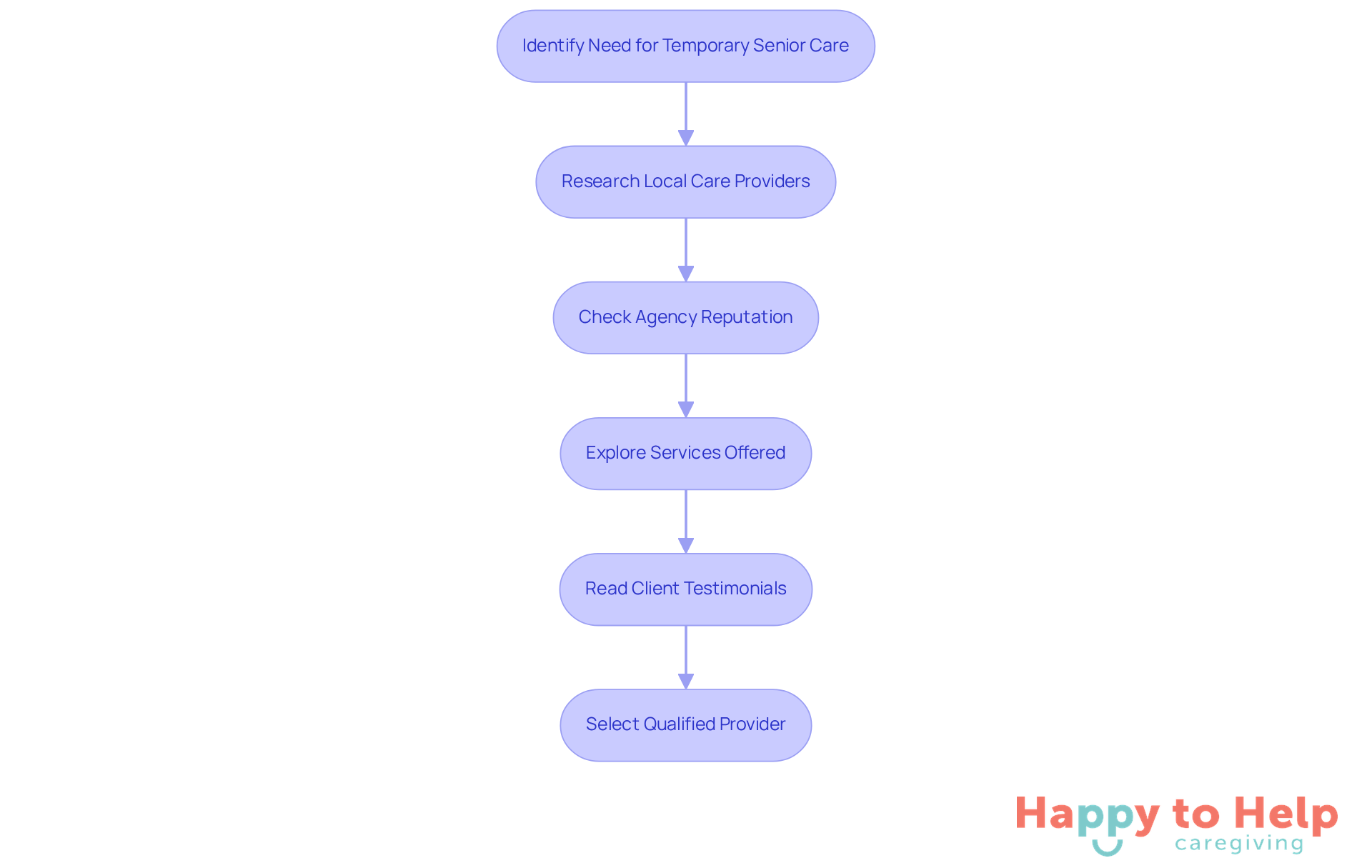
Research Local Care Providers and Their Services
Caregivers often face significant challenges in finding appropriate temporary senior care options. This can lead to increased stress and burnout, impacting their ability to provide care. In fact, nearly 40% of family supporters prioritize temporary senior care as their top service need, highlighting its critical importance.
To address this issue, start by investigating nearby providers that specialize in respite services. Focus on agencies with a strong reputation in the community. Explore their websites to gather information about the services they offer, the credentials of their staff, and client testimonials that reflect their experiences.
Additionally, engaging with local senior centers or healthcare professionals can provide valuable recommendations for reputable providers in your area. This approach not only helps identify reliable agencies but also ensures that the chosen service aligns with the specific needs of the individual requiring assistance.
It's important to note that those offering complex long-term support often perform medical and nursing duties. Therefore, seeking qualified experts is essential. Temporary senior care can significantly reduce stress and enhance resilience among families, making it a vital consideration in your search.
Verify Credentials and Read Reviews of Caregivers
Problem: Many caregivers face significant challenges, with 41% reporting low overall well-being, according to the National Alliance for Caregiving. This highlights the urgent need for reliable support.
Agitate: Without proper assistance, caregivers may struggle to provide the best care for their loved ones, leading to increased stress and burnout. It's essential to ensure that the support they receive is both competent and trustworthy.
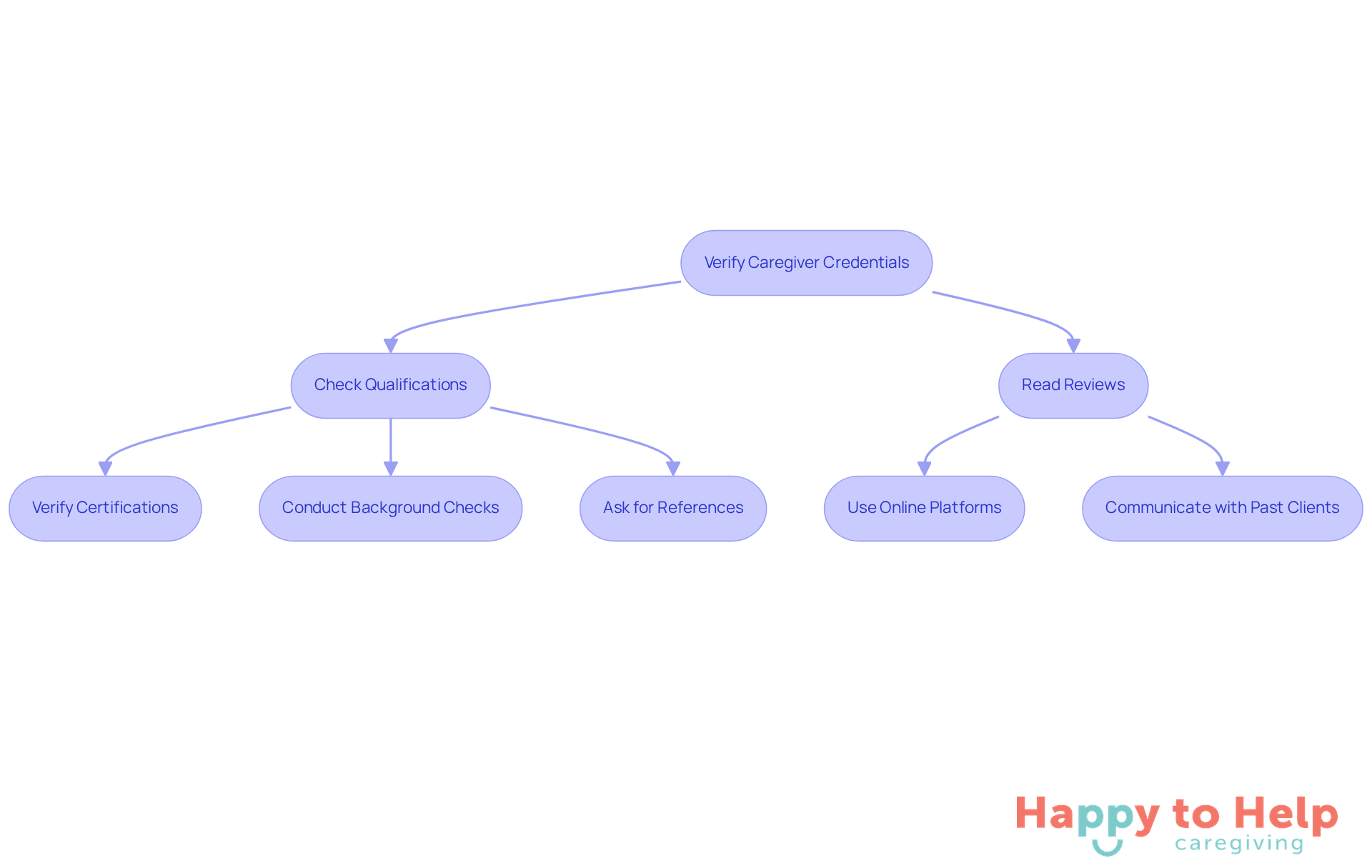
Solution: Before choosing a provider, thoroughly check their qualifications and read feedback from past clients. Start by verifying relevant certifications and training, and ensure that background checks have been conducted. This step is crucial to confirm that the individual has the necessary qualifications to offer suitable support.
Online platforms and social media serve as valuable tools for accessing reviews and ratings, providing insights into the experiences of other households. Additionally, asking for references from the caregiving agency allows you to communicate directly with families that have used their services, offering further confidence in the provider's reliability and competence. By following these measures, households can feel more assured in their selection of a provider, ultimately improving the quality of assistance for their loved ones.
Understand the Costs Involved in Temporary Senior Care
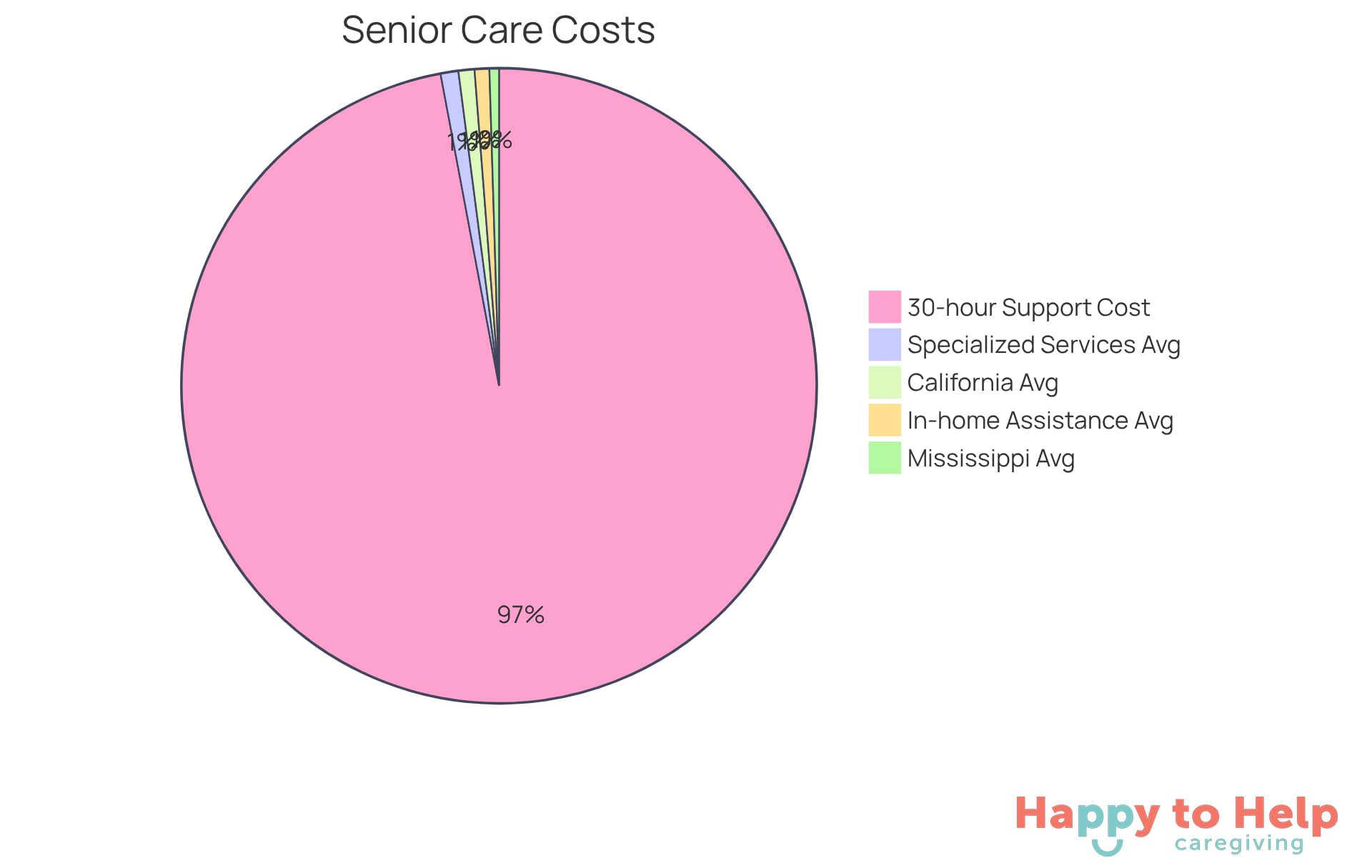
The expenses associated with temporary senior care can vary significantly based on the type of services needed, caregiver qualifications, and geographical location. In 2025, households are spending between $25 to $35 per hour for in-home assistance, with the national median expense being approximately $33 per hour. Rates differ by state - California averages $32 to $40, while Mississippi ranges from $18 to $25. For instance, a typical 30-hour support week costs around $4,290 monthly, making it a viable option for seniors who require temporary senior care rather than full-time assistance.
It's crucial for households to engage in direct discussions about costs with potential providers. This ensures transparency regarding any additional charges for specialized services, such as dementia assistance, which can range from $30 to $50 per hour. Understanding these financial implications allows households to budget effectively and avoid unexpected expenses. Additionally, many agencies offer discounted rates for longer shifts, which can help manage costs while providing essential support.
Planning for in-home support should also include exploring financial assistance options. Long-term insurance or government programs like Aid & Attendance may cover certain services. By assessing their loved one's specific needs and comparing estimates from various providers, individuals can make informed decisions that align with their financial capabilities and support requirements.
Seek Recommendations from Family and Friends
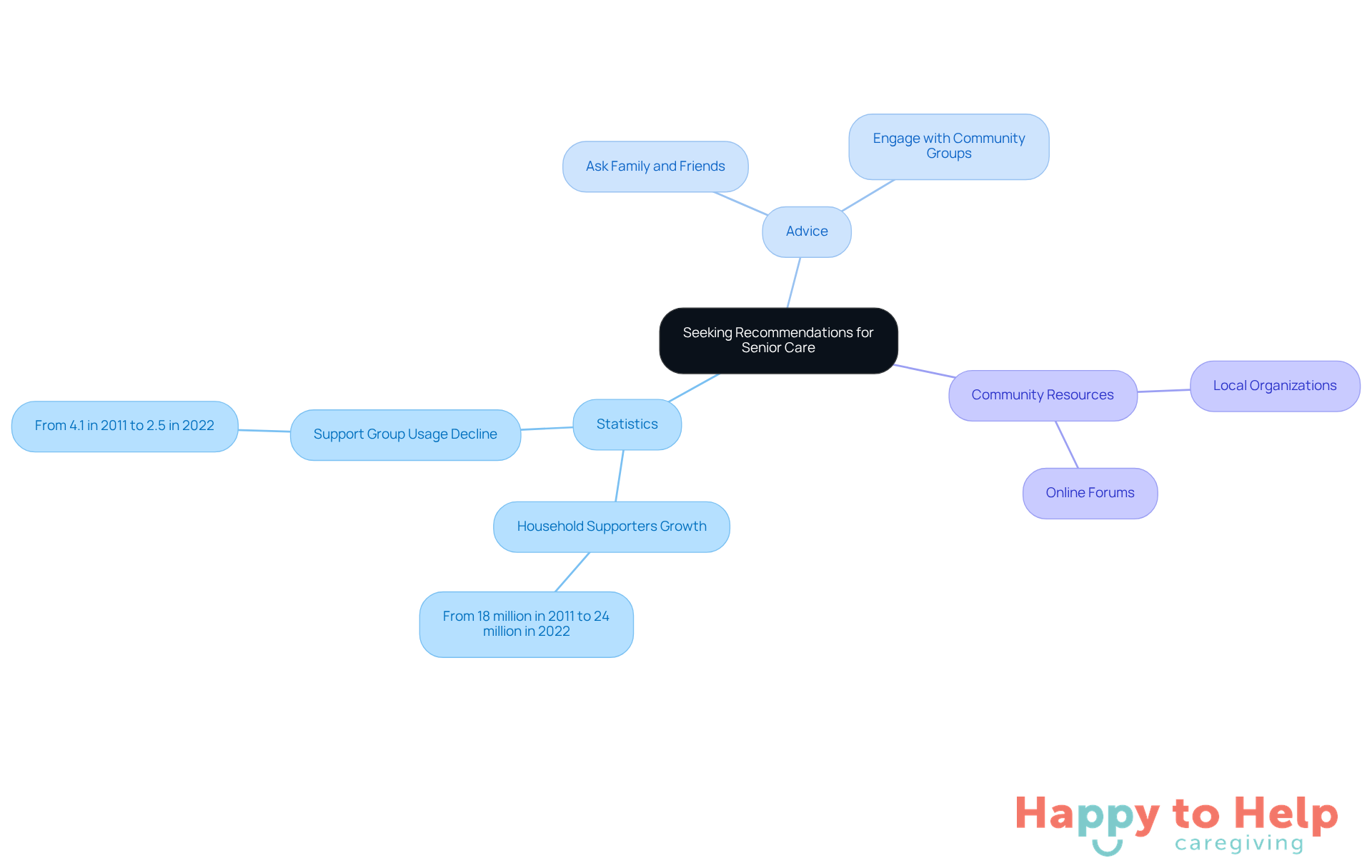
Finding reliable temporary senior care can be a challenge for many families. The increasing need for caregiving assistance is evident, with the number of household supporters in the U.S. rising from 18 million in 2011 to 24 million in 2022. This growing demand highlights the importance of effective support options.
Unfortunately, many caregivers struggle to seek help. The use of support groups among family members providing care has declined from 4.1% in 2011 to just 2.5% in 2022, reflecting the difficulties they face. This gap in support can lead to increased stress and isolation for caregivers.
To address these challenges, start by asking relatives and acquaintances for suggestions. Their direct experiences with community providers can offer valuable insights into the reliability and quality of available support. Additionally, engaging with local community groups or online forums can be beneficial. These platforms often serve as resources for families to share experiences and recommendations regarding senior support services.
Community organizations not only connect you to a network of support providers but also foster relationships that can lead to trustworthy referrals. As Steven Lee, co-founder of Ianacare, points out, "An immense amount of local resources are available, but nobody knows about them." By utilizing these resources, you can significantly enhance your ability to find suitable support tailored to your loved one's needs.
In summary, leveraging community resources and personal networks can help bridge the gap in temporary senior care support, making it easier for families to find the assistance they need.
Visit Care Facilities or Meet Caregivers in Person
Choosing the right support facility for caregiving can be a daunting task. Caregivers often face the challenge of ensuring that their loved ones receive the best care possible. The implications of this decision are significant, as the environment and staff can greatly affect the quality of care.
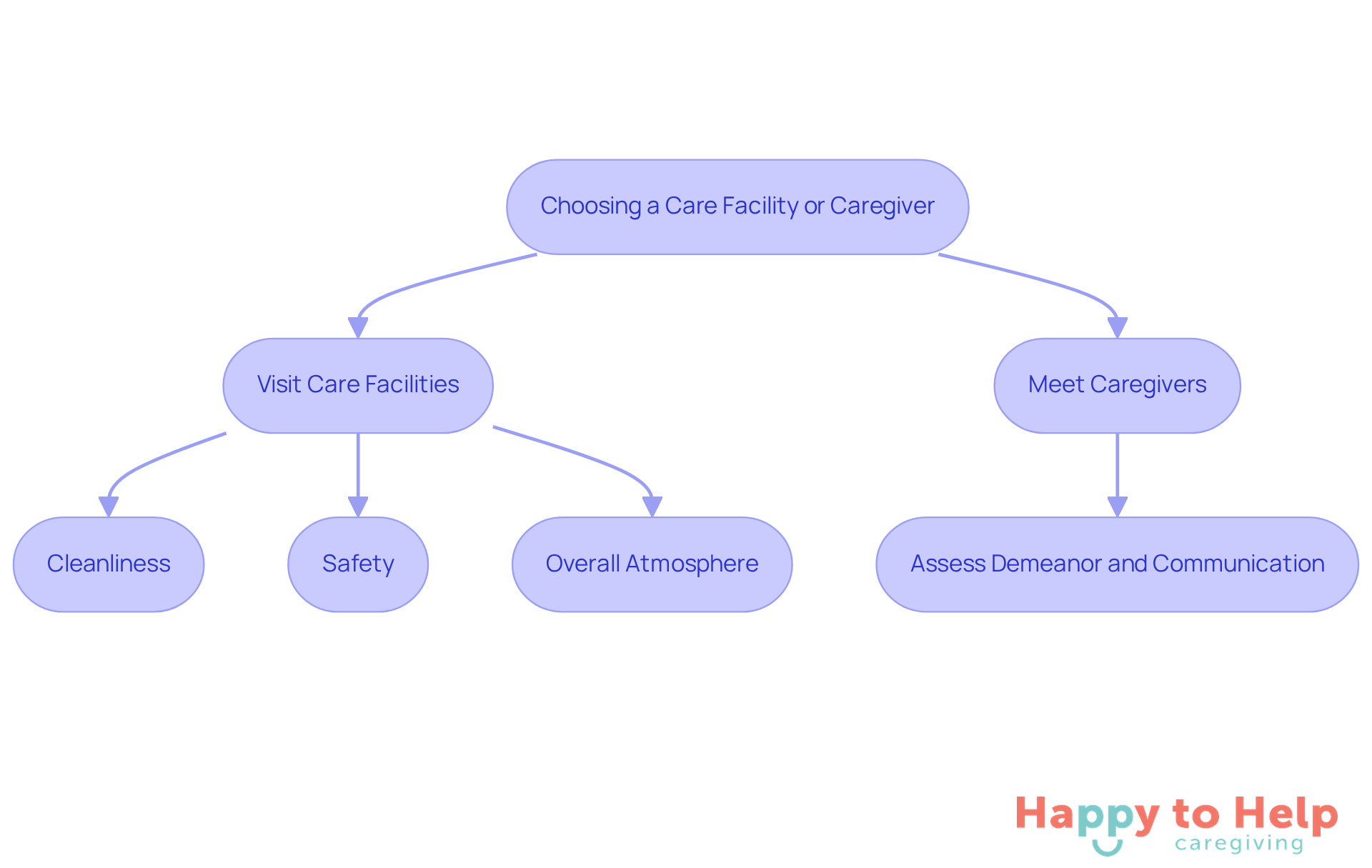
To tackle this issue, it's essential to arrange visits to potential facilities. During these visits, pay close attention to:
- Cleanliness
- Safety
- Overall atmosphere
Meeting the staff in person allows families to assess their demeanor and communication style, which is crucial for compatibility with their loved one.
If considering in-home assistance, schedule face-to-face meetings with prospective providers. This interaction not only helps gauge the provider's suitability but also fosters trust and comfort, which are vital for successful caregiving. Remember, trusting your instincts during these visits is key; a good rapport can make all the difference in the caregiving experience.
Communicate Clearly About Care Expectations
Effective communication is crucial for successful caregiving. Without it, caregivers may struggle to meet the specific needs of those they support. This can lead to misunderstandings and unmet expectations, ultimately affecting the quality of care provided.
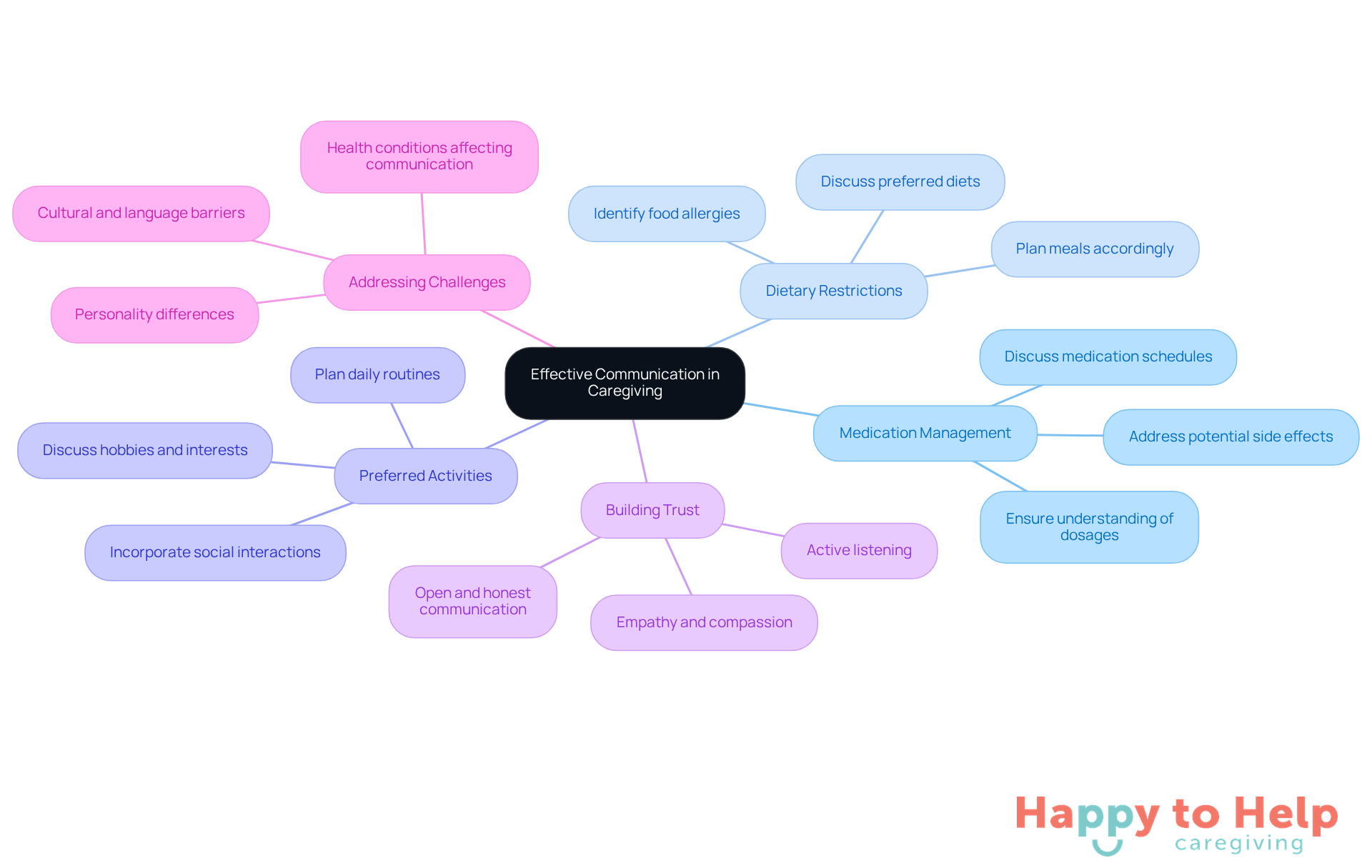
To address this challenge, it’s essential to have an open discussion with the provider before initiating support. Talk about expectations, routines, and any specific needs of the individual receiving assistance. This includes discussing:
- Medication management
- Dietary restrictions
- Preferred activities
By creating clear guidelines, caregivers can offer personalized assistance and foster a positive connection with the individual receiving care. This proactive approach not only enhances the caregiving experience but also ensures that the individual’s needs are met effectively.
Consider Trial Periods for Temporary Care Arrangements
Trial periods present a significant challenge for many caregivers seeking temporary assistance. Families often struggle to find the right fit for their loved ones, leading to feelings of uncertainty and dissatisfaction. This is particularly concerning given that 34% of adults aged 50 to 80 experience loneliness, highlighting the need for companionship and emotional support during caregiving.
To address these challenges, numerous assistance agencies offer trial periods, typically lasting one to two weeks. These intervals allow families to evaluate the caregiver's performance and assess how comfortable their loved one feels with the provided support. By implementing this structured approach, families can quickly identify any issues and make informed decisions about ongoing care. Studies indicate that households utilizing trial periods report higher satisfaction levels, as they can monitor interactions and ensure the arrangement meets their expectations.
Successful trial periods often include regular check-ins to gauge comfort and satisfaction, fostering open communication between families and caregivers. Key performance metrics to consider during this time include:
- Interaction with the client
- Compliance with the treatment plan
- Punctuality
- Attentiveness
By clearly outlining the responsibilities of caregivers from the outset, families can align expectations, which is crucial for a positive caregiving experience.
Moreover, expert insights suggest that involving elderly individuals in the decision-making process enhances their sense of security and comfort, making transitions smoother. As Temi Charrier emphasizes, "Involving your dear one in the decision-making process is essential for ensuring their comfort and preferences are prioritized." This collaborative approach not only builds trust but also creates a more personalized support experience.
Ultimately, trial periods serve as a vital resource for families, enabling them to find the right provider who meets their loved one's specific needs while ensuring a high level of support.

Maintain Flexibility in Care Arrangements
Adaptability in caregiving setups presents a significant challenge as support requirements evolve over time. Many families find themselves struggling to keep pace with these changes, leading to potential gaps in care. In fact, a survey reveals that 67 percent of working family caregivers face difficulties balancing their job with caregiving duties. This highlights the pressing need for flexible arrangements in temporary senior care that can accommodate shifting needs.
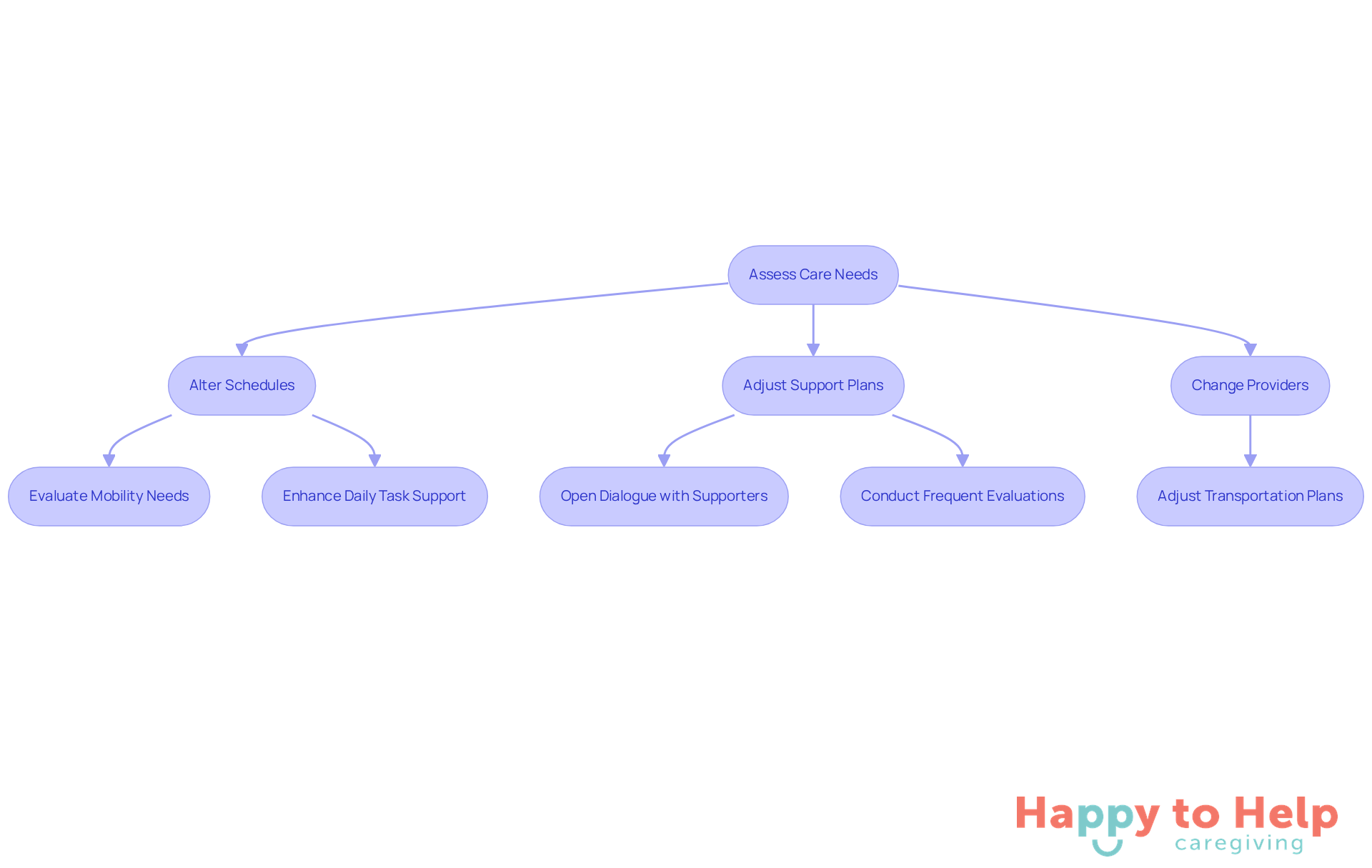
To address this issue, families should be prepared to:
- Alter schedules
- Adjust support plans
- Change providers when necessary
Frequent evaluations of the person's requirements are crucial. Open and transparent dialogue with supporters about any modifications ensures that the assistance provided remains effective. By fostering a culture of flexibility, caregivers can navigate the complexities of caregiving more smoothly.
For instance, if a senior's mobility declines, caregivers might need to enhance support with daily tasks or adjust transportation plans for appointments. This proactive approach guarantees that loved ones receive the highest quality of temporary senior care tailored to their current situations. As Jim Link, CHRO at SHRM, states, "Effective scheduling drives retention, boosts engagement, and enhances productivity." This underscores the importance of flexibility in managing caregiving responsibilities.
Making the Right Choice
Finding the right temporary senior care solutions is crucial for caregivers and their loved ones. The problem is clear: the demands of caregiving are on the rise, with increasing support hours and a growing number of family caregivers. This situation highlights the need for personalized respite care options. Without these tailored services, caregivers may experience heightened stress, which can negatively impact the quality of care provided to their loved ones.
To address this challenge, several actionable steps can be taken:
- Evaluate individual care needs to understand what specific support is required.
- Research local providers and verify caregiver credentials to ensure quality.
- Understand costs and seek recommendations to further guide families in their decision-making process.
- Visit care facilities and communicate expectations.
- Consider trial periods and maintain flexibility in care arrangements.
Each of these steps is vital in helping families find the most suitable support, ultimately fostering a healthier and more sustainable caregiving experience.
Proactive planning and open communication are key. By assessing needs and exploring available resources, families can create a supportive environment that promotes well-being for both caregivers and seniors. As the demand for temporary senior care continues to rise, embracing these strategies empowers families to navigate the complexities of caregiving with confidence and compassion.
https://iframe.tely.ai/cta/eyJhcnRpY2xlX2lkIjogIjY5Mjc5NGRjMjI0NDc2YzA3YjhmODk5ZSIsICJjb21wYW55X2lkIjogIjY4ZWU1ZGNhNzMxNzYyNTU3ZjNjOTVjMSIsICJpbmRleCI6IG51bGwsICJ0eXBlIjogImFydGljbGUifQ==Frequently Asked Questions
What challenges do caregivers face?
Caregivers often experience increased demands, particularly for seniors with dementia, with average weekly support hours rising significantly. This can lead to stress, feelings of guilt when considering breaks, isolation, and exhaustion.
What is the implication of the growing number of caregivers?
The increase in family supporters, which rose from 18.2 million to 24.1 million between 2011 and 2022, highlights the urgent need for respite support, as caregivers may struggle with their own health and emotional stability without adequate assistance.
What services does Happy to Help Caregiving provide?
Happy to Help Caregiving offers tailored respite assistance solutions, providing temporary senior care that allows caregivers to take essential breaks while ensuring their loved ones receive compassionate and professional care.
How do customized respite services benefit caregivers and seniors?
Customized respite services reduce caregiver fatigue, enhance the quality of care for seniors, and help caregivers feel less isolated and more supported, fostering a healthier caregiving environment.
Why is communication and compassion important in respite programs?
Effective respite programs prioritize communication and compassion, reassuring caregivers about the quality of support their family members receive. This approach has a transformative impact, providing peace of mind to families.
What should caregivers consider before seeking temporary senior care?
Caregivers should evaluate the specific support needs of the individual, considering factors such as mobility, cognitive abilities, daily living activities, and any medical requirements to ensure adequate care.
How can caregivers find appropriate temporary senior care options?
Caregivers should research local providers specializing in respite services, focusing on those with a strong community reputation. Engaging with local senior centers or healthcare professionals can also provide valuable recommendations.
What should caregivers look for in a respite care provider?
Caregivers should look for agencies with qualified staff, a good reputation, and positive client testimonials. It's essential to ensure that the service aligns with the specific needs of the individual requiring assistance.
List of Sources
- Happy to Help Caregiving: Personalized Respite Care Solutions
- Caring Senior Service Banks Growth Goals On New House-Made Technology (https://homehealthcarenews.com/2025/10/caring-senior-service-banks-growth-goals-on-new-house-made-technology)
- Stats, Facts and Things to Know About Respite Care (https://bethesdaseniorliving.com/senior-resources/stats-facts-and-things-to-know-about-respite-care)
- Number of Family Caregivers Supporting Older Adults Increased Nearly One-Third Between 2011 and 2022 | Johns Hopkins Bloomberg School of Public Health (https://publichealth.jhu.edu/2025/number-of-family-caregivers-supporting-older-adults-increased-nearly-one-third-between-2011-and-2022)
- Evaluate Individual Care Needs Before Seeking Help
- Families Prefer In-Home Care To Senior Living – Yet Struggle To Identify Needed Support (https://homehealthcarenews.com/2025/11/families-prefer-in-home-care-to-senior-living-yet-struggle-to-identify-needed-support)
- 11 Signs Your Aging Parent Needs Senior Care (https://health.usnews.com/senior-care/caregiving/articles/identifying-the-right-time-for-senior-care)
- What Is the Lifetime Risk of Needing and Receiving Long-Term Services and Supports? (https://aspe.hhs.gov/reports/what-lifetime-risk-needing-receiving-long-term-services-supports-0)
- Warning From Older Adults: Care for Aging in America Needs Urgent Rethinking (https://johnahartford.org/newsroom/view/warning-from-older-adults-care-for-aging-in-america-needs-urgent-rethinking)
- WHO calls for urgent transformation of care and support systems for older people (https://who.int/news/item/01-10-2024-who-calls-for-urgent-transformation-of-care-and-support-systems-for-older-people)
- Research Local Care Providers and Their Services
- Demand for senior services grows in Central Texas as elder population booms (https://kxan.com/news/local/williamson-county/demand-for-senior-services-grows-in-central-texas-as-elder-population-booms)
- Stats, Facts and Things to Know About Respite Care (https://bethesdaseniorliving.com/senior-resources/stats-facts-and-things-to-know-about-respite-care)
- Caregiver Statistics: Demographics (https://caregiver.org/resource/caregiver-statistics-demographics)
- Respite Facts and Talking Points | ARCH National Respite Network & Resource Center (https://archrespite.org/policy/respite-facts-and-talking-points)
- Verify Credentials and Read Reviews of Caregivers
- 20 Caregiver Quotes for Inspiration - Home Helpers Bradenton (https://homehelpershomecare.com/bradenton/community-blog/2017/june/20-inspirational-caregiver-quotes)
- Caregiver Statistics: Demographics (https://caregiver.org/resource/caregiver-statistics-demographics)
- 42 inspirational quotes for caregivers (https://care.com/c/40-inspirational-caregiver-quotes)
- The Caregiving Landscape: Data & Insights on the Caregiver Experience in the U.S. (https://caregiveraction.org/caregiver-statistics)
- 20 Caregiver Quotes That Will Inspire You - MD Home Health (https://mdhomehealth.com/2018/06/10/20-caregiver-quotes-that-will-inspire-you)
- Understand the Costs Involved in Temporary Senior Care
- Understanding the Cost and Value of Home Care in 2025 (https://assistinghands.com/135/texas/nesanantonio/blog/understanding-the-cost-and-value-of-home-care-in-2025)
- The Cost of In-Home Caregivers May Surprise You (https://health.usnews.com/senior-care/caregiving/articles/how-much-do-in-home-caregivers-cost)
- Home Care Costs in 2025: A State-by-State Guide (https://aplaceformom.com/caregiver-resources/articles/in-home-care-costs)
- How Much Does In-Home Care Cost in 2025? A State-by-State Guide - Elder Answers (https://elder-answers.com/how-does-in-home-care-cost-in-2025)
- Seek Recommendations from Family and Friends
- Fact Sheet: Trends in Family Care for Older Americans (https://prb.org/resources/fact-sheet-trends-in-family-care-for-older-americans)
- Family Caregiving Collaborative Seeks Better Ways to Care for the Caregivers (https://uofuhealth.utah.edu/newsroom/news/2024/11/family-caregiving-collaborative-seeks-better-ways-care-caregivers)
- Building a lifeline for family caregivers across the US (https://news.mit.edu/2025/ianacare-builds-lifeline-for-family-caregivers-across-us-0811)
- Warning From Older Adults: Care for Aging in America Needs Urgent Rethinking (https://johnahartford.org/newsroom/view/warning-from-older-adults-care-for-aging-in-america-needs-urgent-rethinking)
- Caregiving in the US 2025 (https://aarp.org/pri/topics/ltss/family-caregiving/caregiving-in-the-us-2025)
- Visit Care Facilities or Meet Caregivers in Person
- CaringBridge (https://caringbridge.org/resources/inspirational-quotes-on-caregiving)
- Travel Time Plays Key Role in Nursing Home Visitation Rates Amid Looming Closures (https://skillednursingnews.com/2022/07/travel-time-plays-key-role-in-nursing-home-visitation-rates-amid-looming-closures)
- 30 Inspirational Quotes for Caregivers (https://agingcare.com/articles/caregivers-quotes-inspiration-141133.htm)
- Caregiver Statistics: Demographics (https://caregiver.org/resource/caregiver-statistics-demographics)
- 20 Inspirational Senior Care Quotes (https://1plus1cares.com/20-inspirational-senior-care-quotes)
- Communicate Clearly About Care Expectations
- Effective Caregiver Communication: Tips, Barriers, and Benefits (https://scphealth.com/blog/effective-caregiver-communication-tips-barriers-and-benefits)
- The Importance of Effective Communication in Caregiving (https://familycaregiversonline.net/the-importance-of-effective-communication-in-caregiving)
- What Expectations Should I Set for the Caregiver? - Caring.com (https://caring.com/resources/what-expectations-should-i-set-for-the-caregiver)
- How to Set Expectations When Hiring a Caregiver: 10 Topics To Discuss | LeanOnWe (https://leanonwe.com/blog/ten-topics-everyone-should-discuss-with-a-new-caregiver)
- Effective Communication as a Caregiver | Always Caring of CT (https://alwayscaringct.com/news/effective-communication-as-a-caregiver)
- Consider Trial Periods for Temporary Care Arrangements
- 5 Steps to Hire a Part Time Caregiver for Elderly Loved Ones - Happy To Help (https://happytohelpcaregiving.com/5-steps-to-hire-a-part-time-caregiver-for-elderly-loved-ones)
- Let’s Give it a Try – What You Need to Know About Trial Periods (https://info.homeworksolutions.com/blog/trial-periods)
- How Respite Care Can Be a Trial Stay for Long-Term Care (https://rosewood-nursing.com/post/how-respite-care-can-be-a-trial-stay-for-long-term-care)
- Maintain Flexibility in Care Arrangements
- The need for caregiving benefits may have reached a fever pitch (https://hrdive.com/news/sandwich-generation-needs-caregiving-benefits/802864)
- Helping Caregivers Thrive With Caregiver Leave, Flexible Work and More (https://adp.com/spark/articles/2025/03/helping-caregivers-thrive-with-caregiver-leave-flexible-work-and-more.aspx)
- Go beyond flexible hours and daycare partnerships to help caregivers (https://benefitnews.com/news/how-more-expansive-benefits-could-make-a-difference-in-the-caregiving-crisis)
- Workplace flexibility is the most used, wanted benefit among caregivers: AARP (https://thehill.com/homenews/4668936-aarp-workplace-flexibility-most-used-wanted-benefit-caregivers)
- The Future of Flexibility: Supporting Caregivers in Deskless Roles (https://shrm.org/enterprise-solutions/insights/future-of-flexibility-supporting-caregivers-deskless-roles)