

For families in our service areas
For families in our service areas, this guide explains home care and how non-medical in-home caregiving can support care planning in East Idaho, Treasure Valley & Magic Valley, Northern Wasatch, North Central West Virginia, and Northeast Ohio.
The Importance of Tips for Choosing Assisted Home Care
Choosing assisted home care services presents a significant challenge for families, akin to navigating a complex maze. The well-being of loved ones is at stake, and this responsibility can lead to stress and uncertainty. Families often struggle to find the right support that balances professional care with personal needs, which can be overwhelming.
This article aims to empower caregivers by offering ten essential tips for making informed decisions. These tips will help ensure that families select services that not only enhance quality of life but also foster a supportive environment. How can families effectively navigate this critical choice and ensure their loved ones receive the best possible care? Let's explore actionable solutions that can guide you through this important process.
Happy to Help Caregiving: Personalized In-Home Care Solutions
Caregiving can be a challenging journey, often leaving caregivers feeling overwhelmed and unsupported. Many struggle to provide the necessary care while also ensuring their loved ones maintain comfort and autonomy. This can lead to increased stress and a decline in the quality of life for both caregivers and those they care for.
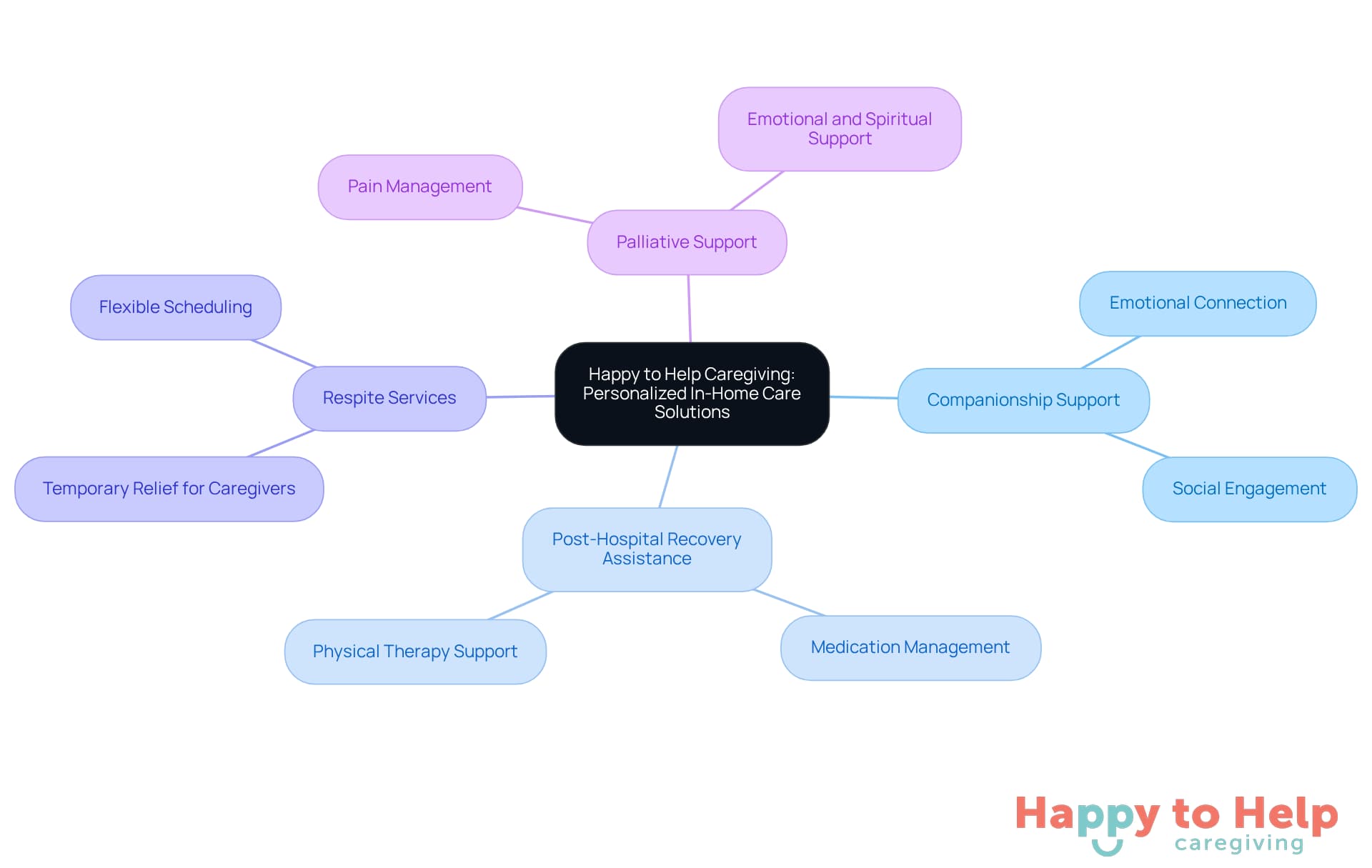
Happy to Help Caregiving addresses these challenges by providing customized assisted home care services. Their services include:
- Companionship support
- Post-hospital recovery assistance
- Respite services
- Palliative support
Each service, including assisted home care services, is tailored to meet the specific needs of seniors and individuals with special needs, ensuring they receive compassionate and personalized care in the comfort of their own homes.
By choosing Happy to Help Caregiving, clients not only enhance their quality of life but also foster a sense of security and well-being. This approach empowers caregivers, allowing them to provide the best possible support while also taking care of their own needs.
Evaluate Caregiver Qualifications and Experience
Choosing assisted home care services can be daunting, particularly when it comes to finding qualified caregivers. The problem lies in the fact that not all caregivers possess the necessary qualifications or experience to meet your loved one's specific needs. This can lead to inadequate care, which may worsen conditions like dementia or mobility issues.
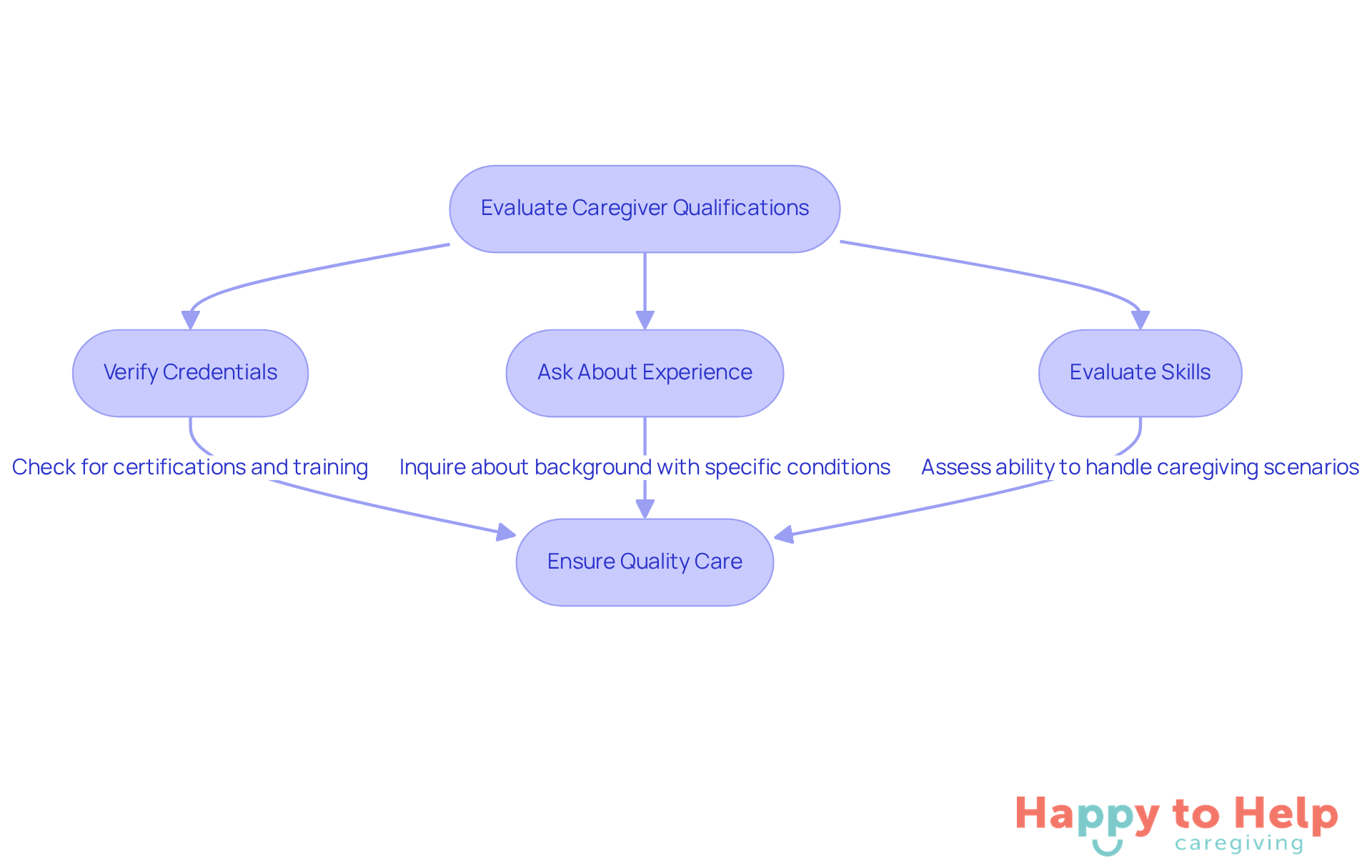
To ensure quality assistance through assisted home care services, it’s crucial to look for caregivers who are certified nursing assistants (CNAs) or have received specialized training relevant to your loved one’s situation. Inquire about their experience level, particularly with specific conditions. A caregiver’s ability to manage various situations can significantly impact the quality of care provided.
Here are some actionable tips to help you make an informed decision:
- Verify Credentials: Always check for certifications and training.
- Ask About Experience: Inquire about their background with specific conditions.
- Evaluate Skills: Assess their ability to handle different caregiving scenarios.
By taking these steps, you can ensure that your loved one receives the best possible care.
Understand the Range of Services Offered
For caregivers, understanding the full range of assisted home care services provided by a home support organization is essential. Without this knowledge, caregivers may struggle to find the right support for their loved ones. Services can vary widely, from simple companionship and personal assistance to specialized medical care.
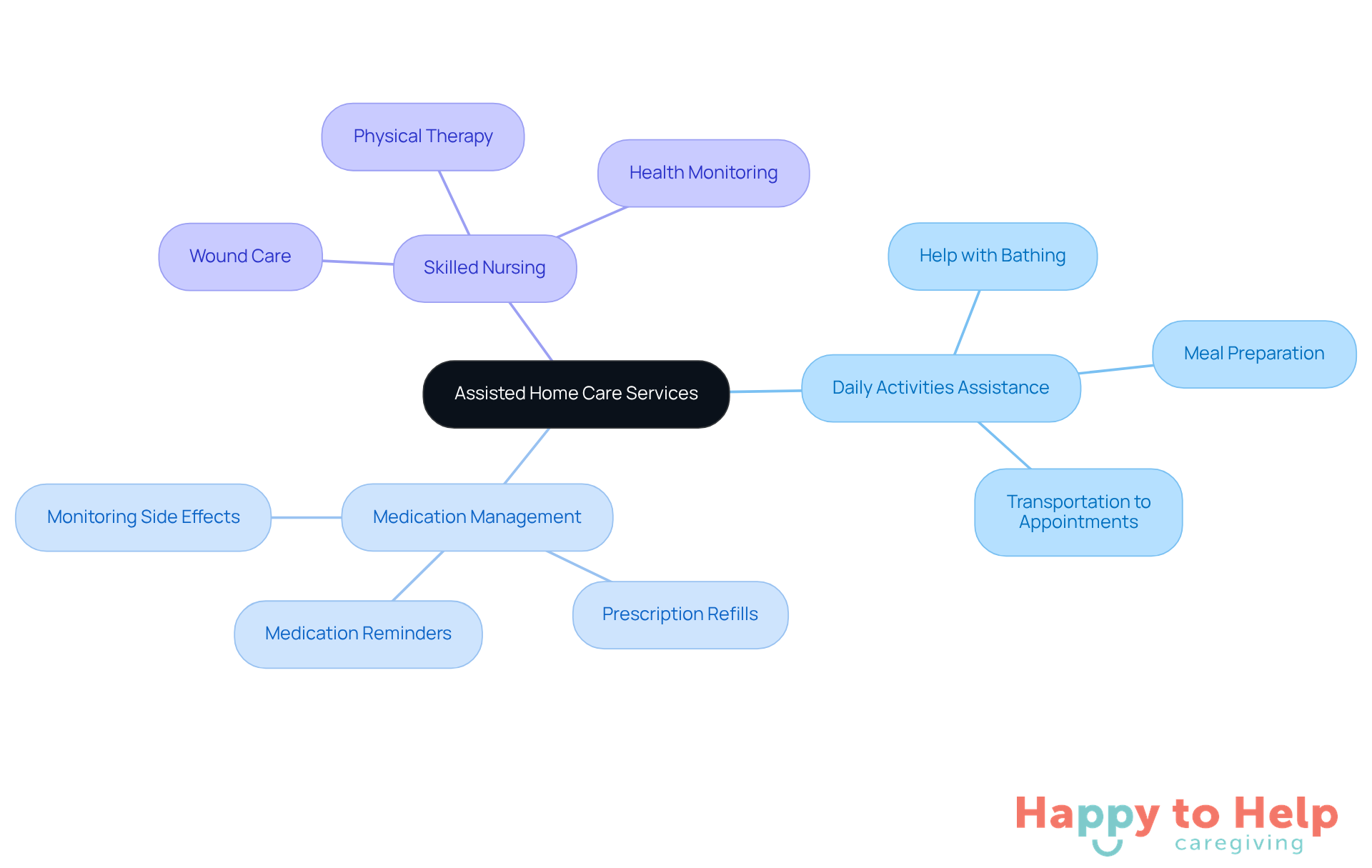
This lack of clarity can lead to unmet needs, which can be stressful for both caregivers and their loved ones. It's vital to ensure that the agency provides the specific assisted home care services required, including:
- Assistance with daily activities
- Medication management
- Skilled nursing
To make an informed decision, caregivers should take the time to assess the services offered by different agencies. This understanding will empower you to choose the best support that aligns with your family's needs.
Ensure Clear Communication About Care Plans
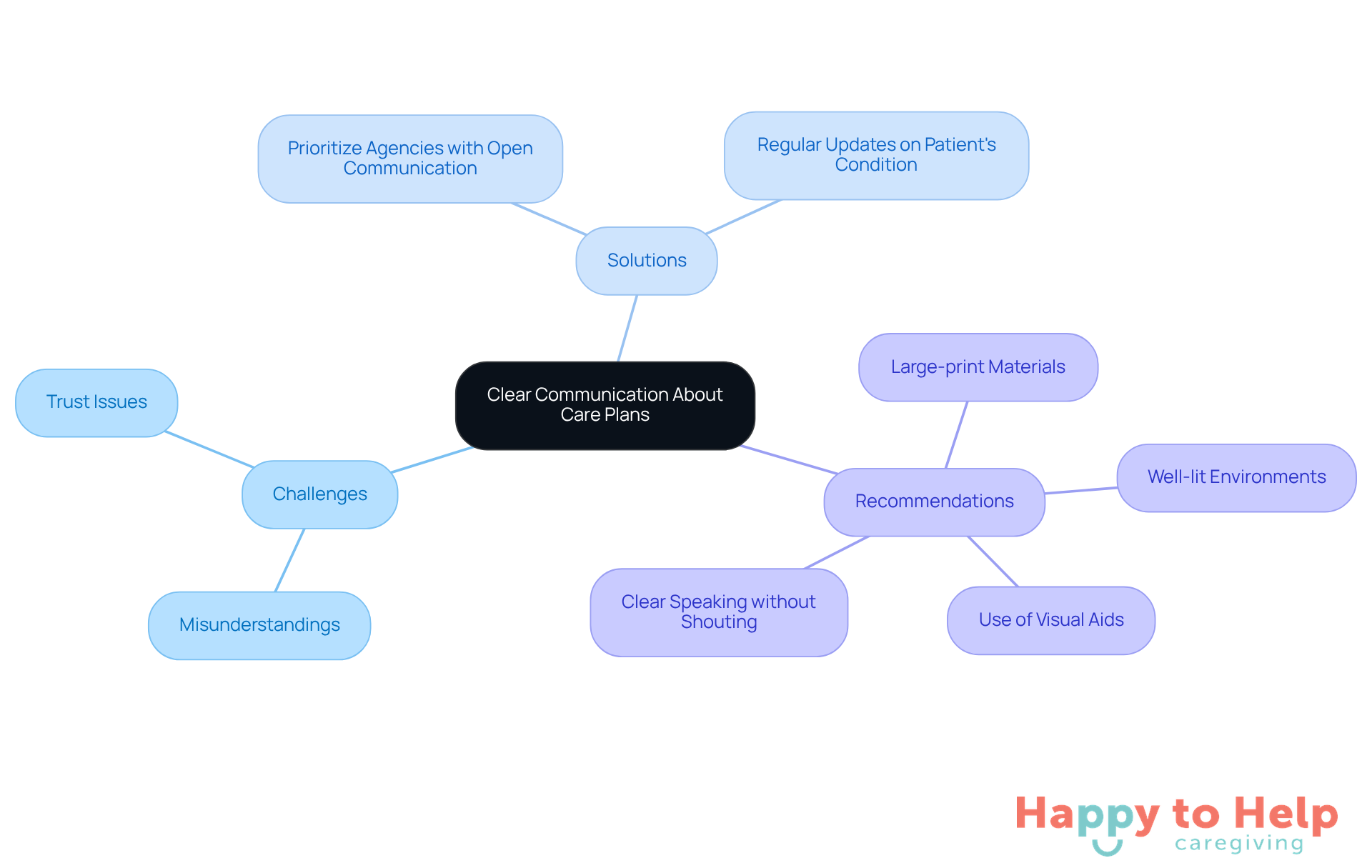
Effective communication regarding treatment plans poses a significant challenge for families engaged in assisted home care services. When communication falters, it can lead to misunderstandings about the assisted home care services being provided and the patient's evolving needs. This lack of clarity not only undermines trust but can also compromise the quality of care.
To address this issue, families should prioritize agencies that provide assisted home care services, ensuring they offer regular updates and maintain open lines of communication. Discussing any changes in the patient's condition and making necessary modifications to treatment plans is crucial. A collaborative approach fosters trust and ensures that the assisted home care services provided align with the changing needs of the client.
According to a 2024 J.D. Power study, household satisfaction with communication from home support agencies has improved significantly. This indicates that effective communication practices are becoming more prevalent. Successful plan modifications often stem from proactive conversations between relatives and caregivers, underscoring the importance of including all parties in the assisted home care services support process.
For patients with vision or hearing impairments, specific recommendations can enhance communication:
- Using large-print materials
- Ensuring well-lit environments
By prioritizing clear communication, families can significantly improve the quality of assisted home care services provided to their loved ones.
Look for Flexible Scheduling Options
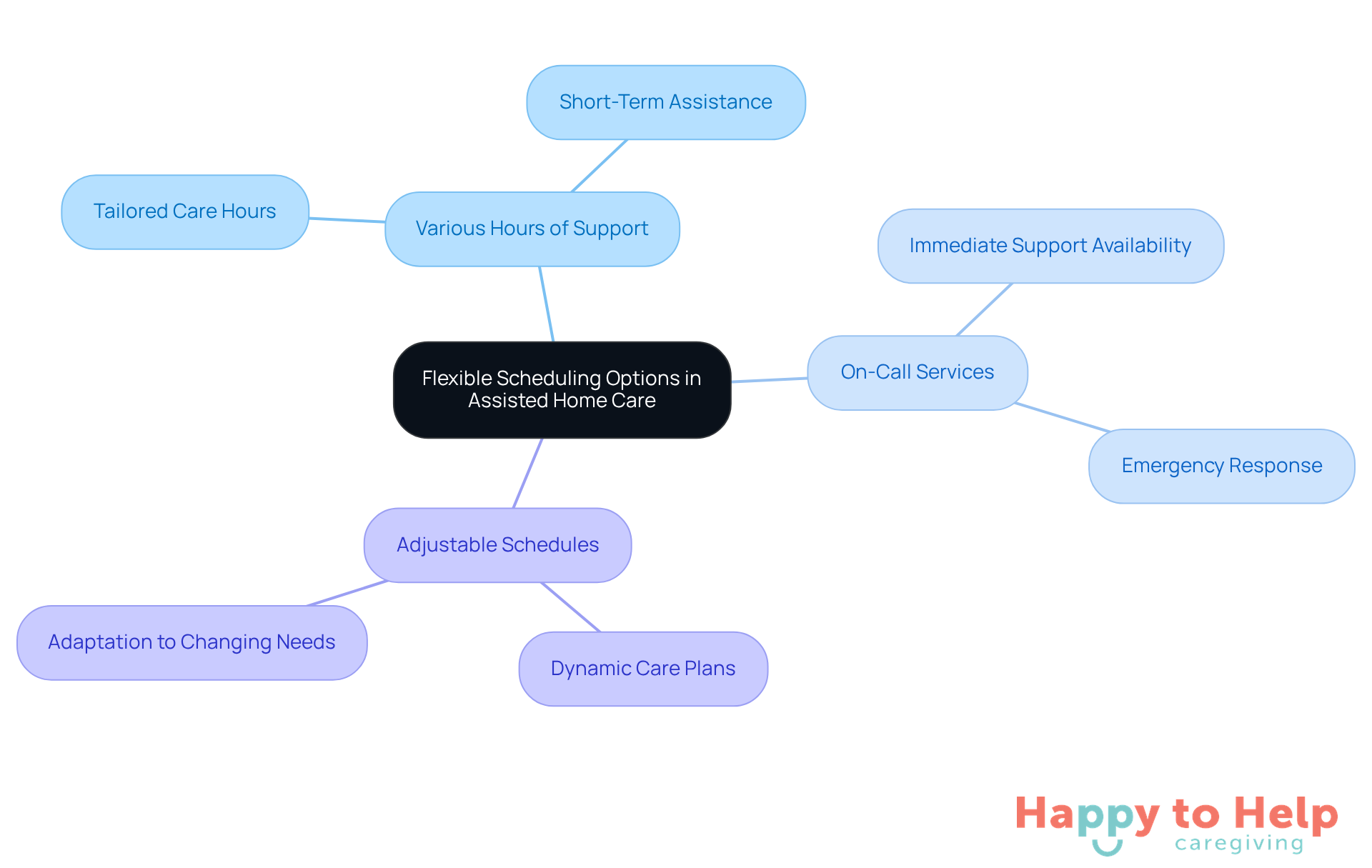
When selecting assisted home care services, caregivers often face the challenge of inflexible scheduling options. This rigidity can lead to increased stress for both the individual receiving care and their family members, as it may not align with their needs.
To alleviate this issue, it's crucial to seek out agencies that provide assisted home care services with flexible scheduling. This flexibility can include:
- Various hours of support
- On-call services
- The ability to adjust schedules as needs change
Such options not only accommodate the individual's lifestyle but also significantly reduce stress for family members, ensuring that assistance is available when it is most essential.
Assess Caregiver Compatibility with the Client
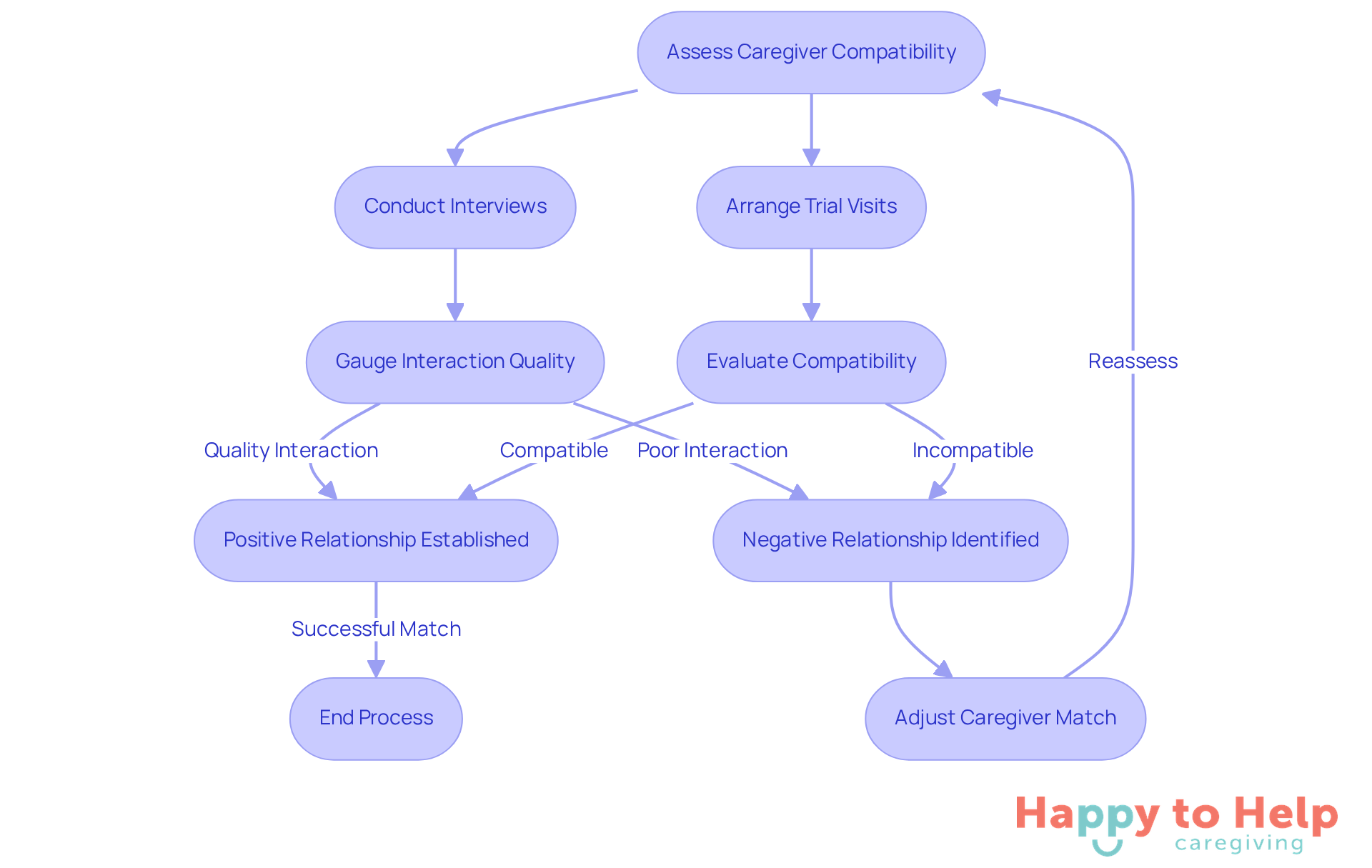
Evaluating caregiver compatibility with the individual presents a significant challenge in the selection process. When caregivers and clients do not align in personality, communication style, or shared interests, it can negatively impact the caregiver-client relationship. This disconnect may lead to misunderstandings and decreased emotional well-being for the individual receiving care.
To address this issue, families should consider conducting interviews or trial visits. These interactions can help gauge how well the caregiver interacts with their loved one, providing insight into their compatibility. A positive relationship not only enhances the quality of support but also significantly improves the individual's emotional well-being. By prioritizing caregiver compatibility, families can ensure a more effective and supportive caregiving experience.
Encourage Family Involvement in Care Decisions
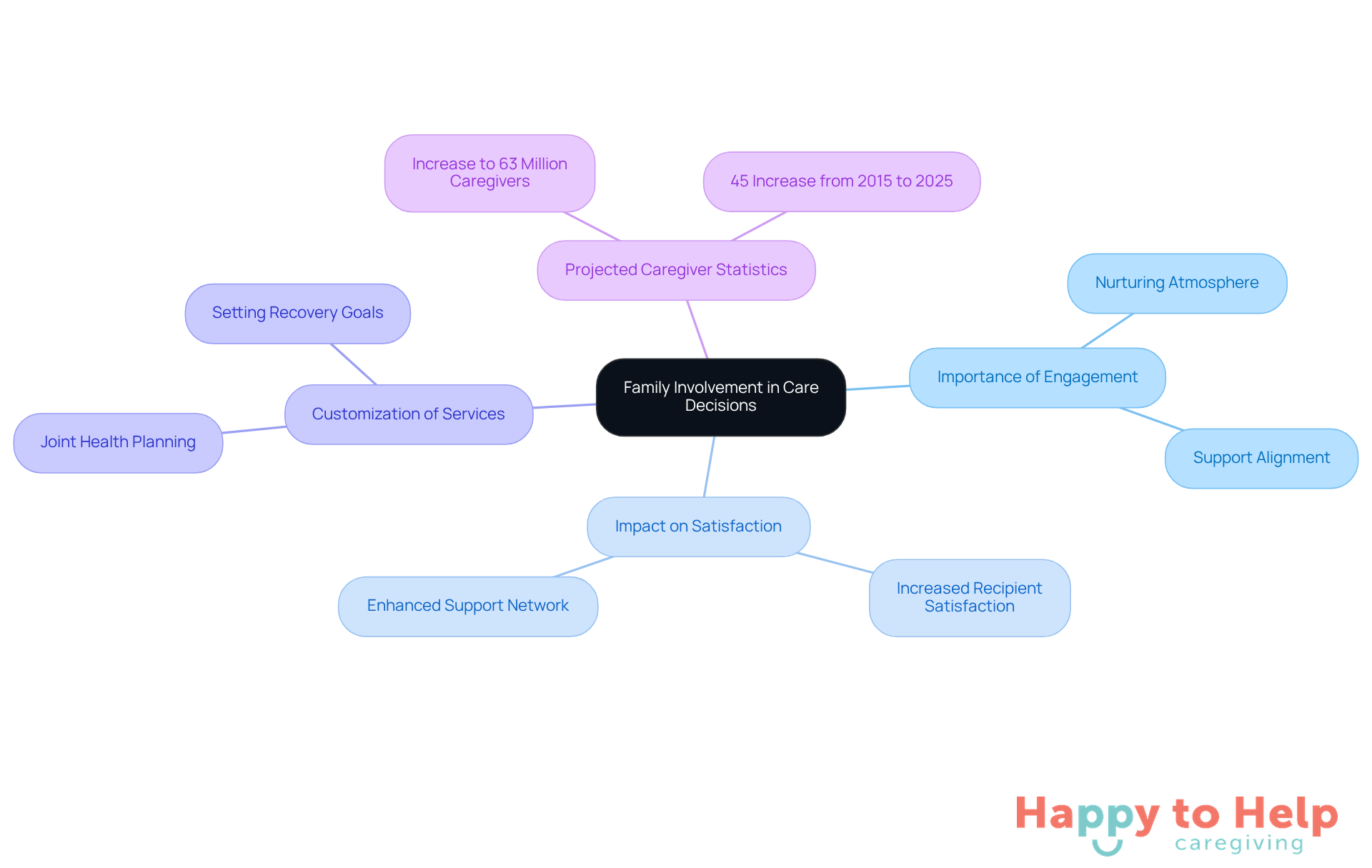
Engaged participation from relatives in treatment decisions is crucial for creating a nurturing atmosphere for individuals receiving assisted home care services. Without this involvement, caregivers may struggle to align support with the individual's desires, leading to dissatisfaction and a weakened support network.
Studies show that when families actively participate in planning for support, recipient satisfaction greatly improves. This collaborative approach allows providers to customize their services to meet the specific needs and preferences of the individual. For instance, joint health planning can involve relatives in setting recovery goals or daily tasks, ensuring that the support offered is comprehensive and focused on the individual.
By recognizing the essential role of family support, assisted home care services can create a more cohesive and adaptive caregiving model that benefits both clients and their loved ones. With the number of household caregivers in the U.S. projected to rise by 45% from 2015 to 2025, reaching 63 million caregivers, the importance of family involvement in caregiving has never been more critical. As Megan Shepherd-Banigan notes, merging family and professional support leads to improved health outcomes for those receiving assistance, underscoring the need for a cooperative approach.
Clarify Costs and Payment Options
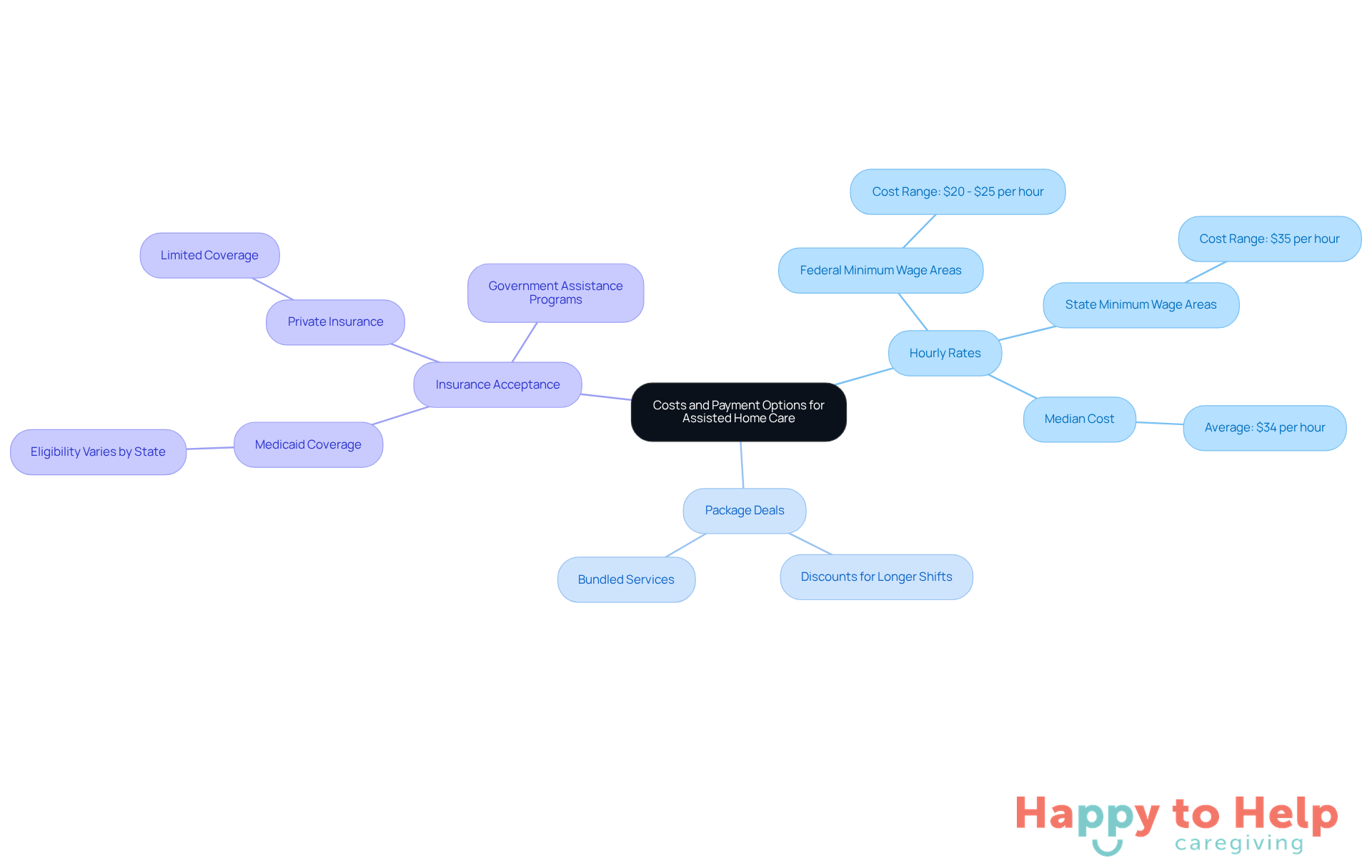
Choosing assisted home care services can be daunting, particularly when it comes to understanding the associated costs. Many families face the problem of unclear expenses, which can lead to budgeting challenges and unexpected financial burdens. Without clarity on pricing, caregivers may find themselves overwhelmed by bills that exceed their expectations.
To avoid these pitfalls, it’s crucial to clarify all expenses and payment alternatives associated with assisted home care services before making a decision. Ask about:
- Hourly rates
- Package deals
- Whether the organization accepts insurance or government assistance programs
By understanding the financial implications of assisted home care services, families can budget effectively and steer clear of surprises later on.
Clarity in pricing is not just a convenience; it’s a hallmark of trustworthy organizations. Ensuring you have a clear understanding of costs associated with assisted home care services will empower you to make informed choices that best suit your family’s needs.
Check References and Read Reviews
Choosing assisted home care services can be challenging, particularly when it comes to verifying references and reading evaluations. Families often face the problem of uncertainty regarding the reliability of these services. Without proper verification, they risk poor service quality, which can significantly impact their loved ones' well-being.
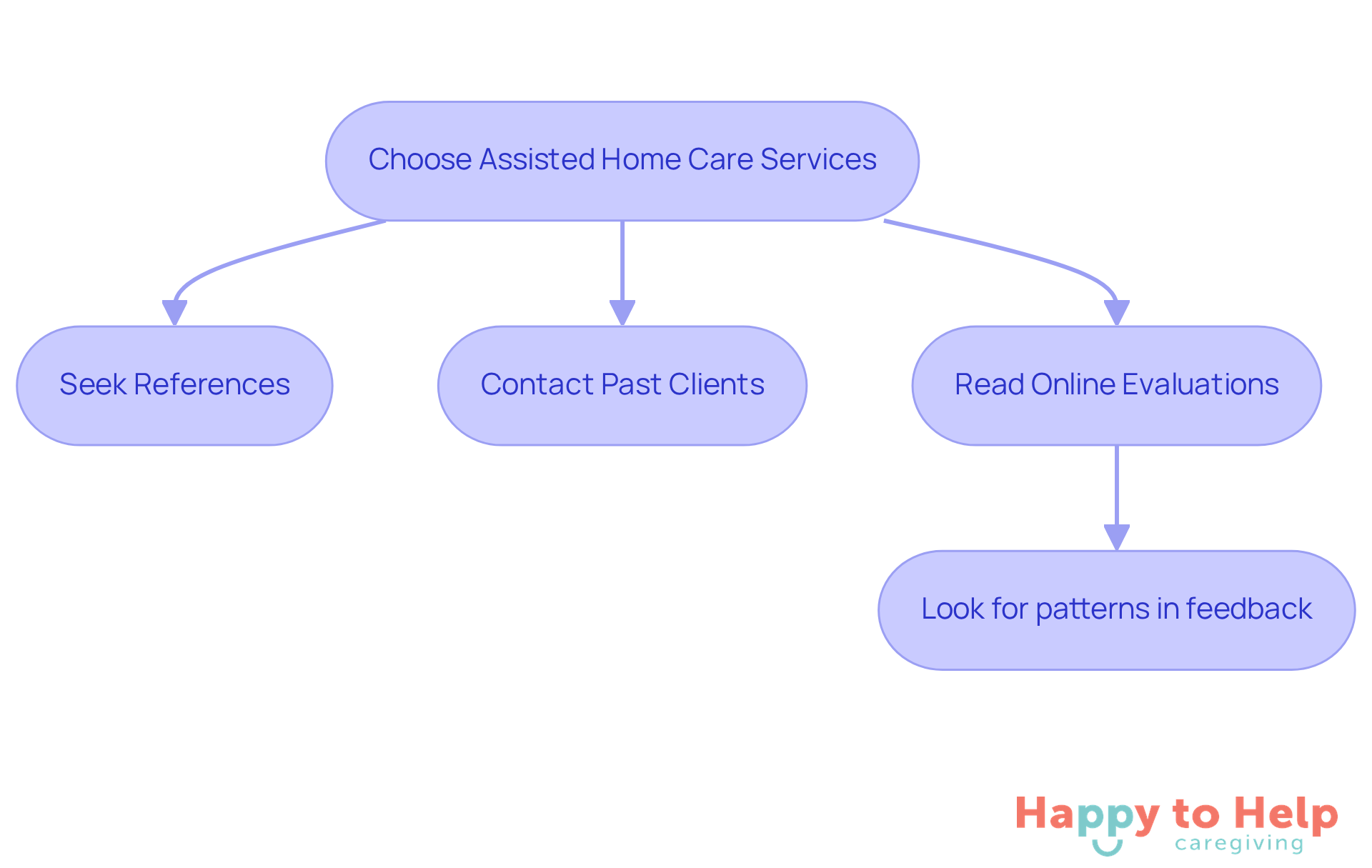
To address this issue, families should actively seek references from past clients. Contacting these individuals allows for firsthand insights into their experiences, shedding light on the service's reliability. Additionally, online evaluations serve as a valuable resource, offering perspectives on the organization's reputation and service quality. Look for patterns in feedback; consistent positive or negative remarks can be telling indicators of the organization's trustworthiness.
By taking these steps, families can make informed decisions, ensuring they choose assisted home care services that effectively meet their needs.
Verify Licensing and Insurance of the Agency
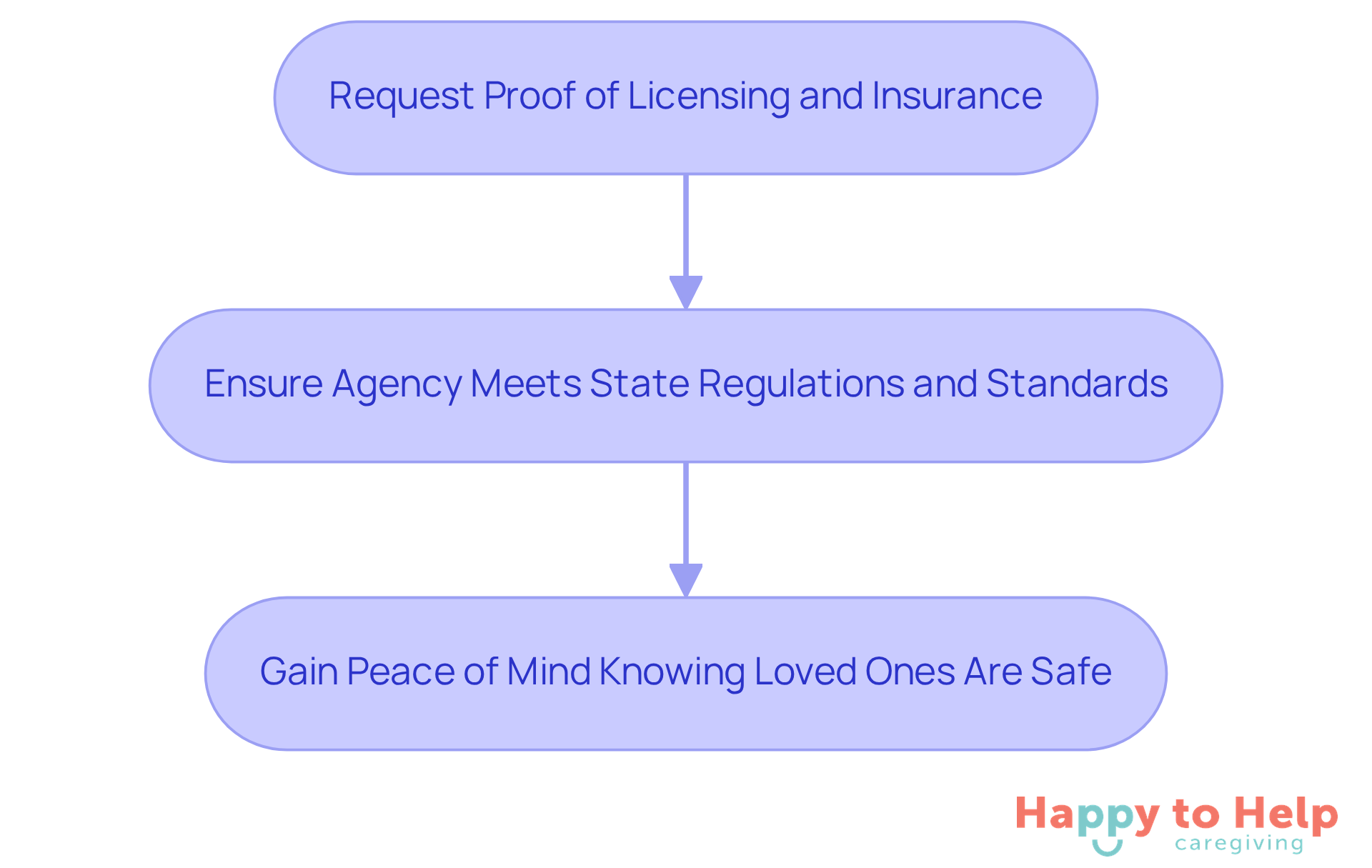
Before concluding your selection, it's crucial to address a significant problem: ensuring that the assisted home care services organization is properly licensed and insured. Without these credentials, families may unknowingly put their loved ones at risk. Licensing guarantees that the organization adheres to state regulations and standards for care, while insurance safeguards clients and caregivers against accidents or liabilities.
To mitigate these risks, families should take proactive steps:
- Request proof of both licensing and insurance from the agency.
- This simple action ensures that you are partnering with a reputable organization that offers assisted home care services while prioritizing safety and compliance.
- By doing so, you can have peace of mind knowing that your loved ones are in capable hands.
Making the Right Choice
Choosing assisted home care services presents a significant challenge that can deeply impact the quality of life for both caregivers and their loved ones. The stress of making this decision can be overwhelming, but the right support can alleviate that burden, foster independence, and ensure compassionate care. Understanding the various factors involved is essential, from evaluating caregiver qualifications to ensuring effective communication and flexible scheduling.
Key considerations include:
- Assessing caregiver credentials
- Understanding the range of services offered
- Prioritizing family involvement in care decisions
Each of these elements is crucial in creating a supportive environment tailored to the unique needs of those receiving care. Additionally, clarifying costs and verifying the agency's licensing and insurance can safeguard against potential issues, providing peace of mind for families.
Ultimately, selecting the right assisted home care services is about empowering both caregivers and clients. By taking proactive steps and considering these tips, families can cultivate a nurturing and effective caregiving experience. The significance of personalized care cannot be overstated; it enhances the quality of life for individuals and strengthens family bonds. Thoughtful engagement in this process can lead to better health outcomes and a more fulfilling caregiving journey for everyone involved.
https://iframe.tely.ai/cta/eyJhcnRpY2xlX2lkIjogIjY5MjY2NjI5NTlhYjRiNzBiY2E1OTA3ZCIsICJjb21wYW55X2lkIjogIjY4ZWU1ZGNhNzMxNzYyNTU3ZjNjOTVjMSIsICJpbmRleCI6IG51bGwsICJ0eXBlIjogImFydGljbGUifQ==Frequently Asked Questions
What challenges do caregivers face when providing care?
Caregivers often feel overwhelmed and unsupported, struggling to provide necessary care while ensuring their loved ones maintain comfort and autonomy. This can lead to increased stress and a decline in quality of life for both caregivers and those they care for.
What services does Happy to Help Caregiving provide?
Happy to Help Caregiving offers customized assisted home care services, including companionship support, post-hospital recovery assistance, respite services, and palliative support.
How does Happy to Help Caregiving ensure personalized care?
Each service is tailored to meet the specific needs of seniors and individuals with special needs, ensuring they receive compassionate and personalized care in the comfort of their own homes.
What qualifications should caregivers have for assisted home care services?
Caregivers should ideally be certified nursing assistants (CNAs) or have received specialized training relevant to the specific needs of the individual receiving care.
What steps can I take to evaluate a caregiver's qualifications?
You can verify credentials by checking certifications and training, ask about their experience with specific conditions, and evaluate their skills in handling different caregiving scenarios.
Why is it important to understand the range of services offered by home care organizations?
Understanding the full range of services helps caregivers find the right support for their loved ones, preventing unmet needs that can lead to stress for both caregivers and their loved ones.
What types of services should caregivers look for in a home support organization?
Caregivers should look for services that include assistance with daily activities, medication management, and skilled nursing, among others.
List of Sources
- Happy to Help Caregiving: Personalized In-Home Care Solutions
- Care to Stay Home Highlights Live-In Caregivers Improving Daily Life in Spokane, WA (https://fox40.com/business/press-releases/ein-presswire/866934068/care-to-stay-home-highlights-live-in-caregivers-improving-daily-life-in-spokane-wa)
- Home-Based Care Companies Improve Outcomes By Training Family Caregivers (https://homehealthcarenews.com/2025/10/home-based-care-companies-improve-outcomes-by-training-family-caregivers)
- What’s Coming in the Future of Home Health Care? - Alora Health (https://alorahealth.com/blog-future-homecare-trends)
- A Look Into the Future of Home Care (https://seniorhelpers.com/ca/montclair/resources/blogs/2025-11-15)
- Executive Home Care Honors Family Caregivers During National Family Caregivers Month (https://mytwintiers.com/business/press-releases/cision/20251117LA25356/executive-home-care-honors-family-caregivers-during-national-family-caregivers-month)
- Evaluate Caregiver Qualifications and Experience
- Family Caregiver Support, Education Needs Growing (https://hospicenews.com/2025/11/11/family-caregiver-support-education-needs-growing)
- New Report Reveals Crisis Point for America’s 63 million Family Caregivers (https://press.aarp.org/2025-07-24-New-Report-Reveals-Crisis-Point-for-Americas-63-million-Family-Caregivers)
- Improving Practice: New Training to Support Diverse Family Caregivers (https://caregiver.org/news/improving-practice-new-training-to-support-diverse-family-caregivers)
- Research: Caregiver Training Improves Skills & Knowledge of Alzheimer's, Study Shows (https://advancecaregivers.org/caregiver-training-improves-skills-knowledge-of-alzheimers-study-shows)
- AHCA/NCAL Launches New Workforce Campaign, ‘Caregivers For Tomorrow’ (https://ahcancal.org/News-and-Communications/Press-Releases/Pages/AHCA-NCAL-Launches-New-Workforce-Campaign-Caregivers-For-Tomorrow.aspx)
- Understand the Range of Services Offered
- HomeCare News | HomeCare Magazine (https://homecaremag.com/news)
- home care | Latest News | New York Post (https://nypost.com/tag/home-care)
- 52 Eye-Opening Home Health Statistics: Insights for 2025 (https://boosthomehealth.com/home-health-statistics)
- News Releases (https://hcaoa.org/news-releases.html)
- What to Know About Home Care Services (Published 2023) (https://nytimes.com/2023/12/02/health/home-care-explainer.html)
- Ensure Clear Communication About Care Plans
- Why Effective Communication is Crucial in Home Care & How to Achieve It | Aaniie, formerly Smartcare Software (https://aaniie.com/news/why-effective-communication-is-crucial-in-home-care-how-to-achieve-it)
- Care managers say ED program improves communication for assisted living residents with dementia (https://mcknights.com/news/care-managers-say-ed-program-improves-communication-for-assisted-living-residents-with-dementia)
- Clearer Conversations, Better Care: New Guide Highlights Best Practices for Communicating with Older Adults (https://geron.org/News-Events/GSA-News/Press-Room/Press-Releases/clearer-conversations-better-care-new-guide-highlights-best-practices-for-communicating-with-older-adults)
- How to Improve Care Team Communication in Home Care (https://carevoyant.com/home-health-blog/how-to-improve-care-team-communication-in-home-care)
- How to improve communication for quality home healthcare (https://hign.org/news/hign-news/how-improve-communication-quality-home-healthcare)
- Look for Flexible Scheduling Options
- New survey finds flexible schedule, quick access to wages key to addressing the national nursing shortage (https://galehealthcaresolutions.com/new-survey-finds-flexible-schedule-quick-access-to-wages-key-to-addressing-the-national-nursing-shortage)
- Nurses are fleeing the workforce – can scheduling tech help? (https://healthcareitnews.com/news/nurses-are-fleeing-workforce-can-scheduling-tech-help)
- The Critical Role of Flexibility in Home Care Scheduling for Family Peace of Mind (https://relevar.com/the-critical-role-of-flexibility-in-home-care-scheduling-for-family-peace-of-mind)
- Comfort Keepers of Fort Myers Highlights the Benefits of In-Home Senior Care for Local Families (https://fox5sandiego.com/business/press-releases/ein-presswire/858310529/comfort-keepers-of-fort-myers-highlights-the-benefits-of-in-home-senior-care-for-local-families)
- Flexible work: What workers, especially low-wage workers, really want and how best to provide it (https://epi.org/publication/flexible-work)
- Assess Caregiver Compatibility with the Client
- The Evolution Of Caregiver-Client Matching In Home Care (https://homehealthcarenews.com/2023/08/the-evolution-of-caregiver-client-matching-in-home-care)
- 5 Tips for Client and Caregiver Compatibility (https://activatedinsights.com/articles/5-tips-client-caregiver-compatibility)
- Finding the Right Caregiver Match | Active Day (https://activeday.com/news/finding-the-right-caregiver-match)
- The Importance of Caregiver-Client Relationships in Senior Well-Being (https://homeinstead.com/home-care/usa/in/goshen/588/news-and-media/the-importance-of-caregiver-client-relationships-in-senior-well-being)
- Perfect Pairings: Creating Personalized, Highly Compatible Caregiver-Client Matches to Boost Your Bottom Line | Aaniie, formerly Smartcare Software (https://aaniie.com/news/creating-personalized-highly-compatible-caregiver-client-matches-to-boost-bottom-line)
- Encourage Family Involvement in Care Decisions
- New Report Reveals Crisis Point for America’s 63 million Family Caregivers (https://press.aarp.org/2025-07-24-New-Report-Reveals-Crisis-Point-for-Americas-63-million-Family-Caregivers)
- Number Of Family Caregivers Has Skyrocketed in The U.S. (https://usnews.com/news/health-news/articles/2025-07-25/number-of-family-caregivers-has-skyrocketed-in-the-u-s)
- Caregiving Crisis: Nearly 1 in 4 US adults serve as caregivers for relatives with complex needs (https://whsv.com/2025/11/04/caregiving-crisis-nearly-1-4-us-adults-serve-caregivers-relatives-with-complex-needs)
- As Family Caregiving Grows, So Does the Need for Reform - Medicare Rights Center (https://medicarerights.org/medicare-watch/2025/08/14/as-family-caregiving-grows-so-does-the-need-for-reform)
- Reimagining Support for Family Caregivers and Their Loved Ones (https://medschool.duke.edu/news/reimagining-support-family-caregivers-and-their-loved-ones)
- Clarify Costs and Payment Options
- Payment Rates for Medicaid Home Care: States’ Responses to Workforce Challenges | KFF (https://kff.org/medicaid/payment-rates-for-medicaid-home-care-states-responses-to-workforce-challenges)
- The Cost of In-Home Caregivers May Surprise You (https://health.usnews.com/senior-care/caregiving/articles/how-much-do-in-home-caregivers-cost)
- Facing Financial Ruin as Costs Soar for Elder Care - KFF Health News (https://kffhealthnews.org/news/article/dying-broke-facing-financial-ruin-as-costs-soar-for-elder-care)
- Medicare Issues 2026 Home Health Prospective Payment System Proposed Rule (https://asha.org/news/2025/medicare-issues-2026-home-health-prospective-payment-system-proposed-rule?srsltid=AfmBOor75aB06NTDJyLzHqFmh4tKHDWP3mjevjshcwoIKz5NuKgdgWtB)
- Medicare Home Health Care Could Save $13-17B Per Year (https://caregiveraction.org/medicare-home-health-care)
- Check References and Read Reviews
- The Power of Online Reviews for Homecare Agencies: Build a 5-Star Reputation (https://caretap.net/blog/power-online-reviews-homecare-agencies-build-reputation)
- Why Do Online Reviews Matter for Your Home Care Business (https://activatedinsights.com/articles/online-reviews-matter-home-care-business)
- The Role Of Tracking Reviews In The Age Of Healthcare Consumerism (https://forbes.com/councils/forbescommunicationscouncil/2024/05/10/the-role-of-tracking-reviews-in-the-age-of-healthcare-consumerism)
- Online reviews are becoming more important to patients in choosing their care: How to manage your online reputation in health care | Medical Economics (https://medicaleconomics.com/view/online-reviews-are-becoming-more-important-to-patients-in-choosing-their-care-how-to-manage-your-online-reputation-in-health-care)
- In-Home Senior Care Agency Gets Fine for Neglecting Background Checks (https://backgroundchecks.com/health-care/in-home-senior-care-agency-gets-fine-for-neglecting-background-checks?srsltid=AfmBOorB2ALSalEw40QVV3TWmm3g\_KcVVruAQmDx0Ghze\_wwXJMTQ7WB)
- Verify Licensing and Insurance of the Agency
- MASSACHUSETTS HOUSE PASSES HOME CARE BILL - Advocate News (https://advocatenews.net/revere/news/massachusetts-house-passes-home-care-bill)
- New York sends home care agencies cease-and-desists amid CDPAP transition (https://mcknightshomecare.com/news/new-york-sends-home-care-agencies-cease-and-desists-amid-cdpap-transition)
- House Passes Home Care Bill Establishing a Licensure Process for Home Care Agencies – Chelsea Record (https://chelsearecord.com/2025/11/20/house-passes-home-care-bill-establishing-a-licensure-process-for-home-care-agencies)
- FastStats (https://cdc.gov/nchs/fastats/home-health-care.htm)