

For families in our service areas
For families in our service areas, this guide explains dementia care and how non-medical in-home caregiving can support care planning in East Idaho, Treasure Valley & Magic Valley, Northern Wasatch, North Central West Virginia, and Northeast Ohio.
The Importance of Tips for Dealing with a Dementia Parent
Caring for a parent diagnosed with dementia presents a significant emotional challenge, often testing the limits of patience and resilience. Caregivers face a complex landscape filled with unique difficulties that can lead to feelings of isolation and stress. This situation not only affects the caregiver but also impacts the quality of life for their loved ones.
What if there were essential strategies to help navigate this daunting experience? By implementing effective tips, caregivers can transform their journey into one characterized by understanding, connection, and even joy. This article outlines ten vital strategies designed to address the intricacies of dementia care. These solutions empower caregivers to foster meaningful interactions while also prioritizing their own well-being.
Happy to Help Caregiving: Personalized In-Home Support for Dementia Care
Dealing with a dementia parent presents significant challenges for caregivers. Dealing with a dementia parent can create emotional and physical demands that are overwhelming, leading to stress and burnout. Dealing with a dementia parent not only affects the caregiver but also impacts the quality of life for the individual receiving care.
Happy to Help Caregiving addresses these challenges by offering compassionate in-home assistance tailored specifically for individuals with dementia. Their services include:
- Companionship care
- Post-hospital recovery assistance
- Respite care
- Palliative care
Each service is designed to meet the unique needs of clients, ensuring they receive the emotional and physical support necessary to thrive in their familiar surroundings. This tailored approach improves the quality of life for individuals with cognitive impairments and alleviates the stress felt by family supporters dealing with a dementia parent. By promoting a cooperative care atmosphere, both the patient and their relatives benefit from a focus on well-being.
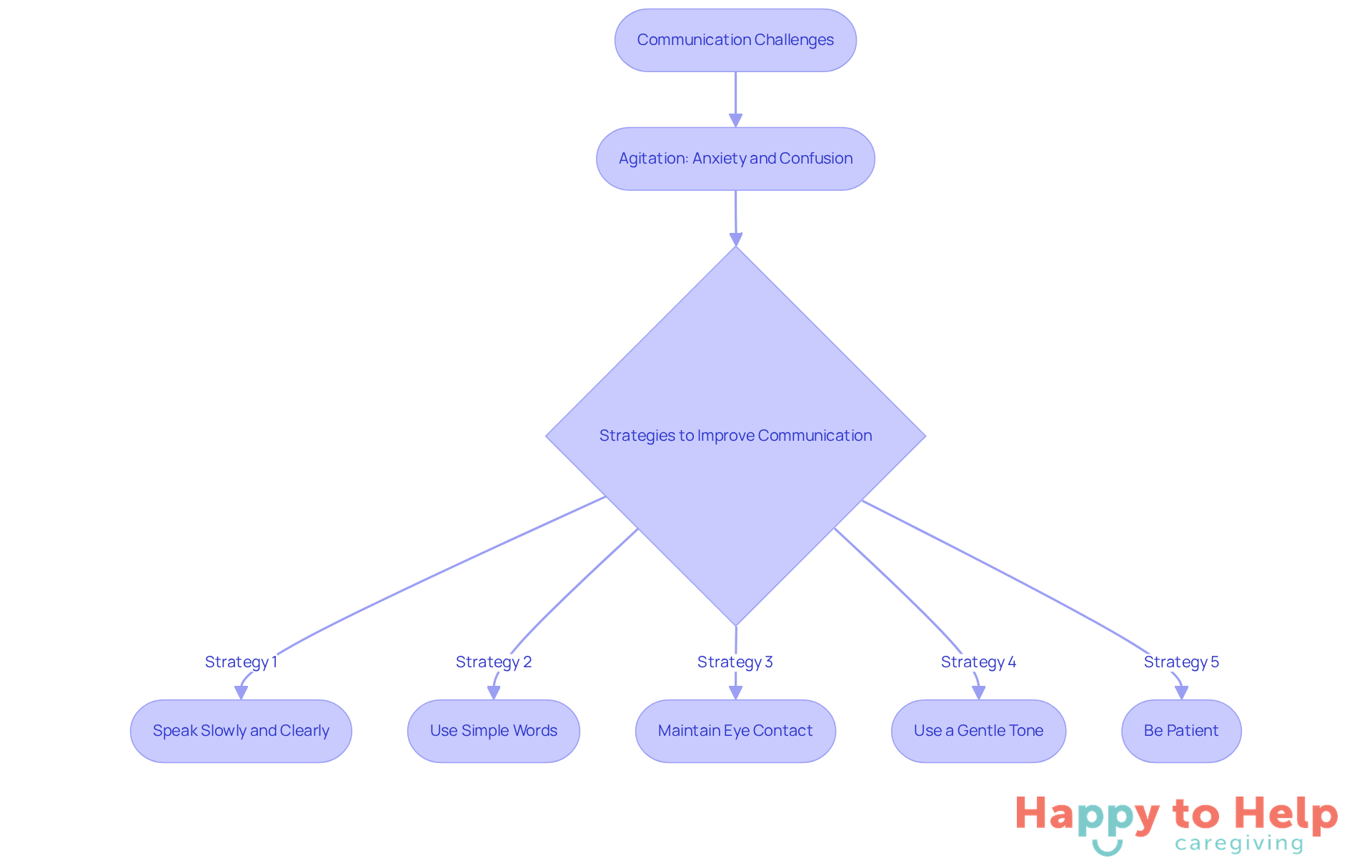
Use Clear Communication: Speak Slowly and Clearly to Your Parent
Problem: Effective communication with a parent who has cognitive decline can be challenging. Caregivers often struggle to convey messages clearly, leading to misunderstandings and frustration.
Agitate: This communication barrier can create anxiety and confusion for both the caregiver and the parent. It can hinder meaningful interactions, leaving caregivers feeling helpless and parents feeling isolated.
Solution: To improve communication, caregivers should:
- Speak slowly and clearly.
- Use simple words and short sentences to convey your message, which can significantly reduce misunderstandings.
- Maintain eye contact; it fosters a connection and reassures your parent of your presence.
- Use a gentle, calm tone of voice to help reduce anxiety and confusion.
Patience is key. Allow ample time for your parent to process what you are saying and respond. This approach not only enhances understanding but also cultivates a sense of security and comfort, making interactions more meaningful.
Incorporating orienting names or labels, such as 'Your son, Jack,' can aid understanding. Studies show that transparent communication can reduce anxiety and confusion, ultimately enhancing the quality of interactions between support providers and individuals with memory impairments.
By adopting these strategies, including the use of visual aids and gestures, caregivers can create a supportive atmosphere that respects the individual's pace and enhances their overall well-being.
Maintain a Routine: Establish Consistency in Daily Activities
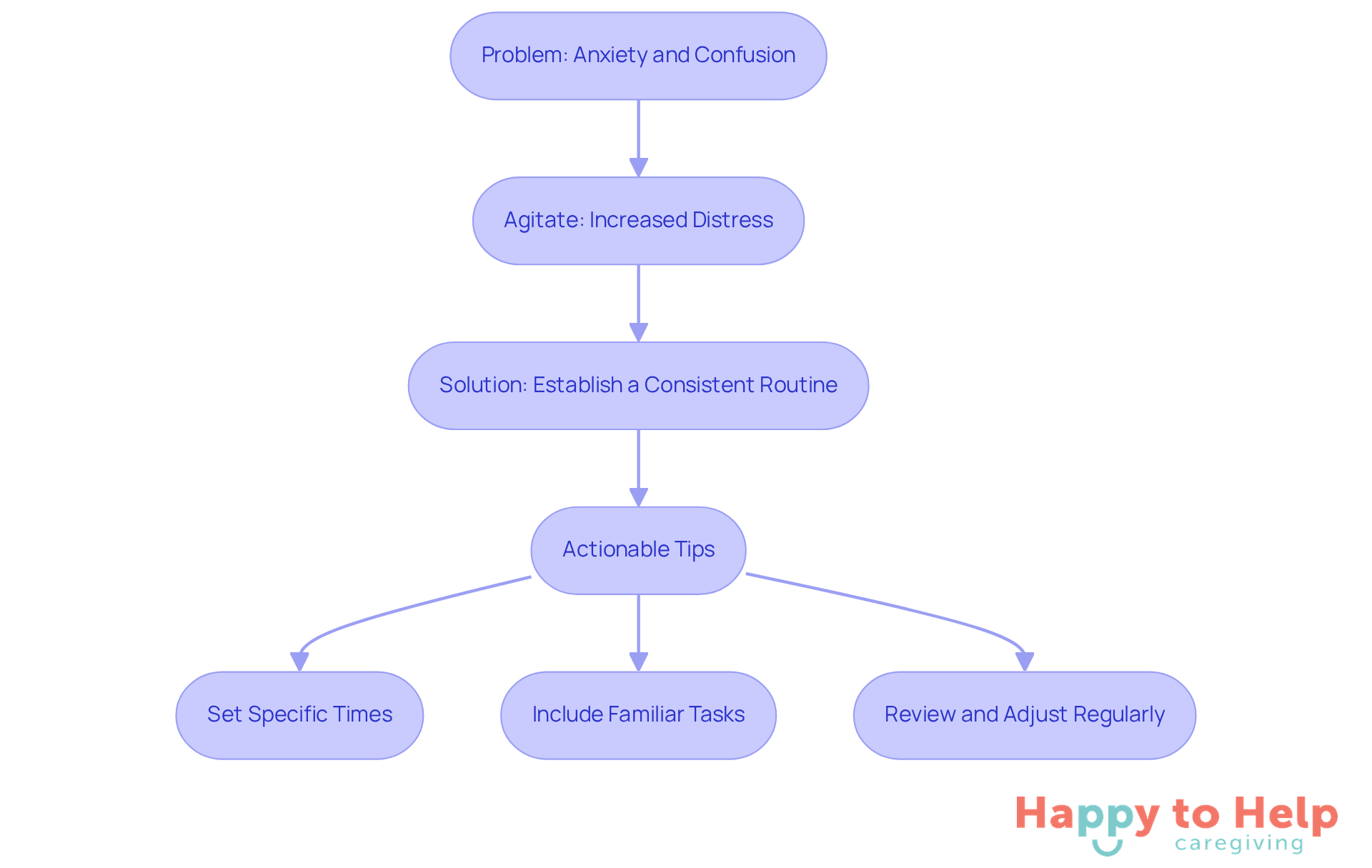
Problem: Individuals with dementia often face anxiety and confusion, which can significantly impact their daily lives. Without a consistent routine, these feelings can escalate, making it challenging for caregivers to provide the support their loved ones need.
Agitate: The lack of a predictable schedule can lead to increased distress for both the individual and the caregiver. This unpredictability can create a sense of instability, leaving loved ones feeling insecure and disengaged from their surroundings.
Solution: Establishing a consistent daily routine is vital. Regular schedules for meals, activities, and rest can help reduce anxiety and confusion. By creating predictable patterns, caregivers foster a sense of stability, allowing their loved ones to feel more secure and engaged. Incorporating familiar activities into the routine not only encourages independence but also improves overall health.
Actionable Tips:
- Set specific times for meals and activities.
- Include familiar tasks that the individual enjoys.
- Regularly review and adjust the routine as needed to ensure it remains effective.
Prioritize Self-Care: Manage Your Emotional and Physical Well-Being
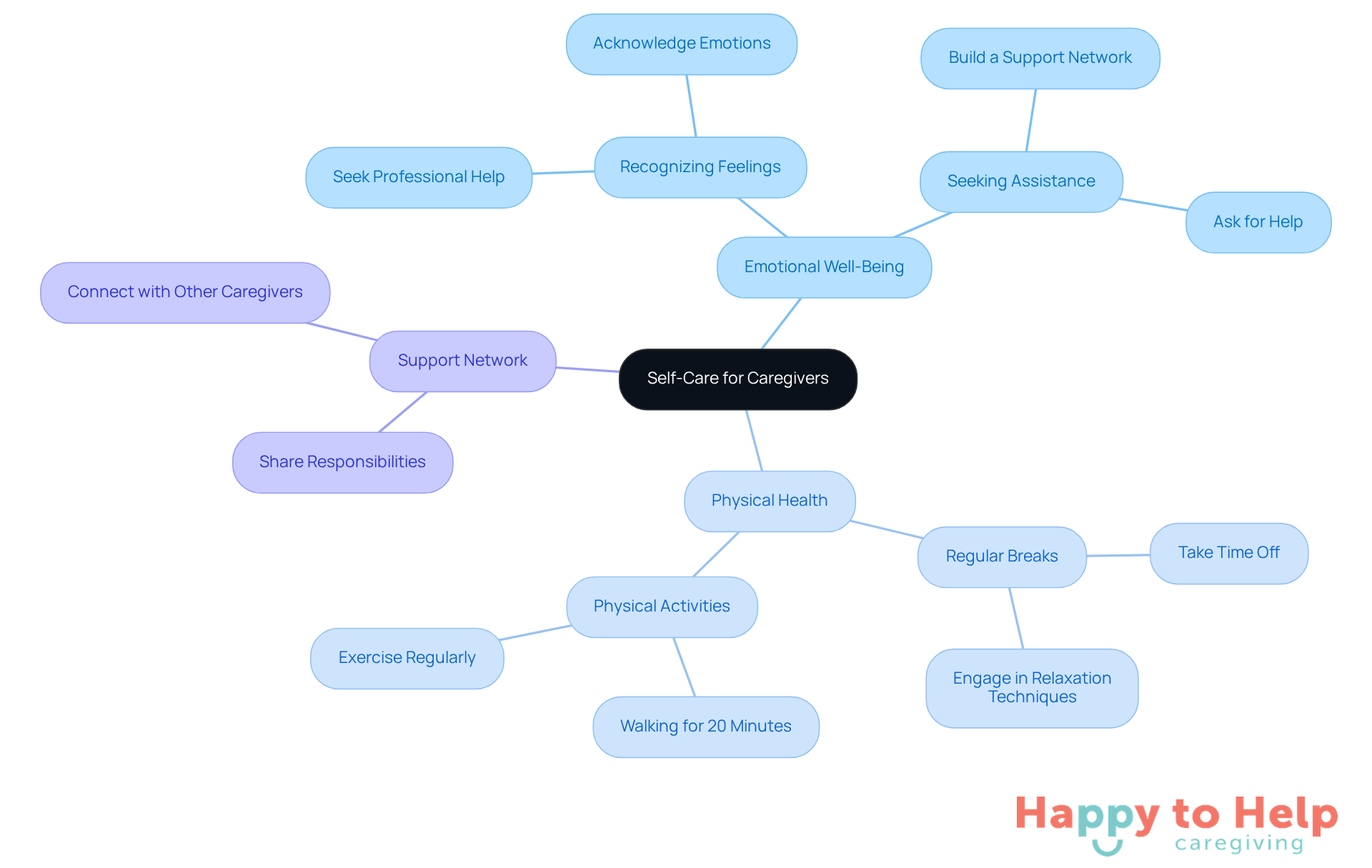
Caregivers face significant challenges in maintaining their emotional and physical well-being, which is crucial for providing effective care. Research shows that nearly 37% of caregivers report insufficient sleep, underscoring the need for seven to nine hours of rest each night. This lack of sleep can lead to increased stress and decreased resilience, making it essential for caregivers to prioritize their health.
To combat these issues, caregivers should:
- Take regular breaks
- Engage in physical activities, such as walking for 20 minutes three times a week
These practices not only enhance physical health but also improve emotional well-being. As Elizabeth Edgerly, senior director of community programs and services, states, "Maintaining your health can help you be a better supporter." Recognizing and addressing one’s feelings is vital; those who seek assistance when needed are better equipped to handle the demands of caregiving.
Establishing a support network is crucial. By sharing responsibilities with friends, family, or support groups, caregivers can alleviate stress and foster a sense of community. This support not only benefits the caregivers themselves but also enhances the quality of care they provide when dealing with a dementia parent. Ultimately, prioritizing self-care is not just beneficial for caregivers dealing with a dementia parent; it positively impacts the support they provide to their loved ones.
Encourage Enjoyable Activities: Do Things Your Parent Loves
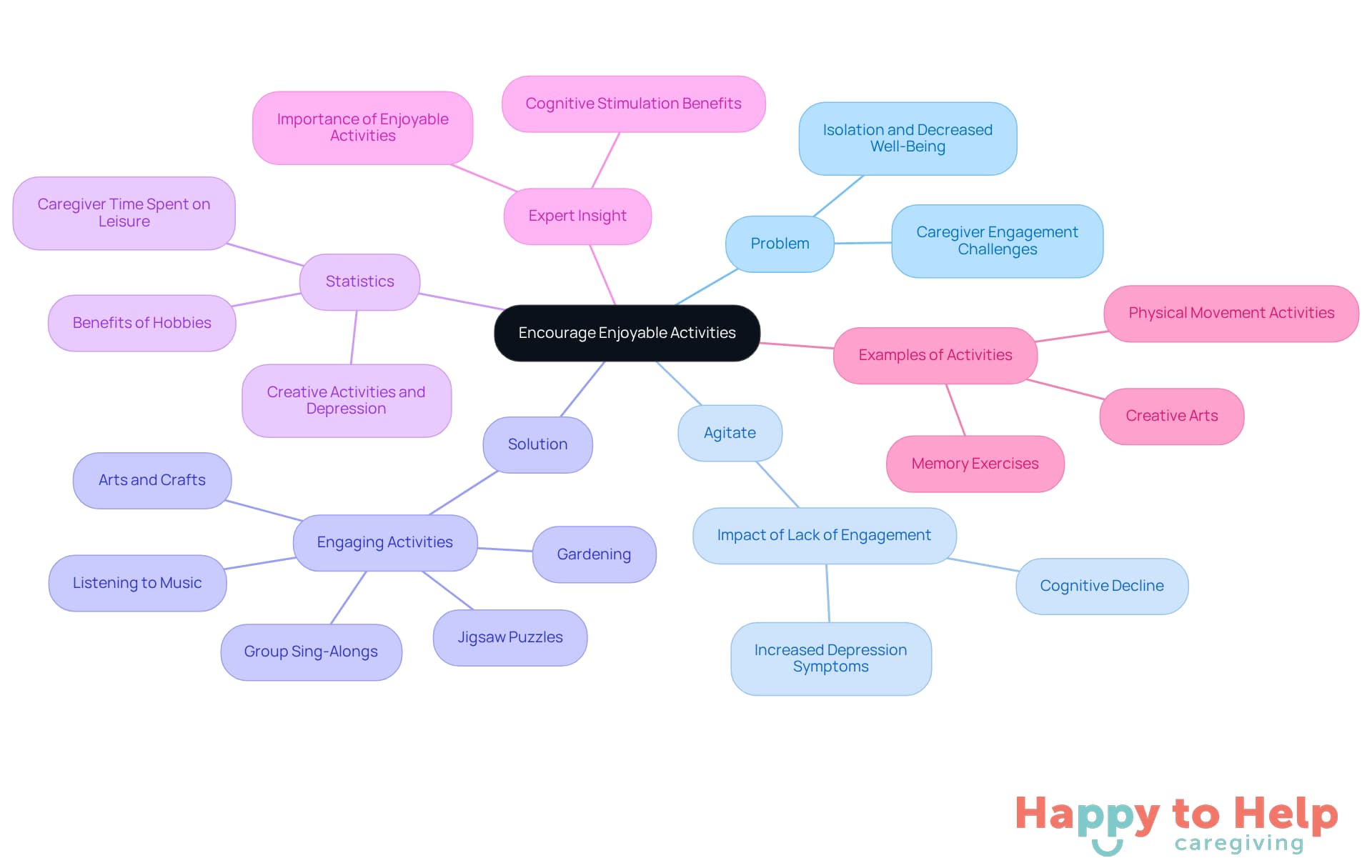
Problem: Caregivers often struggle to engage their parents in activities that enhance their quality of life. This lack of engagement can lead to feelings of isolation and decreased well-being.
Agitate: Research shows that older adults who participate in hobbies report higher levels of health and happiness. However, many caregivers may not know how to encourage these activities effectively. Without stimulation, older adults may experience increased symptoms of depression and cognitive decline.
Solution: Encouraging your parent to engage in activities they love can significantly enhance their quality of life. Activities such as listening to music, gardening, or participating in arts and crafts not only stimulate positive emotions but also promote cognitive function.
- Statistics: A study involving over 90,000 participants across 16 countries indicates that those involved in creative activities experience fewer symptoms of depression.
- Expert Insight: Occupational therapists stress that enjoyable activities are essential in memory care, as they can aid in preserving cognitive abilities and enhancing overall well-being.
Tailoring these activities to their interests fosters joy and strengthens the bond between caregiver and parent, creating meaningful moments that alleviate feelings of isolation. For instance, engaging in jigsaw puzzles or crossword puzzles can provide cognitive stimulation. Additionally, group sing-alongs can encourage social bonding among individuals with cognitive impairments.
By incorporating familiar and enjoyable activities into everyday routines, caregivers can foster an atmosphere that promotes emotional connection and improves the quality of life for those dealing with a dementia parent. Caregivers typically spend an average of 29 minutes a day on active leisure activities, making it essential to prioritize these enjoyable moments.
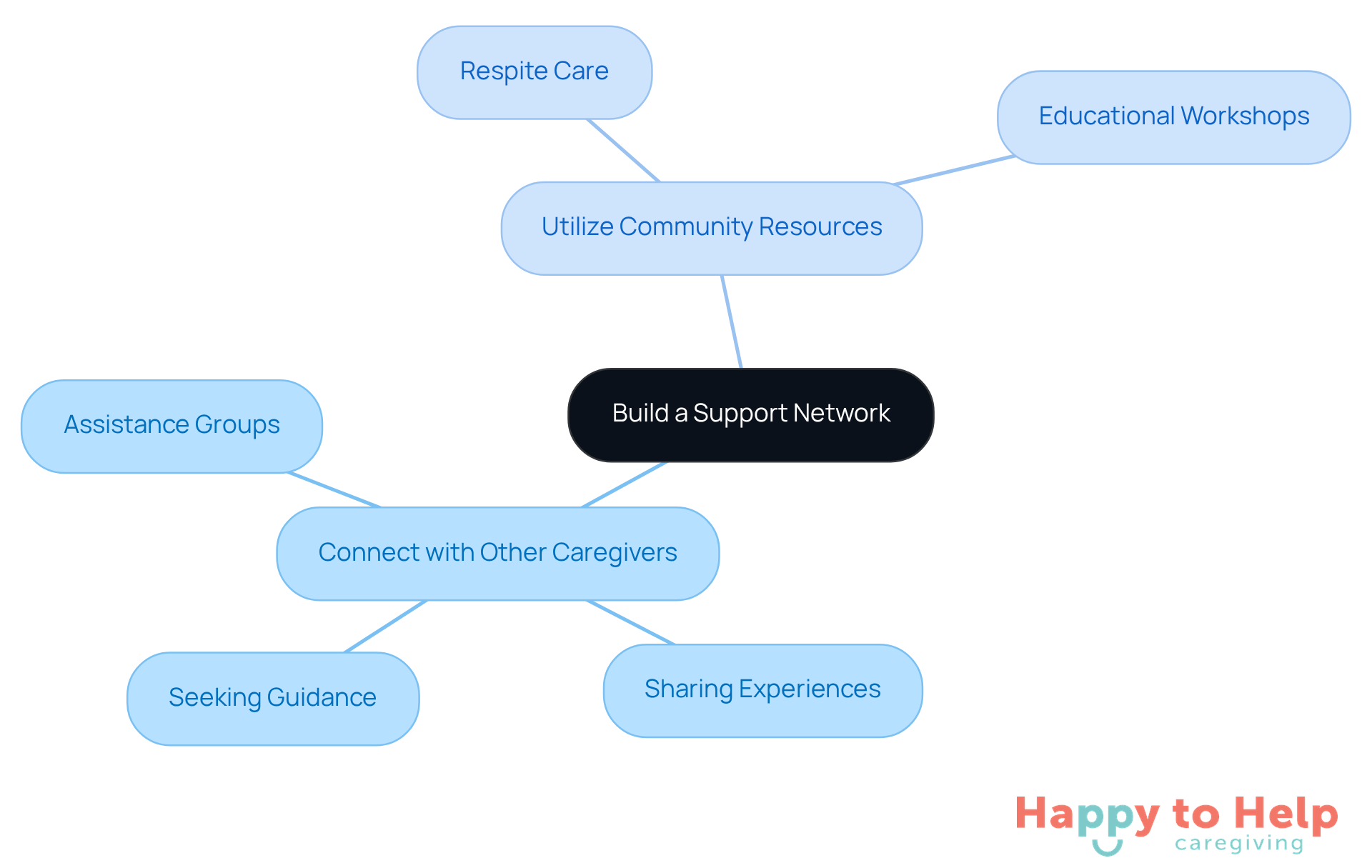
Build a Support Network: Connect with Other Caregivers and Resources
Caregivers often face the challenge of feeling isolated and overwhelmed in their roles. This emotional burden can lead to stress and burnout, making it difficult to provide the best care possible.
Engaging with others who provide care can be a vital source of support. Participating in assistance groups, whether in-person or online, allows caregivers to share experiences, seek guidance, and find comfort in knowing they are not alone in their journey.
Additionally, utilizing community resources can offer practical help. Options like respite care and educational workshops can significantly enhance a caregiver's ability to provide effective support. By connecting with these resources, caregivers can alleviate some of their burdens and improve their overall well-being.
Set Realistic Expectations: Understand the Progression of Dementia
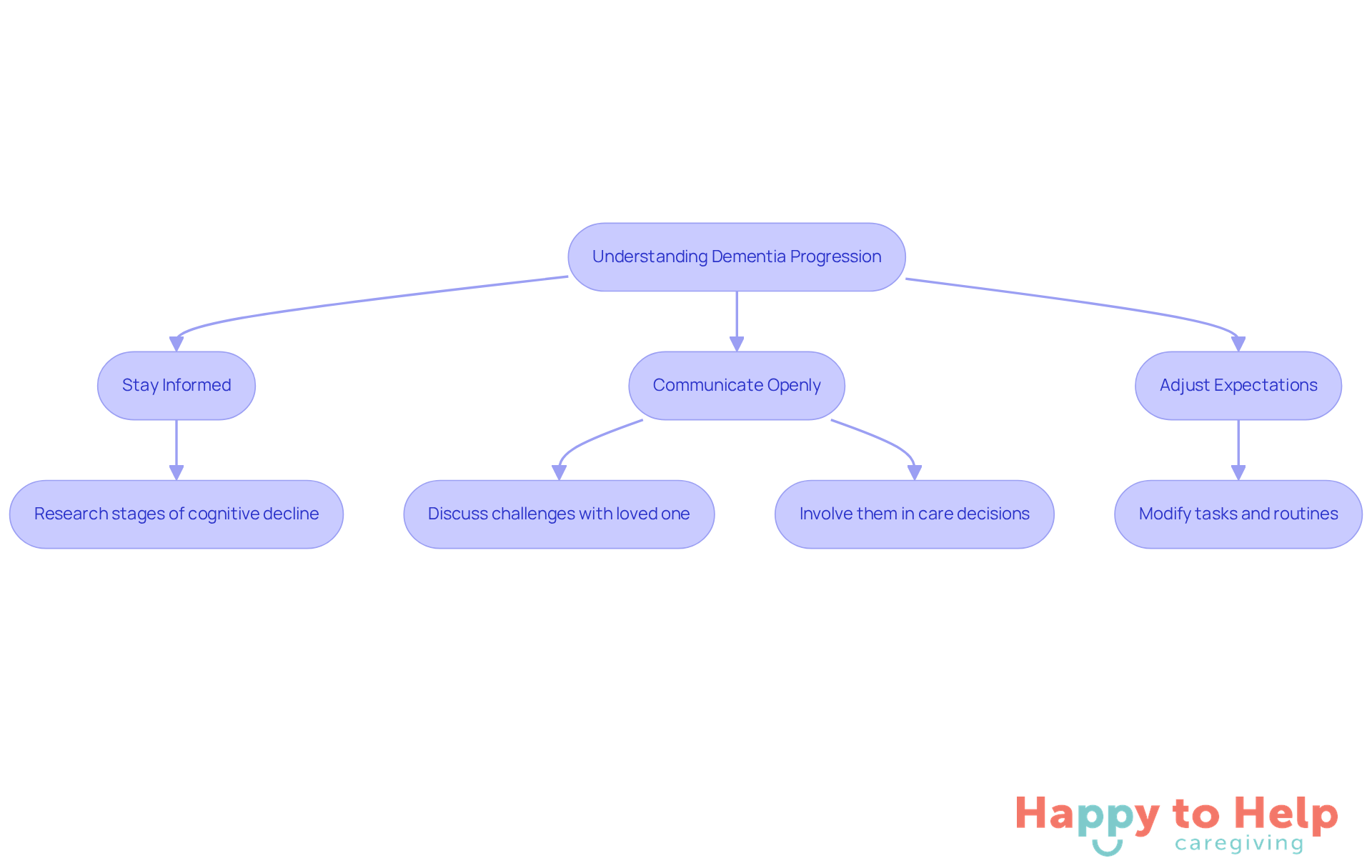
Caring for a parent with cognitive decline involves unique challenges, especially when dealing with a dementia parent, particularly in establishing attainable expectations.
Agitate: Cognitive decline is a progressive condition, which means that caregivers must adapt their strategies as the situation evolves. Tasks that were once manageable may become increasingly difficult, leading to frustration for both the caregiver and the individual receiving care. Without a clear understanding of these changes, caregivers may feel overwhelmed and unprepared.
To navigate these complexities effectively when dealing with a dementia parent, caregivers should maintain flexibility and patience. Recognizing that adjustments in care strategies are necessary for dealing with a dementia parent can significantly improve the caregiving experience. Here are some actionable tips:
- Stay Informed: Understand the stages of cognitive decline to anticipate changes.
- Communicate Openly: Discuss challenges with your loved one and involve them in care decisions when possible.
- Adjust Expectations: Be prepared to modify tasks and routines as needed.
By implementing these strategies, caregivers can provide more effective support and enhance the quality of care.
Create a Safe Environment: Remove Dangerous Items from Home
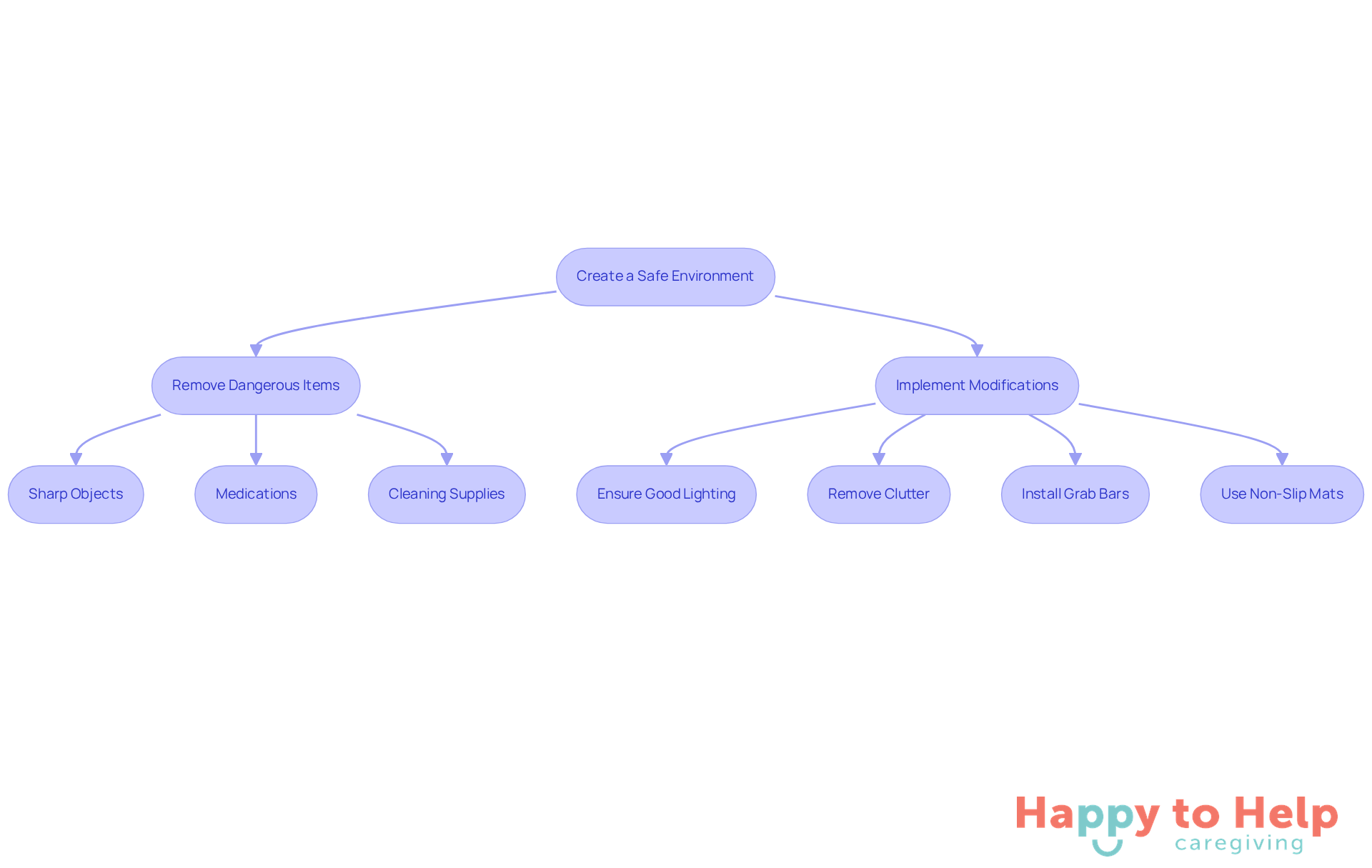
Creating a secure environment is essential when dealing with a dementia parent experiencing cognitive decline. The presence of hazardous items - like sharp objects, medications, and cleaning supplies - can pose significant risks. When these items are within easy reach, they can lead to accidents that could have been prevented. Moreover, when dealing with a dementia parent, a cluttered home can increase the likelihood of falls, making it crucial to address these issues.
To enhance safety, consider implementing simple modifications. Start by ensuring that the home is well-lit and free of clutter.
- Installing grab bars in the bathroom
- Using non-slip mats
These practical solutions for dealing with a dementia parent not only create a safer atmosphere but also allow your loved one to move around more freely, fostering independence while ensuring their well-being.
Practice Patience and Compassion: Approach Care with Understanding
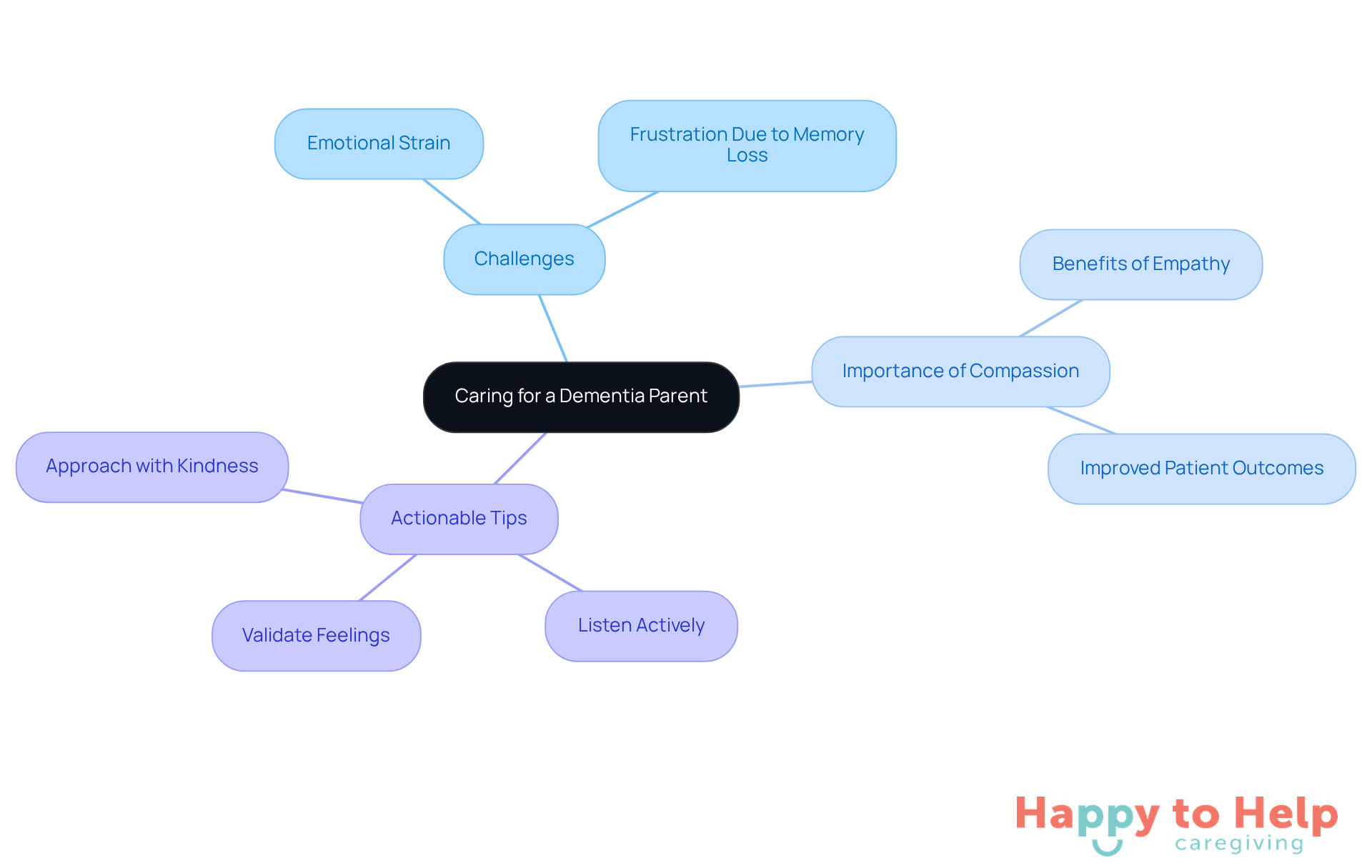
Caring for a parent with cognitive decline, particularly when dealing with a dementia parent, presents significant challenges for caregivers. Dealing with a dementia parent can lead to frustration due to memory loss and confusion, making it difficult to provide the support your loved one needs. This emotional strain can affect both the caregiver and the patient, especially when dealing with a dementia parent, highlighting the importance of addressing these feelings.
To navigate this difficult situation of dealing with a dementia parent, it is essential to practice patience and compassion. Listening actively, validating feelings, and approaching each interaction with kindness can transform the caregiving experience when dealing with a dementia parent. Research shows that caregivers who are dealing with a dementia parent and demonstrate higher levels of empathy contribute to better outcomes for dementia patients. This reinforces the idea that a gentle, understanding presence can significantly enhance their quality of life.
By embracing these compassionate strategies, caregivers dealing with a dementia parent can create a nurturing environment that honors the dignity and individuality of their loved ones. Here are some actionable tips:
- Listen actively to your loved one’s concerns.
- Validate their feelings to help them feel understood.
- Approach situations with kindness to foster a positive atmosphere.
Incorporating these practices not only benefits the patient but also enhances the emotional well-being of those providing care.
Celebrate Small Wins: Find Joy in Everyday Achievements
Caregivers often face significant challenges while dealing with a dementia parent in providing support to individuals with dementia. One of the key issues when dealing with a dementia parent is the emotional strain that can arise from daily caregiving tasks. This can lead to feelings of frustration and burnout, making it essential to find ways to enhance the caregiving experience while dealing with a dementia parent.
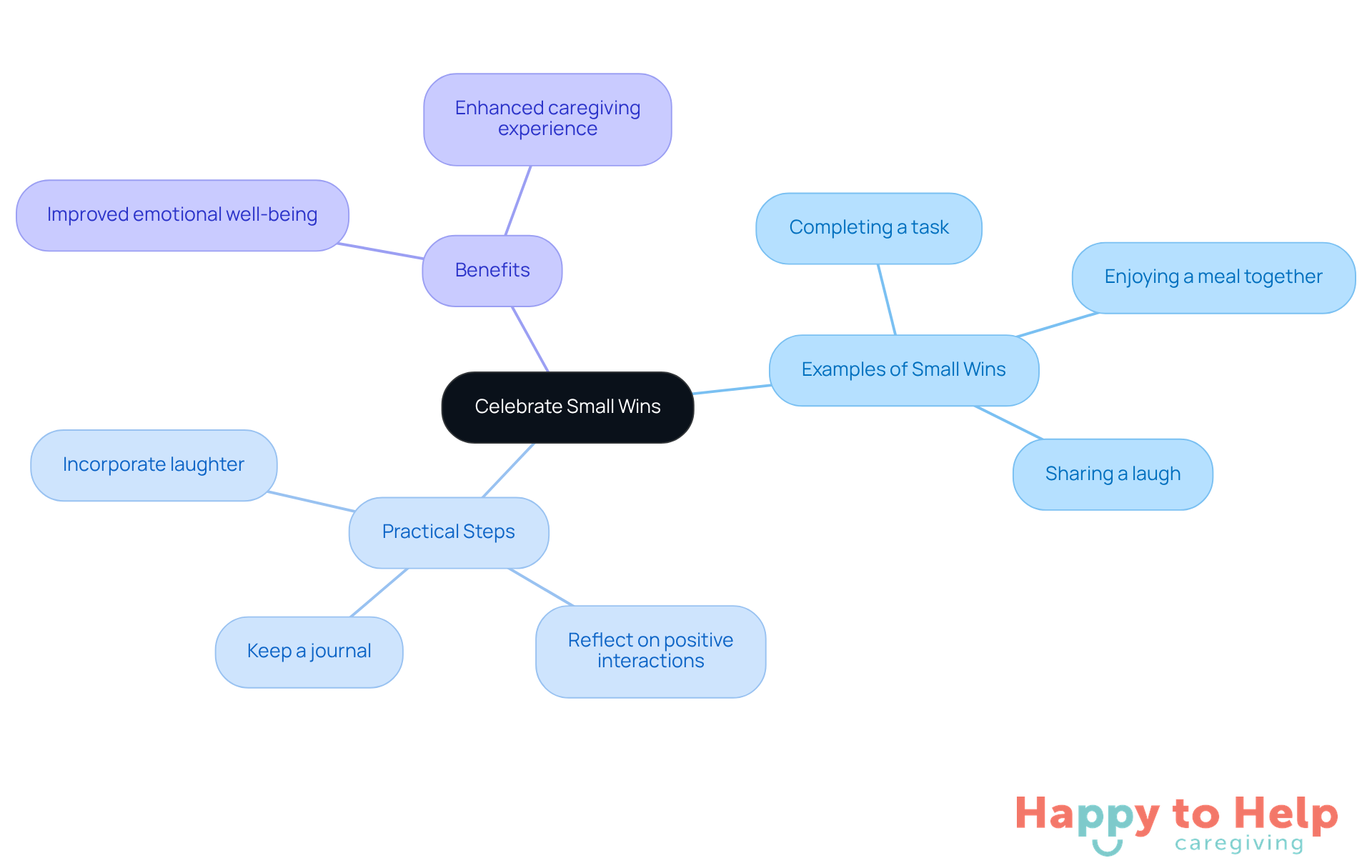
Celebrating small victories in everyday life can greatly improve the emotional well-being of both caregivers and their loved ones. Simple achievements, such as:
- Completing a task
- Enjoying a meal together
- Sharing a laugh
create opportunities for connection and foster a sense of accomplishment. By focusing on these positive moments, caregivers can cultivate a more joyful environment, which is crucial for both their own well-being and that of the individuals they support.
To implement this approach, caregivers can take practical steps to acknowledge and celebrate these small victories. For instance, they might:
- Keep a journal to note daily achievements
- Set aside time each week to reflect on positive interactions
- Incorporate activities that promote laughter and enjoyment
These actions can significantly enhance the caregiving experience.
As motivational speakers often highlight, embracing these small victories can transform the caregiving journey, making it more fulfilling and meaningful. By cherishing these moments, caregivers not only improve their own quality of life but also reinforce the importance of finding joy in everyday interactions.
Taking the Next Steps
Caring for a parent with dementia presents a significant challenge that can leave caregivers feeling overwhelmed. The emotional and physical toll of this journey can be daunting, often leading to stress and burnout. However, by implementing effective strategies, caregivers can enhance their own well-being and that of their loved ones.
To address these challenges, caregivers should focus on:
- Clear communication
- Establishing consistent routines
- Prioritizing self-care
- Engaging in enjoyable activities
These steps not only create a supportive environment but also honor the dignity of the individual with dementia. Building a support network and setting realistic expectations are crucial, as is ensuring a safe living space. Practicing patience and compassion can transform the caregiving experience, reducing stress and improving emotional health for both parties.
Celebrating small victories and finding joy in daily interactions can strengthen the bond between caregiver and parent, making the journey more rewarding. The importance of personalized care and a compassionate community cannot be overstated. Caregivers are encouraged to seek resources, connect with others facing similar challenges, and prioritize their own health.
By embracing these strategies, caregivers can navigate the complexities of dementia care with confidence, ensuring a better quality of life for themselves and their loved ones.
https://iframe.tely.ai/cta/eyJhcnRpY2xlX2lkIjogIjY5Mjc5NTA3MjI0NDc2YzA3YjhmODljOCIsICJjb21wYW55X2lkIjogIjY4ZWU1ZGNhNzMxNzYyNTU3ZjNjOTVjMSIsICJpbmRleCI6IG51bGwsICJ0eXBlIjogImFydGljbGUifQ==Frequently Asked Questions
What challenges do caregivers face when dealing with a dementia parent?
Caregivers experience emotional and physical demands that can be overwhelming, leading to stress and burnout, which also impacts the quality of life for the individual receiving care.
What services does Happy to Help Caregiving offer for dementia care?
Happy to Help Caregiving offers personalized in-home support services including companionship care, post-hospital recovery assistance, respite care, and palliative care.
How does Happy to Help Caregiving tailor its services for individuals with dementia?
Their services are designed to meet the unique needs of clients, ensuring they receive the emotional and physical support necessary to thrive in their familiar surroundings.
What communication strategies can caregivers use to effectively communicate with a parent who has cognitive decline?
Caregivers should speak slowly and clearly, use simple words and short sentences, maintain eye contact, and use a gentle tone of voice. Patience is essential to allow the parent time to process and respond.
Why is maintaining a routine important for individuals with dementia?
A consistent daily routine helps reduce anxiety and confusion for individuals with dementia, providing a sense of stability and security, which is beneficial for both the individual and the caregiver.
What tips can caregivers follow to establish a consistent routine for their loved ones?
Caregivers can set specific times for meals and activities, include familiar tasks that the individual enjoys, and regularly review and adjust the routine as needed to ensure its effectiveness.
List of Sources
- Happy to Help Caregiving: Personalized In-Home Support for Dementia Care
- America is aging into a caregiving desert. Nobody is ready. (https://morningstar.com/news/marketwatch/20251126139/america-is-aging-into-a-caregiving-desert-nobody-is-ready)
- New Medicare program offers much-needed relief for caregivers of dementia patients (https://finance.yahoo.com/news/new-medicare-program-offers-much-needed-relief-for-caregivers-of-dementia-patients-203450020.html)
- Number of Family Caregivers Supporting Older Adults Increased Nearly One-Third Between 2011 and 2022 | Johns Hopkins Bloomberg School of Public Health (https://publichealth.jhu.edu/2025/number-of-family-caregivers-supporting-older-adults-increased-nearly-one-third-between-2011-and-2022)
- Alzheimer's Disease Facts and Figures (https://alz.org/alzheimers-dementia/facts-figures)
- Caregiver Statistics: Demographics (https://caregiver.org/resource/caregiver-statistics-demographics)
- Use Clear Communication: Speak Slowly and Clearly to Your Parent
- Clearer Conversations, Better Care: New Guide Highlights Best Practices for Communicating with Older Adults (https://geron.org/News-Events/GSA-News/Press-Room/Press-Releases/clearer-conversations-better-care-new-guide-highlights-best-practices-for-communicating-with-older-adults)
- Communicating with a Person with Dementia | Strategy (https://allenbrook-fordingbridge.co.uk/news/effective-communication-strategies-with-dementia-patients)
- The facilitators of communication with people with dementia in a care setting: an interview study with healthcare workers (https://academic.oup.com/ageing/article/45/1/164/2195309)
- Dementia - communication (https://betterhealth.vic.gov.au/health/conditionsandtreatments/dementia-communication)
- Communication | Alzheimer's Association (https://alz.org/help-support/caregiving/daily-care/communications)
- Maintain a Routine: Establish Consistency in Daily Activities
- Possible Consequences of Intervening in the Routines of Individuals with Dementia (https://beynex.com/blogs/possible-consequences-of-intervening-in-the-routines-of-individuals-with-dementia)
- The Power of Routine for Individuals in Memory Care Communities (https://harborchase.com/blogs/power-of-routine-memory-care-communities)
- The Importance of Routine for Seniors with Dementia | Paul Spring (https://paulspringbyrui.com/the-importance-of-routine-for-seniors-with-dementia)
- Dementia & the Benefits of a Routine - Essential Tips (https://comfortkeepers.ie/articles/dementia-the-benefits-of-a-routine)
- The Importance of Routine in Dementia Care (https://advmedny.com/post/the-importance-of-routine-in-dementia-care)
- Prioritize Self-Care: Manage Your Emotional and Physical Well-Being
- The Importance of Self-Care for Family Caregivers - UF Health Jacksonville (https://ufhealthjax.org/stories/2022/the-importance-of-self-care-for-family-caregivers)
- Alzheimer’s Association Encourages Dementia Caregivers to Make Their Health and Well-Being an Equal Priority (https://alz.org/news/2024/november-national-family-caregivers-month)
- Caregiver Support: A Guide to Self-Care for Caregivers | Pfizer (https://pfizer.com/news/articles/caregiver\_support\_a\_guide\_to\_self\_care\_for\_caregivers)
- Taking Care of Yourself: Tips for Caregivers (https://nia.nih.gov/health/caregiving/taking-care-yourself-tips-caregivers)
- Taking Care of YOU: Self-Care for Family Caregivers (https://caregiver.org/resource/taking-care-you-self-care-family-caregivers)
- Encourage Enjoyable Activities: Do Things Your Parent Loves
- 3 proven health benefits of having a hobby (https://uclahealth.org/news/article/3-proven-health-benefits-having-hobby)
- Memory Care Made Fun: Creative Activities for Those with Alzheimer’s and Dementia (https://gracevillagelc.com/news/creative-activities-memory-care)
- Unpaid caregivers find moments of joy in daily life (https://news.umich.edu/unpaid-caregivers-find-moments-of-joy-in-daily-life)
- Meaningful activities for a person with dementia (https://dementiauk.org/news/meaningful-activities-for-a-person-with-dementia)
- 29 Occupational Therapy Quotes! • OT Potential (https://otpotential.com/blog/occupational-therapy-quotes)
- Build a Support Network: Connect with Other Caregivers and Resources
- The Caregiving Landscape: Data & Insights on the Caregiver Experience in the U.S. (https://caregiveraction.org/caregiver-statistics)
- The Benefits of Support Groups for Older Adults and Caregivers (https://watermarkcommunities.com/resources/in-the-news/the-benefits-of-support-groups-for-older-adults-and-caregivers)
- Changes in Health Indicators Among Caregivers... (https://cdc.gov/mmwr/volumes/73/wr/mm7334a2.htm)
- Caregiver Statistics: Health, Technology, and Caregiving Resources (https://caregiver.org/resource/caregiver-statistics-health-technology-and-caregiving-resources)
- Best Caregiver Support Groups (https://health.usnews.com/senior-care/articles/best-caregiver-support-groups)
- Practice Patience and Compassion: Approach Care with Understanding
- Alzheimer’s Association Honors the Nearly 12 Million Americans Who Serve as Dementia Caregivers and Shares New Resources to Help Them Thrive (https://alz.org/news/2025/november-national-family-caregivers-alzheimers-disease-awareness-month)
- (https://belleviecare.co.uk/support-advice/dementia-quotes-to-lift-your-spirits)
- The importance of Compassionate Caregivers for Alzheimer’s Patients (https://southerncaliforniacaregiving.com/the-importance-of-compassionate-caregivers-for-alzheimers-patients)
- Use patience, compassion to navigate a loved one’s dementia | opinion (https://metrowestdailynews.com/story/opinion/columns/2025/11/22/patience-is-key-in-navigating-loved-ones-dementia-opinion/87360948007)
- Empathy and mental health distress in informal caregivers of dementia and stroke patients: a cross-sectional study - Scientific Reports (https://nature.com/articles/s41598-025-07024-3)
- Celebrate Small Wins: Find Joy in Everyday Achievements
- Top List of Inspirational Dementia Quotes for Caregivers (https://rochesterlawcenter.com/dementia-resources/dementia-quotes)
- Lessons from the Journey: Stories from Families Affected by Dementia - The KentRidge Senior Living (https://kentridgeseniorliving.com/blog/dementia-care-reflections-kentridge)
- 42 inspirational quotes for caregivers (https://care.com/c/40-inspirational-caregiver-quotes)
- 27 Inspirational Quotes for Caregivers (https://ultimatecareny.com/resources/27-quotes-for-caregivers)