
Why Tips for Finding Financial Advisors Matters
Navigating the complexities of financial planning can be particularly daunting for seniors and their caregivers. They often face unique challenges in managing their economic futures, which can lead to significant emotional and financial burdens.
The right financial advisor can provide invaluable support, helping to alleviate these pressures. However, with so many options available, families may wonder: how can they choose an advisor who truly understands their needs and priorities?
This article delves into ten essential tips for finding financial advisors for seniors. By following these guidelines, caregivers can make informed decisions that promote financial stability and peace of mind.
Happy to Help Caregiving: Personalized Support for Seniors
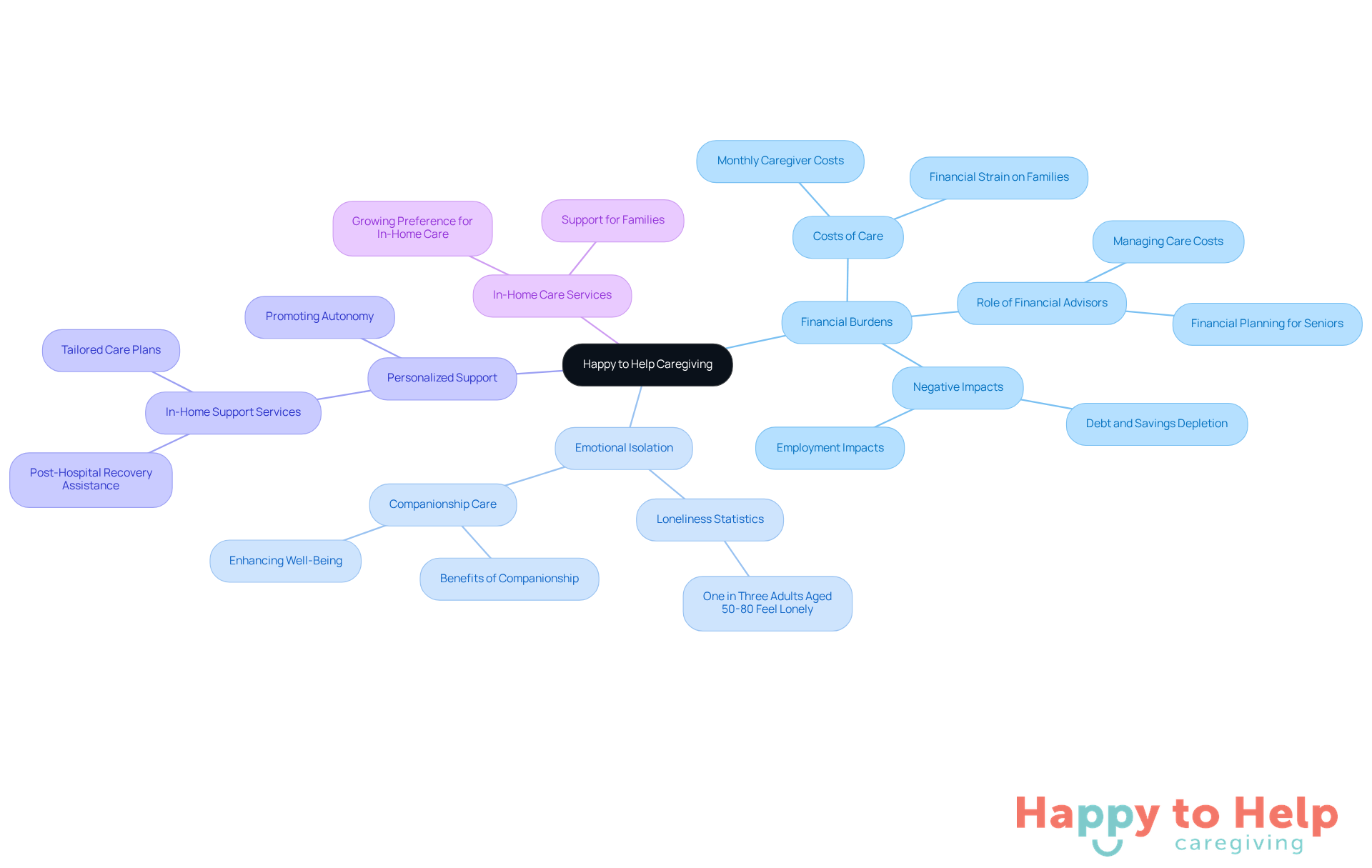
Caregiving can be a challenging journey, especially when it comes to managing the emotional and financial burdens, which is why many turn to financial advisors for seniors. Many caregivers face significant monetary pressures, so seeking financial advisors for seniors can help manage the costs of full-time caregiver services, which typically range between $4,000 and $6,000 each month. This financial strain can lead to adverse effects, as nearly half of caregivers report experiencing at least one negative monetary impact from their responsibilities, which underscores the importance of financial advisors for seniors.
Moreover, emotional isolation is a common issue, with one in three adults aged 50-80 feeling lonely at least some of the time. This highlights the importance of companionship care, which can alleviate feelings of loneliness and enhance overall well-being.
Happy to Help Caregiving addresses these challenges by providing personalized in-home support tailored to the unique needs of seniors. Services such as companionship care and post-hospital recovery assistance not only promote autonomy but also ease the emotional and financial pressures on families, which can be better managed with the help of financial advisors for seniors. By prioritizing tailored support, seniors can thrive in their familiar surroundings while families navigate the complexities of caregiving costs.
As families increasingly opt for in-home care services over facility-based options, consulting financial advisors for seniors to understand the economic implications of caregiving becomes essential. Happy to Help Caregiving stands ready to assist families in finding the right solutions, ensuring that both seniors and their caregivers receive the support they need.
Ask for Referrals: Leverage Trusted Networks
Finding a reliable financial consultant can be a daunting task. Many individuals struggle to identify professionals who truly understand their unique circumstances. This challenge can lead to uncertainty and hesitation when making important financial decisions.
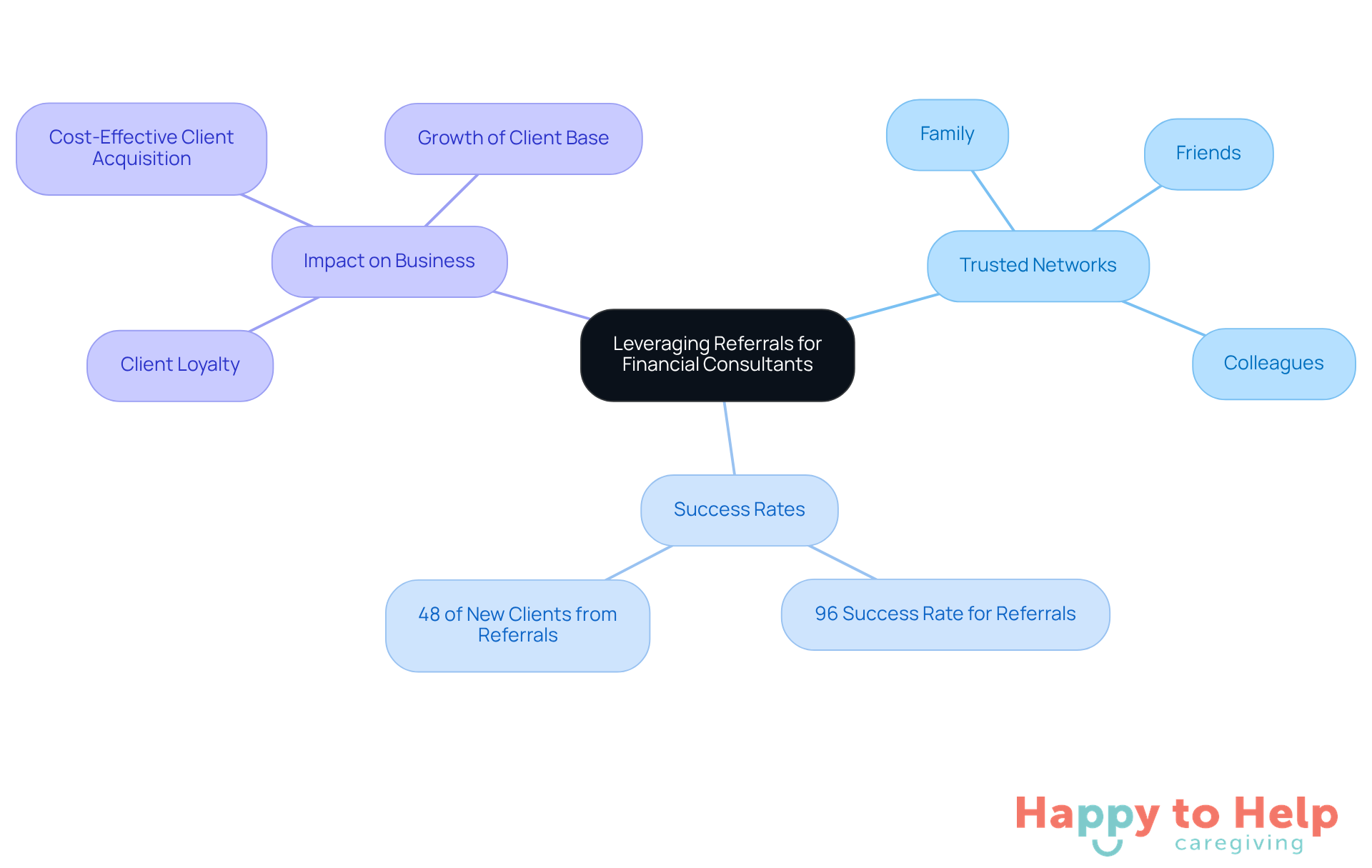
Personal recommendations from trusted networks - such as family, friends, and colleagues - can significantly ease this process. These connections often provide valuable insights into consultants who have successfully assisted others in similar situations. Research indicates that referrals boast an impressive 96% success rate in attracting new customers, underscoring the importance of leveraging these relationships.
Financial experts emphasize that when individuals feel valued and supported, they are more likely to recommend advisors they trust. As noted by LPL Financial, "Referrals are a strong catalyst for business expansion, providing a cost-effective method to gain new customers and enhance relationships." In fact, statistics reveal that client referrals accounted for an average of 48% of all new clients for firms in 2021.
By prioritizing referrals to financial advisors for seniors, they can navigate the complex landscape of financial guidance with greater confidence and assurance.
Check Industry Databases: Verify Credentials and Experience
Verifying the qualifications of investment consultants is a critical challenge for families looking to secure their financial future. Without proper vetting, individuals risk engaging with unqualified professionals, which can lead to poor investment decisions and financial losses.
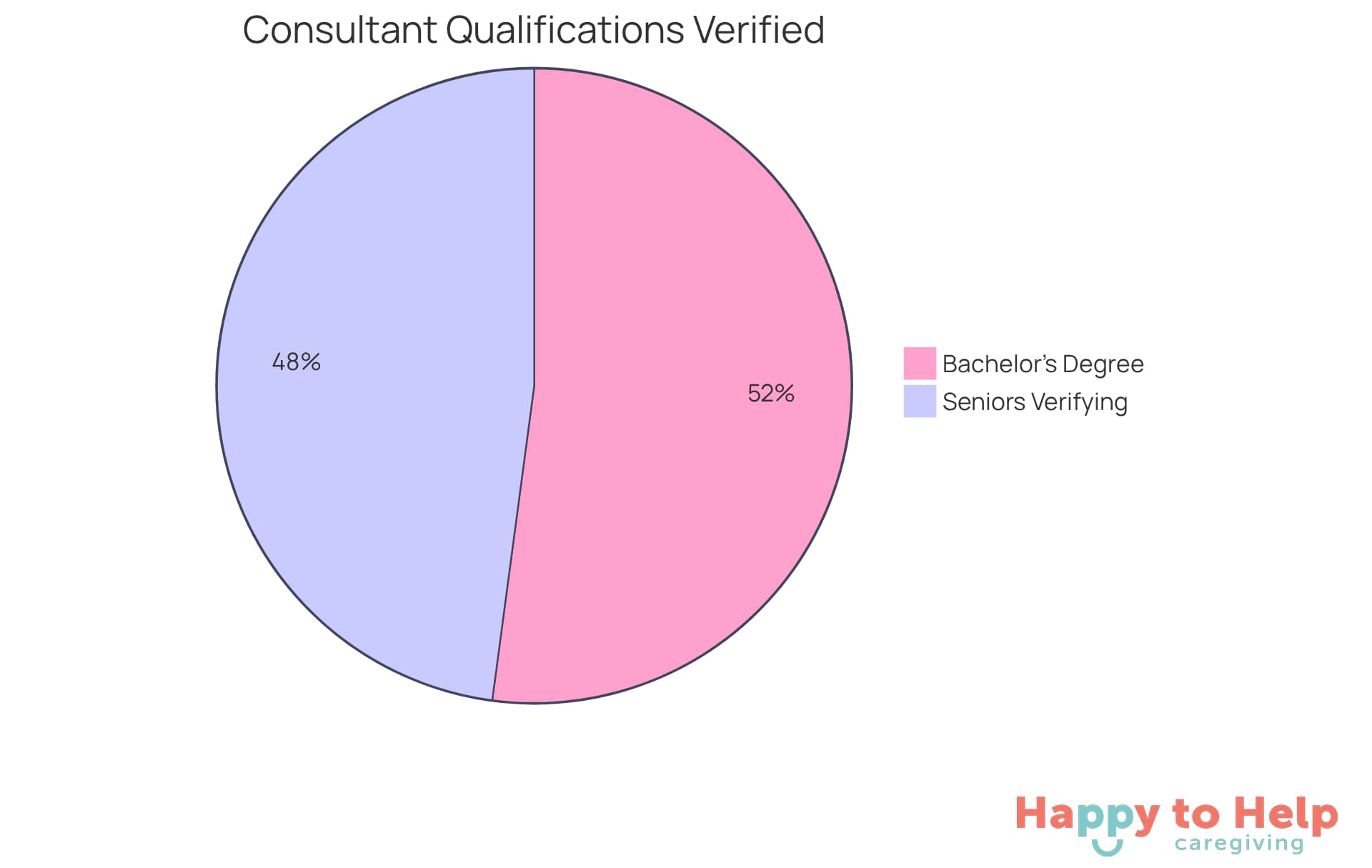
Statistics reveal that 74% of wealth consultants hold a bachelor's degree, highlighting the importance of education in this field. However, an increase in reported disciplinary issues from the SEC and CFTC raises concerns about the integrity of some consultants. This underscores the necessity for thorough credential checks to avoid potential pitfalls.
Fortunately, families can take proactive steps to ensure they are making informed choices. Utilizing industry databases like the SEC's Investment Adviser Public Disclosure and FINRA's BrokerCheck is essential. These resources provide valuable insights into a consultant's background, including qualifications, employment history, and any disciplinary actions.
Moreover, about 68% of seniors report that they verify the qualifications of financial advisors for seniors before making a decision. This approach not only fosters confidence but also aligns with the advice from industry professionals who emphasize the importance of thorough vetting. Families are encouraged to ask specific questions before committing their money to an investment. By leveraging these databases, families can protect their economic futures and make sound financial decisions.
Ensure Fiduciary Status: Prioritize Your Best Interests
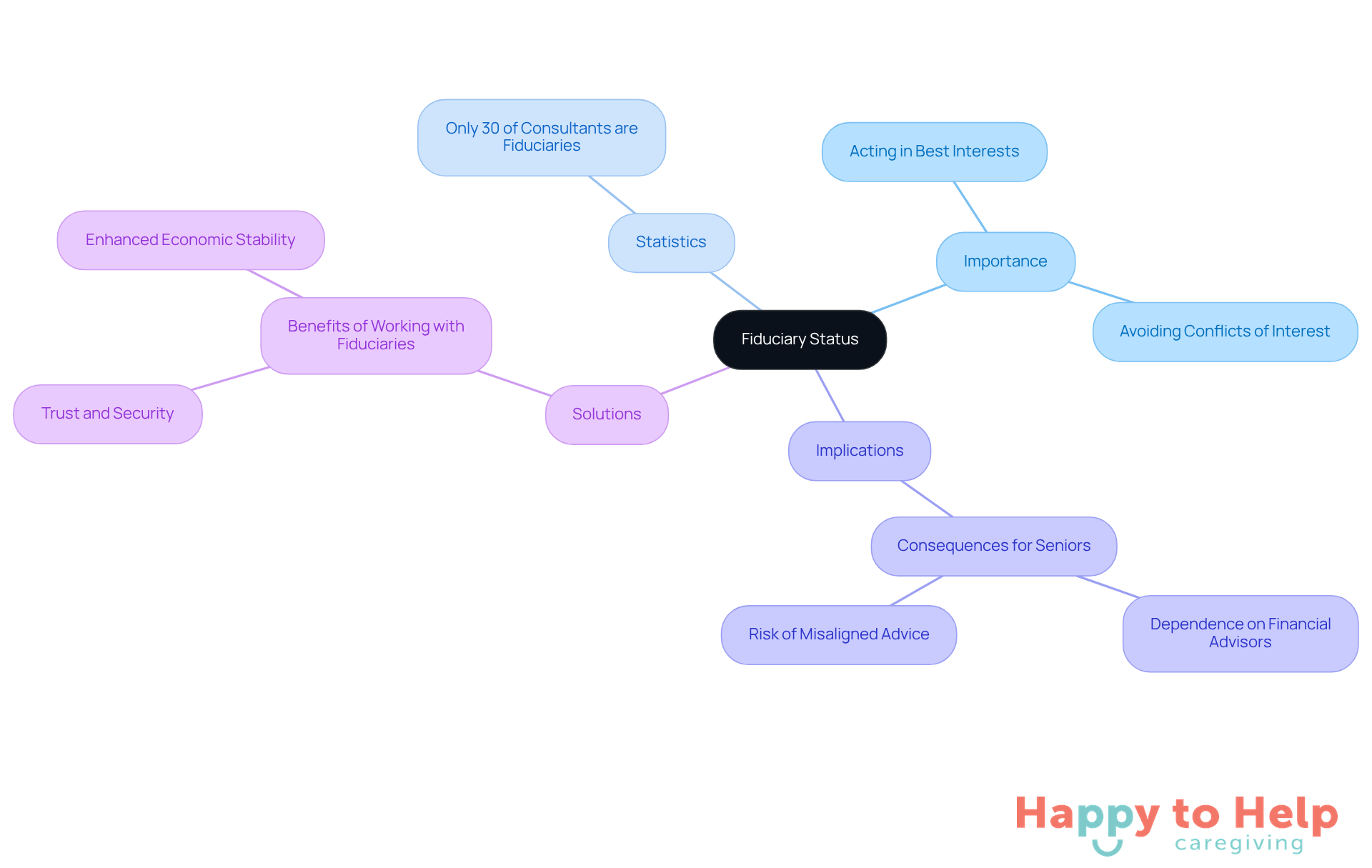
When selecting a monetary consultant, the problem arises: many individuals may not confirm their fiduciary status. This oversight can lead to significant consequences, especially for seniors who depend on financial advisors for seniors for unbiased advice. Fiduciaries are legally obligated to act in your best interests, ensuring that the advice they provide is free from conflicts of interest.
The implications of not working with a fiduciary can be severe. Recent statistics reveal that only about 30% of consultants operate under fiduciary standards. This highlights the importance of understanding this distinction. Moreover, advancements in fiduciary duties emphasize a growing focus on transparency and accountability in client advising.
So, what’s the solution? Collaborating with fiduciaries not only aligns with the best interests of older adults but also fosters trust and security in working with financial advisors for seniors to manage their financial futures. By choosing financial advisors for seniors, older adults can feel assured that their monetary needs are prioritized, ultimately enhancing their economic stability and peace of mind.
Evaluate Beyond Titles: Assess Qualifications and Experience
Choosing financial advisors for seniors can be daunting, especially for older adults facing unique challenges. Many individuals may not realize that simply relying on titles and certifications isn't enough. The problem lies in the fact that many consultants lack the specific expertise needed to address issues like retirement planning and healthcare expenses.
This gap in knowledge can lead to inadequate support for aging adults. It's crucial to assess a consultant's qualifications and experience, particularly their familiarity with the distinct challenges faced by older individuals, making financial advisors for seniors an important consideration. Ask about their experience working with this demographic to ensure they can meet your specific needs effectively.
Fortunately, recent trends show that many advisors are recognizing the importance of specialized training in retirement planning for older adults. This training can significantly enhance their ability to assist this demographic. Experts emphasize that a solid foundation in elder care is vital. As Jack Waymire, founder of Paladin Registry, stated, "Everyone over 50 requires a money adviser if they lack the time or specialized knowledge to handle the tasks themselves."
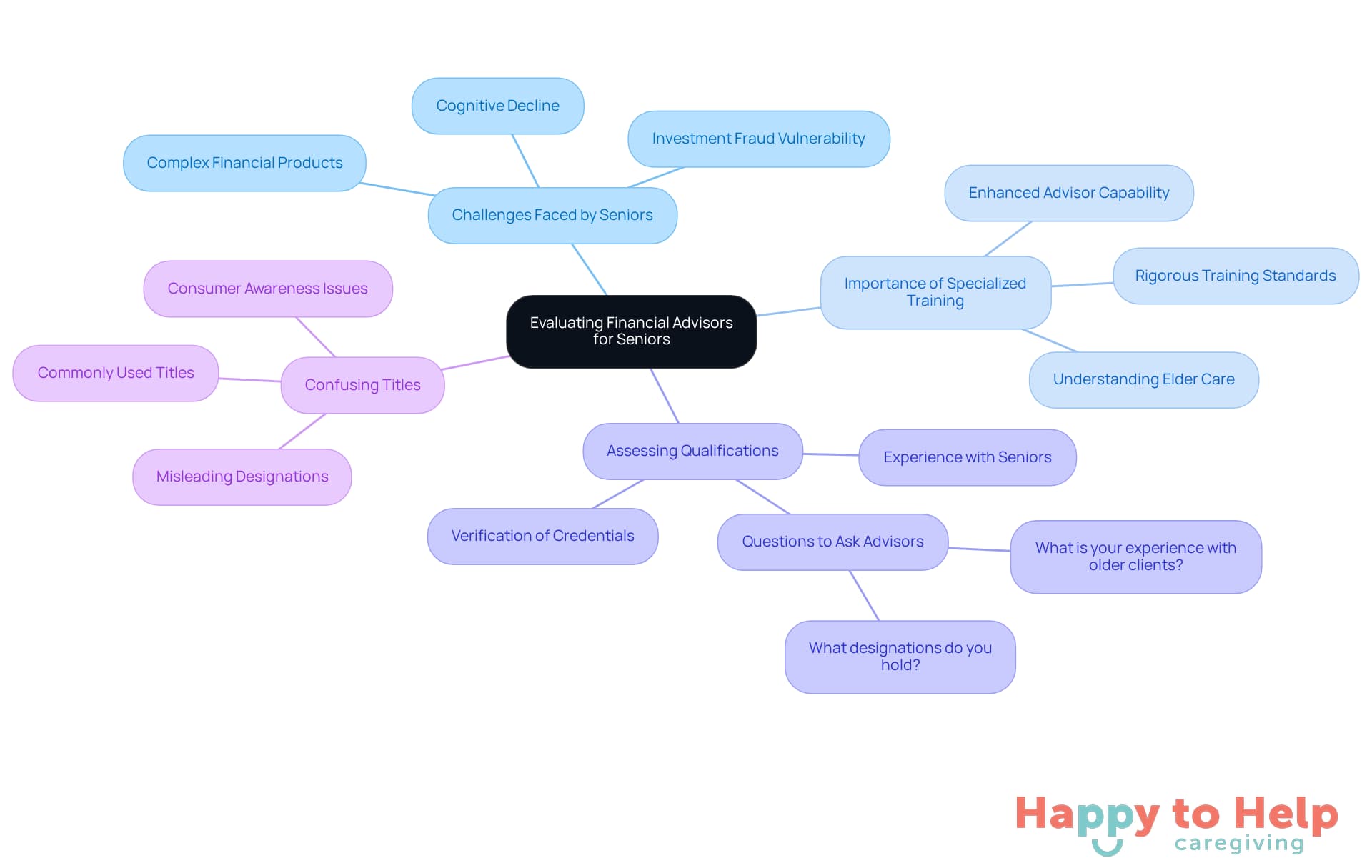
Moreover, it's essential to be aware that over 50 confusing titles are often used by consultants to imply expertise in helping older Americans. By prioritizing experience and a deep understanding of elder matters, families can find consultants who not only possess the right credentials but also the practical knowledge necessary to navigate the complexities of planning for older adults.
Meet in Person: Build Trust and Rapport
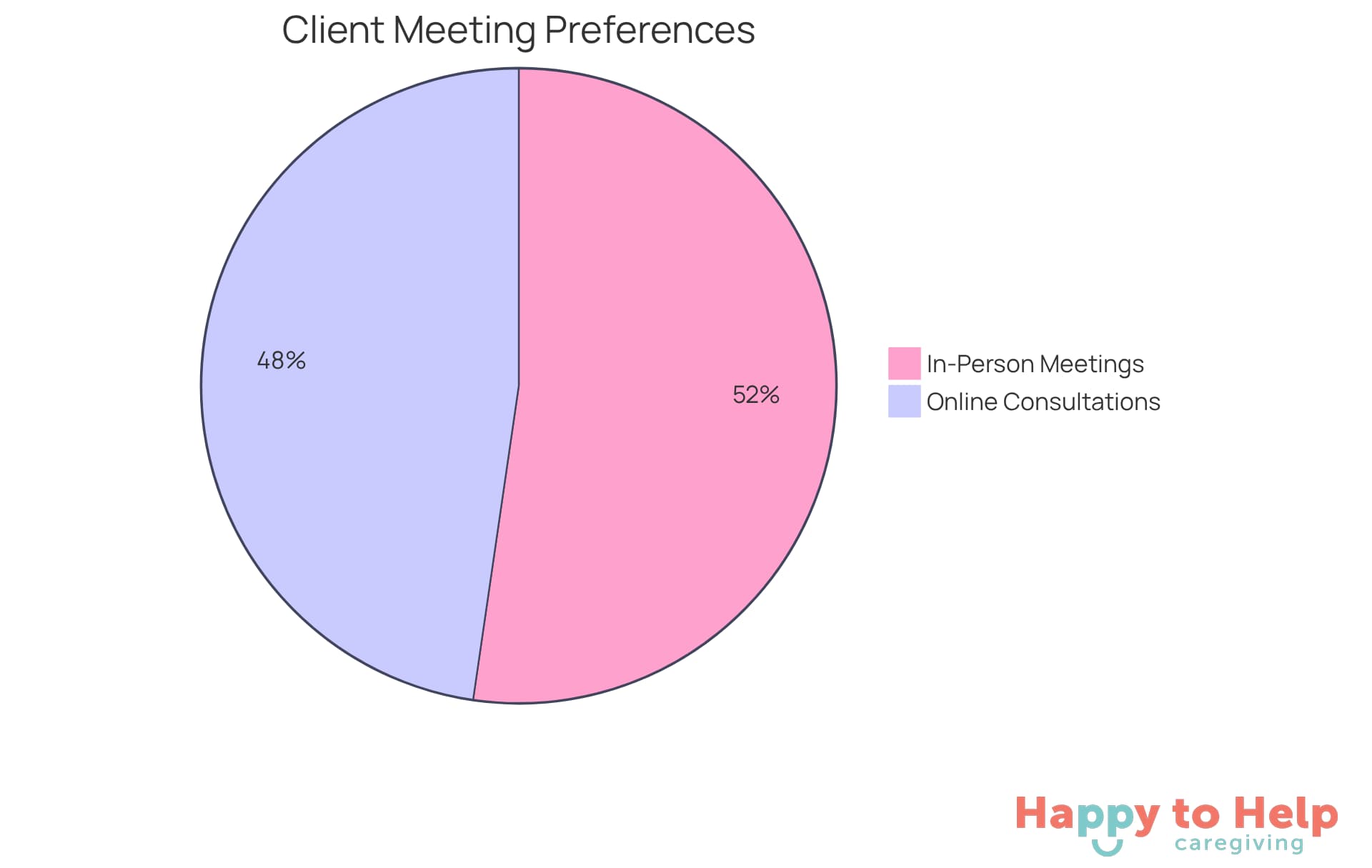
Establishing trust with prospective consultants is a significant challenge for older adults. These individuals often need to share sensitive financial information, making personal connections essential. In fact, 52.3% of clients prefer an initial in-person meeting, followed by online consultations. This statistic underscores the value placed on personal interaction, particularly for older adults who may feel more secure in face-to-face settings.
The implications of this preference are profound. Successful advisor-client relationships often begin with these initial connections, where trust is built through attentive listening and understanding. Financial professionals emphasize the importance of reflective listening, where consultants echo clients' language, significantly enhancing rapport and satisfaction. As one reliable consultant noted, "Establishing a personal bond is essential, particularly for older individuals who might be disclosing sensitive information."
To foster these connections, prioritizing face-to-face meetings is crucial. By doing so, seniors can ensure they find a consultant who not only understands their financial goals but also aligns with their personal values. This approach ultimately leads to a more effective and supportive planning experience.
Assess Communication Styles: Ensure Clarity and Understanding
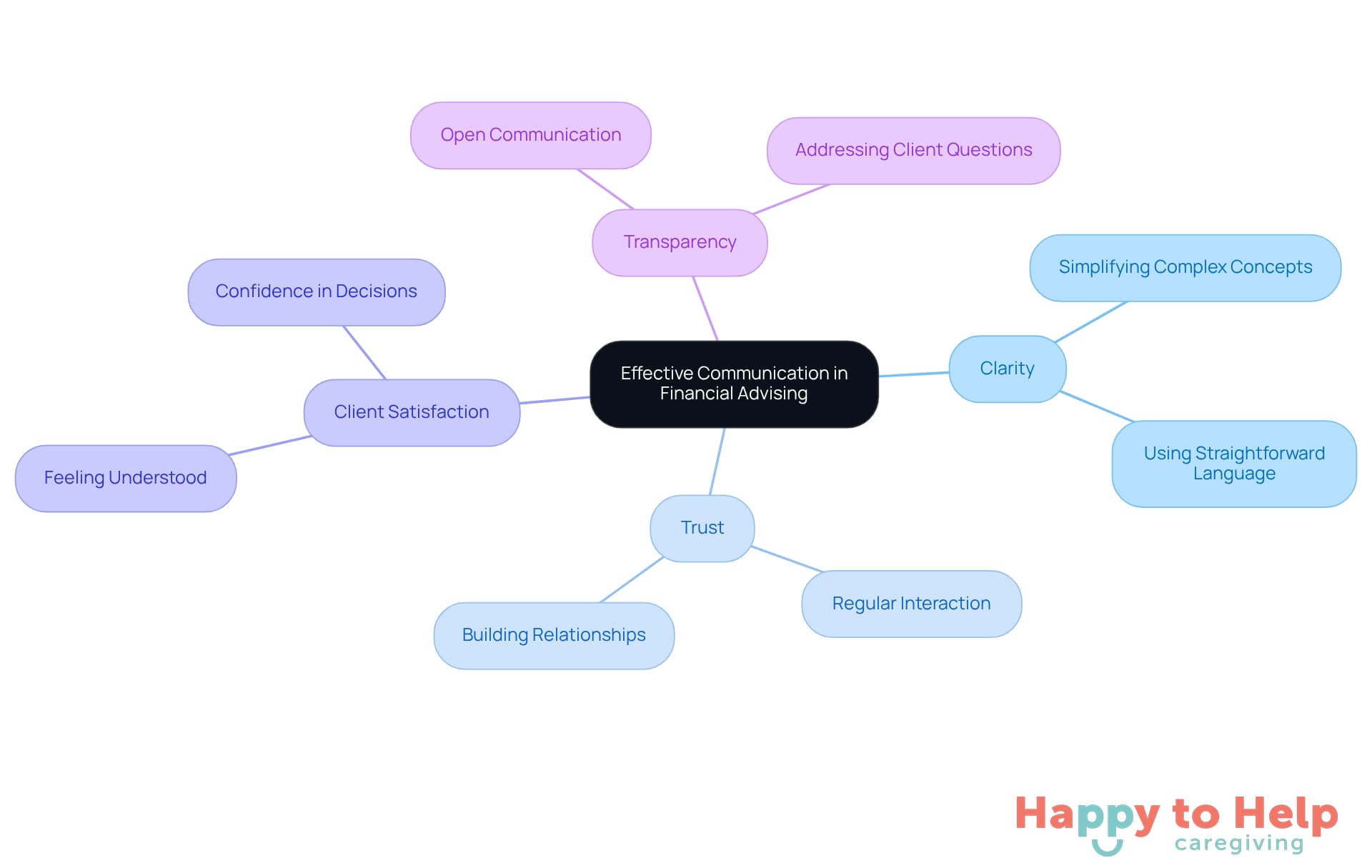
When consulting with a money expert, it's crucial to pay attention to their communication style. The problem arises when complex economic concepts are not broken down into straightforward, understandable terms. This can lead to confusion, especially for seniors who need to fully grasp their monetary situation and the guidance offered by financial advisors for seniors. Patience and a willingness to address your questions are key indicators of an effective advisor.
Experts emphasize that simplifying financial discussions fosters trust and improves customer satisfaction. For instance, Fred Barstein, Founder and CEO of The Retirement Adviser University, states, "Trust is created by explaining things in simple terms, then allowing the experts to handle the rest." Furthermore, statistics indicate that 70% of wirehouse customers report regular interaction with their consultants, highlighting the significance of effective communication in sustaining strong relationships.
To address these challenges, many consultants have embraced approaches that emphasize transparency, enabling individuals to feel appreciated and understood. This not only aids in decision-making but also builds a strong foundation for a lasting advisory relationship. Remember, effective communication by financial advisors for seniors is not just about conveying information; it's about ensuring that clients feel confident and secure in their choices regarding money.
To evaluate your mentor's communication style, consider asking them to clarify a complex idea in simple terms during your next meeting.
Understand Fee Structures: Avoid Hidden Costs
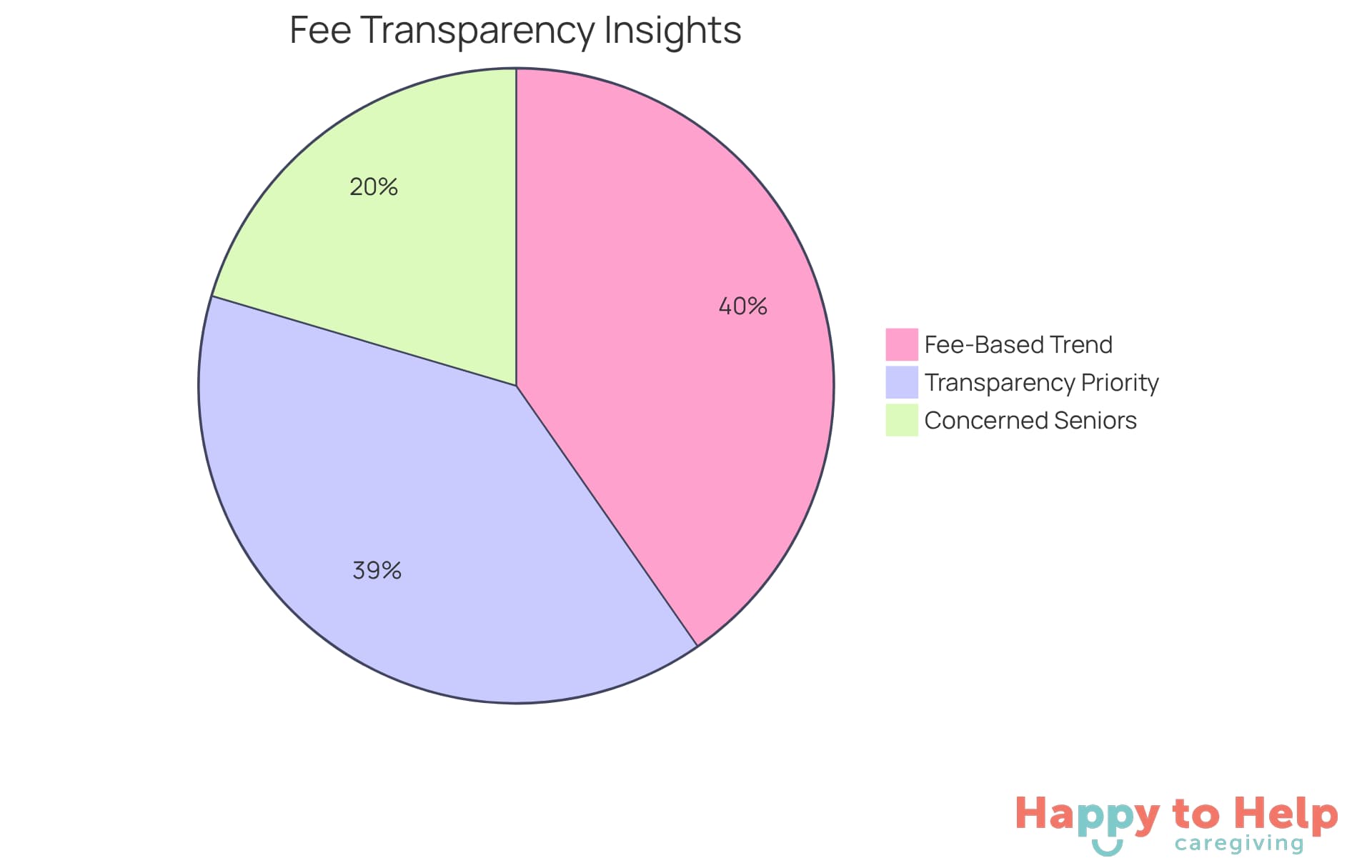
Understanding the fee structure of a financial advisor is crucial before making any commitments. Many seniors, about 38%, worry about the lack of transparency regarding fees from financial advisors for seniors, which can lead to unexpected costs that eat into investment returns. To safeguard your financial future, it’s important to inquire about all potential expenses, including management fees, commissions, and any additional charges. Experts emphasize that clarity in pricing is vital; as one economic authority noted, "Transparency in fees is a significant differentiator for consultants." Moreover, 73% of individuals consider fee transparency the most important factor when choosing a financial consultant.
Recent trends show a shift towards fee-based compensation models, with over 75% of financial consultants expected to adopt this approach by 2026. While this model often aligns consultant incentives with client goals, it can also obscure costs if not communicated clearly. For instance, 87% of consultants report that at least half of their income comes from fee-based accounts. Seniors can avoid hidden costs by consulting financial advisors for seniors, asking specific questions about fee structures and ensuring they fully understand how fees are calculated. For example, a flat fee can offer predictability, while asset-based fees may vary based on portfolio performance.
There are numerous examples of seniors who have successfully navigated these complexities by consulting with financial advisors for seniors. By actively engaging with their consultants and insisting on transparency, many have avoided the pitfalls of hidden costs, ensuring their investments remain strong and effective. Remember, an informed client is better equipped to make decisions that enhance their financial well-being.
Investigate Disciplinary Records: Ensure a Clean Track Record
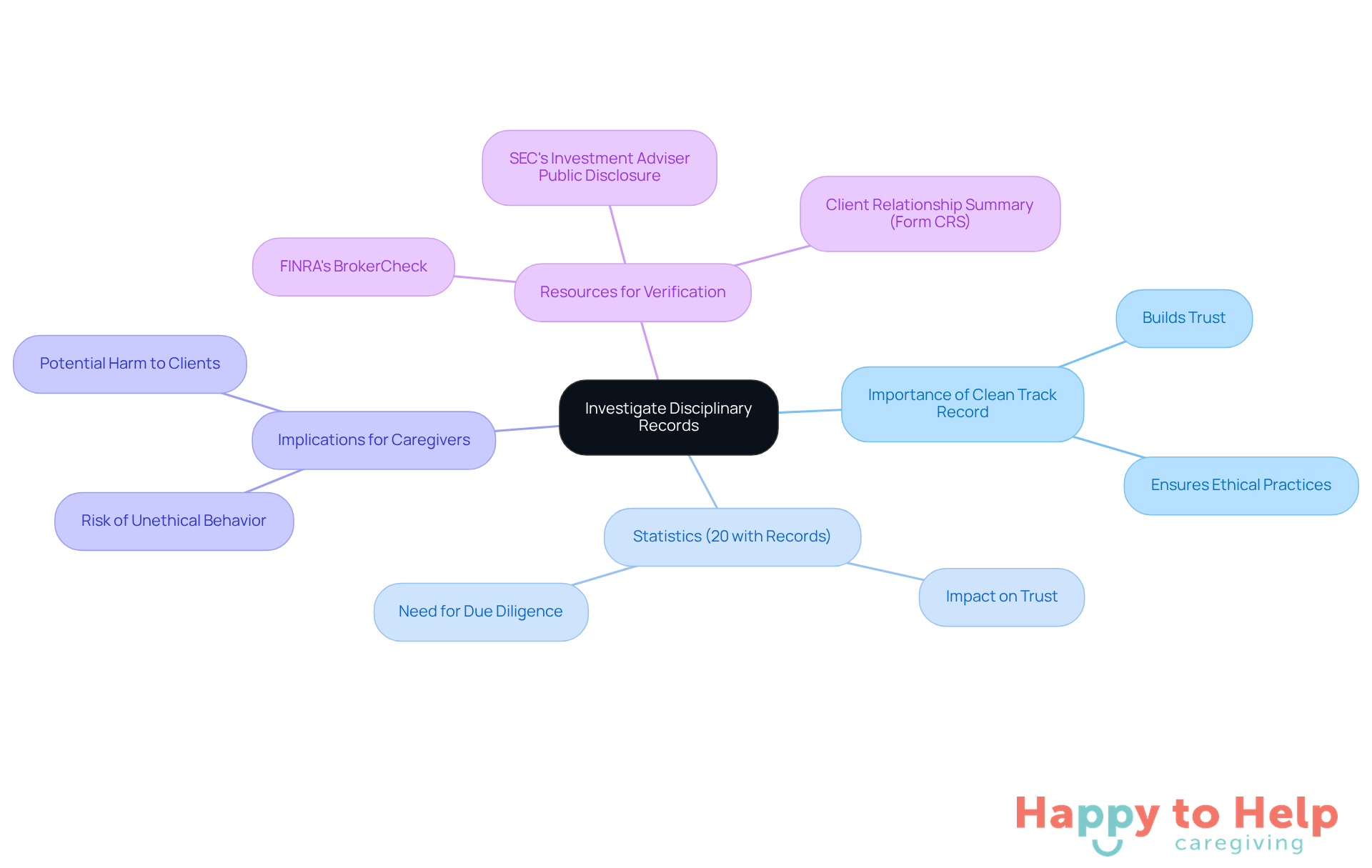
When selecting a consultant, it’s crucial to thoroughly examine their disciplinary records. The problem is that many prospective consultants may not have a clean history, which can jeopardize your trust in their expertise. Recent studies reveal that about 20% of consultants at major institutions have disciplinary records, underscoring the need for due diligence.
This situation can lead to significant implications for caregivers and their families. A consultant with a troubled past may not prioritize ethical practices or the well-being of their clients. As Christine Sgarlata Chung, an Associate Professor at Albany Law School, wisely notes, "The best thing you can do to protect yourself is ask questions." This highlights the importance of being proactive in your search for a reliable expert.
To address these concerns, utilize resources like:
- FINRA's BrokerCheck
- SEC's Investment Adviser Public Disclosure
These tools can help uncover any complaints or sanctions against potential consultants. Additionally, consultants are required to provide a Client Relationship Summary (Form CRS), which includes vital information about their disciplinary background. By taking these steps, families can confidently choose consultants who prioritize their clients' best interests, aligning with the SEC's emphasis on transparency and disclosure under Regulation Best Interest.
In summary, ensuring that your consultant has a flawless history is essential for safeguarding your financial security and peace of mind.
Trust Your Instincts: Choose Advisors You Feel Comfortable With
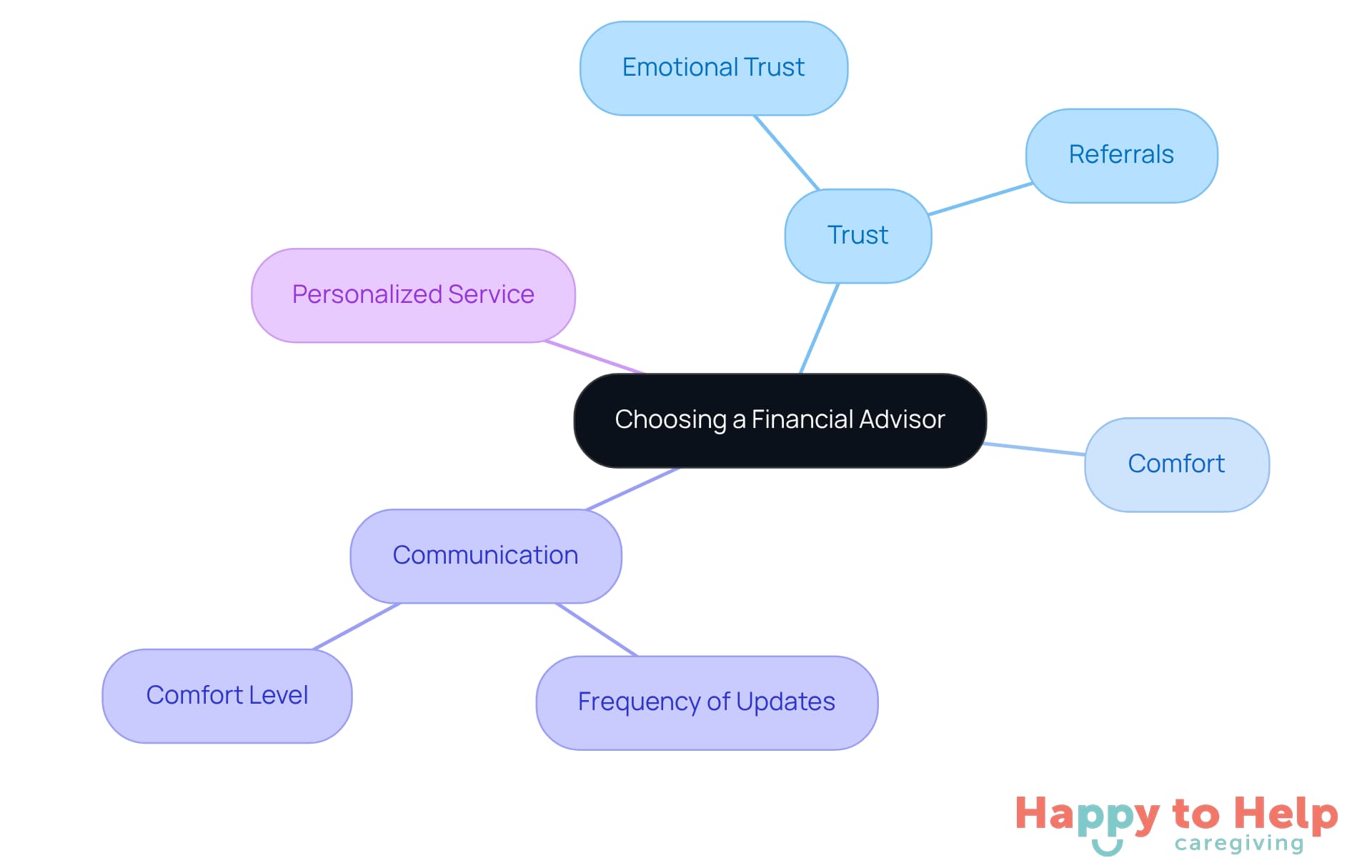
Choosing a money consultant can be daunting, especially when trust is at stake. If something feels off or you have doubts about their ability to meet your needs, it’s crucial to continue your search. A strong advisor-client relationship with financial advisors for seniors hinges on trust, comfort, and mutual respect, all of which are essential for effective financial planning.
Research highlights a significant issue: individuals with strong emotional trust in their consultants are more than twice as likely to give referrals compared to those with moderate trust. This underscores the importance of feeling comfortable in relationships with financial advisors for seniors. Moreover, regular communication plays a vital role in boosting customer confidence. Individuals who receive frequent updates report a 71% comfort level with their financial plans, while only 22% of those who communicate rarely feel the same.
The right financial advisors for seniors should not only possess expertise but also ensure that you feel secure and understood. As Kristin Manning notes, "When clients trust you know them and give them personalized service, not just cookie-cutter recommendations, they feel more comfortable." This highlights the need for a personalized approach from financial advisors for seniors.
Taking the Next Steps
Navigating the financial landscape as a senior can be overwhelming. Without the right financial advisor, older adults may struggle to address their unique challenges, leading to stress and uncertainty about their financial future.
To tackle this issue, it’s essential to seek financial advisors who prioritize the best interests of seniors. Start by leveraging personal referrals and verifying credentials. Ensure that the advisor has fiduciary status, which means they are legally obligated to act in your best interest. Assessing communication styles is also crucial; you want someone who can explain complex concepts clearly and patiently.
Building trust is vital. In-person meetings can help establish a rapport, allowing seniors to feel more comfortable. Additionally, evaluating fee structures is important to avoid hidden costs that could impact financial well-being. Thoroughly investigating disciplinary records ensures that the advisor has a clean track record, which is critical for a supportive advisor-client relationship.
Ultimately, finding a trustworthy financial advisor goes beyond credentials; it’s about feeling comfortable and understood. Seniors should trust their instincts and seek advisors who resonate with their personal values and financial goals. By taking these proactive steps, individuals can secure a brighter financial future, ensuring peace of mind and stability in their golden years.
https://iframe.tely.ai/cta/eyJhcnRpY2xlX2lkIjogIjY5MjEwYWJkYTE0NTEzNzg0OGJmYTRjZCIsICJjb21wYW55X2lkIjogIjY4ZWU1ZGNhNzMxNzYyNTU3ZjNjOTVjMSIsICJpbmRleCI6IG51bGwsICJ0eXBlIjogImFydGljbGUifQ==Frequently Asked Questions
What challenges do caregivers face when managing senior care?
Caregivers often experience emotional and financial burdens, including significant monetary pressures from the costs of full-time caregiver services, which can range between $4,000 and $6,000 each month. Nearly half of caregivers report experiencing at least one negative monetary impact from their responsibilities.
How can financial advisors assist seniors and their caregivers?
Financial advisors for seniors can help manage the costs associated with caregiving, alleviate financial strain, and provide guidance on navigating the economic implications of caregiving.
What is companionship care and why is it important?
Companionship care provides emotional support to seniors, helping to alleviate feelings of loneliness and enhance overall well-being. One in three adults aged 50-80 report feeling lonely at least some of the time, making companionship care essential.
How does Happy to Help Caregiving support seniors and their families?
Happy to Help Caregiving offers personalized in-home support tailored to the unique needs of seniors, including companionship care and post-hospital recovery assistance, which promotes autonomy and eases emotional and financial pressures on families.
Why are referrals important when looking for financial consultants?
Personal recommendations from trusted networks, such as family and friends, can ease the process of finding reliable financial consultants. Referrals have a high success rate in attracting new customers and can help individuals feel more confident in their financial decisions.
What should families do to verify the qualifications of financial advisors?
Families should utilize industry databases like the SEC's Investment Adviser Public Disclosure and FINRA's BrokerCheck to check a consultant's qualifications, employment history, and any disciplinary actions, ensuring they make informed choices.
What percentage of wealth consultants hold a bachelor's degree?
Statistics reveal that 74% of wealth consultants hold a bachelor's degree, highlighting the importance of education in the financial advisory field.
How prevalent is the practice of verifying financial advisors' qualifications among seniors?
About 68% of seniors report that they verify the qualifications of financial advisors before making a decision, which fosters confidence in their financial choices.
List of Sources
- Happy to Help Caregiving: Personalized Support for Seniors
- 28 Senior Care Statistics: In-Home & Assisted Living | Shortlister (https://myshortlister.com/insights/senior-care-statistics)
- 2025 Home Care Statistics: Trends & Insights To Know (https://premierhcinc.com/blog/home-care-statistics)
- National Alliance for Caregiving: Caregiving in the US 2025 Report (https://johnahartford.org/resources/view/national-alliance-for-caregiving-caregiving-in-the-us-2025-report)
- Top Trends in Senior Care Services for 2024 (https://westmontliving.com/blog/assisted-living/top-10-trends-in-senior-care-services-for-2024)
- Senior Care in Philadelphia, PA: Key Trends for 2025 and Beyond - AmeriBest Home Care (https://ameribesthomecare.com/recent-news/senior-care-in-philadelphia-pa-key-trends-for-2025-and-beyond)
- Ask for Referrals: Leverage Trusted Networks
- How fast-growing advisors get clients to give referrals (https://investmentnews.com/practice-management/how-fast-growing-advisors-get-clients-to-give-referrals/254850)
- Grow your financial planning practice with more client referrals. (https://emoneyadvisor.com/blog/understanding-the-psychology-of-referrals-in-financial-planning)
- How Financial Advisors Can Generate More Client Referrals (https://lpl.com/join-lpl/why-choose-lpl/news-and-insights/8-tips-for-quality-referrals.html)
- How Financial Advisors Get New Clients, According to the Data (https://pulse360.com/blog/how-financial-advisors-get-new-clients-according-to-the-data)
- Check Industry Databases: Verify Credentials and Experience
- Check Out Your Investment Professional | Investor.gov (https://investor.gov/introduction-investing/getting-started/working-investment-professional/check-out-your-investment-professional)
- 2025 RIA Benchmarking Study | Charles Schwab (https://aboutschwab.com/ria-benchmarking-study-2025)
- Key Statistics (https://finra.org/media-center/statistics)
- Industry Statistics (https://investmentadviser.org/industry-snapshots)
- Financial advisor industry statistics: key data and trends (https://unbiased.com/pro/discover/trends-insight/financial-advisor-industry-statistics)
- Ensure Fiduciary Status: Prioritize Your Best Interests
- CFP Board Says Legally Requiring All Advisors to Be Fiduciaries a Top Priority (https://cfp.net/news/2025/09/cfp-board-says-legally-requiring-all-advisors-to-be-fiduciaries-a-top-priority)
- GTCR to acquire Fiduciary to boost wealth management (https://privatebankerinternational.com/news/gtcr-to-acquire-fiduciary)
- Department of Labor Releases New ERISA Fiduciary Rule | Insights | Holland & Knight (https://hklaw.com/en/insights/publications/2024/06/department-of-labor-releases-new-erisa-fiduciary-rule)
- Asking one key question can help you to know who to trust with financial advice (https://cnbc.com/2025/09/24/fiduciary-standard-helps-you-to-know-who-to-trust-with-money-advice.html)
- Are You a Fiduciary? The New Definition of an Investment Advice Fiduciary (https://bsk.com/news-events-videos/are-you-a-fiduciary-the-new-definition-of-an-investment-advice-fiduciary)
- Evaluate Beyond Titles: Assess Qualifications and Experience
- Over a third of US advisors plan to retire within 10 years (https://investmentnews.com/ria-news/over-a-third-of-us-advisors-plan-to-retire-within-10-years/248121)
- Finra issues a warning about senior designations (https://investmentnews.com/ria-news/finra-issues-a-warning-about-senior-designations/40413)
- Cerulli Associates | The Financial Advisor Industry Has a Headcount… (https://cerulli.com/press-releases/the-financial-advisor-industry-has-a-headcount-problem)
- 4 Certified Senior Designations Worth Holding (https://investopedia.com/financial-advisor/close-look-at-certified-senior-designations)
- Watch Out For 'Senior Specialist' Financial Advisers (https://forbes.com/sites/nextavenue/2013/04/25/watch-out-for-senior-specialist-financial-advisers)
- Meet in Person: Build Trust and Rapport
- What Do Clients Want from Financial Advisors? | The American College of Financial Services (https://theamericancollege.edu/knowledge-hub/research/what-do-clients-want-from-financial-advisors)
- Your First Meeting with a Financial Advisor: What to Expect (https://savantwealth.com/savant-views-news/article/your-first-meeting-with-a-financial-advisor-what-to-expect)
- How advisors can turn first meetings into lasting clients (https://investmentnews.com/goria/practice-management/how-advisors-can-turn-first-meetings-into-lasting-clients/261715)
- Financial Advisors Pursue More Frequent, Personalized Engagement with Clients as a Result of Current Economic Conditions, Edward Jones Study Finds (https://prnewswire.com/news-releases/financial-advisors-pursue-more-frequent-personalized-engagement-with-clients-as-a-result-of-current-economic-conditions-edward-jones-study-finds-301813424.html)
- Assess Communication Styles: Ensure Clarity and Understanding
- Personalize Client Communications for Better Retention (https://emoneyadvisor.com/blog/personalize-client-communications-for-better-retention)
- Financial Advisor and Client Communications - 2022 Edition - SmartAsset (https://smartasset.com/data-studies/financial-advisor-and-client-communications-2022)
- Are Advisors Communicating Enough with Their Clients? (https://nasdaq.com/articles/are-advisors-communicating-enough-with-their-clients)
- Two New Studies Show Impact of Better Client Communication on Financial Advisor Growth (https://nasdaq.com/articles/two-new-studies-show-impact-of-better-client-communication-on-financial-advisor-growth)
- Advisors Must Master Communication for DC Success (https://wealthmanagement.com/rpa-news/how-advisors-can-communicate-more-effectively)
- Understand Fee Structures: Avoid Hidden Costs
- What investors need to know about financial advisor fees (https://cnbc.com/2025/09/26/how-financial-advisors-make-money.html)
- How Much Should a Financial Advisor Really Cost? 5 Key Insights for 2025 (https://fuchsfinancial.com/advisor-fees)
- More than three-quarters of advisors to embrace fee models by 2026, Cerulli says (https://investmentnews.com/practice-management/more-than-three-quarters-of-advisors-to-embrace-fee-models-by-2026-cerulli-says/259740)
- What to Know About Financial Advisor Fees and Costs (https://money.usnews.com/financial-advisors/articles/what-to-know-about-financial-advisor-fees-and-costs)
- 2025 Study Reveals How Americans Find & Hire Financial Advisors (https://wealthtender.com/insights/how-americans-find-and-hire-financial-advisors)
- Investigate Disciplinary Records: Ensure a Clean Track Record
- The Stakes for a Clean Record are Now Even Higher (https://advisorlawllc.com/the-stakes-for-a-clean-record-are-now-even-higher)
- How to do a background check on financial advisers (https://apnews.com/de7ce30c5e1243d4bcb64a9082560b16)
- Advisor Backgrounds Come With An Unusually High Level Of Public Transparency (https://thewealthadvisor.com/article/advisor-backgrounds-come-unusually-high-level-public-transparency)
- Brokers' Records Wiped Clean Too Often (https://wealthmanagement.com/wirehouse-news/brokers-records-wiped-clean-too-often)
- Trust Your Instincts: Choose Advisors You Feel Comfortable With
- Trust: A Financial Advisor's Most Important Asset (https://investopedia.com/financial-advisor/trust-advisors-most-important-asset)
- Why Trust Matters as a Financial Advisor | Docupace (https://docupace.com/blog/why-trust-matters-as-a-financial-advisor)
- 2025 Voice of the Client Study: What Americans Really Think About Their Financial Advisors (https://wealthtender.com/advisors/marketing/voice-of-the-client-study)
- Why Frequent Advisor Communication Matters: Insights from YCharts’ Latest Survey (https://nasdaq.com/articles/why-frequent-advisor-communication-matters:-insights-from-ycharts-latest-survey)
- Advisors Considered Most Trusted Source for Financial Advice (https://napa-net.org/news/2023/7/advisors-considered-most-trusted-source-financial-advice)