10 Essential Tips for Low Sodium Meal Planning Success

For families in our service areas
For families in our service areas, this guide explains caregiving and how non-medical in-home caregiving can support care planning in East Idaho, Treasure Valley & Magic Valley, Northern Wasatch, North Central West Virginia, and Northeast Ohio.
The Importance of Tips for Low Sodium Meal Planning
Navigating the complexities of low sodium meal planning can often feel overwhelming, especially for caregivers who are managing the dietary needs of their loved ones. It’s a journey filled with emotional challenges, stress, and the weight of responsibility. But with the right strategies and insights, it’s entirely possible to create meals that are not only health-conscious but also delicious and satisfying.
This article offers essential tips designed to empower caregivers. By focusing on low sodium meals, we can enhance nutritional value while fostering independence and well-being for those we care for. It’s about finding that balance - how can we meet dietary restrictions without sacrificing the joy of flavorful eating? And what resources are available to support you on this journey?
Together, we can explore these questions, providing the emotional and practical support you need. Remember, you’re not alone in this. With compassion and understanding, we can navigate these challenges together.
Happy to Help Caregiving: Personalized Meal Planning Support
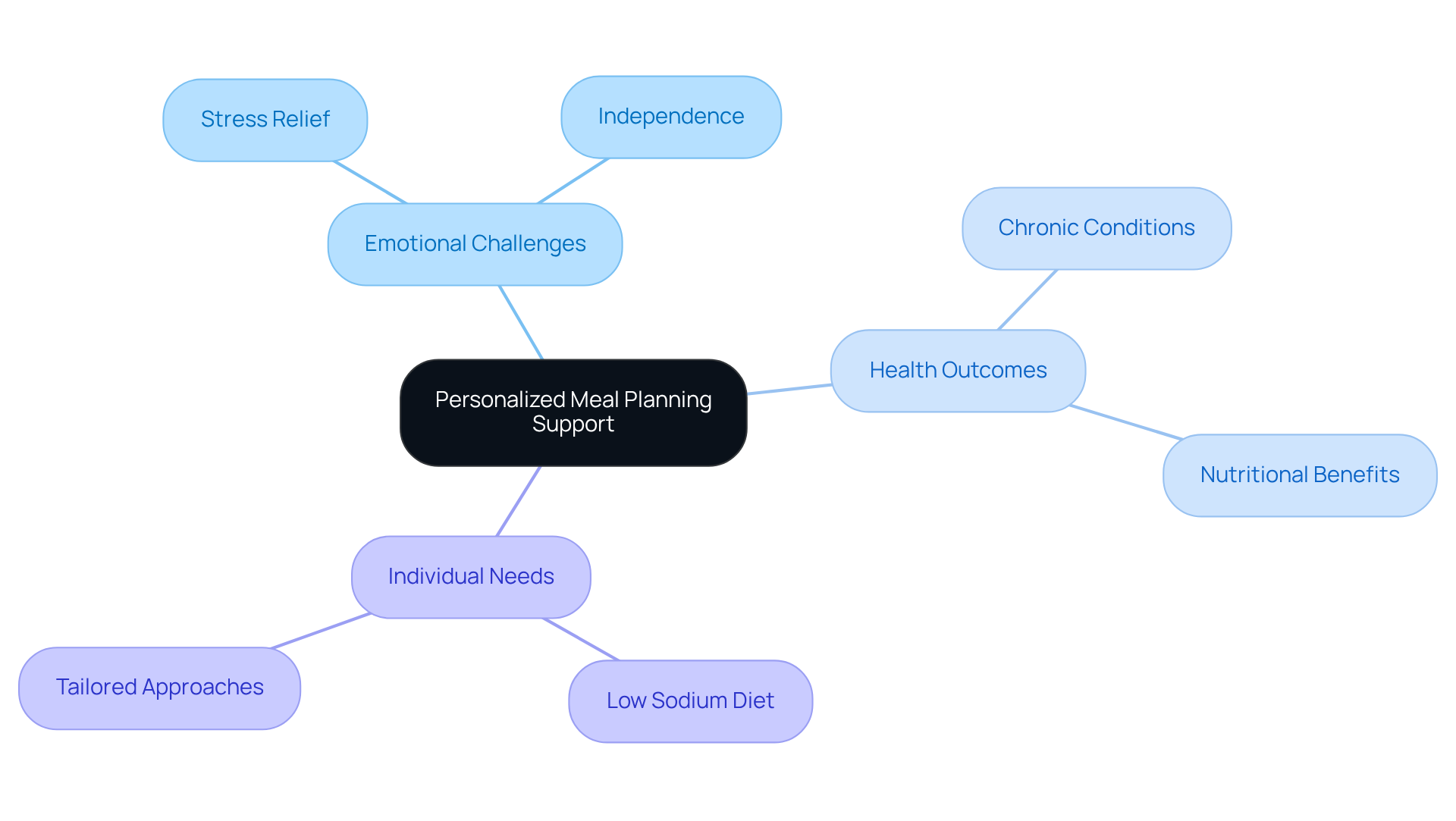
At Happy to Help Caregiving, we understand the emotional challenges that come with managing dietary restrictions, especially when it involves low sodium meal planning for those on low-sodium diets. Our caregivers are not just trained professionals; they are compassionate individuals who navigate these dietary needs with care, ensuring that every meal is both nutritious and enjoyable.
Imagine the relief of knowing that your loved one can enjoy their meals without the stress of dietary limitations. Our tailored approach not only supports clients in maintaining their wellness but also enhances their dining experience. We believe that everyone deserves to feel independent and well-cared for in the comfort of their own home.
Recent trends reveal a significant connection between personalized dietary planning and health outcomes for seniors. With around 80% of adults over 65 facing chronic health conditions, the role of customized food assistance becomes even more crucial. As one dietitian beautifully put it, "Home-delivered provisions are far more than just food - they are a lifeline."
By focusing on individual needs, Happy to Help Caregiving empowers clients to savor their meals while following low sodium meal planning and adhering to dietary guidelines. We’re here to promote a healthier lifestyle, one meal at a time, and to remind you that you’re not alone in this journey. Together, we can create a nurturing environment that fosters well-being and joy.
Create a Comprehensive Low-Sodium Grocery List
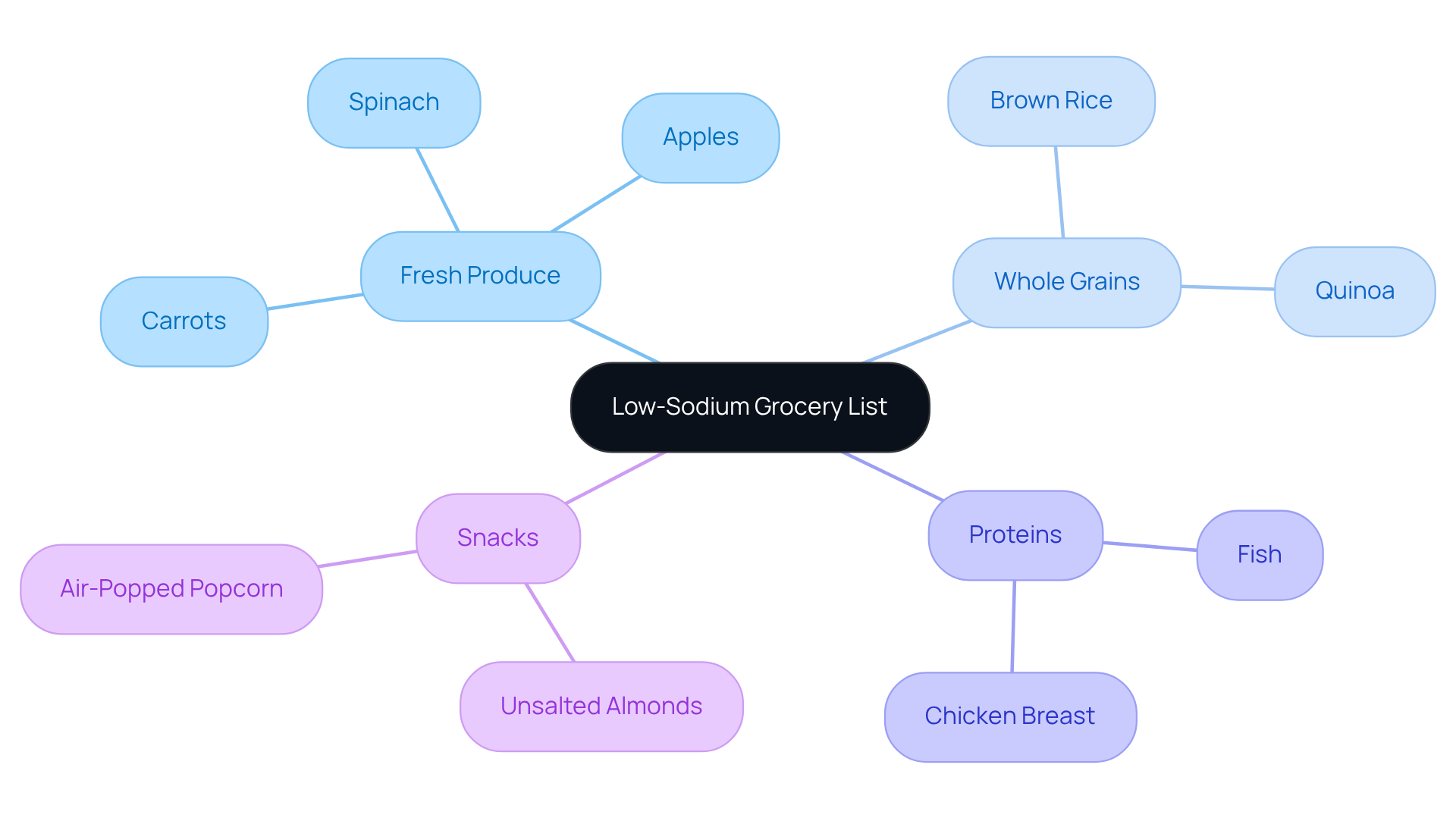
Creating a grocery list for low sodium meal planning can feel overwhelming, especially for caregivers who are already managing many responsibilities. Focusing on fresh fruits and vegetables, whole grains, and lean proteins is essential for effective low sodium meal planning. These choices not only support your health but also set a positive example for those you care for.
For effective low sodium meal planning, consider including items like unsalted nuts, reduced-salt canned goods, and fresh herbs. These can add flavor without the extra sodium. Remember, when engaging in low sodium meal planning, it’s best to steer clear of processed foods that often hide sodium.
Here’s a sample list to get you started:
- Fresh produce: spinach, carrots, apples
- Whole grains: brown rice, quinoa
- Proteins: chicken breast, fish
- Snacks: unsalted almonds, air-popped popcorn
By making these thoughtful choices, you’re not just caring for yourself; you’re nurturing those around you. It’s a small step that can lead to big changes in your health and well-being.
Implement Effective Meal Prep Strategies
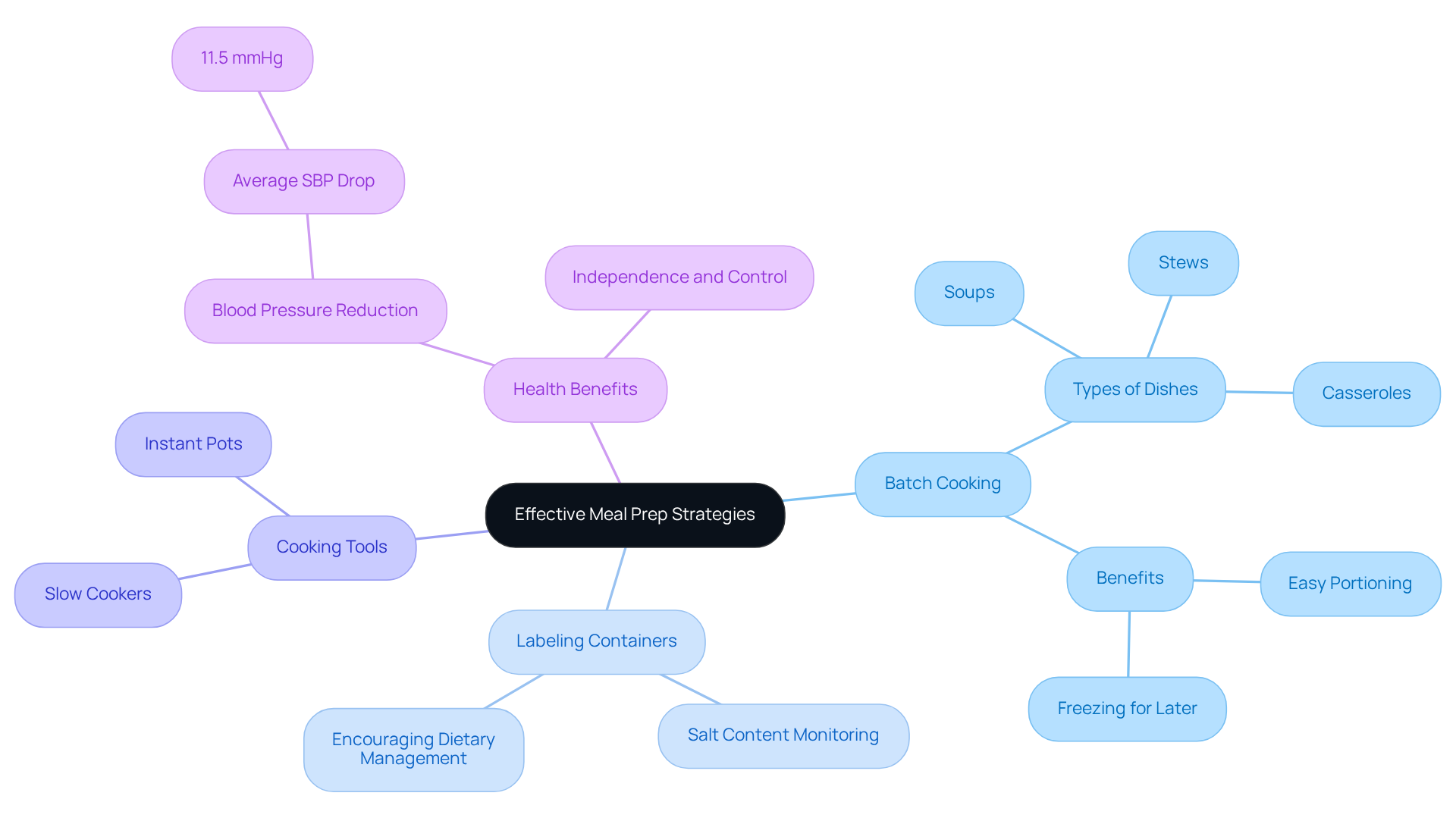
Transitioning to a low sodium meal planning can be a challenge for older adults, but efficient food preparation techniques can make this journey much smoother. Imagine dedicating just one day a week to prepare meals in advance. Batch cooking as part of low sodium meal planning for soups, stews, and casseroles not only makes portioning and freezing easy but also ensures that delicious, healthy dishes are always on hand.
Using clear containers to label each dish with its salt content can simplify monitoring intake, helping to encourage better dietary management. Slow cookers and instant pots are fantastic tools for effortless meal prep, making low sodium meal planning easy while allowing for the creation of tasty dishes without the need for excessive salt. As one caregiver shares, 'Preparing dishes ahead not only saves time but also supports low sodium meal planning, especially for those watching their salt intake.'
Research shows that reducing sodium can lead to significant health improvements, including an average drop in seated systolic blood pressure (SBP) of 11.5 mmHg for those on low-sodium diets. The benefits of low sodium meal planning go beyond just convenience; it nurtures a sense of independence and control over food choices, which is especially important for seniors.
By focusing on these supportive strategies, families can help their loved ones stick to low sodium meal planning while still enjoying flavorful meals.
Incorporate Healthy Low-Sodium Snack Ideas
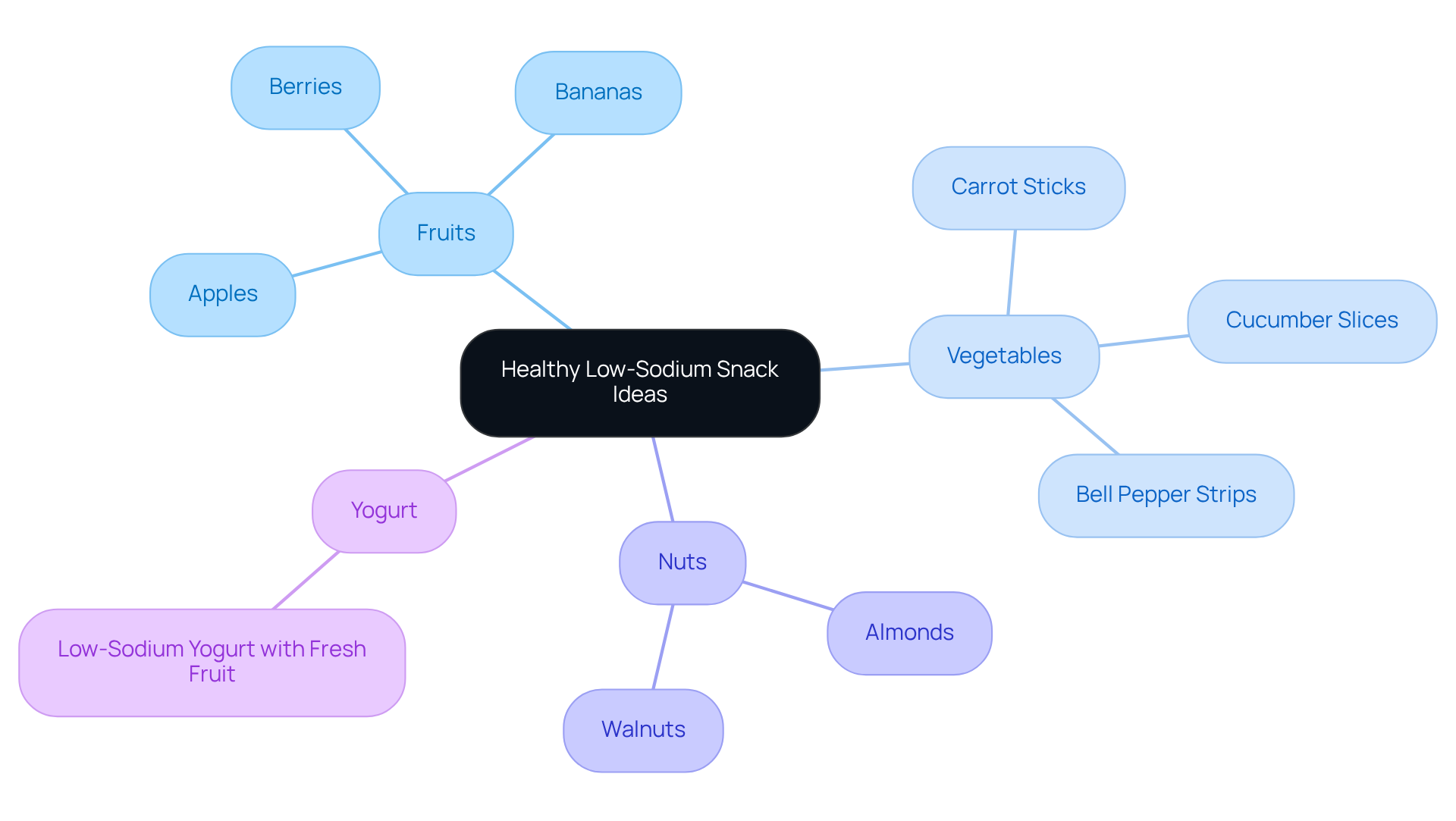
Incorporating healthy snacks into low sodium meal planning can truly help curb hunger between meals, making them essential for seniors and caregivers alike. Here are some nutritious options to consider:
- Fresh fruits like apples, bananas, and berries offer natural sweetness along with essential vitamins.
- Raw vegetables such as carrot sticks, cucumber slices, and bell pepper strips paired with hummus provide a satisfying crunch and fiber.
- Unsalted nuts, including almonds and walnuts, are excellent sources of healthy fats and protein without the added salt.
- Low-sodium yogurt topped with fresh fruit creates a creamy, nutritious snack that’s both delicious and easy to prepare.
It’s important to recognize that many Americans consume an average of 3,400 mg of salt daily, which exceeds the recommended limit of less than 2,300 mg per day for individuals over age 13. This highlights the significance of low sodium meal planning when selecting snacks to support overall health. Additionally, using seasonings without salt, like garlic powder instead of garlic salt, can enhance flavor without increasing salt levels. Caregivers should also take a moment to check nutrition facts labels to make informed choices about sodium content in snacks. These treats are excellent for low sodium meal planning as they support a reduced-salt diet and promote overall well-being, making them wonderful options for sustaining energy and wellness.
Choose Low-Sodium Beverages Wisely
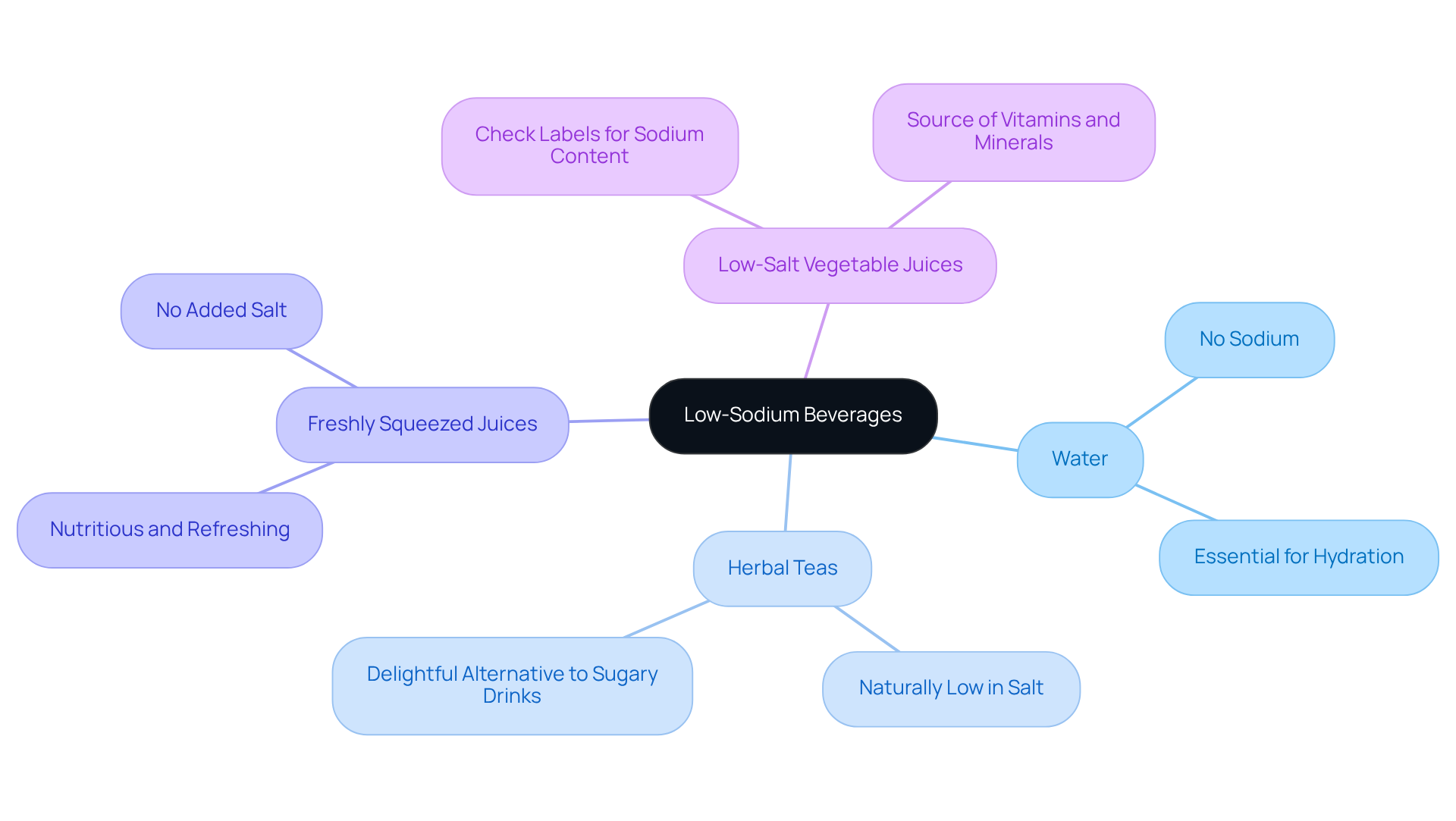
Low sodium meal planning is essential for choosing low-sodium beverages to maintain a balanced diet. Here are some gentle suggestions:
- Water: This is the best choice for hydration. Water is essential for your overall health and contains no sodium at all.
- Herbal Teas: Naturally low in salt, herbal teas offer a delightful alternative to sugary drinks while keeping you hydrated.
- Freshly Squeezed Juices: Look for juices made from fresh fruits without any added salt. They’re nutritious and refreshing!
- Low-Salt Vegetable Juices: Always check the labels to ensure they meet salt guidelines. These can be a wonderful source of vitamins and minerals without the extra salt.
It’s best to steer clear of sugary beverages and sodas, as they can be high in salt and calories. Staying hydrated is especially crucial when you’re involved in low sodium meal planning. It promotes overall wellness and well-being. Medical experts emphasize that proper hydration can help reduce the risks associated with high salt consumption. That’s why these drink choices are so essential for supporting cardiovascular health and preventing high blood pressure.
Remember, making these small changes can lead to a healthier lifestyle, and you’re not alone in this journey. Every step you take towards better choices is a step towards a happier, healthier you.
Understand the Benefits of a Low-Sodium Diet
A reduced-salt diet can truly transform lives, especially for seniors and those facing specific health challenges. Let’s explore some of the heartfelt benefits:
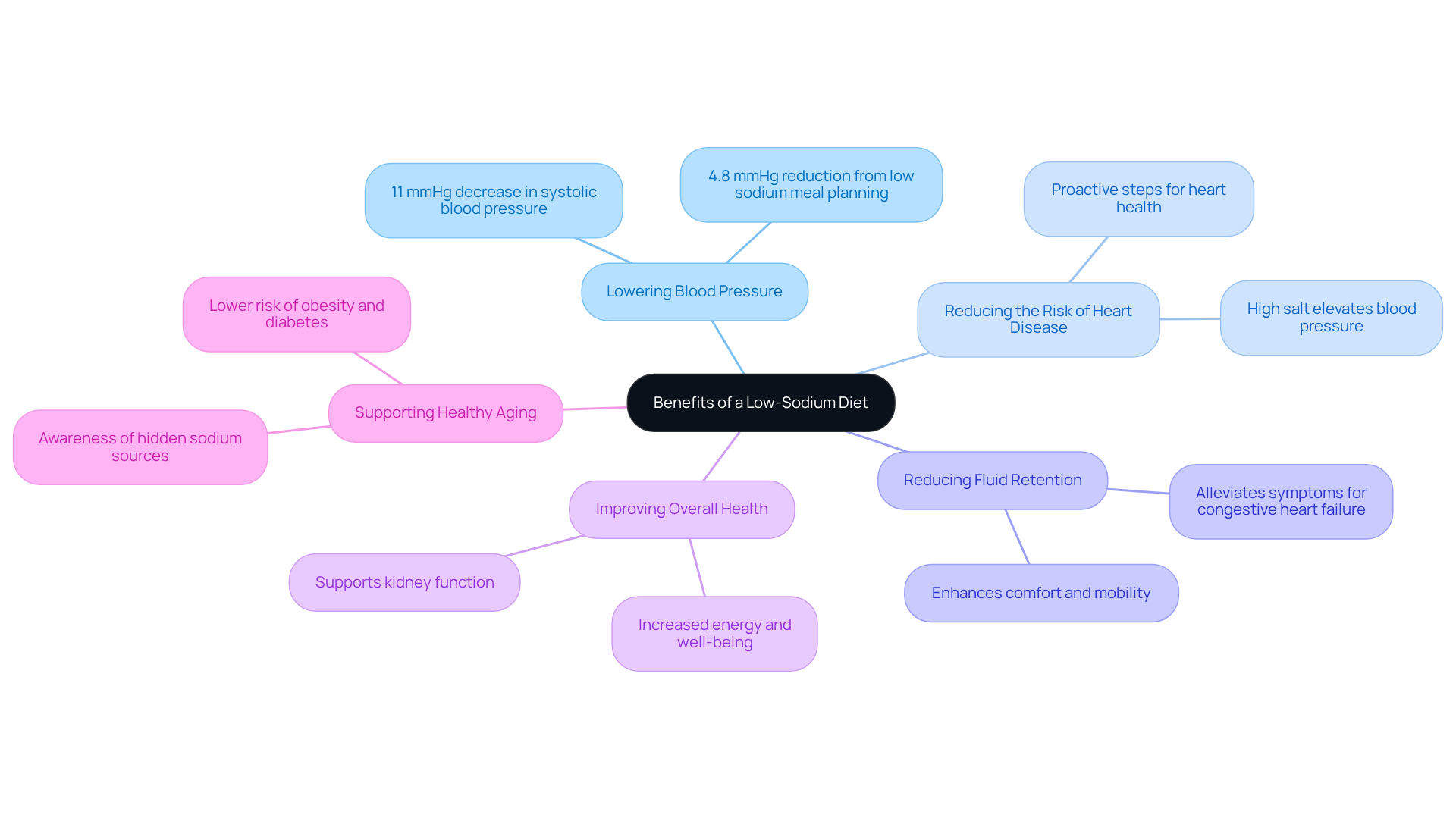
- Lowering Blood Pressure: Managing hypertension is crucial, and reducing sodium intake plays a key role. Studies show that a reduced-salt diet can lead to significant drops in systolic blood pressure. One trial even noted a decrease of 11 mmHg compared to a standard salt diet. Imagine the relief that comes with a 4.8 mmHg reduction in systolic blood pressure from low sodium meal planning! It’s a simple yet powerful change that can make a real difference.
- Reducing the Risk of Heart Disease: A low-salt diet is vital for nurturing overall heart health. High salt levels can elevate blood pressure, increasing the risk of heart disease and stroke. By embracing low sodium meal planning, seniors can take proactive steps to protect their hearts. The American Heart Association highlights that many adults consume too much salt, underscoring the need for thoughtful dietary changes.
- Reducing Fluid Retention: For those dealing with conditions like congestive heart failure, excess sodium can lead to uncomfortable fluid retention. A reduced-salt diet can alleviate these symptoms, enhancing comfort and mobility. Just think about how much better one can feel with less swelling and discomfort!
- Improving Overall Health: Research indicates that seniors who adopt a low-sodium diet often experience increased energy and improved well-being. This approach not only aids in weight management but also supports kidney function, lowering the risk of chronic kidney disease. It’s about feeling vibrant and healthy at every stage of life.
- Supporting Healthy Aging: With the average American consuming over 3,400 milligrams of salt daily-far exceeding the recommended limit of 2,300 milligrams-there’s a pressing need for dietary adjustments. Reducing salt intake can lead to better health outcomes, including a lower risk of obesity, diabetes, and other chronic conditions. Caregivers should be mindful of hidden sodium sources in processed foods and canned soups, which can significantly affect sodium intake.
Incorporating these dietary changes can greatly enhance the quality of life for seniors. Caregivers are encouraged to check nutrition labels, opt for home-cooked meals, and focus on low sodium meal planning. Together, we can make a meaningful impact on health and happiness.
Consult a Dietitian for Tailored Guidance
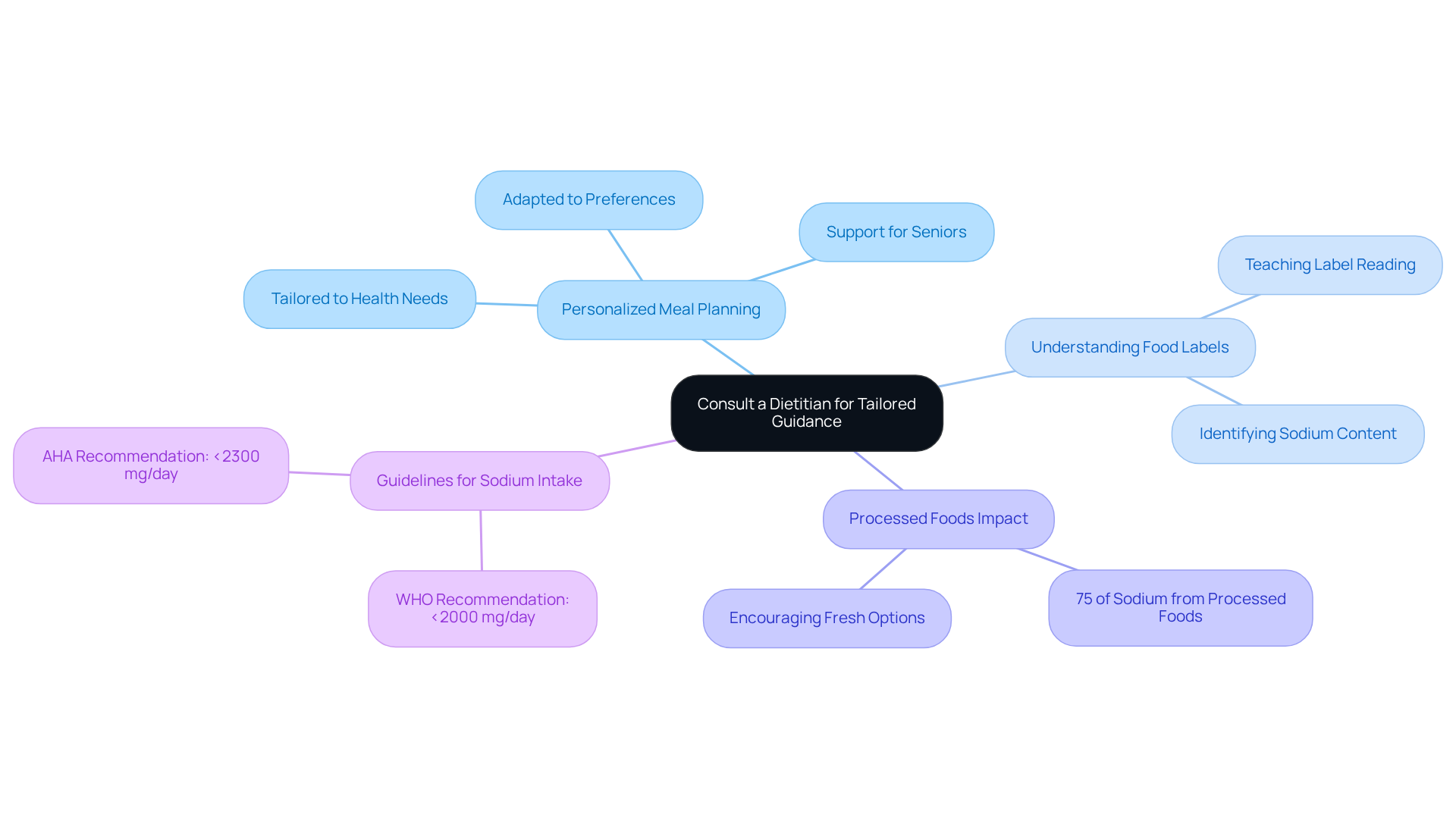
Navigating a low sodium meal planning can be challenging, and engaging a registered dietitian is a vital step for individuals seeking support. These compassionate professionals provide personalized low sodium meal planning tailored to specific health needs, preferences, and lifestyles. They empower clients by teaching them how to read food labels effectively and understand salt content, which helps in making healthier food choices.
With about 75% of salt consumption coming from processed foods, dietitians play a crucial role in guiding clients toward fresh, minimally processed options. It's heartening to see a growing demand for dietary consultations among seniors, as personalized guidance can significantly enhance their quality of life. By fostering effective collaborations between dietitians and caregivers, individuals can achieve better wellness outcomes and maintain their independence through low sodium meal planning that adheres to reduced-sodium dietary guidelines.
The World Health Organization recommends that adults limit sodium intake to less than 2000 mg/day to prevent health issues like high blood pressure and cardiovascular diseases. It's also essential to address disparities in access to healthy diets, especially for seniors who may encounter barriers in obtaining nutritious food options. Together, we can create a supportive environment that nurtures health and well-being.
Budget Effectively for Low-Sodium Meal Planning
Effective budgeting for low sodium meal planning can feel overwhelming, but with a little strategy, you can make it work for you. Here are some caring tips to help you save money while keeping your diet healthy:
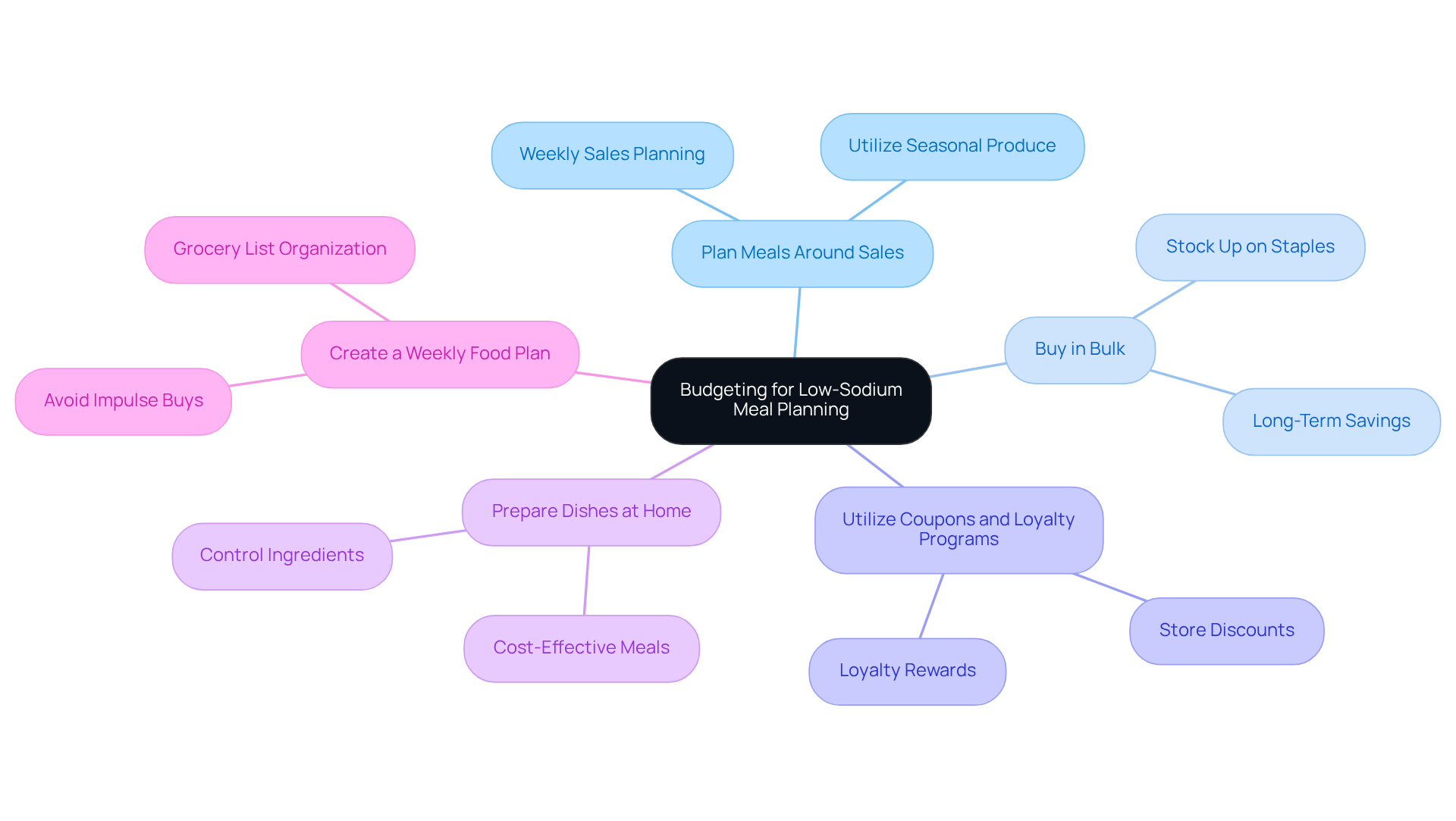
- Plan Meals Around Sales and Seasonal Produce: Embrace the joy of fresh, seasonal fruits and vegetables! They’re often more affordable and packed with nutrients. By planning your meals around weekly sales, you not only save money but also nourish your body with the best nature has to offer.
- Buy in Bulk: Think about stocking up on staples like grains, legumes, and reduced-salt canned goods. Buying in bulk can lead to significant savings over time. Plus, it means you’ll always have essential ingredients on hand, making meal prep easier and more convenient.
- Utilize Coupons and Loyalty Programs: Many grocery stores offer helpful coupons and loyalty programs. By signing up, you can enjoy discounts on reduced-salt products and other nutritious options. It’s a simple way to ease the financial burden while shopping for healthy foods.
- Prepare Dishes at Home: Cooking at home is often kinder to your wallet than buying pre-packaged low-sodium meals. When you prepare your own dishes, you have full control over the ingredients, allowing you to create healthier meals that fit your budget.
Create a weekly food plan and grocery list that incorporates low sodium meal planning: Taking a moment to organize your meals for the week and sticking to a grocery list can make a world of difference. This practice helps you avoid those tempting impulse buys and ensures you get only what you need. Not only does this save money, but it also supports your commitment to a reduced-salt diet.
Enhance Nutritional Value Without Sodium
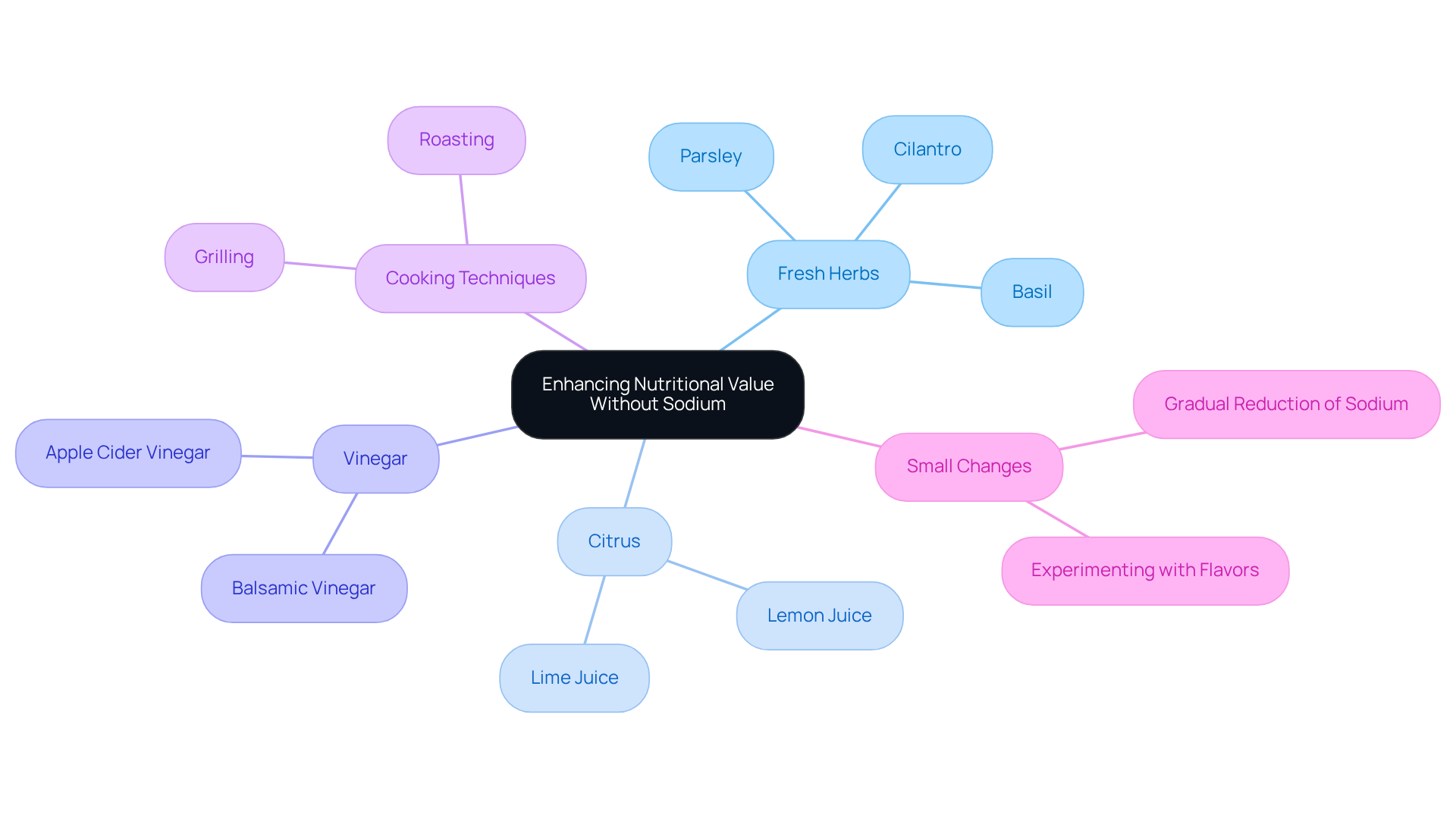
Enhancing the nutritional value of meals through low sodium meal planning can feel like a daunting task, especially for those caring for loved ones. But there are gentle ways to make meals flavorful and nourishing through low sodium meal planning.
Consider using fresh herbs like basil, cilantro, and parsley. Through low sodium meal planning, they can add a burst of flavor without the need for sodium, making each dish feel special.
Incorporating citrus, such as lemon or lime juice, can brighten up your meals and enhance their taste, which is beneficial for low sodium meal planning. Just a squeeze can bring a smile to the table.
Experimenting with different types of vinegar can also add depth to salads and marinades, creating a delightful experience for everyone.
Lastly, focus on cooking techniques like roasting or grilling. These methods can truly bring out the natural flavors in vegetables and proteins, making your meals not only healthier but also more enjoyable.
Remember, every small change in our low sodium meal planning can make a big difference in the way we nourish our loved ones.
Maximize Your Low-Sodium Diet Success
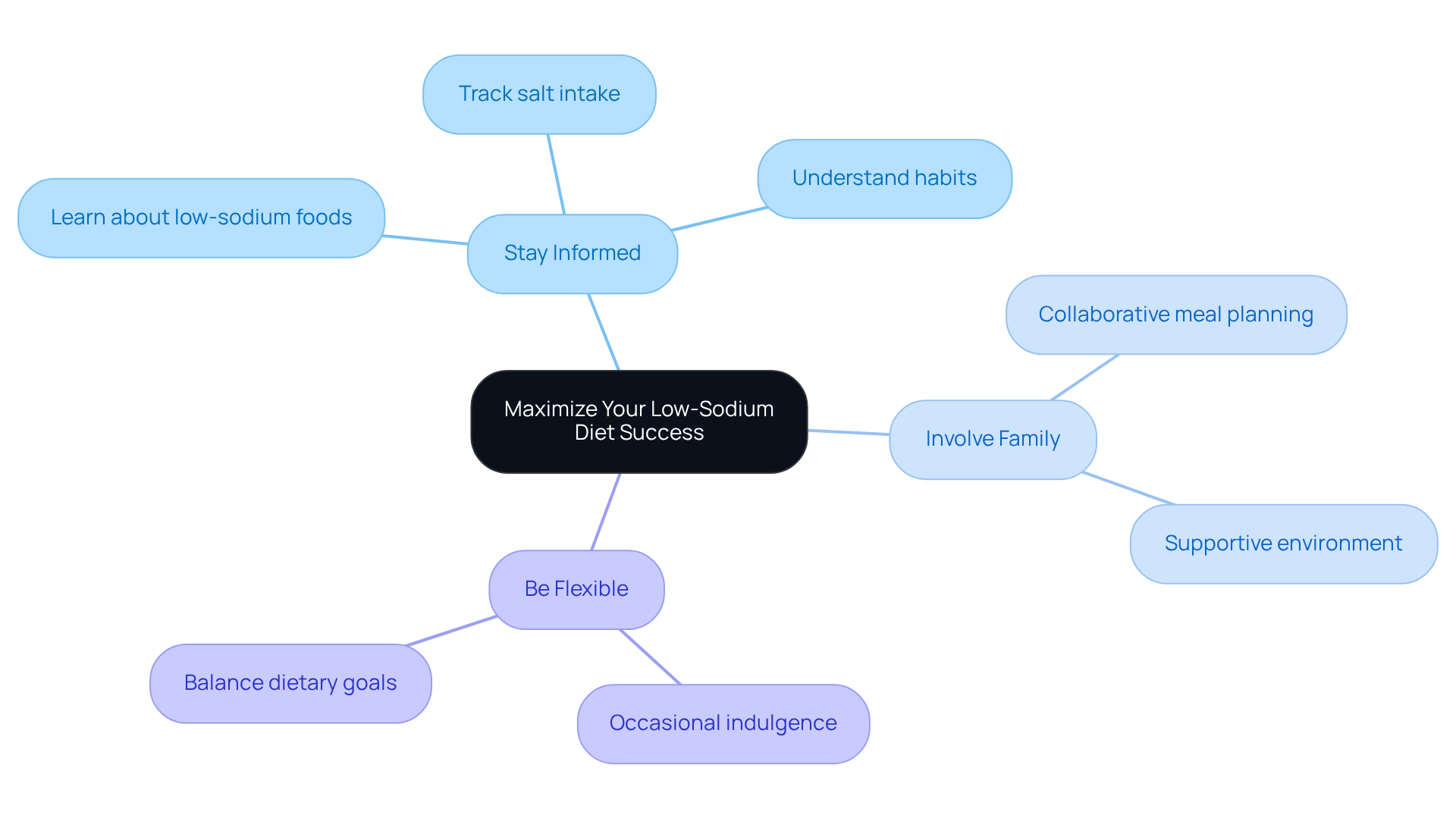
To truly thrive on a low-sodium diet, it’s important to embrace some essential strategies that can make a world of difference:
-
Stay Informed: Keep learning about low-sodium foods and recipes. This knowledge can really enhance your meal options. The World Health Organization suggests that adults should aim for less than 2000 mg of salt each day to maintain good health. It’s all about making informed choices that support your well-being. Track your salt intake as part of your low sodium meal planning by using apps or journals to monitor your daily salt consumption. This practice is not just about numbers; it’s about understanding your habits and making adjustments that can lead to healthier choices. Studies show that tracking sodium can significantly improve health outcomes, so it’s worth the effort.
-
Involve Family: Bring your loved ones into the process of planning and preparing meals. This collaborative approach not only strengthens family bonds but also promotes healthier eating habits. When family members are involved, it creates a supportive environment that can be especially beneficial for seniors.
-
Be Flexible: Remember, it’s okay to indulge occasionally while keeping your overall dietary goals in sight. Finding this balance can help you stay motivated and enjoy your meals, making low sodium meal planning easier to adhere to as a lifestyle.
By embracing these strategies, you’re not just changing your diet; you’re nurturing your health and well-being.
Making the Right Choice
Embracing a low sodium diet isn’t just about cutting back on salt; it’s about nurturing health and well-being through thoughtful meal planning. By focusing on nutritious ingredients and using effective strategies, you can tackle the challenges of dietary restrictions while still enjoying flavorful and satisfying meals.
Throughout this article, we’ve shared essential tips, like the importance of:
- Crafting a comprehensive grocery list
- Implementing meal prep techniques
- Including healthy snacks and beverages
Each of these elements is vital in supporting a low sodium lifestyle, ultimately leading to better health outcomes, especially for seniors dealing with chronic conditions.
As you embark on this journey toward low sodium meal planning, staying informed and engaged is crucial. Involving family members in the planning process can create a supportive atmosphere, while consulting with a dietitian offers personalized guidance tailored to your unique needs. By making small, consistent changes, caregivers and their loved ones can foster a healthier lifestyle, paving the way for a vibrant and fulfilling life. Embrace this challenge, and remember that every step you take toward better dietary choices is a step toward enhanced health and happiness.
https://iframe.tely.ai/cta/eyJhcnRpY2xlX2lkIjogIjY5MWZkYzVmNzQ3YTFkNGZkNjY2ZDNmMSIsICJjb21wYW55X2lkIjogIjY4ZWU1ZGNhNzMxNzYyNTU3ZjNjOTVjMSIsICJpbmRleCI6IG51bGwsICJ0eXBlIjogImFydGljbGUifQ==Frequently Asked Questions
What is Happy to Help Caregiving's approach to meal planning for clients with dietary restrictions?
Happy to Help Caregiving offers personalized meal planning support, focusing on low sodium diets. Their caregivers are trained professionals who provide compassionate assistance, ensuring meals are nutritious and enjoyable while navigating dietary needs.
Why is personalized dietary planning important for seniors?
Personalized dietary planning is crucial for seniors, as around 80% of adults over 65 face chronic health conditions. Customized food assistance can significantly impact health outcomes, enhancing both wellness and dining experiences.
What types of foods should be included in a low sodium grocery list?
A low sodium grocery list should focus on fresh fruits and vegetables, whole grains, and lean proteins. Recommended items include unsalted nuts, reduced-salt canned goods, and fresh herbs, while avoiding processed foods that often contain hidden sodium.
Can you provide a sample grocery list for low sodium meal planning?
Yes, a sample grocery list for low sodium meal planning includes:
- Fresh produce: spinach, carrots, apples
- Whole grains: brown rice, quinoa
- Proteins: chicken breast, fish
- Snacks: unsalted almonds, air-popped popcorn
What meal prep strategies can help with low sodium meal planning?
Effective meal prep strategies include dedicating one day a week to prepare meals in advance, batch cooking soups, stews, and casseroles, and using clear containers to label dishes with their salt content. Tools like slow cookers and instant pots can also simplify the process.
What are the health benefits of reducing sodium in meals?
Reducing sodium can lead to significant health improvements, such as an average drop in seated systolic blood pressure (SBP) of 11.5 mmHg for those on low-sodium diets. This approach promotes a sense of independence and control over food choices, particularly for seniors.