10 Essential Tips for Senior Meal Prep That Caregivers Need
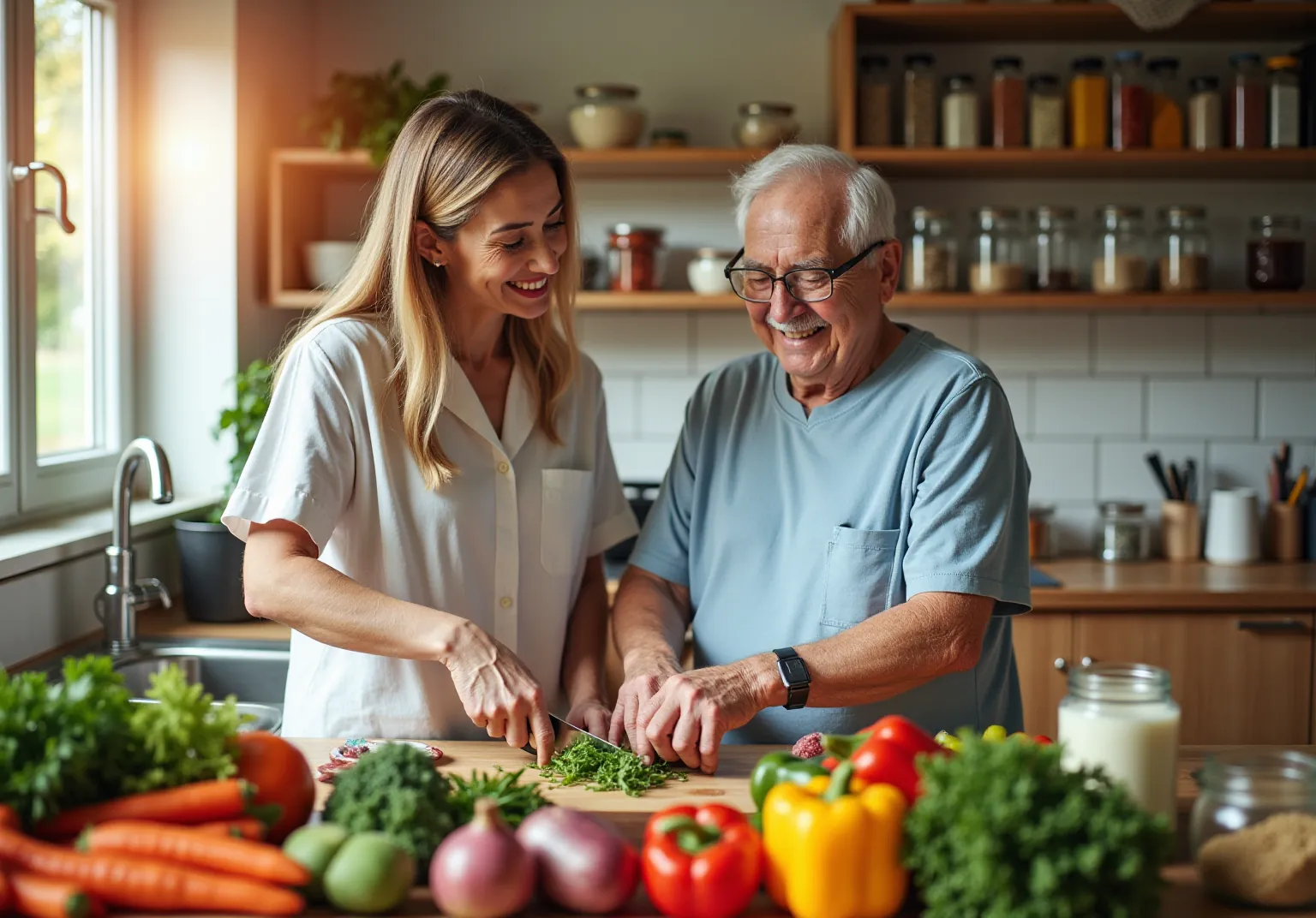
For families in our service areas
For families in our service areas, this guide explains caregiver support and how non-medical in-home caregiving can support care planning in East Idaho, Treasure Valley & Magic Valley, Northern Wasatch, North Central West Virginia & Southwestern Pennsylvania, and Northeast Ohio.
The Importance of Tips
The nutritional needs of elderly individuals often go unmet, leading to serious health issues and a decline in quality of life. Caregivers face the daunting task of ensuring that meals are not only nutritious but also enjoyable. This challenge is significant, especially considering the dietary restrictions and changing tastes of older adults.
How can caregivers effectively navigate these complexities to enhance the dining experience and promote better health for seniors? This article explores ten essential tips for senior meal prep that empower caregivers to create balanced, appealing meals tailored to the unique needs of their clients.
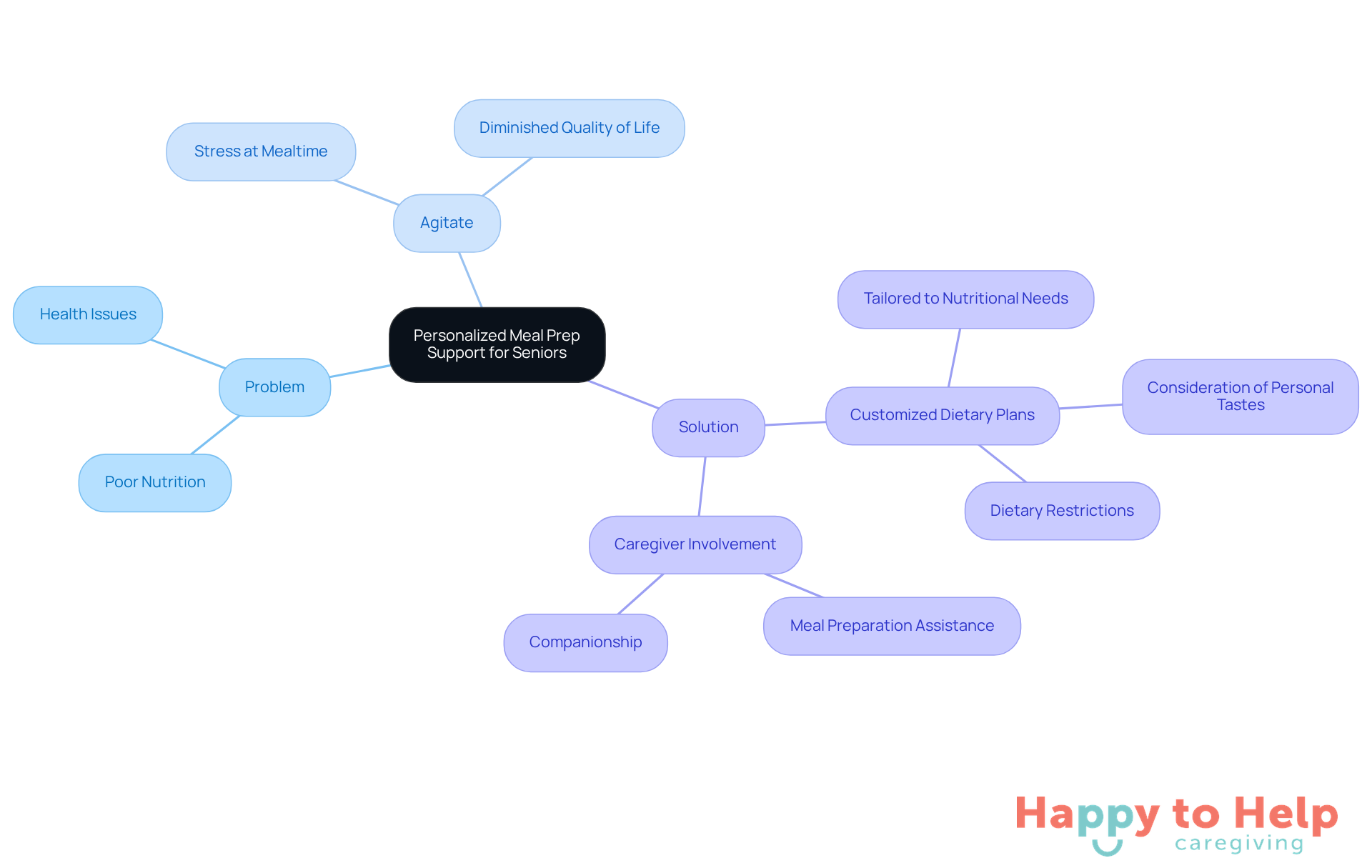
Happy to Help Caregiving: Personalized Meal Prep Support for Seniors
Many elderly individuals struggle with senior meal prep, which can lead to poor nutrition and health issues.
Agitate: This challenge not only affects their physical health but can also diminish their quality of life, making mealtime a source of stress rather than enjoyment.
Happy to Help Caregiving provides customized senior meal prep assistance tailored to the specific needs of elderly clients. Their caregivers work closely with clients to create dietary plans that meet nutritional requirements while considering personal tastes and dietary restrictions. This personalized approach ensures that older adults enjoy their meals, promoting better health and well-being in the comfort of their homes.
Create a Tailored Grocery List for Balanced Meals
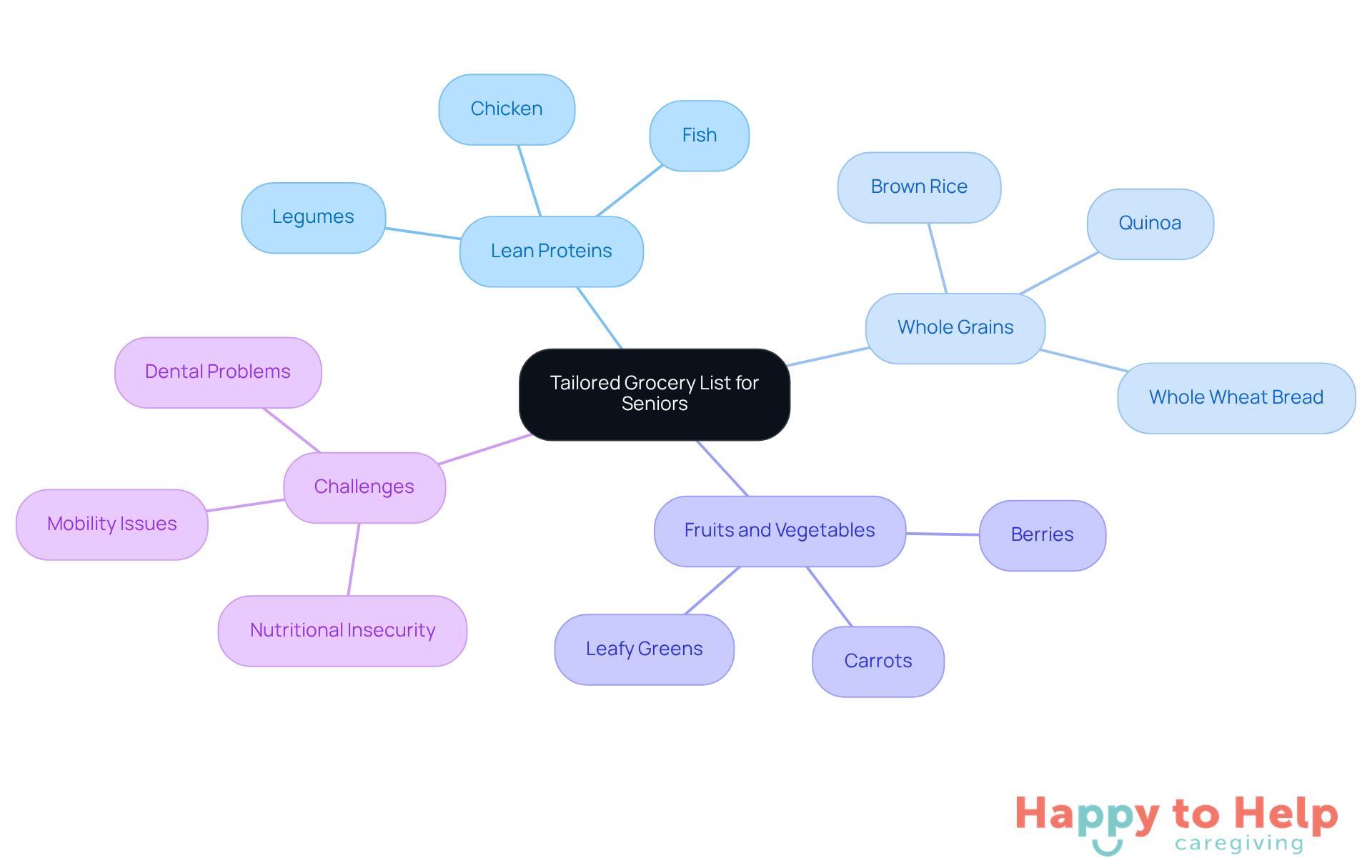
Creating a tailored grocery list is essential for senior meal prep to effectively meet the nutritional needs of seniors. Many caregivers face the challenge of ensuring that older adults receive the right nutrients, which can be complicated by individual dietary requirements and preferences, making senior meal prep essential. This can lead to a lack of variety in meals, potentially impacting health and vitality.
A balanced grocery list should include:
- Lean proteins
- Whole grains
- A variety of fruits and vegetables
These elements are crucial for maintaining health and preventing chronic conditions such as diabetes and heart disease, as highlighted by the National Institute of Health. To streamline the grocery shopping process, caregivers can utilize apps or templates that help track necessary ingredients for planned meals. This not only saves time but also promotes a balanced diet, which is vital for enhancing overall well-being.
Involving older adults in the grocery shopping process empowers them to make informed dietary choices, fostering independence and improving their quality of life. However, caregivers should be aware of challenges such as mobility issues and nutritional insecurity that may hinder older adults' ability to participate in senior meal prep. Providing nutrition education is also vital, as it enables older adults to make informed dietary choices for improved health.
Consider Dietary Needs and Restrictions in Meal Planning
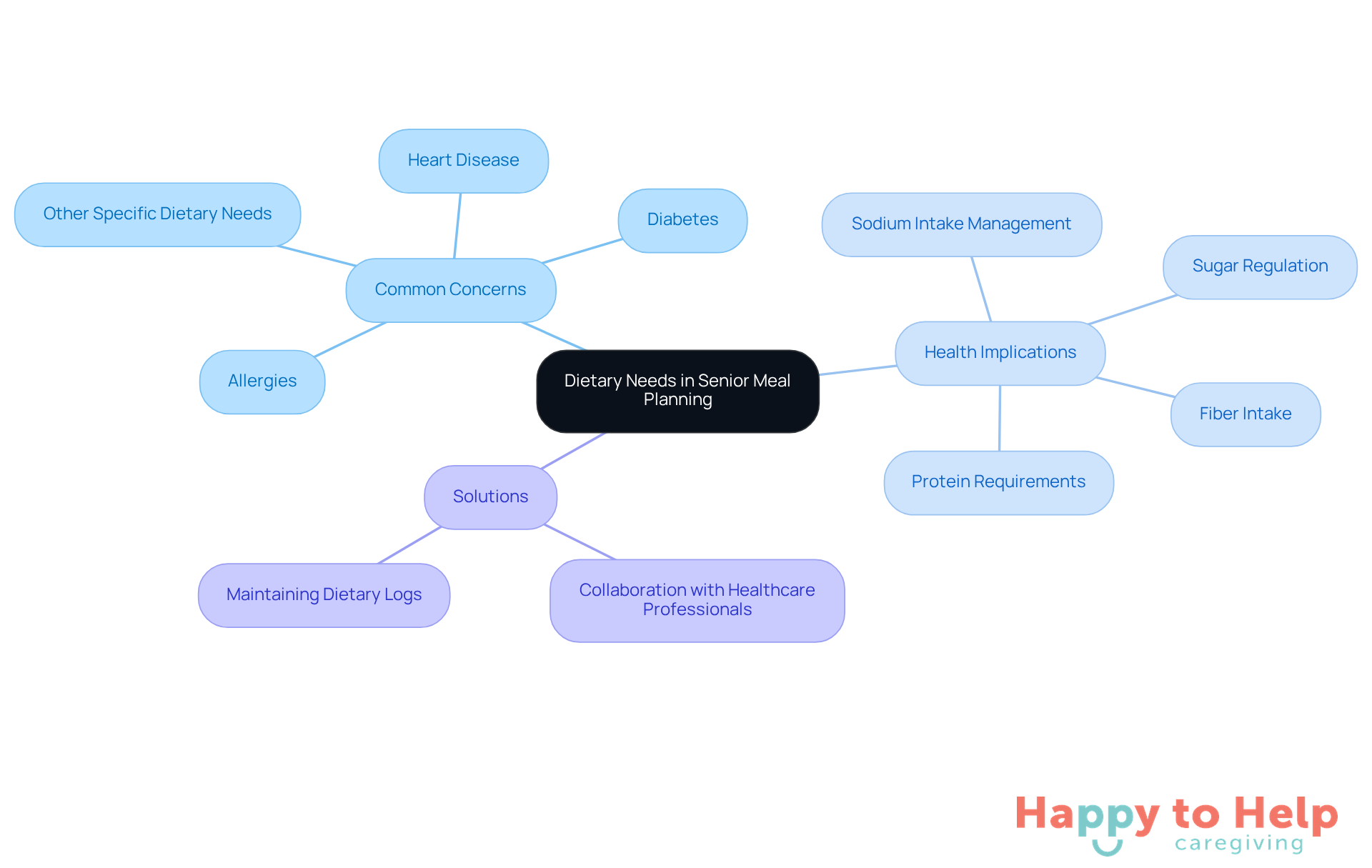
When organizing senior meal prep for seniors, caregivers encounter significant challenges due to dietary limitations and health issues that can affect food selections. Common concerns include:
- Allergies
- Diabetes
- Heart disease
- Other specific dietary needs
These issues can complicate meal planning and may lead to potential health risks if not addressed properly.
For instance, older adults often require lower sodium intake to manage high blood pressure, while those with diabetes need to regulate sugar consumption carefully. Additionally, incorporating adequate fiber is essential for digestive health, and ensuring sufficient protein intake is vital for maintaining muscle mass. Without attention to these dietary restrictions, caregivers may inadvertently compromise the health of the seniors they support.
To tackle these challenges, working together with healthcare professionals or nutritionists can guarantee that senior meal prep plans are both safe and advantageous. Maintaining a thorough log of dietary restrictions assists caregivers in effectively customizing senior meal prep options. Statistics suggest that around 19% of older adults follow special diets, emphasizing the need for tailored nutritional planning like senior meal prep, based on information from 2015-2018.
Interacting with healthcare experts can lead to the creation of dietary plans that not only fulfill nutritional needs but also improve the overall health of seniors. As noted by nutrition experts, "Older adults typically have lower calorie needs than they did when they were younger, making it essential to focus on nutrient-dense foods." By prioritizing these considerations, caregivers can ensure that the dietary needs of seniors are met, promoting their health and well-being.
Implement Batch Cooking for Efficient Meal Prep
Senior meal prep can be a significant challenge for caregivers, often leading to unhealthy eating habits due to time constraints. Without a plan, it’s easy to resort to quick, less nutritious options, which can impact both health and well-being.
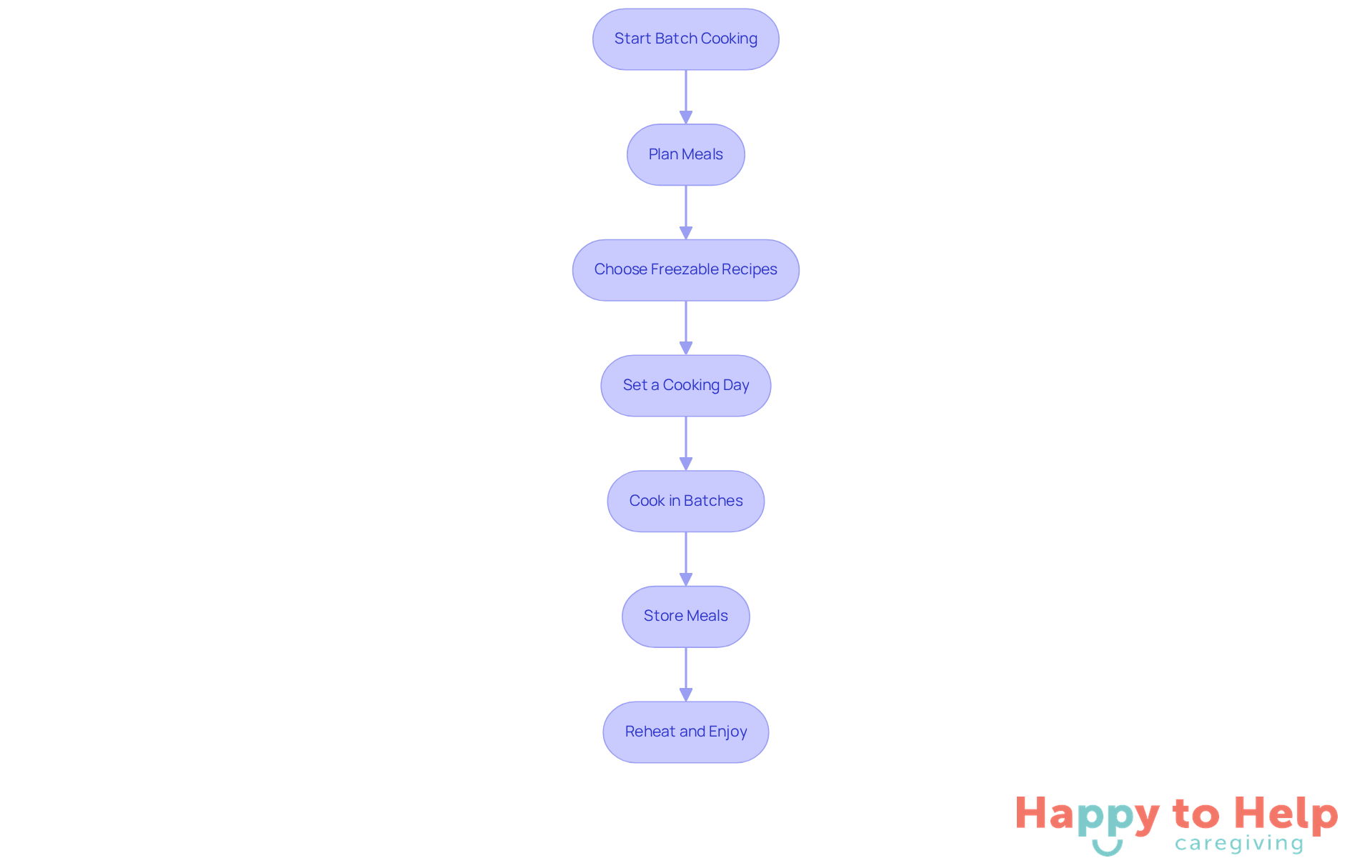
Batch cooking offers a practical solution. By preparing large quantities of dishes at once, caregivers can ensure that healthy meals are readily available. This method of senior meal prep not only saves time but also alleviates the stress of daily cooking. Focus on recipes that freeze well, such as:
- Soups
- Stews
- Casseroles
To streamline the process, dedicate a specific day each week for senior meal prep by batch cooking. This routine can help caregivers manage their time better and maintain a healthier diet. With a little planning, nutritious meals can be just a quick reheat away.
Store Meals Properly for Freshness and Safety
Proper food storage poses a significant challenge for seniors, impacting both freshness and safety. Without proper measures, food can quickly become contaminated or lose its nutritional value, leading to potential health risks.
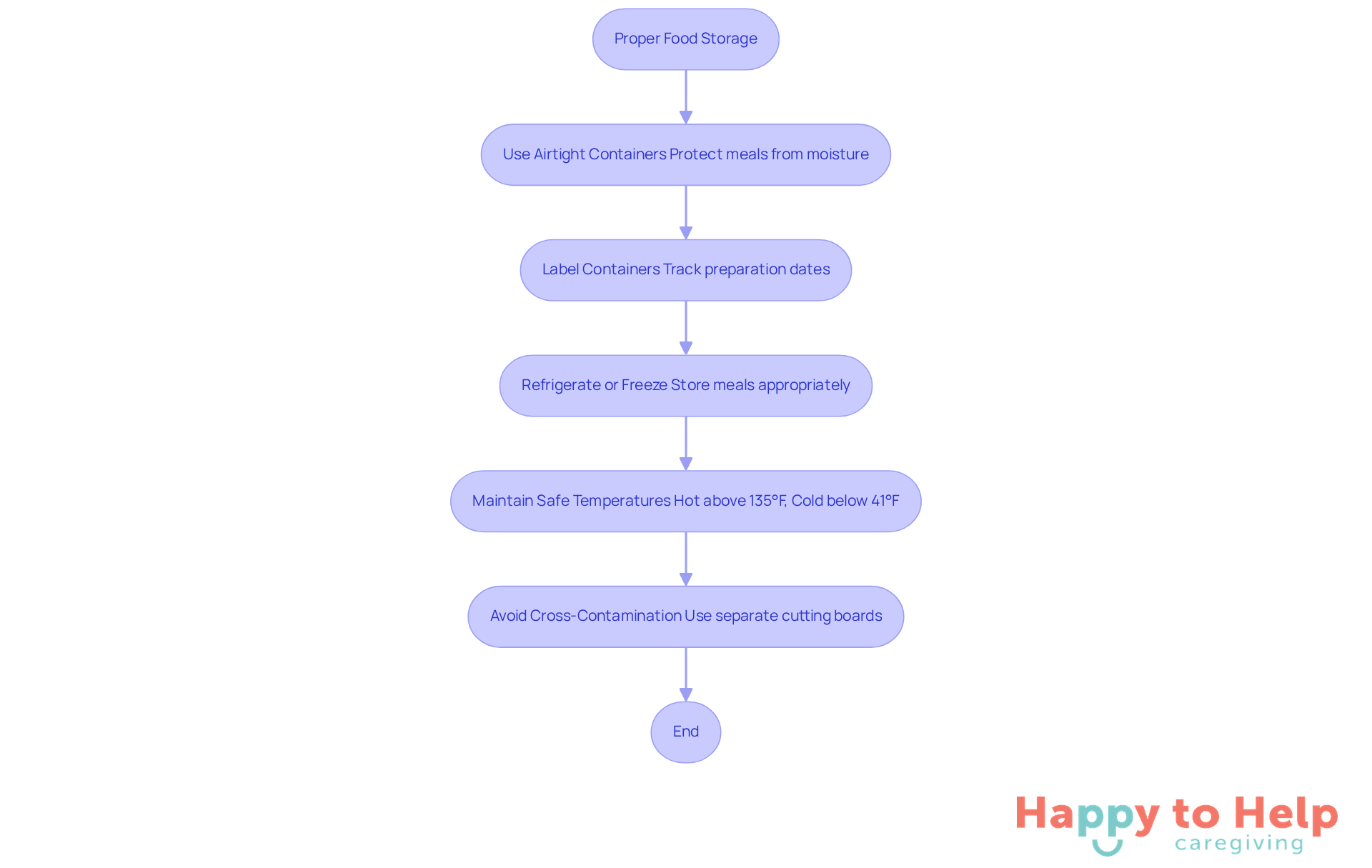
To combat these issues, caregivers should utilize airtight containers to protect meals from moisture loss and contamination. Clearly labeling each container with the preparation date and contents allows for effective monitoring of freshness. Meals meant for immediate consumption should be refrigerated, while those intended for longer storage should be frozen.
Following safety guidelines is crucial. Hot items must be maintained above 135 degrees Fahrenheit, and cold items should stay below 41 degrees Fahrenheit to prevent foodborne illnesses, which can be particularly dangerous for older adults. As noted by Aster Aging, "Freezing is one of the most effective ways to extend the life of your groceries while preserving their nutritional value and taste."
Additionally, using distinct cutting boards for prepared and uncooked items can help avert cross-contamination. Regularly checking food temperatures with an appliance thermometer ensures safety and helps maintain the quality of meals.
Incorporate Healthy Snacks and Quick Meal Options
For older adults, managing energy levels throughout the day can be a significant challenge, highlighting the importance of senior meal prep. Without proper nutrition, senior meal prep can help prevent fatigue, which may impact their overall well-being and independence. Caregivers play a crucial role in addressing this issue by ensuring that senior meal prep includes readily available nutritious snacks.
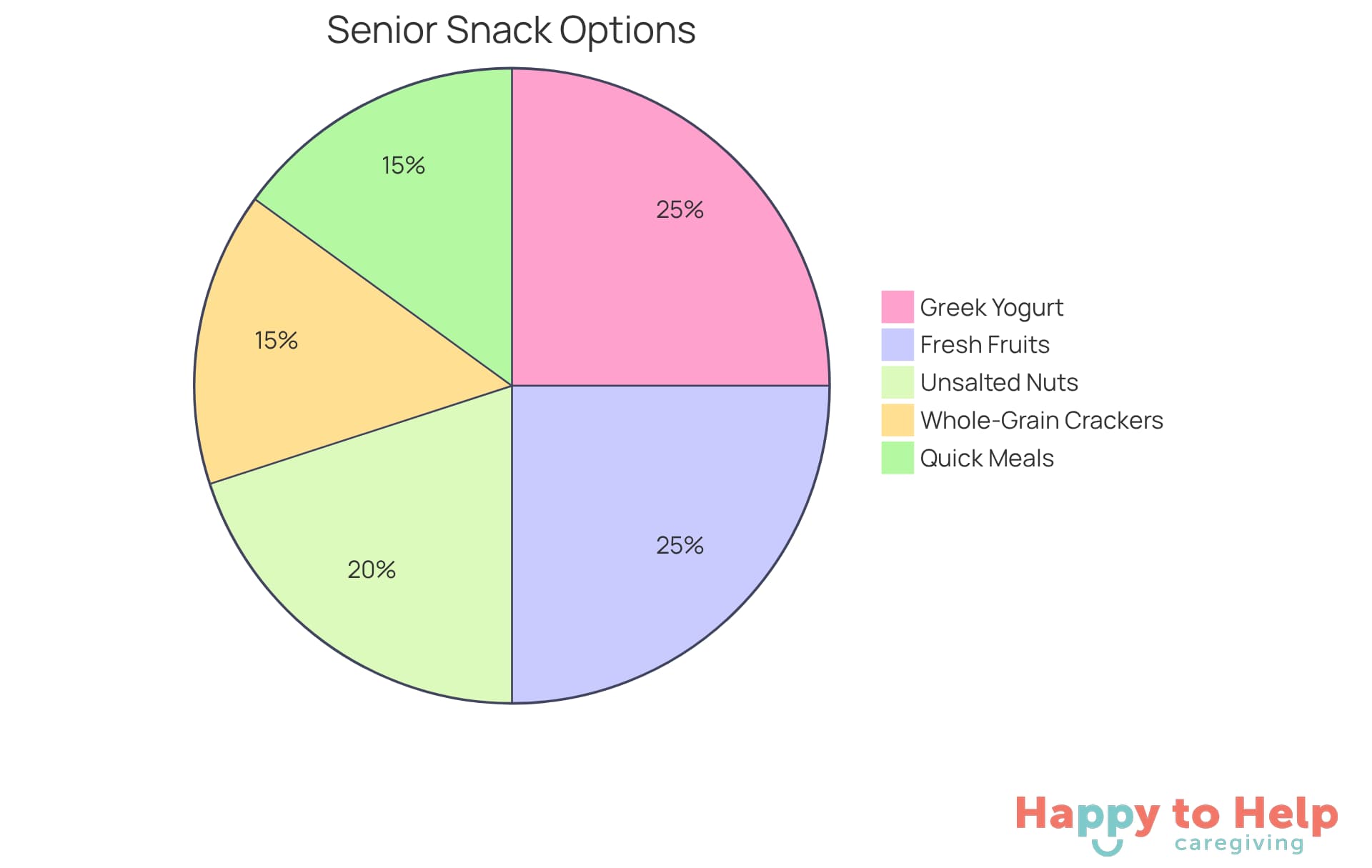
Nutritious snacks like:
- Greek yogurt
- Fresh fruits
- Unsalted nuts (such as almonds, cashews, and walnuts)
- Whole-grain crackers
are not only easy to prepare but also packed with essential nutrients. These options help older adults maintain muscle mass and provide sustained energy. Quick dining solutions, including salads, wraps, or smoothies, can be prepared in minutes, simplifying senior meal prep for caregivers to offer balanced nutrition.
Research shows that older adults who consume nutrient-dense snacks, including heart-healthy choices like dark chocolate-covered almonds, are more likely to sustain their energy levels and overall health. By incorporating senior meal prep with these healthy options on hand, caregivers can significantly enhance the dietary habits of their elderly clients, ensuring they receive the nutrition necessary for an active lifestyle.
Engage Seniors in the Meal Prep Process for Better Enjoyment
Involving older adults in the food preparation process presents a significant challenge: many feel disconnected from cooking, which can diminish their enjoyment of meals. This disengagement not only affects their culinary experience but also their overall well-being. Statistics show that 71% of adults aged 50-80 enjoy cooking, yet many do not participate in the process, leading to missed opportunities for independence and social interaction.
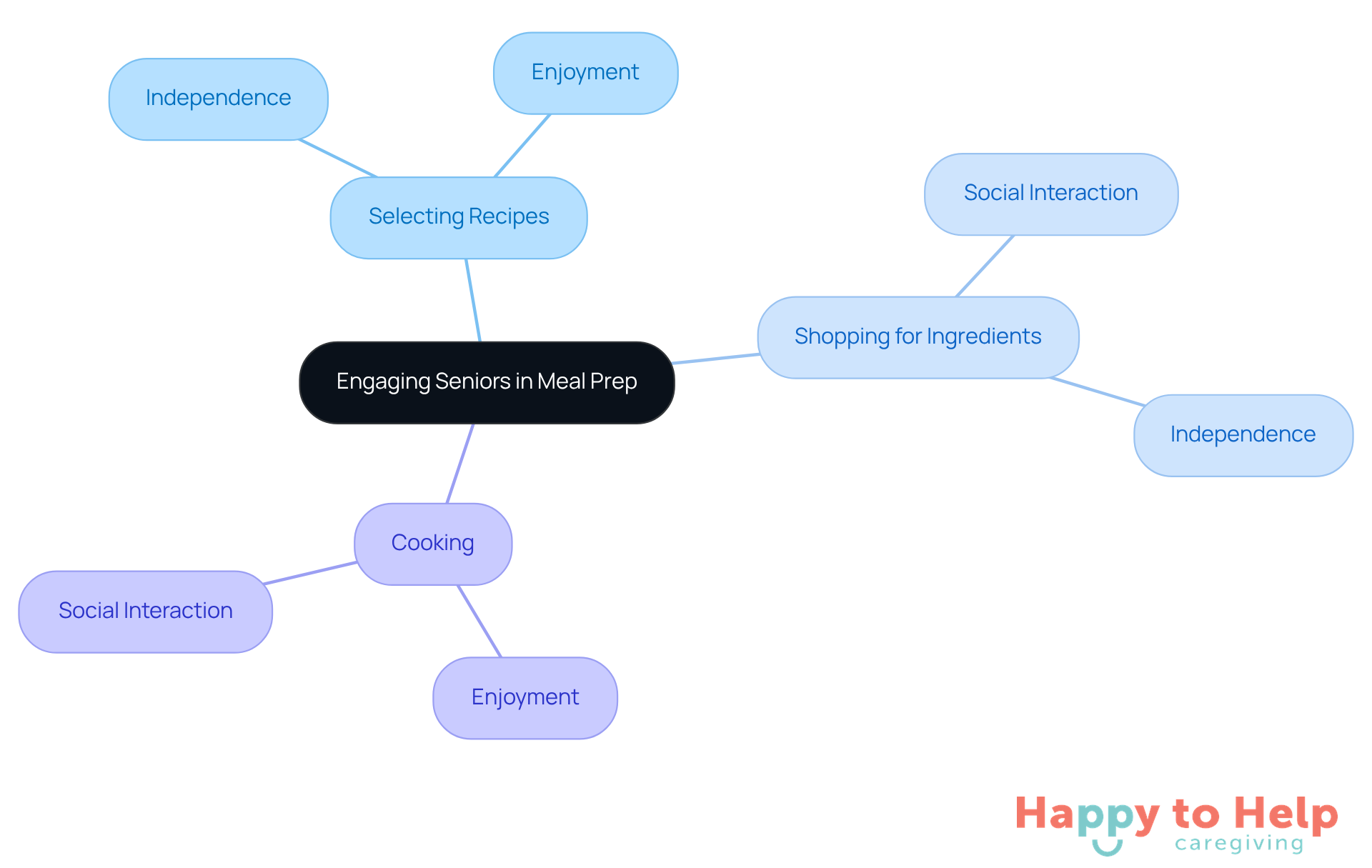
To address this issue, caregivers can take proactive steps to encourage older adults to engage in:
- Selecting recipes
- Shopping for ingredients
- Cooking
This involvement fosters a sense of independence and accomplishment, making mealtime more enjoyable. Cooking together also serves as a valuable social activity, promoting interaction and connection among family members and caregivers. As one caregiver noted, "Their support and presence can give older adults the confidence to try something new."
Caregivers play a crucial role in facilitating this involvement by understanding older adults' preferences and providing the necessary support. This approach can significantly boost their confidence to try new activities. Additionally, cooking classes can improve nutritional understanding and encourage social interaction, making the preparation process even more advantageous.
By incorporating older adults into the senior meal prep process, caregivers can help create a more satisfying and nutritious dining experience. This not only enhances the quality of meals but also enriches the lives of older adults, making cooking a shared joy rather than a solitary task.
Label Containers for Easy Meal Identification
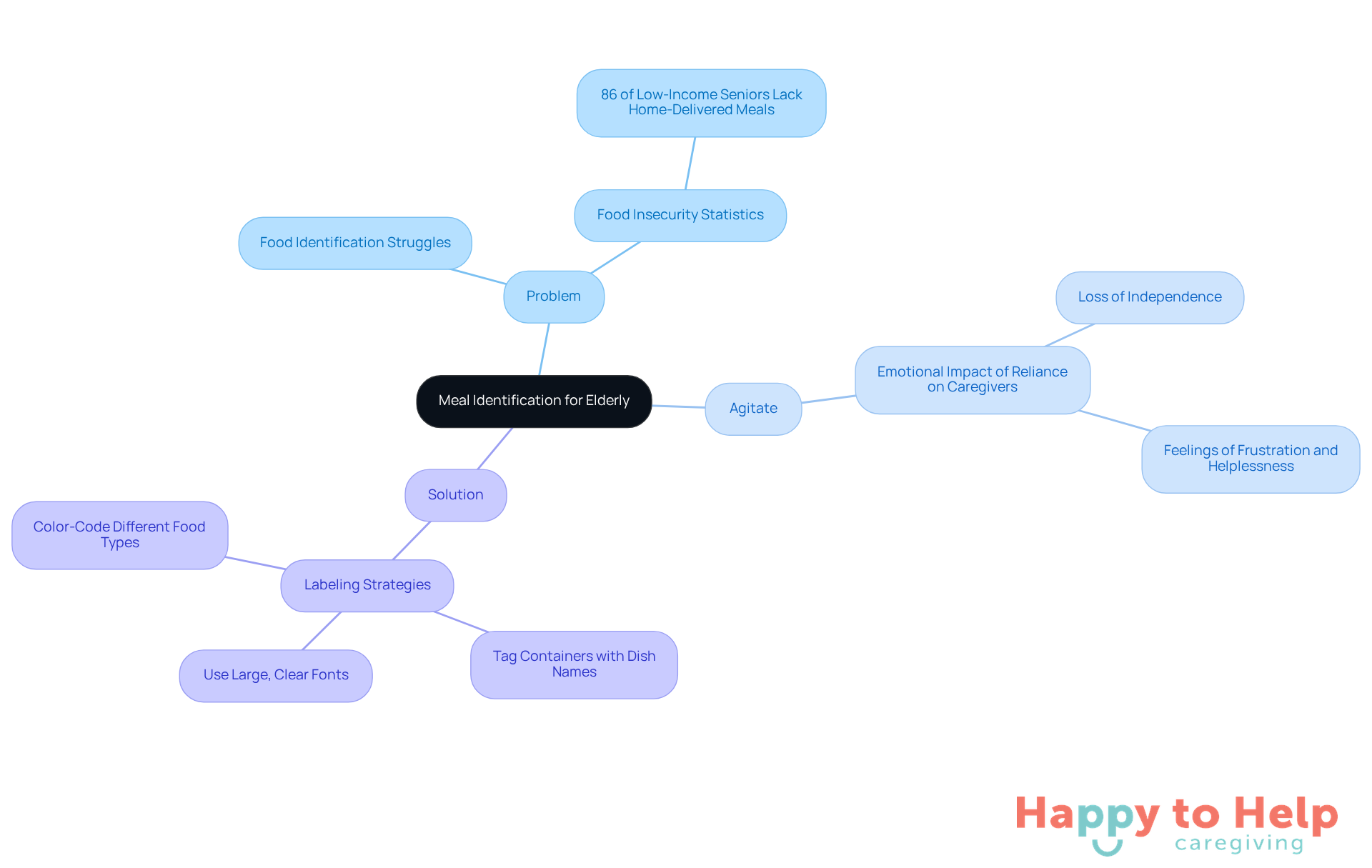
Problem: Many elderly individuals struggle with food identification, which can lead to confusion and a lack of autonomy during mealtime. This issue is exacerbated by food insecurity, with 86% of low-income, food-insecure older adults not receiving home-delivered provisions.
Agitate: The inability to recognize meals can diminish the dining experience for older adults, making them reliant on caregivers for food selection. This reliance can undermine their sense of independence and contribute to feelings of frustration and helplessness.
Solution: Caregivers can implement simple yet effective strategies to enhance meal recognition:
- Tag containers with the dish name and preparation date to provide clear information.
- Use large, clear fonts to improve readability.
- Color-code different food types to simplify the selection process.
These practices not only reduce confusion but also empower older adults to engage in senior meal prep independently, fostering a sense of autonomy in their dining experience. Experts emphasize that effective food labeling is crucial for preserving this autonomy, making it an essential practice for caregivers to adopt.
Adapt Recipes to Suit Changing Tastes of Seniors
As older adults age, their tastes and preferences often change, presenting a challenge for caregivers. Nearly 95% of Americans aged 60 and above have at least one chronic condition, highlighting the need for health-conscious dietary adaptations. This shift in palate can complicate senior meal prep, making it essential for caregivers to adjust their approaches.
To address these challenges, caregivers can:
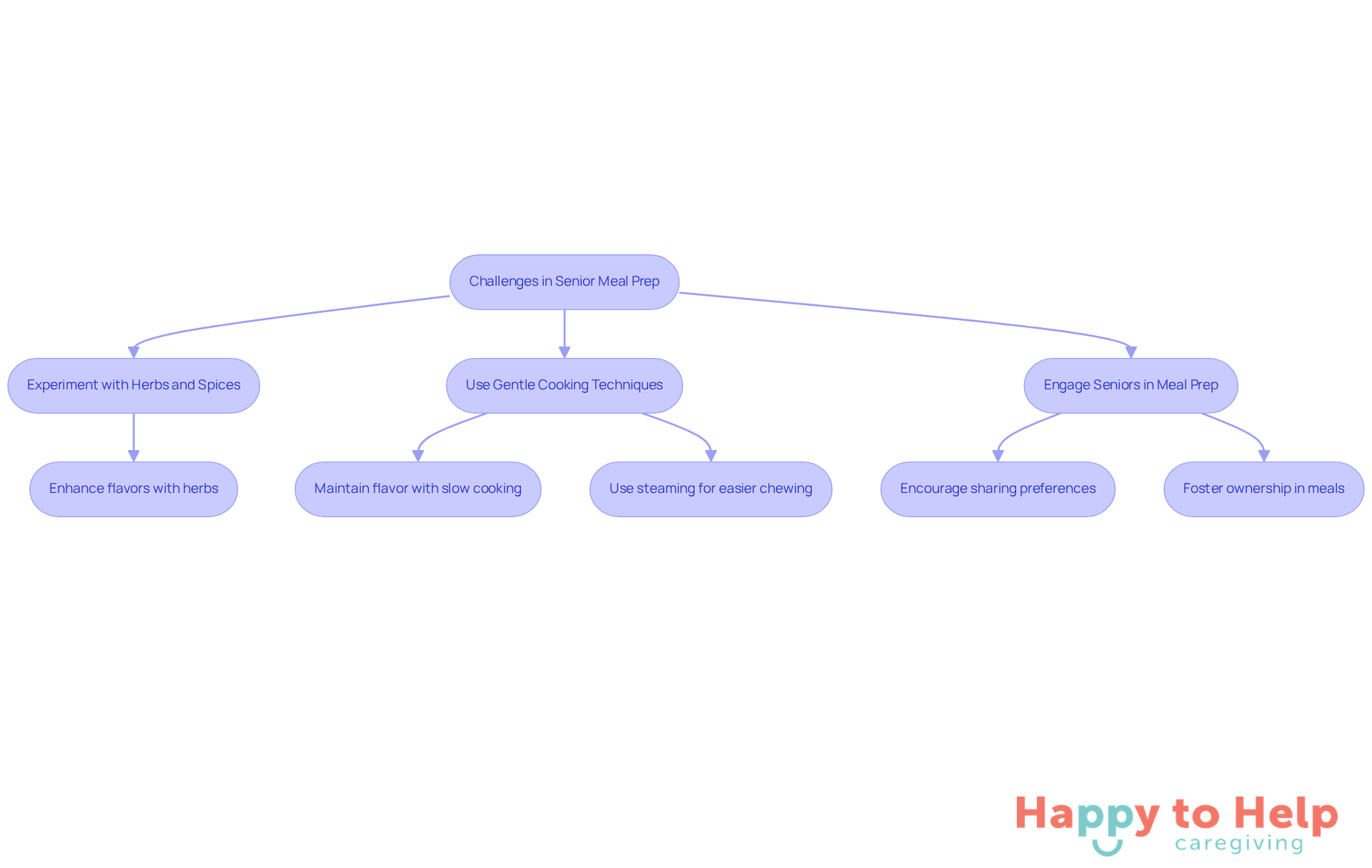
- Experiment with various herbs and spices to enhance flavors while keeping health in mind.
- Use cooking techniques such as slow cooking or steaming to help maintain flavor and make dishes easier to chew, particularly for elderly individuals facing dental issues or swallowing difficulties.
- Engage older adults in the adaptation process of senior meal prep, as encouraging them to share their preferences fosters a sense of ownership and enjoyment in their meals.
As noted by TRIO Community Meals, senior meal prep that includes familiar flavors and menu selections is vital for satisfaction. This collaborative approach not only ensures that meals remain appealing but also enhances the overall dining experience, making it more gratifying for older adults.
Explore New Meal Ideas to Keep Prep Exciting
The challenge of providing nutritious meals often arises from the monotonous nature of senior meal prep, especially for seniors, impacting caregivers. This lack of variety can lead to decreased dietary diversity, a crucial factor for healthy aging. Culinary experts, like Beitullah Alipour, emphasize that enhancing healthy dietary behaviors can significantly increase awareness and dietary diversity (DD) among older adults.
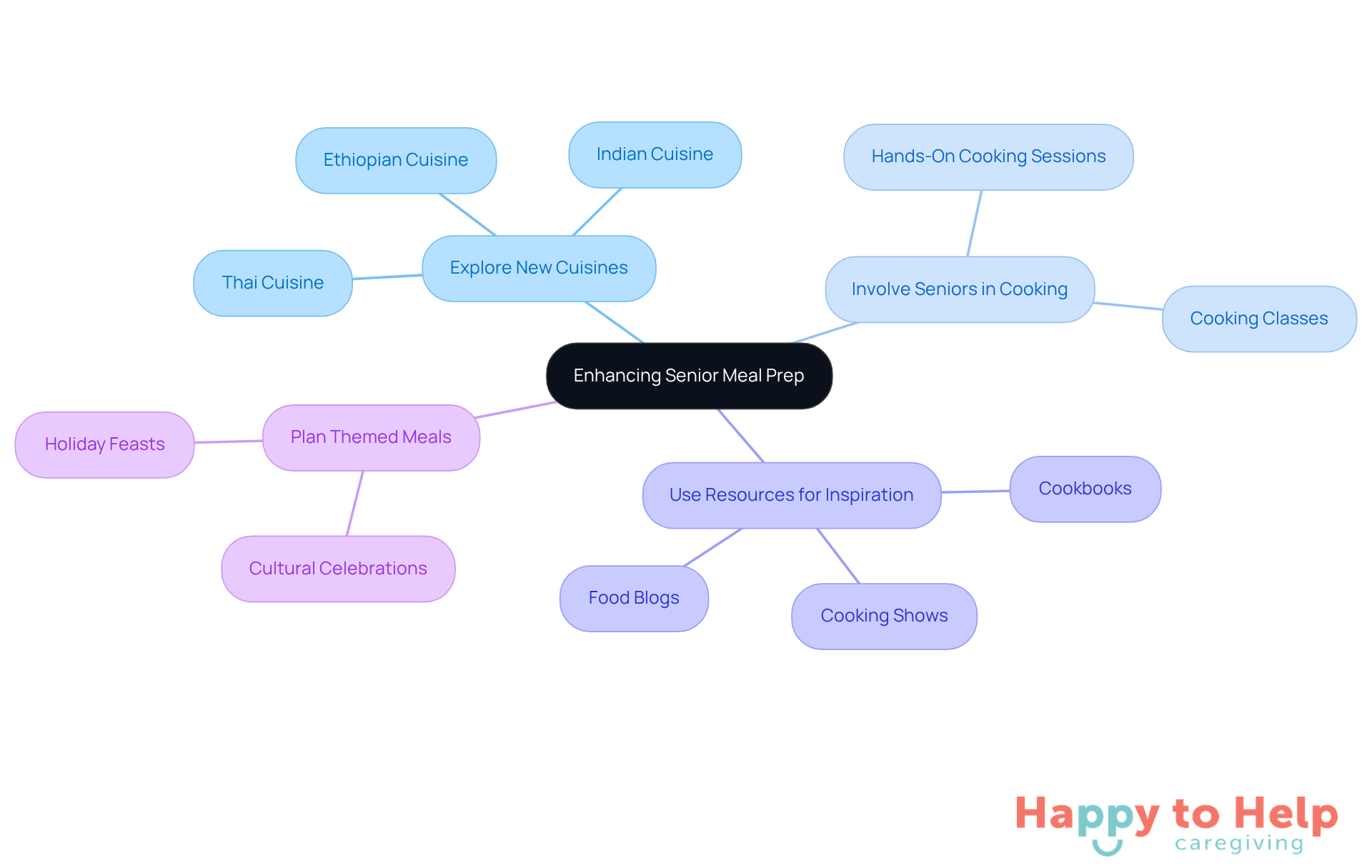
To address this issue, caregivers can explore new meal ideas and recipes regularly. Incorporating international cuisines or seasonal ingredients can greatly enhance variety. Involving seniors in the cooking process not only transforms mealtime into an adventure but also encourages them to experiment with different flavors and textures. Resources such as cookbooks, food blogs, and cooking shows can serve as excellent sources of inspiration.
For instance, experimenting with dishes from Indian, Thai, or Ethiopian cuisines can introduce exciting new tastes while providing nutritional benefits. Additionally, planning themed meals or cooking classes can foster social interaction, making the experience more enjoyable for seniors. These strategies ultimately promote better nutrition and enhance the dining experience through senior meal prep.
Your Path Forward
Effective senior meal prep presents a significant challenge for caregivers, impacting the overall well-being and quality of life for elderly individuals. Many seniors face difficulties in meal preparation, which can lead to inadequate nutrition and a diminished sense of independence during mealtime.
To address these issues, caregivers can implement several essential strategies:
- Creating tailored grocery lists that consider dietary restrictions is crucial.
- Batch cooking can save time and ensure that nutritious meals are readily available.
- Engaging seniors in the meal prep process not only fosters independence but also enhances their enjoyment of food.
- Practical tips, such as proper food storage and labeling, can further empower seniors to make informed dietary choices.
Ultimately, thoughtful meal prep goes beyond mere nutrition; it transforms mealtime into a pleasurable experience. Caregivers are encouraged to explore diverse meal ideas and involve seniors in cooking, turning food preparation into a shared joy. By adopting these practices, caregivers can cultivate a healthier, more vibrant lifestyle for the elderly, ensuring that every meal is not just sustenance but a celebration of life and well-being.
https://iframe.tely.ai/cta/eyJhcnRpY2xlX2lkIjogIjY5MjI0ZjVmNGZjYWRhOTUwOGRlNDNkOSIsICJjb21wYW55X2lkIjogIjY4ZWU1ZGNhNzMxNzYyNTU3ZjNjOTVjMSIsICJpbmRleCI6IG51bGwsICJ0eXBlIjogImFydGljbGUifQ==Frequently Asked Questions
What is the main problem that elderly individuals face regarding meal preparation?
Many elderly individuals struggle with senior meal prep, which can lead to poor nutrition and health issues, affecting their physical health and quality of life.
How does Happy to Help Caregiving assist seniors with meal prep?
Happy to Help Caregiving provides customized meal prep assistance tailored to the specific needs of elderly clients, working closely with them to create dietary plans that meet nutritional requirements while considering personal tastes and dietary restrictions.
Why is creating a tailored grocery list important for senior meal prep?
A tailored grocery list is essential for senior meal prep to effectively meet the nutritional needs of seniors and ensure they receive the right nutrients, preventing a lack of variety in meals that could impact their health and vitality.
What should a balanced grocery list for seniors include?
A balanced grocery list should include lean proteins, whole grains, and a variety of fruits and vegetables, which are crucial for maintaining health and preventing chronic conditions.
How can caregivers help seniors with grocery shopping?
Caregivers can involve older adults in the grocery shopping process to empower them to make informed dietary choices, fostering independence and improving their quality of life.
What dietary needs and restrictions should caregivers consider when planning meals for seniors?
Caregivers should consider allergies, diabetes, heart disease, and other specific dietary needs, as these can complicate meal planning and pose health risks if not addressed properly.
How can caregivers ensure that meal prep plans are safe and beneficial for seniors?
Caregivers can work with healthcare professionals or nutritionists to create dietary plans that fulfill nutritional needs and improve the overall health of seniors.
What is the significance of maintaining a log of dietary restrictions?
Maintaining a thorough log of dietary restrictions assists caregivers in effectively customizing meal prep options to meet the specific needs of seniors, ensuring their health and well-being.
Why is it important to focus on nutrient-dense foods for older adults?
Older adults typically have lower calorie needs than when they were younger, making it essential to focus on nutrient-dense foods to meet their nutritional requirements without exceeding calorie limits.
List of Sources
- Happy to Help Caregiving: Personalized Meal Prep Support for Seniors
- Blog - Happy To Help (https://happytohelpcaregiving.com/blog)
- Chefs For Seniors | Menu Examples: Healthy Food for Seniors (https://chefsforseniors.com/food-for-seniors)
- Findings From New Study Reinforce That Home-Delivered Meals Provide Critical Health and Social Benefits to Older Adults and Caregivers (https://mealsonwheelsamerica.org/news/findings-from-new-study-reinforce-that-home-delivered-meals-provide-critical-health-and-social-benefits-to-older-adults-and-caregivers)
- The Power of Personalized Meals for Seniors (https://chefsforseniors.com/blog/the-power-of-personalized-meals-for-seniors)
- Create a Tailored Grocery List for Balanced Meals
- Meal Planning for Seniors for National Nutrition Month - AmeriCare Plus (https://americarepluspc.com/nutrition-diet/meal-planning-for-seniors-for-national-nutrition-month)
- MMM Foundation expands food program for older adults - News is My Business (https://newsismybusiness.com/mmm-foundation-expands-food-program-for-older-adults)
- Helping seniors fight the growing challenge of food insecurity (https://newsroom.thecignagroup.com/helping-seniors-fight-the-growing-challenge-of-food-insecurity)
- FarmboxRx launches program to fight food insecurity (https://mobihealthnews.com/news/farmboxrx-launches-program-fight-food-insecurity)
- Consider Dietary Needs and Restrictions in Meal Planning
- This National Nutrition Month®, Let’s Promote Healthy Eating for Older Adults - News & Events | odphp.health.gov (https://odphp.health.gov/news/202503/national-nutrition-monthr-lets-promote-healthy-eating-older-adults)
- How to Meal Plan for Seniors with Dietary Restrictions (https://ohioanshhc.com/news/how-to-meal-plan-for-seniors-with-dietary-restrictions)
- Products - Data Briefs - Number 389 - November 2020 (https://cdc.gov/nchs/products/databriefs/db389.htm)
- Food and Nutrition Needs for Seniors (https://healthline.com/health/senior-health/food-for-elderly)
- Implement Batch Cooking for Efficient Meal Prep
- 13 Places a Senior Can Turn for Help With Essential Needs (https://aol.com/articles/13-places-senior-turn-help-193000980.html)
- Batch Cooking Basics: Fuel Once, Eat Well All Week (https://nordoniahills.news/batch-cooking-basics-fuel-once-eat-well-all-week)
- The Benefits of Meal Planning For Older Adults (https://homeinstead.com/home-care/usa/la/carencro/347/news-and-media/the-benefits-of-meal-planning-for-older-adults)
- Top Meal Planning Tips for Older Adults: A Nutritionist Answers… (https://archwellhealth.com/news/top-meal-planning-tips-for-older-adults-a-nutritionist-answers-common-questions)
- Meal Prep for Seniors: Tips for Healthy and Tasty Eating (https://westmontliving.com/blog/westmont-of-riverside/meal-prep-for-seniors-easy-tips-for-healthy-tasting-eating)
- Store Meals Properly for Freshness and Safety
- News Archive : News & Events : Aster Aging, Inc. (https://asteraz.org/news/news-archive.html/article/2025/04/23/freezing-and-food-safety-a-smart-guide-for-seniors)
- Food Safety Tips to Consider When Preparing Meals for Seniors (https://seniorhelpers.com/or/corvallis/resources/blogs/food-safety-tips-to-consider-when-preparing-meals-for-seniors)
- How to Make Senior Mealtime Stress-Free in 2025 (https://gogograndparent.com/blog/how-to-make-senior-mealtime-stress-free-in-2025)
- Storing and preparing food safely | Heart Foundation (https://heartfoundation.org.au/healthy-living/healthy-eating/skills/storing-preparing-food-safely)
- Incorporate Healthy Snacks and Quick Meal Options
- Top 10 Healthy Snacks for Nursing Home Residents (https://emenuchoice.com/news/10-healthy-snacks-for-nursing-home-residents)
- 8 Heart-Healthy Snacks to Keep You Going | Senior Health Services | Hartford HealthCare | CT (https://hhcseniorservices.org/health-wellness/news/newsroom-detail?articleId=61794&publicid=395)
- 17 Healthy Snacks for Seniors | Presbyterian Living (https://presbyterianliving.org/blog/healthy-snacks-for-seniors)
- 25 Surprisingly Healthy Snacks to Eat After Age 50 | Members Only (https://aarp.org/health/healthy-living/surprisingly-healthy-snacks)
- Engage Seniors in the Meal Prep Process for Better Enjoyment
- Seniors from across Vermont cook and dine together - VTDigger (https://vtdigger.org/2025/10/12/seniors-from-across-vermont-cook-and-dine-together)
- Cooking Classes for Seniors: Social and Health Benefits (https://seniorhelpers.com/nc/winston-greensboro/resources/news-and-blog/2025-07-15)
- The Joy of Cooking and its Benefits for Older Adults (https://ihpi.umich.edu/national-poll-healthy-aging/reports-and-resources/joy-cooking-and-its-benefits-older-adults)
- 4 Benefits of Meal Prep for Seniors - Thrive USA Home Care (https://thriveusahomecare.com/4-benefits-of-meal-prep-for-seniors)
- New study looks at nostalgia, comfort in food preparation for older adults (https://news.wsu.edu/press-release/2025/02/11/new-study-looks-at-nostalgia-comfort-in-food-preparation-for-older-adults)
- Label Containers for Easy Meal Identification
- Cutting Older Americans Act funding could cost older Americans their independence (https://sph.brown.edu/news/2025-10-16/older-americans-act)
- Findings From New Study Reinforce That Home-Delivered Meals Provide Critical Health and Social Benefits to Older Adults and Caregivers (https://mealsonwheelsamerica.org/news/findings-from-new-study-reinforce-that-home-delivered-meals-provide-critical-health-and-social-benefits-to-older-adults-and-caregivers)
- MEALS ON WHEELS AMERICA URGES AN END TO THE GOVERNMENT SHUTDOWN THAT PRIORITIZES SENIORS AS COMMUNITY NEED SOARS AND FUNDING FOR SENIOR NUTRITION PROGRAMS RUNS OUT (https://prnewswire.com/news-releases/meals-on-wheels-america-urges-an-end-to-the-government-shutdown-that-prioritizes-seniors-as-community-need-soars-and-funding-for-senior-nutrition-programs-runs-out-302598944.html)
- Aging officials warn senior meal programs are strained; home-delivery reliance and rising costs highlighted (https://citizenportal.ai/articles/6131811/Aging-officials-warn-senior-meal-programs-are-strained-home-delivery-reliance-and-rising-costs-highlighted)
- Senior Nutrition Programs in the News | ACL Administration for Community Living (https://acl.gov/senior-nutrition/senior-nutrition-programs-news)
- Adapt Recipes to Suit Changing Tastes of Seniors
- Key Trends Shaping Senior Nutrition Programs in 2025 (https://triocommunitymeals.com/blog/key-trends-shaping-senior-nutrition-programs-in-2025)
- The taste of nostalgia: How familiar foods can improve seniors’ nutrition (https://foodnavigator-usa.com/Article/2025/07/07/what-inspires-older-consumers-eating-enjoyment)
- 'Chefs for Seniors' offers personalized, nutritious meals to older adults (https://fox13news.com/news/chefs-seniors-offers-personalized-nutritious-meals-older-adults)
- Adapting Cherished Holiday Recipes for Senior Diets (https://seniorhelpers.com/fl/naples/resources/blogs/2023-12-12)
- Why Senior Living Operators Must Go Beyond ‘Restaurant-Style’ Dining (https://seniorhousingnews.com/2025/09/05/why-senior-living-operators-must-go-beyond-restaurant-style-dining)
- Explore New Meal Ideas to Keep Prep Exciting
- California to reboot 'ravaged' restaurant industry with new meal delivery program for seniors (https://nrn.com/casual-dining/california-to-reboot-ravaged-restaurant-industry-with-new-meal-delivery-program-for-seniors)
- Senior-Friendly Recipes to Try in 2023 | Winchester Gardens (https://winchestergardens.com/blog/senior-friendly-recipes-to-try-in-2023)
- Long-Term Food Variety and Dietary Patterns Are Associated with Frailty among Chinese Older Adults: A Cohort Study Based on CLHLS from 2014 to 2018 (https://mdpi.com/2072-6643/14/20/4279)
- Association between dietary diversity and healthy aging: a systematic review - PMC (https://pmc.ncbi.nlm.nih.gov/articles/PMC12105345)
- Frontiers | A study on the reasonable dietary trajectory of elderly people in the community and its correlation with body mass index (https://frontiersin.org/journals/nutrition/articles/10.3389/fnut.2024.1429627/full)