
For families in our service areas
For families in our service areas, this guide explains caregiver support and how non-medical in-home caregiving can support care planning in East Idaho, Treasure Valley & Magic Valley, Northern Wasatch, North Central West Virginia, and Northeast Ohio.
Why VA Benefits Matters
Navigating the complex landscape of VA benefits can be daunting for seniors and their caregivers. As the demand for support services continues to rise, this challenge becomes even more pronounced. Nearly 75% of older adults express a desire to age in place, making it crucial to understand the essential benefits available to veterans.
How can caregivers effectively leverage these resources? Ensuring that loved ones receive the necessary support while maintaining independence is vital. This article delves into ten vital VA benefits that can empower seniors and their families. We’ll offer insights into eligibility, application processes, and the invaluable support options available.
Happy to Help Caregiving: Personalized In-Home Support for Seniors
Problem: Many seniors face feelings of loneliness and isolation, which can significantly impact their quality of life. As they age, the desire to remain at home often clashes with the need for companionship and support.
Agitate: This issue is particularly pressing, as approximately 75% of seniors prefer to age in place. Without adequate support, they may struggle with emotional and physical challenges, leading to a decline in overall well-being. The growing baby boomer demographic is expected to increase the demand for senior support services considerably by 2034, making the role of caregivers more crucial than ever.
Solution: Happy to Help Caregiving excels in providing compassionate in-home assistance tailored to the unique needs of seniors, including information about VA benefits for seniors and veterans. Their extensive offerings include:
- Companionship
- Post-hospital recovery aid
- Respite assistance
- Palliative help
All designed to deliver essential emotional and physical support. Experts emphasize that companionship is vital for seniors, alleviating feelings of loneliness and enhancing their quality of life. Vicki Hoak, CEO of the Home Care Association of America, notes that home care is a win-win for clients and government alike, highlighting the essential value of home care aides in supporting seniors at home.
Aid and Attendance Benefits: Financial Support for Daily Living Needs
The Aid and Attendance benefit, which is one of the VA benefits for seniors, addresses a significant challenge for former service members who struggle with daily living activities. Many veterans face financial pressures that can hinder their independence and quality of life.
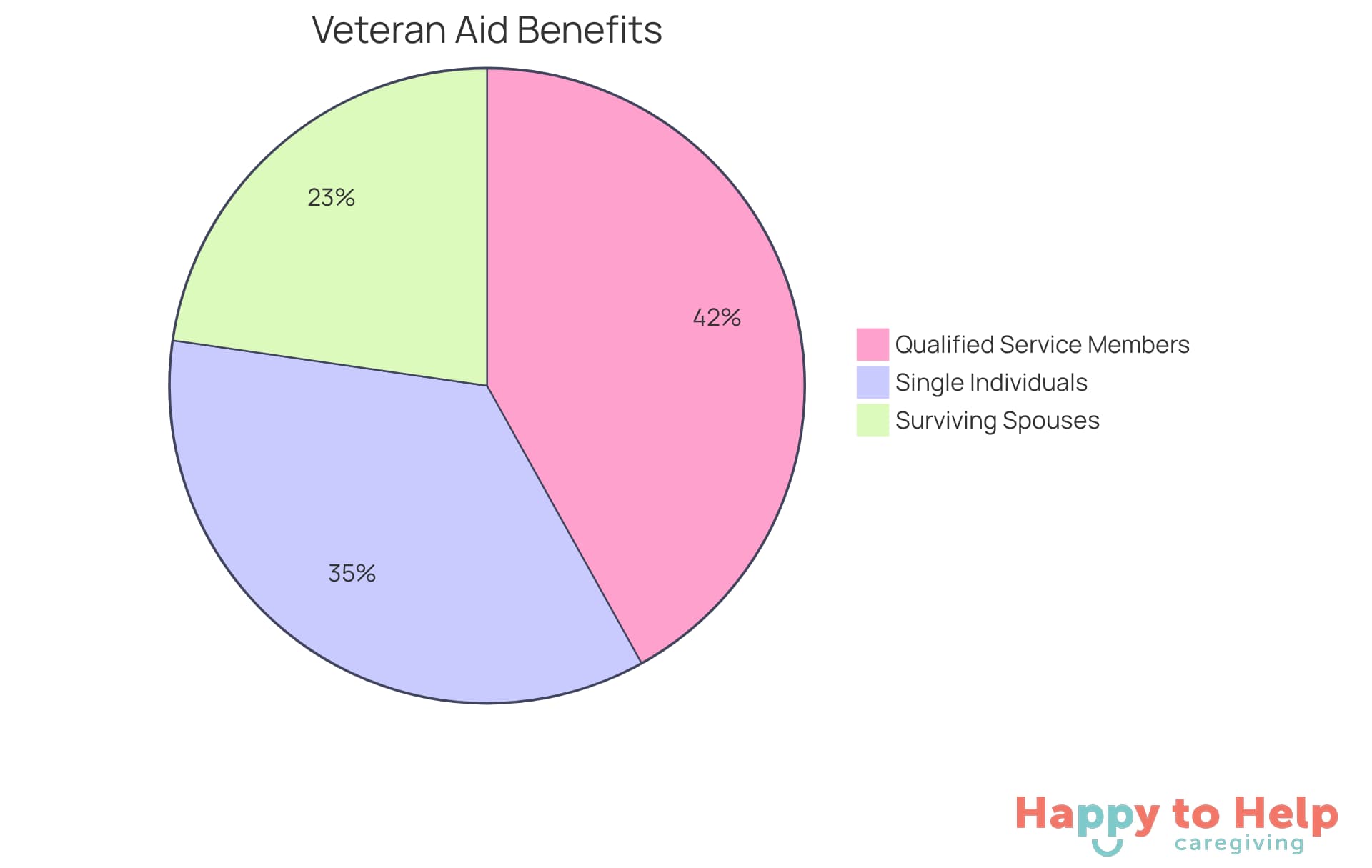
As of 2025, qualified service members can receive up to $2,795 per month, while single individuals may obtain up to $2,358 per month, and surviving spouses can qualify for $1,515 per month. This substantial financial support, including VA benefits for seniors, can be directed towards in-home assistance, assisted living, or nursing home expenses, alleviating some of the financial burdens associated with essential care.
To qualify, former military personnel must meet specific financial criteria, including a net worth limit of $155,356 for 2025. The typical duration from the initial application to the approval of aid is about four months. Many former service members utilize these funds to hire caregivers who provide personalized support, ensuring they can live comfortably in their own homes.
The Aid and Attendance program not only enhances the quality of life for former service members but also informs families about VA benefits for seniors, empowering them to make informed decisions about their loved ones' support needs.
Housebound Benefits: Assistance for Seniors with Limited Mobility
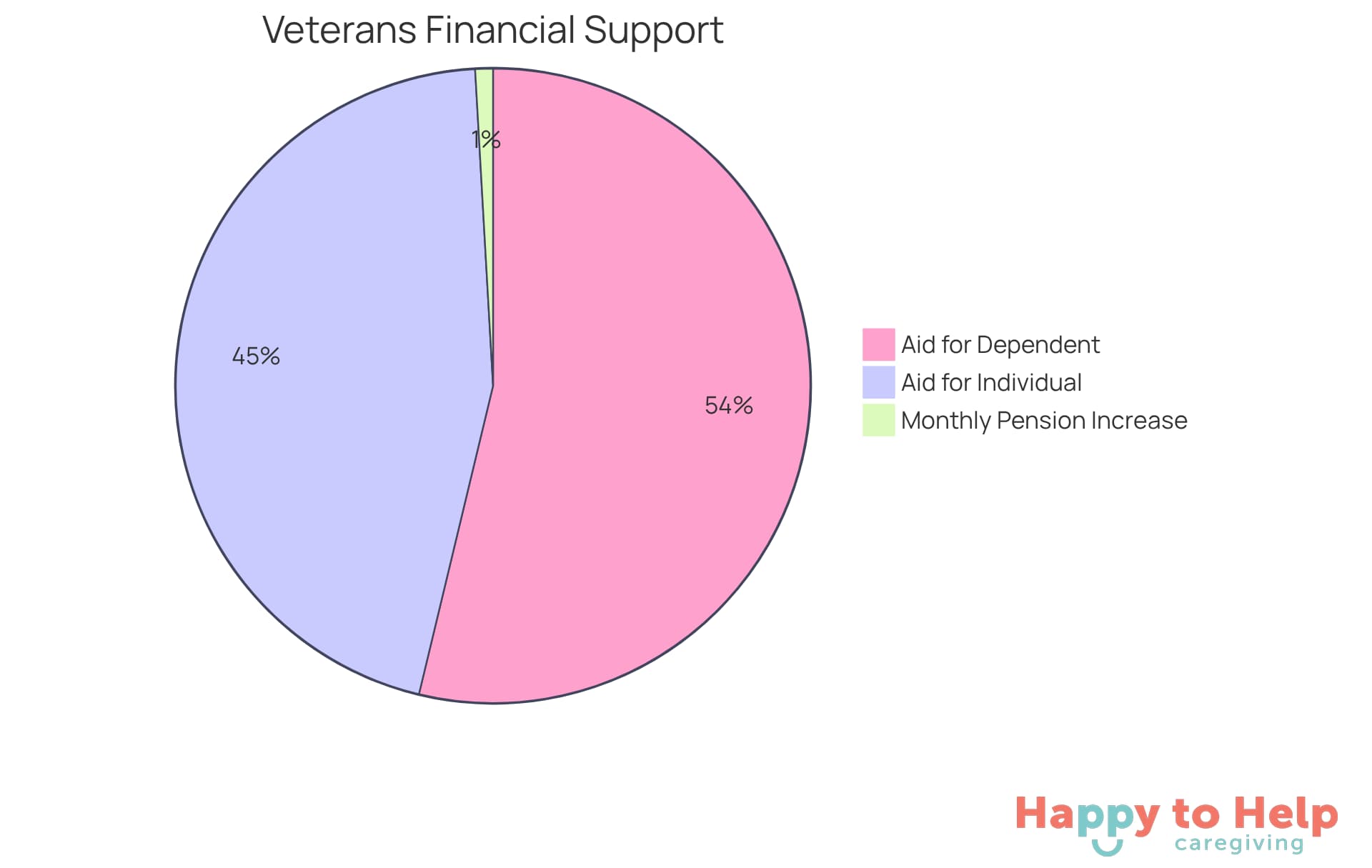
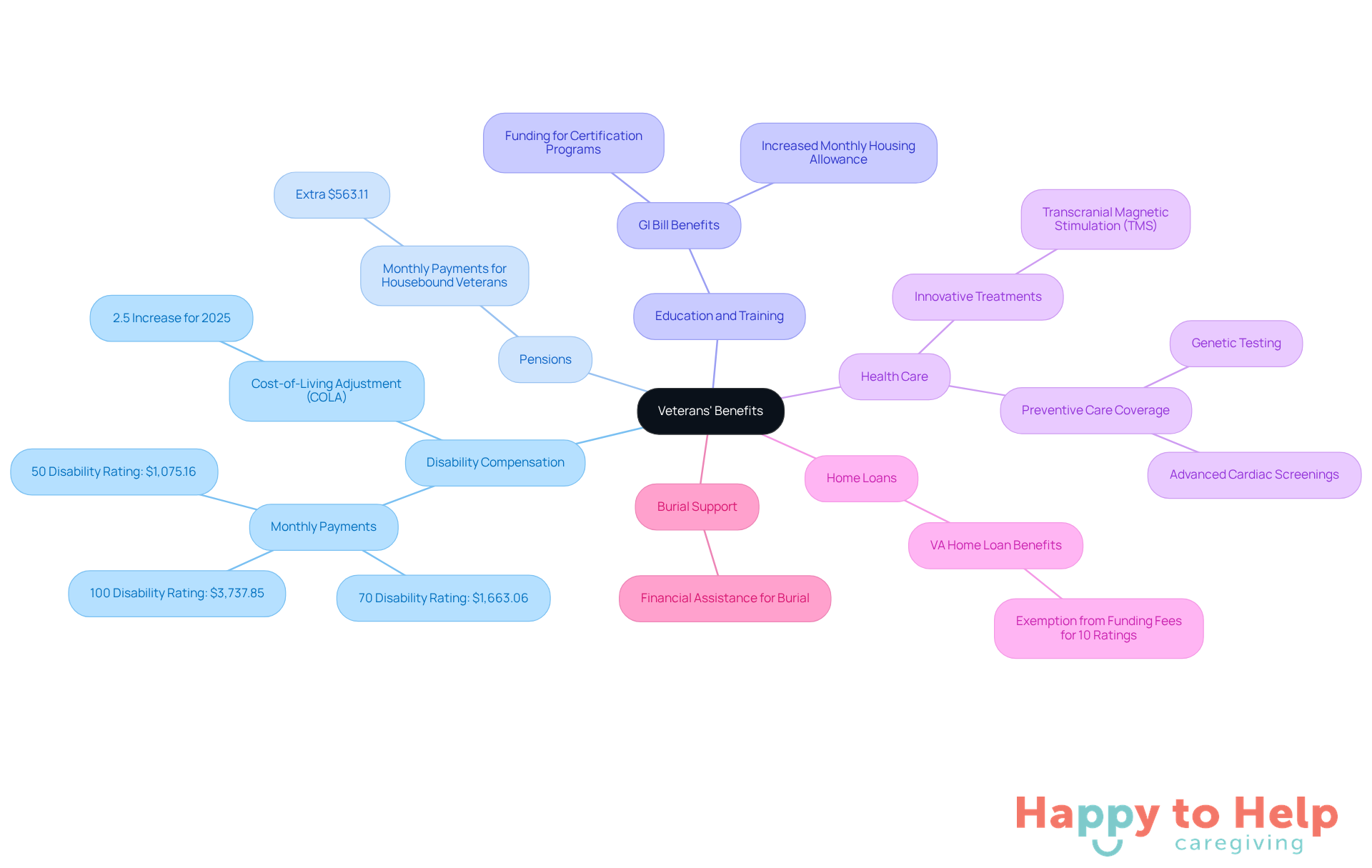
Housebound assistance is designed to support individuals who are permanently disabled and confined to their homes. This benefit significantly increases the monthly pension amount, providing essential financial aid to meet their support needs. In 2025, qualified former military personnel receive an additional $563.11 monthly, which can help cover the costs associated with in-home assistance services. This financial support is vital for ensuring that former service members can continue living comfortably in their own homes, surrounded by familiar surroundings, while receiving the care they require.
However, many caregivers face challenges in managing these costs. The Aid and Attendance program addresses this issue by offering extra financial support for those needing help with daily activities. In 2025, the Aid and Attendance Pension Rates are set at:
- $28,300 per year for an individual service member
- $33,548 for a service member with one dependent
For instance, veterans with limited mobility can access resources that help manage the expenses of in-home support, allowing them to maintain their independence and quality of life.
Financial advisors emphasize the importance of understanding these benefits, as they can significantly alleviate the financial burden on families caring for seniors with mobility challenges. As one financial advisor noted, "Navigating the costs of in-home care can be daunting, but utilizing available resources can provide much-needed relief for families." By leveraging these resources, caregivers can ensure their loved ones receive the necessary support while remaining in a familiar and secure environment.
Furthermore, it is crucial for former service members and their families to seek expert assistance in navigating the application process for VA benefits for seniors. This guidance can help maximize their potential advantages and ensure eligibility.
Veterans Health Administration: Comprehensive Medical Support for Aging Veterans
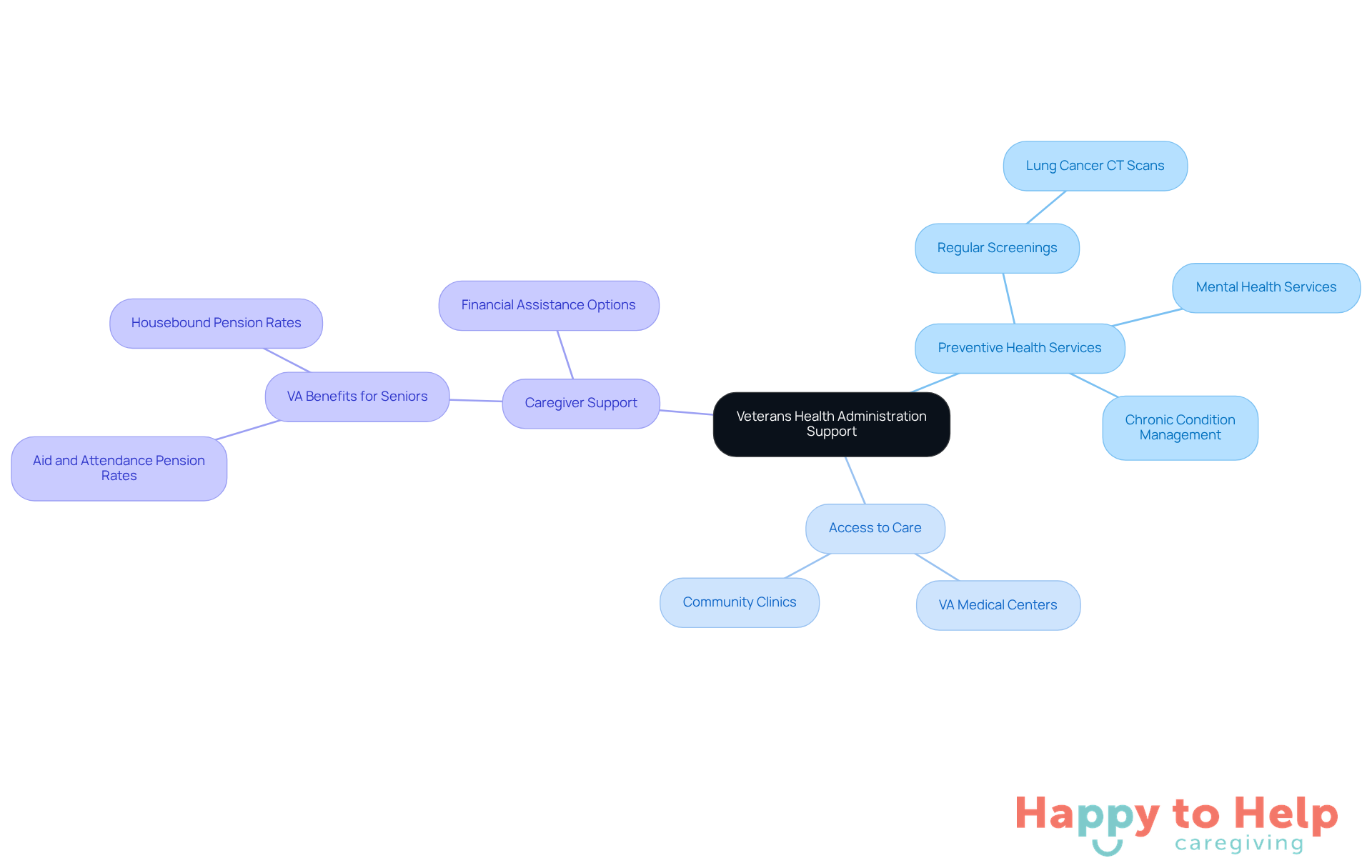
The Veterans Health Administration (VHA) addresses a significant challenge for aging former service members: accessing comprehensive medical services tailored to their needs. With approximately 16.2 million veterans in the U.S., including over 8.1 million aged 65 or older, the importance of preventive health services cannot be overstated. These services are crucial for improving health outcomes and reducing reliance on intensive medical treatments.
Preventive health initiatives play a vital role in enhancing the well-being of veterans. Engaging in these programs can significantly improve health results, allowing former service members to maintain their independence. For instance, a simple 5-minute CT scan can detect lung cancer at its most treatable stage, highlighting the necessity of early detection.
To access these essential services, aging veterans can utilize VA medical centers and community-based outpatient clinics, strategically located for optimal support. The VHA offers regular screenings, mental health services, and specialized treatments to effectively manage chronic conditions. By focusing on preventive measures, the VHA empowers veterans to take control of their health, ultimately improving their quality of life.
Caregivers play a crucial role in supporting veterans as they navigate these healthcare resources. Understanding the VA benefits for seniors, such as the 2.5% increase in Maximum Annual Pension Rates for 2025, is essential. This financial assistance, including VA benefits for seniors, can significantly ease the burden on families. Caregivers should familiarize themselves with options like Aid and Attendance and Housebound Pension Rates to ensure their loved ones receive the necessary support.
In summary, the VHA's commitment to preventive health services is vital for aging veterans. By leveraging these resources, caregivers can help improve the health and independence of those they support.
Eligibility Requirements: Understanding Who Qualifies for VA Benefits
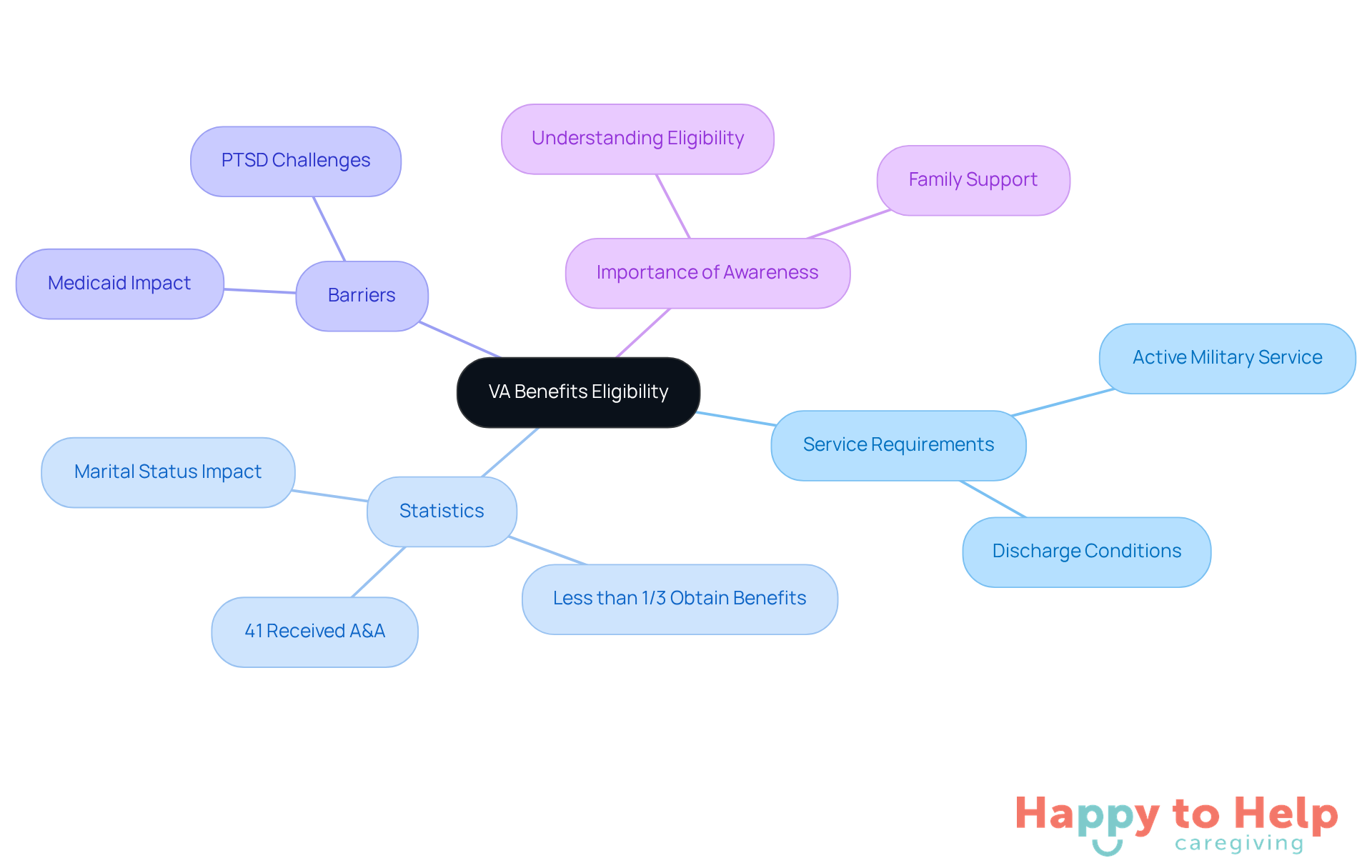
To be eligible for VA assistance, individuals must have served in active military, naval, or air service and received a discharge under conditions other than dishonorable. However, many former service members face significant challenges in accessing VA benefits for seniors, especially Aid and Attendance (A&A).
In 2017, around 41% of former service members receiving pension support were granted the A&A enhanced pension. Yet, studies indicate that less than one-third of those who qualify for VA benefits for seniors actually obtain the assistance. This highlights a troubling underutilization of available resources. Factors such as marital status also play a role; married individuals are 4.4 percentage points more likely to receive A&A compared to their unmarried counterparts.
Moreover, individuals receiving Medicaid are less likely to obtain A&A, and those with nonservice-connected PTSD diagnoses encounter additional barriers. Navigating these requirements can be daunting, as many former service members are unaware of their potential eligibility.
To address these challenges, it is crucial for families to be informed about the criteria for VA benefits for seniors. Understanding these requirements can ensure that loved ones receive the necessary support and care they deserve.
Applying for Veterans Benefits: Step-by-Step Guidance for Seniors
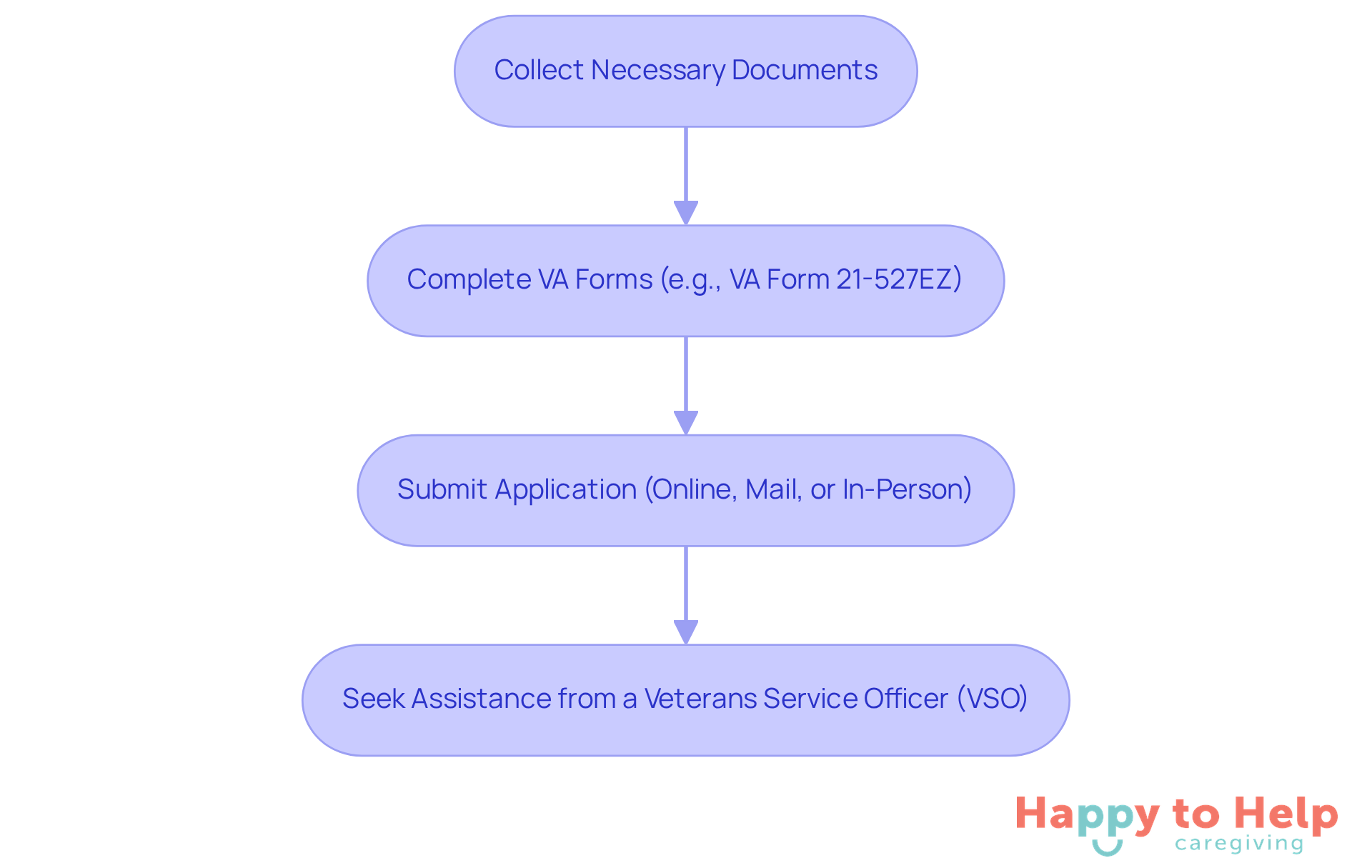
For many, applying for VA benefits for seniors can be a daunting task. The process often involves gathering essential documentation, such as service records and financial information, which can be overwhelming. Without proper guidance, applicants may find themselves lost in the complexities of the system.
To navigate this effectively, follow these steps:
- Collect all necessary documents.
- Complete the appropriate VA forms, like VA Form 21-527EZ for pension benefits.
- Submit your application online, by mail, or in person at a VA office.
Seeking assistance from a Veterans Service Officer (VSO) can significantly ease the process of applying for VA benefits for seniors, ensuring that all requirements are met and increasing the chances of a successful application.
Long-Term Care Options: Navigating VA Benefits for Extended Support
Veterans face significant challenges when it comes to accessing long-term support options. Many struggle to find the right services that cater to their unique needs, which can impact their independence and quality of life.
The implications of inadequate support can be profound, affecting not just the veterans but also their families. Caregivers often feel overwhelmed, unsure of where to turn for help. This is where the VA benefits for seniors program becomes relevant.
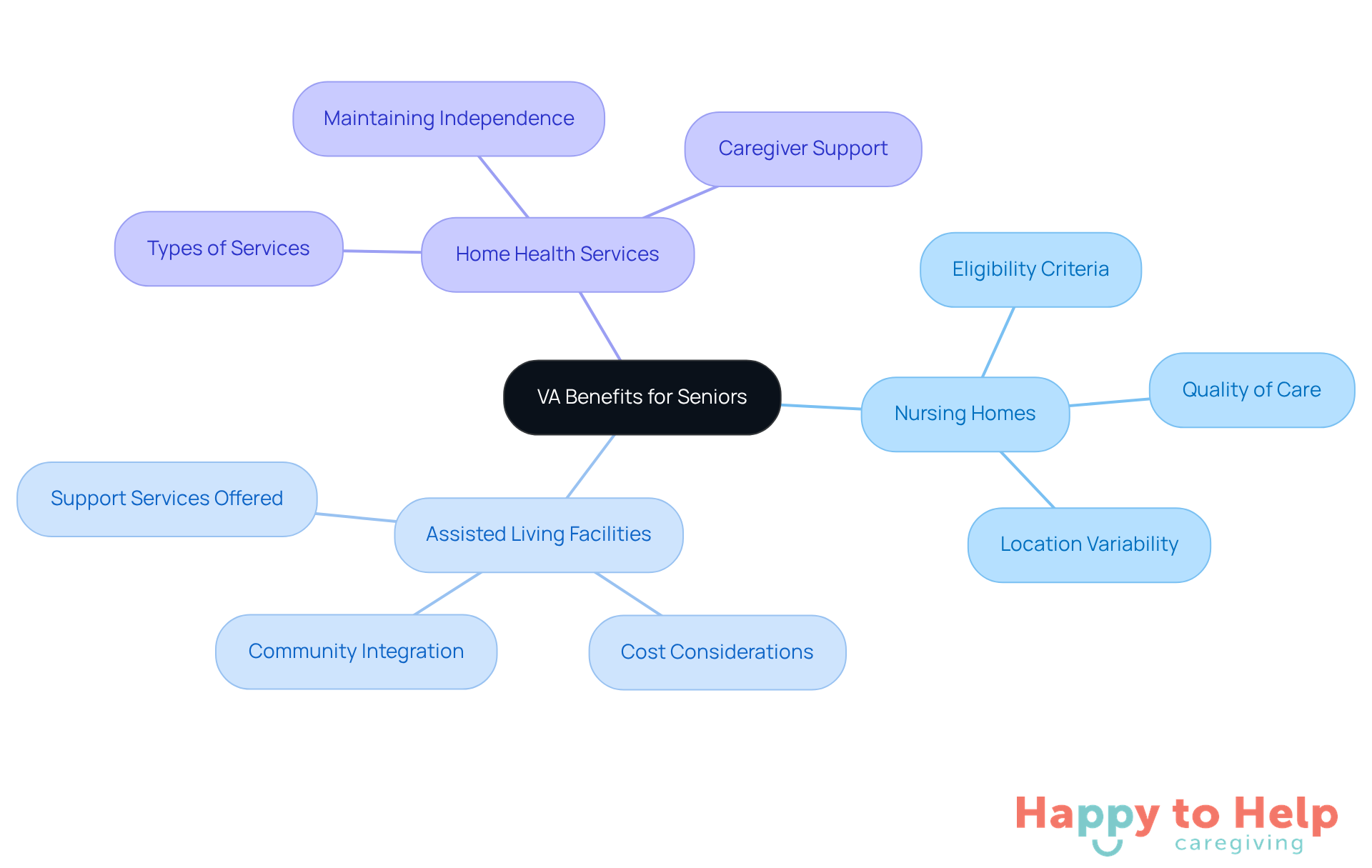
The program provides valuable resources to assist veterans in locating appropriate services, such as:
- Nursing homes
- Assisted living facilities
- Home health services
Families should actively explore these options to ensure their loved ones receive the right level of support while maintaining their independence.
By leveraging the VA benefits for seniors, caregivers can find practical solutions that enhance the well-being of veterans, ensuring they receive the care they deserve.
Veteran's Health Insurance: Coverage Options for Seniors
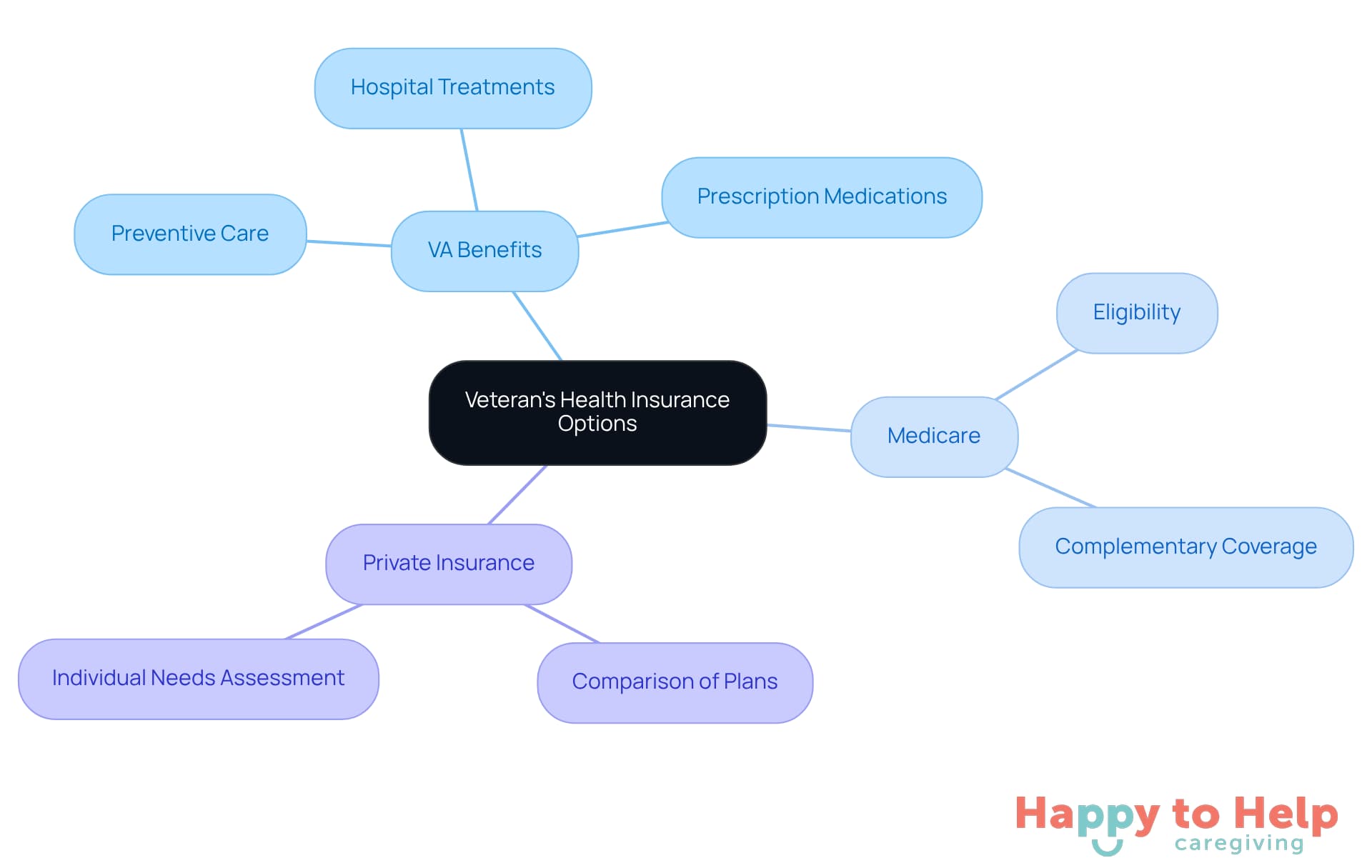
Navigating health insurance options can be a challenge for veterans. With various choices available, including VA benefits for seniors, Medicare, and private insurance plans, it’s crucial to understand what each offers. Many veterans may feel overwhelmed by the complexity of these options, which can lead to gaps in their healthcare coverage.
The implications of not fully understanding these options can be significant. Veterans might miss out on essential services, such as preventive care, hospital treatments, and prescription medications, which are all covered extensively by VA benefits for seniors who qualify. Additionally, former service members may qualify for Medicare assistance, which can help cover expenses not included in VA coverage.
To effectively manage their healthcare, veterans should explore all available options, such as VA benefits for seniors. Here are some actionable steps:
- Research VA health services: Understand the full range of benefits available.
- Consider Medicare: Look into eligibility and how it can complement VA coverage.
- Evaluate private insurance plans: Compare options to find the best fit for individual needs.
By taking these steps, veterans can ensure they have the necessary coverage to support their health and well-being.
Types of Veterans' Benefits: A Comprehensive Overview for Seniors
Veterans face a significant challenge: many do not fully understand the range of assistance available to them. This lack of awareness can hinder their ability to access crucial benefits that support their well-being and that of their families.
Understanding these benefits is essential for families advocating for their loved ones. Veterans qualify for various forms of assistance, including:
- Disability compensation
- Pensions
- Education and training
- Health care
- Home loans
- Burial support
Each of these advantages serves a specific purpose, addressing the diverse needs of former service members and their families. By familiarizing themselves with these benefits, families can better support their loved ones in navigating the complexities of the system.
Veterans Crisis Line: Essential Support Resources for Seniors
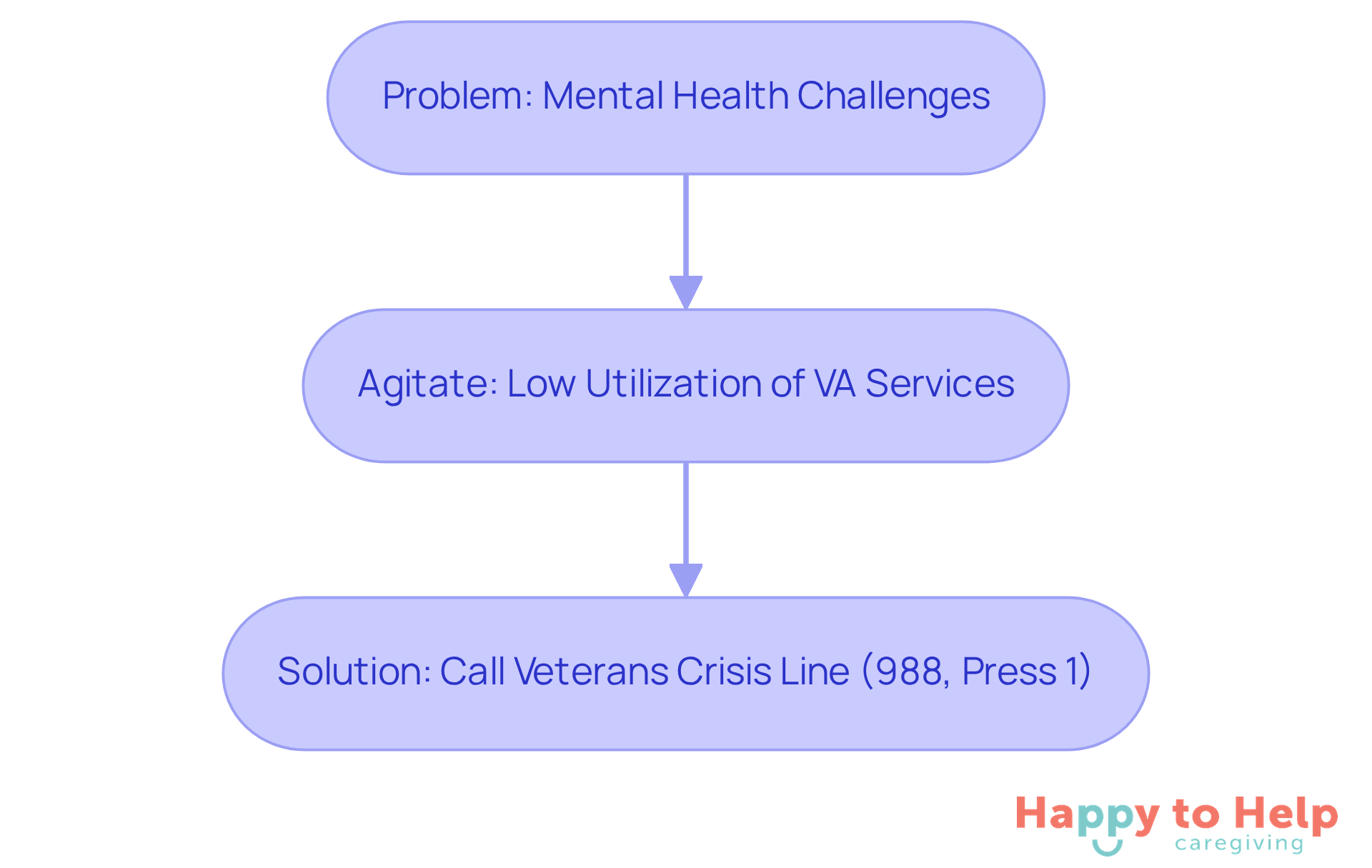
Problem: Many former military personnel face significant mental health challenges, with over 40% requiring mental health care programs. This situation is particularly concerning for seniors who may experience emotional turmoil or suicidal thoughts, especially in relation to VA benefits for seniors.
Agitate: Alarmingly, only 45% of these veterans utilize VA services, highlighting a critical gap in support. Caregivers must recognize the urgency of this issue, as the lack of proactive outreach can lead to worsening mental health conditions among aging veterans who need VA benefits for seniors.
Solution: The Veterans Crisis Line offers essential, round-the-clock assistance for veterans in crisis. By calling 988 and pressing 1, they can access immediate help. Caregivers play a vital role in facilitating this connection, ensuring that veterans receive the support they need. Mental health experts stress the importance of community organizations reaching out to former service members to address their needs before they escalate. By promoting access to the Veterans Crisis Line, caregivers can help create a supportive environment that fosters recovery and well-being.
Making the Right Choice
Understanding and accessing VA benefits for seniors is crucial. Many veterans face unique challenges as they age, impacting their quality of life due to financial constraints and health care needs. This article highlights essential VA benefits that provide vital support, ensuring former service members can maintain their independence while receiving the care they deserve.
Key points include:
- The Aid and Attendance program, which offers significant financial assistance for daily living needs.
- Housebound benefits for those with limited mobility.
- The Veterans Health Administration, which plays a crucial role in providing comprehensive medical support, emphasizing preventive care to enhance health outcomes.
Families must navigate the complexities of eligibility requirements and the application process to ensure veterans receive the full range of benefits available.
Empowering veterans and their families with knowledge about available resources is essential. By actively seeking and utilizing these benefits, caregivers can significantly improve the lives of aging veterans, fostering a supportive environment that promotes well-being. It is a collective responsibility to ensure that those who have served our country receive the assistance they need, reinforcing the message that no veteran should navigate these challenges alone.
https://iframe.tely.ai/cta/eyJhcnRpY2xlX2lkIjogIjY5MjUwZjk0MjhmYmExOWI5MjM1NzEzOSIsICJjb21wYW55X2lkIjogIjY4ZWU1ZGNhNzMxNzYyNTU3ZjNjOTVjMSIsICJpbmRleCI6IG51bGwsICJ0eXBlIjogImFydGljbGUifQ==Frequently Asked Questions
What is the main issue faced by many seniors as they age?
Many seniors experience feelings of loneliness and isolation, which can significantly impact their quality of life. Approximately 75% of seniors prefer to age in place, but they may struggle with emotional and physical challenges without adequate support.
What services does Happy to Help Caregiving provide for seniors?
Happy to Help Caregiving offers personalized in-home support tailored to seniors' unique needs, including companionship, post-hospital recovery aid, respite assistance, and palliative help.
Why is companionship important for seniors?
Companionship is vital for seniors as it helps alleviate feelings of loneliness and enhances their overall quality of life.
What are the financial benefits available for veterans through the Aid and Attendance program?
Qualified service members can receive up to $2,795 per month, single individuals may obtain up to $2,358 per month, and surviving spouses can qualify for $1,515 per month, which can be used for in-home assistance or other care expenses.
What are the qualifications for the Aid and Attendance benefit?
Former military personnel must meet specific financial criteria, including a net worth limit of $155,356 for 2025, to qualify for the Aid and Attendance benefit.
How long does it typically take to receive approval for the Aid and Attendance benefit?
The typical duration from the initial application to the approval of aid is about four months.
What is the Housebound benefit, and who is it designed to support?
The Housebound benefit is designed to assist individuals who are permanently disabled and confined to their homes, providing additional financial aid to meet their support needs.
How much additional monthly support do qualified former military personnel receive under the Housebound benefit in 2025?
In 2025, qualified former military personnel receive an additional $563.11 monthly under the Housebound benefit.
What are the Aid and Attendance Pension Rates for veterans in 2025?
The Aid and Attendance Pension Rates for 2025 are $28,300 per year for an individual service member and $33,548 for a service member with one dependent.
Why is it important for families to understand VA benefits for seniors?
Understanding VA benefits is crucial as it can significantly alleviate the financial burden on families caring for seniors, ensuring that their loved ones receive the necessary support while maintaining their independence.
List of Sources
- Happy to Help Caregiving: Personalized In-Home Support for Seniors
- Home Care Industry Trends to Watch in 2025 (https://firstlighthomecare.com/blog/home-care-industry-trends)
- The senior population is booming. Caregiving is struggling to keep up (https://cnbc.com/2025/11/21/senior-caregiving-labor.html)
- Opinion | America’s Caregivers Are in Crisis (https://nytimes.com/2025/11/24/opinion/caregiving-crisis.html)
- Home Care News | Senior Care News | Right at Home (https://rightathome.net/news)
- News Releases (https://hcaoa.org/news-releases.html)
- Aid and Attendance Benefits: Financial Support for Daily Living Needs
- New 2025 Updates to Veterans Benefits for Assisted Living (https://floridaseniorconsulting.com/updated-veterans-aid-and-attendance-benefits-for-assisted-living)
- Veterans Aid & Attendance Benefit | Senior Living Residences (https://seniorlivingresidences.com/family-guide/financial-options/veterans-aid-and-attendance-benefit)
- VA Aid & Attendance Benefits [2025 Rates] | Mesothelioma Guide (https://mesotheliomaguide.com/veterans/va-benefits/va-aid-attendance-benefits)
- A Hidden Lifeline for Veterans: Understanding VA Aid & Attendance Benefits (https://patch.com/illinois/homerglen-lockport/hidden-lifeline-veterans-understanding-va-aid-attendance-benefits)
- VA Benefits 2025: What Every Veteran Family Should Know | Operation Family Fund (https://operationfamilyfund.org/va-benefits-2025-update-what-every-veteran-family-should-know)
- Housebound Benefits: Assistance for Seniors with Limited Mobility
- VA SMC-S Explained: How to Get Extra Compensation for Housebound Veterans! (https://vaclaimsinsider.com/va-smc-s-housebound-explained)
- New 2025 Updates to Veterans Benefits for Assisted Living (https://floridaseniorconsulting.com/updated-veterans-aid-and-attendance-benefits-for-assisted-living)
- Projected 2025 Basic Veterans Pension, Aid & Attendance, Housebound Maximum Annual Pension Rates (https://eldercareresourceplanning.org/newsletter/projected-2025-va-pension-mapr)
- Navigating Veterans Benefits: Your Guide to Aid and Attendance Options (https://mortonelderlaw.com/top-veterans-benefits-aid-and-attendance-eligibility-and-details)
- VA Benefits 2025: What Every Veteran Family Should Know | Operation Family Fund (https://operationfamilyfund.org/va-benefits-2025-update-what-every-veteran-family-should-know)
- Veterans Health Administration: Comprehensive Medical Support for Aging Veterans
- New 2025 Updates to Veterans Benefits for Assisted Living (https://floridaseniorconsulting.com/updated-veterans-aid-and-attendance-benefits-for-assisted-living)
- Serving older Veterans every step of the way - VA News (https://news.va.gov/142743/serving-older-veterans-every-step-of-the-way)
- VA improves access for veterans using community care (https://dav.org/learn-more/news/2025/va-improves-access-for-veterans-using-community-care)
- Veterans’ lived experiences with the VA's Whole Health system and perceived impact on dimensions of wellness (https://sciencedirect.com/science/article/pii/S1550830723002859)
- 50 Quotes About Preventative Healthcare (https://deliberatedirections.com/quotes-about-preventative-healthcare)
- Eligibility Requirements: Understanding Who Qualifies for VA Benefits
- How Many Veterans Are There? [2023 Veteran Statistics] (https://vaclaimsinsider.com/how-many-veterans-are-there)
- VA Benefits 2025: What Every Veteran Family Should Know | Operation Family Fund (https://operationfamilyfund.org/va-benefits-2025-update-what-every-veteran-family-should-know)
- What Veterans Should Know: Proposed Changes to 2025 VA Disability Benefits (https://disabilitylawgroup.com/blog/proposed-changes-to-va-disability-benefits-in-2025)
- Inequities in access to VA’S aid and attendance enhanced pension benefit to help Veterans pay for long‐term care - PMC (https://pmc.ncbi.nlm.nih.gov/articles/PMC8143693)
- Unseen battles: The harsh realities of veterans' access to health care (https://statnews.com/2024/04/29/veterans-difficulties-accessing-health-care)
- Long-Term Care Options: Navigating VA Benefits for Extended Support
- New Community Residential Care Housing Program to support aging Veterans - VA News (https://news.va.gov/142726/community-residential-care-housing-program)
- VA Health Care: Veterans' Use of Long-Term Care Is Increasing, and VA Faces Challenges in Meeting the Demand (https://gao.gov/products/gao-20-284)
- New 2025 Updates to Veterans Benefits for Assisted Living (https://floridaseniorconsulting.com/updated-veterans-aid-and-attendance-benefits-for-assisted-living)
- New Law Supports Home Care, Caregivers for Military Veterans (https://elderlawrillc.com/new-law-supports-home-care-caregivers-for-military-veterans)
- VA Tries to Keep Up With Drastic Veteran In-Home Care Increase (https://military.com/feature/2025/10/08/va-tries-keep-drastic-veteran-home-care-increase.html)
- Types of Veterans' Benefits: A Comprehensive Overview for Seniors
- Spread the word: The 2025 Veterans Benefits Guide is now available - VA News (https://news.va.gov/137659/spread-the-word-the-2025-veterans-benefits-guide-is-now-available)
- VA Benefits 2025: What Every Veteran Family Should Know | Operation Family Fund (https://operationfamilyfund.org/va-benefits-2025-update-what-every-veteran-family-should-know)
- VA.gov | Veterans Affairs (https://benefits.va.gov/reports/detailed\_claims\_data.asp)
- Veterans benefits increase 2.5% in 2025 (https://dav.org/learn-more/news/2025/veterans-benefits-increase-2-5-in-2025)
- Veterans Crisis Line: Essential Support Resources for Seniors
- Sight Scotland and Sight Scotland Veterans reflect on COVID-19 and look to the future - Health and Social Care Alliance Scotland (https://alliance-scotland.org.uk/blog/case\_studies/sight-scotland-and-sight-scotland-veterans-reflect-on-covid-19-and-look-to-the-future)
- 20 Veteran Quotes to Uplift Veterans – Heroes' Mile Rehab (https://heroesmile.com/20-veteran-quotes-to-uplift-veterans)
- Combat Ptsd Quotes (27 quotes) (https://goodreads.com/quotes/tag/combat-ptsd)
- Hints of a different way-case studies in practice-based evidence: Computerized protocols to assist clinical research (https://researchgate.net/publication/309054187\_Hints\_of\_a\_different\_way-case\_studies\_in\_practice-based\_evidence\_Computerized\_protocols\_to\_assist\_clinical\_research)
- The State of Veterans’ Mental Health [2024] (https://missionrollcall.org/veteran-voices/articles/the-state-of-veterans-mental-health)