10 Factors Affecting Hourly Rate for Elderly Companion Care

For families in our service areas
For families in our service areas, this guide explains companion care and how non-medical in-home caregiving can support care planning in East Idaho, Treasure Valley & Magic Valley, Northern Wasatch, North Central West Virginia, and Northeast Ohio.
Understanding 10 Factors Affecting Hourly Rate for
The landscape of elderly companion care presents a significant challenge for families trying to provide the best support for their loved ones. With a myriad of factors influencing hourly rates, understanding these nuances is crucial. Families often grapple with the complexities of caregiver experience, geographic location, and the specific type of care needed.
As the demand for elderly care rises alongside a growing senior population, families may feel overwhelmed. How can they ensure quality care without breaking the bank? This article explores ten key factors that affect hourly rates for elderly companion care. By delving into these elements, families can gain insights that empower them to make informed decisions in an increasingly competitive market.
Happy to Help Caregiving: Personalized Companion Care Services
Caring for seniors and individuals with special requirements presents significant challenges, particularly when it comes to providing adequate support. Many caregivers struggle to find services that truly meet the unique needs of their clients, which can lead to feelings of frustration and helplessness.
Happy to Help Caregiving addresses this issue by offering tailored companion support services designed to improve the quality of life for those in need. Their services include:
- Companionship services
- Post-hospital recovery assistance
- Respite support
- Palliative assistance
Each service is customized to ensure clients receive the necessary support to thrive in their own homes. This personalized approach not only fosters autonomy but also enhances overall wellness, making it a crucial component in determining the hourly rate for elderly companion services. By focusing on individual needs, caregivers can provide more effective and compassionate care.
Caregiver Experience: How It Affects Hourly Rates
The experience level of support providers significantly impacts their hourly compensation. Caregivers with extensive experience are often better equipped to handle various situations, provide emotional support, and ensure safety. This creates a problem for households seeking reliable care, as they may struggle to find qualified professionals who can meet their needs.
As a result, families might be inclined to offer higher fees for caregivers with a proven track record of delivering excellent support. For instance, individuals providing specialized care, backed by relevant training or certifications, can command rates ranging from $20 to $35 per hour. This variation reflects their expertise and the complexity of assistance required.
The demand for support workers is expected to rise dramatically, with an additional 7.8 million caregivers needed by 2026. This urgency highlights the necessity for families to invest in qualified professionals. Moreover, well-compensated support providers tend to deliver superior service, reinforcing the importance of hiring skilled caregivers.
Investing in ongoing training can also yield significant benefits. Studies show that caregivers who pursue continuous professional development can earn up to 20% more than their less-trained counterparts. This statistic underscores the value of enhancing caregiver qualifications through training and education.
In summary, addressing the challenges of caregiver compensation and the growing demand for skilled support workers requires actionable solutions. Families should prioritize hiring experienced professionals and encourage caregivers to pursue ongoing training to improve their skills and earning potential.
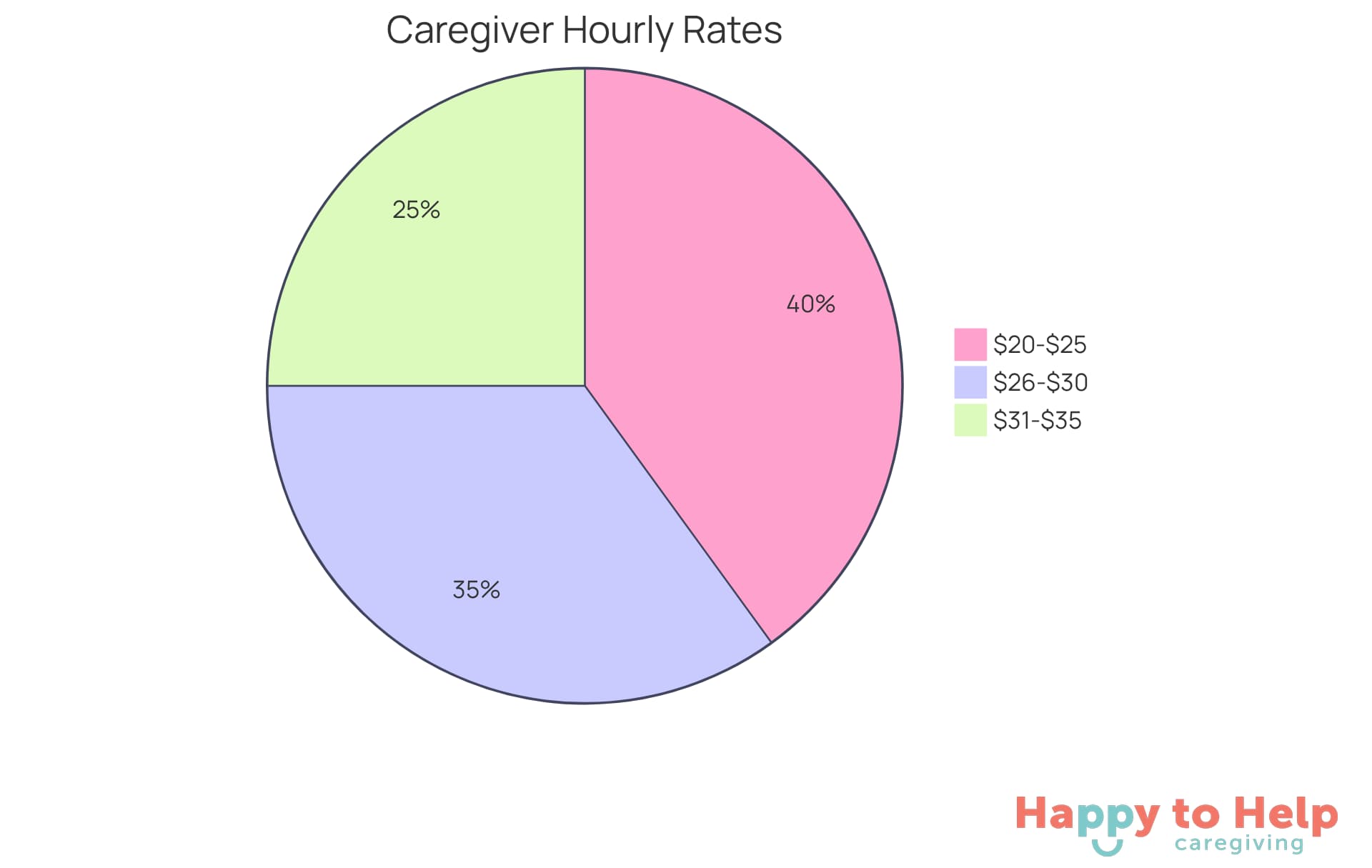
Geographic Location: Regional Variations in Hourly Rates
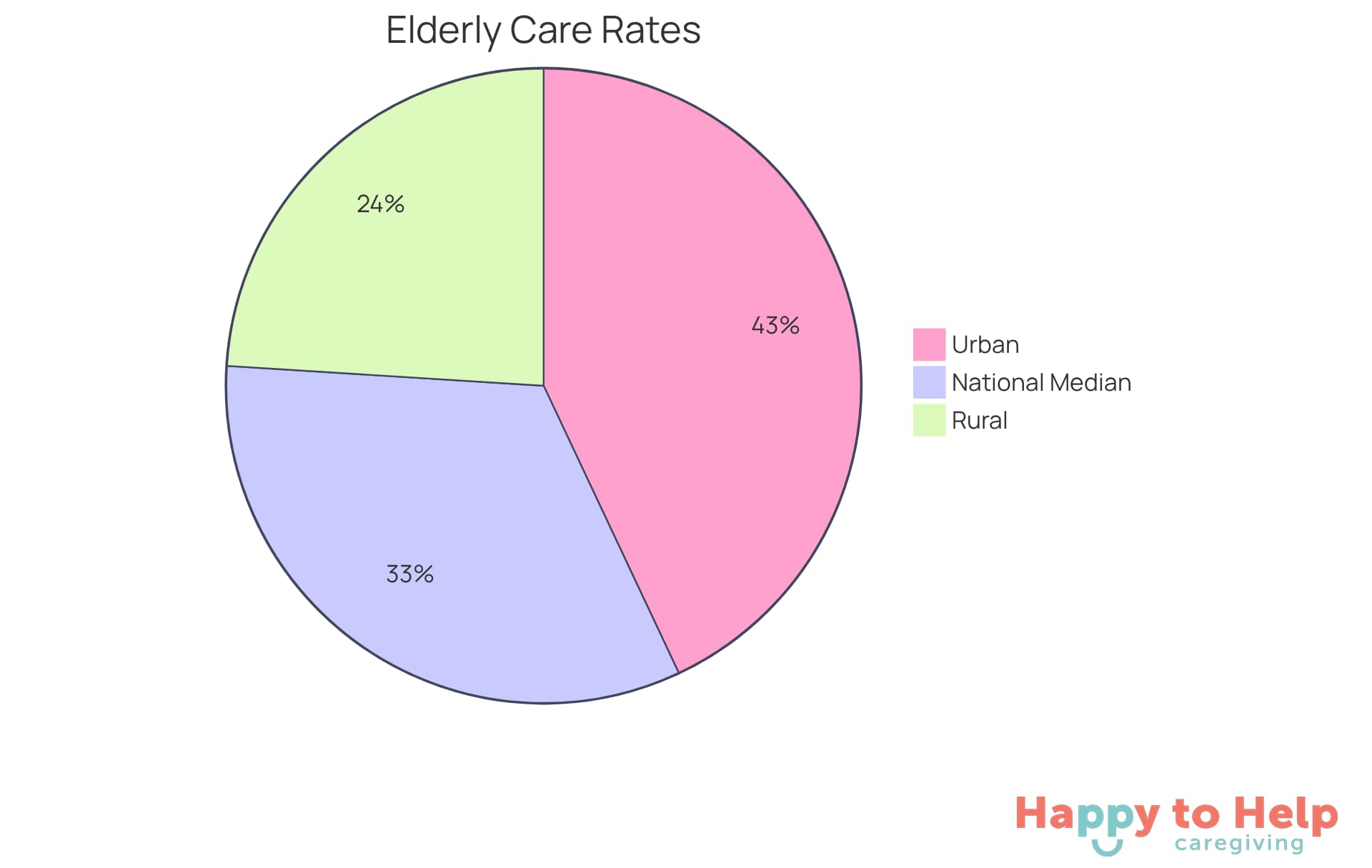
The hourly rate for elderly companion services presents a significant challenge for families, as these costs can vary widely depending on geographic area. Urban regions typically face higher expenses due to increased demand and living costs, while rural areas often offer more affordable options.
For example, the national median expense for nonmedical in-home assistance is approximately the hourly rate for elderly companion services, which is about $33 per hour. However, this figure can fluctuate between $24 and $43 based on the state, influencing the hourly rate for elderly companion services. Such disparities can create financial strain for families, making it crucial to plan accordingly.
To navigate these challenges, families should actively consider regional differences when budgeting for caregiving expenses. By researching local rates and understanding the factors that influence these costs, caregivers can make informed decisions that help manage their overall expenses effectively.
Type of Care: Basic vs. Specialized Services and Their Costs
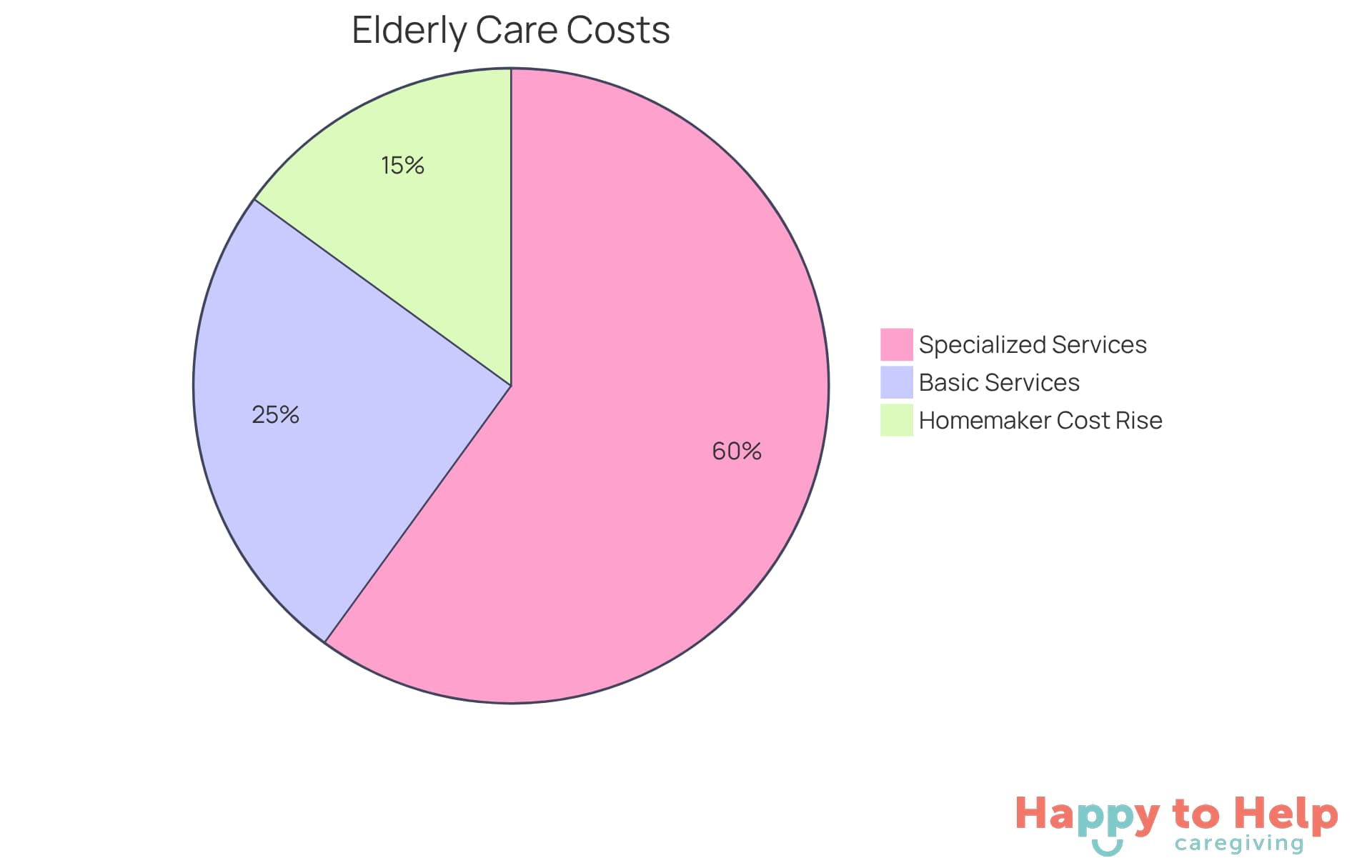
The hourly rate for elderly companion services presents a significant challenge for families due to the associated costs. The hourly rate for elderly companion services typically ranges from $20 to $30 per hour, providing essential social interaction and support. However, specialized services, such as skilled nursing or therapy, can command much higher rates, often between $40 and $80 per hour. This disparity highlights the complexity and expertise required in providing specialized assistance.
Families must carefully evaluate their loved one's specific needs. For those facing complex health challenges, opting for specialized services may be essential. Additionally, the typical hourly rate for elderly companion services varies by state, ranging from $24 to $43. As of 2024, the national average hourly rate for elderly companion assistance has increased to between $33 and $34. Notably, costs for homemaker services rose by 10 percent from 2023 to 2024, underscoring the growing financial burden on families.
Understanding these pricing trends is crucial for effective budgeting. Families should consider the specific needs of their loved ones and explore various service options to ensure suitable assistance is provided.
24/7 Care Availability: Impact on Hourly Pricing
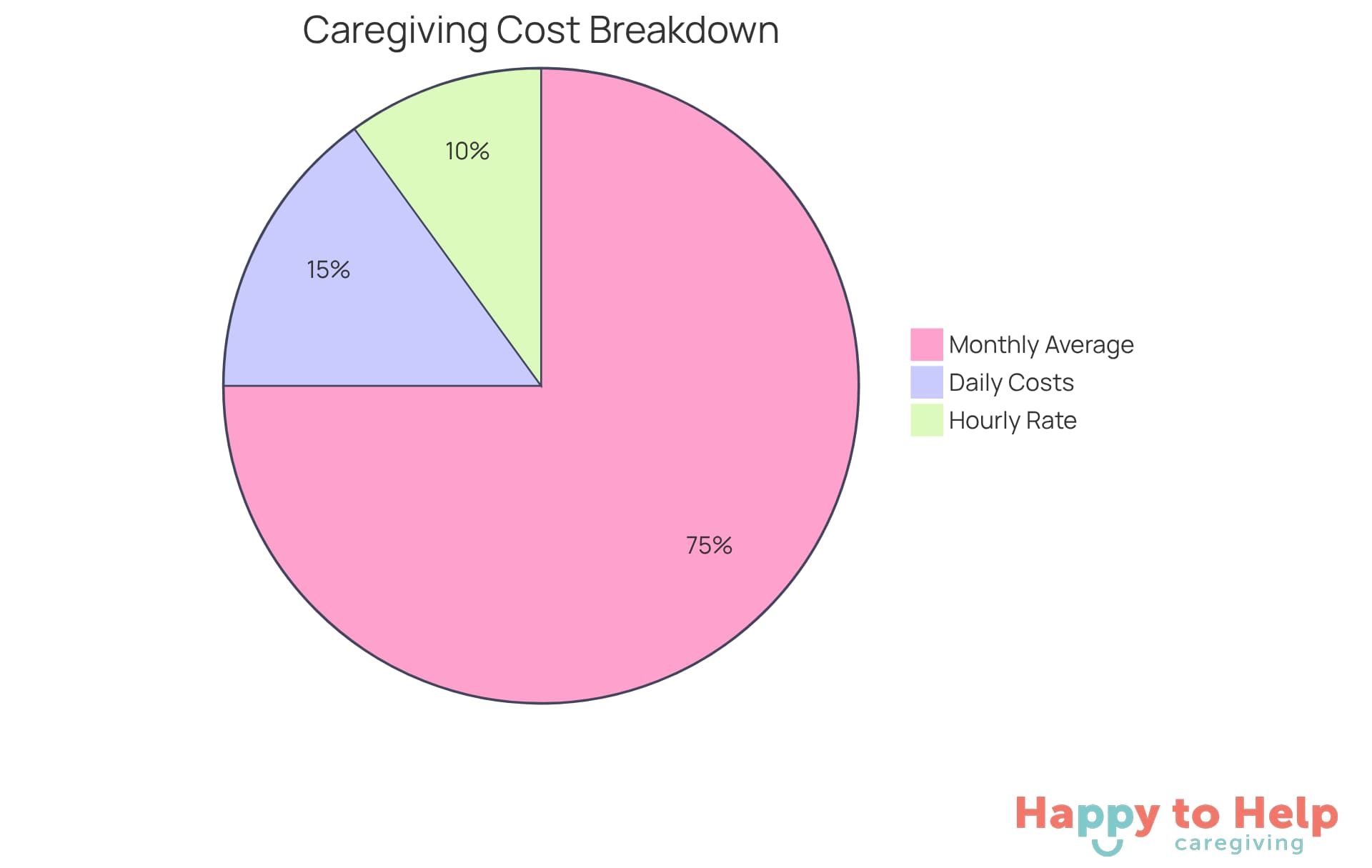
The high cost of round-the-clock caregiver assistance poses a significant challenge for families. Caregivers who provide 24/7 support typically charge higher fees due to the demanding nature of their schedules and the continuous monitoring required for clients. Families can expect to spend between $720 and $960 daily for non-medical assistance, translating to an hourly rate of about $30 to $40.
This financial burden can be daunting. The national average expense for 24/7 in-home assistance is approximately $17,280 monthly, which can strain household budgets. While the average hourly rate for elderly companion services is approximately $24 per hour, this rate can fluctuate based on location and specific services needed. Understanding these expenses is crucial for families as they explore funding alternatives.
To alleviate some of this financial strain, families should consider options such as:
- Medicare
- Medicaid
- Veterans benefits
These options can help reduce the costs of in-home care. Consulting with a financial advisor can also provide valuable insights into managing these expenses effectively. By exploring all available resources, families can better navigate the complexities of caregiving costs.
Agency vs. Independent Caregivers: Cost Implications
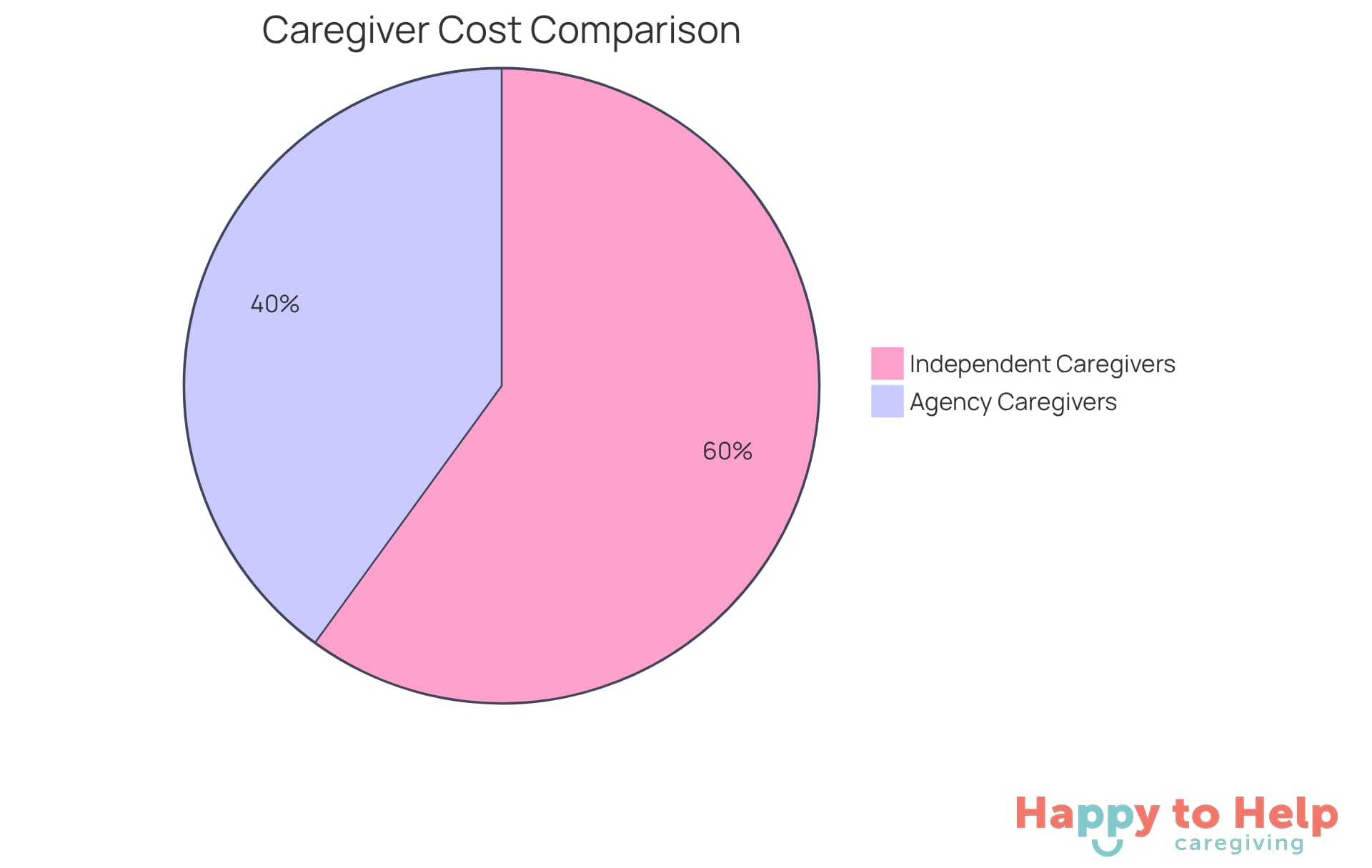
When families face the decision between agency and independent support providers, they encounter a significant problem: the financial implications of each choice. Agency providers typically charge higher fees, with the hourly rate for elderly companion services averaging between $33 and $48. This cost reflects the extensive services they offer, such as background checks, training, and 24/7 support. In contrast, independent providers usually charge an hourly rate for elderly companion services that ranges between $15 and $30, presenting a more budget-friendly option.
However, this cost-saving choice comes with potential risks. Households must consider the dangers of self-managed assistance, including reduced supervision and support, as well as hidden expenses related to managing the caregiver. While independent caregivers can help families save 20-30% compared to agency fees, the decision ultimately hinges on the household's budget, the level of support needed, and their willingness to handle the administrative tasks involved in hiring independent caregivers, particularly considering the hourly rate for elderly companion services.
Additionally, it's crucial to note that Medicare does not cover non-medical support services, which can further impact financial responsibilities. Caregiving experts emphasize that the choice between agency and independent support is a balancing act. Families must weigh short-term savings against long-term security and quality of care.
Insurance Coverage: How It Shapes Hourly Rates
Insurance coverage significantly impacts the hourly rate for elderly companion services, particularly in caregiving.
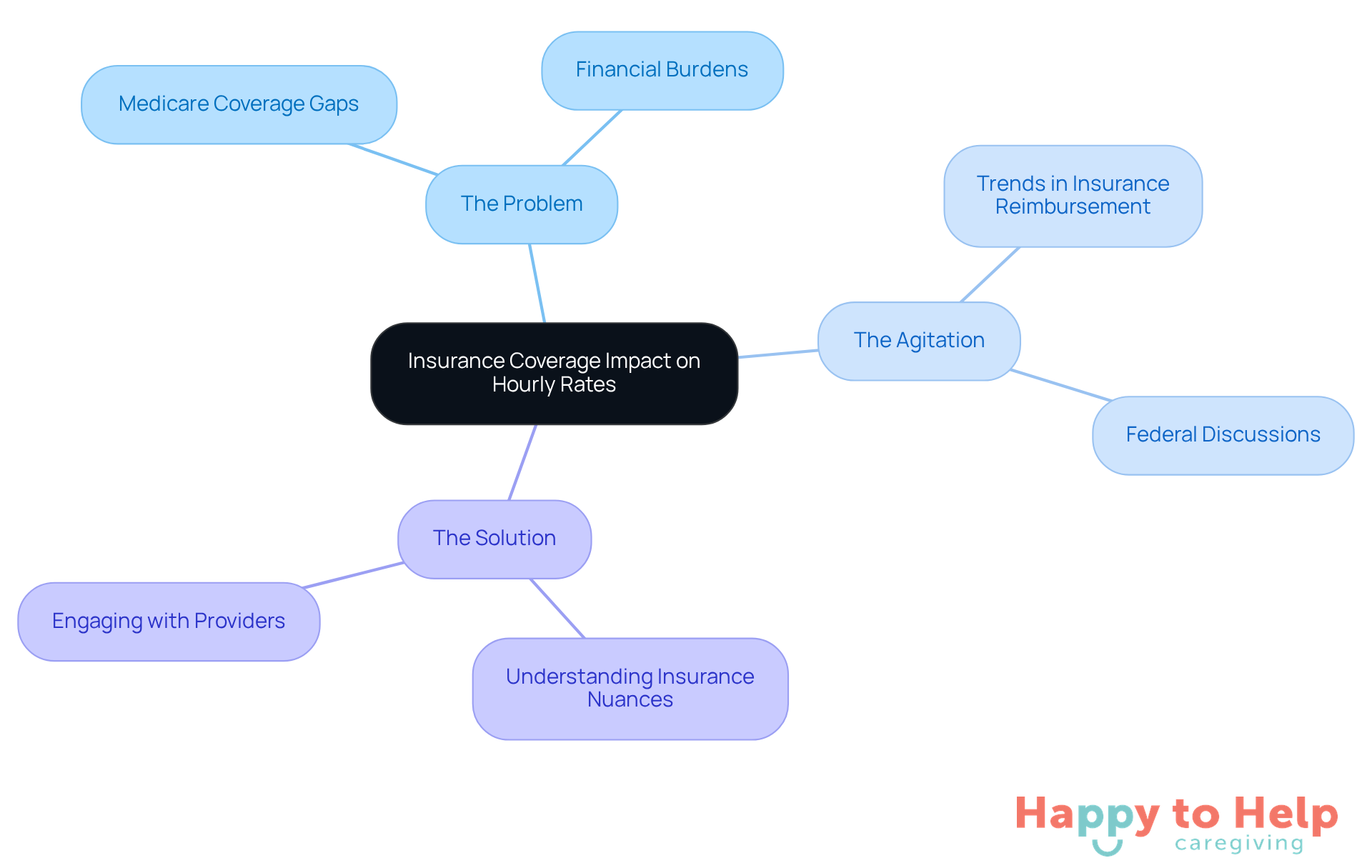
The Problem: Medicare generally does not cover companion assistance, leaving many households to navigate the financial implications of in-home support costs. This lack of coverage can create substantial financial burdens.
The Agitation: Current trends show a growing emphasis on insurance reimbursement for in-home assistance, with discussions at the federal level advocating for expanded coverage under Medicare and Medicaid. If these changes occur, they could reshape the landscape of home support financing, potentially leading to better reimbursement rates for families and impacting the hourly rate for elderly companion services.
The Solution: Financial advisors stress the importance of understanding insurance nuances when budgeting for caregiving needs. By leveraging available insurance benefits, households can significantly reduce out-of-pocket expenses, facilitating more effective financial planning. As the demand for home assistance rises, especially among the older demographic, families are encouraged to actively engage with their insurance providers to ensure they are maximizing their coverage and minimizing the hourly rate for elderly companion services.
Moreover, with long-term assistance expenses projected to reach $379 billion by 2050, it’s crucial for families to prepare financially. The ongoing caregiver shortage is also influencing costs, making it vital for households to consider these factors when budgeting for care. Notably, 90% of adults believe it would be impossible or extremely challenging to afford one year in a nursing home, underscoring the financial challenges families face and the critical role of insurance coverage. Insights from financial advisors can further assist families in navigating these complexities.
Client Needs: Tailored Care Plans and Their Cost Impact
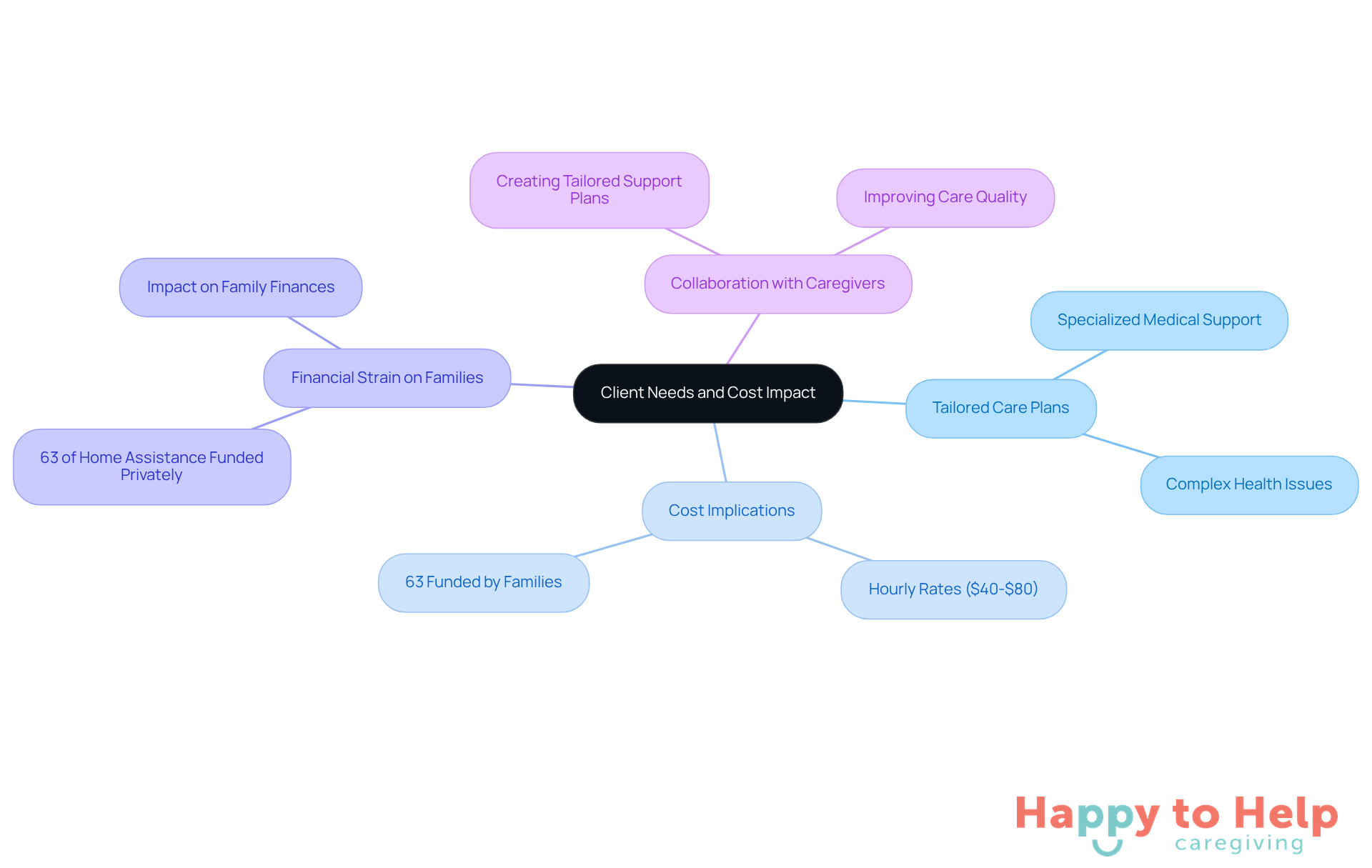
The unique needs of clients significantly impact the cost of caregiving services. Personalized treatment plans that address specific health conditions, preferences, and lifestyle choices often require more resources and specialized skills, which can influence the hourly rate for elderly companion services. For instance, clients requiring specialized medical support or help with complex health issues may face an hourly rate for elderly companion services that ranges from $40 to $80.
This situation creates a financial strain on families, as 63% of home assistance services are funded directly by individuals or families. Additionally, nearly half of those providing care experience significant financial impacts, complicating the caregiving environment.
To address these challenges, families should collaborate closely with caregivers to create tailored support plans that reflect their loved one's requirements. This approach not only improves the standard of support but also helps families manage the financial aspects of caregiving more efficiently.
As the private pay home support market is expected to expand considerably due to demographic changes, understanding these financial dynamics becomes increasingly crucial.
Caregiver Training and Certifications: Justifying Higher Rates
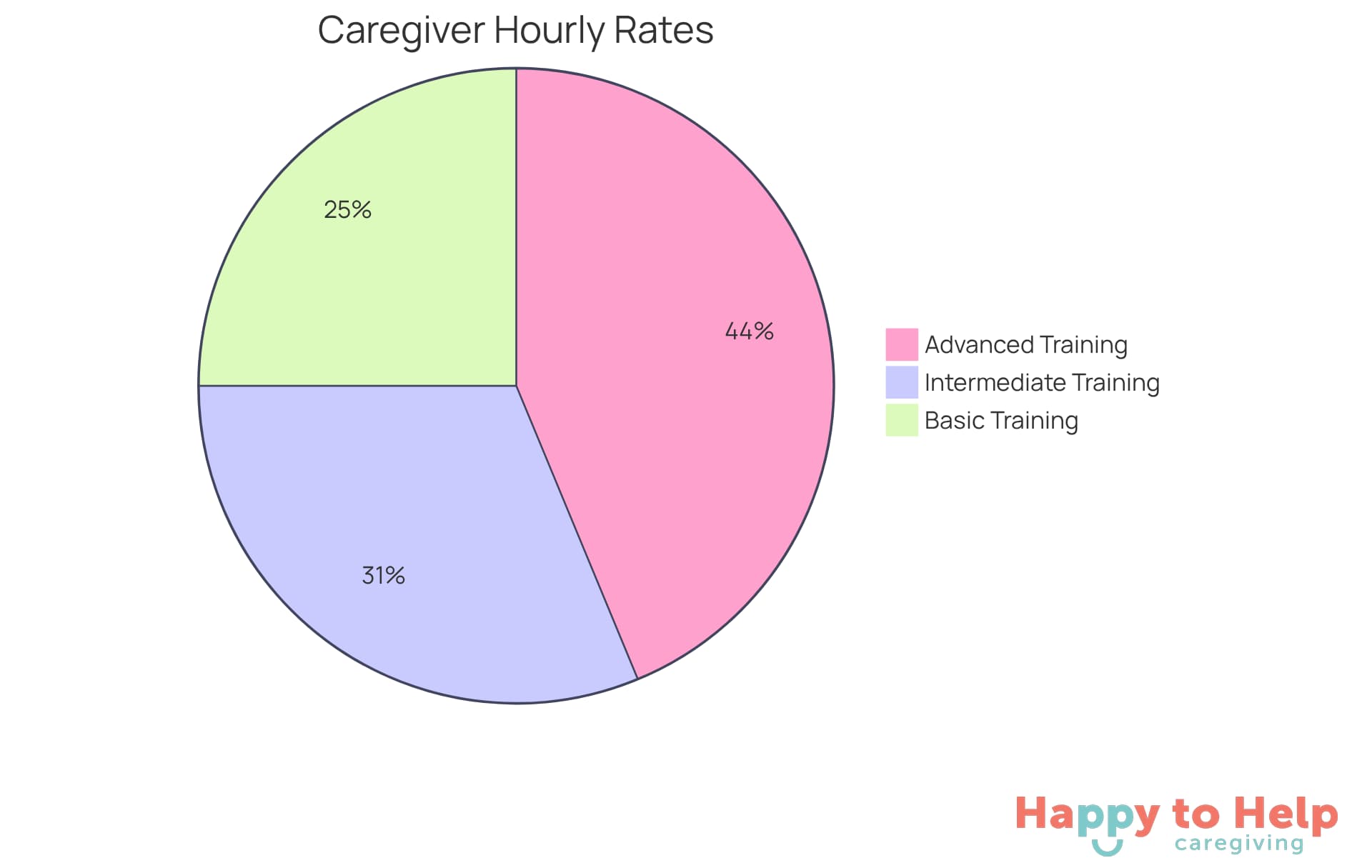
Caregivers often face the challenge of needing specialized training to command higher hourly rates. This can be a significant issue, as families want to ensure they are hiring qualified professionals. Without proper training, caregivers may struggle to provide the level of assistance required, especially in complex situations.
Investing in specialized training not only enhances the quality of care but also prepares caregivers to handle various challenges effectively. For instance, certified nursing assistants (CNAs) or support workers with advanced training in geriatric services can set an hourly rate for elderly companion services between $20 to $35. This investment is crucial for families seeking dependable support for their loved ones, ensuring that they receive the best possible care.
Market Demand: How It Influences Hourly Rates for Companion Services
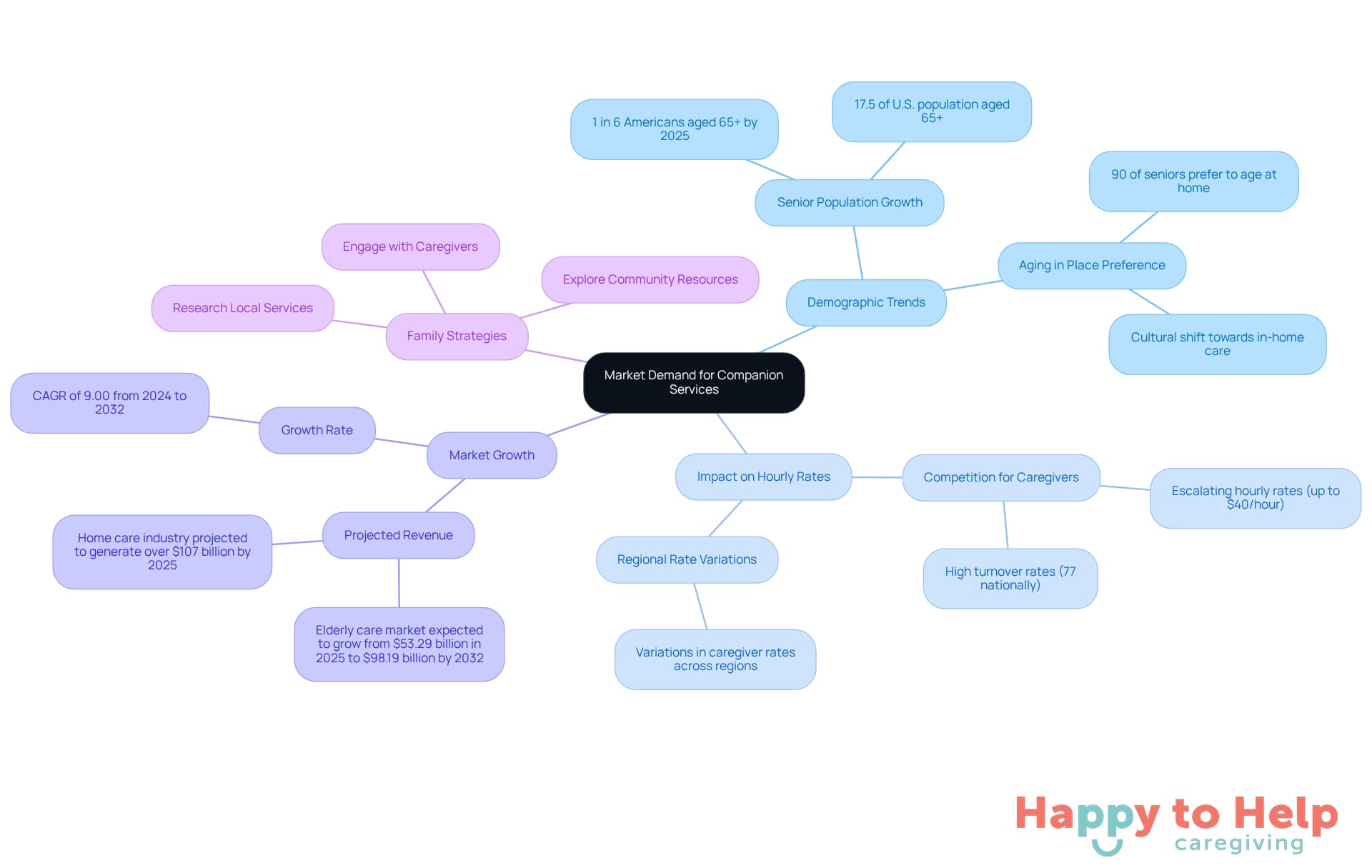
The demand for caregiving services presents a significant challenge, driven by the increasing senior population. By 2025, it's projected that 1 in 6 Americans will be aged 65 and over. Currently, 17.5% of the U.S. population falls into this age group, highlighting a demographic shift that is fueling a rise in demand for in-home support services.
This growing demand leads to heightened competition for skilled caregivers, resulting in an escalating hourly rate for elderly companion services. In some regions, rates have reached as high as $40 per hour. The home support sector is expected to generate over $107 billion in revenue by 2025, while the senior assistance market is anticipated to grow from USD 53.29 billion in 2025 to USD 98.19 billion by 2032. This trend underscores the increasing preference for aging in place.
Families must stay informed about these market trends to effectively navigate pricing fluctuations and make informed decisions regarding the hourly rate for elderly companion services. With approximately 15 million Americans currently receiving in-home care services and 90% of seniors preferring to age at home, understanding these dynamics is crucial for families seeking quality care.
To address these challenges, families can consider the following actionable solutions:
- Research local caregiving services to compare rates and services offered.
- Engage in discussions with caregivers about their qualifications and experience.
- Explore community resources that may provide support or financial assistance.
By staying proactive and informed, families can better manage the complexities of caregiving in an evolving market.
Moving Forward with 10 Factors Affecting Hourly Rate for
Understanding the factors that influence the hourly rate for elderly companion care is crucial for families seeking support for their loved ones. The problem lies in the complexity of caregiving, shaped by variables such as:
- Caregiver experience
- Geographic location
- Type of care
- Insurance coverage
These elements significantly impact costs, making it essential for families to acknowledge them to make informed decisions.
The implications of not understanding these factors can lead to financial strain and inadequate care. Families may struggle with choosing between agency and independent providers, which can have different financial implications. Additionally, the rising demand for caregiving services highlights the necessity for families to stay proactive and informed about market trends and pricing fluctuations.
To navigate these challenges, families should consider:
- Hiring experienced caregivers
- Developing tailored care plans that reflect individual client needs
- Engaging with caregivers
- Exploring local resources that can provide valuable insights
Ultimately, prioritizing informed decision-making allows families to enhance the well-being of their loved ones while effectively managing associated costs.
https://iframe.tely.ai/cta/eyJhcnRpY2xlX2lkIjogIjY5MjY0Mzc0ZDdhYTIxYWI5OTE3NmUxMCIsICJjb21wYW55X2lkIjogIjY4ZWU1ZGNhNzMxNzYyNTU3ZjNjOTVjMSIsICJpbmRleCI6IG51bGwsICJ0eXBlIjogImFydGljbGUifQ==Frequently Asked Questions
What services does Happy to Help Caregiving offer?
Happy to Help Caregiving offers tailored companion support services, including companionship services, post-hospital recovery assistance, respite support, and palliative assistance.
How does Happy to Help Caregiving ensure personalized care?
Their services are customized to meet the unique needs of clients, which fosters autonomy and enhances overall wellness.
What factors influence the hourly rates for elderly companion services?
Hourly rates are influenced by the caregiver's experience level, geographic location, and the complexity of care required.
How does caregiver experience affect compensation?
Caregivers with extensive experience can handle various situations more effectively, leading families to offer higher fees for their services. Rates for specialized care can range from $20 to $35 per hour based on expertise.
What is the expected demand for support workers by 2026?
The demand for support workers is expected to rise dramatically, with an additional 7.8 million caregivers needed by 2026.
How can ongoing training impact caregiver earnings?
Caregivers who pursue continuous professional development can earn up to 20% more than those with less training, highlighting the value of enhancing qualifications.
How do geographic locations affect the cost of elderly companion services?
Hourly rates can vary widely based on geographic area, with urban regions typically facing higher expenses due to increased demand and living costs. The national median expense for nonmedical in-home assistance is about $33 per hour, but it can fluctuate between $24 and $43 depending on the state.
What should families consider when budgeting for caregiving expenses?
Families should research local rates and understand the factors influencing these costs to make informed decisions and manage their overall expenses effectively.
List of Sources
- Happy to Help Caregiving: Personalized Companion Care Services
- Growing Trend of Private Pay Home Care for Elderly (https://regencyhcs.com/blog/growing-trend-of-private-pay-home-care-for-elderly)
- Compassion in Action: How Personalized Senior Care Enhances Quality of Life - Miss Bell (https://missbellcares.com/compassion-in-action-personalized-senior-care)
- Top Trends in Senior Care Services for 2024 (https://westmontliving.com/blog/assisted-living/top-10-trends-in-senior-care-services-for-2024)
- Trends in Senior Care: What to Expect in 2025 (https://agingconnections.org/blog/trends-in-senior-care-what-to-expect-in-2025)
- Caregiver Experience: How It Affects Hourly Rates
- Inflation Hits Home Care, Increasing Pressure on Older Adults and Family Caregivers (https://blog.aarp.org/thinking-policy/inflation-hits-home-care-increasing-pressure-older-adults-family-caregivers)
- Here's the average monthly in-home caregiver salary by state (https://care.com/c/average-in-home-caregiver-salary-by-state)
- The Impact of Caregiver Hourly Rates on Retention (https://axiscare.com/blog/rising-caregiver-wages)
- How Much Do Private Caregivers Make & What to Expect | TBest Services (https://tbestservices.com/blog/job-responsibilities/how-much-do-private-caregivers-make-what-to-expect)
- Pay, Job Protections for Home Care Aides at Risk Under Proposed Federal Rule (https://aarp.org/advocacy/job-protections-home-care-workers)
- Geographic Location: Regional Variations in Hourly Rates
- Elderly Care Cost Per Hour: State-by-State Comparison - Resource for Seniors and Caregivers | SeniorSite (https://seniorsite.org/resource/elderly-care-cost-per-hour-state-by-state-comparison)
- Breaking Down the Cost of In-Home Care: What Families Need to Know (https://seniorlivingnearme.com/resources/breaking-down-the-cost-of-in-home-care-what-families-need-to-know)
- Home Care Costs in 2025: A State-by-State Guide (https://aplaceformom.com/caregiver-resources/articles/in-home-care-costs)
- 24/7 In-Home Care Costs in 2025 - Assisted Living Magazine (https://assistedlivingmagazine.com/24-7-in-home-care-costs-in-2025)
- Type of Care: Basic vs. Specialized Services and Their Costs
- The Cost of Dignity: A Guide to In-Home Care Costs and Happier Aging in 2025 | Nurse Next Door (https://nursenextdoor.com/blog/how-much-does-senior-home-care-cost)
- What Is Senior Home Care: Services, Costs and Tips for Aging in Place (https://health.usnews.com/senior-care/articles/senior-home-care-aging-in-place)
- Elder care costs are outpacing inflation. Americans want a lifeline. (https://nbcnews.com/politics/2024-election/elder-care-costs-are-outpacing-inflation-americans-want-lifeline-rcna172950)
- Facing Financial Ruin as Costs Soar for Elder Care (Published 2023) (https://nytimes.com/2023/11/14/health/long-term-care-facilities-costs.html)
- Survey Shows Long-Term Care Costs Continue to Rise | Shepherd Elder Law (https://shepherdelderlaw.com/survey-shows-long-term-care-costs-continue-to-rise)
- 24/7 Care Availability: Impact on Hourly Pricing
- How Much Does Private Home Care Cost Per Hour? (https://alwaysbestcare.com/resources/how-much-does-private-home-care-cost-per-hour)
- How Much Does 24/7 Home Care Cost? (https://aplaceformom.com/caregiver-resources/articles/24-hour-in-home-care)
- How Much Does 24/7 In-Home Care Cost? | The Senior List (https://theseniorlist.com/caregiving/24-7-in-home-care)
- 24/7 In-Home Care Costs in 2025 - Assisted Living Magazine (https://assistedlivingmagazine.com/24-7-in-home-care-costs-in-2025)
- Agency vs. Independent Caregivers: Cost Implications
- Independent Private Caregiver vs. Home Care Agency: Which Is More Cost-Effective for Families? (https://clarahomecare.com/articles/independent-private-caregiver-vs-home-care-agency-which-is-more-cost-effective-for-families)
- Home Care Agencies vs. Independent Caregivers | Pros & Cons (https://payingforseniorcare.com/homecare/agency-or-independent-caregiver)
- Private Home Care Costs vs. Agency Care: Making an Informed Decision | CareYaya (https://careyaya.org/resources/blog/private-home-care-costs-vs-agency-care-making-an-informed-decision)
- Insurance Coverage: How It Shapes Hourly Rates
- How to Pay for a Home Care Worker (https://aarp.org/caregiving/financial-legal/afford-a-homecare-worker)
- At Home Care Pricing: Essential Industry Statistics for 2025 - Assisting Hands Rockford (https://assistinghands.com/100/illinois/rockford/blog/at-home-care-pricing-essential-industry-statistics-for-2025)
- The Affordability of Long-Term Care and Support Services: Findings from a KFF Survey | KFF (https://kff.org/health-costs/the-affordability-of-long-term-care-and-support-services)
- Shifts in the home care industry affecting insurance demand - AZ Big Media (https://azbigmedia.com/business/shifts-in-the-home-care-industry-affecting-insurance-demand)
- Shocking statistics about the costs of long-term care (https://allstate.com/allstate-benefits/news-and-insights/shocking-statistics-about-the-costs-of-long-term-care)
- Client Needs: Tailored Care Plans and Their Cost Impact
- New Report Reveals Crisis Point for America’s 63 million Family Caregivers (https://press.aarp.org/2025-07-24-New-Report-Reveals-Crisis-Point-for-Americas-63-million-Family-Caregivers)
- The Affordability of Long-Term Care and Support Services: Findings from a KFF Survey | KFF (https://kff.org/health-costs/the-affordability-of-long-term-care-and-support-services)
- Growing Trend of Private Pay Home Care for Elderly (https://regencyhcs.com/blog/growing-trend-of-private-pay-home-care-for-elderly?4393cdce\_page=4)
- Elder care costs are outpacing inflation. Americans want a lifeline. (https://nbcnews.com/politics/2024-election/elder-care-costs-are-outpacing-inflation-americans-want-lifeline-rcna172950)
- Caregiver Training and Certifications: Justifying Higher Rates
- What Are the Average Caregiver Pay Rates in 2025? — Paid.Care (https://paid.care/guides/what-are-the-average-caregiver-pay-rates-in-2025)
- The Cost of In-Home Caregivers May Surprise You (https://health.usnews.com/senior-care/caregiving/articles/how-much-do-in-home-caregivers-cost)
- How Much Do Caregivers Make in 2025? | The Senior List (https://theseniorlist.com/caregiving/caregiver-pay)
- Home Care Costs in 2025: A State-by-State Guide (https://aplaceformom.com/caregiver-resources/articles/in-home-care-costs)
- Why Skill-Based Billing Is Growing In Home Care – And Why Some Say No (https://homehealthcarenews.com/2025/09/why-skill-based-billing-is-growing-in-home-care-and-why-some-say-no)
- Market Demand: How It Influences Hourly Rates for Companion Services
- Home Care Statistics In 2025: Key Insights In Home Care (https://sagapixel.com/marketing/home-care-statistics)
- 10 Must-Know U.S. Home Care Industry Stats for 2025 - North American Community Hub (https://nchstats.com/us-home-care-industry-stats)
- Elderly Care Market Size, Share & Trends | Growth Report [2032] (https://fortunebusinessinsights.com/elderly-care-market-111477)
- The senior population is booming. Caregiving is struggling to keep up (https://cnbc.com/2025/11/21/senior-caregiving-labor.html)