
The Importance of 10 Helpers for Hire: Essential
The aging population encounters numerous challenges that can greatly affect their quality of life. Issues such as loneliness, isolation, and the complexities of post-hospital recovery are prevalent. Families often seek effective solutions to these problems, and hiring caregivers has emerged as a vital resource. Caregivers provide not only physical assistance but also emotional support tailored to the unique needs of seniors.
How can families navigate these options to ensure their loved ones receive the comprehensive care they deserve? This article explores ten essential caregiving services that address the specific needs of seniors. It highlights the transformative potential of companionship, personalized care plans, and continuous support in fostering a healthier, more connected life for the elderly.
Happy to Help Caregiving: Companionship Care for Seniors
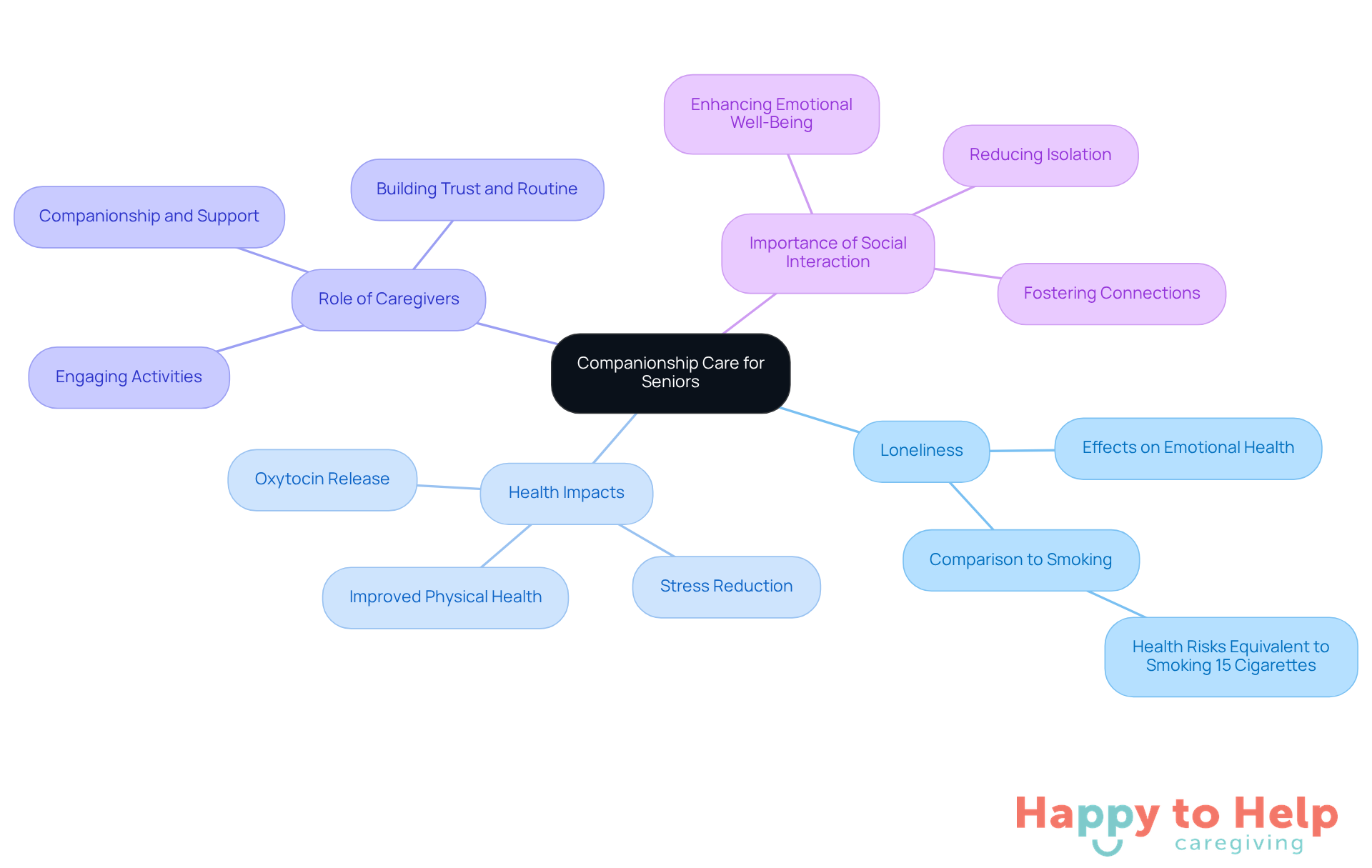
Loneliness is a significant issue for many older adults, often leading to feelings of isolation and declining emotional health. This problem is particularly pressing as seniors may lack regular social interaction, which is crucial for their well-being. Research shows that prolonged isolation can be as detrimental to health as smoking fifteen cigarettes a day, highlighting the urgent need for effective solutions.
Helpers for hire provide a vital solution to this challenge through companionship care. Happy to Help Caregiving focuses on building meaningful connections with seniors by providing helpers for hire to share their daily experiences. Caregivers are trained to engage clients in enriching conversations and activities, which not only alleviate feelings of loneliness but also enhance overall well-being. By prioritizing companionship, caregivers can significantly improve the quality of life for their clients.
Moreover, regular social interaction has been shown to improve emotional health and contribute to better physical health outcomes. Engaging in conversations and activities sparks the release of oxytocin, which lowers stress and supports heart health. This reinforces the importance of companionship in elderly care, especially as we approach 2025, where addressing the health risks associated with isolation becomes increasingly critical.
Happy to Help Caregiving: Post-Hospital Recovery Assistance
Problem: Transitioning back into daily routines after a hospital stay can be challenging for older adults. Without proper support from helpers for hire, they may struggle with daily activities, which increases the risk of returning to the hospital.
Agitate: This situation can lead to feelings of frustration and helplessness for both the elderly individuals and their caregivers. The lack of helpers for hire in managing medications, mobility, and daily tasks can hinder recovery and diminish confidence.
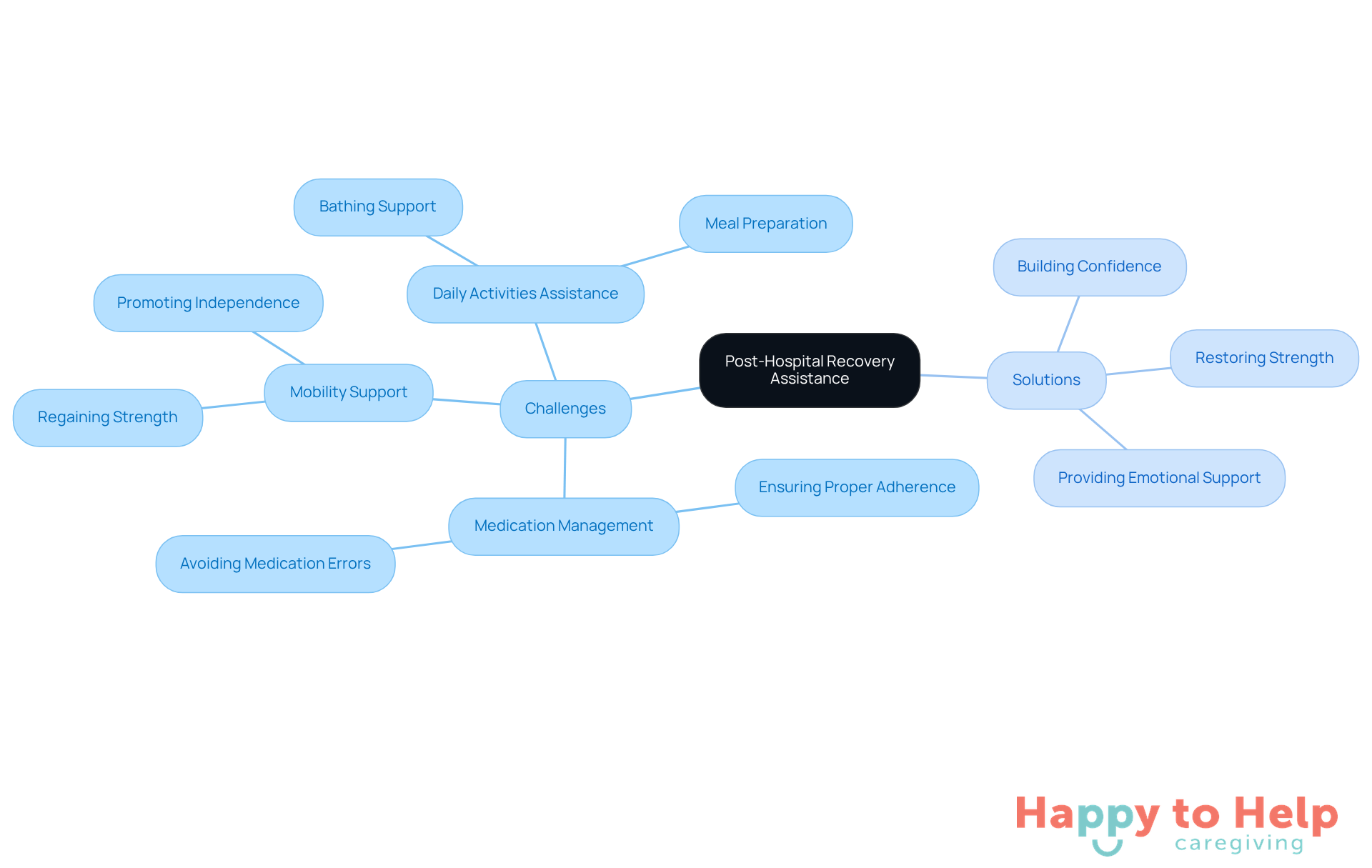
Happy to Help Caregiving provides a comprehensive approach to post-hospital recovery assistance with their helpers for hire. Caregivers provide essential support, including:
- Medication management to ensure proper adherence.
- Mobility support to help regain strength and independence.
- Daily activities assistance, such as bathing and meal preparation.
By focusing on personal needs, caregivers help clients restore their strength and confidence in a familiar environment, significantly lowering the likelihood of hospital readmission.
Happy to Help Caregiving: Respite Care for Family Caregivers
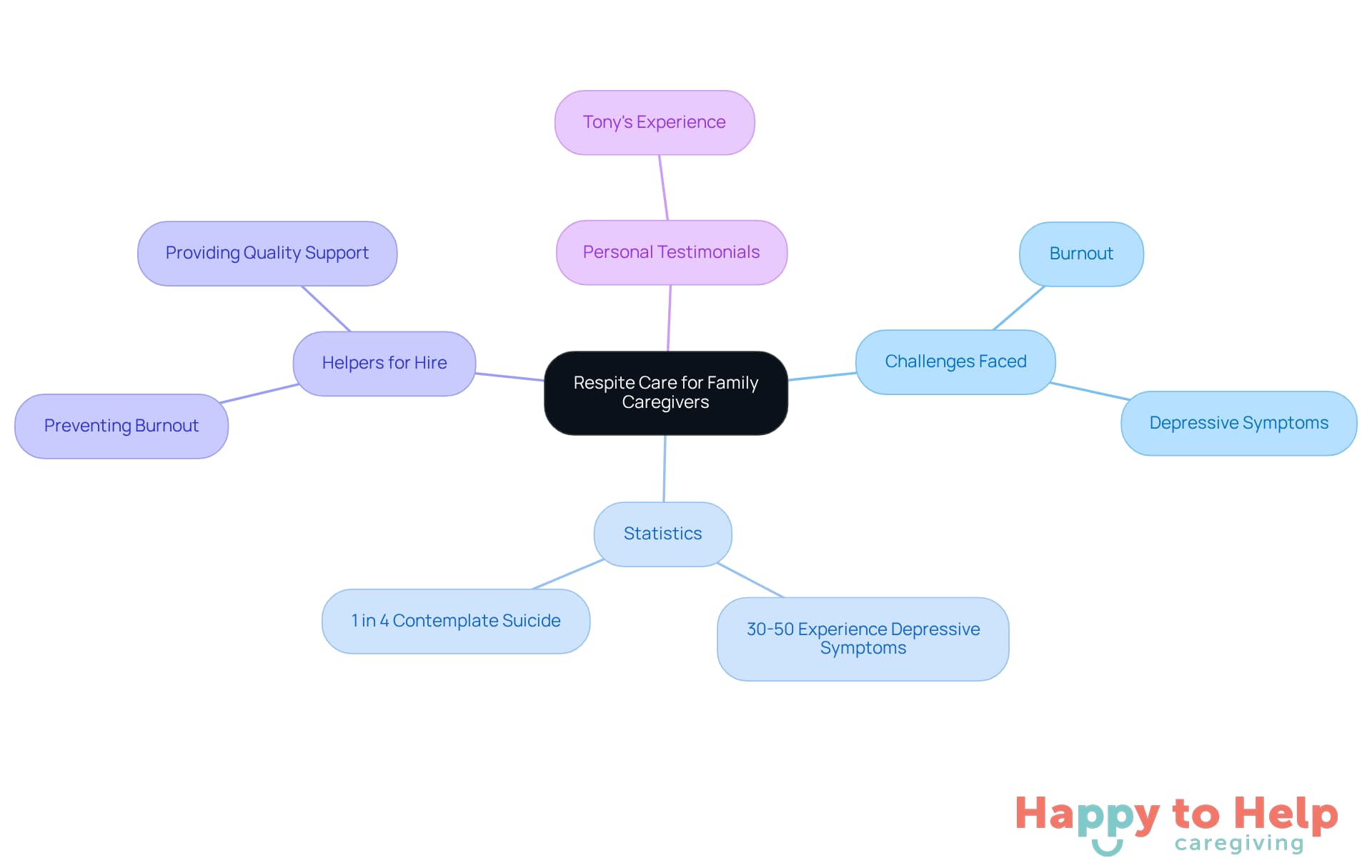
Caregivers face significant challenges, often leading to burnout and stress. Alarmingly, up to 30-50% of caregivers experience depressive symptoms, and one in four individuals assisting a family member with dementia has contemplated suicide in the past year. These statistics highlight the severe emotional toll caregiving can take.
To combat this issue, Happy to Help Caregiving offers vital helpers for hire through its respite assistance services. These services offer helpers for hire, allowing family supporters to take necessary breaks and ensuring that seniors receive ongoing, high-quality support. Customizable to suit various needs, whether for a few hours or several days, helpers for hire for respite assistance enable caregivers to refresh and manage other obligations.
The importance of helpers for hire in providing respite support cannot be overstated. It plays a crucial role in preventing caregiver burnout, which can negatively impact both the caregiver and the individual receiving care, thus the importance of having helpers for hire. Social workers emphasize that regular breaks are essential for preserving the health of helpers for hire, as these breaks help decrease stress and enhance the overall quality of assistance.
As Tony, a previous support group participant, shared, "The respite assistance services have been a great blessing for our family." He noted that it has given him time to disconnect and unwind, knowing that his loved one is safe and in good hands. With the growing pressures on family supporters, helpers for hire can provide respite assistance, serving as a lifeline that allows them to return to their roles revitalized and better prepared to offer compassionate support.
Palliative Support Care: Compassionate Services for Serious Illnesses
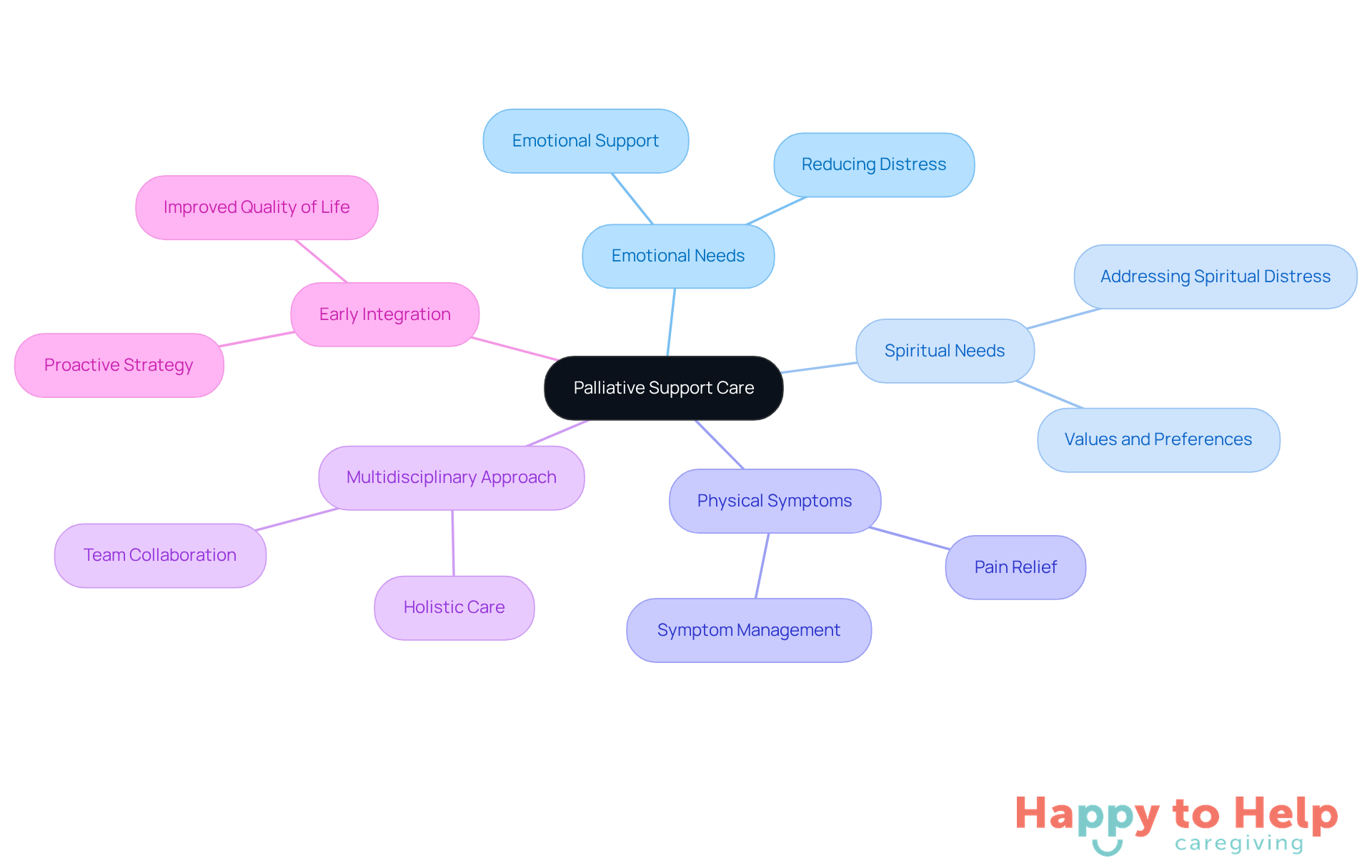
Palliative assistance from Happy to Help Caregiving addresses a significant problem: seniors facing serious illnesses often struggle with emotional and spiritual needs alongside physical symptoms. Caregivers are expertly trained to manage these symptoms, provide emotional support, and assist with daily activities, ensuring clients maintain their dignity and quality of life. Without adequate support, patients may experience increased distress and a diminished quality of life.
Recent trends in palliative support highlight the importance of early integration. Studies show that introducing palliative care alongside treatment can lead to a 30% improvement in health-related quality of life for patients. This proactive strategy not only reduces distress but also fosters an environment where patients can express their values and preferences regarding treatment.
Experts like Stacy Fischer, co-leader of the CU Cancer Center’s Cancer Prevention and Control research program, advocate for a multidisciplinary approach. Fischer states, "Palliative support is frequently at its best when provided by a multidisciplinary team." This method recognizes that effective palliative care must consider the whole individual, addressing physical, emotional, and spiritual health, which is crucial for older adults facing complex health challenges.
As we move into 2025, especially following the National Seminar in September, the focus remains on enhancing the quality of life for the elderly. Families can find comfort in knowing that their loved ones receive compassionate, tailored support during these challenging times.
24/7 Availability: Ensuring Continuous Support for Seniors
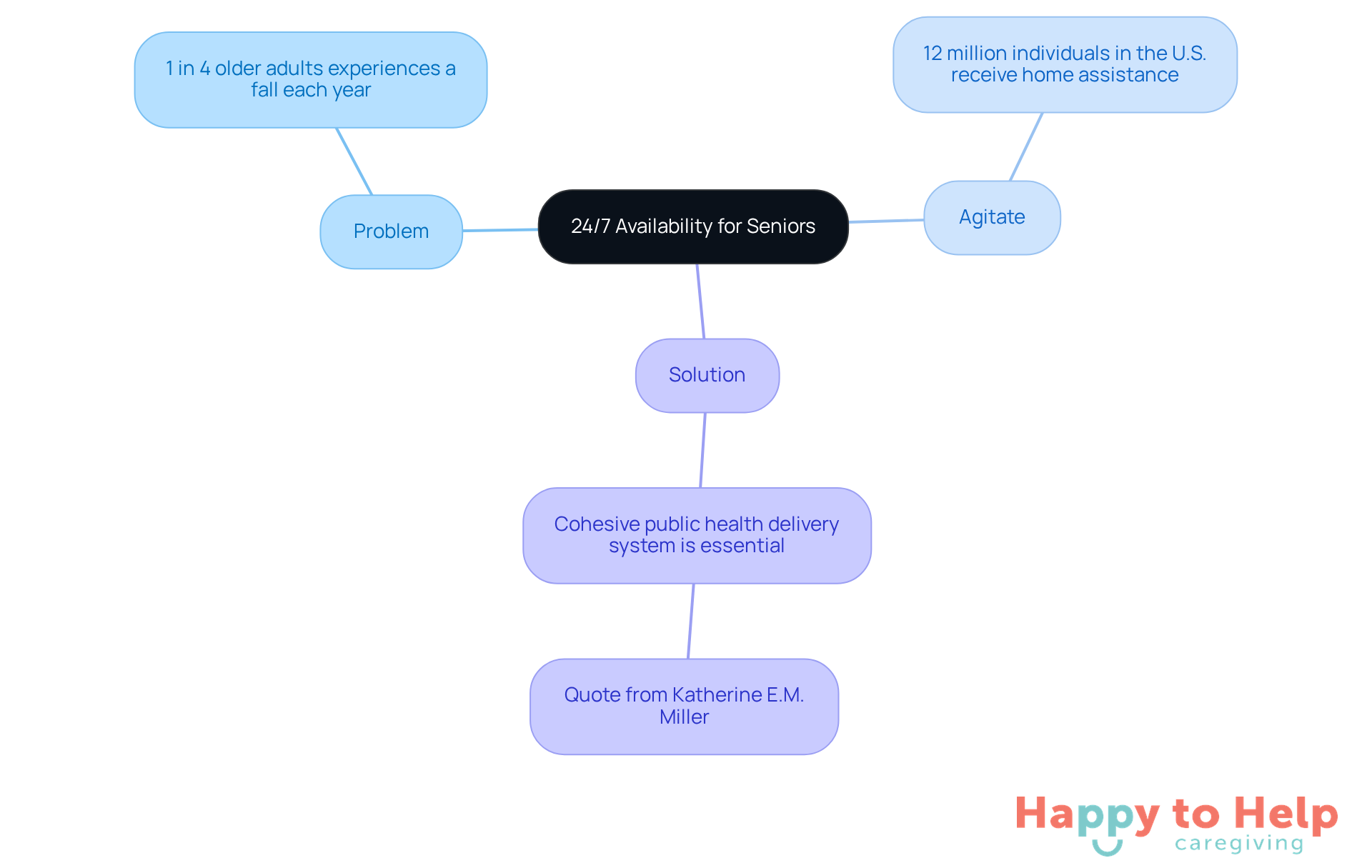
Problem: Elderly individuals often face emergencies or require support at any time, which can be a significant concern for families. Studies indicate that one in four older adults experiences a fall each year, underscoring the urgent need for prompt assistance in such situations.
Agitate: Currently, around 12 million individuals in the U.S. receive home assistance, which reflects a widespread need for helpers for hire. Families can find peace of mind knowing their loved ones are never alone, with help just a phone call away. This constant availability not only enhances safety but also fosters a sense of security and independence, allowing elderly individuals to thrive in their familiar environments.
Solution: Geriatric care managers emphasize that readiness for emergencies is crucial in home assistance. Ongoing support significantly reduces risks, ensuring that older adults maintain their quality of life while receiving necessary help. As Katherine E.M. Miller notes, a cohesive public health delivery system with comprehensive support for aging in place is essential to meet the needs of the elderly population.
Flexible Scheduling: Tailoring Care to Individual Needs
Happy to Help Caregiving recognizes a significant problem: every elderly individual has unique needs and preferences. Rigid scheduling can lead to dissatisfaction among clients and their families, as it fails to accommodate these individual requirements. This inflexibility can diminish the quality of care and overall well-being of seniors.
To address this issue, flexible scheduling is essential. Support providers collaborate with families to create personalized support plans that seamlessly integrate into the client's daily routine. Whether it’s providing early morning assistance or evening companionship, the ability to tailor support schedules ensures that seniors receive the help they need at the most opportune times. This adaptability not only enhances service quality but also significantly boosts satisfaction for both clients and their families.
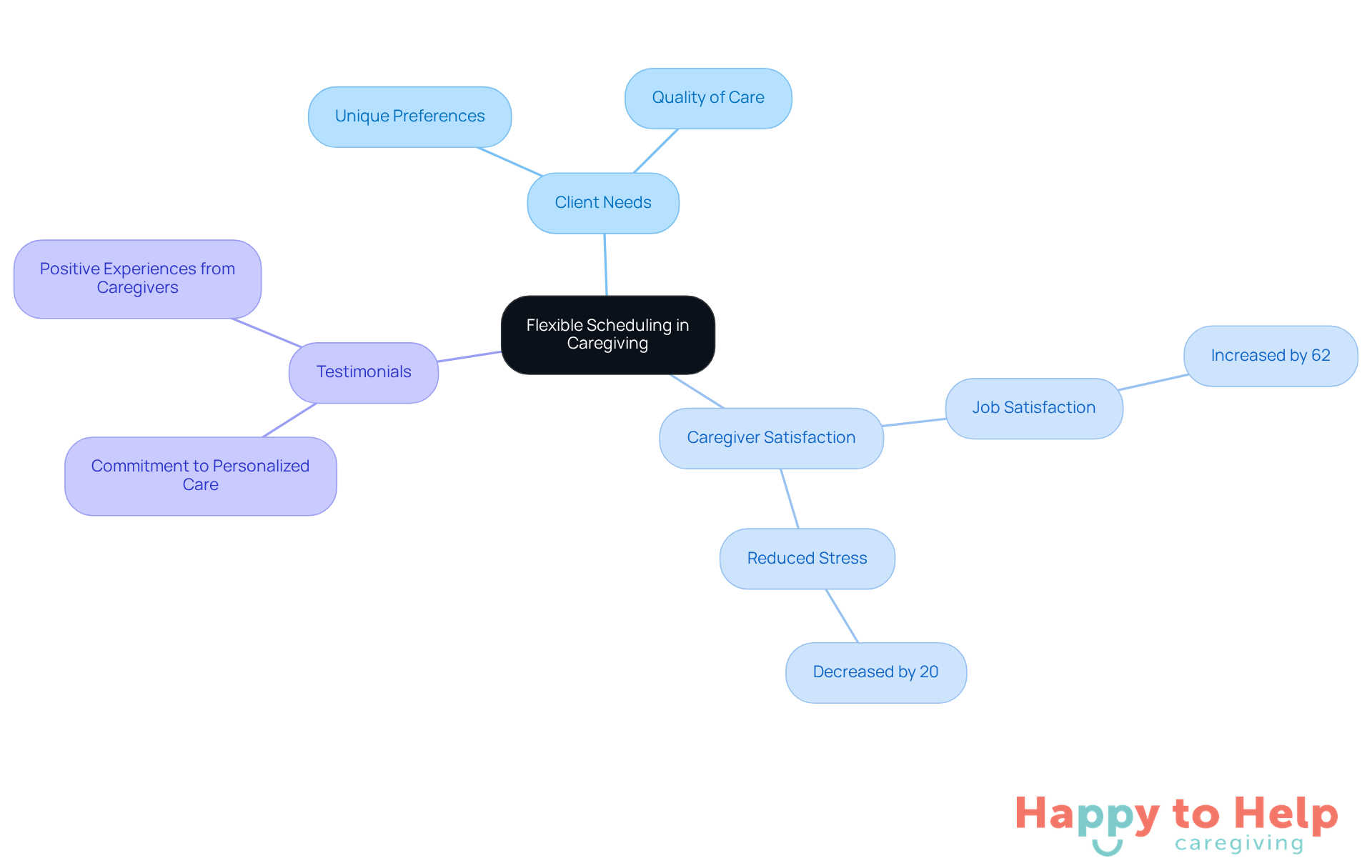
As Kate Houck, RN, BSN, points out, "Current studies indicate that implementing a flexible timetable can enhance job satisfaction by 62 percent and reduce work-related stress by 20 percent." This highlights the benefits of flexible scheduling not just for clients, but also for caregivers. With only 58 percent of nurses working in hospitals, the shift towards adaptable work environments underscores the importance of customized support plans in today’s caregiving landscape.
Testimonials from caregivers further emphasize the value of personalized care. By focusing on individual needs, caregivers demonstrate a commitment to improving the well-being of elderly individuals through tailored attention and assistance.
Emotional Support: Alleviating Loneliness in Seniors
Loneliness and isolation are significant challenges faced by elderly individuals, impacting their emotional well-being and mental health. Many seniors struggle to maintain social connections, which can lead to feelings of sadness and disconnection from the world around them. This is where emotional support becomes essential.
At Happy to Help Caregiving, caregivers are trained to engage elderly individuals in meaningful conversations and activities that promote social interaction. By fostering connections and providing companionship, caregivers help alleviate feelings of loneliness. This emotional support not only encourages seniors to express their feelings but also helps them stay connected with their loved ones and the community.
Families can feel assured knowing that their loved ones receive not just physical assistance but also the emotional support they require. Caregivers play a crucial role in maintaining the mental health of seniors, ensuring they feel valued and understood.
Key Benefits of Emotional Support:
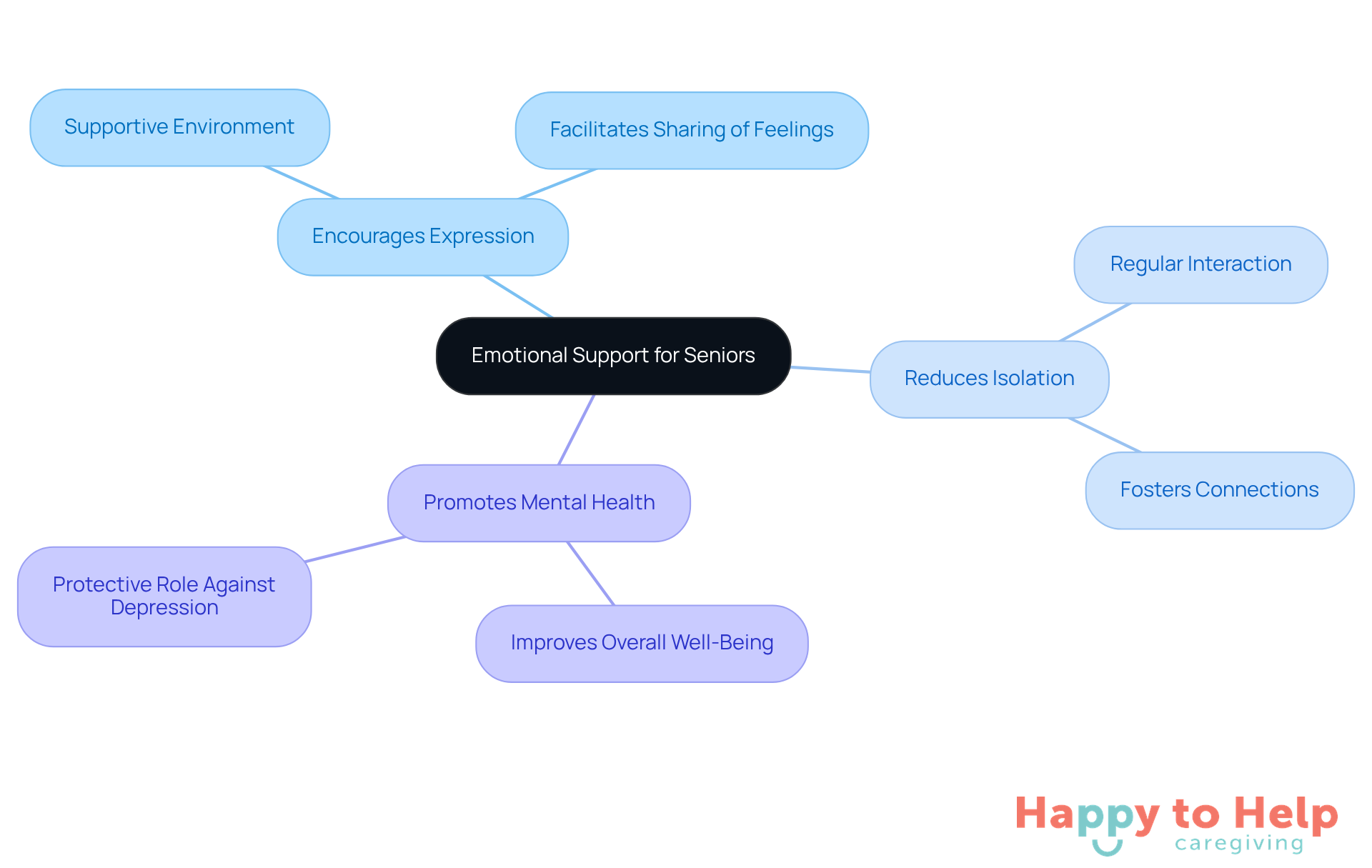
- Encourages expression: Seniors are more likely to share their feelings in a supportive environment.
- Reduces isolation: Regular interaction helps seniors feel less alone.
- Promotes mental health: Emotional connections can significantly improve overall well-being.
In conclusion, emotional support is a vital component of caregiving that addresses the emotional needs of seniors, helping them lead happier, more connected lives.
Technology Integration: Enhancing Communication in Caregiving
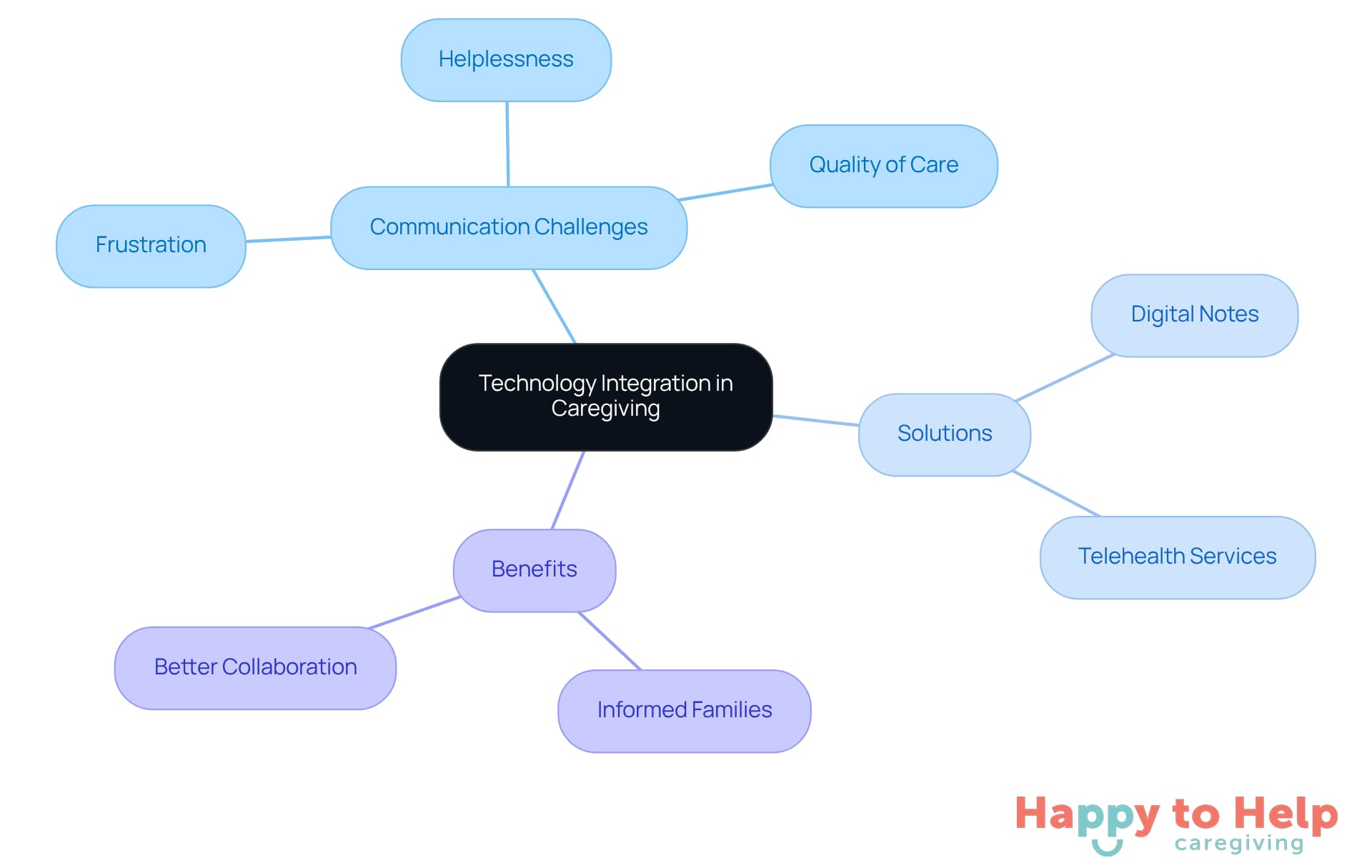
Caregiving often presents significant challenges, particularly in communication and coordination among family members and healthcare providers. Families frequently struggle to stay updated on their loved ones' status, which can lead to feelings of frustration and helplessness. This lack of effective communication can hinder the quality of care provided, making it essential to find solutions that bridge these gaps.
Fortunately, technology offers a way forward. Happy to Help Caregiving utilizes innovative tools to improve communication and simplify assistance processes. Digital notes for families and telehealth services enable supporters to share updates and coordinate support efficiently. This integration not only keeps families informed but also fosters better collaboration between caregivers and healthcare providers.
The increasing acceptance of technology in elder support is evident, with technology adoption among adults aged 50 and older now comparable to those aged 18-49. This shift highlights a growing recognition of the benefits that these tools can provide. Additionally, in Washington state, telehealth services are mandated to have insurance coverage at parity with in-person visits, further enhancing accessibility for seniors.
By leveraging technology, Happy to Help Caregiving ensures that clients receive thorough and coordinated support. This approach ultimately enhances the overall experience for families and caregivers alike, making it easier to navigate the complexities of caregiving.
Personalized Care Plans: Tailoring Support to Unique Needs
Caring for elderly relatives often presents significant emotional challenges for families. As noted by Wisdom Senior Care, "it is very common for families to be overburdened emotionally when they support their elderly parents or other relatives." This emotional burden can lead to stress and fatigue, making it difficult for families to provide the support their loved ones need.
To address these challenges, Happy to Help Caregiving offers personalized care plans meticulously crafted for each client. Caregivers conduct thorough evaluations to understand the physical, emotional, and social needs of older adults, facilitating the creation of customized support strategies. As Wisdom Senior Care states, "A personalized plan focuses on the individual's unique health, lifestyle, and habits, rather than the uniform routine designed for all." This tailored approach not only enhances the quality of support but also helps seniors maintain their independence and dignity.
Families frequently express gratitude for the meticulous attention to detail and unwavering dedication to providing support that genuinely reflects their loved ones' needs. Moreover, research shows that nearly 2.5 times as many individuals participating in Patient Priorities Assistance felt engaged in decisions about their prescription medications compared to those receiving standard treatment. This highlights the effectiveness of customized treatment plans.
By concentrating on individualized care, Happy to Help Caregiving cultivates a setting where elderly individuals feel understood, valued, and supported in their daily lives.
Caregiver Consistency: Building Trust and Comfort for Seniors
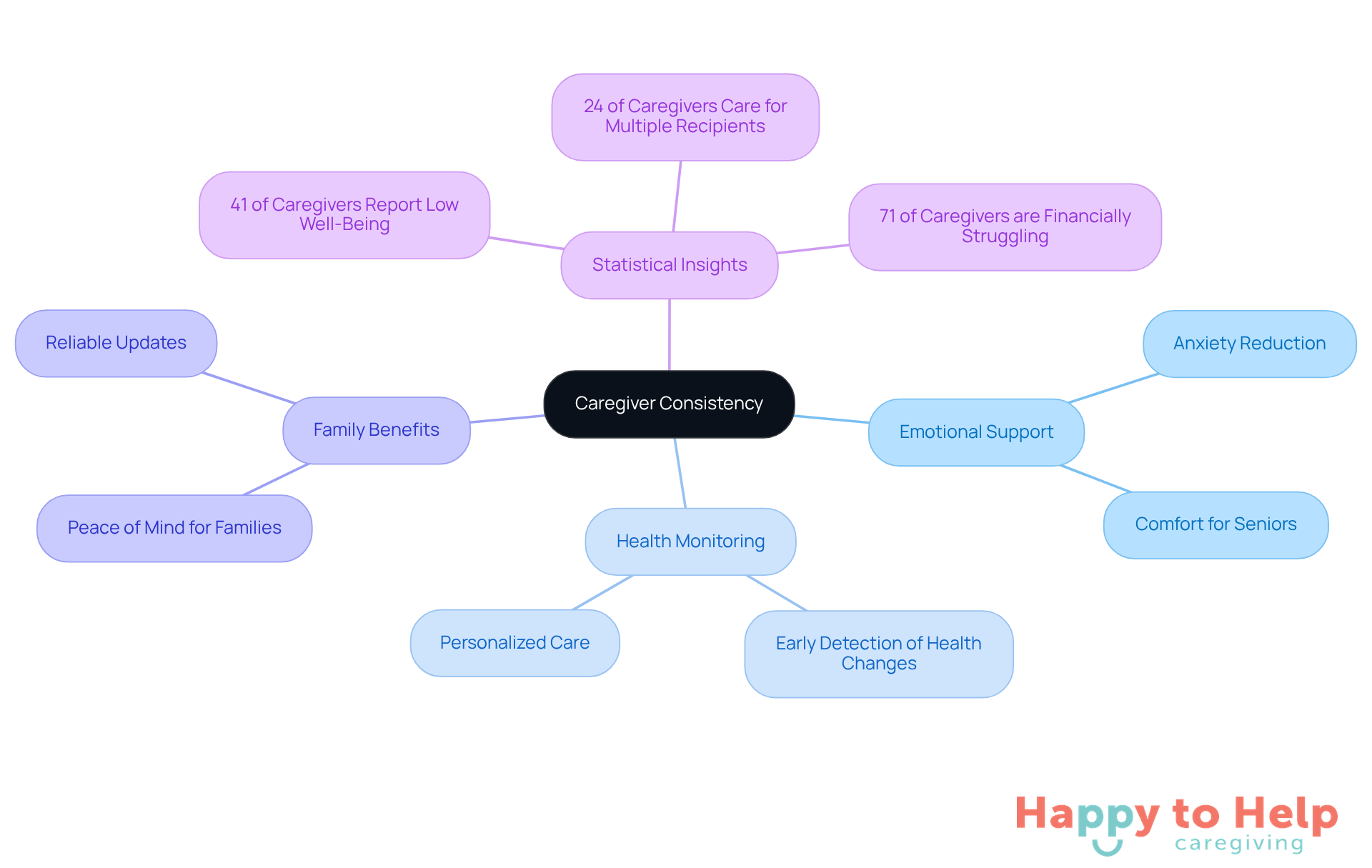
Happy to Help Caregiving highlights a significant issue: the lack of consistent support for older adults. This inconsistency can lead to anxiety and discomfort, making it difficult for seniors to feel secure in their caregiving environment. When clients interact with the same providers regularly, they build strong connections that enhance communication and emotional support.
Research indicates that familiar caregivers can identify subtle health changes early, which is crucial for proactive care. Families also benefit from knowing their loved ones receive stable and familiar support, which is vital for overall well-being. In fact, 41% of caregivers report low overall well-being, a staggering 32% more than non-providers, underscoring the emotional toll of caregiving.
By focusing on establishing these trusting connections, Happy to Help Caregiving ensures that seniors receive the highest quality of support, ultimately boosting their happiness and peace of mind. As the number of caregivers providing care to multiple recipients has risen to 24%, up from 18% in 2015, the need for consistent caregivers is more critical than ever in today’s caregiving landscape.
Your Path Forward
The caregiving landscape is evolving, revealing a pressing problem: many seniors lack the essential support needed to lead fulfilling lives. This gap in caregiving services can lead to emotional distress and physical decline, making it crucial for families to recognize the importance of comprehensive care options.
Companionship care, post-hospital recovery assistance, and respite care for family caregivers are vital services that address these challenges.
- Companionship significantly boosts emotional well-being, while tailored recovery plans post-hospitalization ensure that seniors regain their strength effectively.
- Additionally, respite care is essential in preventing caregiver burnout, allowing family members to recharge and continue providing support.
To tackle these issues, families must prioritize the integration of technology and personalized care plans. By adapting services to meet the unique needs of seniors, caregivers can foster trust and enhance the overall quality of care. Consistency in caregiving not only builds relationships but also ensures that seniors receive the compassionate support they deserve.
As caregiving services continue to adapt, families should embrace the benefits of companionship, flexible scheduling, and ongoing support. Investing in these essential services not only improves the quality of life for seniors but also offers peace of mind for families navigating the complexities of caregiving. By taking these actionable steps, families can ensure their elderly loved ones thrive emotionally, physically, and socially.
https://iframe.tely.ai/cta/eyJhcnRpY2xlX2lkIjogIjY5MjY2NjFiMDFkMWUzYmY0NmRiMjMwZSIsICJjb21wYW55X2lkIjogIjY4ZWU1ZGNhNzMxNzYyNTU3ZjNjOTVjMSIsICJpbmRleCI6IG51bGwsICJ0eXBlIjogImFydGljbGUifQ==Frequently Asked Questions
What is companionship care for seniors?
Companionship care for seniors involves providing helpers for hire who engage with older adults in meaningful conversations and activities, aiming to alleviate feelings of loneliness and enhance overall well-being.
Why is companionship important for seniors?
Companionship is crucial for seniors as it helps combat loneliness, which can negatively impact emotional and physical health. Regular social interaction has been shown to improve emotional health and lower stress levels.
What services does Happy to Help Caregiving offer for post-hospital recovery?
Happy to Help Caregiving offers assistance with medication management, mobility support, and help with daily activities such as bathing and meal preparation to aid older adults in transitioning back into their routines after a hospital stay.
How does Happy to Help Caregiving address caregiver burnout?
Happy to Help Caregiving provides respite care services, allowing family caregivers to take necessary breaks while ensuring that seniors receive ongoing support. This helps prevent caregiver burnout and maintains the quality of care for the individual receiving assistance.
What are the benefits of hiring helpers for respite care?
Hiring helpers for respite care allows family caregivers to refresh and manage other obligations, reducing stress and improving the overall quality of assistance provided to seniors. Regular breaks are essential for preserving the health of caregivers.
How can companionship care improve the quality of life for seniors?
Companionship care improves the quality of life for seniors by providing regular social interaction, which can enhance emotional health, reduce feelings of isolation, and contribute to better physical health outcomes.
List of Sources
- Happy to Help Caregiving: Companionship Care for Seniors
- The Value of Companion Care for Seniors- Home Care Powered By AUAF (https://homecare-aid.com/the-value-of-companion-care-for-seniors)
- Trends in Loneliness Among Older Adults from 2018-2023 (https://ihpi.umich.edu/national-poll-healthy-aging/reports-and-resources/trends-loneliness-among-older-adults-2018-2023)
- Companion Care at Home Reduces Loneliness for Seniors During the Holidays (https://lifesathomecare.com/companion-care-at-home-reduces-loneliness-for-seniors-during-the-holidays)
- Importance of Elder Care in 2025 | Family Choice Home Care (https://familychoicecare.com/blog/the-importance-of-elder-care-in-2025)
- Summary - Social Isolation and Loneliness in Older Adults - NCBI Bookshelf (https://ncbi.nlm.nih.gov/books/NBK557972)
- Happy to Help Caregiving: Post-Hospital Recovery Assistance
- Post-Hospital Home Care: The Key to a Smoother, Safer Recovery (https://heavenathomecare.com/how-post-hospital-home-care-helps-seniors-recover)
- Post-Hospital Care Sanger, CA - How Post-Hospital Care Supports Seniors' Independence (https://a-plusinhomecare.com/how-post-hospital-care-supports-seniors-independence)
- Senior hospital readmission rates are high. Home care helps (https://sfexaminer.com/our\_partners/senior-hospital-readmission-rates-are-high-home-care-helps/article\_f9973a10-db81-441a-bc5e-ce792262679e.html)
- Smart Homes and Post-Hospital Care: Supporting Seniors Aging in Place (https://hcprosonline.com/smart-homes-and-post-hospital-care-supporting-seniors-aging-in-place)
- Recovery in Activities of Daily Living Among Older Adults Following Hospitalization for Acute Medical Illness - PMC (https://pmc.ncbi.nlm.nih.gov/articles/PMC2717728)
- Happy to Help Caregiving: Respite Care for Family Caregivers
- The Official Website of Governor Phil Murphy (https://nj.gov/governor/news/news/562024/20240628c.shtml)
- Family Caregivers Struggling In Some States More Than Others (https://disabilityscoop.com/2025/10/31/family-caregivers-struggling-in-some-states-more-than-others/31710)
- News & Success Stories | Live Well San Diego (https://livewellsd.org/Home/Components/News/News/513/153)
- Family Caregivers: You Deserve Support, and Here’s Where to Find It | Shore Medical Center (https://shoremedicalcenter.org/news/family-caregivers-you-deserve-support-and-here-s-where-find-it)
- November Is National Family Caregivers Month: A Time to Rest, Reflect, and Renew (https://tapinto.net/towns/holmdel-and-colts-neck/sections/health-and-wellness/articles/november-is-national-family-caregivers-month-a-time-to-rest-reflect-and-renew)
- Palliative Support Care: Compassionate Services for Serious Illnesses
- Support for Serious Illness (https://newsinhealth.nih.gov/2025/07/support-serious-illness)
- Palliative Care News | Living with Serious Illness | Get Palliative Care (https://getpalliativecare.org/news)
- Palliative Care News Archives (https://hospicenews.com/category/palliative-care-news)
- Palliative Care Articles & News (https://capc.org/about/press-media/articles-news)
- Why Palliative Care Goes Hand in Hand with Treatment for People with Cancer (https://news.cuanschutz.edu/cancer-center/fischer-cancer-palliative-care)
- 24/7 Availability: Ensuring Continuous Support for Seniors
- New Study Explores the Need for Expanded Long-Term Care Services to Support Aging-in-Place | Johns Hopkins Bloomberg School of Public Health (https://publichealth.jhu.edu/2025/new-study-explores-the-need-for-expanded-long-term-care-services-to-support-aging-in-place)
- Senior care service help to keep seniors safe and independent (https://cbsnews.com/chicago/video/senior-care-service-help-to-keep-seniors-safe-and-independent)
- 24/7 In-Home Care Costs in 2025 - Assisted Living Magazine (https://assistedlivingmagazine.com/24-7-in-home-care-costs-in-2025)
- 2025 Home Care Statistics: Trends & Insights To Know (https://premierhcinc.com/blog/home-care-statistics)
- Caregivers Can Now Call 211 for Help in 10 New States | United Way Worldwide (https://unitedway.org/news/caregivers-can-now-call-211-for-help-in-10-new-states)
- Flexible Scheduling: Tailoring Care to Individual Needs
- A Better Solution Home Care (https://abs.care/Home-Care-Staffing-Shortages-How-They-Impact-Home-Care-Services)
- Exploring the Rising Demand for Flexible Work in Healthcare (https://healthecareers.com/career-resources/nurse-career/rising-demand-for-flexible-work-in-healthcare)
- 9 Ways to Find Caregivers With Flexible Scheduling Options - MedCity News (https://medcitynews.com/2025/05/9-ways-to-find-caregivers-with-flexible-scheduling-options)
- Flexible Care Models Give Home Care Clients ‘What They Want When They Want It’ (https://homehealthcarenews.com/2025/10/flexible-care-models-give-home-care-clients-what-they-want-when-they-want-it)
- Permanent Home Care Program Changes Give Families More Flexibility and Support - UIC Division of Specialized Care for Children (https://dscc.uic.edu/permanent-home-care-program-changes-give-families-more-flexibility-and-support)
- Emotional Support: Alleviating Loneliness in Seniors
- For seniors: the mental health payoff of staying curious (https://news.ucr.edu/articles/2025/08/06/seniors-mental-health-payoff-staying-curious)
- Emotional support key to protecting older adults against depression (https://unsw.edu.au/news/2025/09/neighbourhoods-may-hold-key-slowing-cognitive-decline)
- 1 in 3 older adults still experience loneliness and isolation (https://michiganmedicine.org/health-lab/1-3-older-adults-still-experience-loneliness-and-isolation)
- Humana Foundation Expands National Efforts to Improve Seniors’ Emotional Health (https://humanafoundation.org/news-humana-foundation/press-releases/humana-foundation-expands-national-efforts-to-improve-seniors-emotional-health)
- Understanding the Importance of Mental Health in Older Adults (https://agewellmedical.com/news/how-to-prioritize-older-adults-mental-health-in-2025)
- Technology Integration: Enhancing Communication in Caregiving
- Home care caregivers more at ease with technology, industry survey finds (https://mcknightshomecare.com/news/home-care-caregivers-more-at-ease-with-technology-industry-survey-finds)
- Leveraging technology to support aging in place | WA Cares Fund (https://wacaresfund.wa.gov/news/leveraging-technology-support-aging-place)
- Inside the AI Companies Reshaping Caregiving for America’s 63 Million Caregivers (https://theflowspace.com/interpersonal-health/family/ai-caregiving-products-3009443)
- HHS Launches New Caregiving AI Initiative to 'Spark Innovative Support' (https://hospicenews.com/2025/11/18/hhs-launches-new-caregiving-ai-initiative-to-spark-innovative-support)
- Viewpoints: Caregiving Has Gotten Harder For American Families; Technology Helps Elderly Stay Home - KFF Health News (https://kffhealthnews.org/morning-breakout/viewpoints-caregiving-has-gotten-harder-for-american-families-technology-helps-elderly-stay-home)
- Personalized Care Plans: Tailoring Support to Unique Needs
- Personalized Care for Seniors: Feel Seen, Supported, Empowered (https://harborchase.com/blogs/what-personalized-care-for-seniors-looks-like)
- Importance of Personalized Senior Home Care in Burlington NC (https://wisdomseniorcare.com/the-importance-of-personalized-care-plans-for-seniors)
- Novel Care Model May Improve Outcomes for Older Adults With Multiple Chronic Conditions (https://consultqd.clevelandclinic.org/novel-care-model-may-improve-outcomes-for-older-adults-with-multiple-chronic-conditions)
- How a Personalized Care Plan Makes Living with Chronic Conditions Easier | Dedicated Senior Medical Center (https://dedicated.care/articles/how-personalized-care-plan-makes-living-chronic-conditions-easier)
- Customized Care at Home: The Benefits of Personalized Care Plans - VNA Health Group (https://vnahg.org/customized-care-at-home-the-benefits-of-personalized-care-plans)
- Caregiver Consistency: Building Trust and Comfort for Seniors
- Seniors Helping Seniors® In-Home Care Services Expands in Woodbury, Minnesota (https://prnewswire.com/news-releases/seniors-helping-seniors-in-home-care-services-expands-in-woodbury-minnesota-302619601.html)
- The Caregiving Landscape: Data & Insights on the Caregiver Experience in the U.S. (https://caregiveraction.org/caregiver-statistics)
- Why Consistent Caregivers Make All the Difference in Home Care - Naples Bay Home Care (https://homecarenaplesfl.com/4538-2)
- Caregiver Statistics: Demographics (https://caregiver.org/resource/caregiver-statistics-demographics)
- Number of Family Caregivers Supporting Older Adults Increased Nearly One-Third Between 2011 and 2022 | Johns Hopkins Bloomberg School of Public Health (https://publichealth.jhu.edu/2025/number-of-family-caregivers-supporting-older-adults-increased-nearly-one-third-between-2011-and-2022)